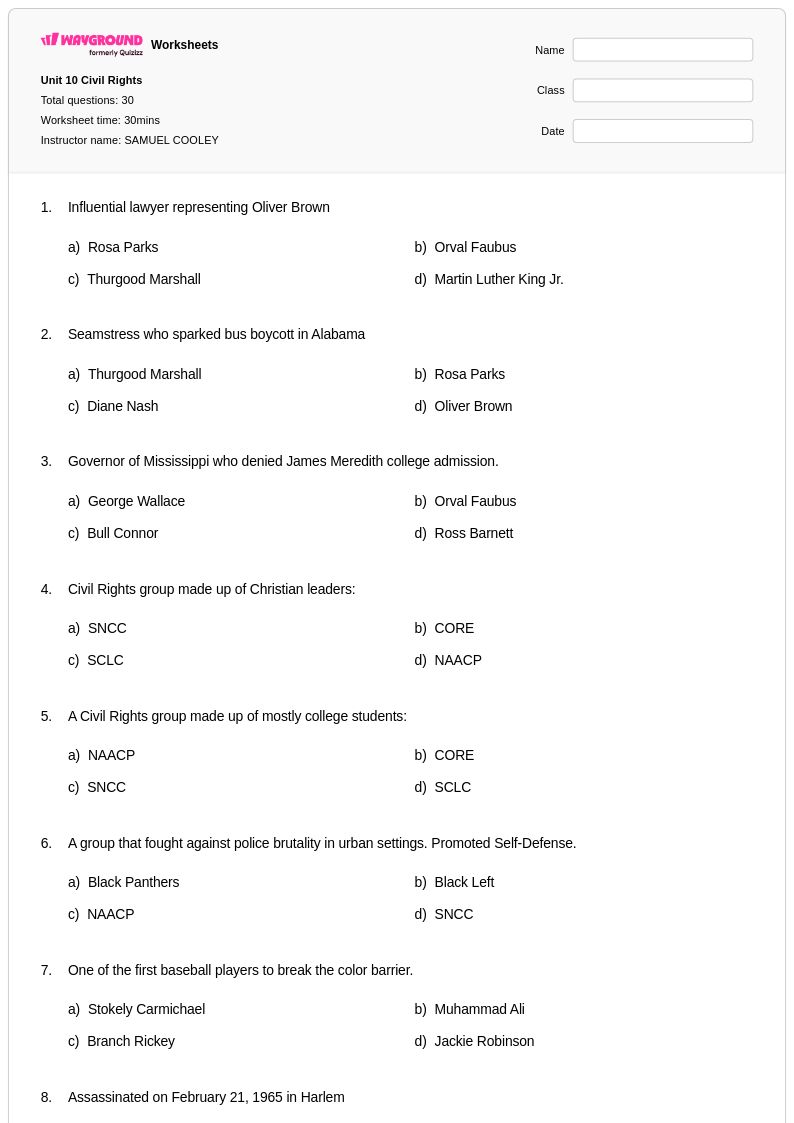
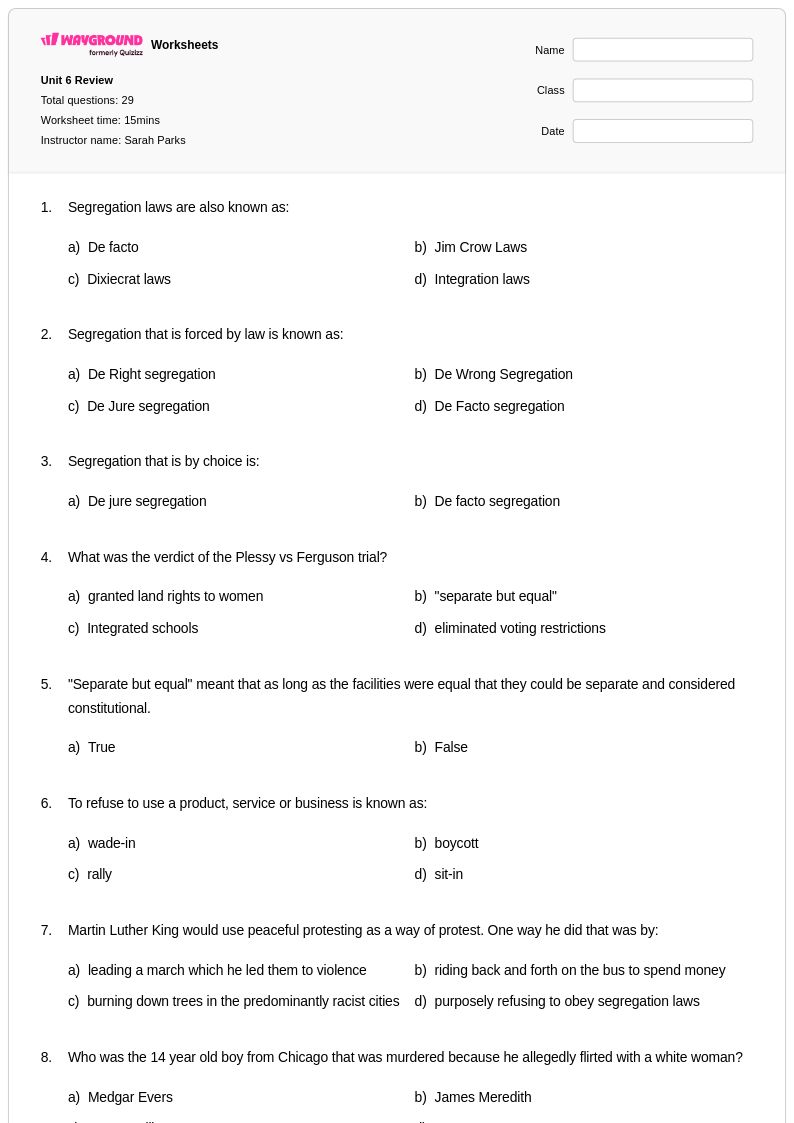
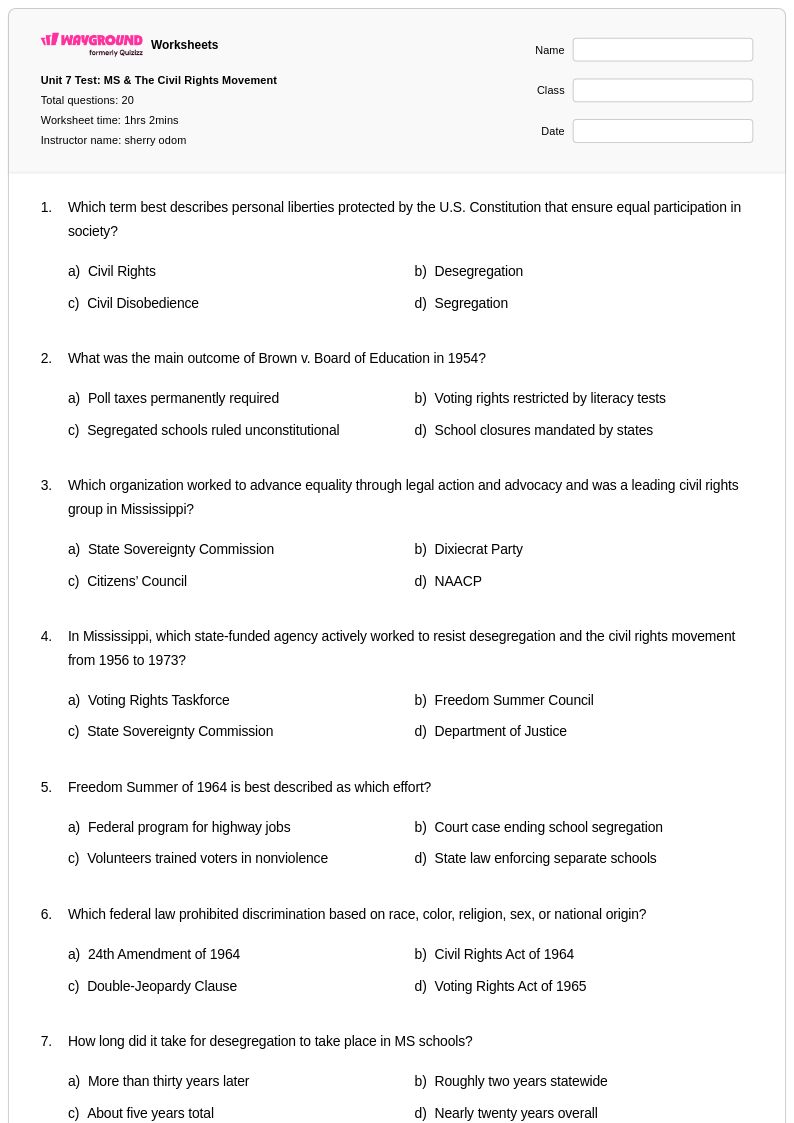
Class 8 Emmett Till worksheets and printables help students learn about this pivotal civil rights case through free PDF resources, practice problems, and comprehensive answer keys from Wayground's educational collection.
Explore printable Emmett Till worksheets for Class 8
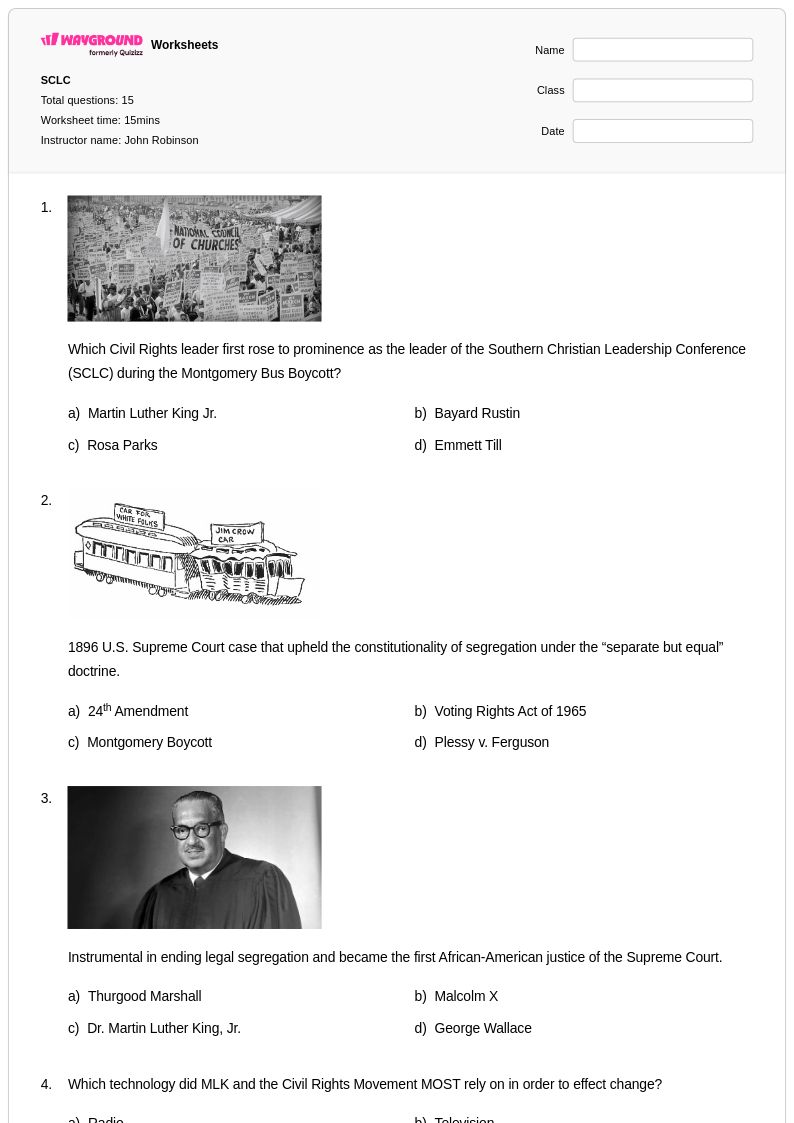
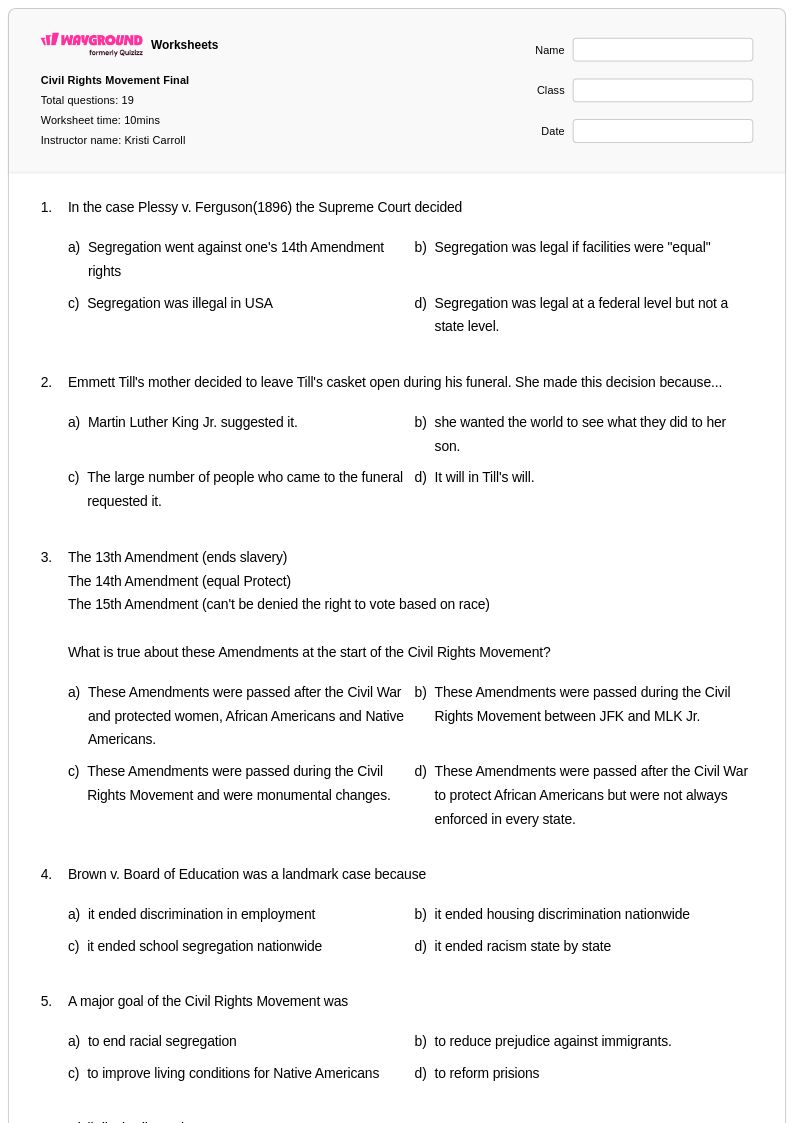
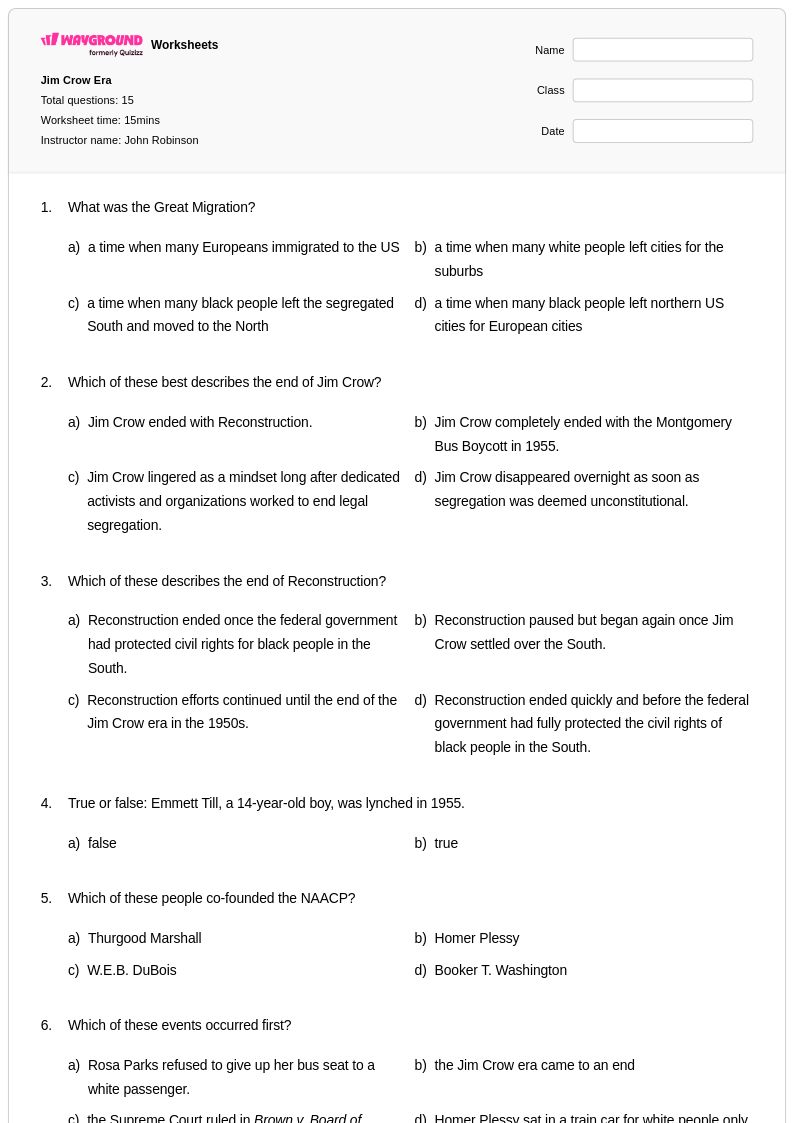
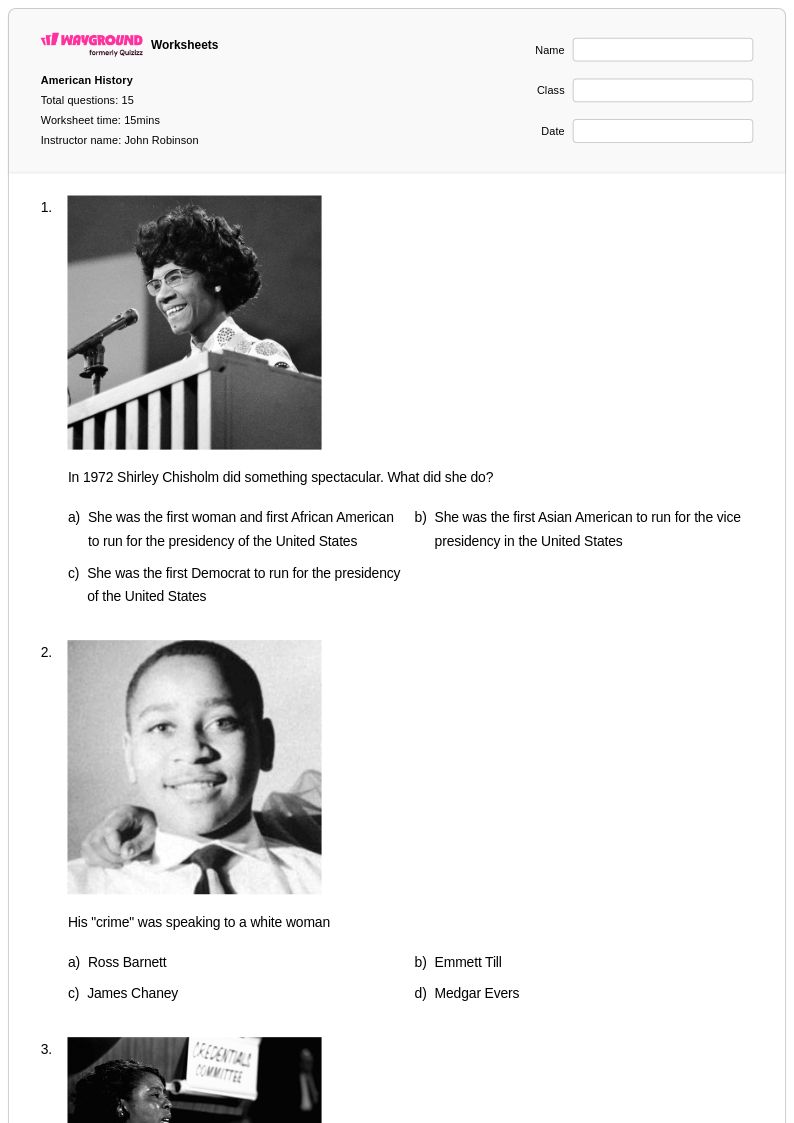
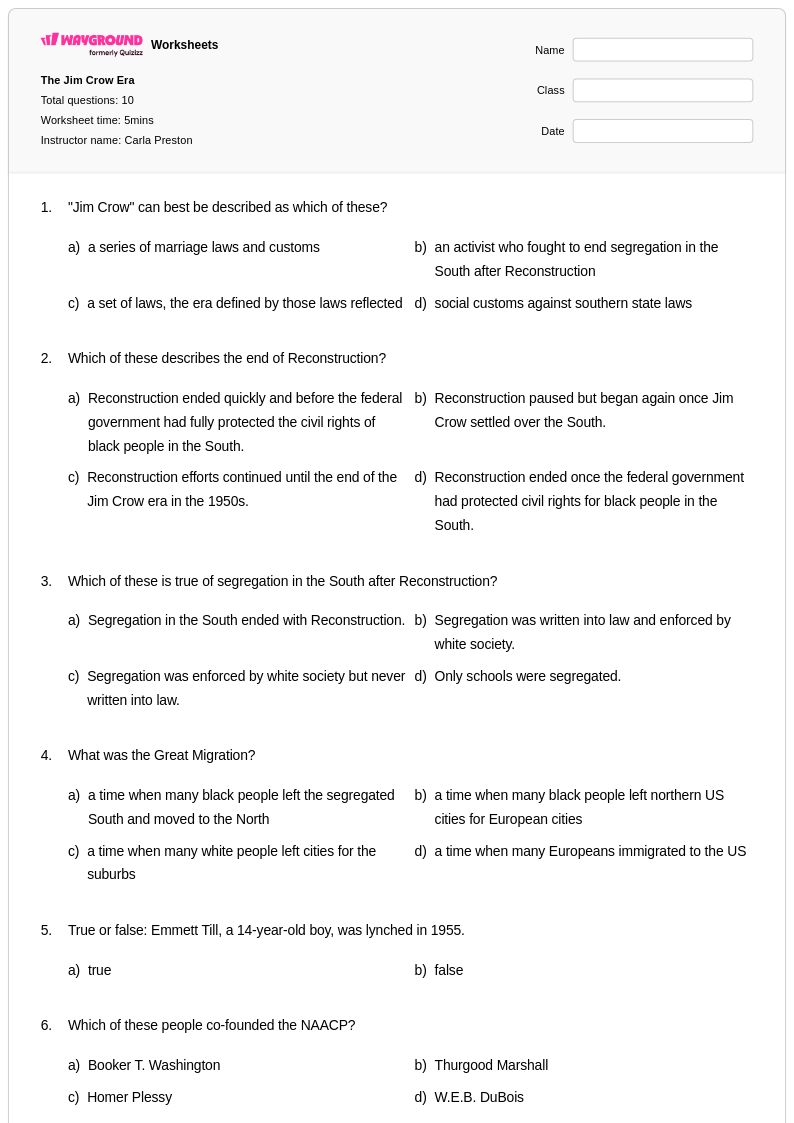
Emmett Till worksheets for Class 8 students available through Wayground (formerly Quizizz) provide comprehensive educational resources that examine one of the most pivotal and tragic events in American civil rights history. These carefully designed materials help students understand the circumstances surrounding the 1955 murder of fourteen-year-old Emmett Till in Mississippi and its profound impact on the civil rights movement. The worksheets strengthen critical thinking skills by encouraging students to analyze primary source documents, photographs, and testimonies while examining the social and political climate of the Jim Crow South. Each resource includes detailed answer keys to support accurate learning assessment, and teachers can access these materials as free printables in convenient PDF format. Practice problems guide students through complex historical analysis, helping them understand how Till's death galvanized civil rights activists and contributed to the Montgomery Bus Boycott and broader desegregation efforts.
Wayground (formerly Quizizz) supports educators teaching about Emmett Till through its extensive collection of millions of teacher-created resources specifically designed for middle school social studies instruction. The platform's robust search and filtering capabilities allow teachers to quickly locate age-appropriate materials that align with state history standards while addressing sensitive content with the gravity and respect it deserves. Differentiation tools enable educators to modify worksheets for varying reading levels and learning needs, ensuring all Class 8 students can engage meaningfully with this critical historical content. Teachers benefit from flexible customization options that allow them to adapt materials for specific classroom requirements, whether for initial instruction, remediation, or enrichment activities. Available in both printable and digital formats including PDF downloads, these resources seamlessly integrate into lesson planning while providing essential skill practice in historical analysis, cause-and-effect relationships, and understanding the long-term consequences of racial violence in American society.
FAQs
How do I teach the Emmett Till story in a classroom setting?
Teaching the Emmett Till story effectively requires grounding students in the historical context of 1950s Mississippi before introducing the specific events of 1955. Begin with the social and legal landscape of Jim Crow laws, then guide students through the circumstances of Till's murder, the trial, and Mamie Till's decision to hold an open-casket funeral. Primary source analysis, including newspaper accounts and testimonies, helps students develop critical thinking skills while keeping the lesson anchored in evidence rather than abstraction. Framing the lesson around cause and effect, specifically how Till's death galvanized the civil rights movement, gives students a clear historical throughline.
What are common misconceptions students have when studying Emmett Till?
A frequent misconception is that Till's murder was an isolated incident rather than part of a systemic pattern of racial violence in the Jim Crow South. Students may also underestimate the significance of the all-white jury's acquittal, not recognizing it as emblematic of legal inequality rather than a procedural anomaly. Another common error is treating the civil rights movement as a spontaneous reaction to a single event rather than understanding how Till's death became a catalyzing moment within an already-building movement. Teachers should explicitly address these gaps to help students understand both the specificity of Till's case and its broader historical meaning.
What exercises help students analyze the impact of Emmett Till's murder on the civil rights movement?
Effective exercises include primary source document analysis, where students examine newspaper coverage and testimonies to evaluate how media shaped public response. Cause-and-effect mapping helps students trace how Till's murder and the subsequent trial contributed to increased momentum in the civil rights movement. Connecting Till's story to broader themes of racial injustice and legal inequality in mid-twentieth century America encourages students to think beyond the individual event toward systemic patterns. Written response prompts asking students to evaluate Mamie Till's decision to publicize her son's death develop both historical empathy and analytical writing skills.
How can I use Emmett Till worksheets to build media literacy skills?
Emmett Till worksheets that incorporate newspaper accounts and primary source documents are well-suited to media literacy instruction because they ask students to evaluate source perspective, bias, and framing around the same event. Students can compare how different outlets covered the murder and trial in 1955 to understand how media representation shapes public perception of racial violence. This approach connects historical analysis to contemporary media literacy standards, making the lesson relevant beyond its immediate historical context. Teachers can scaffold this work by moving from guided document analysis toward independent source evaluation as students build confidence.
How do I use Emmett Till worksheets from Wayground in my classroom?
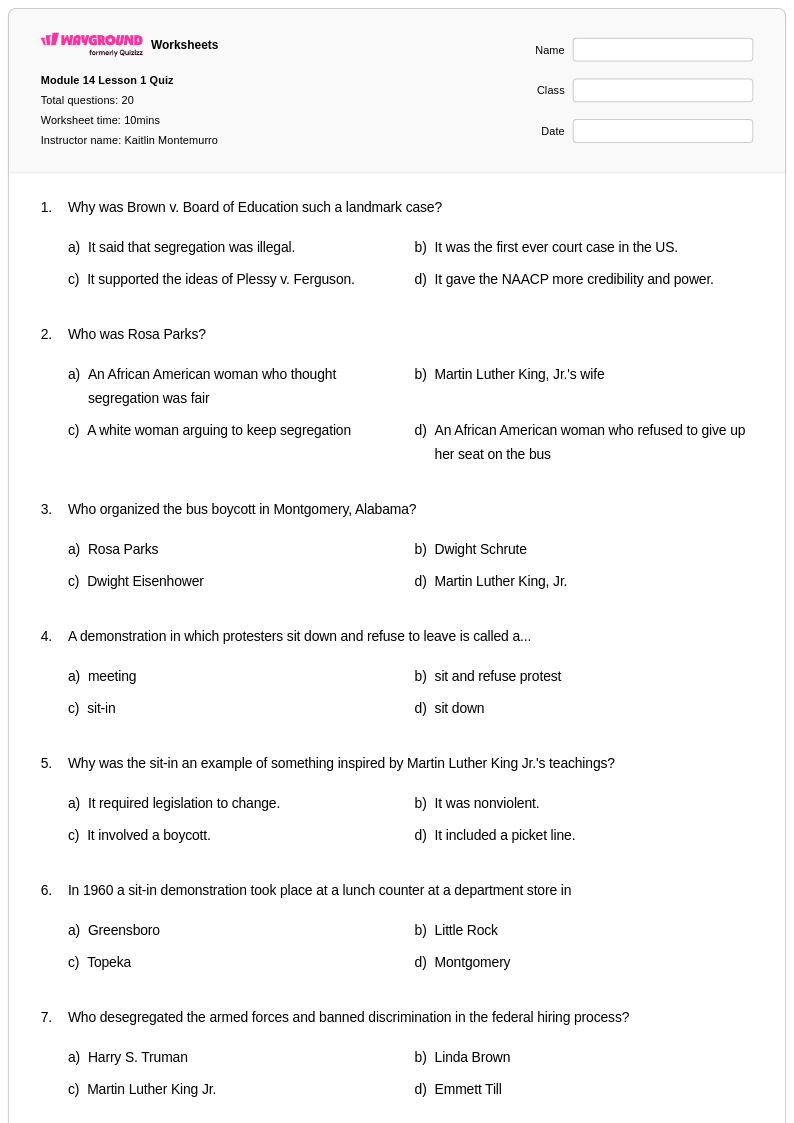
Emmett Till worksheets on Wayground are available as printable PDFs for traditional classroom use and in digital formats for technology-integrated learning environments, giving teachers flexibility in how they deploy the materials. Teachers can also host worksheets as a quiz directly on Wayground, making it easy to collect student responses and assess comprehension in real time. Complete answer keys are included with the resources, supporting efficient grading and providing a foundation for structured classroom discussion after students complete the work.
How do I support diverse learners when teaching sensitive civil rights history like the Emmett Till case?
When teaching the Emmett Till case, differentiating both content complexity and access is important given the emotional weight of the material. On Wayground, teachers can enable Read Aloud so audio-supported students can engage with document-based questions independently, and Reduced Answer Choices can lower cognitive load for students who need additional support without altering the historical content. Adjustable font sizes and reading themes in Reading Mode improve accessibility for students with visual processing needs. These accommodations can be set individually per student and applied simultaneously, so the rest of the class receives standard settings without disruption.