Free Printable Energy Resources Worksheets for Class 11
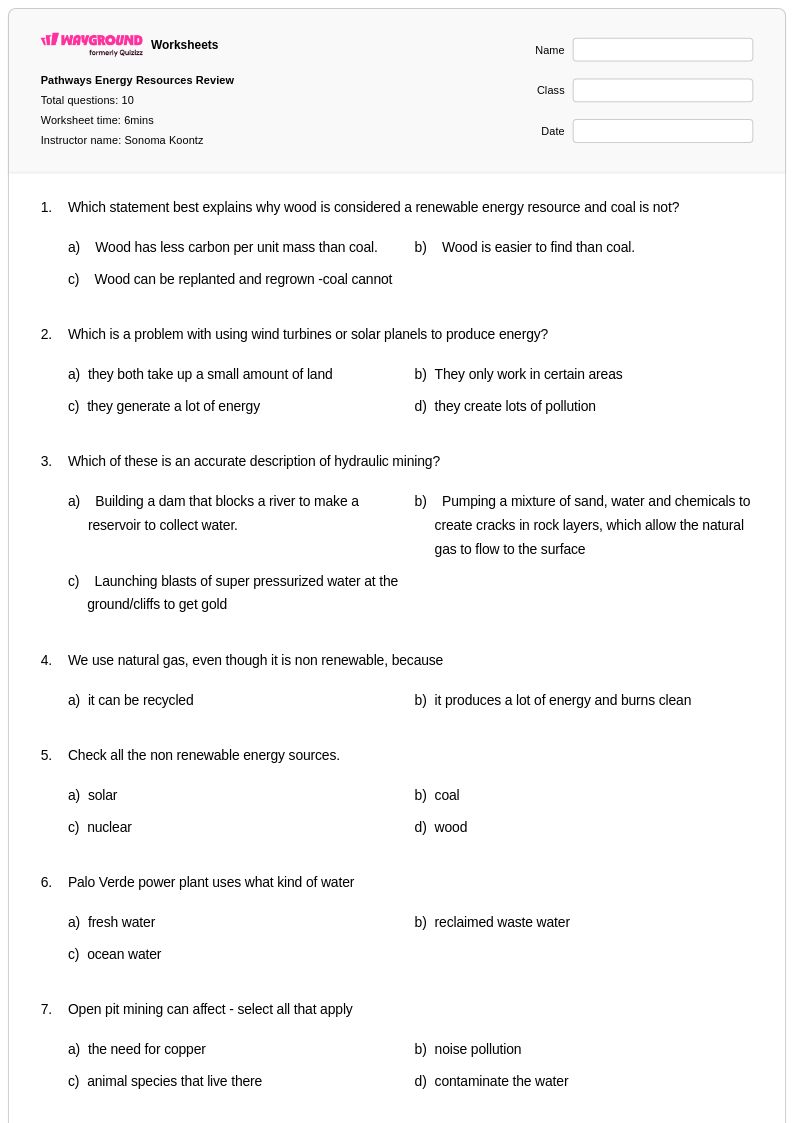
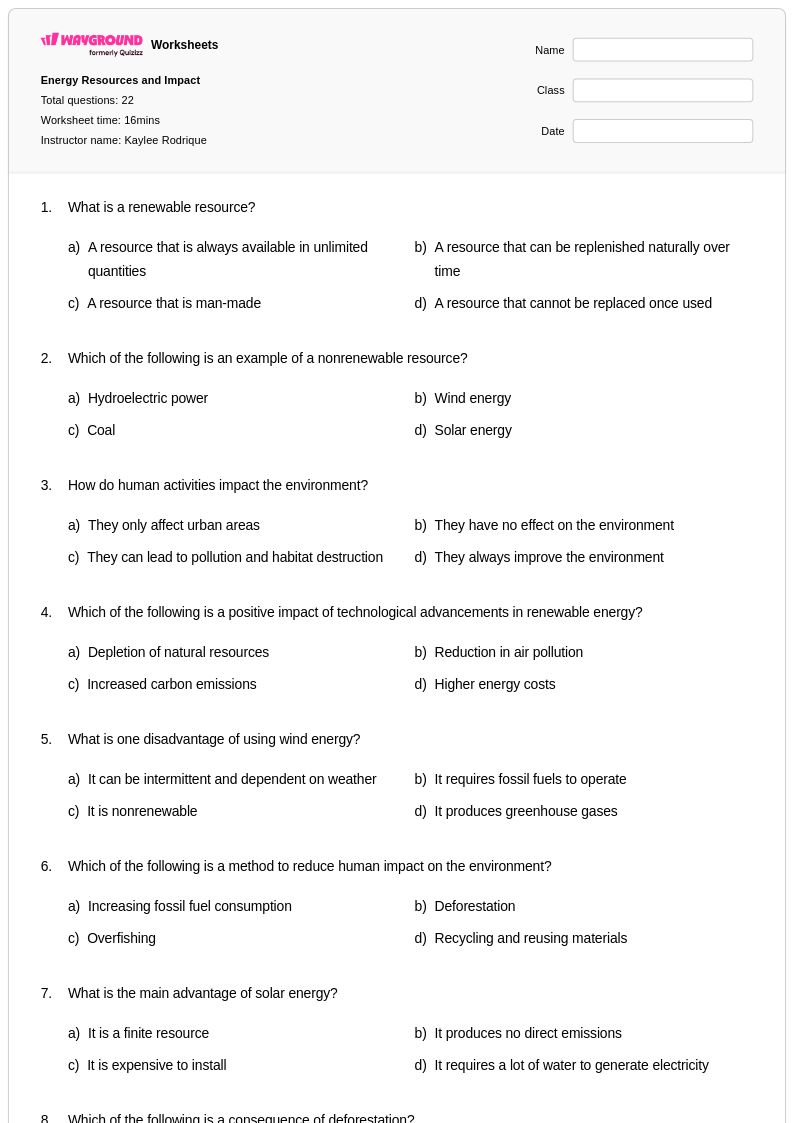
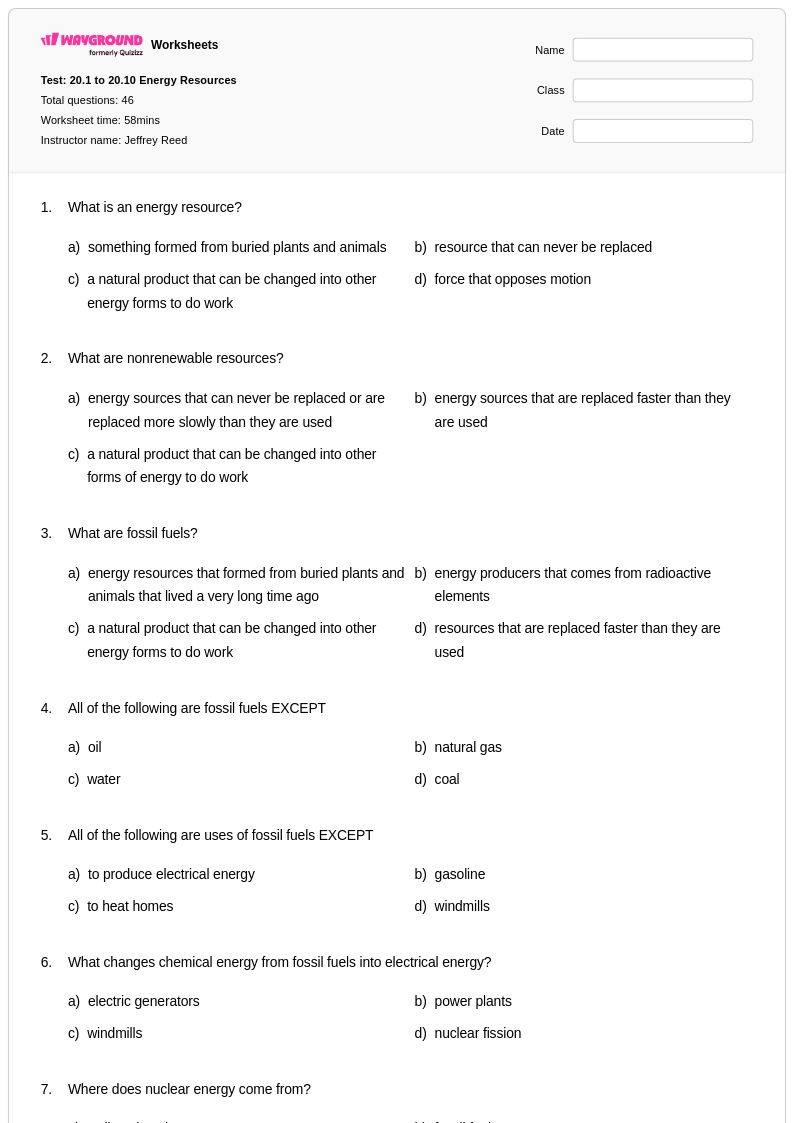
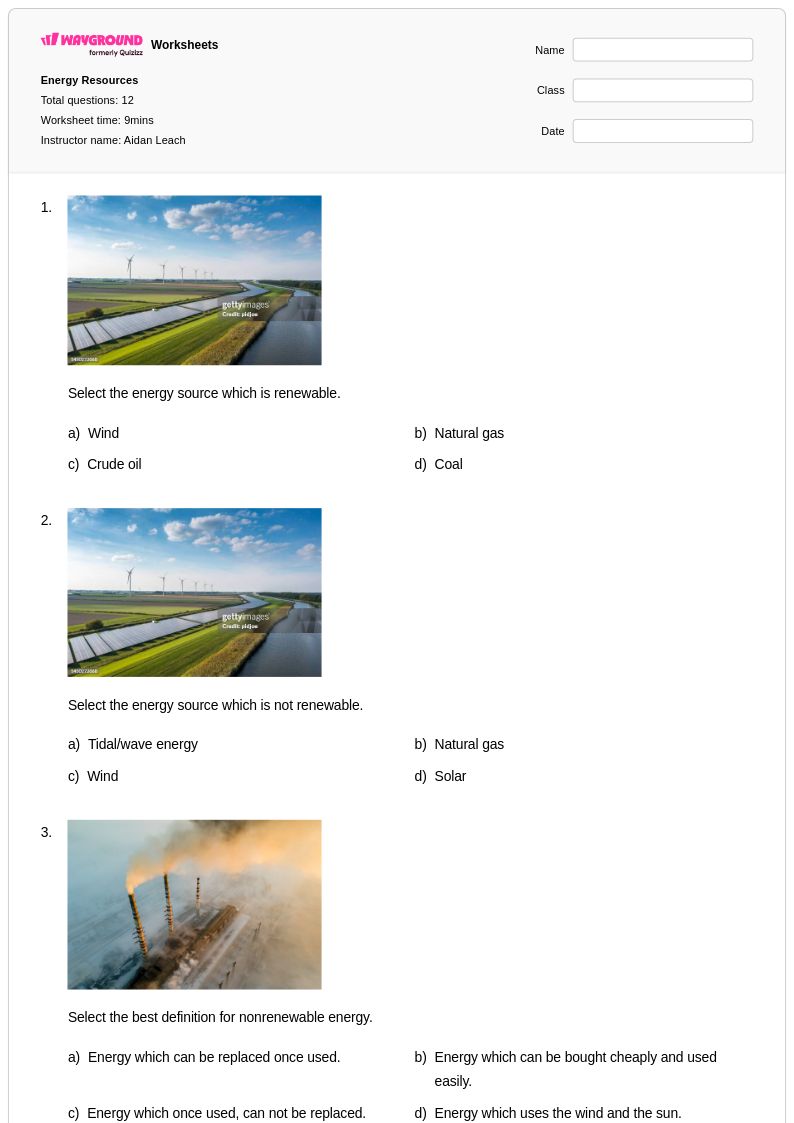
Class 11 Energy Resources worksheets from Wayground help students explore renewable and non-renewable energy sources through comprehensive printables, practice problems, and answer keys in convenient PDF format.
Explore printable Energy Resources worksheets for Class 11
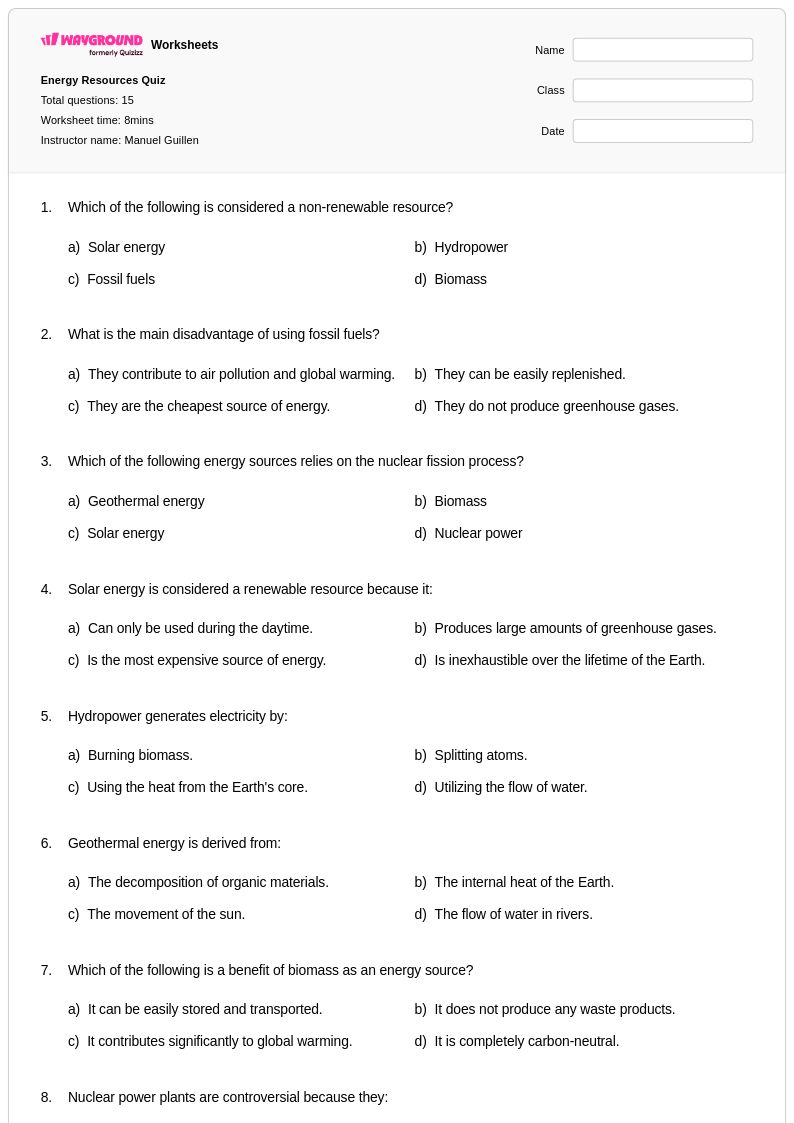
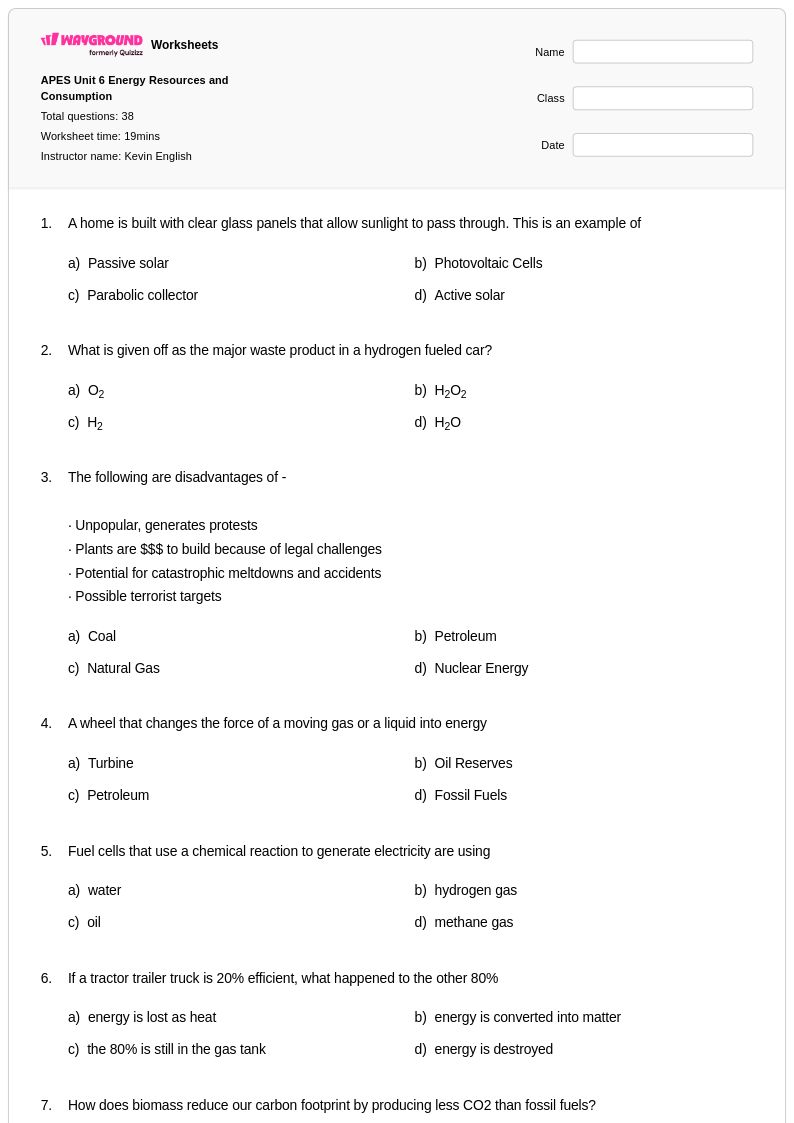
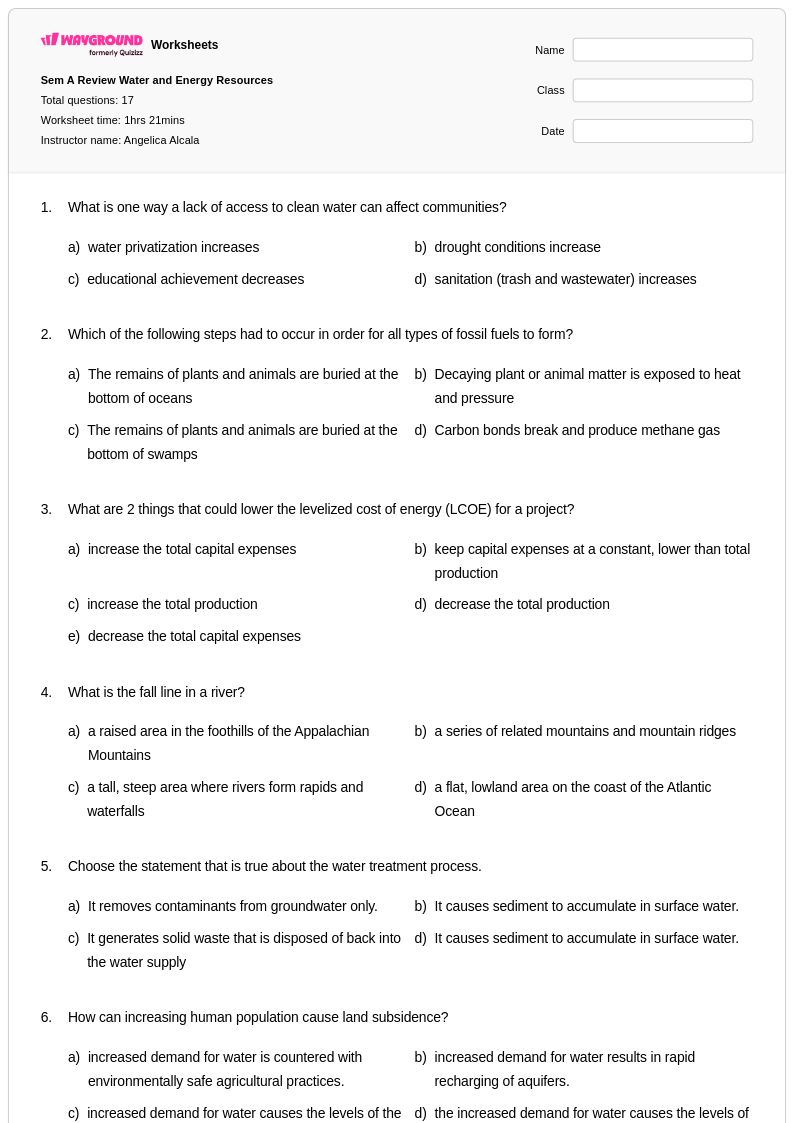
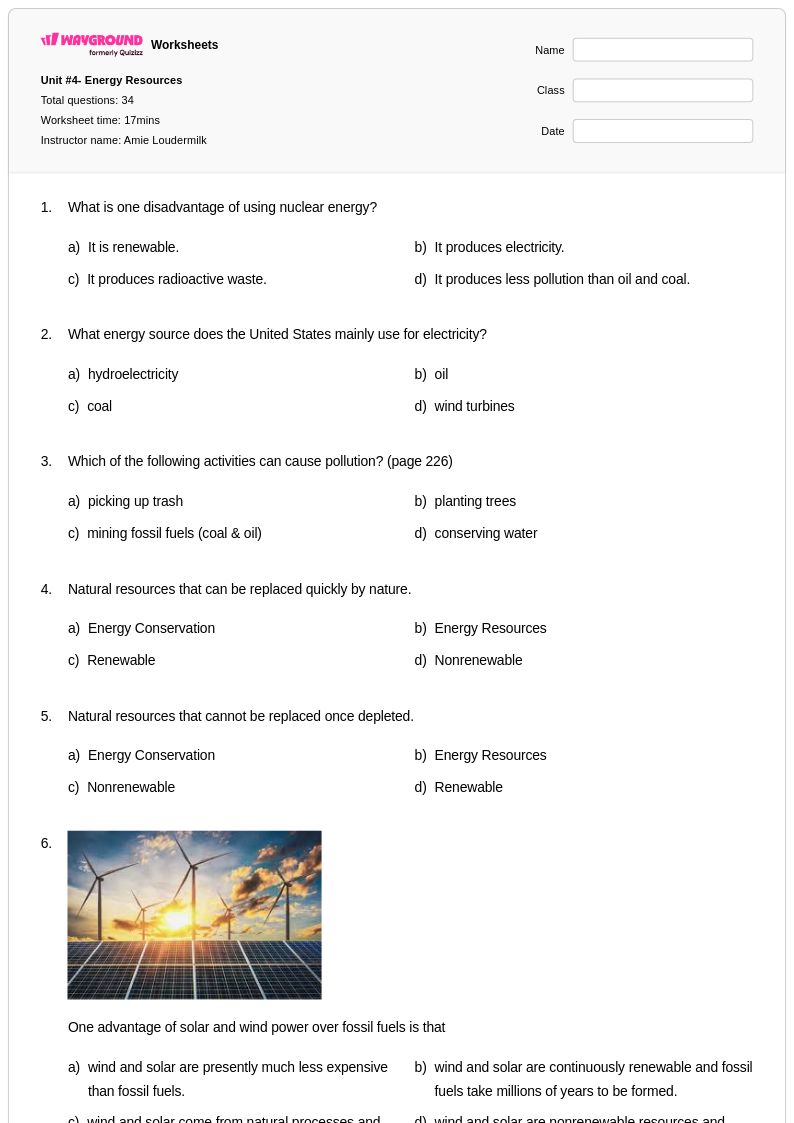
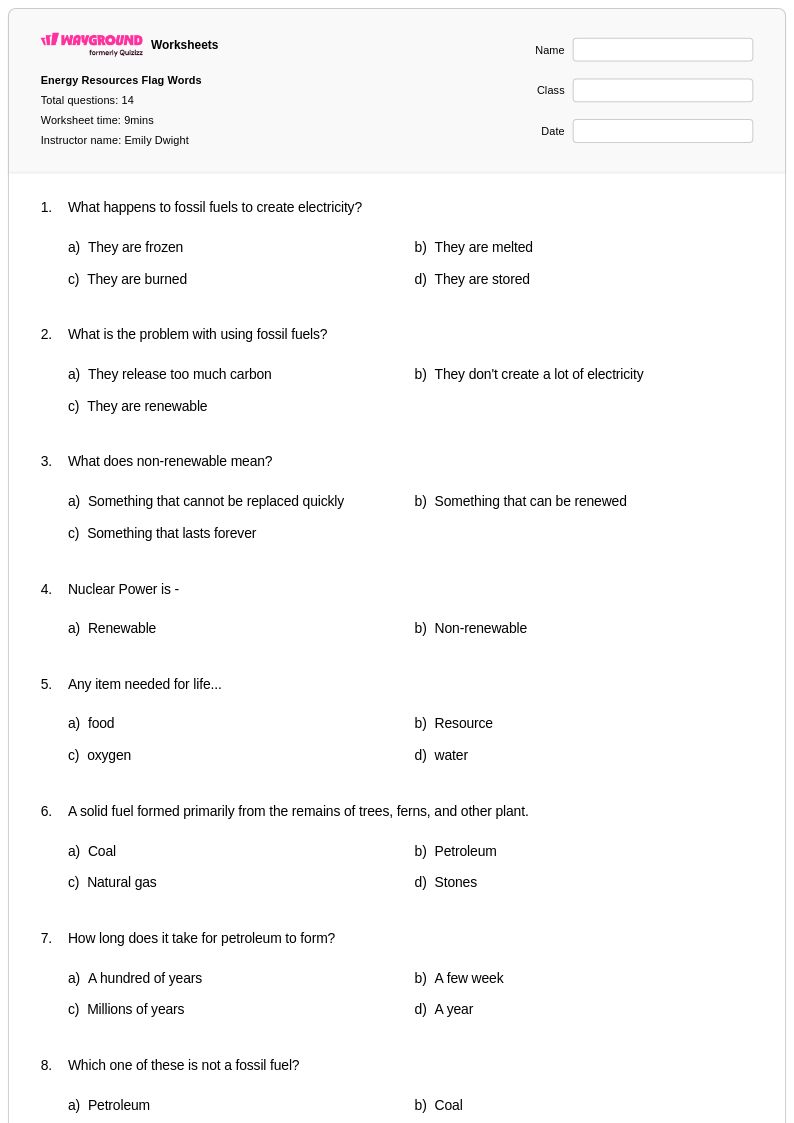
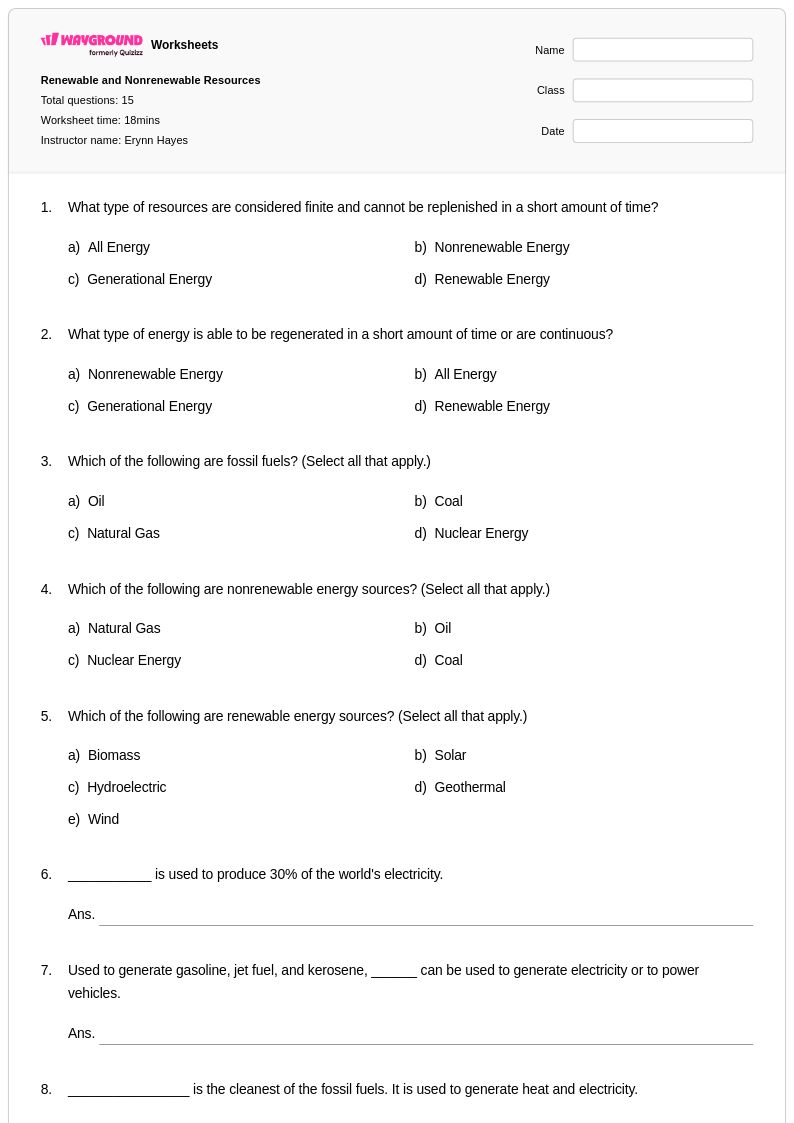
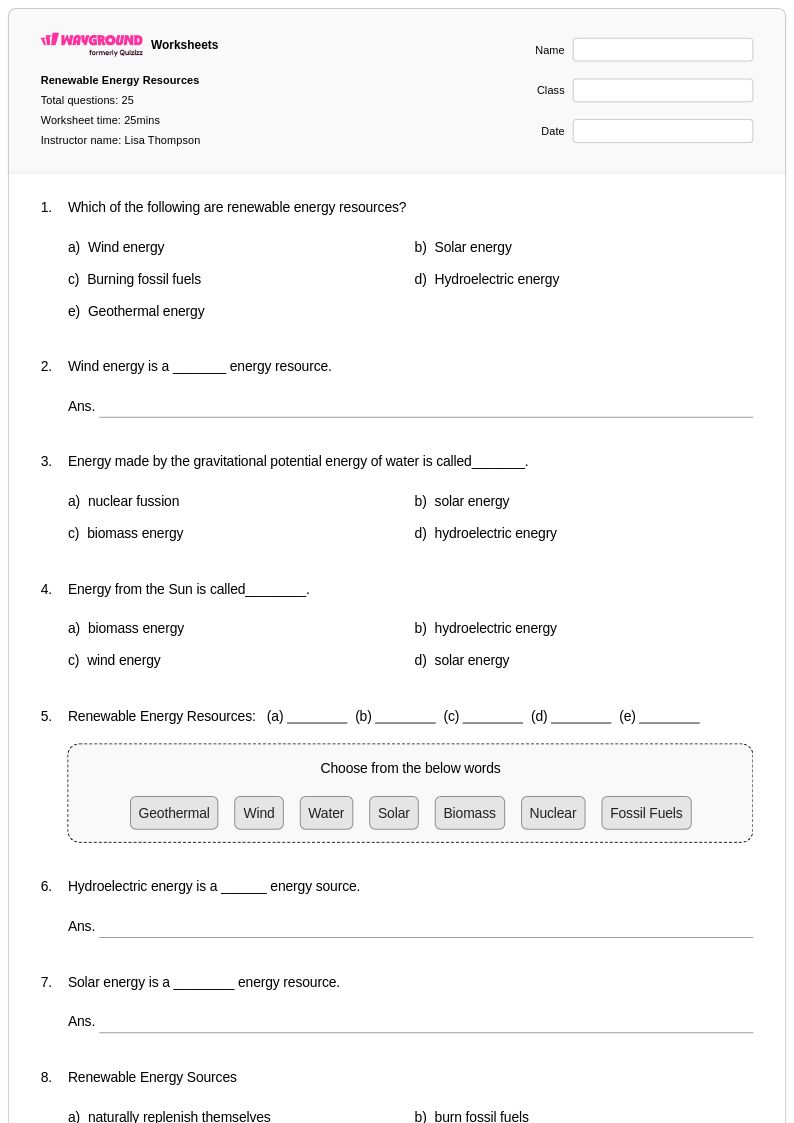
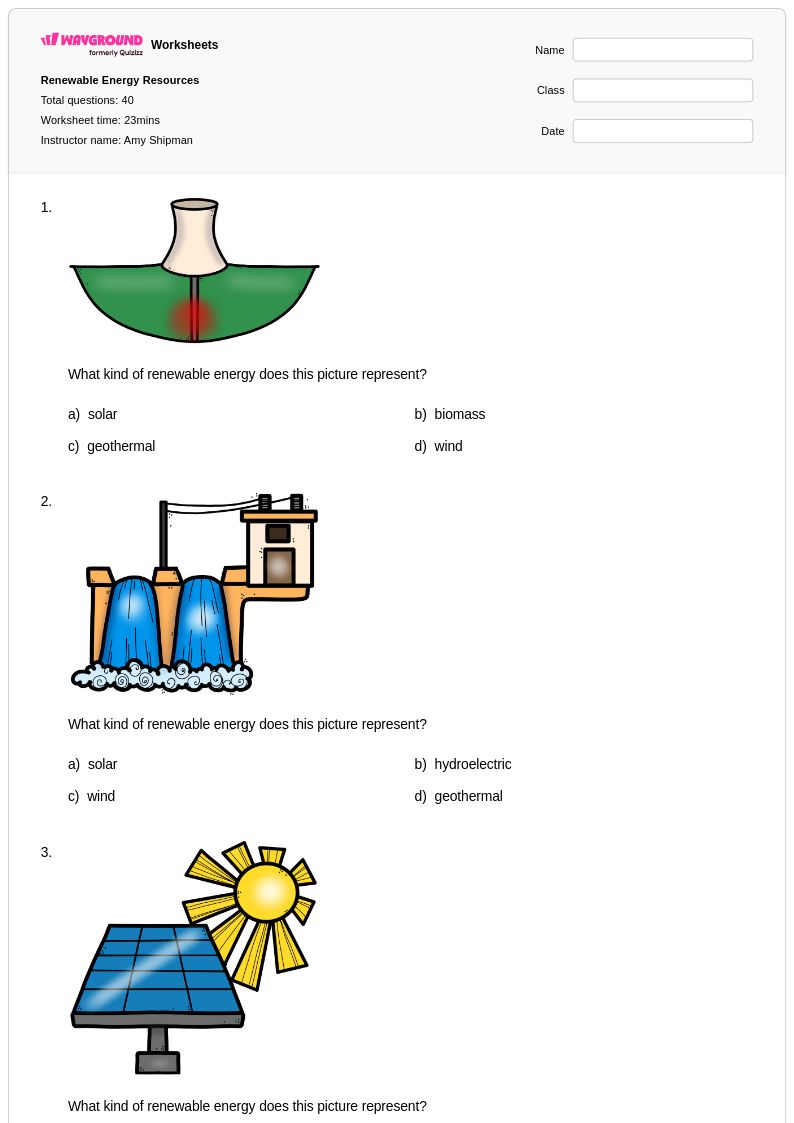
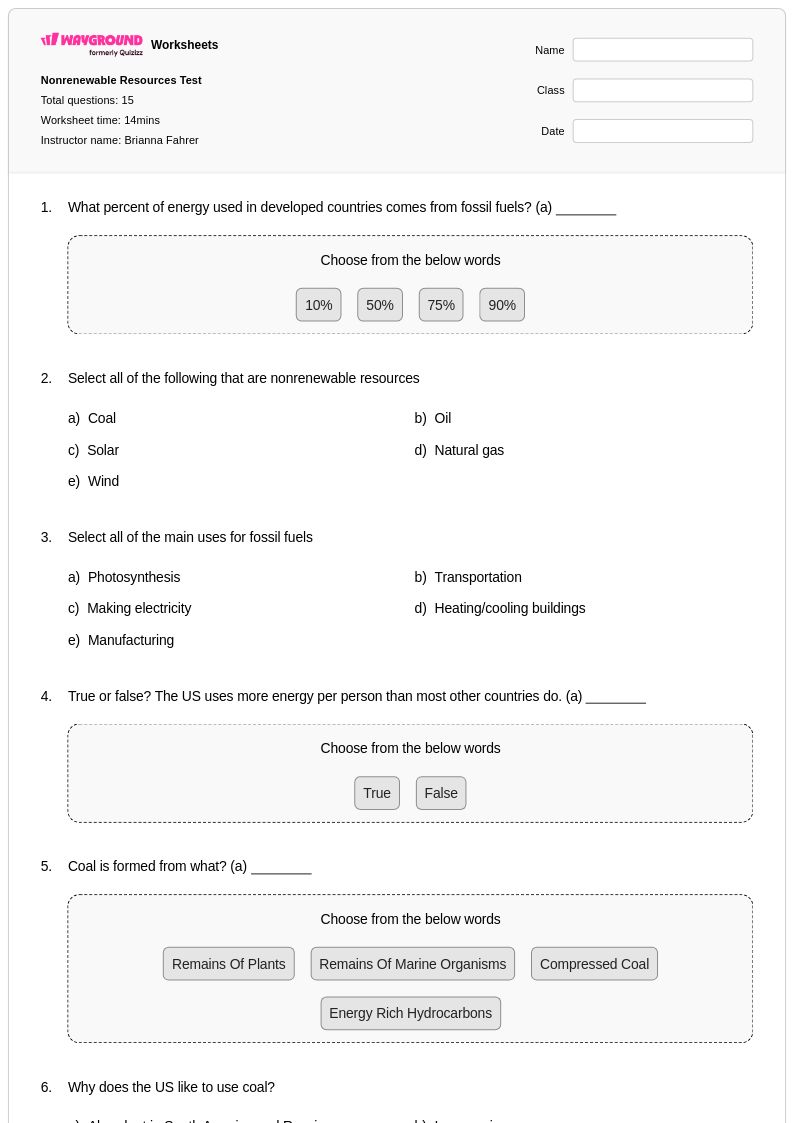
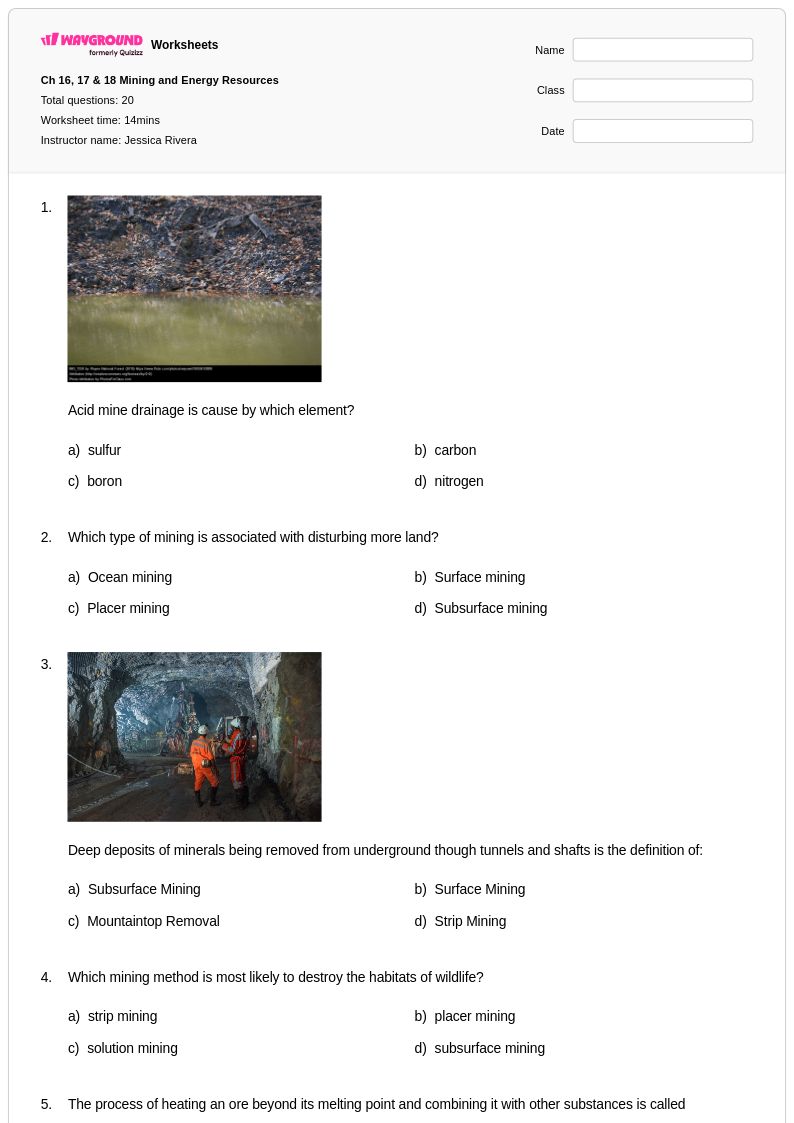
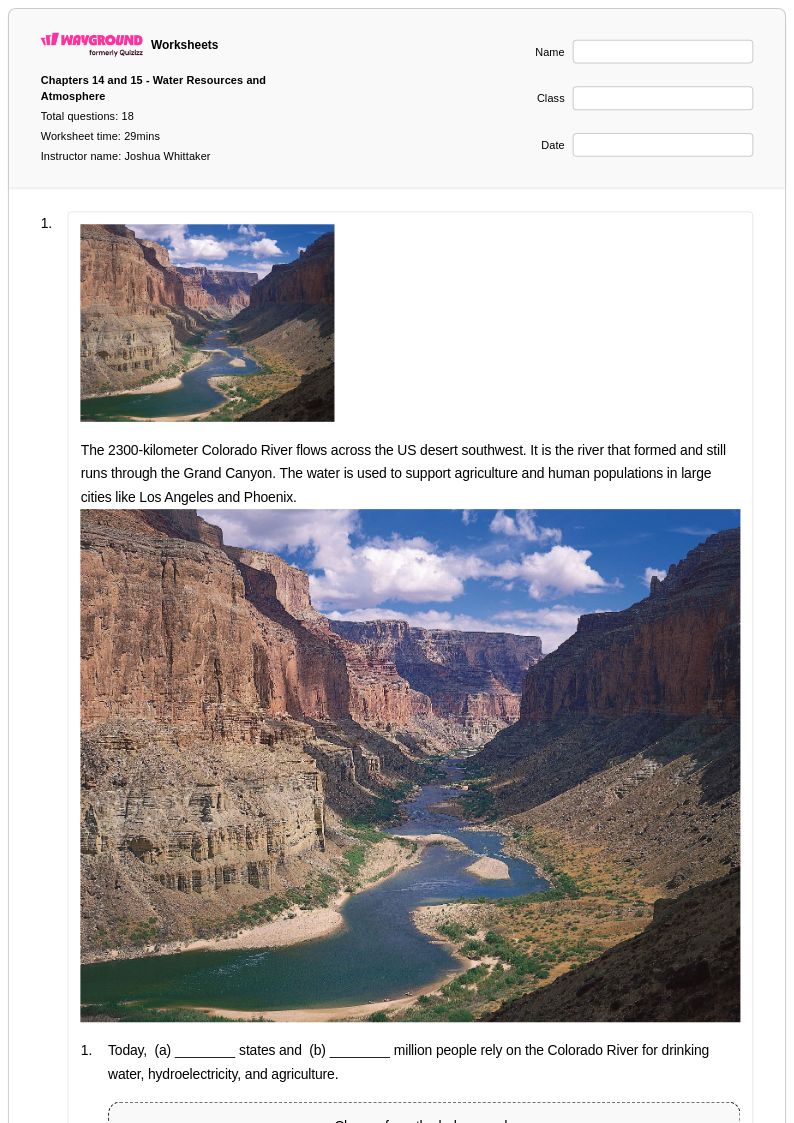
Energy resources worksheets for Class 11 students available through Wayground (formerly Quizizz) provide comprehensive coverage of renewable and non-renewable energy sources, energy transformation processes, and environmental impacts of energy consumption. These carefully designed practice problems strengthen students' understanding of fossil fuels, nuclear energy, solar power, wind energy, hydroelectric systems, and emerging technologies like geothermal and biomass energy. The worksheets include detailed analysis of energy efficiency calculations, carbon footprint assessments, and comparative studies of different energy production methods. Each printable resource comes with a complete answer key and is available in convenient pdf format, allowing students to work through complex scenarios involving energy policy decisions, sustainability challenges, and the physics behind energy conversion processes.
Wayground (formerly Quizizz) supports educators with an extensive collection of millions of teacher-created energy resources worksheets that can be easily searched and filtered by specific learning objectives and curriculum standards. The platform's differentiation tools enable teachers to customize content difficulty levels, making these materials suitable for remediation support, standard grade-level instruction, and enrichment activities for advanced learners. Teachers can access both printable pdf versions for traditional classroom use and digital formats for interactive learning environments, with flexible customization options that allow modification of practice problems to align with local curriculum requirements. This comprehensive approach to energy resources education helps teachers efficiently plan lessons that address diverse learning needs while ensuring students develop strong analytical skills in evaluating energy systems and their environmental implications.
FAQs
How do I teach renewable vs. non-renewable energy sources to my students?
Start by grounding students in concrete examples: fossil fuels (coal, oil, natural gas) are finite and release carbon when burned, while renewables like solar, wind, and hydroelectric power replenish naturally and produce little to no direct emissions. A side-by-side comparison activity works well here, asking students to evaluate each source by availability, environmental impact, and cost. Once students can distinguish the two categories, shift to analysis tasks that require them to weigh trade-offs, such as why a region might rely on non-renewables despite their environmental costs.
What types of practice problems help students understand energy transformation?
Effective practice problems ask students to trace energy as it changes form across a system, for example, from chemical energy stored in coal to thermal energy from combustion to kinetic energy in a turbine to electrical energy in a grid. Data interpretation exercises using efficiency percentages or energy flow diagrams push students to apply the concept quantitatively rather than just define it. Problems tied to real-world systems, like how a solar panel converts radiant energy to electrical energy, make abstract transformations tangible and assessable.
What mistakes do students commonly make when comparing energy sources?
The most frequent error is treating 'renewable' as automatically synonymous with 'clean' or 'efficient,' which overlooks nuances like land use for wind farms or the environmental cost of manufacturing solar panels. Students also tend to ignore energy density and reliability, incorrectly assuming solar or wind can always substitute for fossil fuels without addressing intermittency. Worksheets that ask students to evaluate specific trade-offs for a given scenario, rather than rank sources in the abstract, help address these misconceptions directly.
How can I use energy resources worksheets to assess understanding of environmental impact?
Assign structured activities that require students to compare two or more energy sources across specific environmental dimensions, such as greenhouse gas emissions, water usage, land disruption, and waste generation. Asking students to justify a recommendation for a hypothetical community's energy plan, citing data from the worksheet, reveals both content understanding and analytical reasoning. Look for whether students can distinguish between local and global environmental impacts, a distinction that reveals deeper conceptual grasp.
How do I use Wayground's energy resources worksheets in my classroom?
Wayground's energy resources worksheets are available as printable PDFs for traditional classroom use and in digital formats for technology-integrated or remote learning environments. Teachers can also host worksheets as a quiz directly on Wayground, giving students an interactive experience while automatically capturing response data. The platform includes robust search and filtering tools so teachers can quickly locate materials aligned to specific standards or learning objectives, making it straightforward to slot these worksheets into an existing energy unit or use them for targeted remediation.
How can I differentiate energy resources instruction for students at different skill levels?
For students who need additional support, Wayground offers accommodations including Read Aloud, which audio-reads questions for students who struggle with text, and reduced answer choices, which lowers cognitive load on multiple-choice items. Extended time can be configured per student for those who need it, and reading mode allows adjustable font sizes and themes for accessibility. These settings are saved and reusable across sessions, so once accommodations are set up for a student, they apply automatically in future assignments without disrupting the rest of the class.