Free Printable Equations with No Solutions Worksheets for Class 7
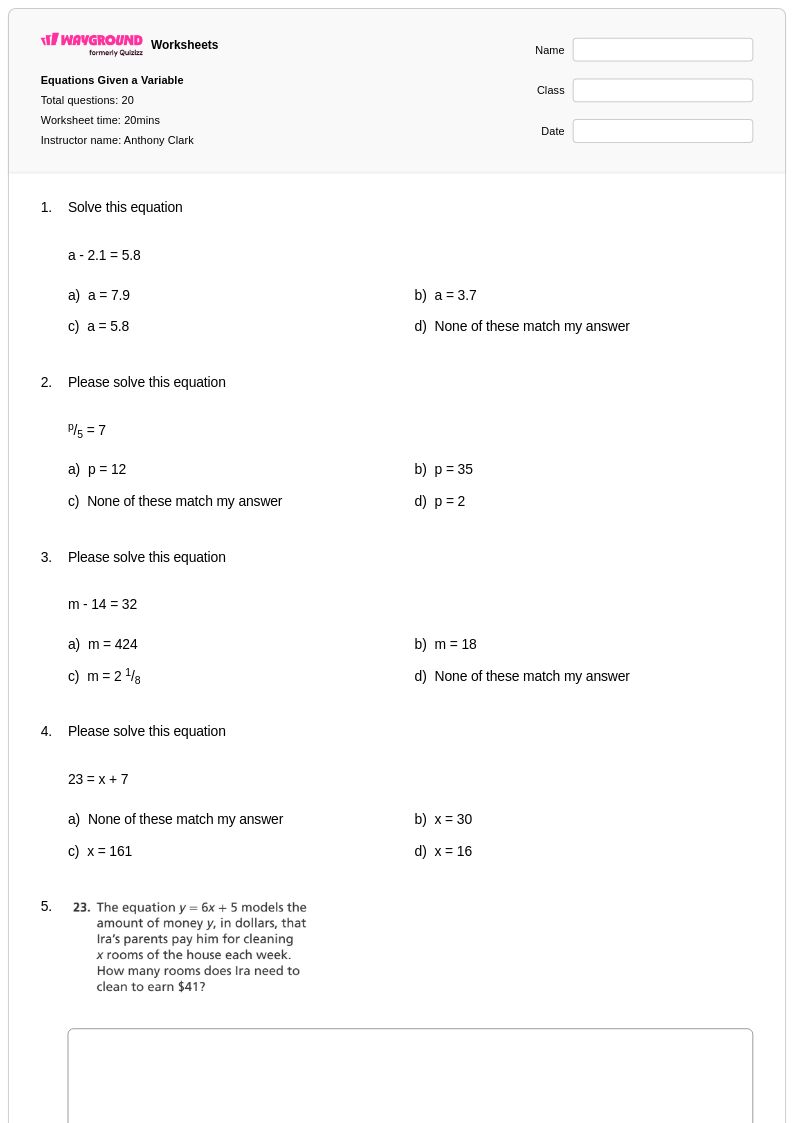
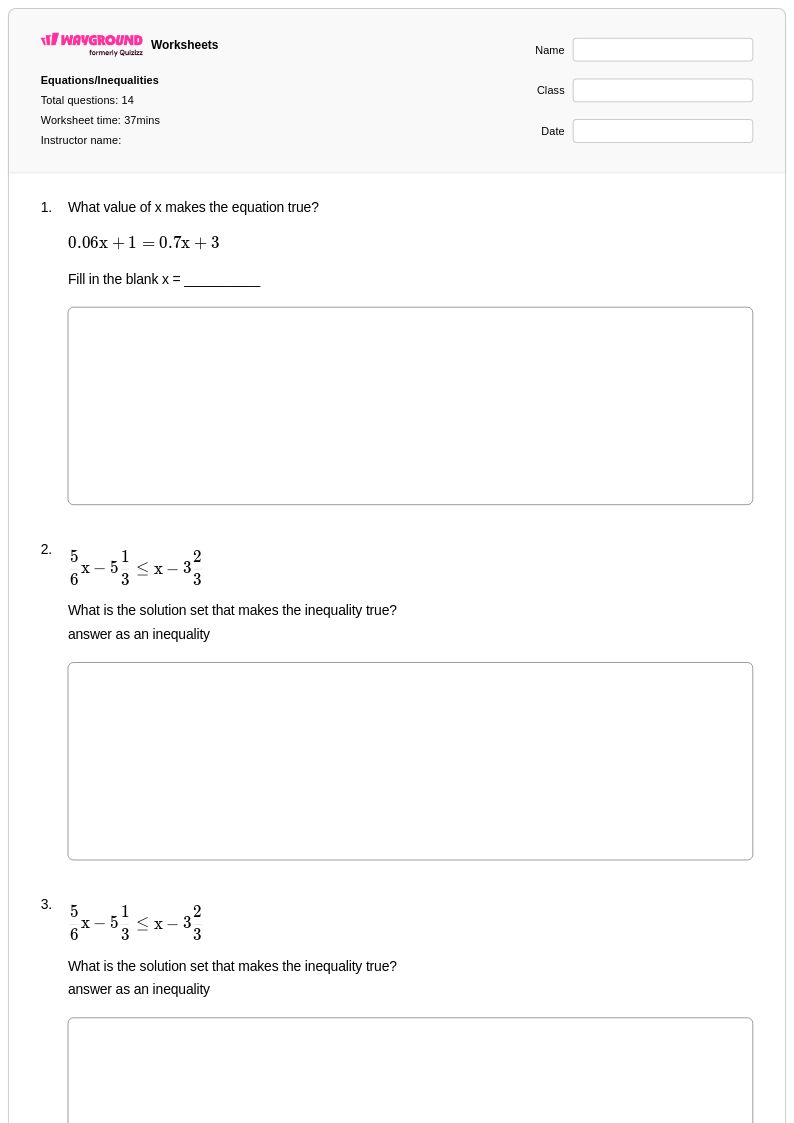
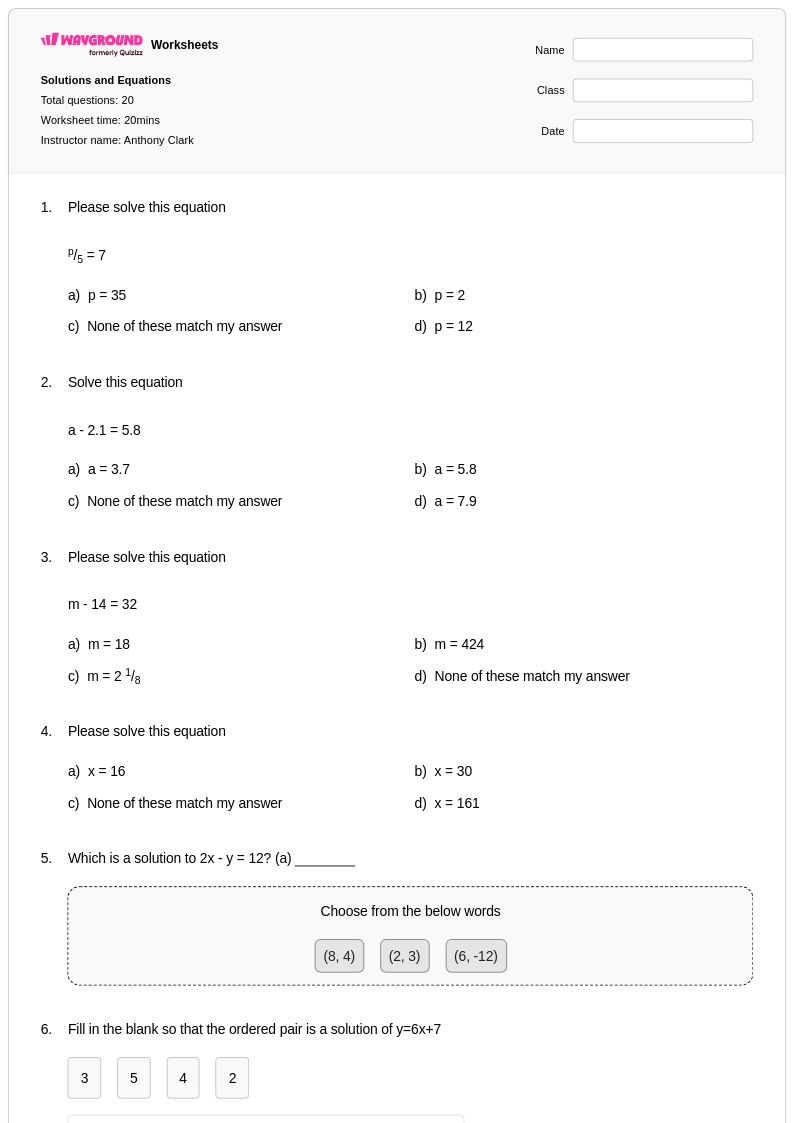
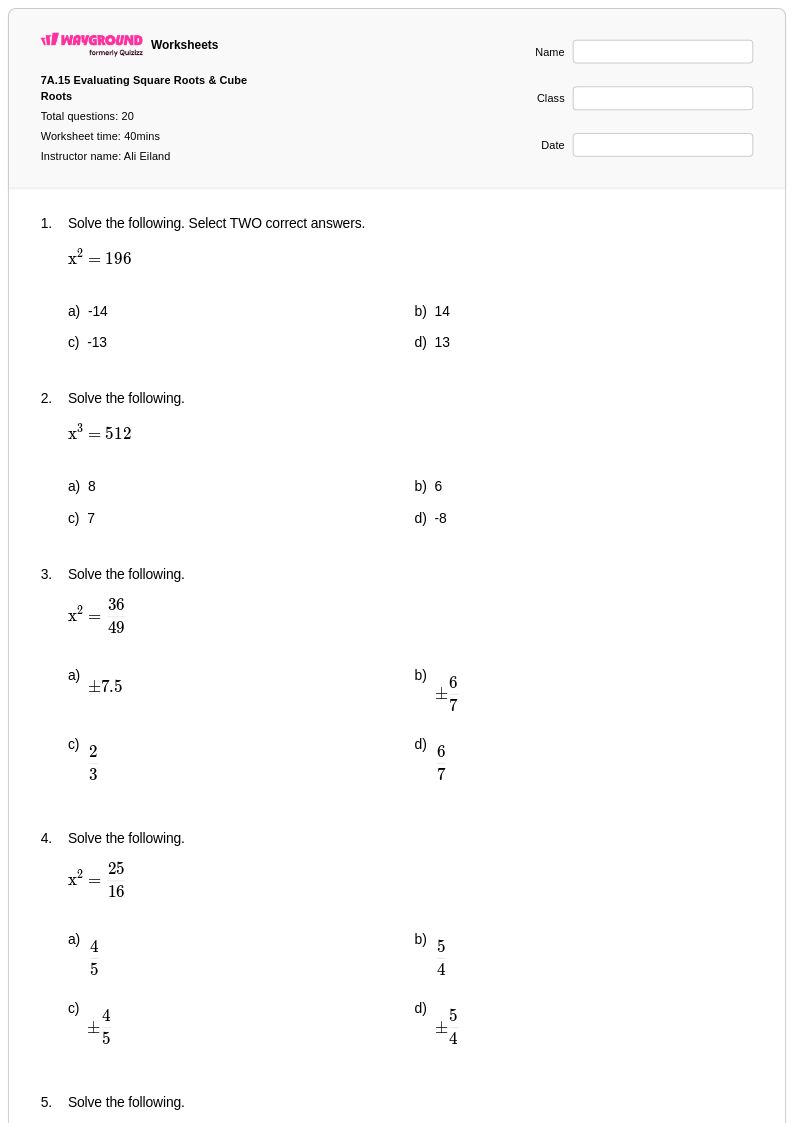
Master Class 7 equations with no solutions through Wayground's comprehensive collection of free worksheets, printables, and practice problems with detailed answer keys to build algebraic problem-solving confidence.
Explore printable Equations with No Solutions worksheets for Class 7
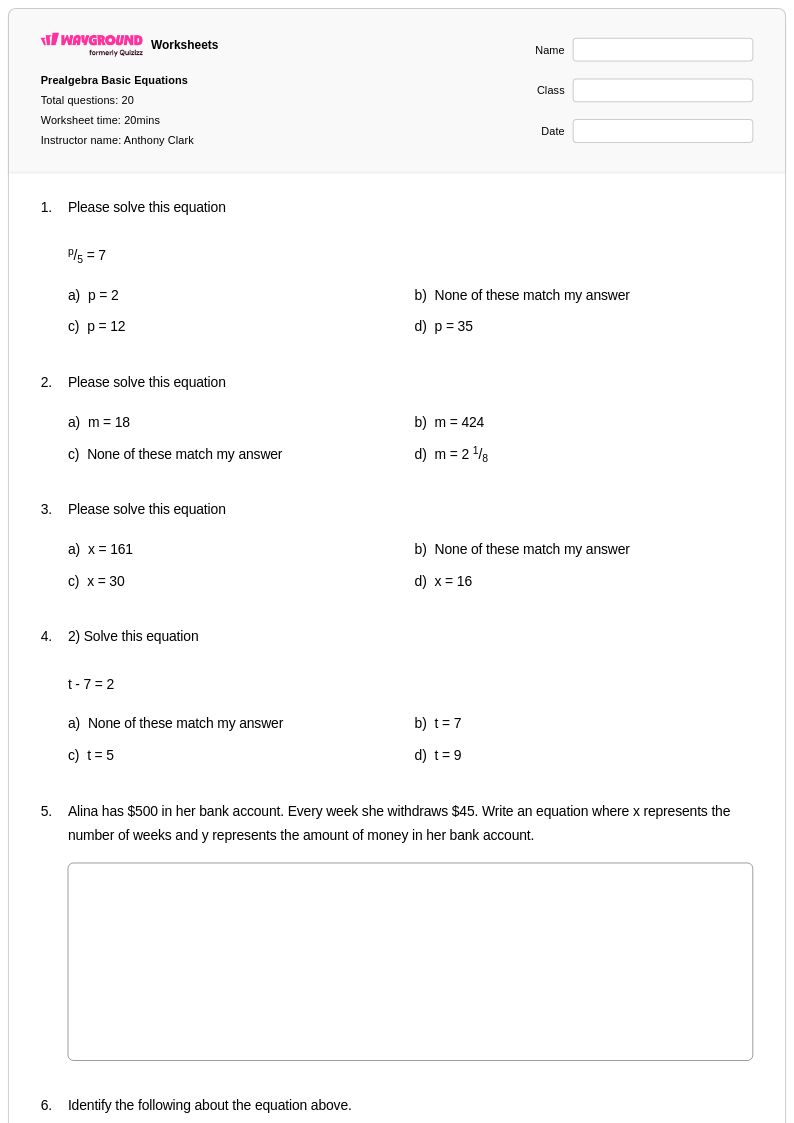
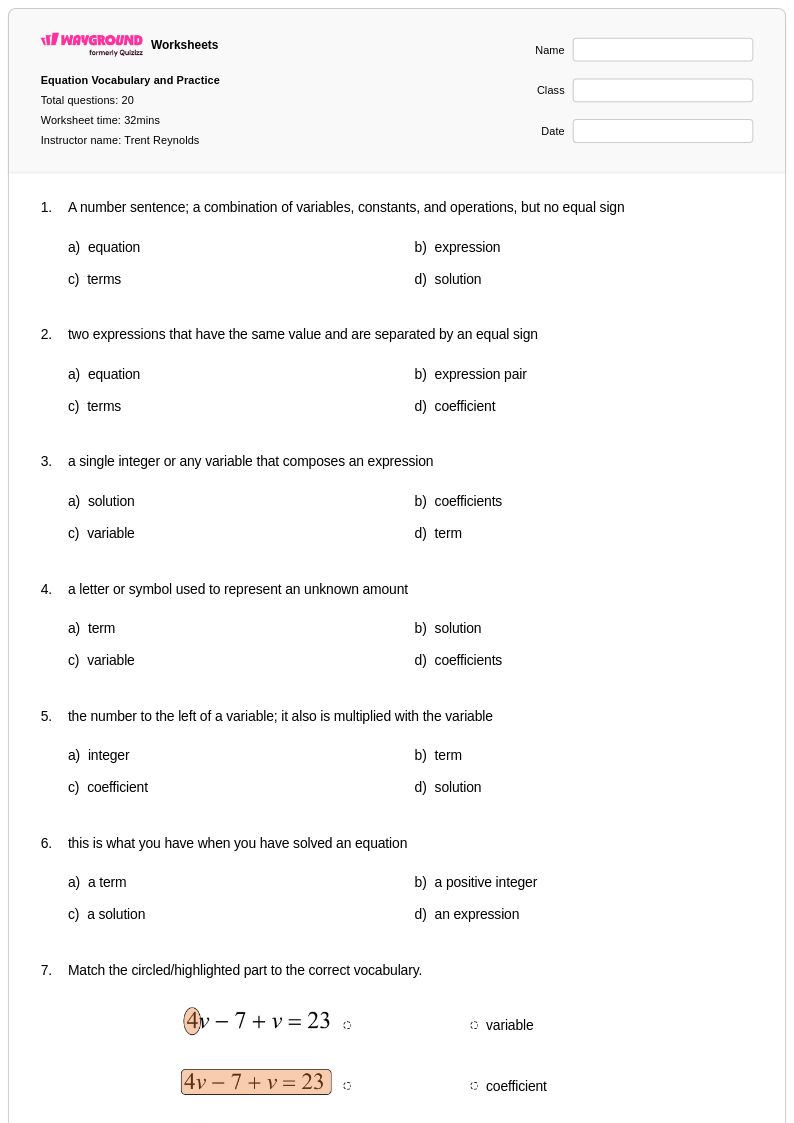
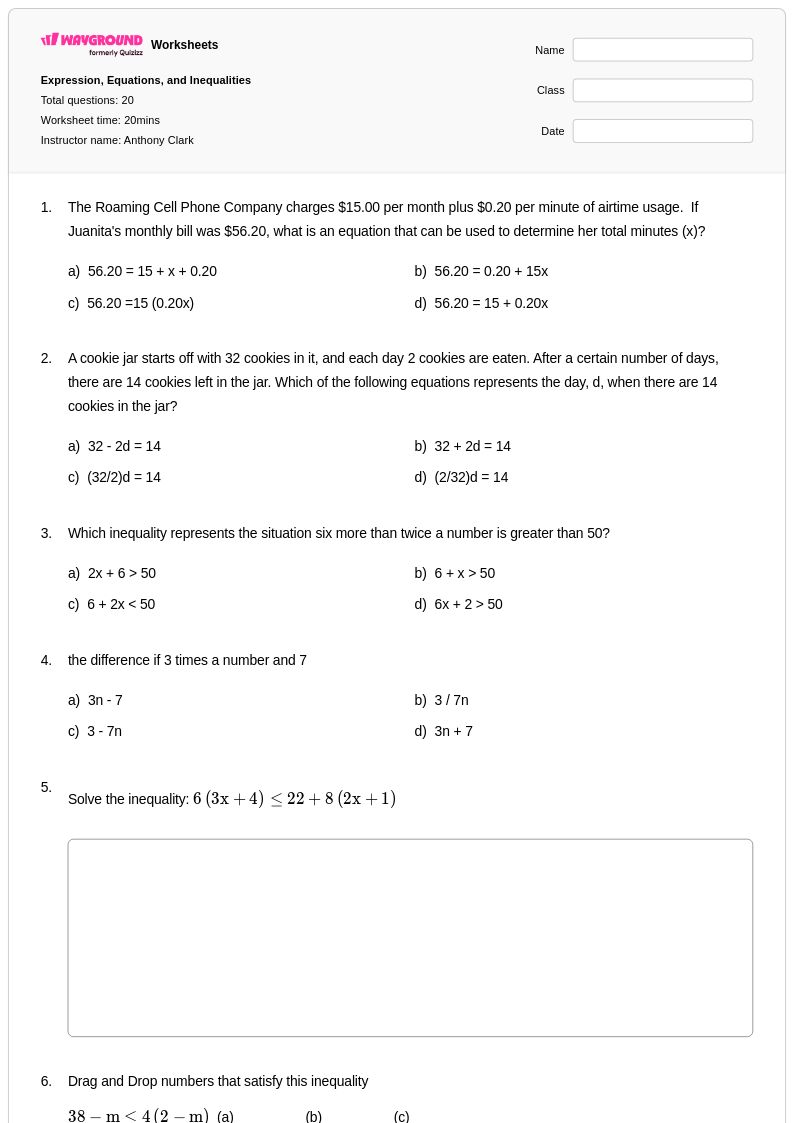
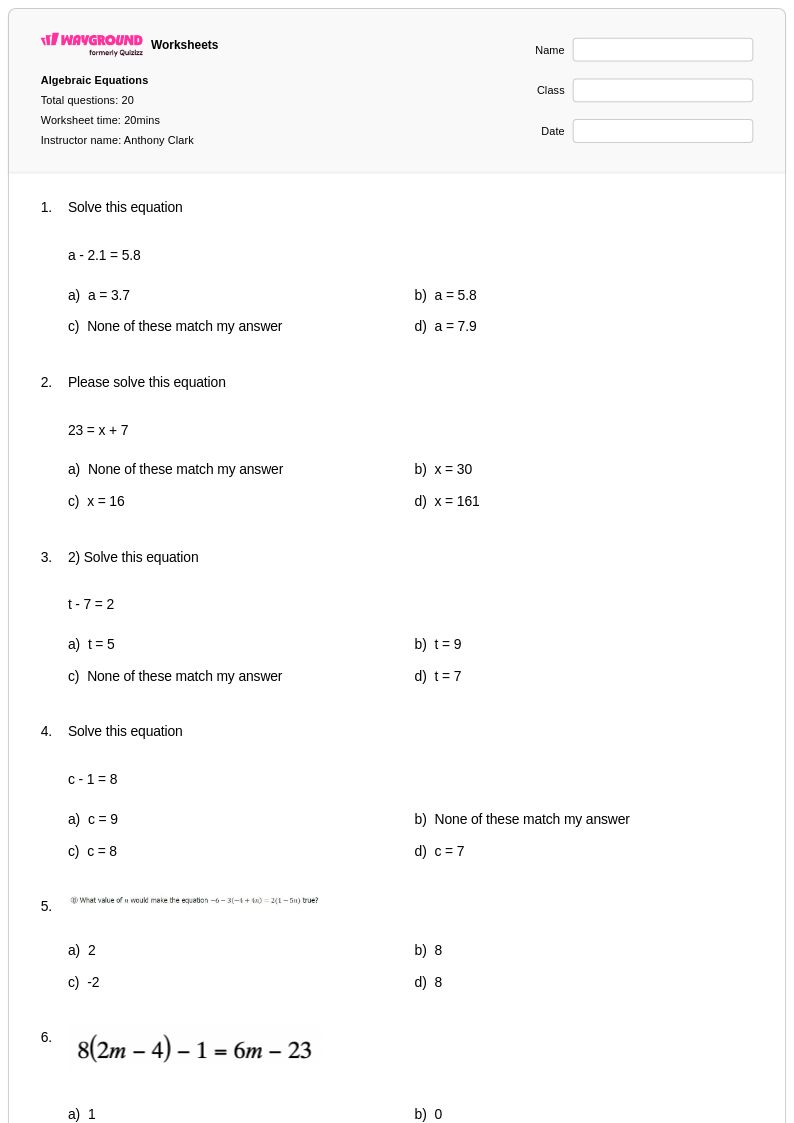
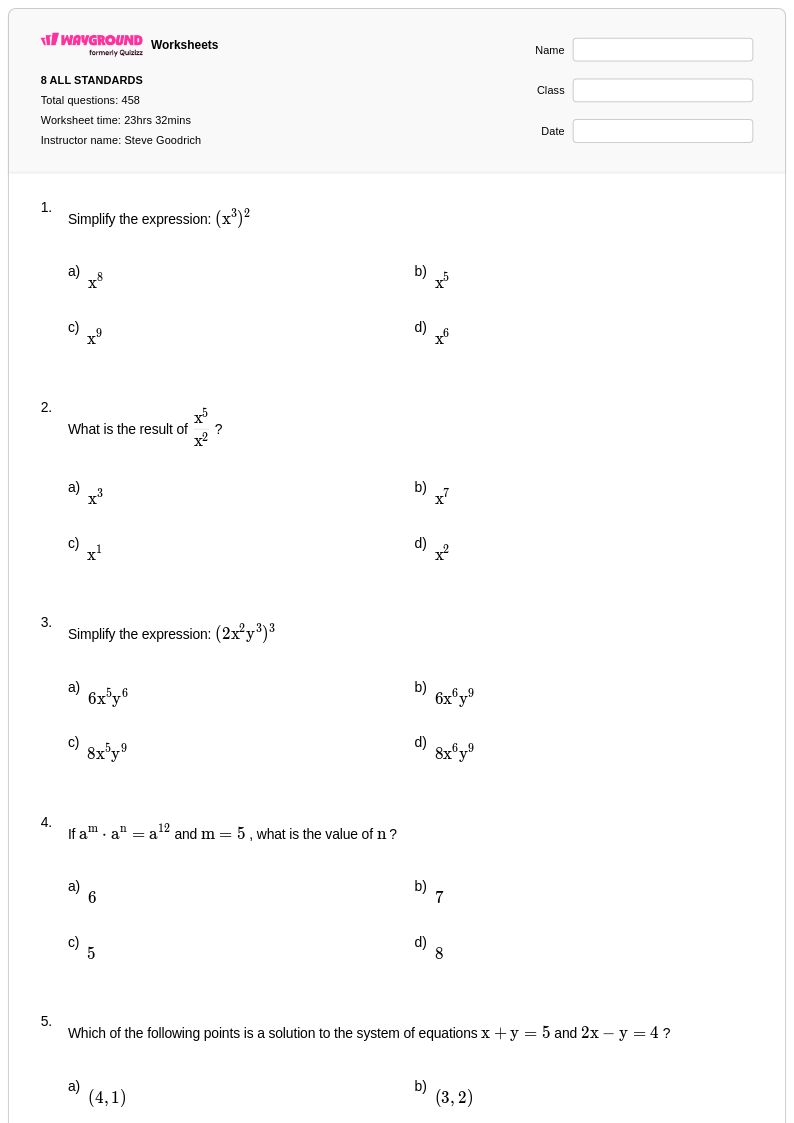
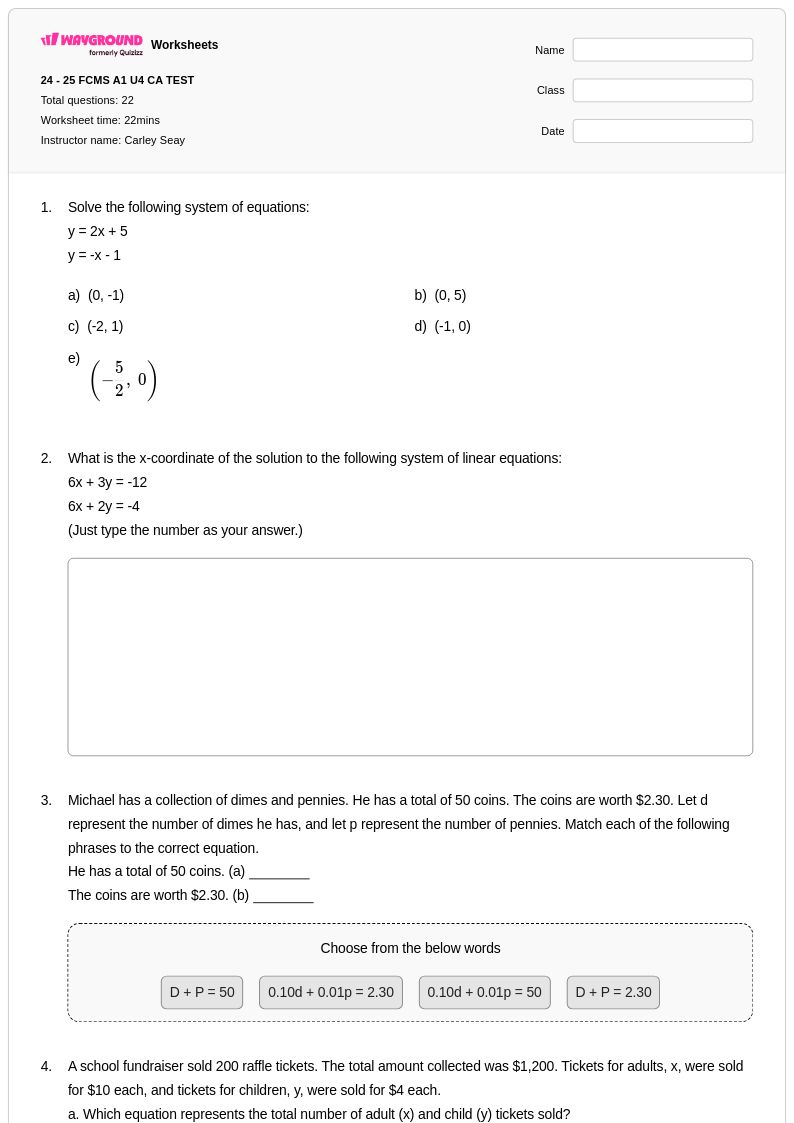
Equations with no solutions represent a critical algebraic concept for Class 7 students, helping them develop deeper understanding of mathematical reasoning and problem-solving strategies. Wayground's comprehensive worksheet collection focuses specifically on this challenging subtopic, providing students with systematic practice in identifying contradictory equations and understanding why certain algebraic manipulations lead to impossible statements. These carefully designed worksheets strengthen students' analytical thinking skills by presenting various equation types that result in false statements like "5 = 8" or "0 = 3" after simplification. Each worksheet includes detailed answer keys and step-by-step solutions, making them valuable resources for both independent study and classroom instruction. Available as free printables and downloadable pdf files, these practice problems guide students through the logical process of recognizing when an equation has no solution, building their confidence in algebraic manipulation and mathematical reasoning.
Wayground's extensive library, formerly known as Quizizz, empowers educators with millions of teacher-created resources specifically designed to support Class 7 algebra instruction on equations with no solutions. The platform's robust search and filtering capabilities allow teachers to quickly locate worksheets that align with curriculum standards and match their students' skill levels, while differentiation tools enable customization for diverse learning needs. These worksheet collections are available in both printable and digital formats, including convenient pdf downloads, giving teachers flexibility in how they deliver instruction and assign practice work. Whether used for initial concept introduction, targeted remediation for struggling learners, enrichment activities for advanced students, or regular skill practice, these resources streamline lesson planning and provide consistent, high-quality materials that help students master this essential algebraic concept through varied and engaging problem sets.
FAQs
How do I teach equations with no solutions to 7th graders?
By Grade 7, students can handle multi-step equations, so the no-solution case should emerge naturally from that work rather than being introduced as a separate trick. Assign an equation like 4(x + 2) = 4x + 5, have students distribute and simplify, and let them hit the contradiction themselves. The discussion that follows — why does 8 = 5 mean no solution exists? — is where the real learning happens. Connecting it to the idea that both sides of the equation represent the same rate of change but different starting points gives students a conceptual frame, not just a procedural rule.
What exercises help 7th graders practice identifying no-solution equations?
Mixed-type practice is essential at Grade 7: put one-solution, no-solution, and infinite-solution equations in the same problem set so students can't coast on pattern recognition. Error-analysis problems work especially well — show a "student solution" that stops at the contradiction and asks "what went wrong?" (nothing went wrong) and have students explain the result. This forces the conceptual understanding that procedural practice alone won't build.
What mistakes do 7th graders typically make with no-solution equations?
Two errors dominate at this grade. First, students interpret the contradiction as their own mistake and rework the problem, sometimes indefinitely. Second — and more conceptually significant — students confuse no-solution equations with identity equations. Both cases eliminate the variable, but 3 = 3 means infinite solutions while 3 = 7 means none. Explicitly comparing these two outcomes side by side, rather than teaching them in separate lessons, helps students keep them straight.
How do I use these Grade 7 worksheets effectively?
Each worksheet includes a complete answer key with step-by-step solutions, which makes them useful for self-checking after independent practice — not just for teacher grading. Assign the PDF as a printed worksheet for focused, distraction-free practice, then use the Wayground for Teachers app to scan and grade submissions. Alternatively, host the same worksheet as a digital Wayground quiz if you want students to work on devices and submit online.
How does the no-solution concept fit into 7th grade Common Core algebra?
Common Core expects 7th graders to solve multi-step linear equations and begin reasoning about the structure of equations, not just their solutions. The no-solution case is a direct application of that structural reasoning: students apply the same solving steps they've practiced, but now they must interpret what a false numerical result means. This prepares them for 8th grade, where they'll analyze equations with one solution, no solution, and infinitely many solutions as a unified concept — and eventually connect that framework to systems of equations in high school.
How can I differentiate this practice for my 7th grade class?
For students still shaky on multi-step solving, scaffold the worksheet by adjusting font spacing and size so the layout doesn't add visual noise to already-complex algebra. Wayground's Read Aloud accommodation helps students who struggle with reading-heavy word problems that embed no-solution equations in context. For advanced students, the same worksheet can be extended by asking them to construct their own no-solution equations — working backward from a contradiction is a meaningful challenge at this level.