Free Printable Equivalent Equations Worksheets for Class 7
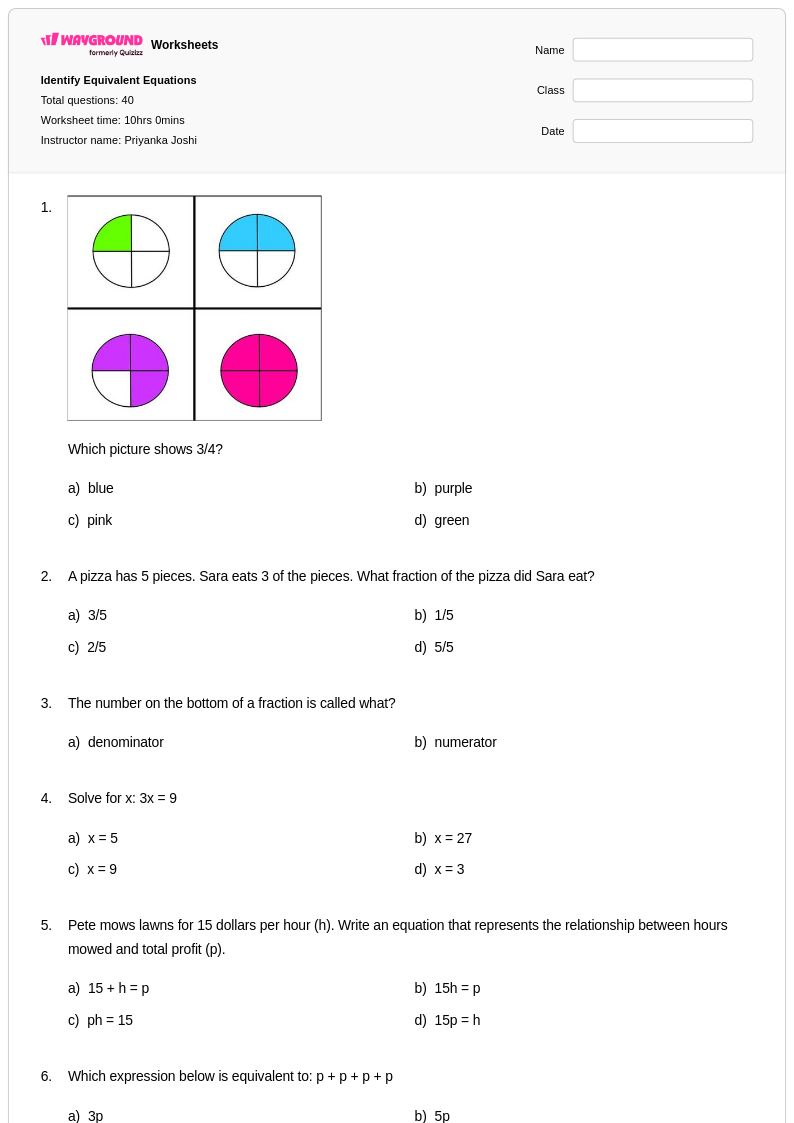
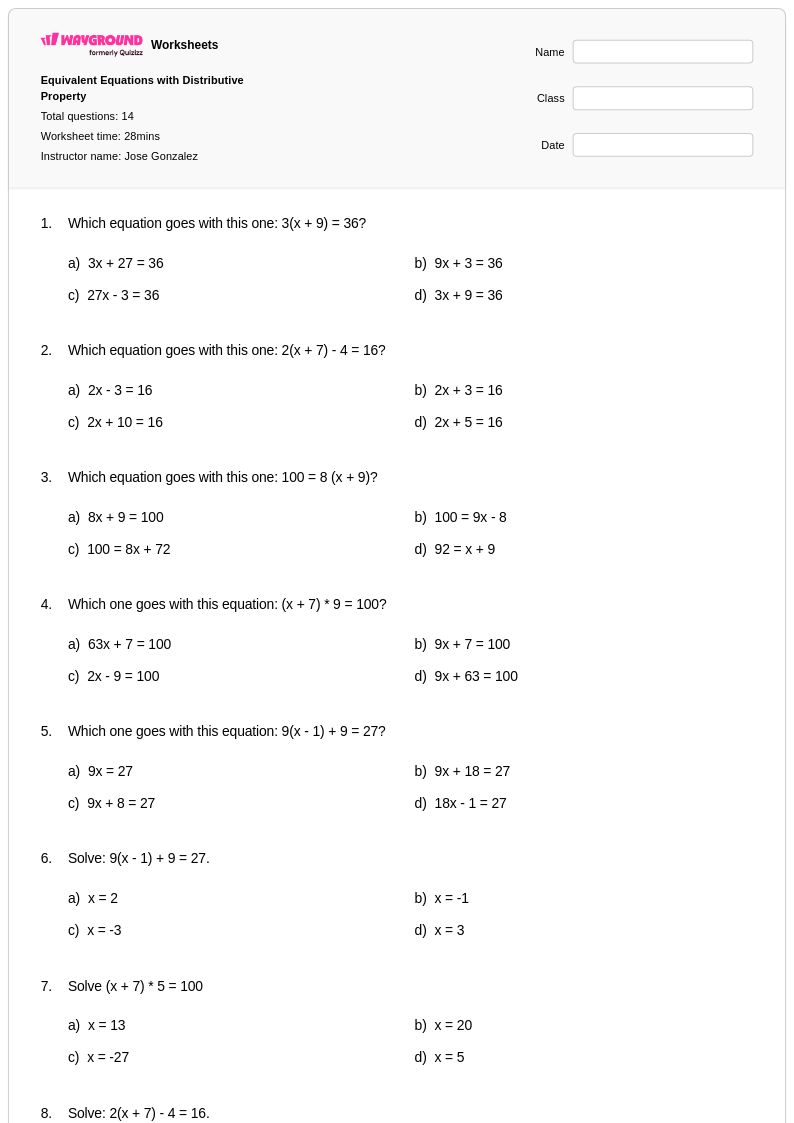
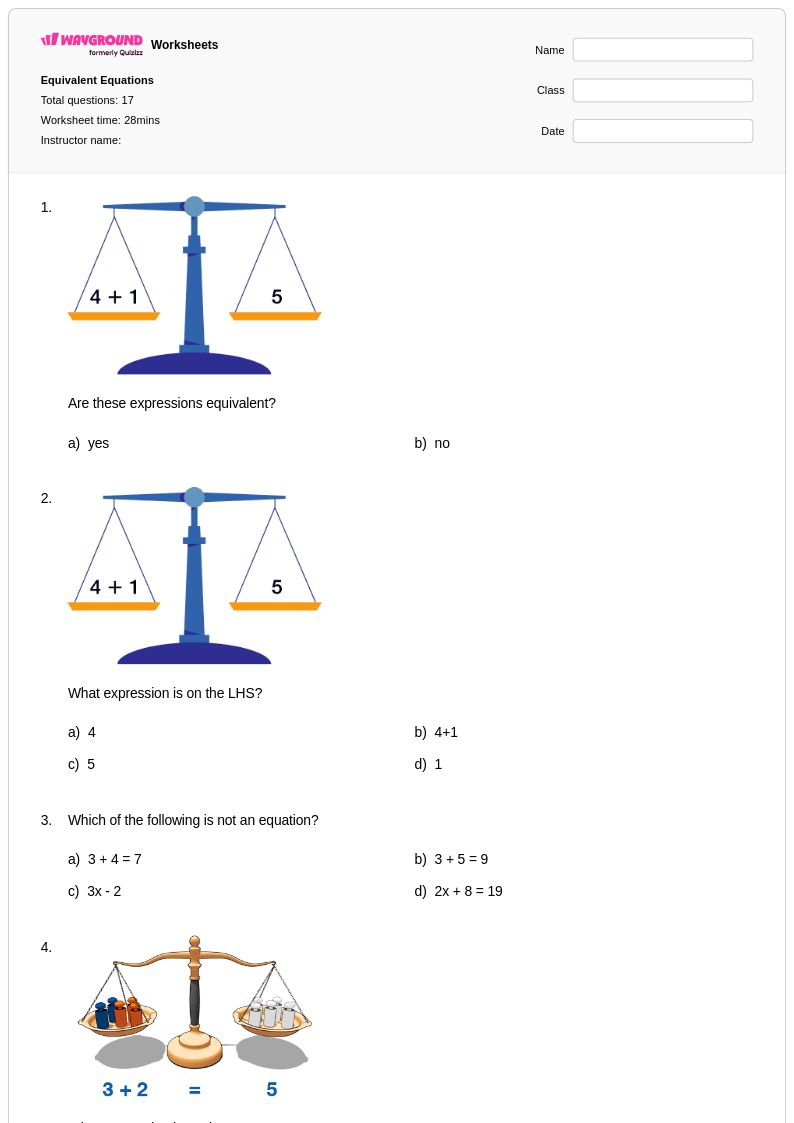
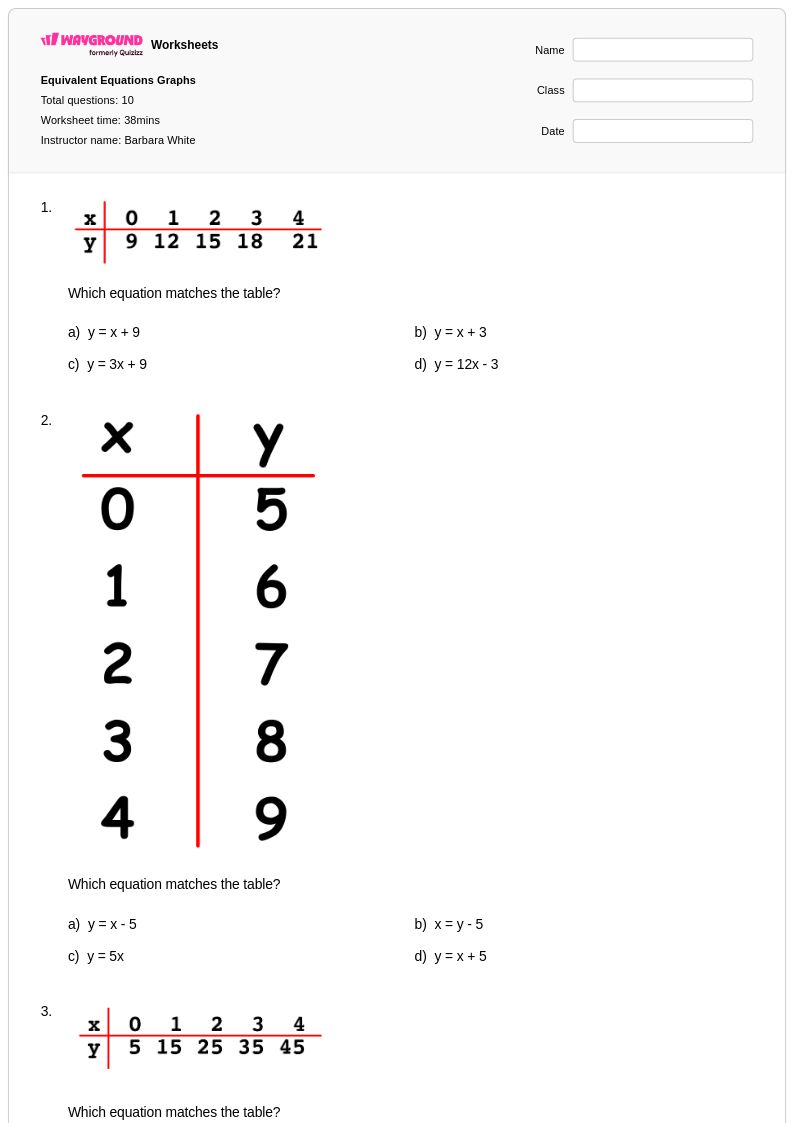
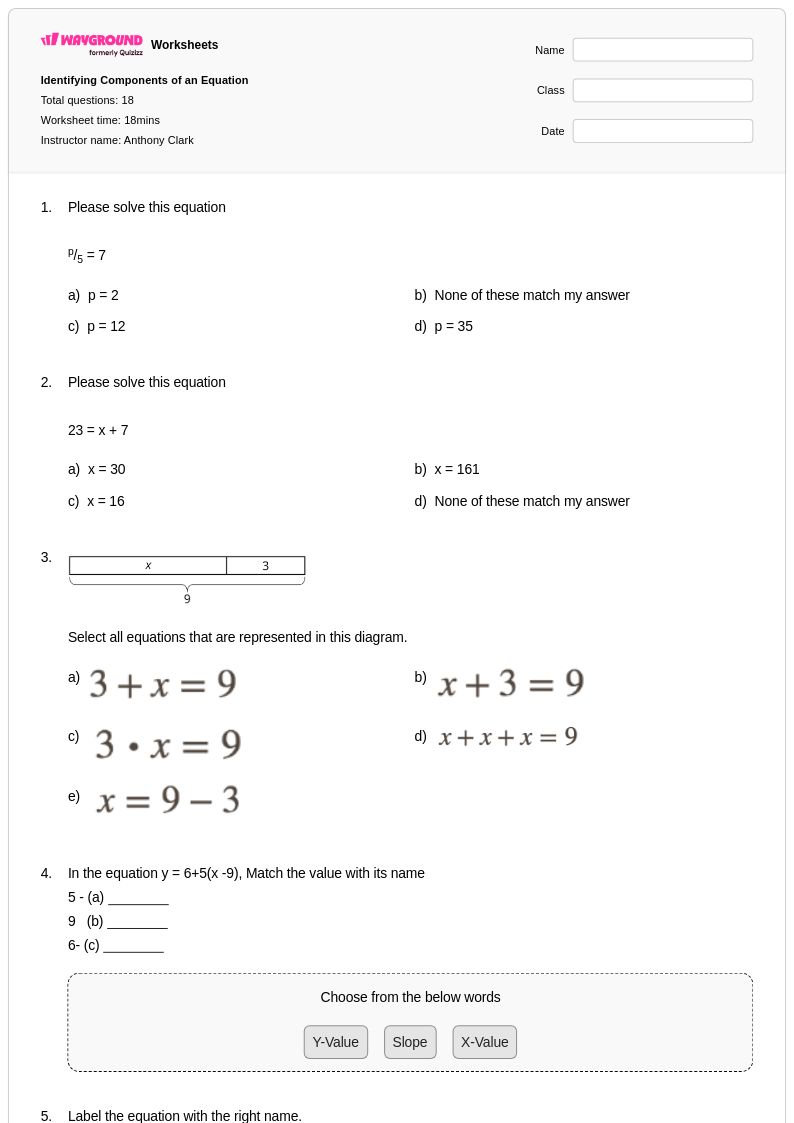
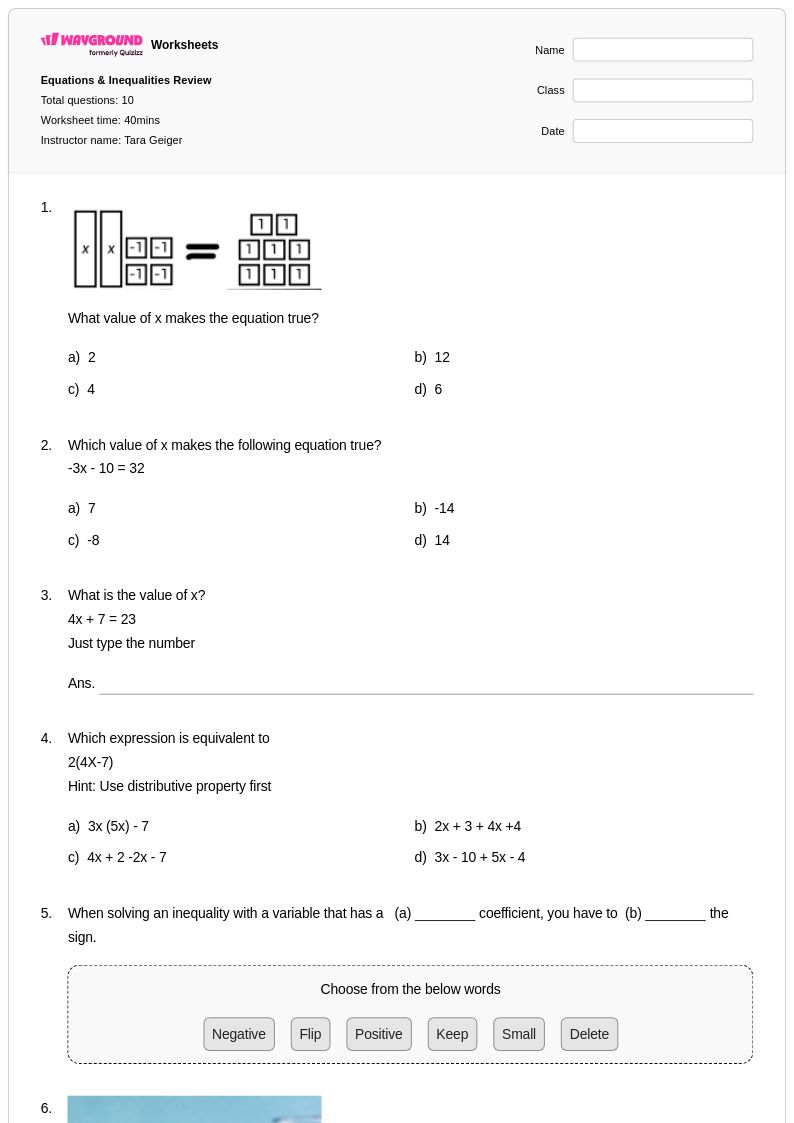
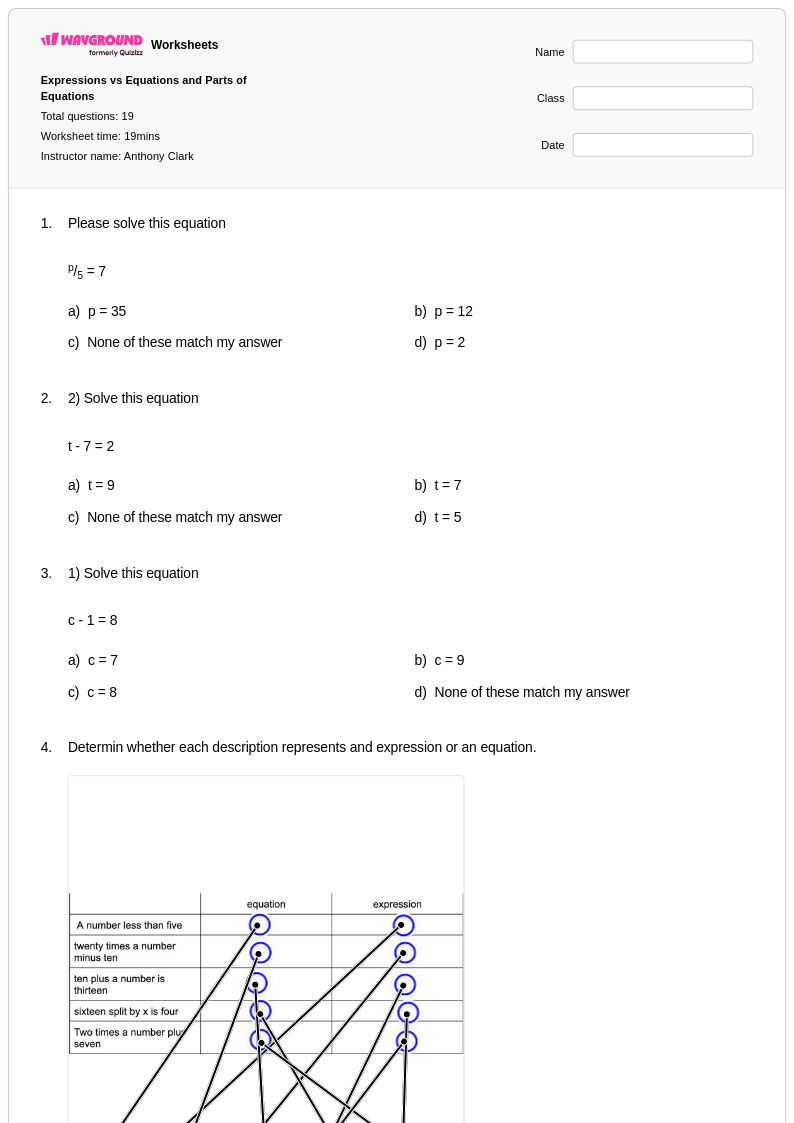
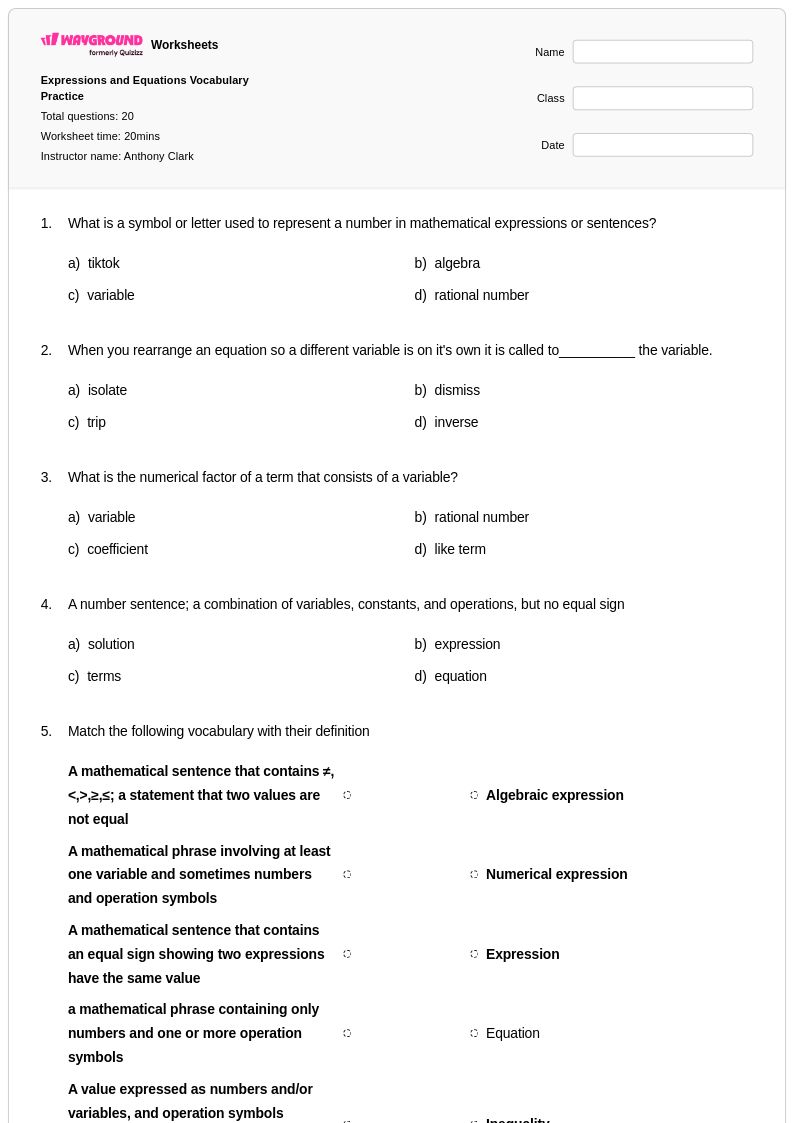
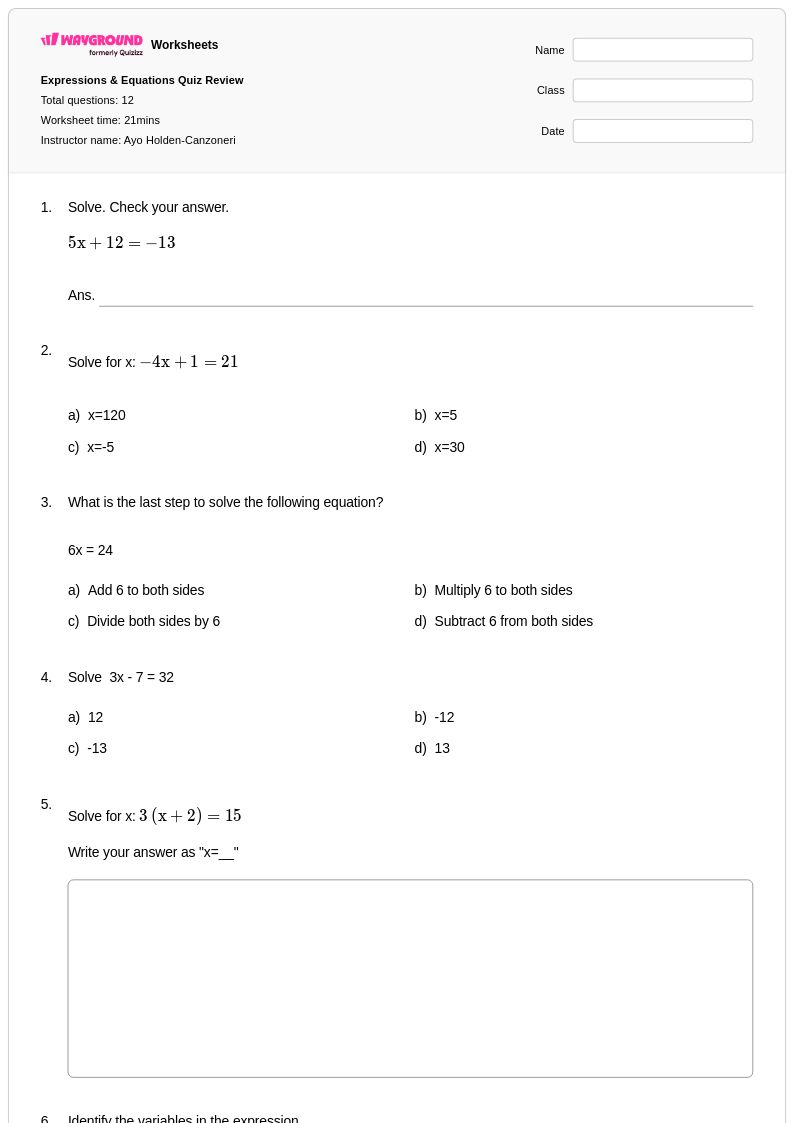
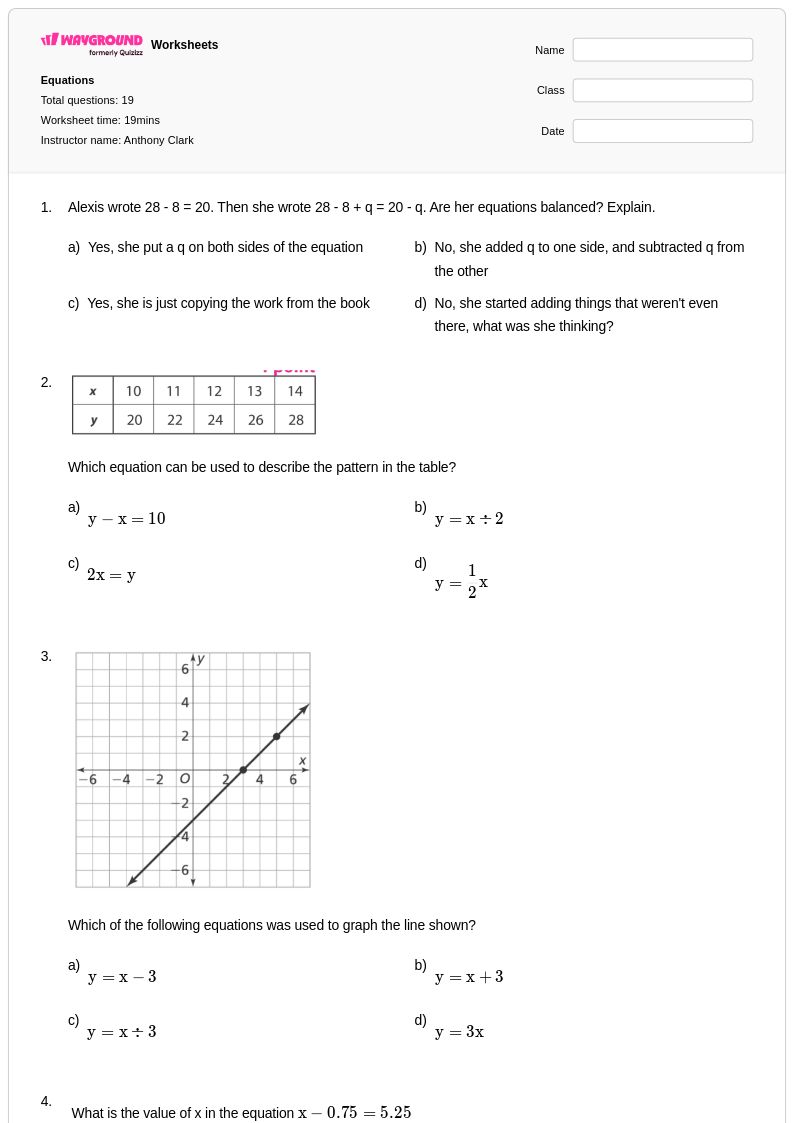
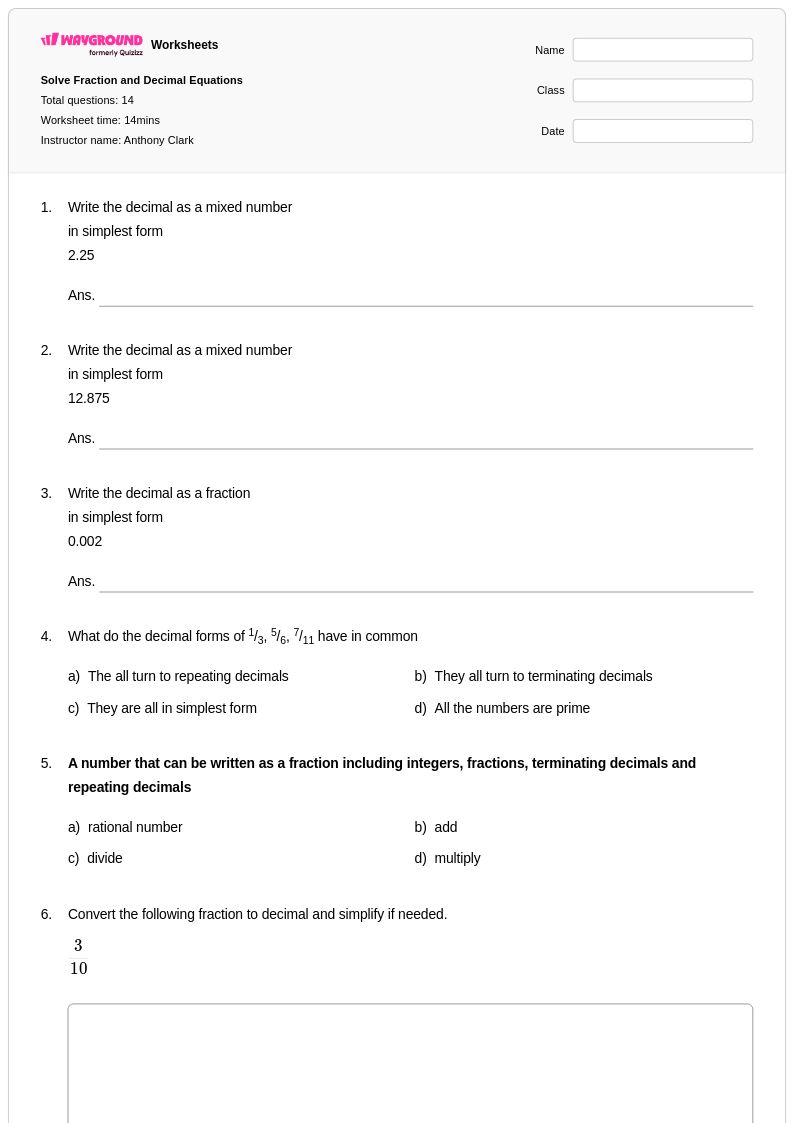
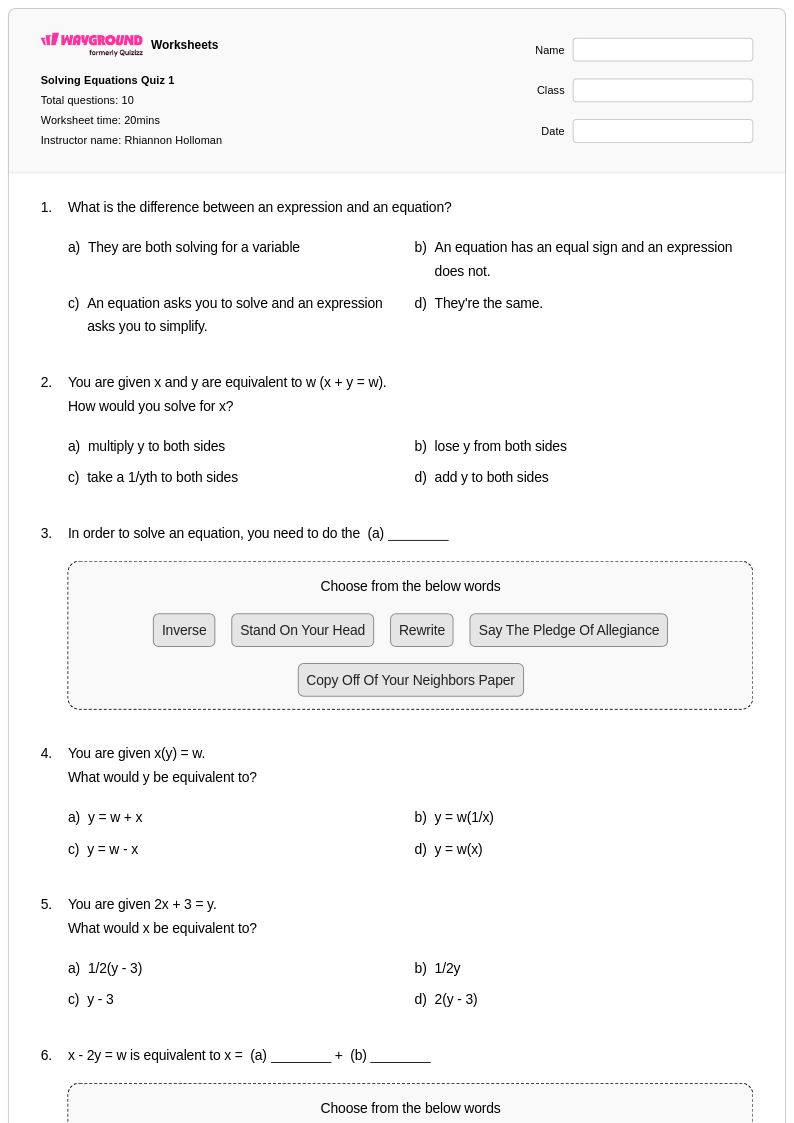
Class 7 equivalent equations worksheets from Wayground help students master solving and identifying equivalent algebraic expressions through comprehensive practice problems, printable PDFs, and detailed answer keys.
Explore printable Equivalent Equations worksheets for Class 7
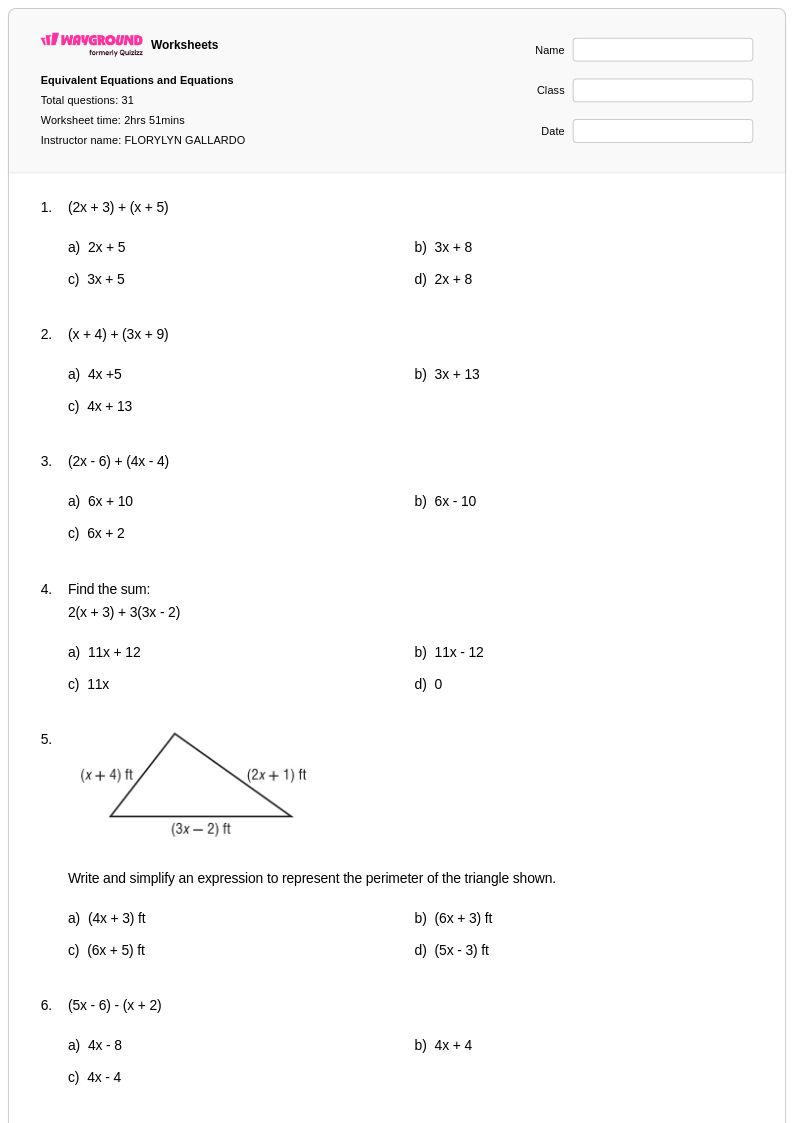
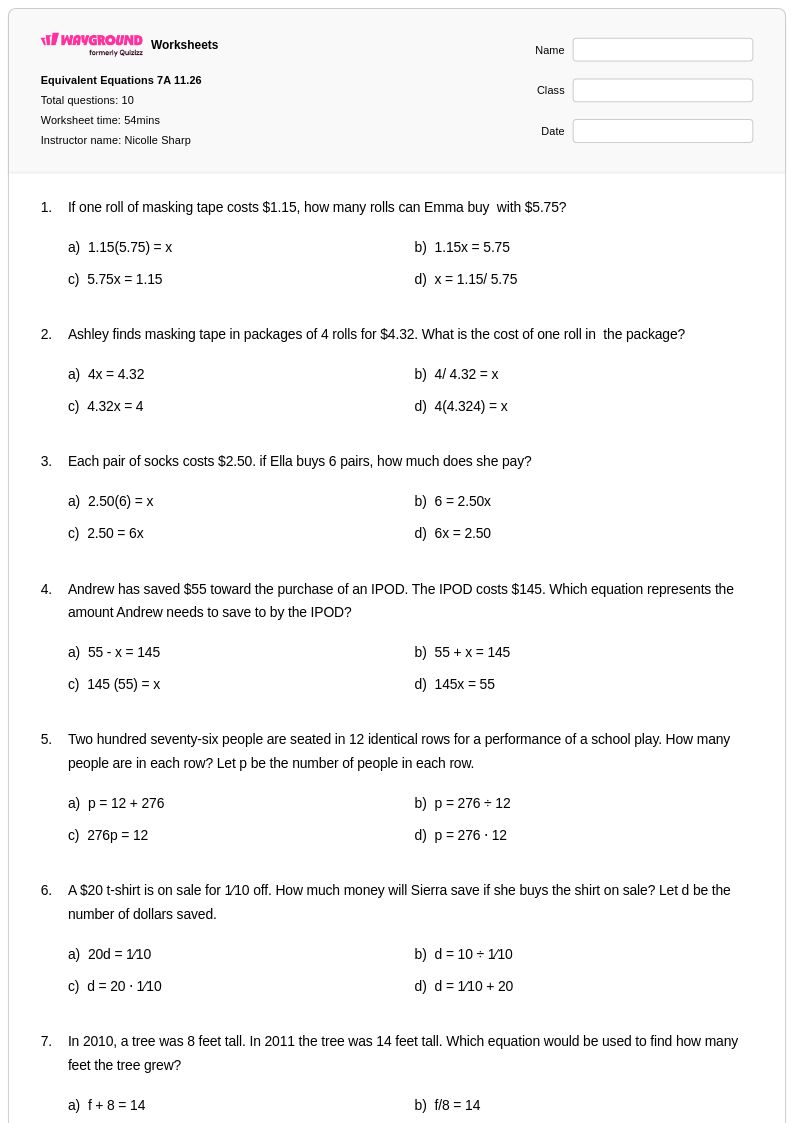
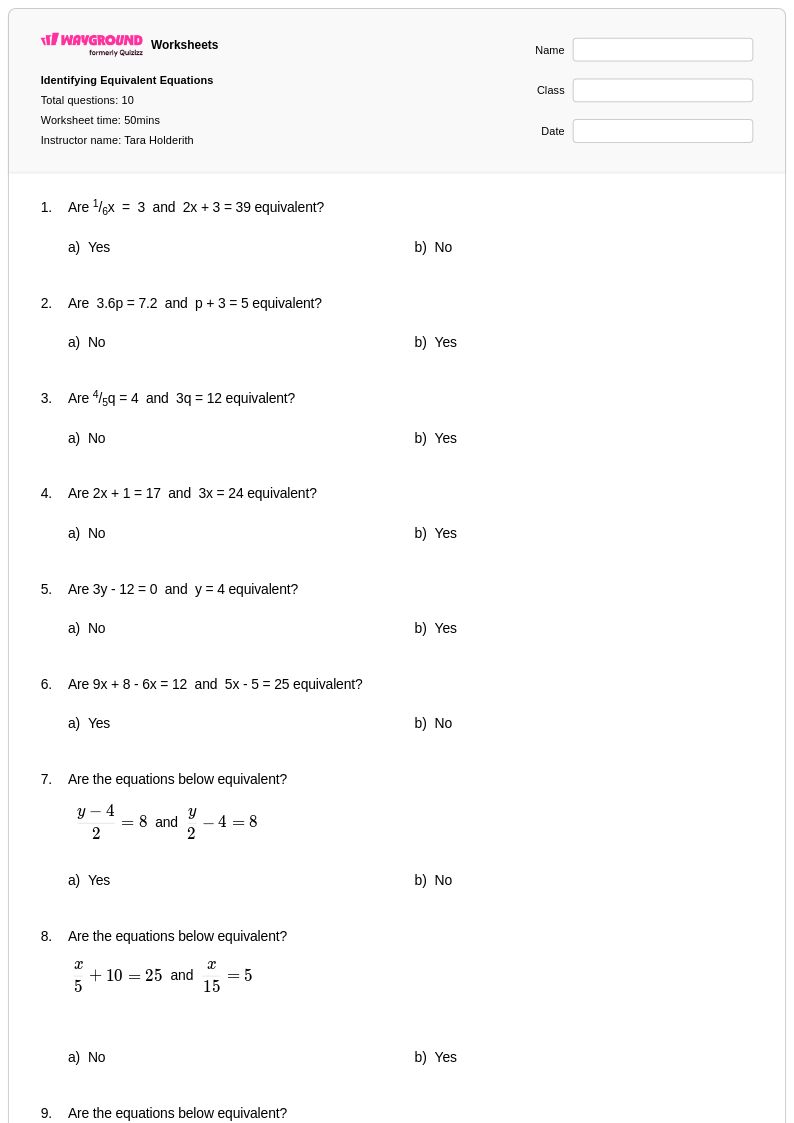
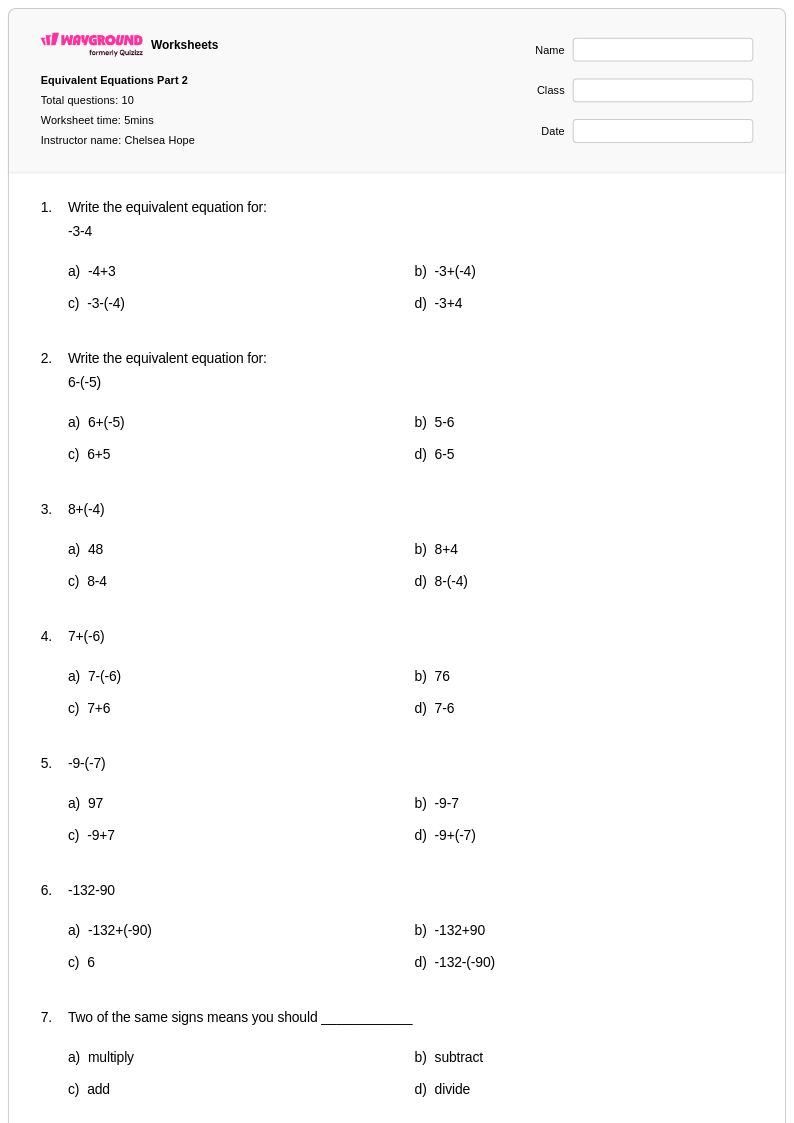
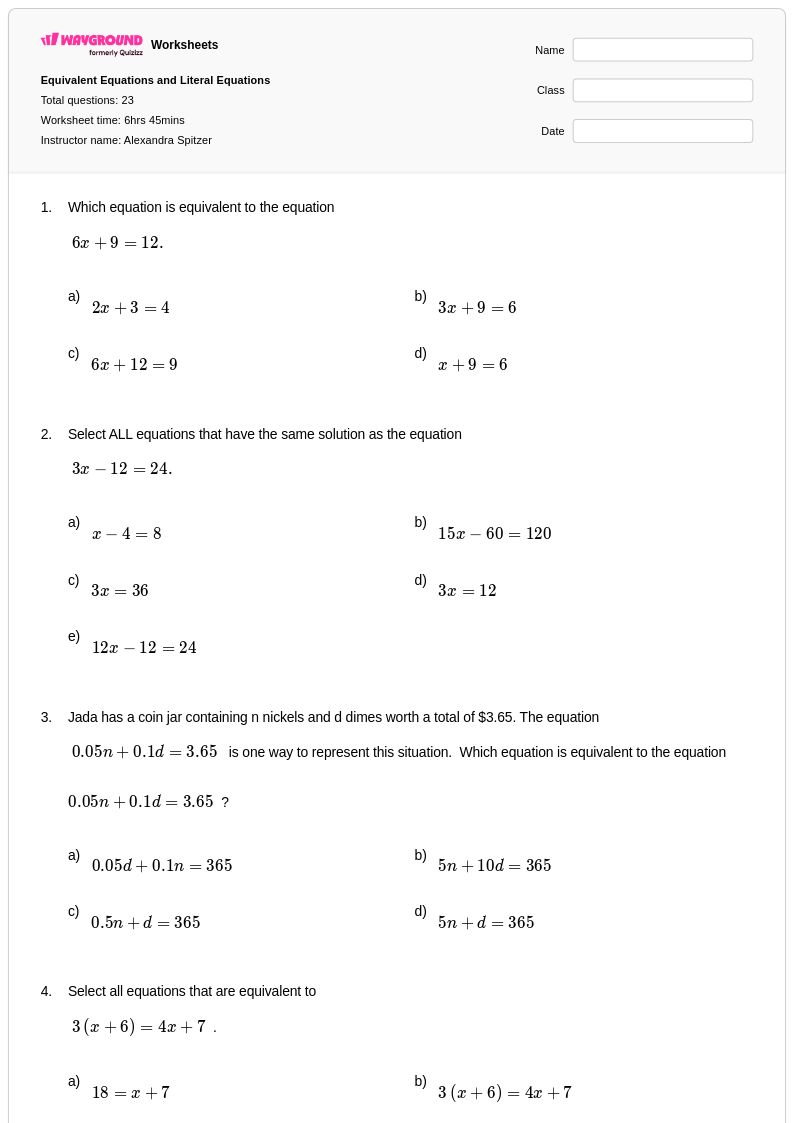
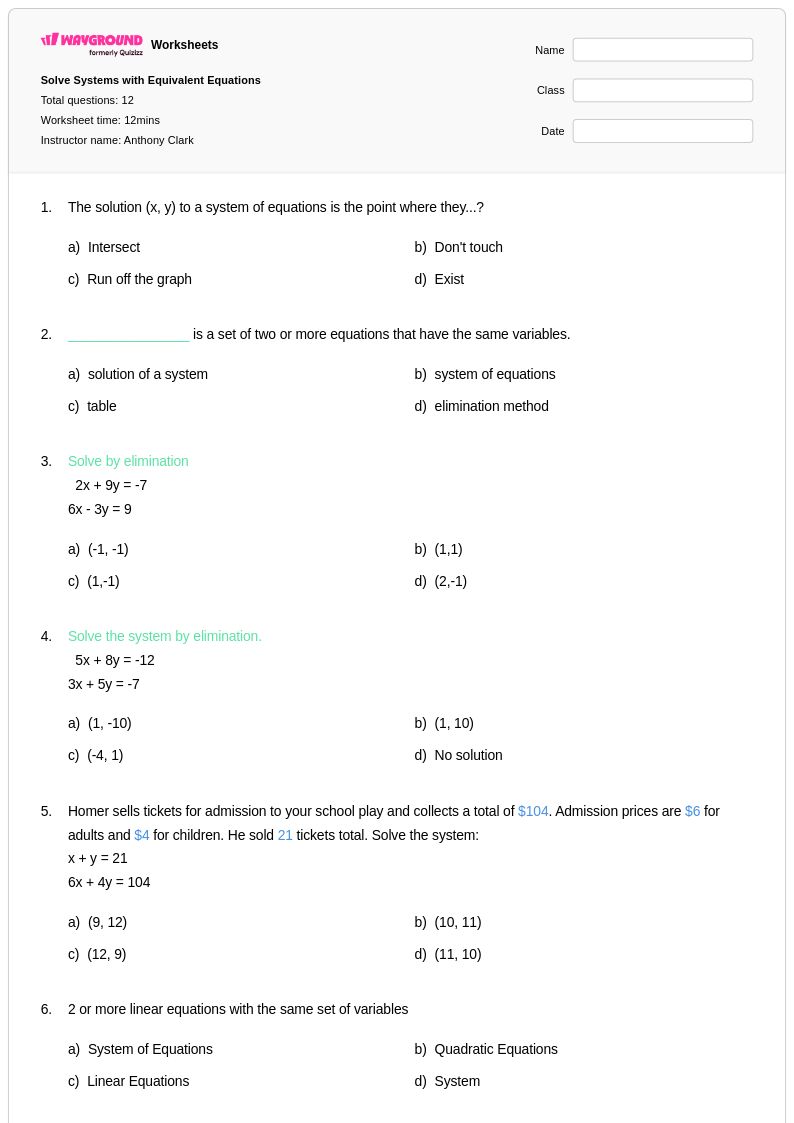
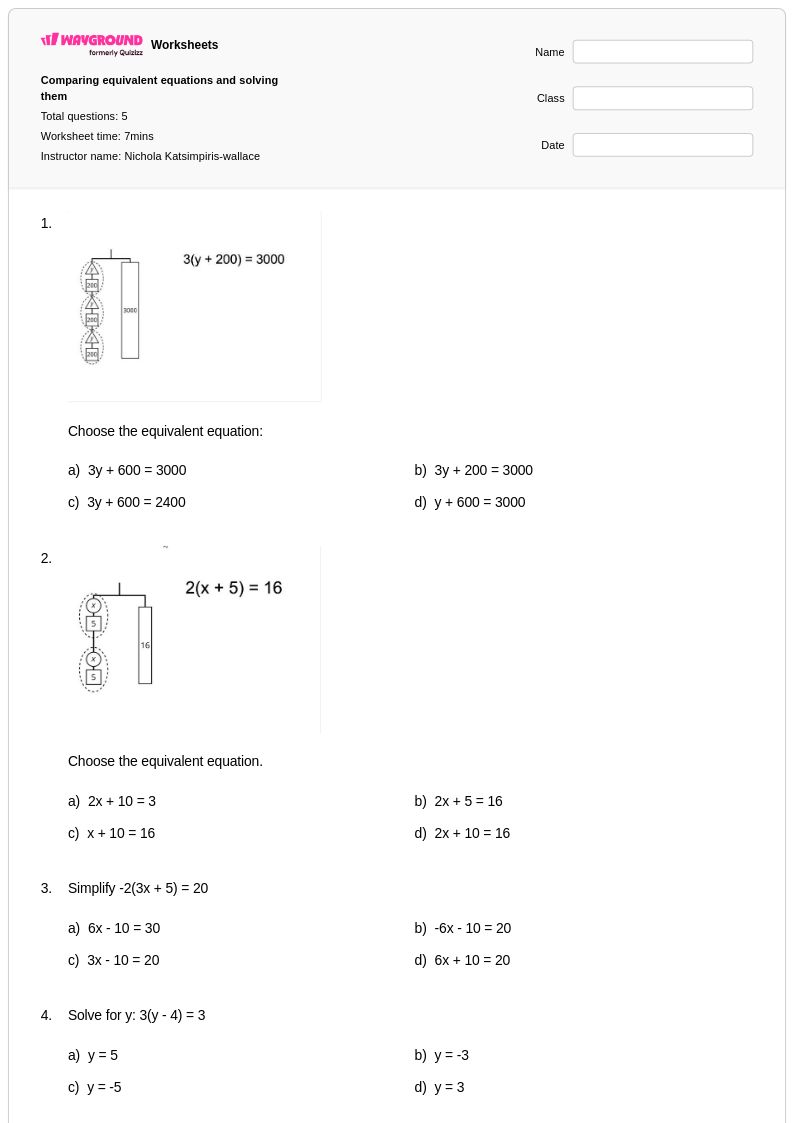
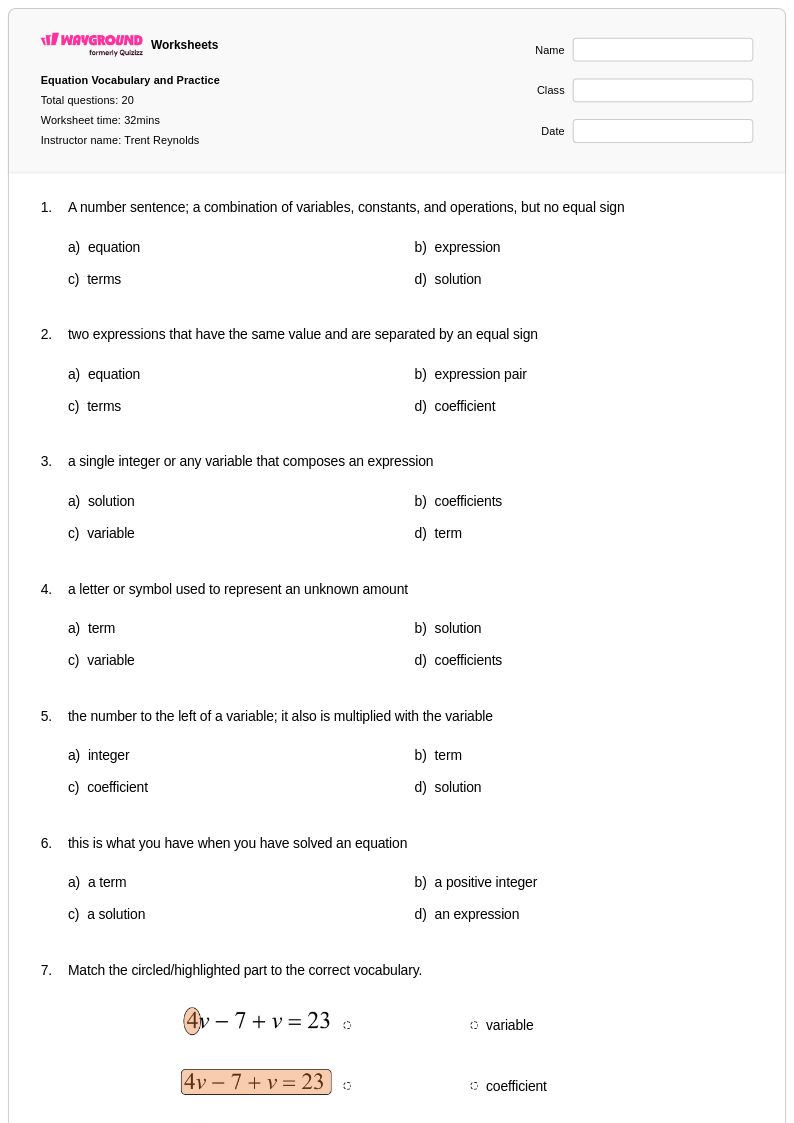
Equivalent equations form a cornerstone of Class 7 algebra, and Wayground's comprehensive worksheet collection provides educators with expertly designed resources to help students master this fundamental concept. These worksheets guide seventh-grade students through the process of recognizing and creating equations that have identical solution sets, strengthening their understanding of algebraic manipulation techniques such as adding, subtracting, multiplying, or dividing both sides of an equation by the same value. Each worksheet includes carefully scaffolded practice problems that progress from basic equivalent equation identification to more complex multi-step transformations, complete with detailed answer keys that support both independent study and classroom instruction. Available as free printables in convenient PDF format, these resources enable students to develop fluency in determining whether equations are equivalent and applying the properties of equality with confidence.
Wayground, formerly Quizizz, empowers mathematics teachers with access to millions of teacher-created equivalent equations worksheets, all searchable through robust filtering systems that allow educators to pinpoint resources aligned with specific curriculum standards and learning objectives. The platform's differentiation tools enable teachers to customize worksheets for diverse learning needs, adjusting complexity levels and problem types to support both remediation for struggling students and enrichment opportunities for advanced learners. Whether delivered in traditional printable PDF format for homework assignments or utilized through digital formats for interactive classroom activities, these equivalent equations resources streamline lesson planning while providing targeted skill practice that builds algebraic reasoning. Teachers can efficiently locate age-appropriate content that reinforces the connection between equivalent equations and solving linear equations, ensuring students develop the foundational skills necessary for success in advanced algebraic concepts.
FAQs
How do I teach equivalent equations to 7th graders?
By seventh grade, students should already know that applying the same operation to both sides preserves equality — so the teaching goal shifts from introducing that idea to applying it fluently across more complex situations. Focus on multi-step transformations, combining like terms before applying inverse operations, and problems where the variable appears on both sides. A useful classroom move: present two equations and ask students to prove equivalence by transforming one into the other, rather than just solving both. That pushes them to reason about the transformation itself, not just the answer.
What exercises help 7th graders practice equivalent equations?
Three exercise types build the most skill at this level: transforming a given equation into an equivalent form using a specified operation; determining whether two equations with variables on both sides are equivalent; and working backwards — given a solution, constructing two different equations that share it. The last type is underused but highly effective for deepening understanding of what equivalence actually means.
What mistakes do 7th graders commonly make with equivalent equations?
At grade 7, the most persistent error is incorrectly combining like terms before applying a transformation — for example, treating 2x + 3x + 5 = 20 as 5x + 5 = 20 but then only subtracting 5 from one side. Students also struggle when the same variable appears on both sides; they often move terms without changing the sign, producing an inequivalent equation. Having students annotate each step with the operation they applied (and to which side) catches these errors before they become habits.
How do I use Wayground's Grade 7 equivalent equations worksheets in my classroom?
You can assign the worksheet as a digital quiz on Wayground — useful for immediate feedback during class — or print the PDF for independent practice or homework. Every worksheet includes a complete answer key. If you print and collect student work, the Wayground for Teachers app lets you scan submissions for grading rather than marking each paper by hand.
How does Common Core approach equivalent equations in 7th grade?
In Common Core's progression, seventh grade is where students move from one-step equations to multi-step equations and begin working with equations that have variables on both sides. The expectation is that students can apply properties of equality fluently — not just execute the steps, but explain why each transformation produces an equivalent equation. This builds directly from grade 6's introduction of the properties of equality and sets up grade 8's work with linear equations that may have one solution, no solution, or infinitely many solutions.
How can I differentiate equivalent equations practice for my 7th grade class?
For students who are still shaky on the underlying concept, Wayground's reduced answer choices option limits the number of options displayed, which helps them focus on reasoning rather than being overwhelmed by distractors. For students with visual processing needs, generating a worksheet version with a dyslexia-friendly font or increased font size takes about a minute and uses the exact same problems. These accommodations are set per student, so the rest of the class works from the standard version without any disruption.