Free Printable Estimating Differences Worksheets for Class 5
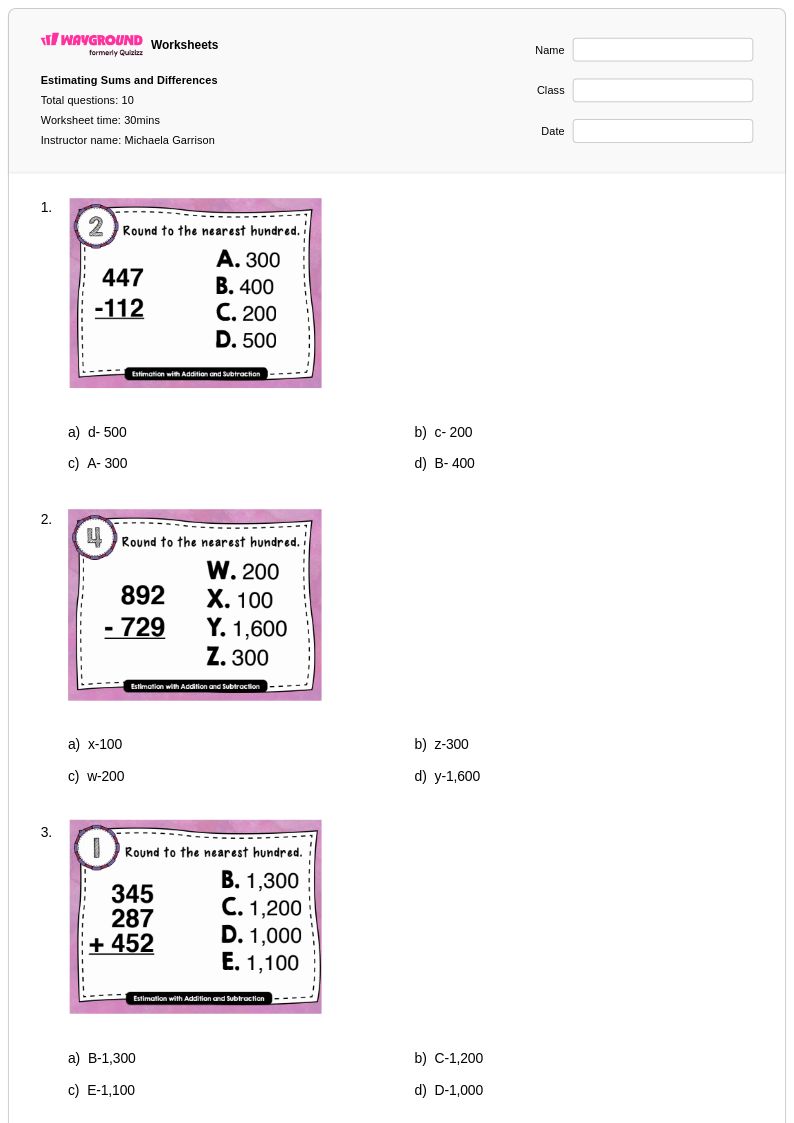
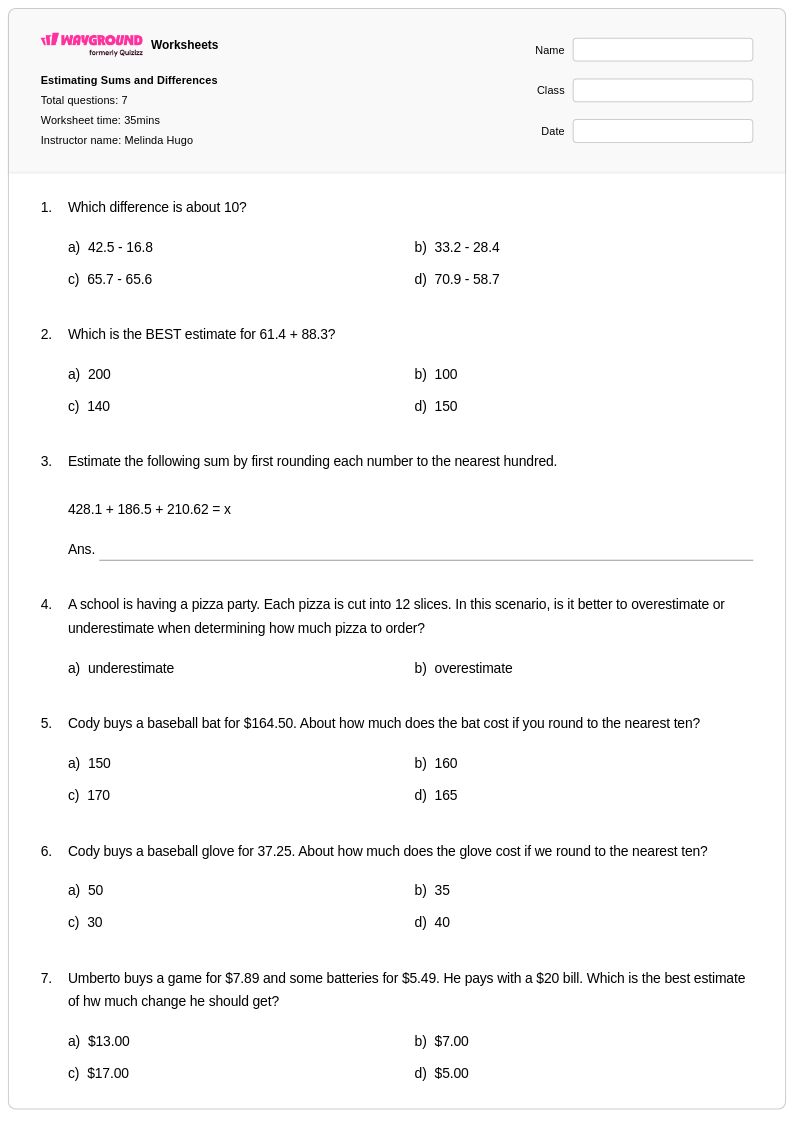
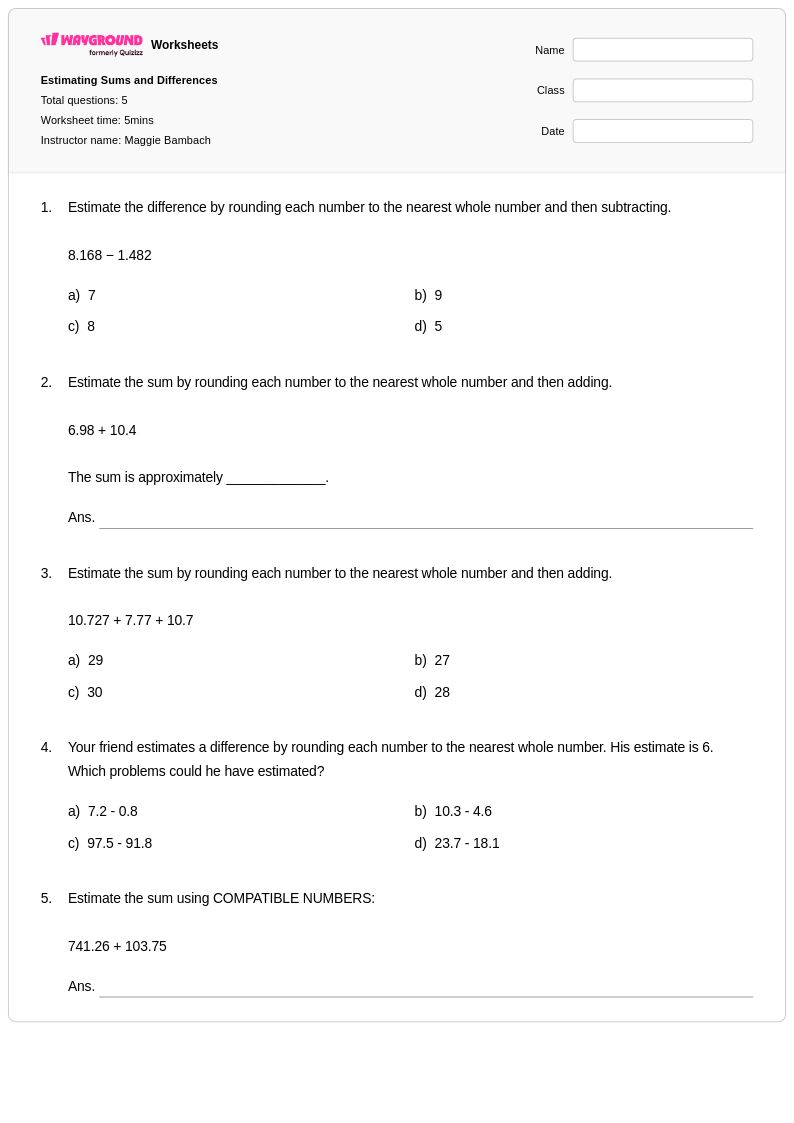
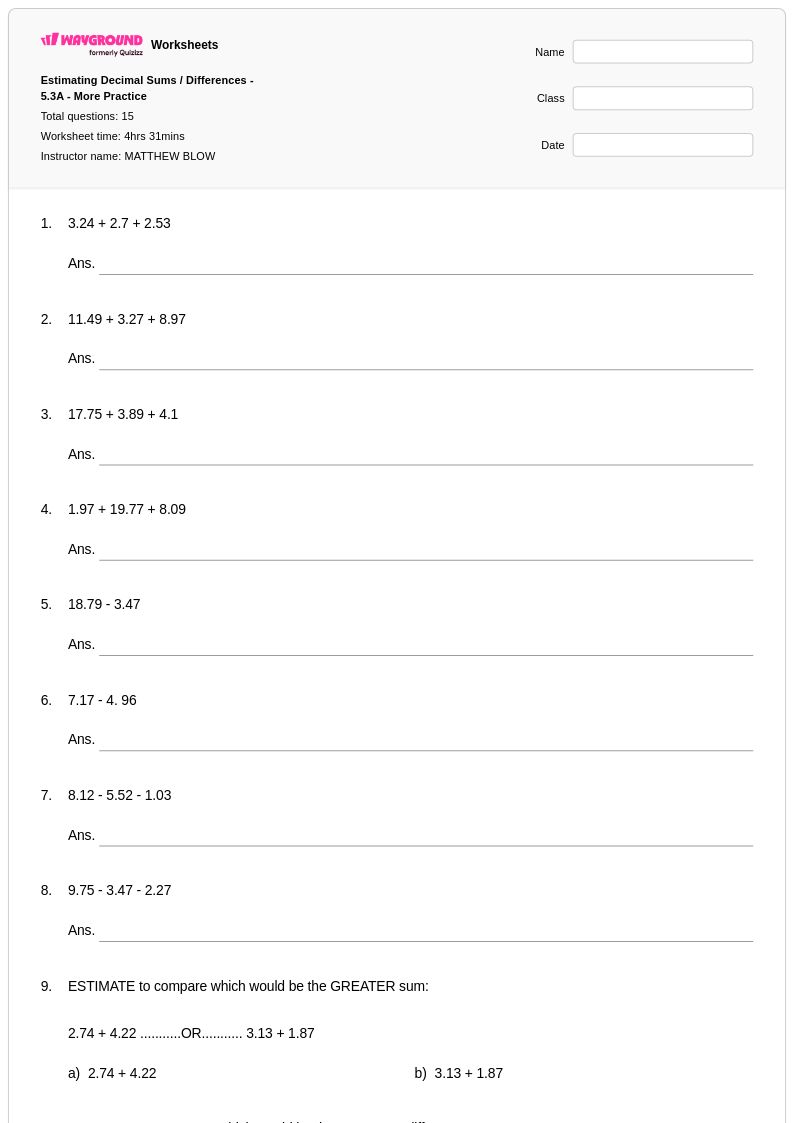
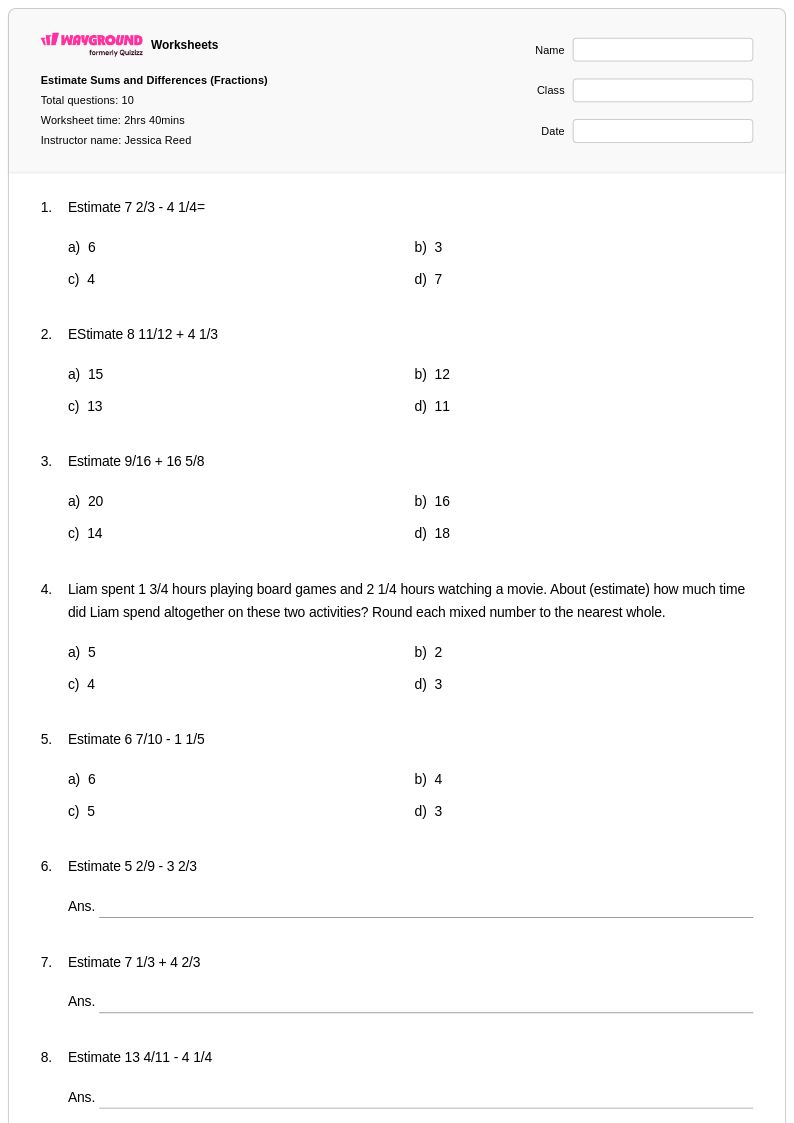
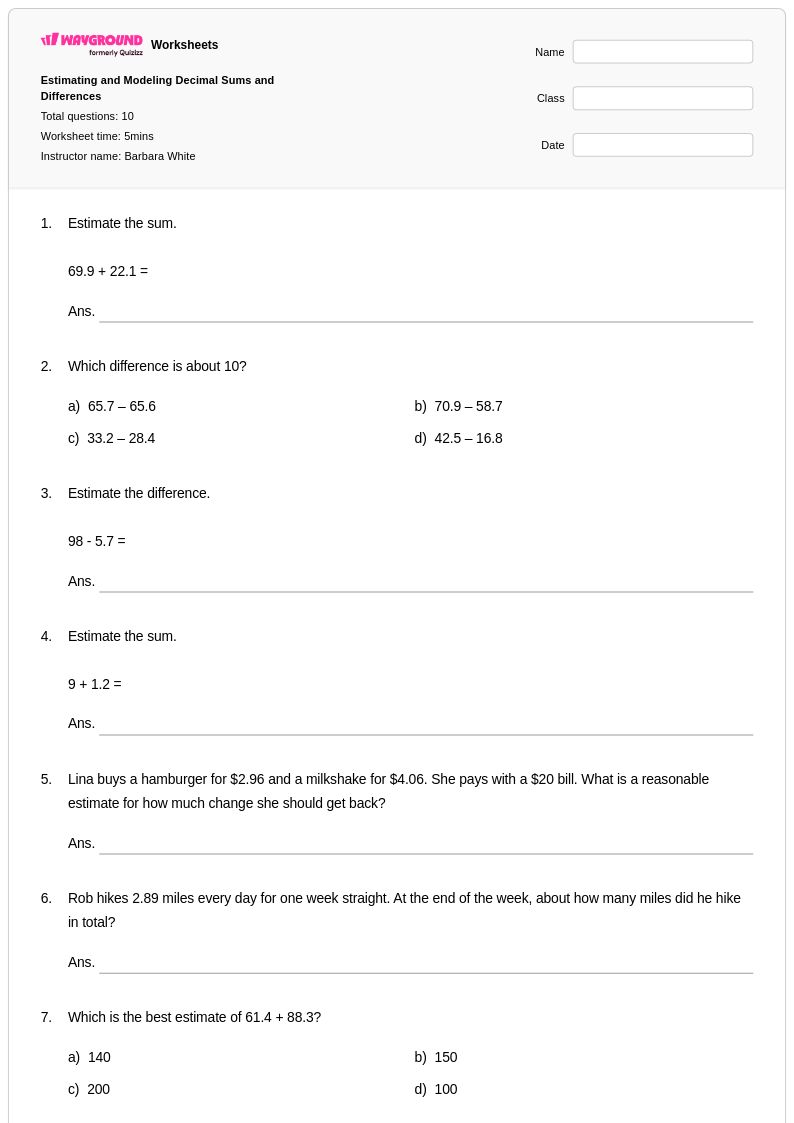
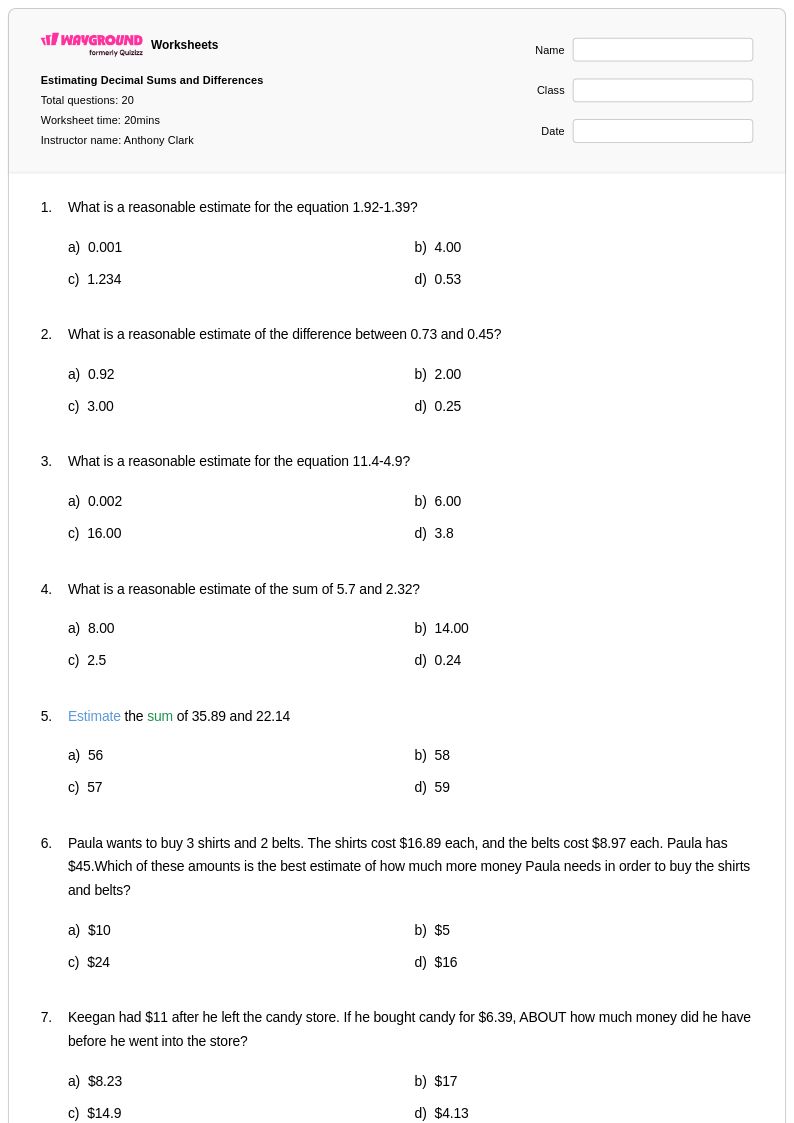
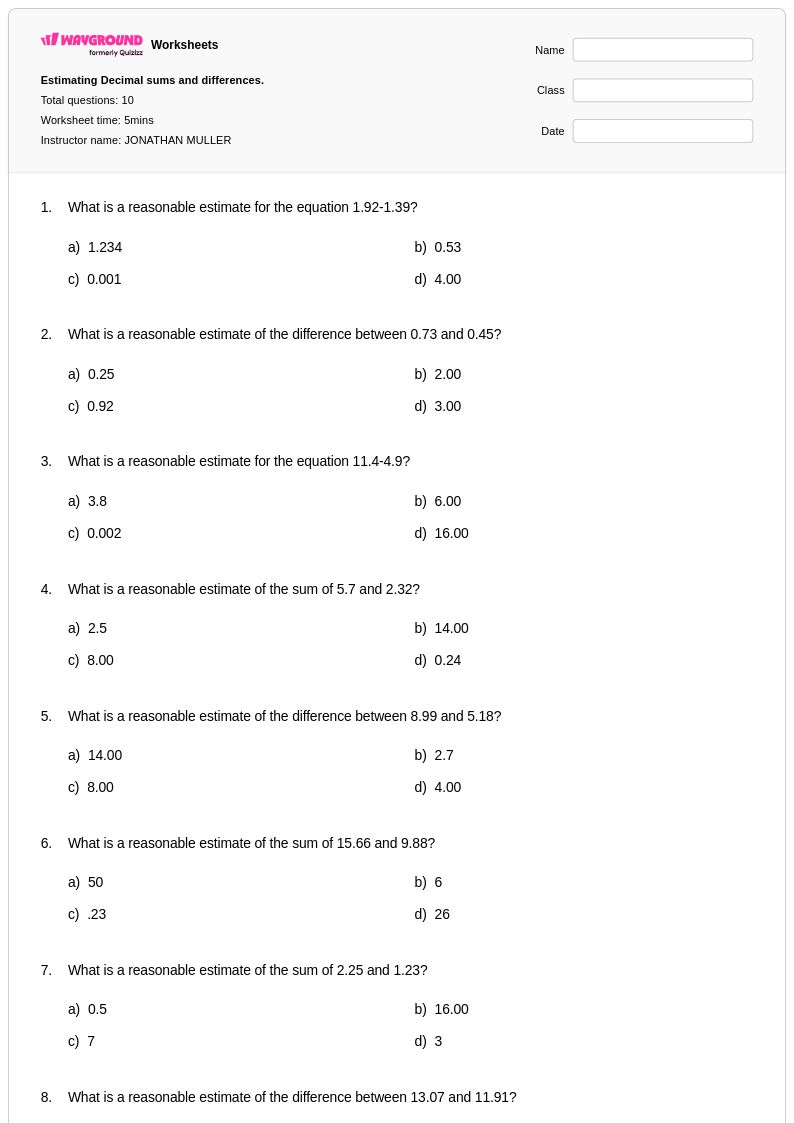
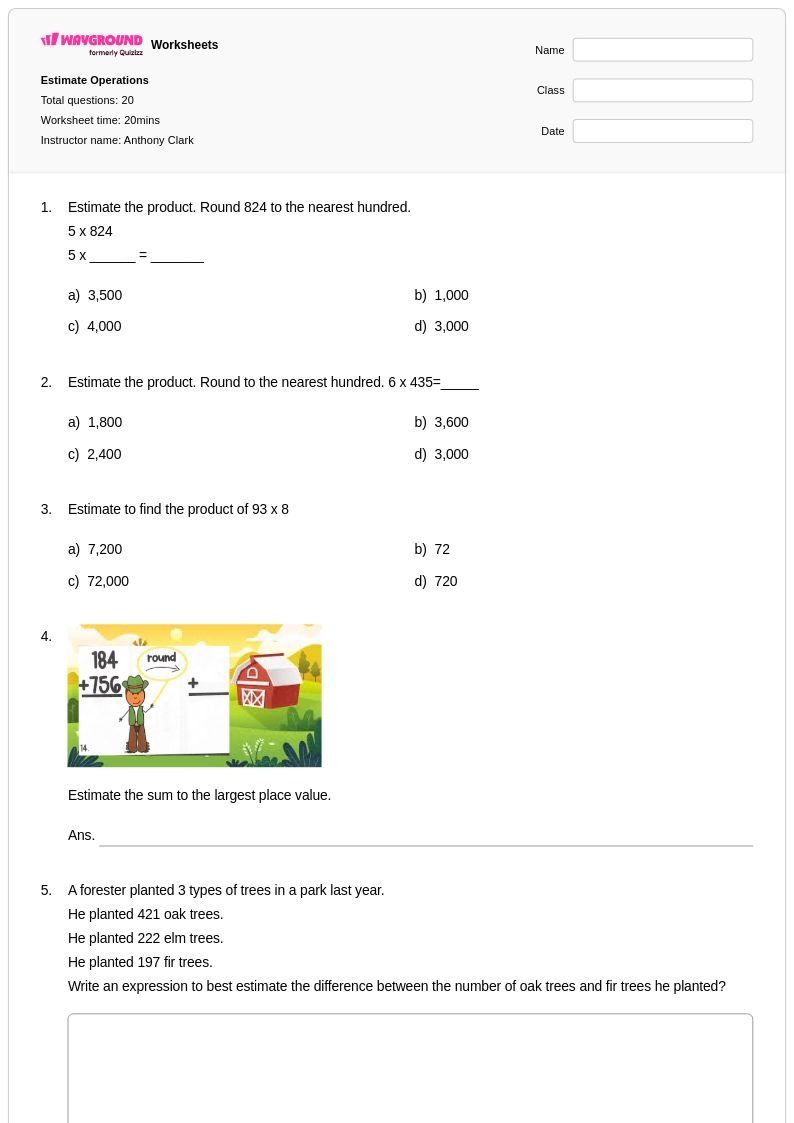
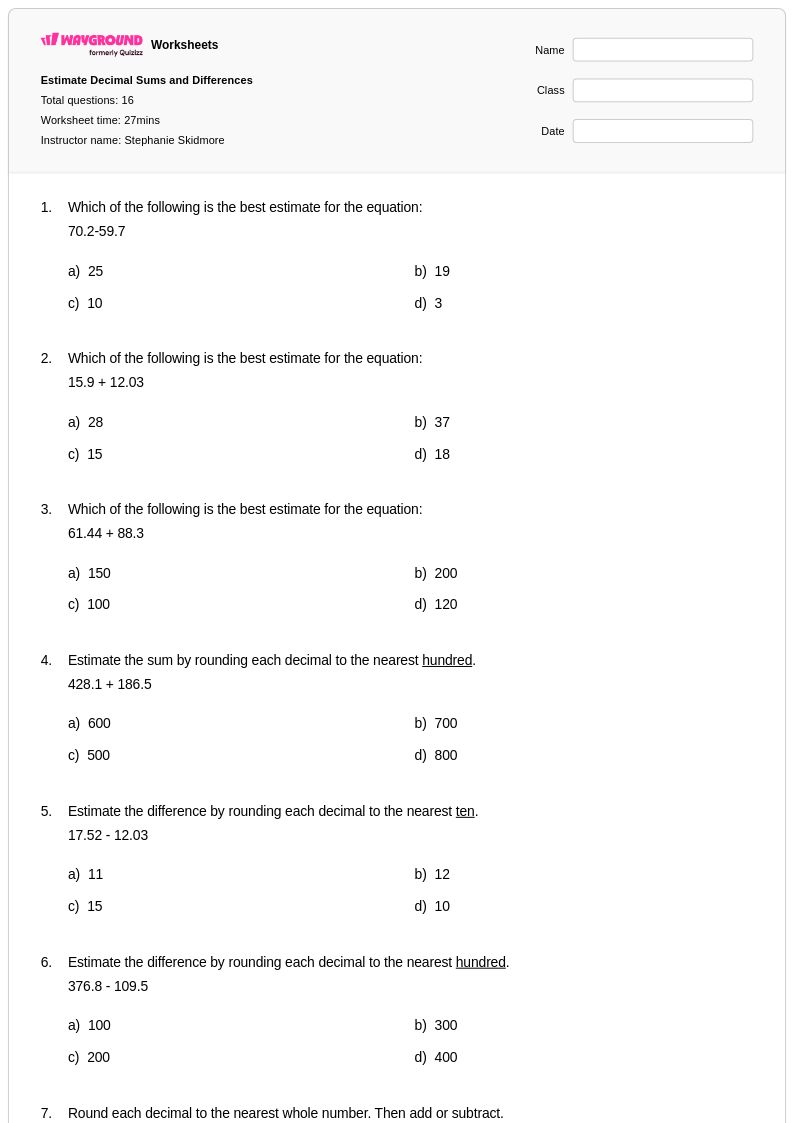
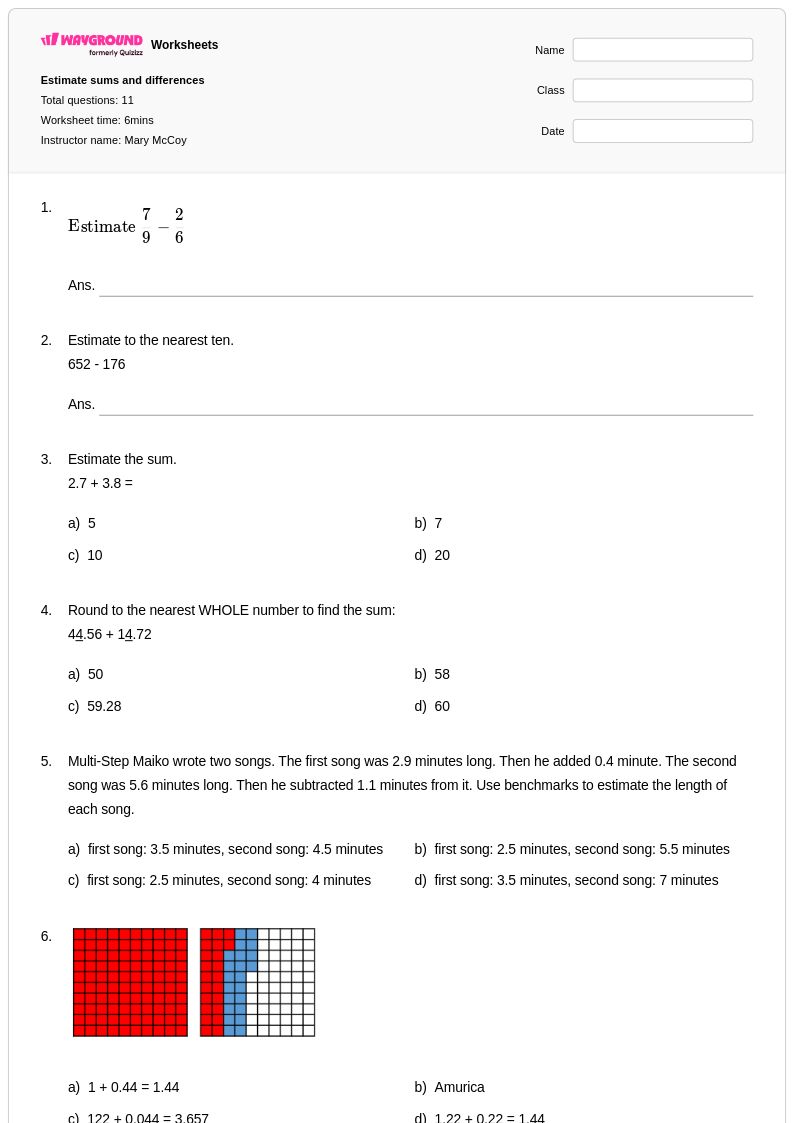
Class 5 estimating differences worksheets provide free printables and practice problems that help students develop number sense skills through hands-on estimation activities with comprehensive answer keys.
Explore printable Estimating Differences worksheets for Class 5
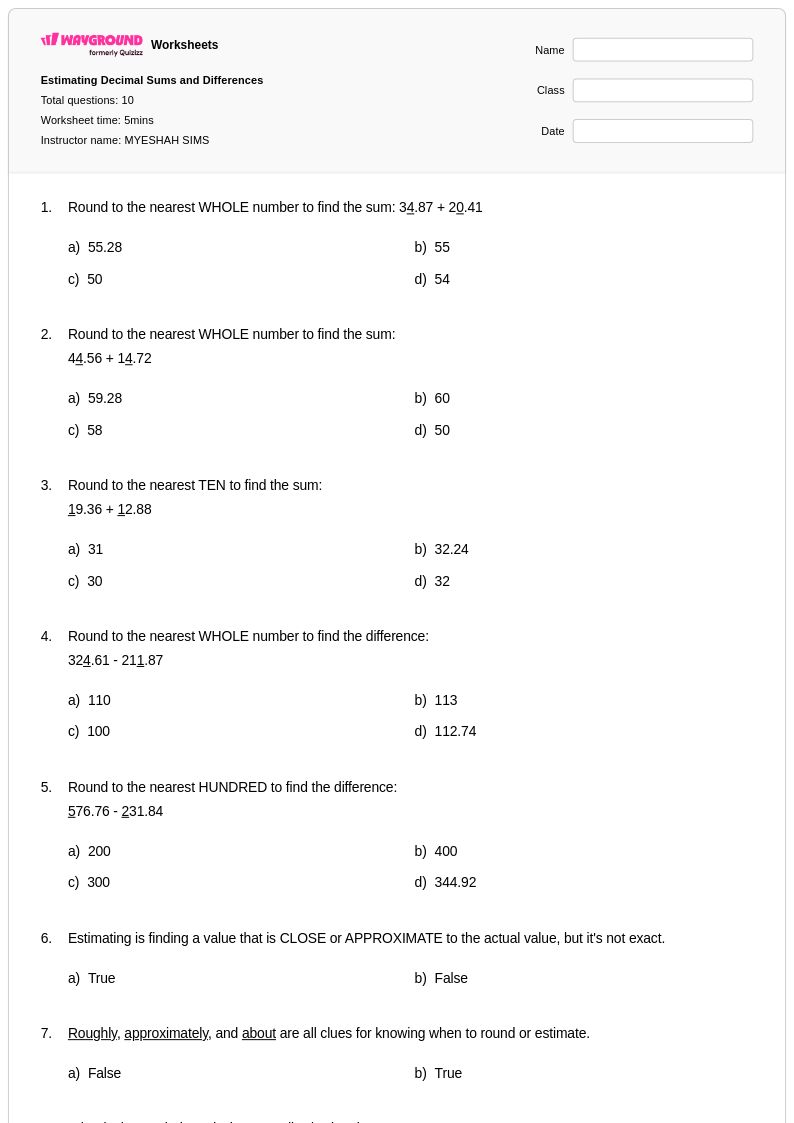
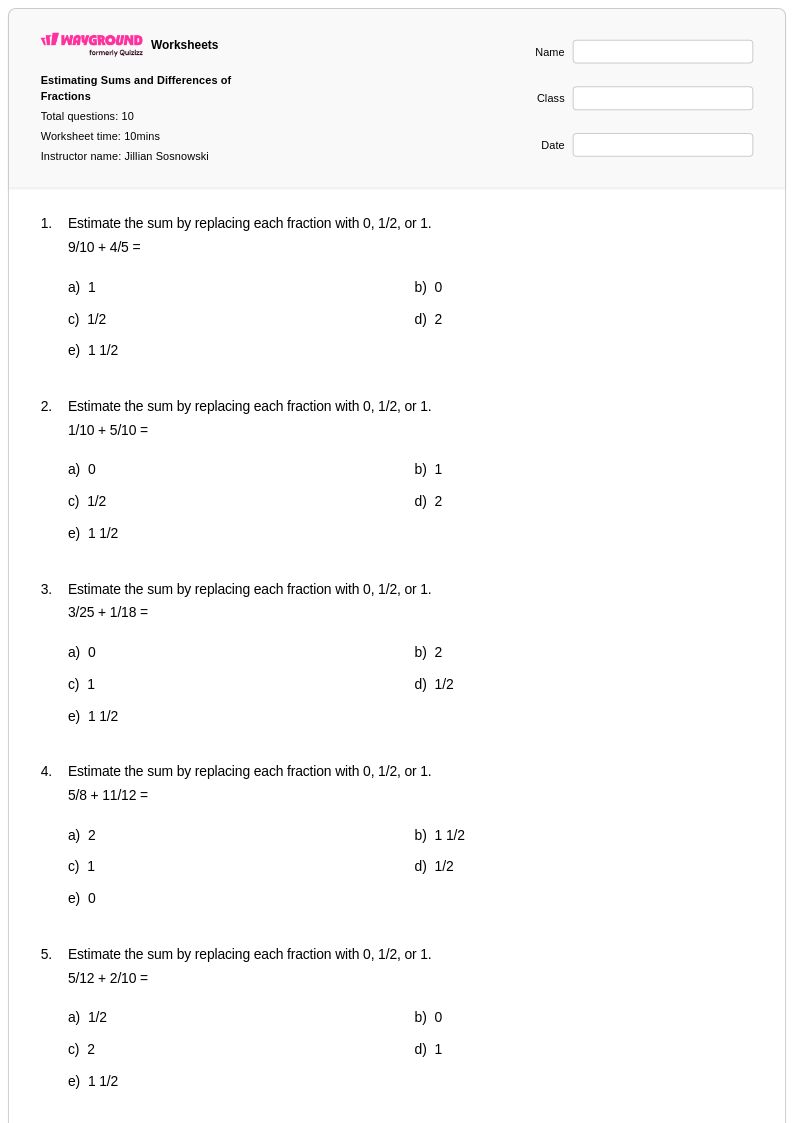
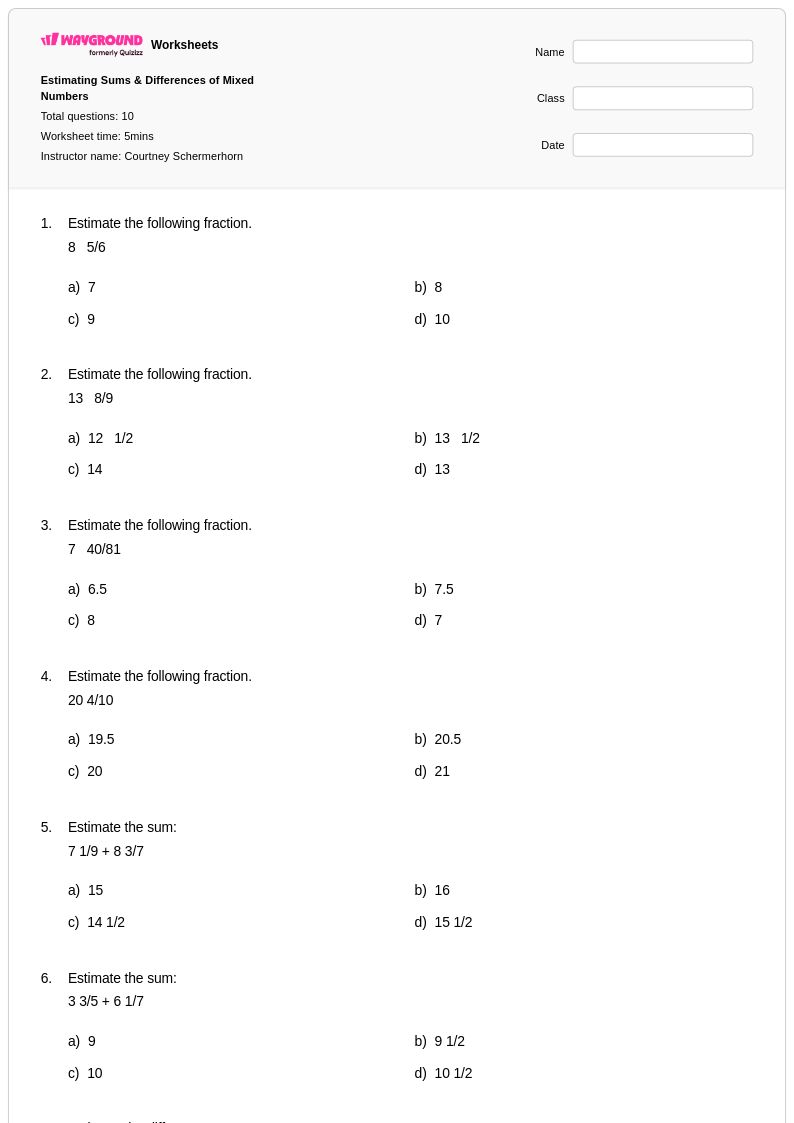
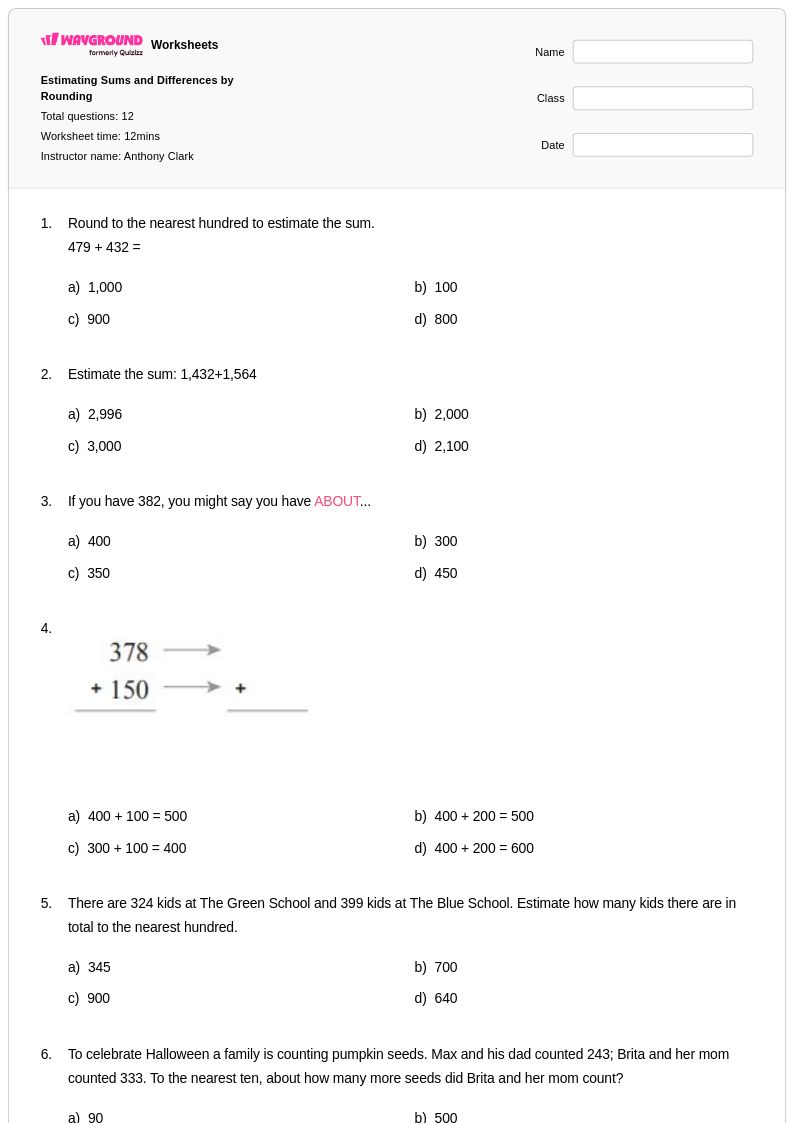
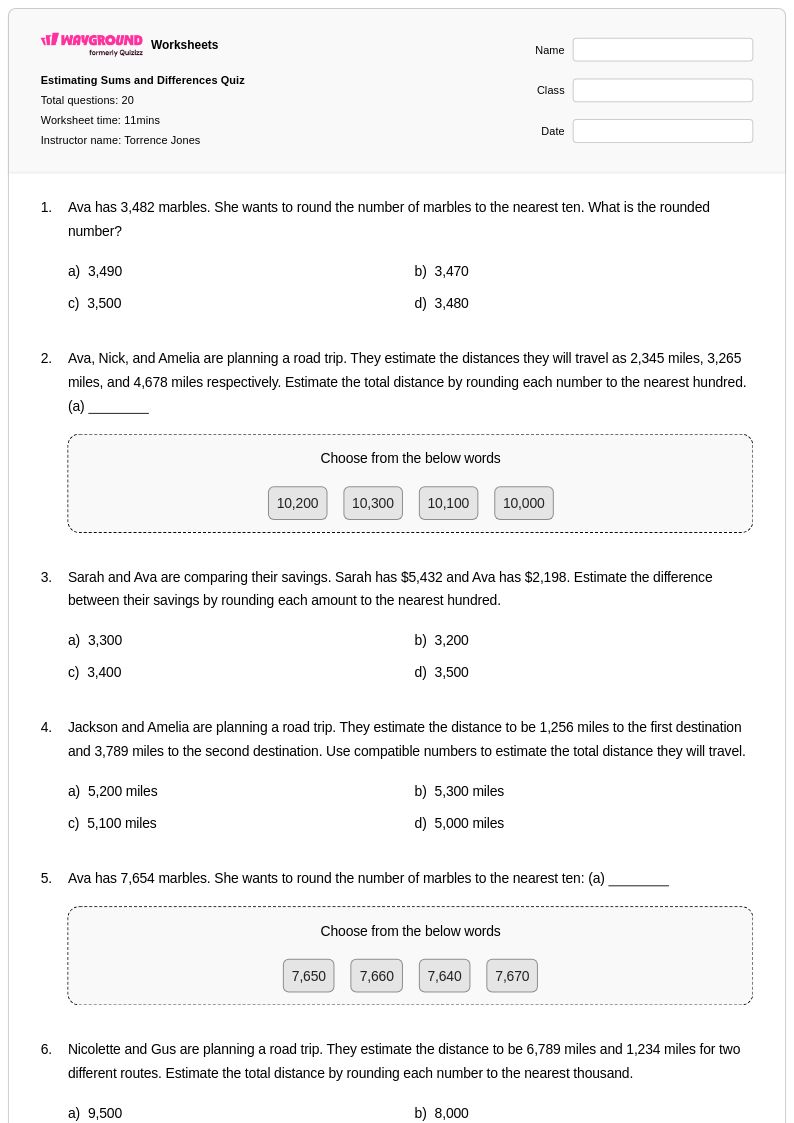
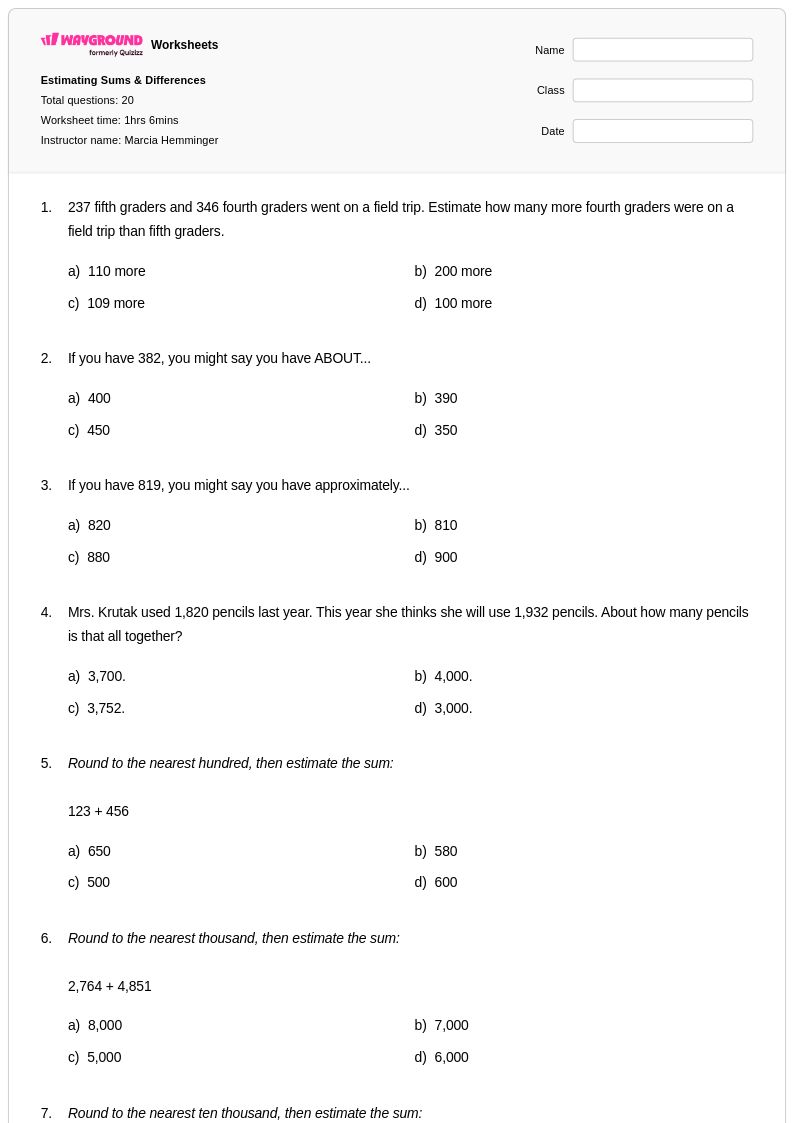
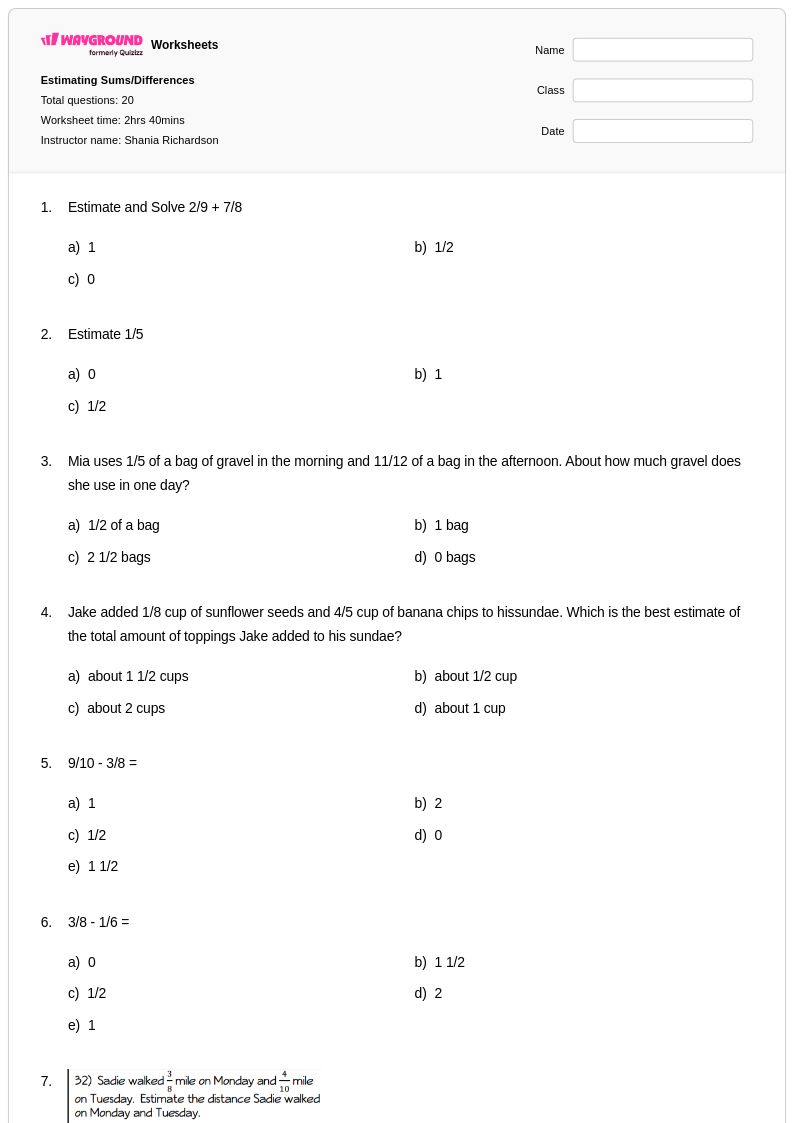
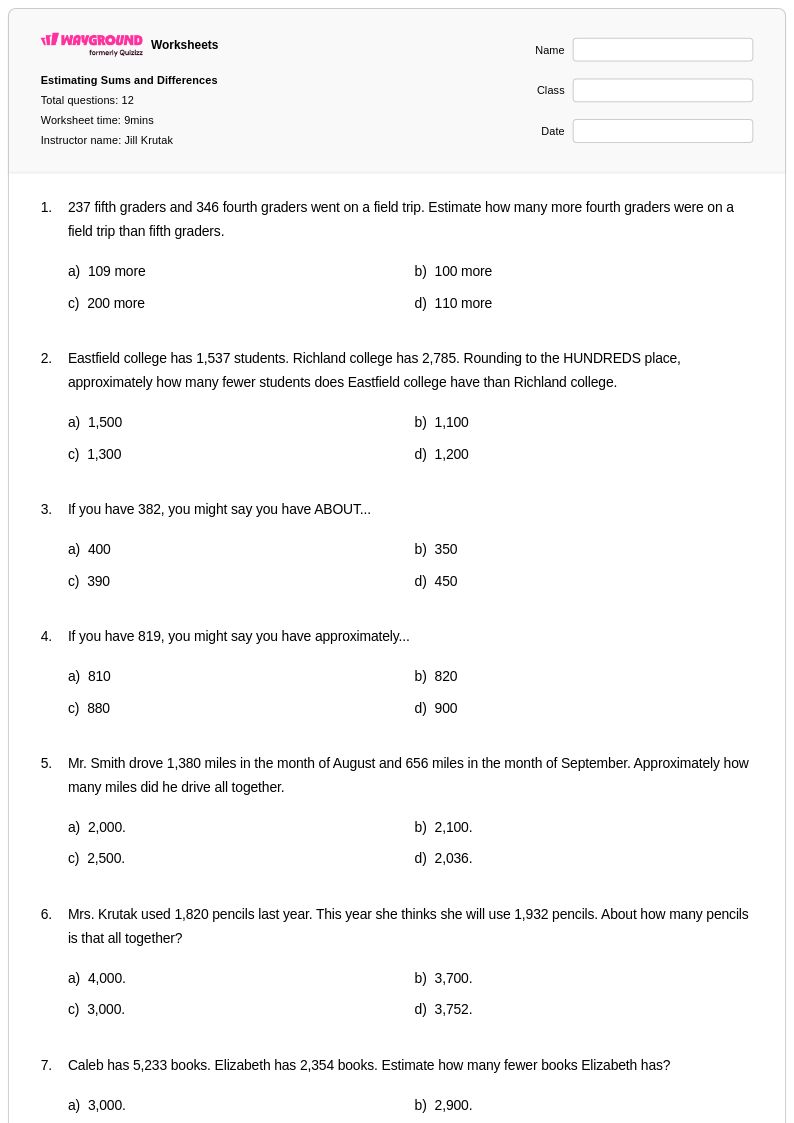
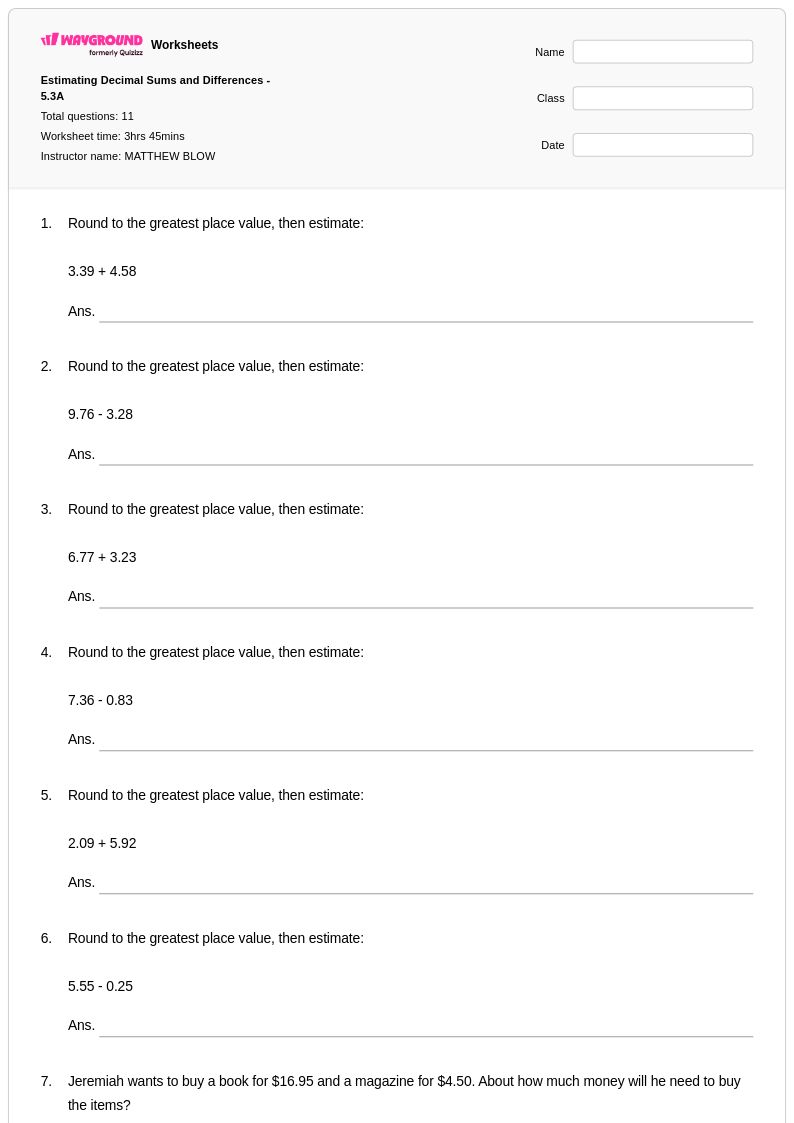
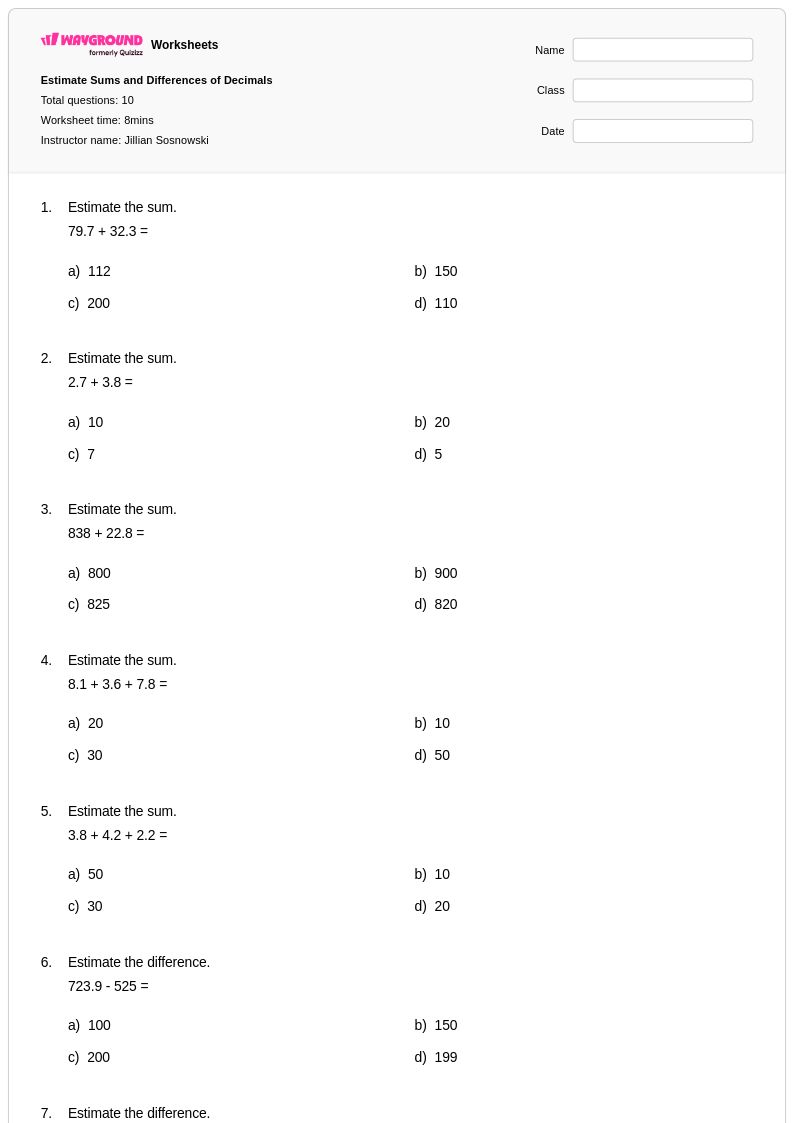
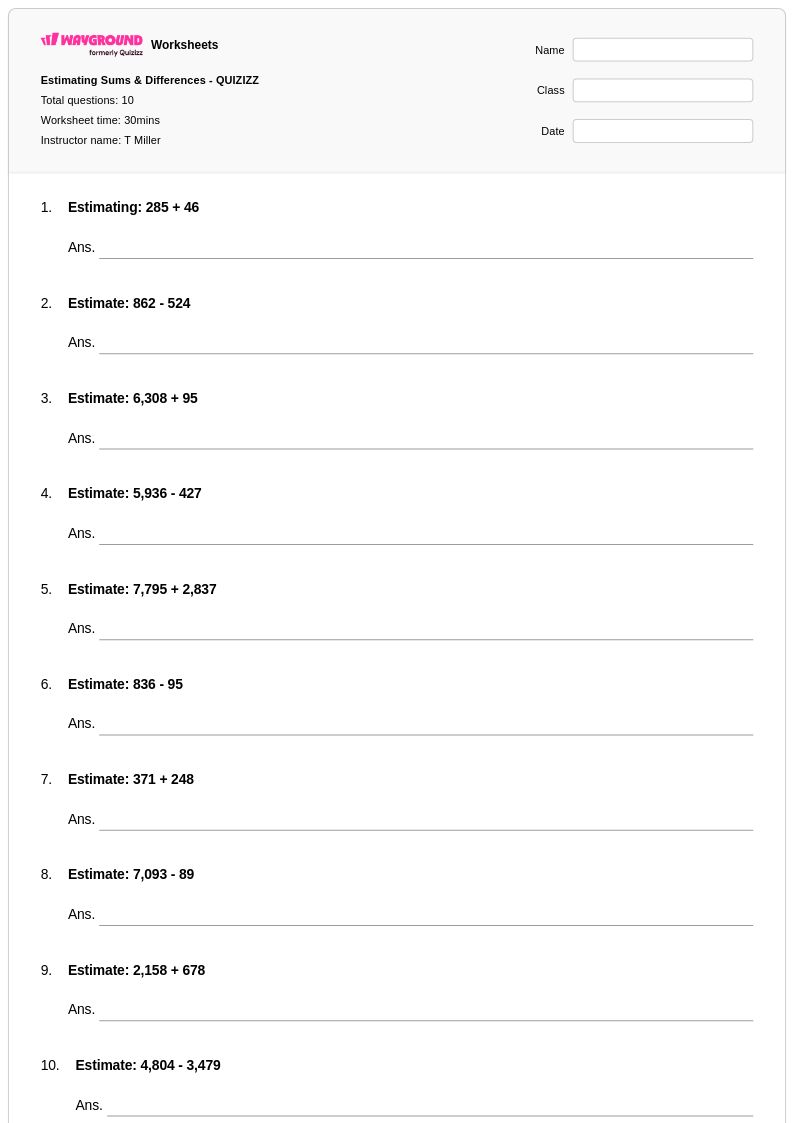
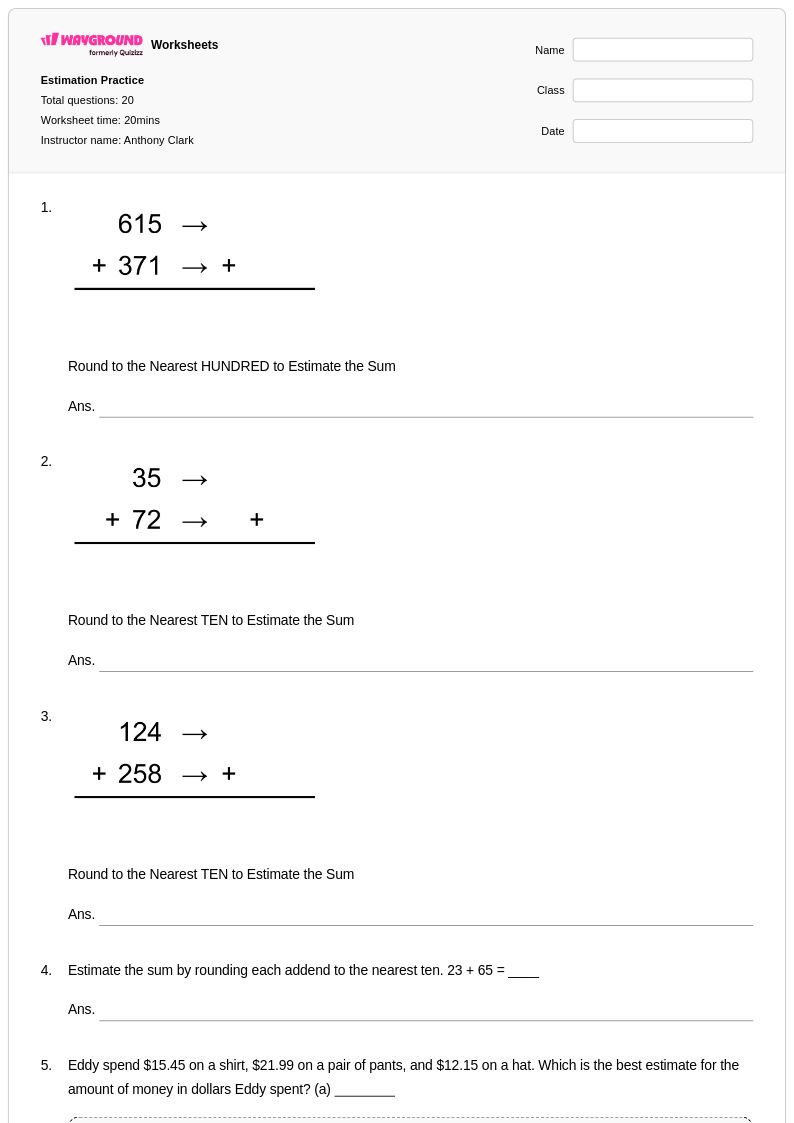
Estimating differences worksheets for Class 5 students available through Wayground (formerly Quizizz) provide comprehensive practice in developing computational fluency and mathematical reasoning skills. These carefully designed resources help fifth-grade students master the essential skill of approximating the results of subtraction problems without performing exact calculations, building their number sense and mental math capabilities. The worksheets feature a variety of practice problems that challenge students to round numbers strategically, use benchmark numbers, and apply front-end estimation techniques to determine reasonable differences between multi-digit numbers. Each printable resource includes structured exercises that progress from basic two-digit estimation to more complex problems involving decimals and larger whole numbers, with complete answer keys provided to support independent learning and self-assessment. These free educational materials strengthen students' ability to evaluate the reasonableness of their calculations and develop confidence in mathematical problem-solving.
Wayground (formerly Quizizz) empowers educators with access to millions of teacher-created estimating differences worksheets specifically designed for Class 5 mathematics instruction. The platform's robust search and filtering capabilities allow teachers to quickly locate resources that align with specific curriculum standards and match their students' current skill levels. These differentiation tools enable instructors to customize worksheets for remediation, standard practice, or enrichment activities, ensuring that all learners receive appropriate mathematical challenges. The flexible format options include both digital assignments and printable PDF versions, making it easy for teachers to integrate these resources into various instructional settings, from traditional classroom environments to remote learning situations. This comprehensive collection supports effective lesson planning by providing ready-to-use materials that help students develop critical estimation skills while building the foundational number sense concepts essential for advanced mathematical learning.
FAQs
How do I teach estimating differences to 5th graders?
The big shift in Grade 5 is decimals. Students who could estimate whole-number differences in Grade 4 often freeze when decimals appear because they're unsure which place value to round to. Make the connection explicit: rounding 4.87 to the nearest whole number works the same way as rounding 487 to the nearest hundred — the logic is identical, just the place value label changes. Once that clicks, extend to problems involving tenths and hundredths. Front-end estimation is especially useful here because it gives students a fast anchor before they work with the full decimal.
What exercises help 5th graders practice estimating differences?
A mix of whole-number and decimal problems in the same set is more effective than separating them — it forces students to identify the place value structure before estimating, which is the real skill. Include some problems where the estimated and exact answers are close, and some where they diverge significantly, so students develop a feel for when estimation is reliable. Error-analysis problems (here's an estimate — is it reasonable?) are particularly strong at this grade because they require students to evaluate rather than just produce.
What mistakes do 5th graders make when estimating differences with decimals?
The most common error is ignoring the decimal entirely and treating the number as a whole number — a student estimates 12.7 − 4.9 as 12 − 4 = 8, which is close enough to seem right but reflects a misunderstanding of what they're rounding. A subtler mistake: rounding to the nearest tenth when the nearest whole number would give a perfectly useful estimate, adding unnecessary steps. Both errors point to the same gap — students haven't internalized that the goal is a fast, reasonable answer, not a precise one.
How do I use Wayground's Grade 5 estimating differences worksheets?
Each worksheet is available as a digital quiz on Wayground or as a printable PDF — the content is identical either way. Digital mode works well for in-class practice where you want students to get immediate feedback; the PDF is a natural fit for homework or any setting where devices aren't available. Every worksheet includes a complete answer key, and if you assign the paper version, the Wayground for Teachers app lets you scan and grade submissions without manual marking.
Is estimating differences with decimals part of the Common Core Grade 5 standards?
Yes. Common Core's Grade 5 number and operations work explicitly extends estimation to decimals — students are expected to round decimals to any place and use that rounding to assess whether computed answers are reasonable. Estimating differences with decimals is the subtraction application of that standard. It builds directly on the whole-number rounding students mastered in Grades 3 and 4, and it prepares them for the decimal operations and fraction work that become central in Grade 6.
How can I support diverse learners with Grade 5 estimating differences practice?
Decimal problems add a reading-complexity layer that can trip up students with language processing challenges — the Read Aloud feature in Wayground's digital mode helps those students hear the problem rather than decode it. For students who are still building decimal place value understanding, generating a worksheet version with a dyslexia-friendly font and larger text reduces visual noise so they can focus on the numbers. On the other end, students who find whole-number estimation easy benefit most from problems that mix decimals and whole numbers in the same set, which is where the real challenge at Grade 5 lives.