Free Printable Estimating Quotients Worksheets for Class 7
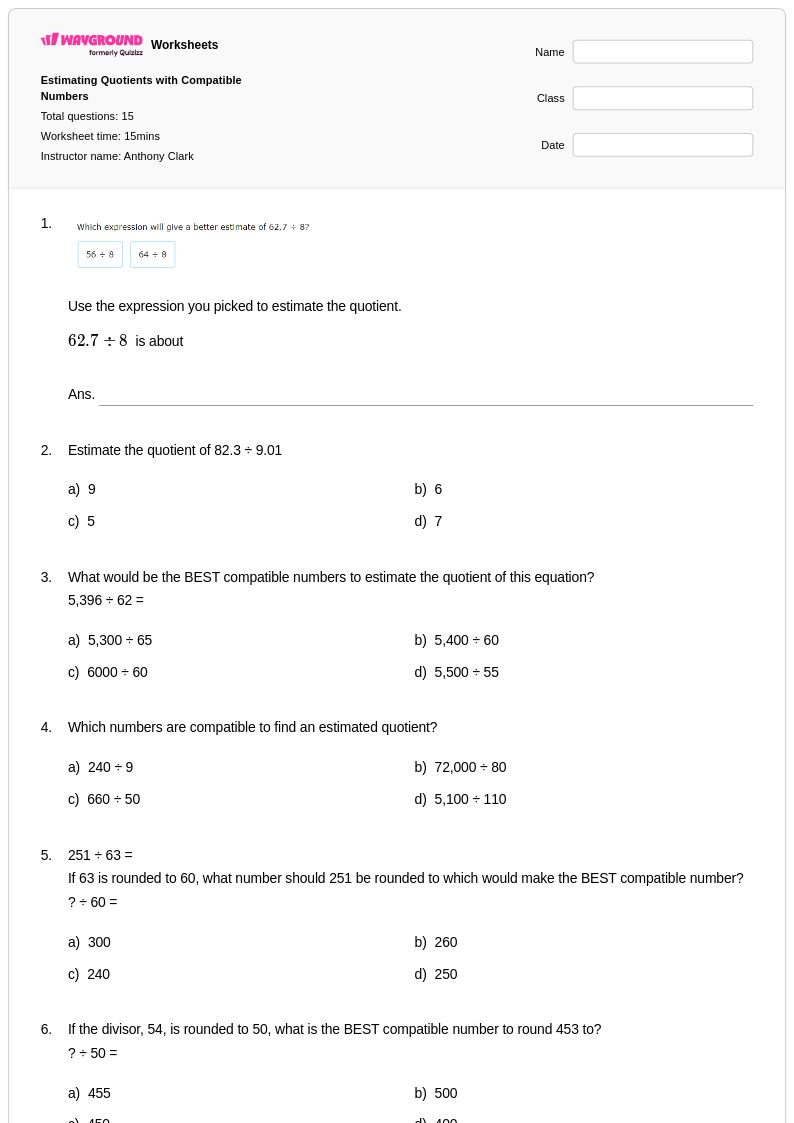
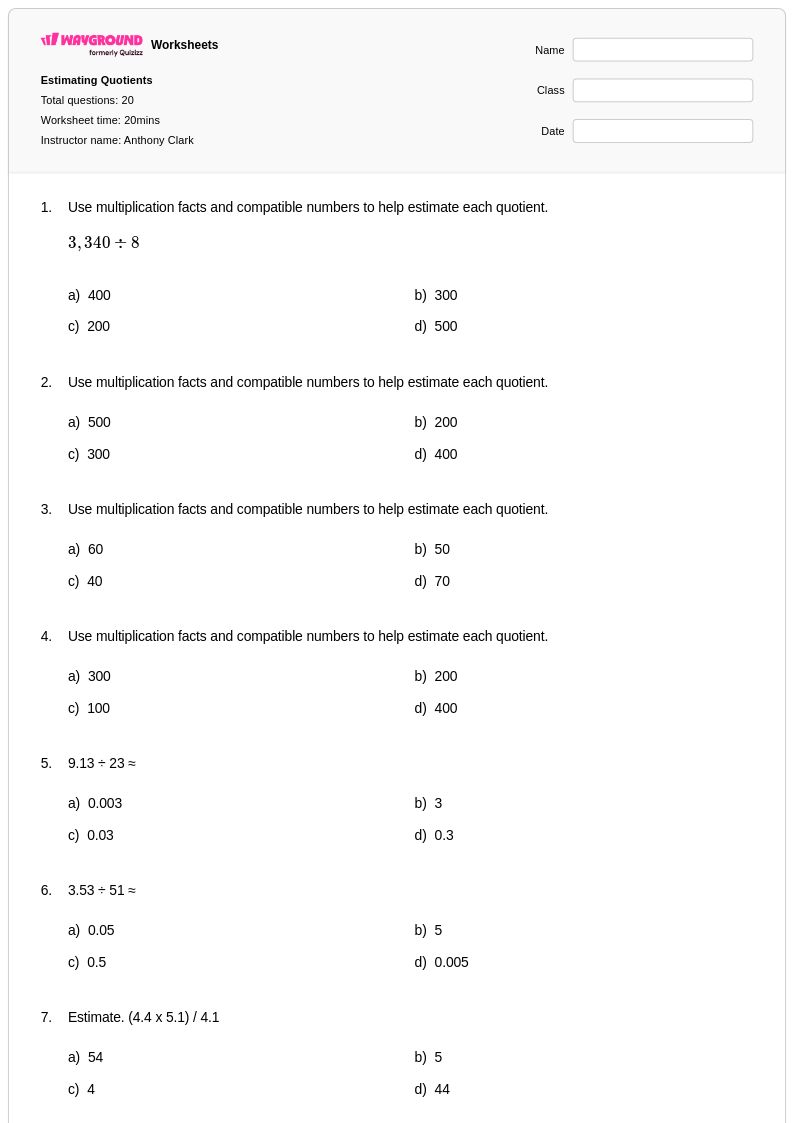
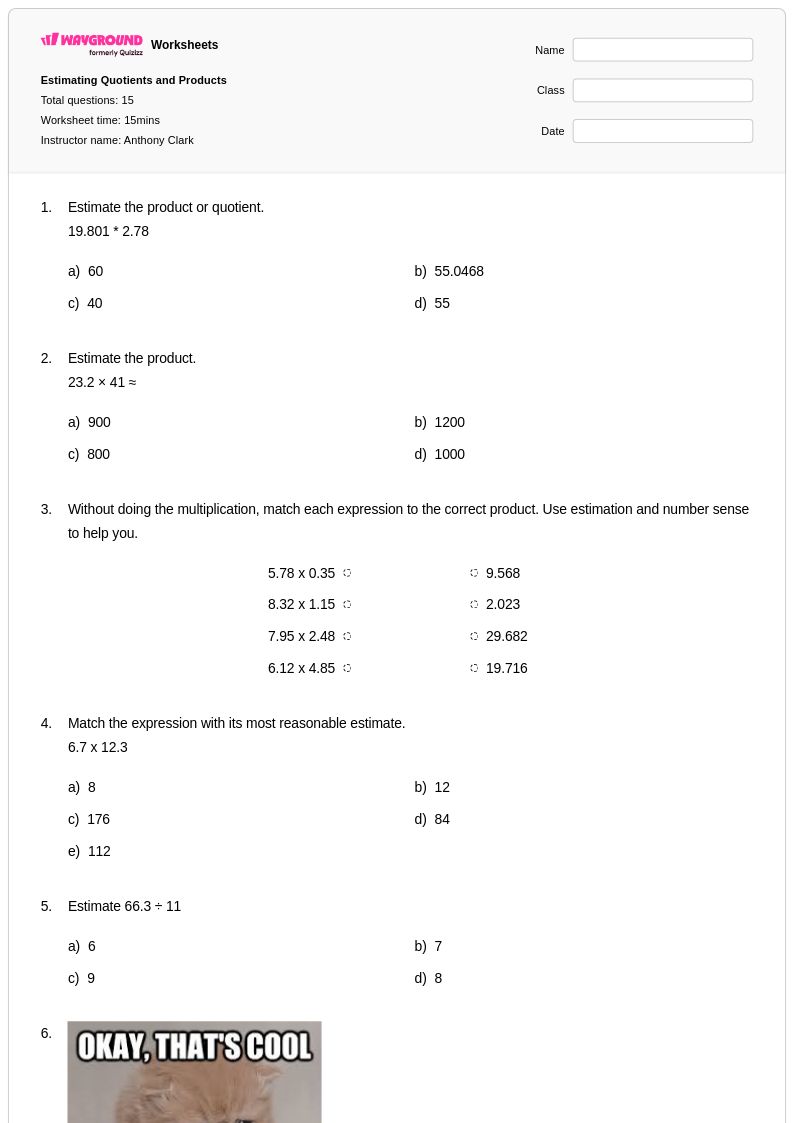
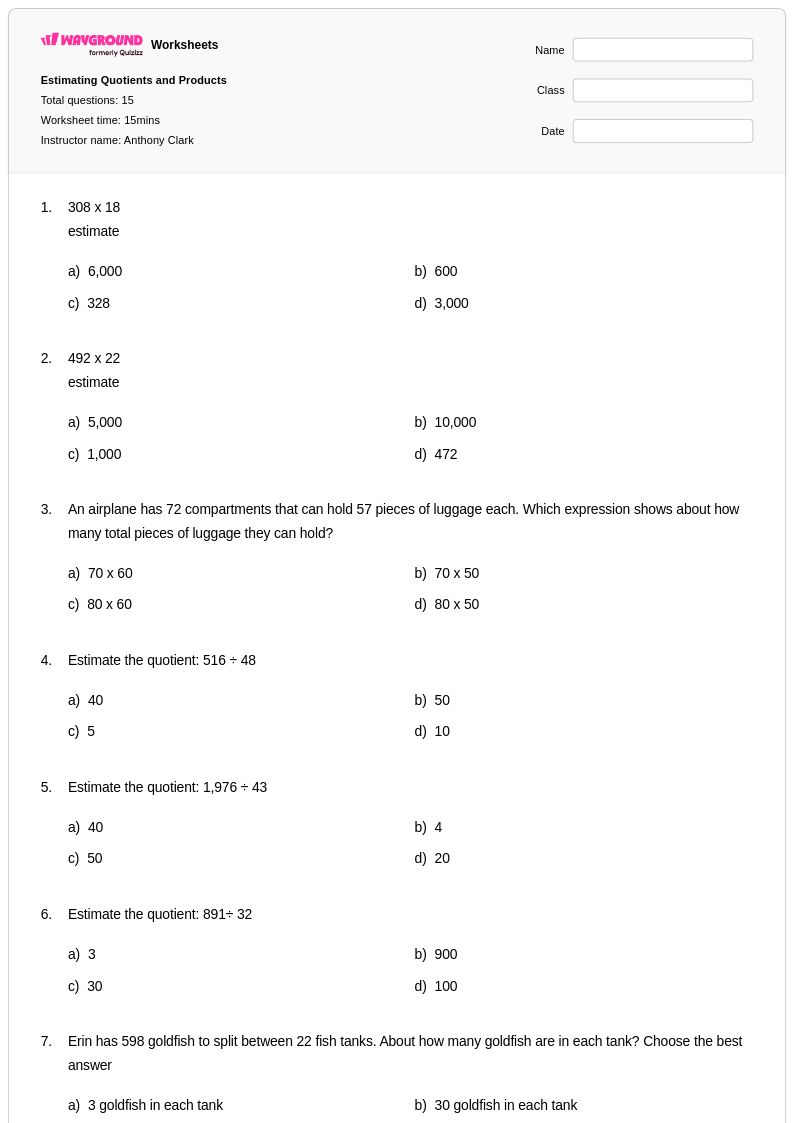
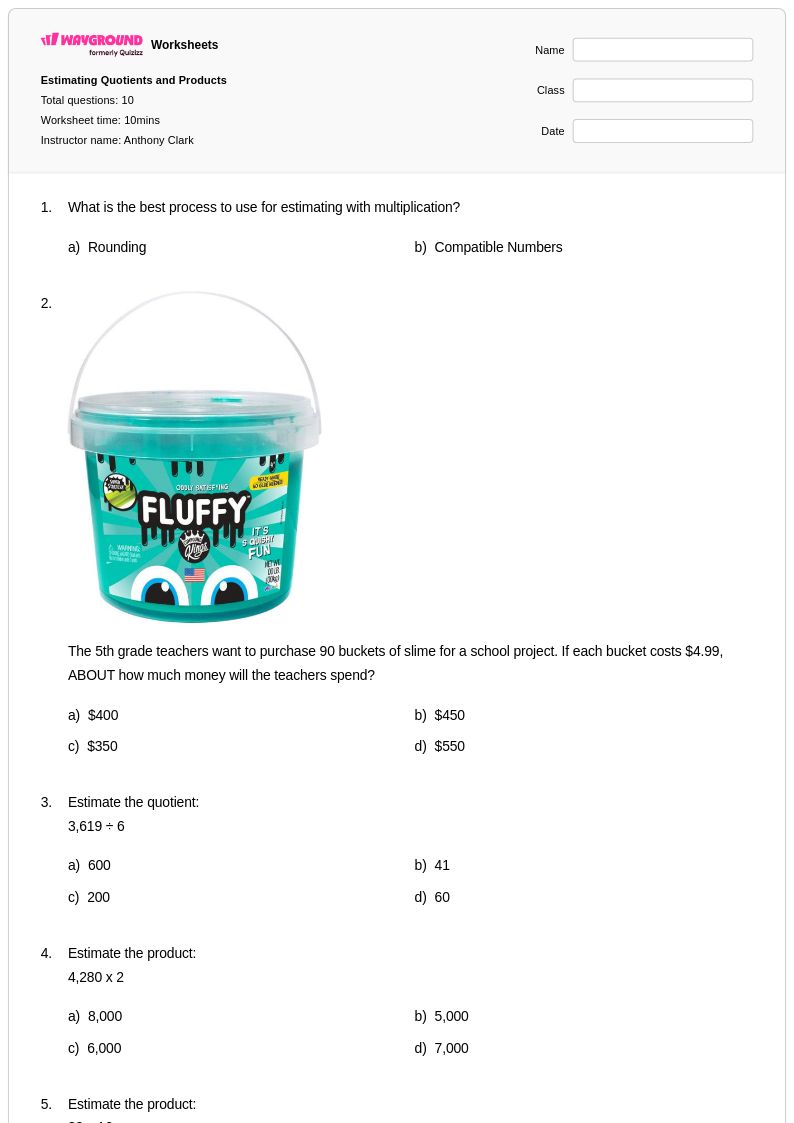
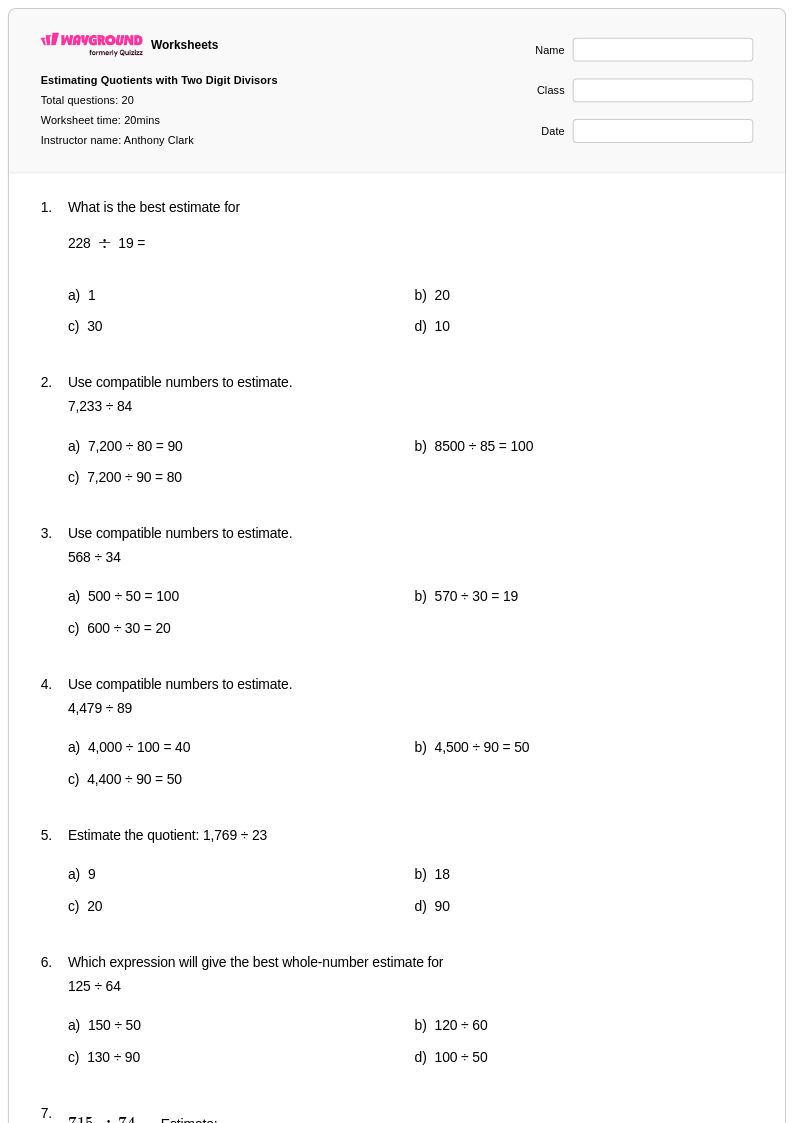
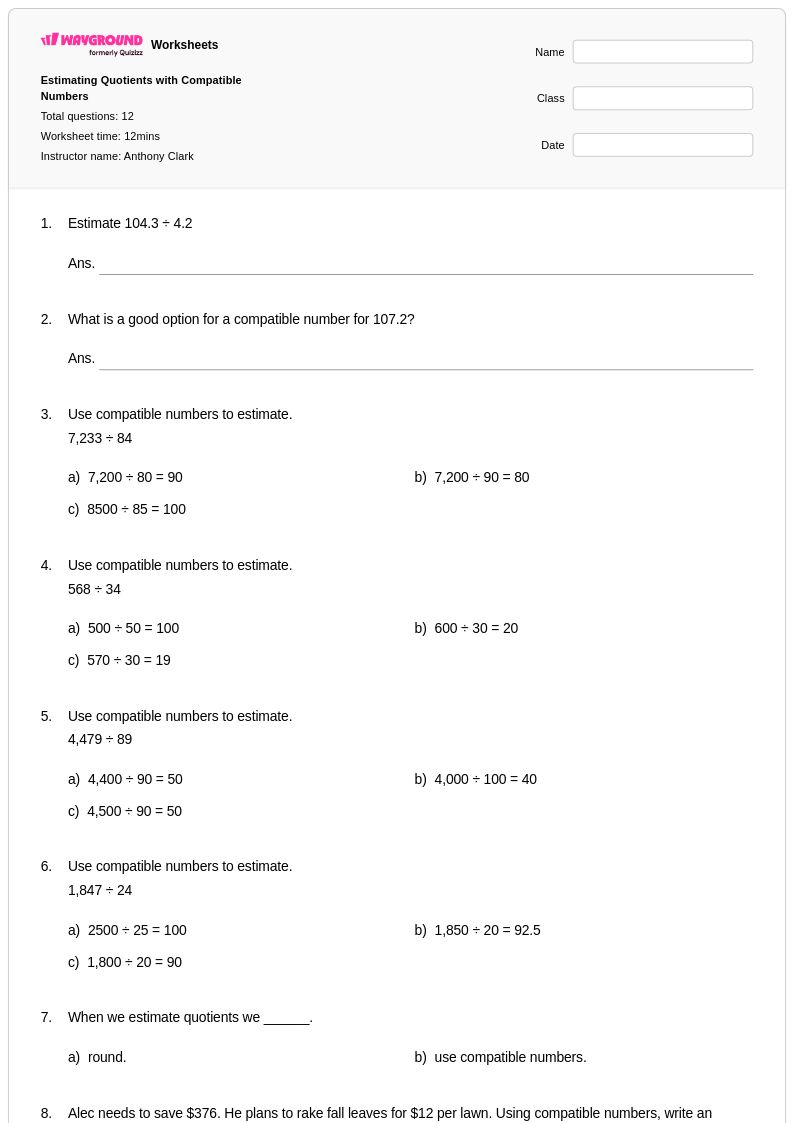
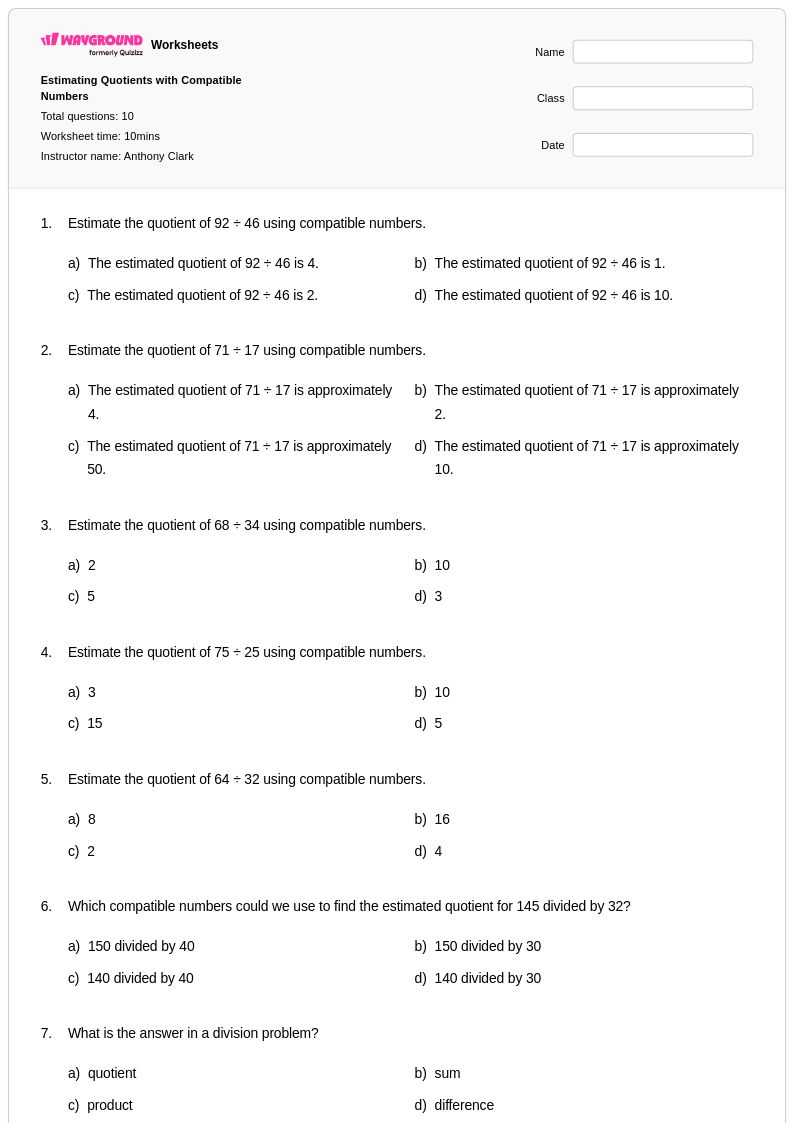
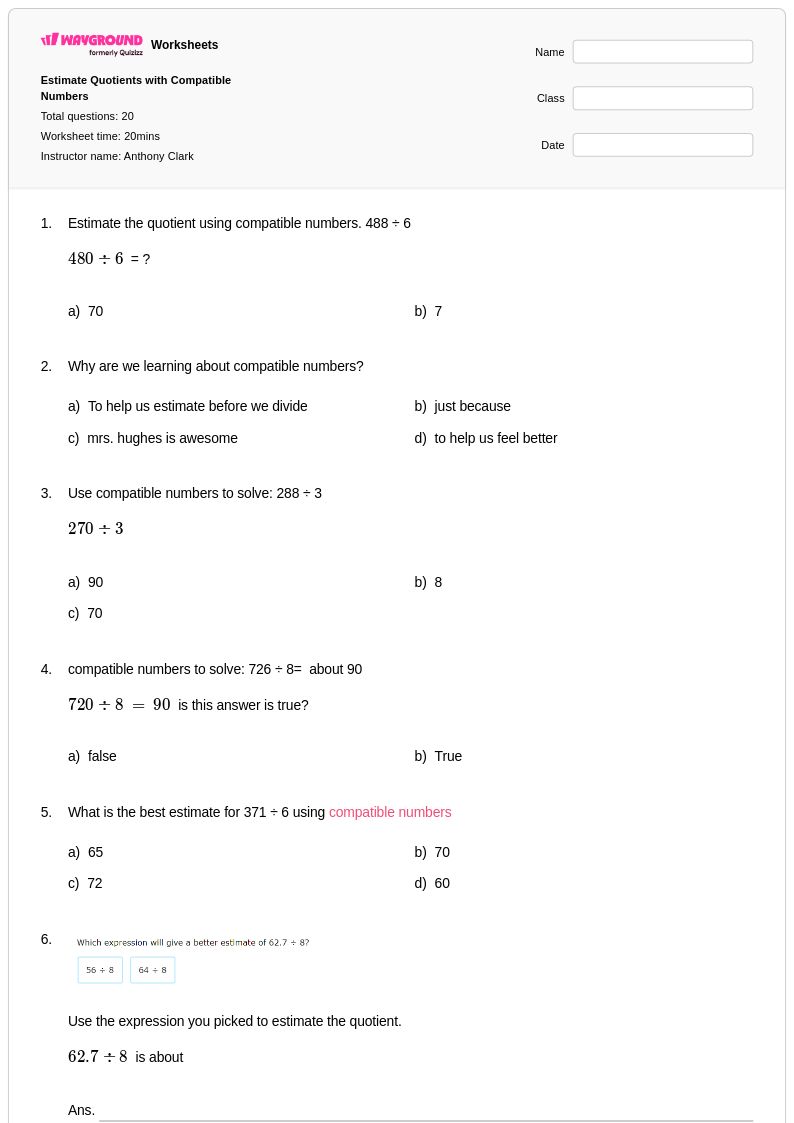
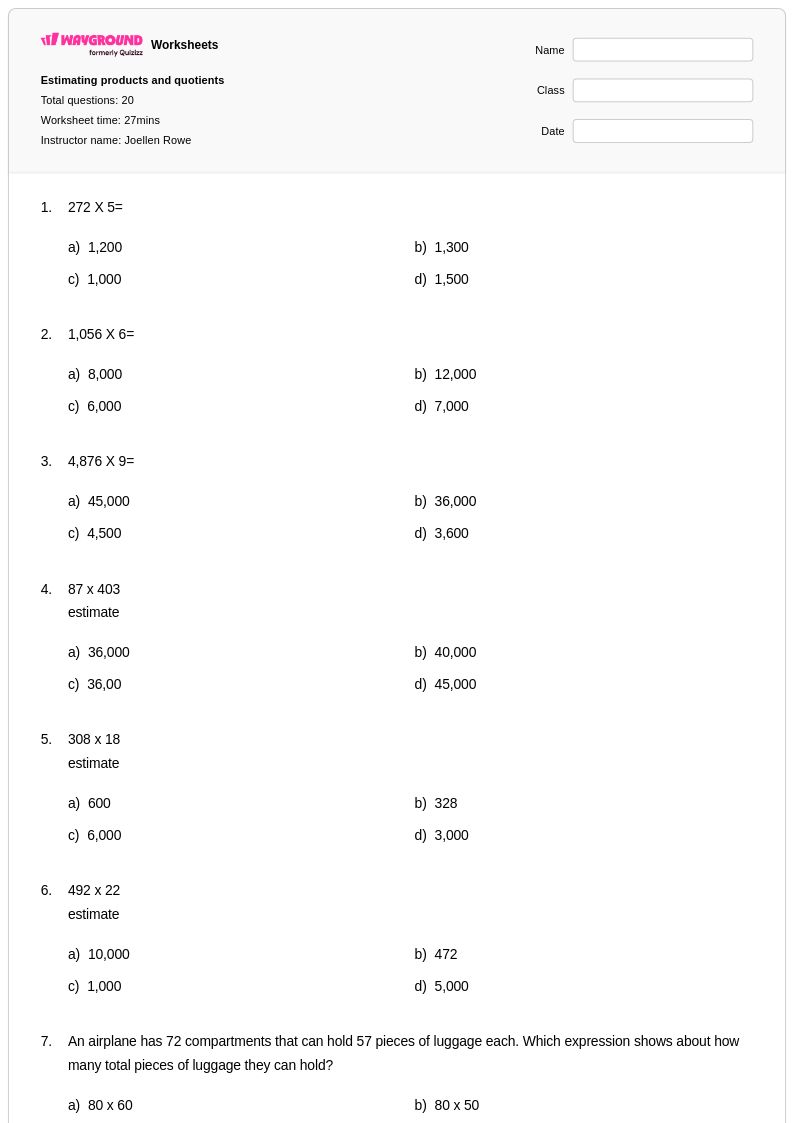
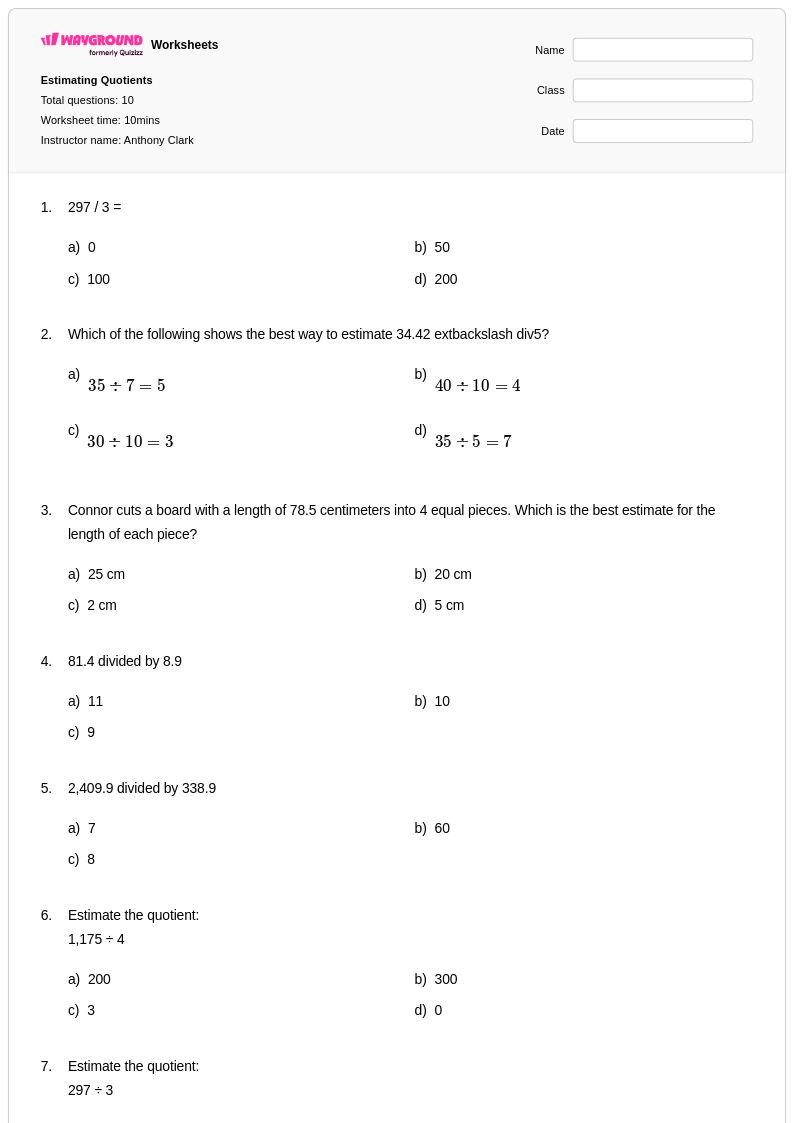
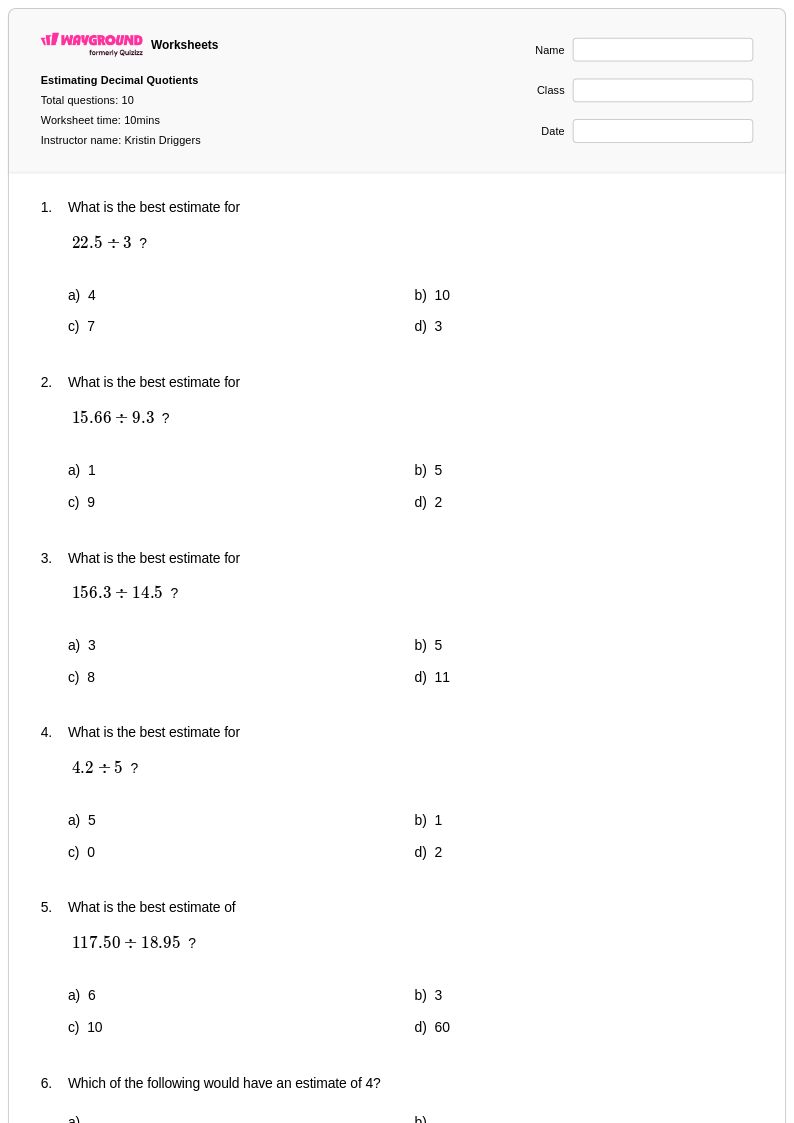
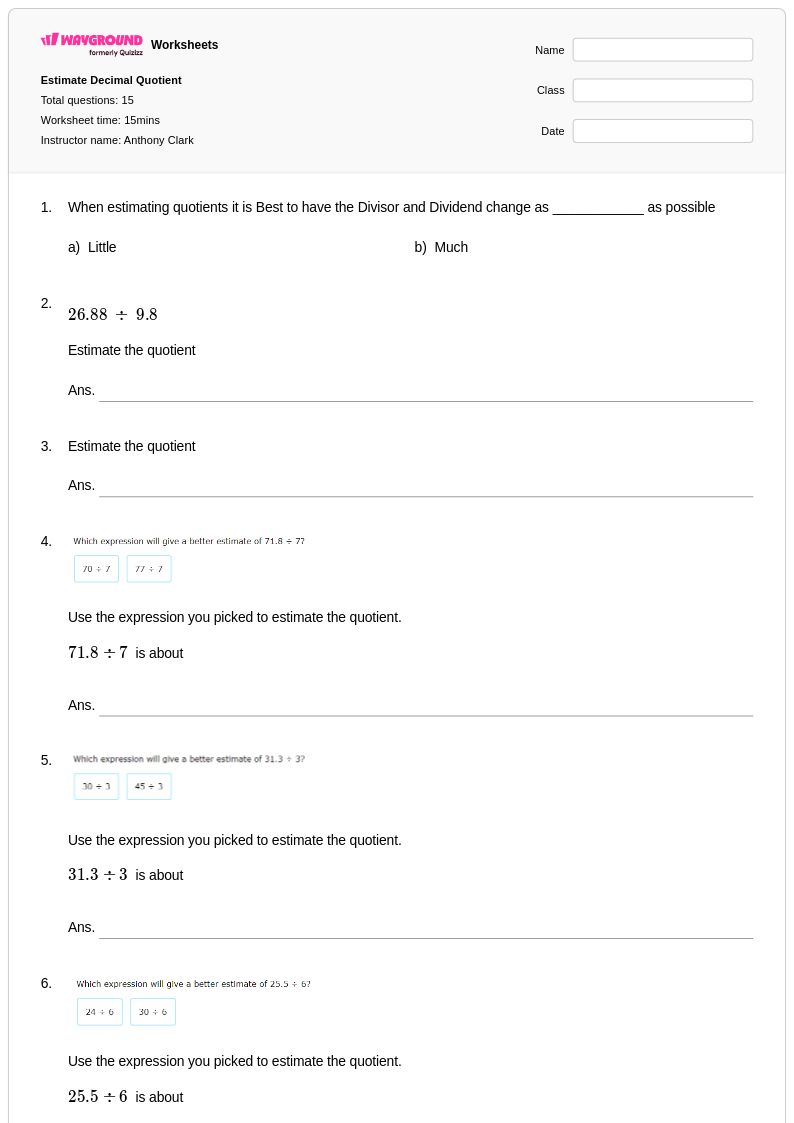
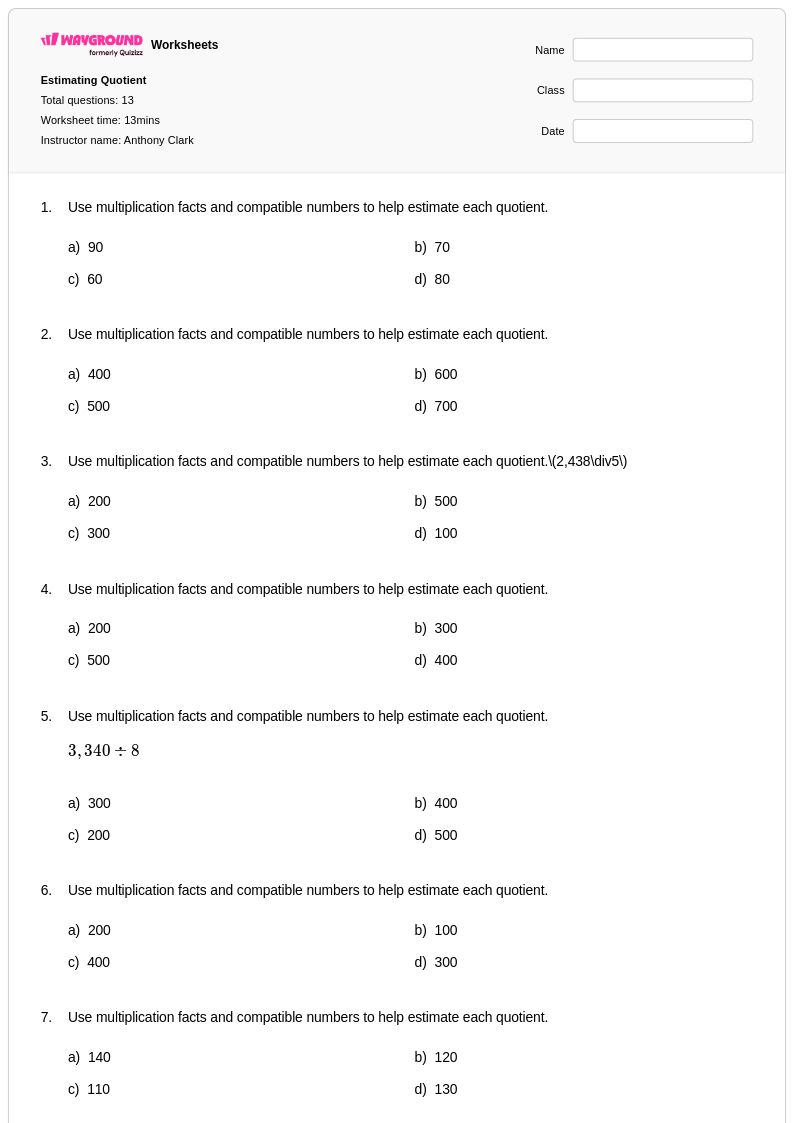
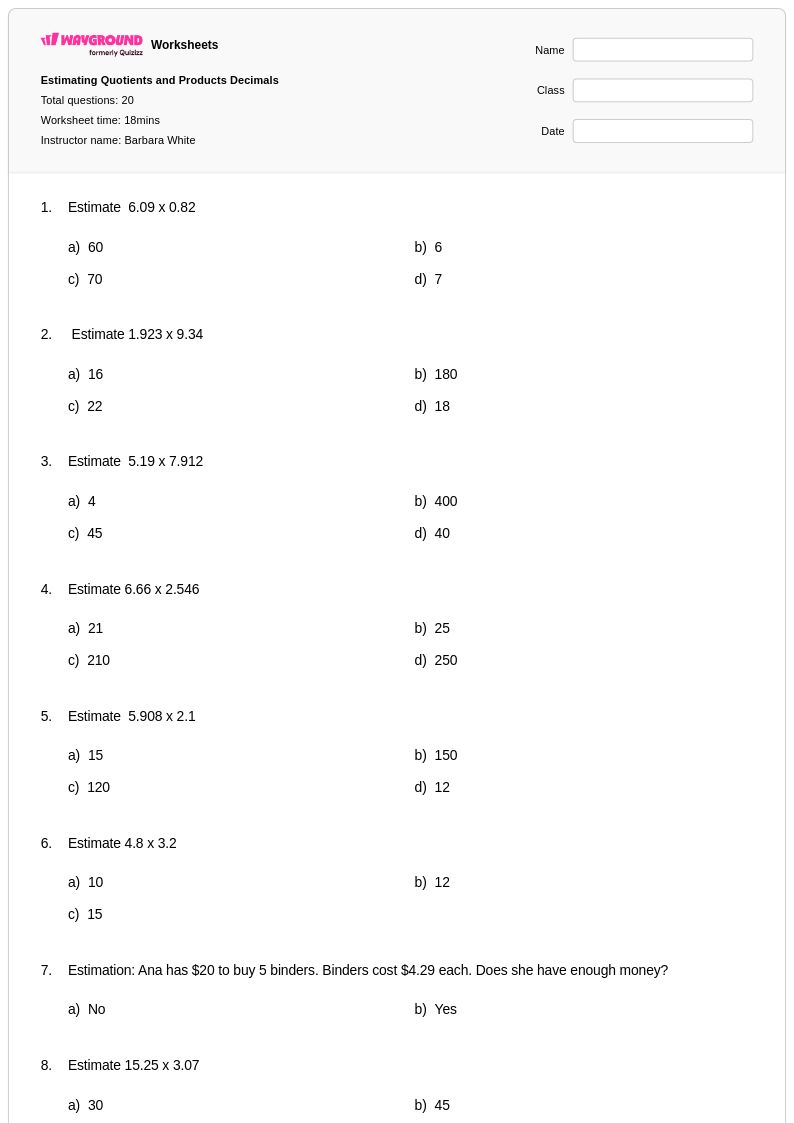
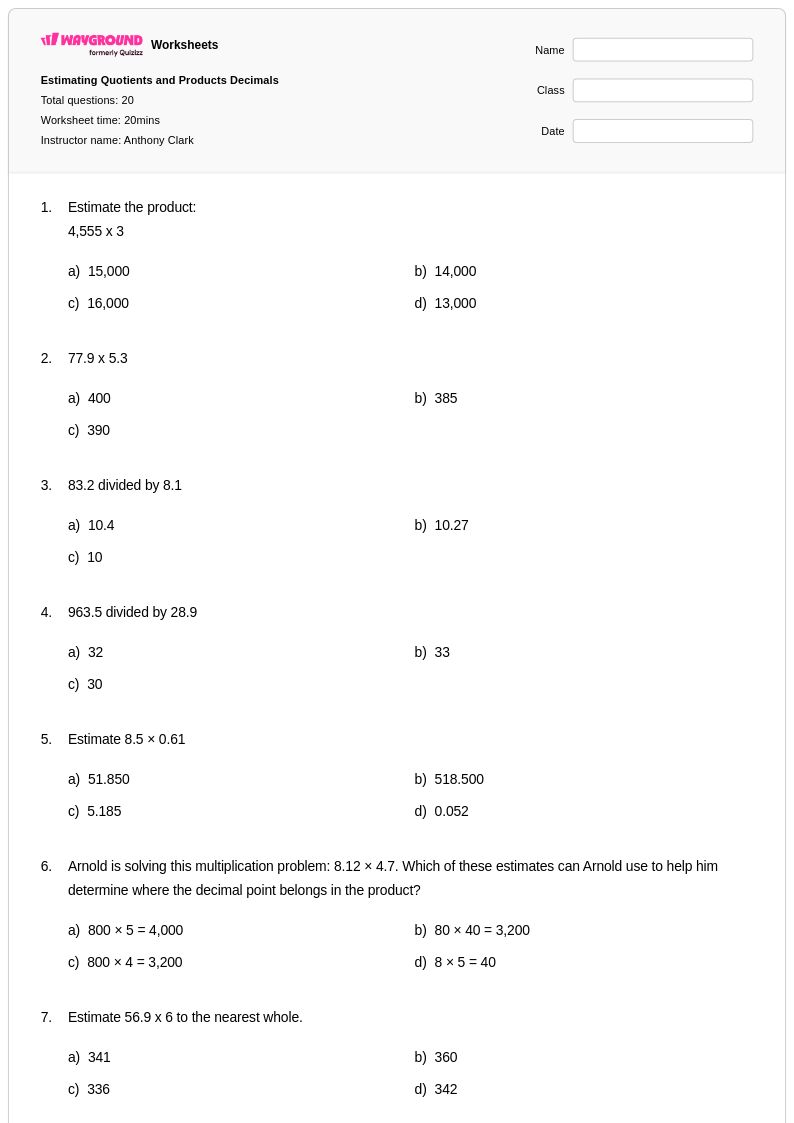
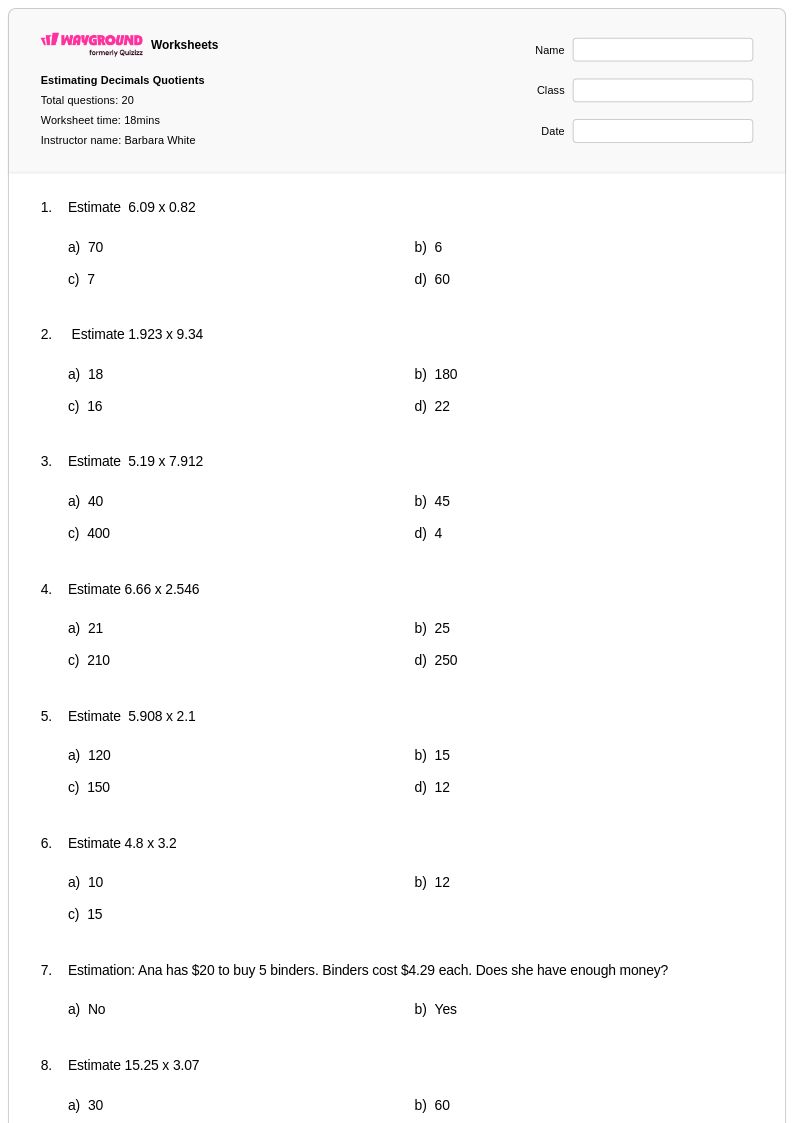
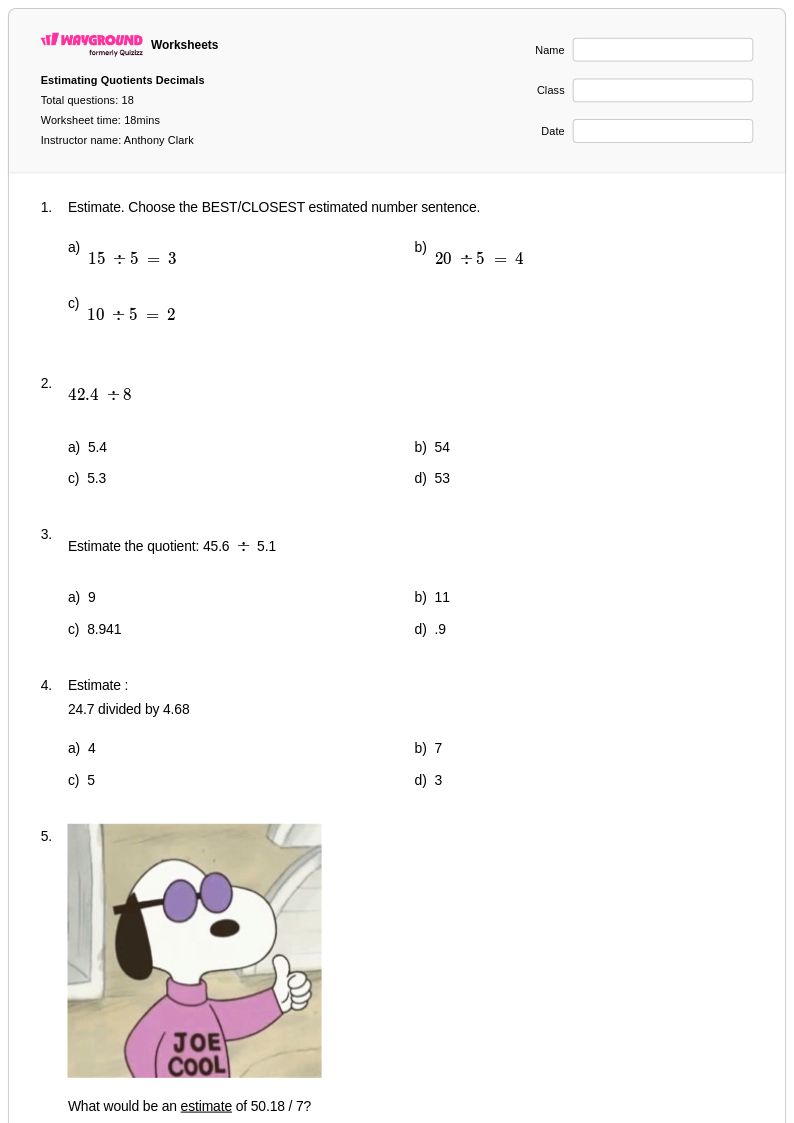
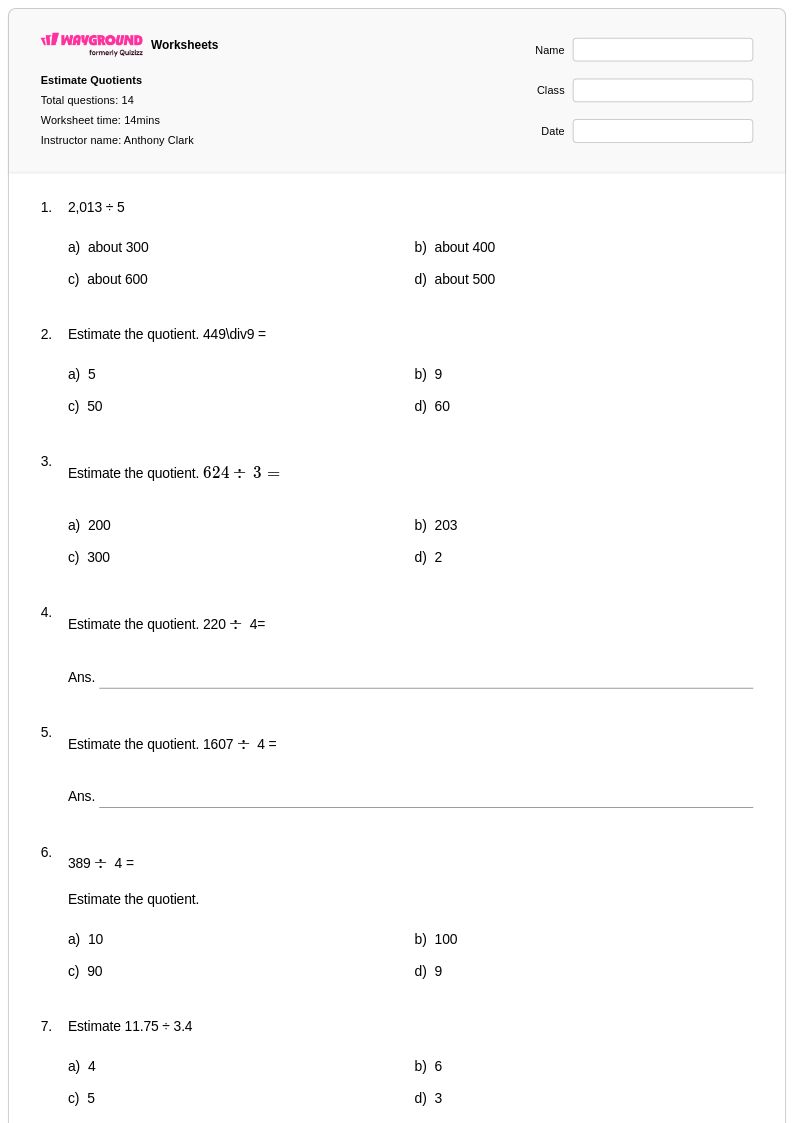
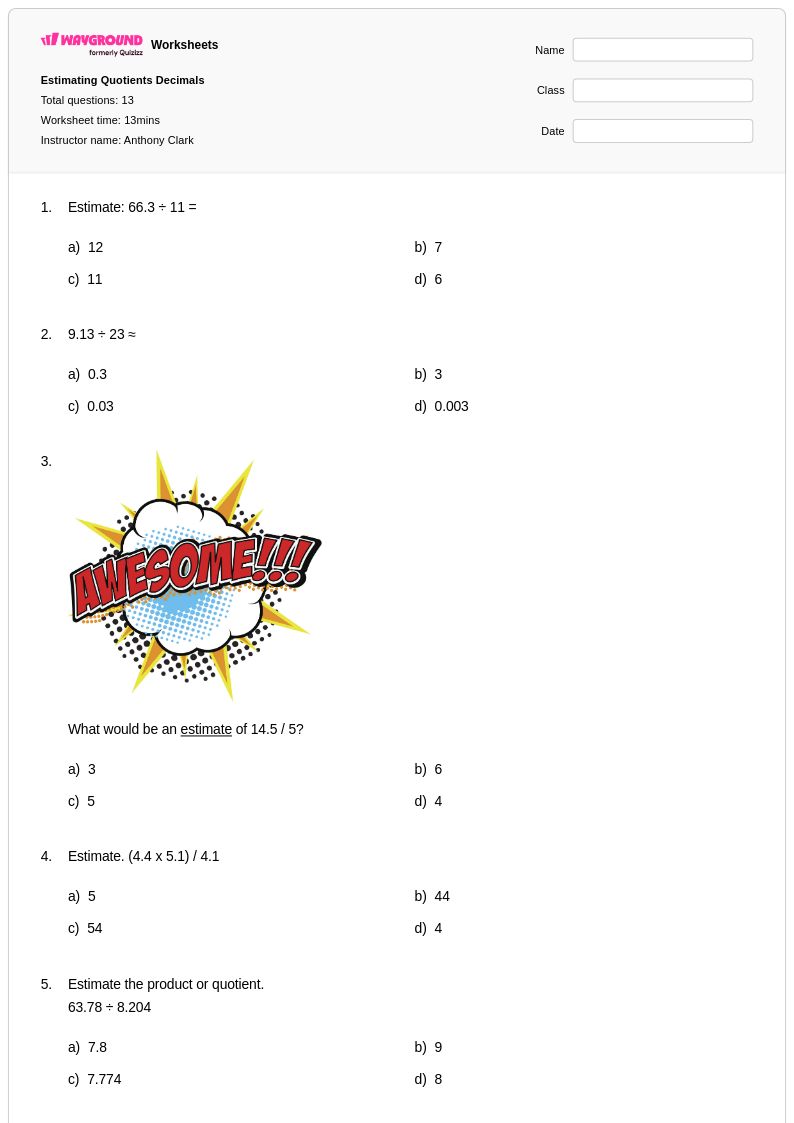
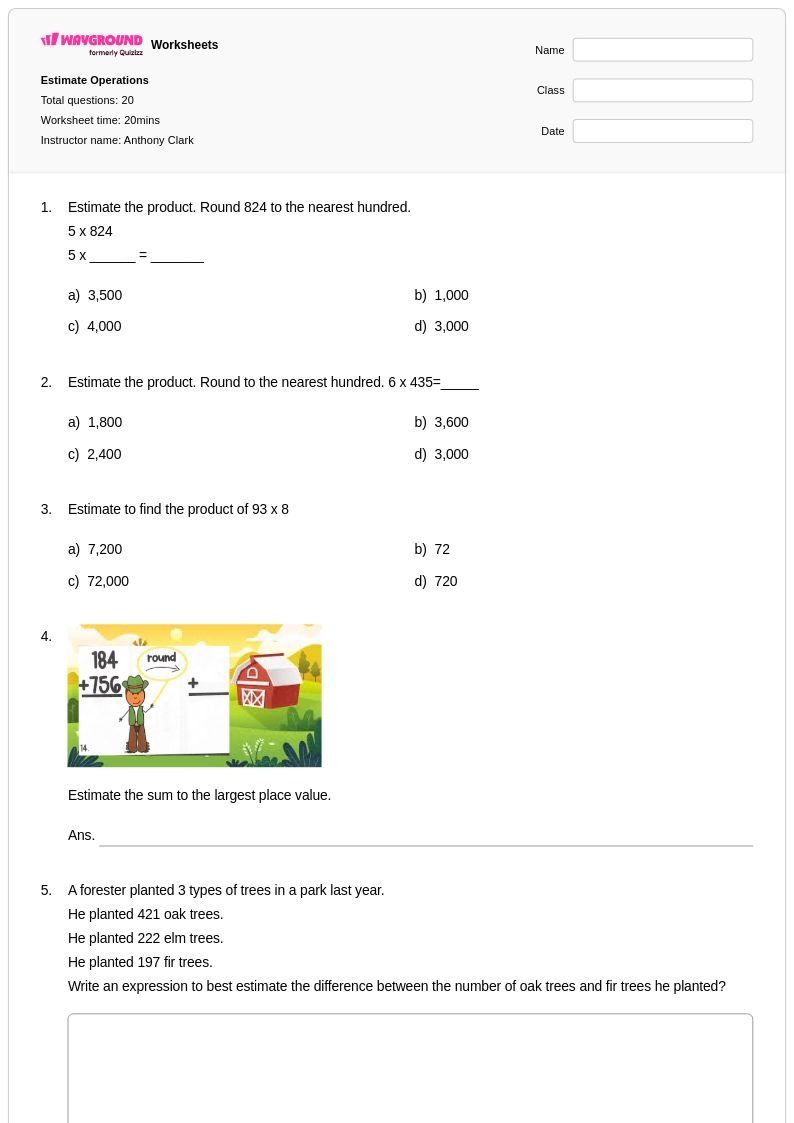
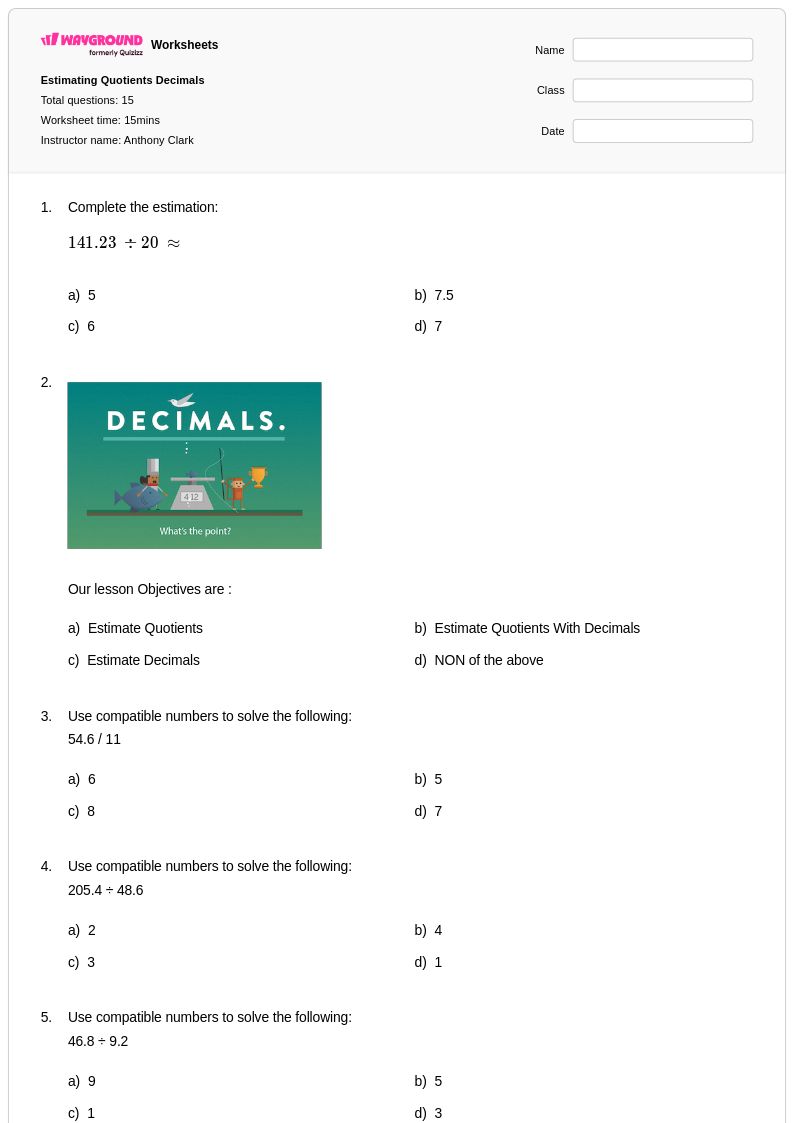
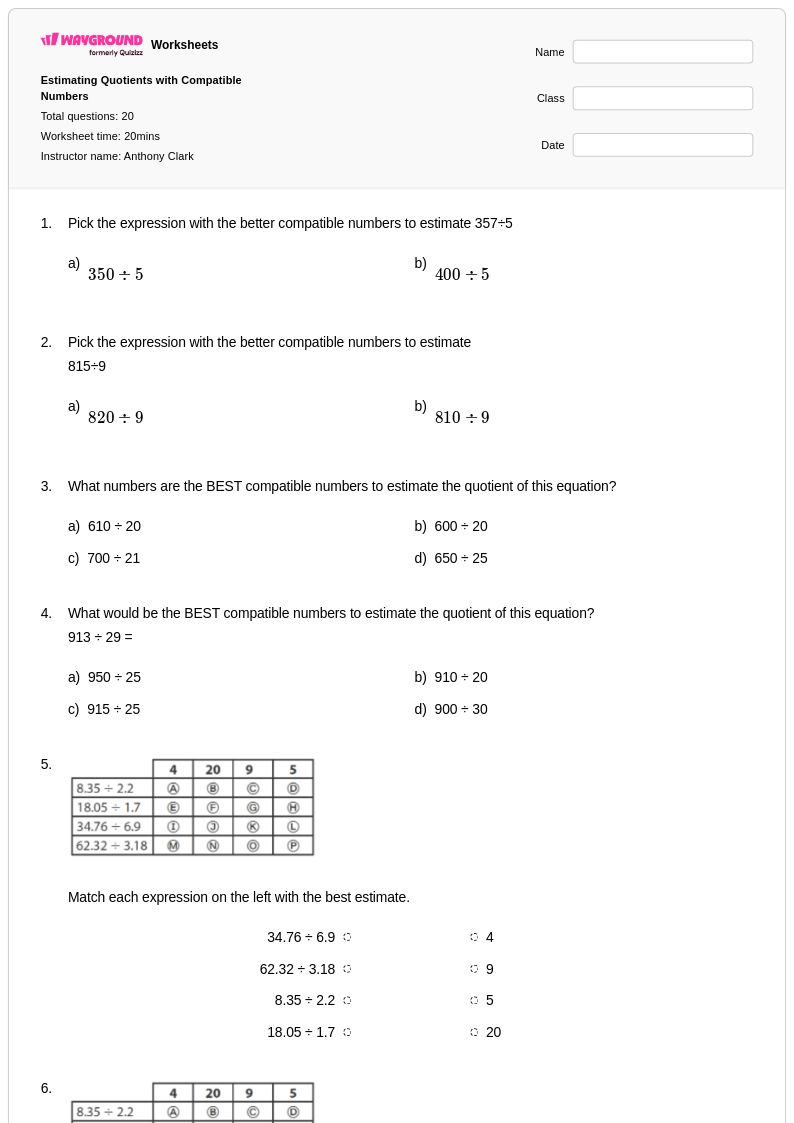
Class 7 students can master estimating quotients with Wayground's comprehensive collection of free worksheets, featuring engaging practice problems, printable PDFs, and detailed answer keys to build strong division estimation skills.
Explore printable Estimating Quotients worksheets for Class 7
Estimating quotients represents a fundamental Class 7 mathematical skill that bridges basic division concepts with advanced computational strategies and real-world problem solving. Wayground's comprehensive collection of estimating quotients worksheets provides students with structured practice in developing number sense, mental math abilities, and approximation techniques essential for mathematical fluency. These carefully designed resources feature progressive difficulty levels that guide seventh graders through various estimation methods, including rounding dividends and divisors, using compatible numbers, and applying front-end estimation strategies. Each worksheet collection includes detailed answer keys and step-by-step solutions, available as free printable pdf downloads that support both classroom instruction and independent practice. The practice problems systematically build students' confidence in making reasonable estimates before performing exact calculations, preparing them for more complex algebraic concepts and standardized assessments.
Wayground's robust platform, formerly known as Quizizz, empowers educators with access to millions of teacher-created estimating quotients resources specifically aligned with Class 7 mathematics standards and curriculum requirements. The platform's advanced search and filtering capabilities enable teachers to quickly locate worksheets that match their students' specific learning needs, whether for initial skill introduction, targeted remediation, or advanced enrichment activities. Teachers can seamlessly customize existing materials or create differentiated versions to accommodate diverse learning styles and ability levels within their classrooms. The flexible format options include both digital interactive worksheets and traditional printable pdf versions, allowing for versatile implementation across various instructional settings. These comprehensive tools streamline lesson planning while providing educators with data-driven insights to monitor student progress and adjust instruction for optimal learning outcomes in division estimation skills.
FAQs
How do I teach estimating quotients to 7th graders?
By Grade 7, estimation should be fast and automatic — the focus shifts from learning the strategy to applying it under pressure, including in multi-step problems and real-world contexts. Front-end estimation (using only the leading digits) is worth introducing explicitly here because it's faster than compatible numbers for complex expressions. The bigger instructional goal is connecting estimation to algebraic thinking: students should be able to look at an equation and immediately sense whether a solution is in a reasonable range before they solve it.
What exercises help 7th graders practice estimating quotients?
At this grade, the most productive practice embeds estimation in multi-step problems rather than isolating it. Give students a two-step word problem and ask them to estimate the final answer before calculating — then compare. Also effective: problems involving rational numbers (negative dividends, fractional divisors) where students must decide which direction to round to get a useful estimate. These push beyond mechanical rounding into genuine number sense.
What mistakes do 7th graders commonly make when estimating quotients?
The most telling error at Grade 7 is over-precision: students round to numbers that are technically closer to the original but harder to divide mentally, defeating the purpose. For example, rounding 6.3 to 6 is more useful than rounding it to 6.5, even though 6.5 is closer. A second issue is sign errors when estimating with negative numbers — students sometimes flip the sign of the estimate without thinking through whether the quotient should be positive or negative.
How do I use Wayground's Grade 7 estimating quotients worksheets?
You can host any worksheet as a digital quiz on Wayground for students to complete on a device, with results collected automatically. Every worksheet includes a complete answer key, so paper assignments are just as easy to manage — print the PDF, assign it, and use the Wayground for Teachers app to scan and grade submissions without scoring by hand. Both formats draw from the same content.
How does estimating quotients fit into the math progression at Grade 7?
Common Core's Grade 7 work centers on rational number operations — adding, subtracting, multiplying, and dividing positive and negative fractions and decimals. Estimation is the reasonableness check that runs through all of it: students are expected to know whether a computed answer makes sense, not just whether it's mechanically correct. Strong quotient estimation at this grade also directly supports the transition to algebraic expressions and equations in Grade 8, where students need to quickly assess whether a proposed solution is plausible.
How can I differentiate estimating quotients practice for my Grade 7 class?
Students who are still struggling with the underlying rational number concepts benefit most from Wayground's reduced answer choices accommodation, which lets them focus on the estimation reasoning without being overwhelmed by similar-looking options. For students with reading challenges, the Read Aloud feature is especially useful for multi-step word problems, where the language load is high. Students who have mastered the basics can be pushed toward problems that require estimating quotients within a larger expression — for example, estimating one part of a two-step calculation to check a final answer.