Free Printable Fact Vs. Opinion Worksheets for Class 10
Enhance Class 10 students' critical thinking skills with Wayground's free fact vs. opinion worksheets, featuring printable PDF practice problems and comprehensive answer keys to master distinguishing between objective statements and subjective viewpoints.
Explore printable Fact Vs. Opinion worksheets for Class 10
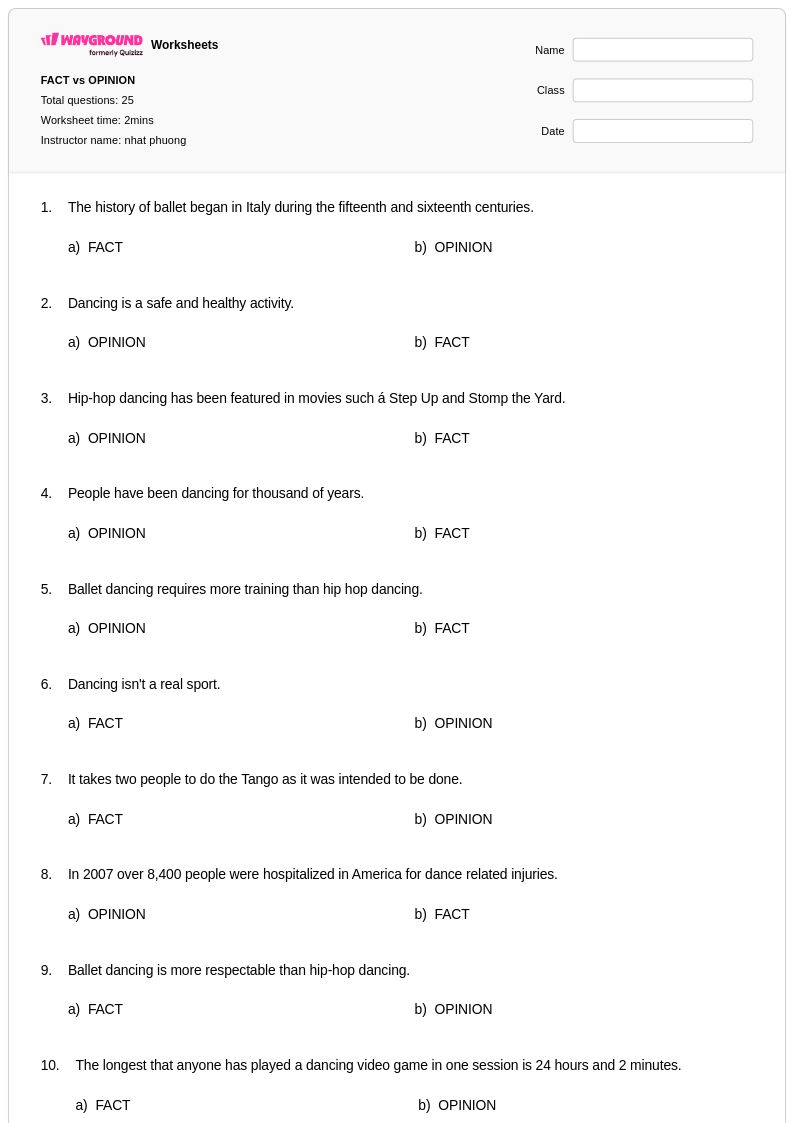
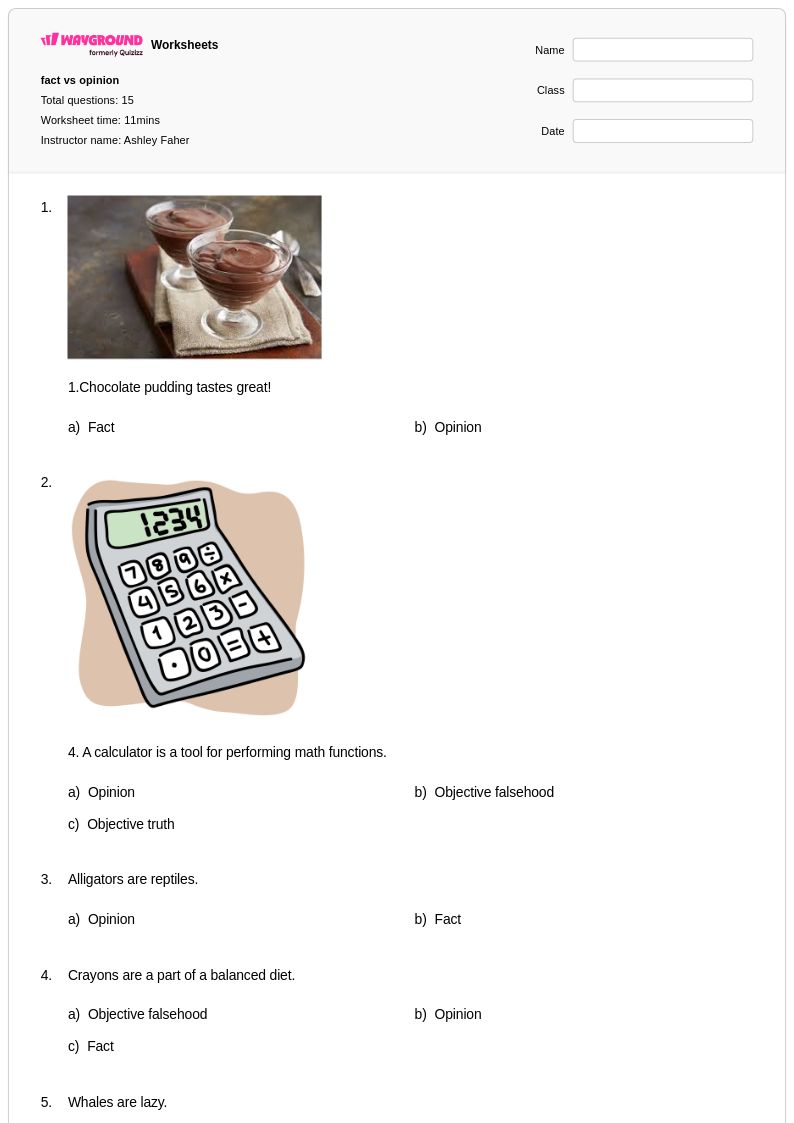
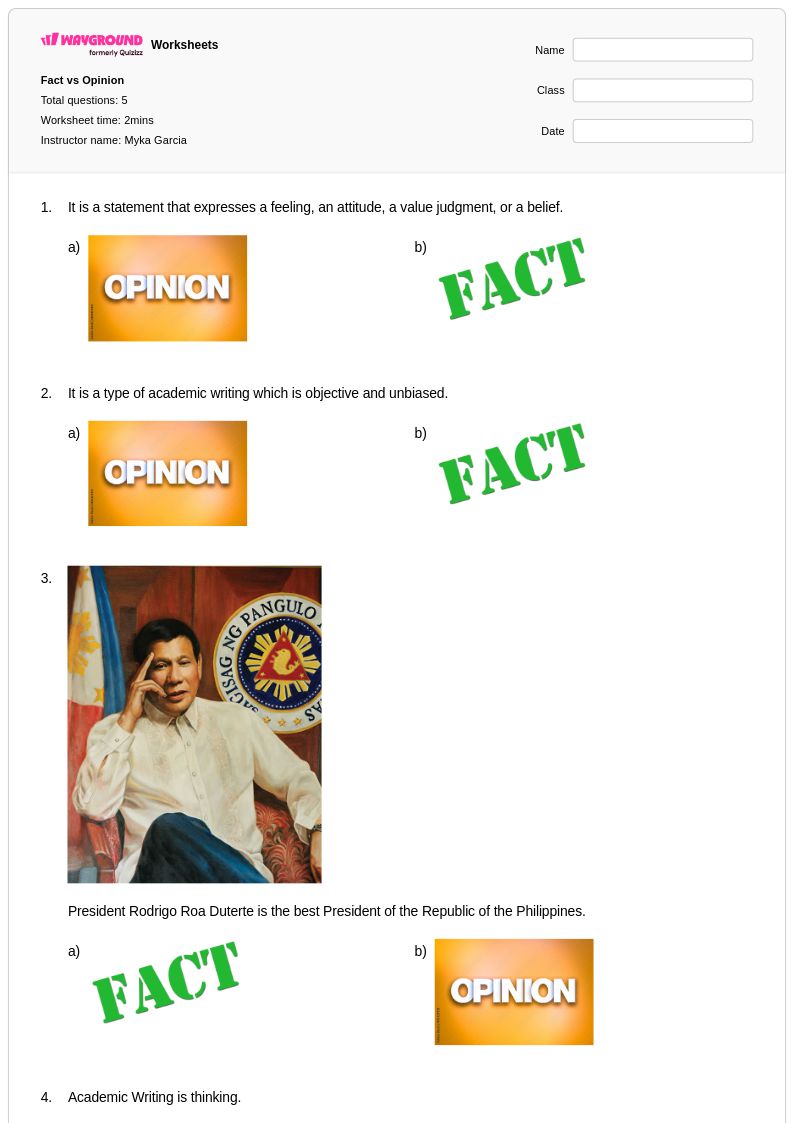
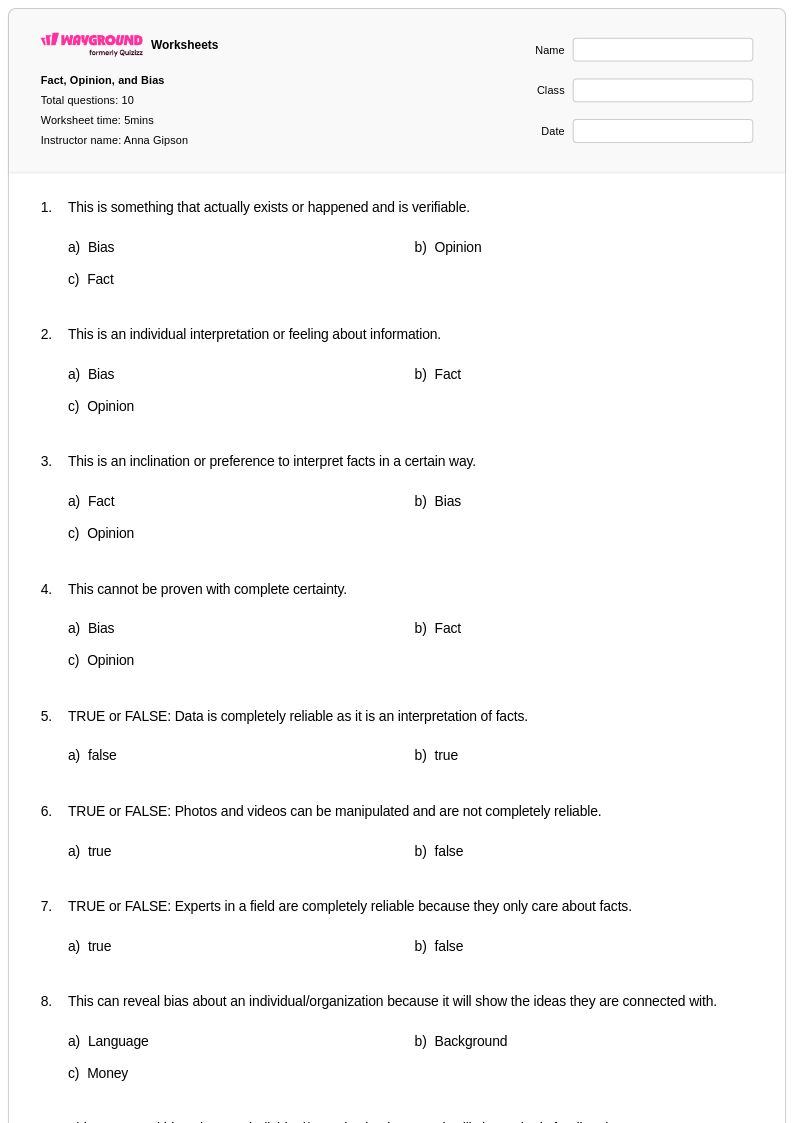
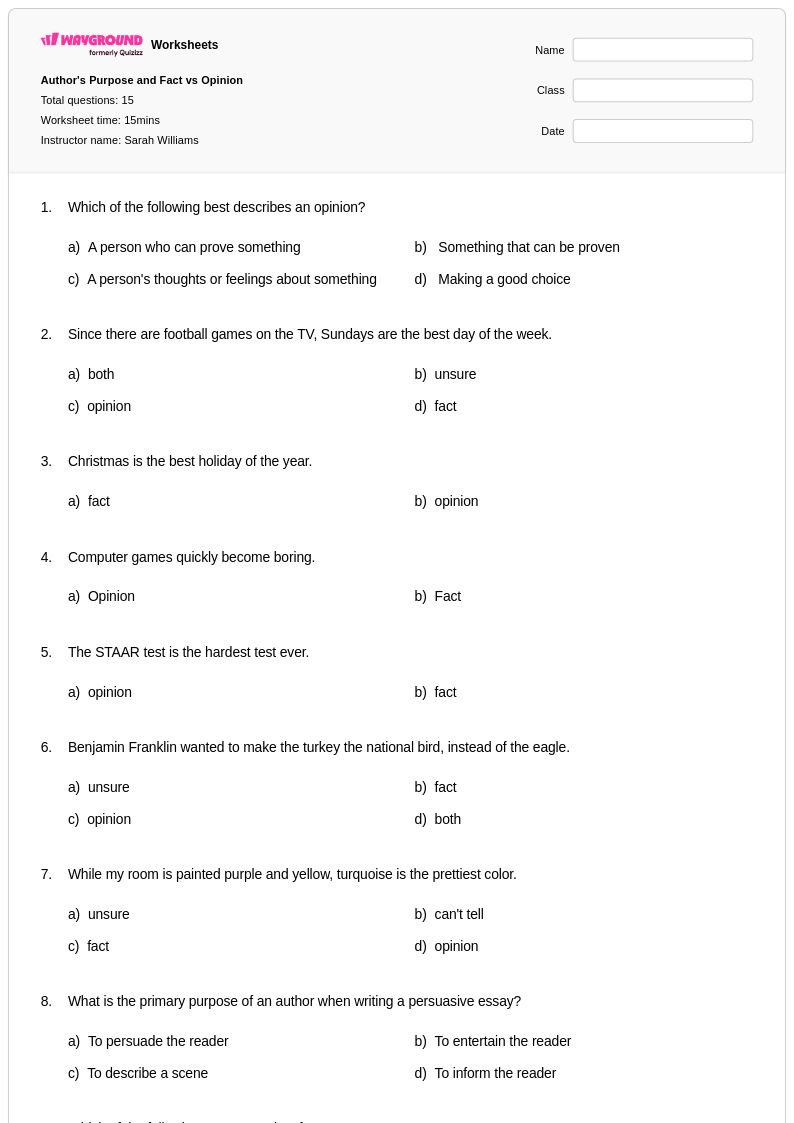
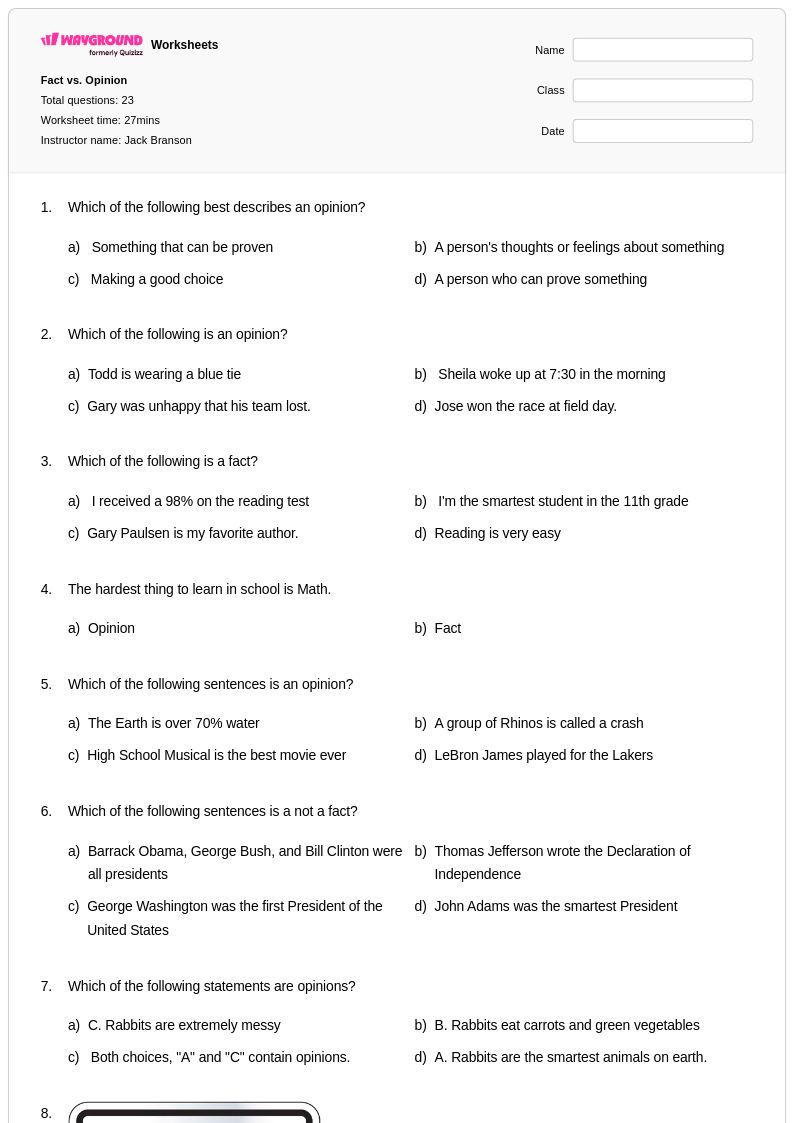
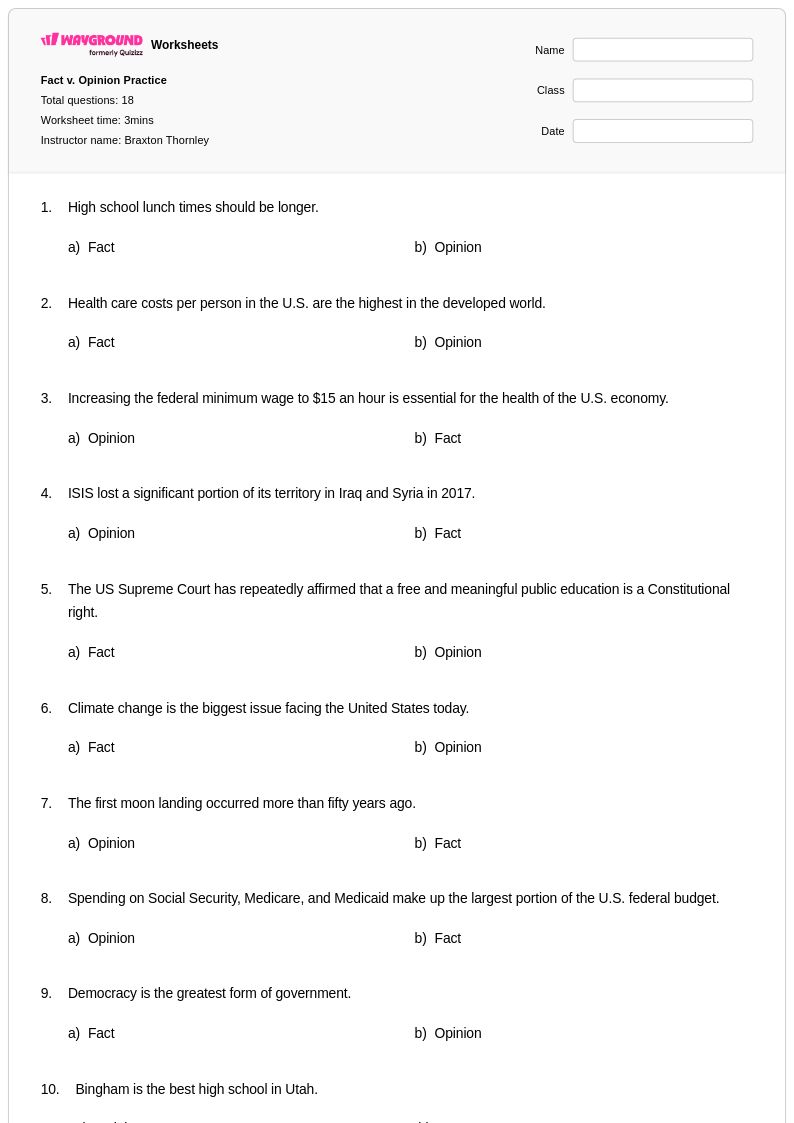
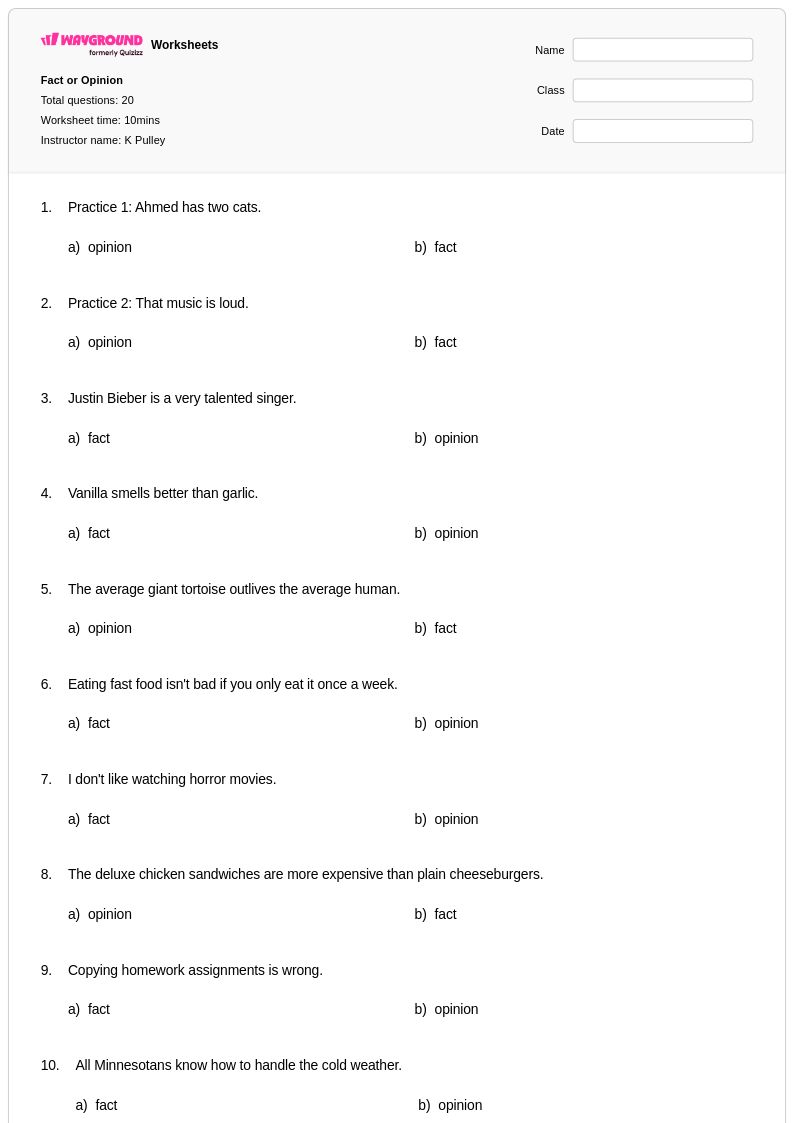
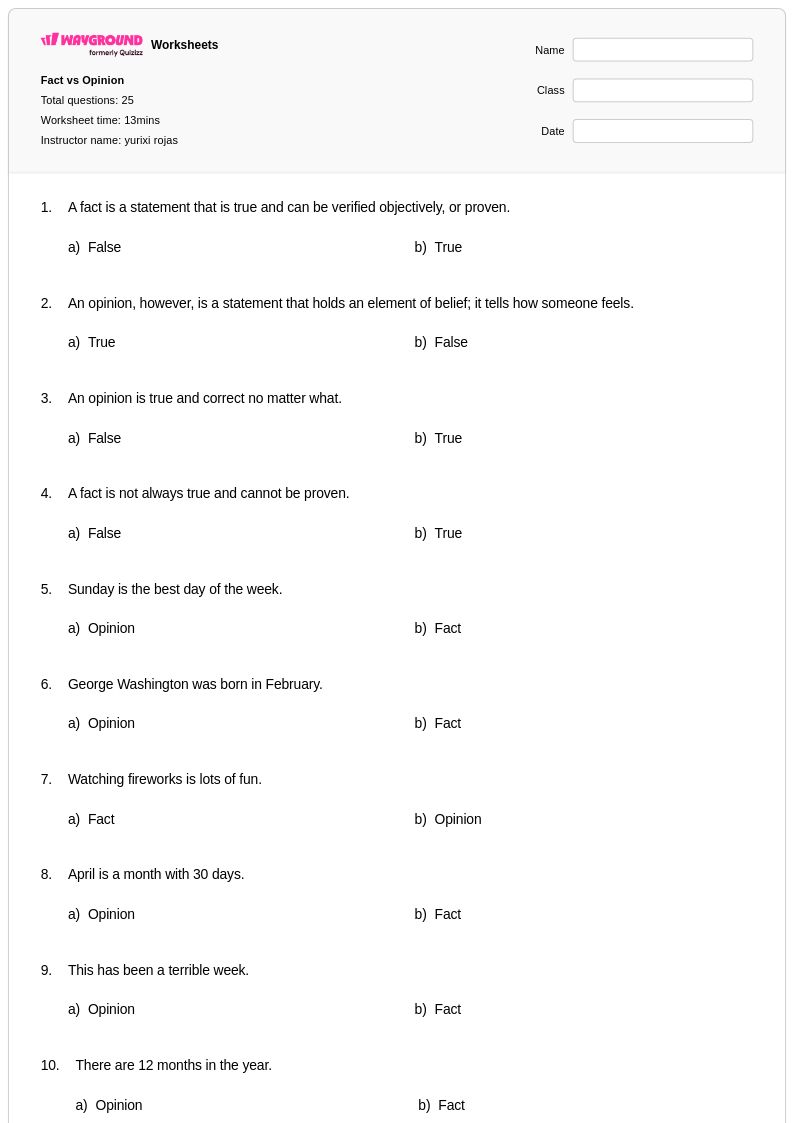
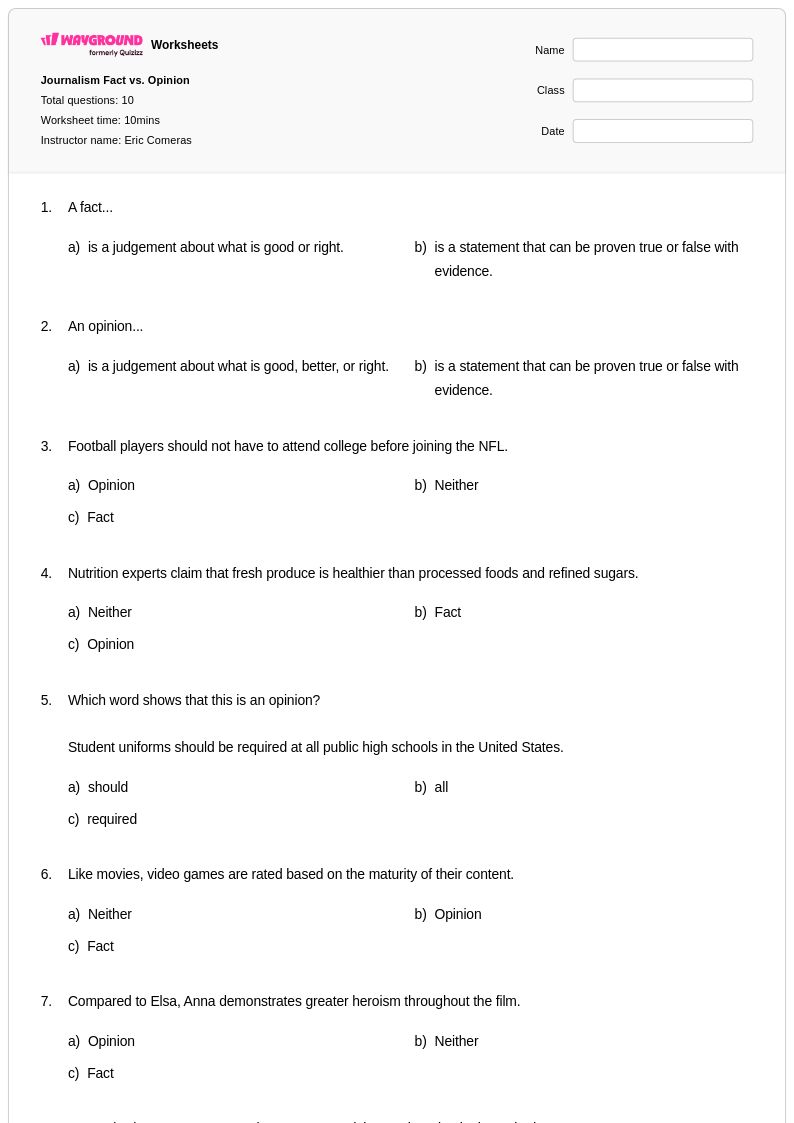
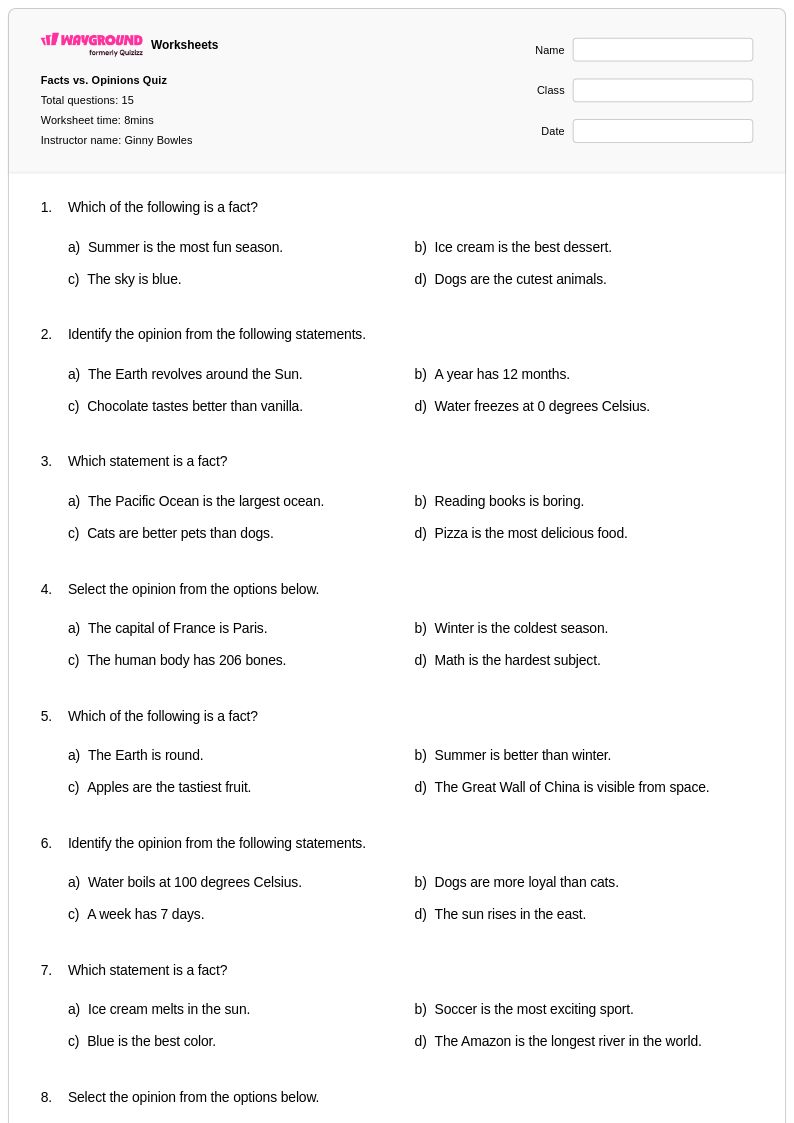
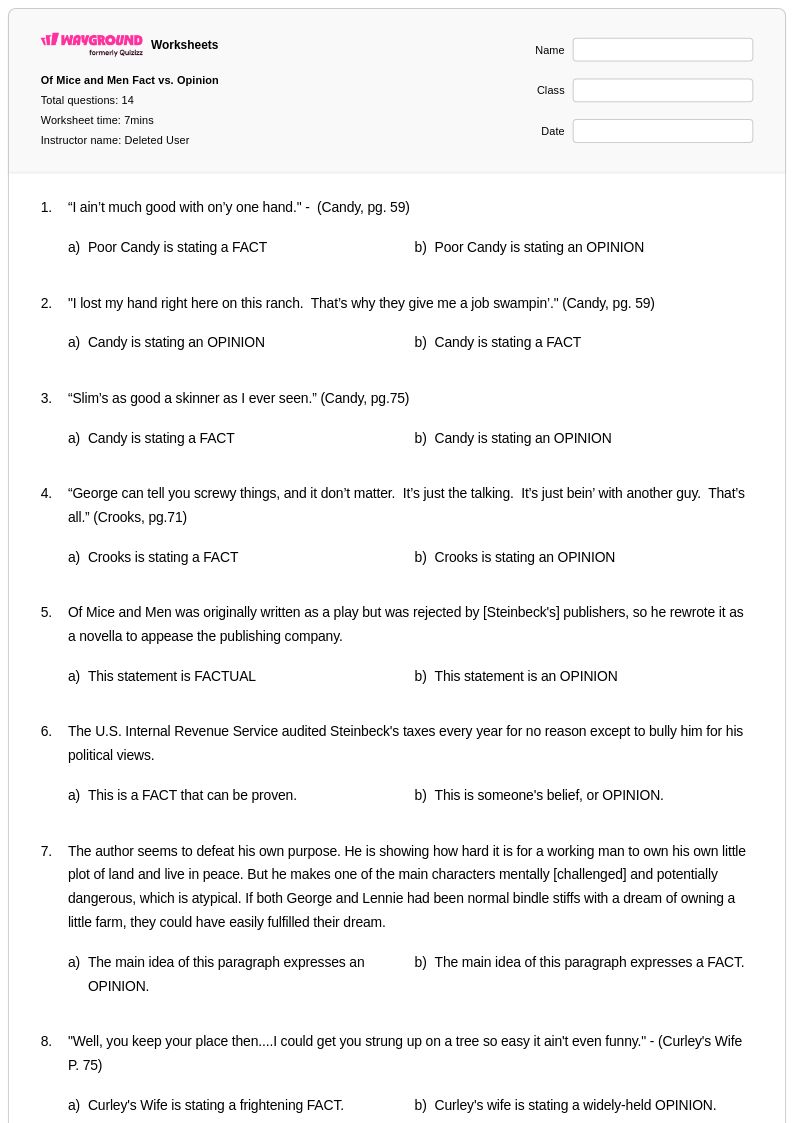
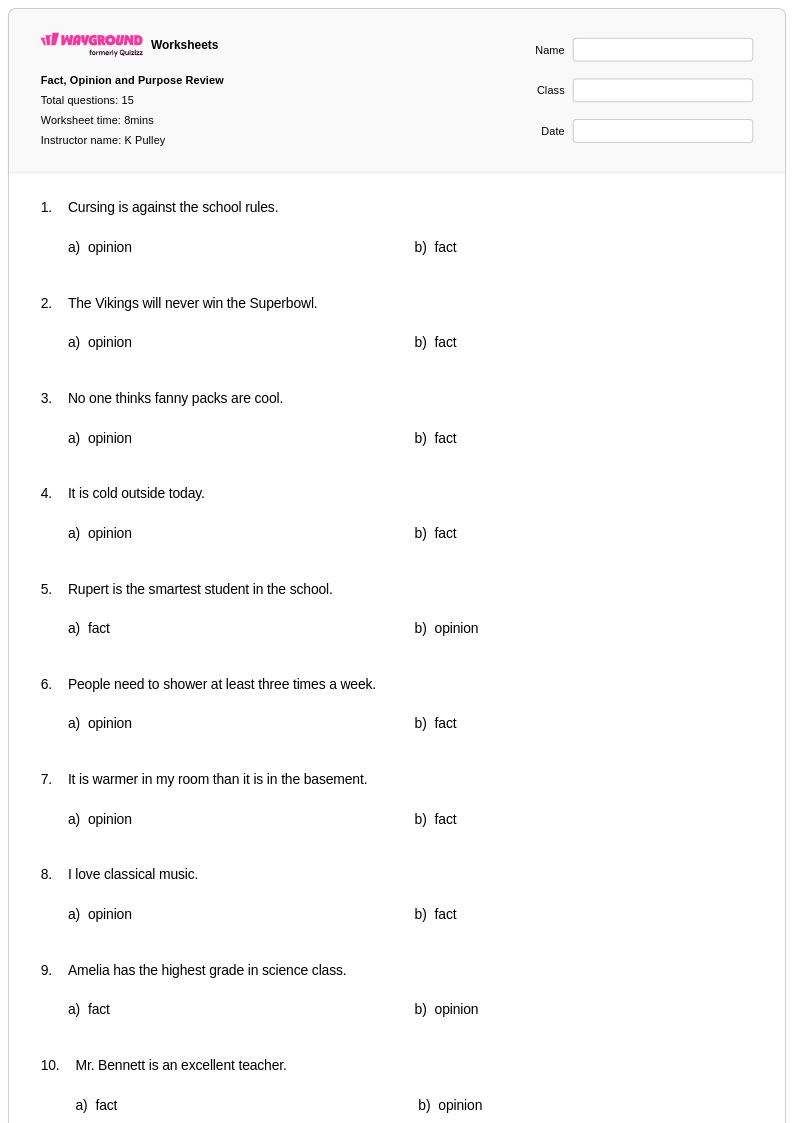
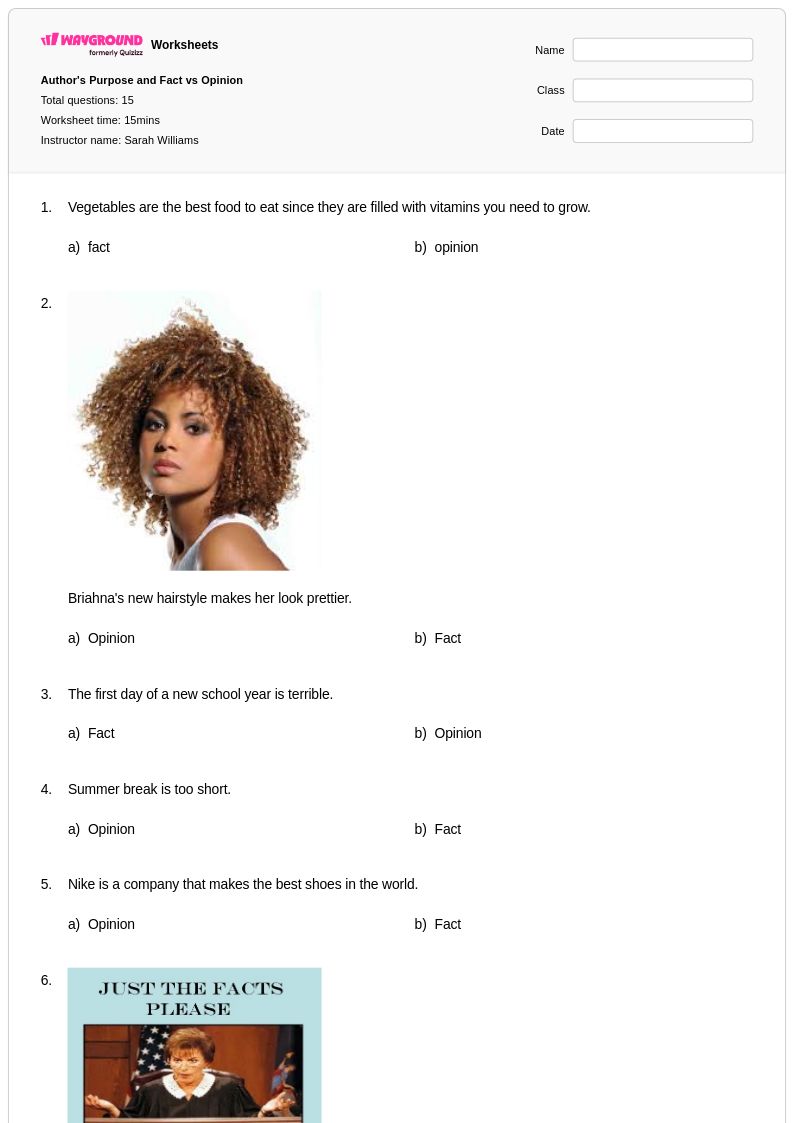
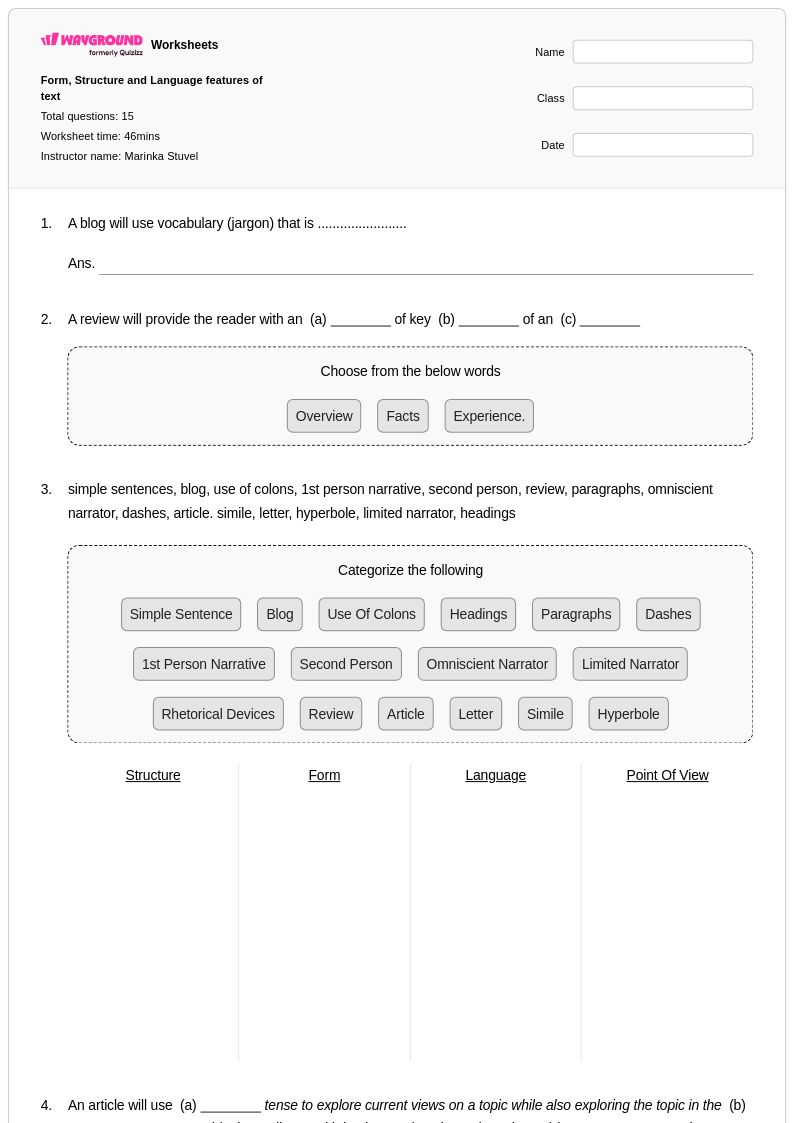
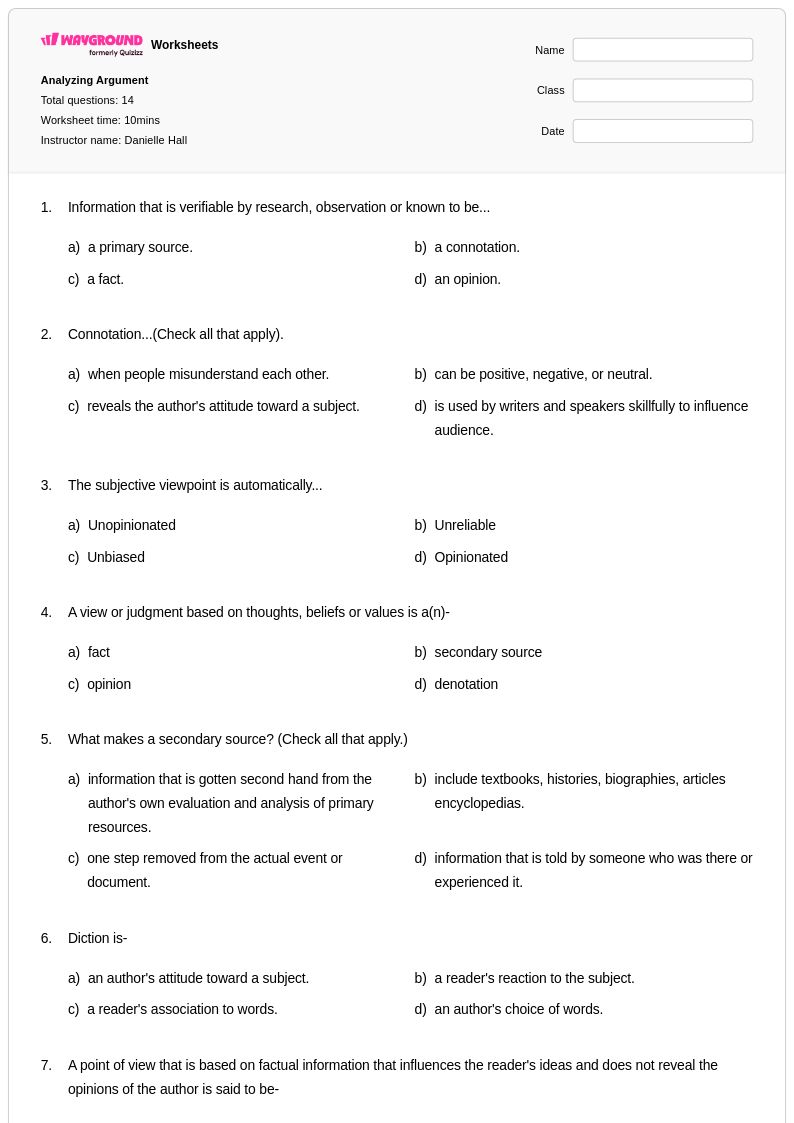
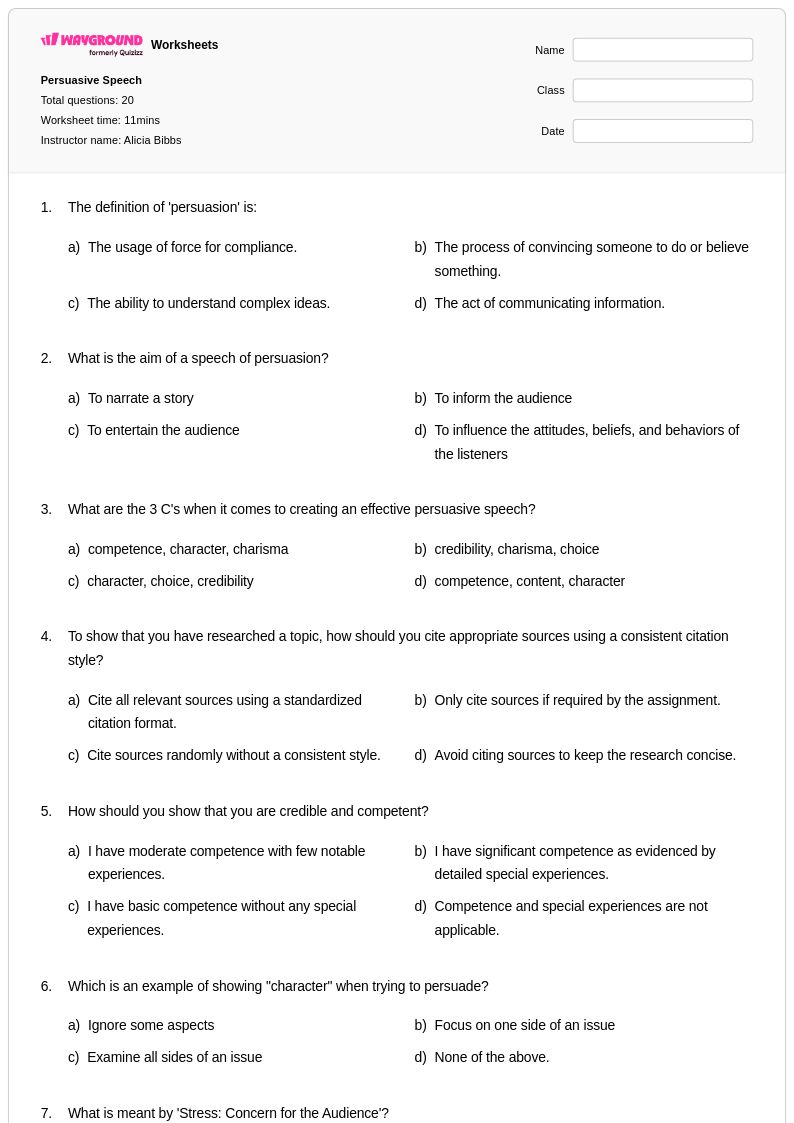
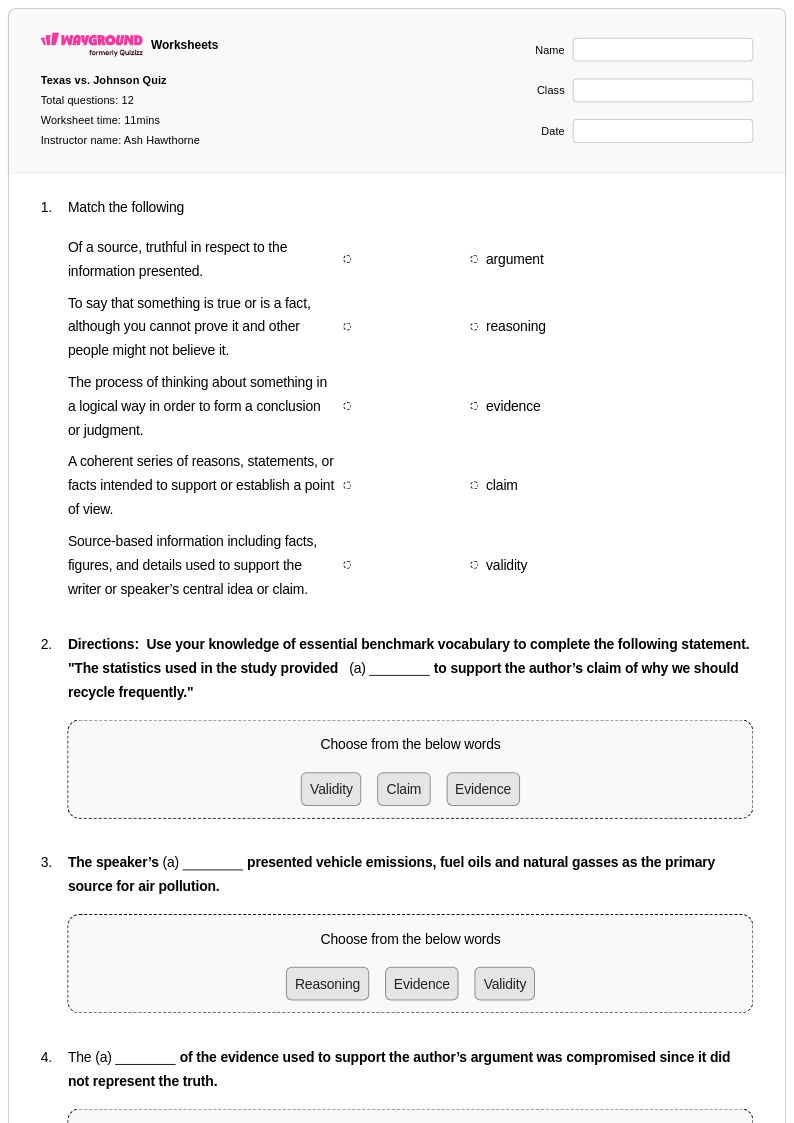
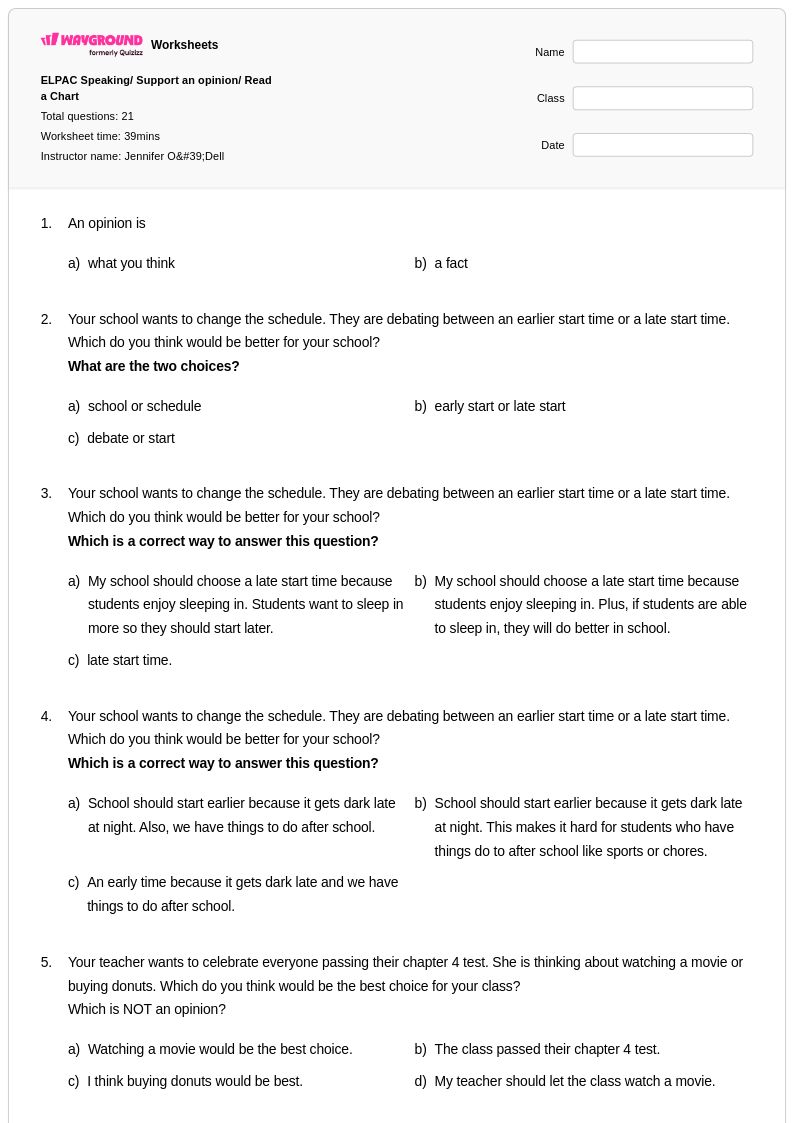
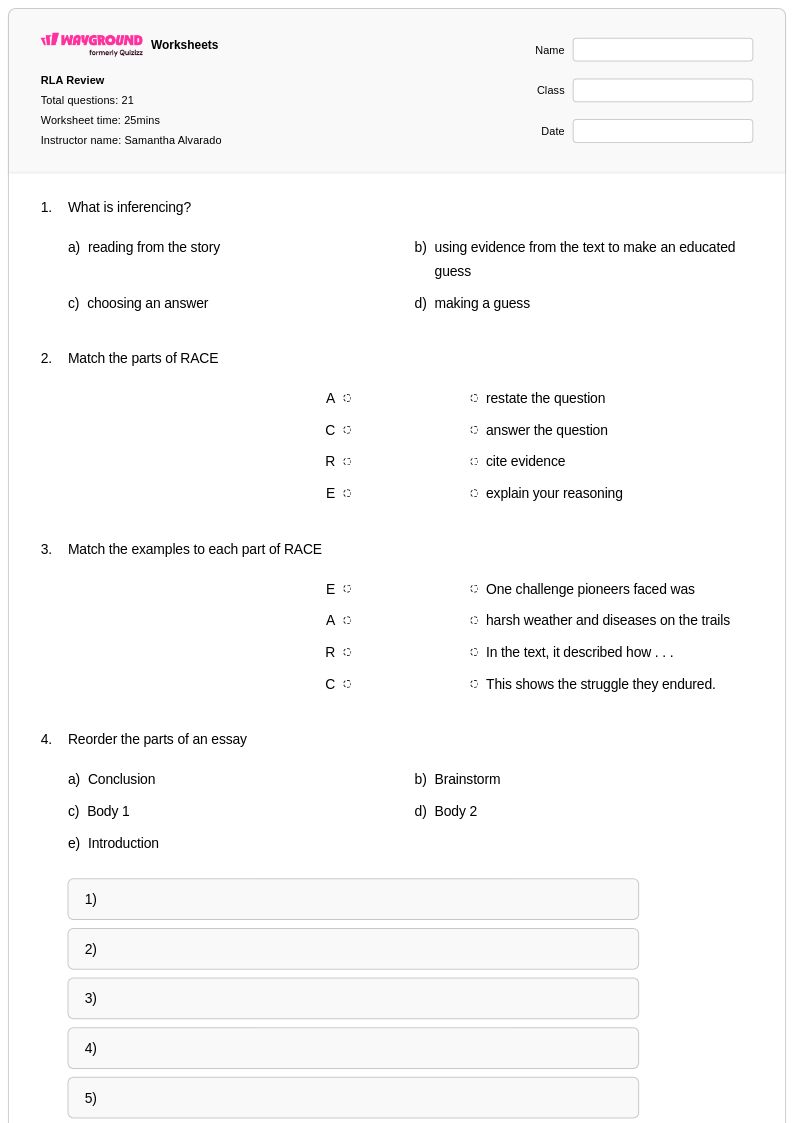
Distinguishing fact from opinion represents a fundamental reading comprehension skill that Class 10 students must master to become critical thinkers and effective communicators. Wayground's comprehensive collection of fact vs. opinion worksheets provides targeted practice materials that help students analyze statements, evaluate evidence, and recognize subjective versus objective language across various text types. These carefully crafted worksheets include diverse practice problems featuring newspaper articles, editorials, advertisements, and literary excerpts that challenge students to identify factual statements supported by evidence alongside opinion-based assertions that reflect personal beliefs or judgments. Each worksheet comes with a detailed answer key that explains the reasoning behind correct responses, while the free printable pdf format ensures easy classroom distribution and home study access.
Wayground's extensive library, built from millions of teacher-created resources, empowers educators to locate precisely the right fact vs. opinion materials for their Class 10 English classes through intuitive search and filtering capabilities. Teachers can easily differentiate instruction by selecting worksheets that align with curriculum standards while matching individual student reading levels and learning needs. The platform's flexible customization tools allow educators to modify existing worksheets or combine multiple resources to create comprehensive lesson packets that address specific learning objectives. Whether used for initial skill introduction, targeted remediation, or advanced enrichment activities, these digital and printable resources streamline lesson planning while providing consistent opportunities for students to strengthen their analytical reading skills through structured practice and assessment.
FAQs
How do I teach students the difference between facts and opinions?
Start by anchoring instruction in a clear, repeatable rule: a fact can be verified through evidence, while an opinion expresses a personal belief or judgment that can vary from person to person. Introduce signal words for opinions (such as 'I think,' 'I believe,' 'the best,' and 'should') and signal phrases for facts (such as 'studies show' and 'according to'). Practice with high-interest examples drawn from news headlines, advertisements, and familiar topics before moving to complex texts, so students build confidence with the concept before encountering nuanced or borderline statements.
What exercises help students practice identifying facts vs. opinions?
Effective practice exercises include sorting individual statements into 'fact' or 'opinion' columns, underlining signal words in a passage, and rewriting opinion statements as facts or vice versa to deepen understanding of the distinction. Passages pulled from multiple subject areas, including science, social studies, and current events, expose students to varied contexts where the skill applies. Graduated difficulty, starting with clear-cut statements and progressing to nuanced claims, ensures students build the analytical habit rather than just pattern-matching.
What mistakes do students commonly make when distinguishing facts from opinions?
The most common error is treating confident or widely agreed-upon statements as facts simply because they sound authoritative, when they may still be opinions. Students also frequently confuse statistics-heavy opinions with facts, failing to recognize that data can be selectively used to support a subjective claim. Another persistent misconception is assuming that negative or critical statements are automatically opinions, when a verified, evidence-backed negative claim is still a fact. Targeted practice with borderline examples is the most effective way to correct these patterns.
How does distinguishing facts from opinions connect to media literacy?
The ability to classify statements as fact or opinion is a foundational media literacy skill because persuasive texts, advertisements, and news sources routinely blend verifiable information with subjective framing. Students who can identify this distinction are better equipped to evaluate sources critically, detect bias, and resist manipulation in everyday reading and viewing. Teaching fact vs. opinion explicitly gives students a concrete, transferable strategy they can apply across academic disciplines and real-world information environments.
How do I use Wayground's fact vs. opinion worksheets in my classroom?
Wayground's fact vs. opinion worksheets are available as printable PDFs for traditional classroom use and in digital formats for technology-integrated or hybrid environments, including the option to host them as a quiz directly on Wayground. Answer keys are included with each worksheet, enabling immediate feedback and self-assessment without additional prep. For students who need support, Wayground's digital format allows teachers to apply accommodations such as Read Aloud, extended time, or reduced answer choices to individual students, ensuring all learners can engage with the material appropriately.
How can I differentiate fact vs. opinion instruction for struggling readers?
For struggling readers, reduce cognitive load by starting with single-sentence statements rather than full passages, and explicitly pre-teach the signal words associated with opinions and facts before any sorting activity. On Wayground's digital platform, teachers can enable the Read Aloud accommodation so that question text is read to students who have difficulty decoding, and the reduced answer choices setting can be applied to individual students to limit distraction and support decision-making. Pairing these scaffolds with immediate answer key feedback helps struggling learners self-correct and build the skill incrementally.