Free Printable Fishbowl Discussion Worksheets for Class 10
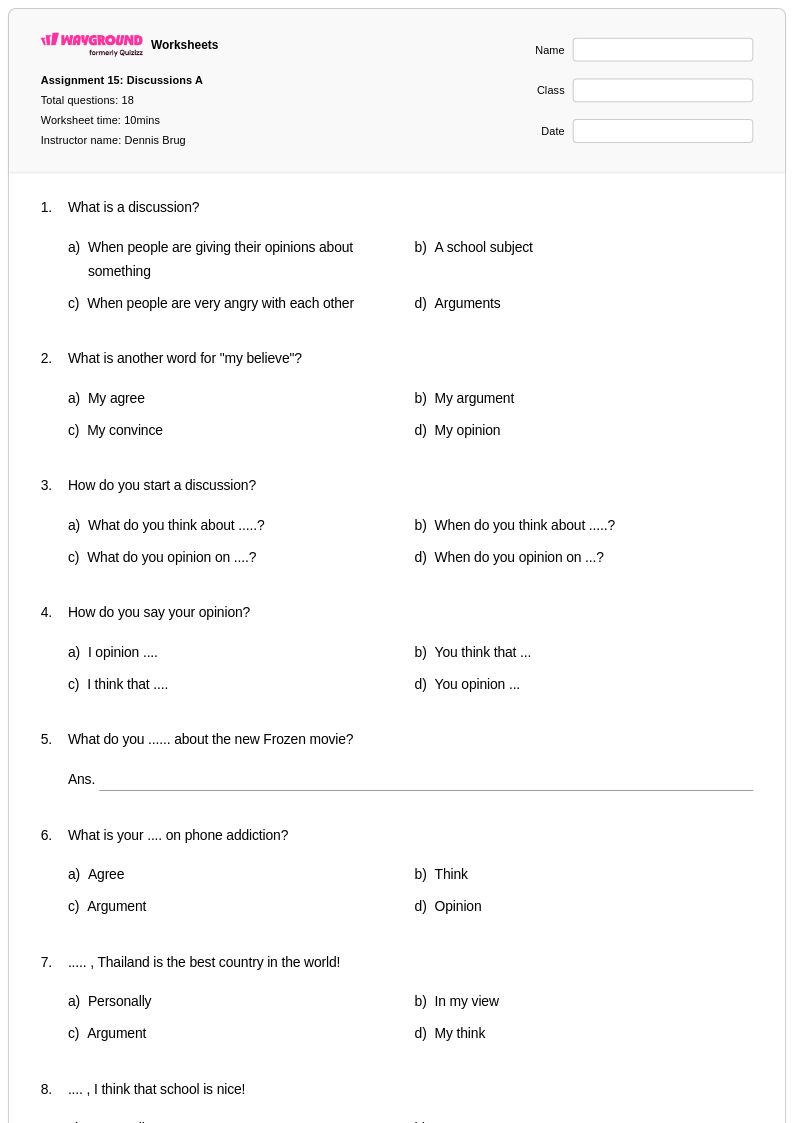
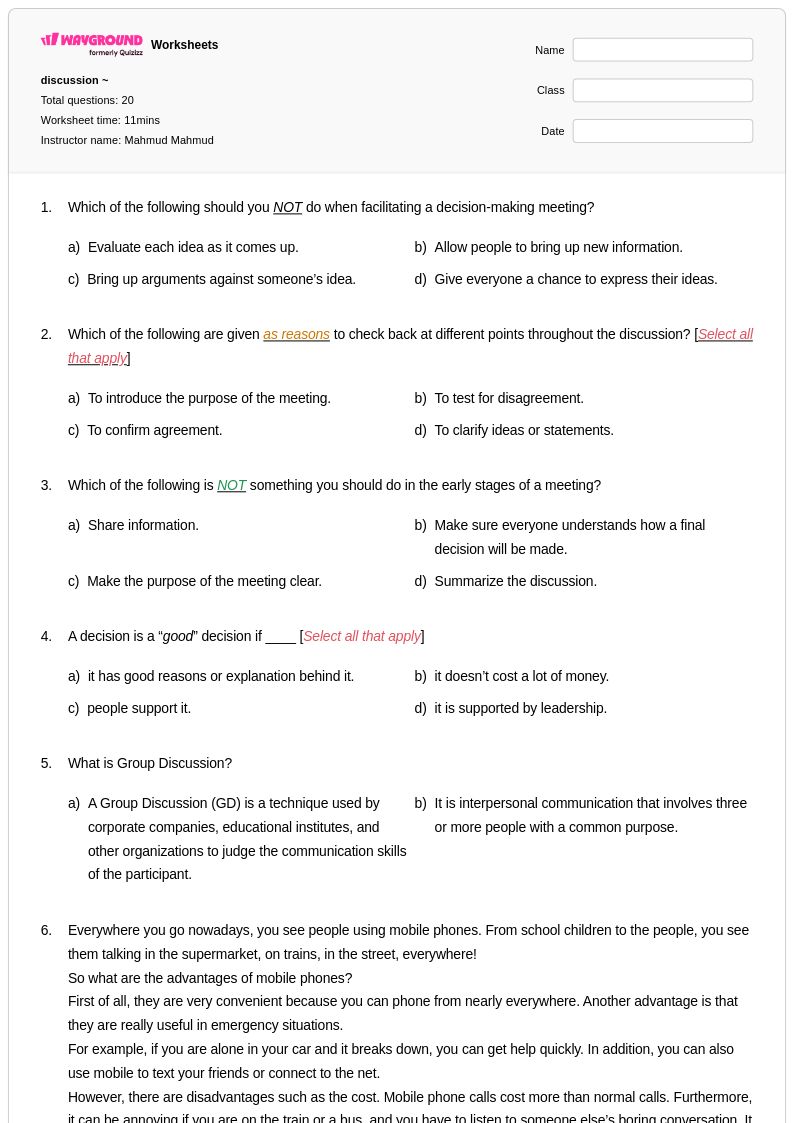
Discover free Class 10 Fishbowl Discussion worksheets and printables through Wayground that help students master collaborative learning techniques, critical thinking skills, and structured peer dialogue with comprehensive practice problems and answer keys.
Explore printable Fishbowl Discussion worksheets for Class 10
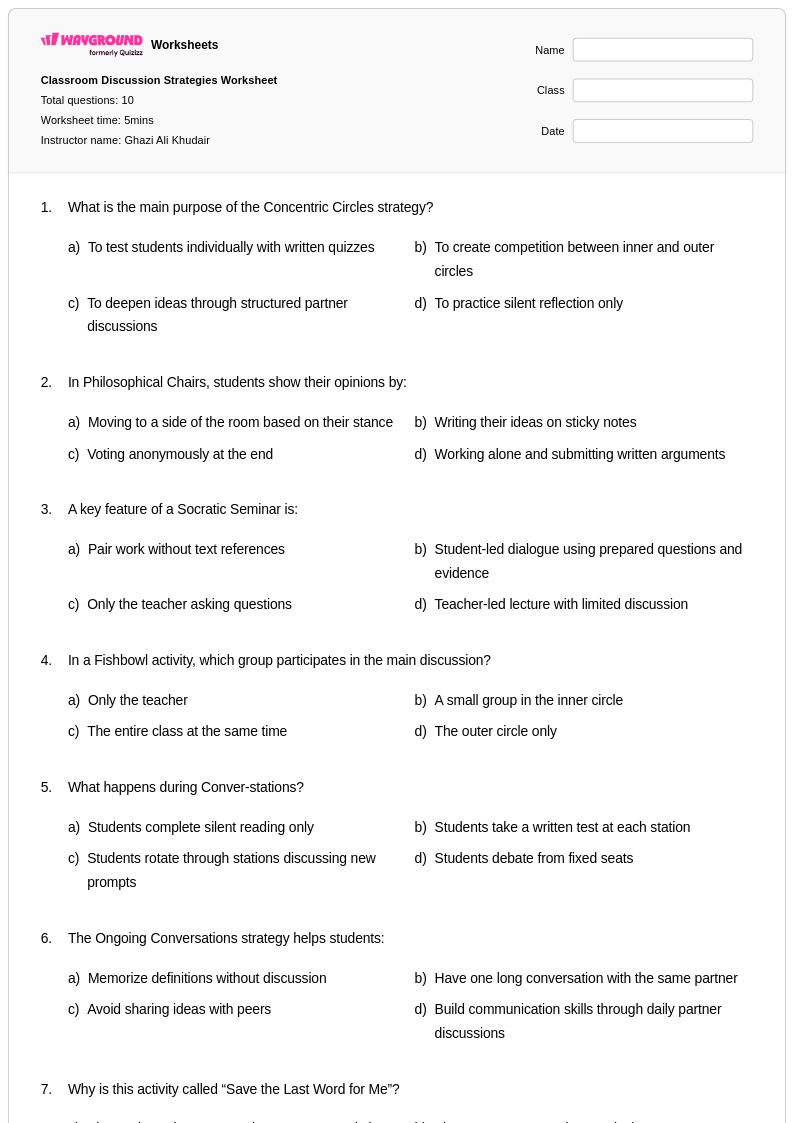
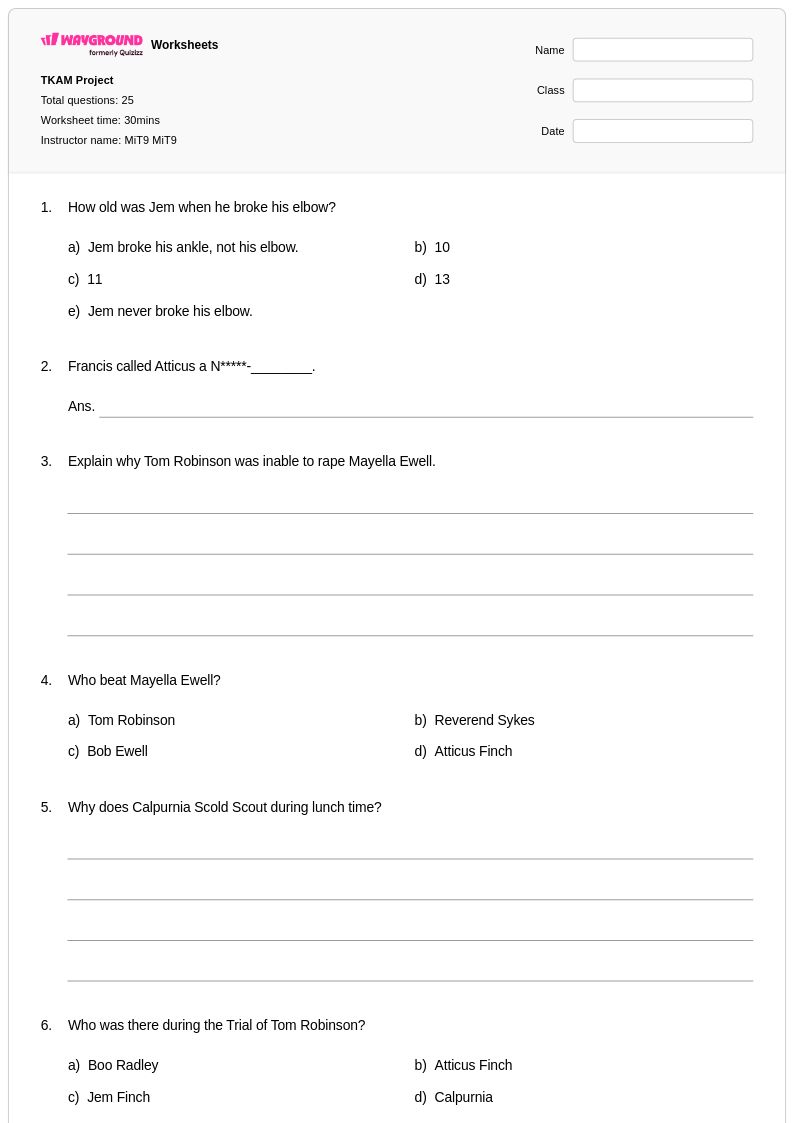
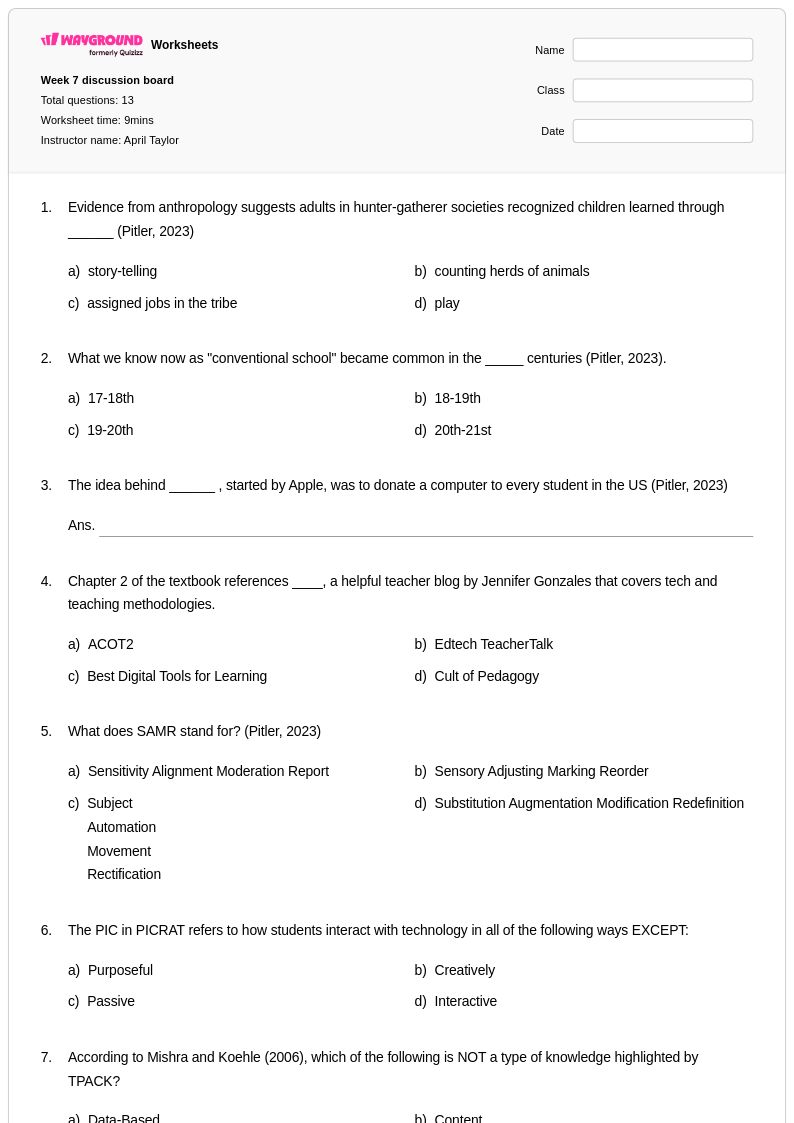
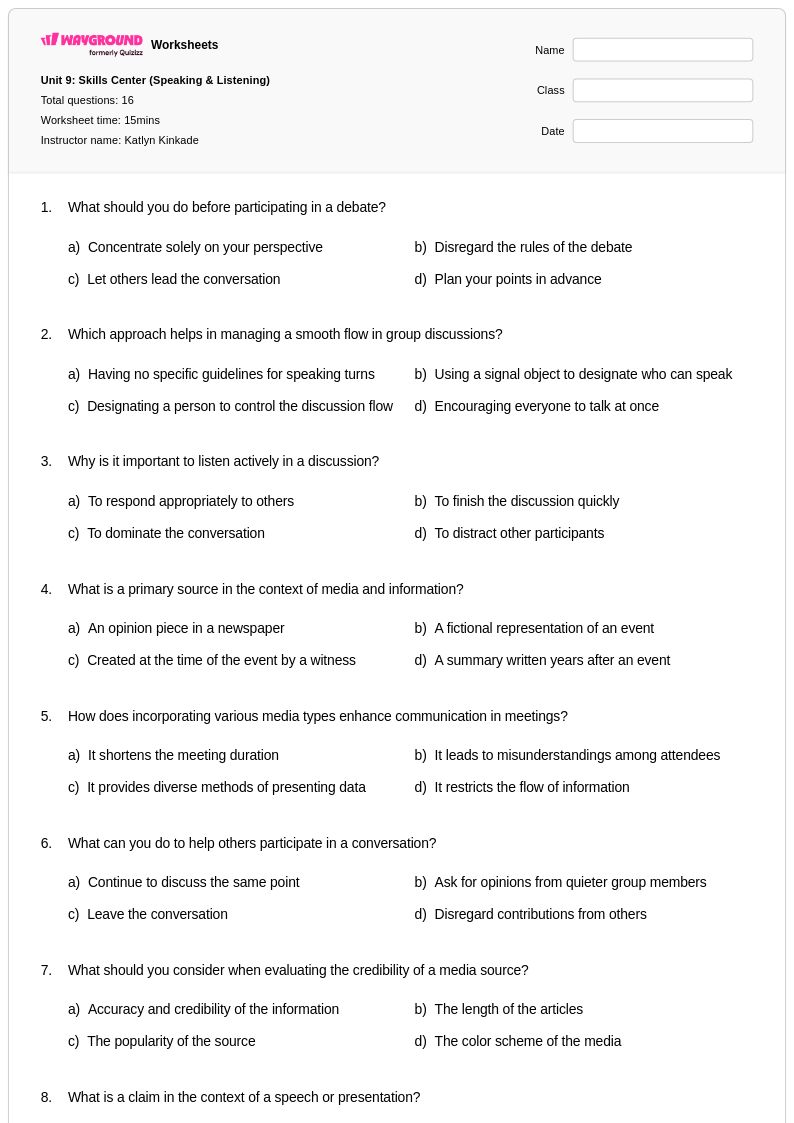
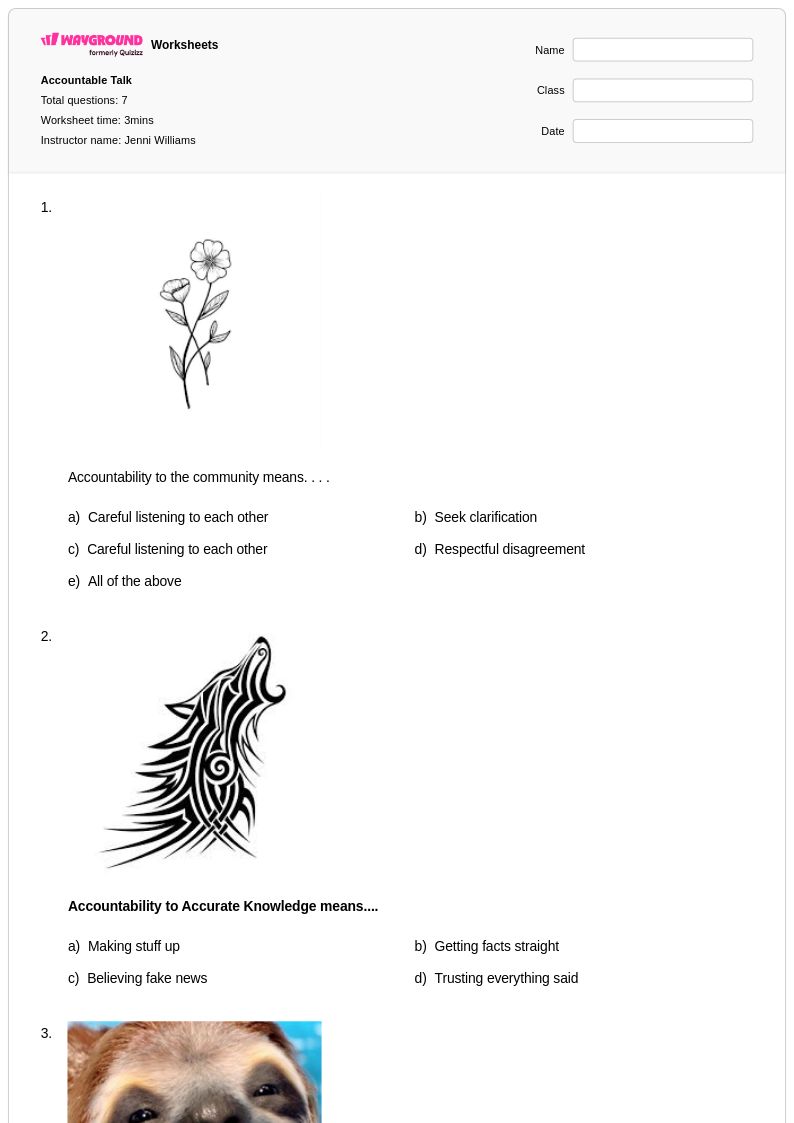
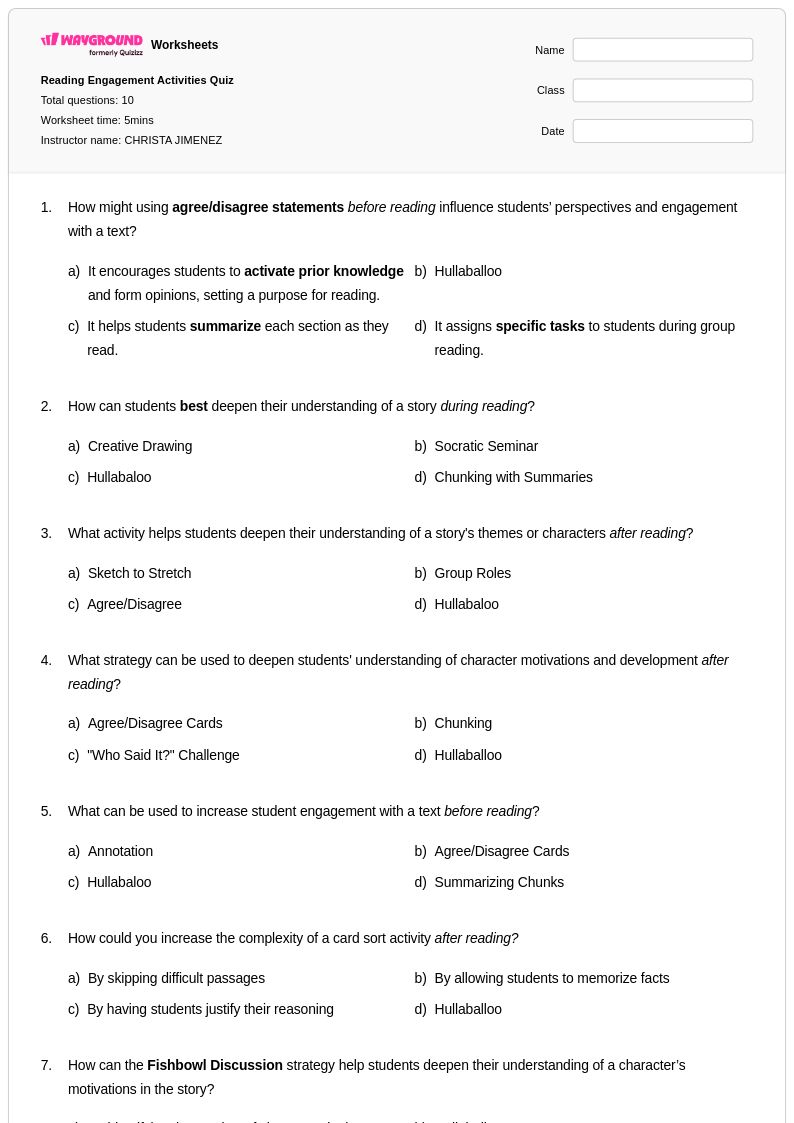
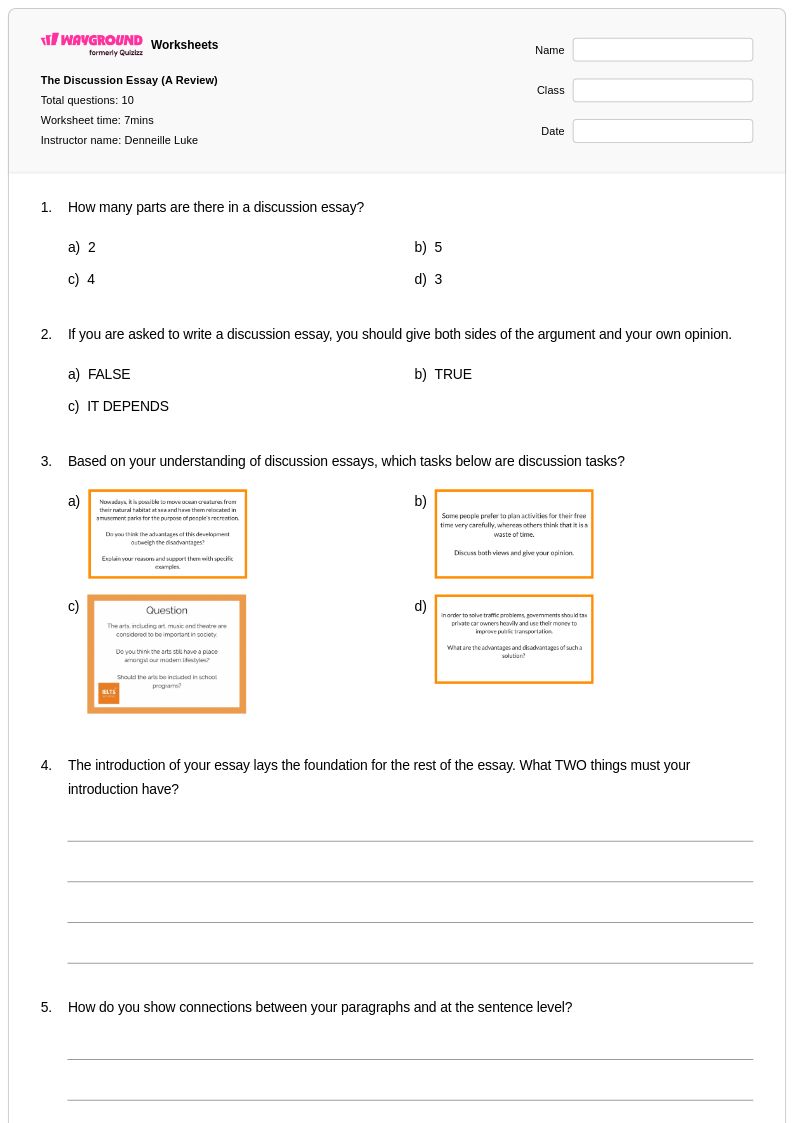
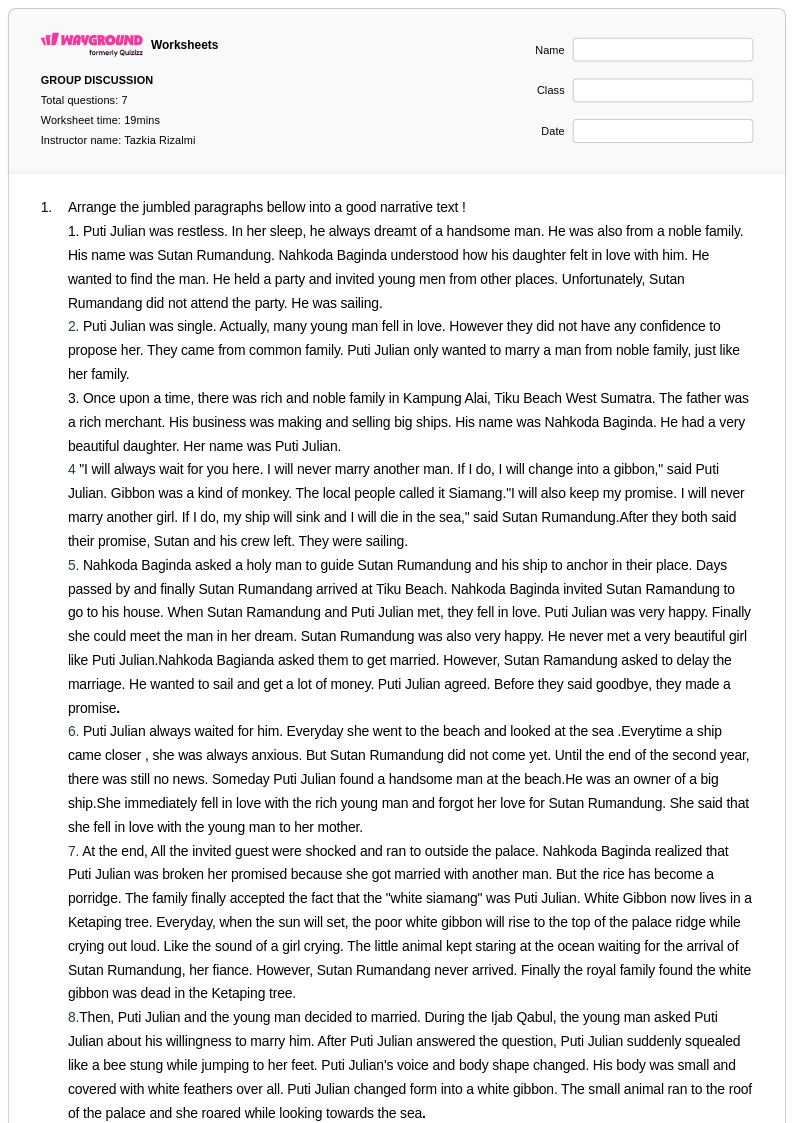
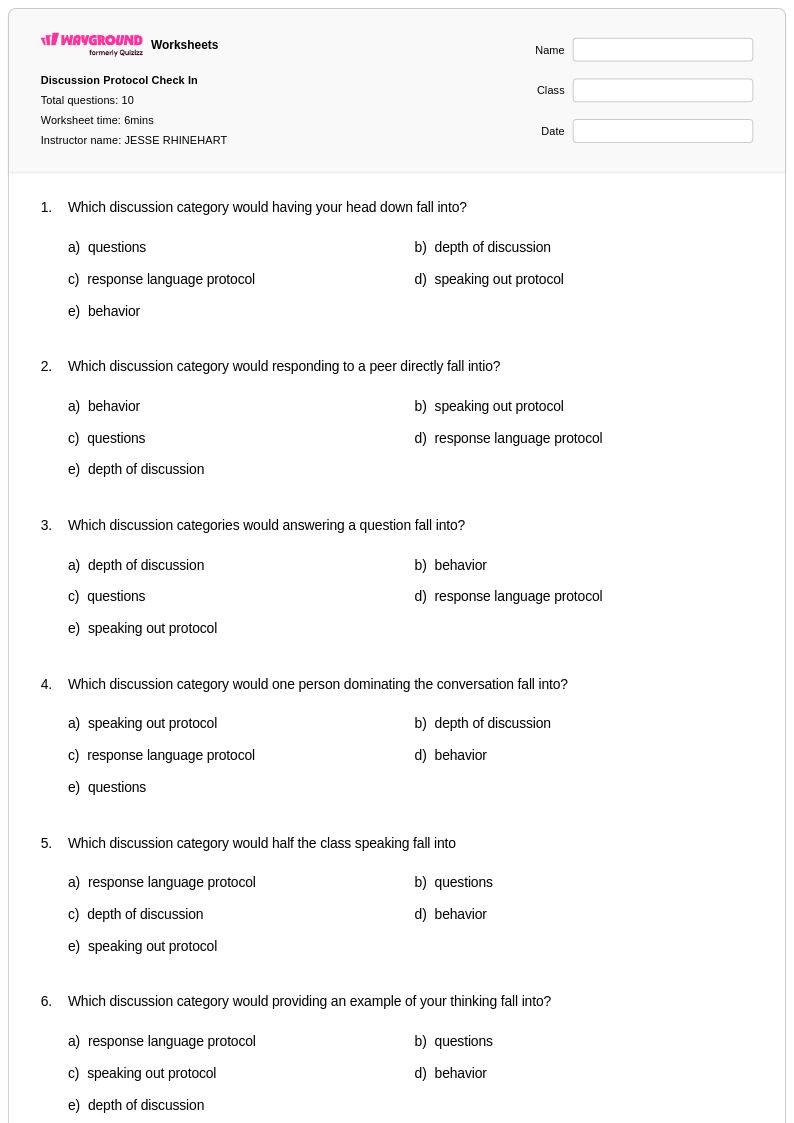
Fishbowl discussion worksheets for Class 10 students available through Wayground (formerly Quizizz) provide essential scaffolding for developing sophisticated reading comprehension and collaborative learning skills. These comprehensive resources guide students through the structured process of participating in and observing fishbowl discussions, where inner circle participants engage in literary analysis while outer circle observers take notes and prepare follow-up questions. The worksheets strengthen critical thinking abilities by helping students practice active listening, textual evidence analysis, and respectful academic discourse around complex Class 10 reading materials. Each printable resource includes detailed observation charts, discussion preparation templates, and reflection prompts, with corresponding answer keys that enable teachers to assess student understanding effectively. These free practice problems allow students to develop the analytical and communication skills necessary for advanced literary discussions while building confidence in expressing and defending their interpretations of challenging texts.
Wayground (formerly Quizizz) empowers educators with millions of teacher-created fishbowl discussion resources specifically designed to enhance Class 10 reading comprehension instruction. The platform's robust search and filtering capabilities enable teachers to quickly locate worksheets aligned with specific curriculum standards and differentiated for various learning levels within their classrooms. These customizable materials are available in both digital and pdf formats, allowing for flexible implementation whether students are working independently, in small groups, or participating in whole-class fishbowl activities. Teachers can efficiently modify discussion prompts, observation rubrics, and reflection questions to match their specific text selections and learning objectives, making these resources invaluable for lesson planning, targeted skill remediation, and academic enrichment. The comprehensive collection supports educators in creating structured yet dynamic classroom environments where students can practice sophisticated reading comprehension strategies while developing the collaborative discussion skills essential for academic success.
FAQs
How do I run a fishbowl discussion in my classroom?
A fishbowl discussion divides students into two groups: an inner circle that actively discusses a text or question, and an outer circle that observes and takes notes. The teacher assigns roles such as discussion leader, questioner, or devil's advocate to inner circle participants, while outer circle students use observation sheets to track argument quality, evidence use, and listening behaviors. After a set time, groups rotate so all students experience both roles. Preparation templates that prompt students to annotate the text and develop evidence-based questions before the discussion significantly improve the quality of inner circle dialogue.
What skills does a fishbowl discussion help students practice?
Fishbowl discussions develop questioning techniques, evidence-based reasoning, active listening, and collaborative communication simultaneously. Inner circle participants practice constructing and defending claims using textual evidence, while outer circle participants practice observation and critical analysis of peer arguments. The structured format also builds accountable talk habits, as students learn to build on, challenge, or redirect each other's ideas rather than simply taking turns speaking. These are foundational skills for close reading, Socratic seminars, and academic discourse across subject areas.
What are common mistakes students make during fishbowl discussions?
The most frequent issue is that inner circle students speak without grounding their contributions in the text, turning the discussion into opinion sharing rather than evidence-based analysis. Outer circle students often disengage if they lack a structured observation task, so providing specific criteria to evaluate, such as claim clarity or evidence quality, keeps them actively involved. Students also struggle with building on peers' ideas rather than pivoting to new topics; explicitly modeling transitional phrases like 'building on what was said' or 'I'd push back on that because' helps address this pattern before the discussion begins.
How do fishbowl discussion worksheets support reading comprehension?
Fishbowl discussion worksheets scaffold the entire discussion process, from pre-reading text analysis to post-discussion reflection, ensuring that comprehension work happens at every stage rather than only during the conversation itself. Preparation templates prompt students to identify key passages, generate questions, and anticipate counterarguments before entering the inner circle, which deepens their engagement with the text. Reflection activities after the discussion ask students to synthesize what they heard and revise their original thinking, reinforcing comprehension strategies such as inferencing, summarizing, and evaluating author's purpose.
How do I use Wayground's fishbowl discussion worksheets in my classroom?
Wayground's fishbowl discussion worksheets are available as printable PDFs for traditional classroom use and in digital formats for remote or hybrid learning environments, so they can be distributed however your classroom operates. Each worksheet includes preparation templates, discussion role assignments, observation sheets, and reflection activities, giving you a complete set of materials for one lesson without needing to build resources from scratch. You can also host the materials as a quiz directly on Wayground, allowing you to track student responses digitally. Answer keys and implementation guidelines are included with each resource, reducing your prep time and making it straightforward to facilitate the discussion with fidelity.
How can I differentiate fishbowl discussions for students with varying reading levels?
Differentiation in a fishbowl discussion can be built into both role assignments and text access. Assigning scaffolded roles, such as giving a struggling reader the summarizer role rather than the questioner role, reduces the language demand while keeping participation meaningful. On Wayground, teachers can apply individual accommodations including read aloud support, extended time, and reduced answer choices to specific students without alerting the rest of the class, ensuring equitable access to the preparation materials. Pairing differentiated text excerpts with the same discussion framework allows all students to engage with the same intellectual task at an appropriate complexity level.