Free Printable Fall of the Roman Empire Worksheets for Class 9
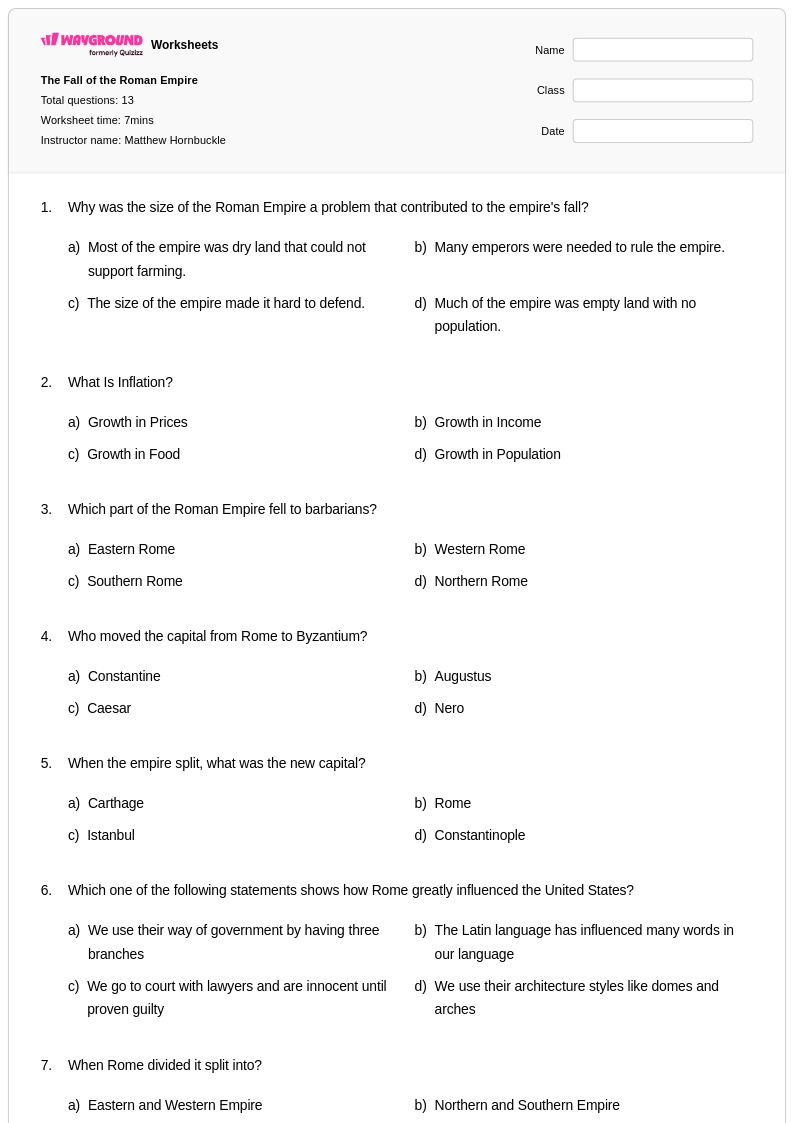
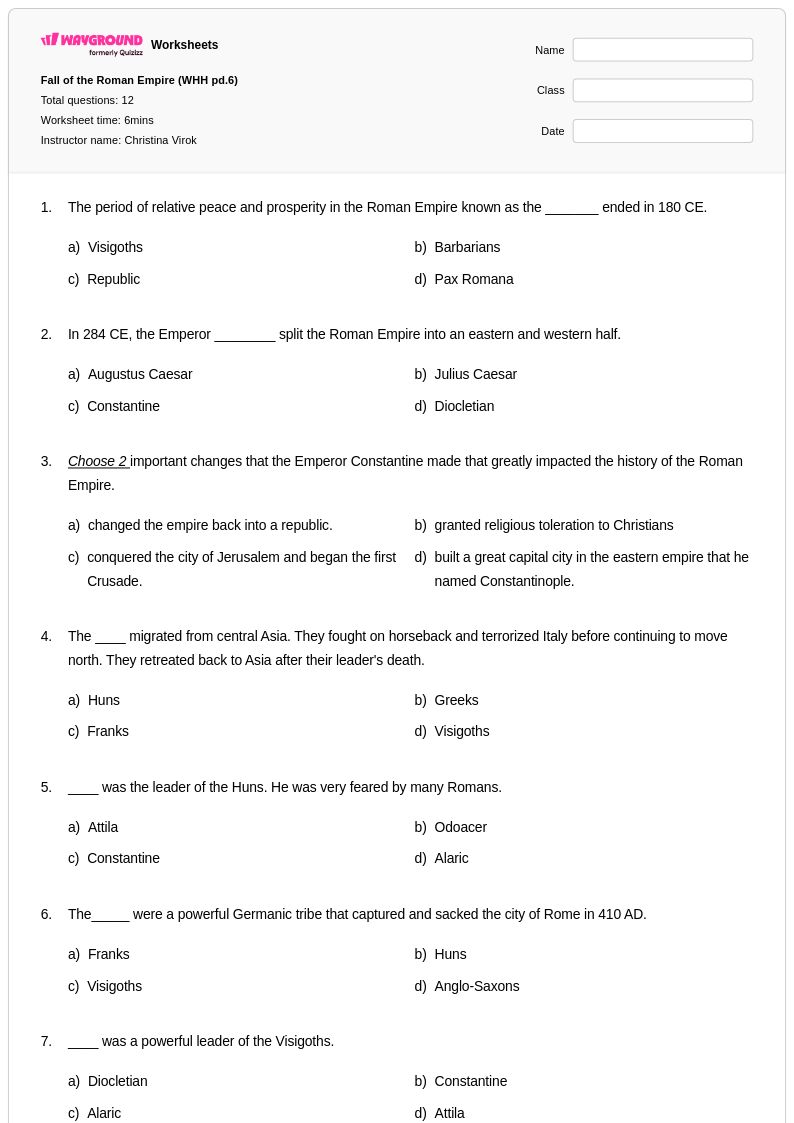
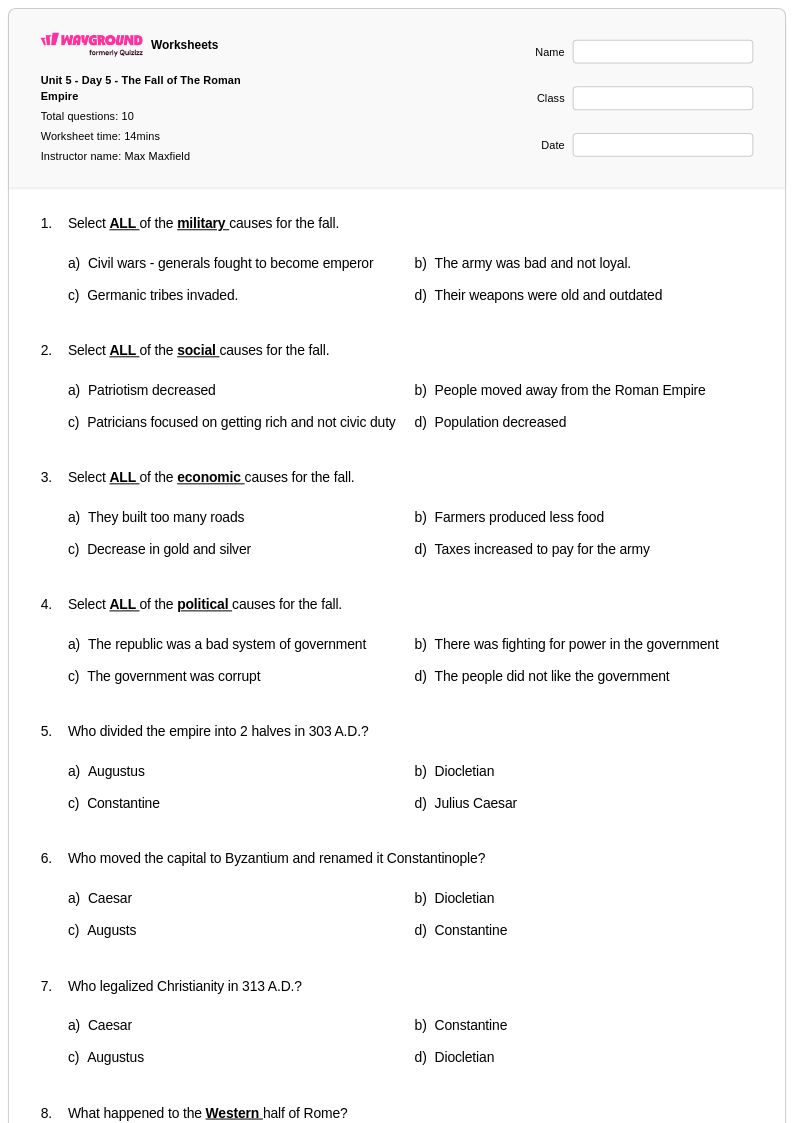
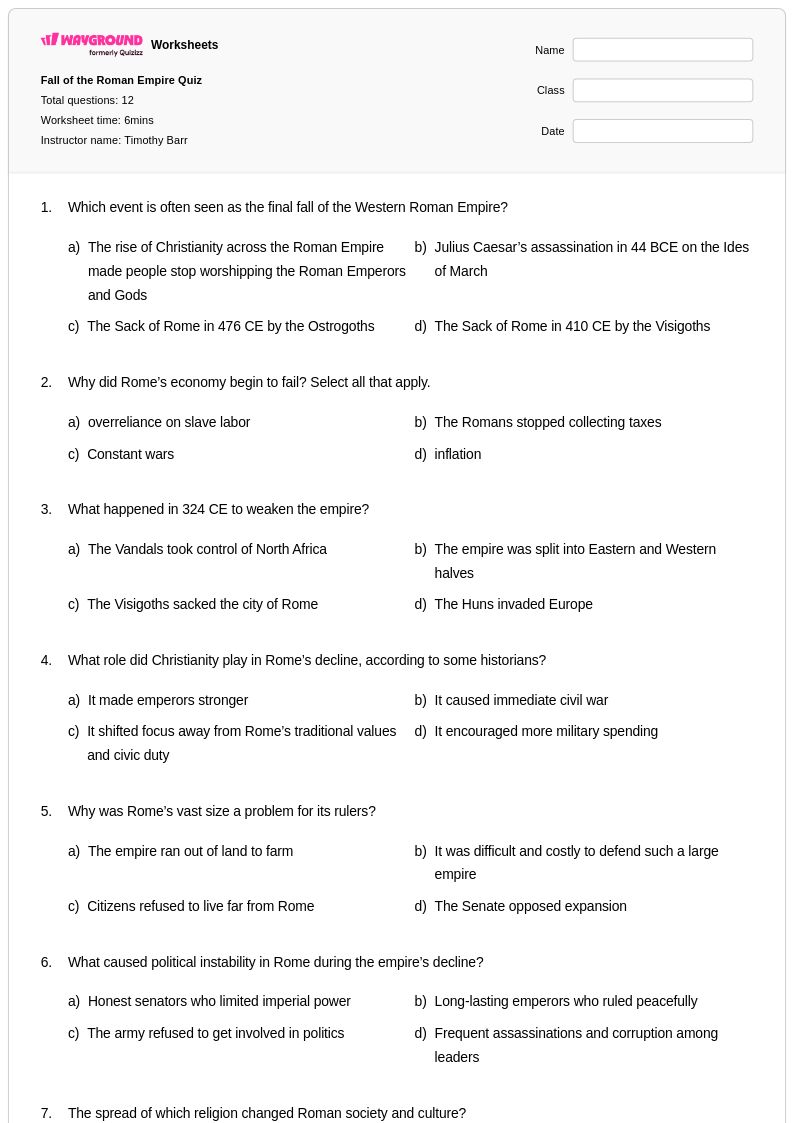
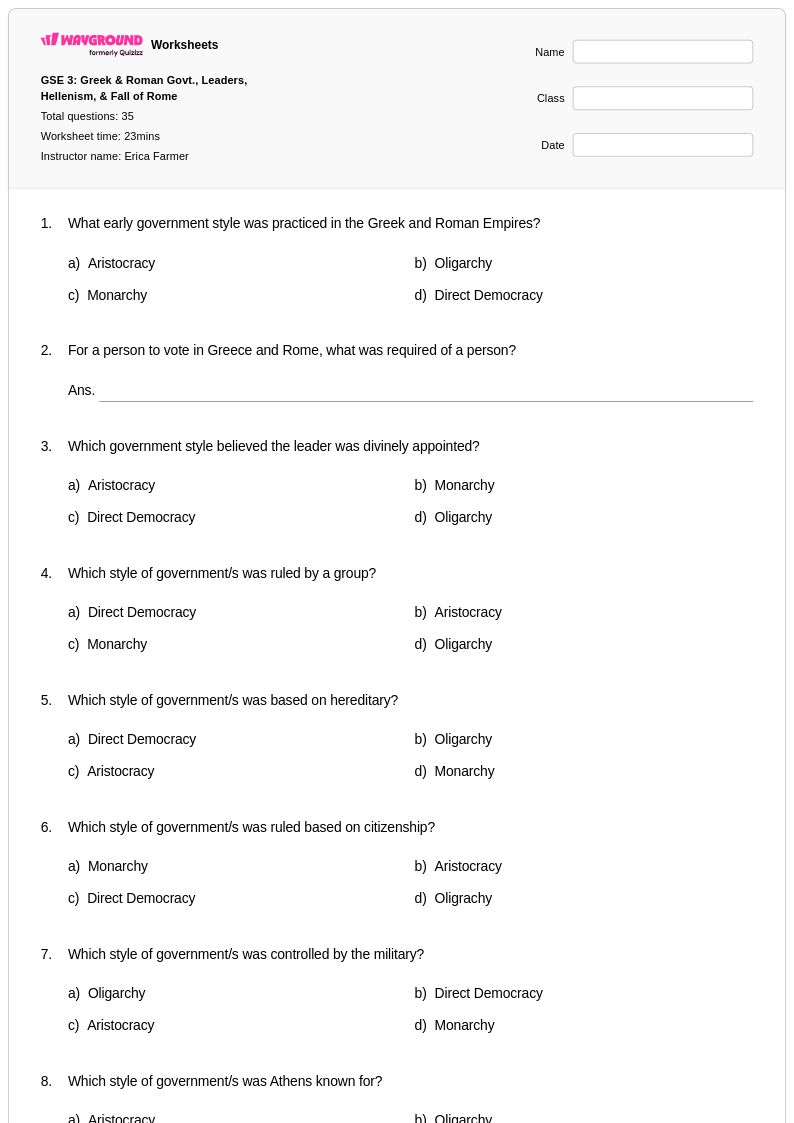
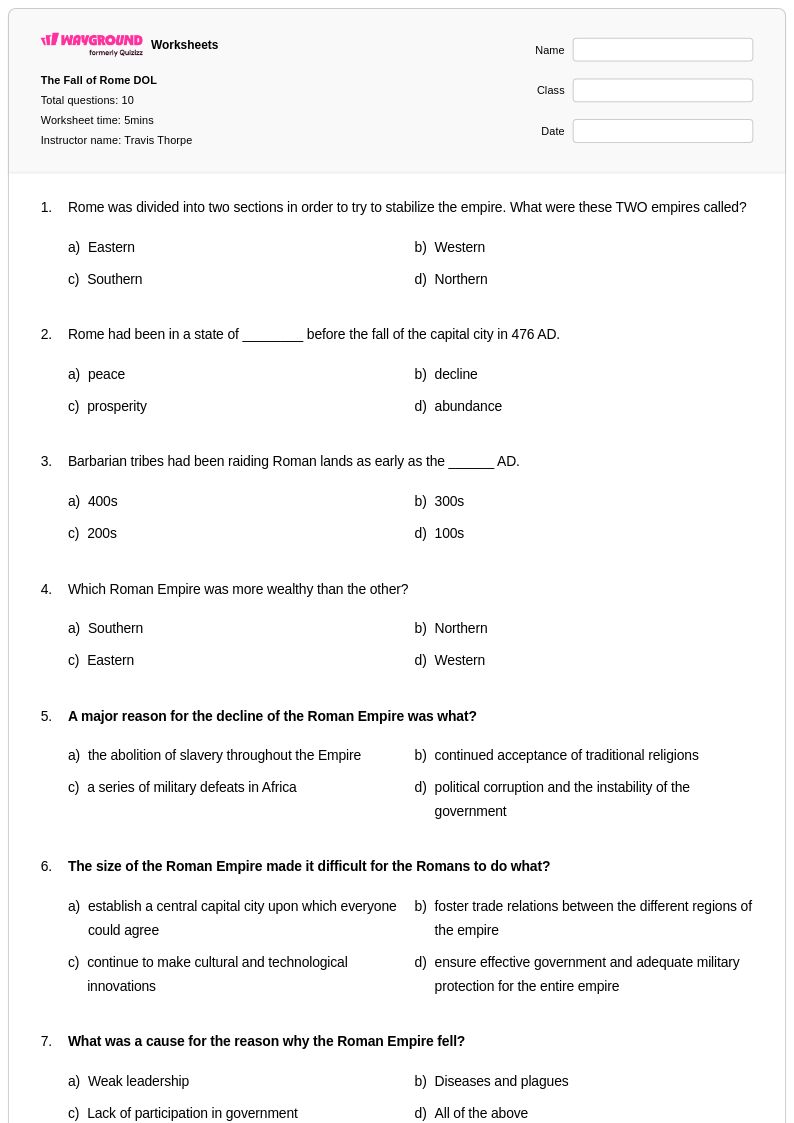
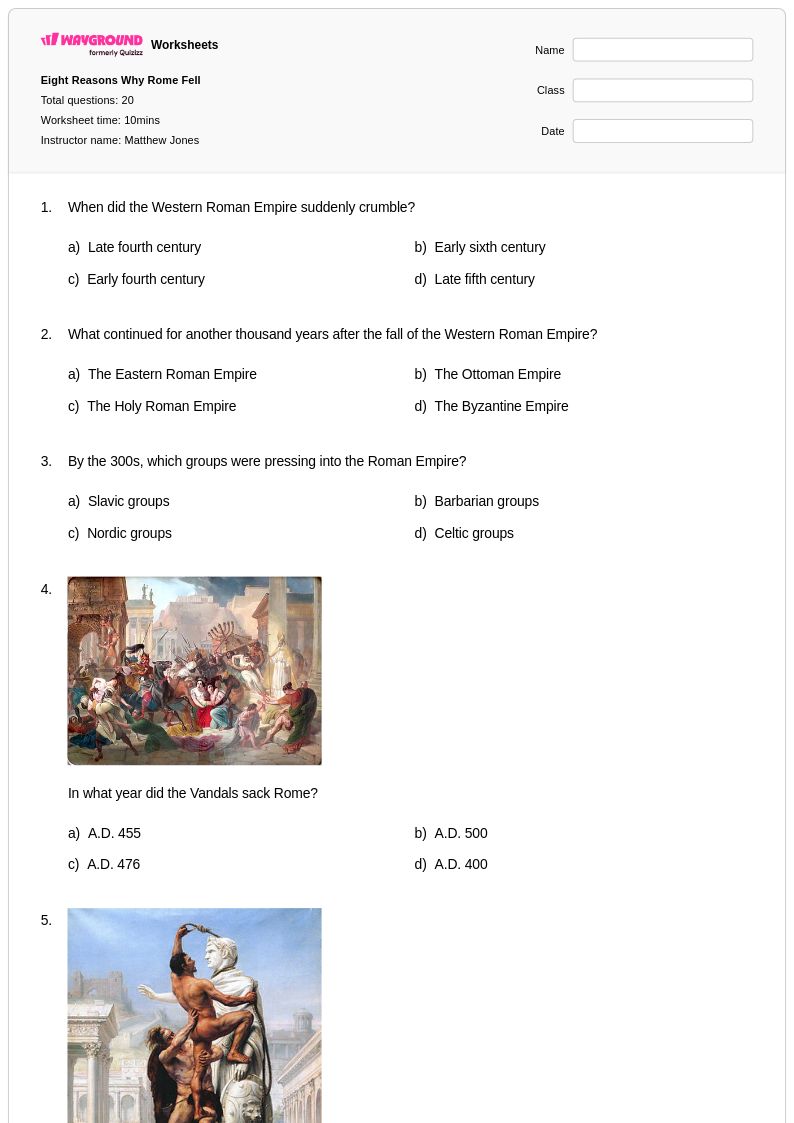
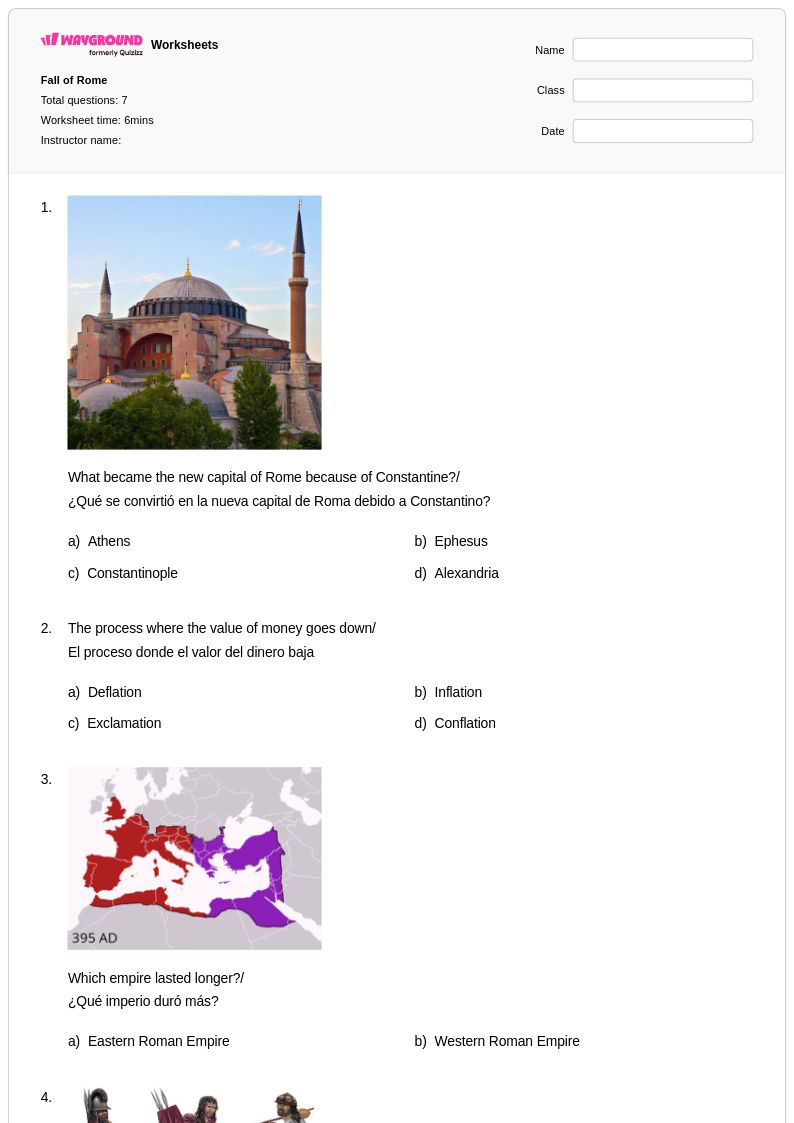
Class 9 students can explore the Fall of the Roman Empire through Wayground's comprehensive collection of free worksheets, featuring printable PDFs with practice problems and answer keys to deepen understanding of this pivotal historical period.
Explore printable Fall of the Roman Empire worksheets for Class 9
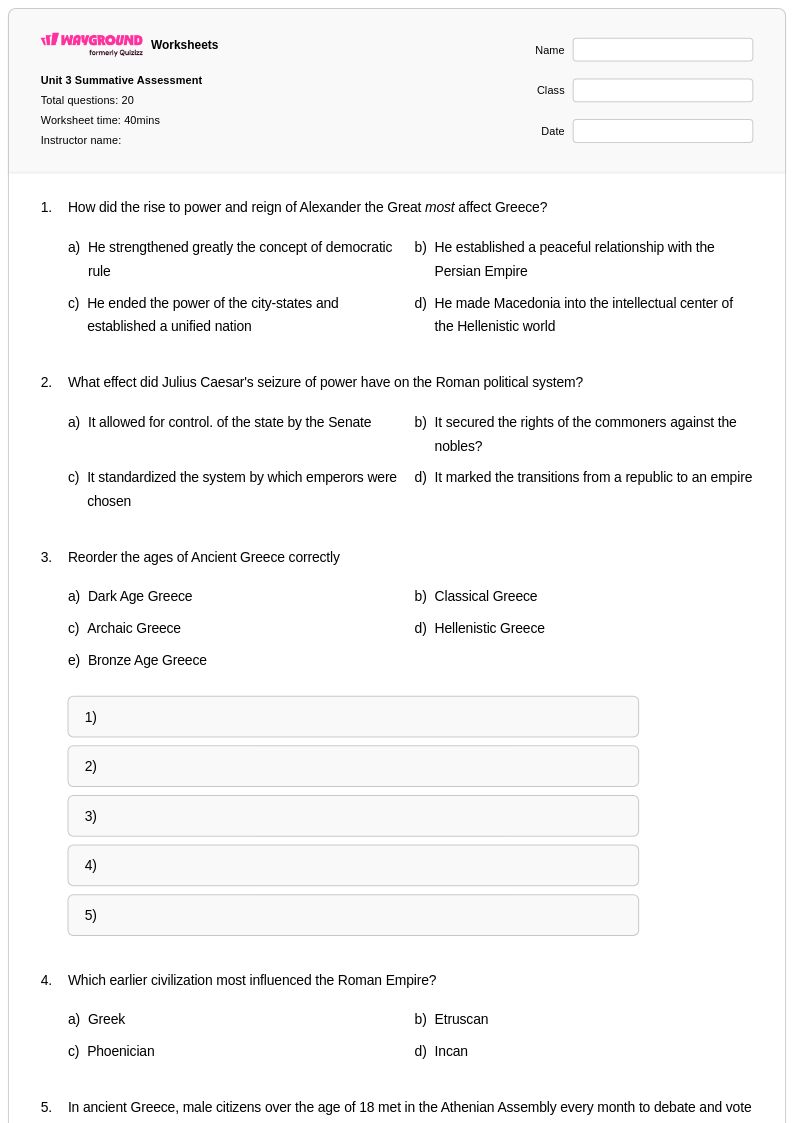
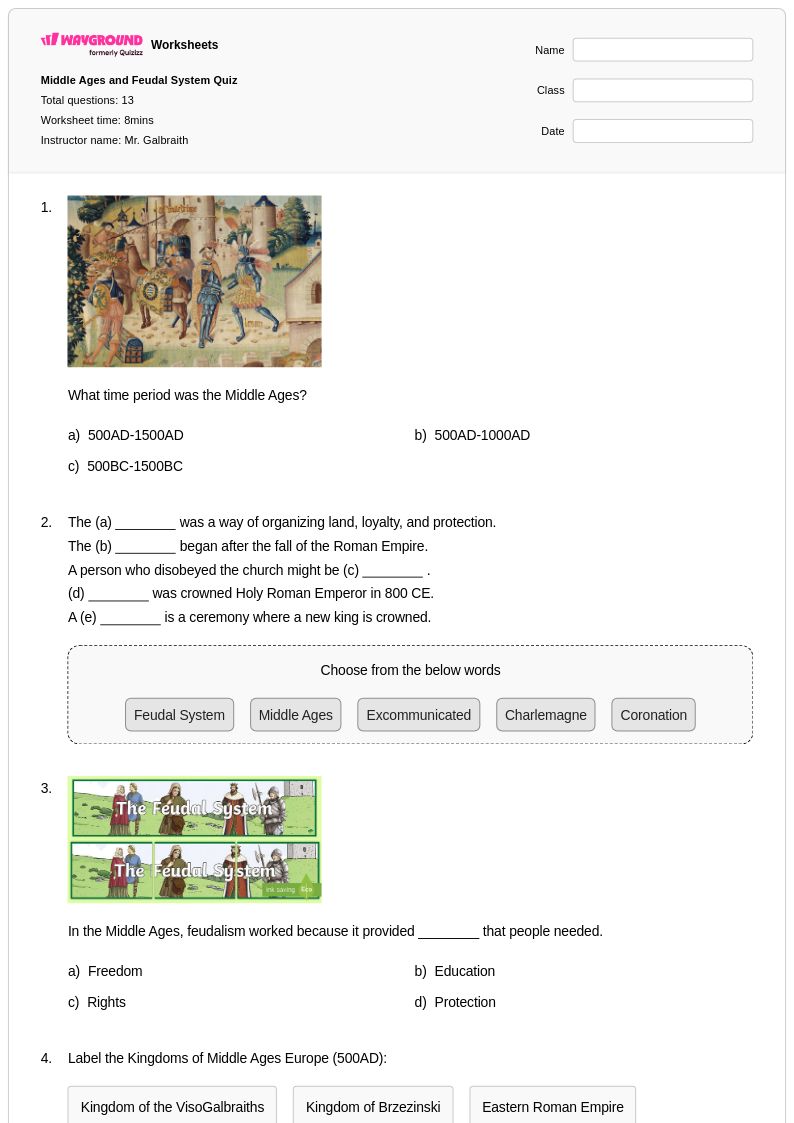
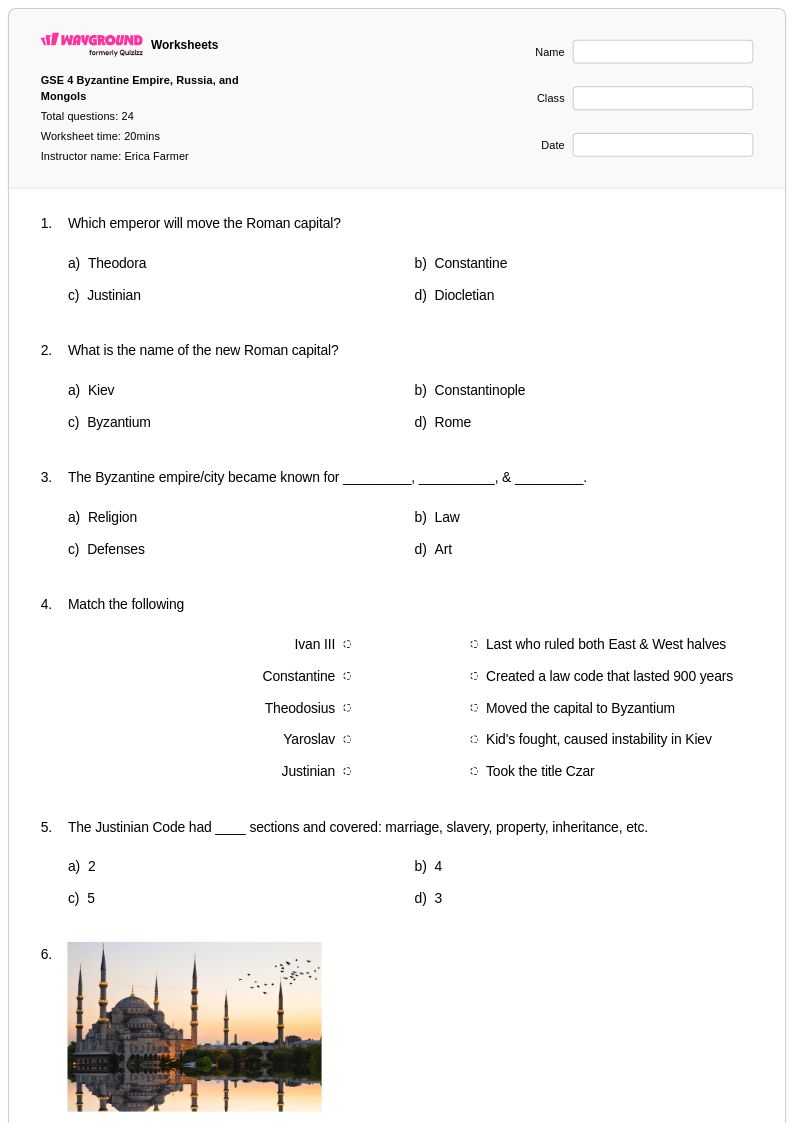
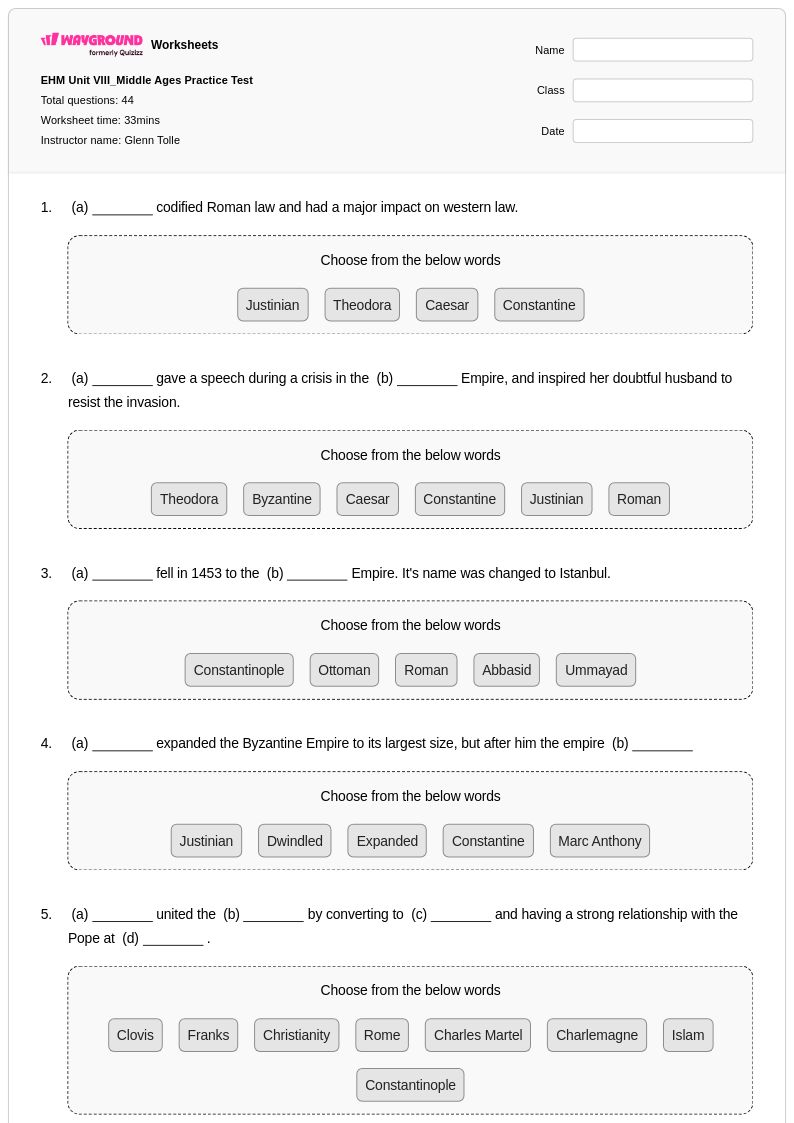
Fall of the Roman Empire worksheets for Class 9 students available through Wayground (formerly Quizizz) provide comprehensive resources for examining one of history's most significant transitions. These carefully designed materials guide students through the complex factors that contributed to Rome's decline, including political instability, economic troubles, military pressures, and social upheaval during the third through fifth centuries CE. Students develop critical analysis skills by evaluating primary sources, examining cause-and-effect relationships, and comparing different historical interpretations of Rome's collapse. The practice problems encourage students to think like historians, while the included answer key supports independent learning and allows teachers to efficiently assess student understanding. These free printables and pdf resources help students master essential concepts about imperial overextension, barbarian invasions, and the empire's eventual division into Eastern and Western territories.
Wayground (formerly Quizizz) empowers educators with millions of teacher-created resources specifically designed for ancient civilizations instruction, featuring robust search and filtering capabilities that help teachers quickly locate Fall of the Roman Empire materials aligned with Class 9 social studies standards. The platform's differentiation tools enable teachers to customize worksheets for varying skill levels within their classrooms, ensuring that advanced students can explore complex historiographical debates while struggling learners receive additional scaffolding through modified practice activities. Available in both printable and digital formats including downloadable pdf files, these resources support flexible lesson planning whether teachers need materials for in-class discussions, homework assignments, or assessment preparation. The extensive collection facilitates targeted remediation for students who struggle with chronological thinking and provides enrichment opportunities for those ready to analyze the long-term consequences of Rome's fall on medieval European development.
FAQs
How do I teach the fall of the Roman Empire in a way students actually understand?
The most effective approach is to frame Rome's collapse as a process, not a single event, by organizing instruction around interconnected categories: political instability, economic strain, military overextension, and external pressures. Using cause-and-effect graphic organizers and chronological timelines helps students see how these factors compounded over centuries rather than viewing the fall as a sudden collapse. Anchoring lessons in primary sources, such as excerpts from Roman historians or imperial edicts, gives students direct evidence to analyze rather than just a narrative to memorize.
What are the most common misconceptions students have about why Rome fell?
The most persistent misconception is that Rome fell on a single date, typically 476 CE, and for a single reason. Students often oversimplify the cause as either barbarian invasions alone or moral decay, missing the interplay of economic collapse, currency debasement, military recruitment crises, and administrative fragmentation. Another common error is conflating the fall of the Western Empire with the end of Rome entirely, ignoring that the Eastern Empire continued as Byzantium for nearly a thousand years.
What exercises help students practice analyzing the causes of Rome's decline?
Structured cause-and-effect exercises, comparative analysis tasks, and document-based questions are particularly effective for this topic. Having students rank or weigh contributing factors using evidence forces them to engage with historical argumentation rather than passive recall. Mapping exercises that show the geographic contraction of Roman territory over time also build strong visual understanding of how military and political pressures manifested spatially.
How do I differentiate Fall of the Roman Empire instruction for students at different levels?
For students who need remediation, focus on basic chronology and single-cause explanations before introducing multi-causal analysis. Advanced students can engage with historiographical debates, comparing modern historians' competing theories about Rome's decline. On Wayground, teachers can apply accommodations such as read aloud, reduced answer choices, and extended time to individual students, while the rest of the class works with default settings, making it easy to support diverse learners within a single assignment.
How can I use Fall of the Roman Empire worksheets from Wayground in my classroom?
Wayground's Fall of the Roman Empire worksheets are available as printable PDFs for traditional classroom use and in digital formats for technology-integrated environments, including the option to host them as a live quiz on the platform. Teachers can use them for guided practice, independent assignments, or assessment preparation depending on where students are in a unit. The included answer keys support both self-directed student review and efficient teacher grading.
How do I connect the fall of Rome to broader world history standards?
Rome's fall is a standard anchor point for teaching historical causation, continuity and change over time, and the concept of empire, all of which appear across most state and national world history frameworks. Connecting it to the rise of medieval European kingdoms, the spread of Christianity, and the persistence of Byzantine civilization helps students see it as a transition rather than an endpoint. Using standards alignment tools, such as those available on Wayground, allows teachers to filter resources by curriculum requirements to ensure coverage is purposeful and targeted.