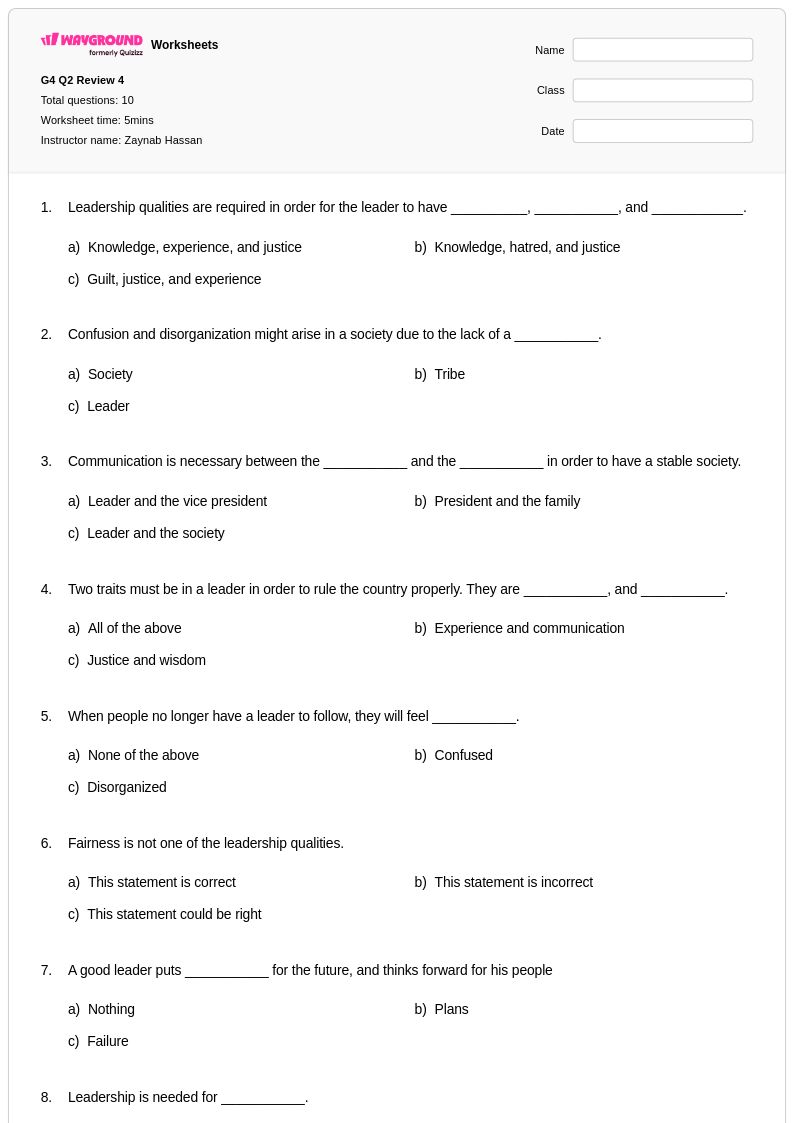
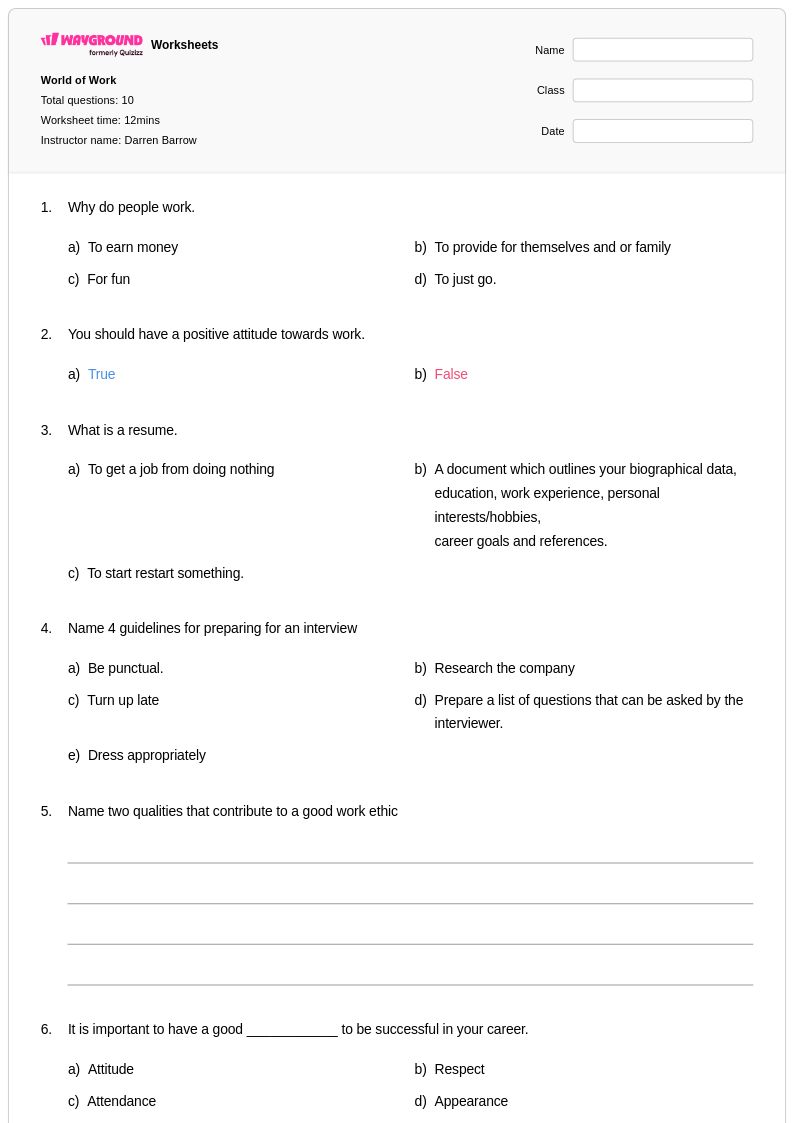
Free Printable Family Communication Worksheets for Class 4
Class 4 family communication worksheets help students develop essential social skills through engaging printables that teach effective listening, respectful dialogue, and conflict resolution with comprehensive answer keys included.
Explore printable Family Communication worksheets for Class 4
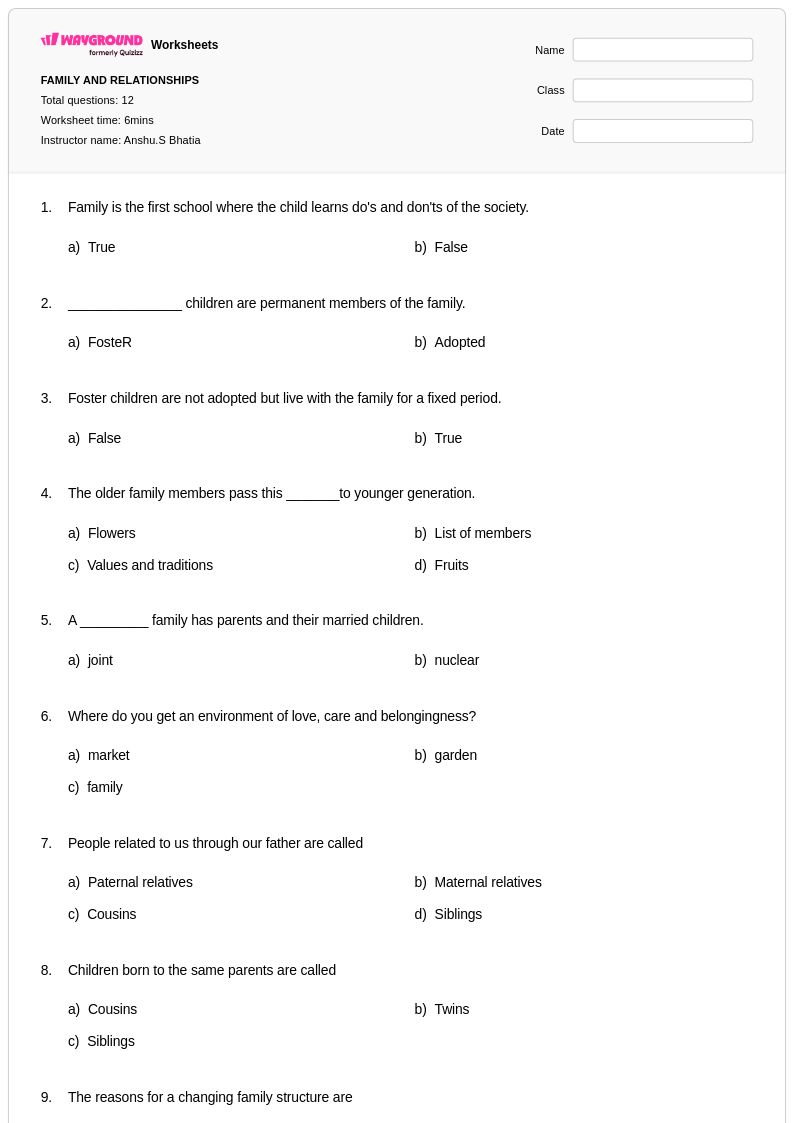
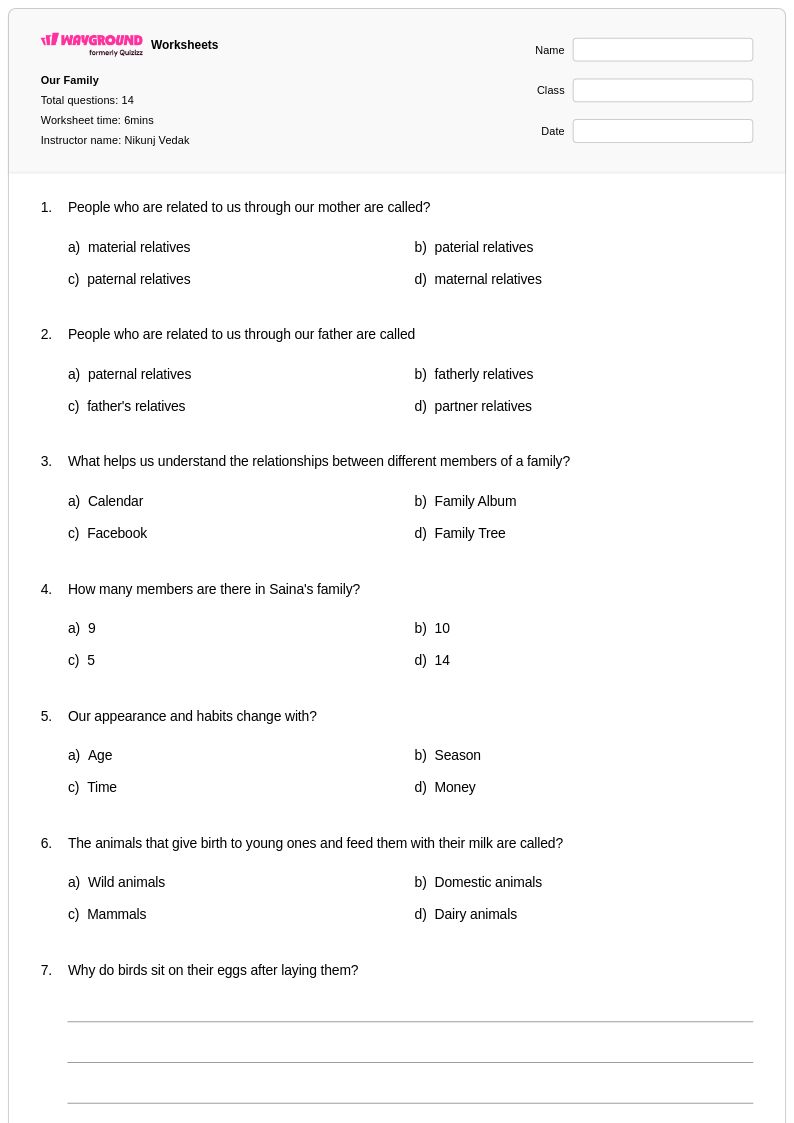
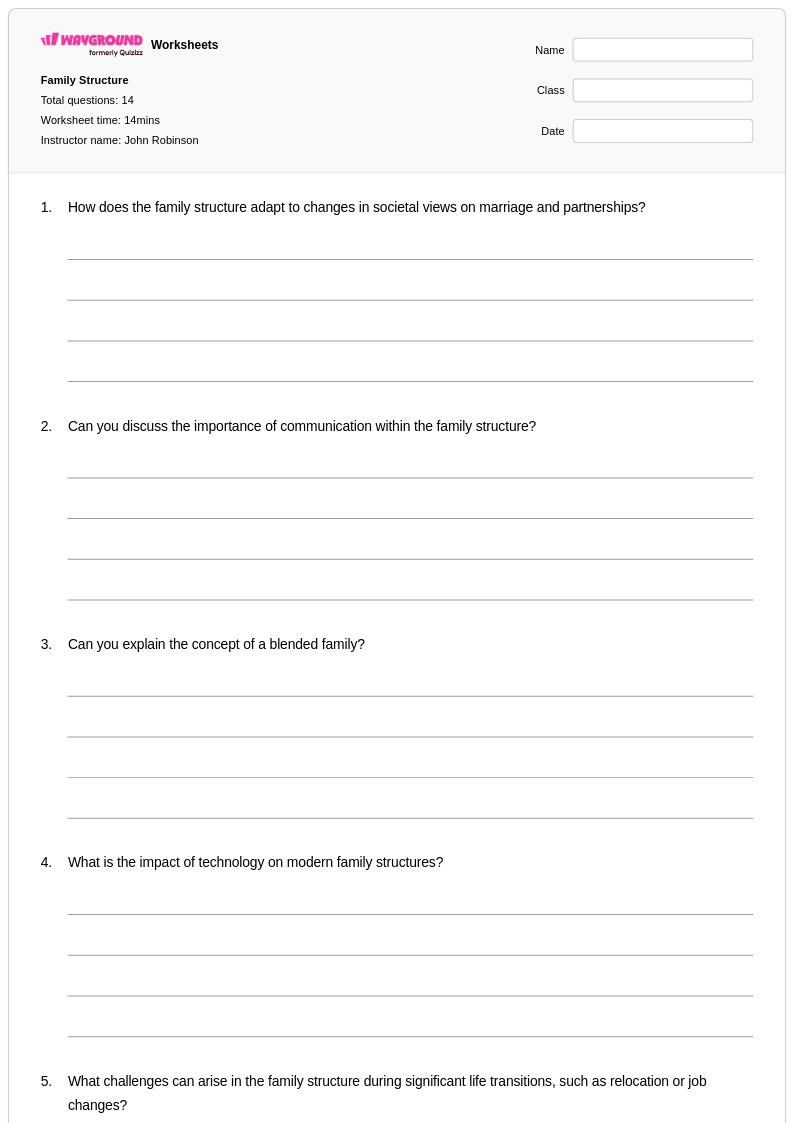
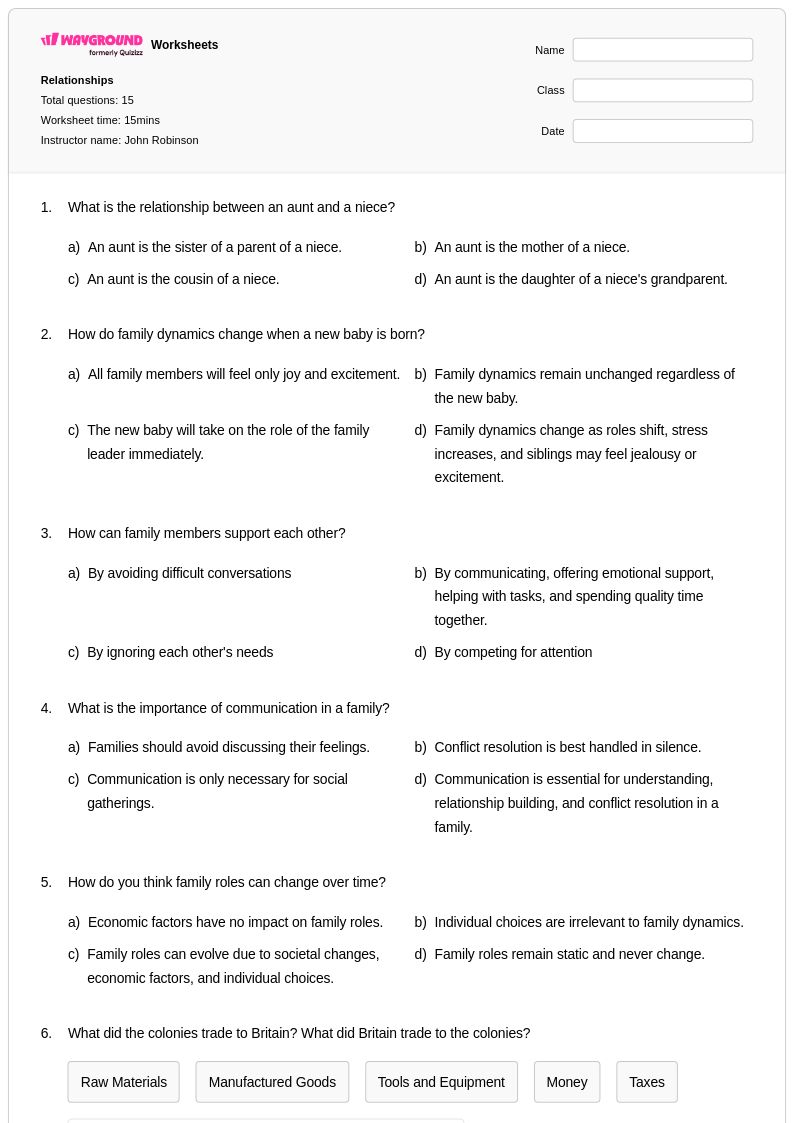
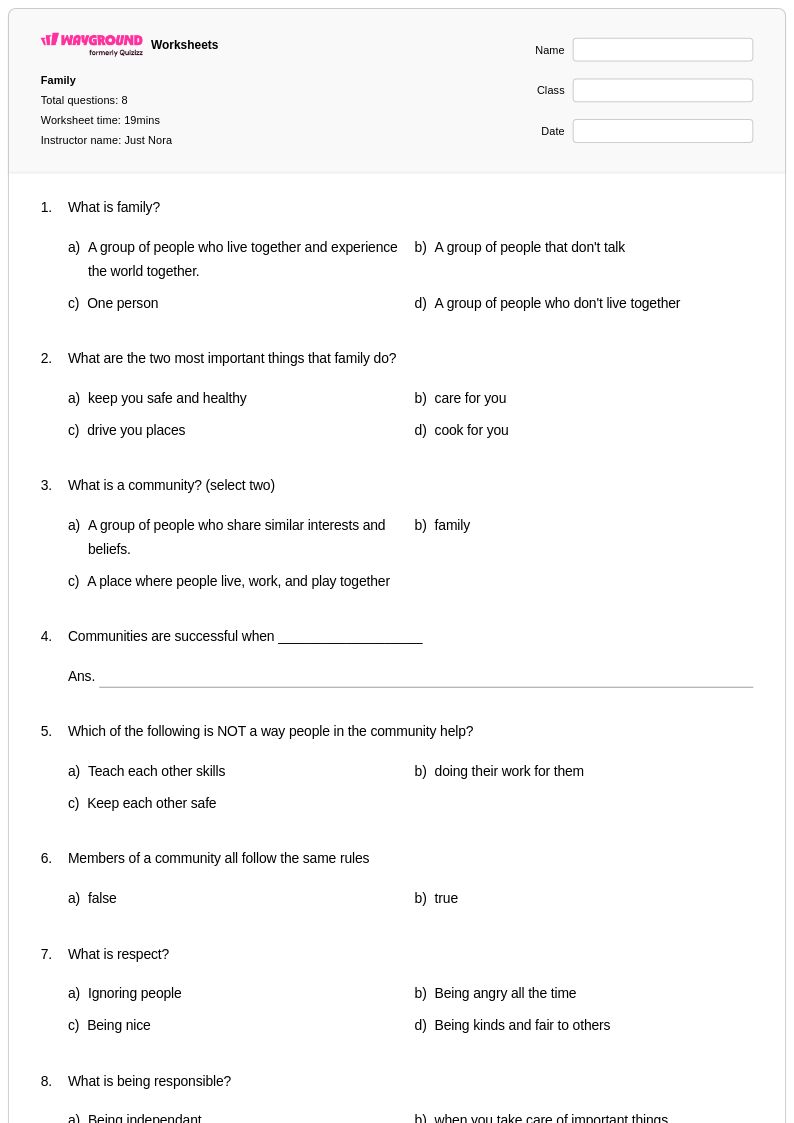
Family communication worksheets for Class 4 students available through Wayground (formerly Quizizz) provide essential practice in developing healthy interpersonal skills within household settings. These comprehensive resources focus on teaching fourth-grade learners how to express feelings appropriately, listen actively to family members, resolve conflicts peacefully, and understand different perspectives within family dynamics. The worksheets strengthen critical social-emotional competencies through engaging practice problems that simulate real-world family scenarios, helping students recognize communication patterns and develop empathy. Each printable resource includes detailed answer keys to support both independent learning and guided instruction, with free pdf formats making these materials accessible for classroom use, homework assignments, and skill reinforcement activities.
Wayground (formerly Quizizz) empowers educators with millions of teacher-created family communication resources specifically designed for Class 4 social studies instruction. The platform's robust search and filtering capabilities allow teachers to quickly locate worksheets aligned with social-emotional learning standards while supporting diverse classroom needs through built-in differentiation tools. These customizable materials are available in both printable and digital pdf formats, enabling seamless integration into lesson planning whether for whole-group instruction, small-group remediation, or individual enrichment activities. Teachers can easily modify worksheet content to match their students' developmental levels and specific family communication goals, making these resources invaluable for systematic skill practice and targeted intervention in social studies curricula focused on interpersonal relationship development.
FAQs
How do I teach family communication skills in the classroom?
Effective family communication instruction combines direct teaching of specific skills with structured practice in realistic scenarios. Start by introducing core concepts like active listening, using 'I' statements, and recognizing different family roles, then move into role-play and scenario-based activities where students practice responding to common family situations such as disagreements, expressing needs, or resolving conflict. Connecting these skills to students' own experiences increases engagement and retention.
What activities help students practice family communication skills?
Scenario-based worksheets are particularly effective for practicing family communication because they place students inside realistic situations, such as mediating a sibling disagreement or expressing frustration respectfully to a parent, and ask them to apply specific strategies like active listening or calm conflict resolution. Reflective writing prompts that ask students to describe how they would handle a family situation also help bridge classroom instruction to real-life application. Structured practice with these varied formats builds both skill fluency and emotional awareness.
What mistakes do students commonly make when learning about family communication?
A common misconception is that good communication simply means saying what you feel without filtering, when in reality it requires balancing honesty with empathy and timing. Students also frequently conflate hearing with active listening, missing the skill of reflecting back what another person said before responding. Another frequent error is assuming that conflict in families is inherently negative, rather than understanding it as a normal dynamic that can be navigated constructively with the right strategies.
How can I use family communication worksheets to support students with different learning needs?
Wayground's family communication worksheets can be assigned digitally, allowing teachers to apply individual accommodations directly to specific students. Features such as Read Aloud support students who benefit from audio delivery of prompts, while Reduced Answer Choices lowers cognitive load for students who need it. Extended time can be configured per student for open-ended or reflective tasks, and Reading Mode offers adjustable font sizes and themes for accessibility, all without alerting other students to any differences in their settings.
How do I use family communication worksheets in my classroom?
Family communication worksheets on Wayground are available as printable PDFs for traditional classroom use and in digital formats for technology-integrated environments, including the option to host them as a quiz directly on Wayground. Teachers can use them as standalone lessons, warm-up discussions, guided practice during a communication unit, or independent assignments. The included answer keys make it straightforward to assess student understanding and identify which communication concepts need further reinforcement.
At what age or grade level should students start learning about family communication?
Family communication skills can be introduced as early as elementary school, where students begin learning basic concepts like taking turns in conversation, identifying feelings, and asking for help respectfully. Instruction typically deepens in middle school as students navigate more complex family dynamics and peer relationships. These skills remain relevant through high school, where lessons can address conflict resolution, boundary-setting, and communication across generational differences.