Free Printable Safe and Unsafe Situations Worksheets for Class 4
Class 4 students develop critical thinking about safe and unsafe situations through Wayground's comprehensive collection of free worksheets, printables, and practice problems with answer keys that build essential social skills and decision-making abilities.
Explore printable Safe and Unsafe Situations worksheets for Class 4
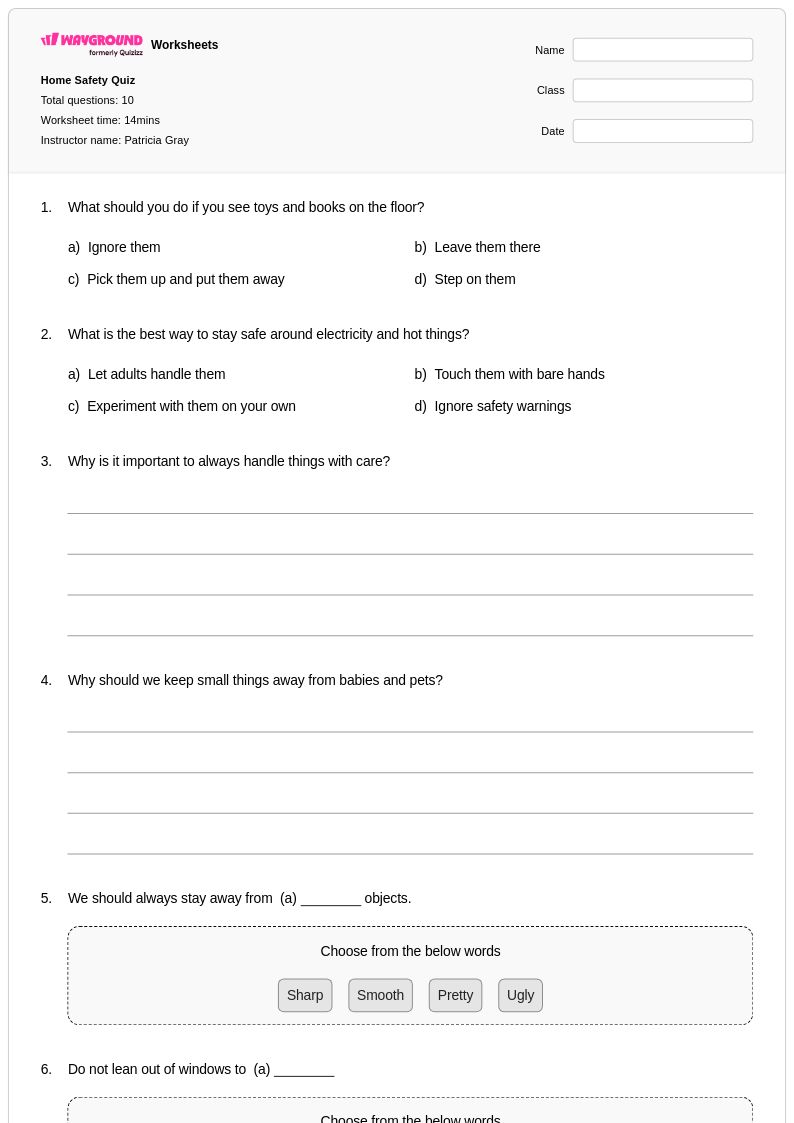
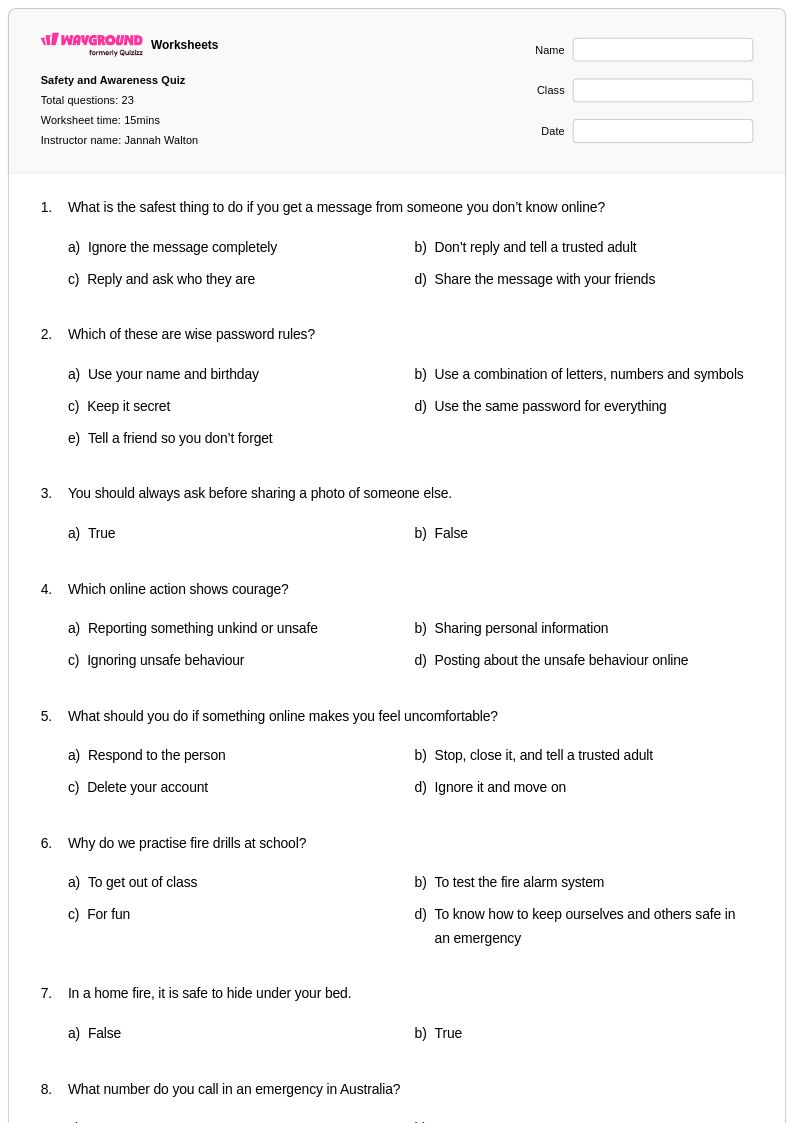
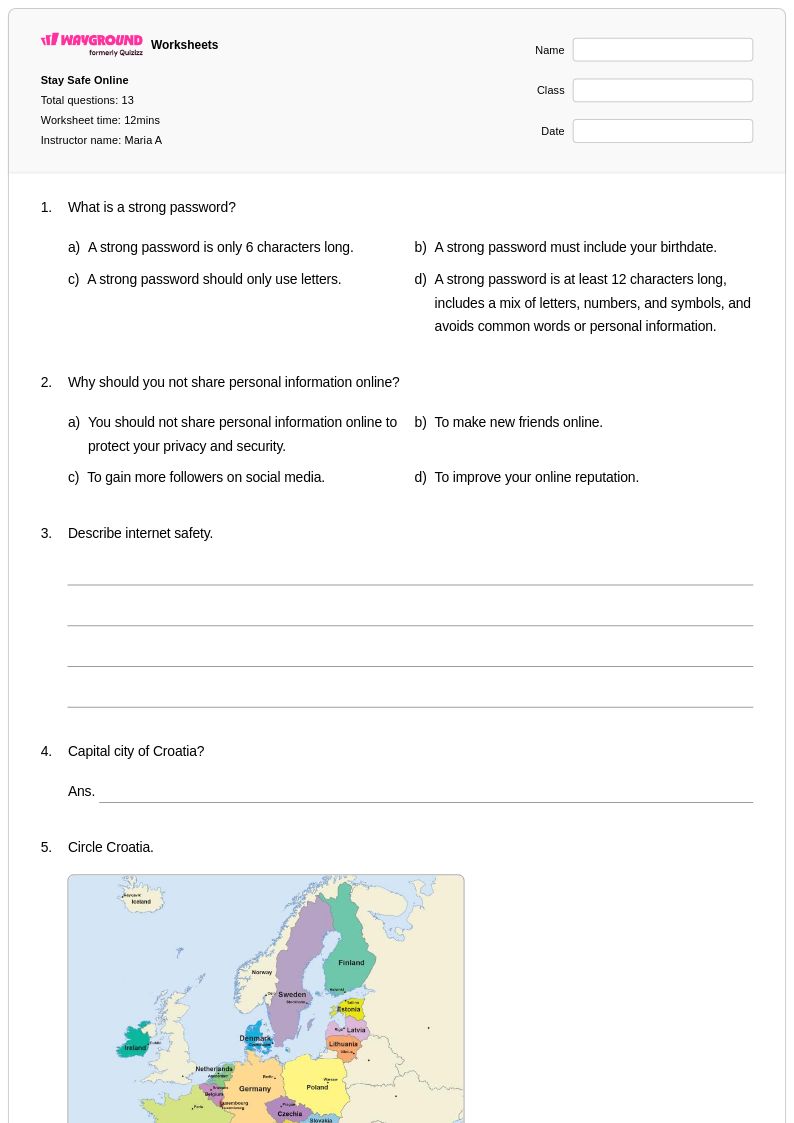
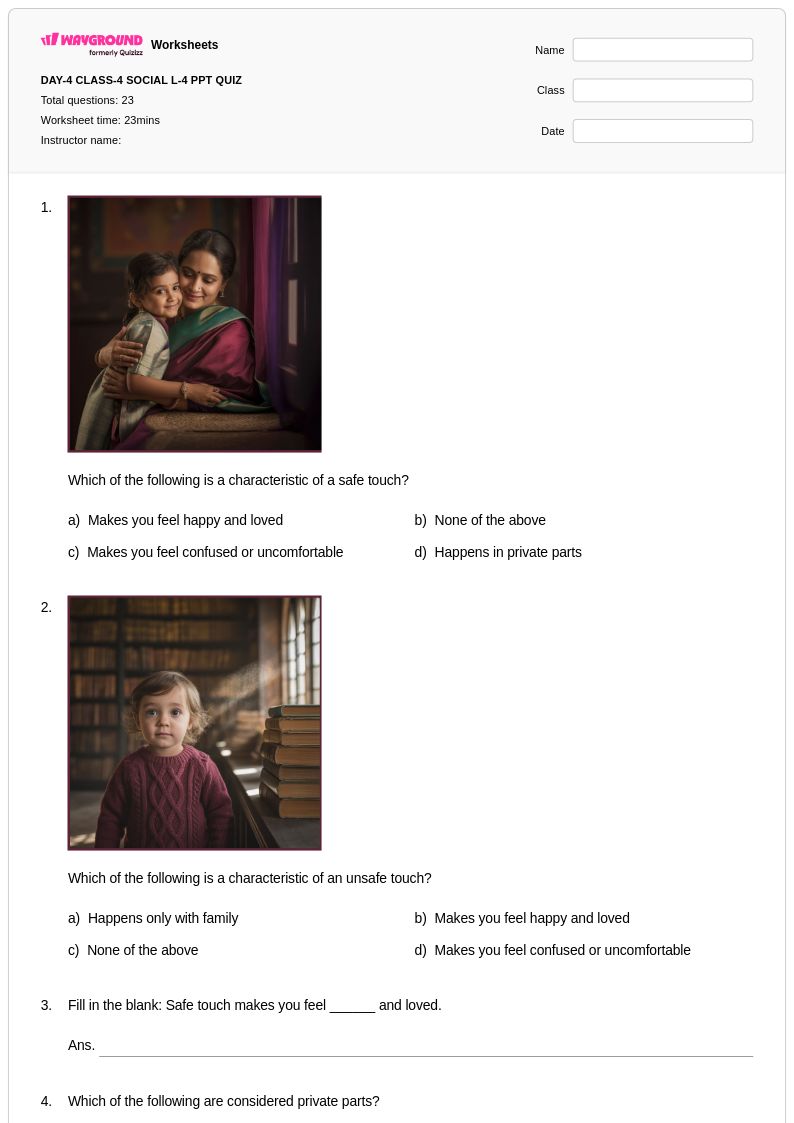
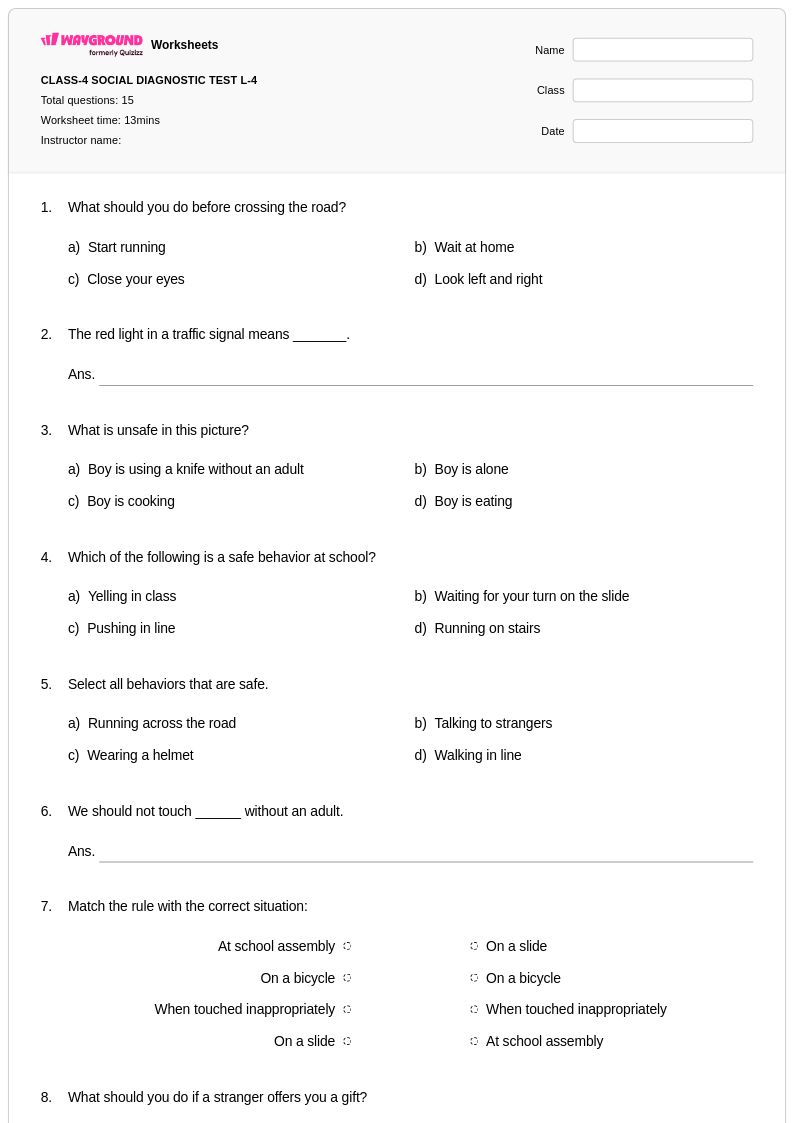
Safe and unsafe situations worksheets for Class 4 students through Wayground provide essential practice in developing critical safety awareness and decision-making skills that form the foundation of social studies education. These comprehensive printables help fourth-grade learners identify potential hazards in various environments, distinguish between appropriate and inappropriate behaviors, and understand personal safety protocols through engaging scenarios and practice problems. Students work through real-world situations involving stranger safety, internet security, home and school safety, and emergency procedures, strengthening their ability to assess risks and make informed choices. Each worksheet collection includes detailed answer keys and free downloadable pdf formats, allowing educators to implement structured safety education that builds students' confidence in recognizing and responding to different situational challenges.
Wayground's extensive collection of teacher-created safe and unsafe situations resources supports educators with millions of professionally developed materials that can be easily searched, filtered, and customized to meet diverse classroom needs. The platform's robust differentiation tools enable teachers to modify worksheets for various learning levels, ensuring that all Class 4 students can access age-appropriate safety content through both printable and digital formats. Standards-aligned materials help educators integrate safety education seamlessly into their social studies curriculum while providing flexible options for lesson planning, skill remediation, and enrichment activities. Teachers can efficiently locate specific safety topics, customize content to address particular student concerns, and utilize comprehensive answer keys to facilitate meaningful discussions about personal safety and community responsibility.
FAQs
How do I teach students to identify safe vs. unsafe situations?
Start by grounding instruction in environments students already know, such as home, school, and neighborhood settings, and use concrete scenarios to build recognition skills before moving to more ambiguous situations. Pair visual examples with discussion prompts so students practice explaining their reasoning out loud, which strengthens judgment alongside recognition. Gradually introduce more complex scenarios involving interactions with unfamiliar adults or online contexts to extend the skill beyond familiar settings.
What kinds of exercises help students practice recognizing safe and unsafe situations?
Scenario-based worksheets that ask students to classify situations as safe or unsafe and explain their reasoning are among the most effective practice formats for this topic. Activities that present realistic social situations, such as a stranger asking for help or a peer pressuring a student to do something risky, require students to apply personal safety judgment rather than recall memorized rules. Including follow-up prompts about what a student should do next reinforces both identification and response skills in a single exercise.
What mistakes do students commonly make when learning about safe and unsafe situations?
A common misconception is that unsafe situations always involve strangers or obvious danger, which causes students to overlook risks from familiar adults or peers. Students also frequently struggle to distinguish between situations that are uncomfortable but safe and those that are genuinely unsafe, especially in social or emotional contexts. Addressing these patterns directly, with examples drawn from everyday life, helps students develop more accurate and reliable judgment.
How can I differentiate safe and unsafe situations instruction for students with varying needs?
For students who need additional support, reducing the number of answer choices in scenario-based questions can lower cognitive load while still building the core skill of safety judgment. Read Aloud features allow students with reading difficulties to access the same scenario content as their peers without requiring separate materials. On Wayground, these accommodations can be assigned to individual students without disrupting the experience of the rest of the class, so differentiation stays seamless during both instruction and practice.
How do I use Wayground's safe and unsafe situations worksheets in my classroom?
Wayground's safe and unsafe situations worksheets are available as printable PDFs for traditional classroom use and in digital formats for technology-integrated or remote learning environments. Teachers can also host these materials as a quiz directly on Wayground, allowing for real-time student responses and instant feedback. Each worksheet includes a complete answer key, making it easy to assess student understanding and identify who may need additional support before moving on.
At what age should students start learning to identify safe and unsafe situations?
Personal safety awareness is developmentally appropriate to introduce as early as preschool and kindergarten, beginning with simple, concrete distinctions such as safe touch vs. unsafe touch or safe places to play. As students move into early elementary grades, instruction can expand to include social scenarios, responses to peer pressure, and recognizing unsafe behavior from others. Revisiting and deepening these concepts across grade levels ensures students build progressively stronger judgment skills rather than treating safety as a one-time lesson.