Free Printable Federal Budget Worksheets for Class 12
Class 12 Federal Budget worksheets provide comprehensive printables and practice problems that help students master government spending, revenue analysis, and fiscal policy concepts with detailed answer keys and free PDF resources.
Explore printable Federal Budget worksheets for Class 12
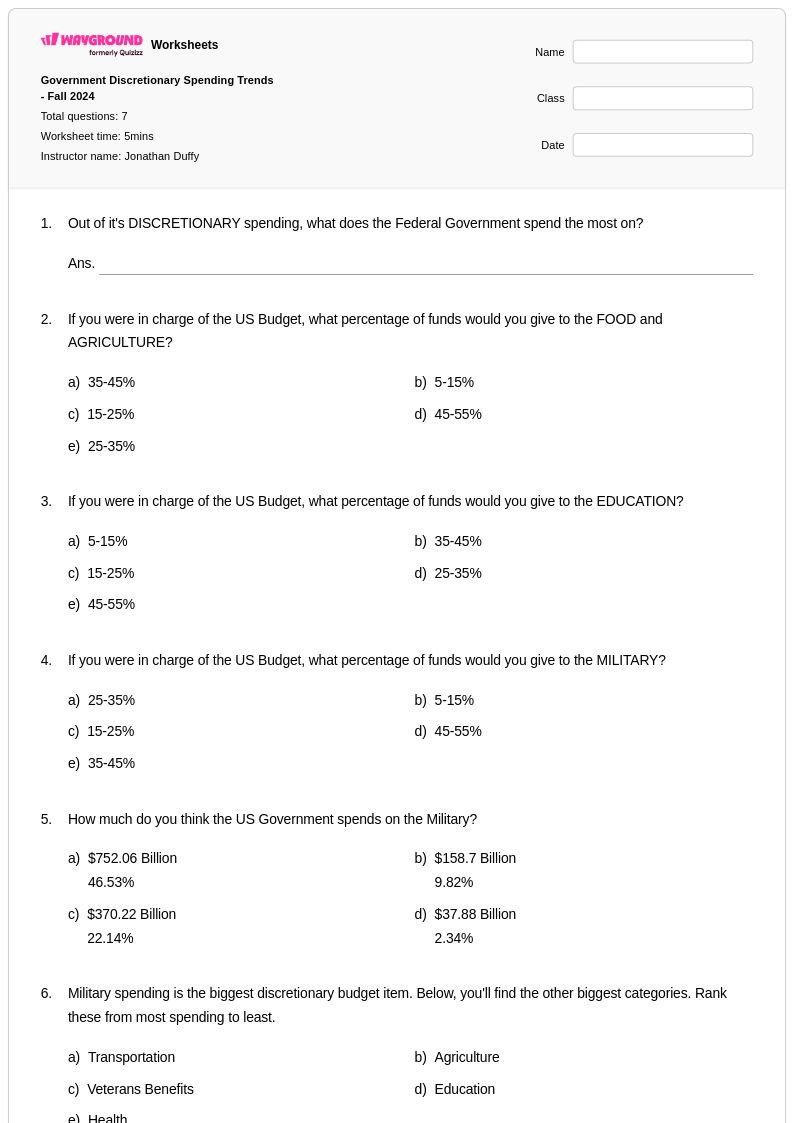
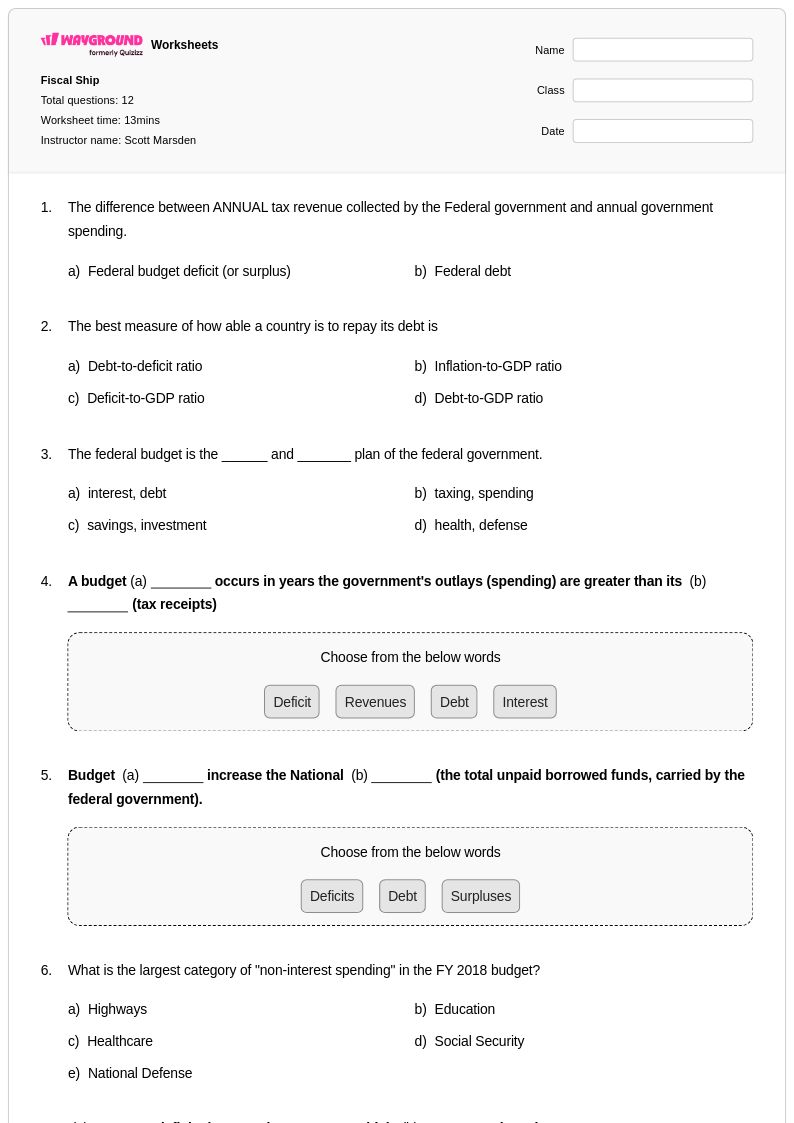
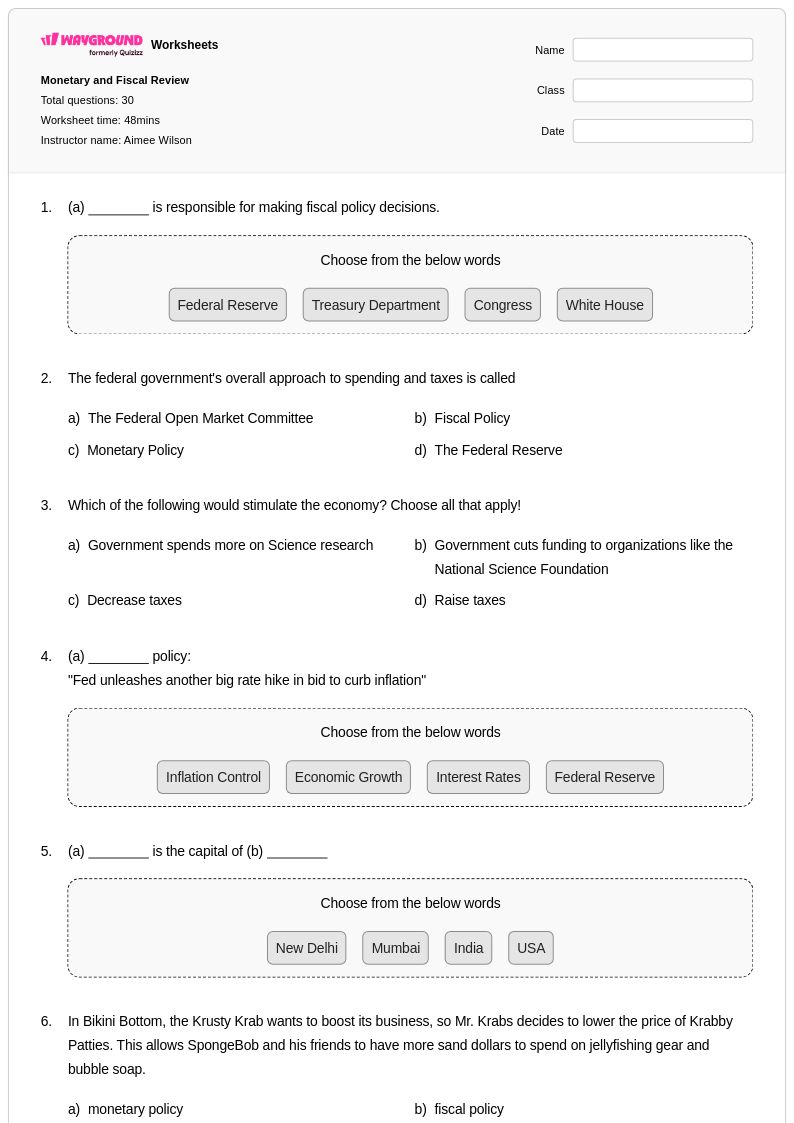
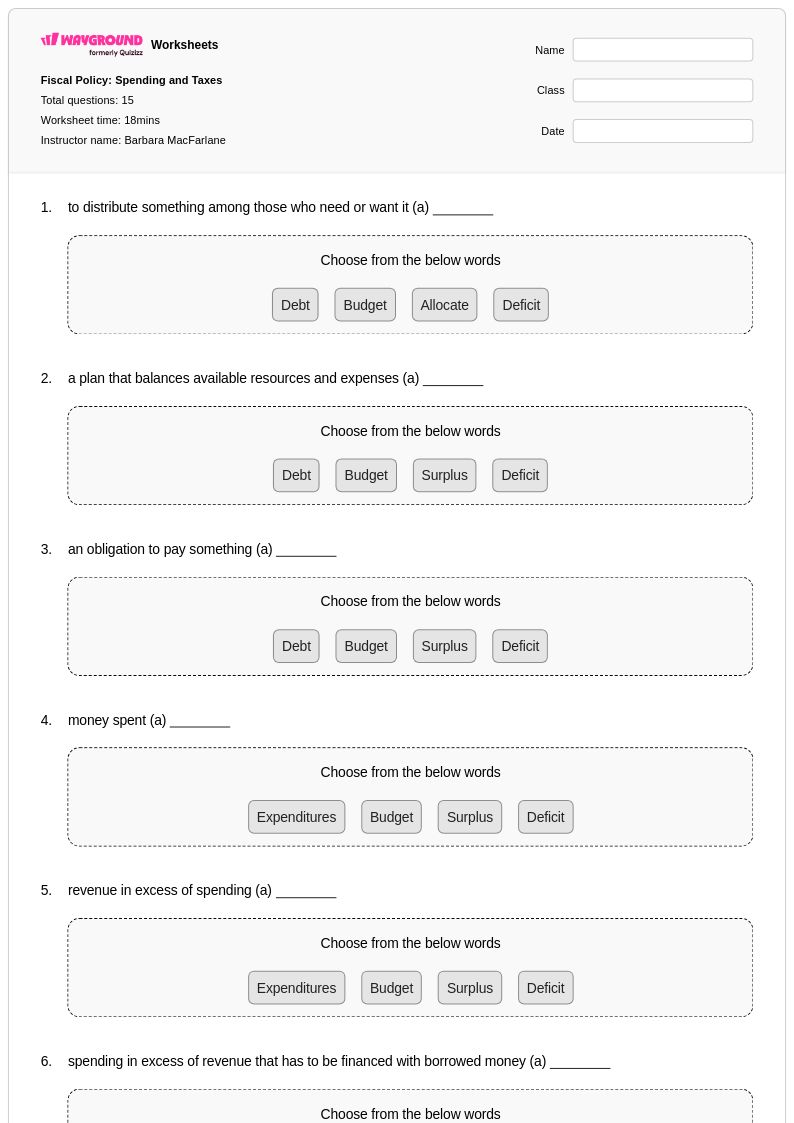
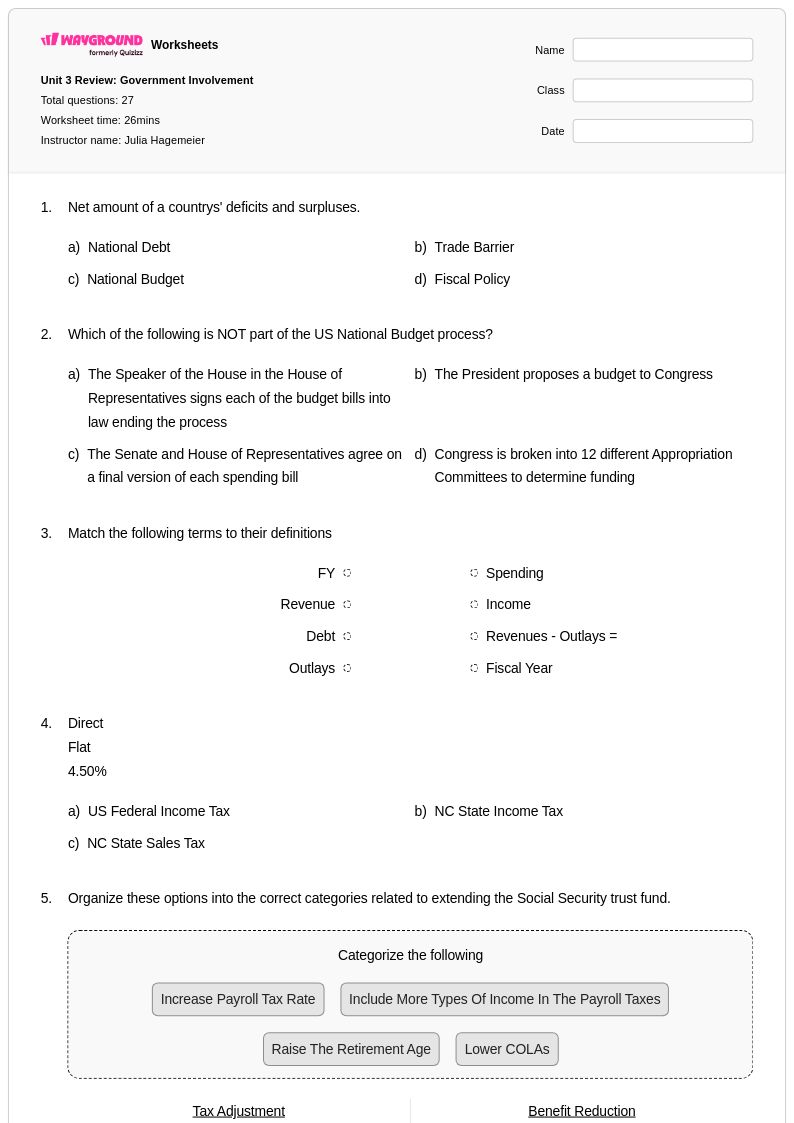
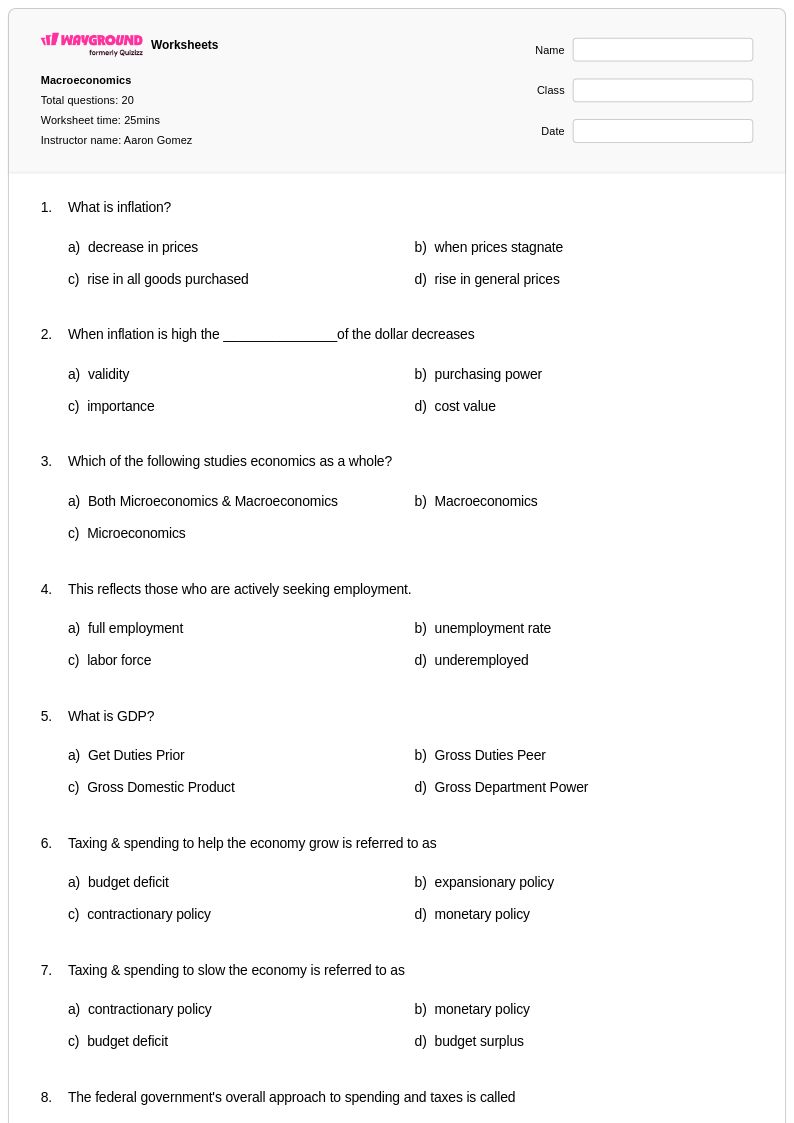
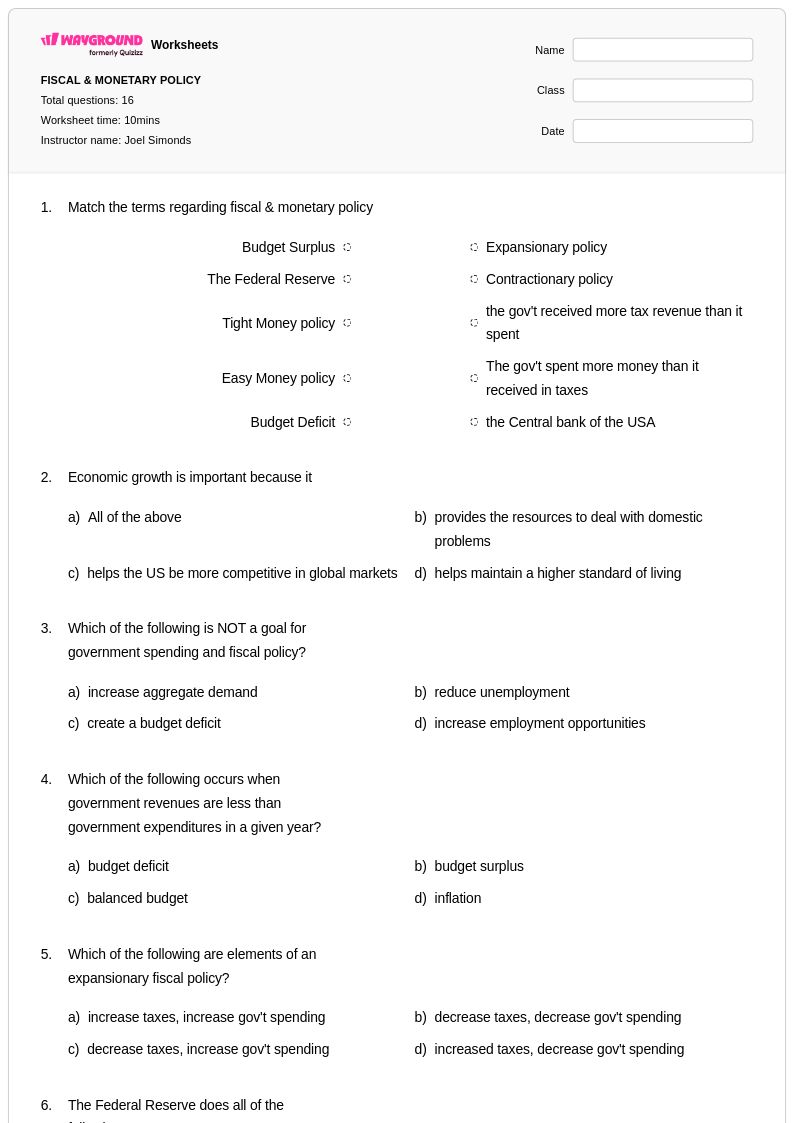
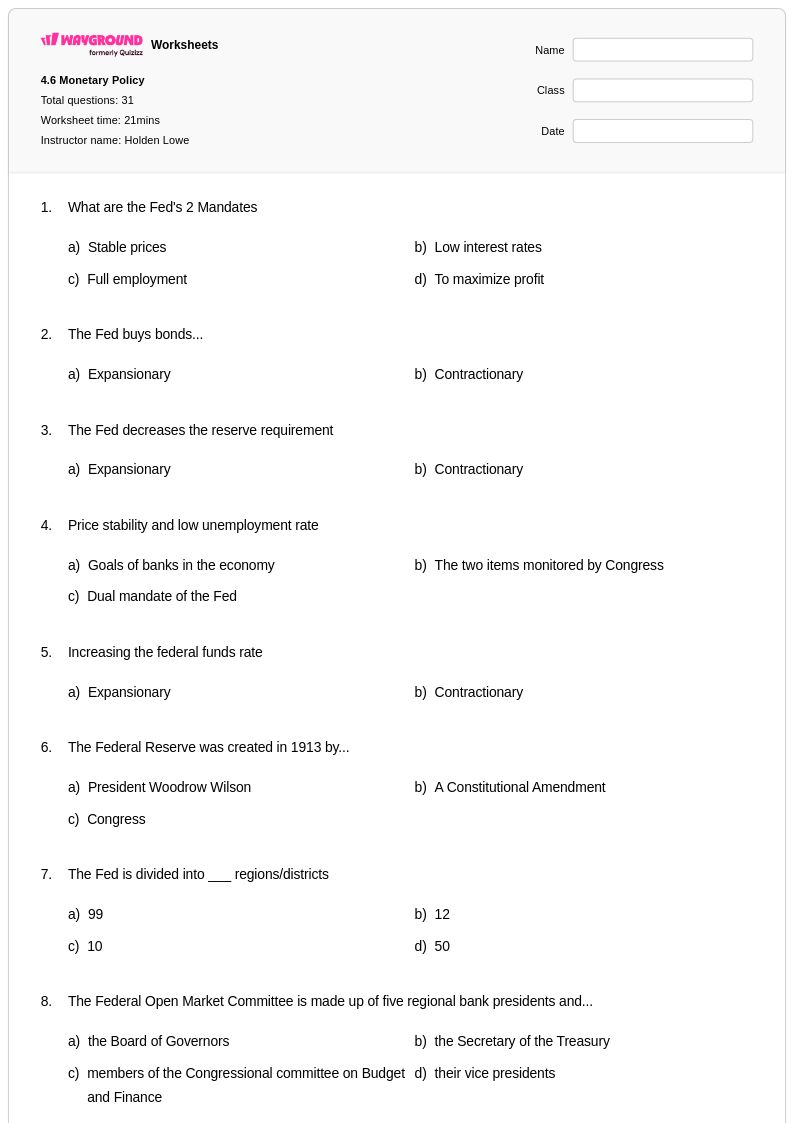
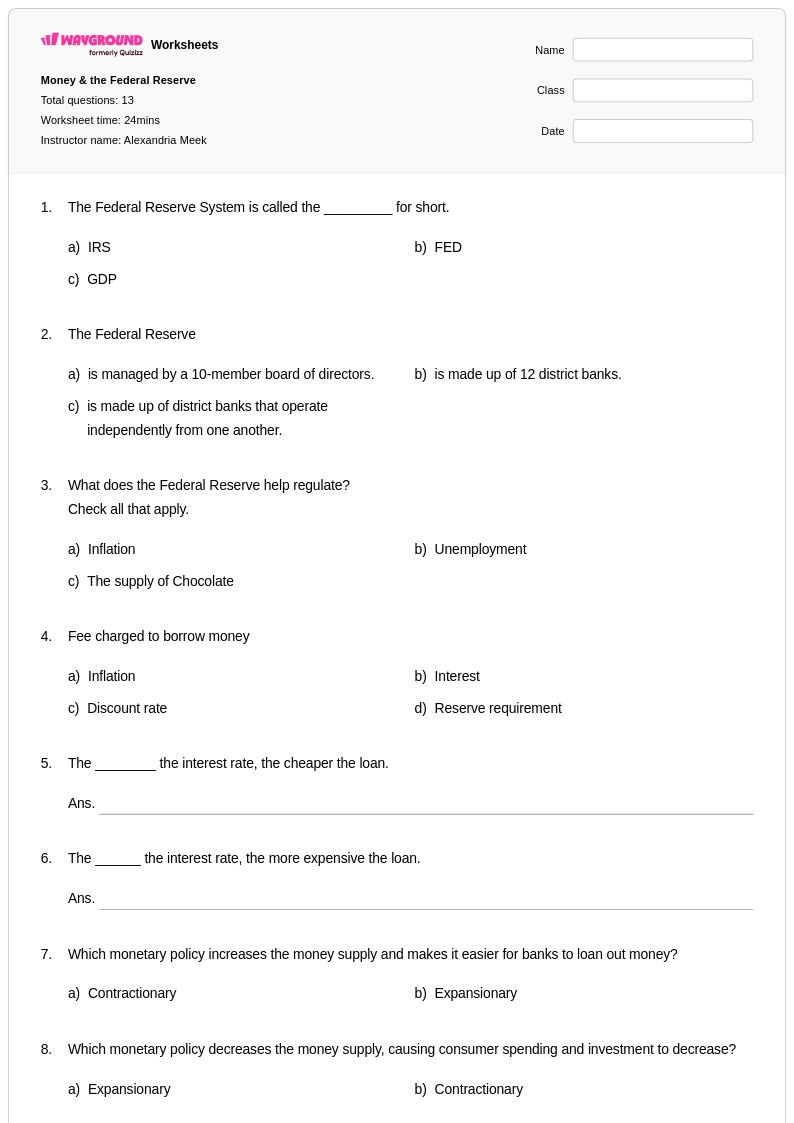
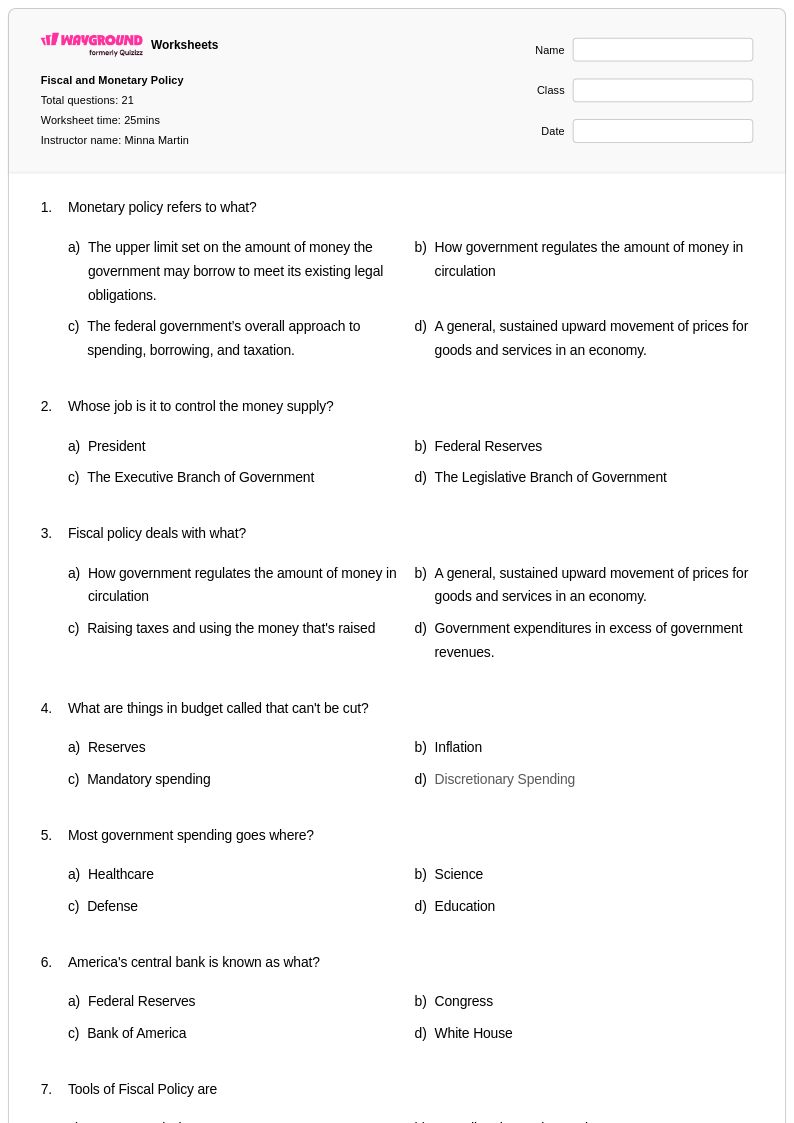
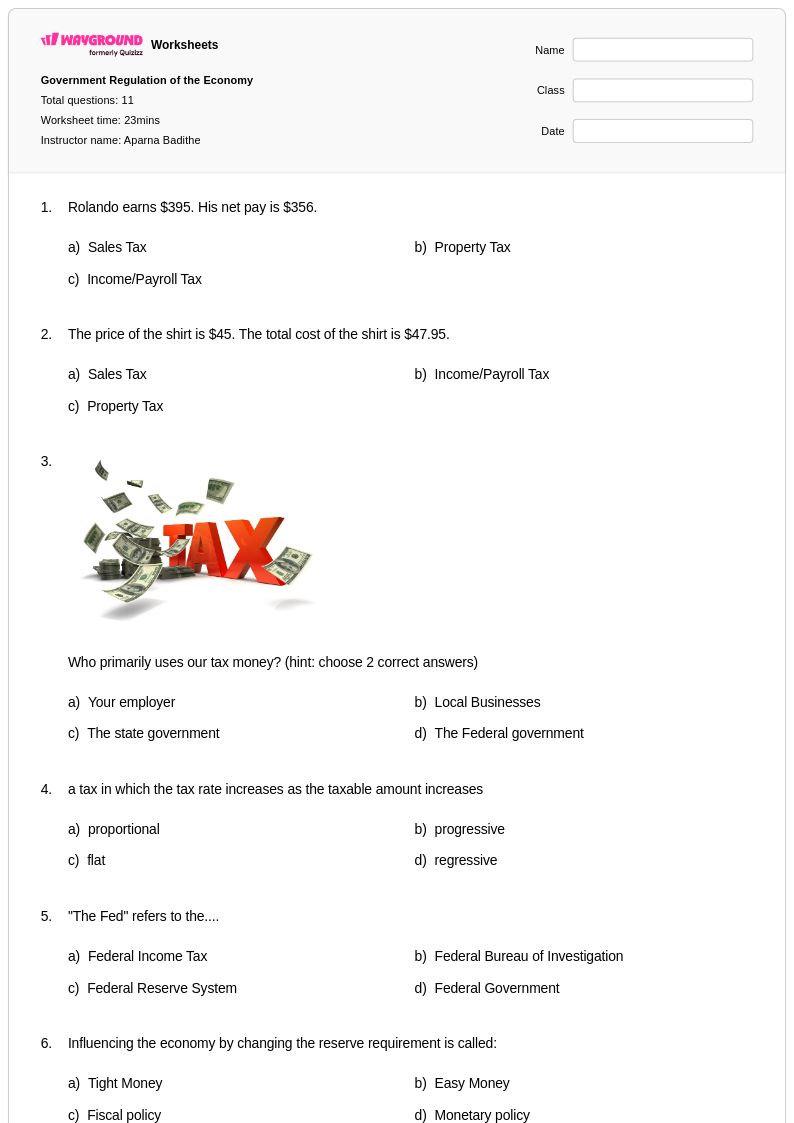
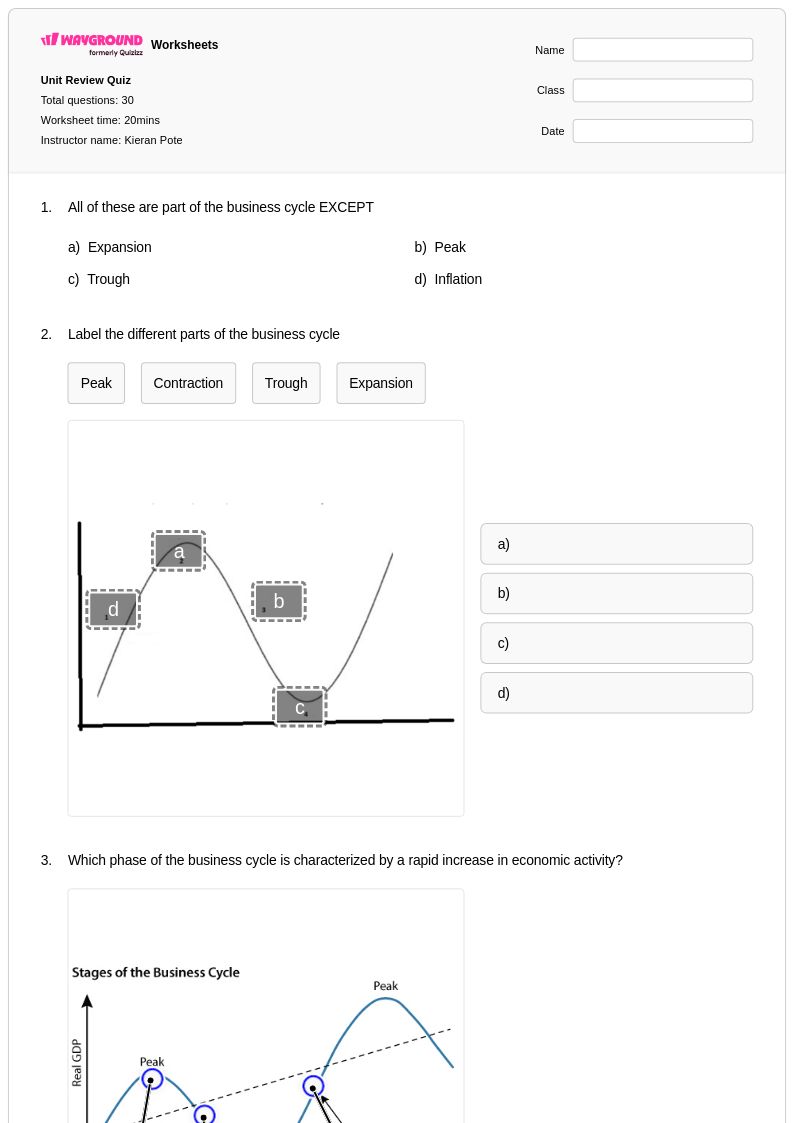
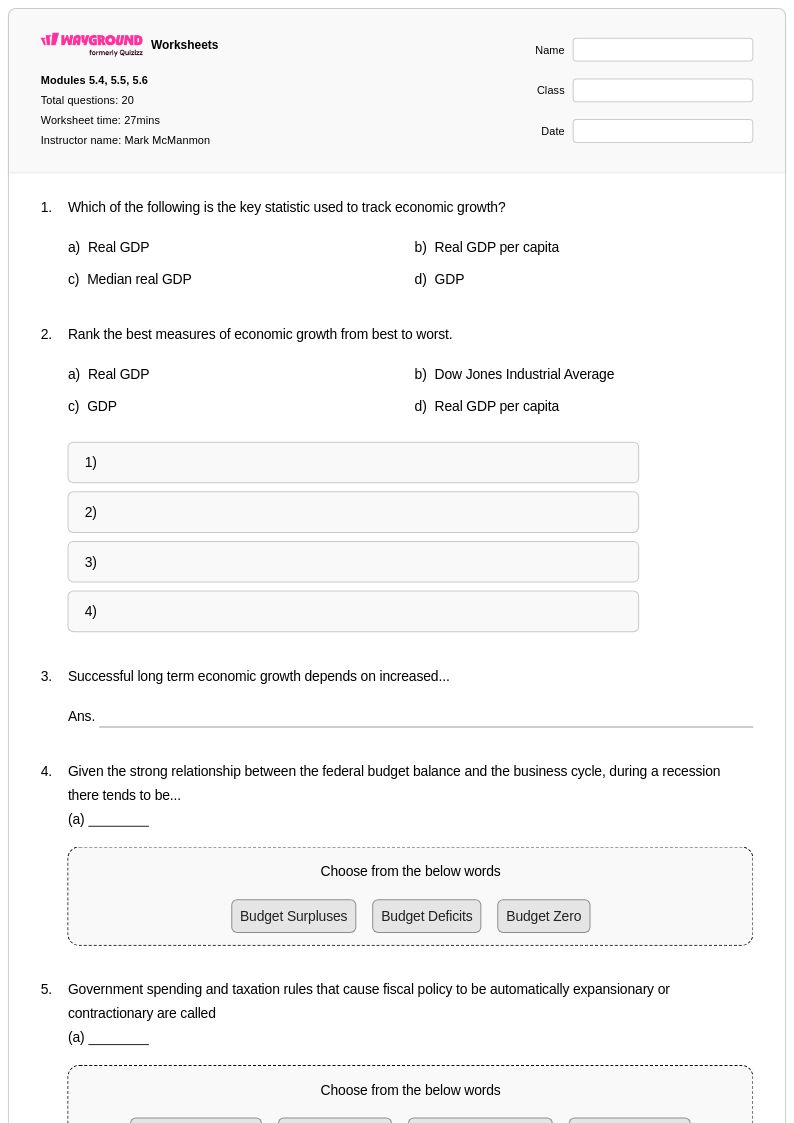
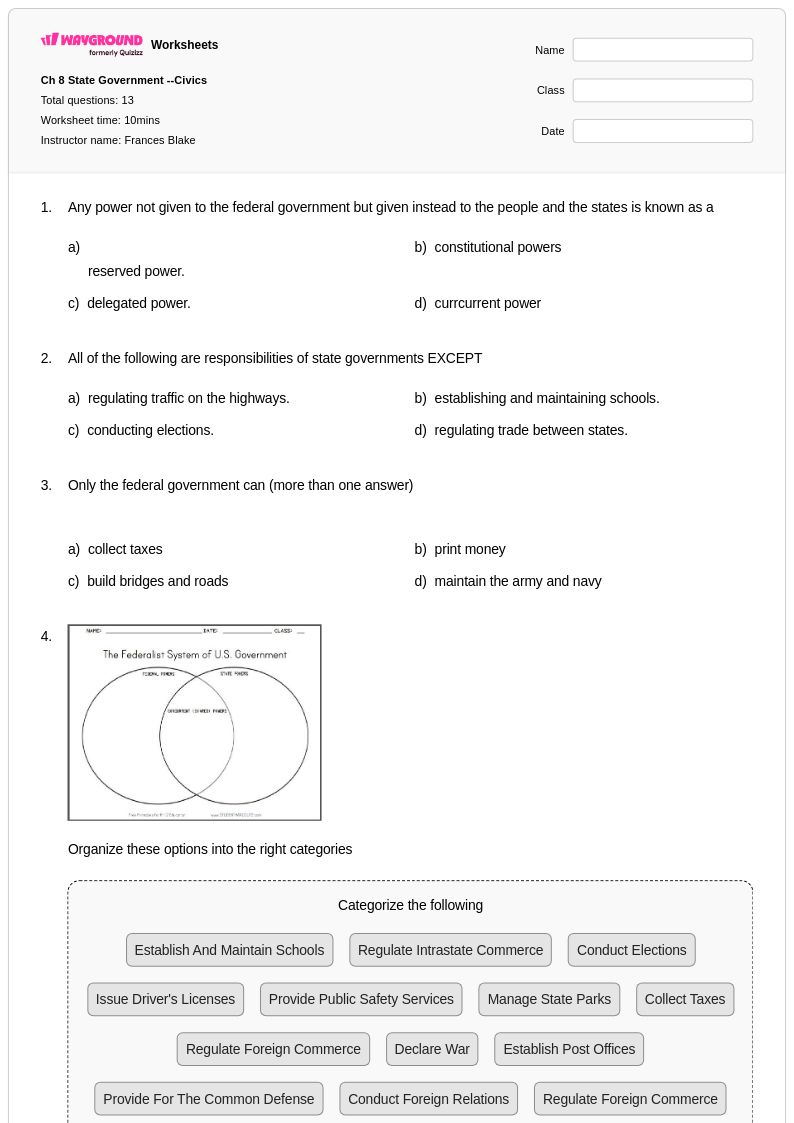
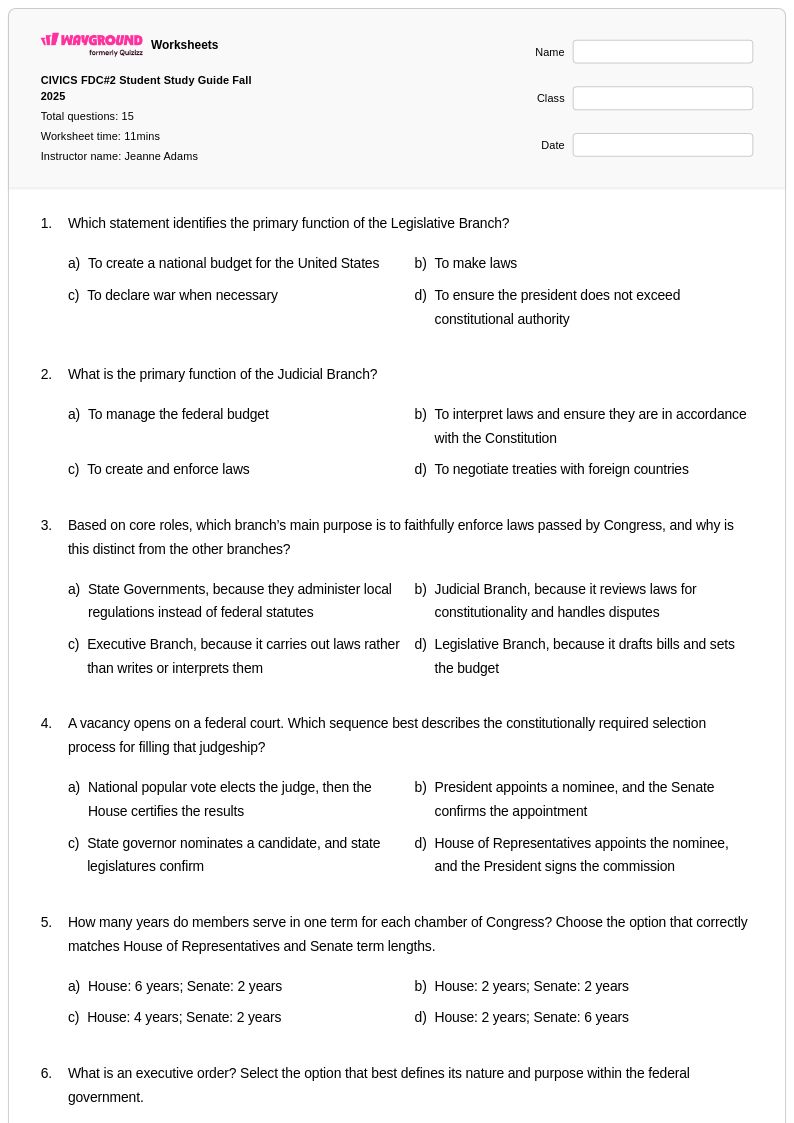
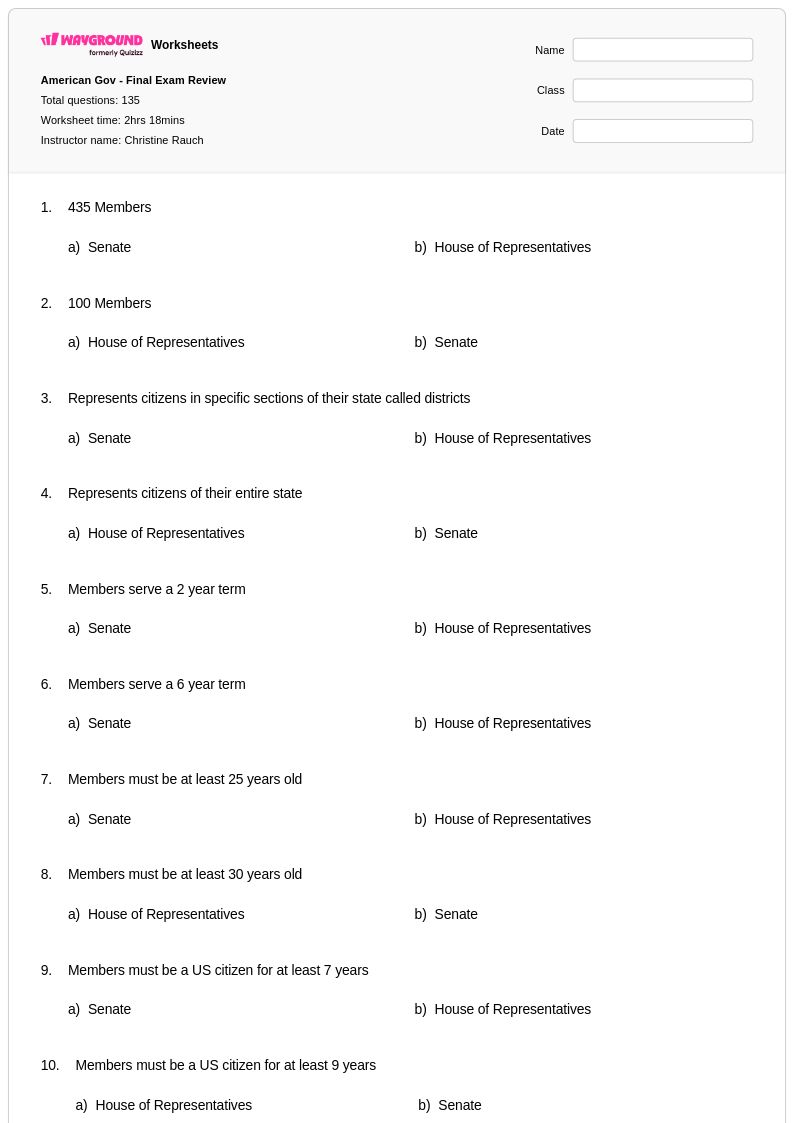
Federal Budget worksheets available through Wayground provide Class 12 students with comprehensive practice examining the complexities of government fiscal policy and budgetary processes. These expertly designed resources strengthen critical analytical skills as students explore federal revenue sources, expenditure categories, deficit spending, and debt management while developing deep understanding of how budgetary decisions impact national priorities and economic policy. Each worksheet collection includes detailed answer keys and spans various formats from traditional printables to interactive digital exercises, offering free access to practice problems that guide students through budget analysis, interpreting fiscal data, and evaluating the relationship between government spending and constitutional responsibilities.
Wayground's extensive collection supports educators with millions of teacher-created Federal Budget resources that streamline lesson planning and enhance student engagement with complex fiscal concepts. The platform's robust search and filtering capabilities enable teachers to locate standards-aligned materials that match specific curriculum requirements, while differentiation tools allow customization for diverse learning needs and skill levels. Whether accessed as printable pdf worksheets for traditional classroom use or interactive digital formats for technology-enhanced instruction, these flexible resources facilitate targeted remediation for struggling learners, enrichment opportunities for advanced students, and systematic skill practice that builds Class 12 students' capacity to analyze government financial decision-making and understand the broader implications of federal fiscal policy on American society.
FAQs
How do I teach the federal budget process to high school students?
Start by grounding students in the constitutional basis for federal spending and taxation before moving into the annual budget cycle, which runs from the President's proposal through Congressional appropriations. Use real budget data from the Office of Management and Budget to make the numbers concrete, and structure lessons around the distinction between mandatory spending (Social Security, Medicare) and discretionary spending. Simulation activities where students allocate a fixed budget across departments are especially effective for building genuine fiscal reasoning rather than surface-level memorization.
What exercises help students practice analyzing the federal budget?
Budget allocation scenarios are among the most effective practice formats because they force students to weigh competing priorities across departments and programs, mirroring the actual trade-offs Congress faces. Worksheet exercises that ask students to interpret pie charts of federal expenditures, calculate the percentage share of GDP represented by specific programs, or analyze the relationship between deficit spending and national debt build quantitative and critical thinking skills simultaneously. Practice problems that incorporate real or realistic revenue figures help students connect abstract fiscal policy concepts to tangible outcomes.
What common mistakes do students make when learning about the federal budget?
The most persistent misconception is conflating the national debt with the annual deficit — students frequently treat these as interchangeable when they are distinct concepts requiring separate analysis. Students also tend to underestimate the scale of mandatory spending, often assuming discretionary programs like defense or education dominate the budget when entitlement programs represent the largest share. A third common error is misunderstanding the roles of Congress and the executive branch, with many students incorrectly believing the President alone controls budget decisions.
How can I use federal budget worksheets to support different skill levels in my classroom?
Federal budget worksheets work well for differentiation because the topic spans multiple complexity levels, from basic identification of revenue sources to advanced analysis of fiscal policy impacts on economic growth. For students who need additional support, reducing the number of answer choices on practice problems lowers cognitive load while keeping content rigorous. On Wayground, teachers can apply individual accommodations such as extended time, read-aloud support, and reduced answer choices to specific students without alerting the rest of the class, making it straightforward to support IEP and 504 requirements within the same assignment.
How do I use Wayground's federal budget worksheets in my class?
Wayground's federal budget worksheets are available as printable PDFs for traditional classroom use and in digital formats for technology-integrated or remote learning environments, so teachers can deploy the same material across different instructional settings. Each worksheet includes a complete answer key, supporting both guided instruction and independent student work. Teachers can also host worksheets as a quiz directly on Wayground, enabling real-time data collection on student performance and making it easier to identify gaps in understanding before moving to the next unit.
How does the federal budget connect to civics and economics standards?
The federal budget sits at the intersection of civics and economics, making it a high-leverage topic for standards that address both democratic processes and economic literacy. In civics, it illustrates how constitutional principles of taxation and appropriations translate into policy decisions made by Congress and the executive branch. In economics, it provides a real-world context for concepts like fiscal policy, deficit spending, public goods, and the role of government in a mixed economy, which are core to most state standards at the high school level.