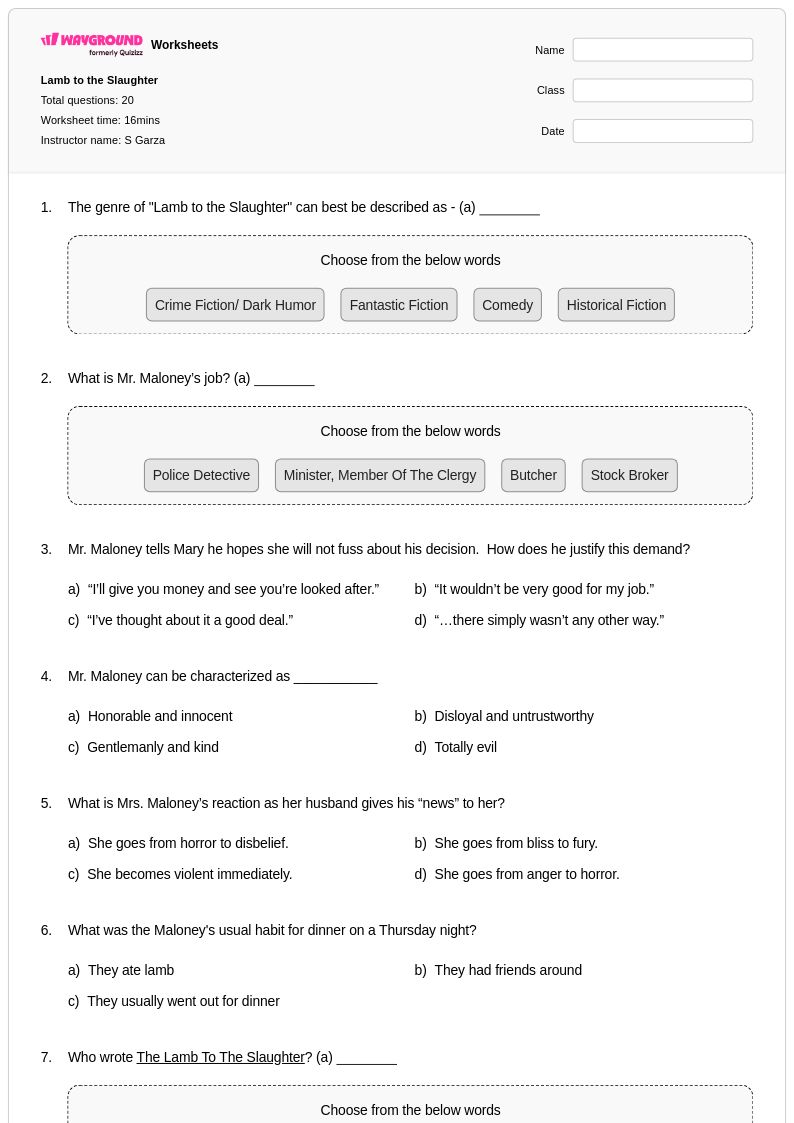
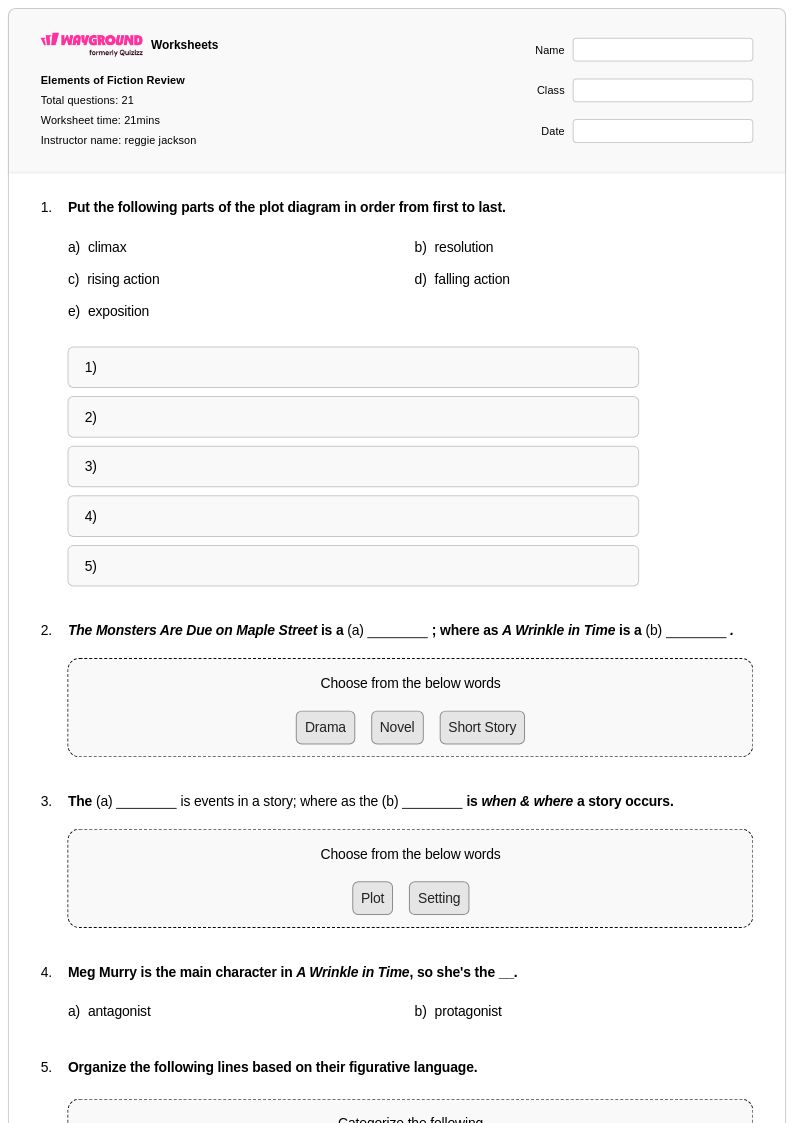
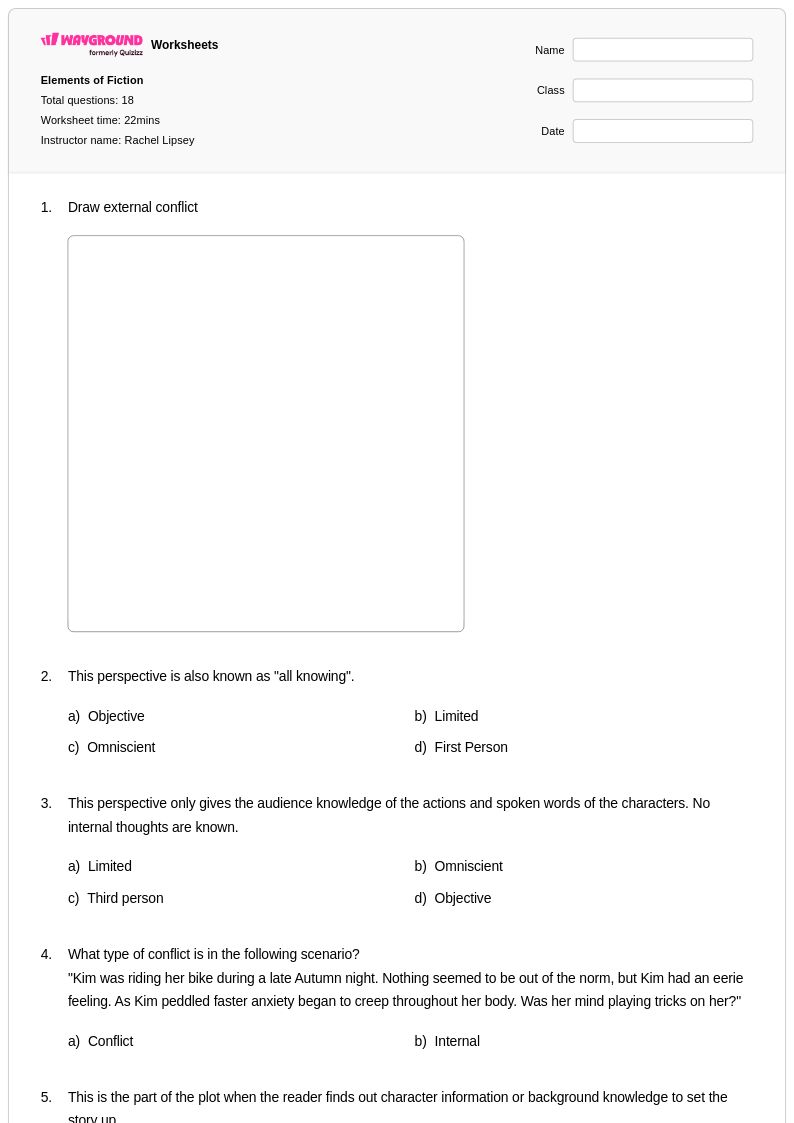
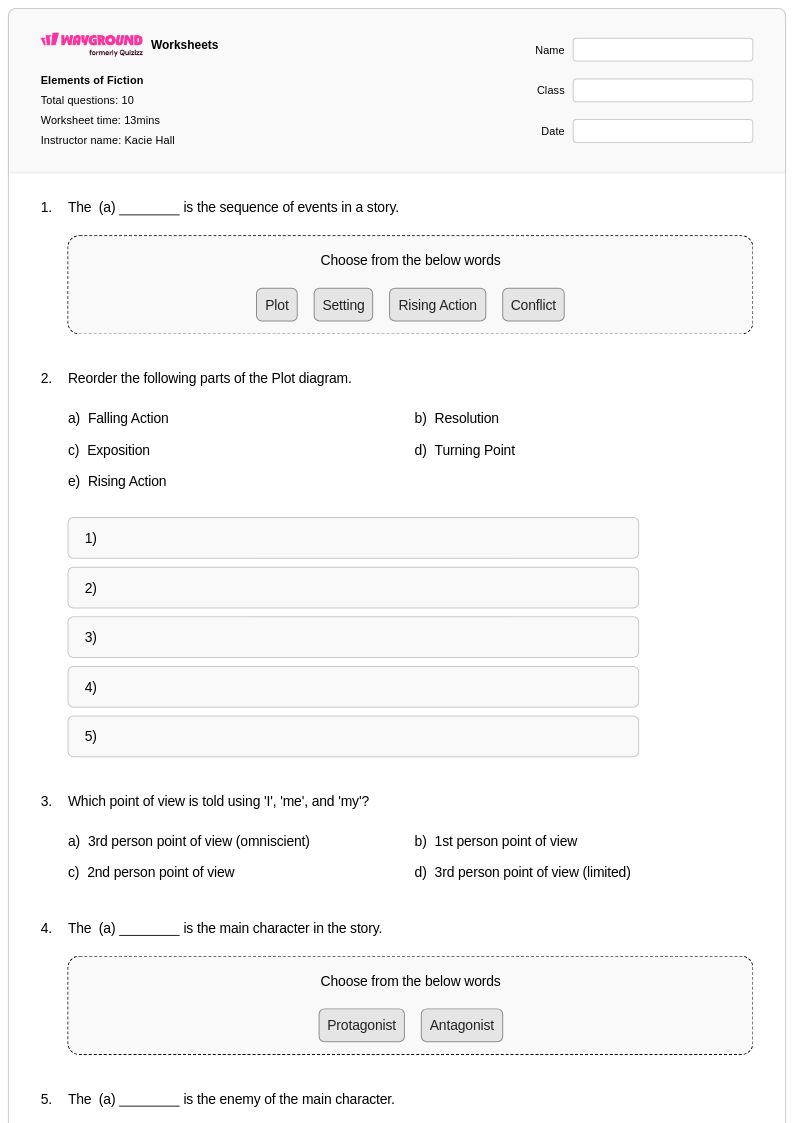
Enhance reading comprehension skills with Wayground's collection of fiction comprehension question worksheets, featuring engaging printables and practice problems with answer keys to help students analyze literary texts effectively.
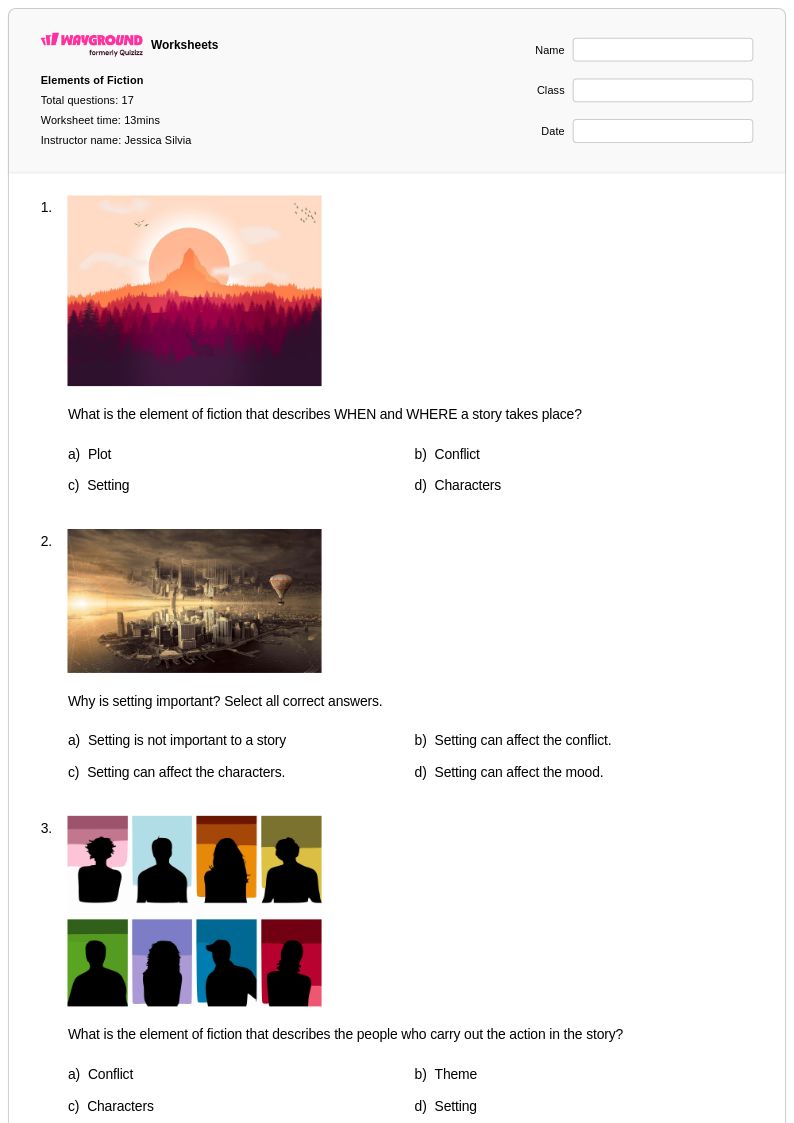
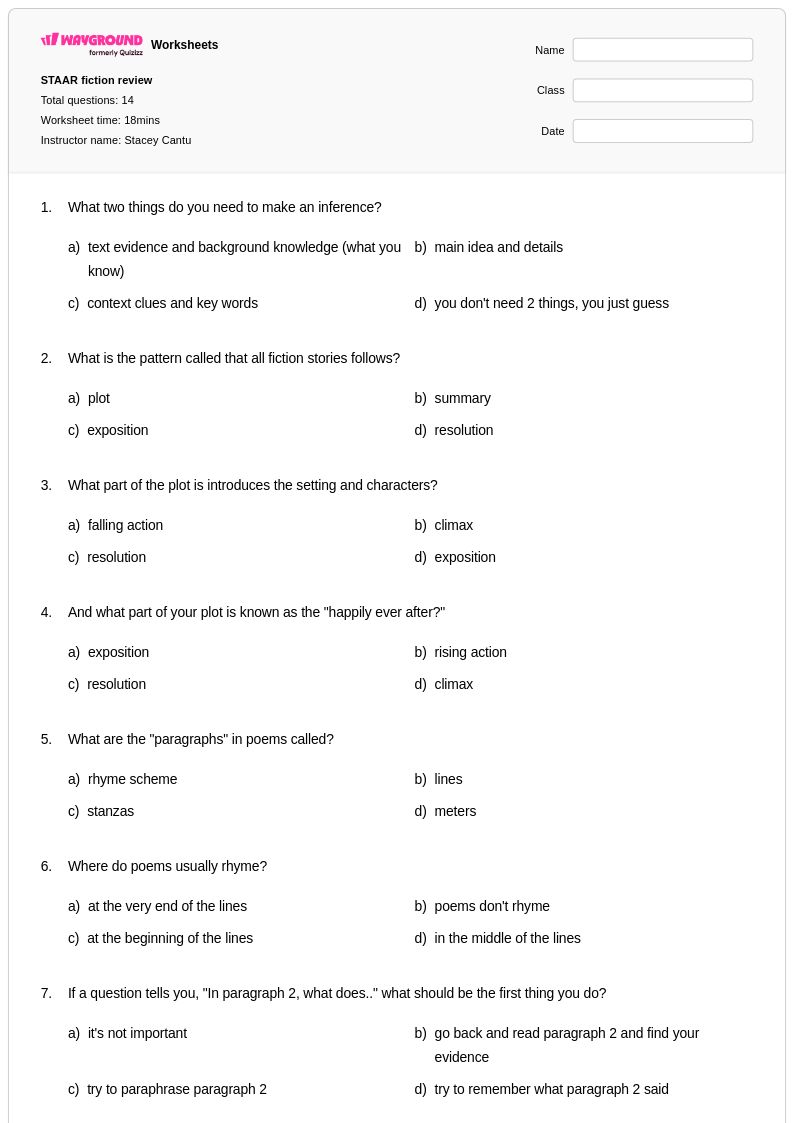
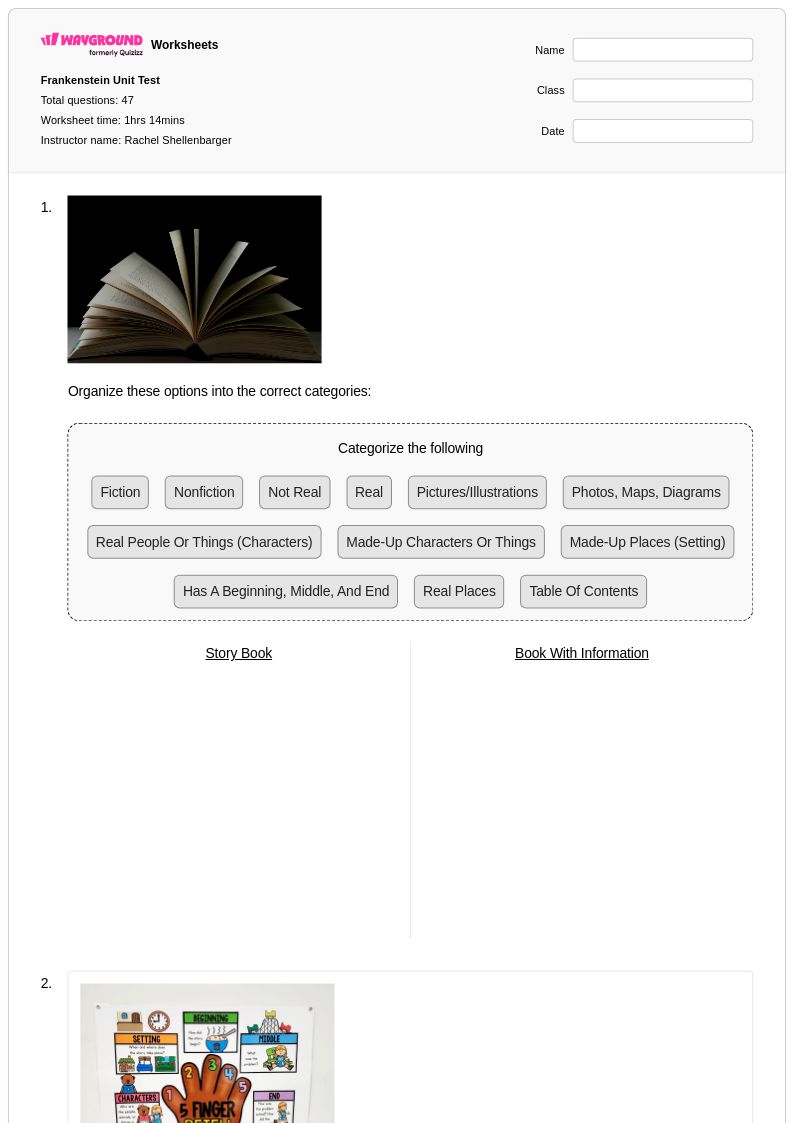
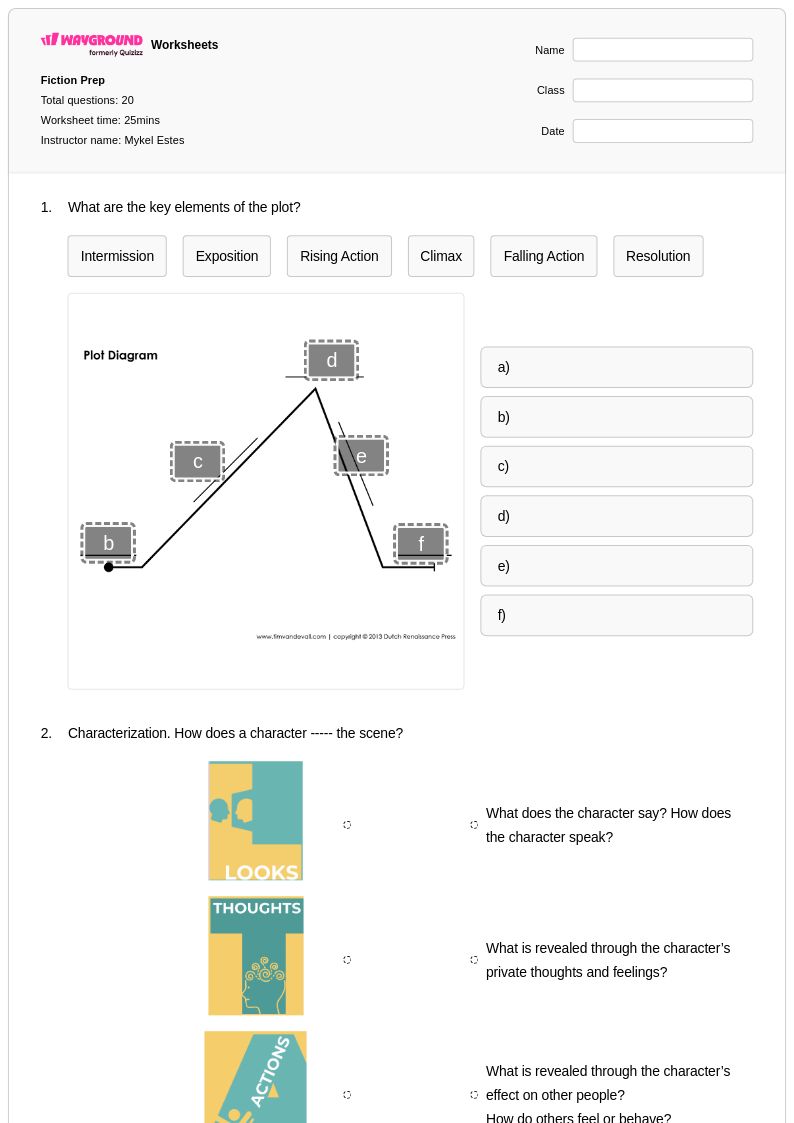
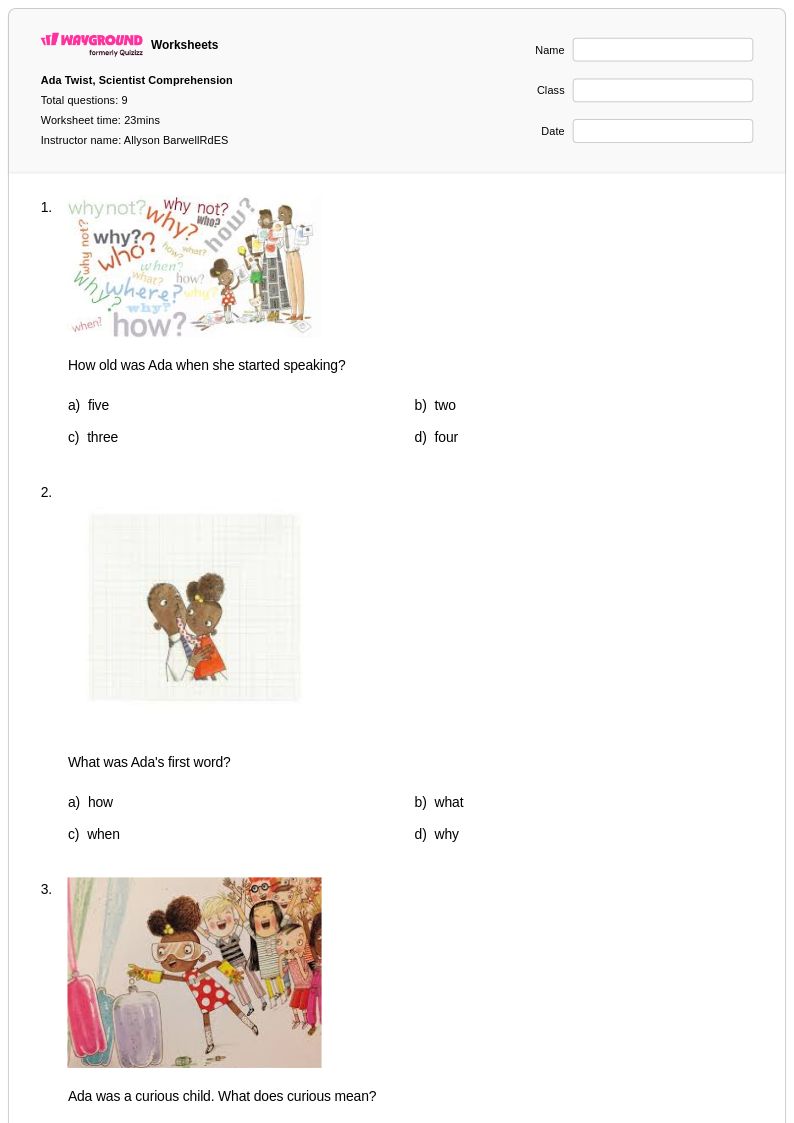
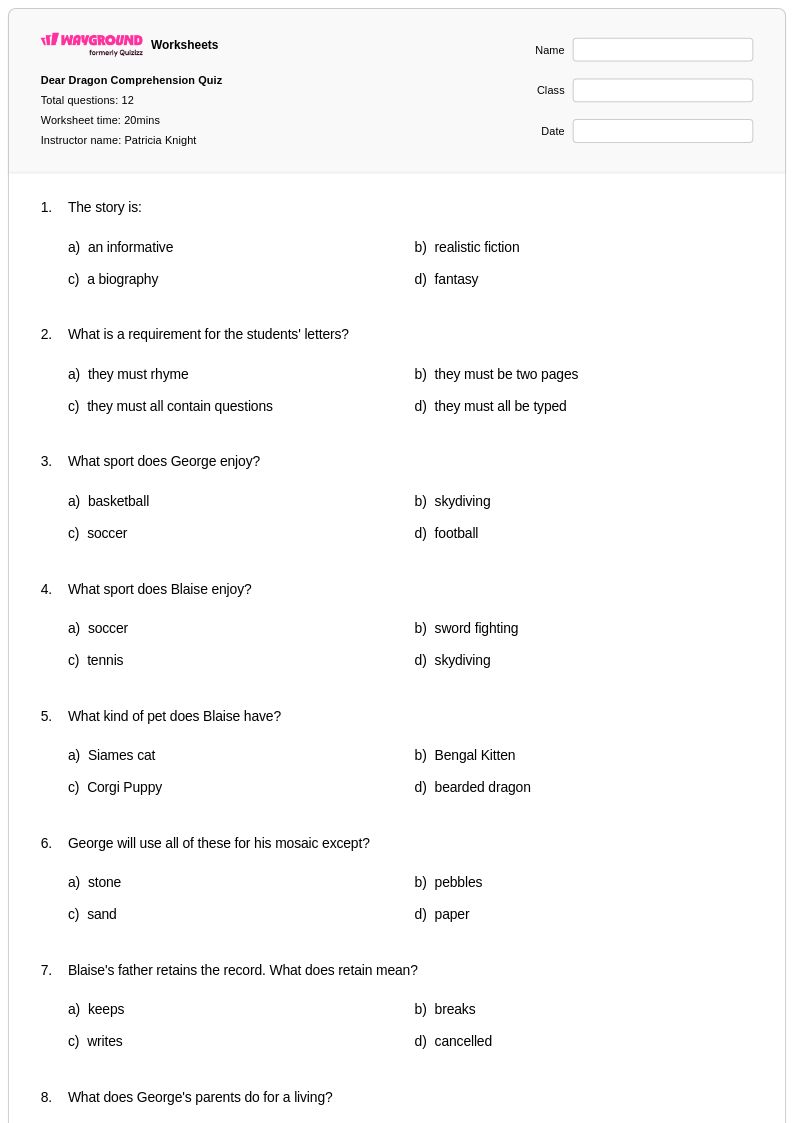
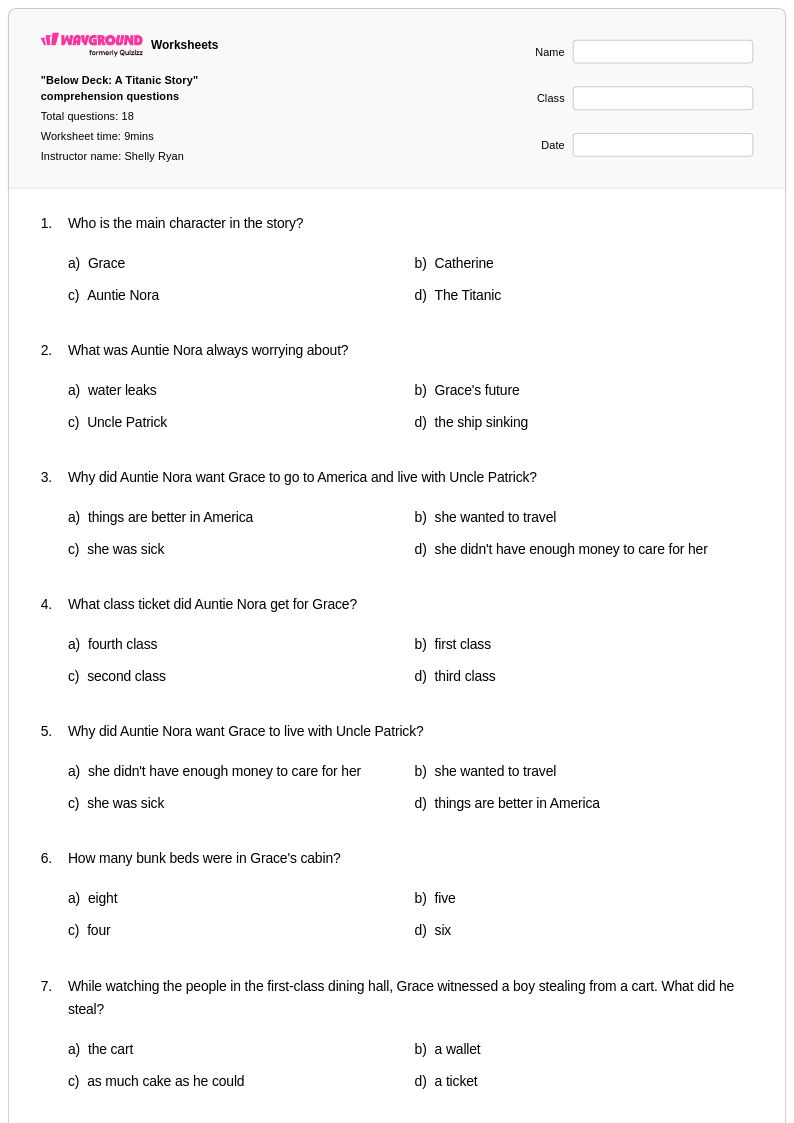
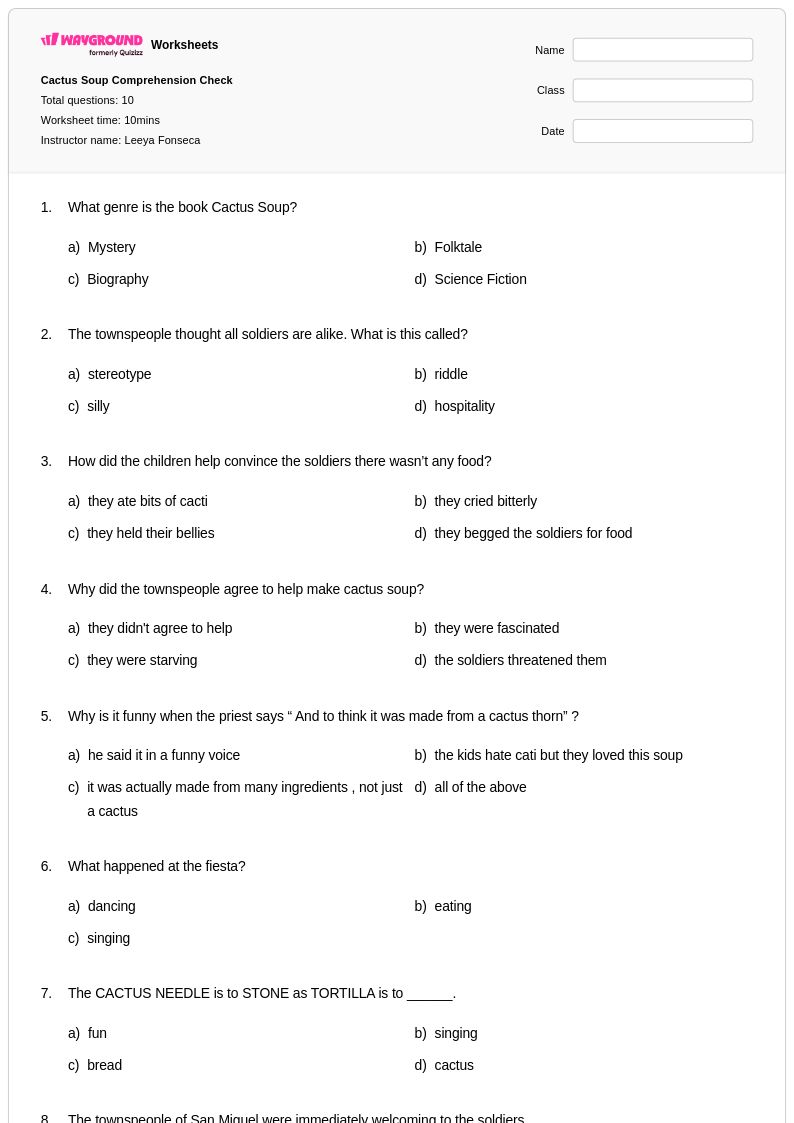
Fiction comprehension questions worksheets available through Wayground (formerly Quizizz) provide educators with essential tools for developing students' reading analysis and critical thinking skills across literary texts. These comprehensive resources focus on key reading competencies including character analysis, plot development, theme identification, setting interpretation, and inference-making through carefully crafted practice problems that engage students with diverse fictional narratives. Each worksheet collection includes detailed answer keys to support efficient grading and immediate feedback, while the free printables offer flexible implementation options for both classroom instruction and independent study. Students strengthen their ability to extract meaning from complex texts, analyze literary elements, and articulate their understanding through structured questioning formats that progress from literal comprehension to higher-order analytical thinking skills essential for academic success.
Wayground (formerly Quizizz) empowers teachers with an extensive library of millions of teacher-created fiction comprehension resources that streamline lesson planning and differentiated instruction. The platform's robust search and filtering capabilities enable educators to quickly locate age-appropriate materials aligned with curriculum standards, while customization tools allow for seamless modification of existing worksheets to match specific classroom needs and student ability levels. These versatile resources are available in both printable pdf formats and interactive digital versions, supporting diverse teaching environments and learning preferences. Teachers can effectively utilize these comprehensive collections for targeted skill practice, remediation support for struggling readers, enrichment activities for advanced students, and formative assessment opportunities that inform instructional decisions and track student progress in fiction comprehension mastery.
FAQs
How do I teach fiction comprehension questions in the classroom?
Start by modeling how to read a passage actively, pausing to ask literal questions before moving into inferential and analytical ones. Scaffold instruction by beginning with character and plot questions, then gradually introducing theme identification and inference-making as students build confidence. Structured question formats that progress from surface-level recall to higher-order thinking help students develop the habit of reading for meaning rather than just decoding words.
What types of questions should be included in fiction comprehension practice?
Effective fiction comprehension practice should span multiple levels of understanding: literal questions about plot events and character actions, inferential questions that require reading between the lines, and analytical questions focused on theme, setting, and literary elements. Incorporating all three levels ensures students develop both surface comprehension and deeper critical thinking skills needed for academic reading tasks.
What mistakes do students commonly make when answering fiction comprehension questions?
One of the most common errors is confusing inference with personal opinion — students may answer with what they think rather than what the text supports. Another frequent mistake is identifying a topic instead of a theme, writing 'friendship' rather than a full thematic statement about what the text says about friendship. Students also tend to summarize plot when asked to analyze character motivation, so explicitly teaching the difference between retelling and analysis is essential.
How can I use fiction comprehension question worksheets to assess reading skills?
Fiction comprehension worksheets work well as formative assessments when administered after independent reading, allowing teachers to identify which students are struggling with specific skills such as inference or theme identification. Reviewing error patterns across the class can reveal whether a concept needs reteaching or whether individual students need targeted support. The structured question format also makes it straightforward to track progress over time as students move from literal to analytical comprehension.
How do I differentiate fiction comprehension worksheets for different reading levels?
Differentiation can be achieved by assigning the same passage with varied question sets — lower-complexity questions for developing readers and higher-order analytical prompts for advanced students. On Wayground, teachers can also apply individual accommodations such as Read Aloud, which provides audio reading of questions and passage content for students who need it, and reduced answer choices to lower cognitive load for selected students without changing the experience for the rest of the class.
How do I use Wayground's fiction comprehension question worksheets in my classroom?
Wayground's fiction comprehension question worksheets are available as printable PDFs for traditional classroom use and in digital formats for technology-integrated environments, so they work whether students are in the room or learning remotely. Teachers can also host the worksheets as a quiz directly on Wayground, enabling automated grading and instant feedback. The included answer keys support efficient review, and the platform's customization tools allow teachers to modify existing worksheets to match specific texts or student ability levels.