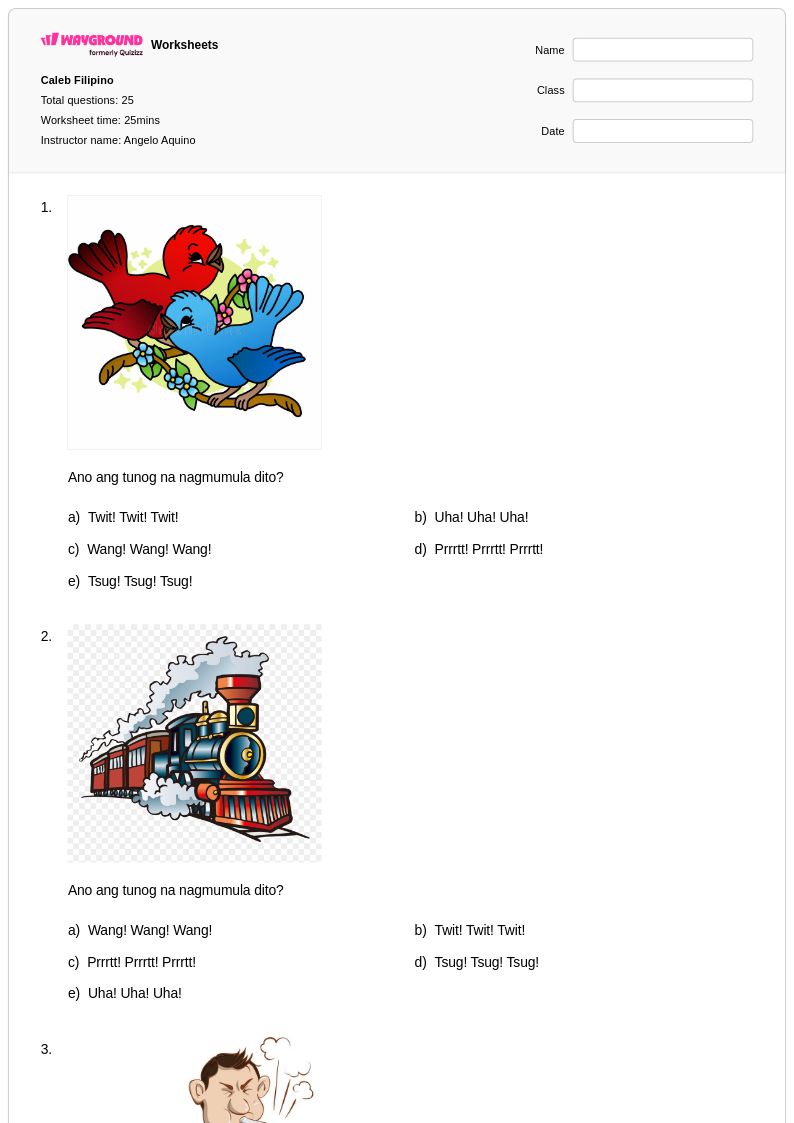
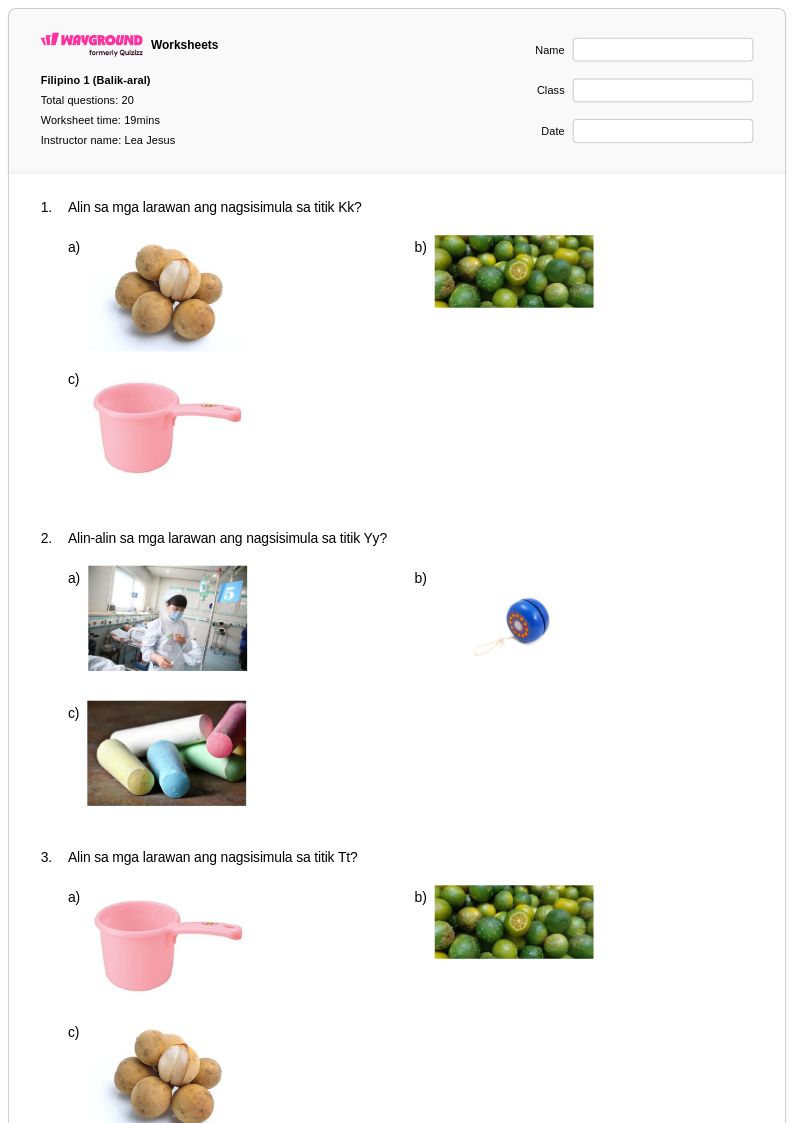
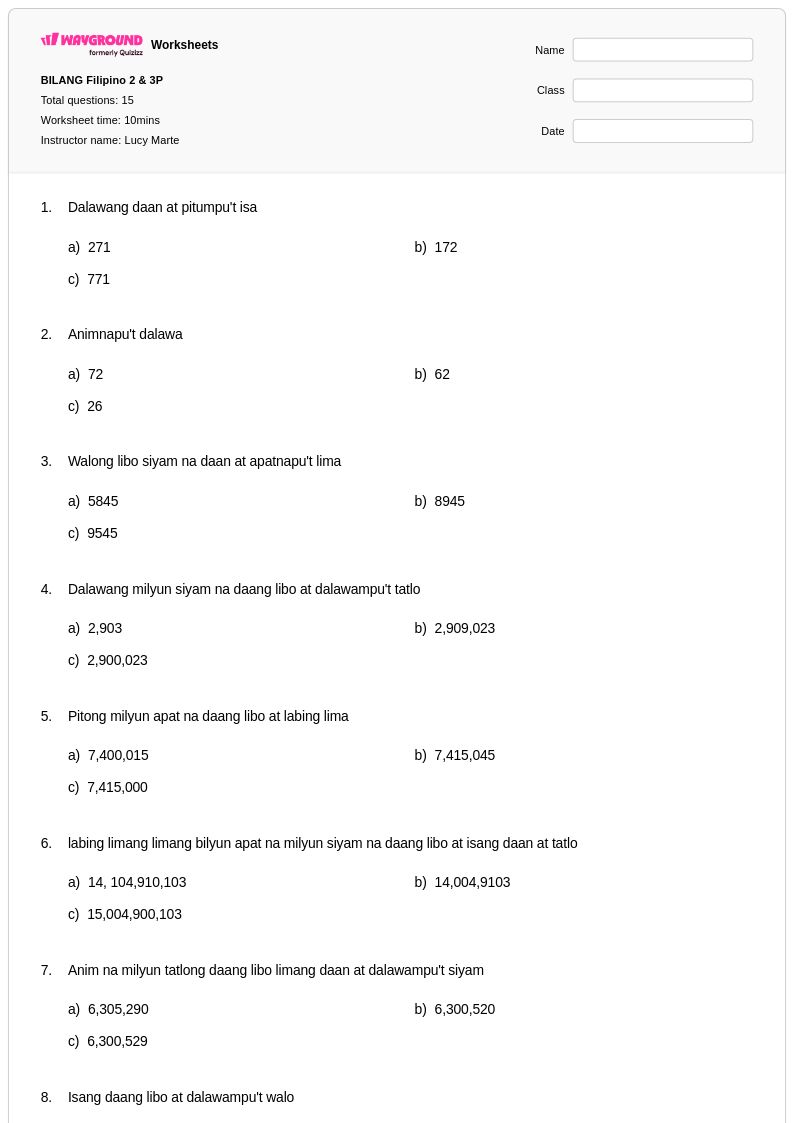
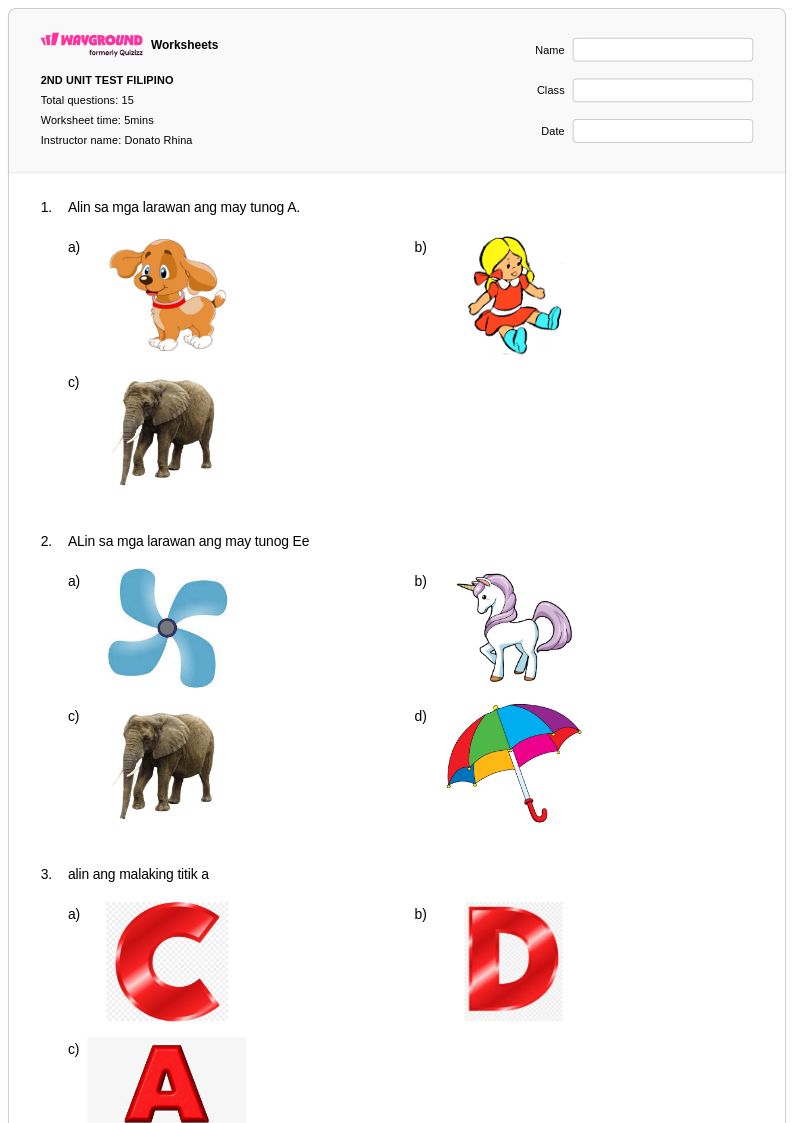
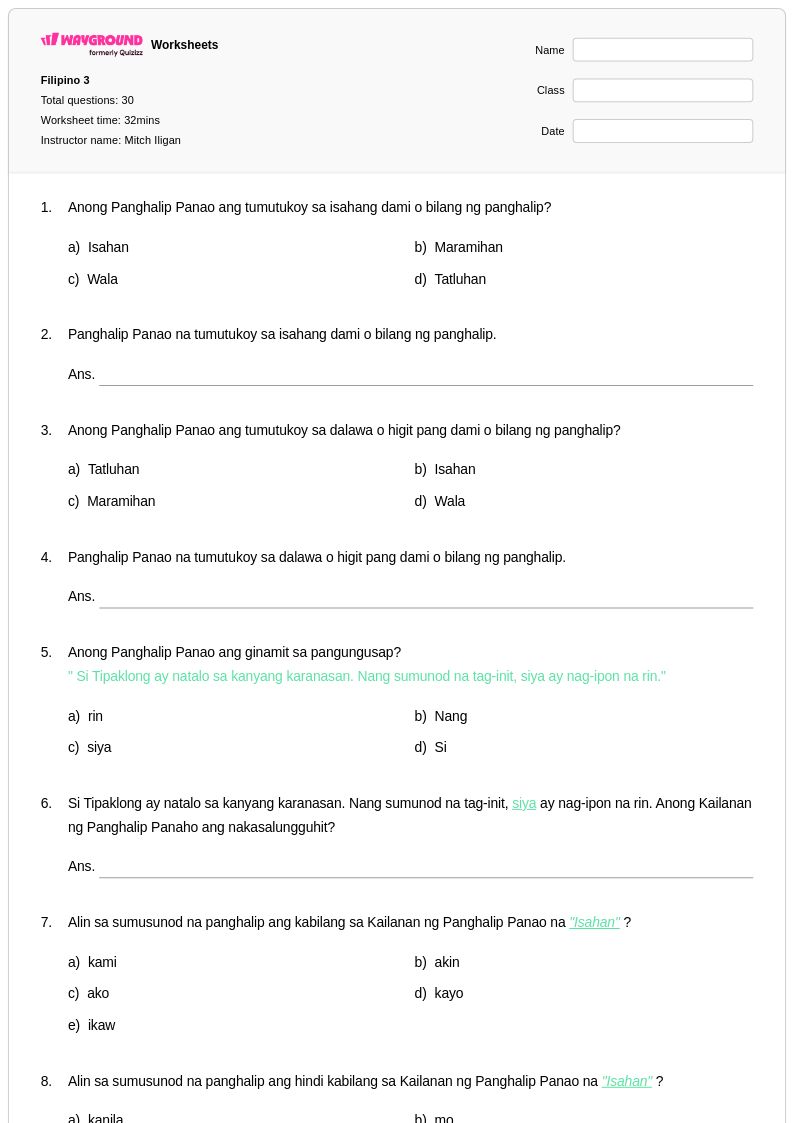
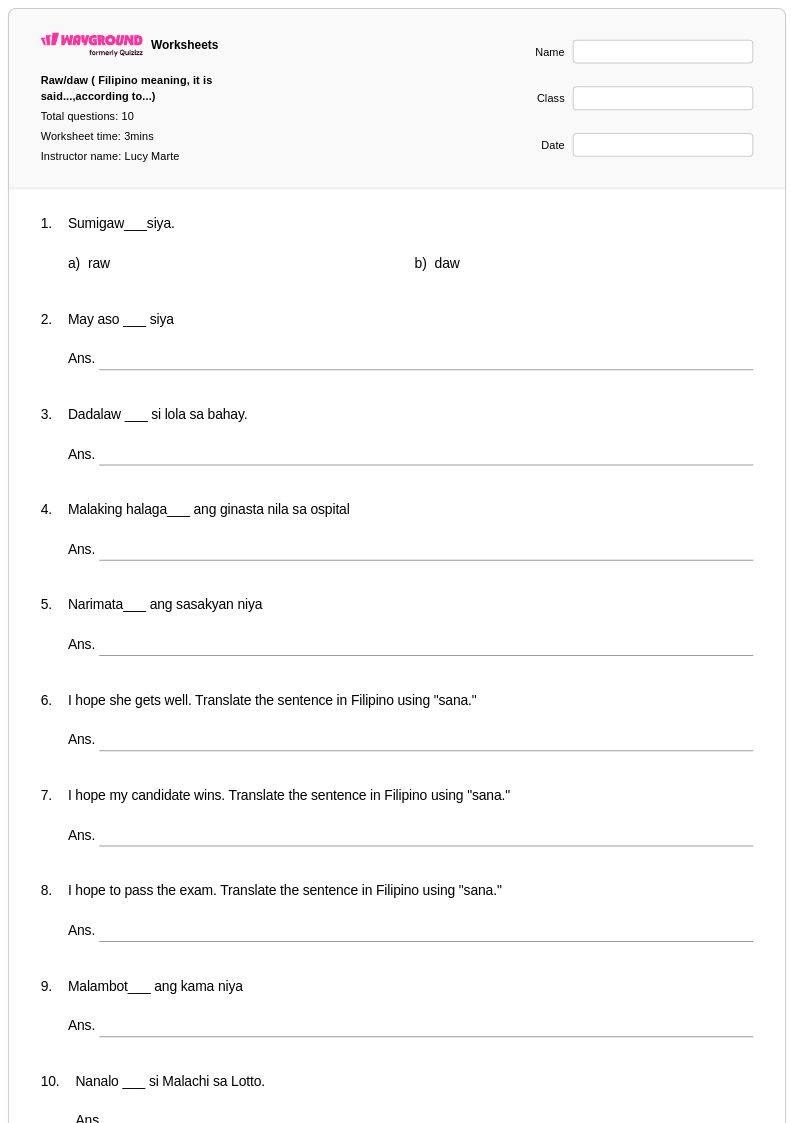
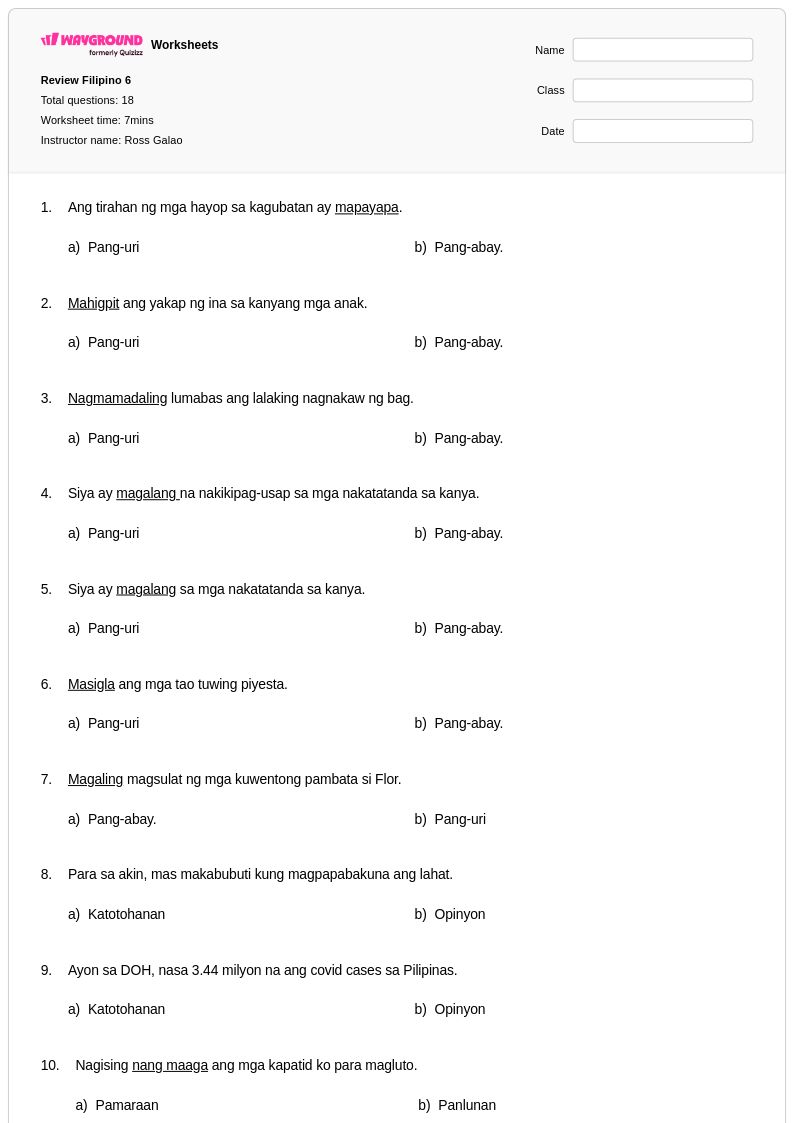
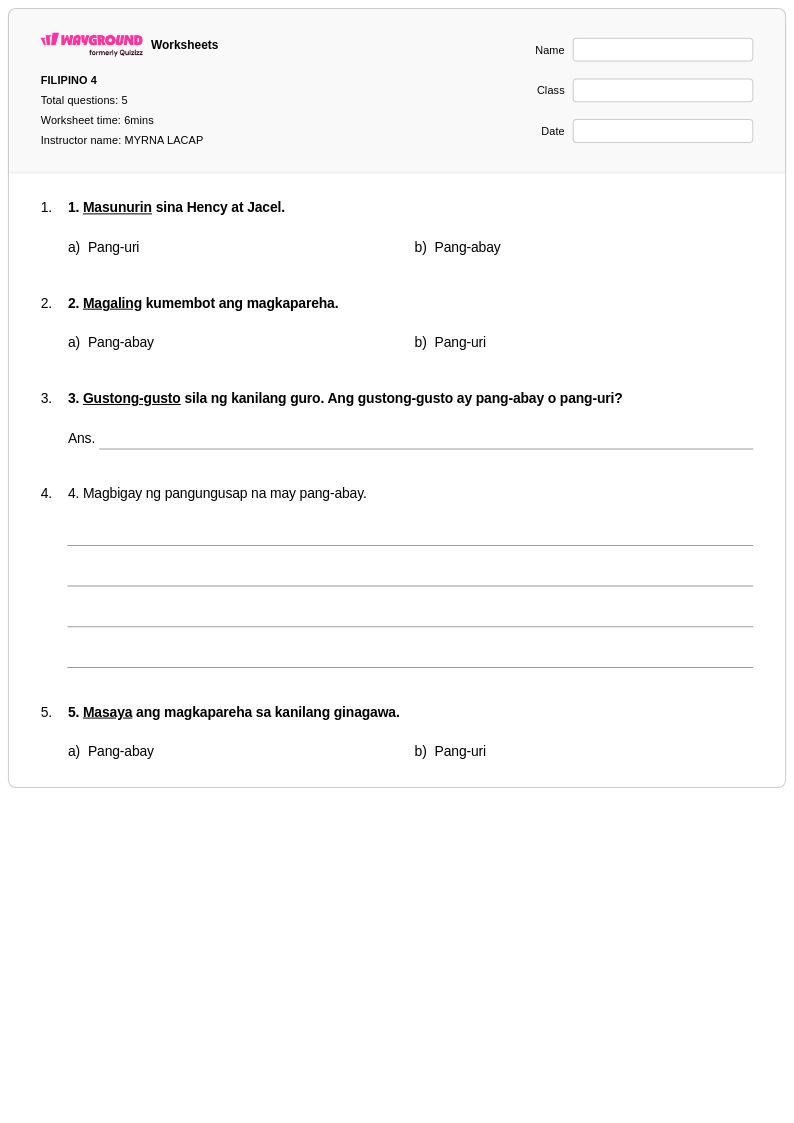
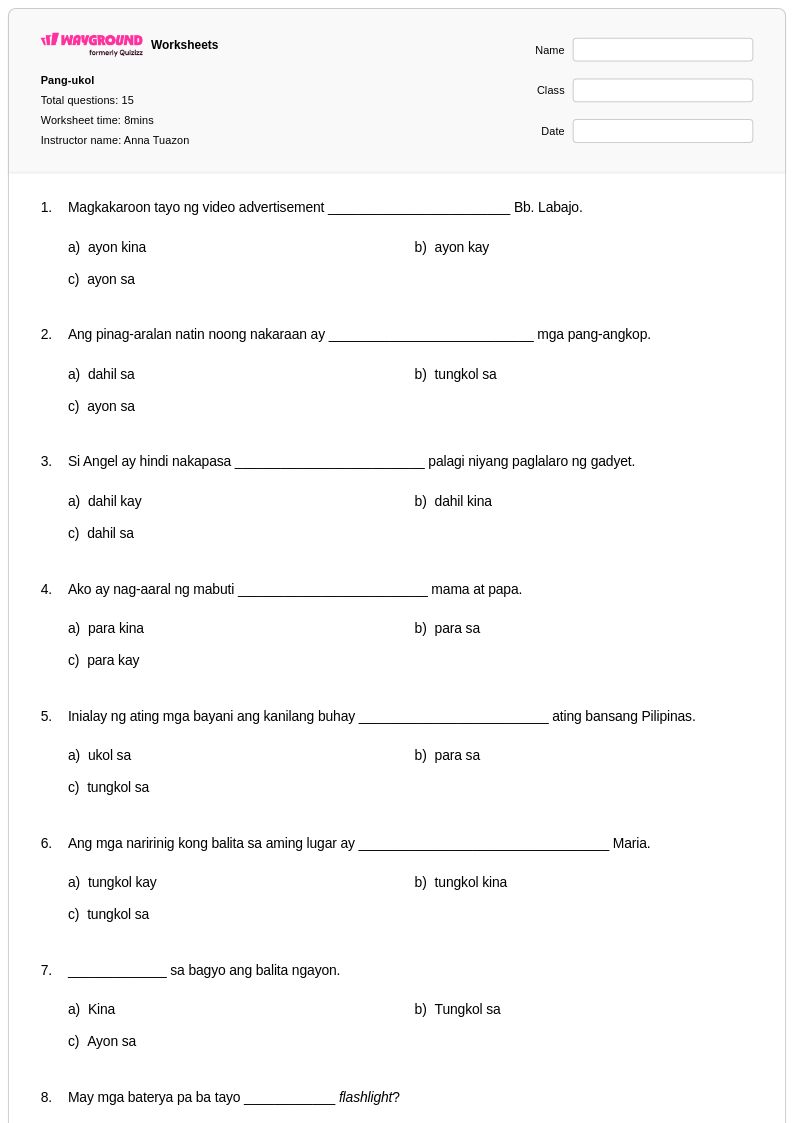
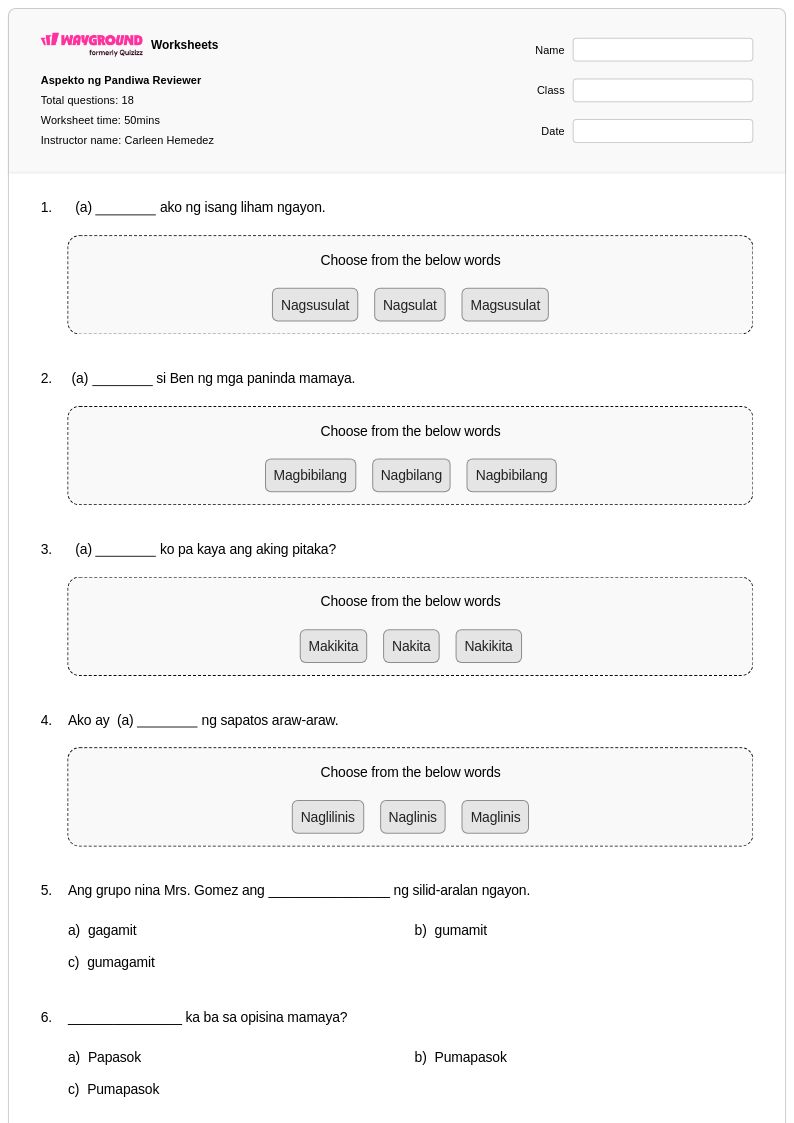
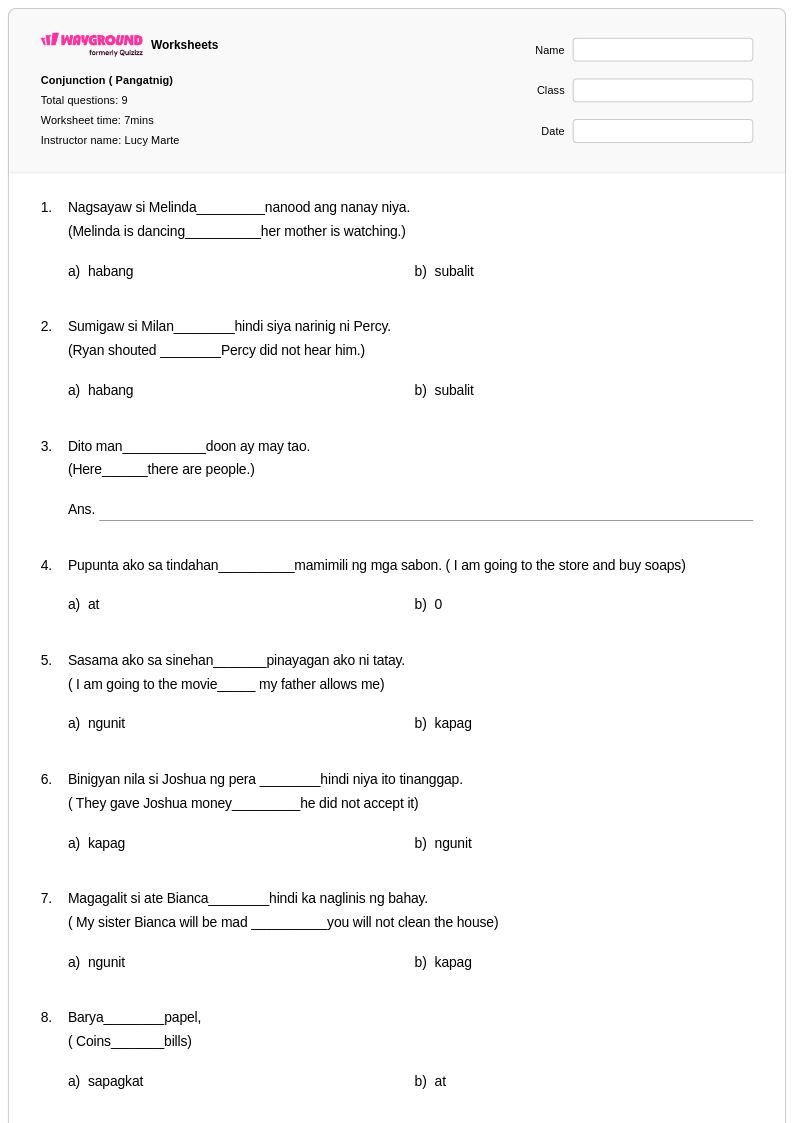
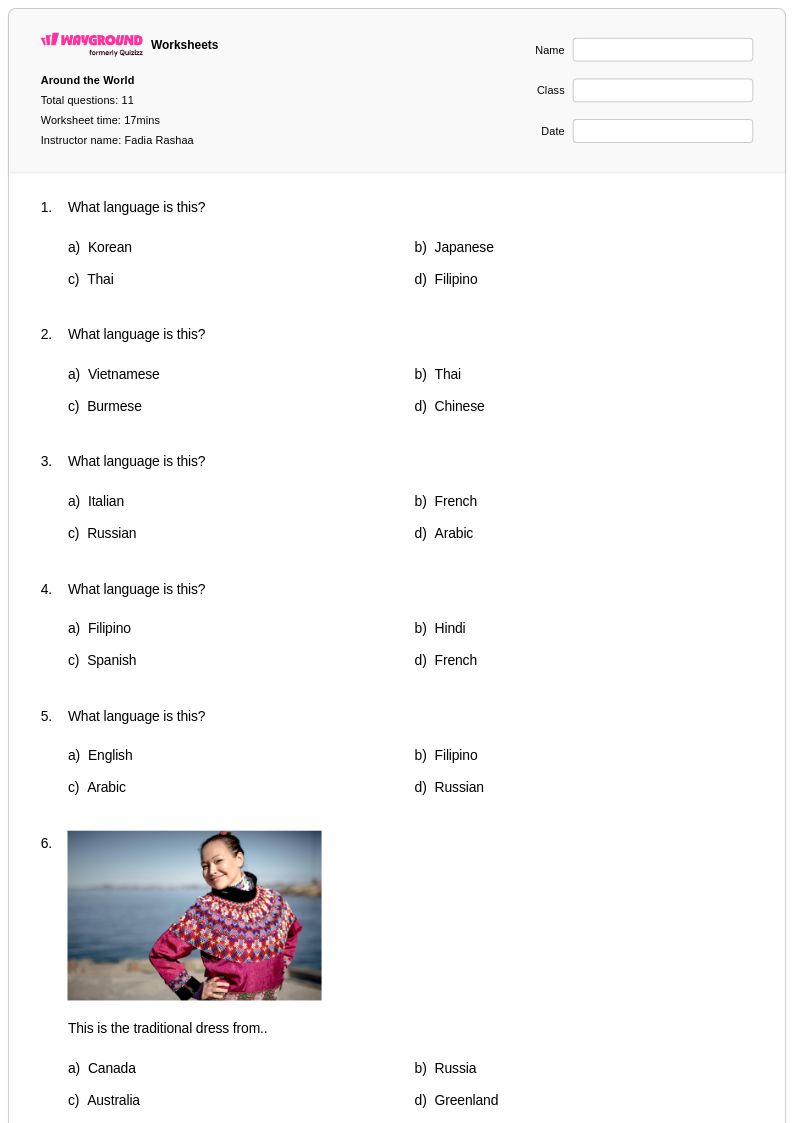
Explore our comprehensive collection of free Filipino language worksheets and printables that help students master vocabulary, grammar, and cultural concepts through engaging practice problems with complete answer keys.
Filipino language worksheets available through Wayground (formerly Quizizz) provide comprehensive practice materials that help students develop essential communication skills in one of the Philippines' official languages. These educational resources focus on building proficiency in Filipino vocabulary, grammar structures, reading comprehension, and writing mechanics through engaging practice problems that reinforce core linguistic concepts. Students work through carefully designed exercises that strengthen their understanding of Filipino sentence construction, verb conjugations, and cultural context, while teachers benefit from ready-to-use materials complete with answer keys. The collection includes free printable worksheets in convenient PDF format, allowing educators to seamlessly integrate Filipino language instruction into their curriculum while providing students with structured opportunities to practice and master this important world language.
Wayground (formerly Quizizz) supports educators with an extensive collection of teacher-created Filipino language resources, drawing from millions of worksheets developed by experienced language instructors worldwide. The platform's robust search and filtering capabilities enable teachers to quickly locate materials that align with specific learning objectives and student proficiency levels, while built-in differentiation tools allow for customized instruction that meets diverse classroom needs. These Filipino worksheets are available in both printable and digital formats, including downloadable PDFs, giving teachers the flexibility to adapt materials for various learning environments and teaching situations. The comprehensive resource library facilitates effective lesson planning and provides targeted support for remediation, enrichment, and ongoing skill practice, empowering educators to deliver high-quality Filipino language instruction that helps students achieve meaningful progress in their world language studies.
FAQs
How do I teach Filipino vocabulary to beginners?
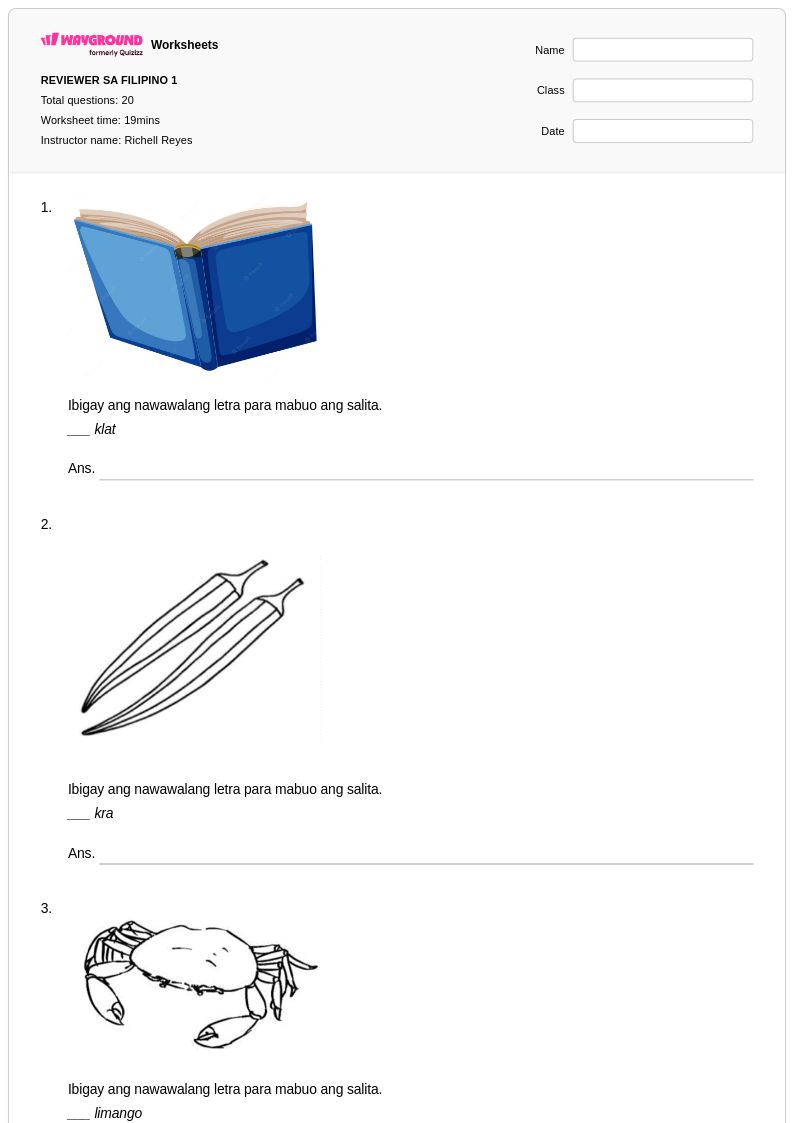
Start with high-frequency words grouped by category, such as family members, common objects, and everyday actions, so students build meaningful connections between words and context. Pair new vocabulary with visual cues and repetition-based exercises like matching, fill-in-the-blank, and sentence completion to reinforce retention. Consistently connecting new words to cultural context helps students understand not just meaning, but usage within Filipino-speaking communities.
What are the most effective exercises for practicing Filipino grammar?
Filipino grammar practice is most effective when it targets specific structures in isolation before integrating them into full sentences. Exercises focused on verb conjugations using the focus system (actor, object, locative, benefactive focus) help students grasp how Filipino marks grammatical relationships differently from English. Sentence transformation drills, error correction tasks, and guided writing prompts are all high-value formats for reinforcing these structures.
What mistakes do students commonly make when learning Filipino?
One of the most common errors is applying English sentence structure to Filipino, particularly defaulting to subject-verb-object order when Filipino typically follows a verb-initial pattern. Students also frequently confuse the focus affixes on verbs, such as using actor focus when object focus is required. Targeted practice with these specific structures, including exercises that explicitly contrast correct and incorrect forms, helps students identify and self-correct these patterns over time.
How can I differentiate Filipino language instruction for students at different proficiency levels?
For mixed-proficiency classrooms, differentiate by adjusting task complexity rather than topic, so all students engage with the same theme but at appropriate challenge levels. Beginning learners benefit from word-level tasks and sentence starters, while more advanced students can work on paragraph writing or reading comprehension. On Wayground, teachers can apply individual accommodations such as read aloud support, reduced answer choices, and extended time to specific students, ensuring each learner has equitable access to the material.
How do I use Filipino worksheets from Wayground in my classroom?
Filipino worksheets on Wayground are available as printable PDFs for traditional classroom use and in digital formats for technology-integrated learning environments. Teachers can also host worksheets as an interactive quiz directly on Wayground, making them suitable for in-class practice, homework assignments, or formative assessment. All worksheets include complete answer keys, so teachers can distribute materials and review results without additional preparation.
How do I incorporate Filipino cultural concepts into language lessons?
Cultural content is most effective when embedded directly into language exercises rather than taught as a separate unit. Use readings, vocabulary sets, and writing prompts that reference Filipino customs, traditions, and social values so students learn language and culture simultaneously. This approach builds cultural competency alongside linguistic proficiency, which is especially important for heritage learners and students preparing for real-world communication in Filipino-speaking contexts.