Free Printable Fingerprint Analysis Worksheets for Class 10
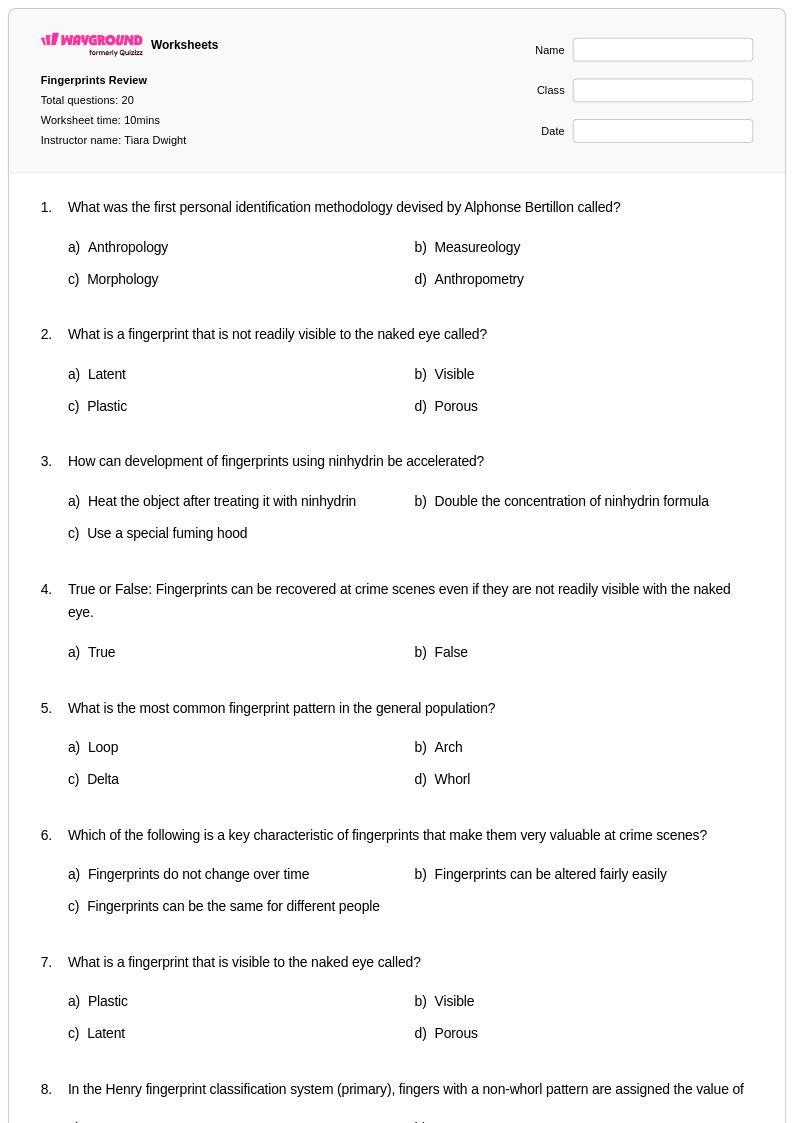
Class 10 fingerprint analysis worksheets from Wayground help students master forensic identification techniques through engaging printables, practice problems, and comprehensive answer keys for effective science learning.
Explore printable Fingerprint Analysis worksheets for Class 10
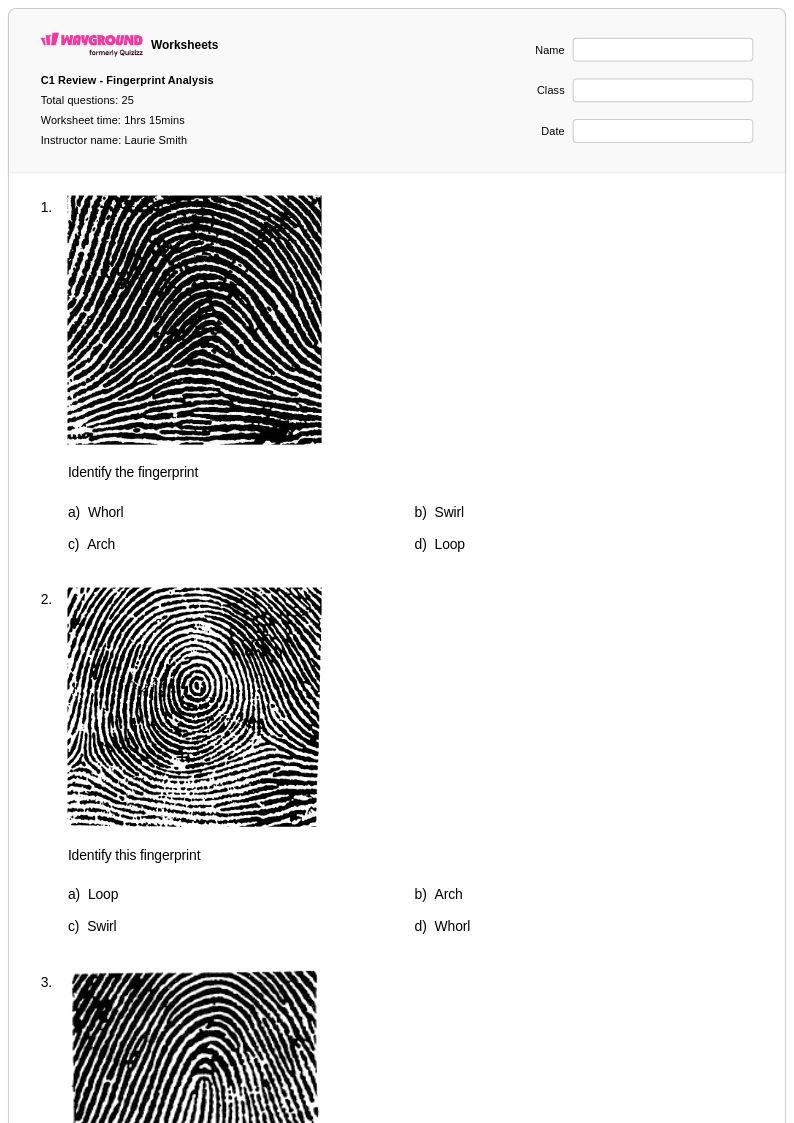
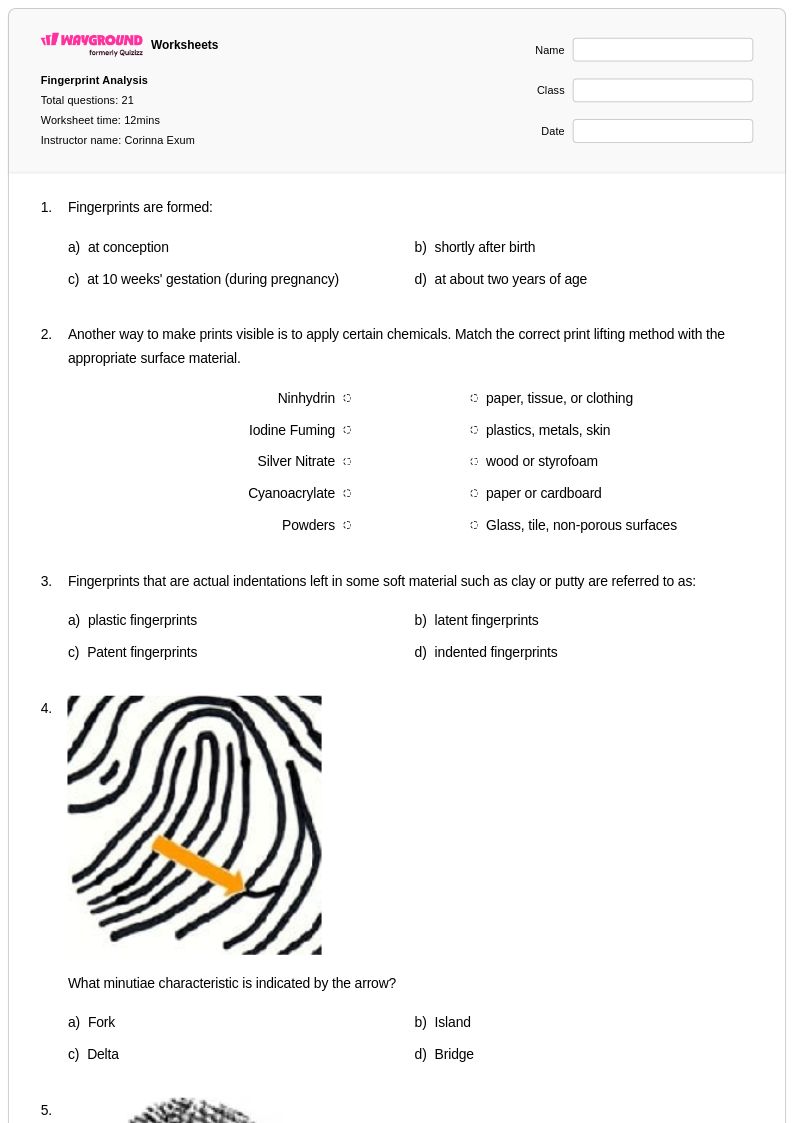
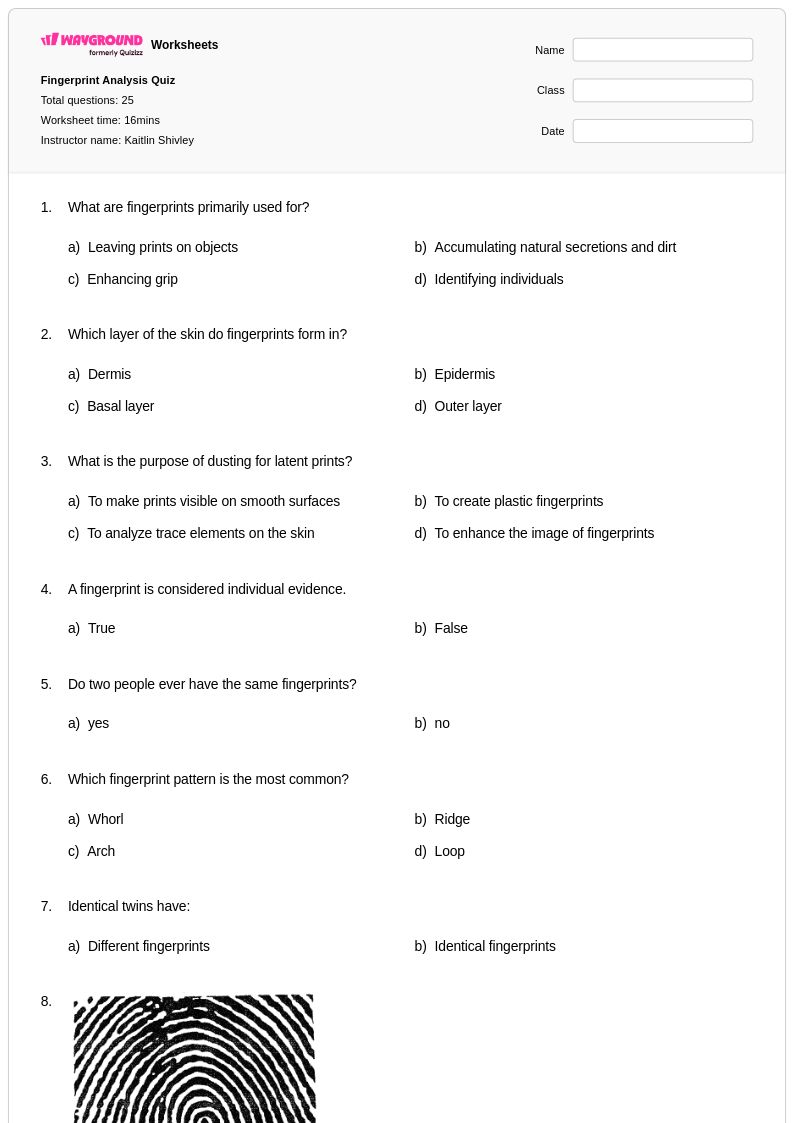
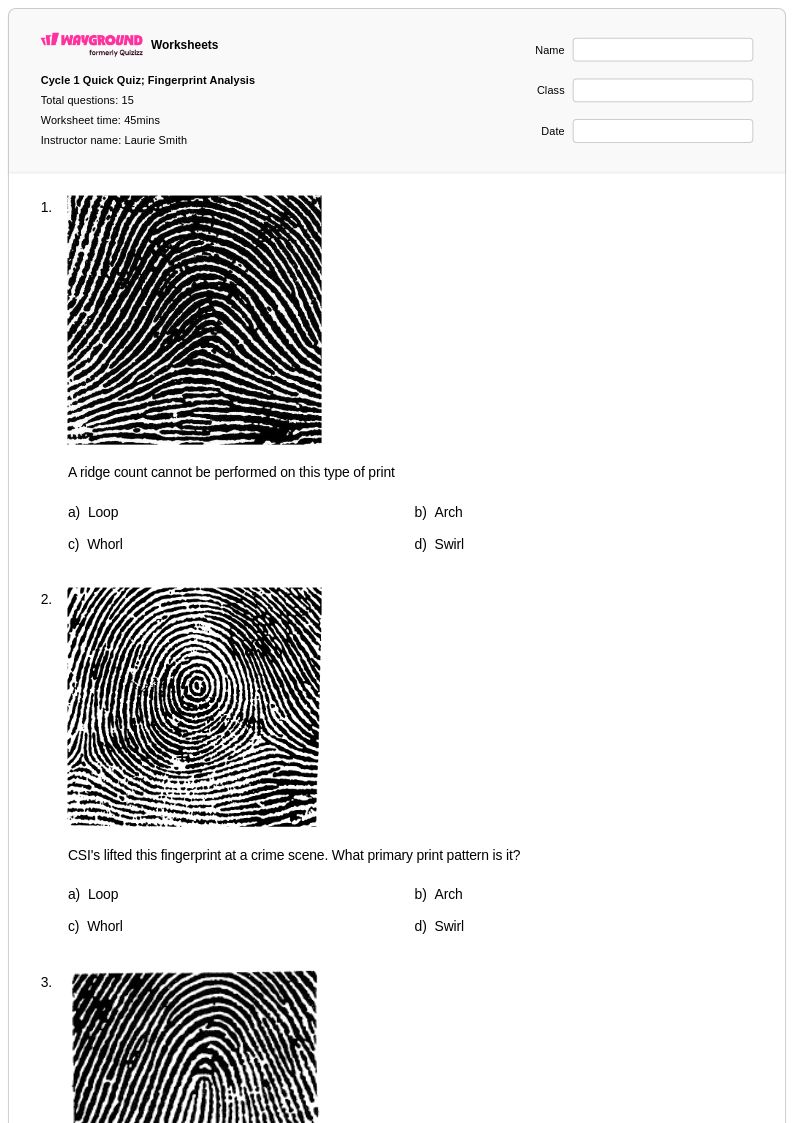
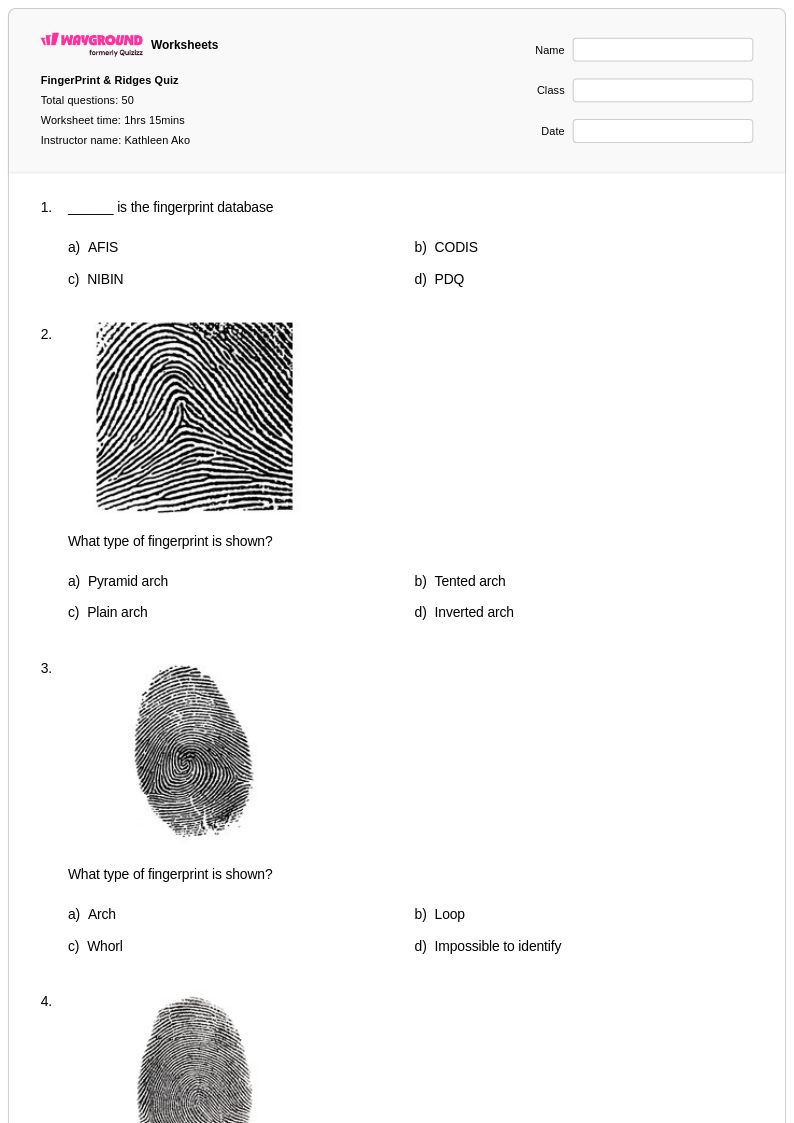
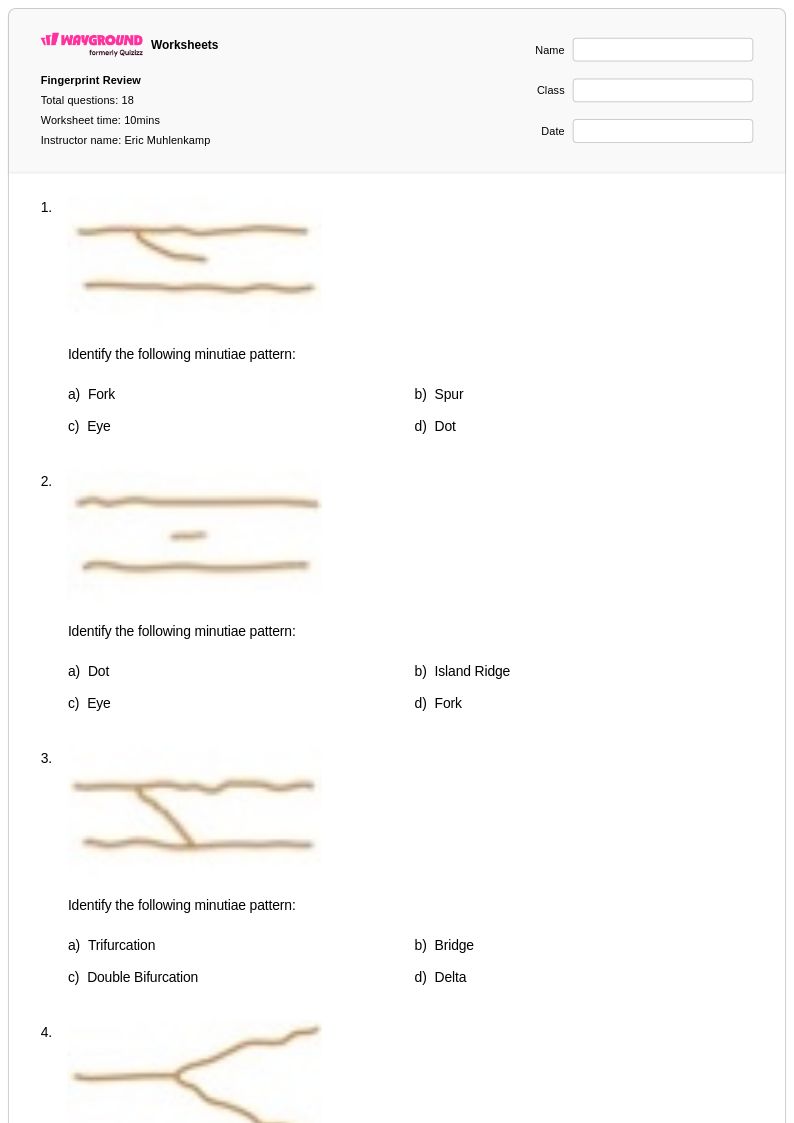
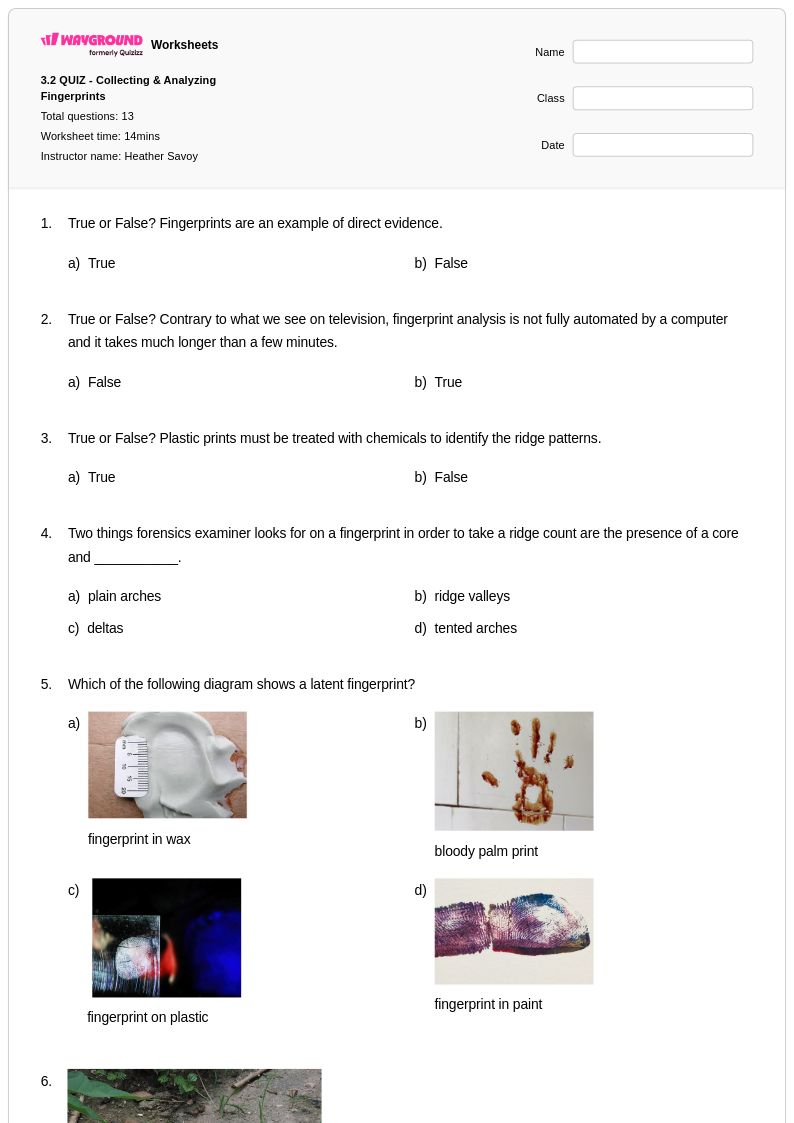
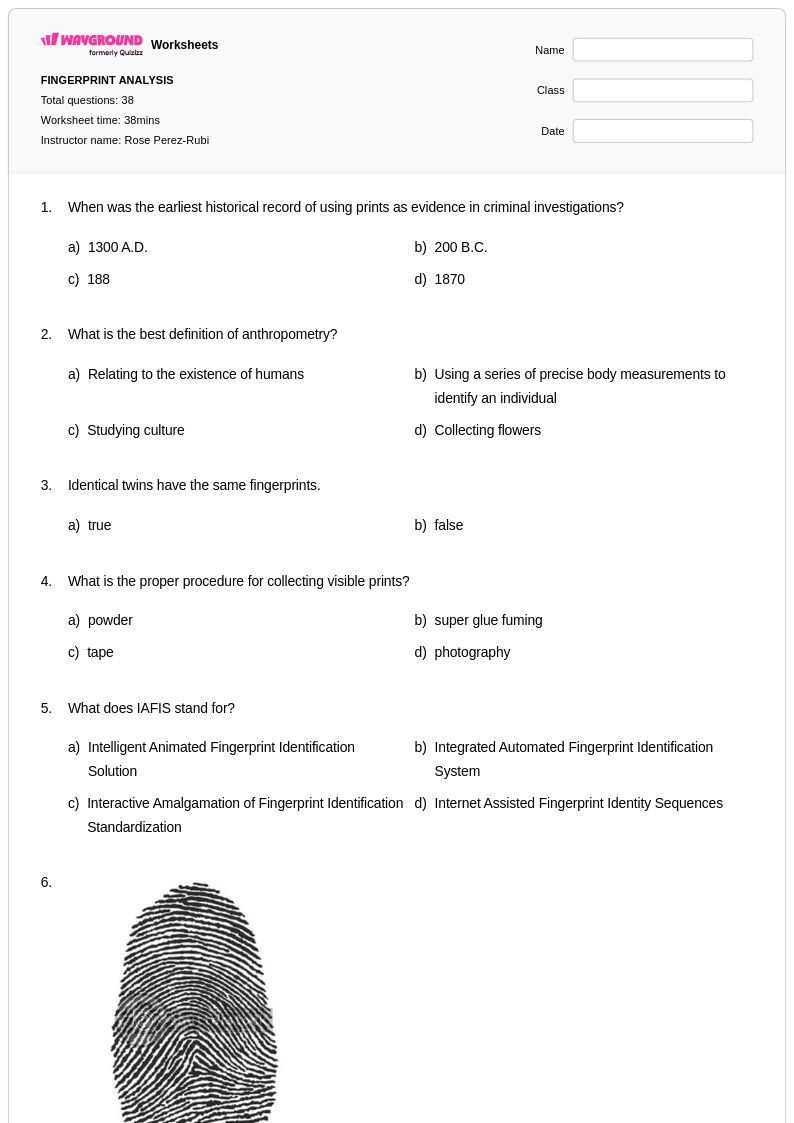
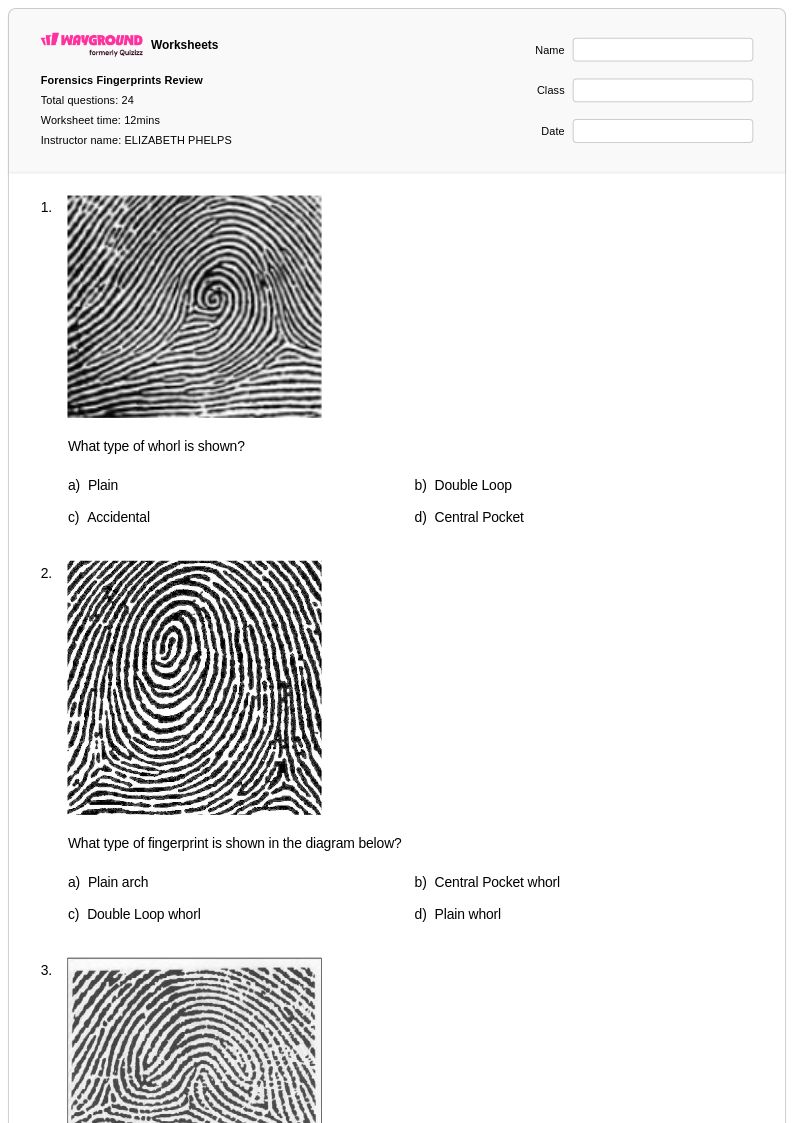
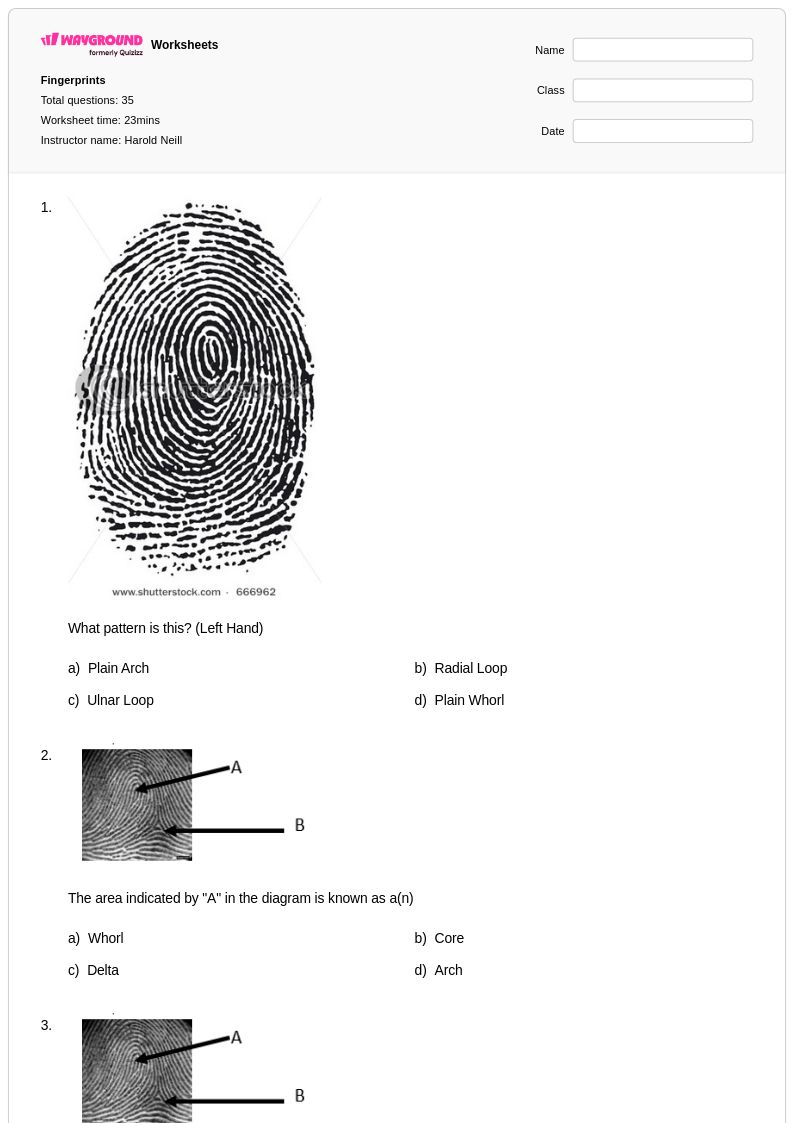
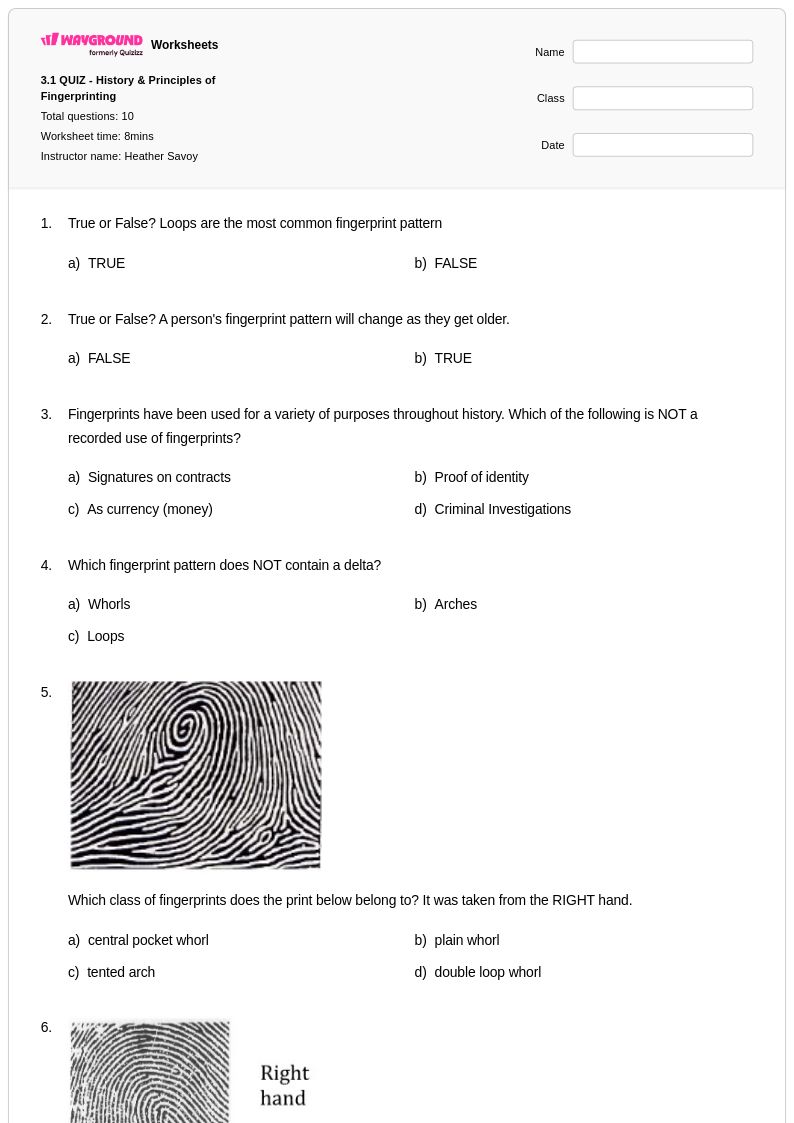
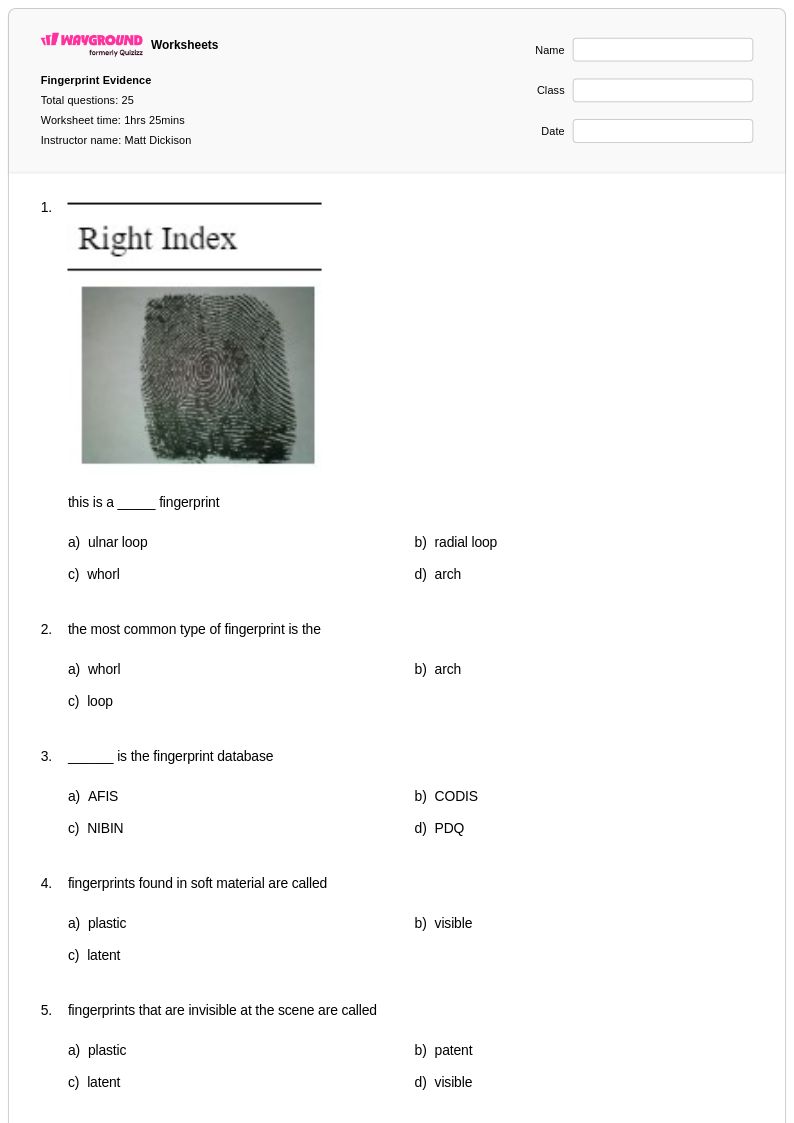
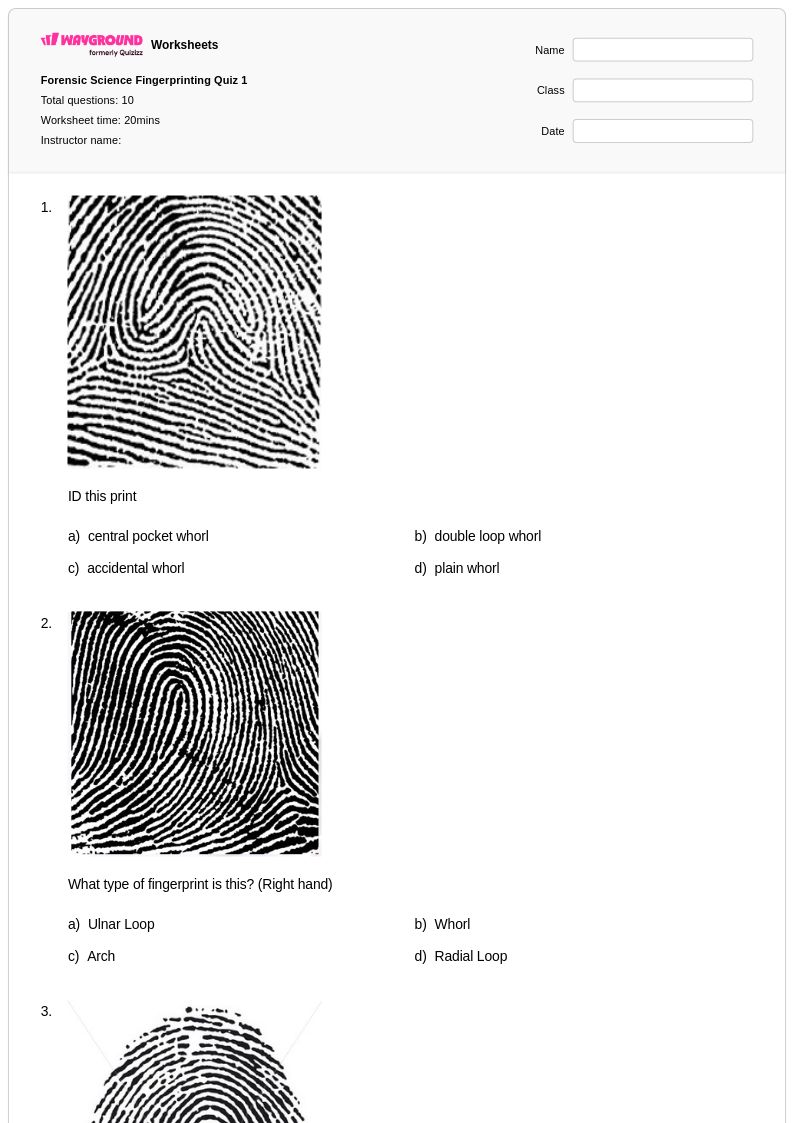
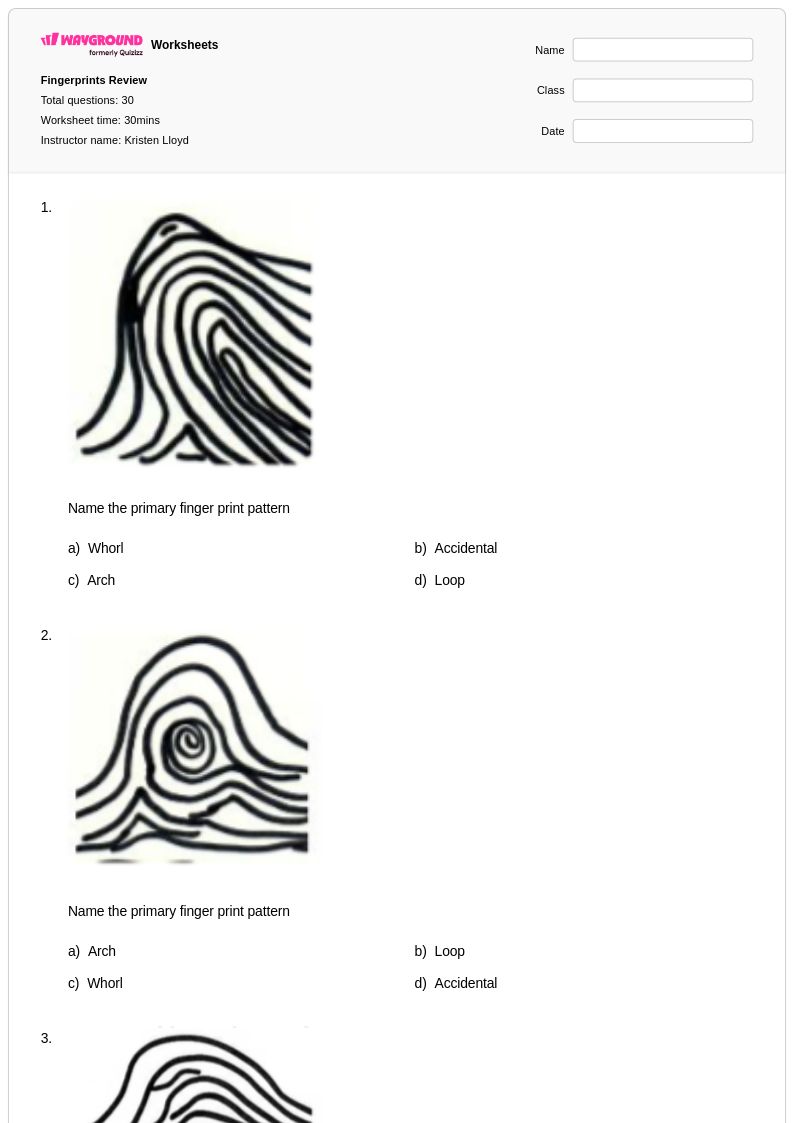
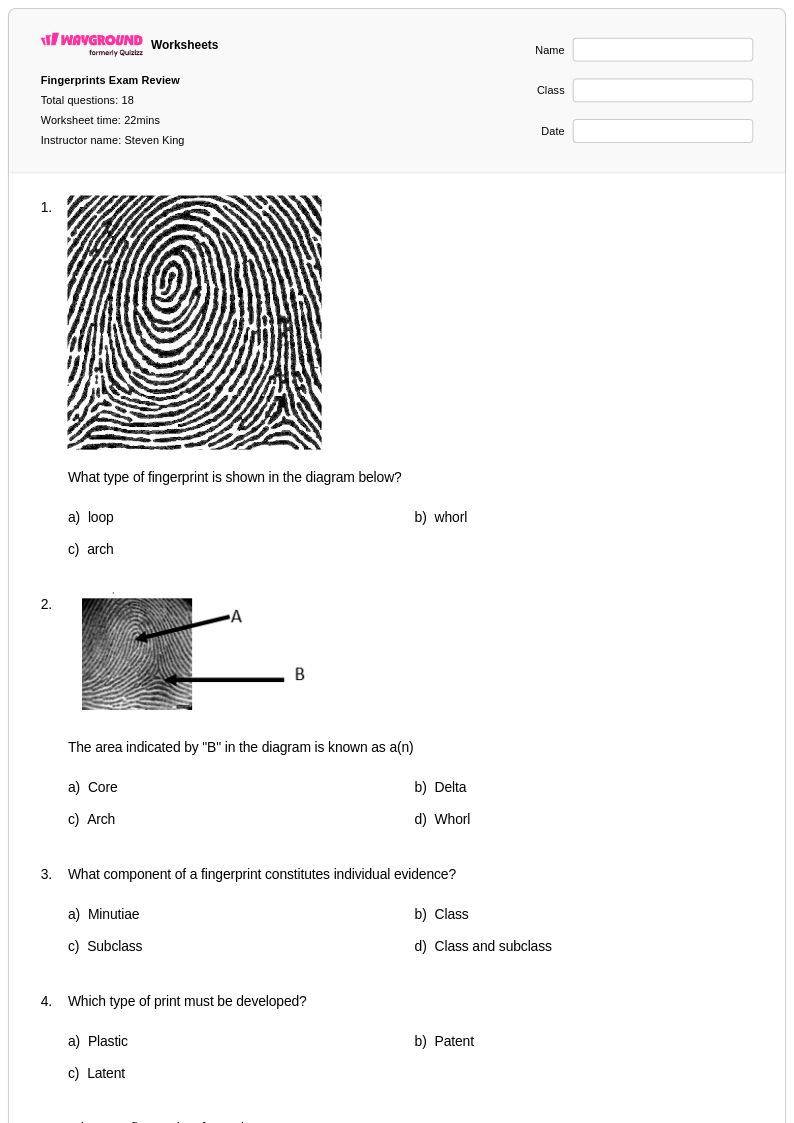
Fingerprint analysis worksheets for Class 10 students available through Wayground (formerly Quizizz) provide comprehensive practice in the fundamental techniques of forensic identification. These educational resources guide students through the systematic study of ridge patterns, minutiae points, and classification systems that form the backbone of modern fingerprint analysis. Students develop critical observation skills while learning to identify loops, whorls, and arches, examine bifurcations and ridge endings, and understand the scientific principles that make fingerprints unique to each individual. The worksheets include detailed practice problems that challenge students to analyze actual fingerprint samples, compare partial prints to complete sets, and document their findings using proper forensic terminology. Answer keys accompany these printable resources, allowing students to verify their analytical work and understand the reasoning behind correct identifications, while free pdf formats ensure easy classroom distribution and independent study.
Wayground (formerly Quizizz) supports science educators with an extensive collection of teacher-created fingerprint analysis worksheets, drawing from millions of forensic science resources developed by experienced instructors. The platform's advanced search and filtering capabilities enable teachers to locate materials that align with specific curriculum standards and learning objectives for Class 10 forensic science courses. Differentiation tools allow educators to modify worksheet complexity and content focus, accommodating diverse learning needs while maintaining rigorous academic standards. These customizable resources are available in both printable and digital formats, including downloadable pdf versions that facilitate flexible classroom implementation. Teachers utilize these materials for initial skill instruction, targeted remediation of analytical weaknesses, enrichment activities for advanced students, and regular practice sessions that build confidence in forensic observation and documentation techniques essential for understanding criminal investigation procedures.
FAQs
How do I teach fingerprint analysis in a forensic science class?
Start by introducing the three primary ridge pattern types: loops, whorls, and arches, which account for the classification system used by professional forensic examiners. From there, move students into minutiae identification, where they learn to locate specific ridge characteristics such as bifurcations, ridge endings, and dots within a print. Hands-on comparison activities, where students match sample prints to a reference set, help bridge the gap between conceptual understanding and practical application. Scaffolding instruction from pattern classification toward evidence documentation mirrors the real-world workflow of forensic analysis.
What exercises help students practice fingerprint analysis skills?
The most effective practice exercises require students to classify fingerprint samples by ridge pattern type, identify and label specific minutiae on printed exemplars, and compare two prints to determine whether they share a common source. Simulated case file activities, where students document their findings using proper forensic terminology, build both analytical and technical writing skills. Practice problems that increase in complexity, moving from clear, high-quality prints to degraded or partial samples, prepare students for realistic forensic scenarios.
What mistakes do students commonly make when learning fingerprint analysis?
One of the most common errors is misclassifying ridge patterns, particularly confusing tented arches with loops, since both feature a single delta and an upward thrust but are structurally distinct. Students also tend to overcount or undercount minutiae when making comparisons, which affects the reliability of their match conclusions. Another frequent mistake is failing to account for distortion caused by pressure or surface type, leading students to incorrectly rule out a match between two prints from the same finger. Explicit instruction on these error patterns, paired with comparison exercises that include deliberate distractors, helps students develop more disciplined analytical habits.
How can I differentiate fingerprint analysis instruction for students at different skill levels?
For students new to forensic science, begin with clean, high-contrast print samples and limit classification tasks to the three primary pattern types before introducing minutiae. Advanced learners can be challenged with partial prints, latent print enhancement scenarios, or multi-print comparison sets that require them to apply the same frameworks used by professional examiners. On Wayground, teachers can apply accommodations at the individual student level, including reduced answer choices to lower cognitive load for struggling learners and read-aloud support for students who need it, without other students being notified of those adjustments.
How do I use Wayground's fingerprint analysis worksheets in my classroom?
Wayground's fingerprint analysis worksheets are available as printable PDFs for traditional classroom use and in digital formats for technology-integrated environments, giving teachers flexibility depending on their setup. Digital versions can also be hosted as a quiz directly on Wayground, allowing for streamlined assignment and review. Each worksheet includes a complete answer key, supporting both teacher-led instruction and independent student self-assessment. The collection spans introductory to advanced material, so the same platform can serve students who are encountering forensic science for the first time and those ready for more complex analytical challenges.
What forensic science standards does fingerprint analysis instruction typically align with?
Fingerprint analysis instruction typically aligns with forensic science standards related to physical evidence collection, pattern analysis, and scientific reasoning, often situated within broader STEM or CTE (Career and Technical Education) pathways. Curriculum frameworks commonly expect students to demonstrate the ability to classify evidence, apply systematic comparison methods, and communicate findings using discipline-specific vocabulary. Teachers should cross-reference their specific state or district forensic science standards, as fingerprint analysis may be embedded within a broader course on criminal investigation, biology, or applied science.