Free Printable First and Third Person Point of View Worksheets for Class 7
Enhance Class 7 students' understanding of first and third person point of view with Wayground's comprehensive collection of free worksheets, printables, and practice problems featuring detailed answer keys for mastering narrative perspectives.
Explore printable First and Third Person Point of View worksheets for Class 7
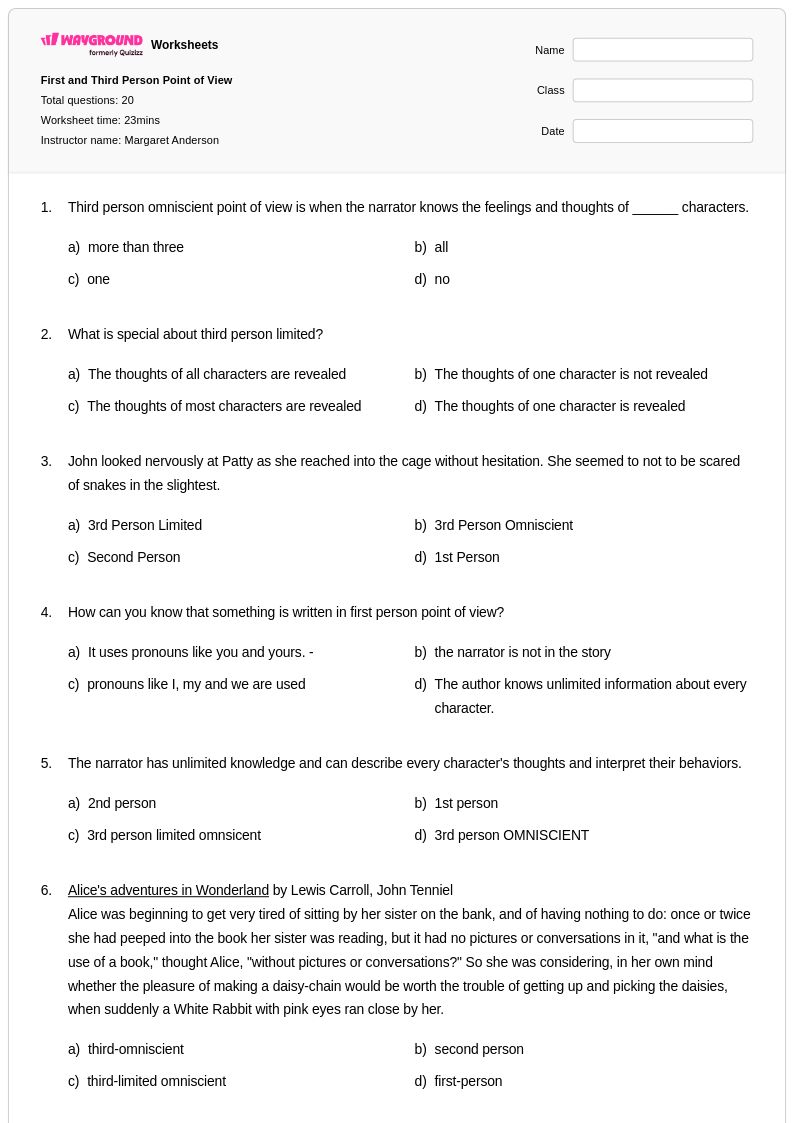
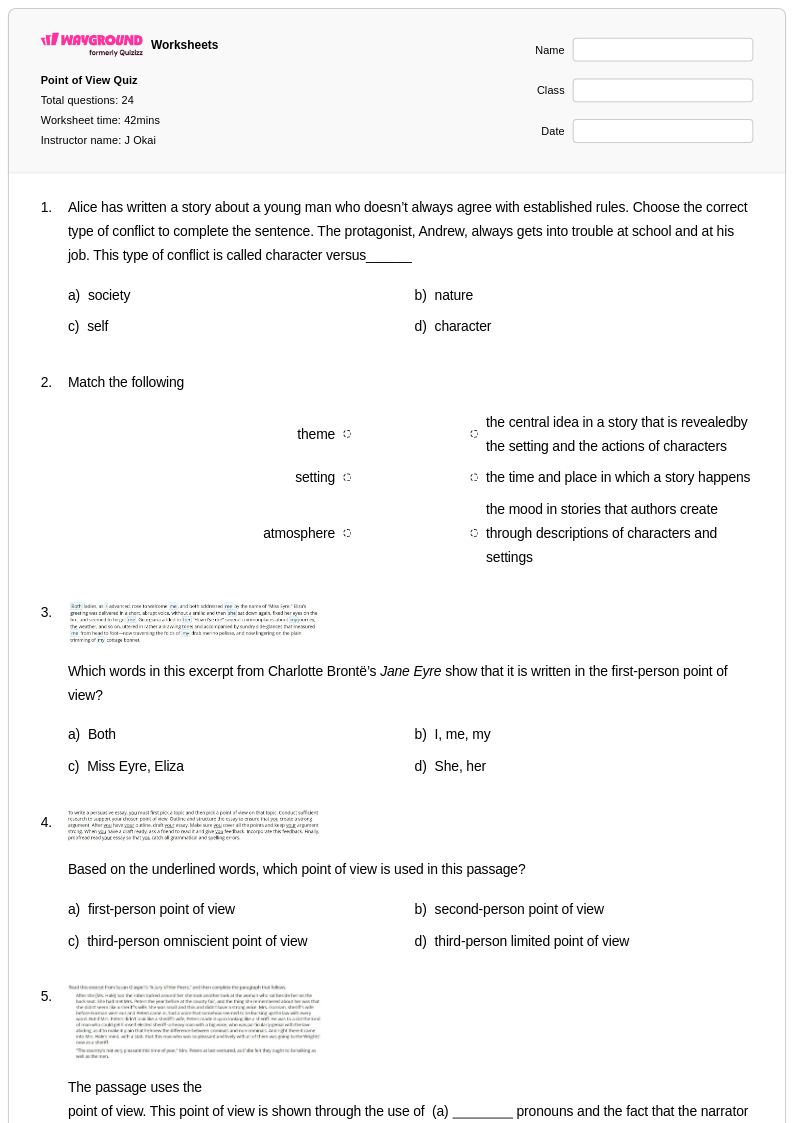
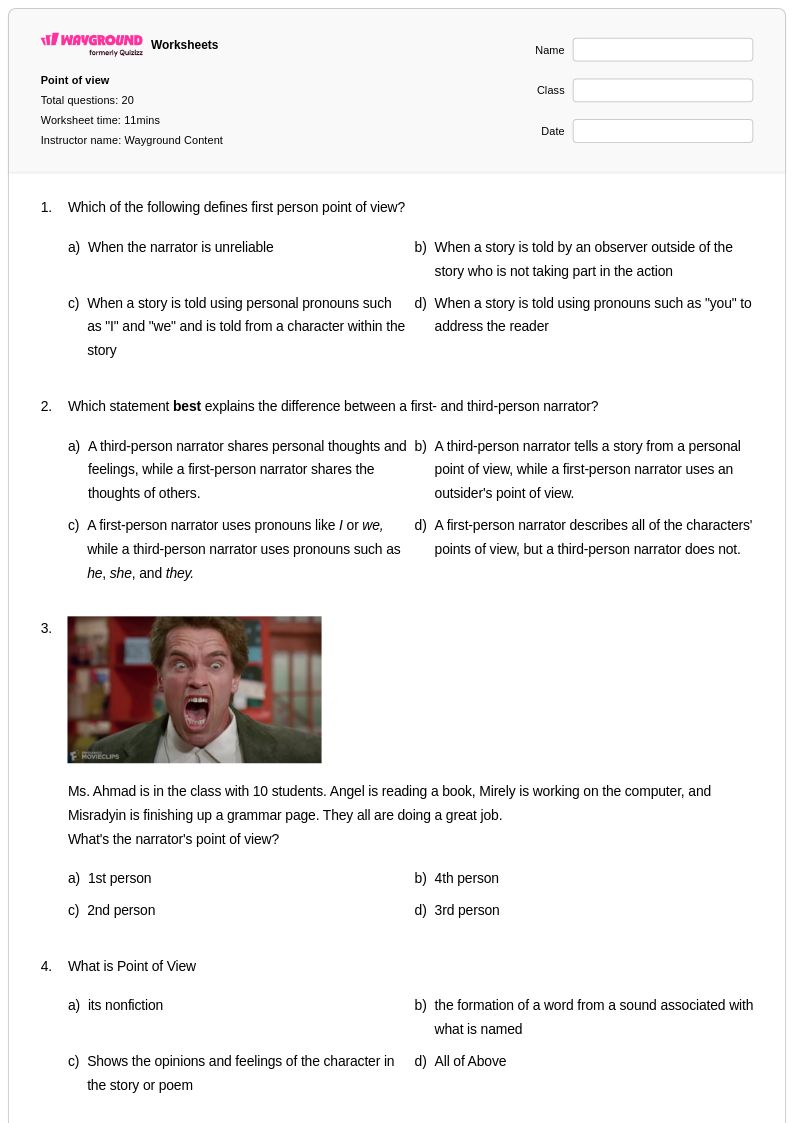
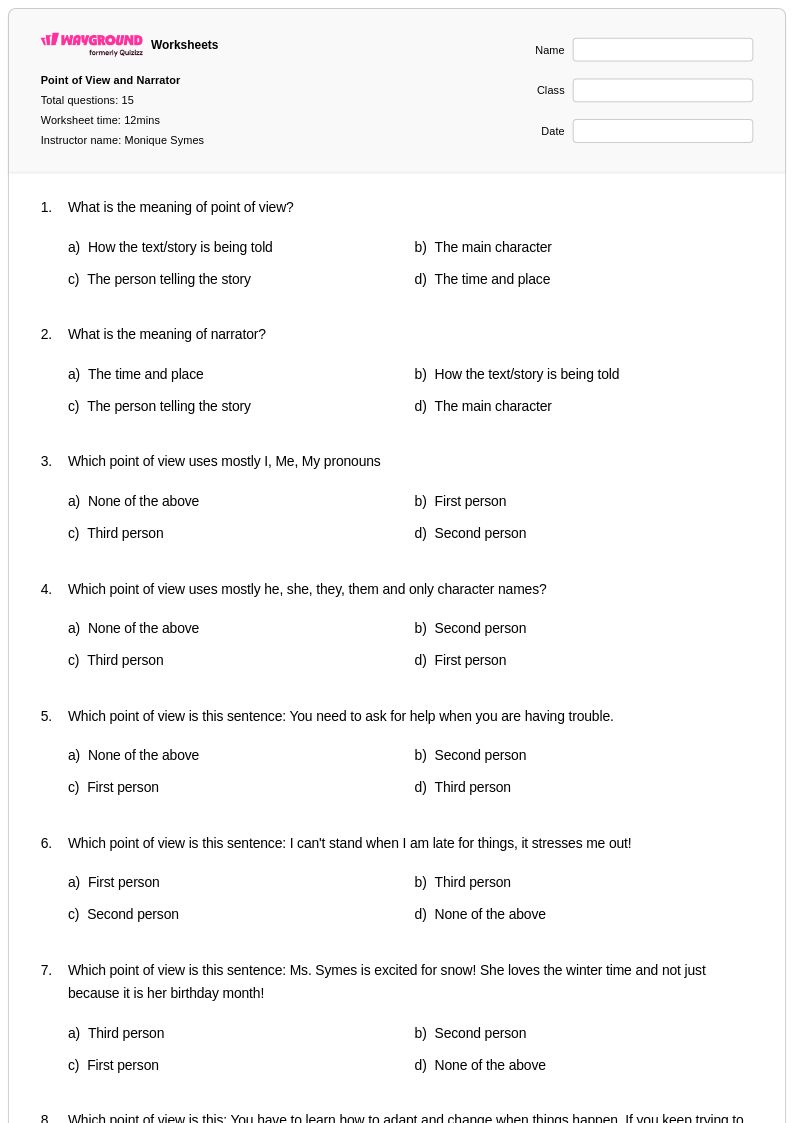
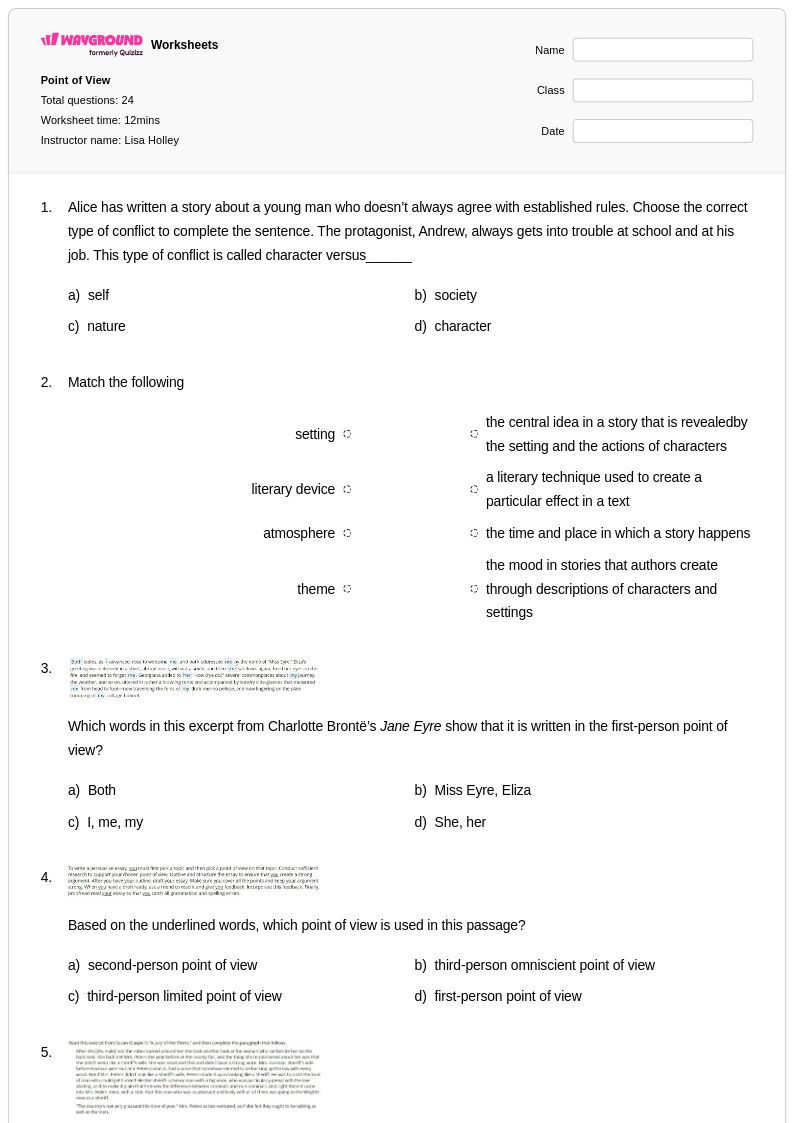
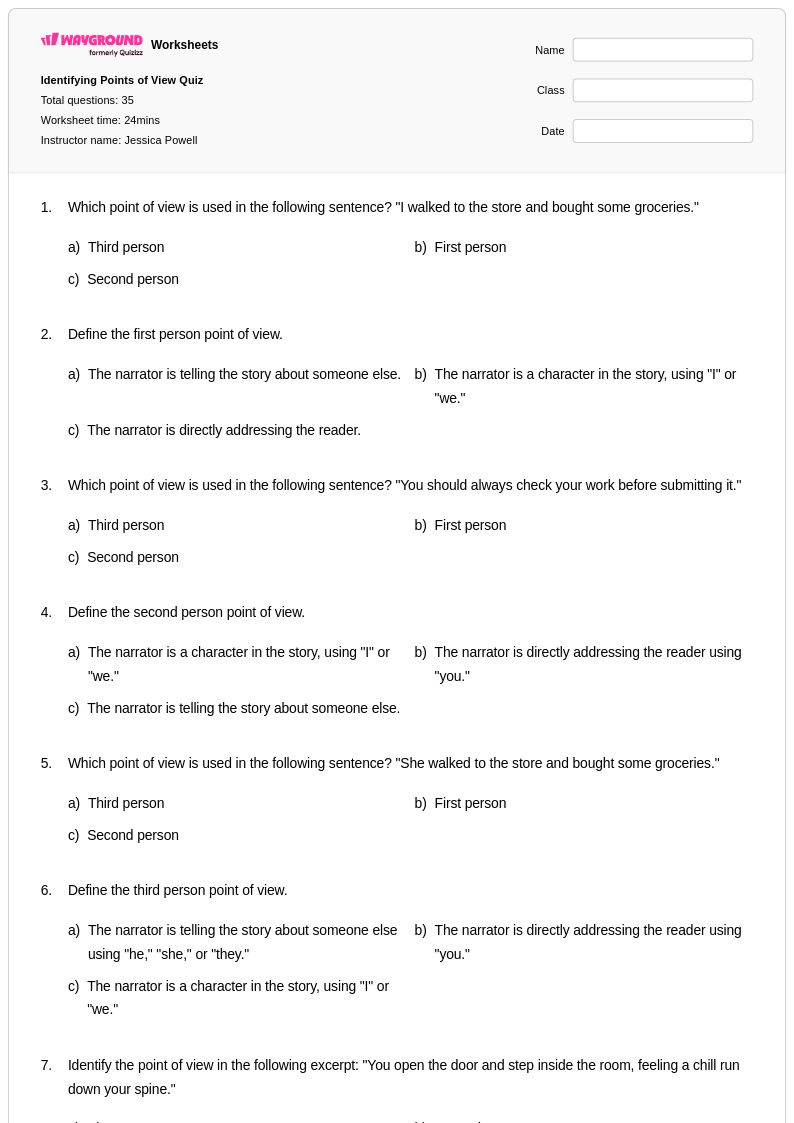
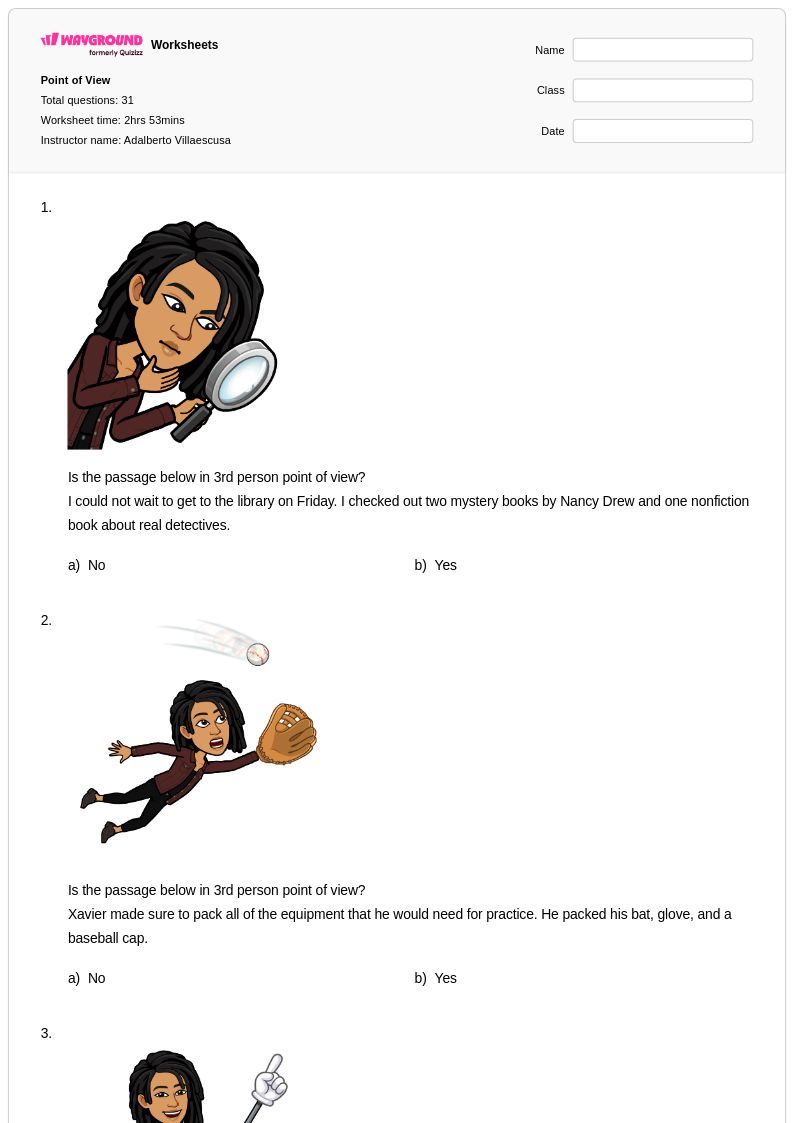
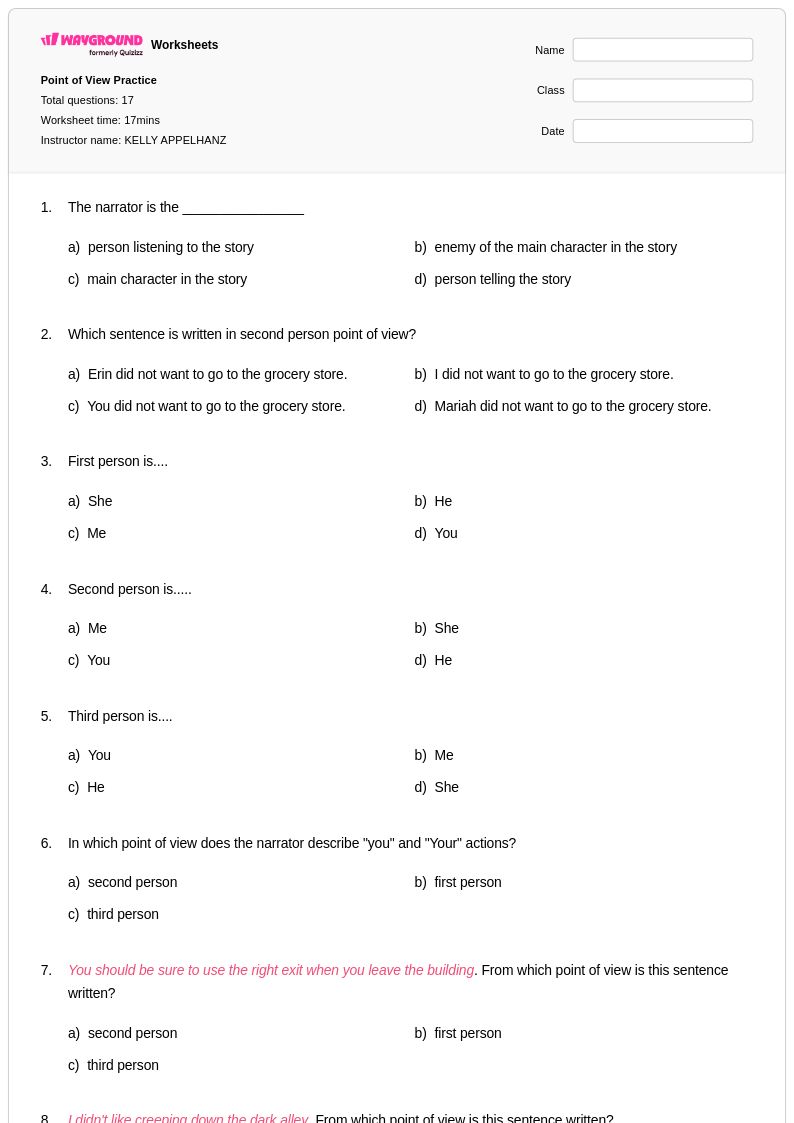
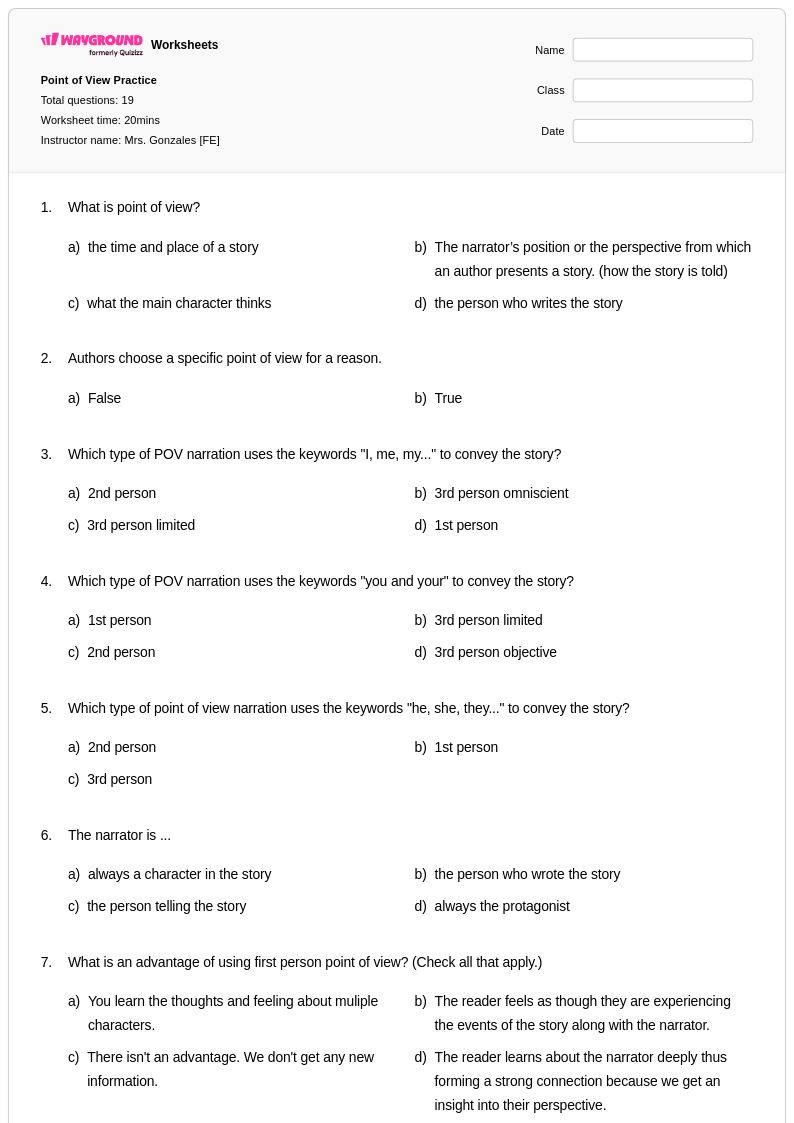
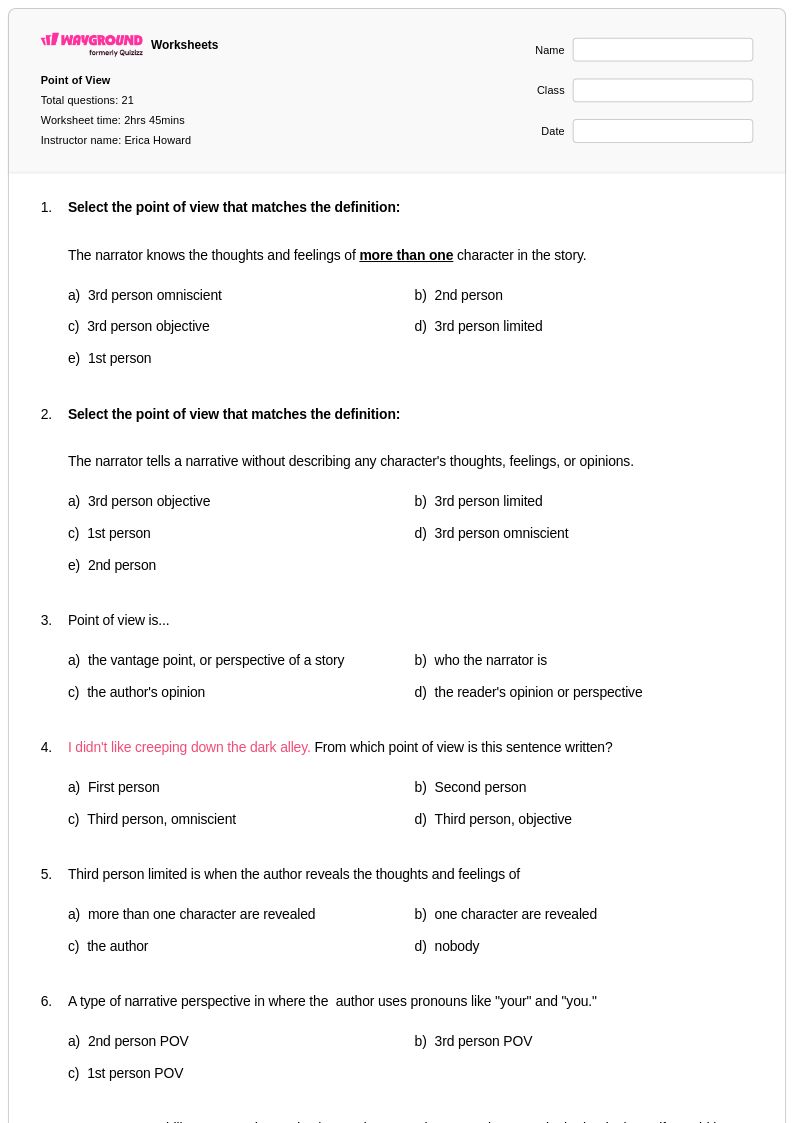
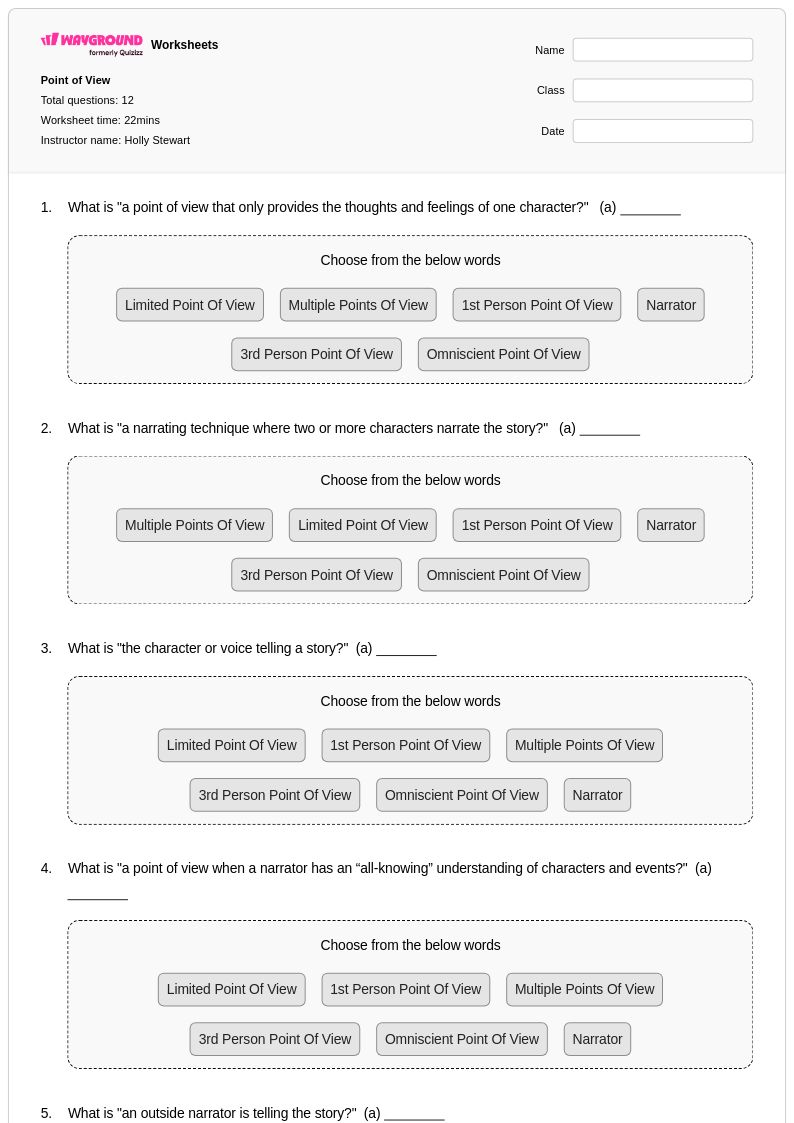
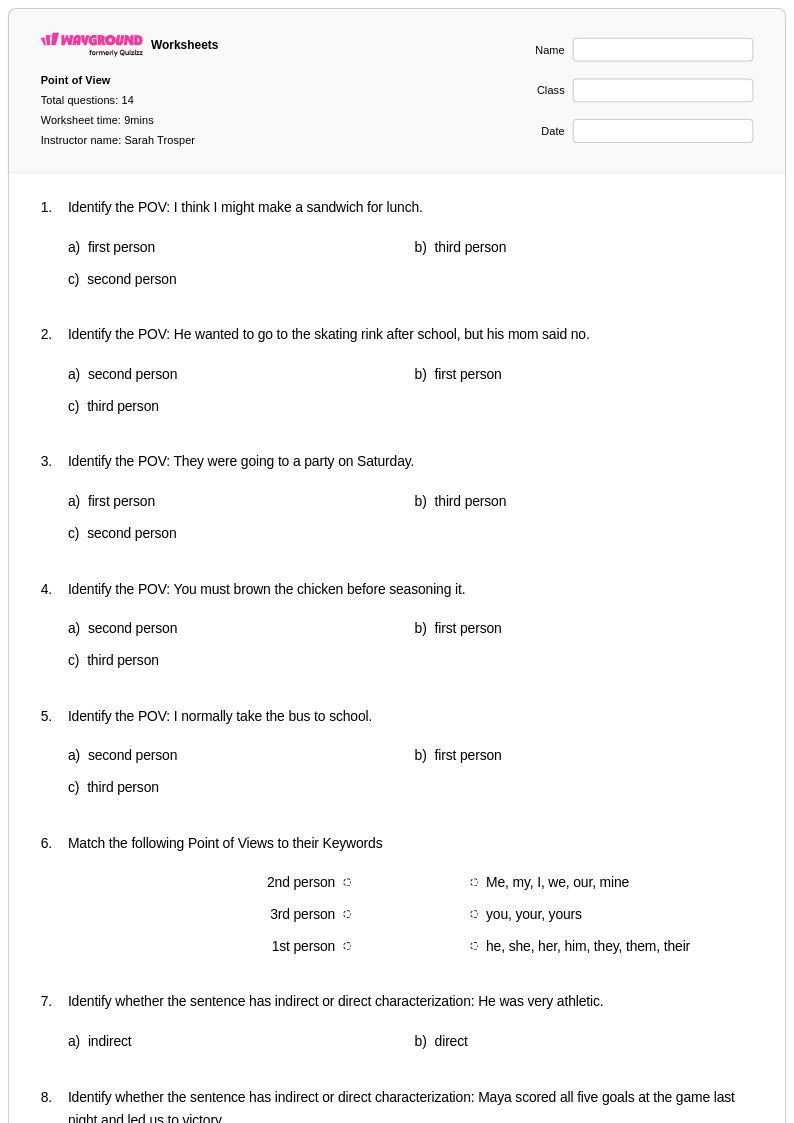
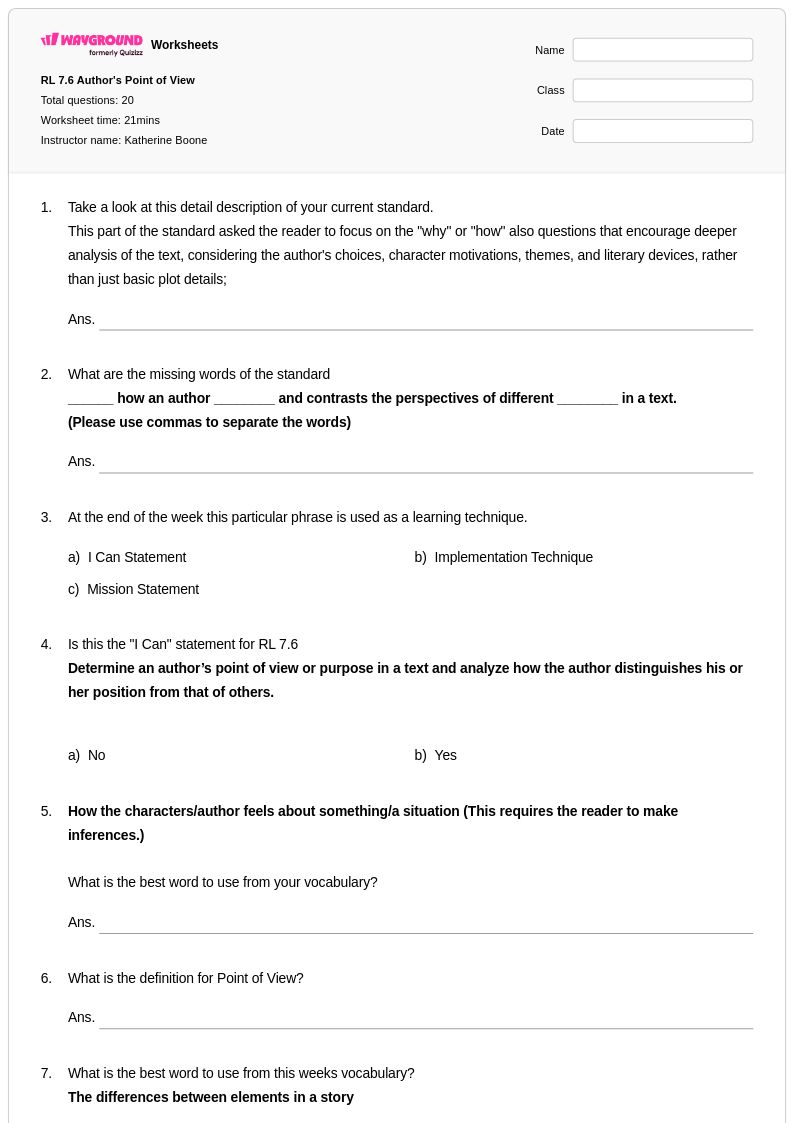
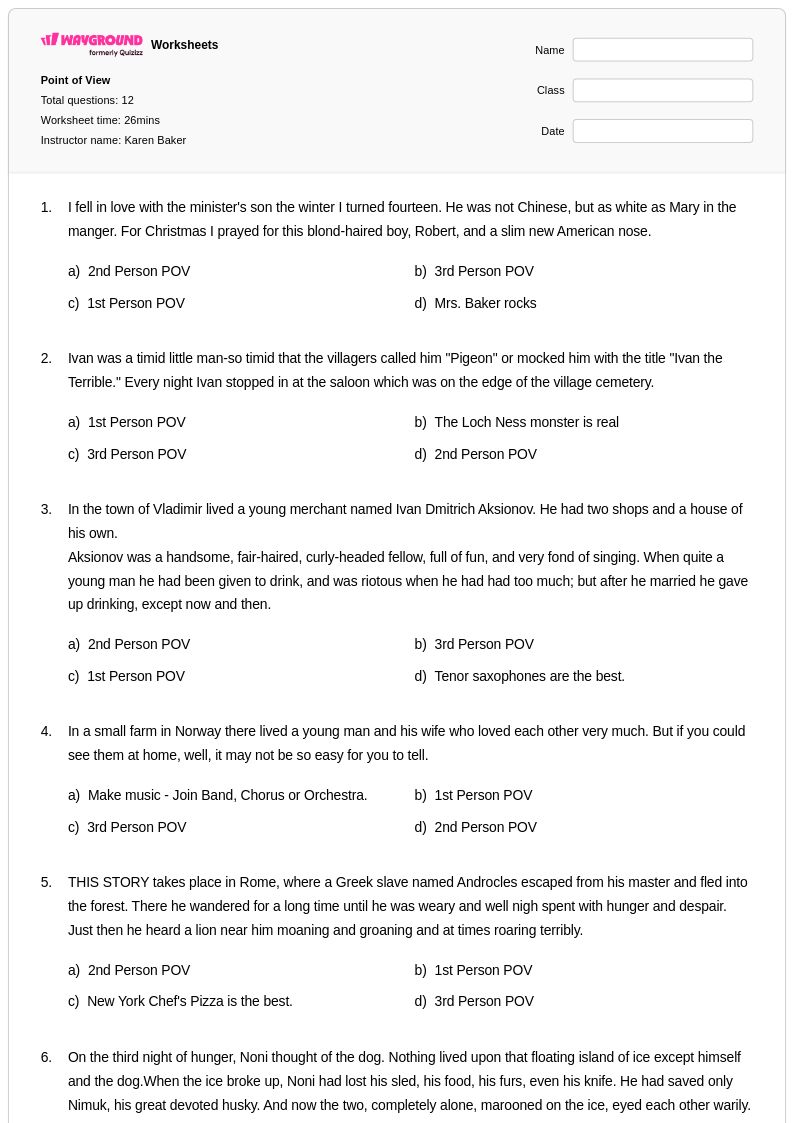
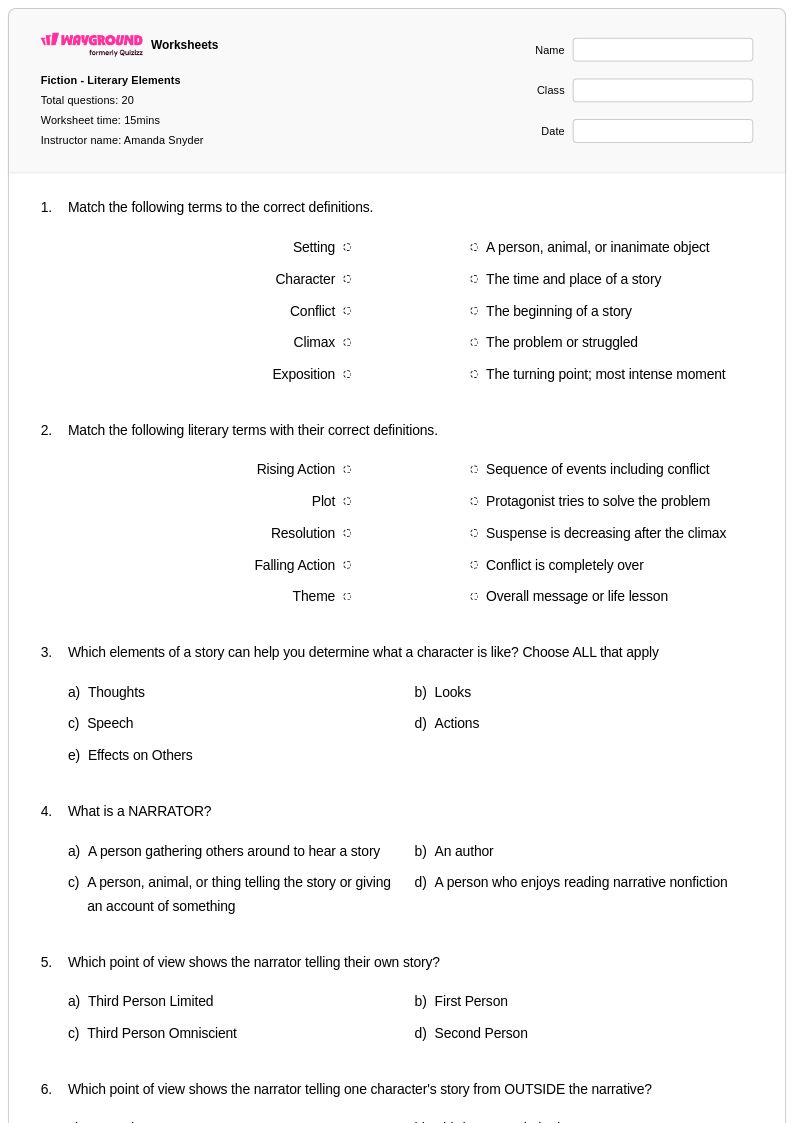
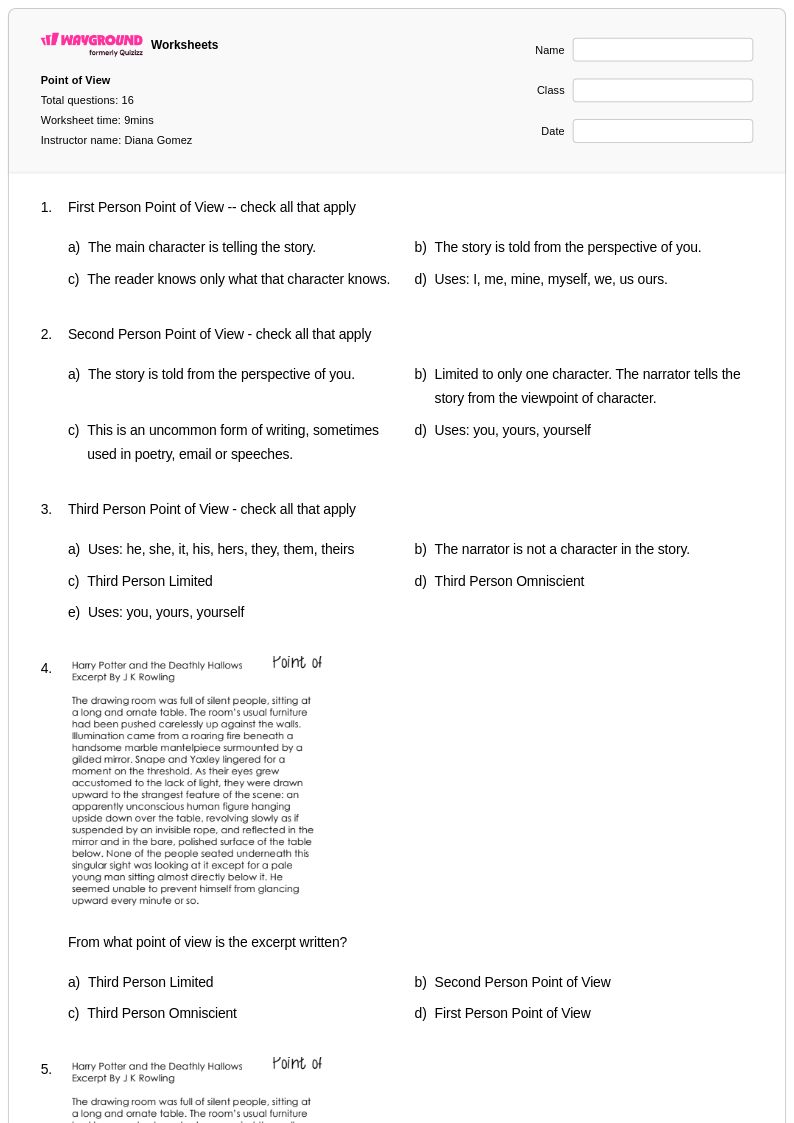
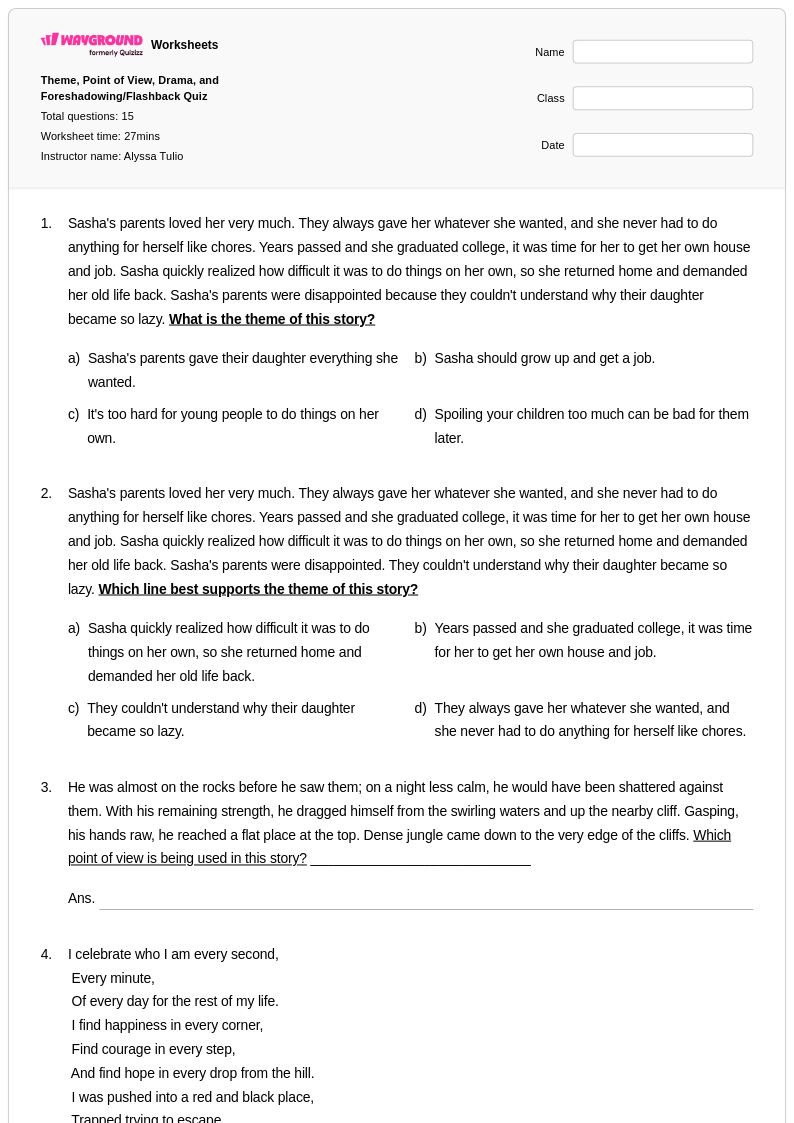
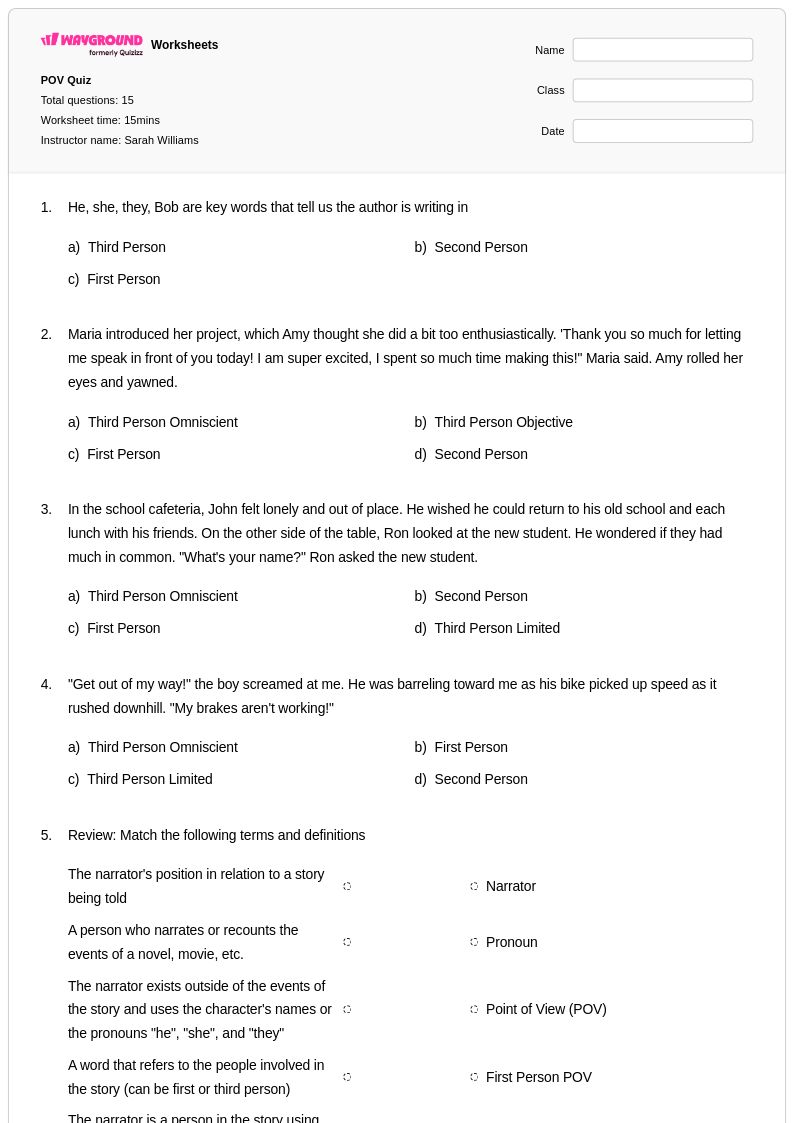
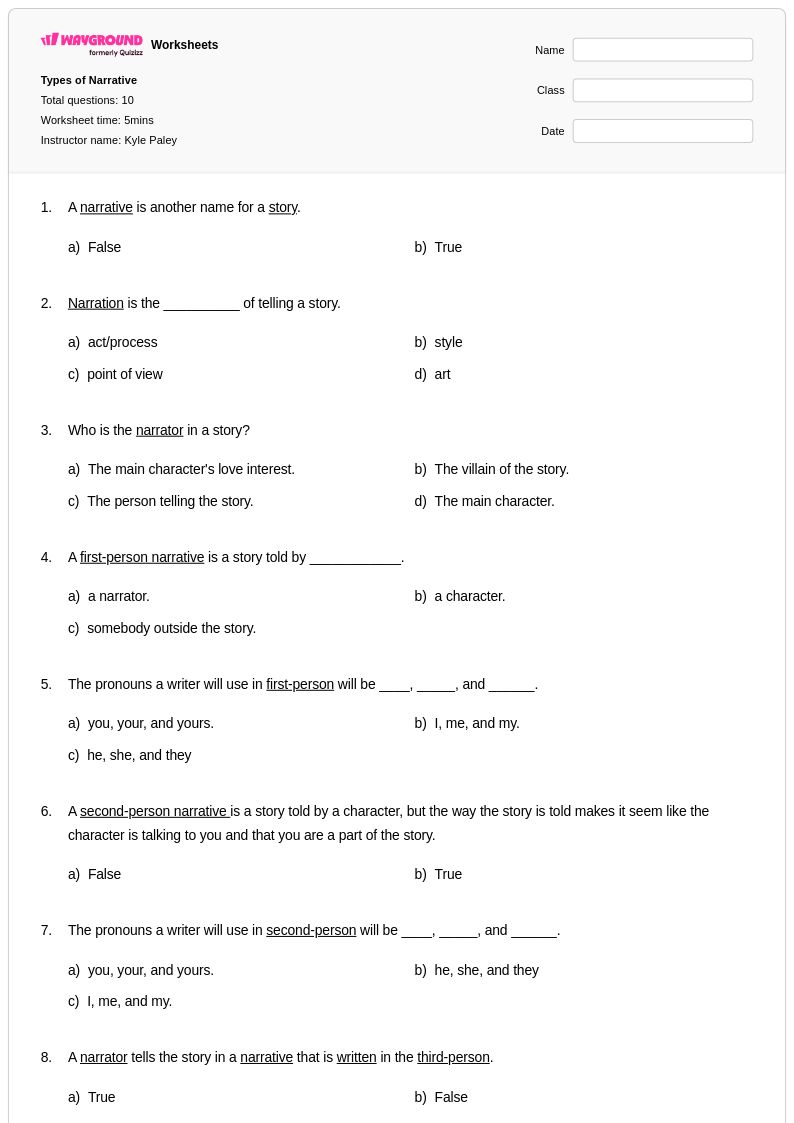
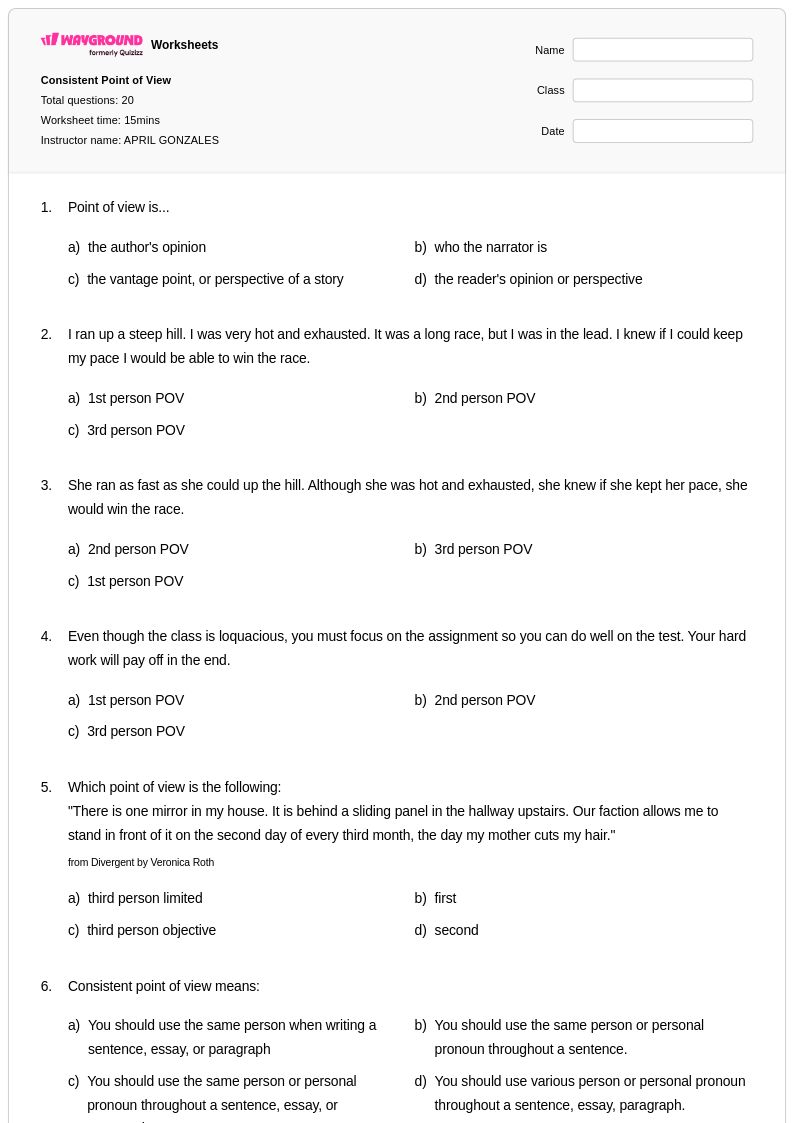
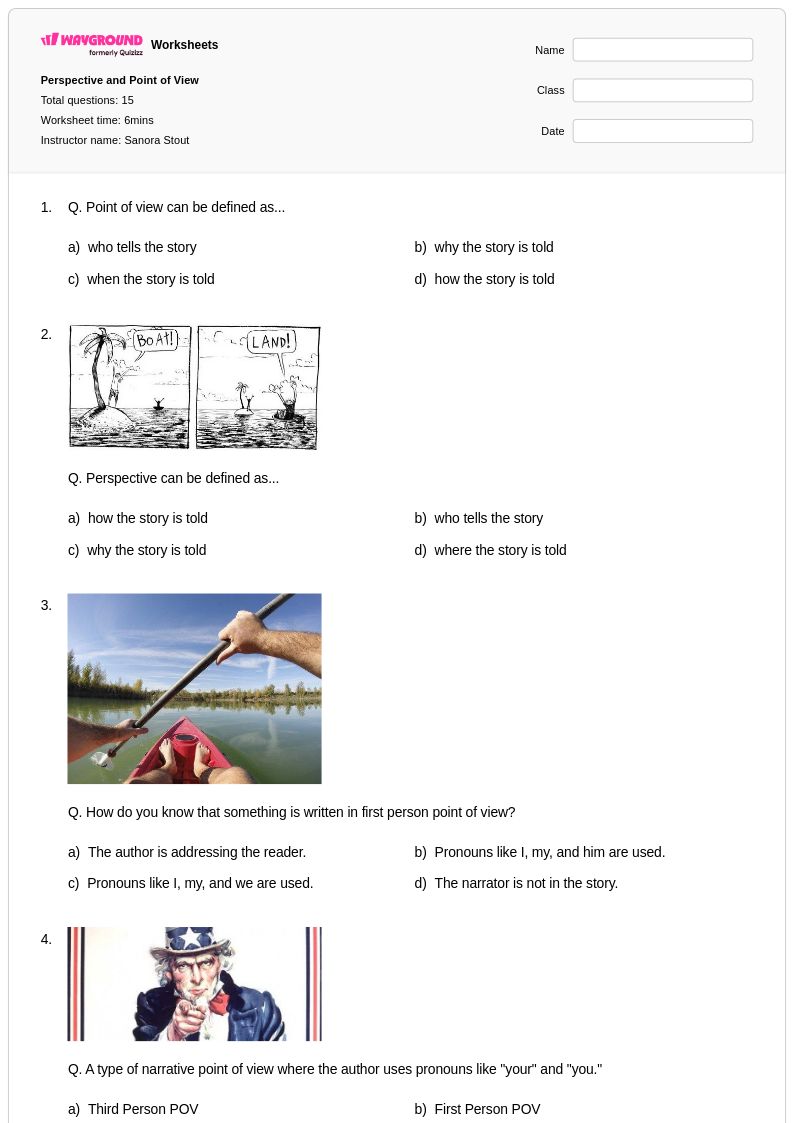
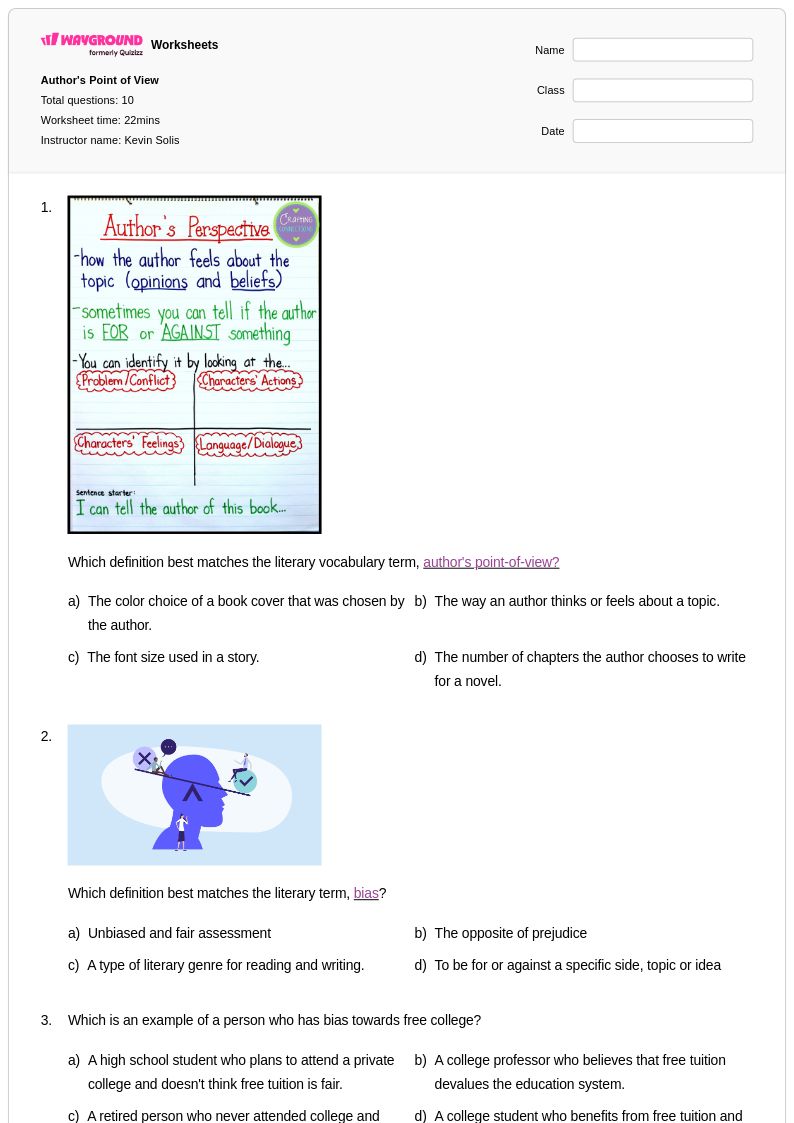
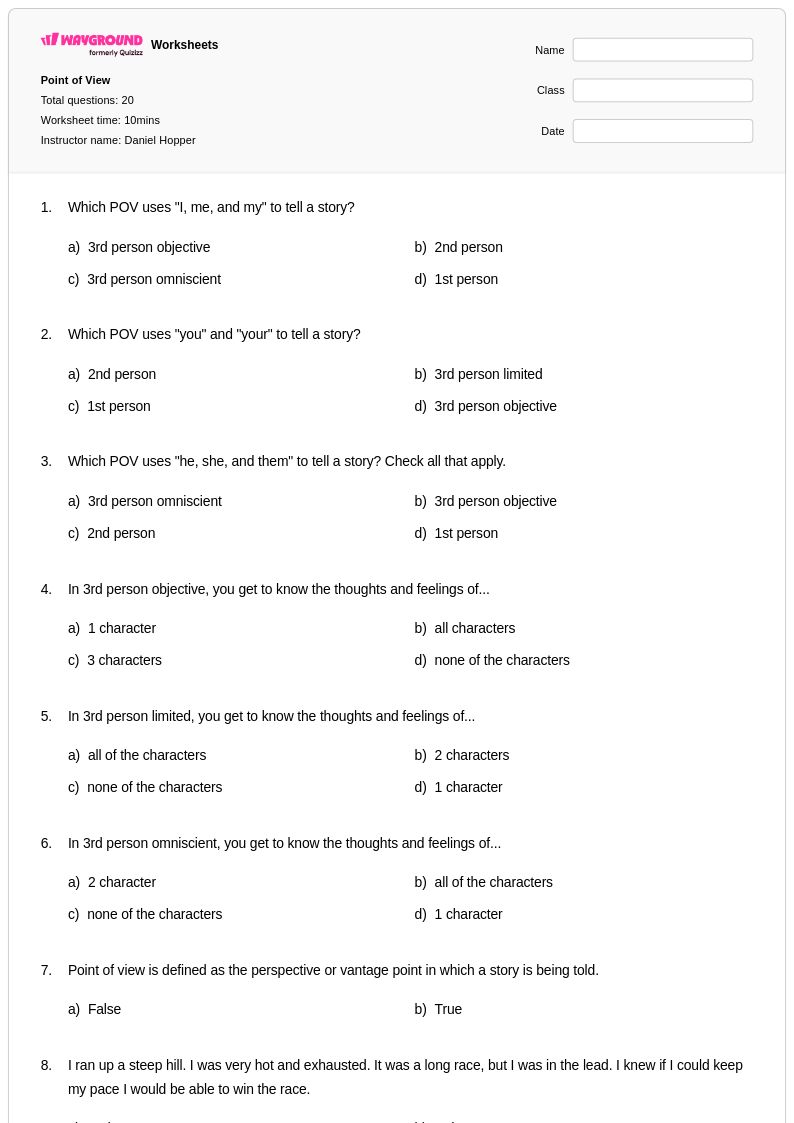
First and third person point of view worksheets for Class 7 students available through Wayground provide comprehensive practice in identifying and analyzing narrative perspective within story structure. These expertly designed resources help seventh-grade learners distinguish between stories told from a first person narrator's direct experience using "I" and "me" pronouns versus third person narratives that employ "he," "she," and "they" to describe characters from an outside perspective. Students strengthen critical reading skills by examining how point of view influences reader understanding, character development, and story interpretation through carefully scaffolded practice problems that progress from basic identification to sophisticated analysis. Each worksheet includes detailed answer keys and is available as free printable PDFs, allowing educators to seamlessly integrate point of view instruction into their English language arts curriculum while building students' foundational knowledge of narrative techniques.
Wayground's extensive collection of millions of teacher-created resources supports educators in delivering effective point of view instruction through robust search and filtering capabilities that help locate age-appropriate materials aligned with Class 7 English standards. Teachers can easily customize worksheets to meet diverse learning needs, utilizing differentiation tools that accommodate varying skill levels within the classroom while maintaining focus on essential narrative analysis concepts. The platform's flexible format options include both printable PDFs for traditional classroom use and digital versions for technology-integrated learning environments, enabling seamless lesson planning whether educators need materials for initial skill introduction, targeted remediation, or enrichment activities. This comprehensive approach ensures students develop sophisticated understanding of how authors manipulate point of view to create meaning, enhance reader engagement, and achieve specific literary effects within story structure.
FAQs
How do I teach first and third person point of view to students?
Start by establishing clear definitions: first person uses pronouns like I, me, and we, placing the narrator inside the story, while third person uses he, she, they, or character names, positioning the narrator outside events. Use short mentor texts to demonstrate how the same scene reads differently depending on perspective. Asking students to rewrite a familiar passage from a different point of view is one of the most effective ways to make the distinction concrete and memorable.
What exercises help students practice identifying first and third person point of view?
Exercises that require students to identify the narrator's pronoun usage in short passages are a strong starting point, as pronoun recognition is the most direct entry point into perspective analysis. From there, students benefit from tasks that ask them to explain how the chosen point of view affects what information the reader has access to. Worksheets that pair identification with short written justification push students beyond surface-level labeling toward genuine analytical thinking.
What mistakes do students commonly make when learning first and third person point of view?
The most common error is assuming that any use of 'you' signals second person while misclassifying first-person narrators who address the reader directly. Students also frequently confuse third-person limited with omniscient narration, not yet recognizing that third person includes distinct subtypes with different levels of narrator access. Another persistent misconception is treating point of view as a stylistic decoration rather than a structural choice that shapes what readers can and cannot know about characters and events.
How does point of view affect a reader's understanding of a story?
Point of view controls the information pipeline between narrator and reader, which means it directly shapes how reliable, complete, and emotionally colored that information is. A first-person narrator can only report what they personally experience or observe, which creates intimacy but also introduces bias and blind spots. Third-person narration, depending on whether it is limited or omniscient, can offer broader access to events and characters' inner lives, giving readers a different kind of interpretive leverage over the text.
How can I use first and third person point of view worksheets in my classroom?
These worksheets are available as printable PDFs for traditional classroom use and in digital formats for technology-integrated learning environments, and they can also be hosted as a quiz on Wayground for real-time formative assessment. Printable versions work well for guided reading lessons, independent practice, or homework, while digital formats allow teachers to assign work asynchronously and review results efficiently. Each worksheet includes a complete answer key, making it straightforward to use for self-paced review, small group instruction, or whole-class discussion.
How can I differentiate point of view instruction for students at different skill levels?
For students who are still building foundational skills, reducing the complexity of the reading passage and focusing solely on pronoun identification is a productive entry point before moving to interpretive questions. On Wayground, teachers can apply accommodations such as reduced answer choices for individual students to lower cognitive load, or enable Read Aloud so that students with decoding challenges can still engage with the analytical content of the worksheet. Advanced students benefit from tasks that ask them to compare how two versions of the same passage, written in different points of view, create distinct reader experiences.