Free Printable Following Multistep Directions Worksheets for Kindergarten
Enhance your kindergarten student's ability to follow multistep directions with Wayground's comprehensive collection of free worksheets, printables, and practice problems that build essential reading comprehension skills through engaging PDF activities with answer keys.
Explore printable Following Multistep Directions worksheets for Kindergarten
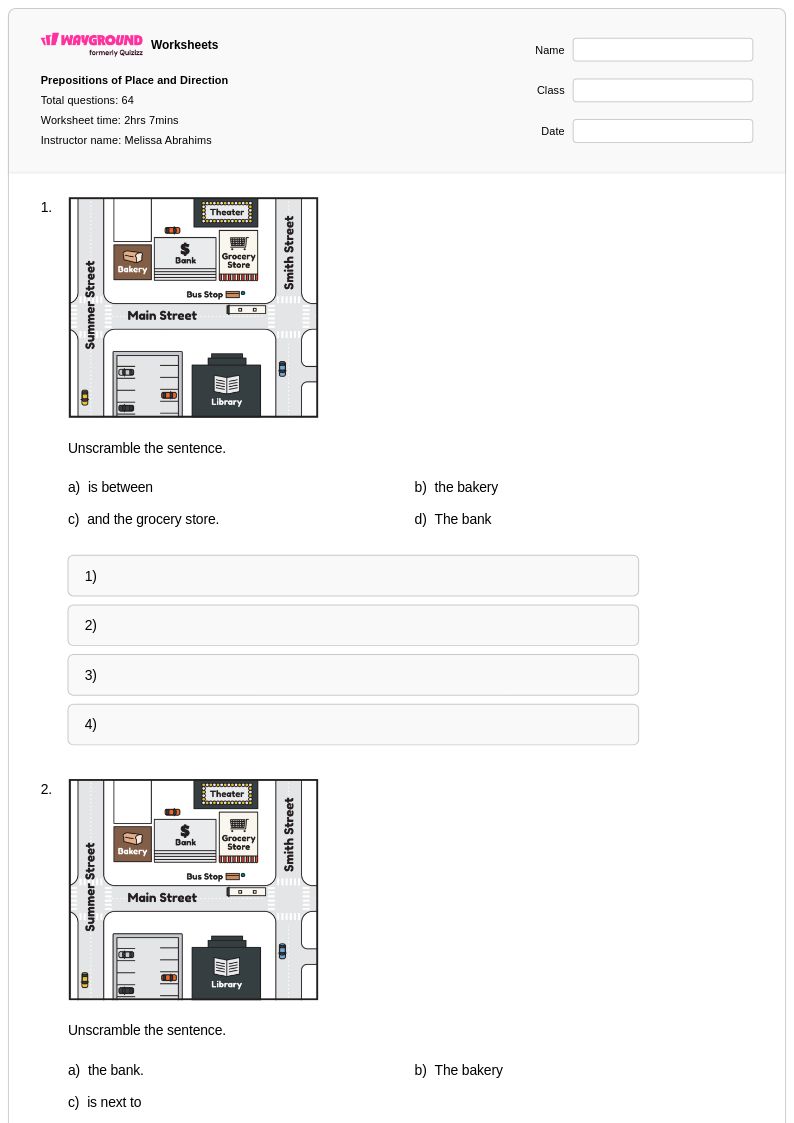
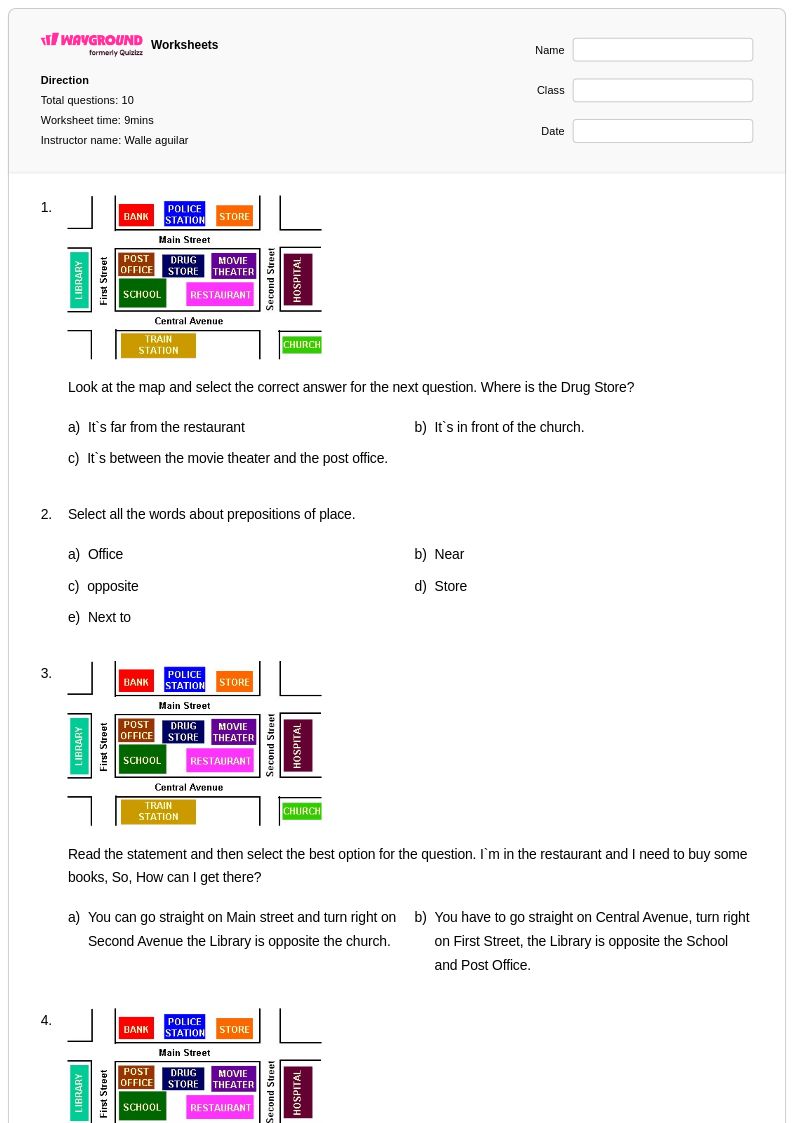
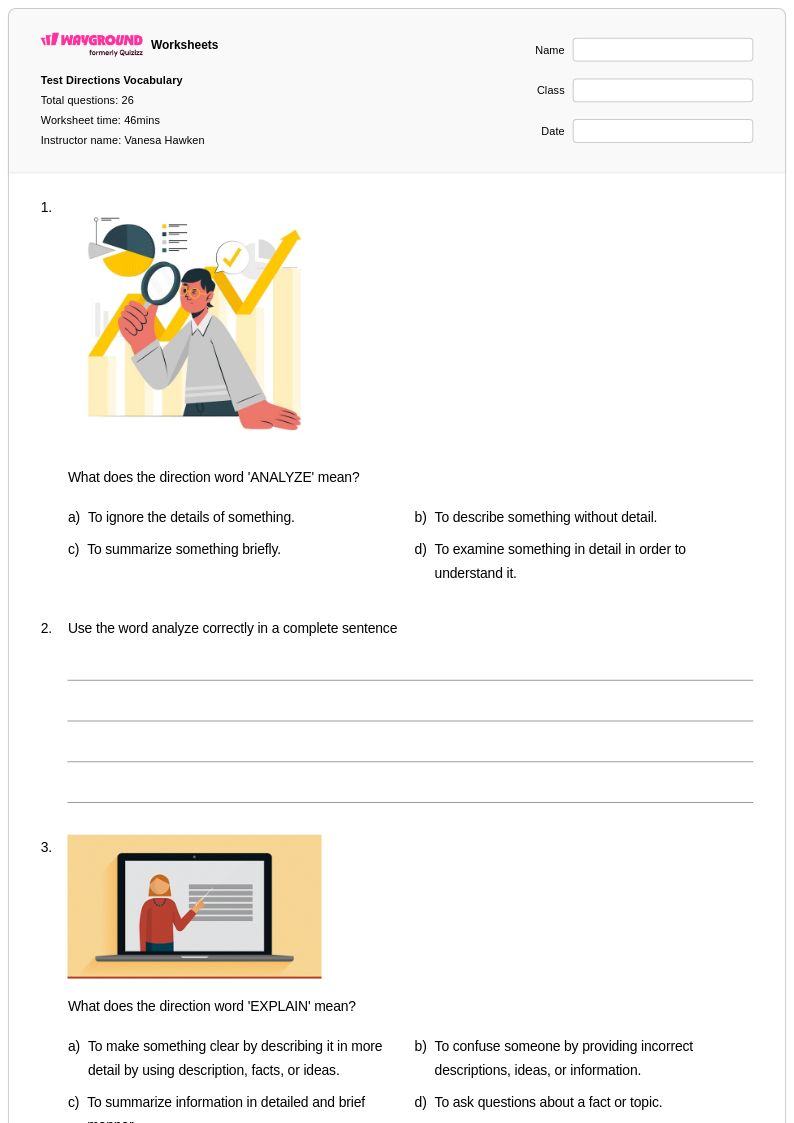
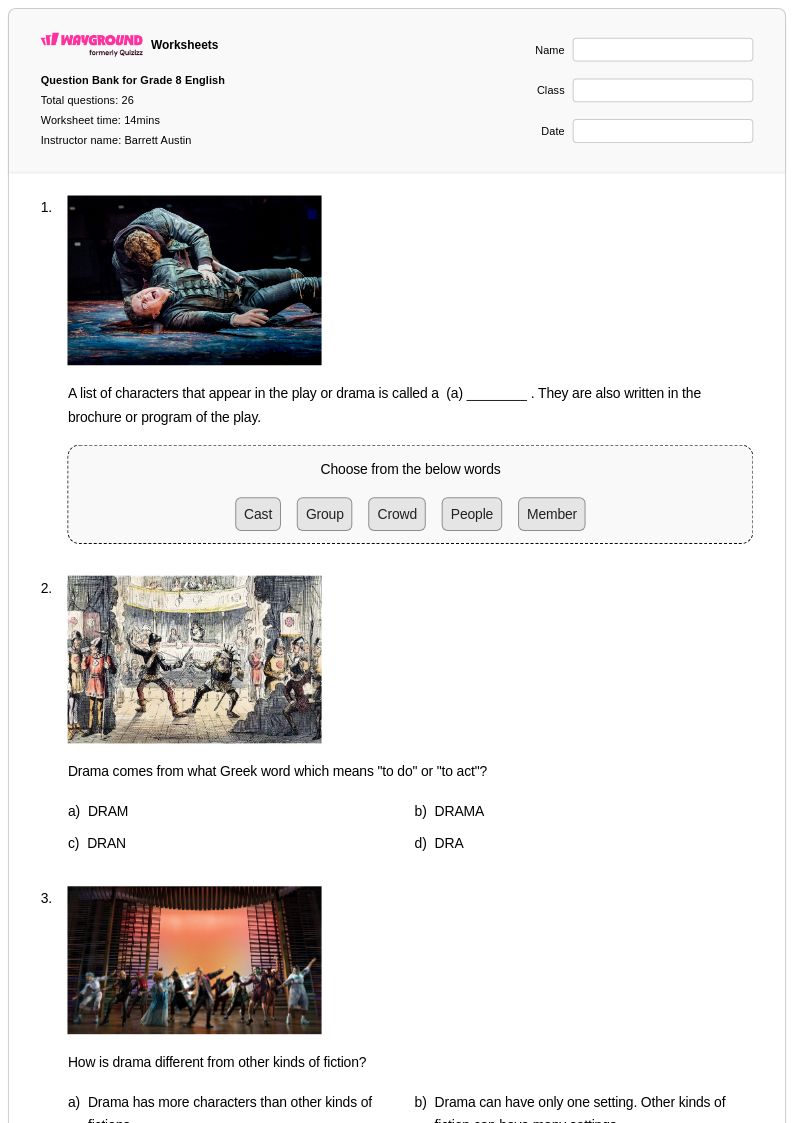
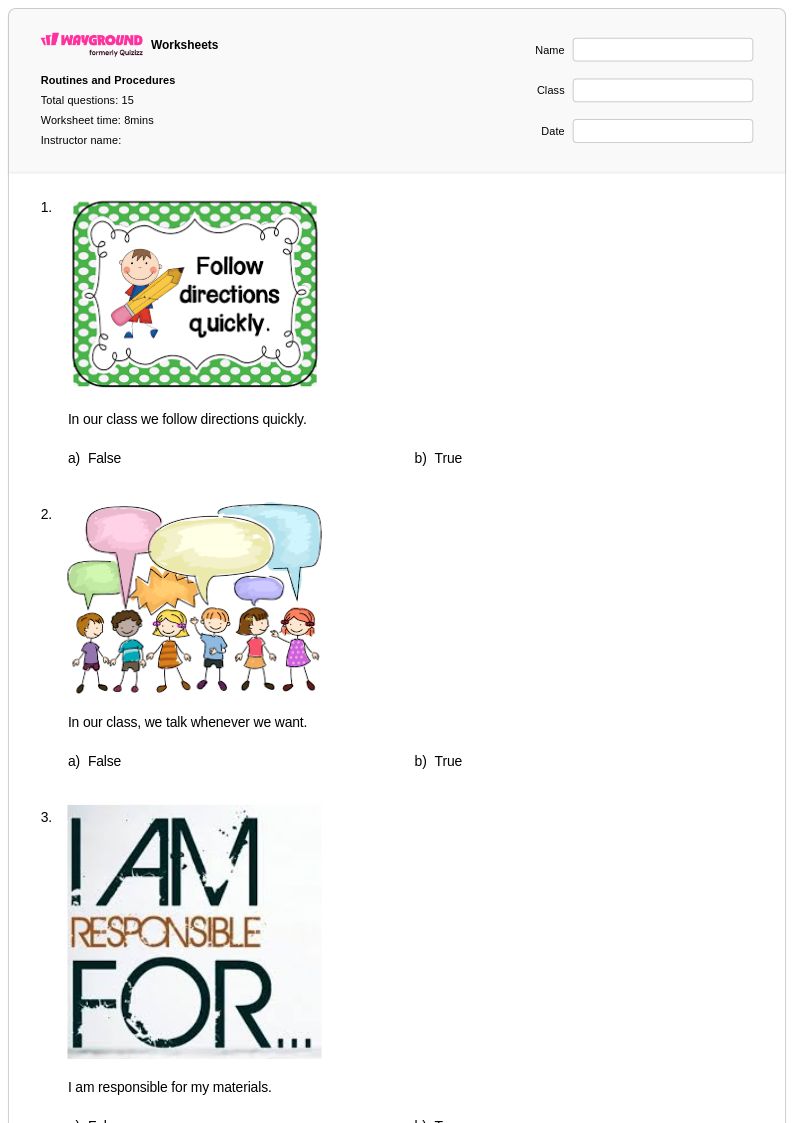
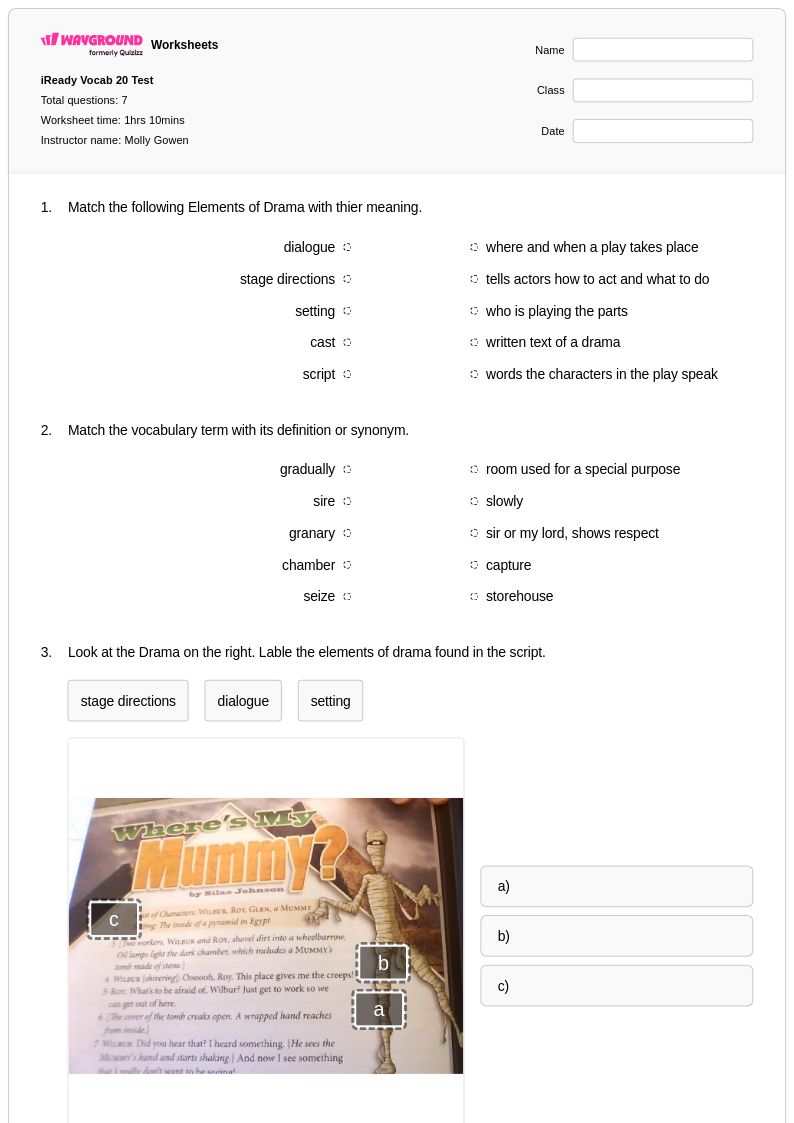
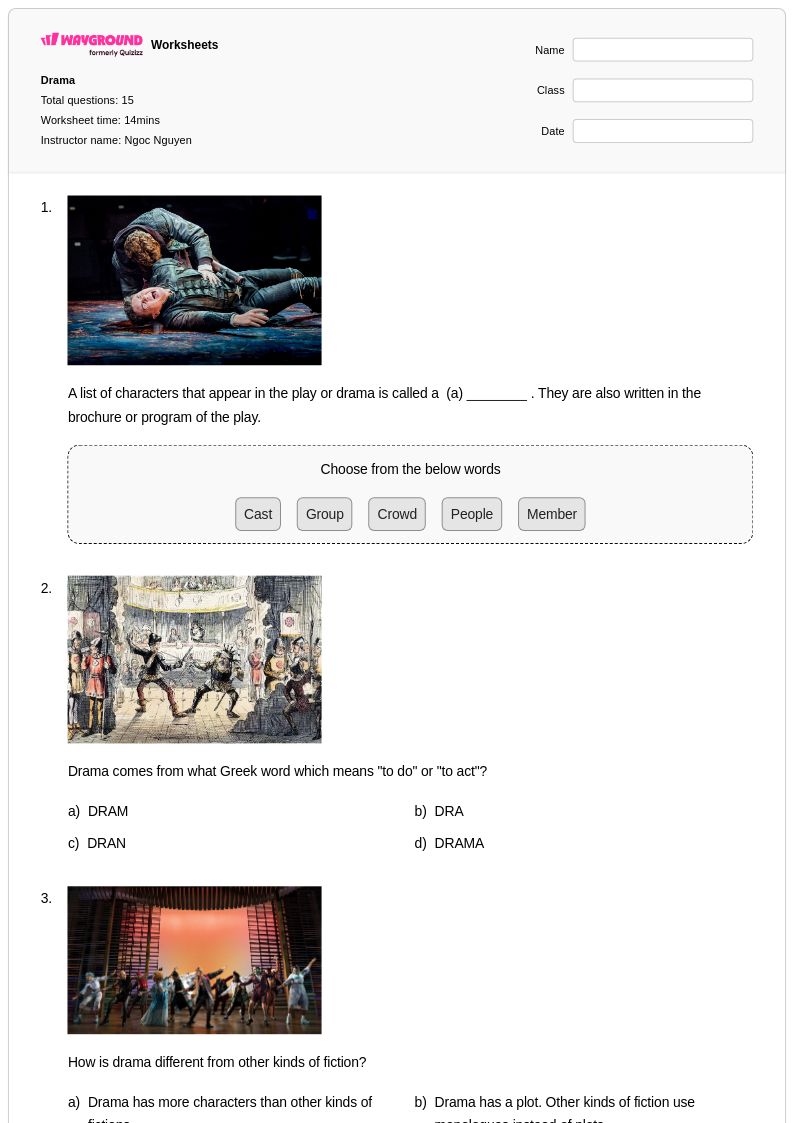
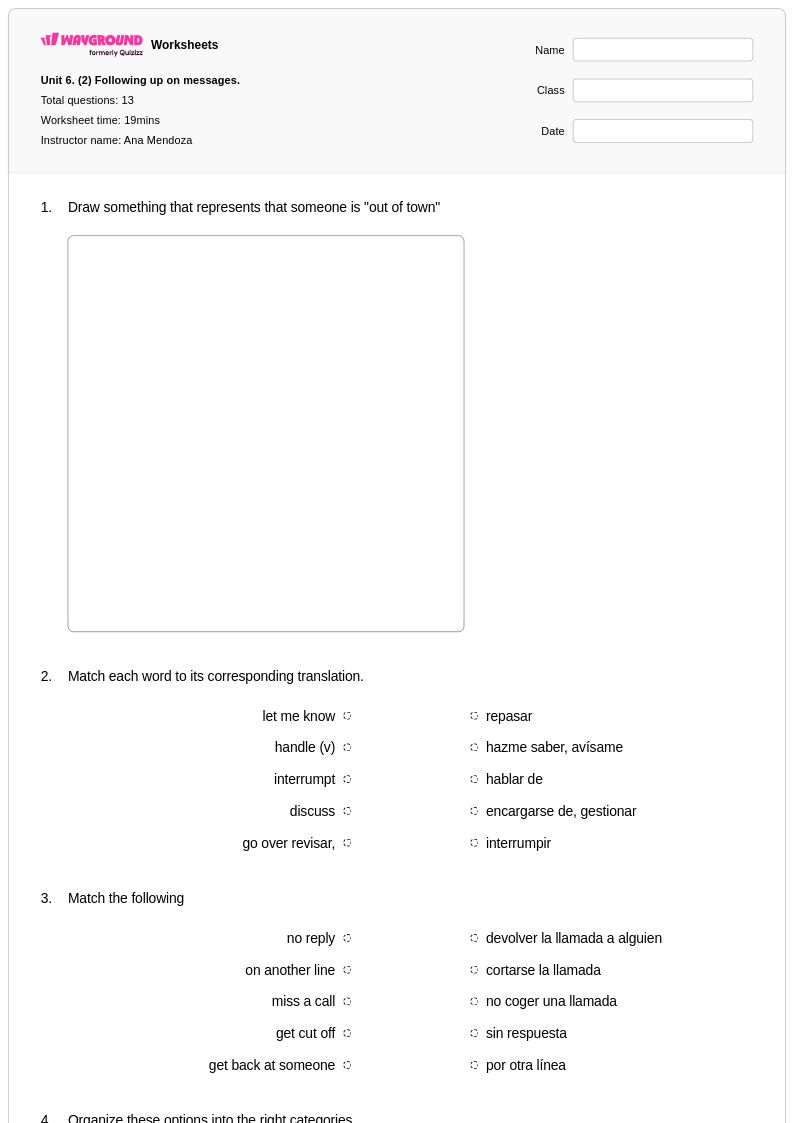
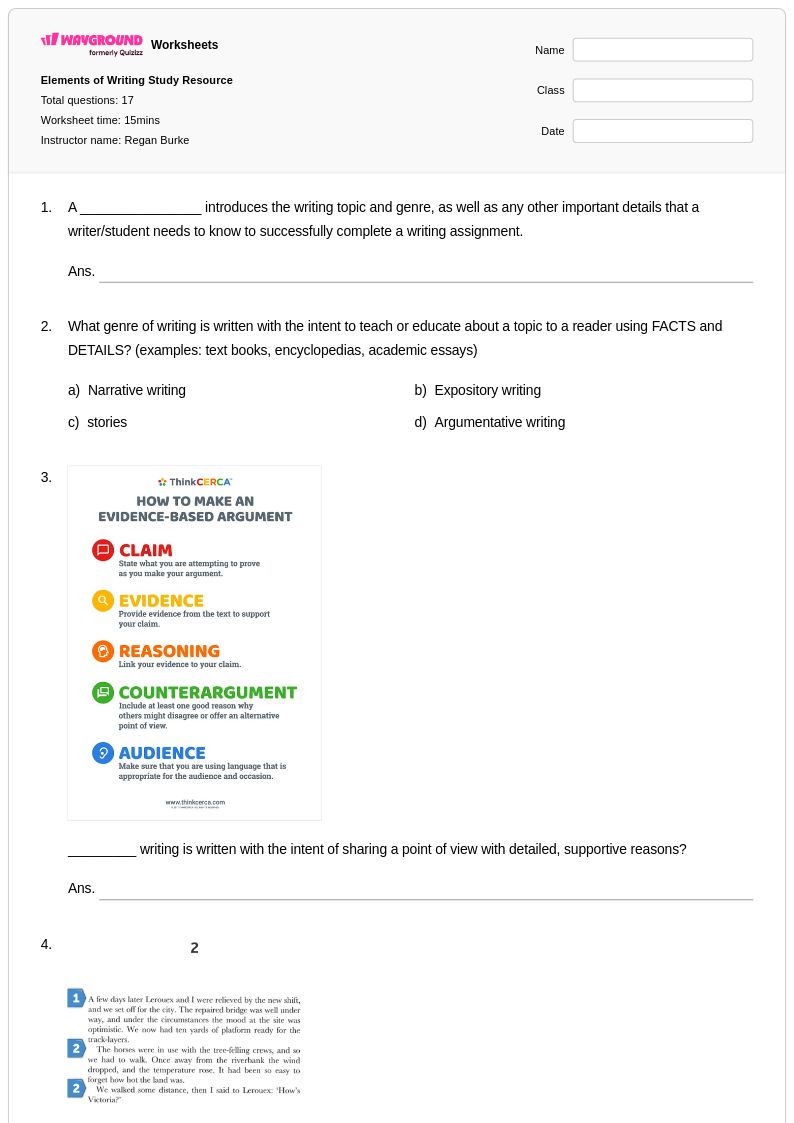
Following multistep directions worksheets for kindergarten students through Wayground (formerly Quizizz) provide essential practice in sequential listening and reading comprehension skills that form the foundation of academic success. These carefully designed printables help young learners develop the ability to process, remember, and execute a series of instructions in the correct order, strengthening their working memory and attention to detail. Each worksheet features age-appropriate scenarios and colorful visuals that engage kindergarteners while building their capacity to follow two, three, and four-step directions independently. The practice problems progress systematically from simple sequences to more complex multi-part tasks, with answer keys available in pdf format to support both classroom instruction and home learning activities that reinforce these critical cognitive skills.
Wayground's extensive collection of following multistep directions worksheets draws from millions of teacher-created resources specifically curated for kindergarten educators seeking to strengthen their students' comprehension abilities. The platform's robust search and filtering capabilities allow teachers to quickly locate materials aligned with early learning standards and differentiate instruction based on individual student needs and developmental stages. These versatile resources are available in both printable pdf format and interactive digital versions, enabling seamless integration into lesson planning, small group remediation sessions, enrichment activities, and independent practice time. Teachers can easily customize worksheets to match their classroom themes and learning objectives, ensuring that students receive targeted skill practice in following directions while building confidence in their ability to process and respond to increasingly complex instructional sequences.
FAQs
How do I teach students to follow multistep directions?
Start by modeling the process explicitly: read the full set of directions aloud, identify action words, and number each step before attempting any task. Gradually increase complexity by moving from two-step to four-or-more-step sequences, giving students structured practice in chunking instructions and checking off completed steps. Teaching students to re-read directions after each step reinforces self-monitoring habits that transfer across subjects.
What activities help students practice following multistep directions?
Worksheets that require students to execute sequenced tasks in writing, such as drawing, labeling, or answering in a specific order, are especially effective for building direction-following skills. Practice scenarios that increase in complexity over time help students develop the sequential processing they need to handle multi-part assignments in science labs, math problem sets, and standardized tests. Repetition with varied content prevents students from memorizing a format and forces genuine comprehension of each instruction set.
What mistakes do students commonly make when following multistep directions?
The most frequent error is skipping steps, usually because students read only the first instruction and begin working before processing the full sequence. Students also confuse the order of steps when directions use passive constructions or embed one instruction inside another. Another common mistake is missing qualifier words like 'only,' 'except,' or 'before,' which fundamentally change what the direction is asking.
How can I differentiate following multistep directions practice for students at different skill levels?
For students who struggle, reduce the number of steps or present each direction on a separate line to reduce cognitive load. More advanced students benefit from directions that embed conditional logic or require them to apply information from an earlier step to complete a later one. On Wayground, teachers can apply reduced answer choices and extended time accommodations to individual students, so each learner engages with the same material at an appropriate level of support without disrupting the rest of the class.
How do I use Following Multistep Directions worksheets from Wayground in my classroom?
Wayground's following multistep directions worksheets are available as printable PDFs for traditional paper-based use and in digital formats for technology-integrated classrooms, and teachers can also host them as a quiz directly on Wayground. Each worksheet includes a complete answer key, making them suitable for independent practice, homework, or formative assessment without additional teacher preparation. The platform's filtering tools let you select materials by complexity level, so you can match the worksheet to the current stage of instruction.
Why is following multistep directions an important skill to teach explicitly?
Following multistep directions is a foundational academic skill that affects performance across every subject, from science procedures to math word problems to standardized test instructions. Students who cannot process sequential instructions accurately are more likely to make errors that reflect procedural confusion rather than a gap in content knowledge, which can distort assessment results. Explicit instruction in direction-following helps students become more independent learners by giving them a reliable strategy for approaching any complex task.