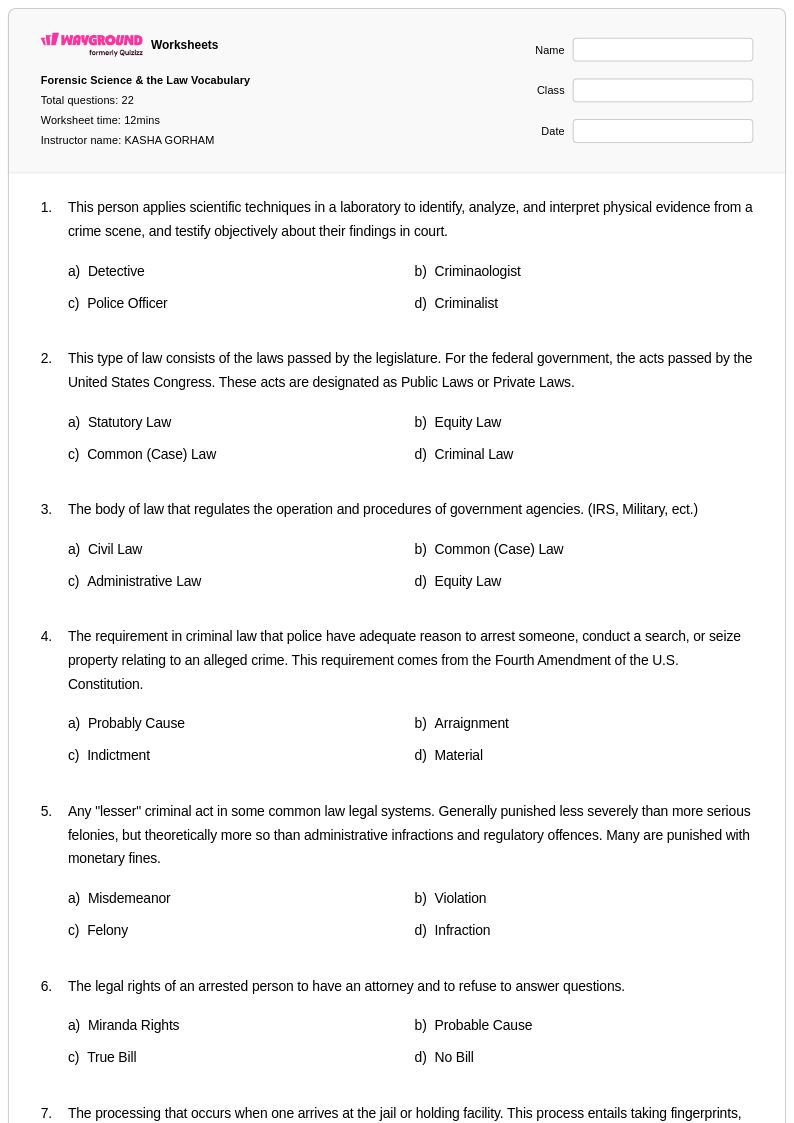
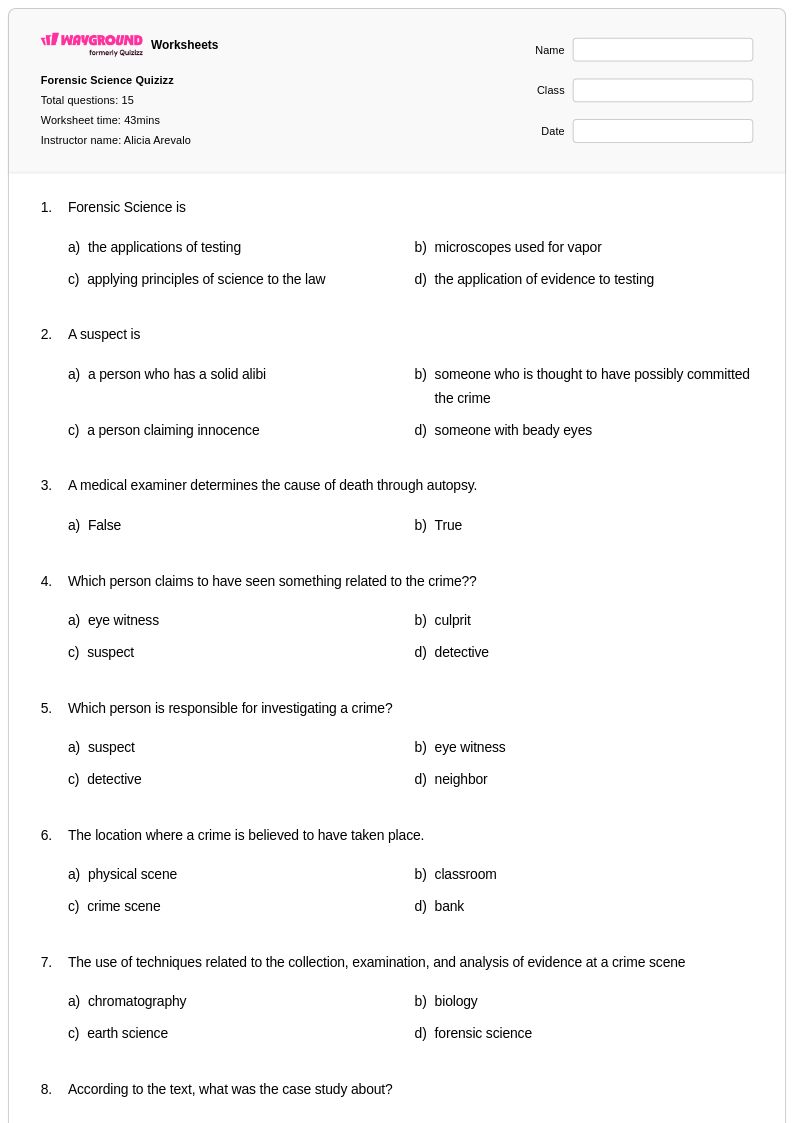
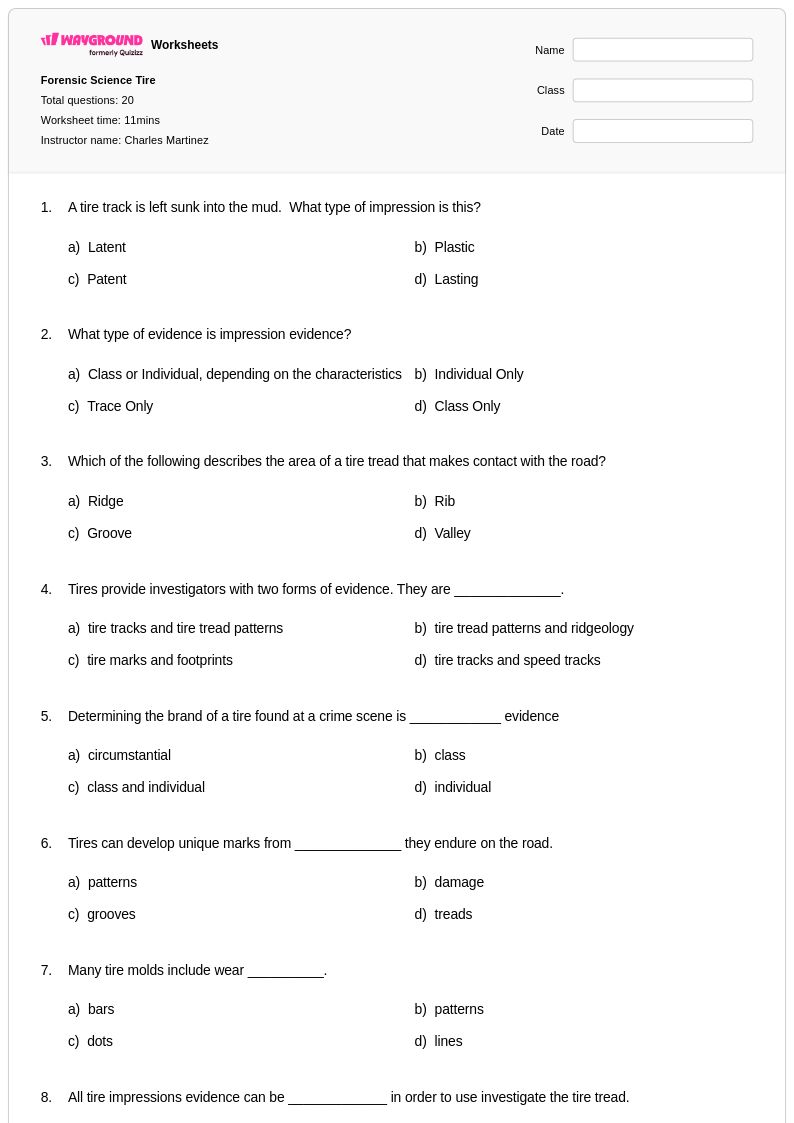
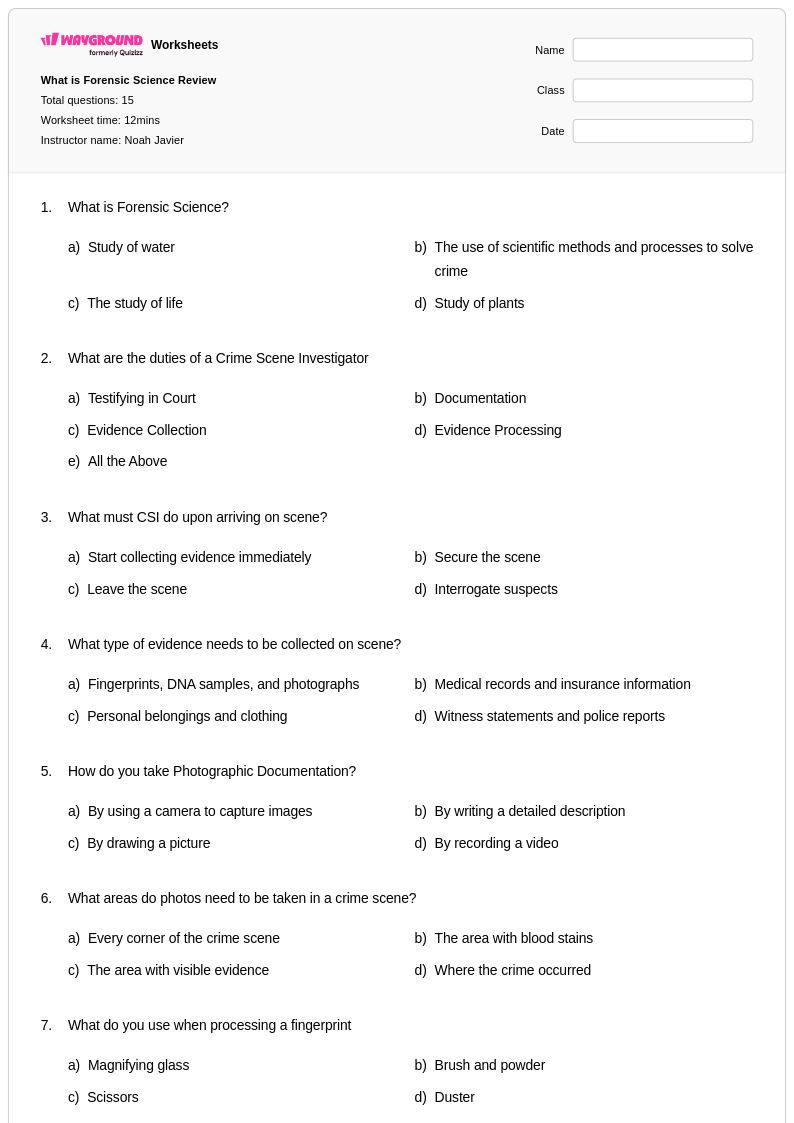
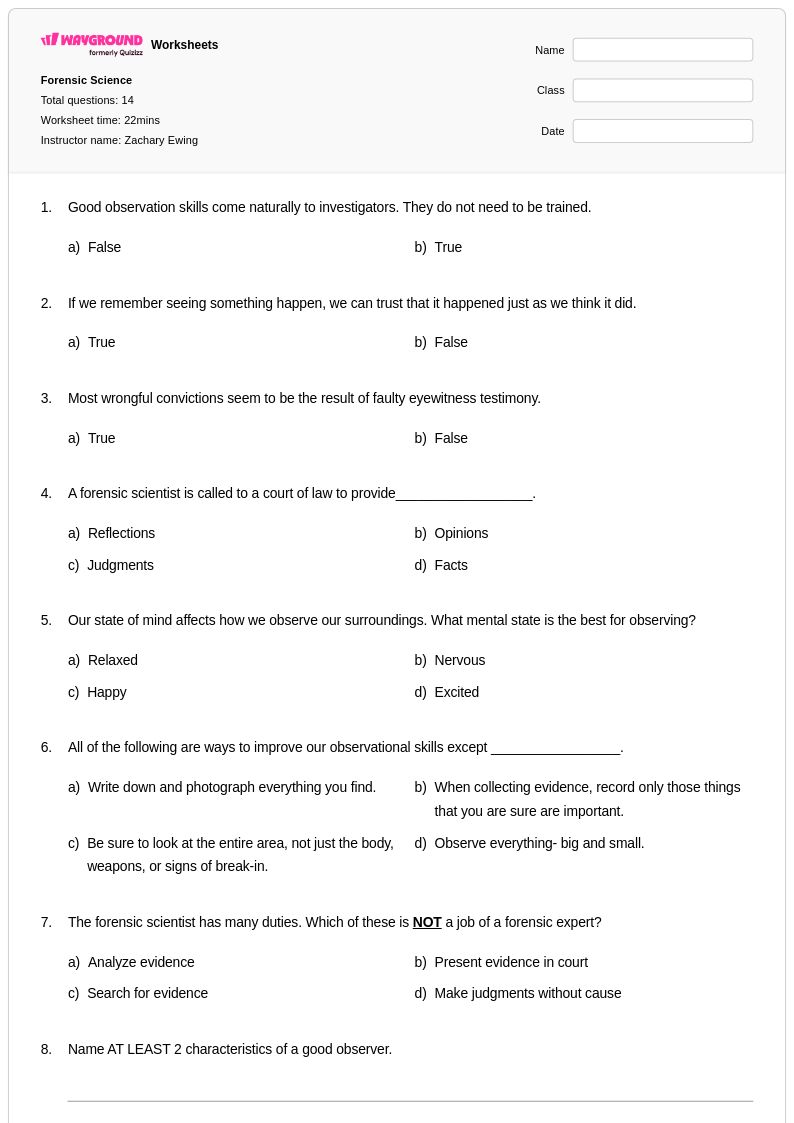
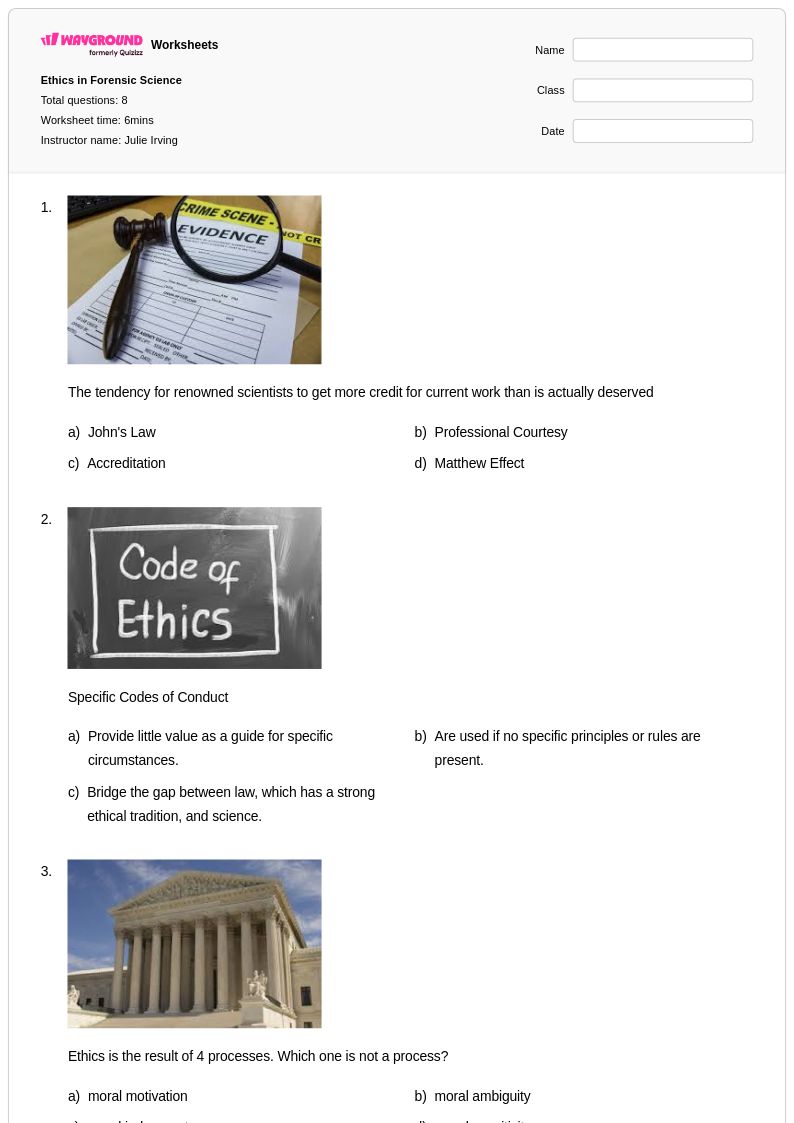
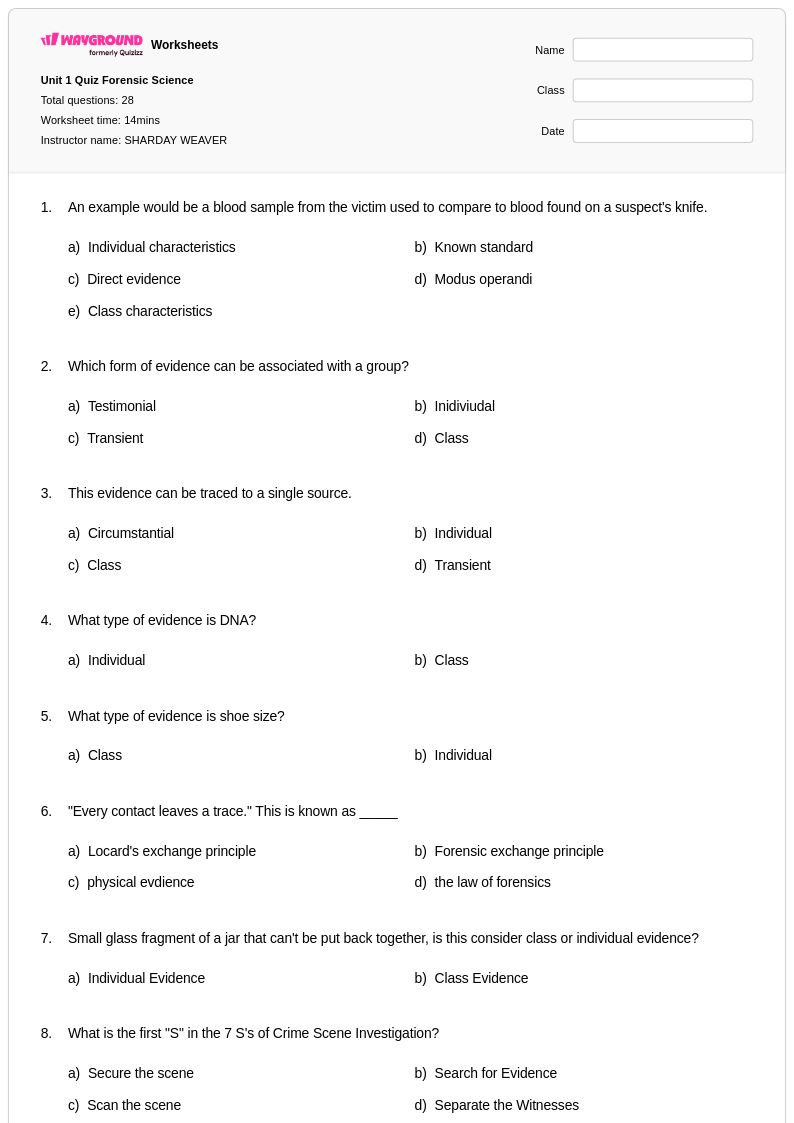
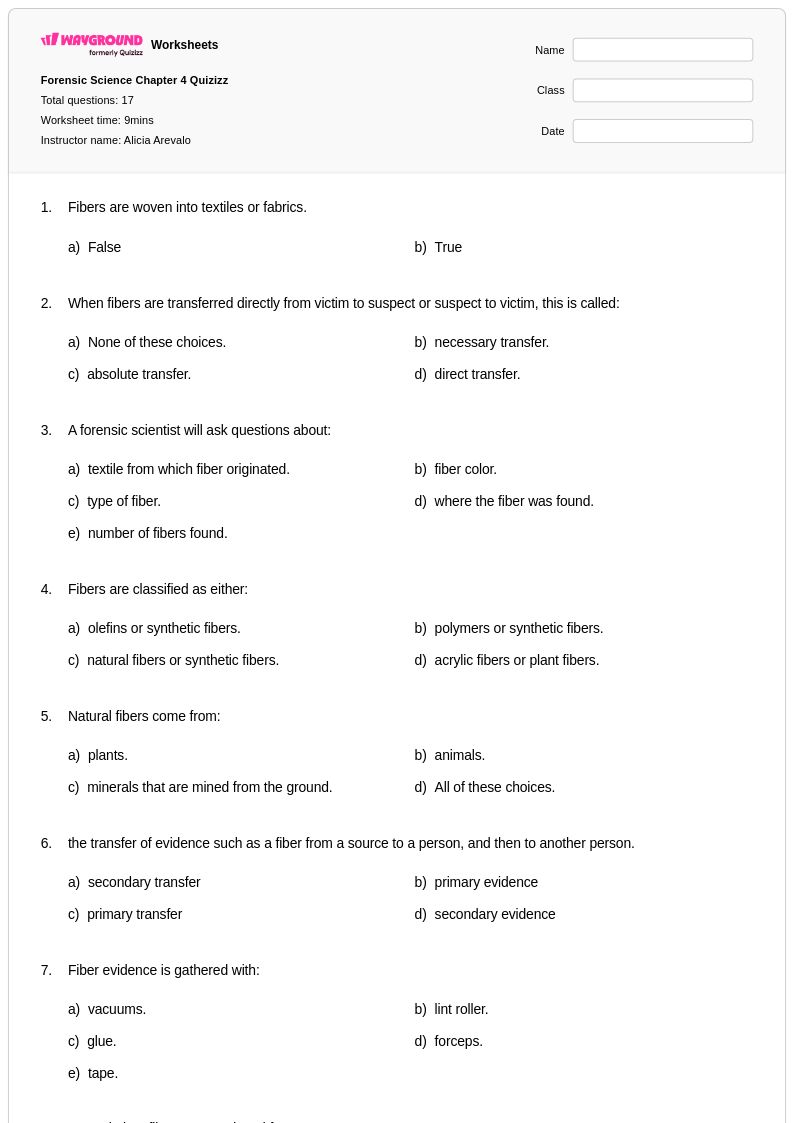
Explore Wayground's comprehensive collection of forensic science worksheets and printables that help students master crime scene investigation techniques, evidence analysis, and scientific methodology through engaging practice problems with complete answer keys.
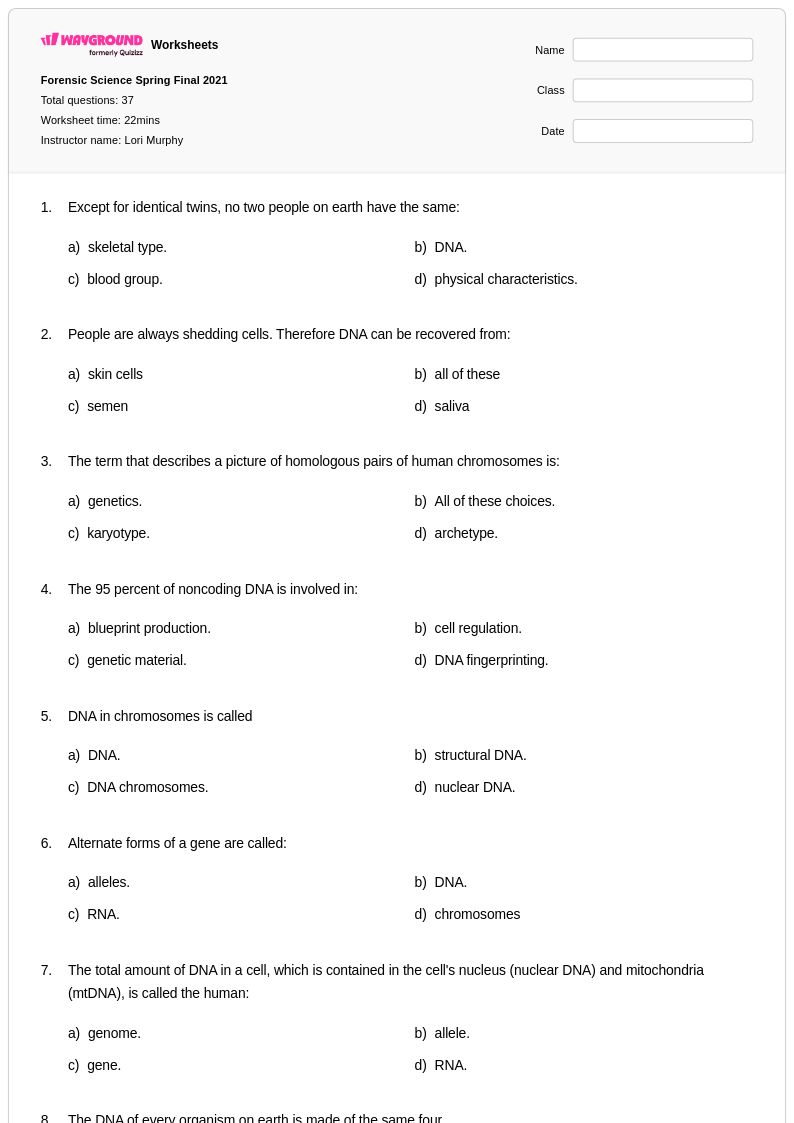
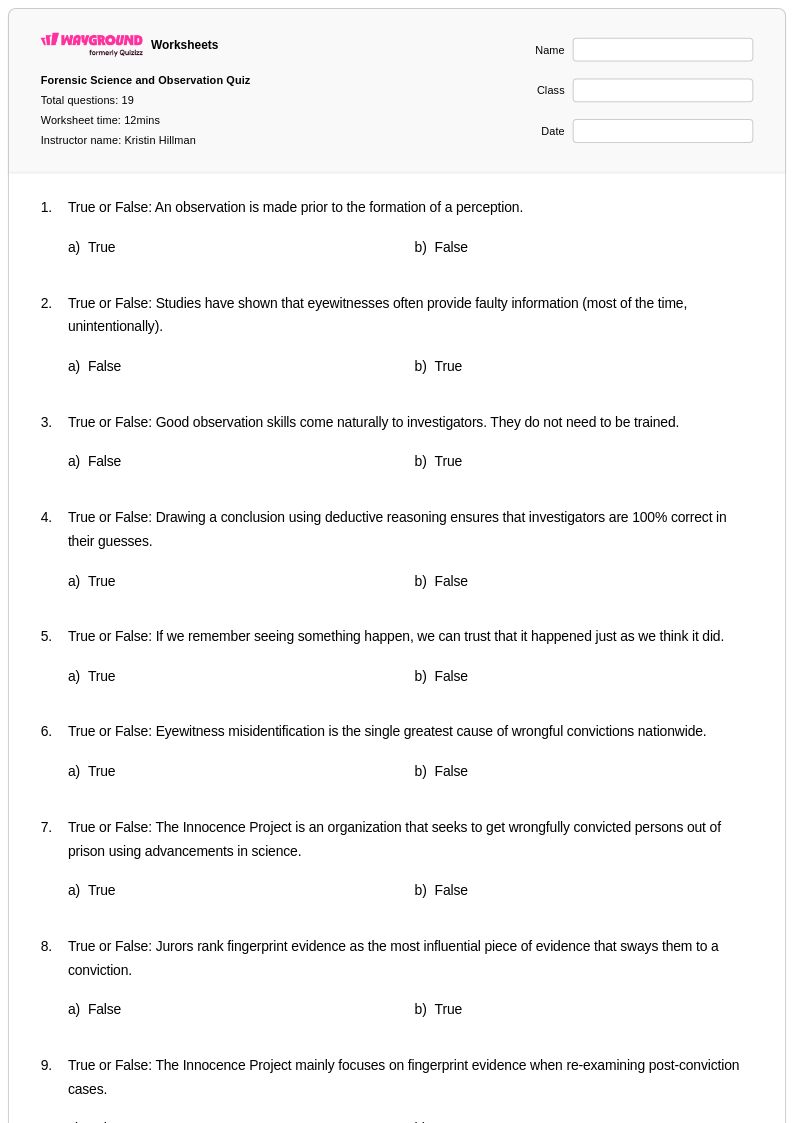
Forensic science worksheets available through Wayground (formerly Quizizz) provide comprehensive educational resources that immerse students in the scientific methods used to solve crimes and analyze physical evidence. These expertly crafted materials strengthen critical thinking skills, analytical reasoning, and scientific observation techniques as students explore topics such as fingerprint analysis, DNA profiling, ballistics, toxicology, and crime scene investigation. The worksheets feature authentic scenarios and practice problems that mirror real-world forensic applications, helping students understand how scientific principles apply to criminal investigations. Each resource includes detailed answer keys and is available as free printables in convenient pdf format, making it easy for educators to incorporate hands-on forensic activities into their science curriculum while reinforcing laboratory skills and evidence-based reasoning.
Wayground's extensive collection draws from millions of teacher-created forensic science resources, offering educators powerful search and filtering capabilities to locate materials that align with specific learning objectives and curriculum standards. The platform's differentiation tools enable teachers to customize worksheets for various skill levels, ensuring that both struggling learners and advanced students can engage meaningfully with forensic concepts. These versatile resources are available in both printable and digital formats, including downloadable pdfs, providing flexibility for classroom instruction, remote learning, or hybrid educational environments. Teachers can seamlessly integrate these materials into lesson planning for skill practice, use them for targeted remediation of scientific concepts, or deploy them as enrichment activities that challenge students to think like forensic scientists while developing essential STEM competencies.
FAQs
How do I teach forensic science in a middle or high school classroom?
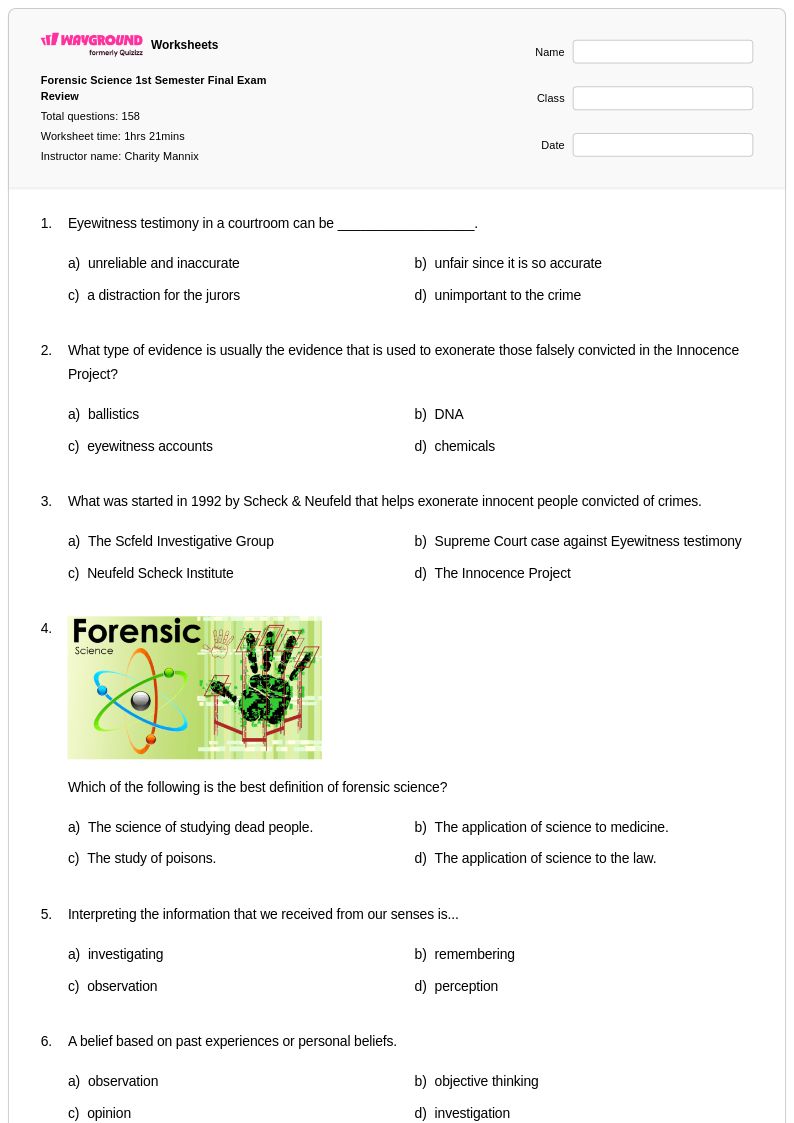
Forensic science is best taught by grounding abstract scientific concepts in concrete investigative scenarios. Start with foundational skills like observation and documentation, then progress to specific techniques such as fingerprint classification, hair and fiber comparison, and crime scene processing. Using case-based learning, where students work through a simulated investigation from evidence collection to conclusion, reinforces the scientific method while keeping engagement high. Connecting each technique to a real-world application helps students understand why accuracy and systematic thinking matter.
What exercises help students practice crime scene investigation skills?
Students benefit most from exercises that simulate the procedural nature of real investigations, such as evidence collection sequencing activities, chain-of-custody documentation tasks, and sketch-and-diagram exercises for mapping a crime scene. Practice problems that present partial evidence sets and ask students to draw conclusions reinforce analytical reasoning. Worksheets that include authentic scenarios with physical evidence types like fingerprints, fibers, and biological samples help students apply classification and comparison skills in a structured context.
What common mistakes do students make when analyzing fingerprints or forensic evidence?
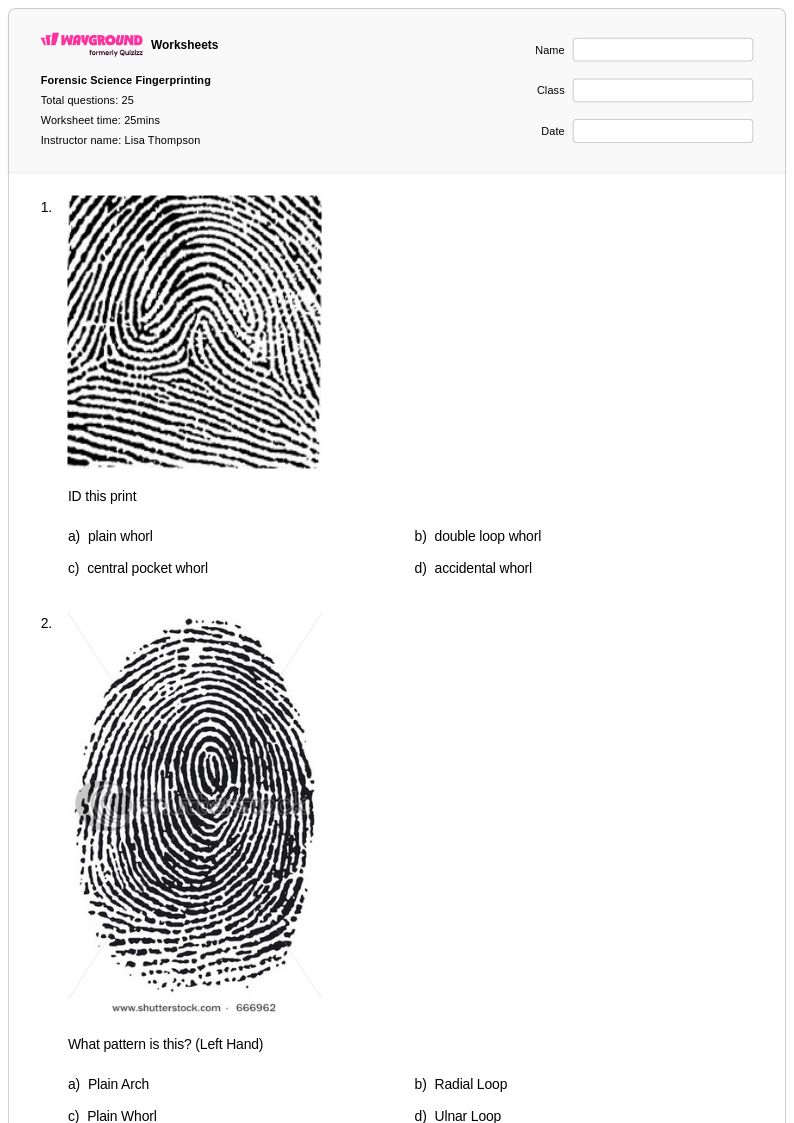
One of the most frequent errors is overgeneralizing evidence, for example, concluding a match based on a single shared characteristic rather than a full pattern comparison. Students also tend to confuse correlation with causation when interpreting evidence, drawing definitive conclusions from circumstantial data. In fingerprint analysis specifically, students often struggle to distinguish between the three main pattern types (loops, whorls, and arches) under pressure or with low-quality images. Targeted practice with labeled comparison exercises can help students slow down and build precision in their analysis.
How do I differentiate forensic science worksheets for students at different skill levels?
For struggling learners, simplify the evidence sets presented in a scenario and provide structured graphic organizers to guide their analysis step by step. Advanced students can be challenged with multi-variable cases, conflicting evidence, or open-ended questions that require them to defend a conclusion in writing. On Wayground, teachers can apply accommodations such as reduced answer choices to lower cognitive load for individual students, or enable the Read Aloud feature for students who need audio support, without disrupting the experience for the rest of the class.
How can I use Wayground's forensic science worksheets in my classroom?
Wayground's forensic science worksheets are available as printable PDFs for traditional classroom use and in digital formats for technology-integrated or remote learning environments, giving teachers flexibility in how they deploy them. Teachers can also host worksheets as a live quiz on Wayground, making them suitable for formative assessment or whole-class review. Each worksheet includes a complete answer key, reducing prep time and supporting consistent grading. The materials work well as standalone practice activities, lab supplements, or enrichment tasks within a broader forensic science or STEM unit.
What topics are typically covered in forensic science worksheets?
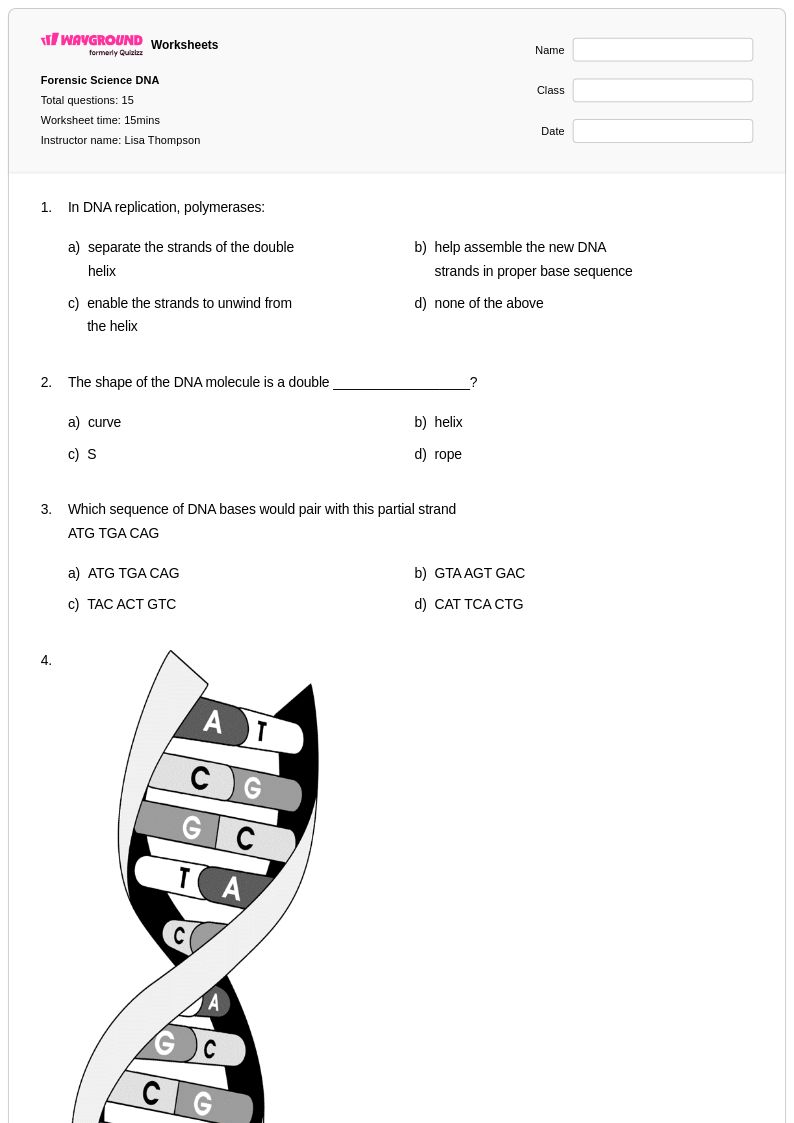
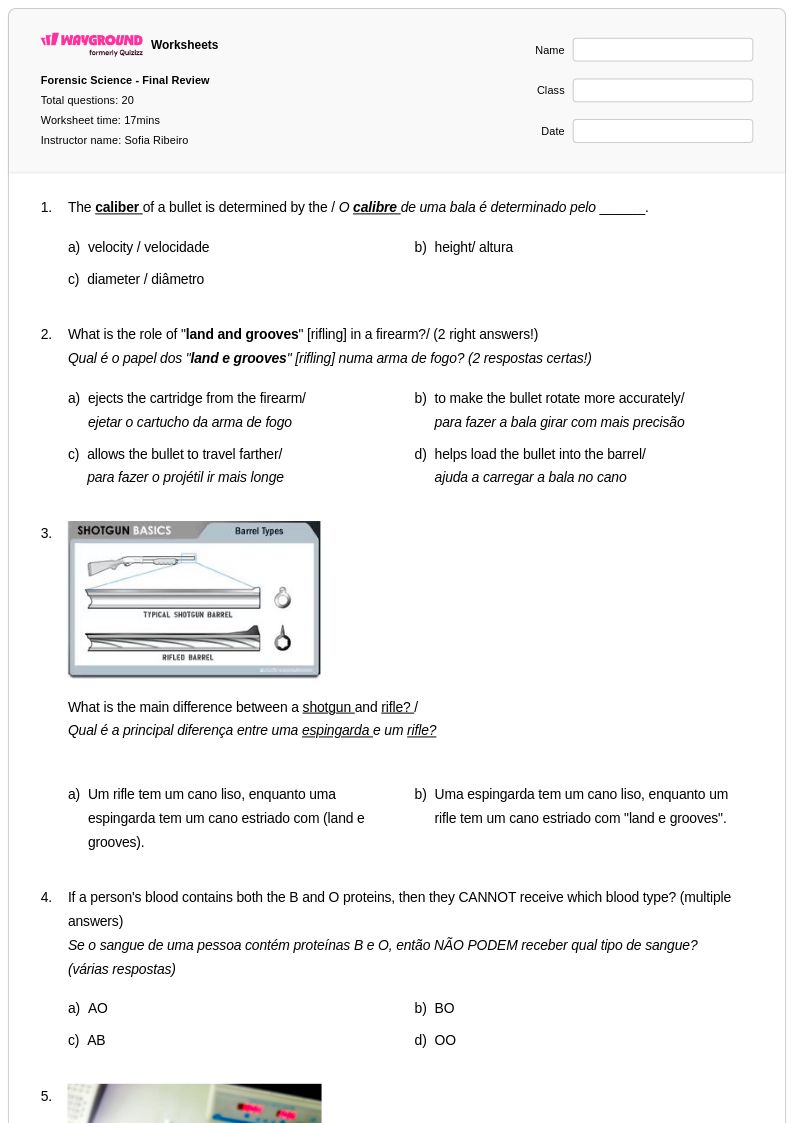
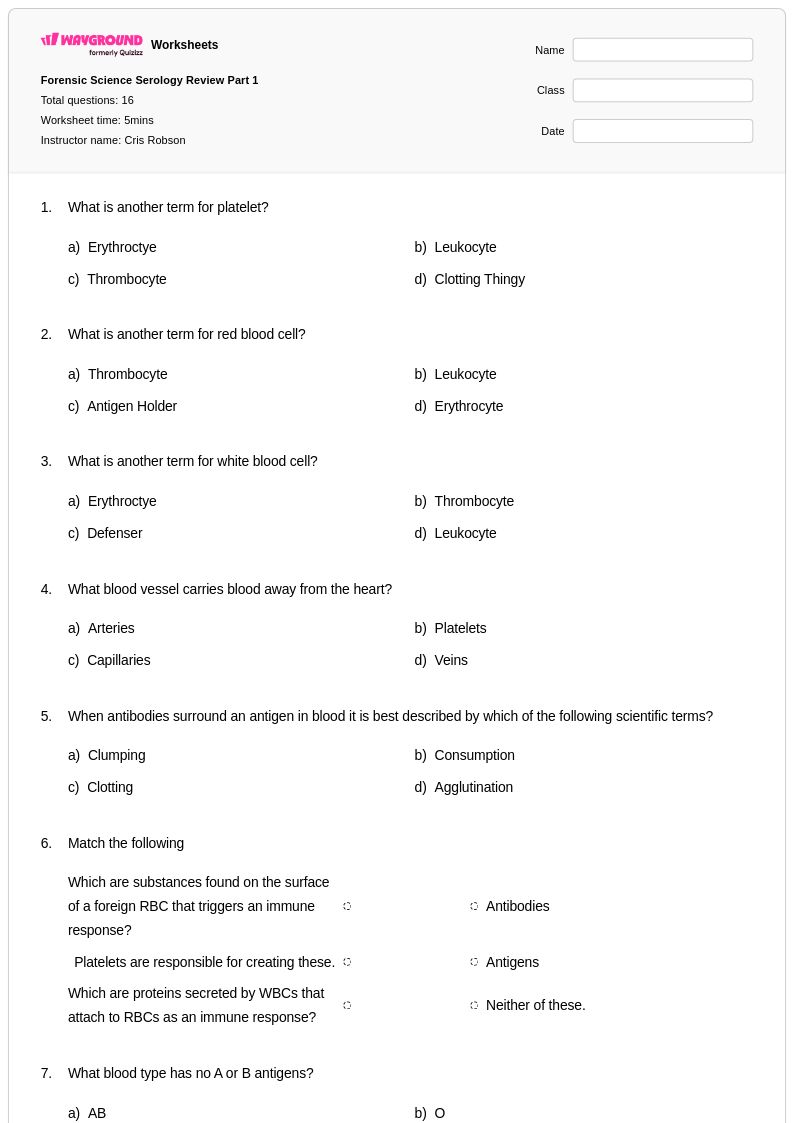
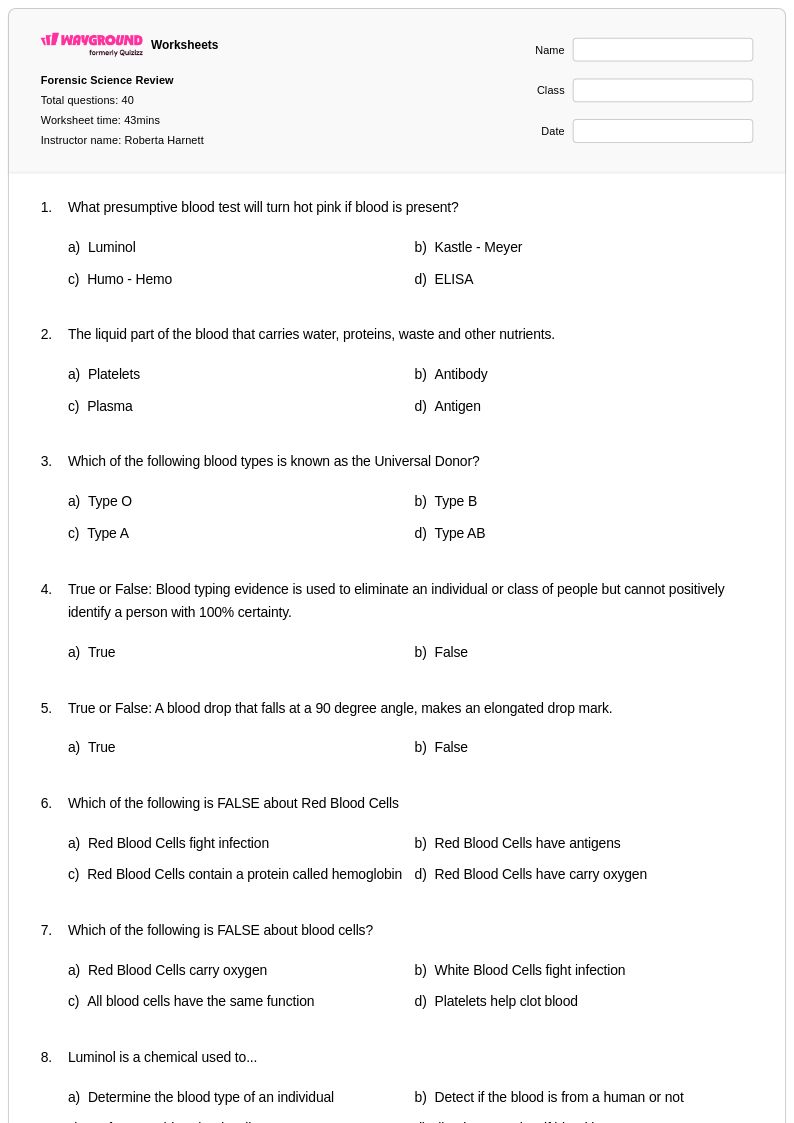
Forensic science worksheets typically cover crime scene investigation procedures, fingerprint analysis and classification, hair and fiber comparison, DNA profiling concepts, ballistics, toxicology basics, and the chain of custody. Some materials also address the role of forensic scientists within the legal system and the scientific standards required for evidence to be admissible. Comprehensive worksheet sets progress from foundational observation skills to more specialized analytical techniques, making them appropriate for introductory through advanced forensic science courses.