
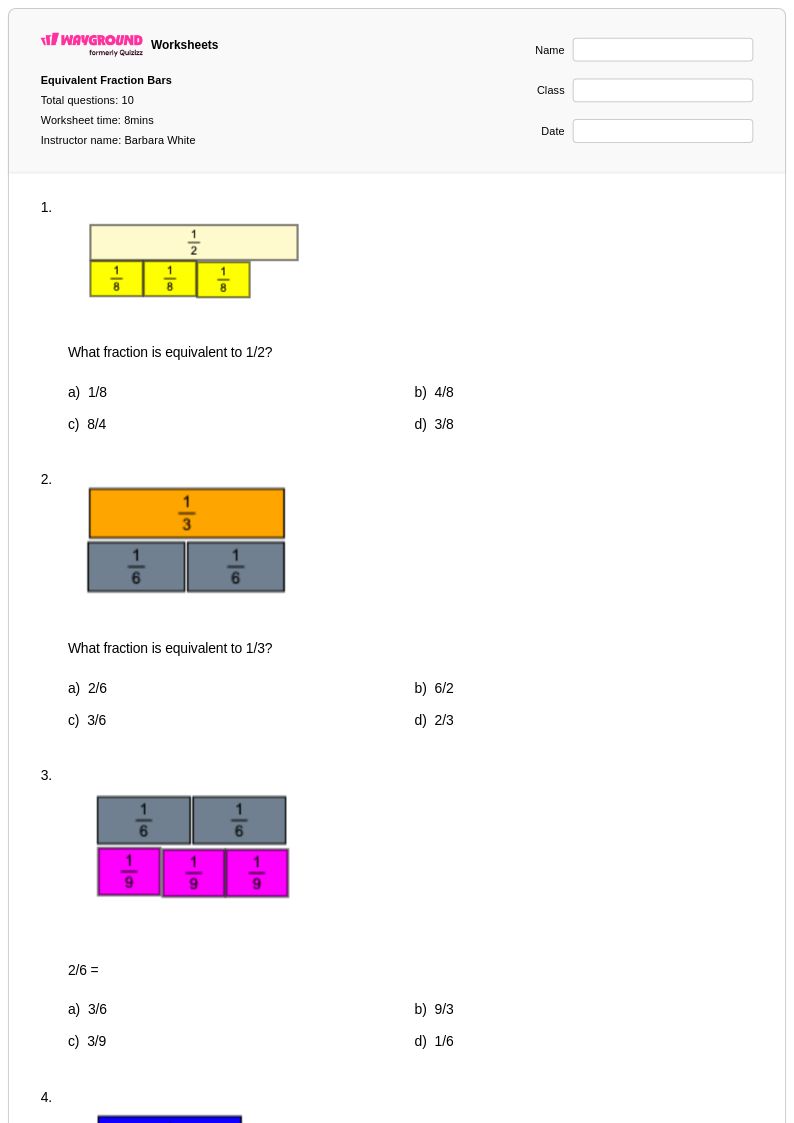
10 Q
2nd - 4th
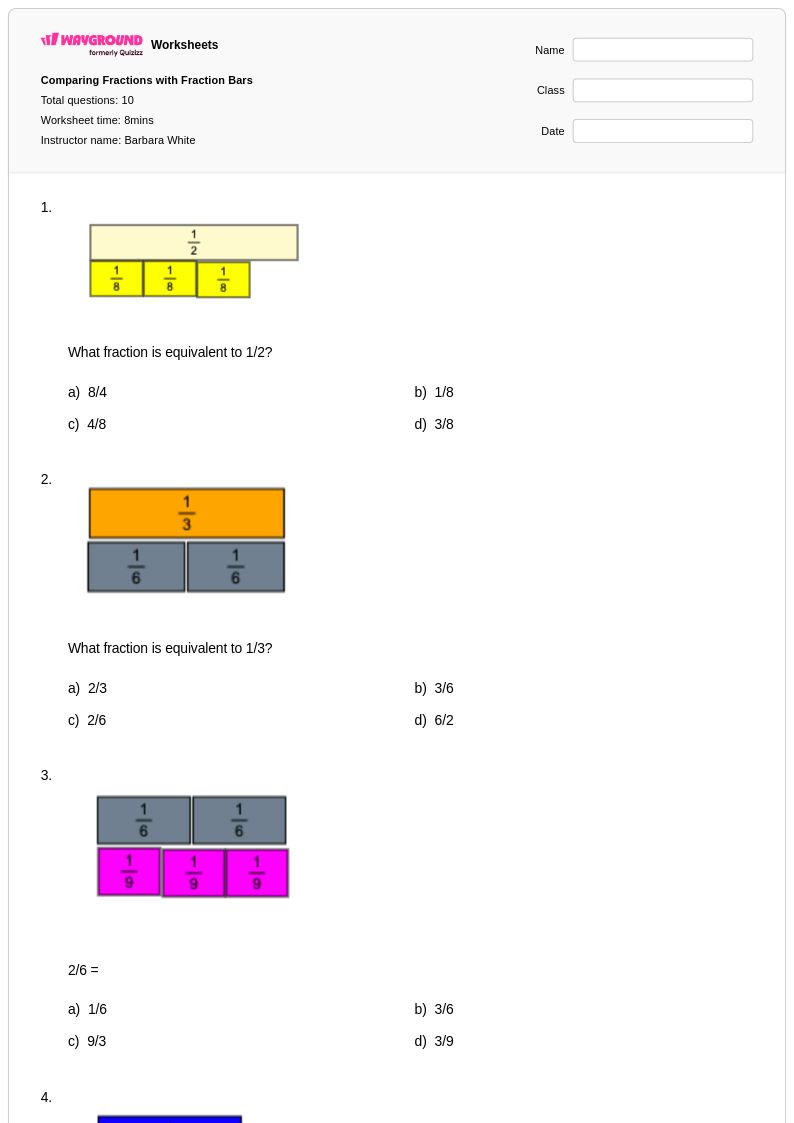
10 Q
2nd - 4th
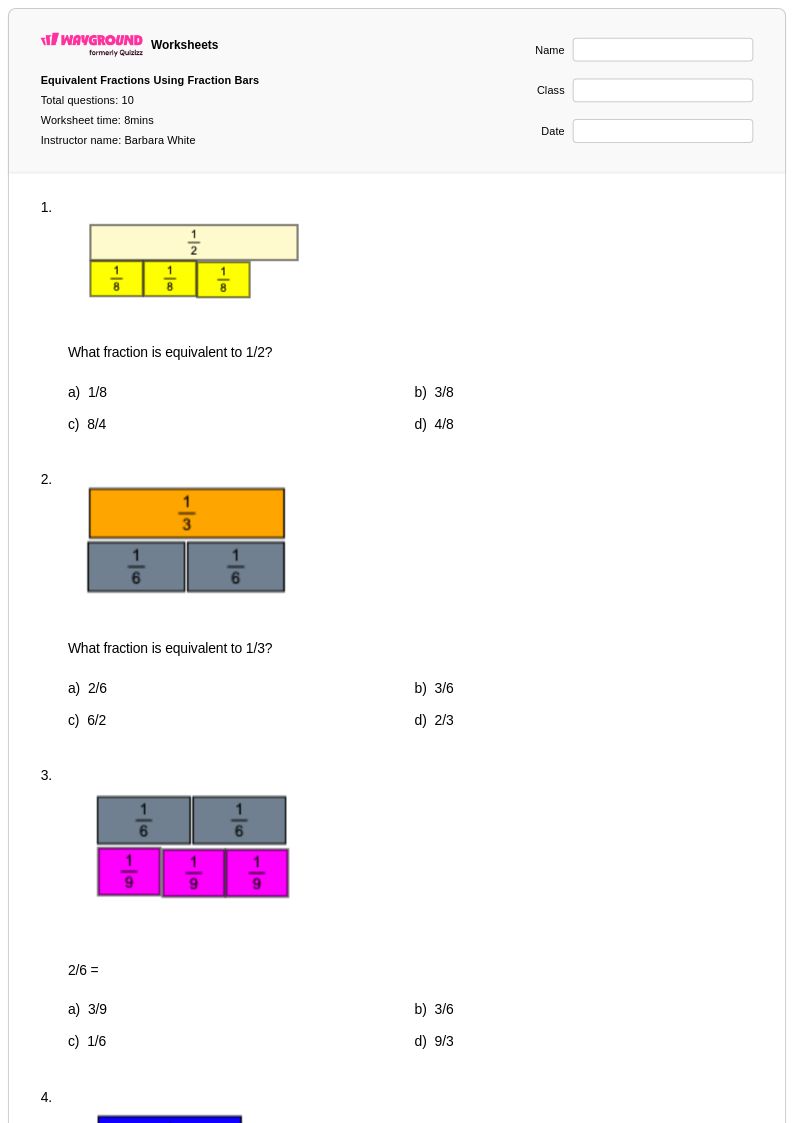
10 Q
2nd - 4th
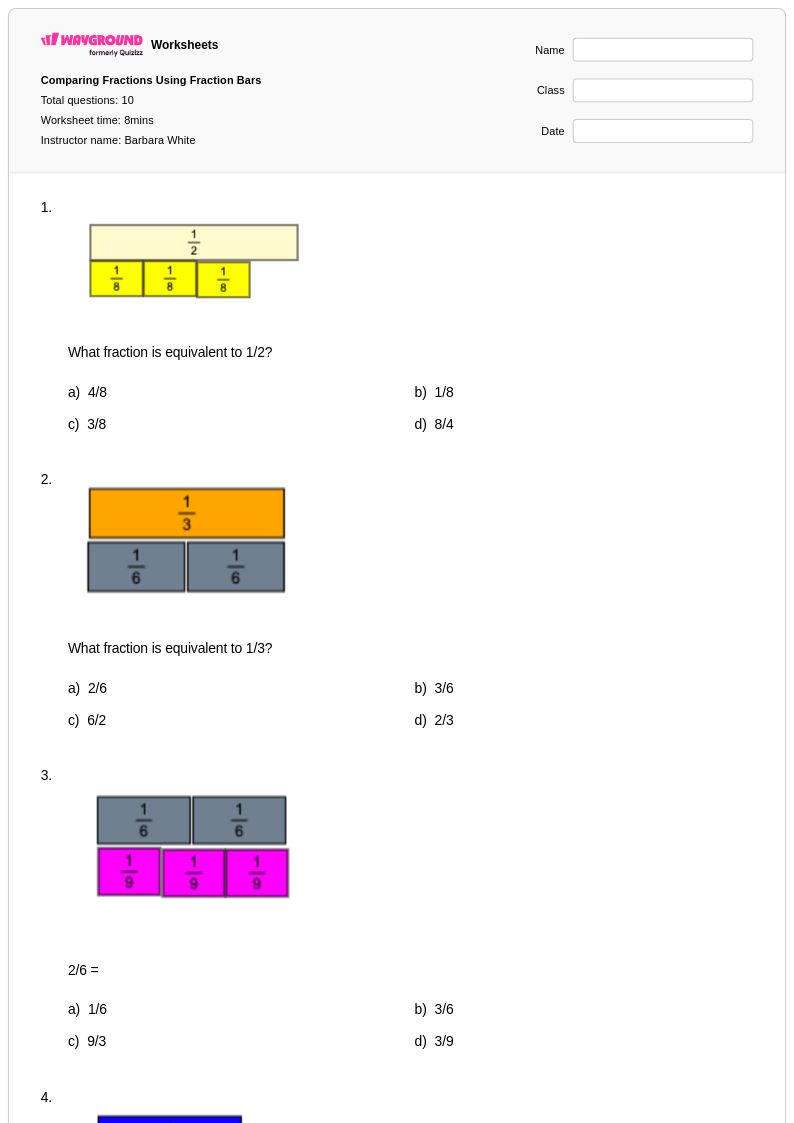
10 Q
2nd - 4th
10 Q
2nd - 4th
21 Q
2nd - 4th
15 Q
1st - 5th
12 Q
2nd
15 Q
1st - 5th
16 Q
2nd
7 Q
2nd

13 Q
2nd
10 Q
1st - 5th
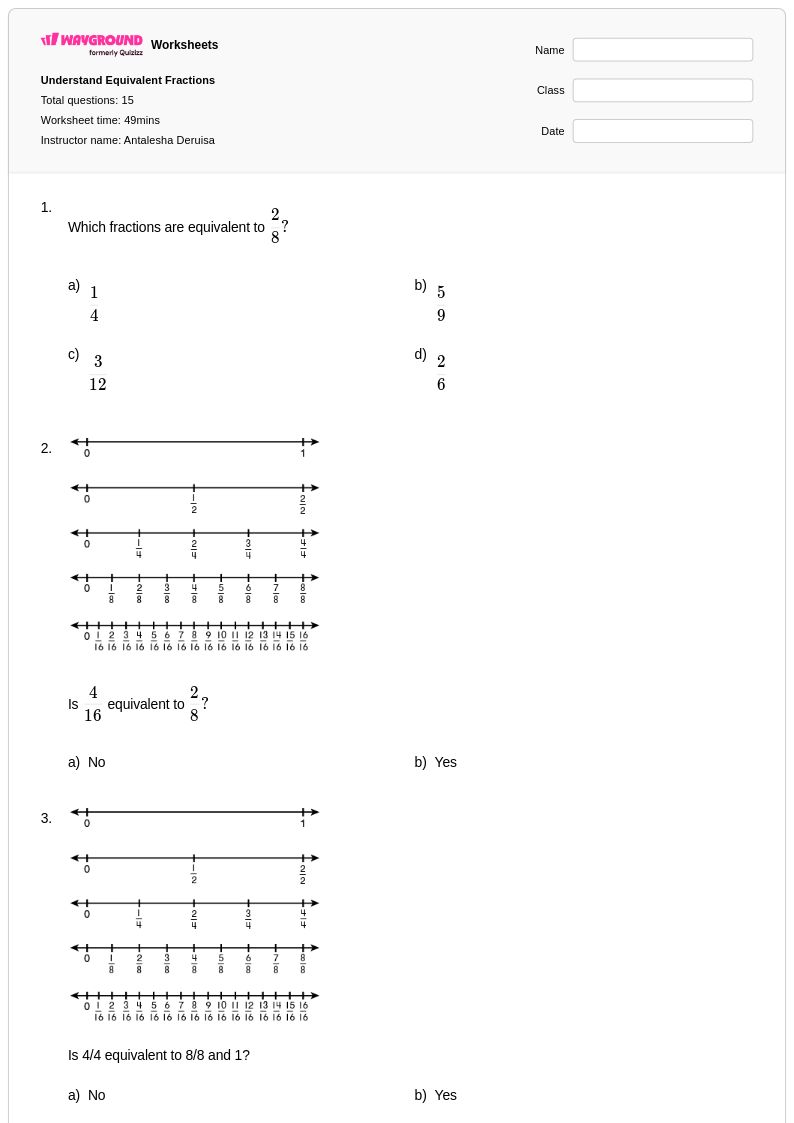
15 Q
1st - 5th
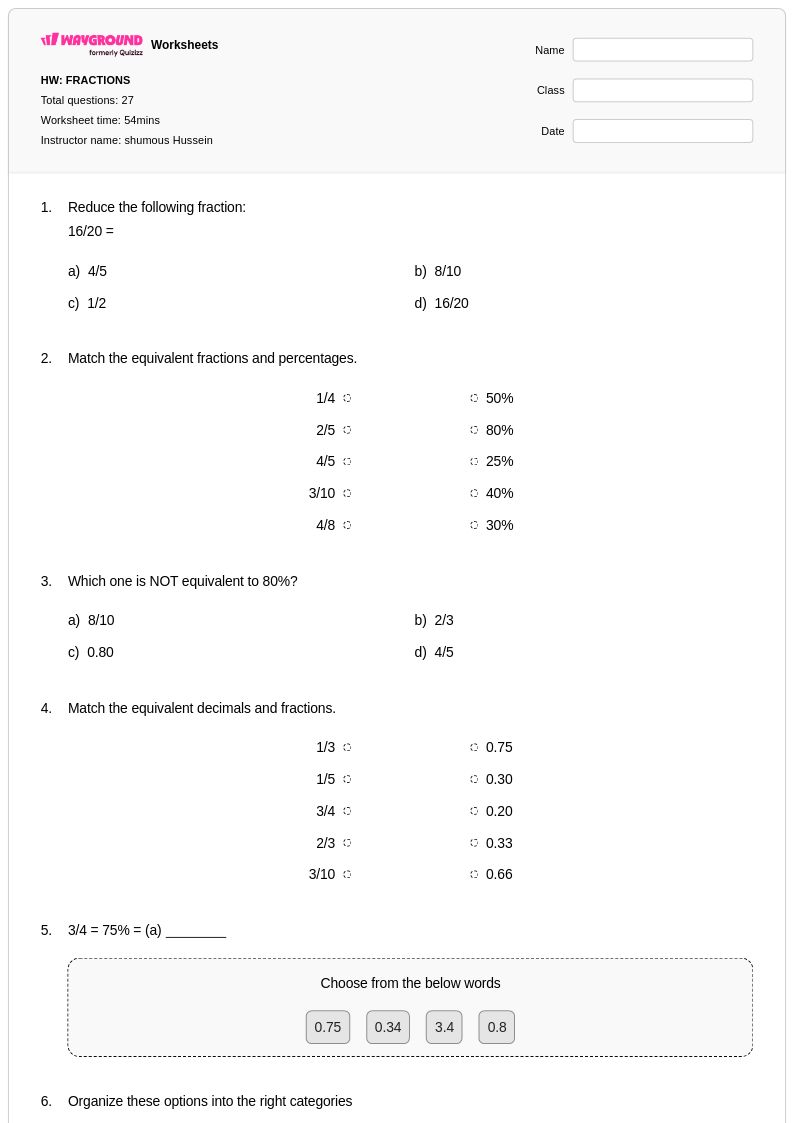
27 Q
2nd
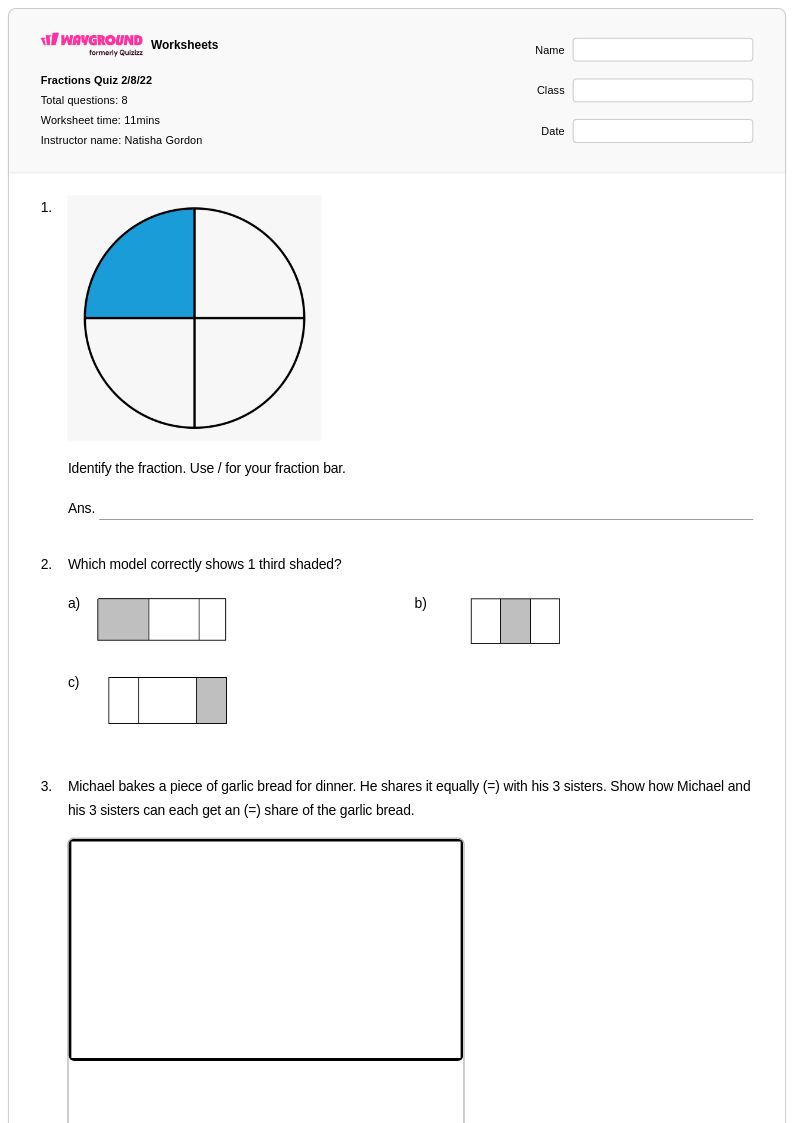
8 Q
1st - 3rd
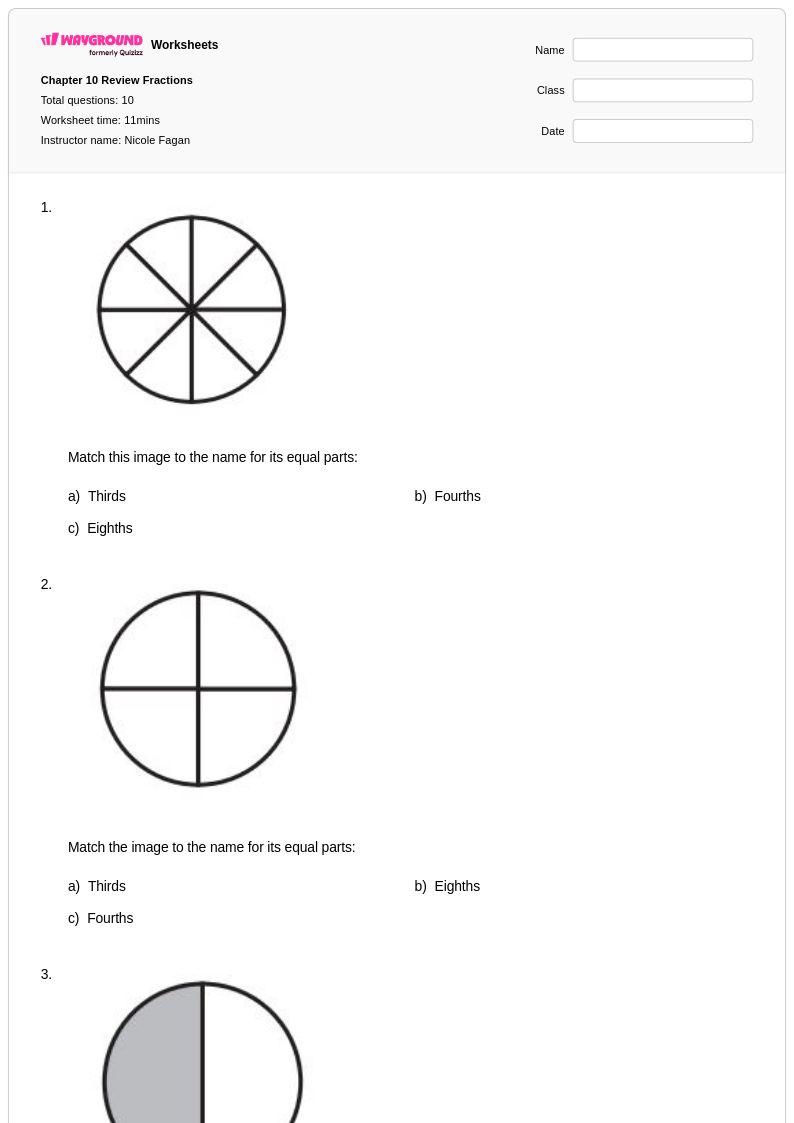
10 Q
2nd - 4th
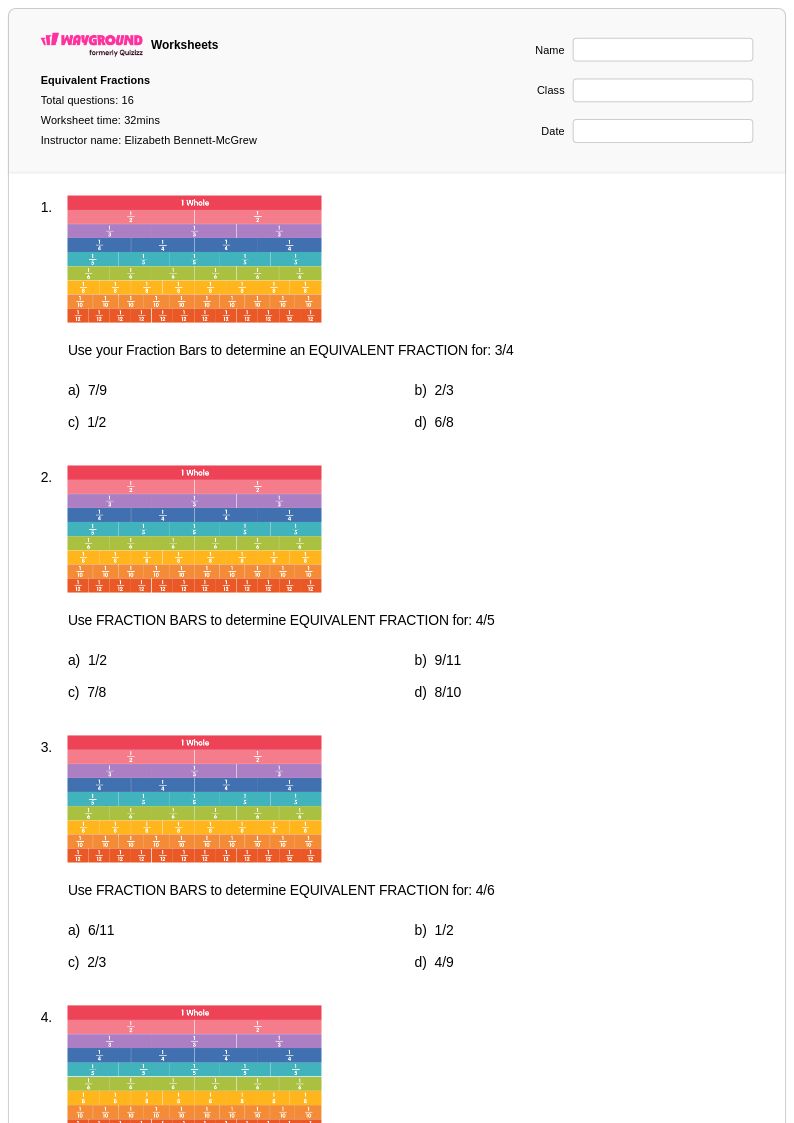
16 Q
1st - 3rd
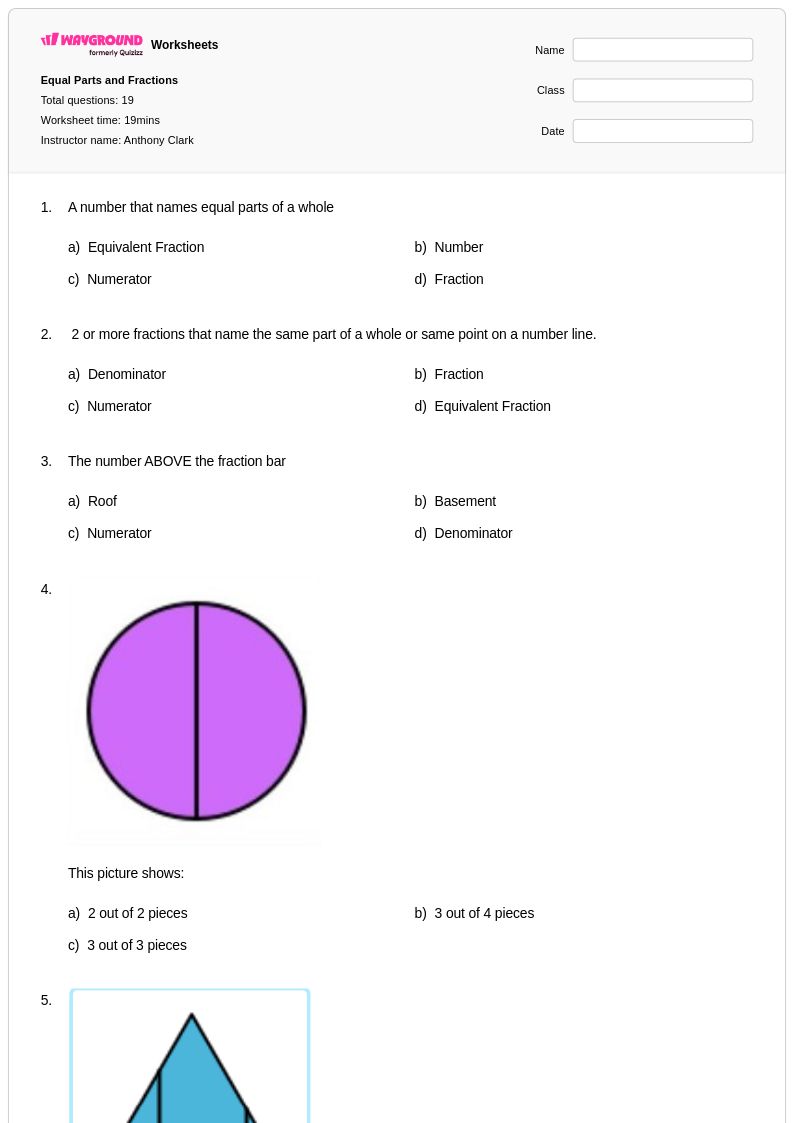
19 Q
2nd - Uni
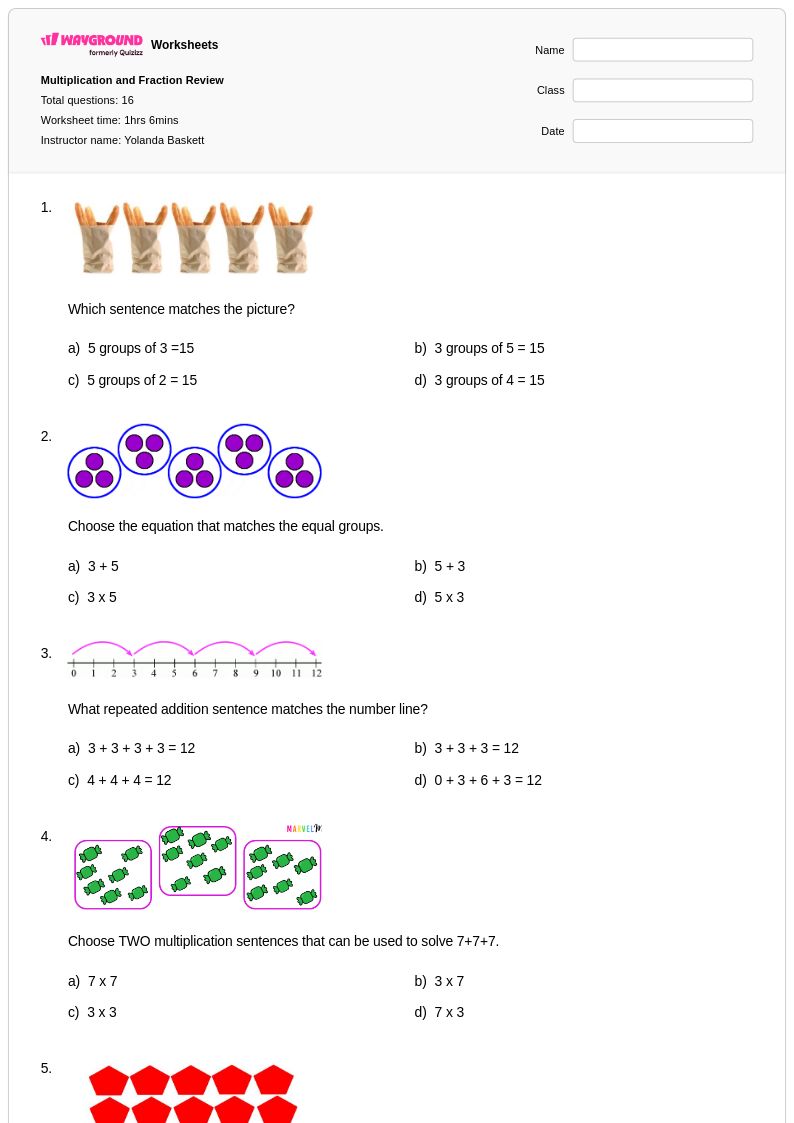
16 Q
2nd
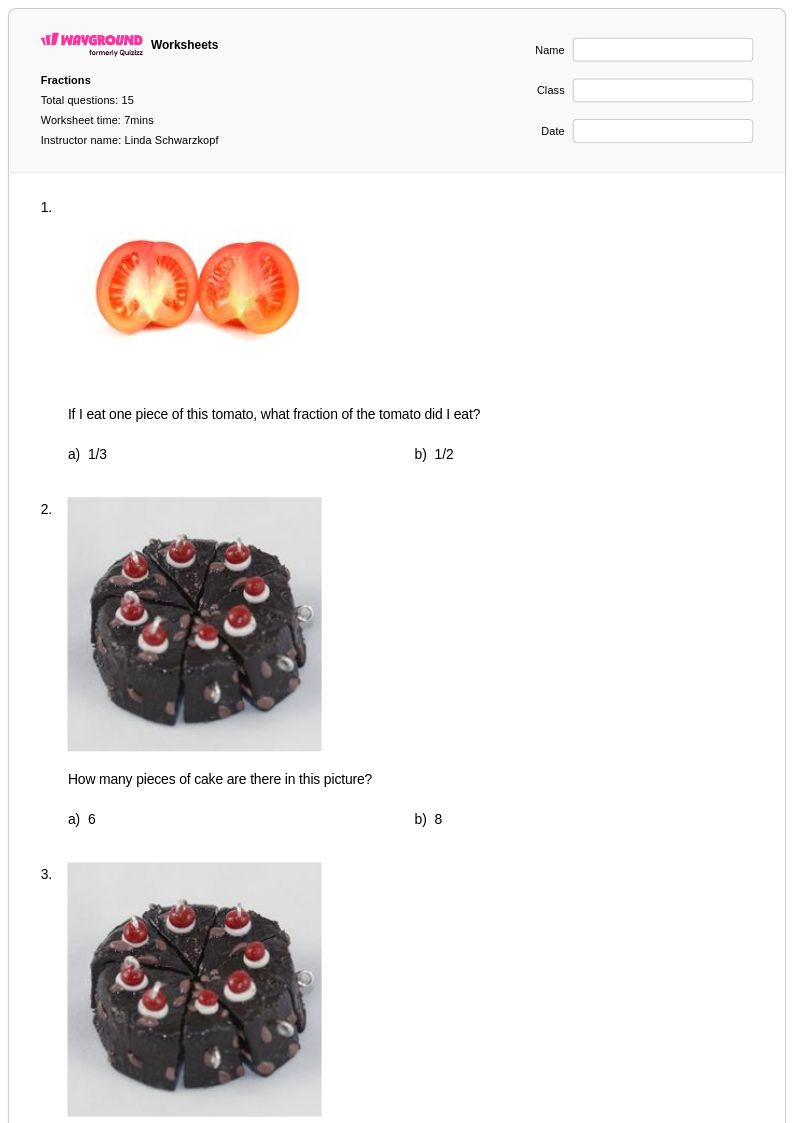
15 Q
2nd - 3rd
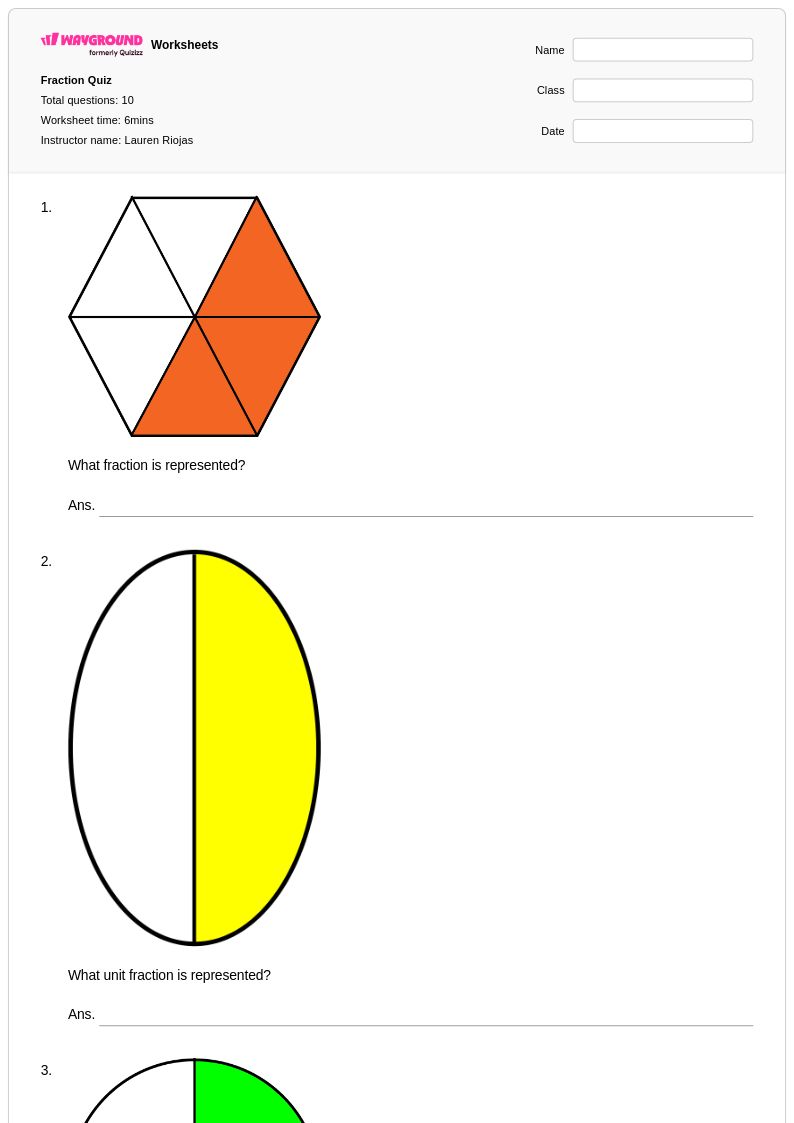
10 Q
2nd - 3rd
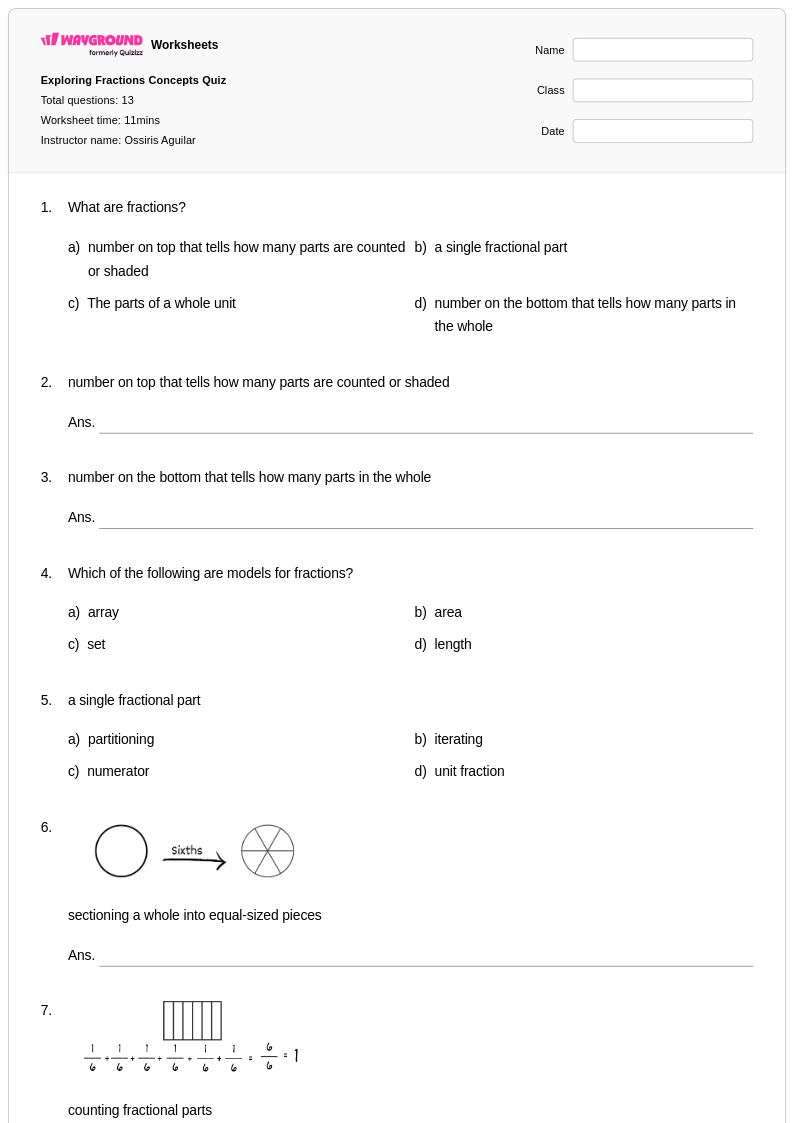
13 Q
1st - 5th
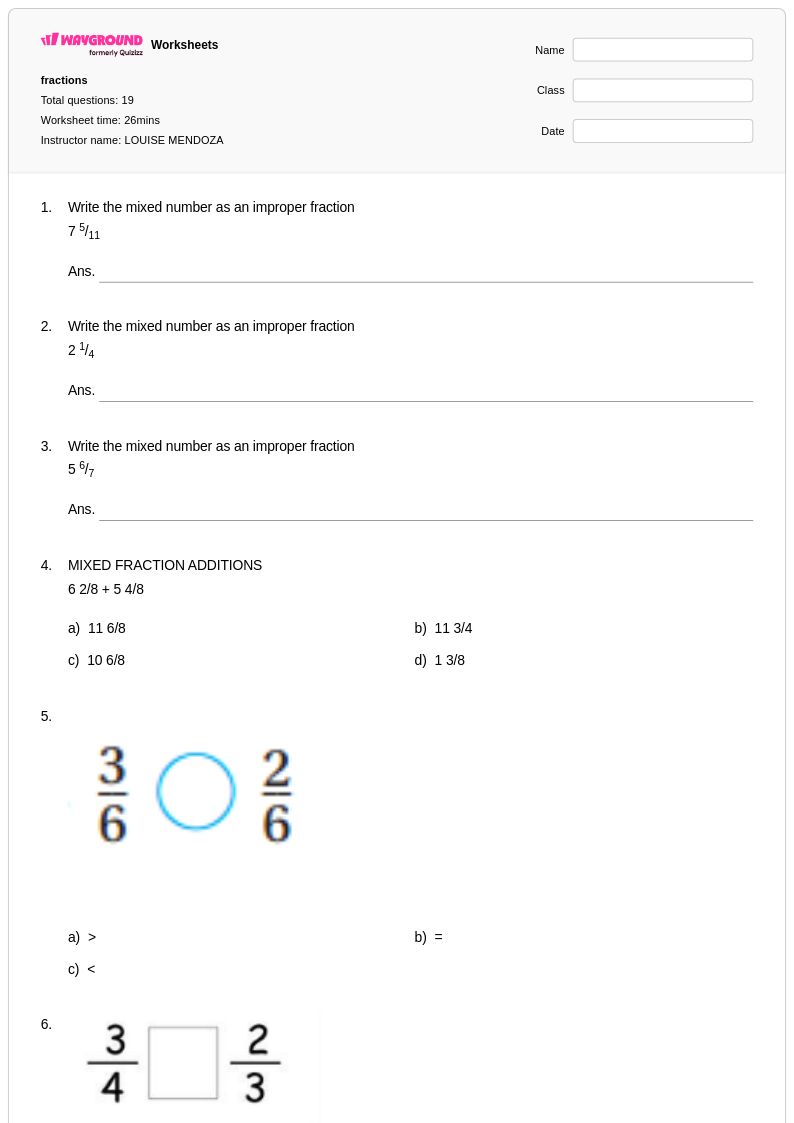
19 Q
1st - 5th
Explore Other Subject Worksheets for class 2
Explore printable Fraction Bars worksheets for Class 2
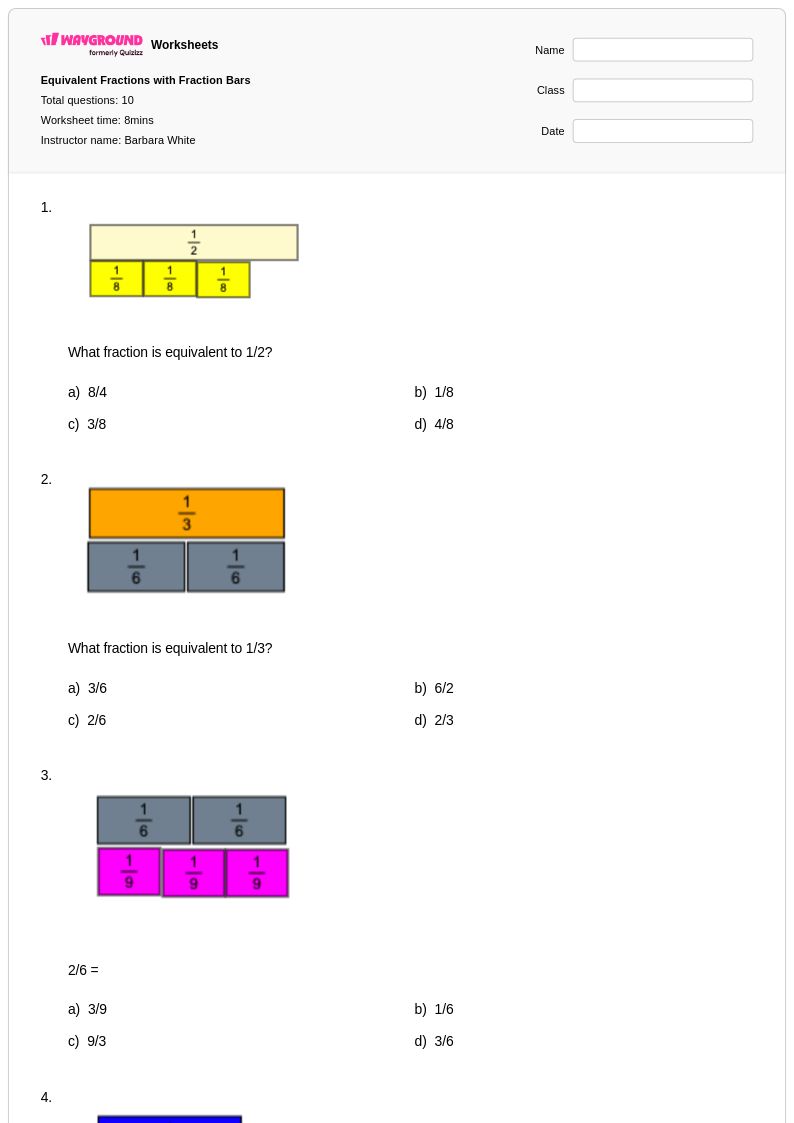
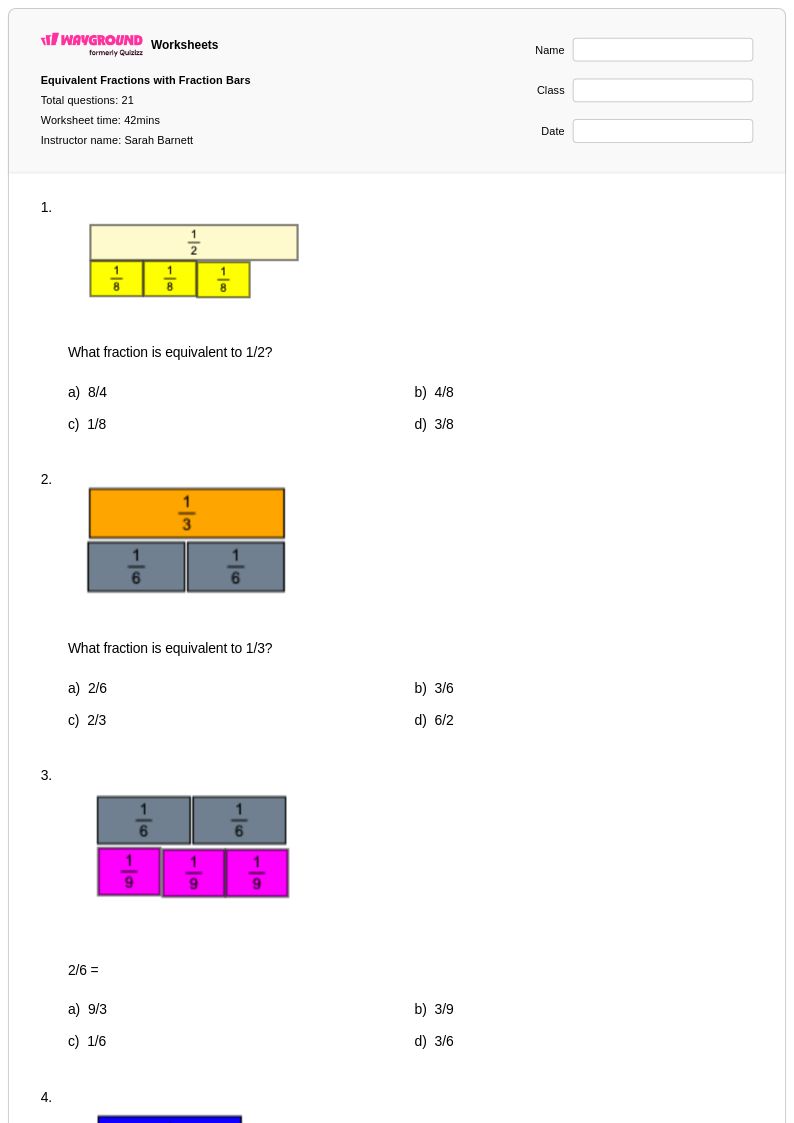
Class 2 fraction bars worksheets available through Wayground (formerly Quizizz) provide young learners with essential visual representations to build foundational understanding of fractional concepts. These carefully designed practice problems help students recognize how fractions represent parts of a whole by using rectangular bars divided into equal sections, allowing children to see and manipulate fraction relationships concretely. The worksheets strengthen critical skills including identifying equal parts, comparing fraction sizes, and understanding basic fraction notation through hands-on activities that make abstract mathematical concepts accessible to second-grade minds. Each printable resource includes comprehensive answer keys and is available as free pdf downloads, ensuring teachers have complete instructional support for introducing this fundamental mathematical concept.
Wayground (formerly Quizizz) empowers educators with millions of teacher-created fraction bars resources specifically designed for Class 2 mathematics instruction, featuring robust search and filtering capabilities that allow precise selection based on skill level and learning objectives. The platform's standards alignment ensures worksheets meet curriculum requirements while differentiation tools enable teachers to customize content for diverse learning needs, supporting both remediation for struggling students and enrichment for advanced learners. Available in both printable and digital formats including downloadable pdfs, these comprehensive worksheet collections streamline lesson planning by providing ready-to-use materials that facilitate systematic skill practice, formative assessment, and targeted intervention strategies that help young mathematicians develop confident understanding of fractional relationships through visual learning approaches.
FAQs
What is the focus of fraction instruction in Grade 2?
How can I introduce comparing fractions in Grade 2?
What skills do these Grade 2 fraction bar worksheets cover?
What is a common mistake second graders make when comparing fractions?
How can I use these fraction bar worksheets with my second graders?
How does this topic connect to the Grade 2 math curriculum?