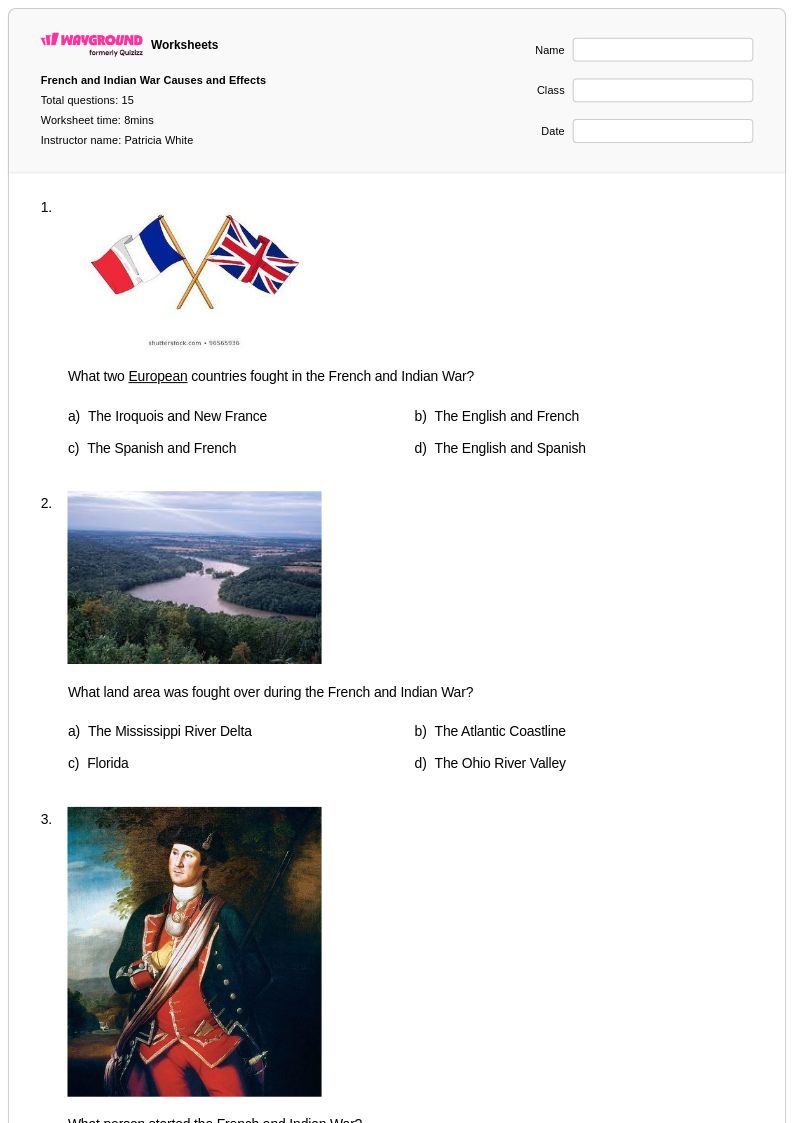
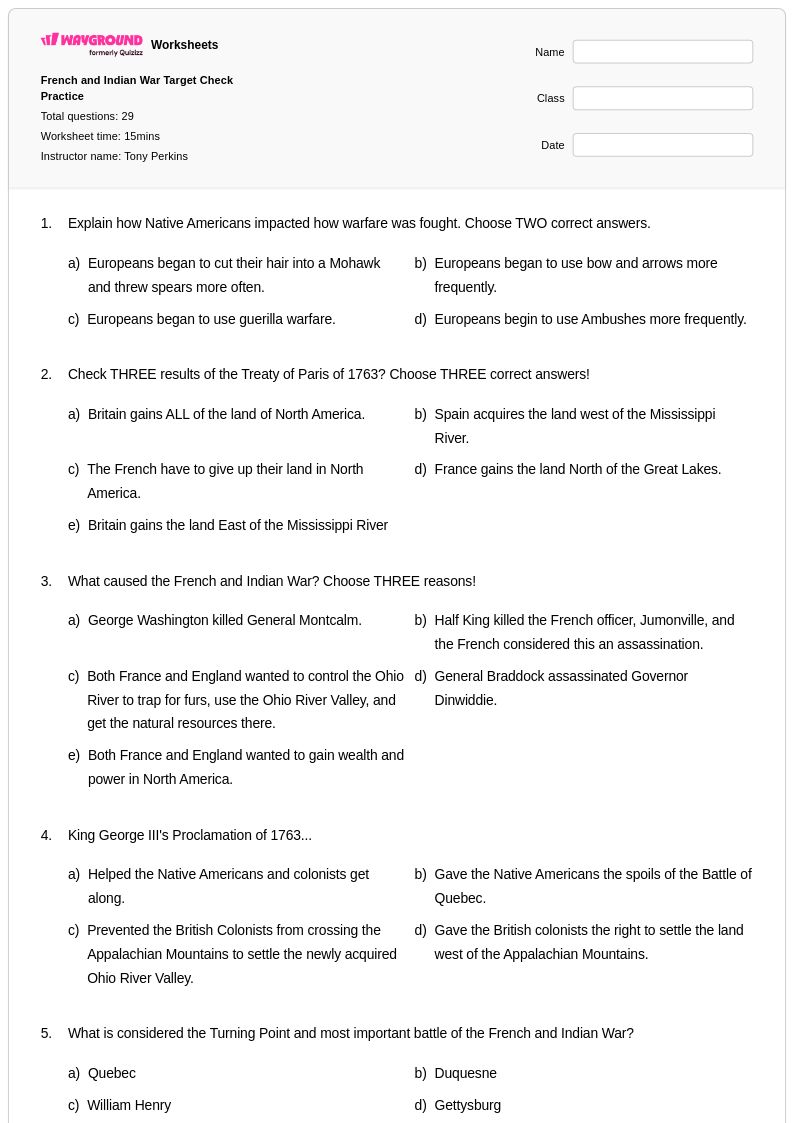
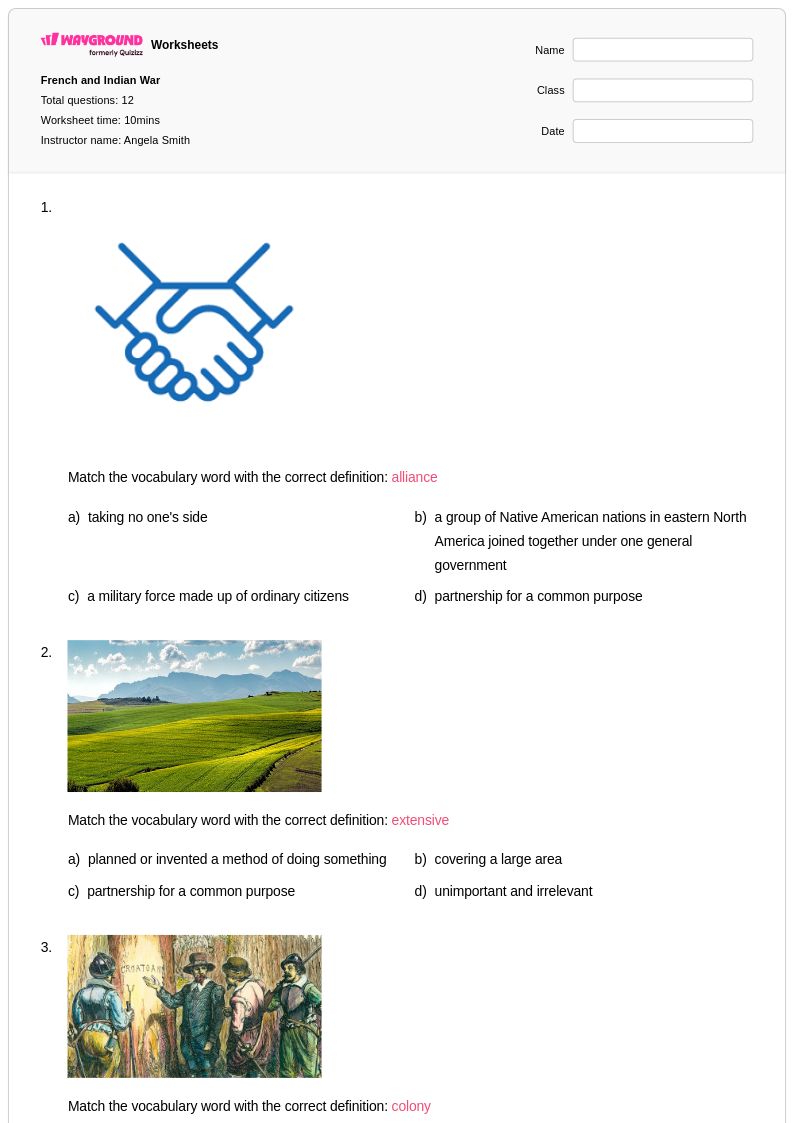
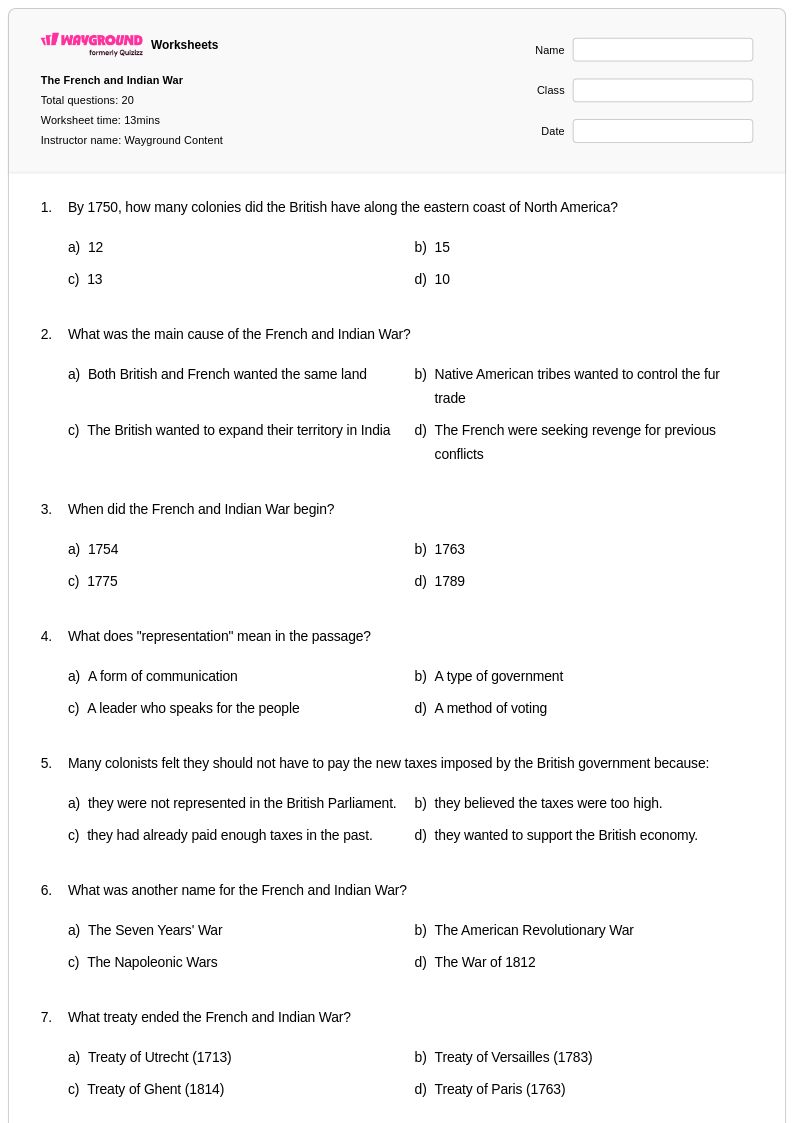
Free Printable French and Indian War Worksheets for Class 10
Enhance Class 10 students' understanding of the French and Indian War with Wayground's comprehensive collection of free worksheets, printables, and practice problems featuring detailed answer keys in convenient PDF format.
Explore printable French and Indian War worksheets for Class 10
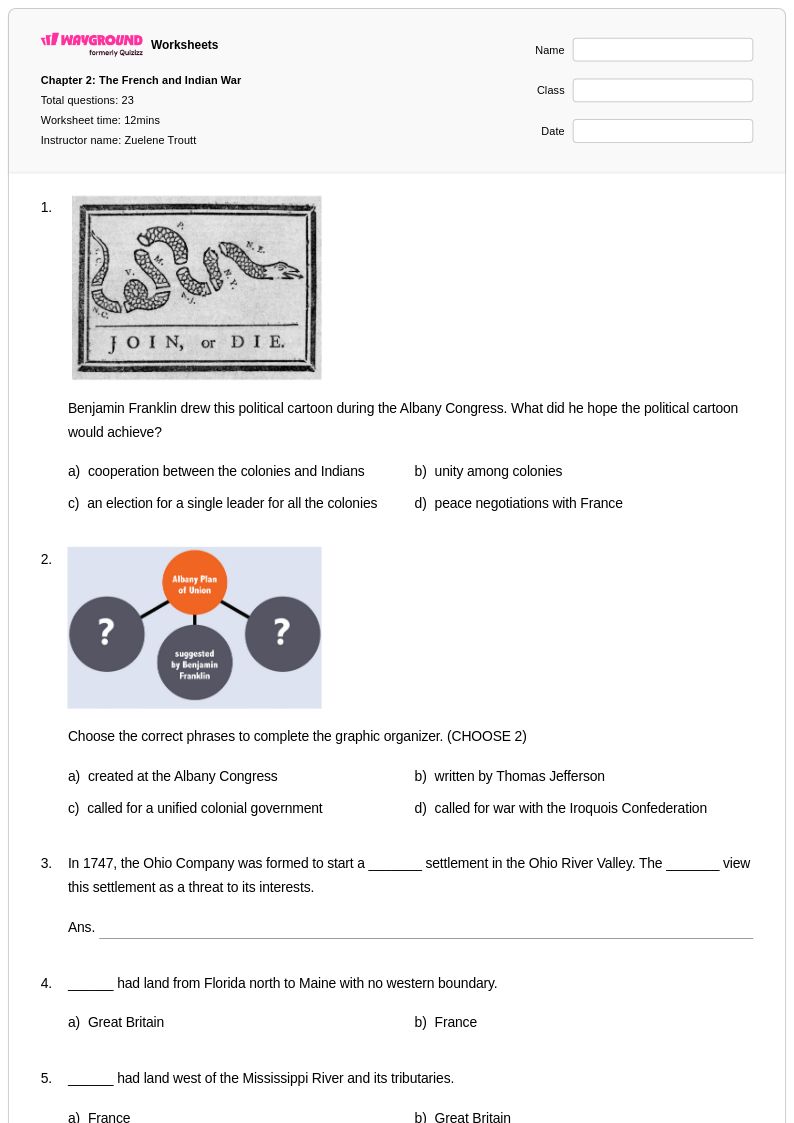
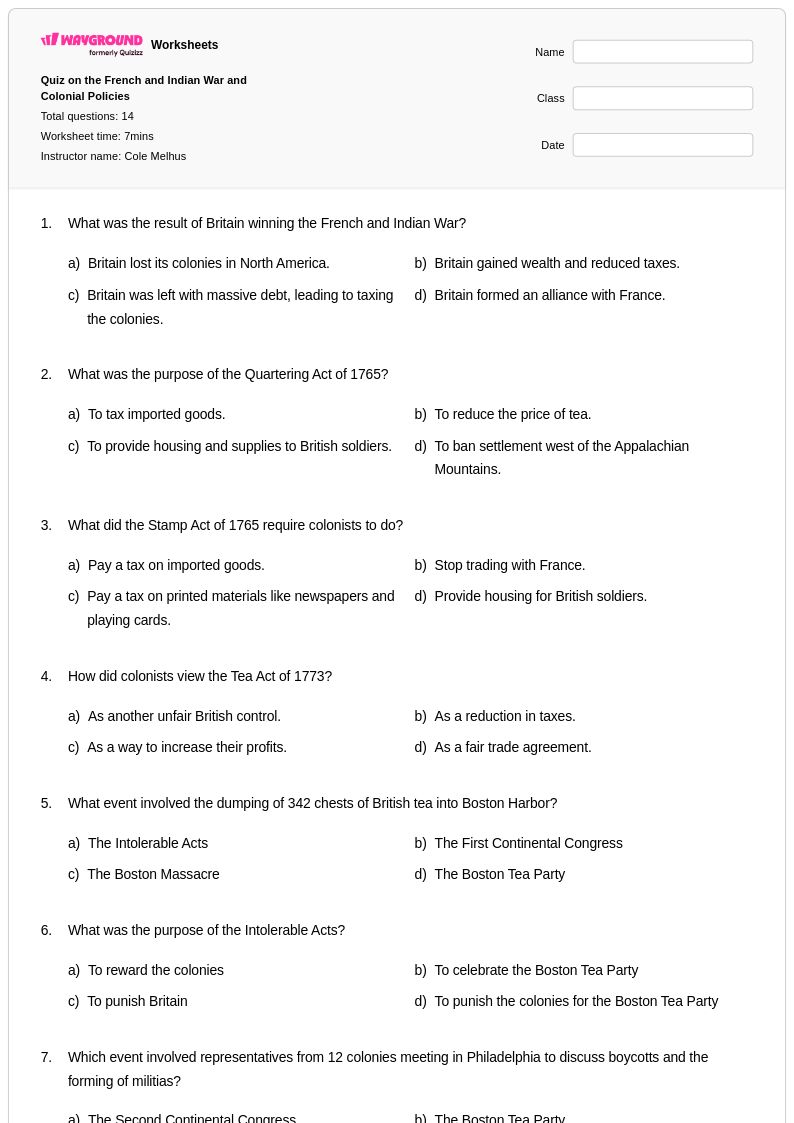
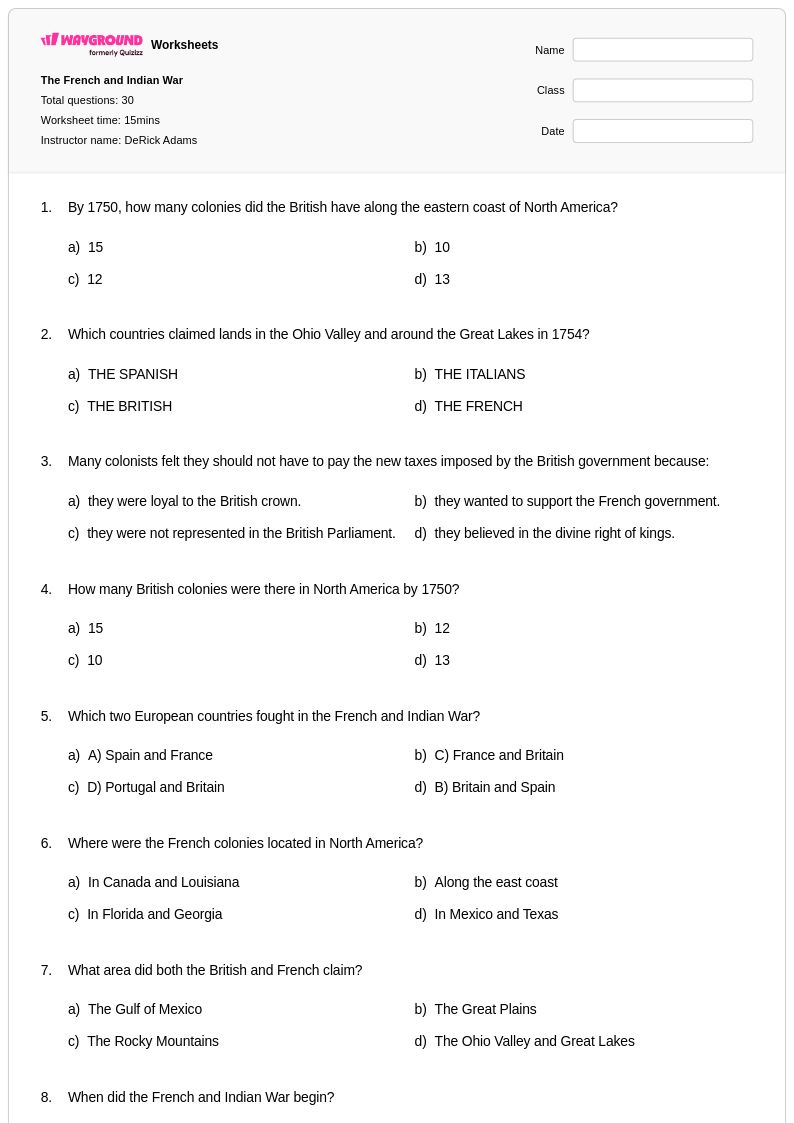
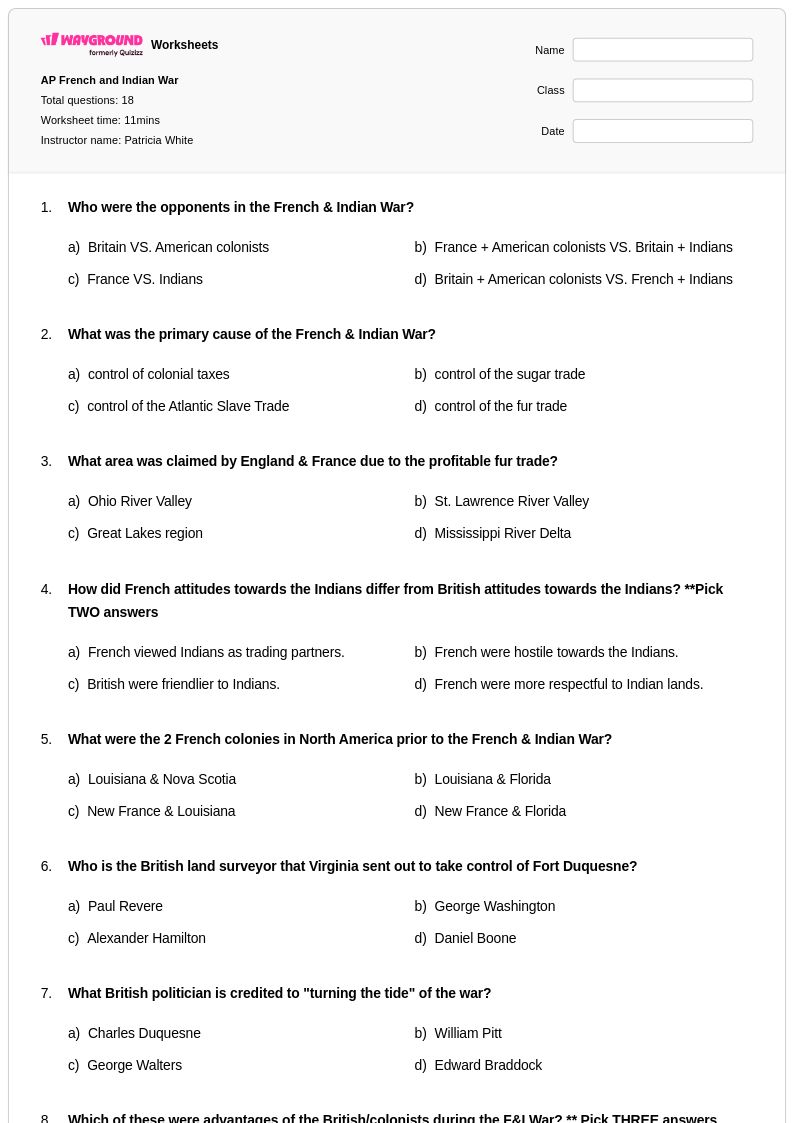
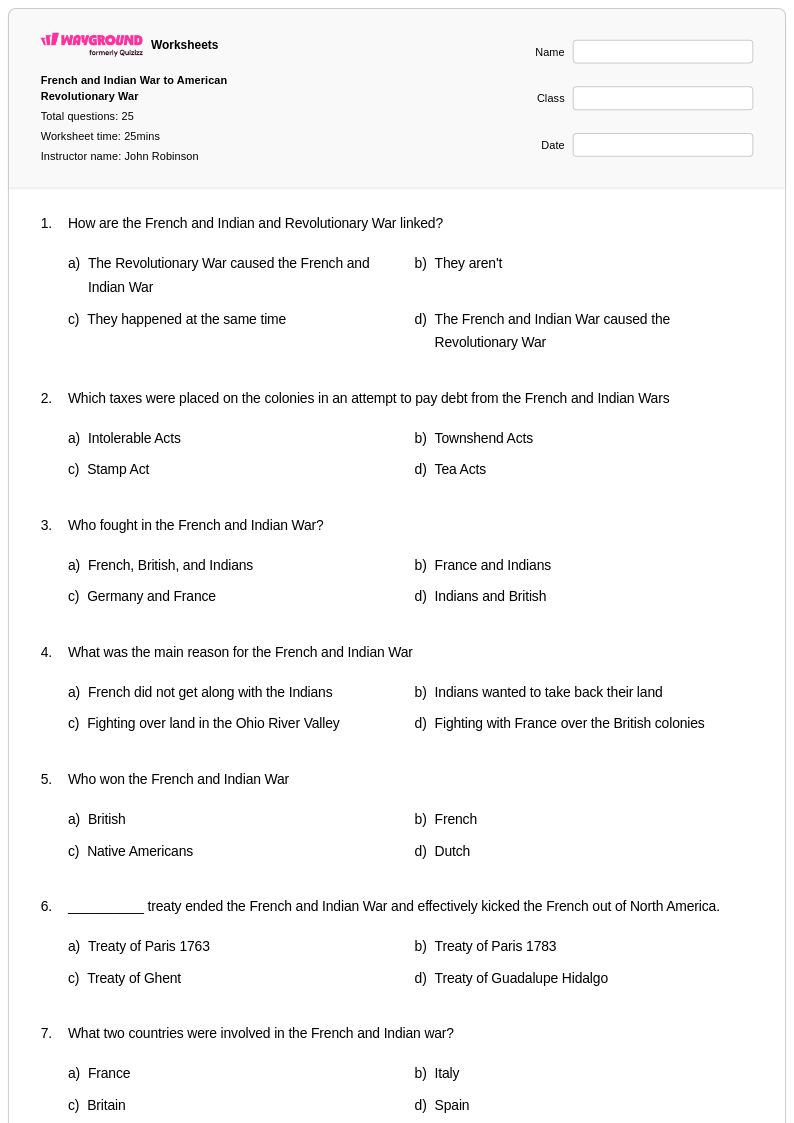
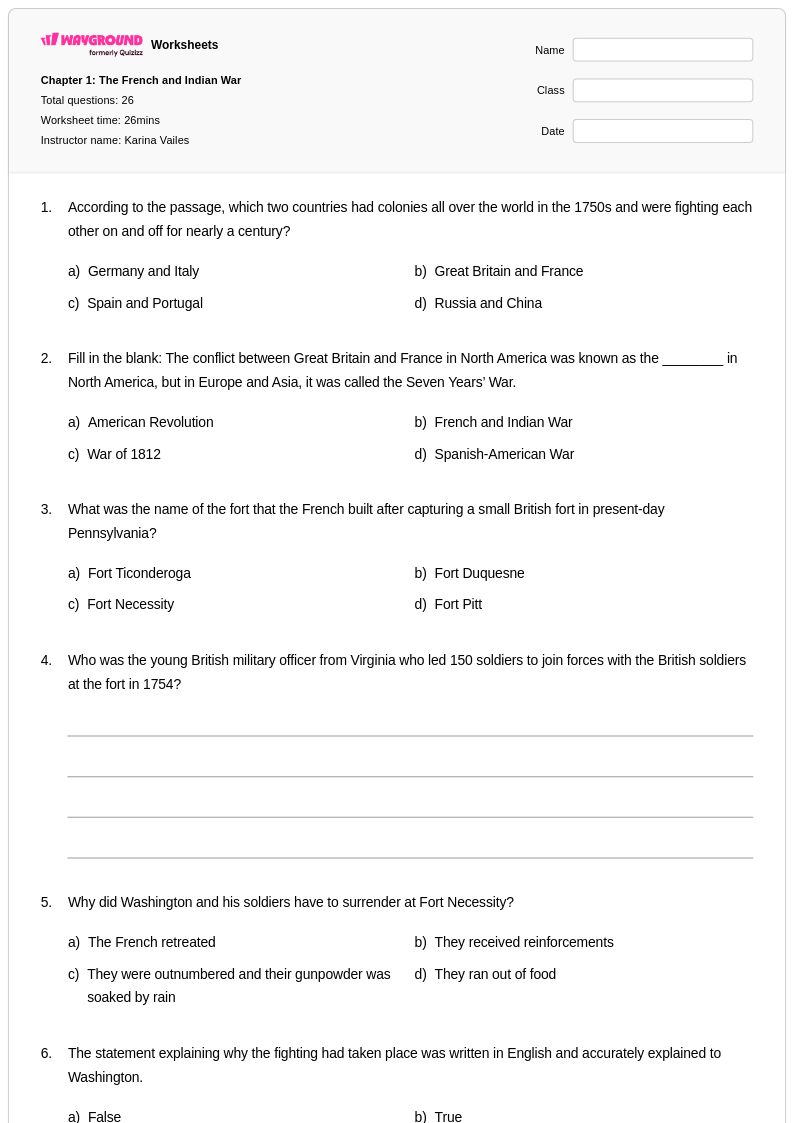
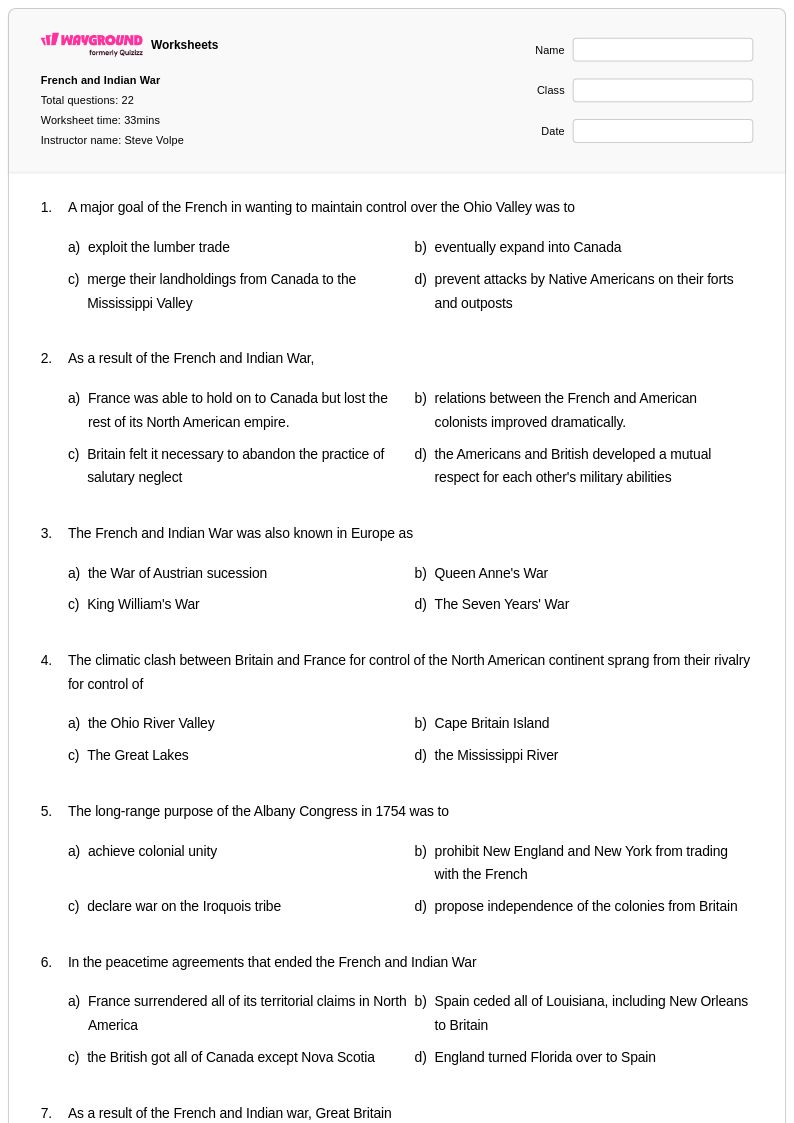
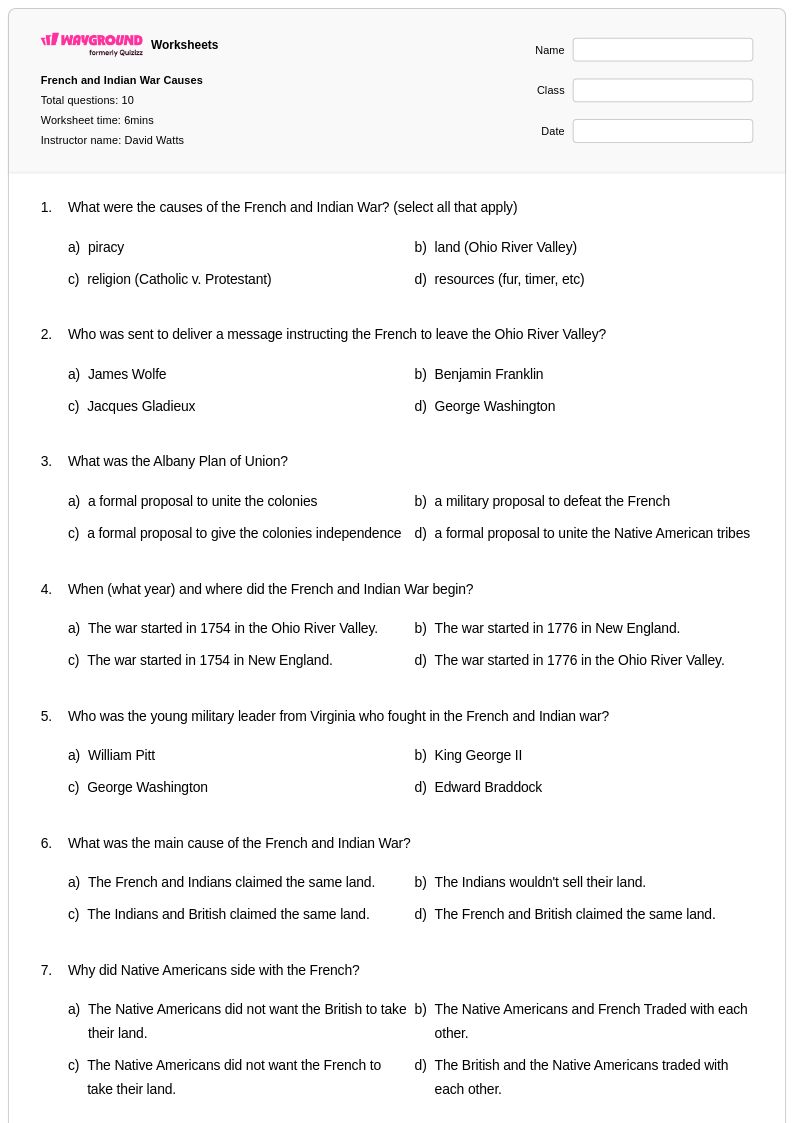
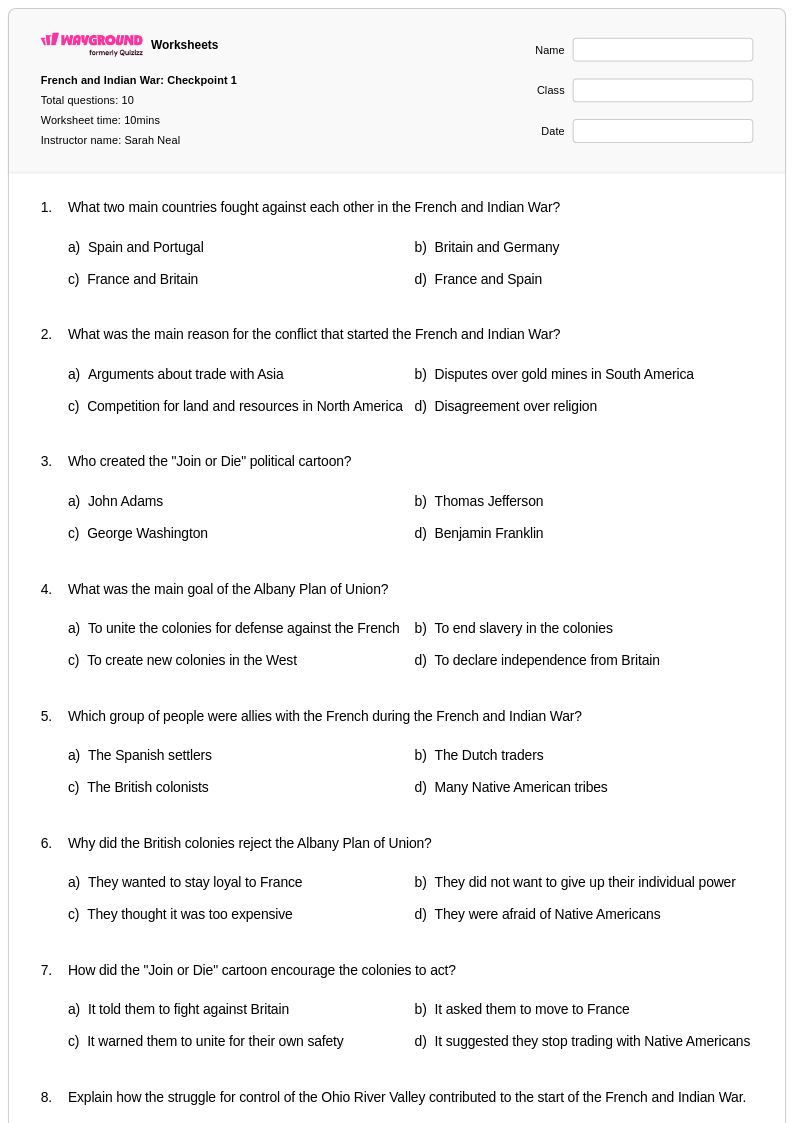
French and Indian War worksheets for Class 10 students available through Wayground (formerly Quizizz) provide comprehensive coverage of this pivotal colonial conflict that reshaped North America between 1754 and 1763. These educational resources strengthen critical thinking skills by engaging students with primary source analysis, cause-and-effect relationships, and the complex alliances between European powers and Native American tribes. Students develop historical analysis abilities through practice problems that examine key battles like Fort Duquesne and the Plains of Abraham, while exploring the economic and territorial motivations that drove British and French expansion. Each worksheet collection includes detailed answer keys and comprehensive explanations, with free printables covering topics from George Washington's early military experience to the Treaty of Paris and its lasting consequences for colonial America.
Wayground (formerly Quizizz) supports educators with an extensive collection of teacher-created French and Indian War resources, drawing from millions of professionally developed materials that undergo rigorous quality standards. The platform's advanced search and filtering capabilities allow teachers to locate grade-appropriate content aligned with state history standards, while differentiation tools enable customization for diverse learning needs and skill levels. These flexible worksheet collections are available in both printable pdf formats and interactive digital versions, facilitating seamless integration into lesson planning whether for traditional classroom instruction or remote learning environments. Teachers can efficiently address remediation needs for struggling students while providing enrichment opportunities for advanced learners, using targeted skill practice materials that reinforce understanding of colonial conflicts and their enduring impact on American development.
FAQs
How do I teach the French and Indian War to middle or high school students?
Start by grounding students in the competing colonial interests of Britain, France, and Native American nations before 1754, so the conflict has a clear context. Use primary source analysis to examine key turning points like Braddock's Defeat and the fall of Quebec, and connect George Washington's early military experience to his later role in the Revolution. Closing the unit with the Treaty of Paris and its consequences — including Pontiac's Rebellion and the Proclamation of 1763 — helps students see the war as a direct cause of American independence.
What are common misconceptions students have about the French and Indian War?
The most persistent misconception is that the war was simply between France and England — students often overlook the central and varied roles of Native American tribes, who formed strategic alliances based on their own political interests rather than European loyalty. Many students also conflate the French and Indian War with the broader Seven Years' War, not realizing the North American theater was part of a global conflict. Additionally, students frequently underestimate the Albany Plan of Union's significance, dismissing it as a failed idea rather than recognizing it as an early model for colonial cooperation.
What exercises help students practice analyzing the causes and effects of the French and Indian War?
Cause-and-effect mapping works well for tracing how competition over the Ohio River Valley escalated into full-scale war, and then how the war's outcome triggered colonial resentment toward British taxation. Document-based questions using the Albany Plan of Union or excerpts from the Treaty of Paris challenge students to interpret primary sources rather than just recall facts. Timeline activities that connect the war's end in 1763 to the start of the American Revolution in 1775 help students build the chronological reasoning skills essential for AP and state history assessments.
How do I assess whether students understand the significance of the French and Indian War?
Strong assessments move beyond recall and ask students to explain the war's consequences — specifically why British debt from the conflict led to new colonial taxes, which in turn fueled revolutionary sentiment. Short-answer questions about key figures like George Washington, William Pitt, and Chief Pontiac can reveal whether students understand individual agency within larger historical forces. A well-designed multiple-choice or matching section on alliances and battles (Fort Necessity, Fort Duquesne, Plains of Abraham) helps identify students who have surface-level knowledge versus those who understand the war's strategic logic.
How can I use French and Indian War worksheets in my classroom?
French and Indian War worksheets on Wayground are available as printable PDFs, making them easy to distribute for in-class work, homework, or sub plans, and they also come in digital formats suited for 1:1 device classrooms and hybrid learning environments. Teachers can host the worksheets as a quiz directly on Wayground, which allows for real-time progress monitoring and immediate feedback for students. Each worksheet includes a complete answer key, so they work equally well for independent student practice, small group review, or teacher-led instruction.
How do I differentiate French and Indian War instruction for students at different reading levels?
For struggling readers, focus on visual scaffolds like maps of the Ohio River Valley and alliance diagrams before introducing text-heavy primary sources. On Wayground, teachers can enable the Read Aloud accommodation so questions and content are read to students who need it, and Reduced Answer Choices can lower cognitive load for students who need additional support on assessments. Advanced students benefit from comparing British and French perspectives on the same events or analyzing how Native American nations like the Iroquois Confederacy calculated their alliances strategically.