
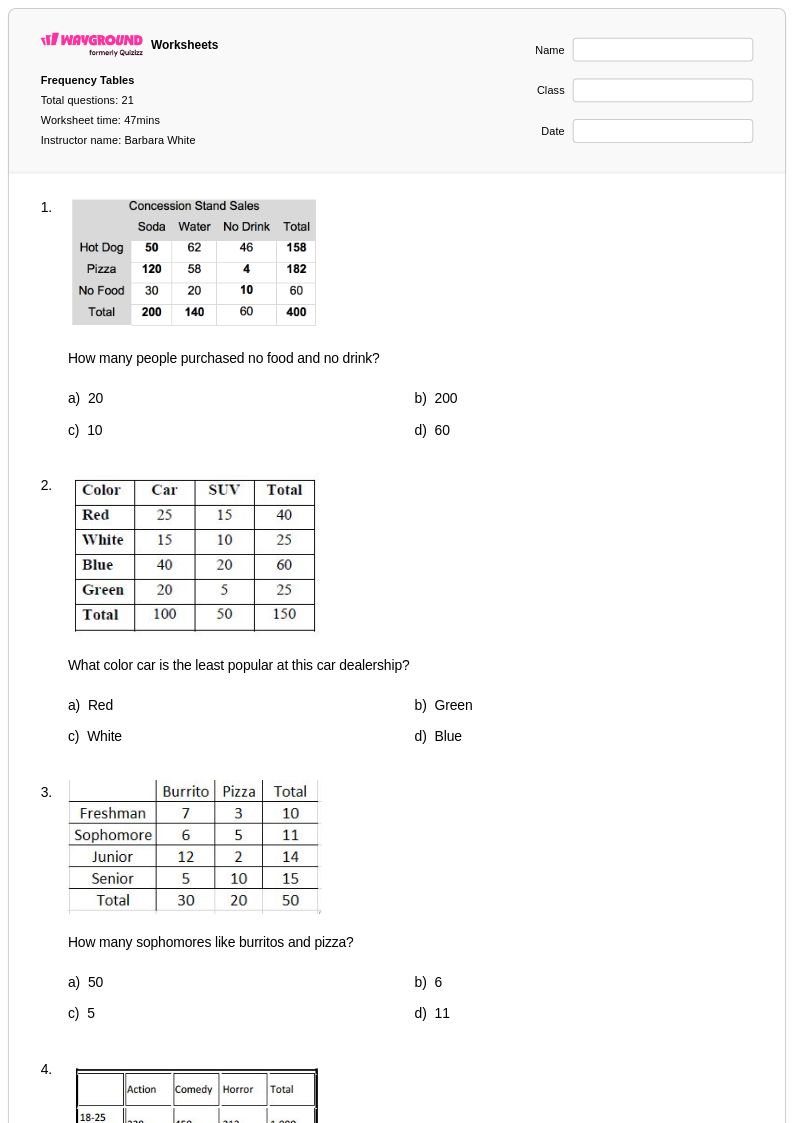
21 T
8th
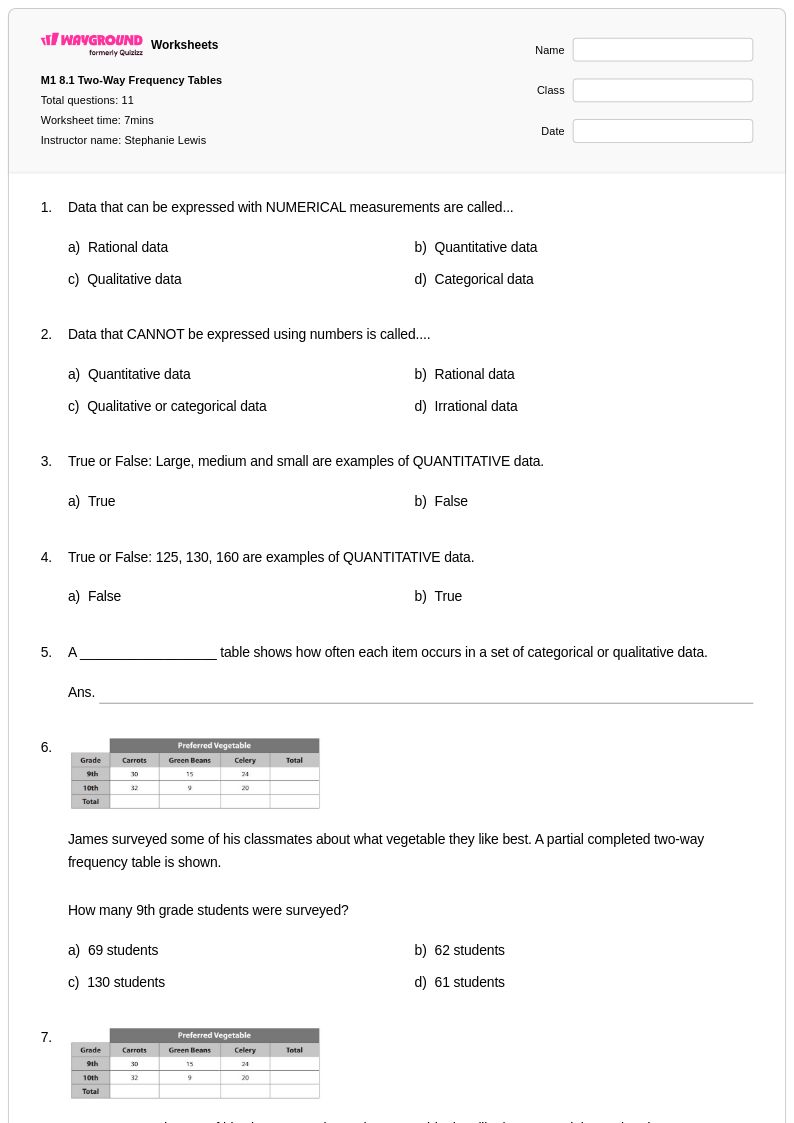
11 T
8th - 9th
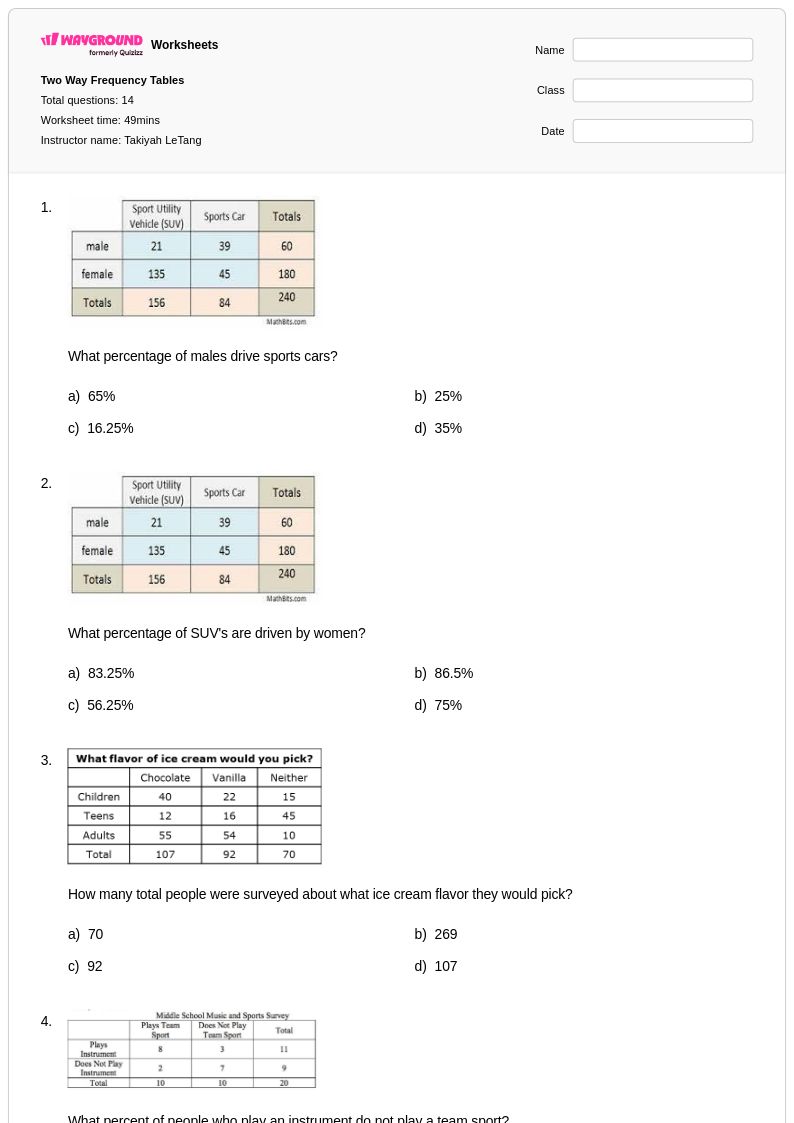
14 T
8th
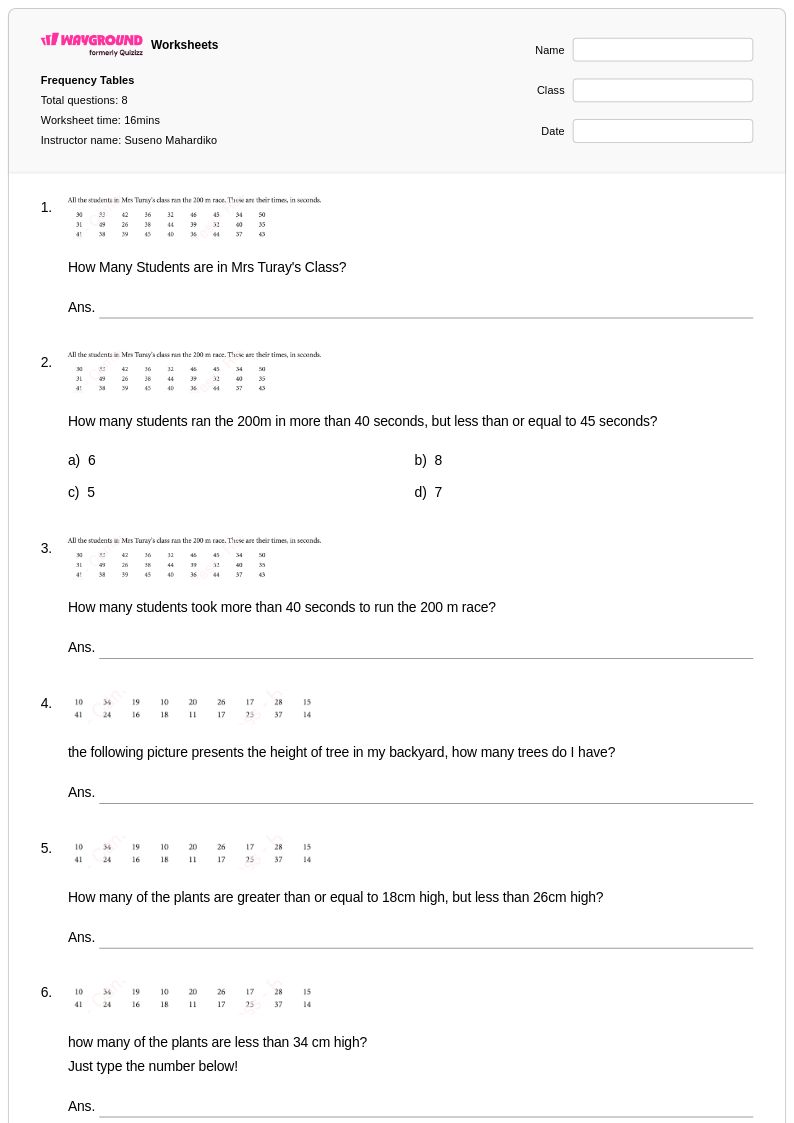
8 T
8th
19 T
8th - Uni
10 T
5th - Uni
20 T
5th - Uni
20 T
8th - Uni
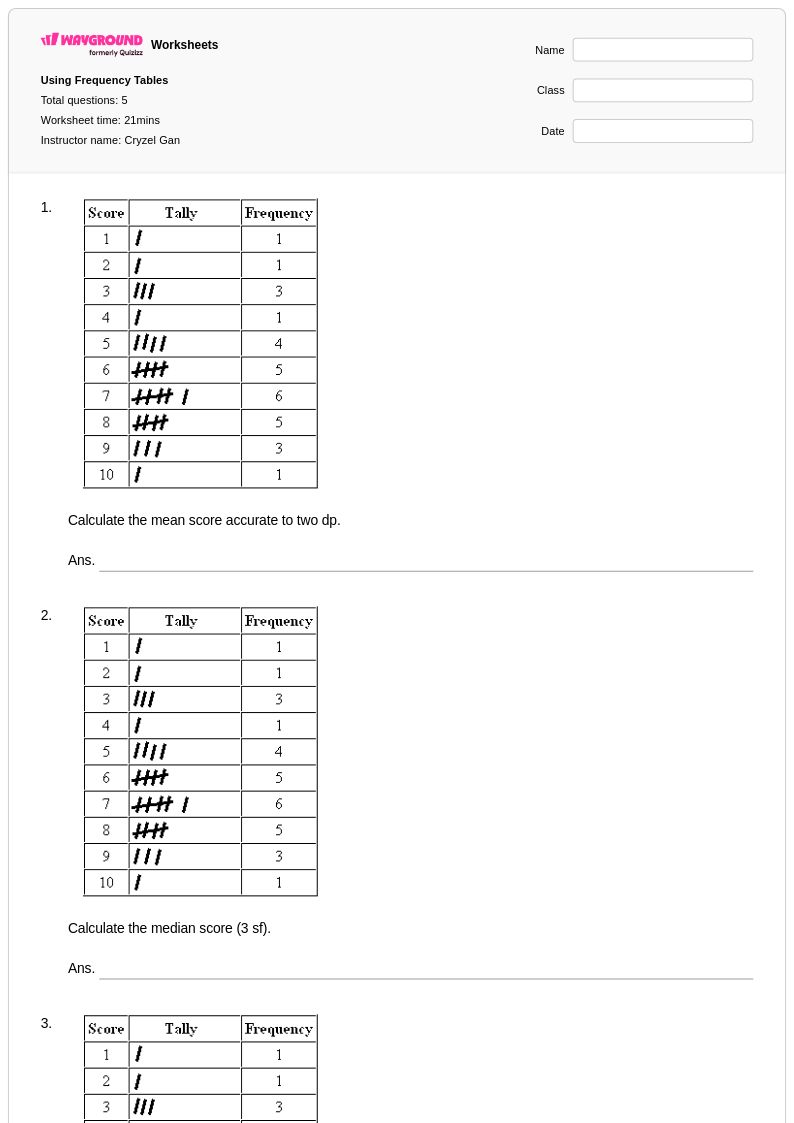
5 T
7th - 11th
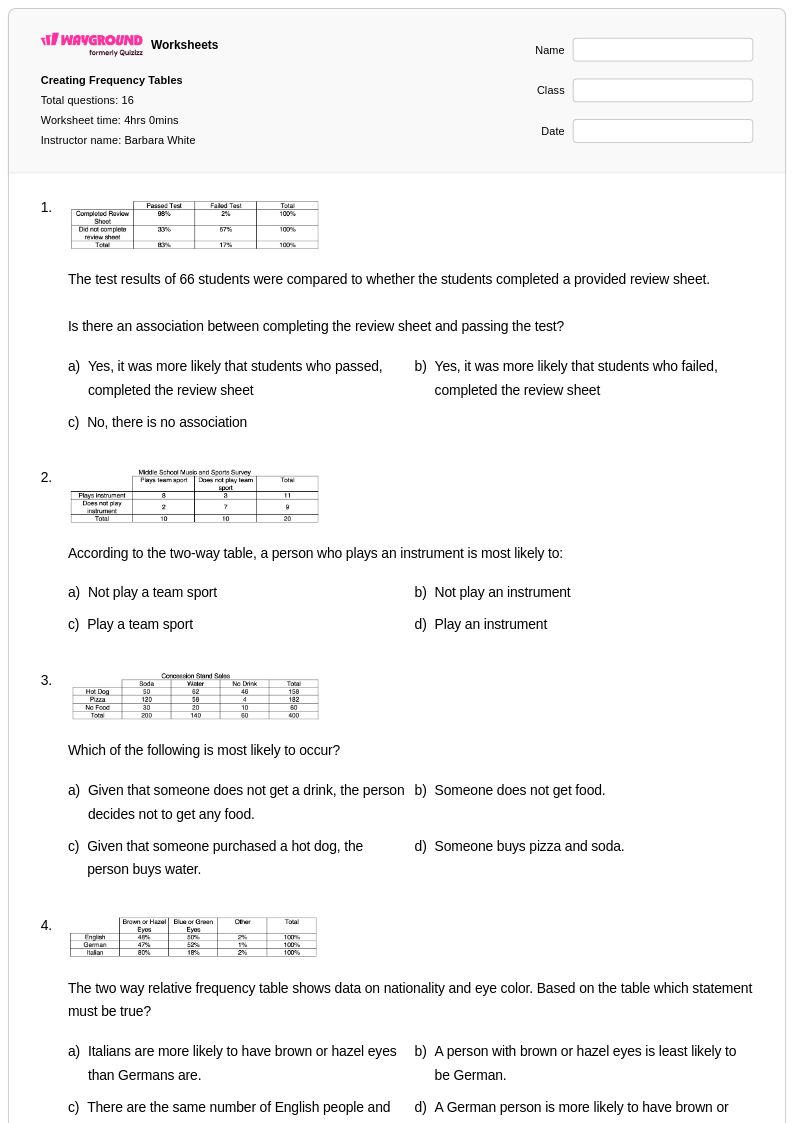
16 T
8th
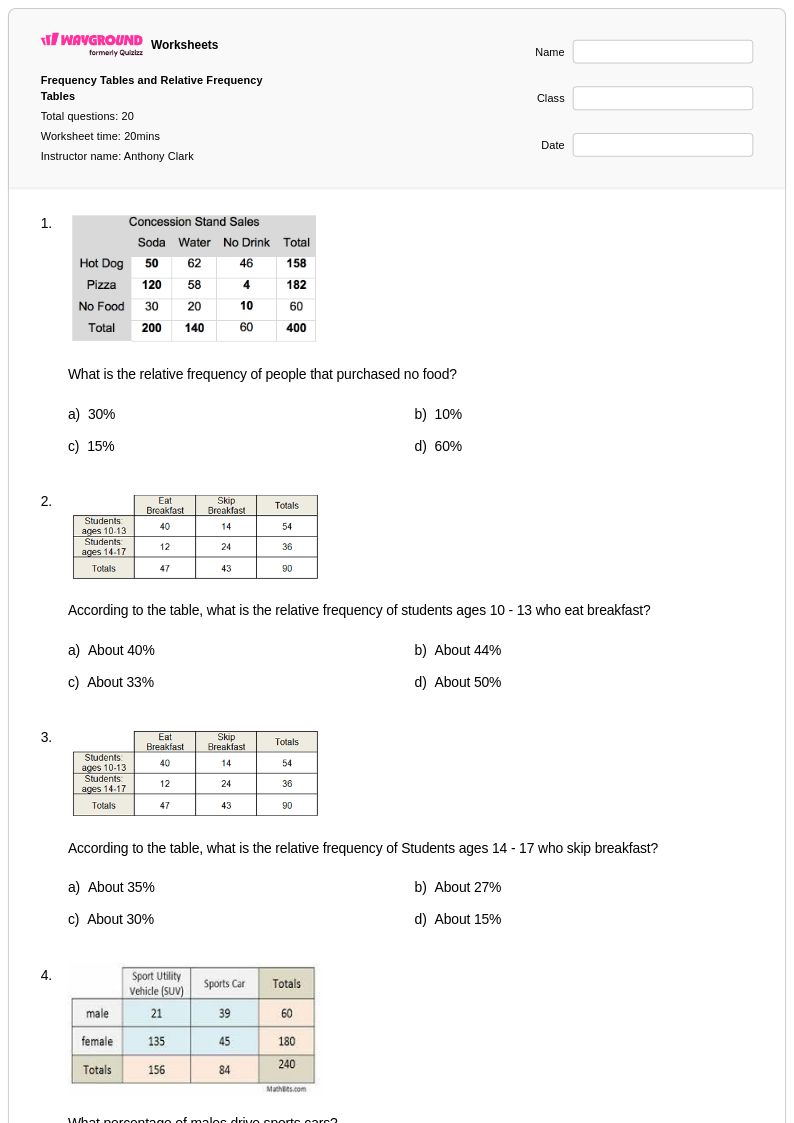
20 T
8th - Uni
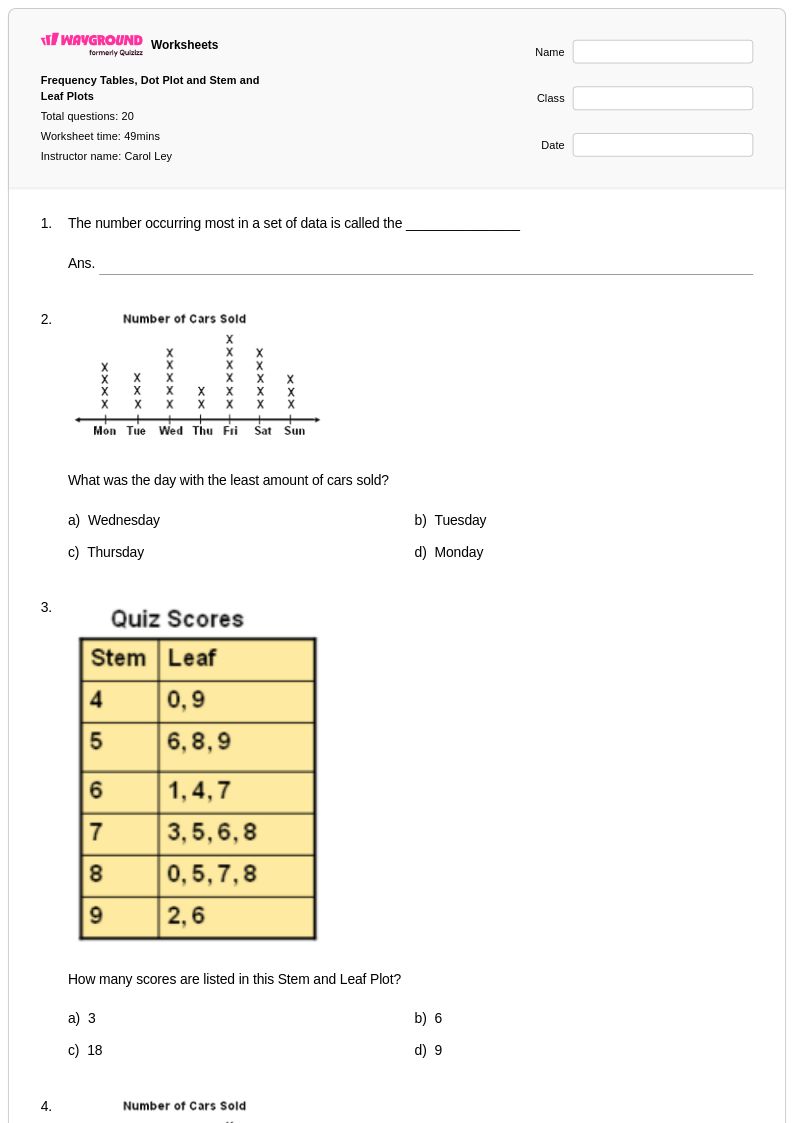
20 T
7th - 12th
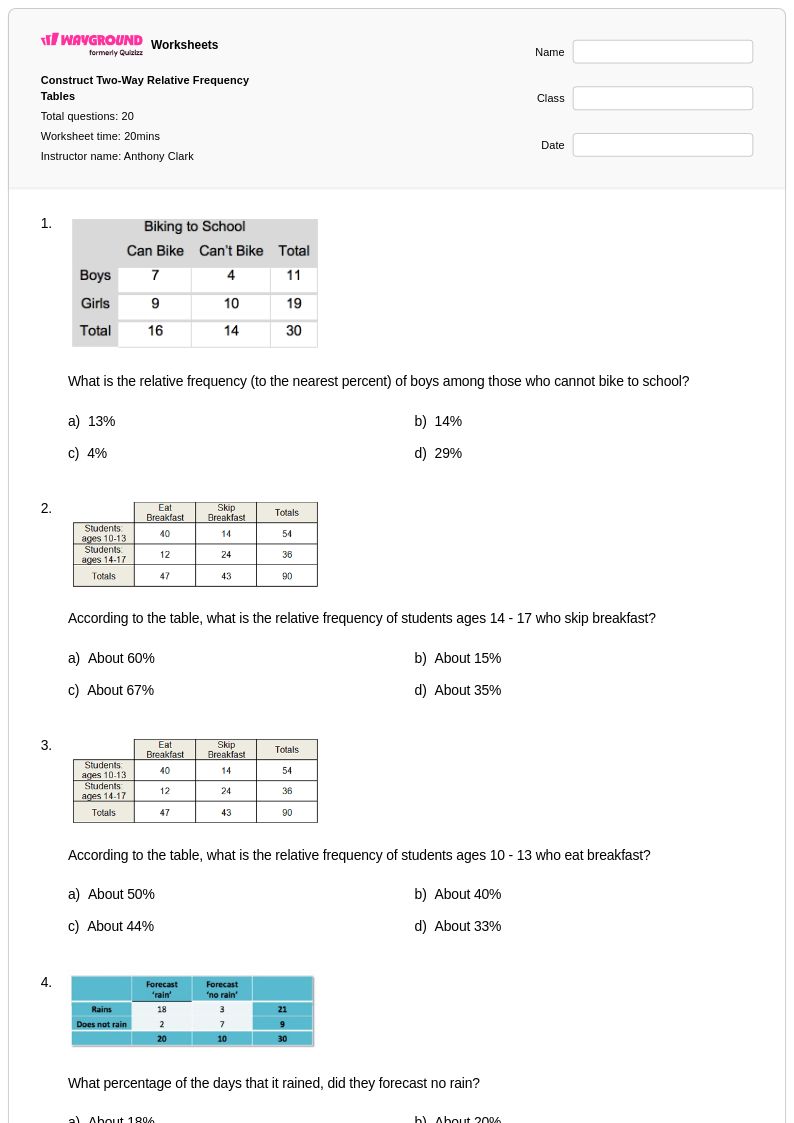
20 T
8th - Uni
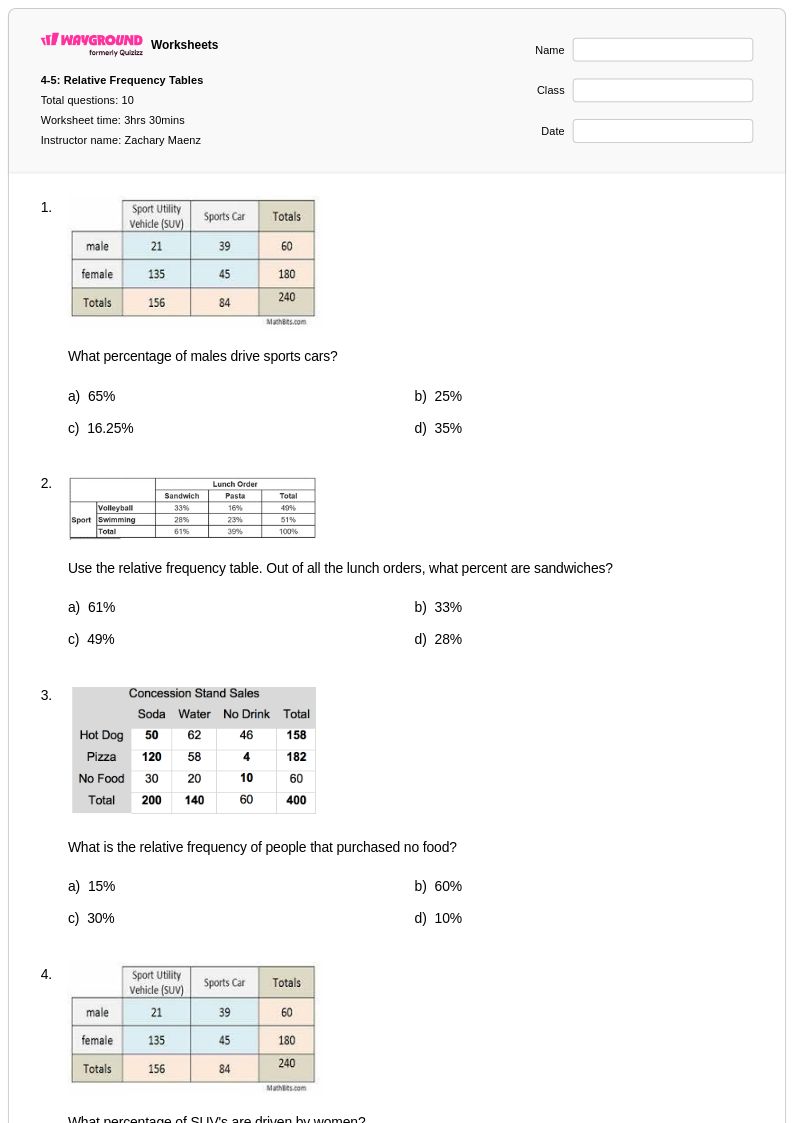
10 T
8th
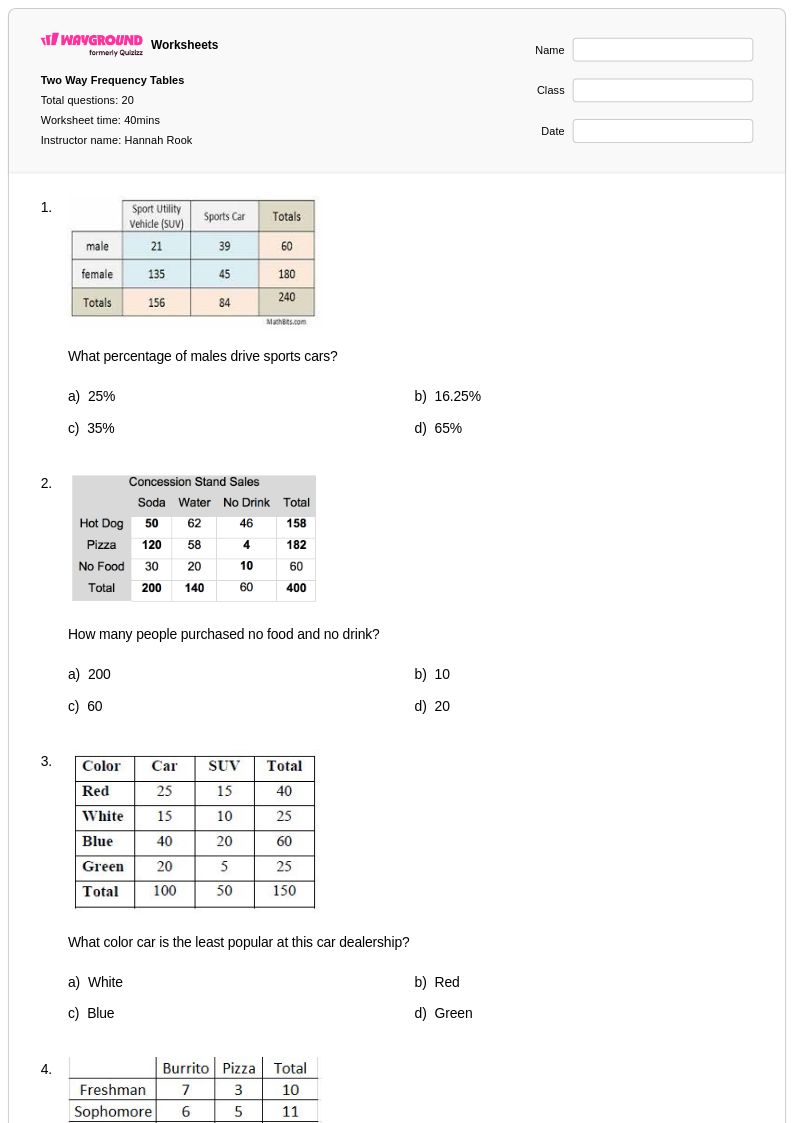
20 T
7th - 10th
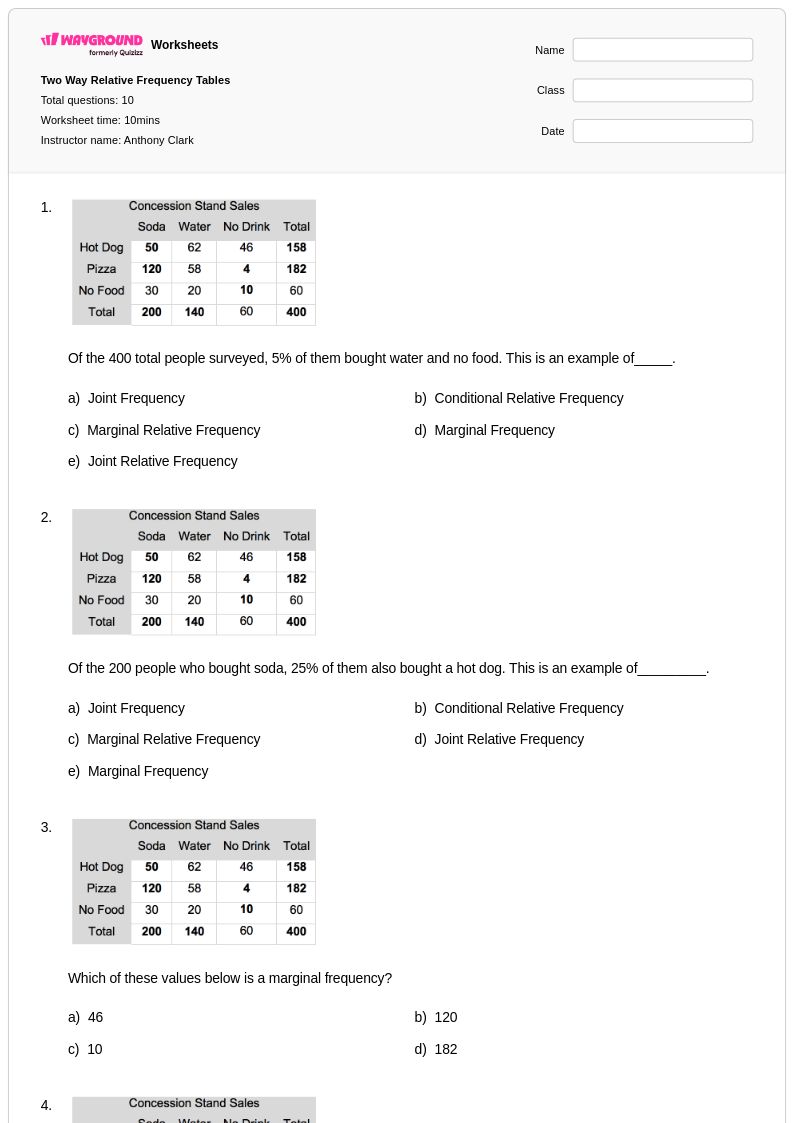
10 T
8th - Uni
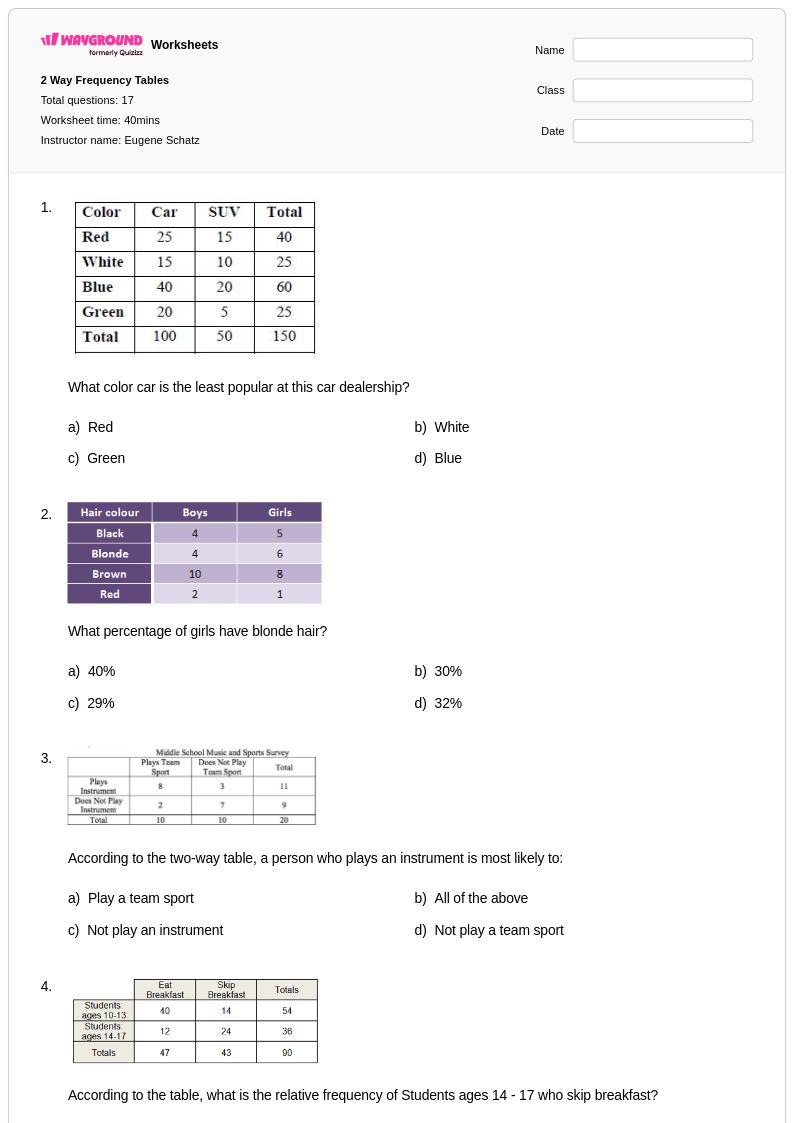
17 T
8th
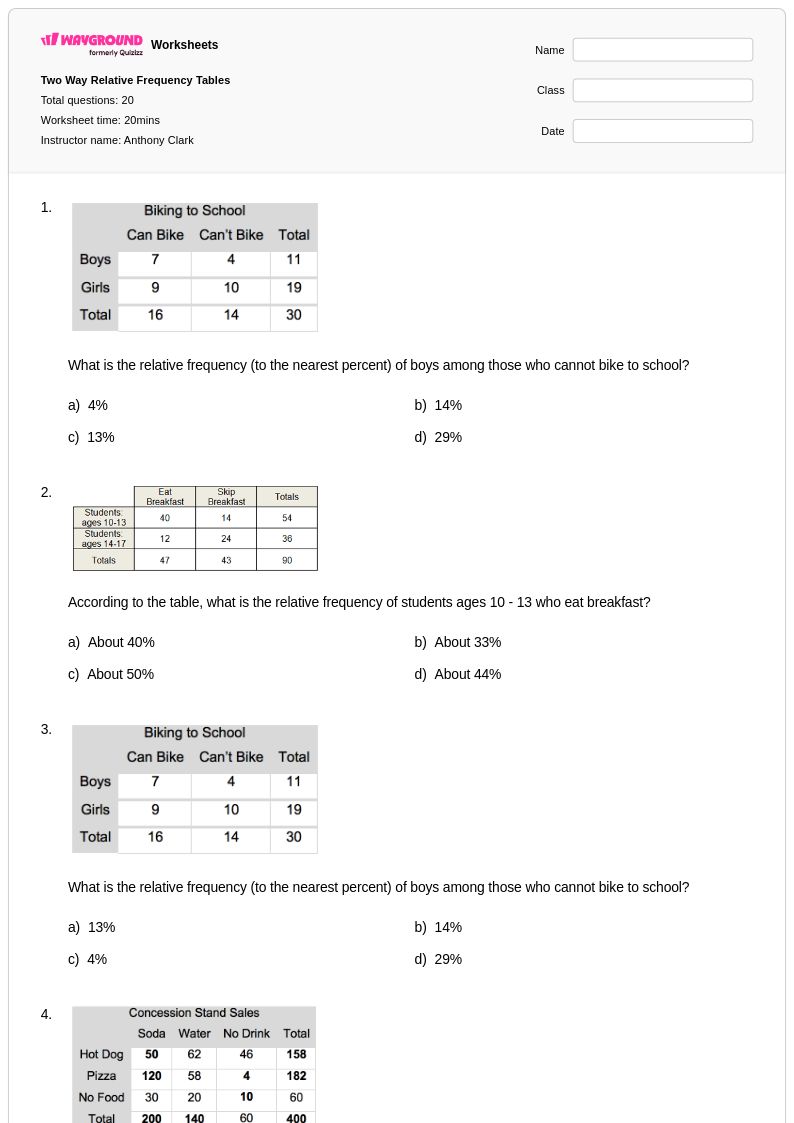
20 T
8th - Uni
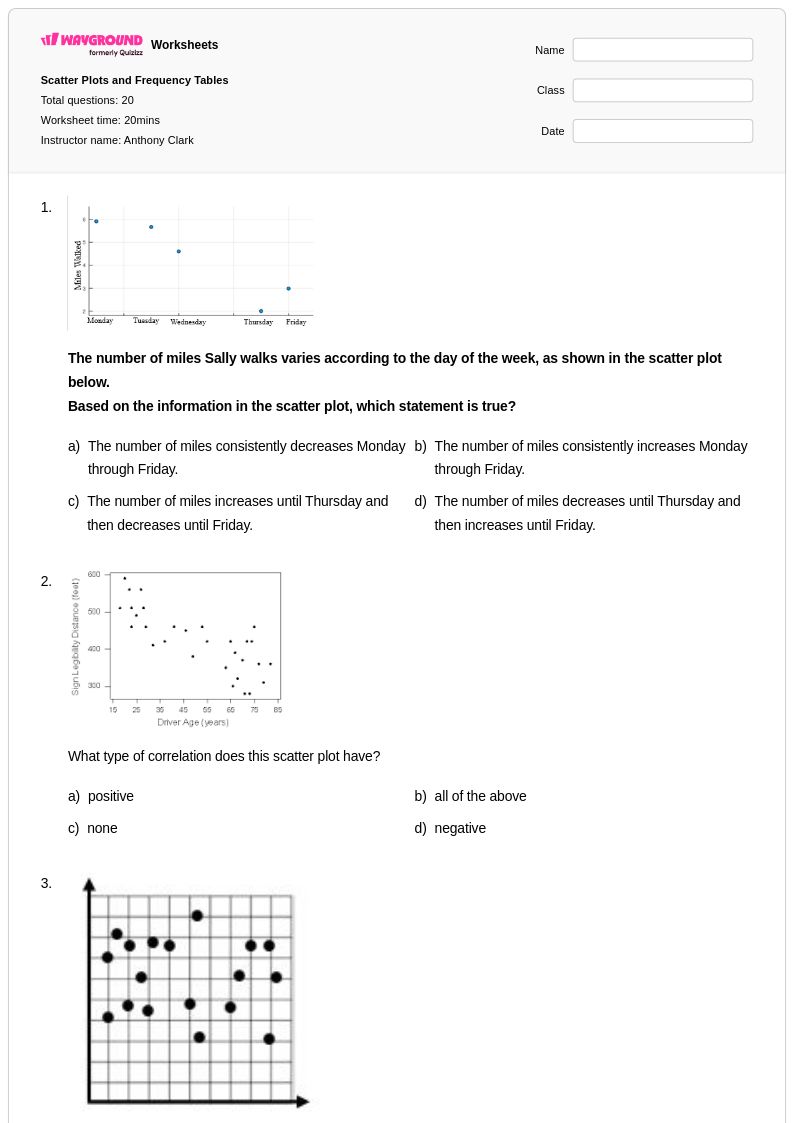
20 T
8th - Uni
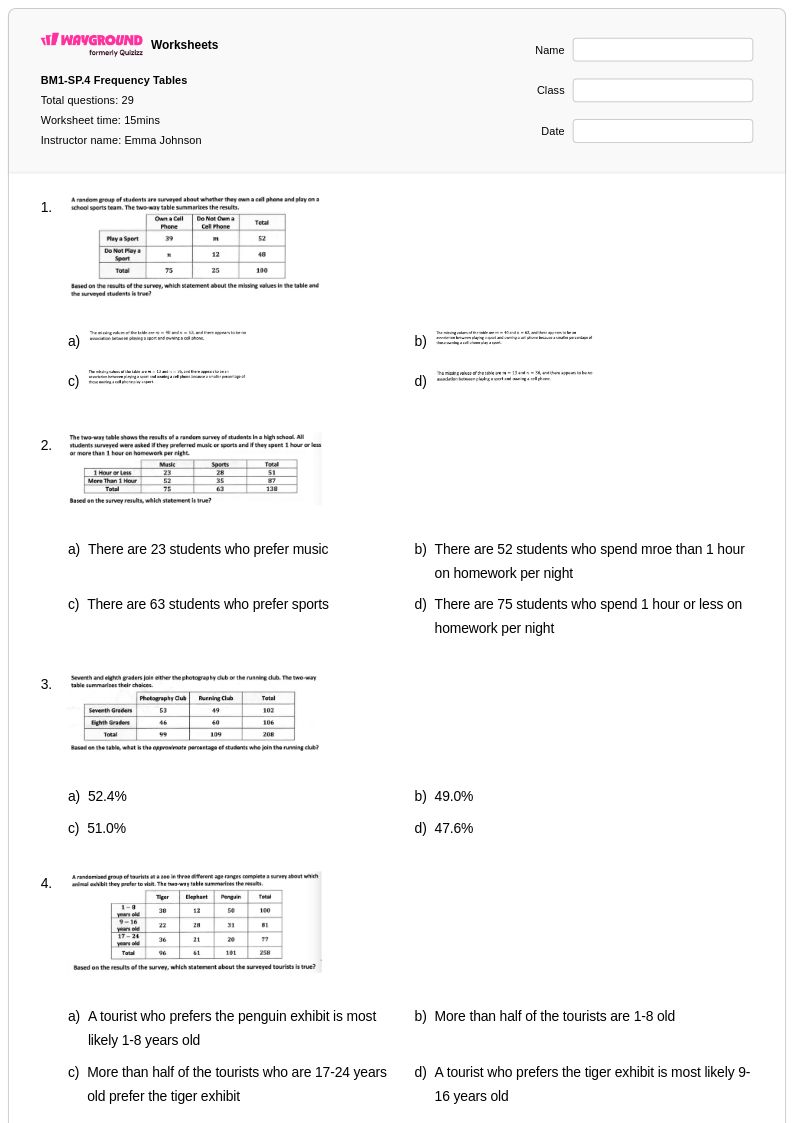
29 T
8th
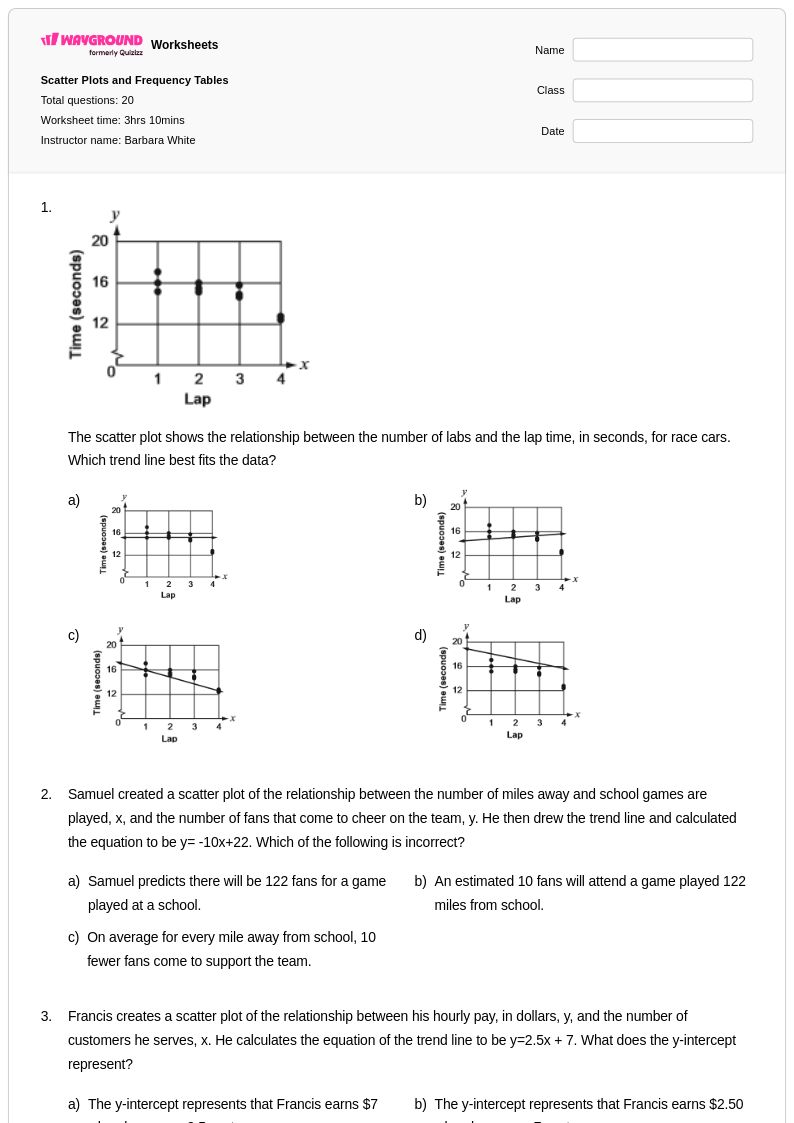
20 T
8th
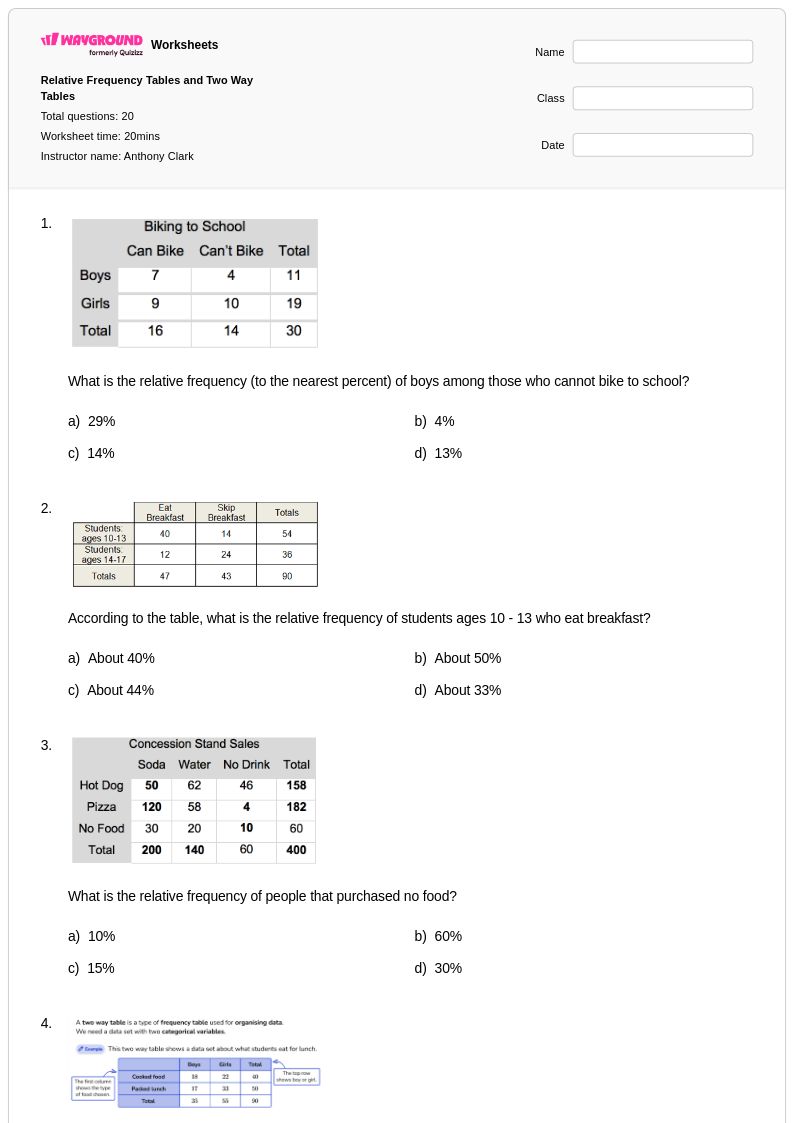
20 T
8th - Uni
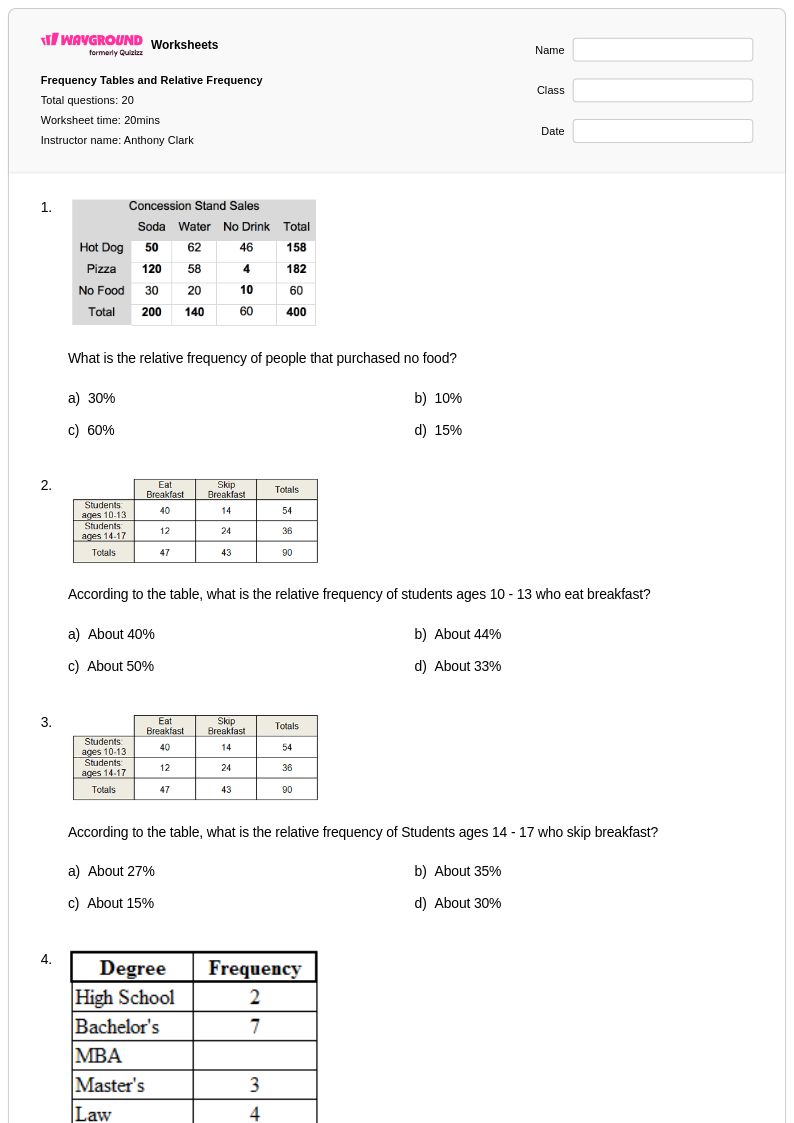
20 T
8th - Uni
Jelajahi Frequency Tables Lembar Kerja berdasarkan Nilai
Jelajahi Lembar Kerja Mata Pelajaran Lainnya untuk class 8
Explore printable Frequency Tables worksheets for Class 8
Frequency tables serve as a fundamental tool in Class 8 probability and statistics, helping students organize, analyze, and interpret data sets in meaningful ways. Wayground's comprehensive collection of frequency table worksheets provides middle school mathematics educators with targeted practice problems that develop students' abilities to construct tables, calculate frequencies, and draw statistical conclusions from organized data. These carefully designed printables include detailed answer keys and cover essential concepts such as tally marks, relative frequency, cumulative frequency, and data distribution patterns. Students work through free practice problems that reinforce their understanding of how to collect raw data, categorize information into appropriate intervals, and use frequency tables as stepping stones to more advanced statistical representations like histograms and bar graphs.
Wayground, formerly Quizizz, empowers educators with millions of teacher-created frequency table resources that streamline lesson planning and enhance mathematical instruction for Class 8 students. The platform's robust search and filtering capabilities allow teachers to quickly locate worksheets aligned with specific curriculum standards, while built-in differentiation tools enable seamless customization for diverse learning needs and ability levels. These frequency table materials are available in both printable pdf formats for traditional classroom use and interactive digital versions that support modern learning environments. Teachers can efficiently implement targeted skill practice, provide remediation for struggling students, offer enrichment opportunities for advanced learners, and assess student progress through formative and summative evaluations, all while accessing the comprehensive support structure that millions of educators rely on for effective mathematics instruction.
FAQs
How do I teach frequency tables to eighth graders?
What exercises help Grade 8 students practice frequency tables?
What mistakes do eighth graders make when interpreting frequency distributions?
How can I use these Grade 8 frequency table worksheets in different teaching settings?
How do frequency tables support the Grade 8 Common Core math progression?
How can I differentiate frequency table work for Grade 8 students?
What should eighth graders know about frequency tables?