Free Printable Frequently Confused Words Worksheets for Class 6
Enhance Class 6 vocabulary skills with free printable worksheets focused on frequently confused words, featuring practice problems and answer keys to help students master commonly mixed-up word pairs.
Explore printable Frequently Confused Words worksheets for Class 6
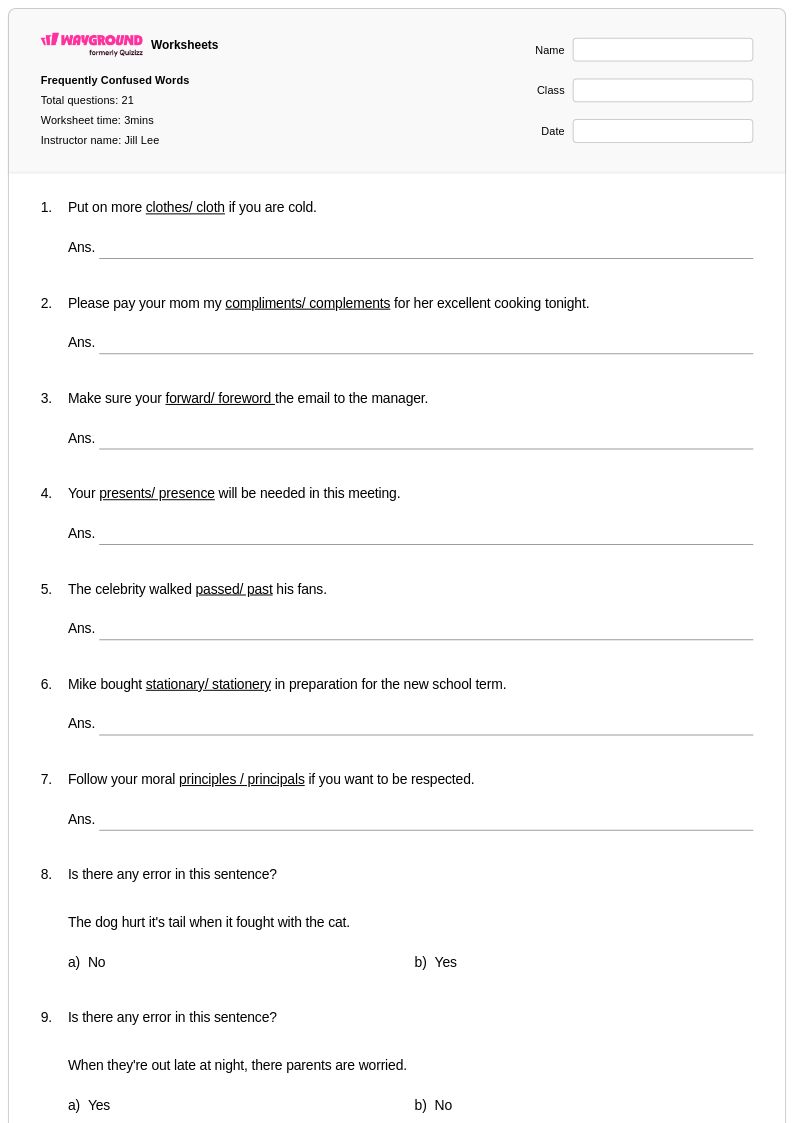
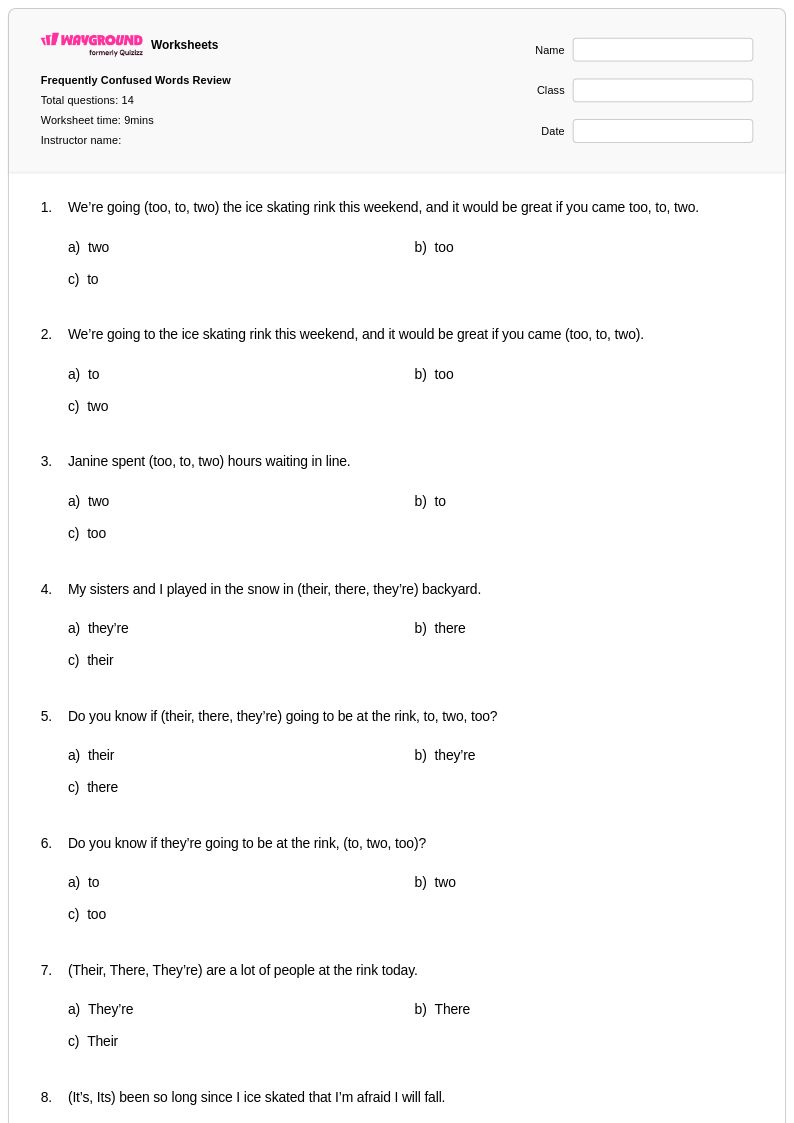
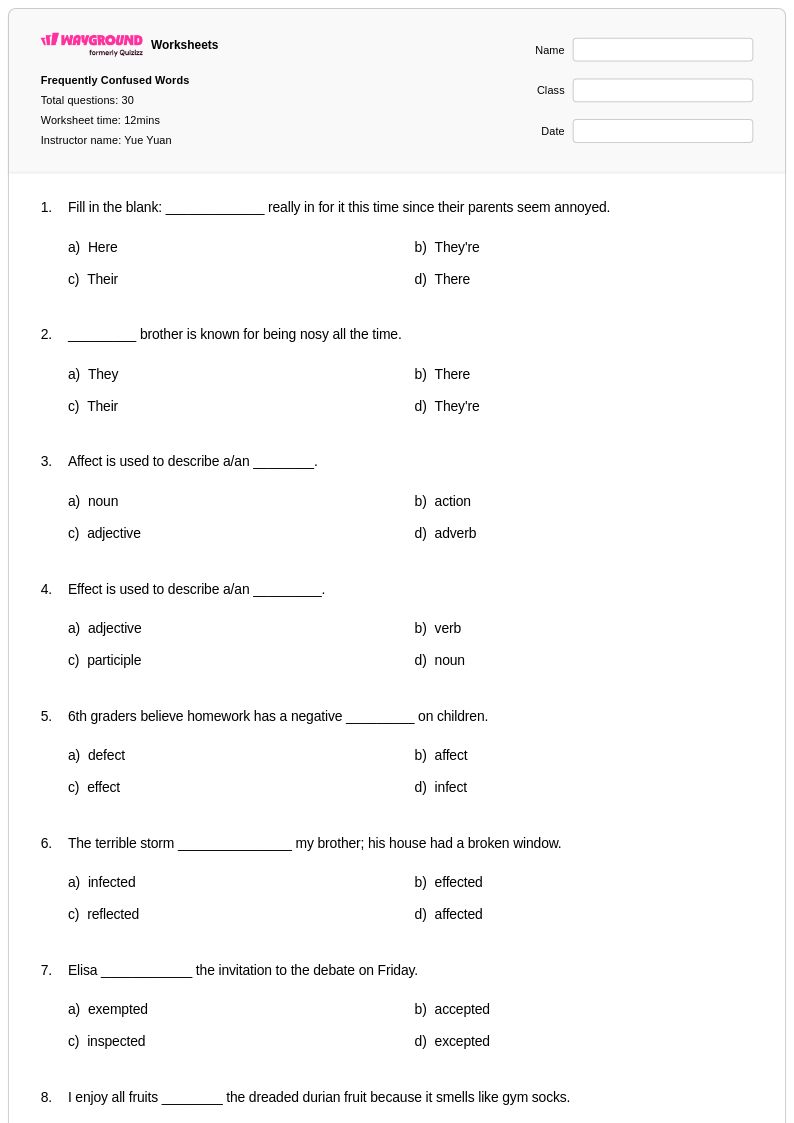
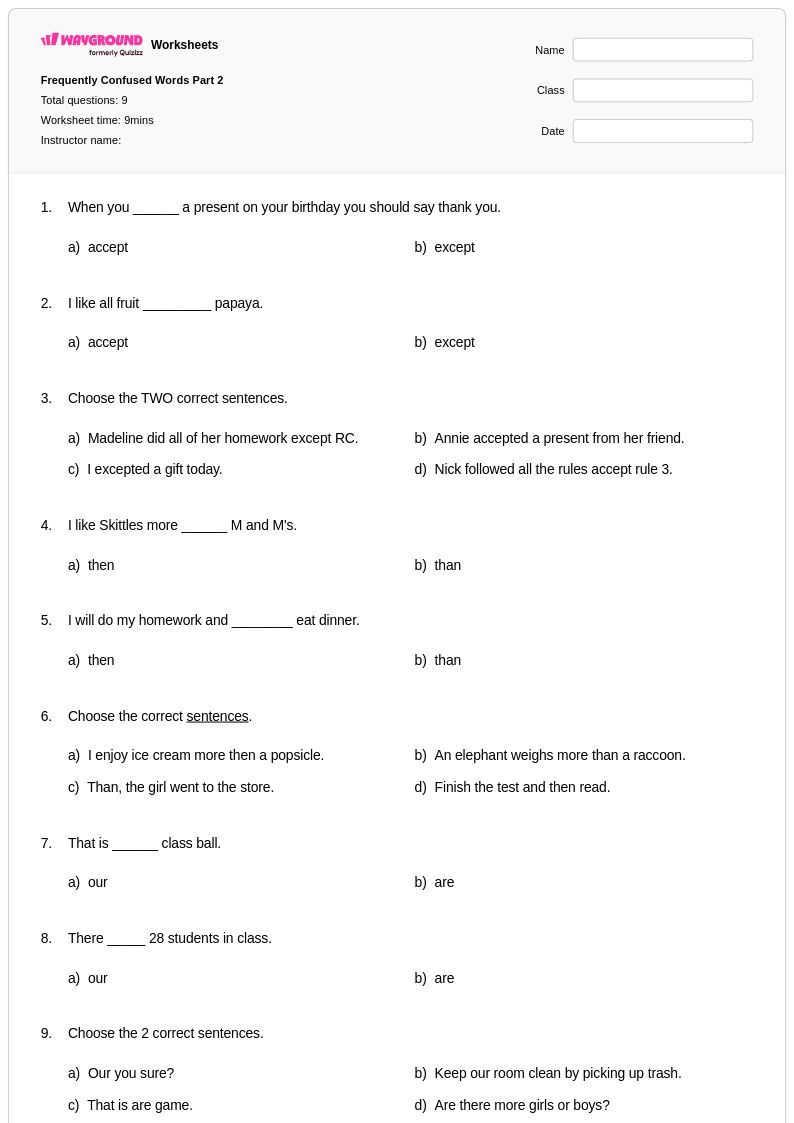
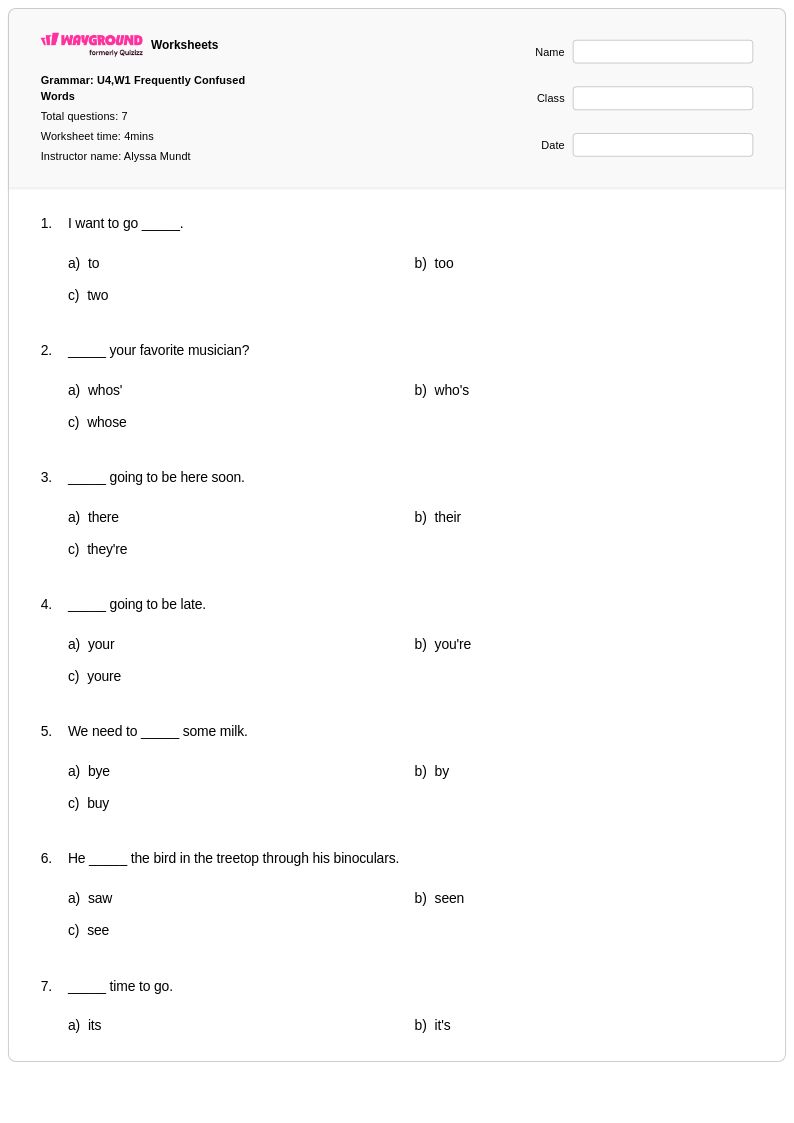
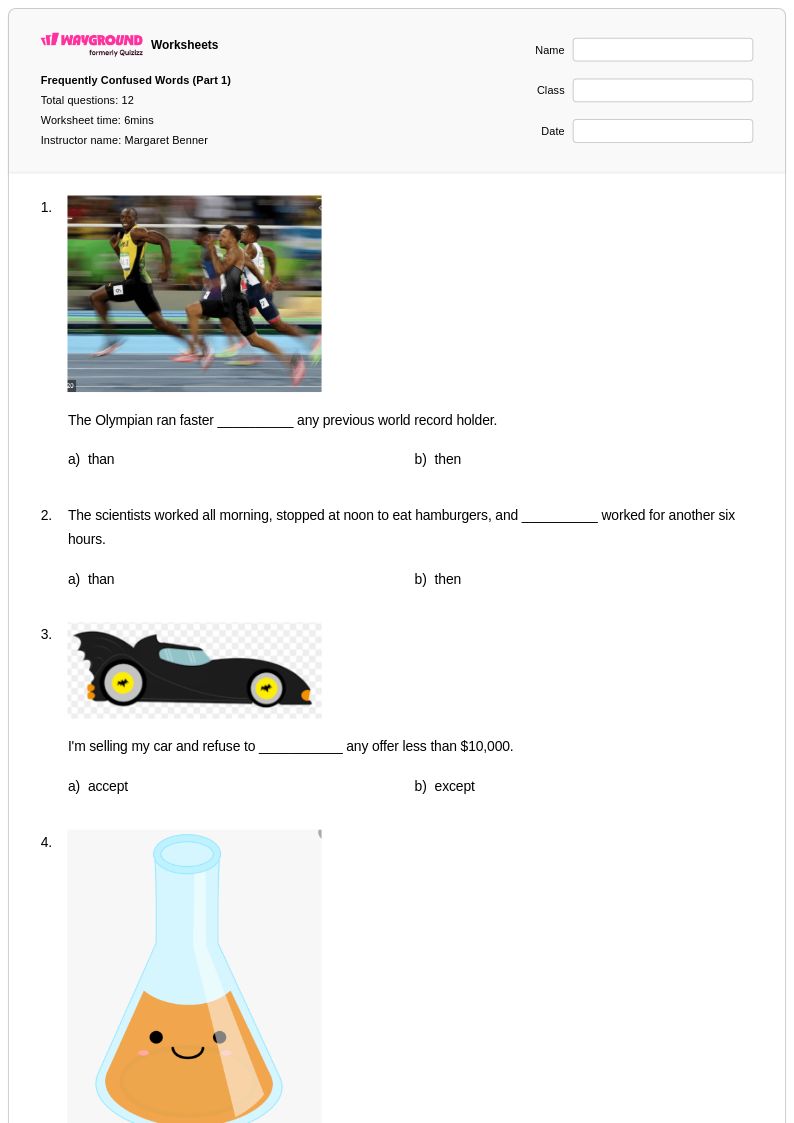
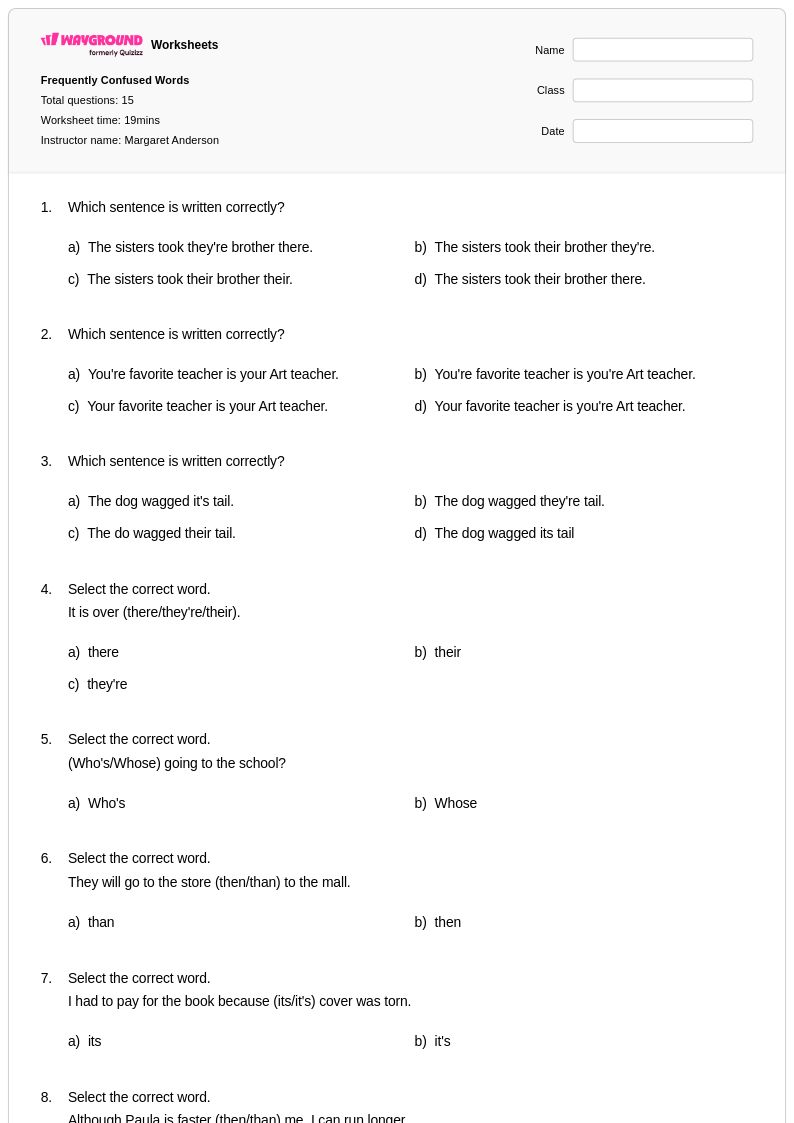
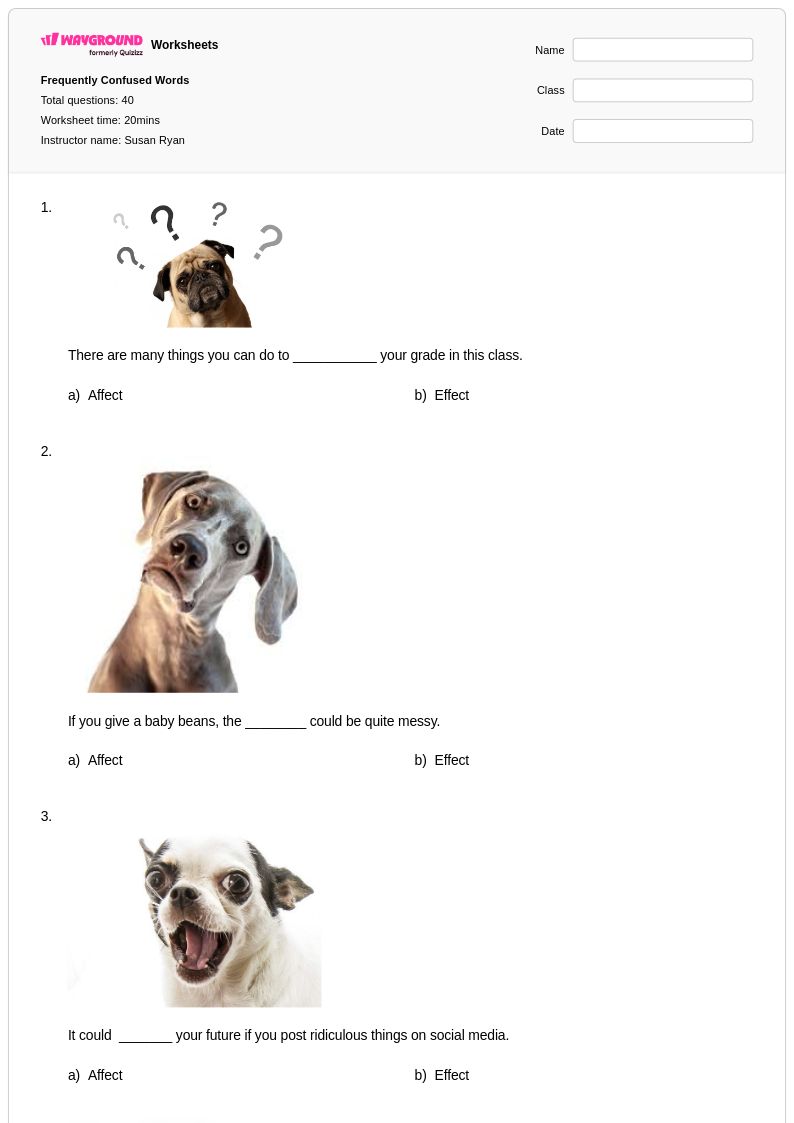
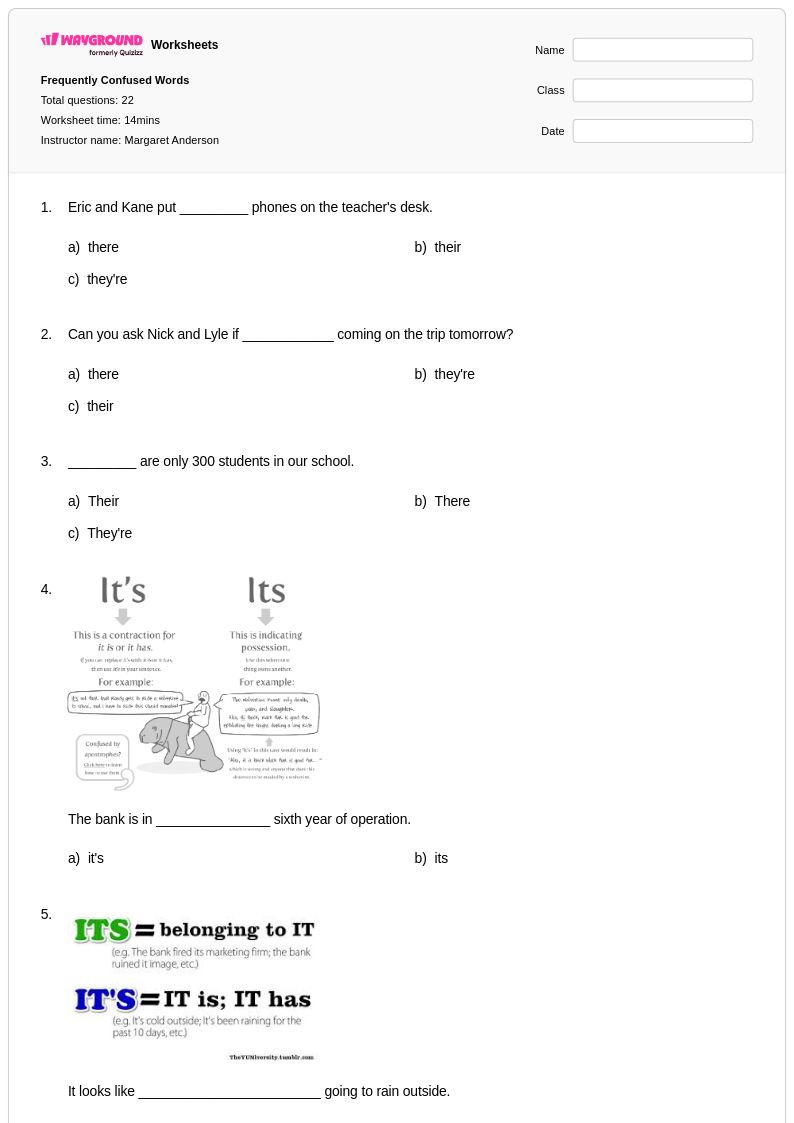
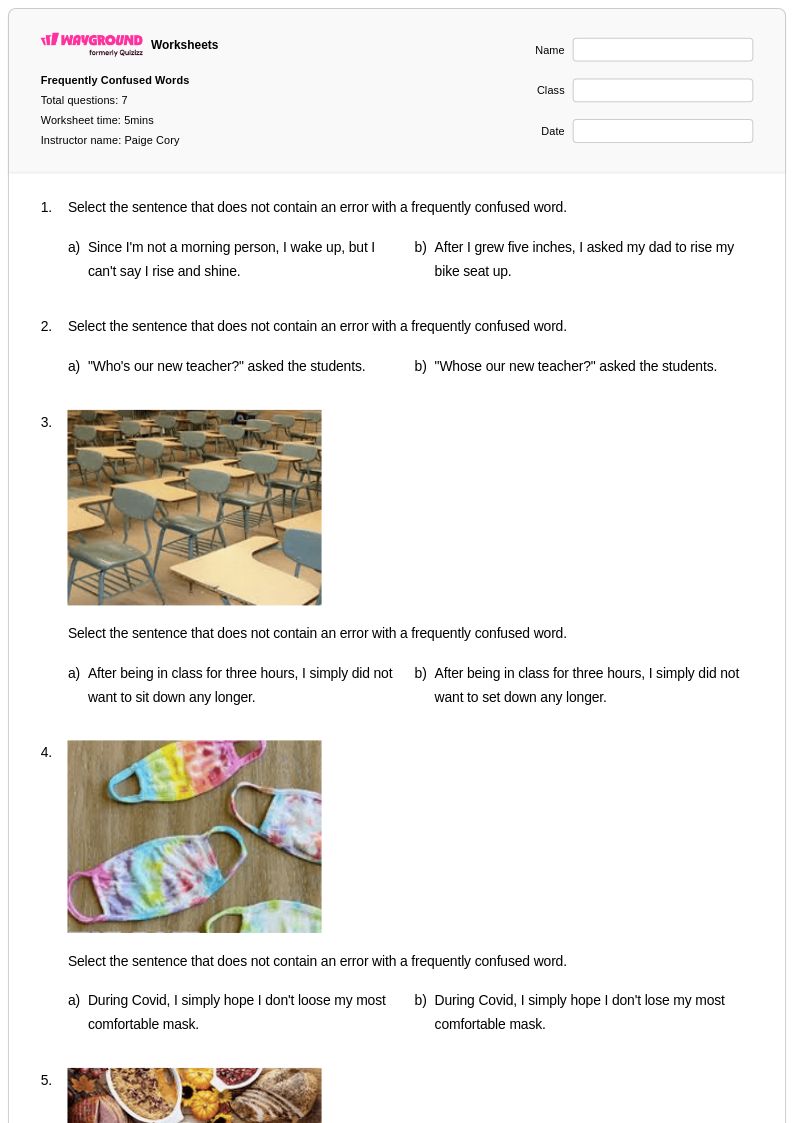
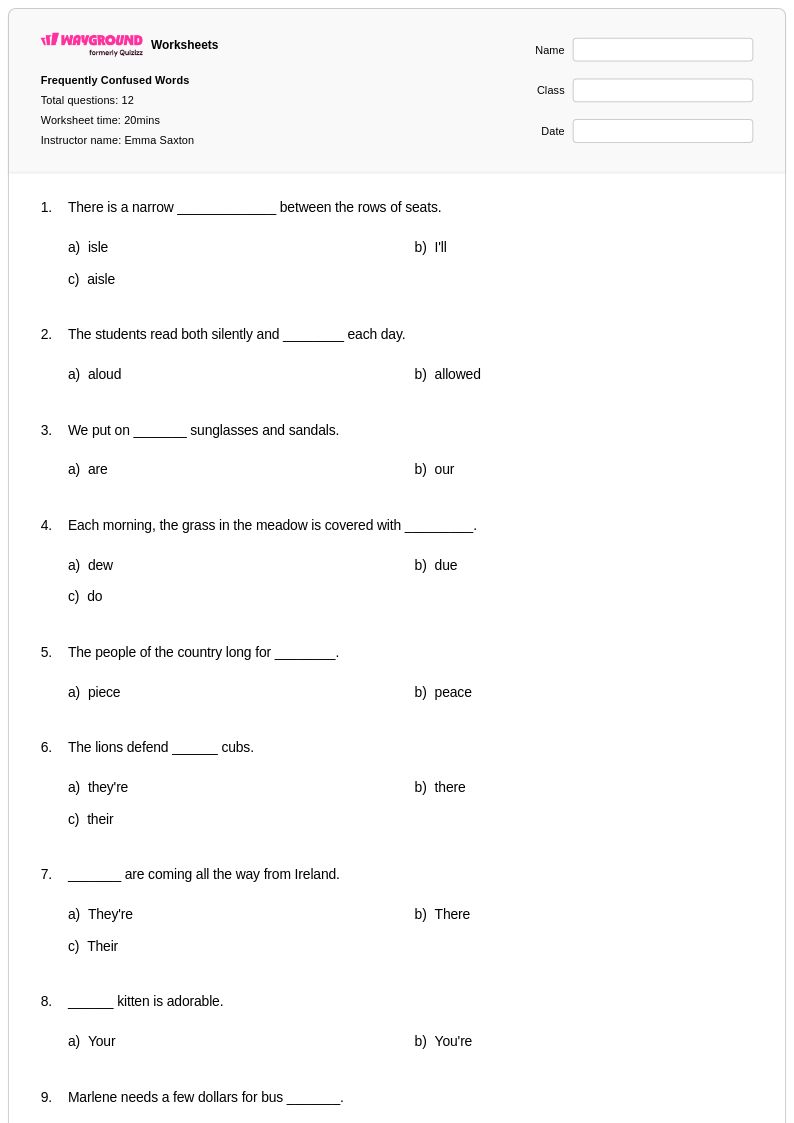
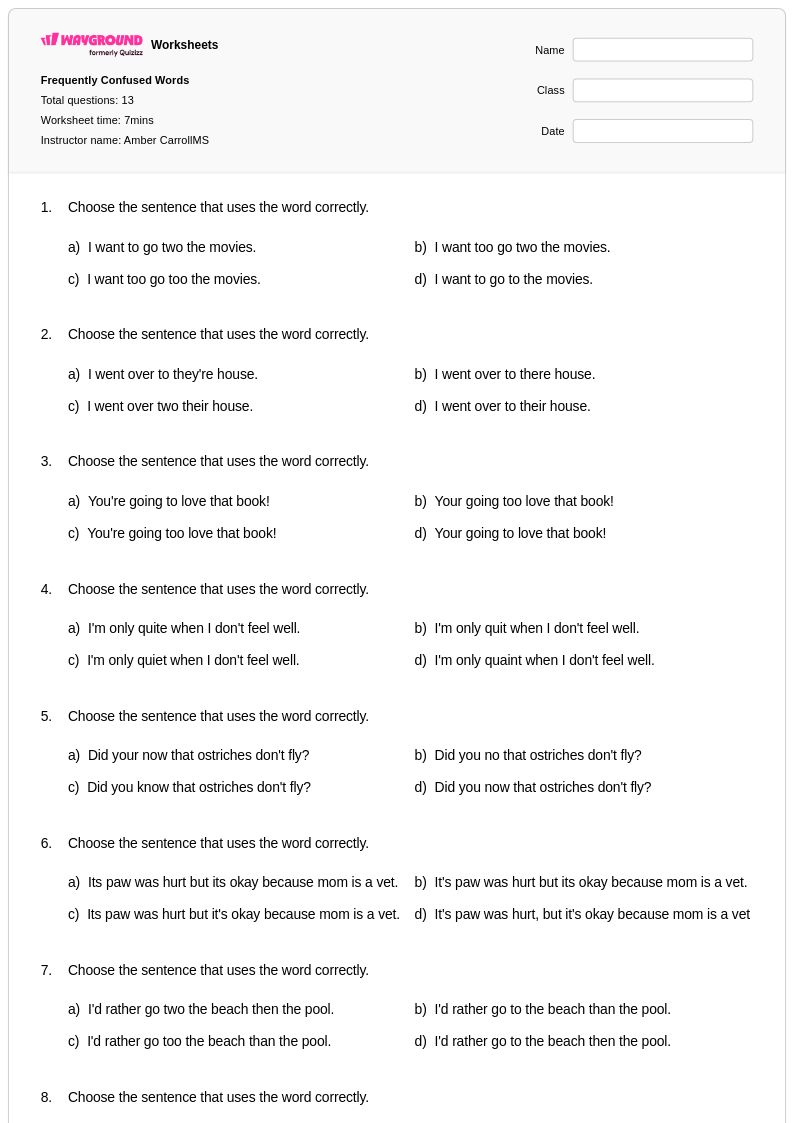
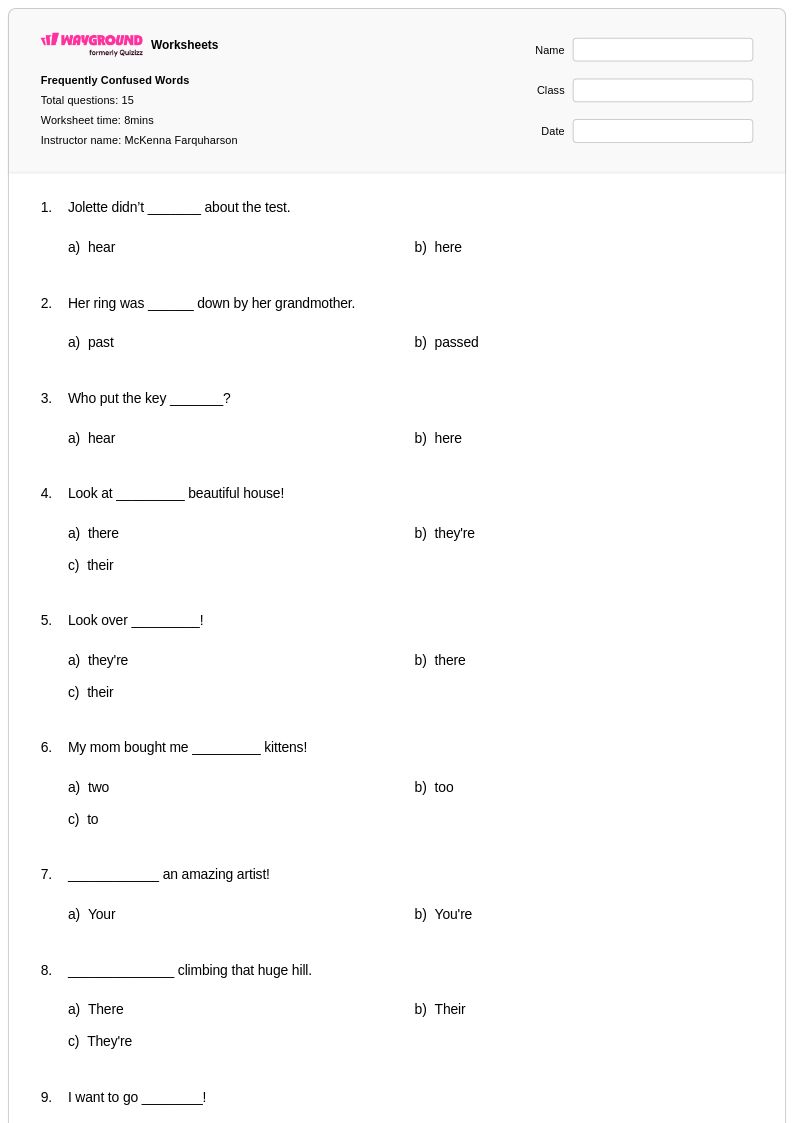
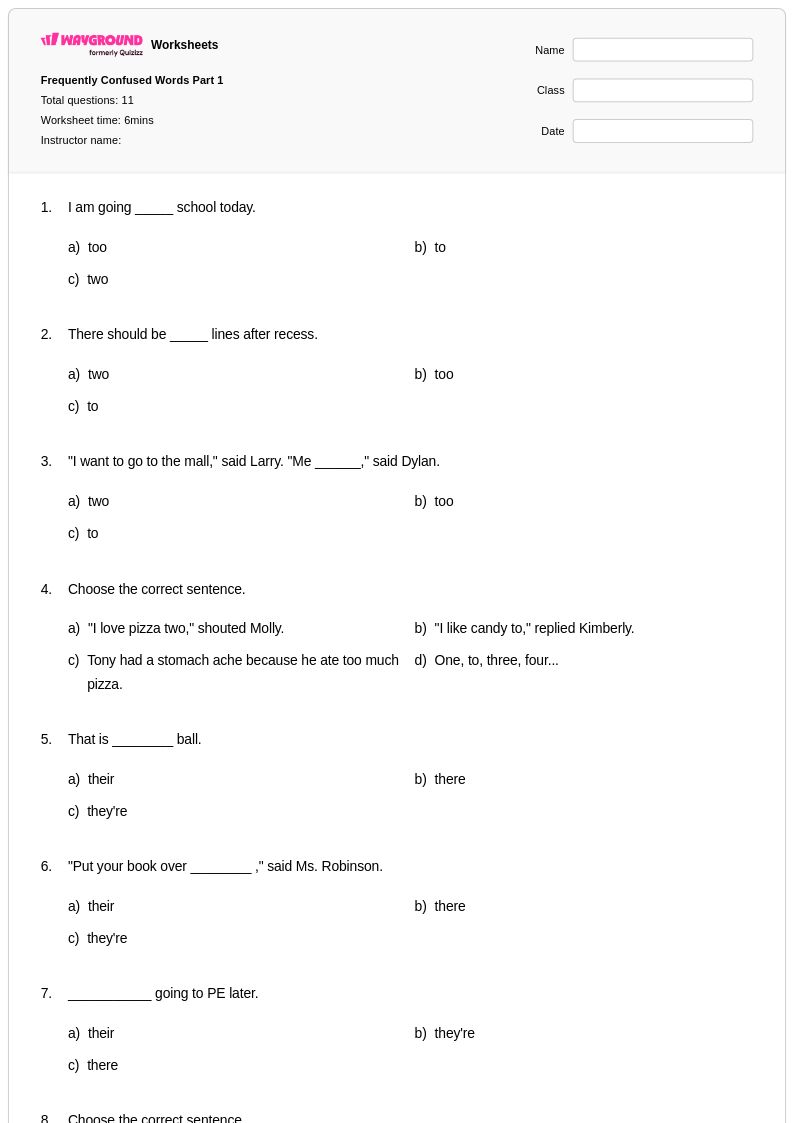
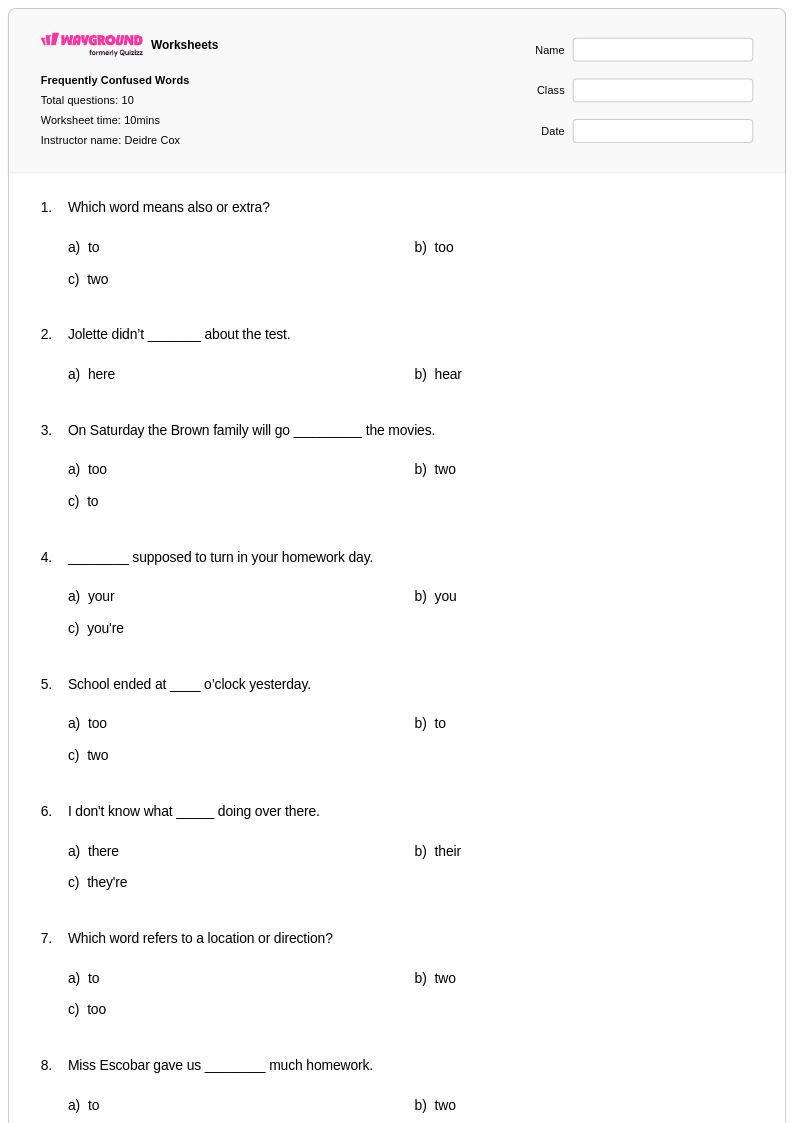
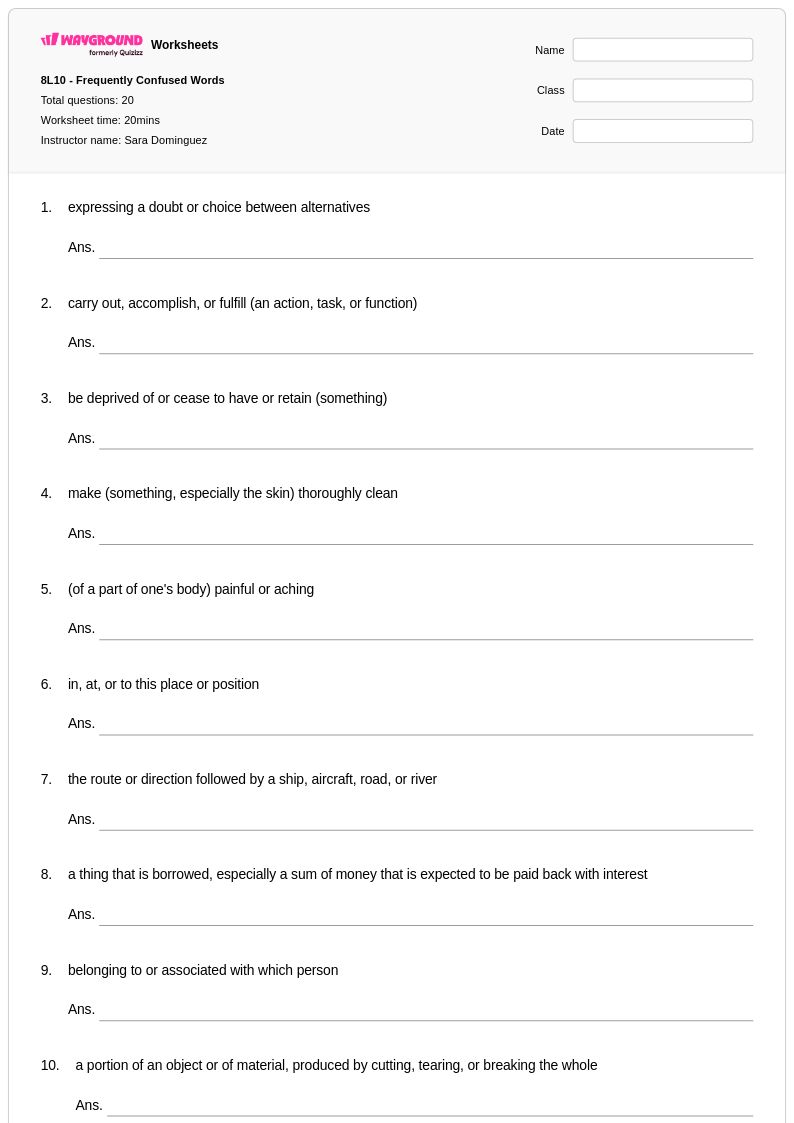
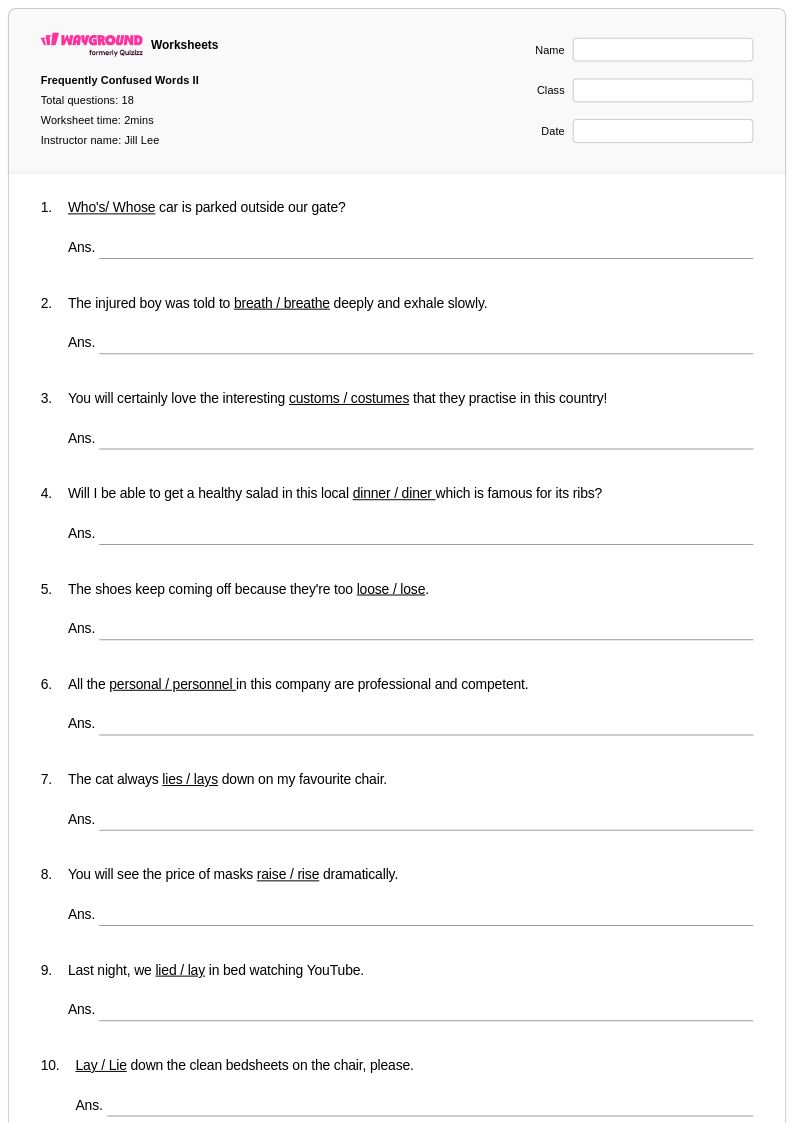
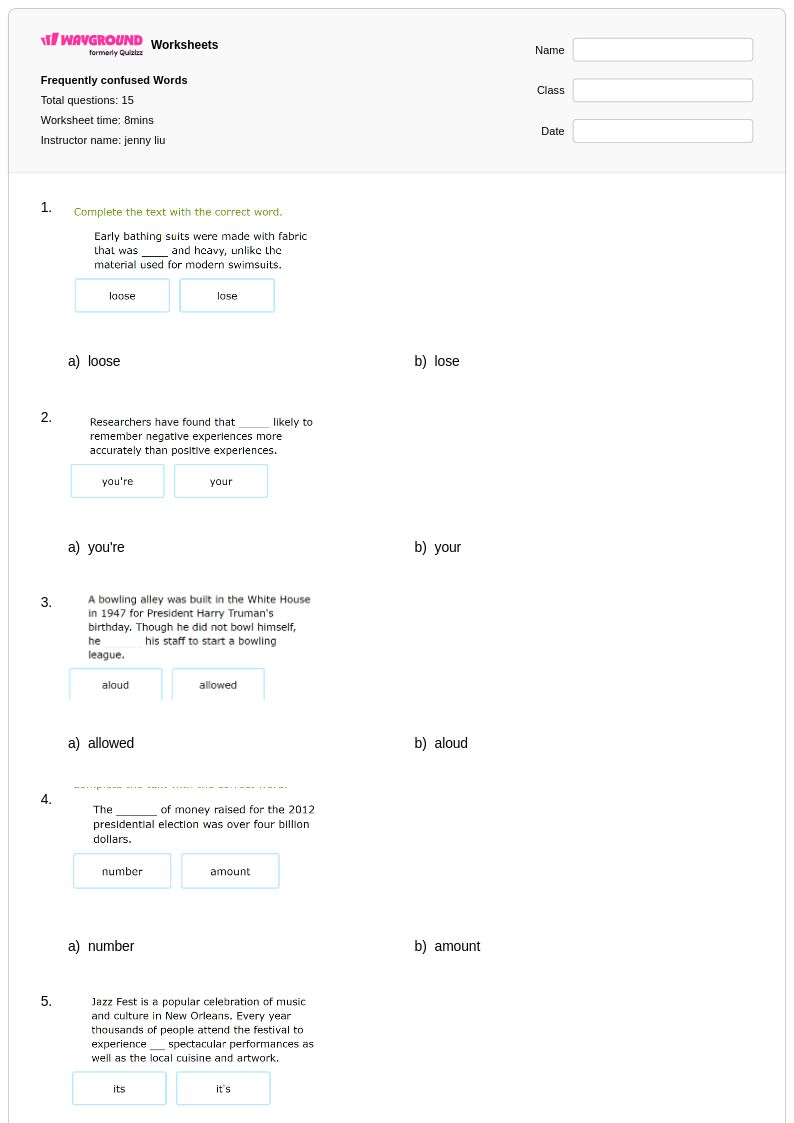
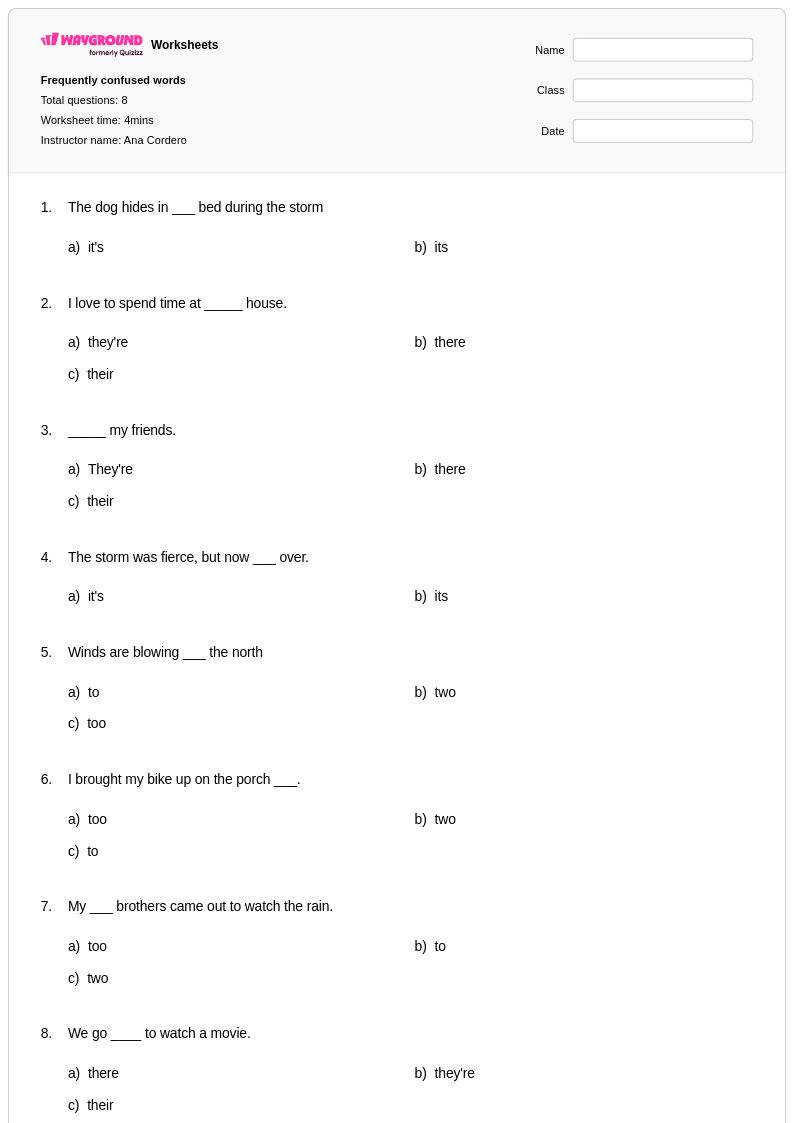
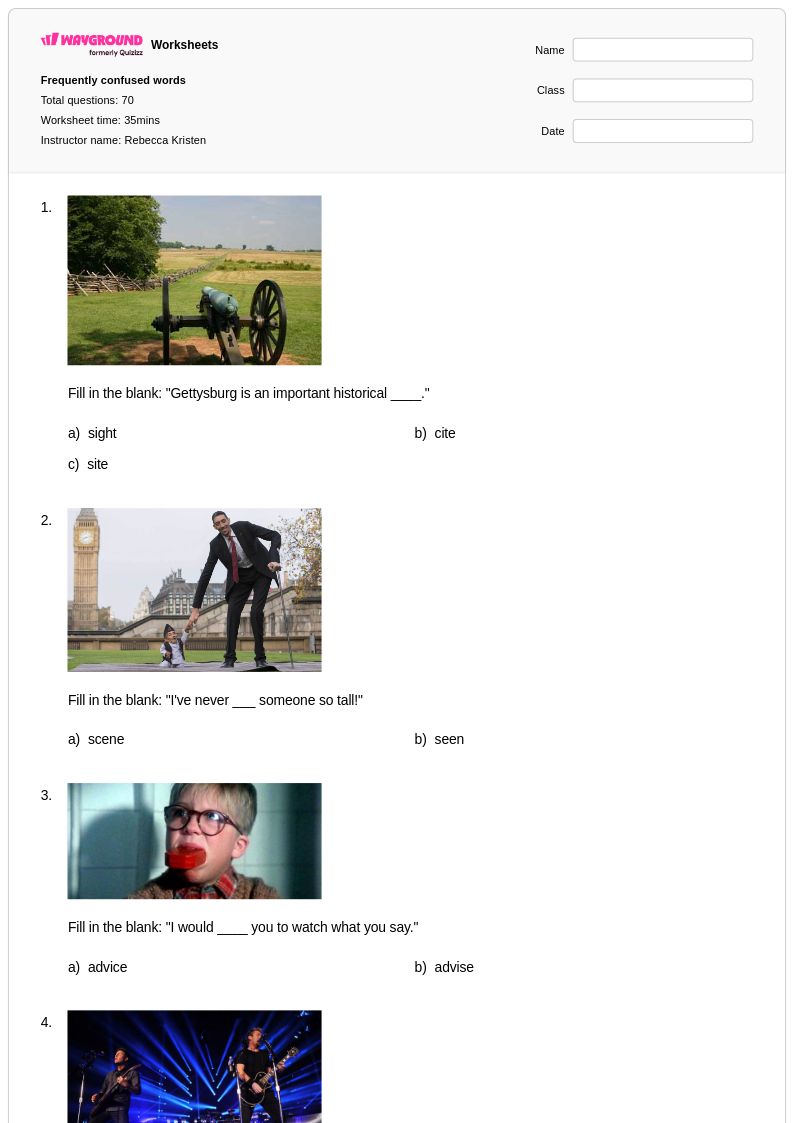
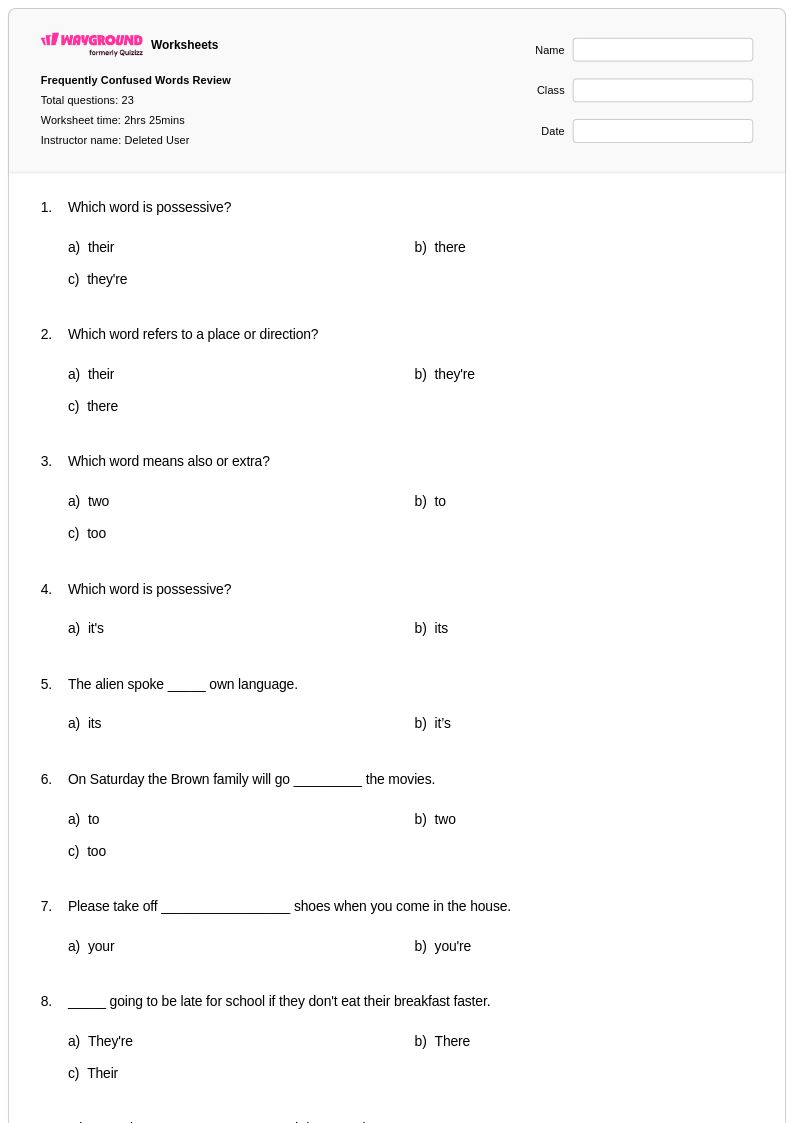
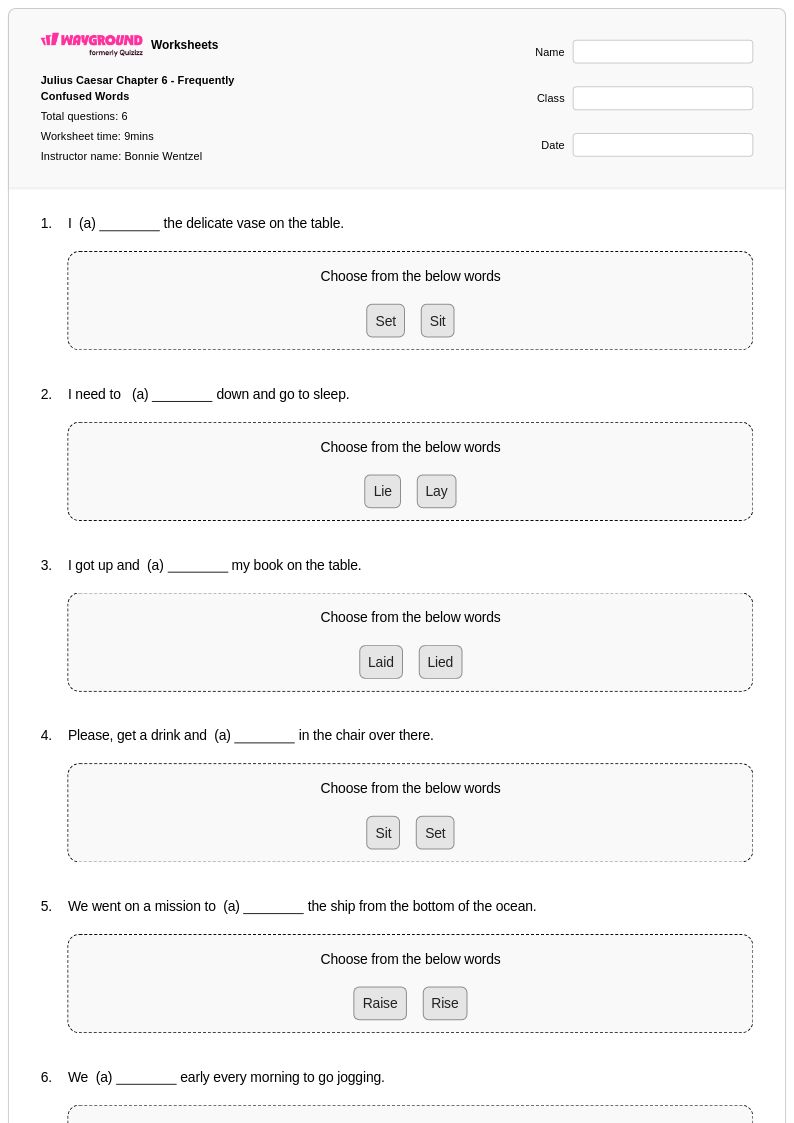
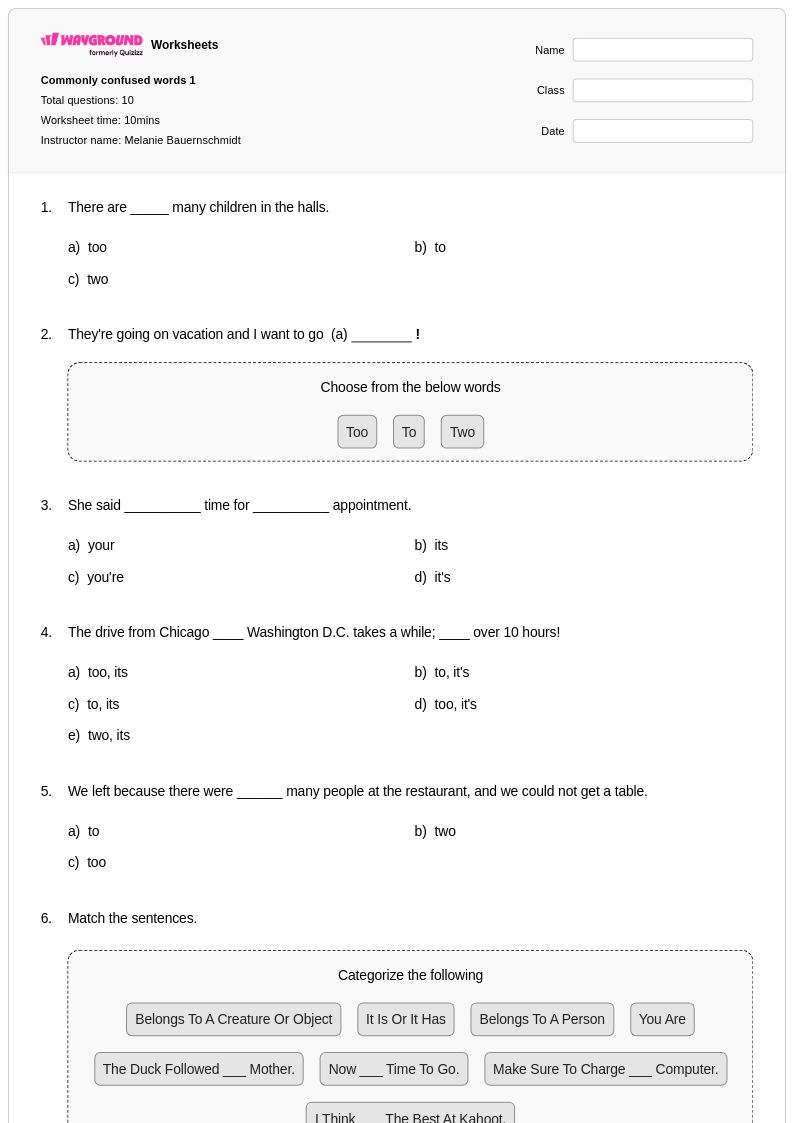
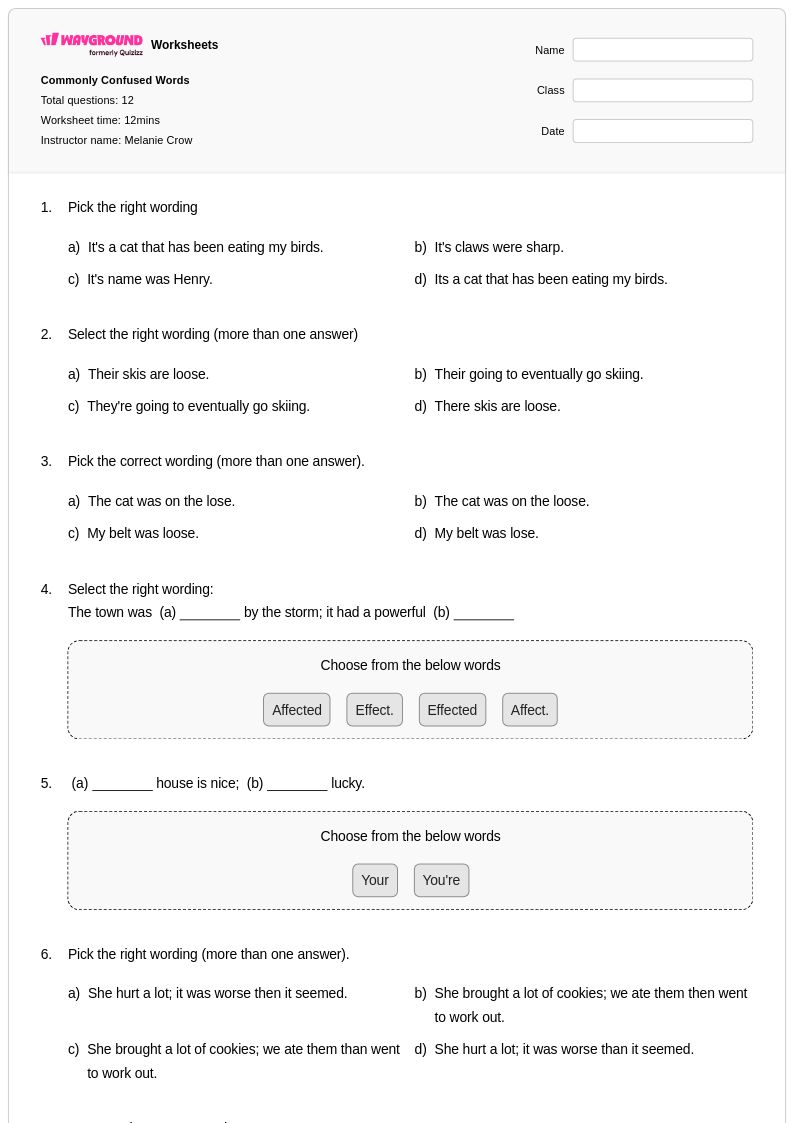
Frequently confused words present one of the most persistent challenges for Class 6 students developing their vocabulary mastery and writing precision. Wayground's comprehensive collection of frequently confused words worksheets provides targeted practice to help students distinguish between commonly mixed-up word pairs such as affect/effect, their/there/they're, and accept/except. These carefully designed worksheets strengthen critical thinking skills by requiring students to analyze context clues, understand subtle meaning differences, and apply proper usage in authentic sentences and paragraphs. Each worksheet includes detailed answer keys that support independent learning, while the free printables offer convenient practice problems that can be completed at home or in the classroom, making vocabulary development accessible and systematic.
Wayground's extensive library, built from millions of teacher-created resources, empowers educators to find precisely the right frequently confused words materials for their Class 6 students through intuitive search and filtering capabilities. Teachers can easily differentiate instruction by selecting worksheets that align with curriculum standards and match individual student needs, whether for remediation of persistent errors or enrichment of advanced learners. The platform's flexible customization tools allow educators to modify existing resources or combine multiple worksheets into comprehensive practice sets, while both printable pdf formats and digital versions accommodate diverse classroom environments and learning preferences. This versatility supports effective lesson planning by providing ready-to-use materials for vocabulary centers, homework assignments, assessment preparation, and targeted skill practice sessions.
FAQs
How do I teach frequently confused words effectively in the classroom?
The most effective approach is to teach confused word pairs in direct contrast with each other, using sentence-level examples that highlight how meaning changes depending on word choice. Start with the pairs students encounter most often in their own writing, such as affect/effect or their/there/they're, before moving to less common ones. Giving students immediate feedback on their word choices, rather than marking errors only at the end of a draft, builds lasting habits more efficiently.
What exercises help students practice frequently confused words?
Fill-in-the-blank exercises that require students to choose the correct word in context are among the most effective practice formats because they simulate real writing decisions. Sentence-completion tasks, error-correction exercises where students identify the misused word in a passage, and short writing prompts that require deliberate use of target pairs all reinforce both recognition and application. Varied practice across these formats prevents students from pattern-matching without understanding.
What mistakes do students commonly make with frequently confused words?
The most persistent errors involve homophones and near-homophones, such as your/you're, its/it's, and their/there/they're, because students rely on sound rather than meaning when writing quickly. Students also frequently misuse affect and effect, treating one as a universal substitute for the other without understanding their grammatical roles as verb and noun. A common underlying misconception is that spelling is the issue rather than meaning, which is why vocabulary-level instruction works better than spelling drills alone.
How can I use frequently confused words worksheets to support struggling writers?
Target the specific pairs that appear as recurring errors in a student's own writing rather than assigning broad practice across all confused word pairs at once. Focused, short practice sets with immediate answer-key review allow students to self-correct and build confidence incrementally. On Wayground, teachers can apply accommodations such as reduced answer choices for individual students, lowering cognitive load while keeping the skill objective the same for the rest of the class.
How do I use Wayground's frequently confused words worksheets in my class?
Wayground's frequently confused words worksheets are available as printable PDFs for traditional classroom use and in digital formats for technology-integrated environments, giving teachers flexibility depending on their setting. Teachers can also host worksheets directly as a quiz on Wayground, making it easy to assign practice for in-class work, homework, or targeted intervention. Each worksheet includes a complete answer key, so grading and review require minimal additional preparation.