
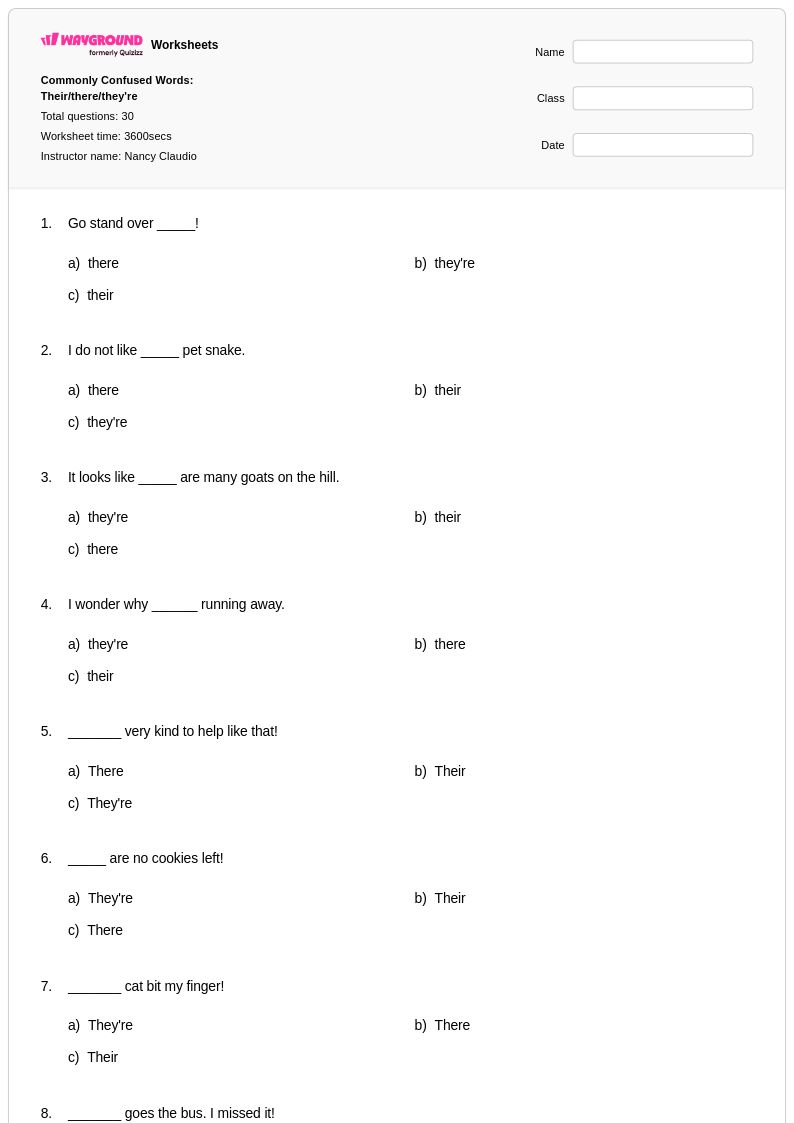
30 Q
7th
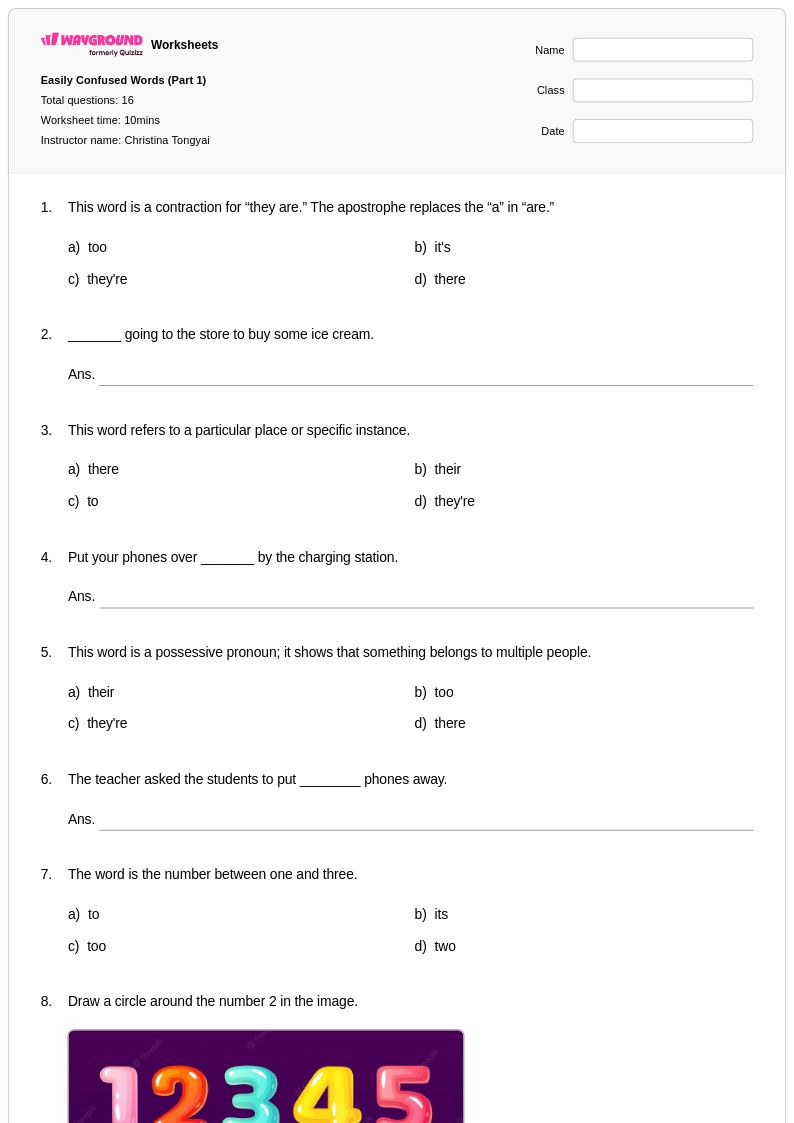
16 Q
6th - 9th
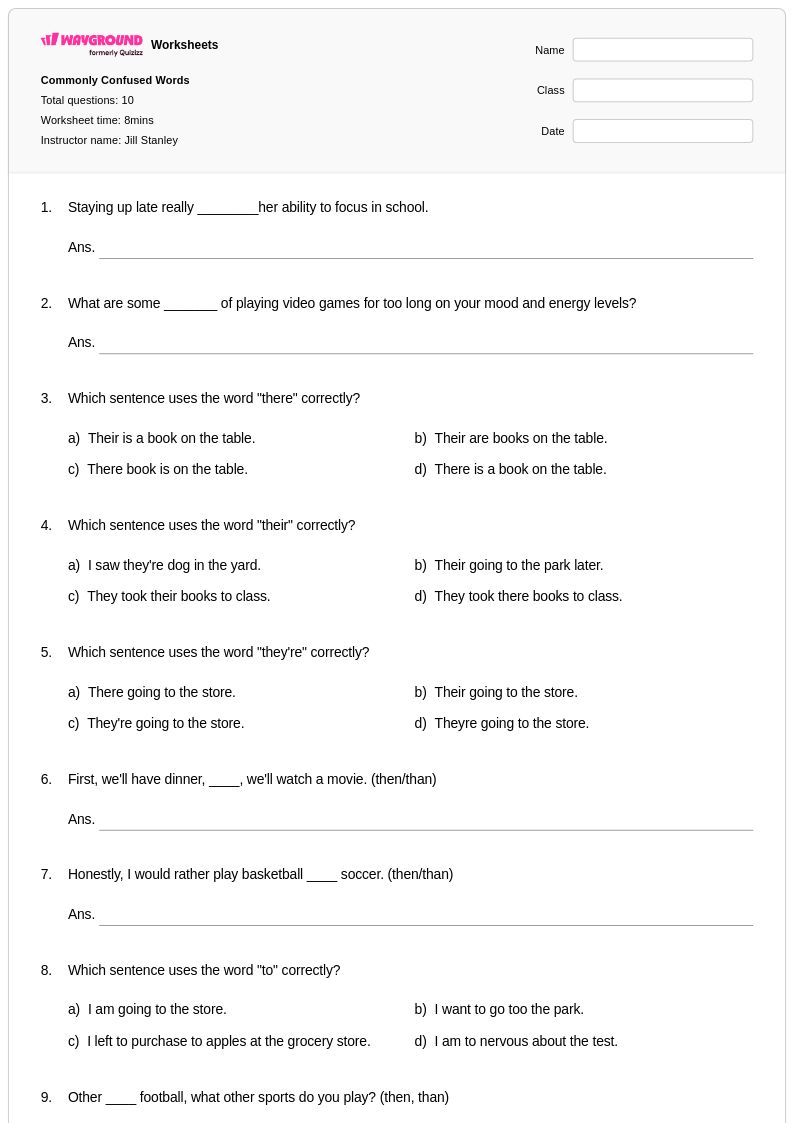
10 Q
6th - 8th
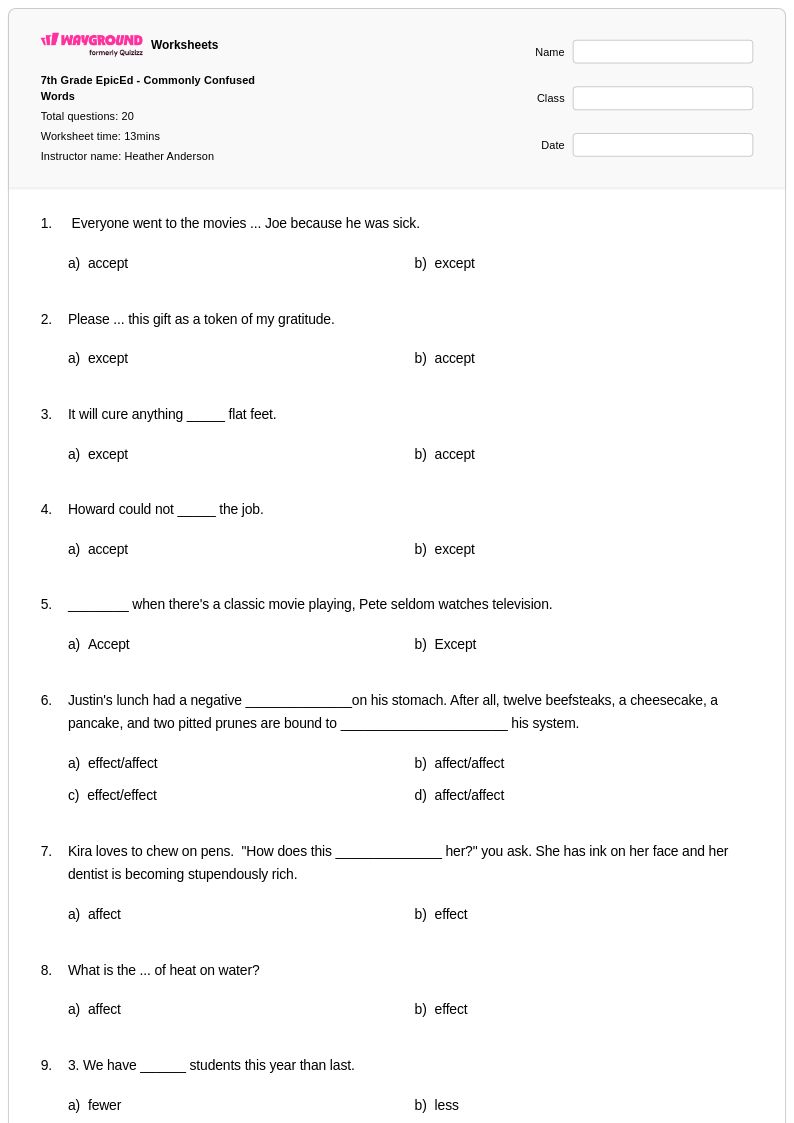
20 Q
7th
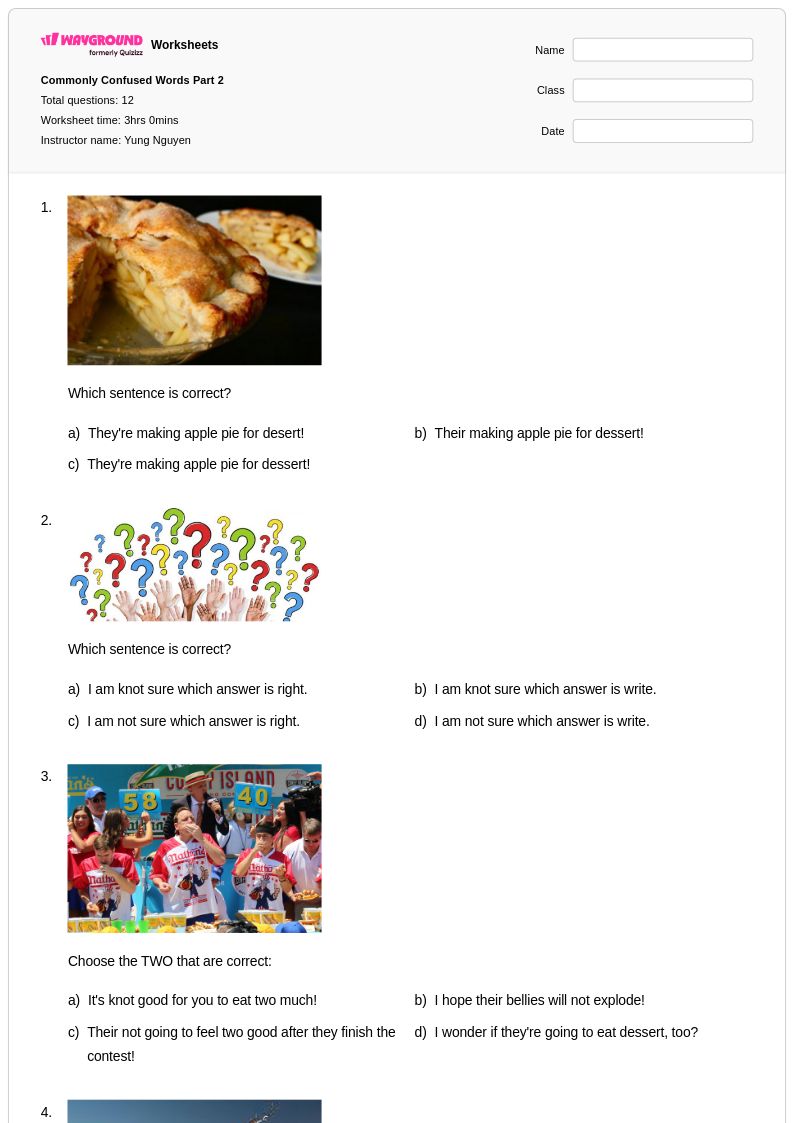
12 Q
5th - 7th
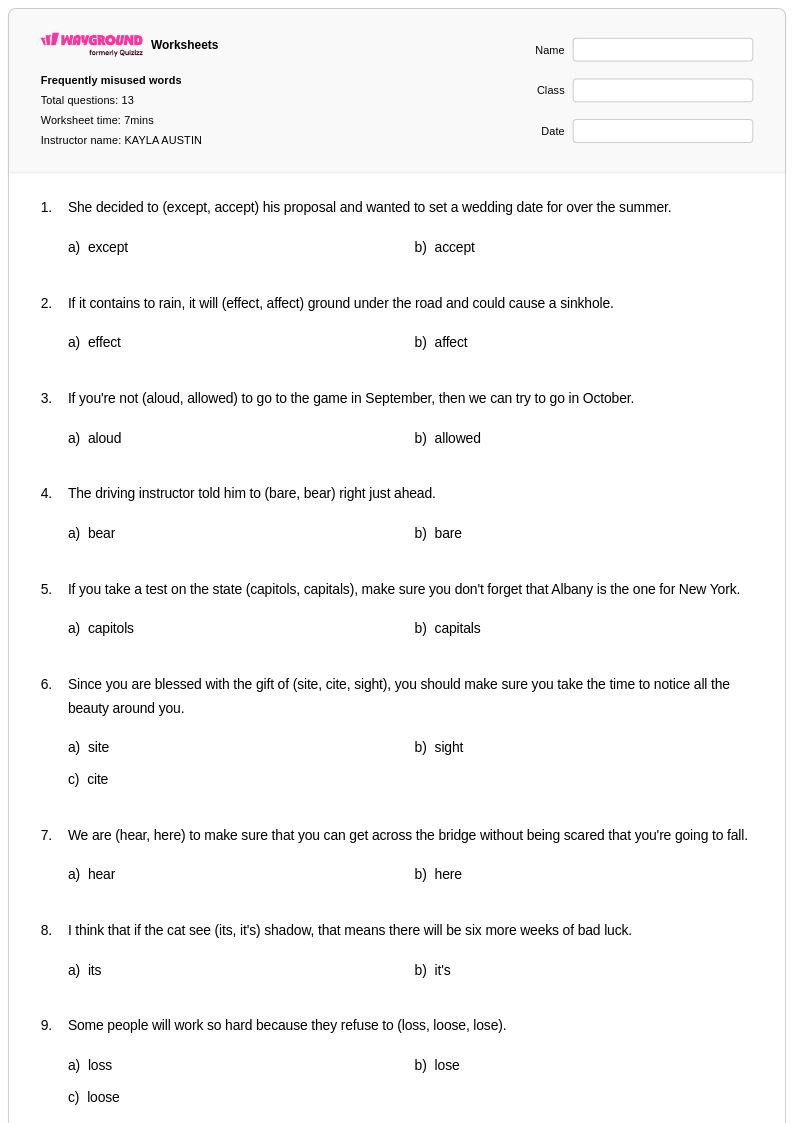
13 Q
7th - 8th
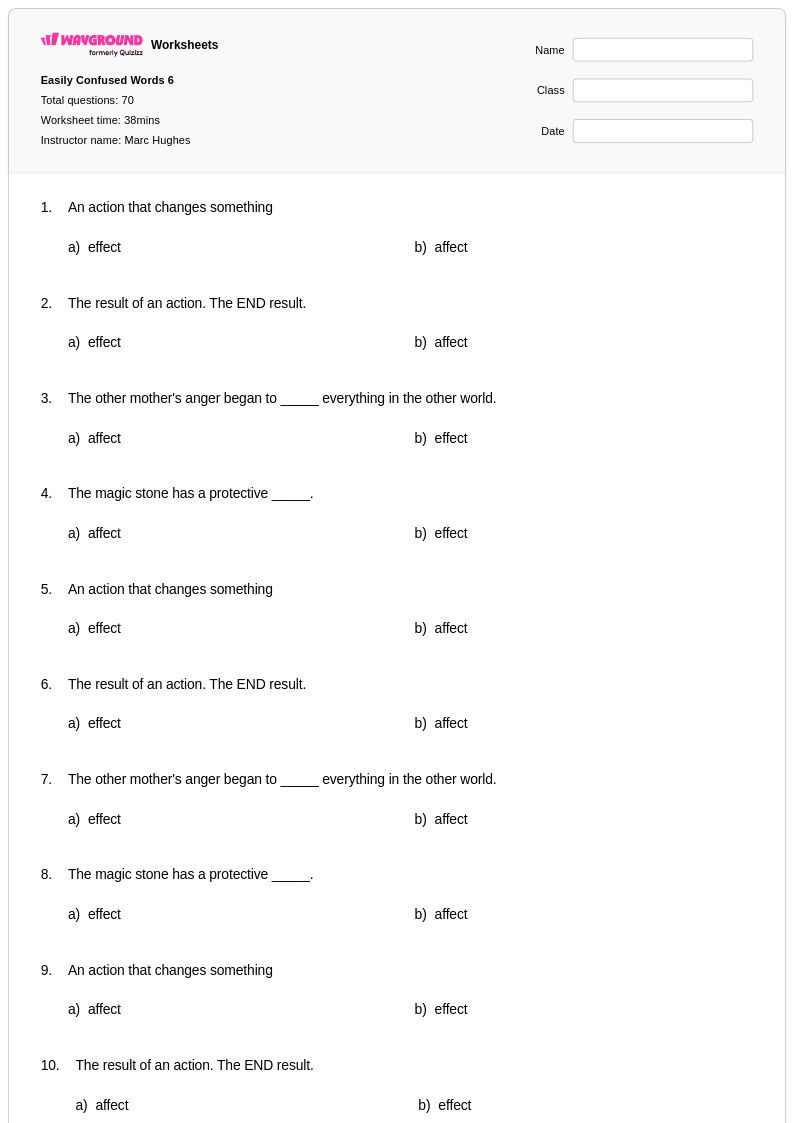
70 Q
7th
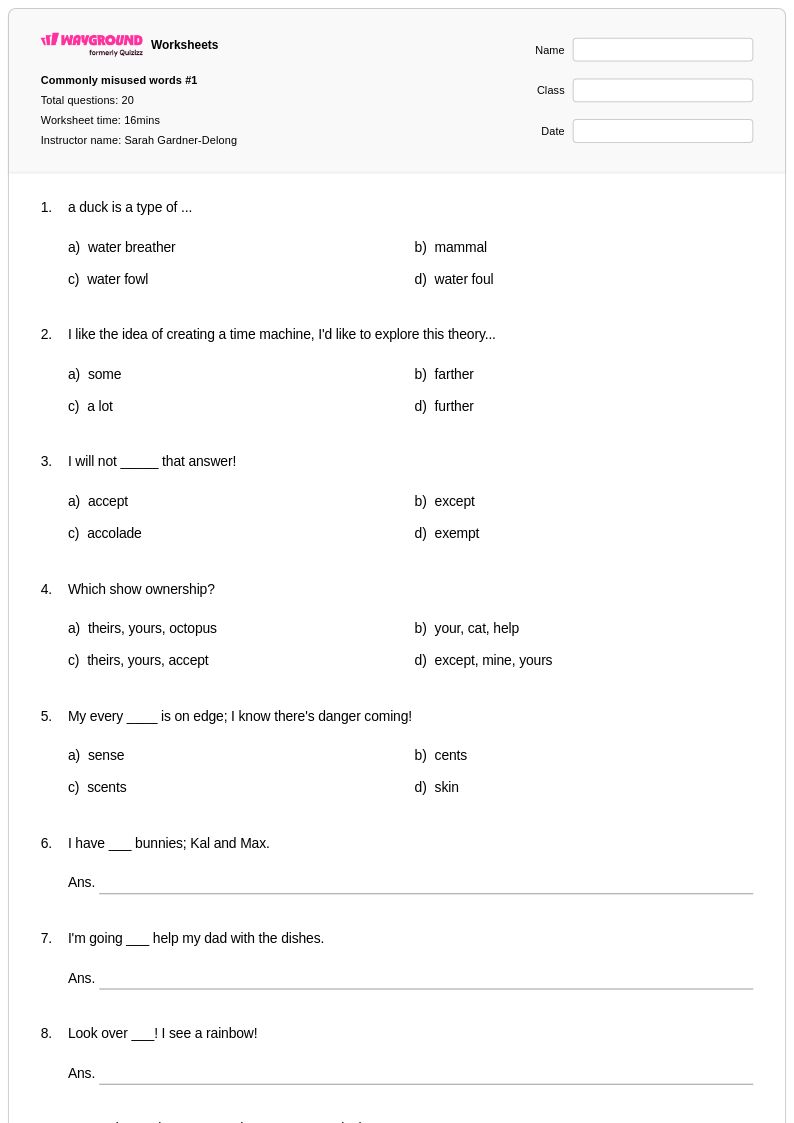
20 Q
7th
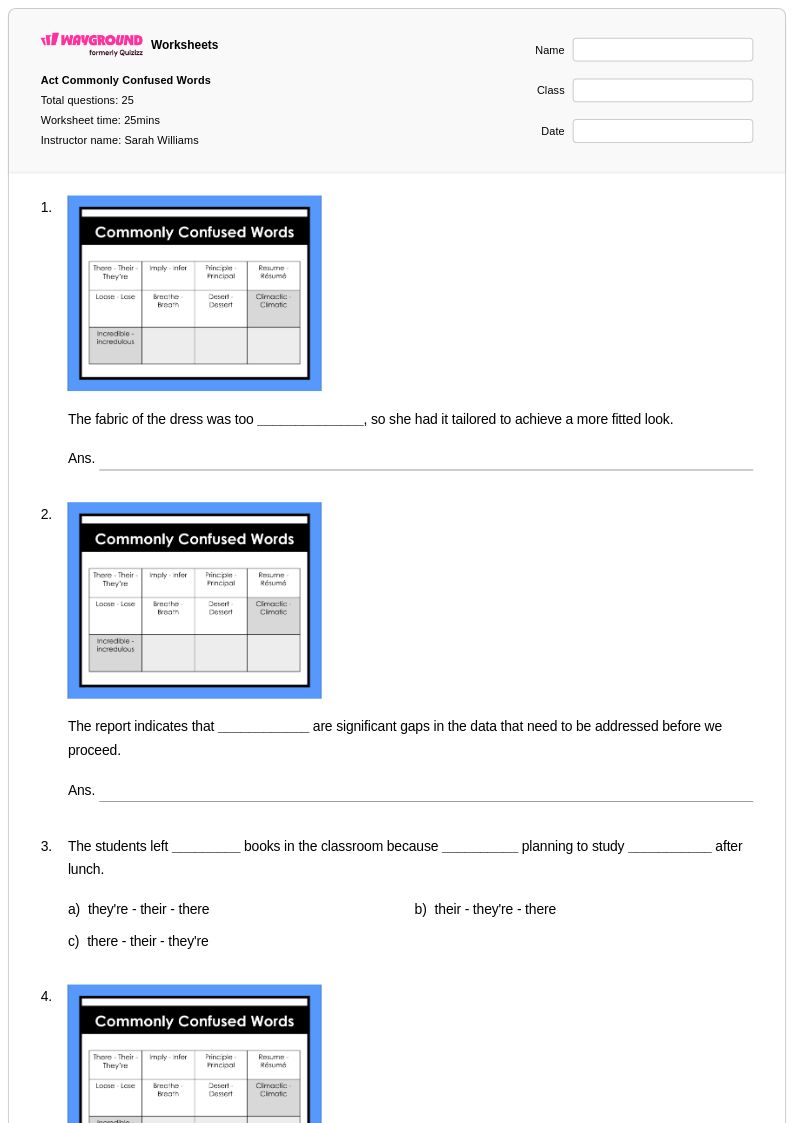
25 Q
6th - Uni
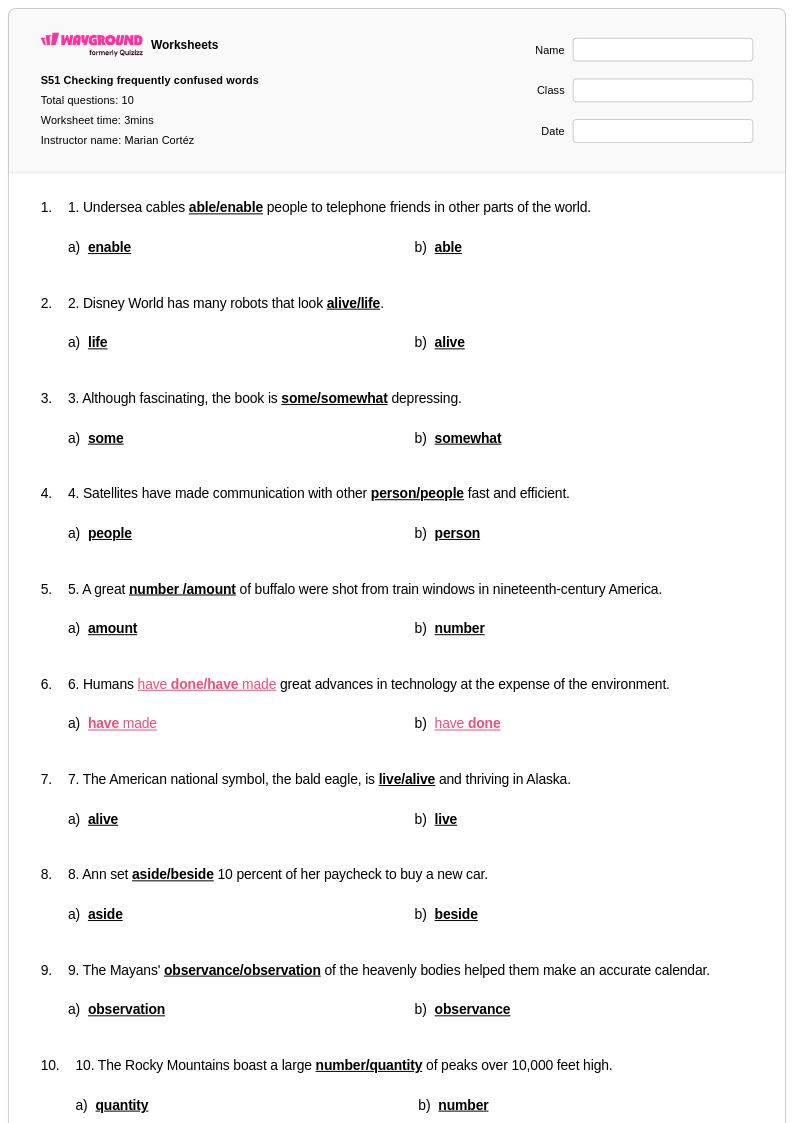
10 Q
1st - 10th
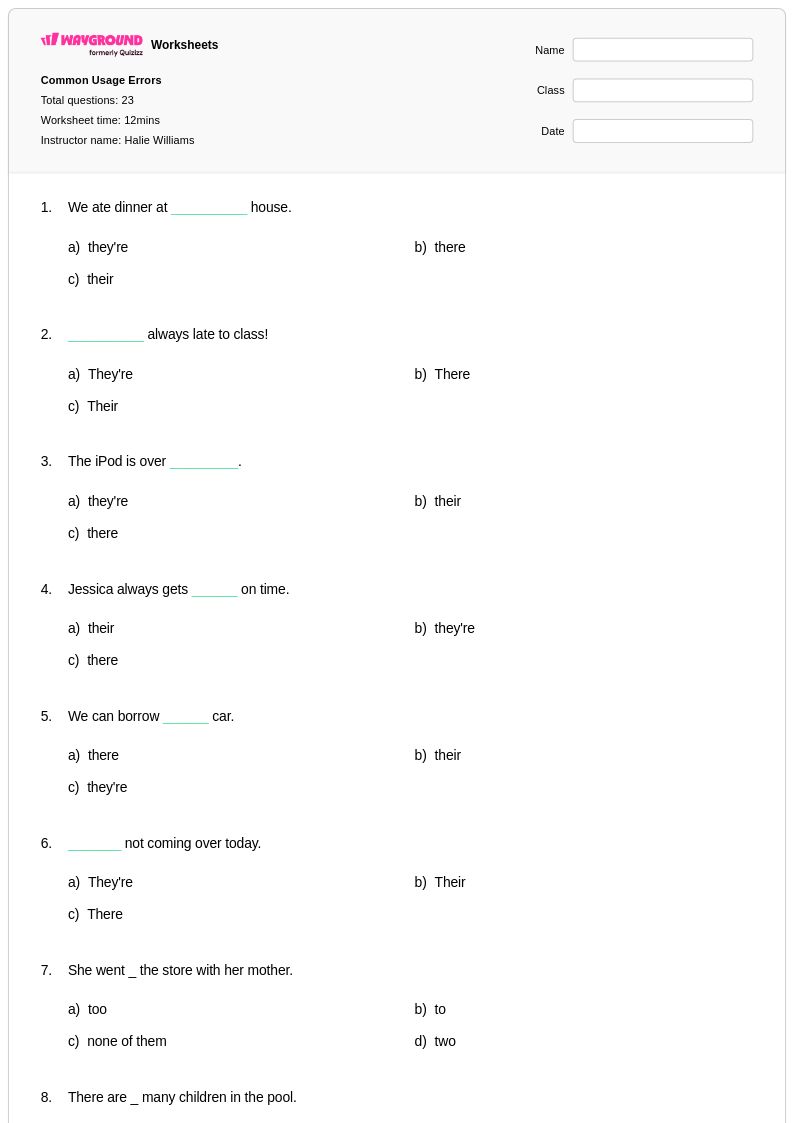
23 Q
7th
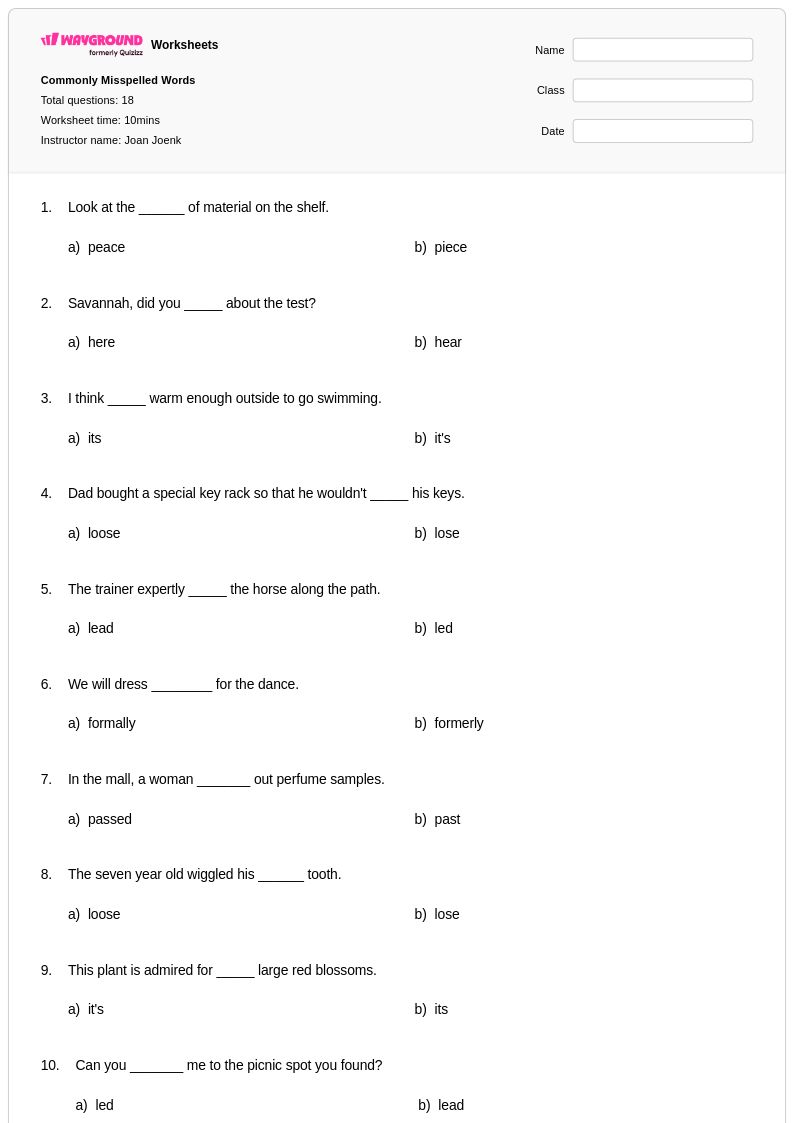
18 Q
7th
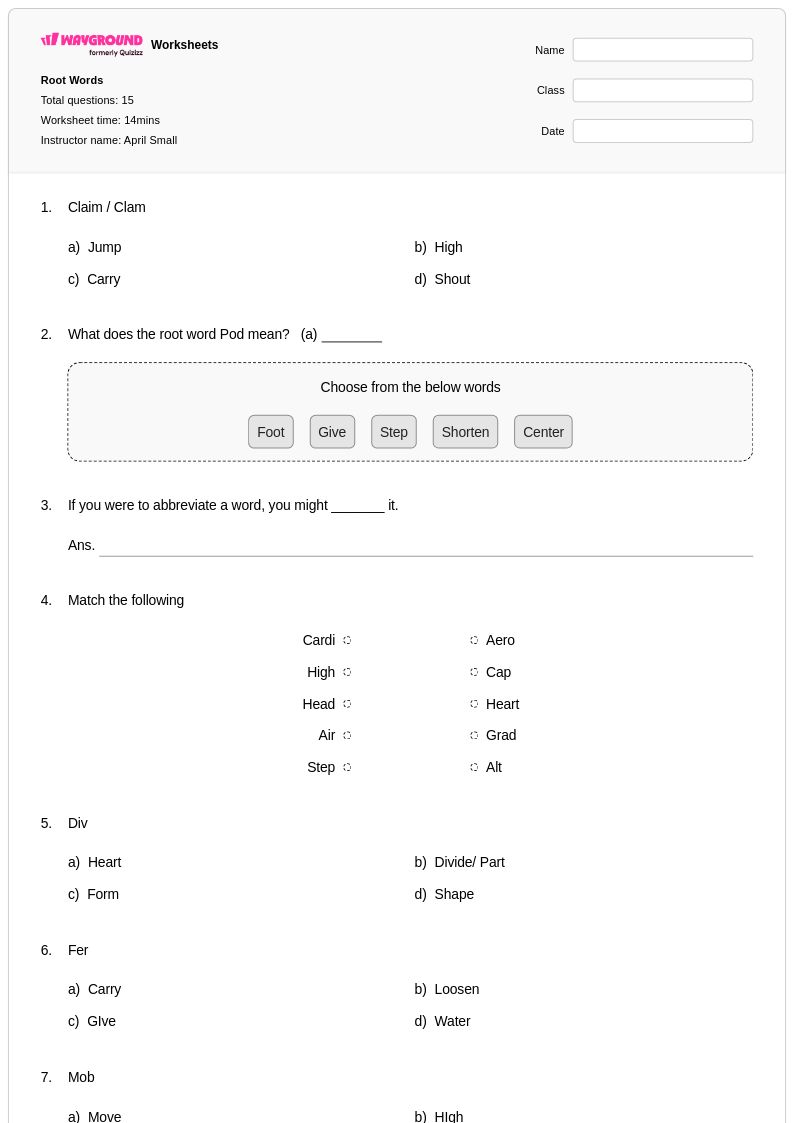
15 Q
7th
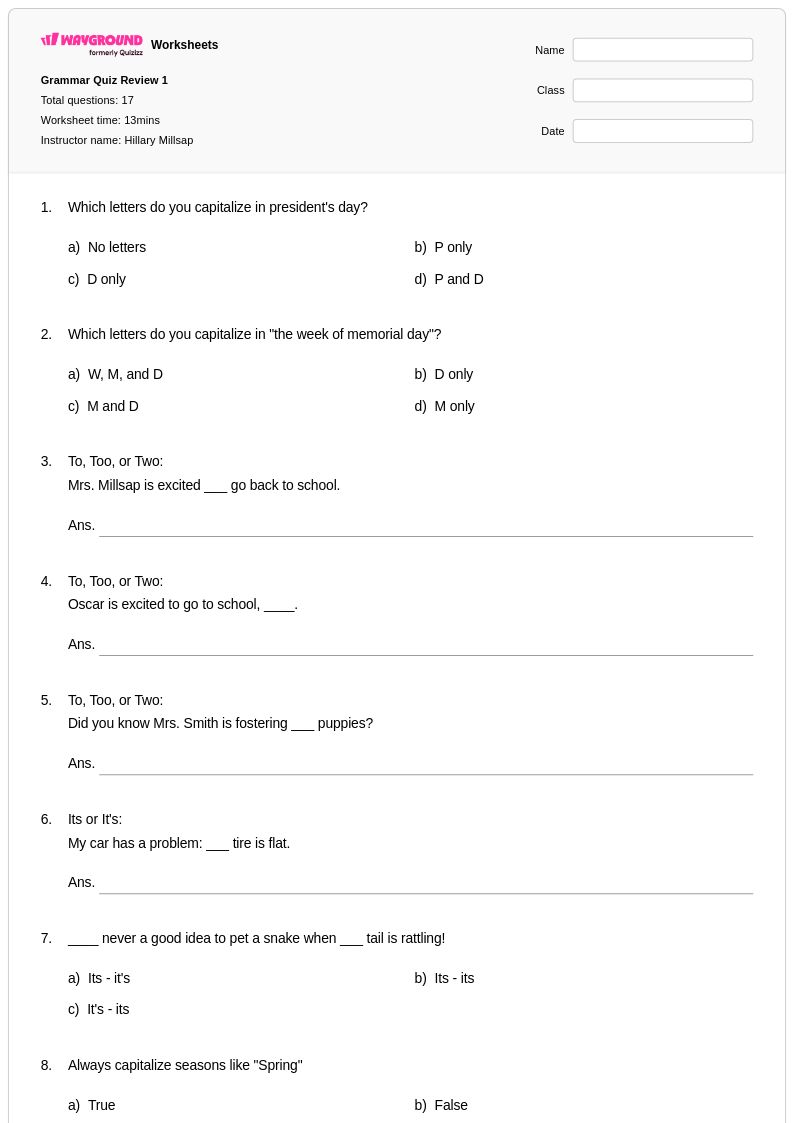
17 Q
5th - 7th
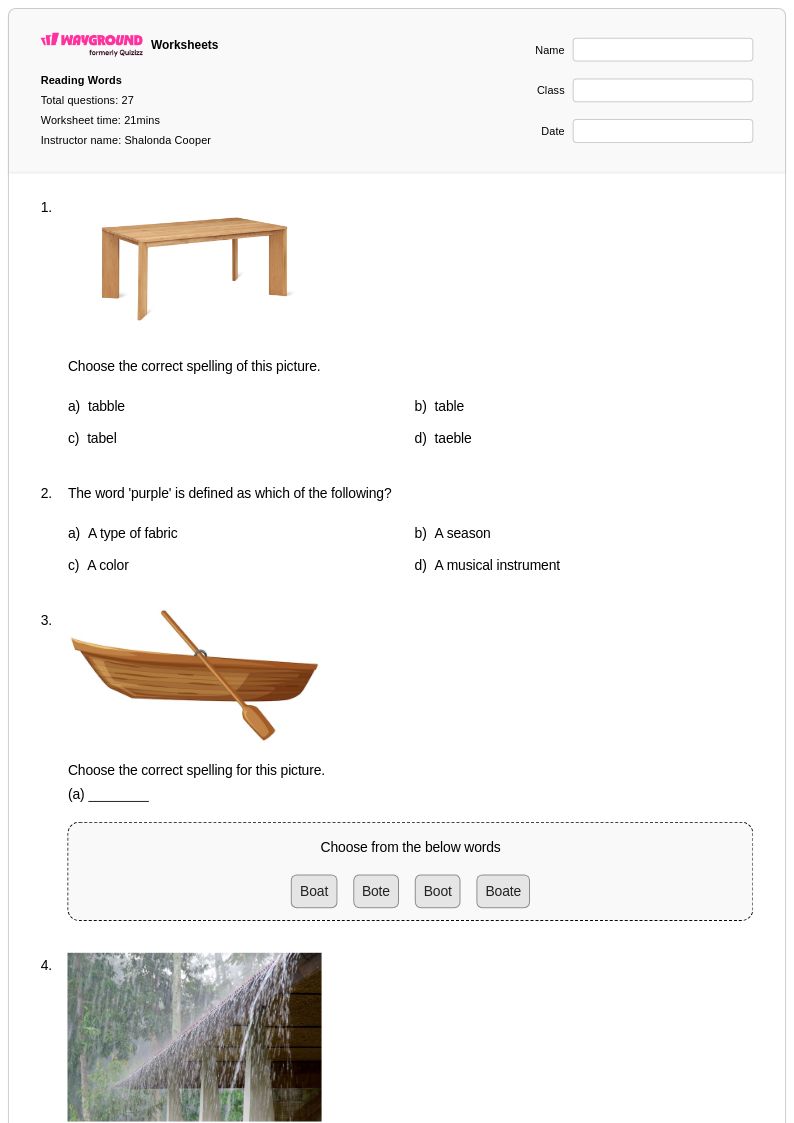
27 Q
5th - Uni
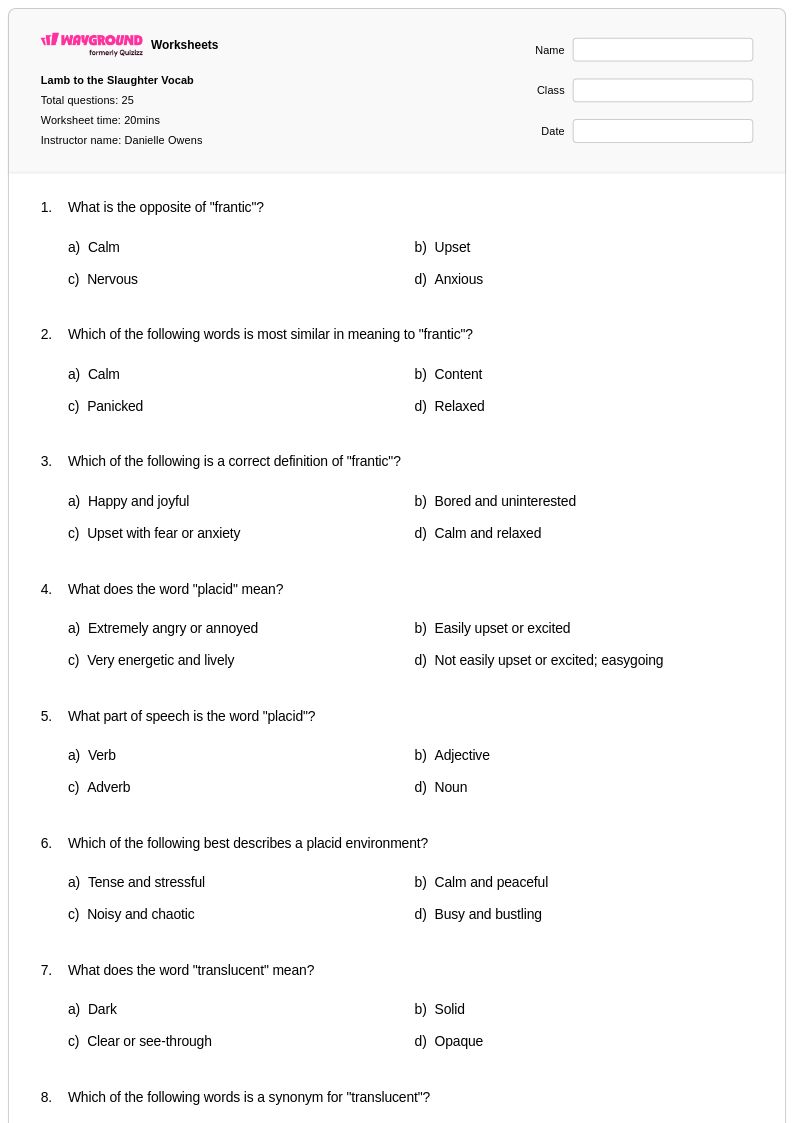
25 Q
7th
15 Q
2nd - Uni
10 Q
7th
11 Q
6th - 8th
17 Q
6th - 8th
15 Q
7th
12 Q
4th - 8th
11 Q
6th - 8th
10 Q
6th - 8th
Explore Frequently Confused Words Worksheets by Grades
Explore Other Subject Worksheets for class 7
Explore printable Frequently Confused Words worksheets for Class 7
Frequently confused words present one of the most persistent challenges for Class 7 students as they develop more sophisticated writing and communication skills. Wayground's comprehensive collection of frequently confused words worksheets provides targeted practice with commonly mixed-up word pairs such as affect/effect, accept/except, and there/their/they're, along with dozens of other troublesome combinations that seventh graders encounter across all subject areas. These carefully designed worksheets strengthen students' ability to distinguish between homophones, near-homophones, and words with similar meanings through contextual exercises, sentence completion activities, and error identification tasks. Each worksheet includes a detailed answer key and is available as a free printable pdf, making it simple for educators to incorporate focused vocabulary practice into daily instruction while helping students build confidence in their word choice decisions.
Wayground's extensive library of teacher-created resources makes it effortless for educators to locate exactly the right frequently confused words materials for their Class 7 classrooms. With millions of worksheets developed by experienced teachers, the platform's robust search and filtering capabilities allow instructors to quickly identify resources that align with specific standards and learning objectives while accommodating diverse student needs through built-in differentiation tools. Teachers can seamlessly customize existing worksheets or create entirely new practice problems, with all materials available in both printable and digital formats including downloadable pdf files. This flexibility proves invaluable for lesson planning, targeted remediation with struggling students, enrichment activities for advanced learners, and ongoing skill practice that reinforces proper usage of frequently confused words throughout the academic year.
FAQs
How do I teach frequently confused words effectively in the classroom?
What exercises help students practice frequently confused words?
What mistakes do students commonly make with frequently confused words?
How can I use frequently confused words worksheets to support struggling writers?
How do I use Wayground's frequently confused words worksheets in my class?