Free Printable Future Simple Tense Worksheets for Class 8
Class 8 students can master the future simple tense with Wayground's comprehensive collection of free worksheets, printables, and practice problems that include detailed answer keys for effective learning.
Explore printable Future Simple Tense worksheets for Class 8
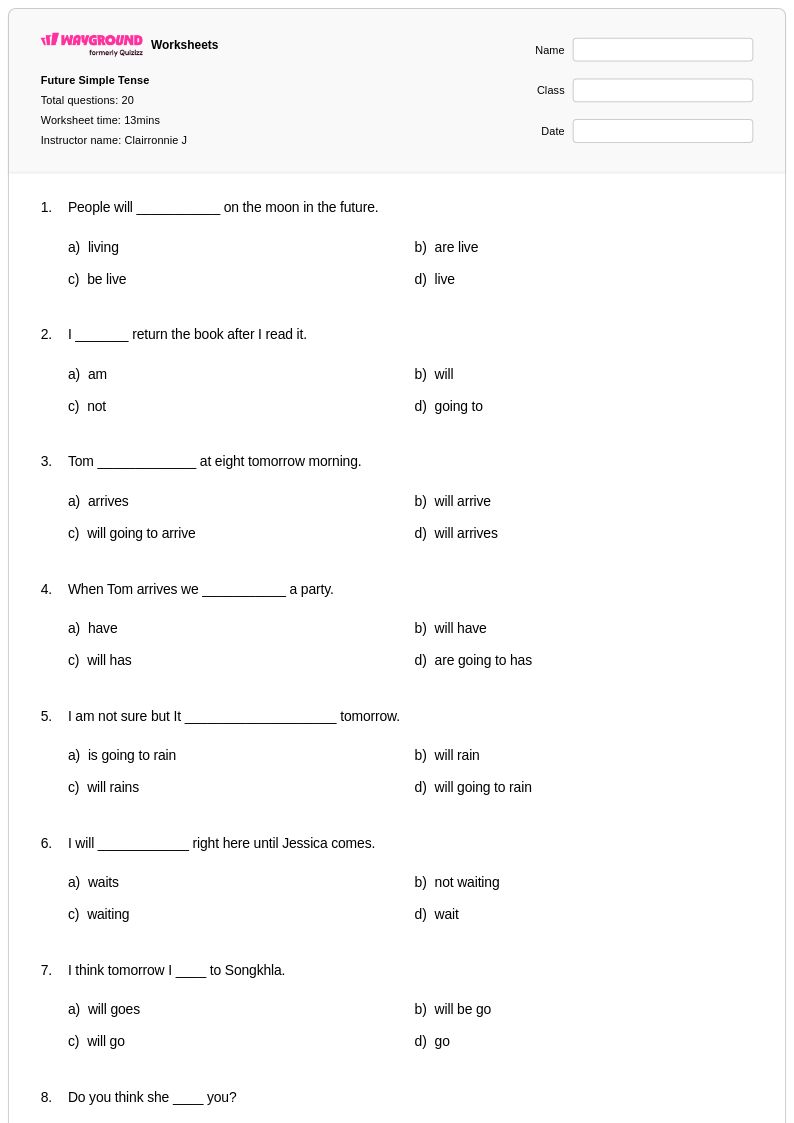
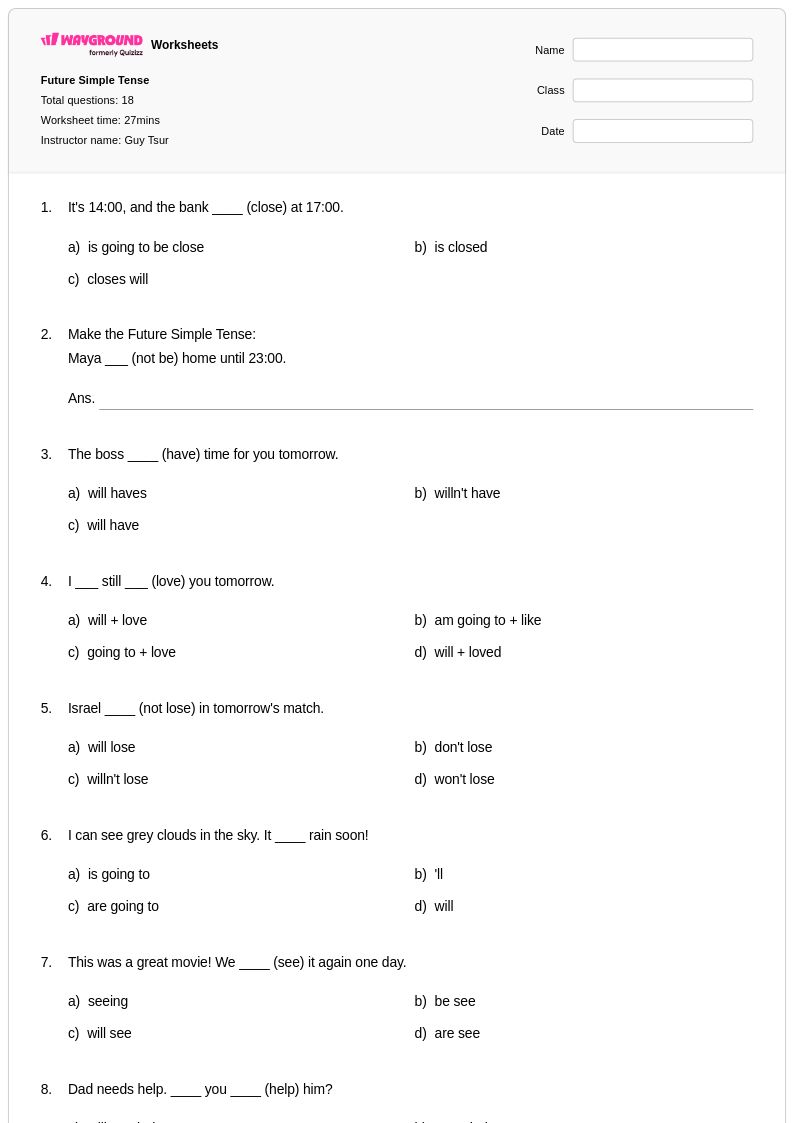
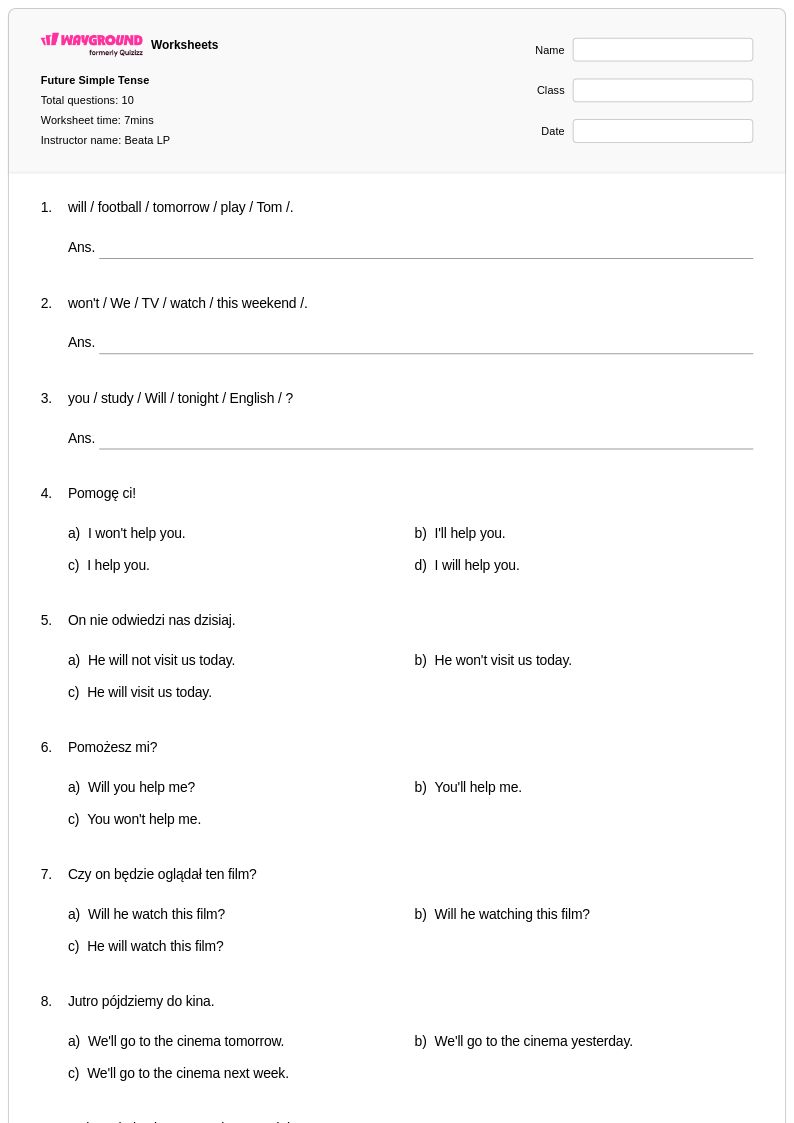
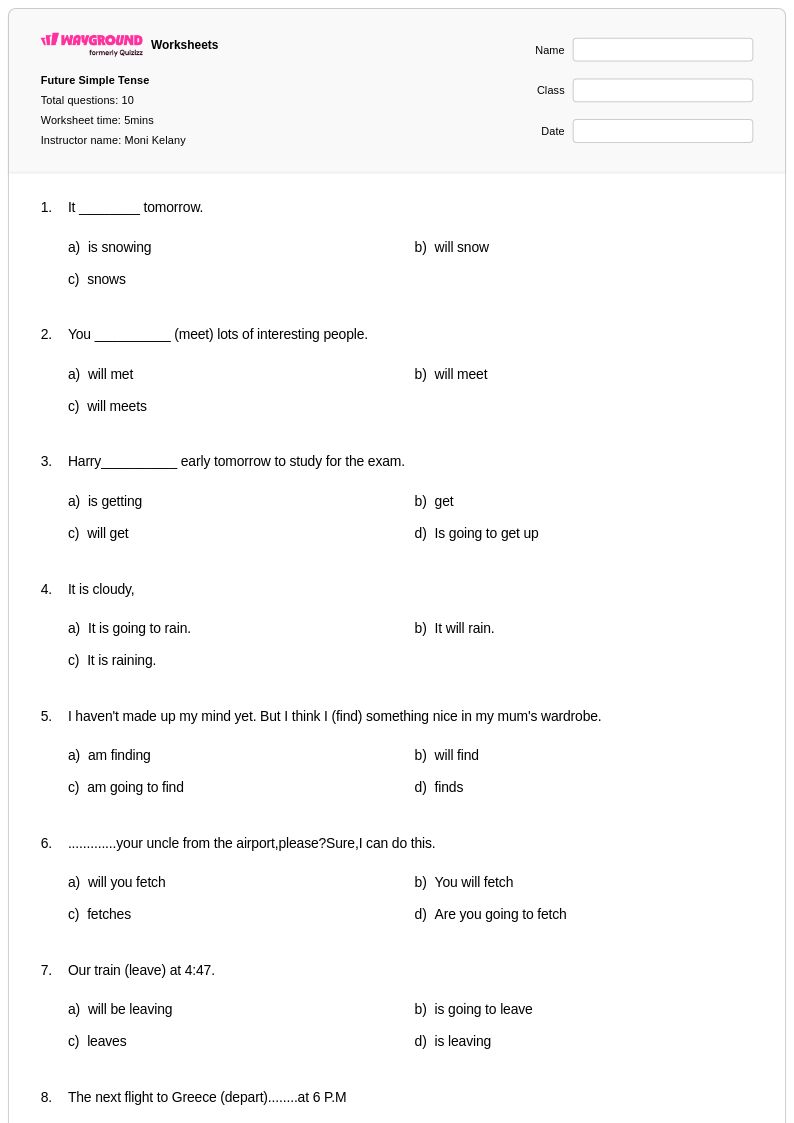
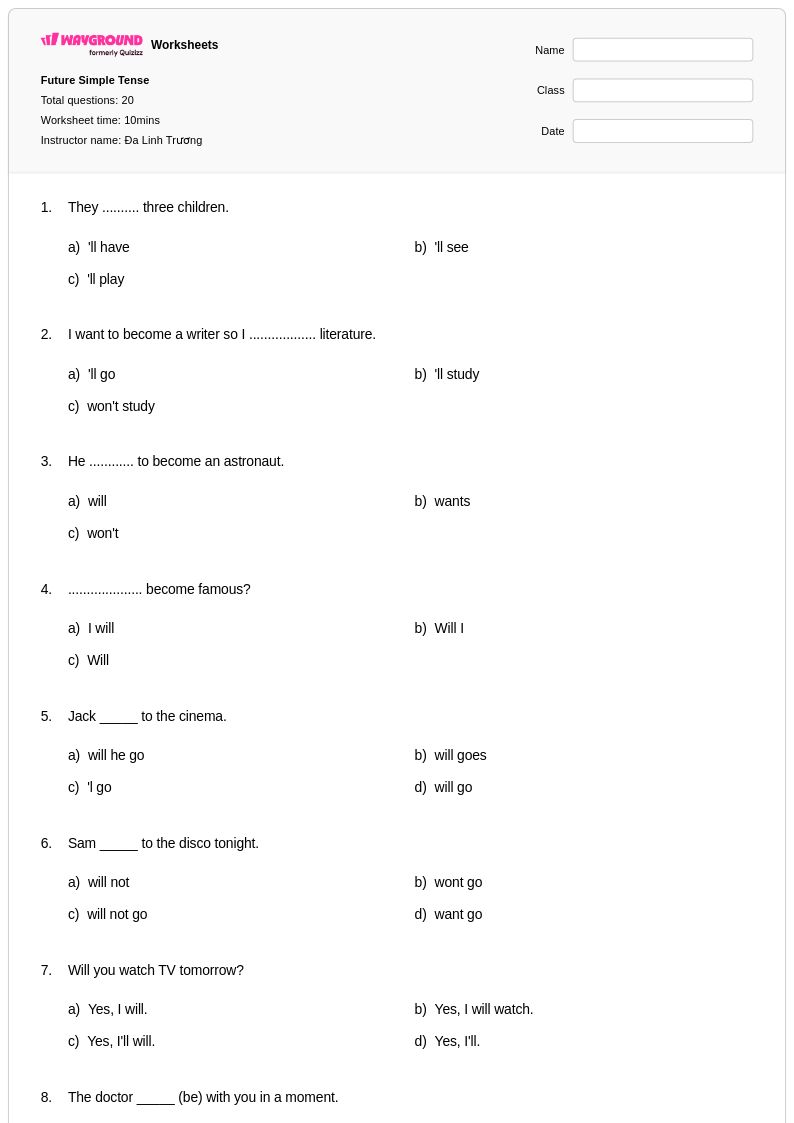
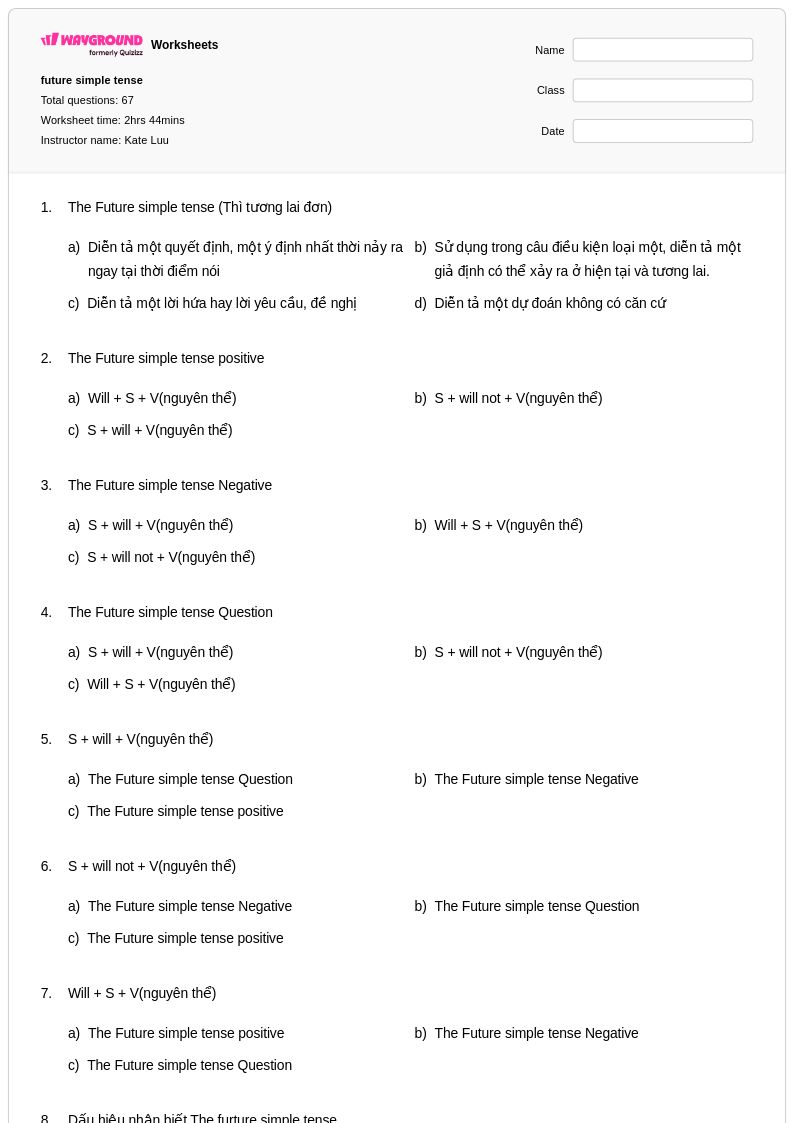
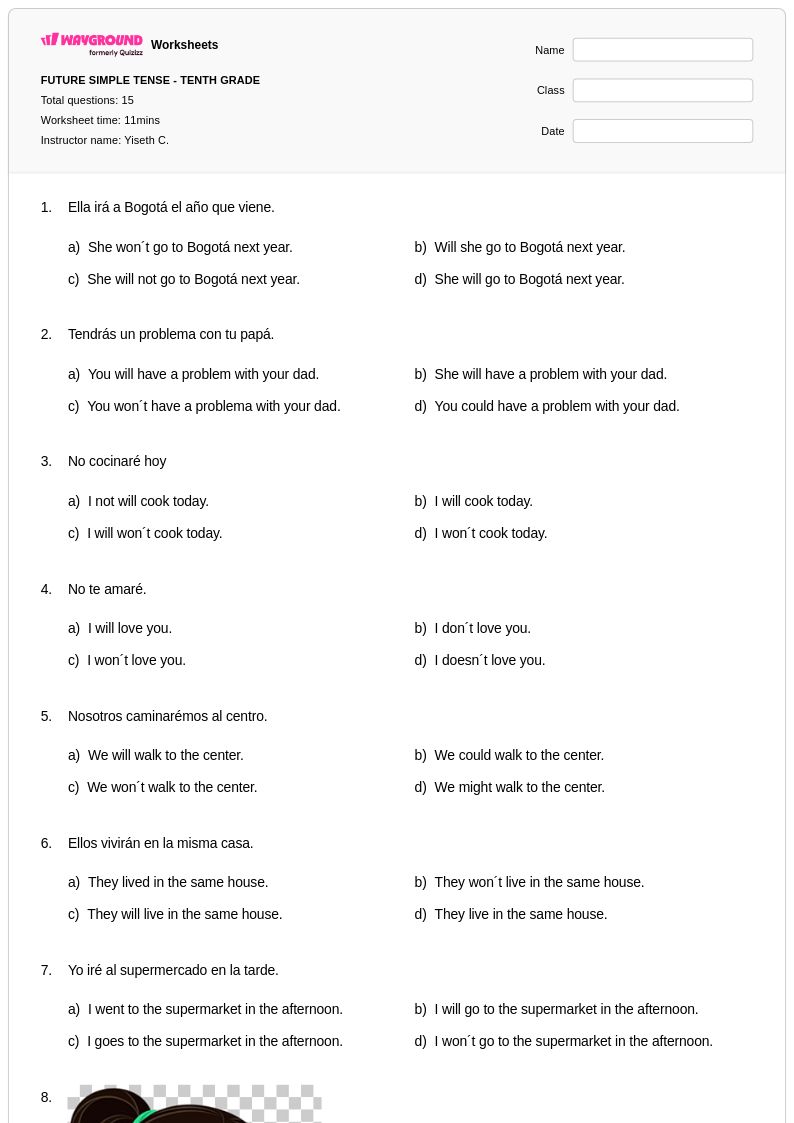
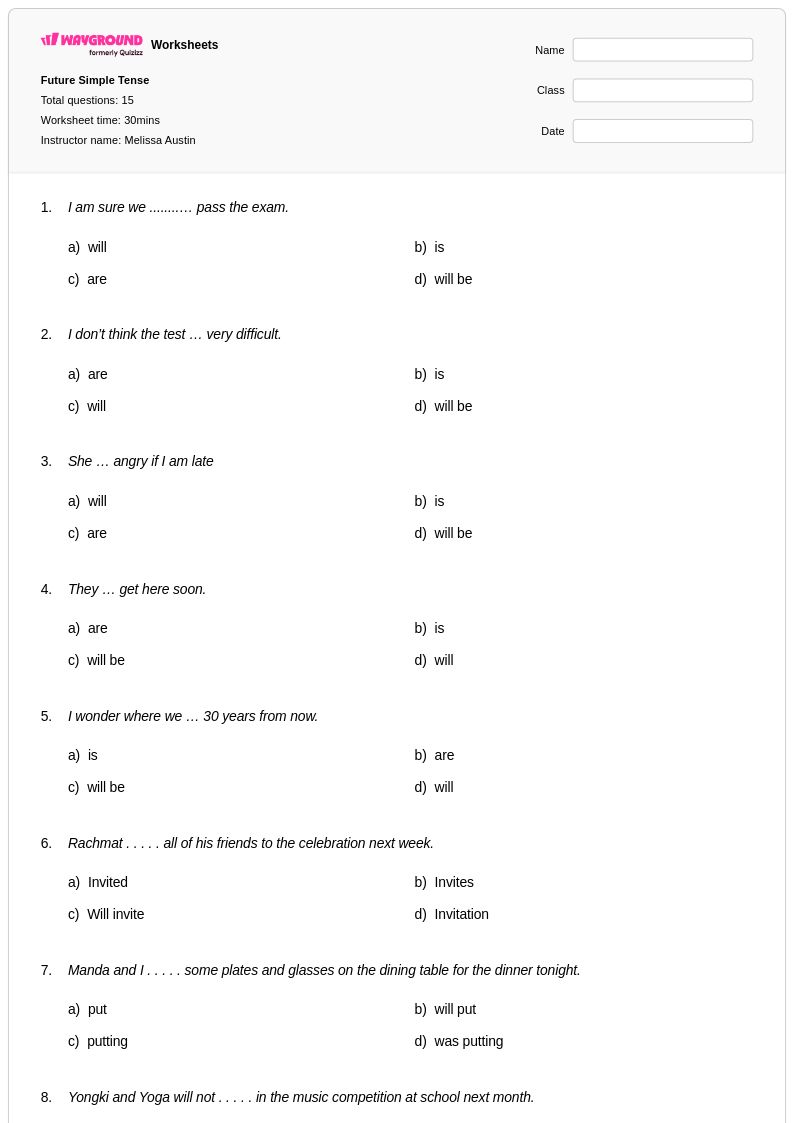
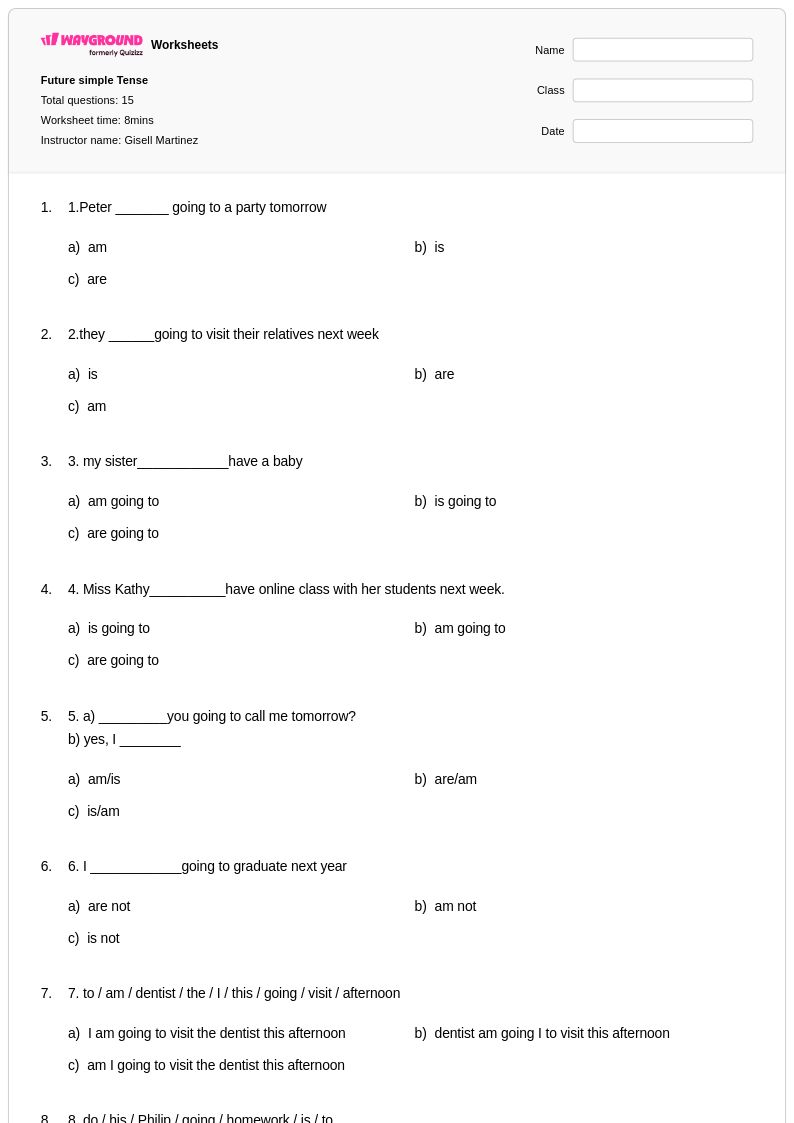
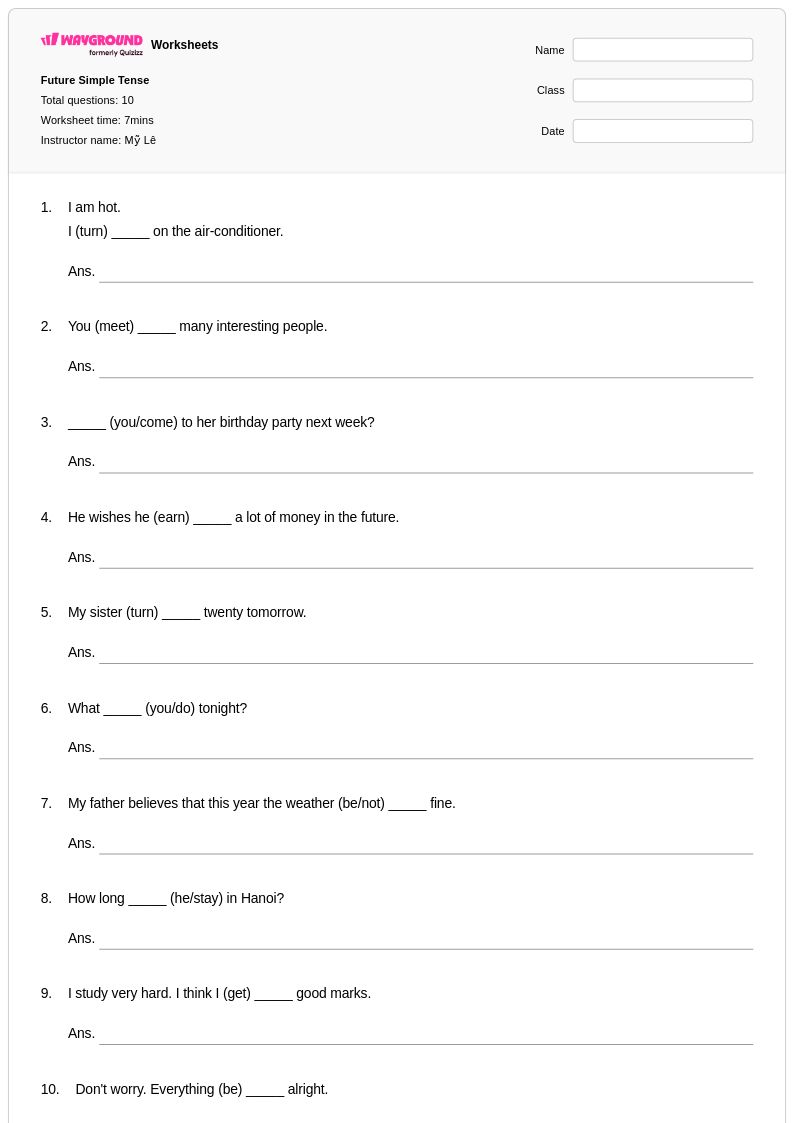
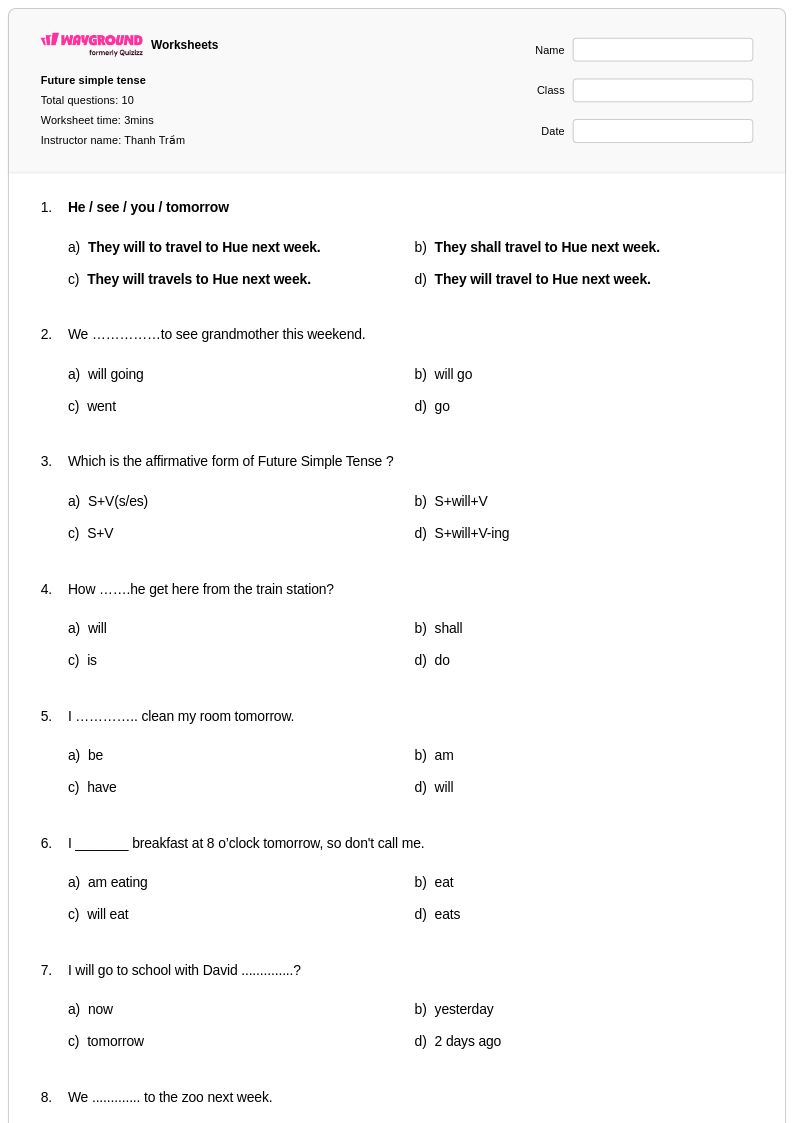
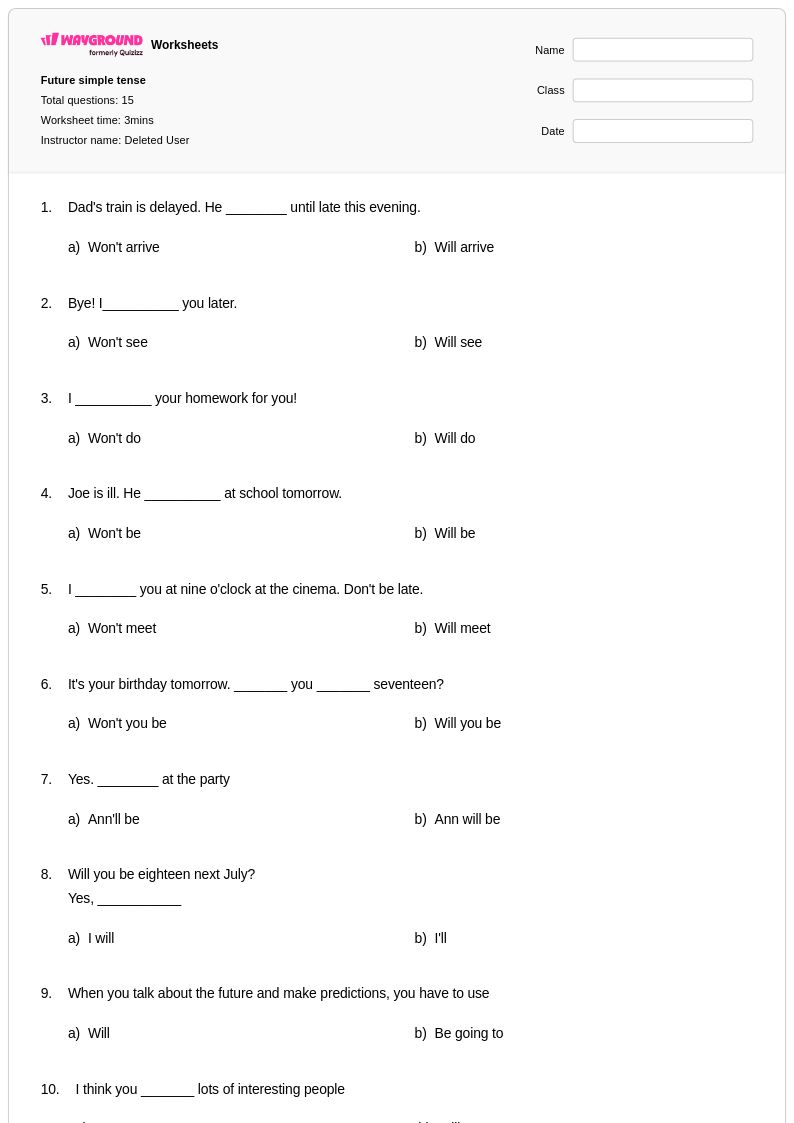
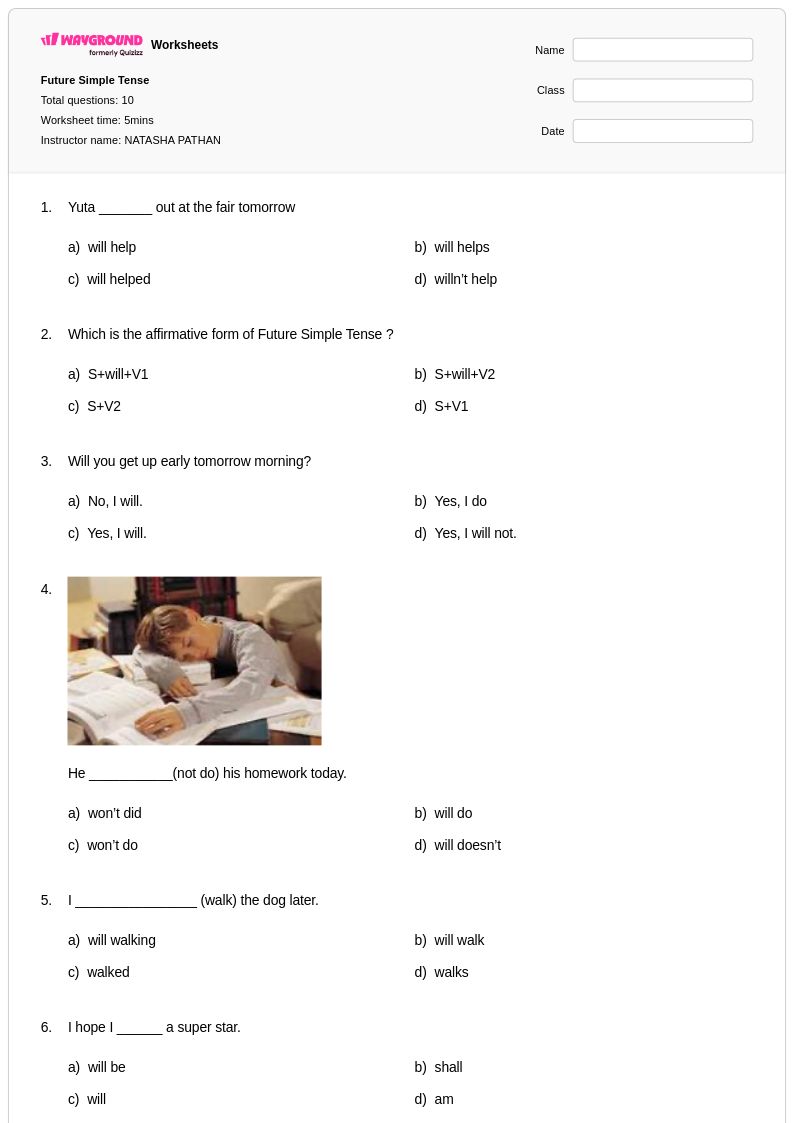
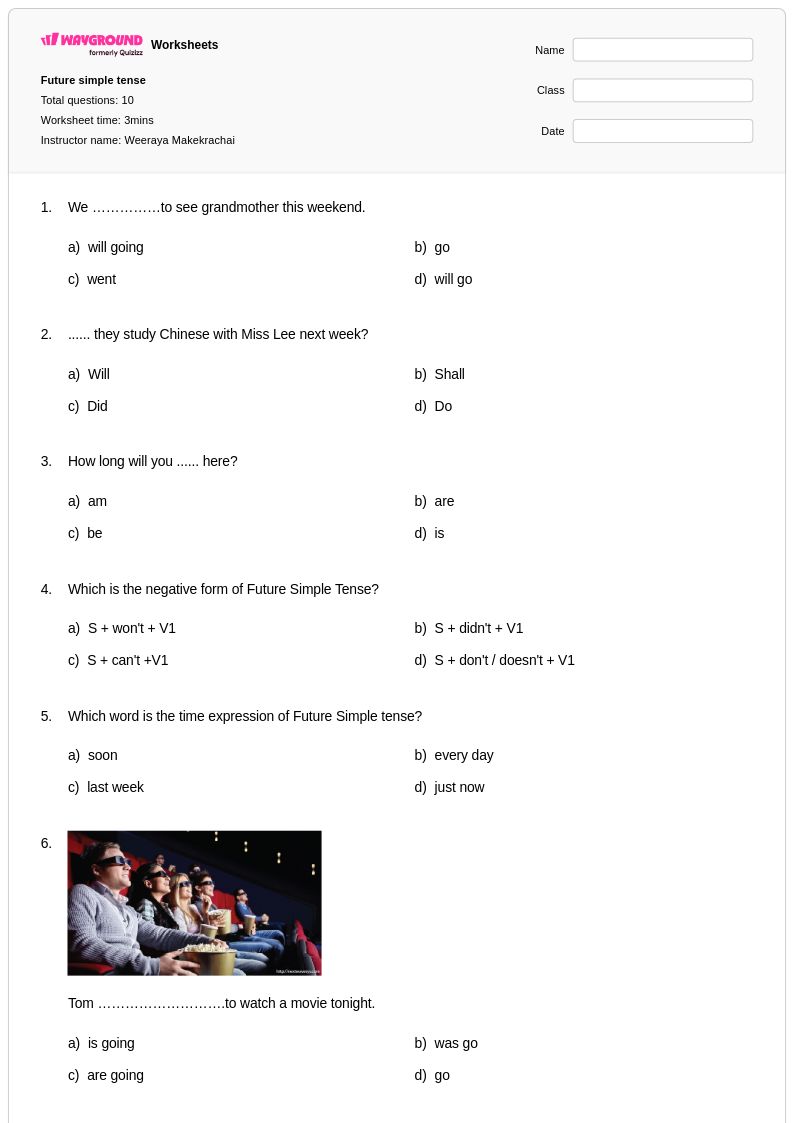
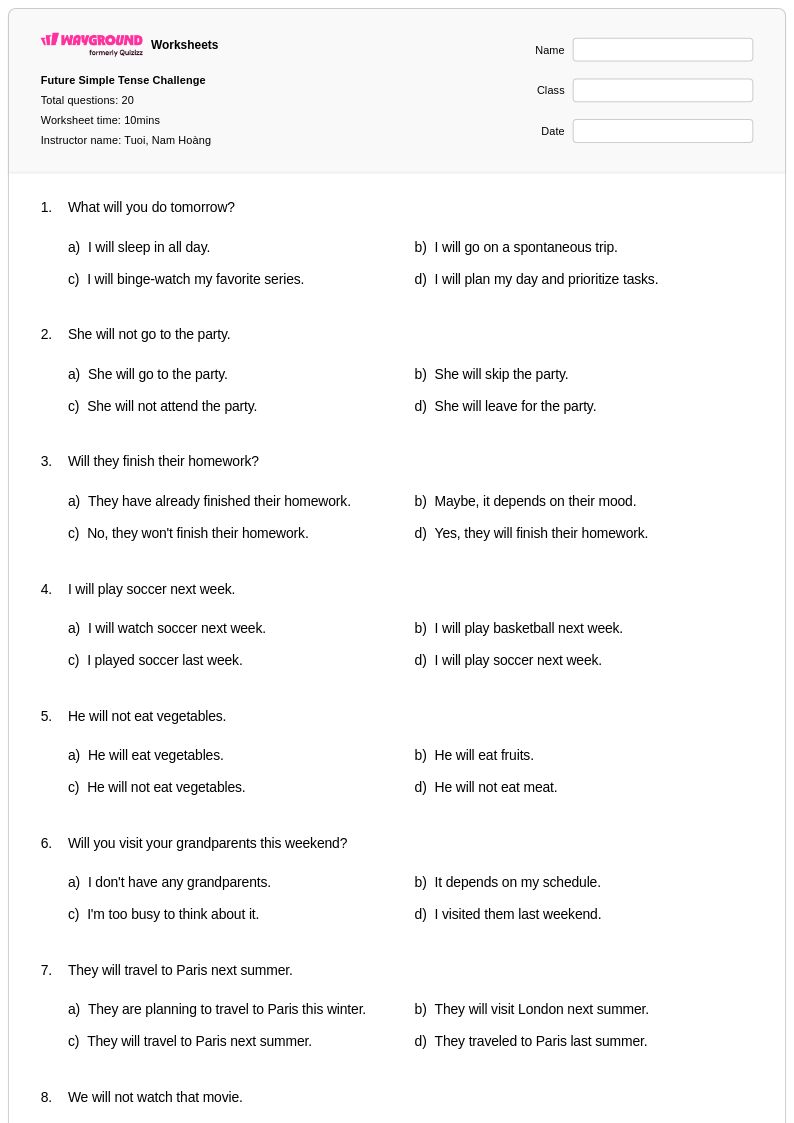
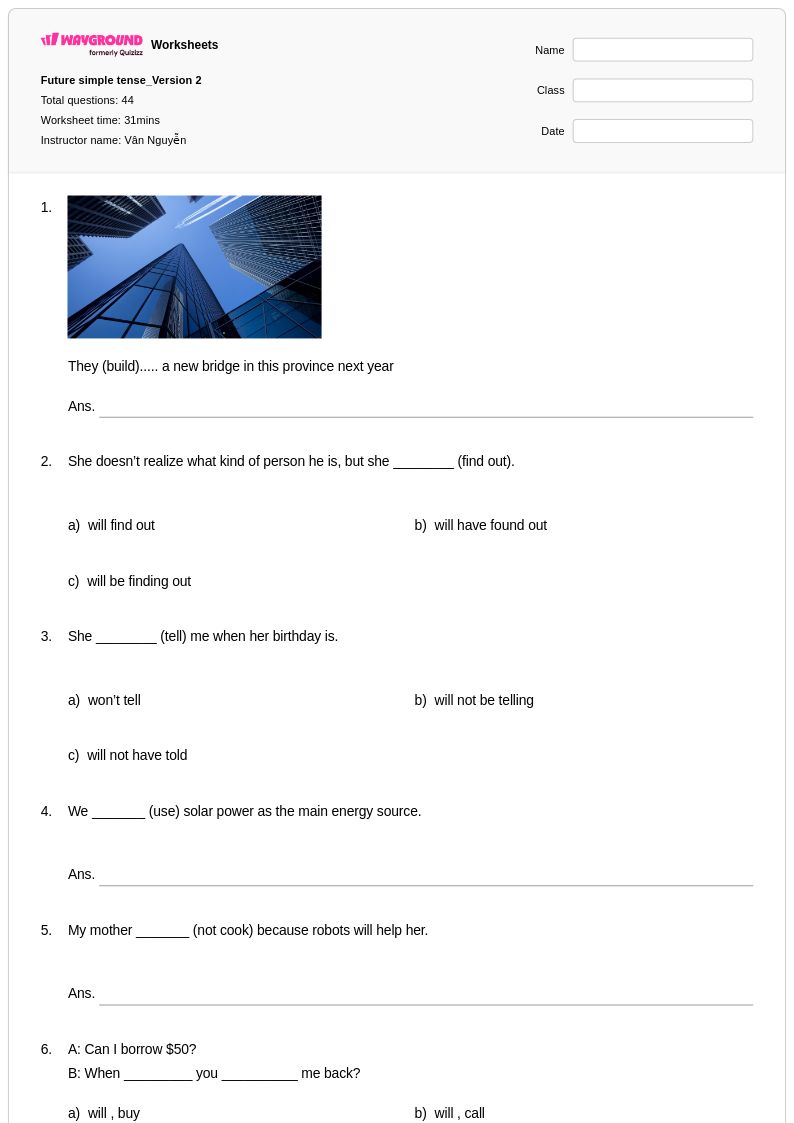
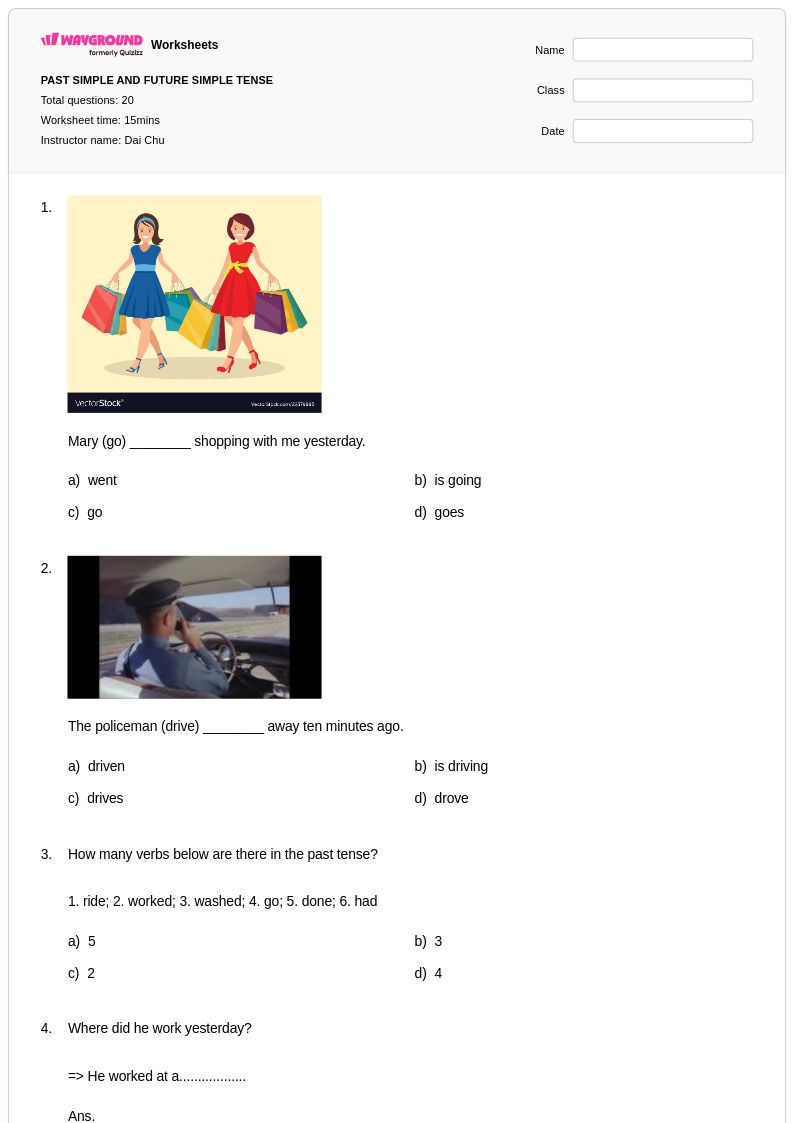
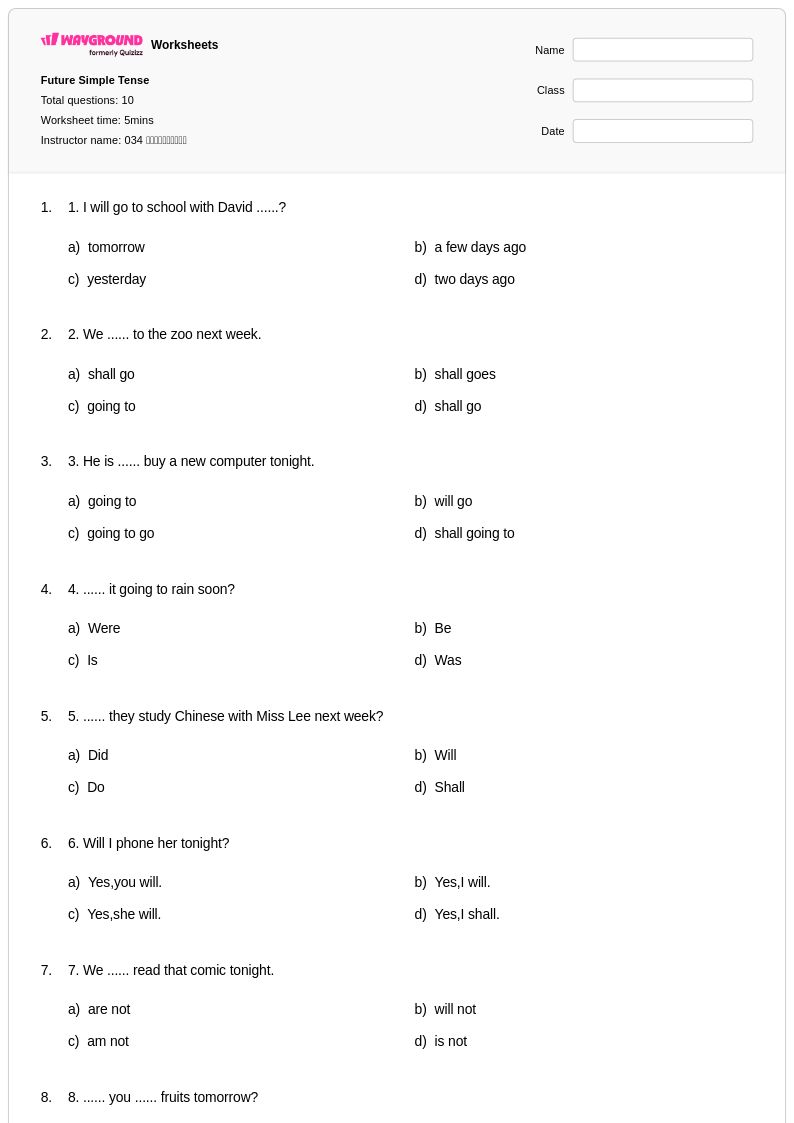
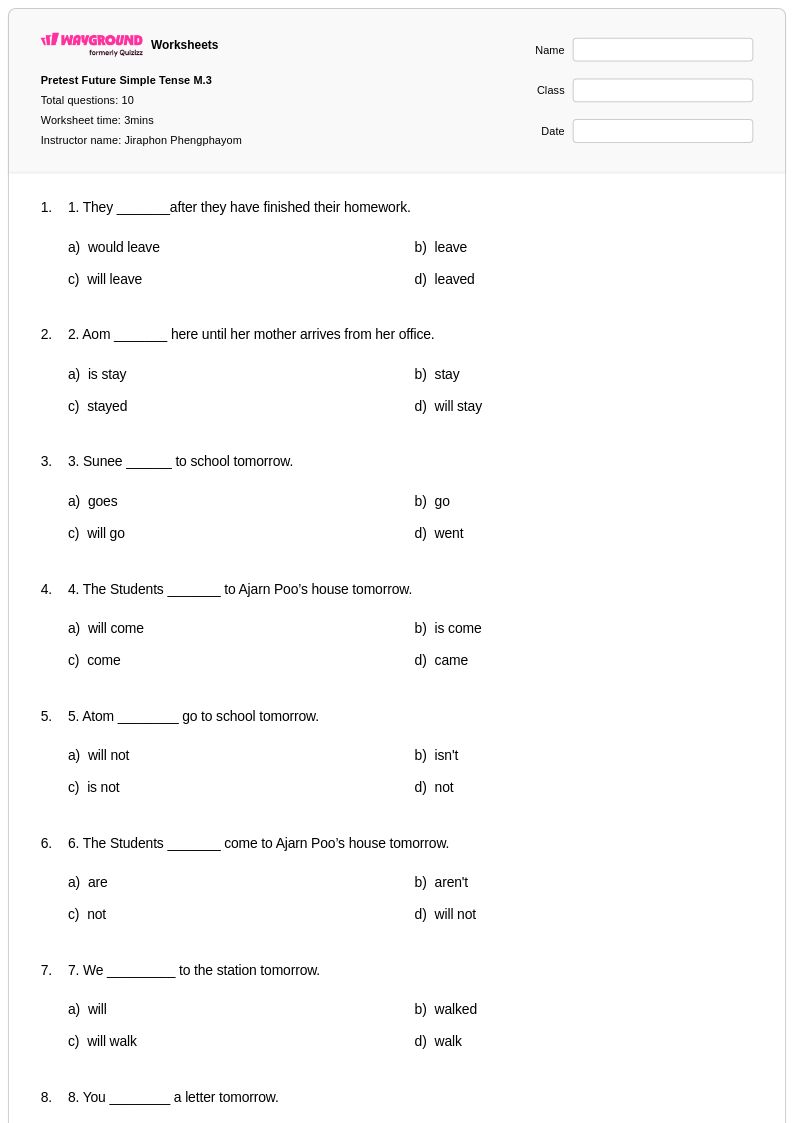
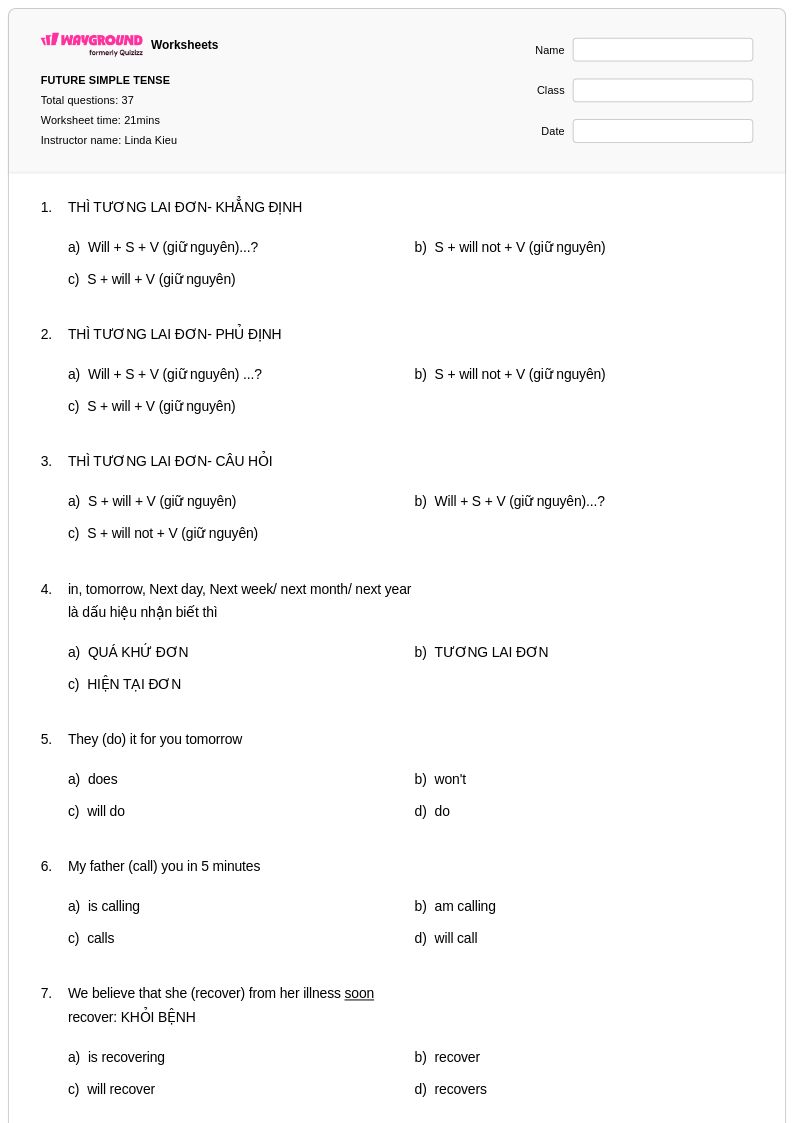
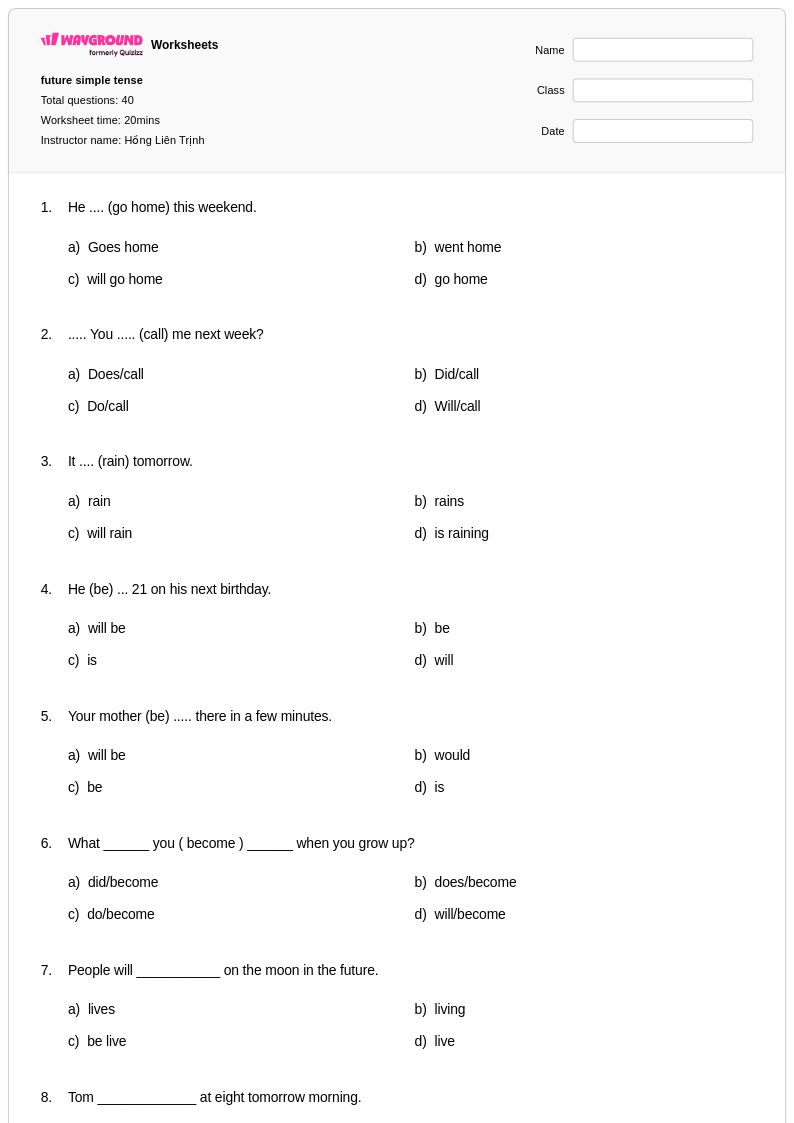
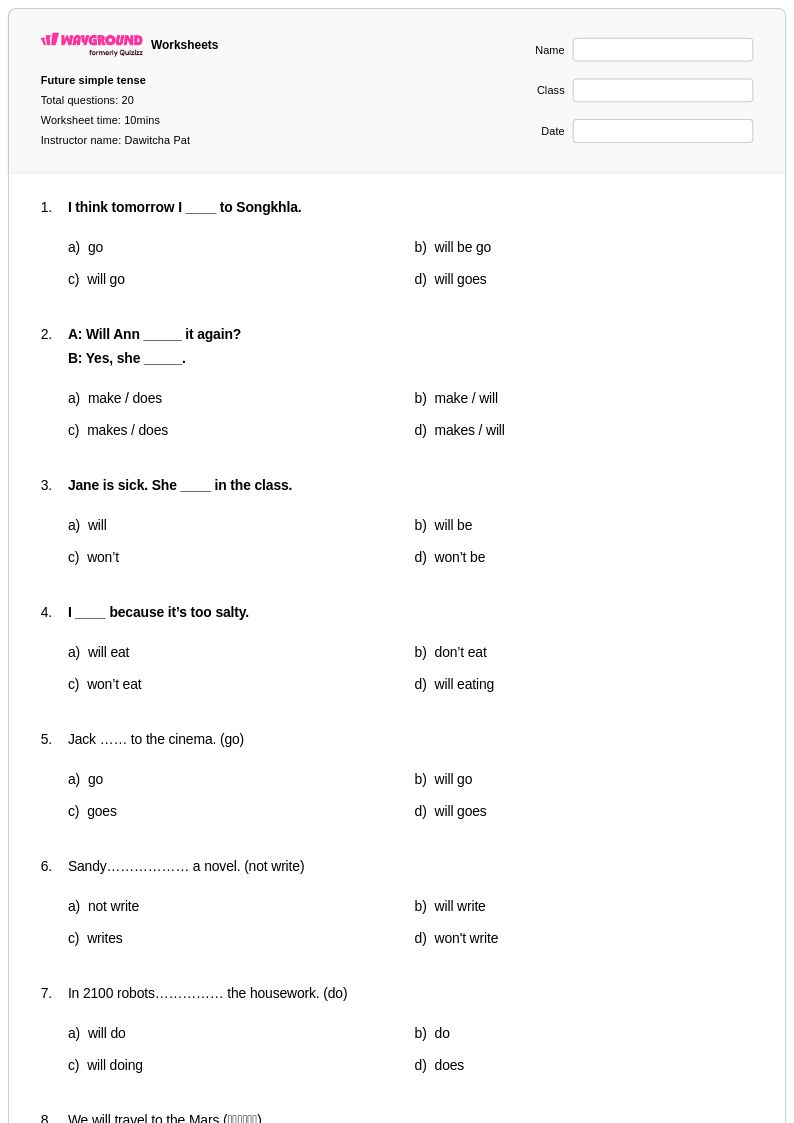
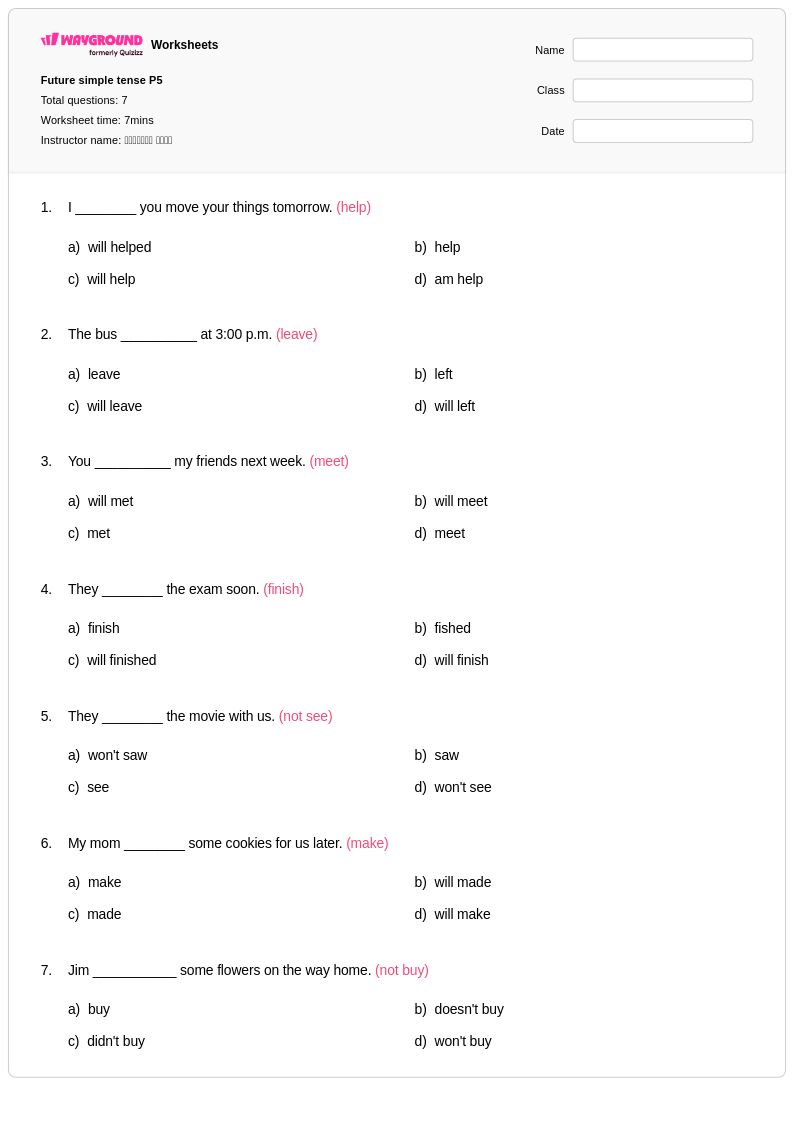
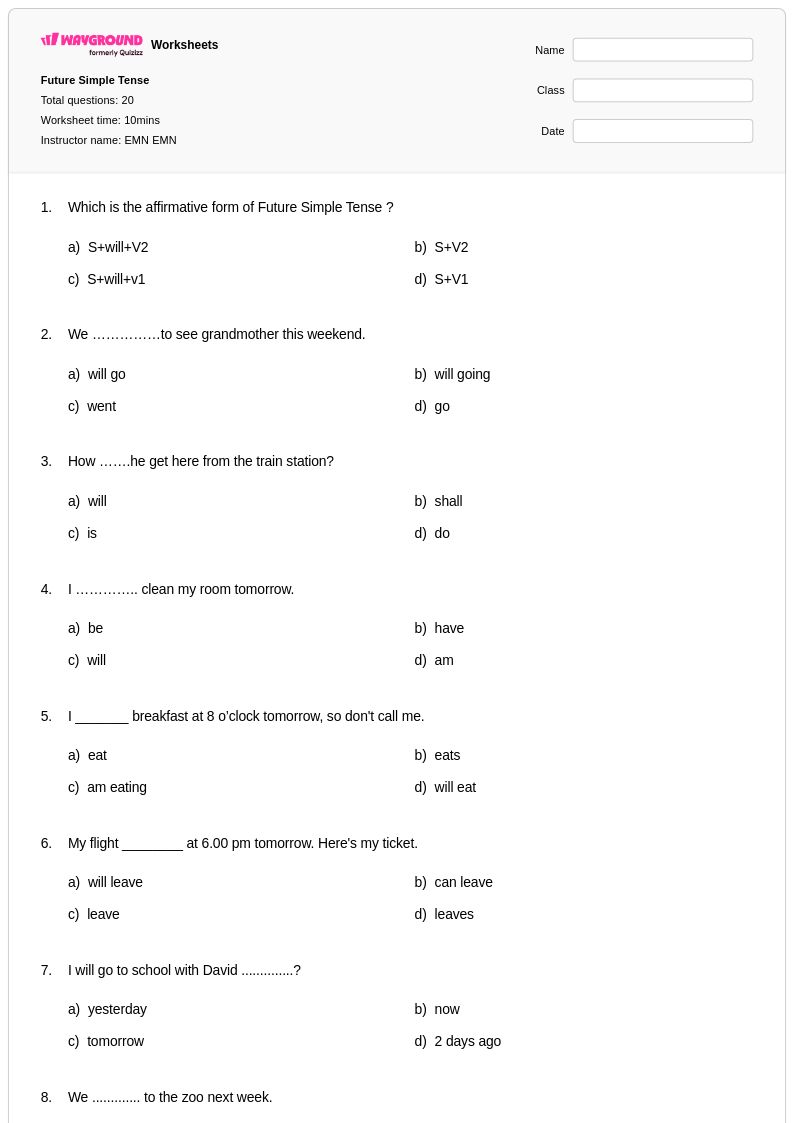
Future simple tense worksheets for Class 8 students available through Wayground (formerly Quizizz) provide comprehensive practice with this essential grammatical structure that expresses actions, events, and states that will occur in the future. These expertly designed worksheets strengthen students' understanding of forming the future simple tense using "will" and "shall" with base verbs, while also covering negative constructions and question formations that are crucial for Class 8 English proficiency. Students engage with diverse practice problems that range from basic sentence completion exercises to more complex paragraph writing tasks, helping them master both the mechanical aspects of future tense construction and its practical application in authentic communication contexts. Each worksheet includes a detailed answer key to support independent learning and self-assessment, with materials available as free printables in convenient pdf format for seamless classroom integration.
Wayground (formerly Quizizz) empowers educators with millions of teacher-created future simple tense resources specifically curated for Class 8 English instruction, featuring robust search and filtering capabilities that allow teachers to quickly locate materials aligned with specific learning standards and curriculum requirements. The platform's differentiation tools enable instructors to customize worksheets based on individual student needs, providing options for remediation support for struggling learners and enrichment activities for advanced students ready to explore more sophisticated applications of future tense constructions. Teachers can access these resources in both printable and digital formats, including downloadable pdf versions that facilitate flexible lesson planning whether for in-person instruction, remote learning, or hybrid classroom environments. This comprehensive collection supports systematic skill practice and targeted intervention, helping educators address the varied learning needs present in Class 8 classrooms while building students' confidence with future simple tense usage across speaking, writing, and reading applications.
FAQs
How do I teach future simple tense to English language learners?
Start by clearly distinguishing between 'will' and 'going to,' since each carries different communicative weight: 'will' is used for spontaneous decisions and predictions, while 'going to' signals planned intentions. Use concrete, relatable scenarios such as weekend plans or weather predictions to give students a meaningful context before drilling sentence construction. Introduce negative statements and question formation only after students are confident with affirmative structures, so they aren't overloaded with new patterns at once.
What exercises help students practice future simple tense?
Effective practice exercises include sentence transformation tasks where students rewrite present-tense sentences using 'will' or 'going to,' fill-in-the-blank activities that require choosing between the two forms, and question formation drills. Pair or group activities where students interview each other about weekend plans or future goals also reinforce natural use of the tense. Written production tasks, such as writing a short paragraph about future predictions, help consolidate form-focused practice into meaningful output.
What are the most common mistakes students make with future simple tense?
The most frequent error is confusing 'will' and 'going to,' often using 'will' for all future contexts when 'going to' would be more appropriate for pre-planned intentions. Students also commonly omit the base verb form after 'will,' writing 'she will goes' instead of 'she will go.' Negative contractions ('won't') and question inversion ('Will she...?') are additional points where learners frequently make structural errors, especially if their first language doesn't use auxiliary-based question formation.
How do I use future simple tense worksheets in my classroom?
Future simple tense worksheets on Wayground are available as printable PDFs for traditional classroom use and in digital formats for technology-integrated environments, making them adaptable to in-person, hybrid, or remote instruction. Teachers can also host worksheets directly as a quiz on Wayground, enabling real-time student responses and automatic grading. The included answer keys allow students to self-assess or give teachers a quick reference for immediate feedback during class.
How do I differentiate future simple tense instruction for students at different proficiency levels?
For lower-proficiency learners, begin with 'will' only and limit practice to affirmative statements before introducing negatives and questions. Higher-proficiency students can be challenged with open-ended writing tasks that require them to distinguish between 'will' and 'going to' in meaningful contexts. On Wayground, teachers can apply accommodations such as read aloud support, reduced answer choices, and extended time to individual students, ensuring that learners with additional needs can access the same materials without singling them out in front of the class.
What is the difference between 'will' and 'going to' in future simple tense, and how do I explain it to students?
'Will' is used for spontaneous decisions made at the moment of speaking, general predictions, and promises, while 'going to' is used for plans already made before the moment of speaking and predictions based on present evidence. A simple classroom contrast works well: 'It's cold — I'll close the window' (spontaneous) versus 'I'm going to visit my grandmother this weekend' (pre-planned). Teaching these two uses side by side with clear examples prevents the most common source of confusion students encounter with this tense.