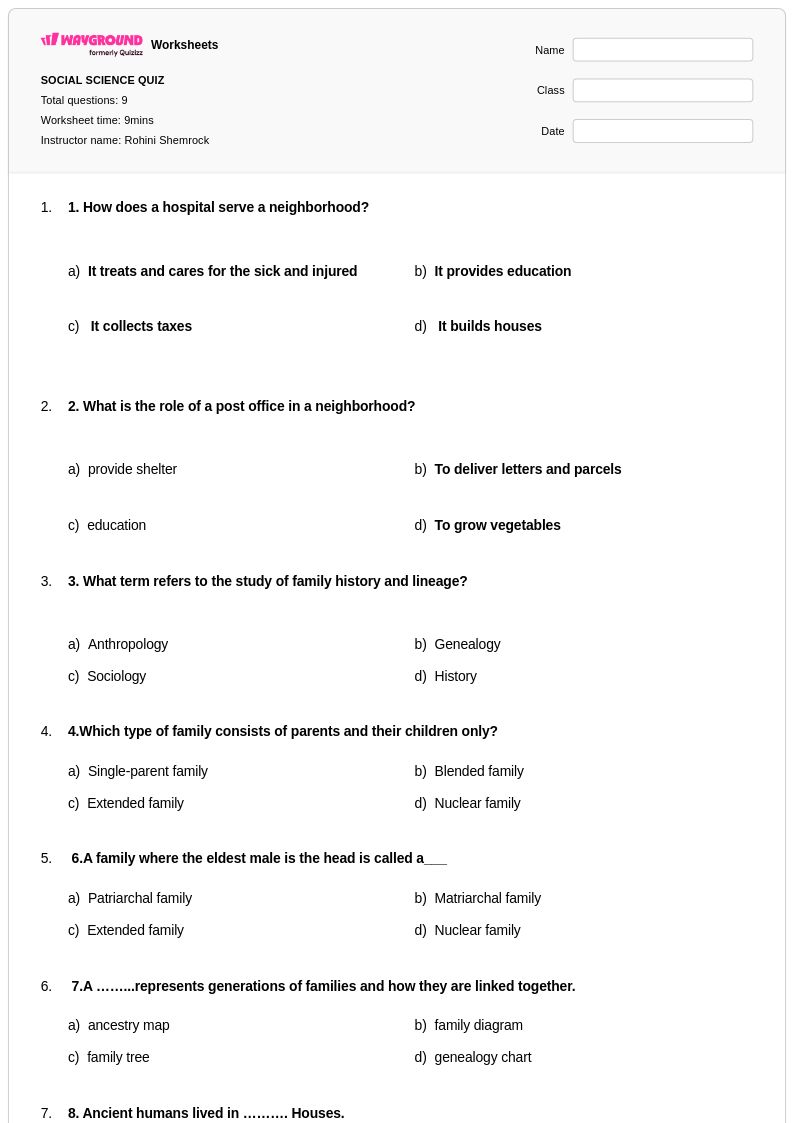
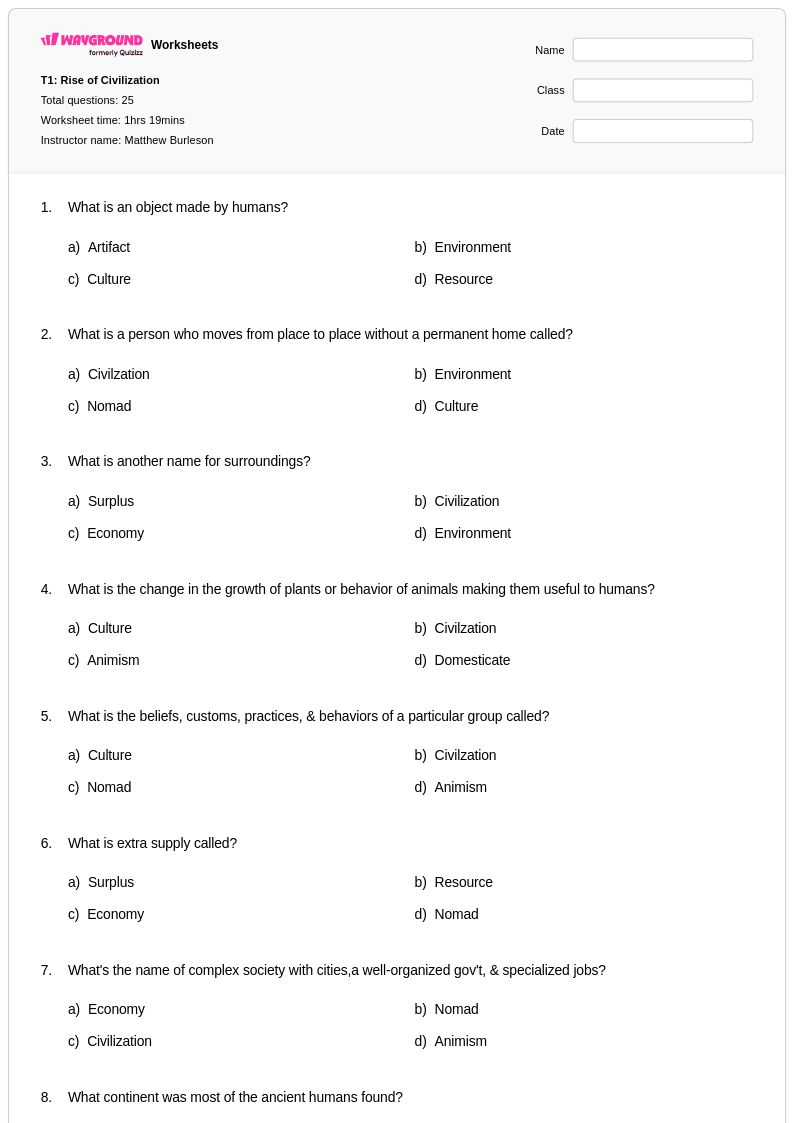
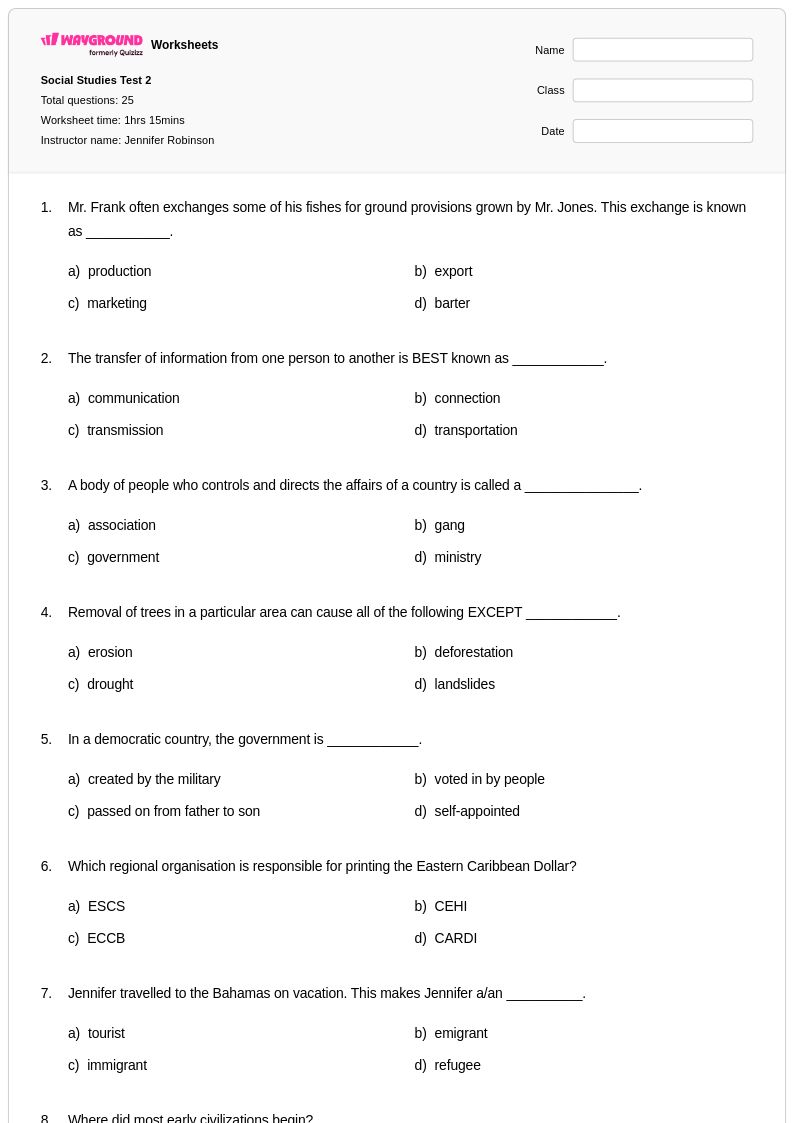
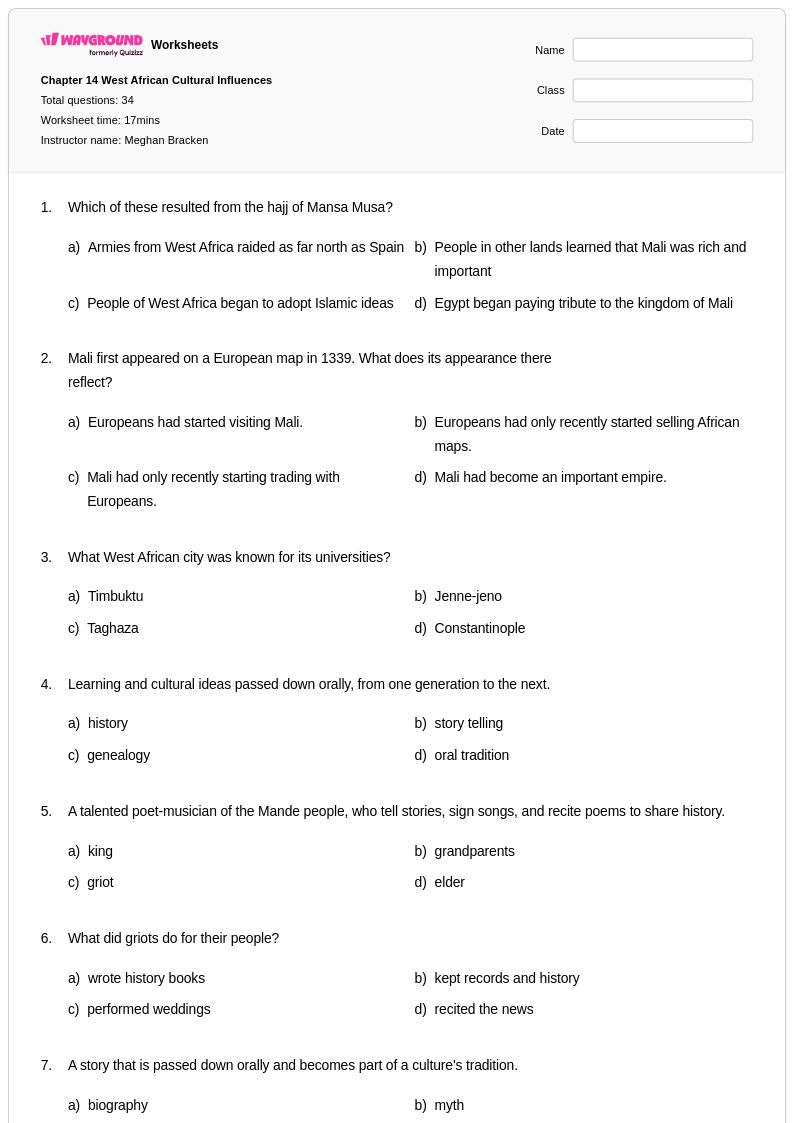
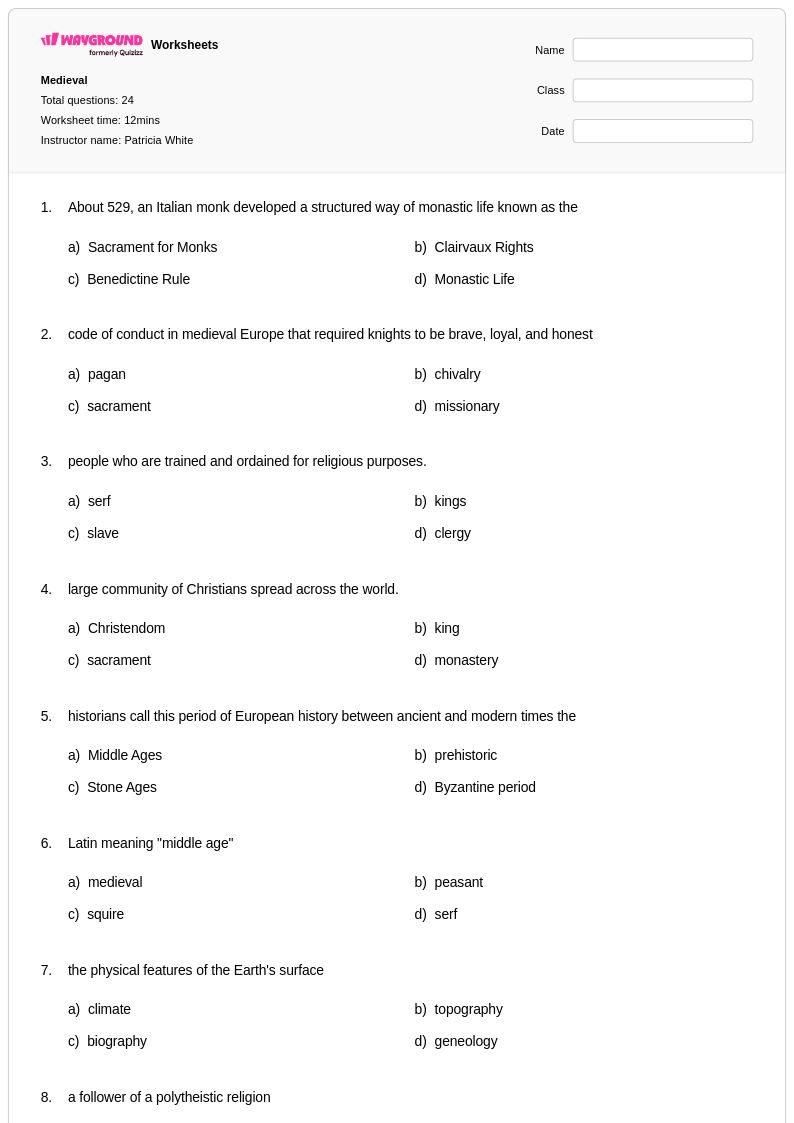
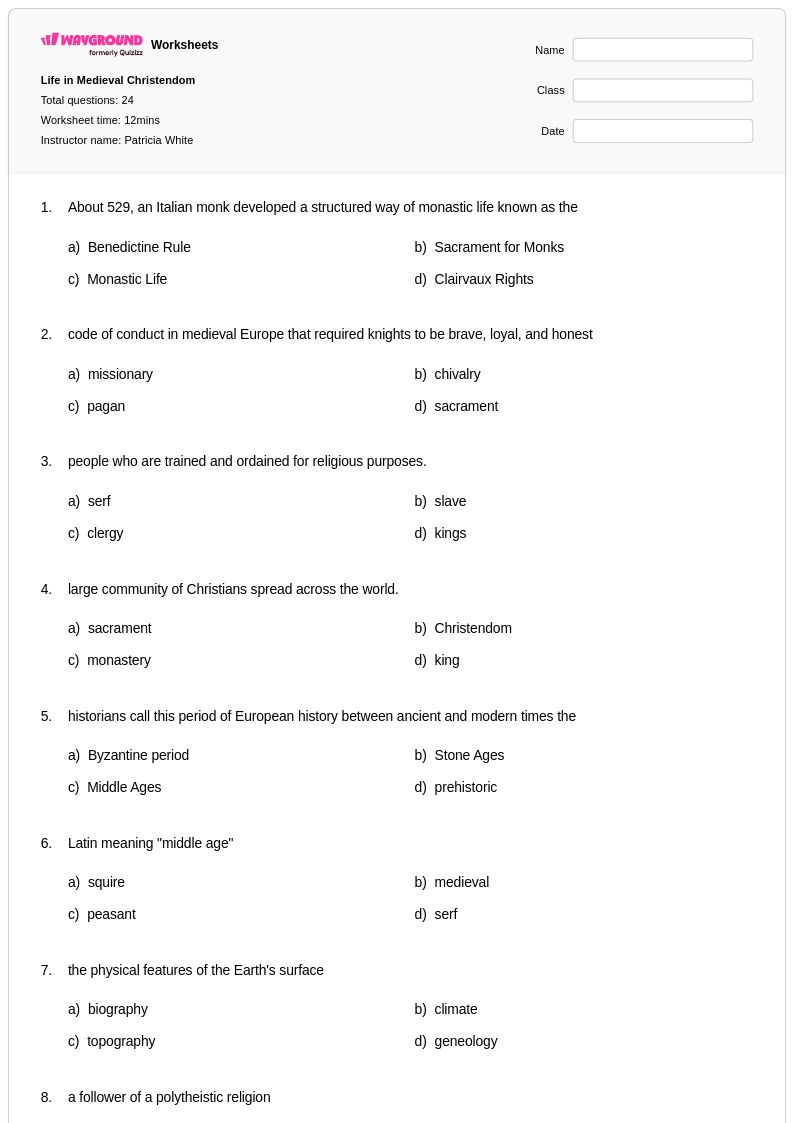
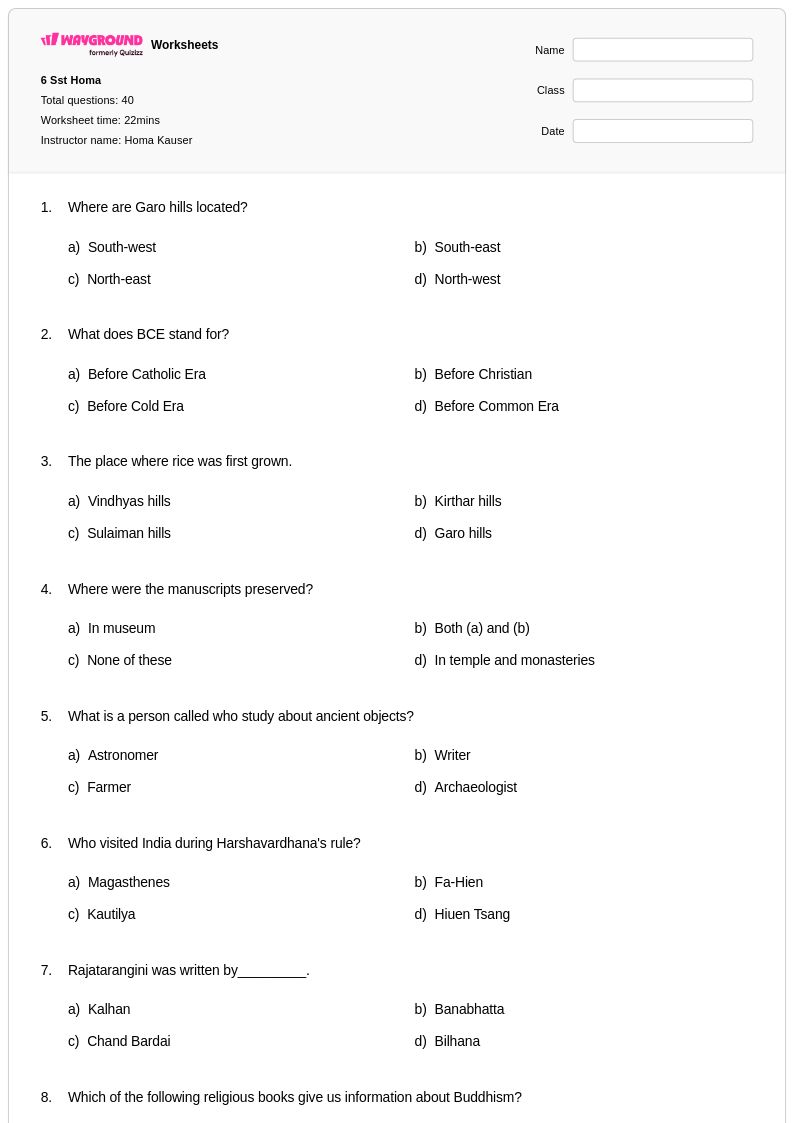
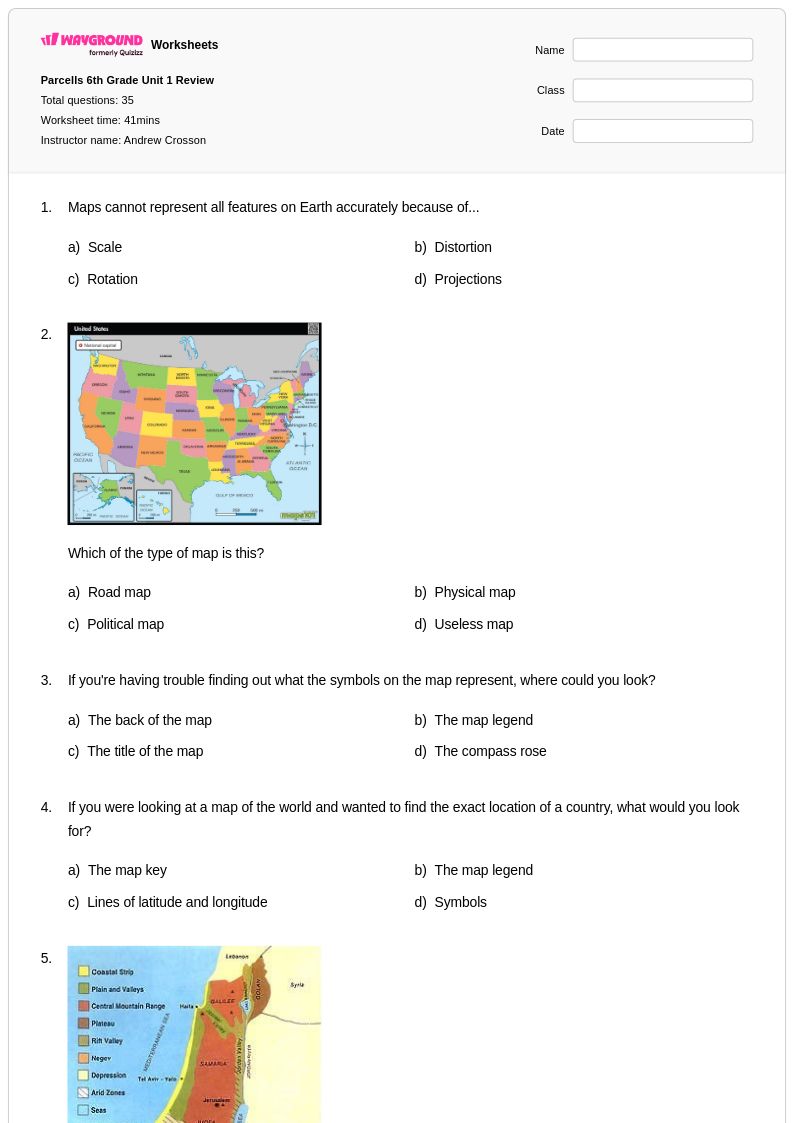
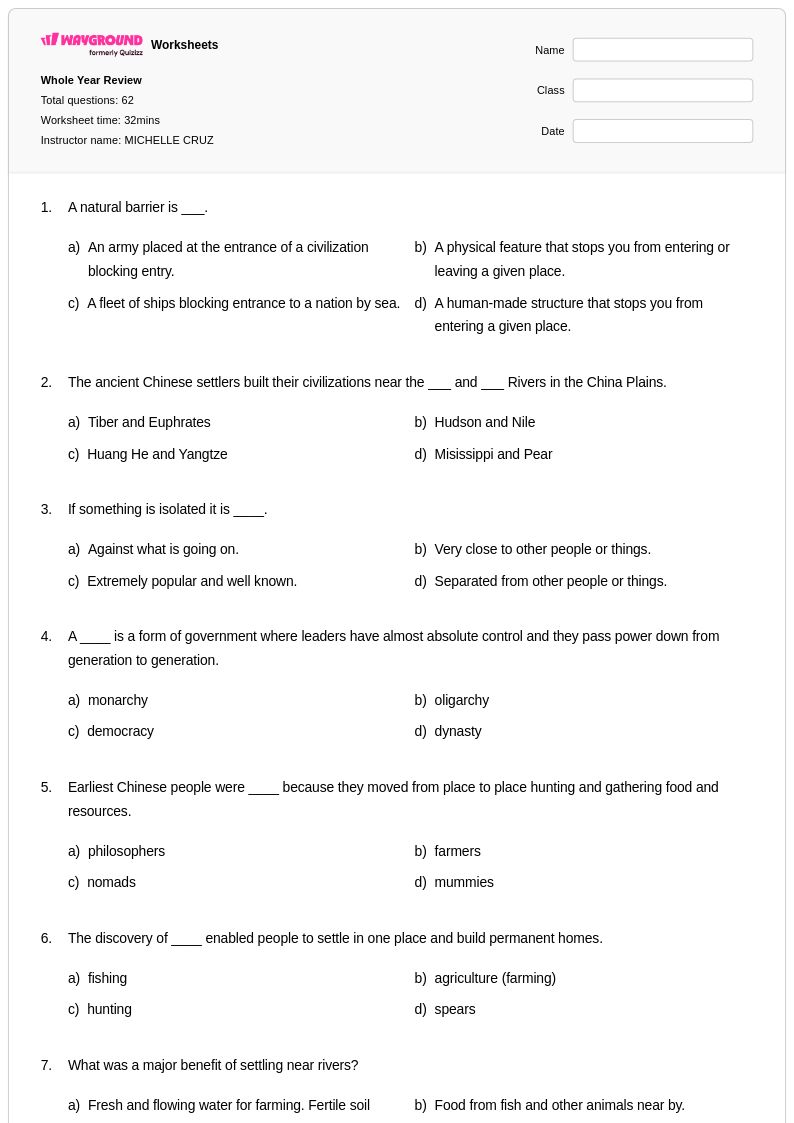
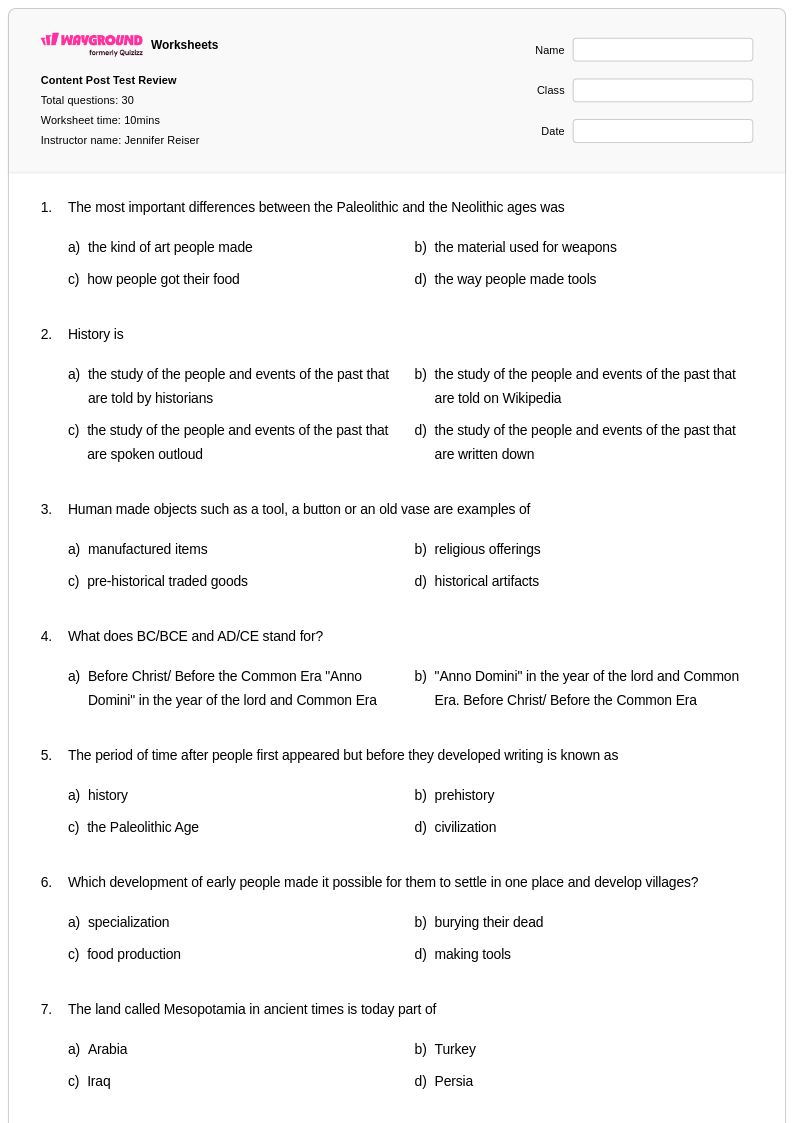
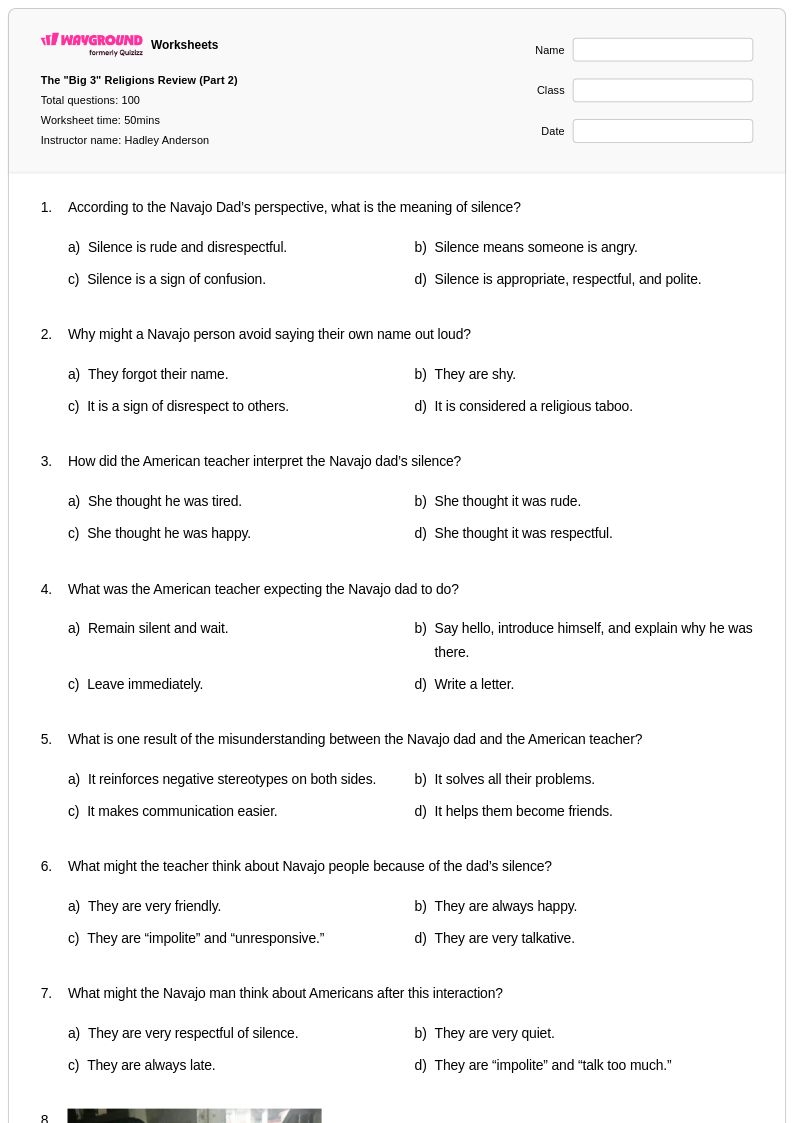
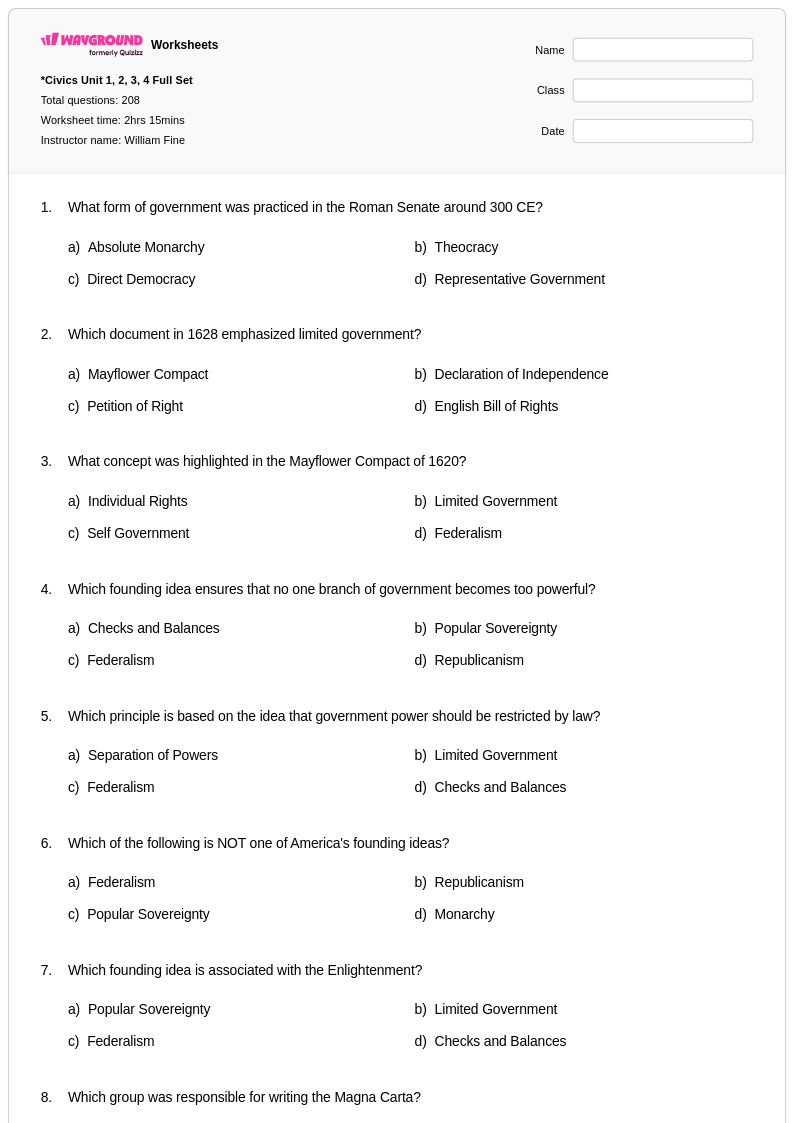
Explore Class 6 genealogy worksheets and printables that help students trace family histories, understand ancestry connections, and practice research skills through engaging free worksheets with comprehensive answer keys.
Explore printable Genealogy worksheets for Class 6
Class 6 genealogy worksheets available through Wayground (formerly Quizizz) provide students with comprehensive practice in tracing family histories, understanding hereditary patterns, and exploring cultural connections across generations. These educational resources strengthen critical research skills by guiding students through the process of creating family trees, analyzing historical records, and interpreting genealogical data to understand how families and communities have evolved over time. The worksheets feature engaging practice problems that challenge students to investigate their own heritage while learning about migration patterns, naming conventions, and the preservation of family traditions. Each printable resource includes detailed answer keys that support independent learning, and the free pdf format ensures easy classroom distribution and homework assignments that connect students to their personal and cultural identities.
Wayground (formerly Quizizz) supports educators with an extensive collection of teacher-created genealogy resources that streamline lesson planning and enhance student engagement in family history exploration. The platform's robust search and filtering capabilities allow teachers to quickly locate materials that align with curriculum standards and match their specific classroom needs, whether focusing on local community heritage or global migration patterns. These versatile worksheets are available in both printable and digital pdf formats, enabling seamless differentiation for diverse learning styles and technological preferences. Teachers can customize content to accommodate varying skill levels, use the materials for targeted remediation of research techniques, or implement them as enrichment activities that deepen students' understanding of how genealogy connects to broader social studies concepts, all while drawing from millions of professionally developed educational resources.
FAQs
How do I teach genealogy to students who have no prior experience with family history research?
Start by introducing the concept of a family tree as a visual organizer, then build outward to primary sources like census records, birth certificates, and immigration documents. Teaching students to ask structured interview questions with living relatives is a strong entry point because it makes the research personal and immediately accessible. From there, guide students to compare what they learn from oral history against written records, which naturally introduces source evaluation as a skill.
What exercises help students practice genealogical research skills in the classroom?
Effective practice exercises include completing multi-generational family tree templates, analyzing sample census records to extract and organize data, and tracing migration patterns on historical maps. Students benefit from activities that require them to evaluate conflicting sources, such as comparing a family story against a historical document, because this builds both research methodology and critical thinking. Structured worksheets that walk students through each step of the research process help scaffold these skills before students work independently.
How does genealogy connect to broader history and social studies standards?
Genealogy is a direct entry point into primary source analysis, migration history, cultural heritage, and the social forces that shaped communities over generations. When students trace family lineages, they encounter immigration waves, economic migrations, and cultural assimilation in a personal context, which makes abstract historical trends concrete and meaningful. This cross-disciplinary relevance means genealogy activities can support social studies, history, language arts, and even data literacy standards simultaneously.
What mistakes do students commonly make when working on genealogy research tasks?
The most common error is treating unverified family stories as confirmed historical fact without cross-referencing a primary source. Students also frequently confuse generations, misassigning relationships on family trees when they encounter step-parents, adoptions, or naming conventions that repeat across generations. A third common mistake is failing to record the source of each piece of information, which makes it impossible to verify or revisit the data later. Teaching students to document sources from the very first activity prevents this habit from forming.
How can I use genealogy worksheets to support students with different learning needs?
Genealogy worksheets on Wayground can be hosted as digital assignments, which allows teachers to apply student-level accommodations such as read aloud for students who need audio support, reduced answer choices to lower cognitive load, and extended time settings configurable per student. These accommodations are saved and reusable across future sessions, so once a student's settings are configured, they carry forward automatically. For students who need additional scaffolding, starting with a partially completed family tree template before moving to open-ended research tasks is an effective differentiation strategy.
How do I use Wayground's genealogy worksheets in my classroom?
Wayground's genealogy worksheets are available as printable PDFs for traditional classroom use and in digital formats for technology-integrated learning environments, including the option to host them as a quiz directly on Wayground. Each worksheet includes a complete answer key, which supports independent student work and reduces grading time for teachers. Teachers can assign specific worksheets to target skills like primary source analysis, family tree construction, or migration pattern interpretation, depending on where students are in the research process.