
20 Q
4th - Uni
15 Q
4th - Uni
15 Q
4th - Uni
20 Q
4th
20 Q
4th - Uni
15 Q
4th - Uni
21 Q
4th
10 Q
4th
10 Q
4th
15 Q
4th - Uni
16 Q
3rd - 4th
15 Q
4th - Uni
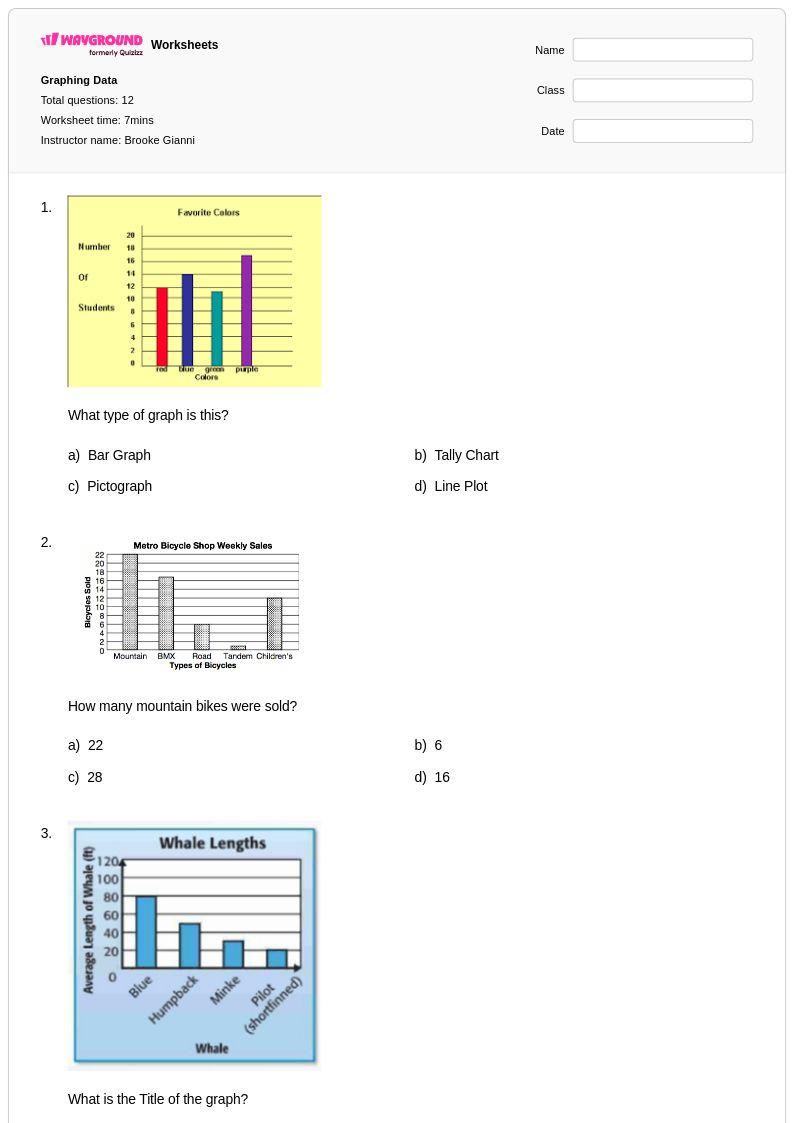
12 Q
4th
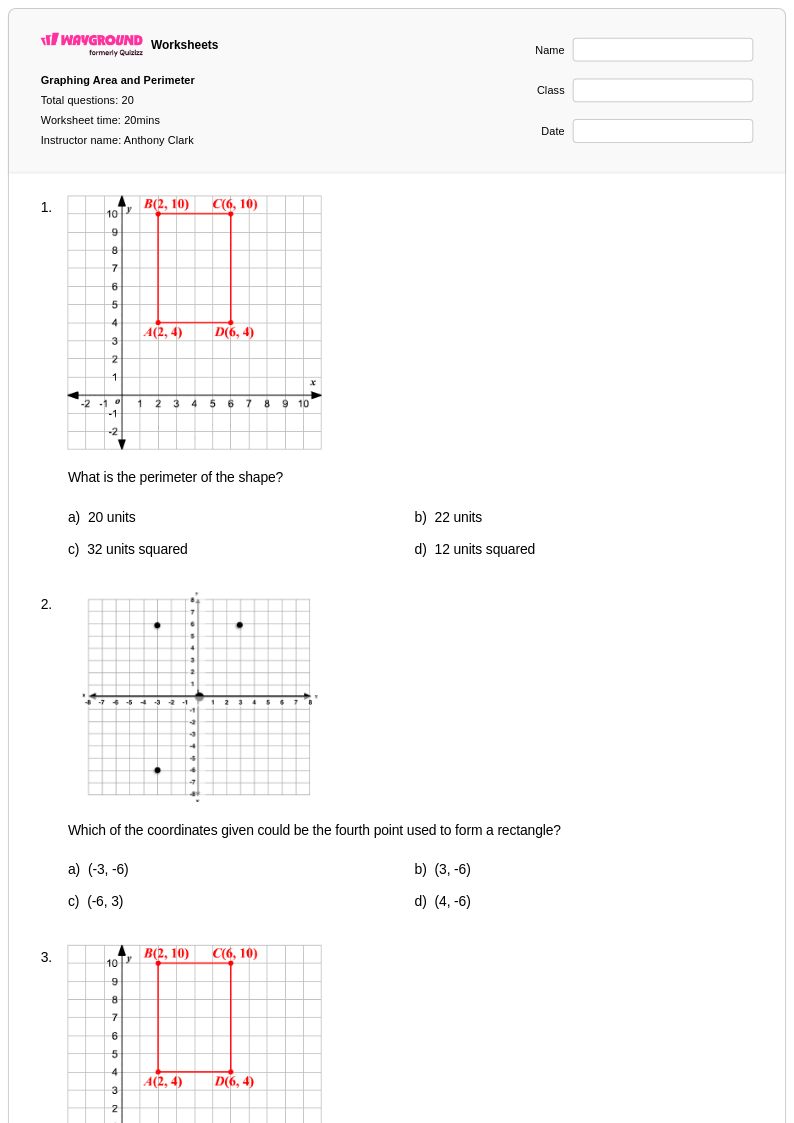
20 Q
4th - Uni
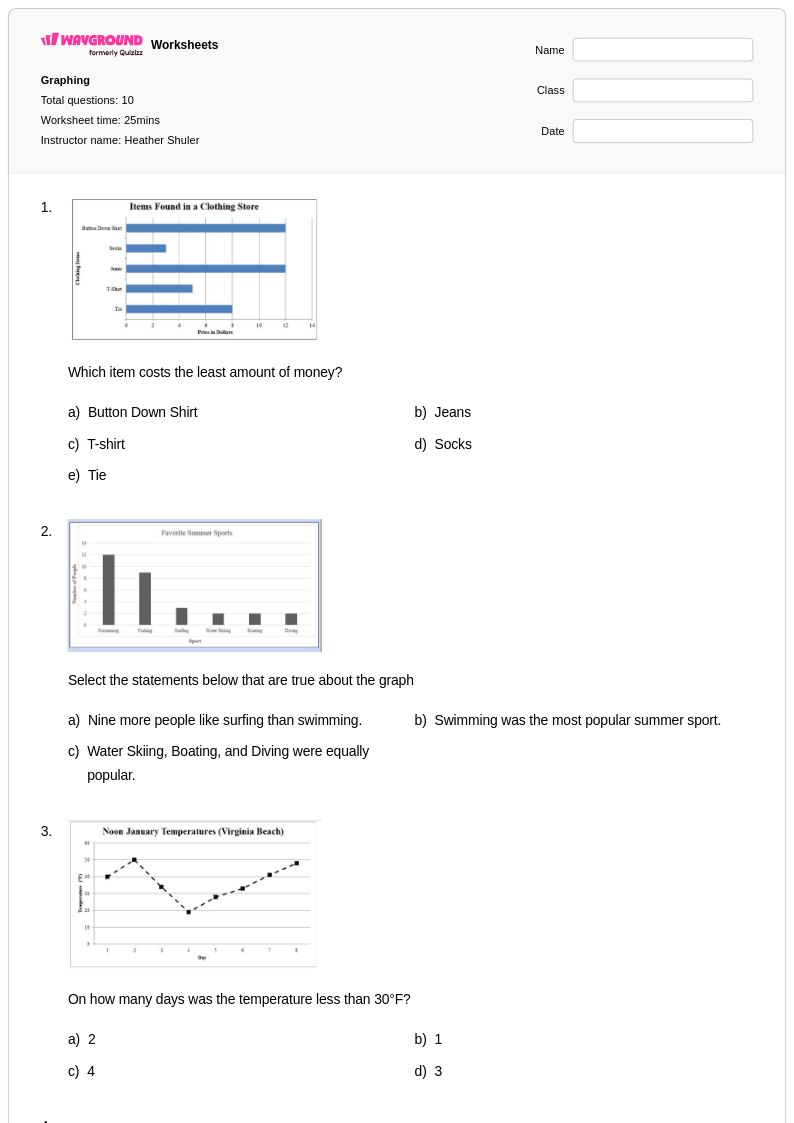
10 Q
4th
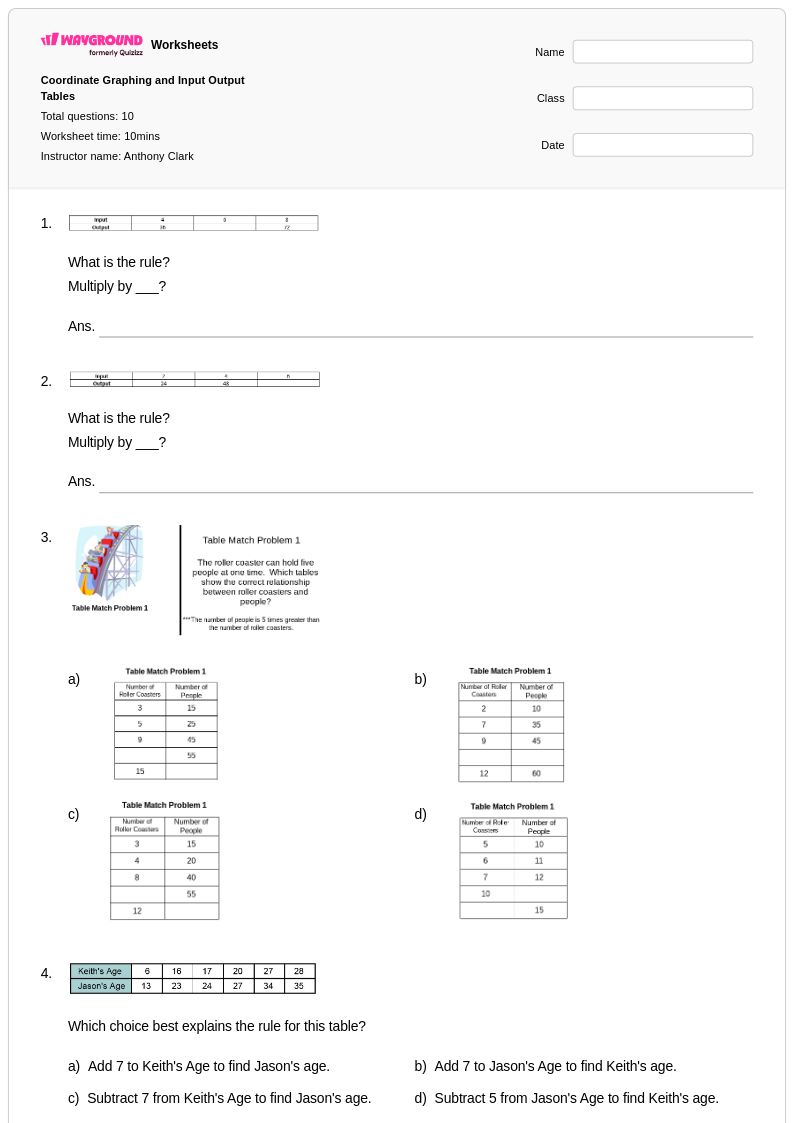
10 Q
4th - Uni
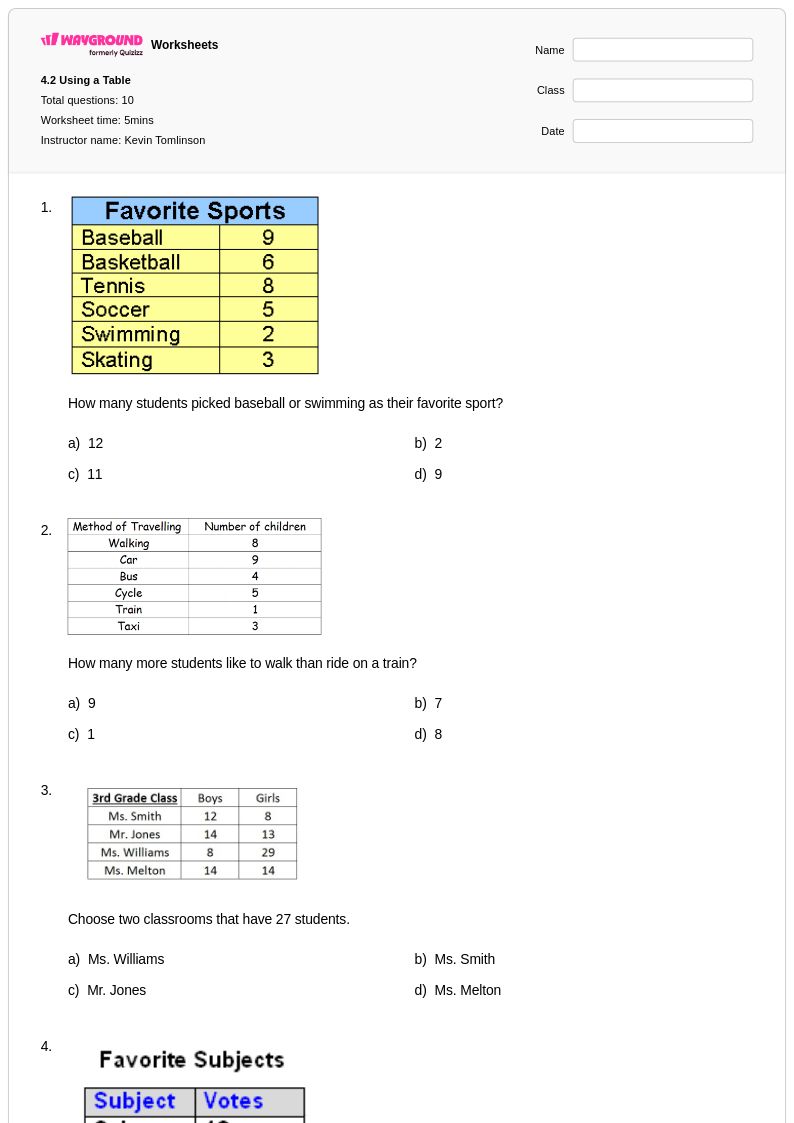
10 Q
4th
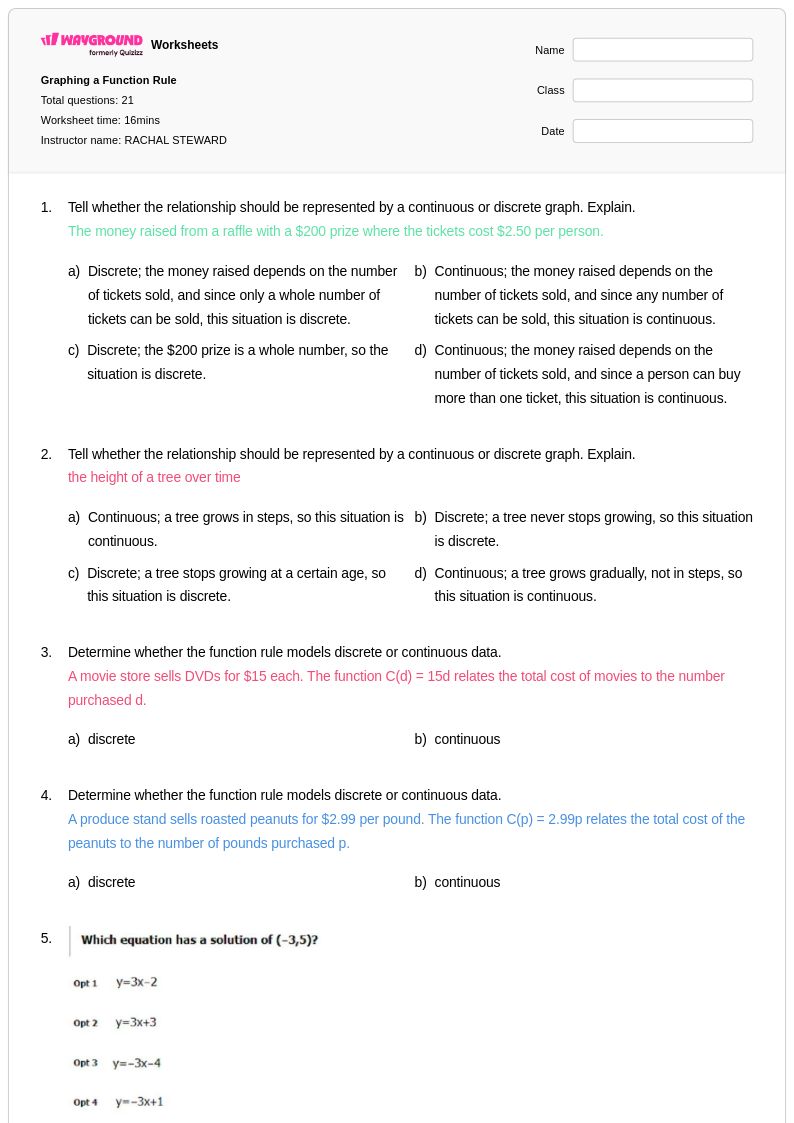
21 Q
KG - 9th
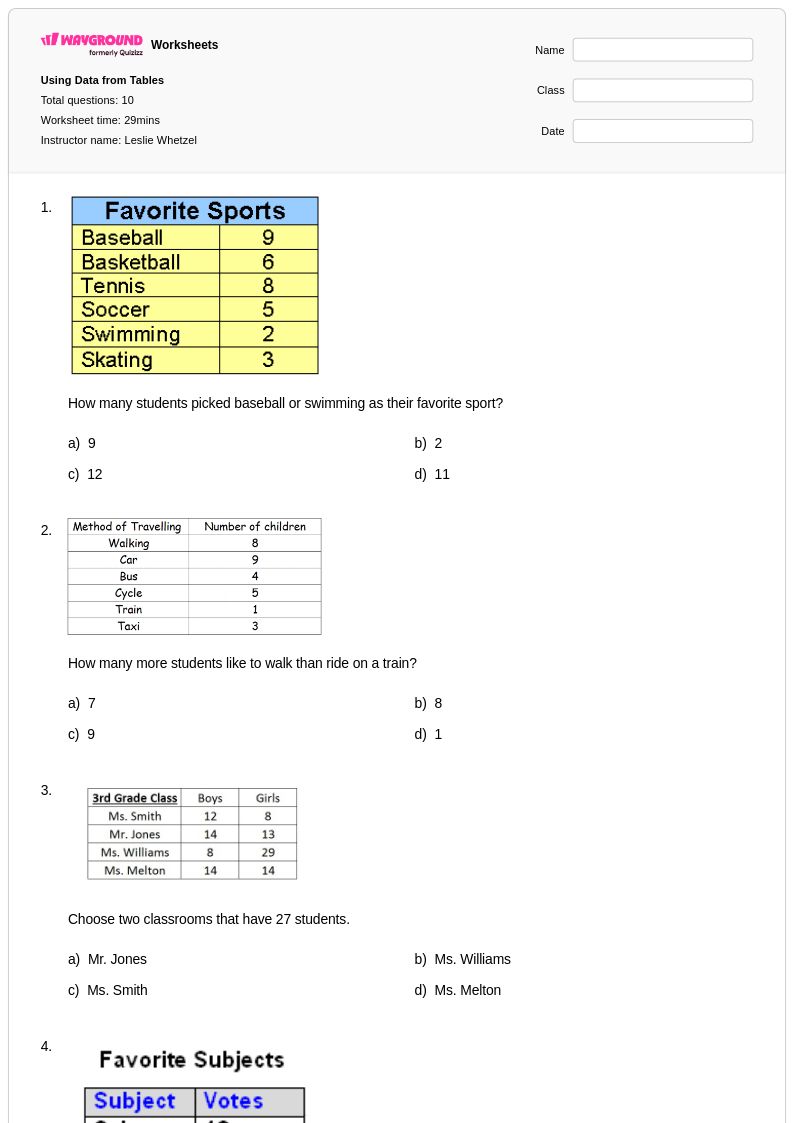
10 Q
2nd - 4th
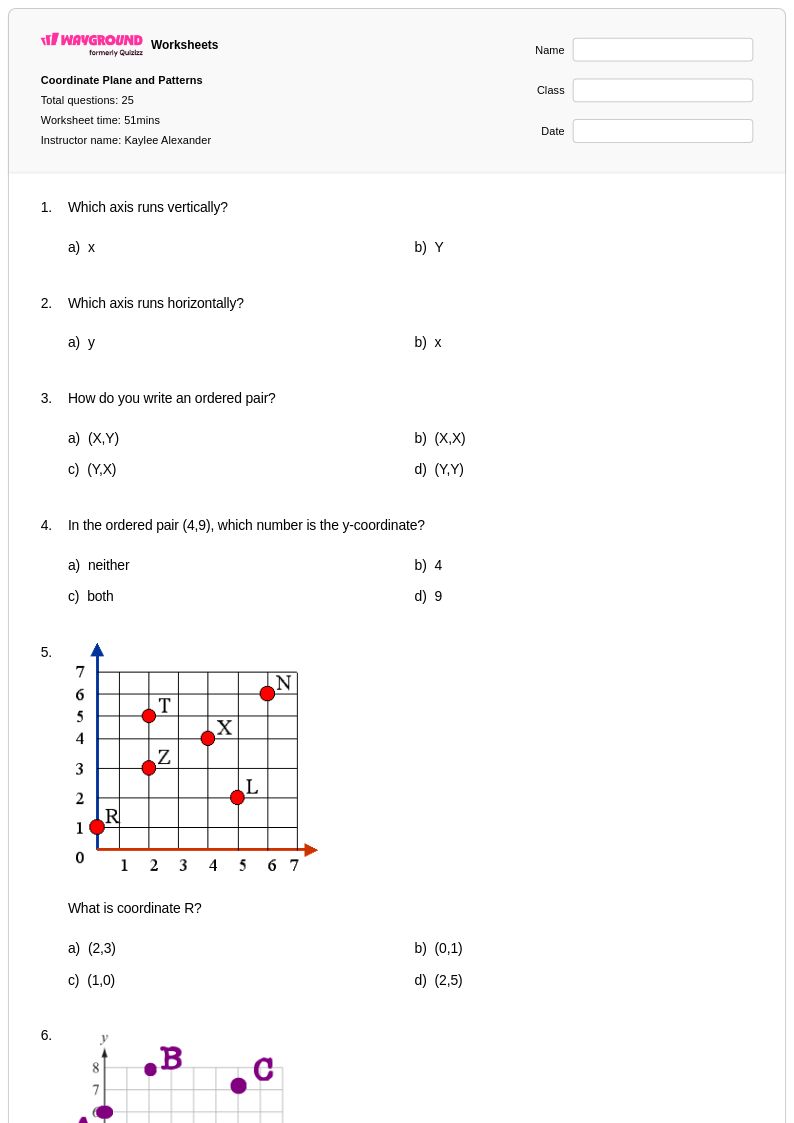
25 Q
3rd - 6th
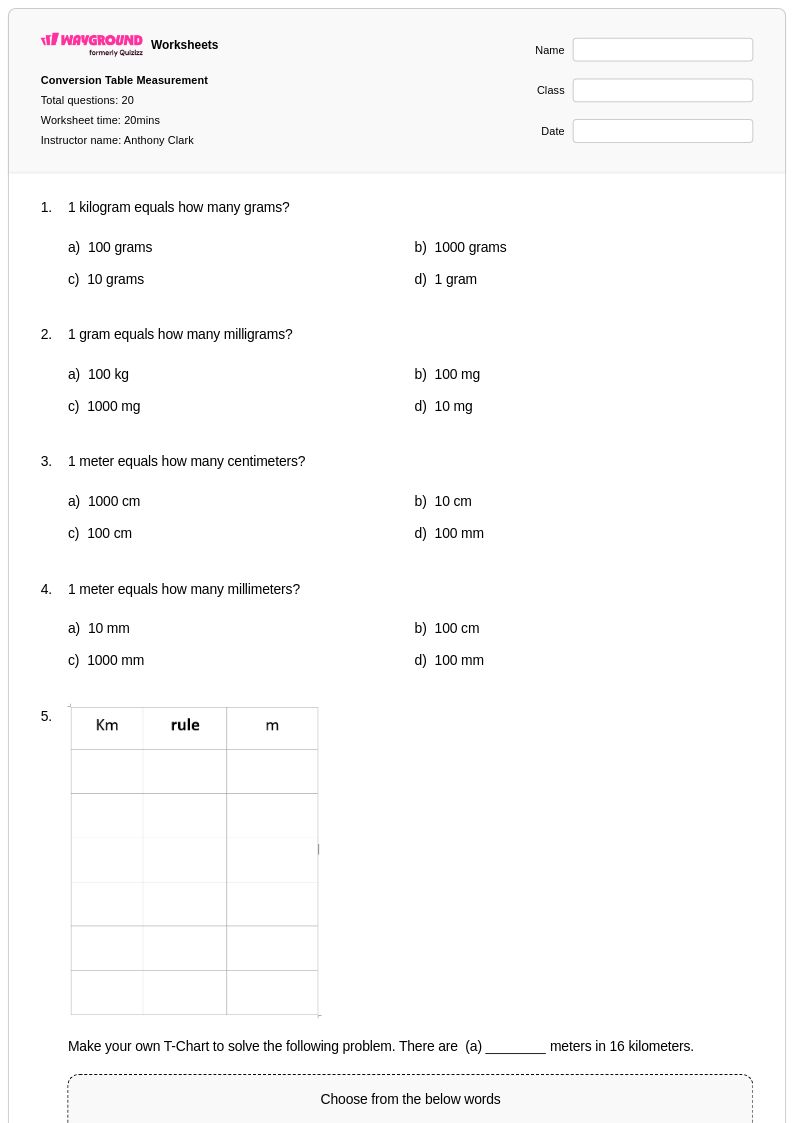
20 Q
4th - Uni
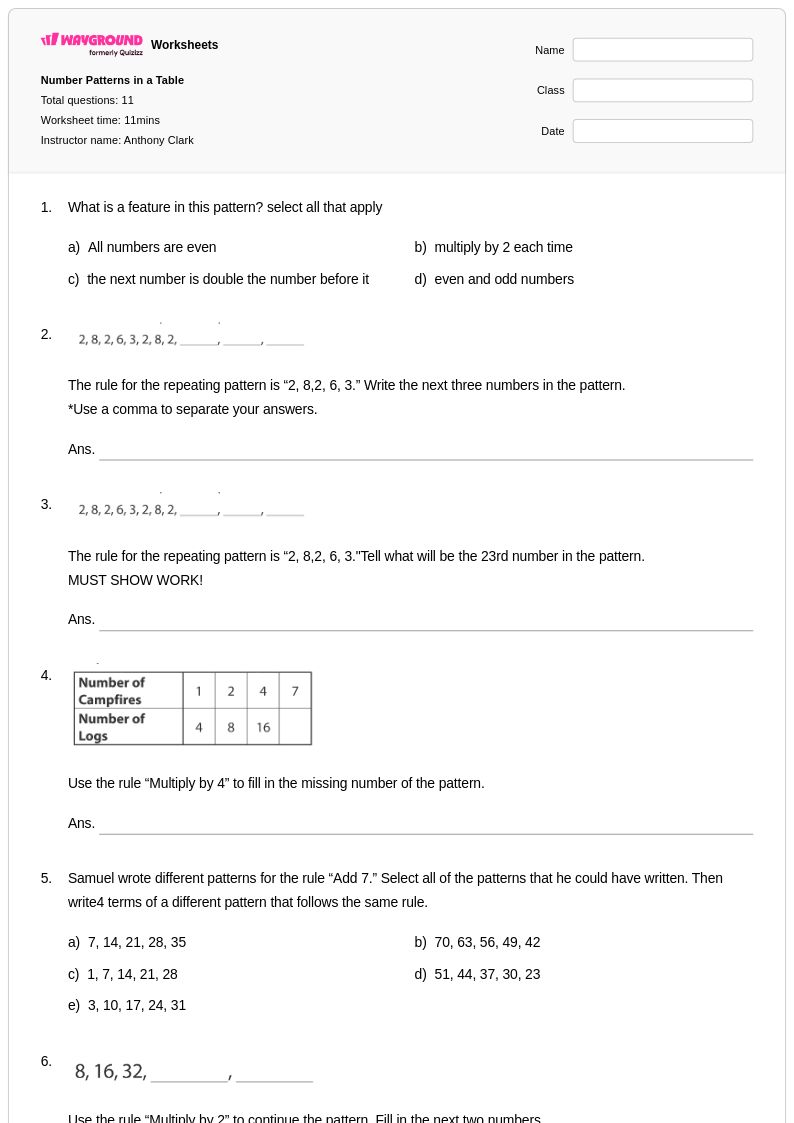
11 Q
4th - Uni
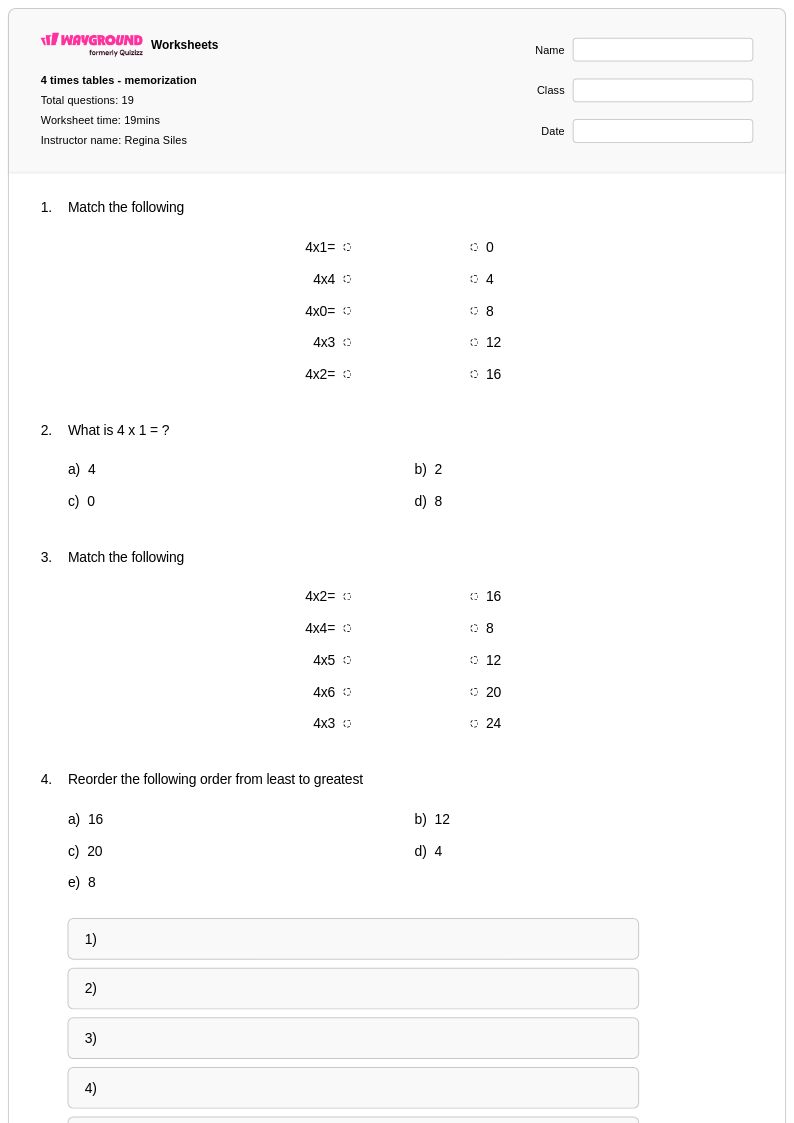
19 Q
4th
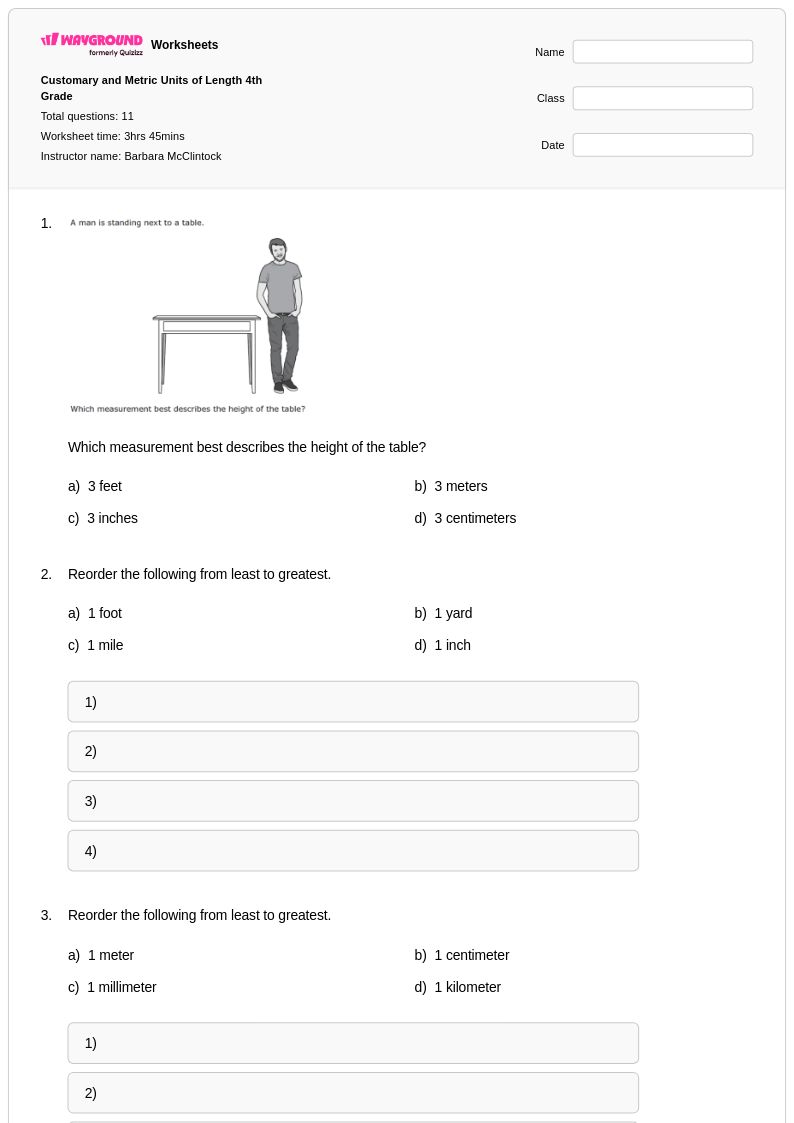
11 Q
4th
Explore Other Subject Worksheets for class 4
Explore printable Graphing from a Table worksheets for Class 4
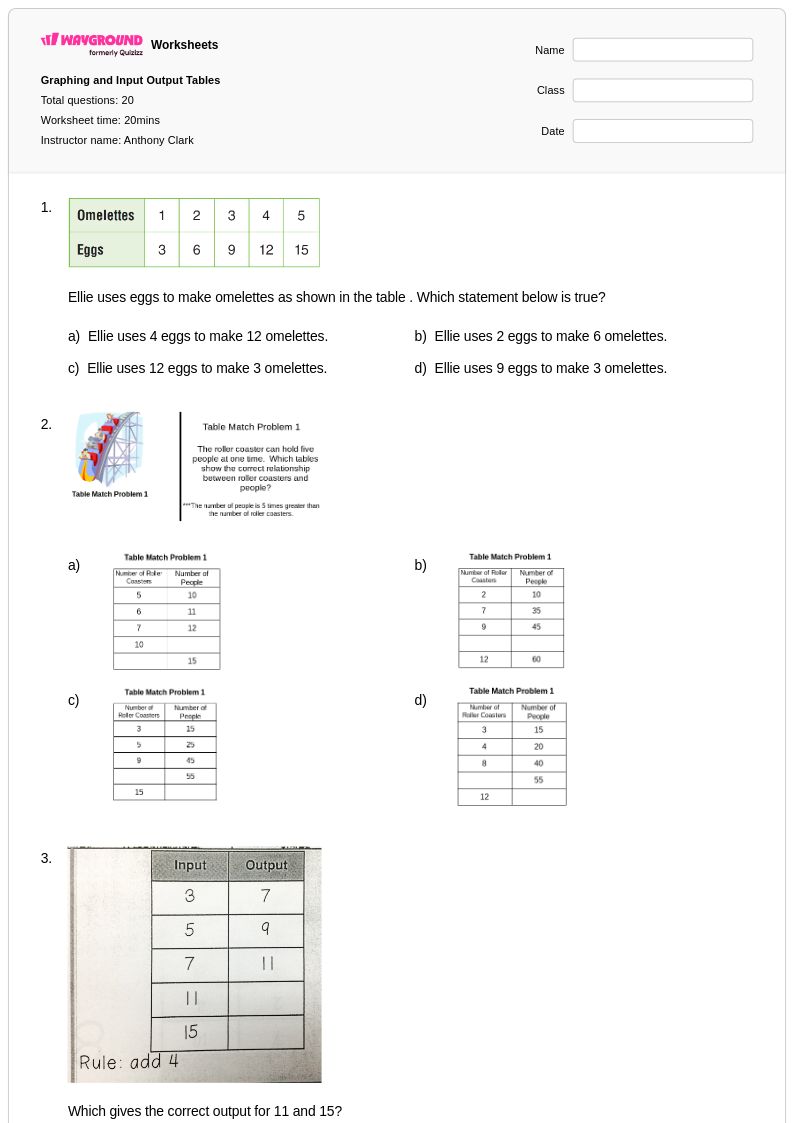
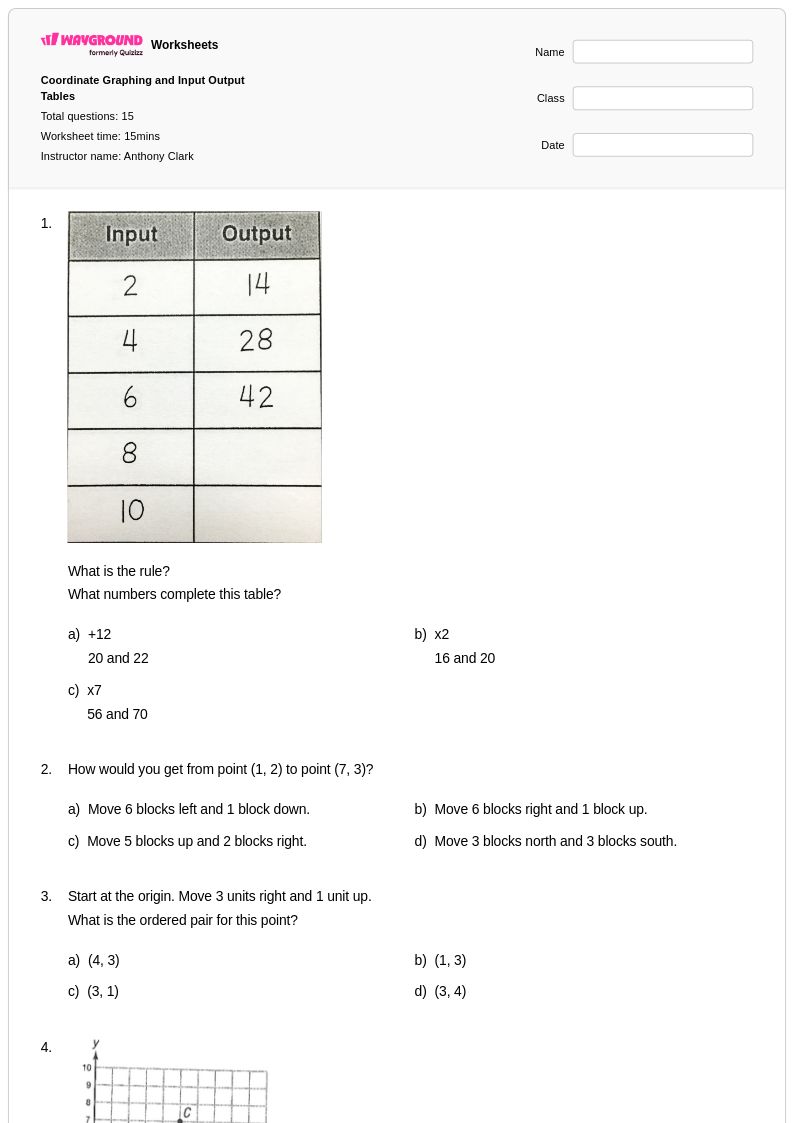
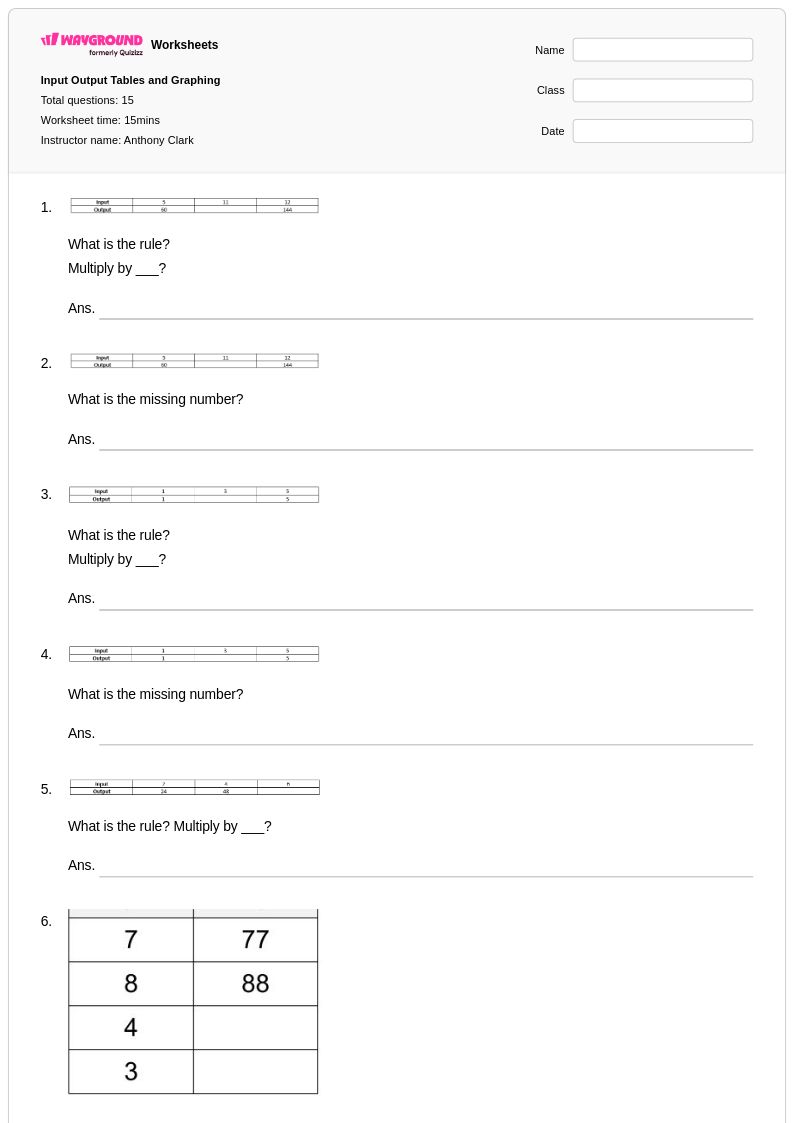
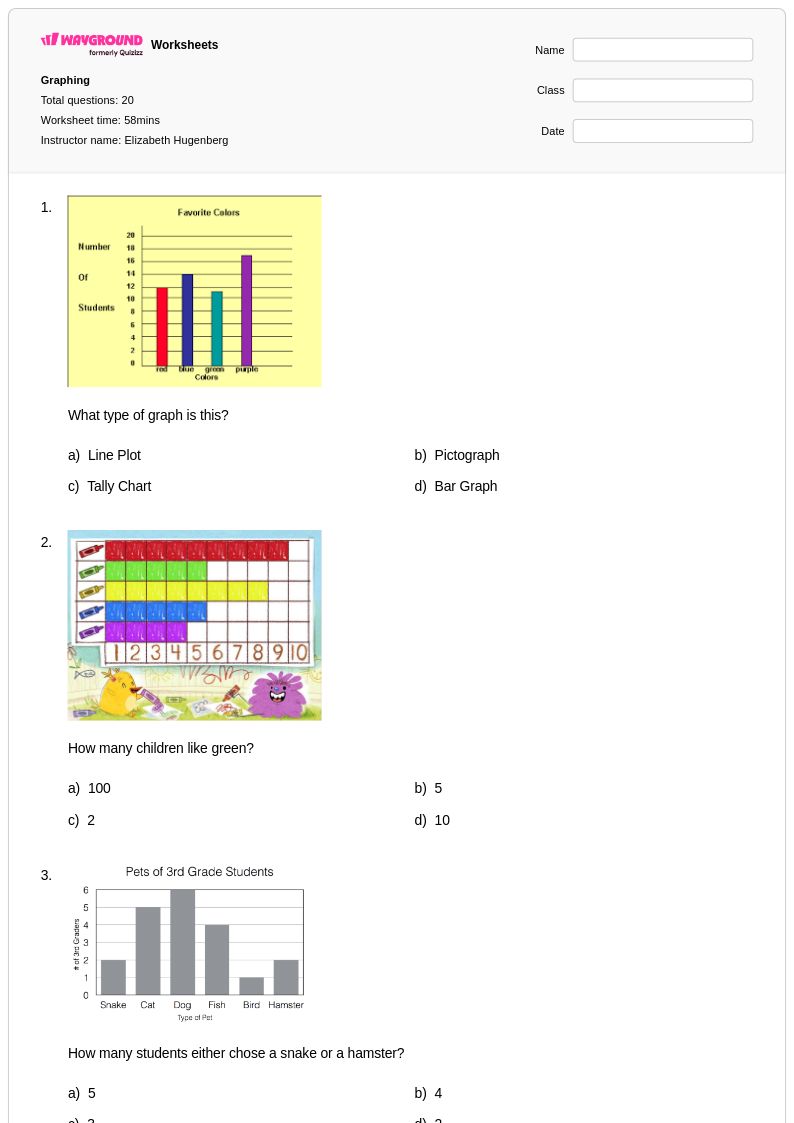
Graphing from a Table worksheets for Class 4 provide students with essential practice in translating numerical data into visual representations, a fundamental skill that bridges mathematical understanding and real-world data interpretation. These comprehensive worksheets available through Wayground (formerly Quizizz) focus on helping fourth-grade students master the process of reading data from organized tables and accurately creating corresponding graphs, including bar graphs, line plots, and pictographs. Students develop critical analytical skills as they work through practice problems that require them to identify patterns, determine appropriate scales, and construct clear visual displays of information. Each worksheet collection includes detailed answer keys and is available as free printables in convenient pdf format, allowing educators to seamlessly integrate these resources into their mathematics instruction while providing students with structured opportunities to strengthen their data visualization abilities.
Wayground (formerly Quizizz) empowers teachers with access to millions of educator-created graphing and data analysis resources specifically designed to support Class 4 mathematics instruction. The platform's advanced search and filtering capabilities enable teachers to quickly locate worksheets that align with specific curriculum standards and learning objectives, while built-in differentiation tools allow for seamless customization to meet diverse student needs within the classroom. These graphing from a table resources are available in both printable and digital formats, including downloadable pdfs, providing maximum flexibility for various teaching environments and learning preferences. Teachers can effectively utilize these materials for initial skill introduction, targeted remediation for struggling learners, enrichment activities for advanced students, and ongoing practice to reinforce mastery, making lesson planning more efficient while ensuring comprehensive coverage of essential data representation concepts.
FAQs
What new graphing skills are introduced in 4th grade?
What's a good way to teach 4th graders to choose an appropriate scale for their graphs?
What mistakes are common for 4th graders when making line plots?
How can I assign this 4th grade graphing worksheet?
How does graphing in 4th grade prepare students for future math?