
20 Q
6th
20 Q
6th
36 Q
6th
8 Q
5th - 6th
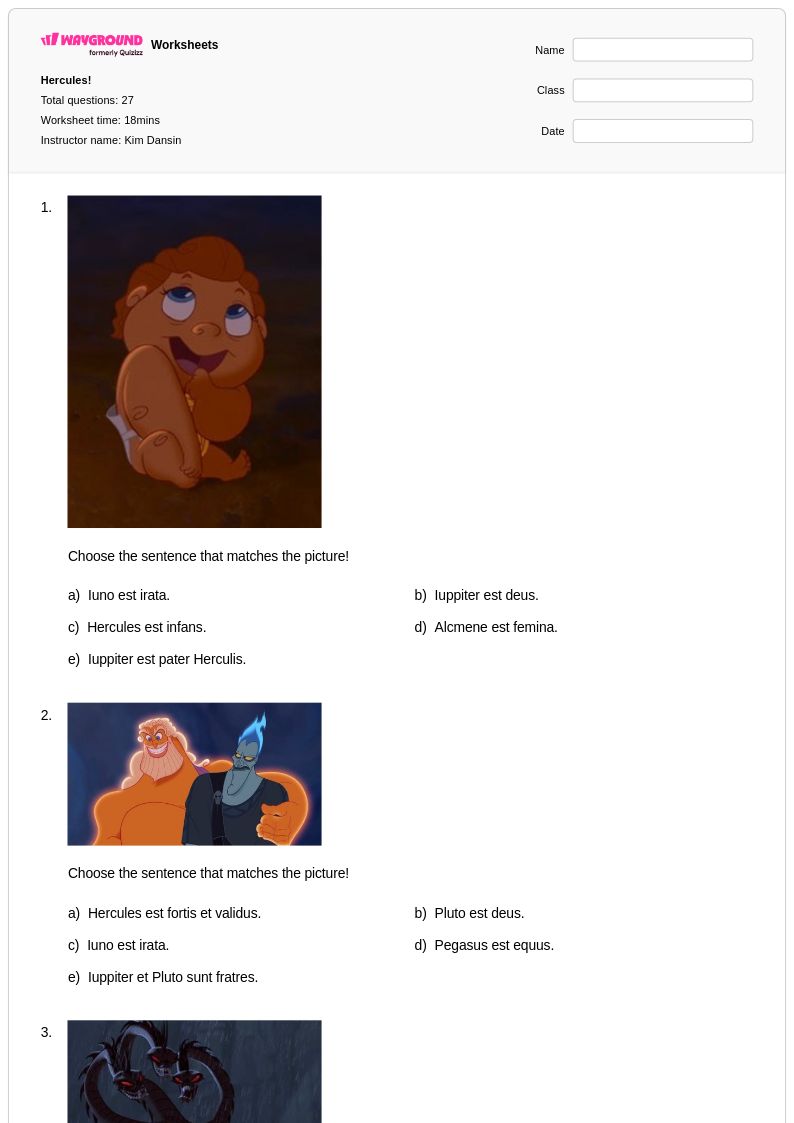
27 Q
5th - 8th
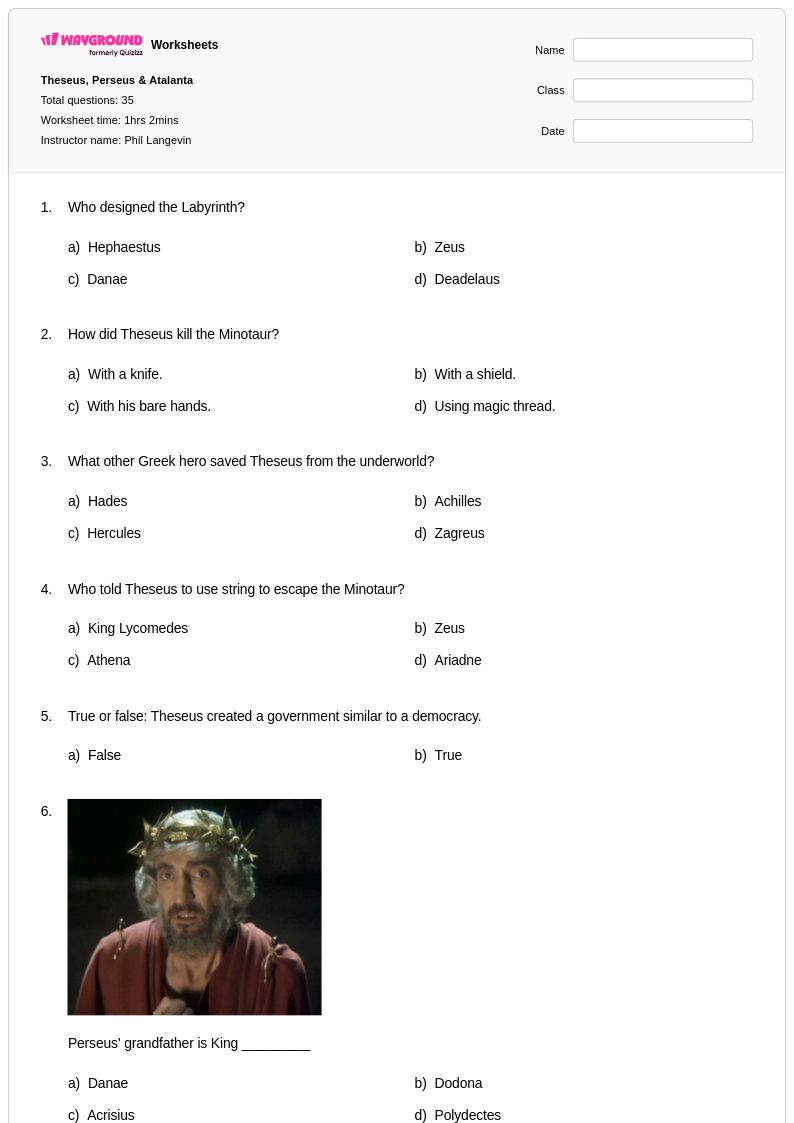
35 Q
3rd - 12th
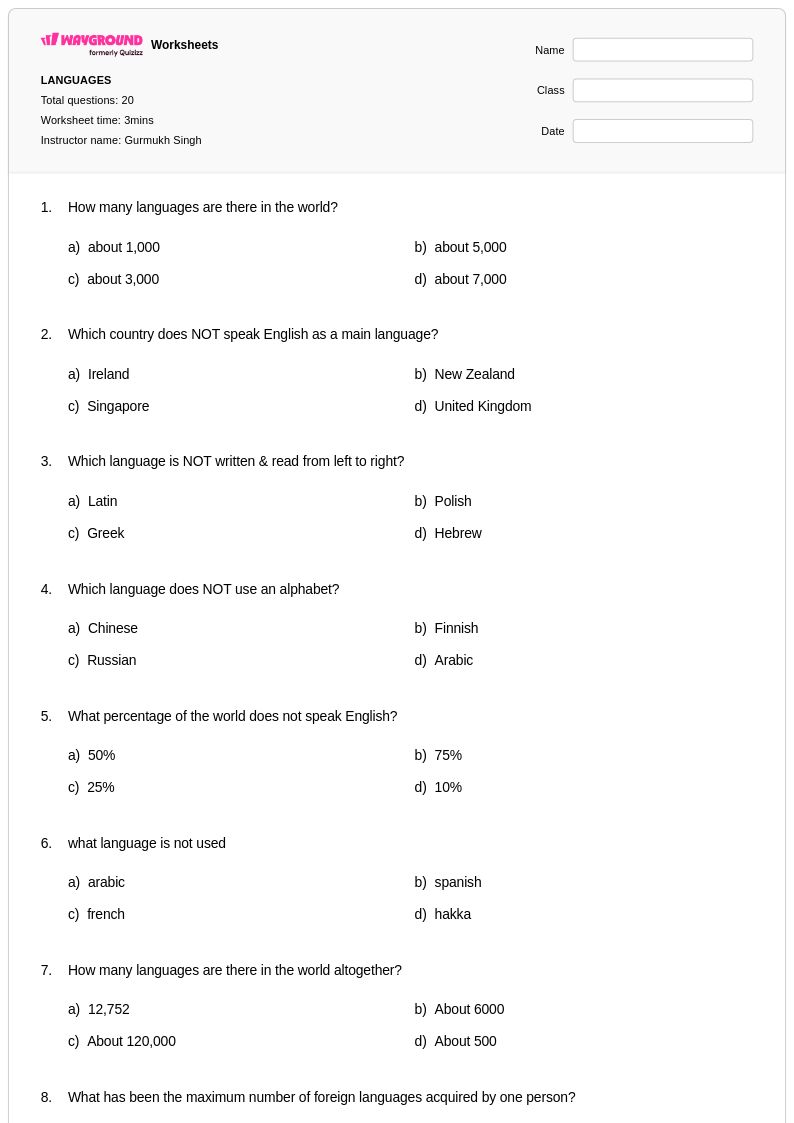
20 Q
6th - 8th
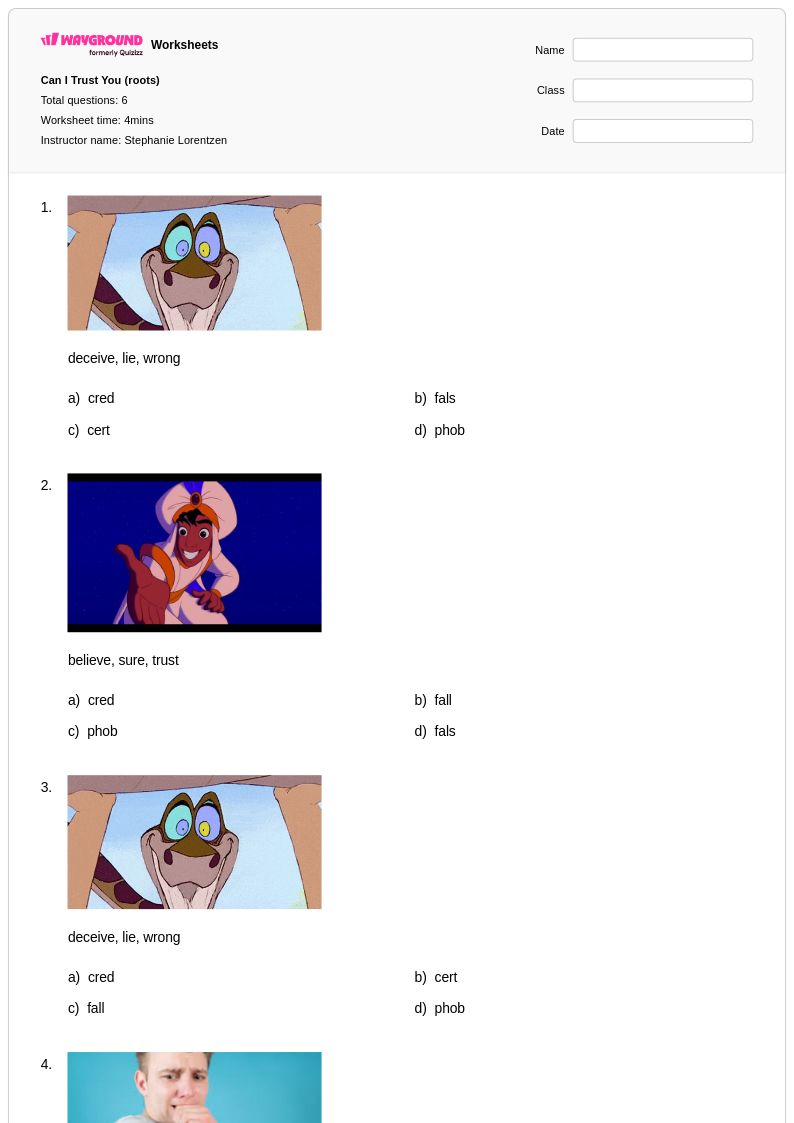
6 Q
5th - 8th
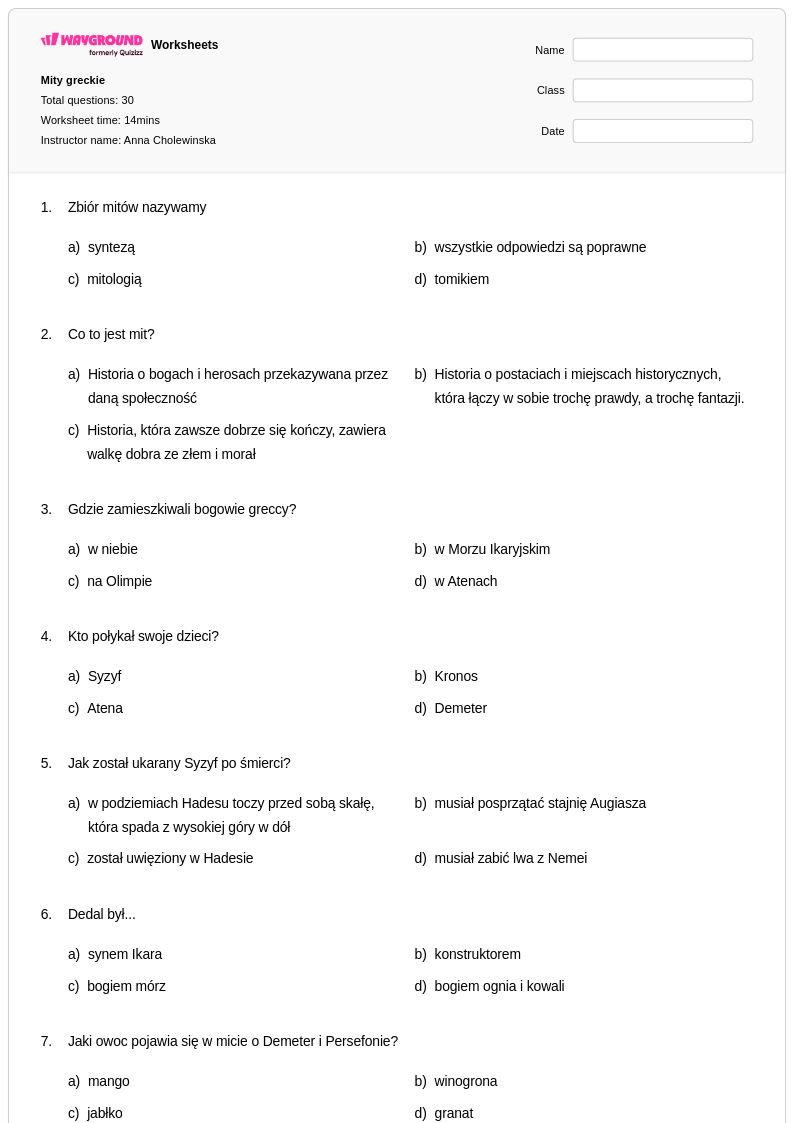
30 Q
5th - 8th
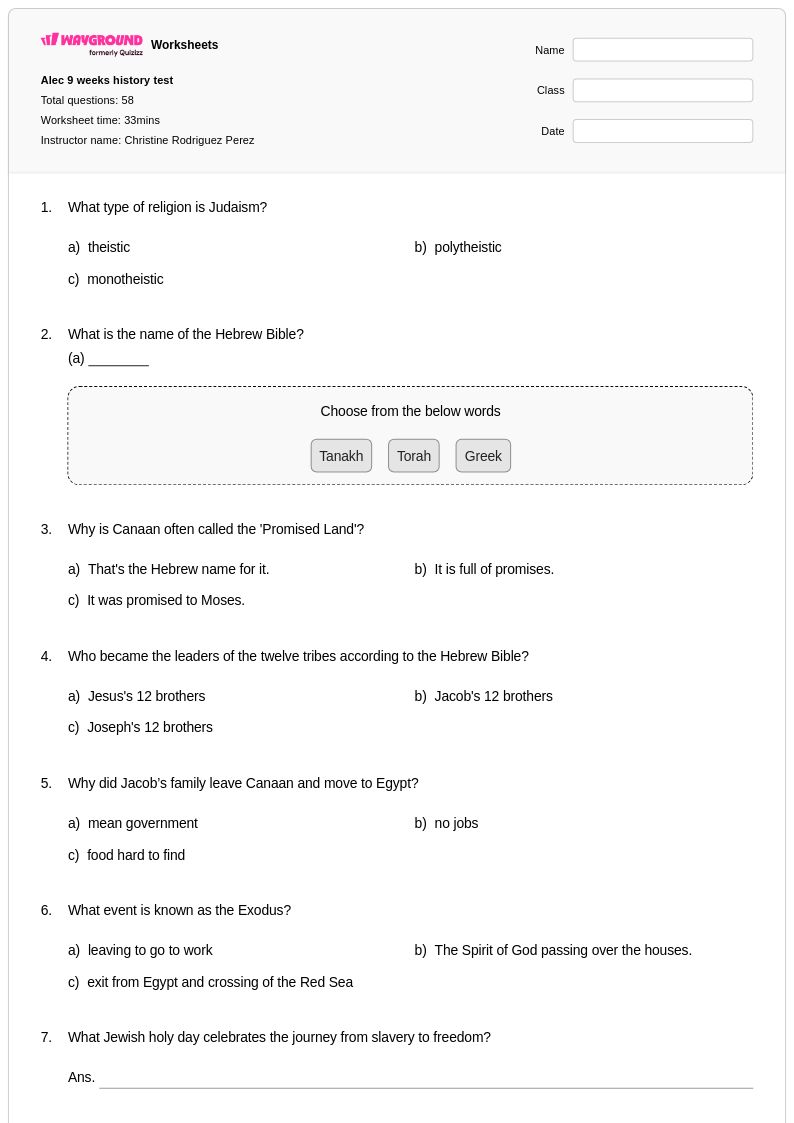
58 Q
6th - 8th
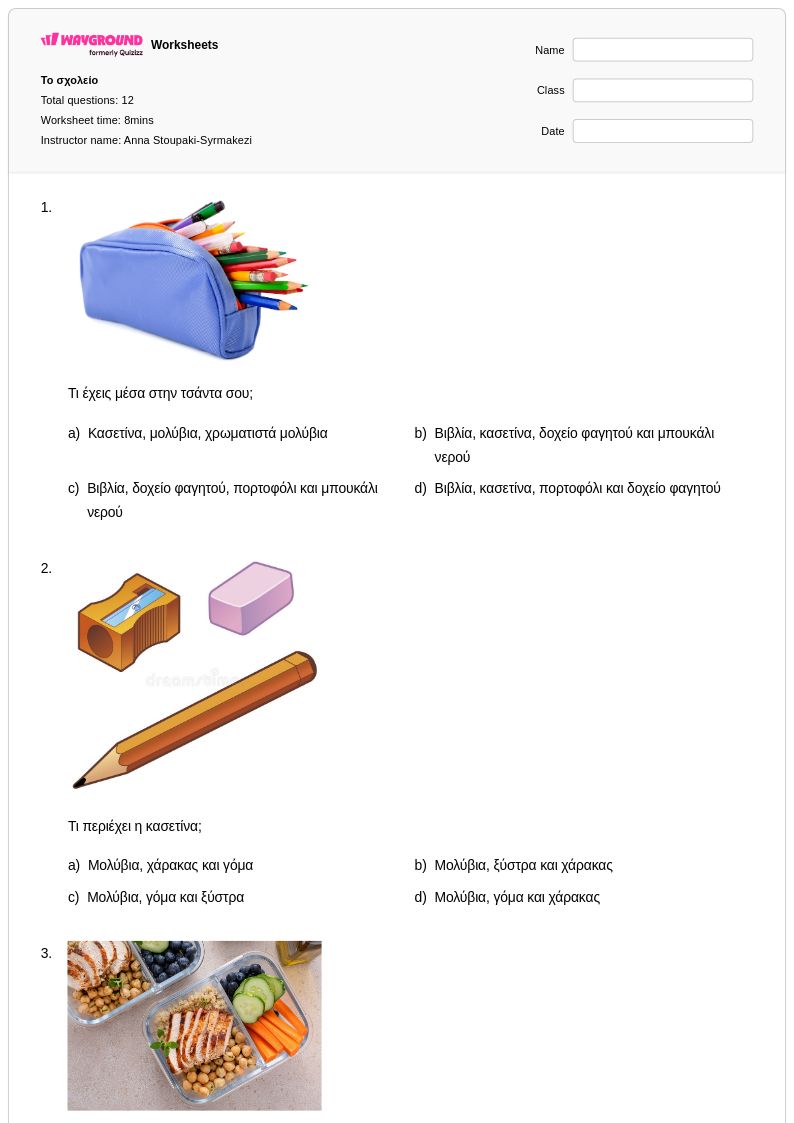
13 Q
6th
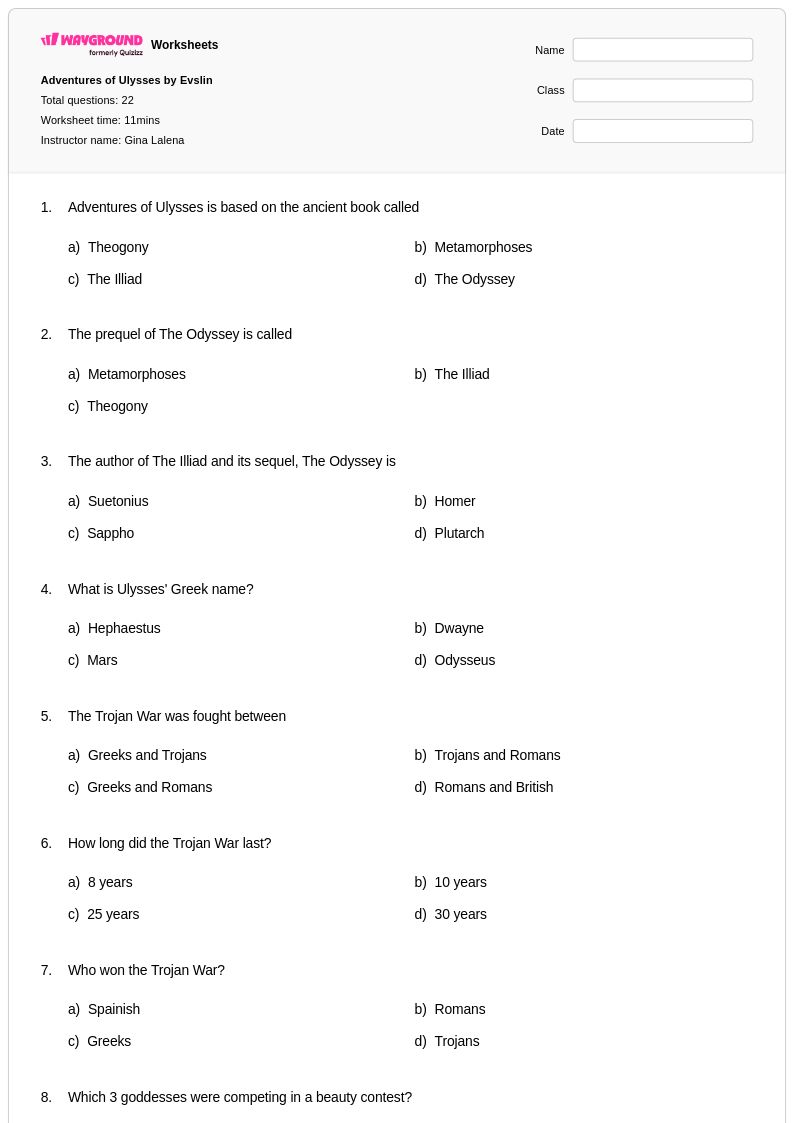
22 Q
6th - 9th
10 Q
6th - 8th
16 Q
6th
21 Q
6th - 9th
9 Q
5th - 8th
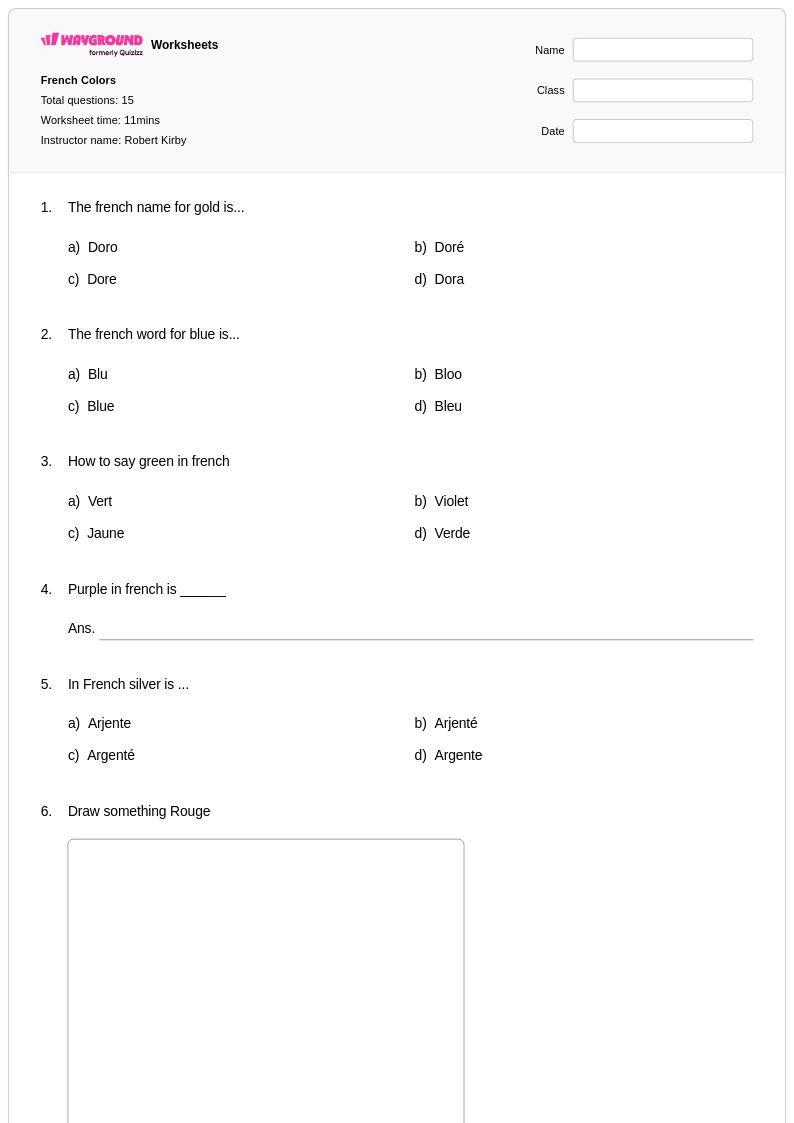
15 Q
6th - 8th
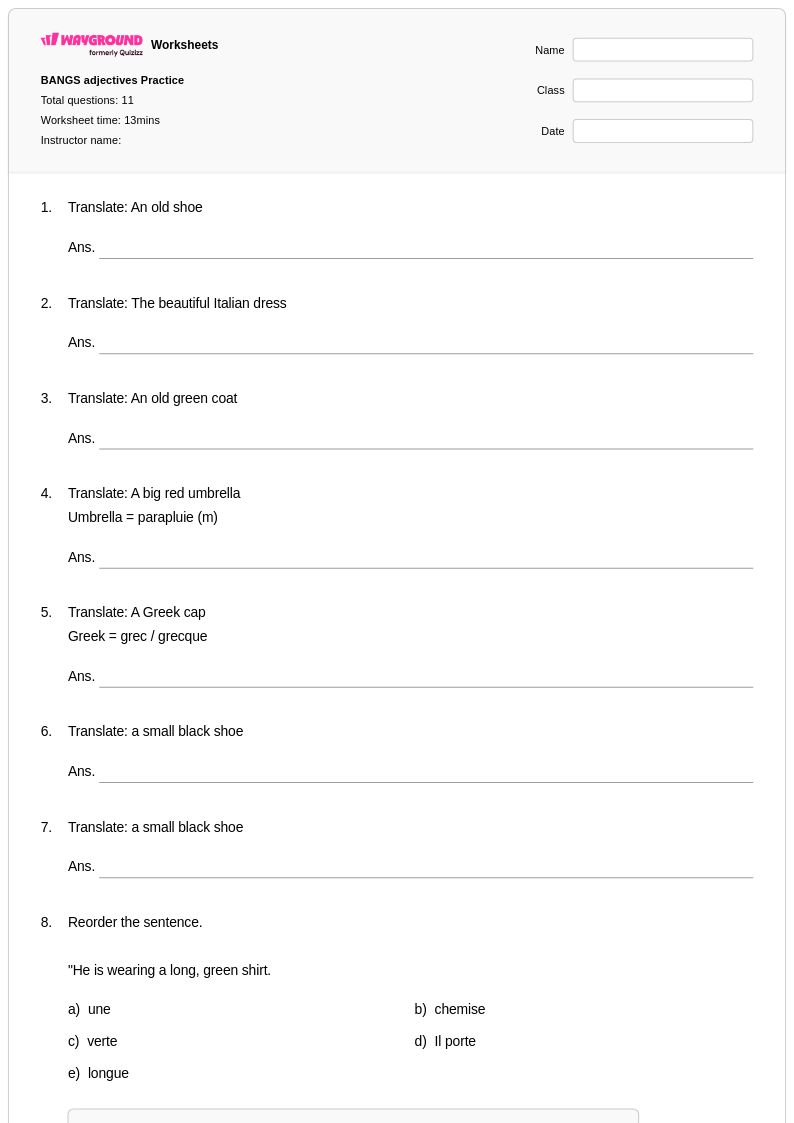
11 Q
6th - 8th
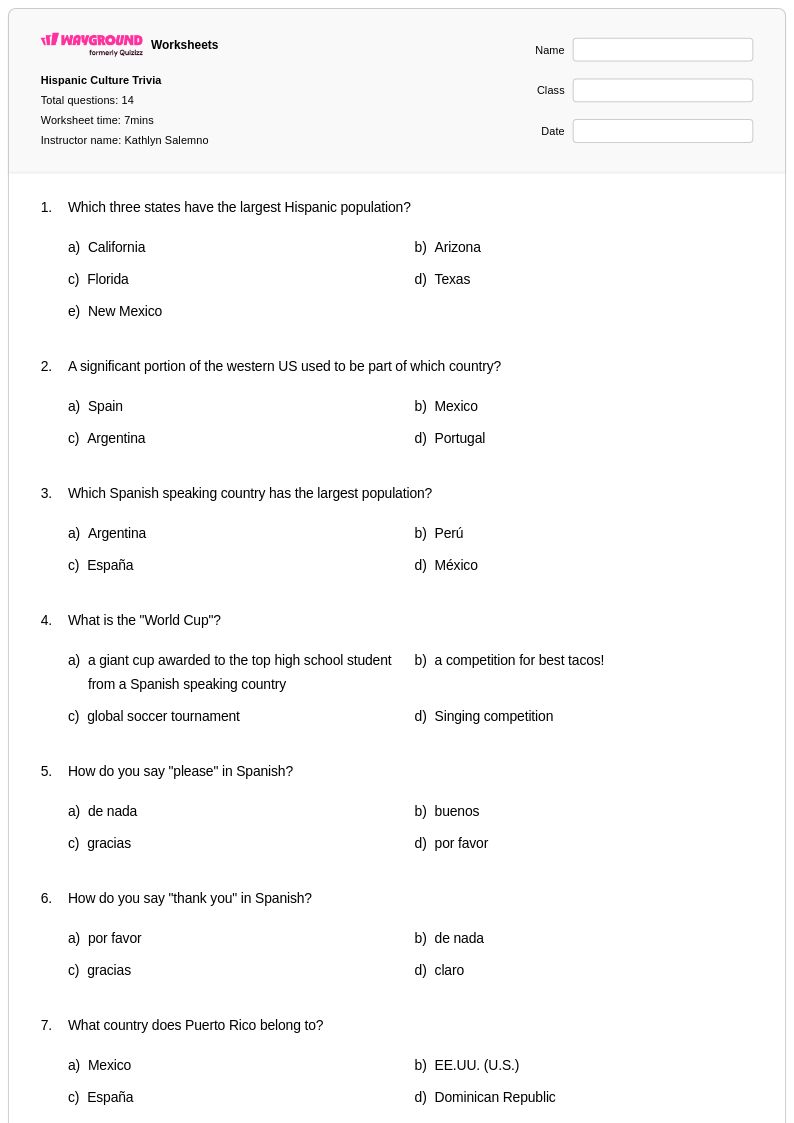
14 Q
6th - 8th
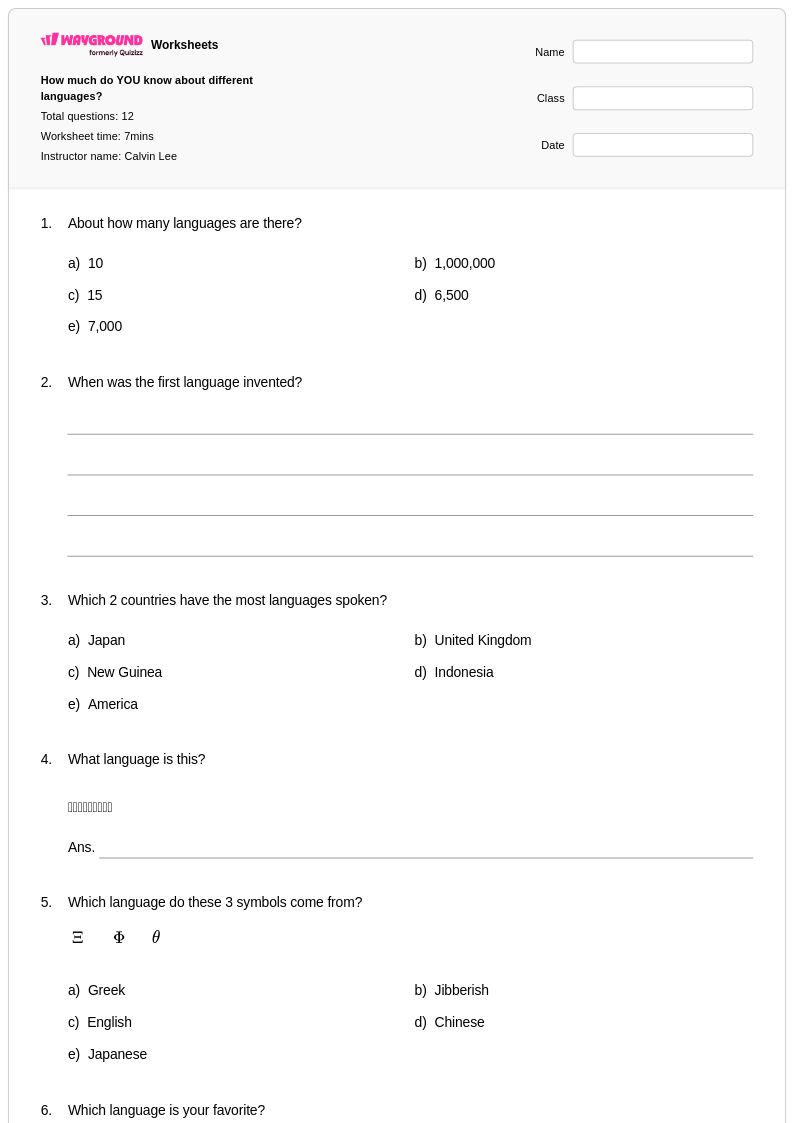
12 Q
KG - PD
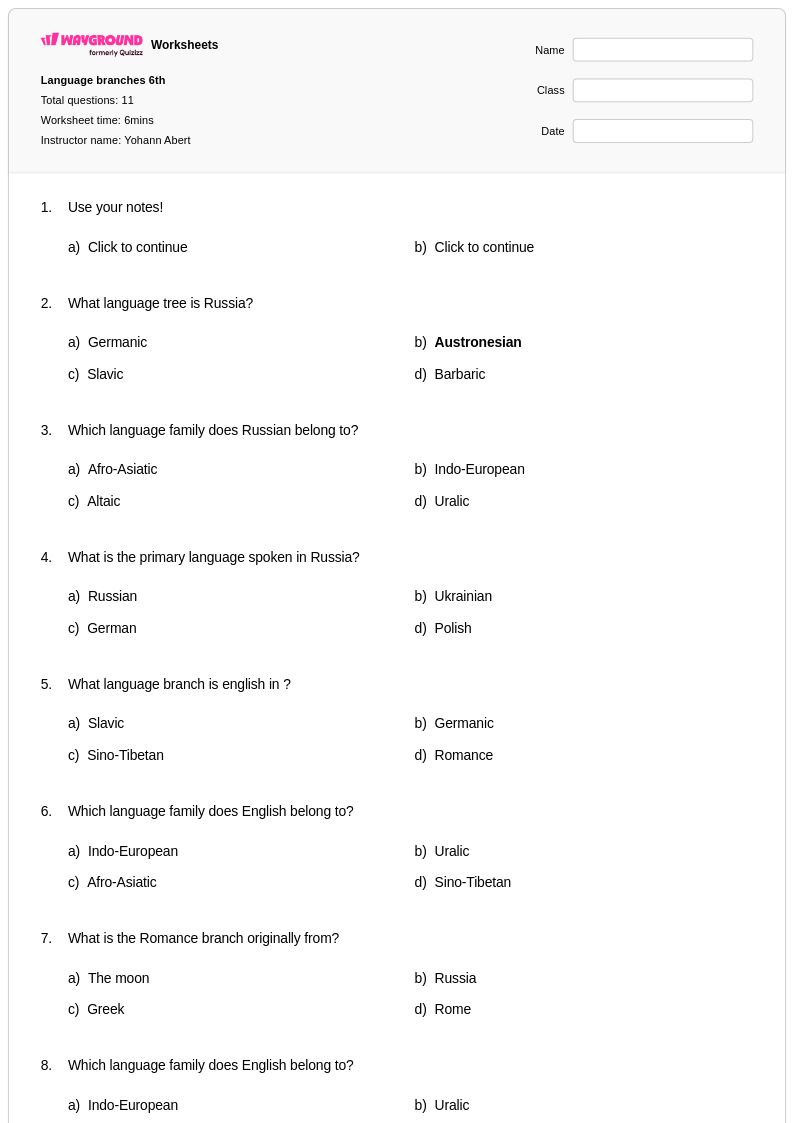
11 Q
6th - 8th
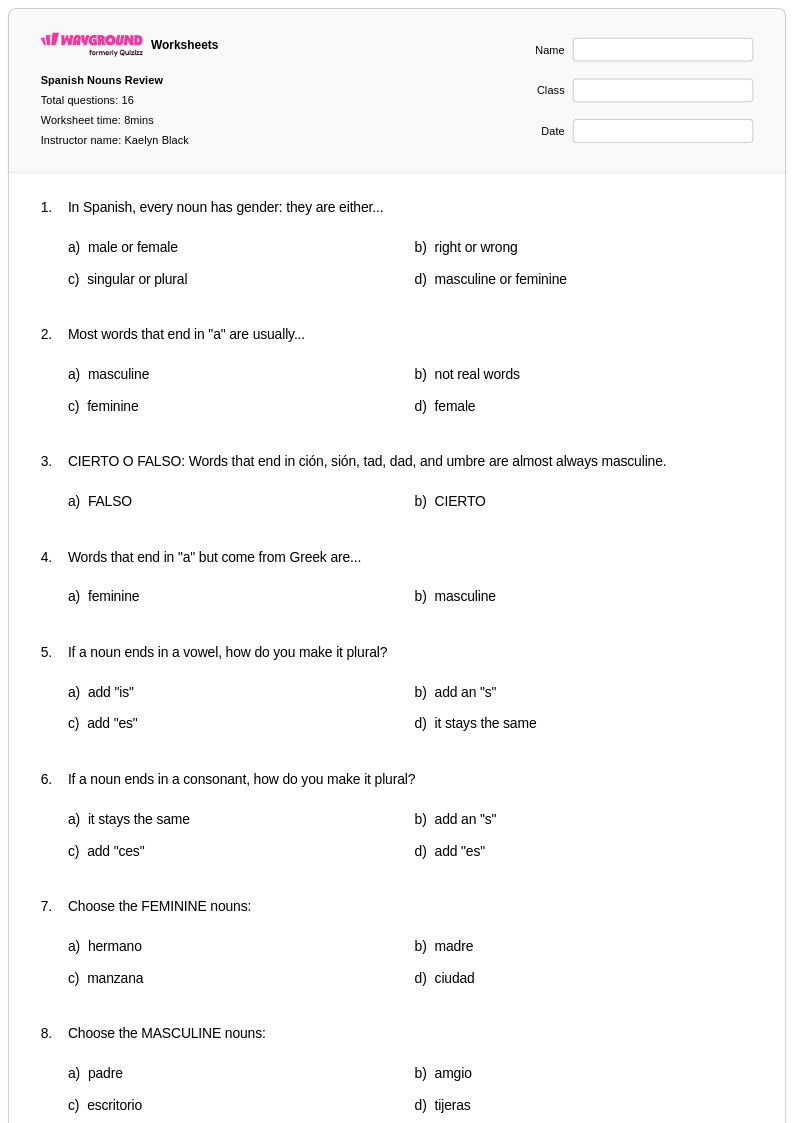
16 Q
6th - 12th
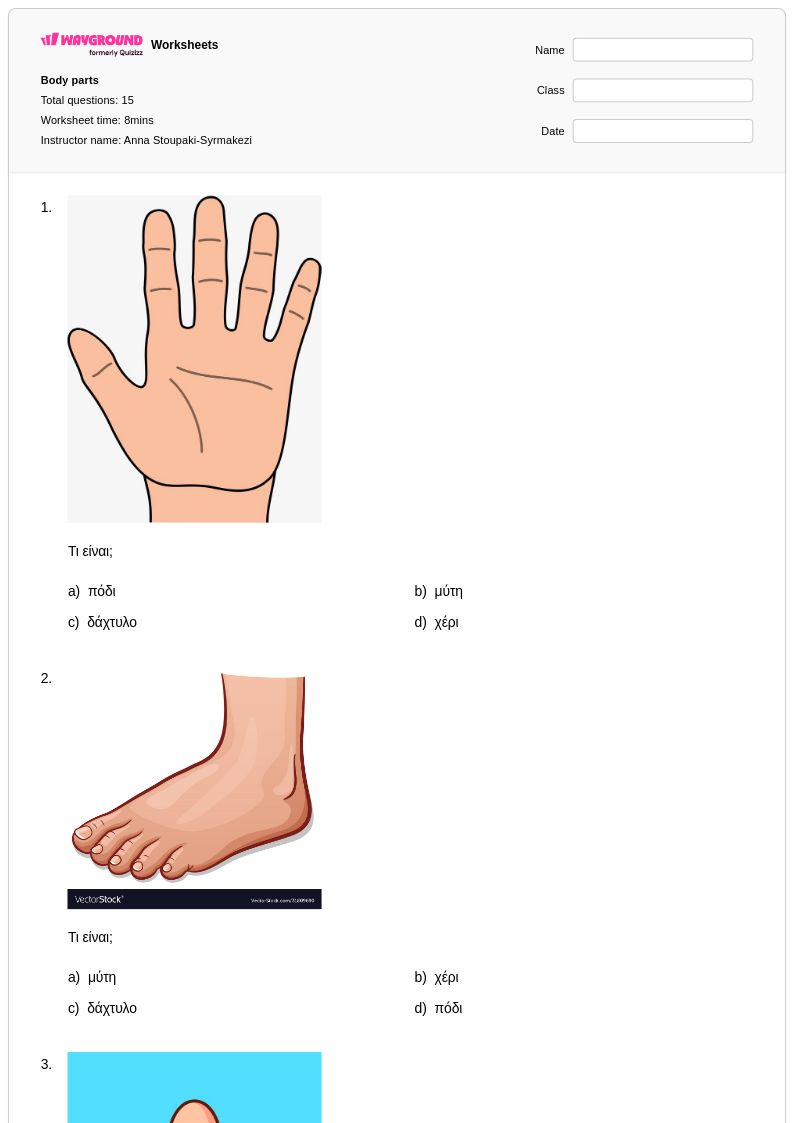
15 Q
6th
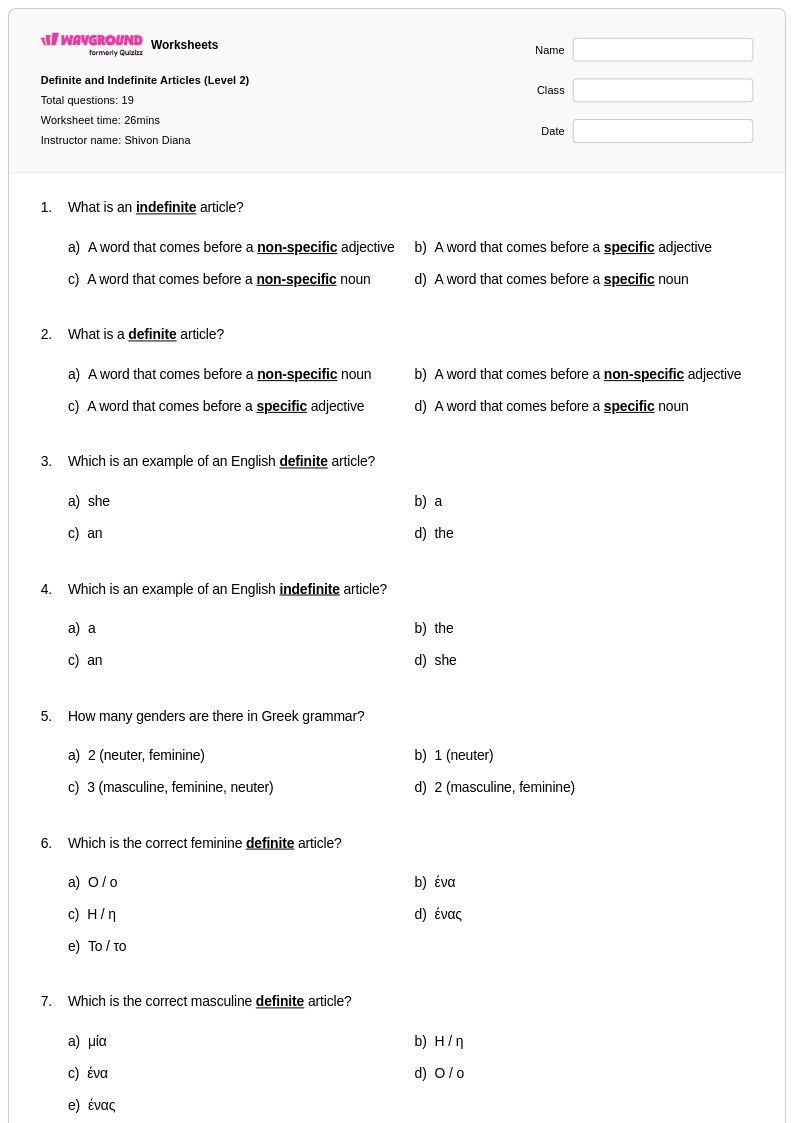
19 Q
1st - Uni
Explore Greek Worksheets by Grades
Explore Other Subject Worksheets for class 6
Explore printable Greek worksheets for Class 6
Greek language worksheets for Class 6 students available through Wayground (formerly Quizizz) provide comprehensive foundational resources for middle school learners beginning their journey into this classical language. These carefully structured practice materials focus on essential elements including the Greek alphabet, basic vocabulary acquisition, fundamental grammar concepts, and introductory reading comprehension skills that form the cornerstone of Greek language proficiency. Each worksheet incorporates progressive difficulty levels designed to strengthen students' recognition of Greek letters, phonetic understanding, and simple sentence construction while building confidence in this historically significant language. The collection includes detailed answer keys and free printable pdf formats that enable both independent study and guided classroom instruction, with practice problems systematically addressing the unique challenges Class 6 students encounter when learning Greek script and pronunciation patterns.
Wayground (formerly Quizizz) empowers educators with an extensive library of millions of teacher-created Greek language resources specifically curated to support diverse Class 6 learning environments and instructional approaches. The platform's advanced search and filtering capabilities allow teachers to quickly locate worksheets aligned with specific curriculum standards and learning objectives, while built-in differentiation tools enable seamless customization for students with varying proficiency levels and learning styles. These flexible resources are available in both printable and digital formats, including downloadable pdf versions that facilitate seamless integration into lesson planning, targeted remediation sessions, and enrichment activities for advanced learners. Teachers can efficiently modify content difficulty, adjust practice problem complexity, and create personalized learning pathways that ensure every Class 6 student receives appropriate support in developing their Greek language foundation through structured, systematic skill practice.
FAQs
How do I teach the Greek alphabet to beginners?
What are the most effective ways to help students practice Greek vocabulary?
What common mistakes do students make when learning Greek grammar?
How can I differentiate Greek language instruction for students at different proficiency levels?
How do I use Wayground's Greek worksheets in my classroom?
How do I help students with Greek pronunciation when I'm not a native speaker?