Free Printable Greenhouse Gases Worksheets for Class 7
Free Class 7 greenhouse gases worksheets and printables help students explore how carbon dioxide, methane, and other gases trap heat in Earth's atmosphere through engaging practice problems and comprehensive answer keys.
Explore printable Greenhouse Gases worksheets for Class 7
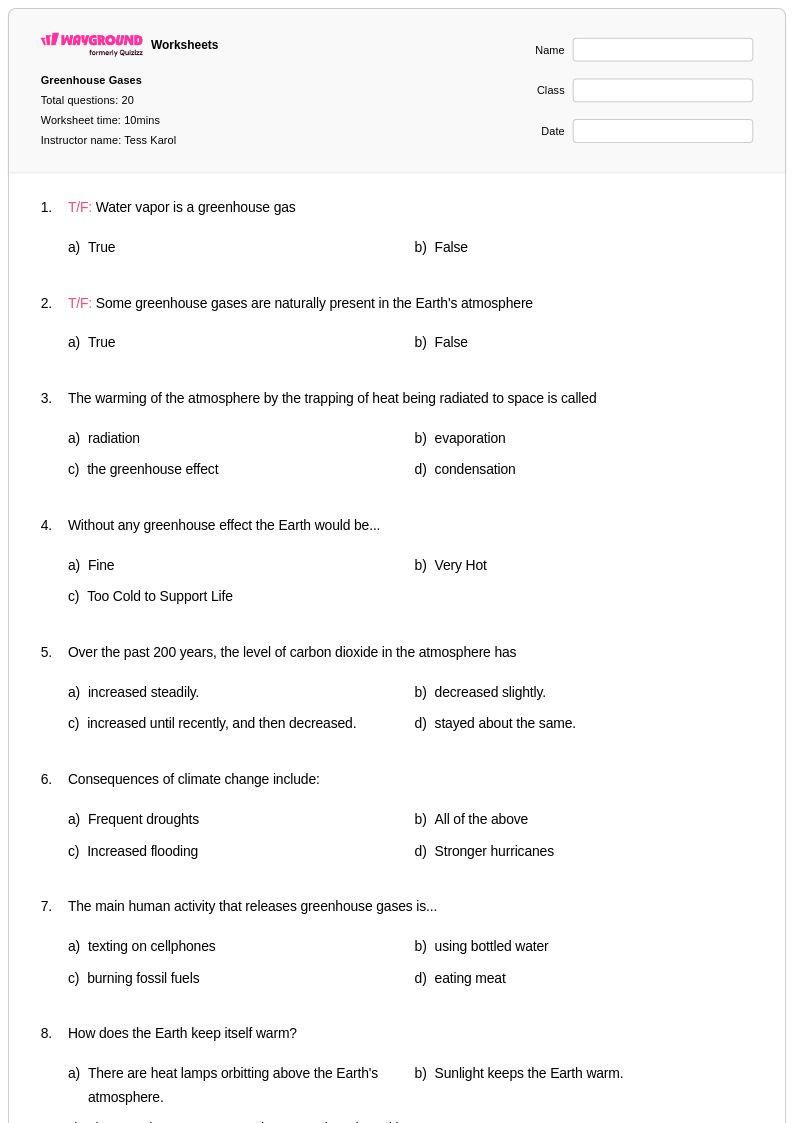
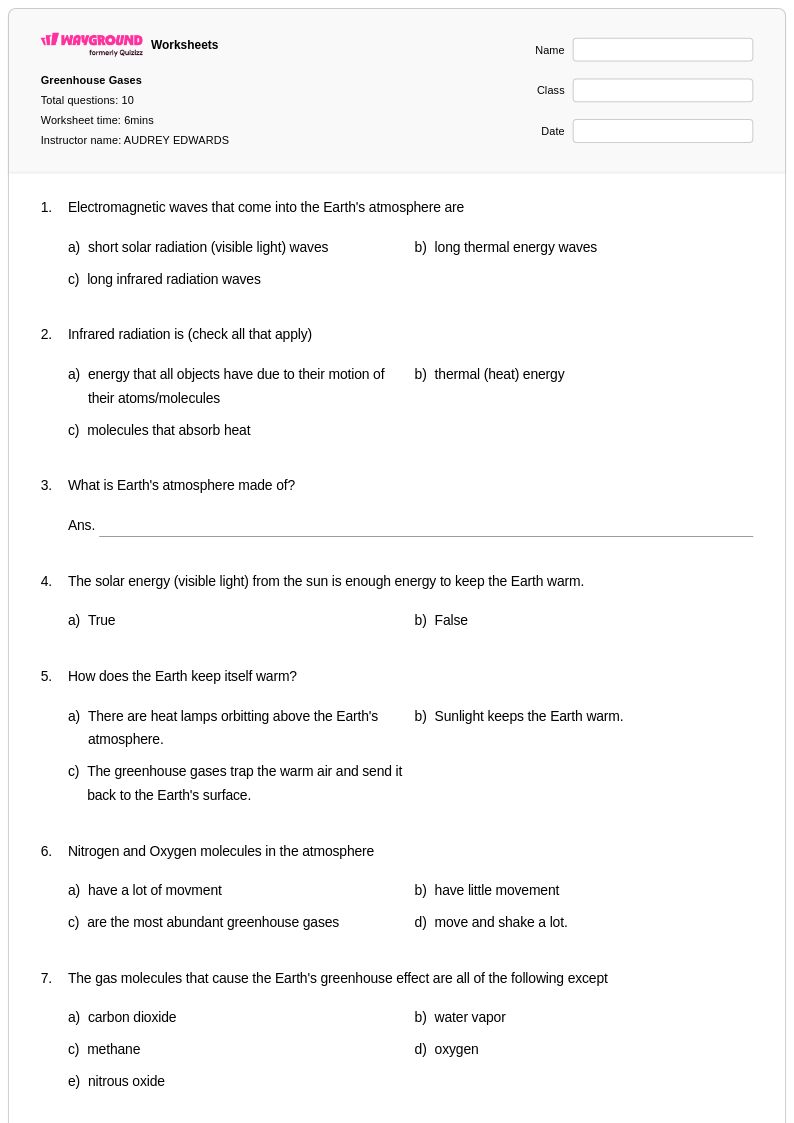
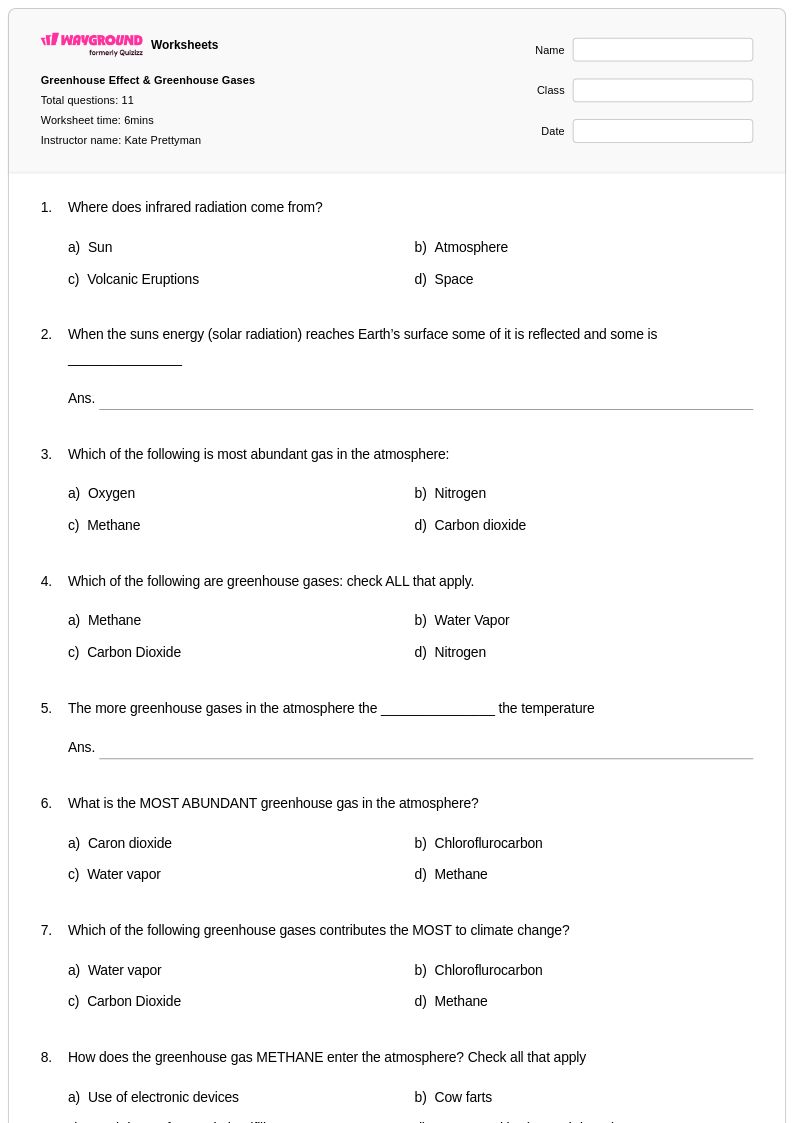
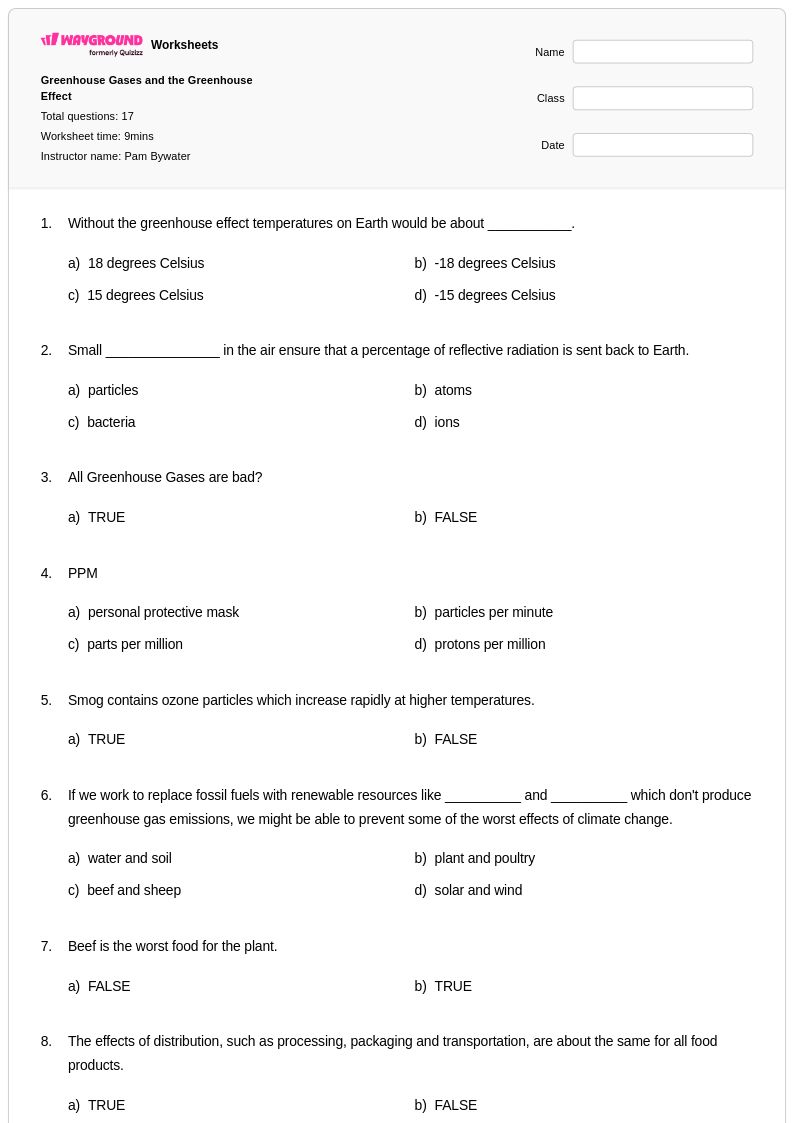
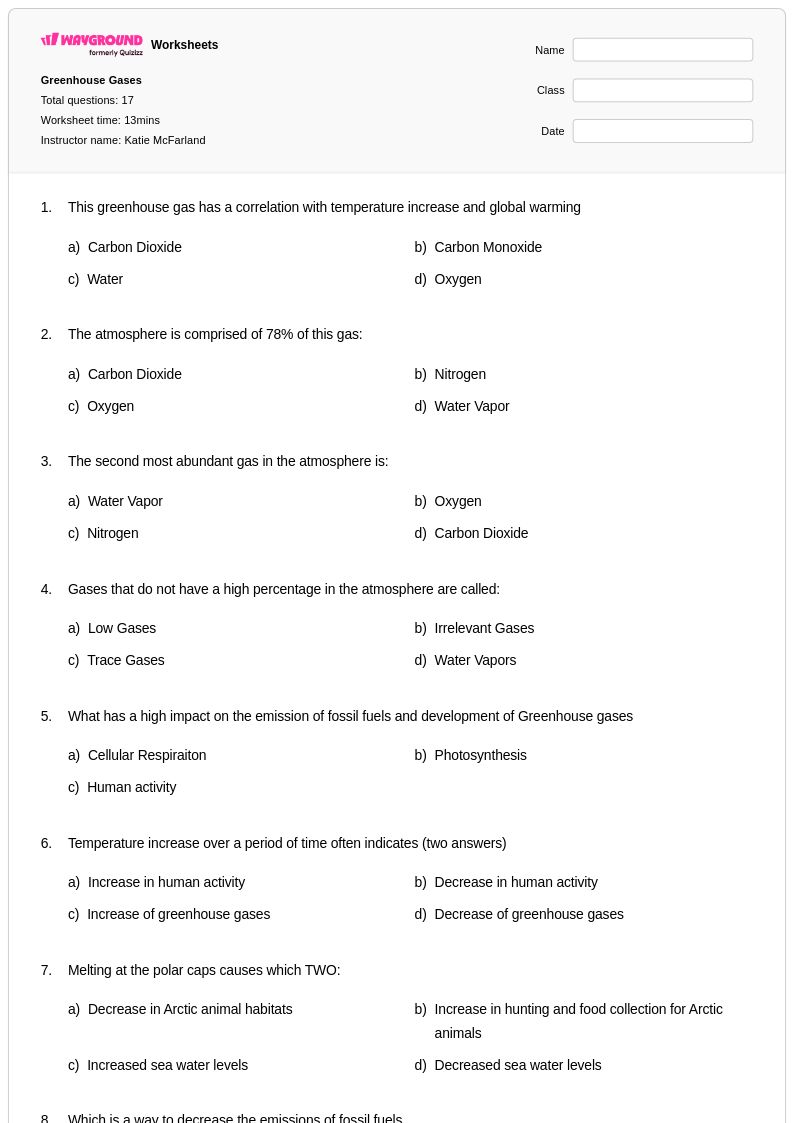
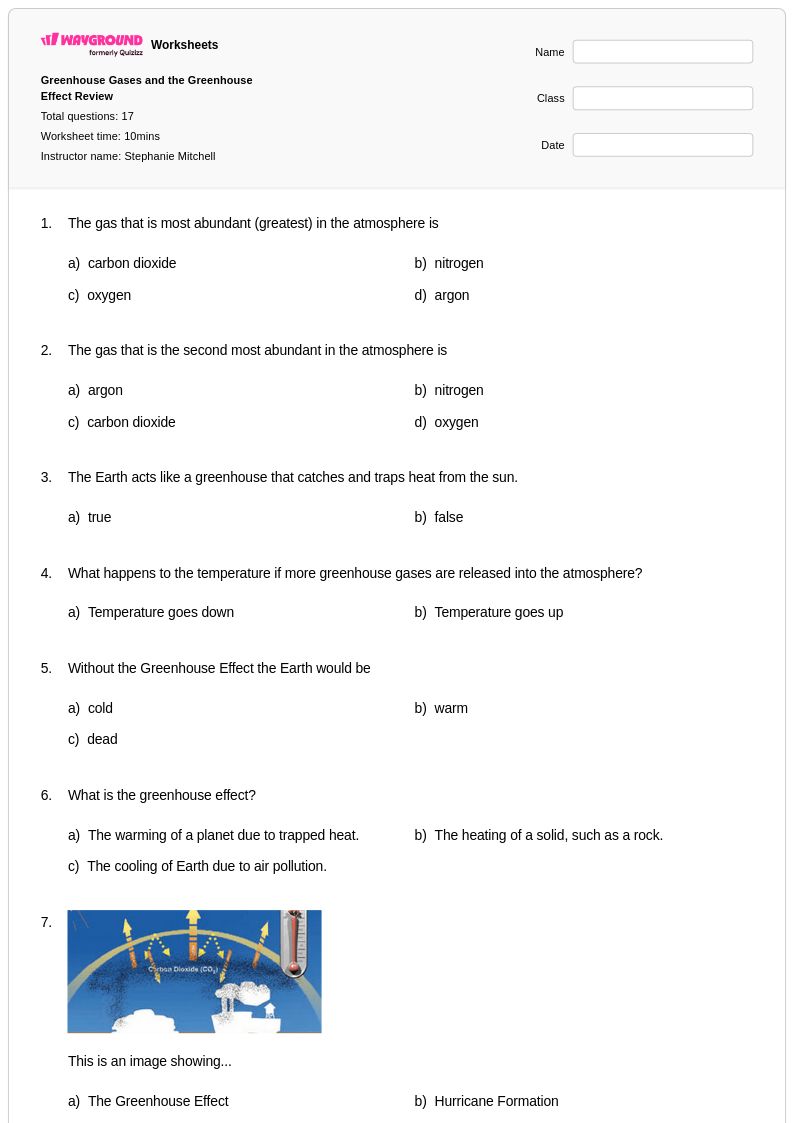
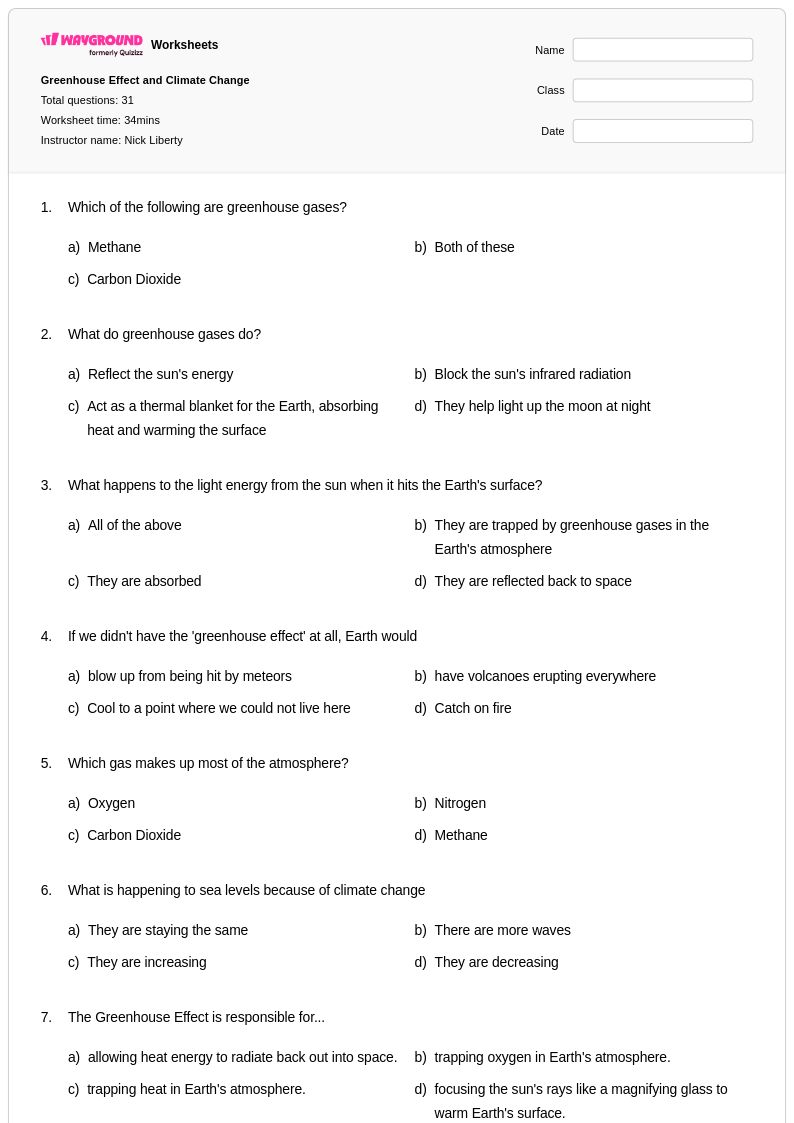
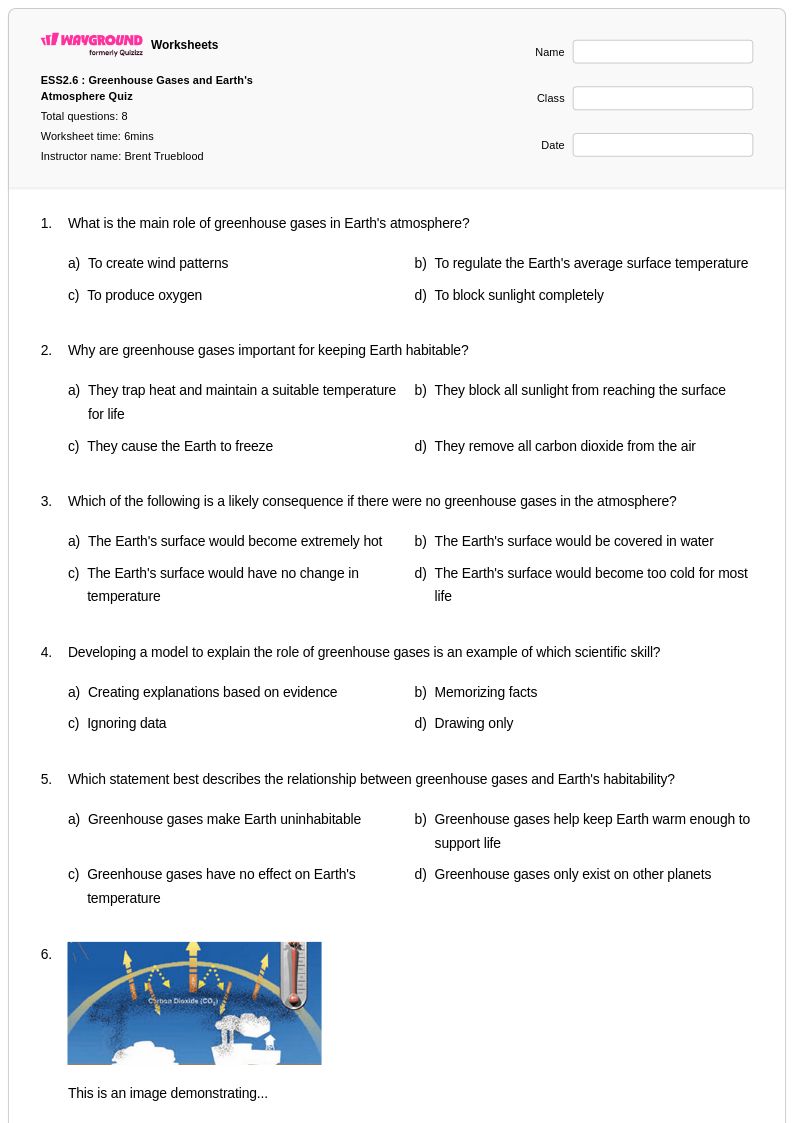
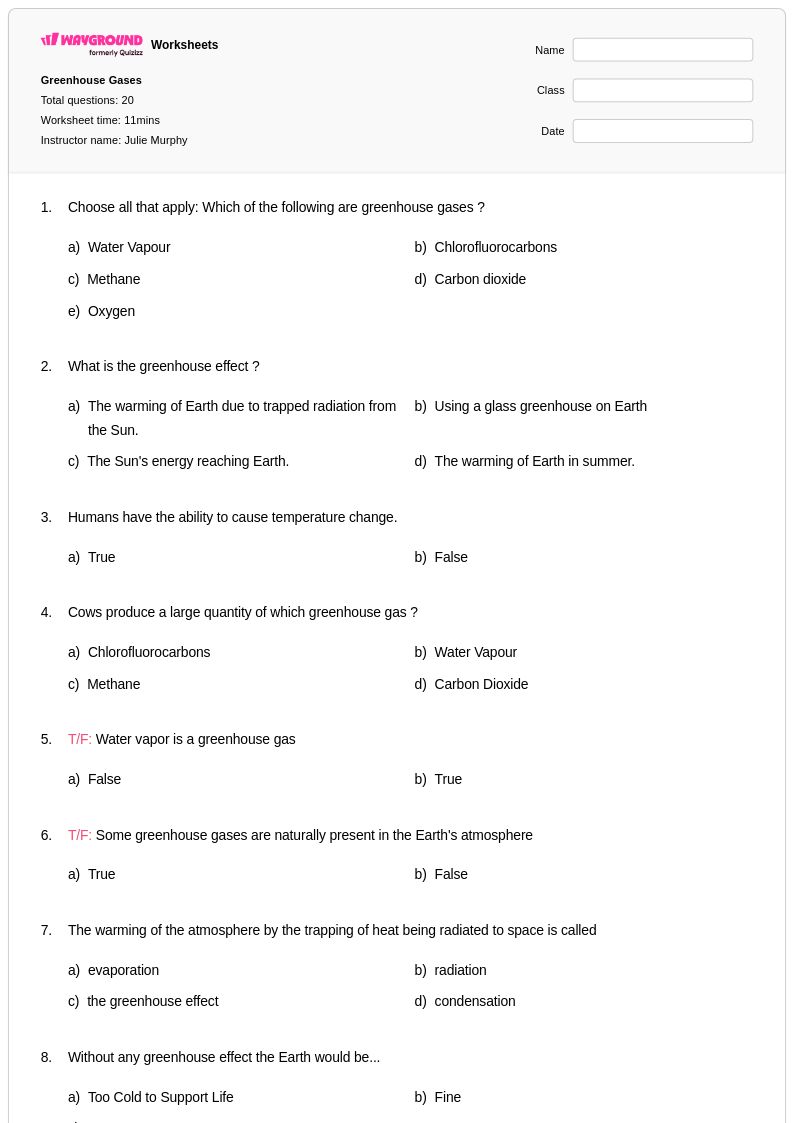
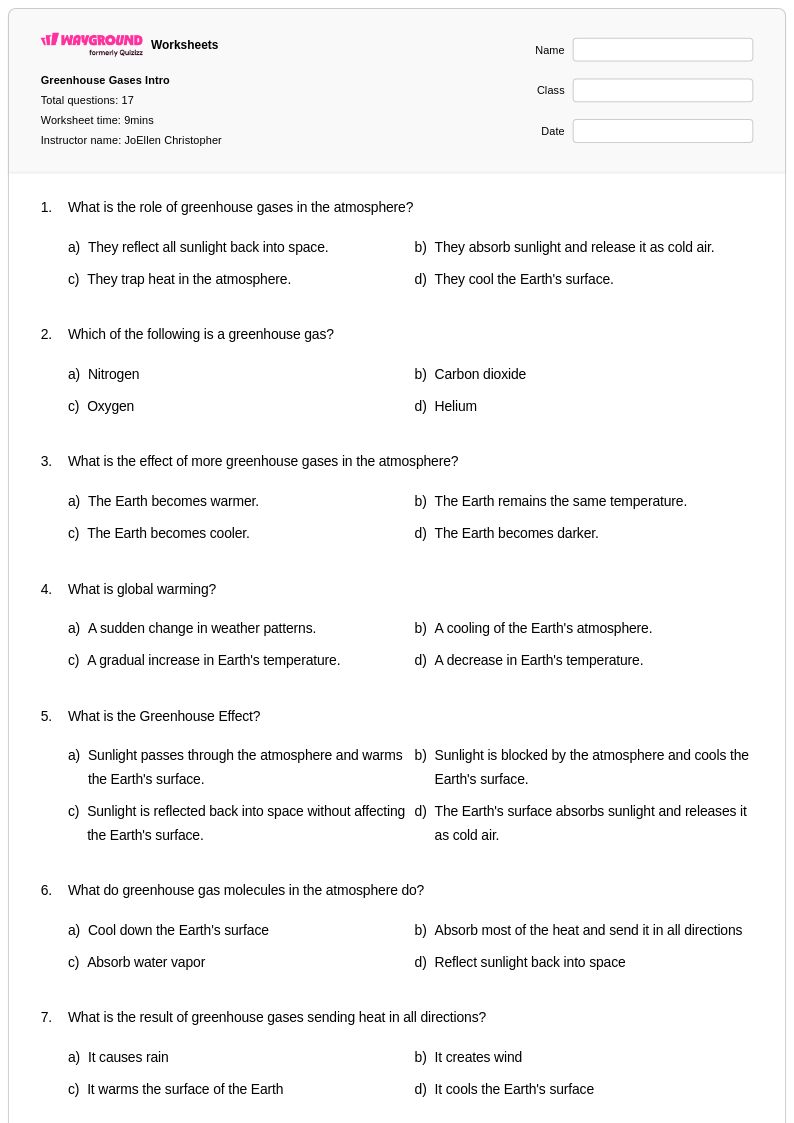
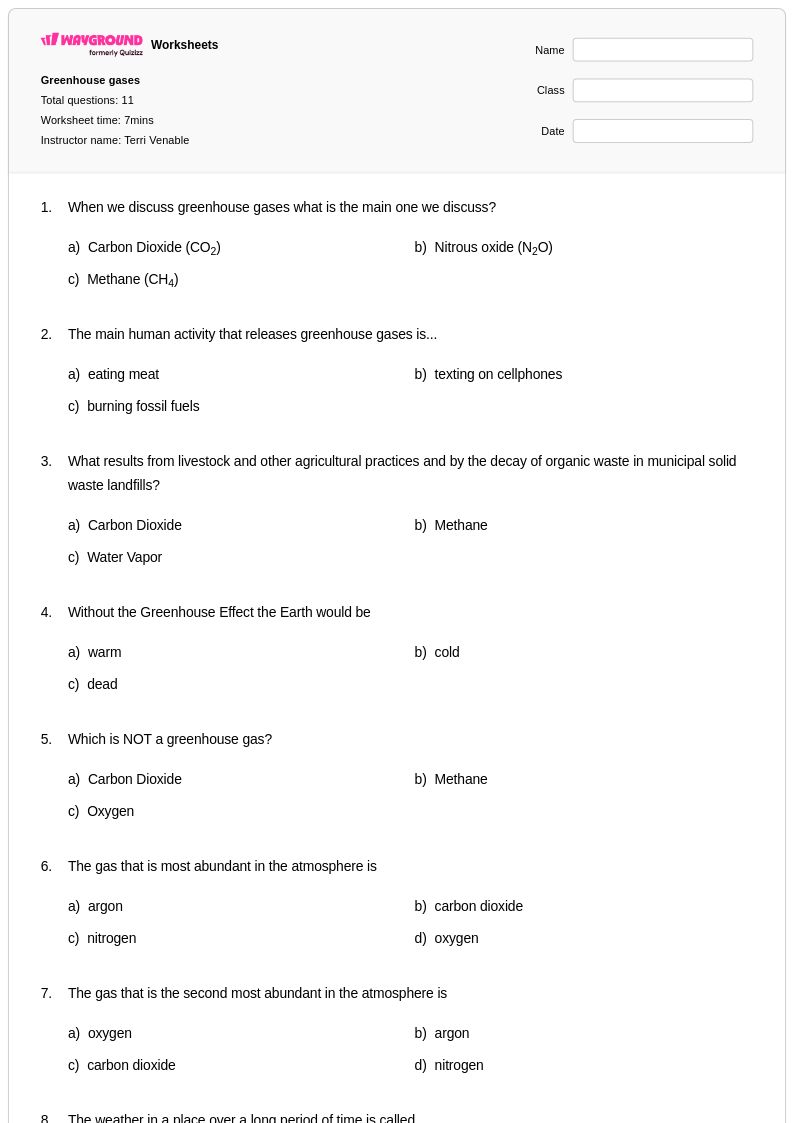
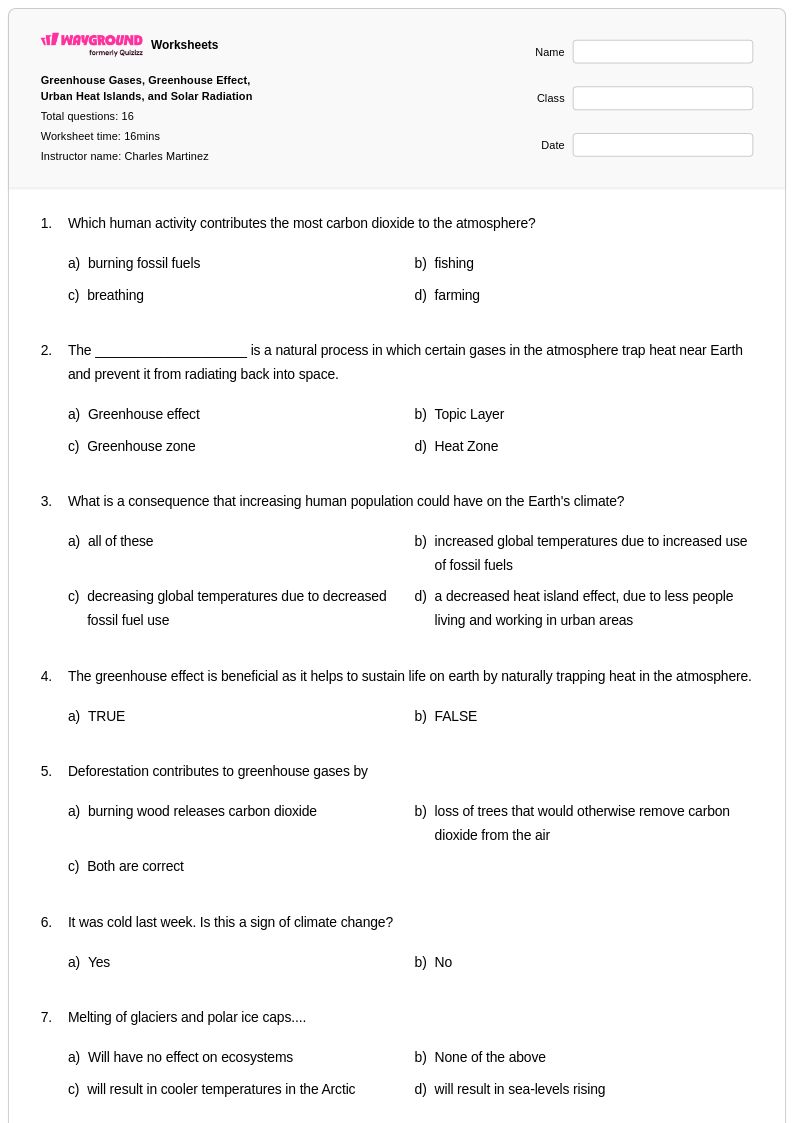
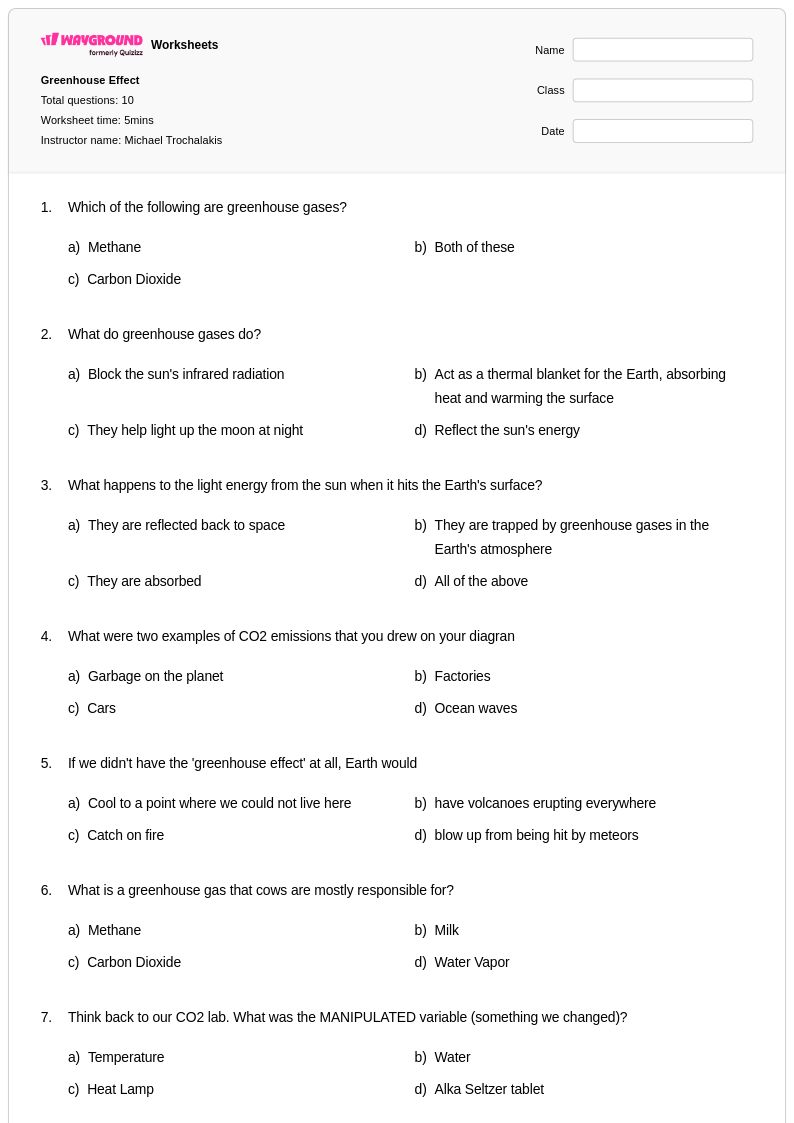
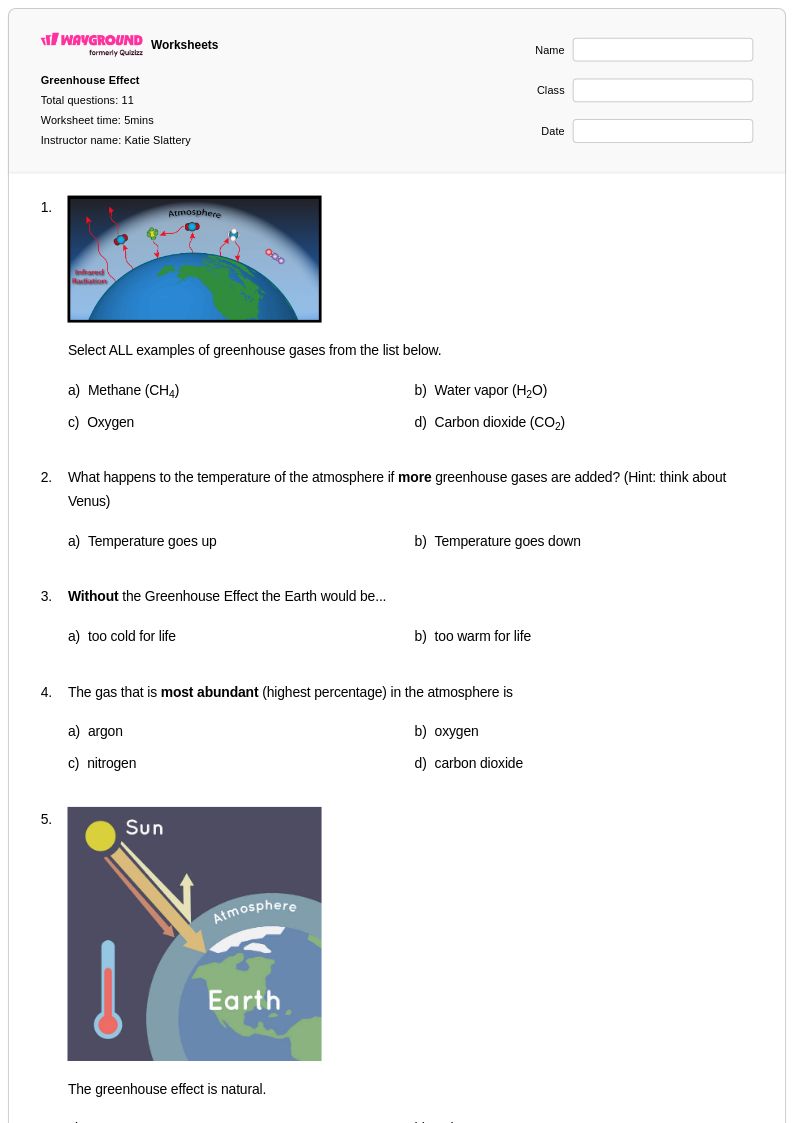
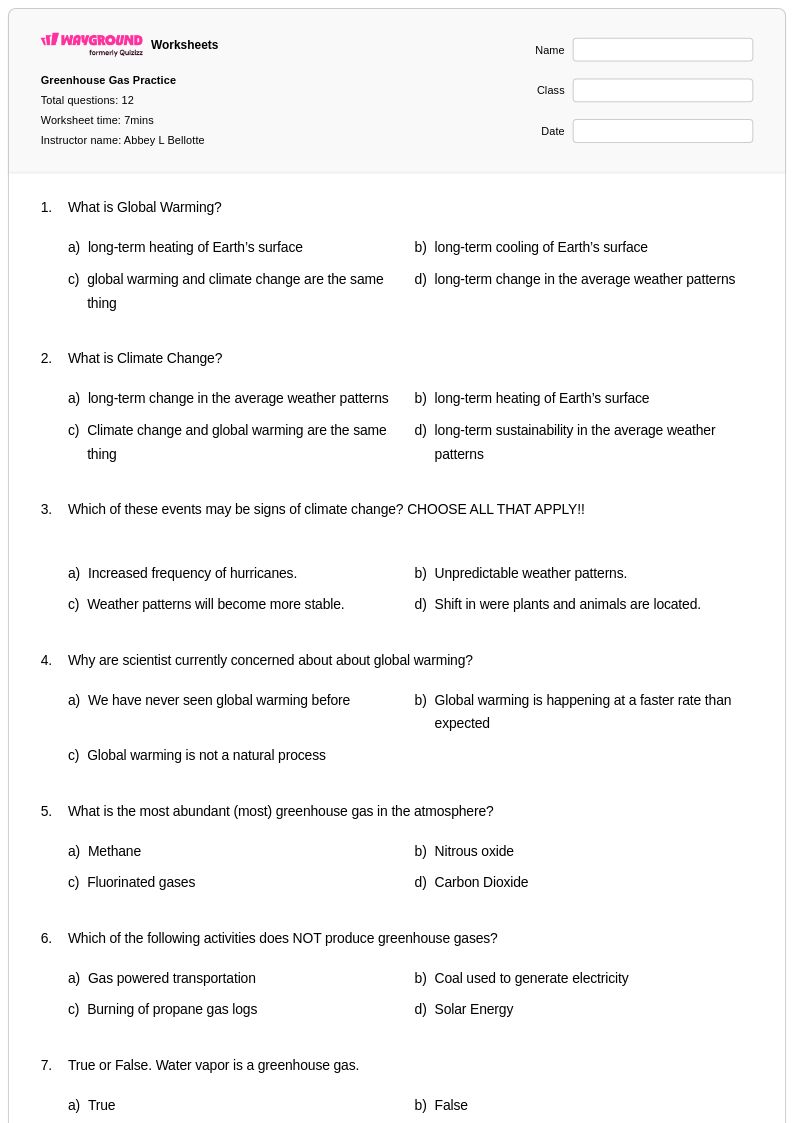
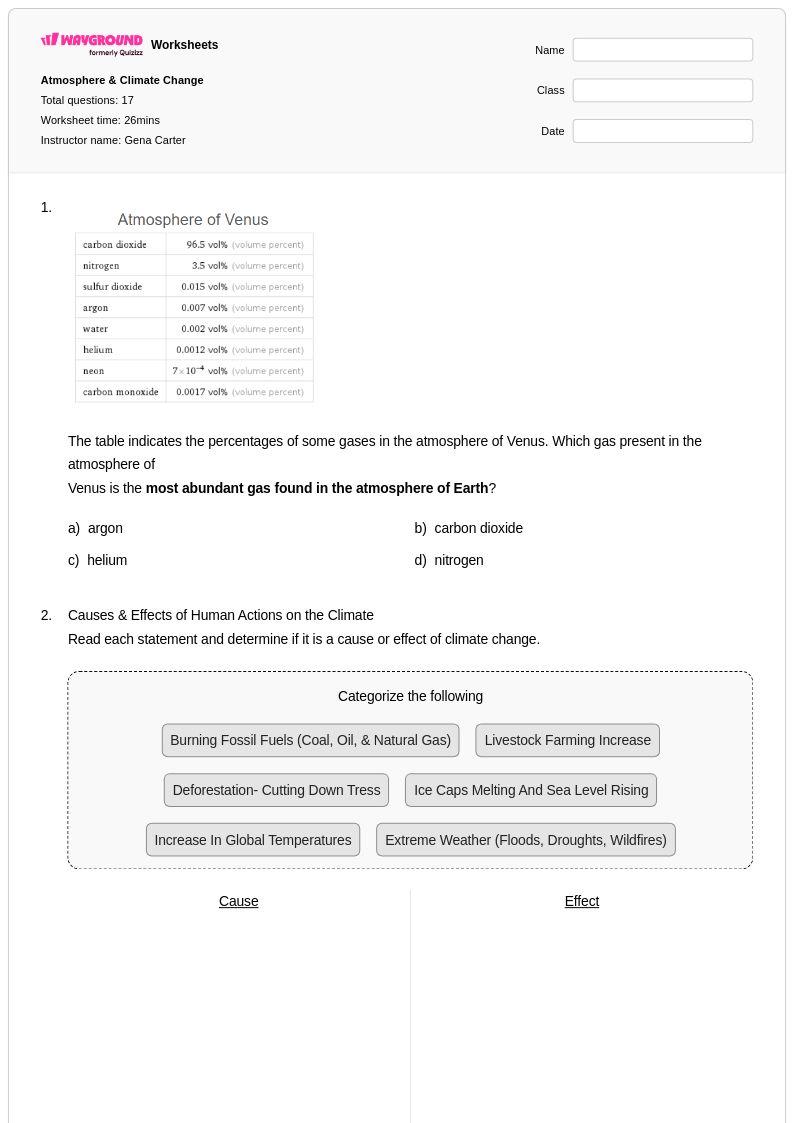
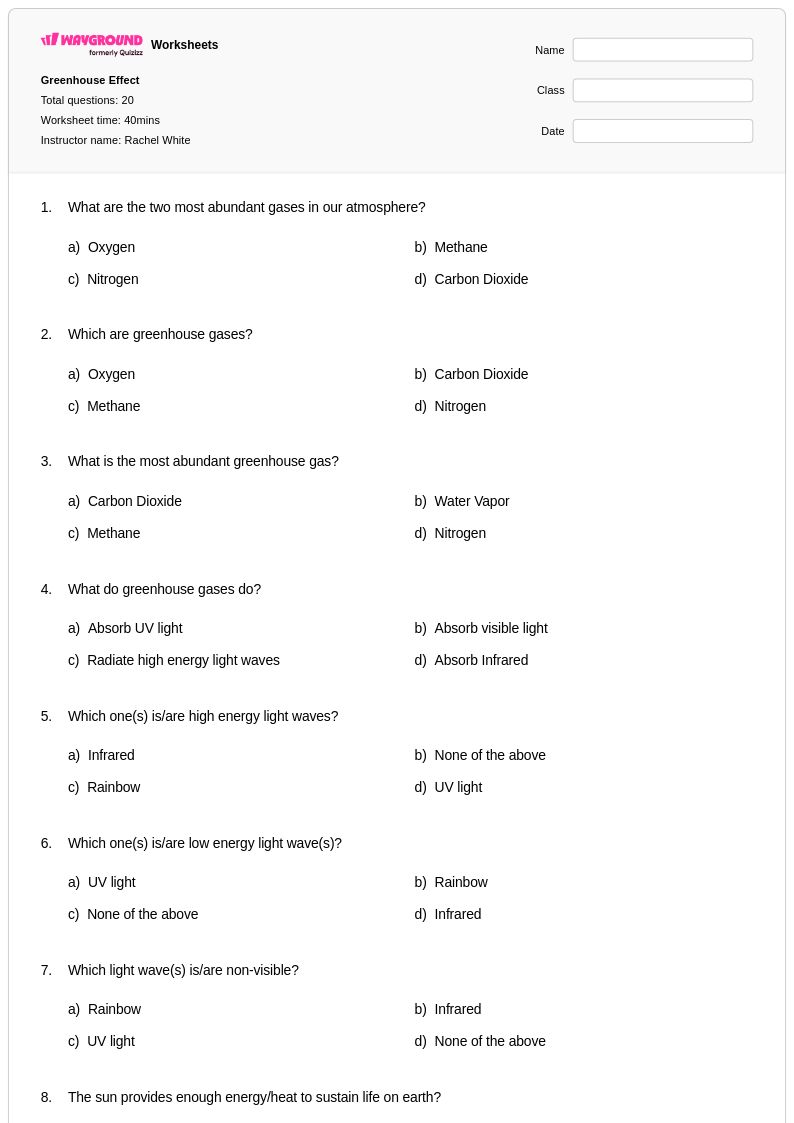
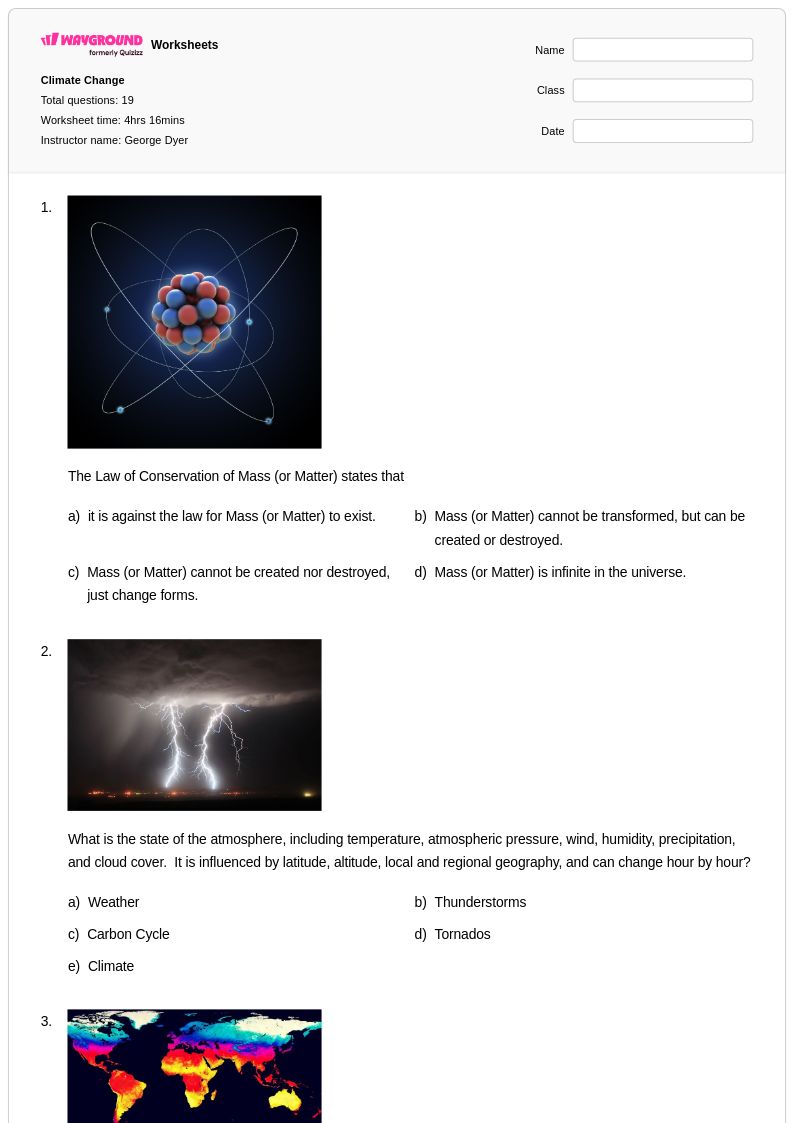
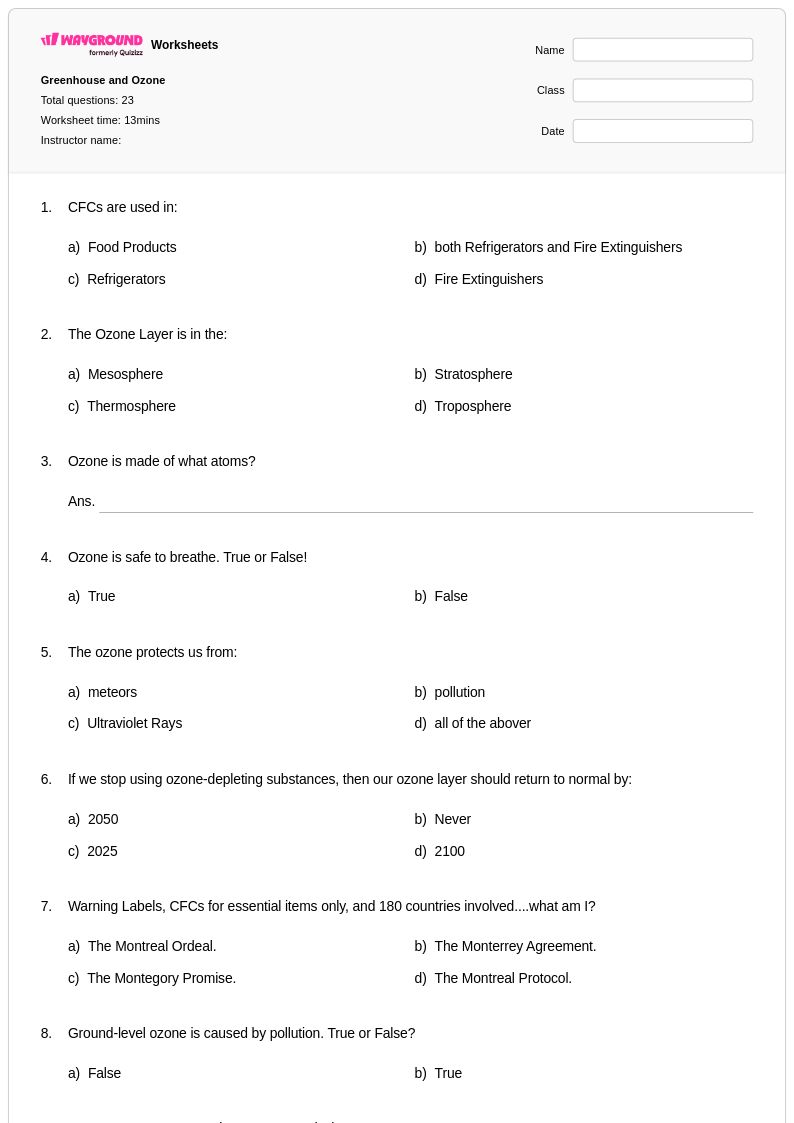
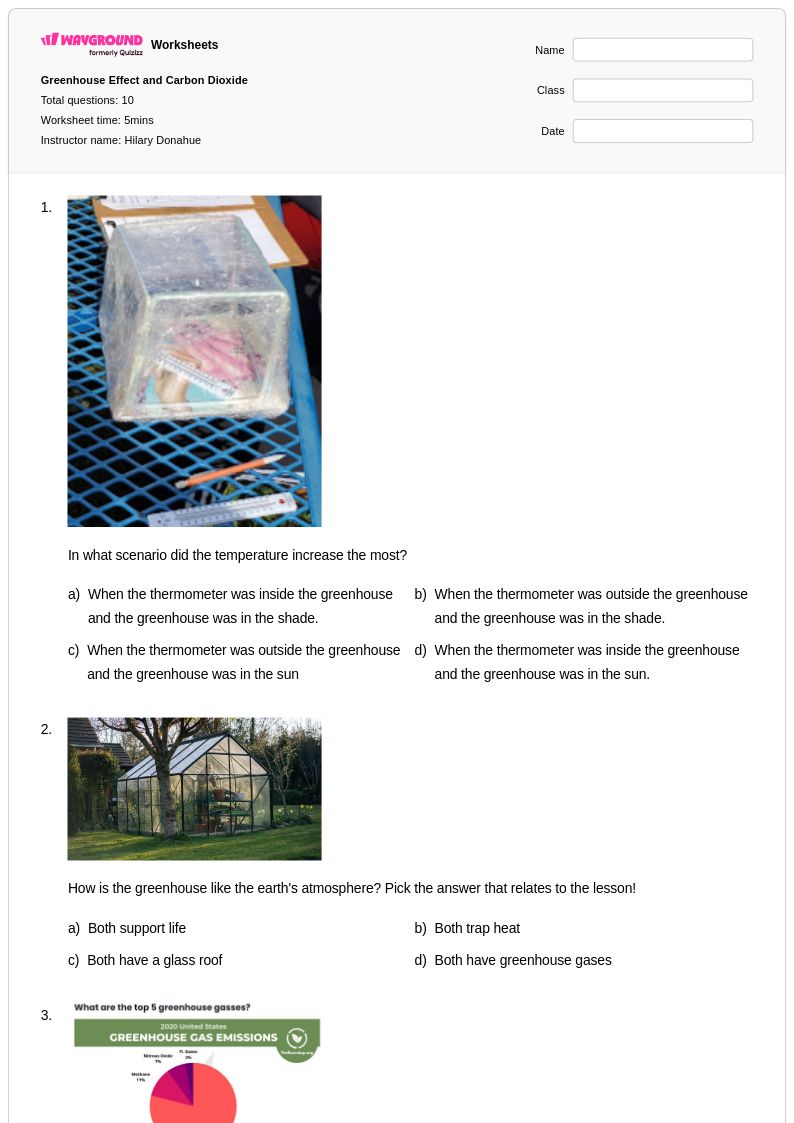
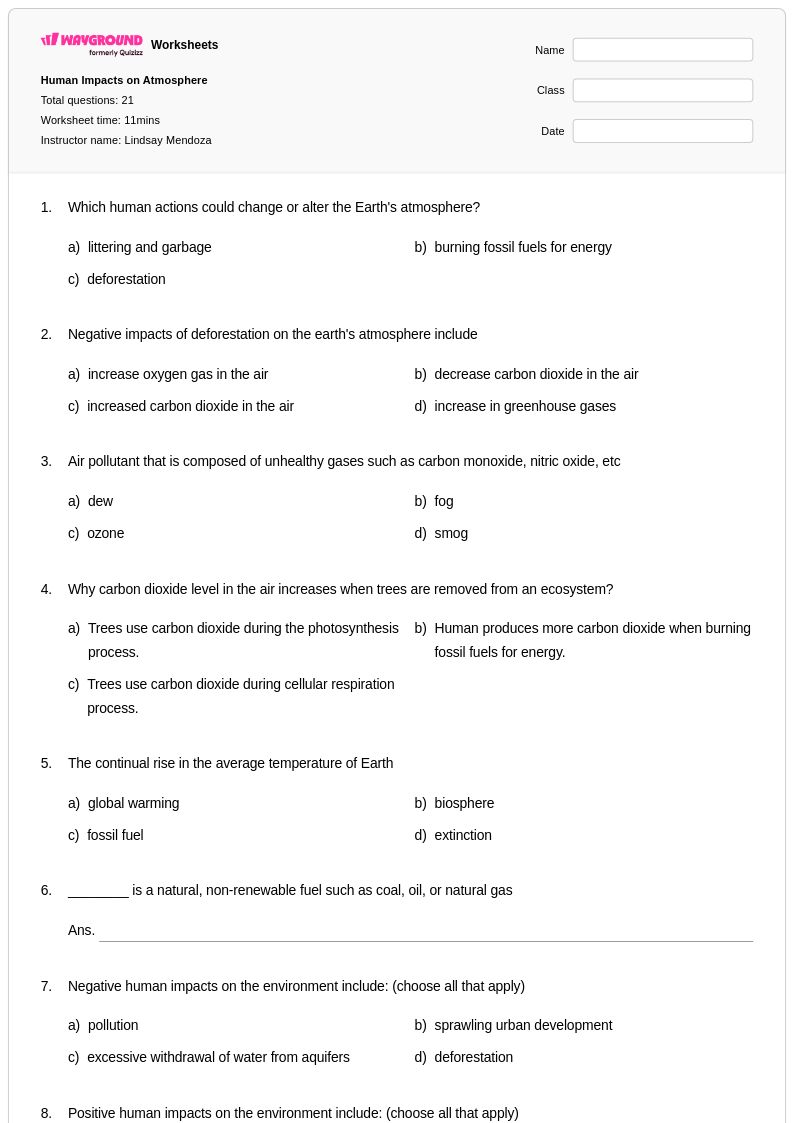
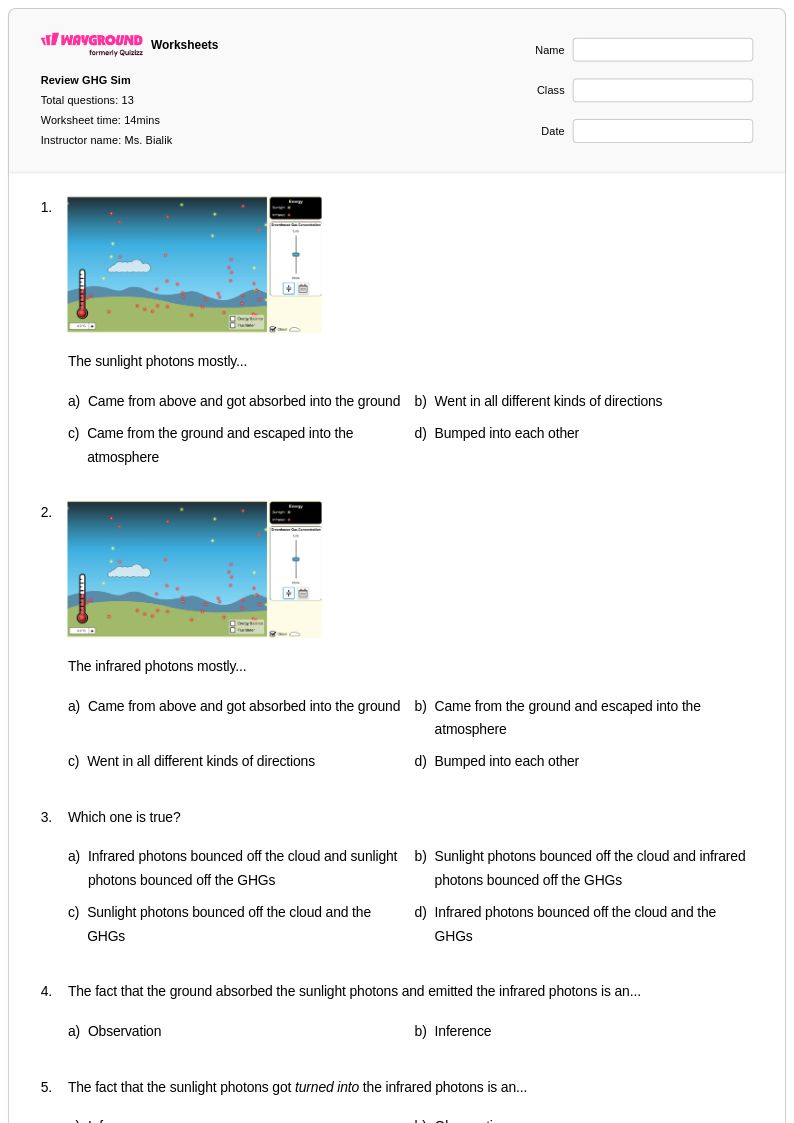
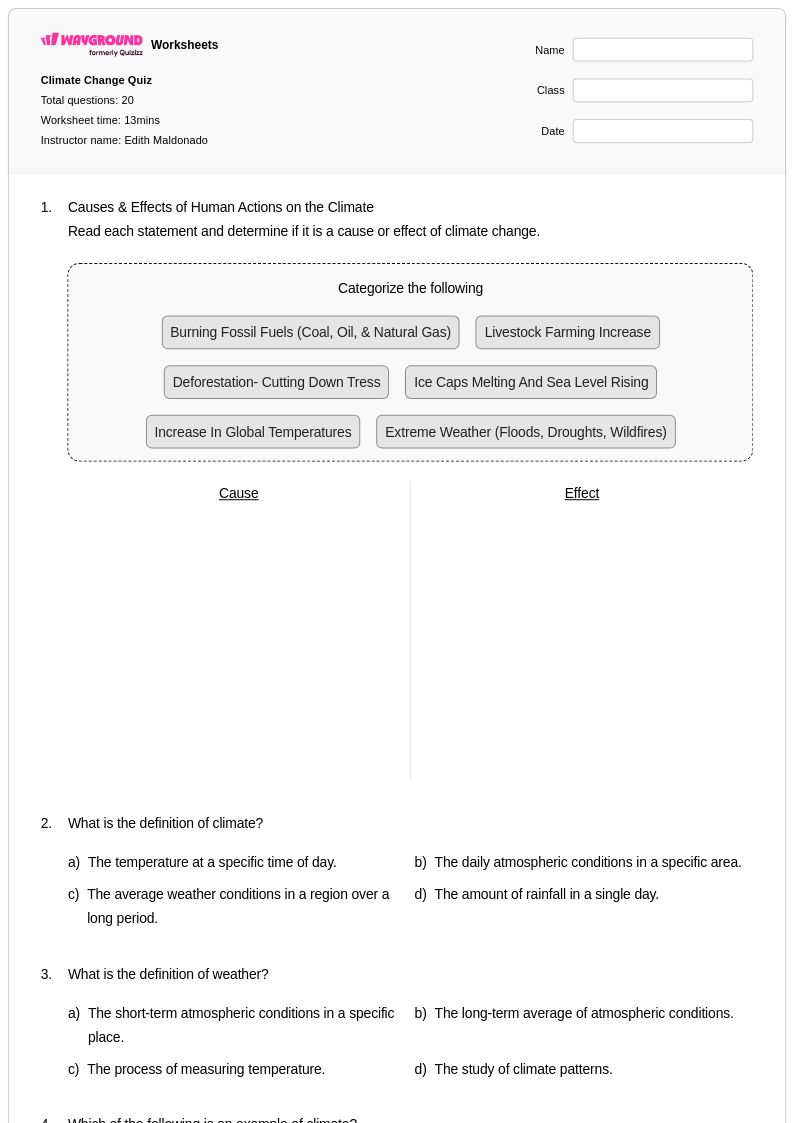
Greenhouse gases worksheets for Class 7 students available through Wayground offer comprehensive practice materials that help students understand the critical role these atmospheric components play in Earth's climate system. These educational resources strengthen students' ability to identify major greenhouse gases like carbon dioxide, methane, and water vapor, analyze their sources and effects, and evaluate human impacts on atmospheric composition. The worksheet collection includes detailed answer keys that support independent learning, free printable pdf versions for classroom distribution, and diverse practice problems that challenge students to apply their knowledge through data interpretation, graphing activities, and real-world scenario analysis.
Wayground, formerly Quizizz, empowers teachers with millions of educator-created greenhouse gases resources that can be easily discovered through advanced search and filtering capabilities aligned to science education standards. The platform's differentiation tools allow instructors to customize worksheets based on individual student needs, offering both remediation support for struggling learners and enrichment opportunities for advanced students. Available in both printable pdf format and interactive digital versions, these materials seamlessly integrate into lesson planning workflows while providing flexible options for skill practice, formative assessment, and homework assignments that reinforce understanding of greenhouse gas concepts and their environmental significance.
FAQs
How do I teach greenhouse gases in a science class?
Start by grounding students in the basic physics of the greenhouse effect before introducing individual gases and their sources. Use diagrams that show how infrared radiation is absorbed and re-emitted by atmospheric gases like carbon dioxide, methane, and water vapor. Connecting molecular structure to heat-trapping behavior helps students understand why different gases have different warming potentials, which builds a stronger foundation for analyzing climate change data.
What worksheets or activities help students practice greenhouse gas concepts?
Effective practice activities include data analysis exercises where students interpret atmospheric concentration graphs, molecular structure diagrams that show how specific gases absorb infrared radiation, and real-world scenarios connecting human activities to greenhouse gas emissions. Worksheets that ask students to identify sources of carbon dioxide, methane, and water vapor and trace their pathways through the climate system reinforce both factual recall and analytical thinking.
What mistakes do students commonly make when learning about greenhouse gases?
A frequent misconception is confusing the greenhouse effect with ozone depletion — students often conflate two distinct atmospheric phenomena. Many also assume that water vapor is not a greenhouse gas because it occurs naturally, overlooking its role as the most abundant one. Students also tend to think all greenhouse gases contribute equally to warming, when in fact methane has a significantly higher global warming potential per molecule than carbon dioxide.
How can I differentiate greenhouse gas instruction for students at different levels?
For foundational learners, focus on identifying the major greenhouse gases and understanding the basic mechanism of the greenhouse effect using labeled diagrams. Advanced students can engage with atmospheric chemistry concepts, analyze real emissions data, and explore climate modeling scenarios. On Wayground, teachers can apply individual accommodations such as read aloud support or reduced answer choices for students who need additional scaffolding, without affecting the experience of other students in the class.
How do I use Wayground's greenhouse gases worksheets in my classroom?
Wayground's greenhouse gas worksheets are available as printable PDFs for traditional classroom use and in digital formats for technology-integrated environments, including the option to host them as a live quiz on Wayground. Teachers can use them for direct instruction support, independent practice, formative assessment, or as supplementary materials within a climate science or environmental unit. The included answer keys make them suitable for self-paced or independent learning as well.
How do I connect greenhouse gas lessons to real-world climate change topics?
Tie greenhouse gas content to observable data by having students analyze trends in atmospheric CO2 concentrations from sources like the Keeling Curve, then link those trends to human activities such as fossil fuel combustion and deforestation. Real-world application scenarios help students move beyond memorization and understand why monitoring greenhouse gas concentrations is central to climate science and environmental policy.