
9 Q
7th
20 Q
6th - 8th
10 Q
6th - 8th
15 Q
7th
10 Q
6th - 9th
34 Q
7th
27 Q
6th - 12th
25 Q
4th - Uni
62 Q
6th - 8th
8 Q
6th - 8th
18 Q
6th - 8th
10 Q
7th - 8th
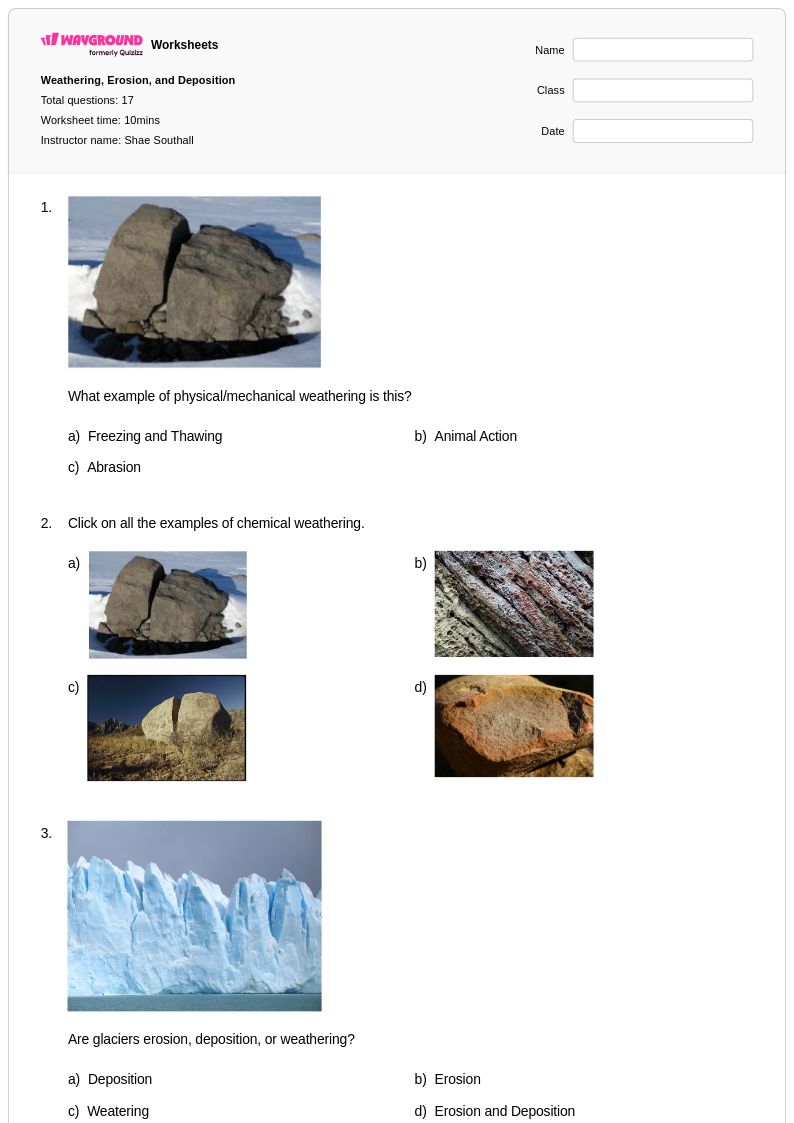
17 Q
7th
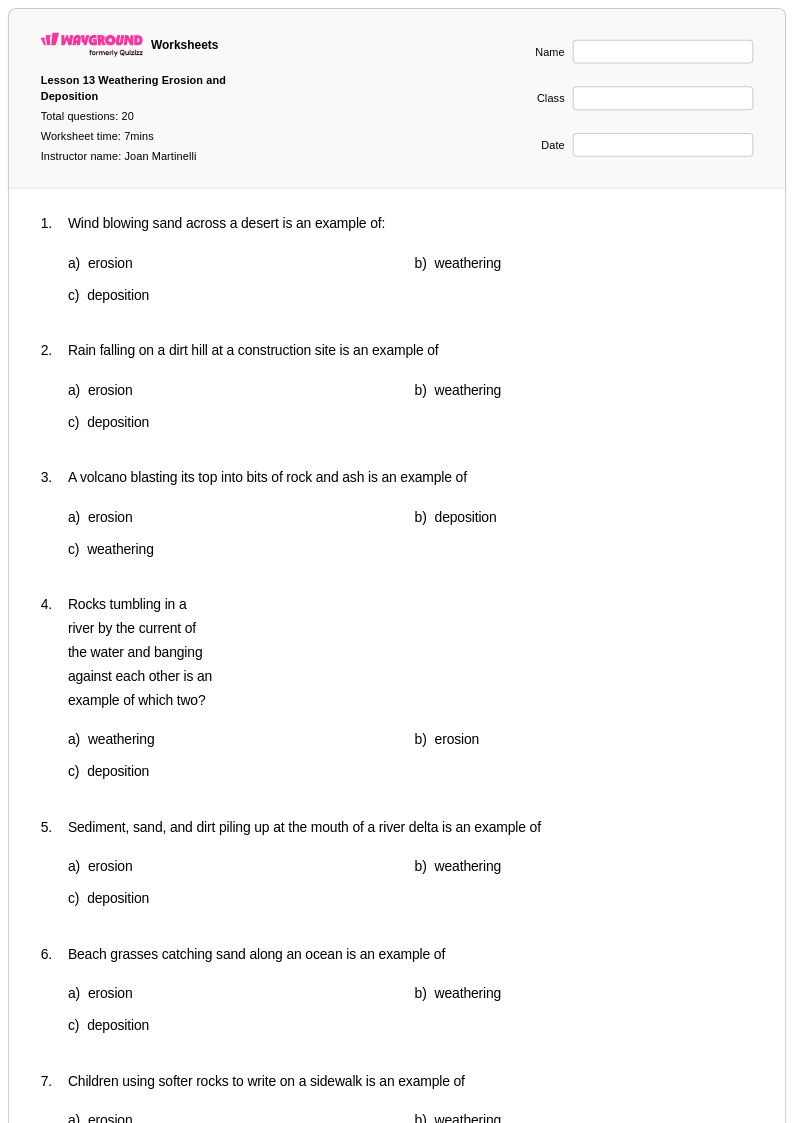
20 Q
6th - 8th
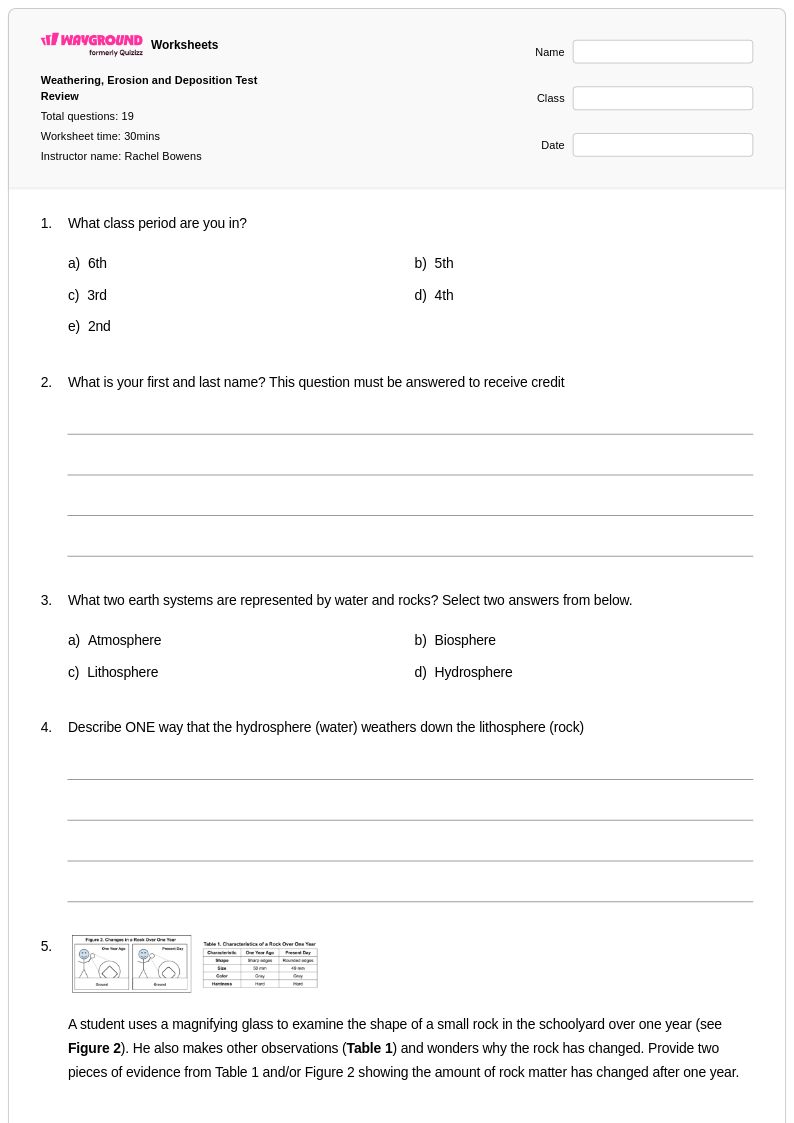
19 Q
6th - 8th
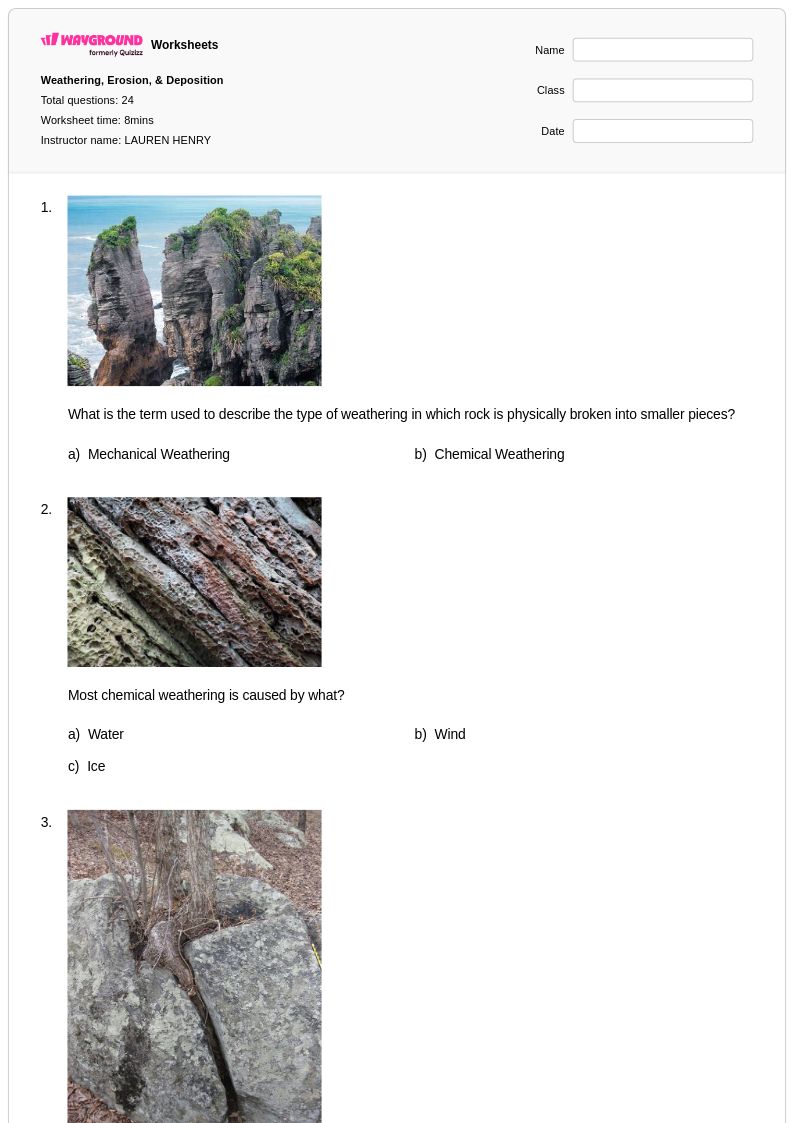
24 Q
5th - 8th
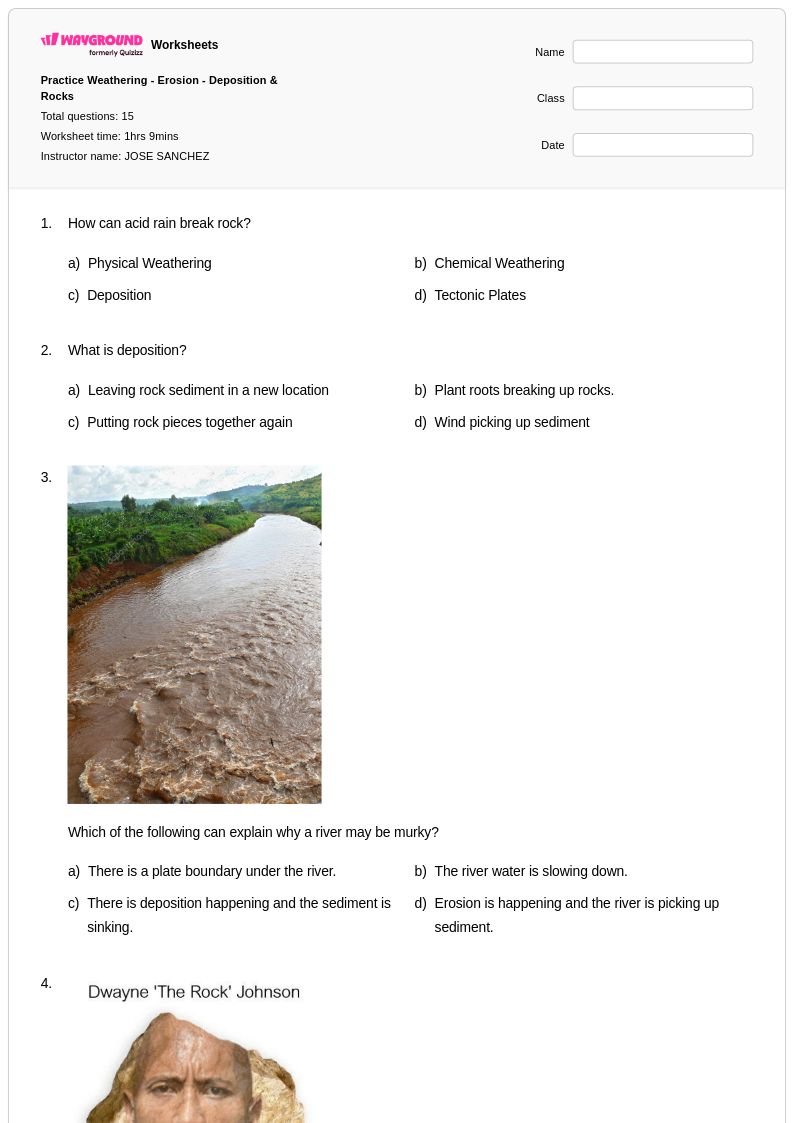
15 Q
7th
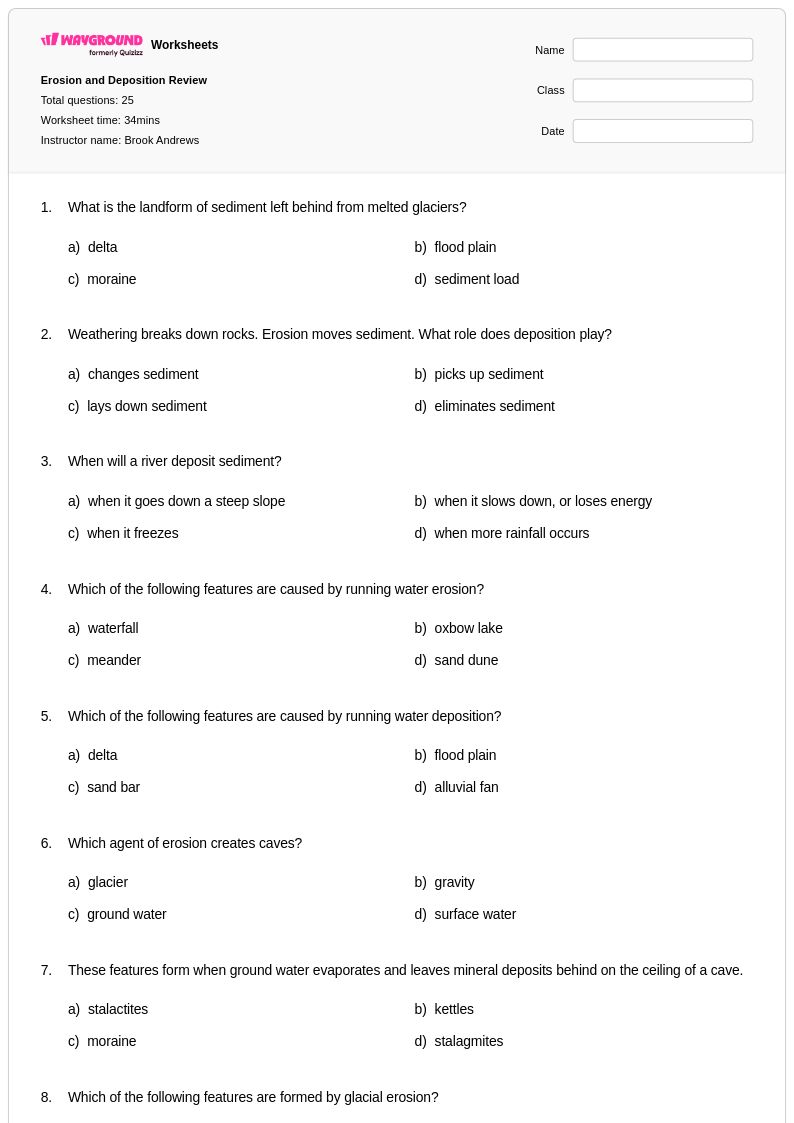
25 Q
5th - 8th
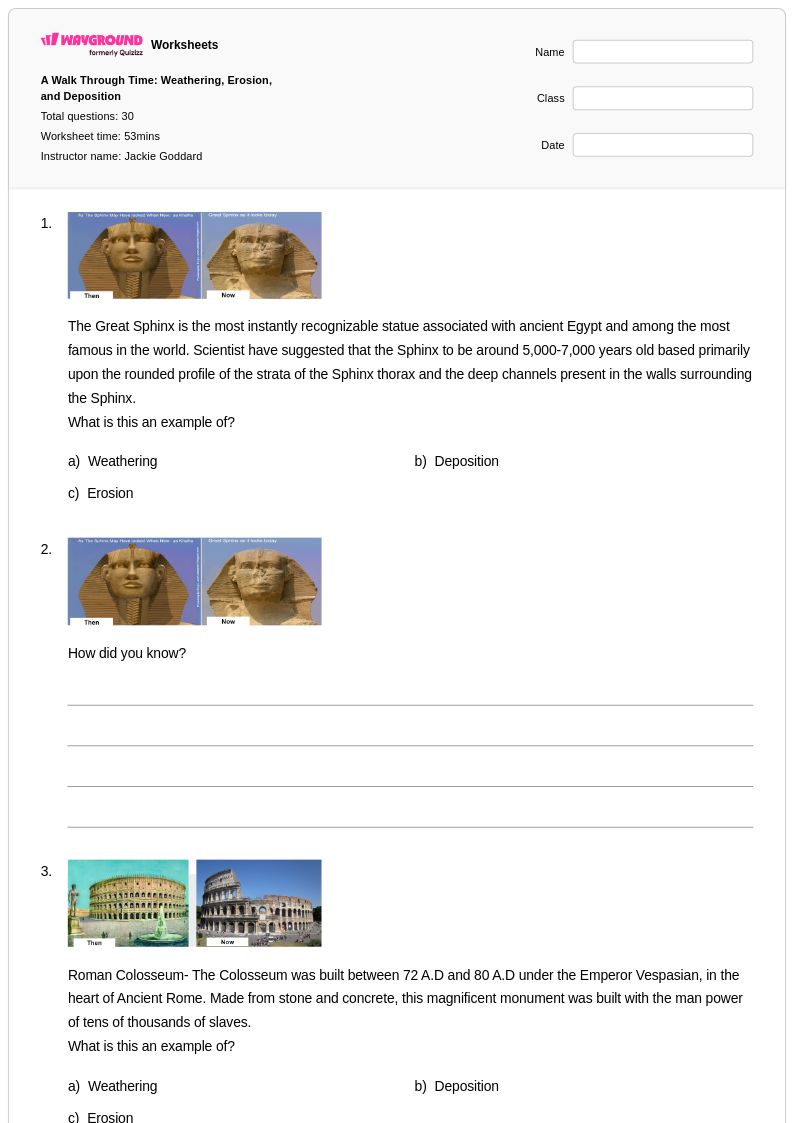
30 Q
7th
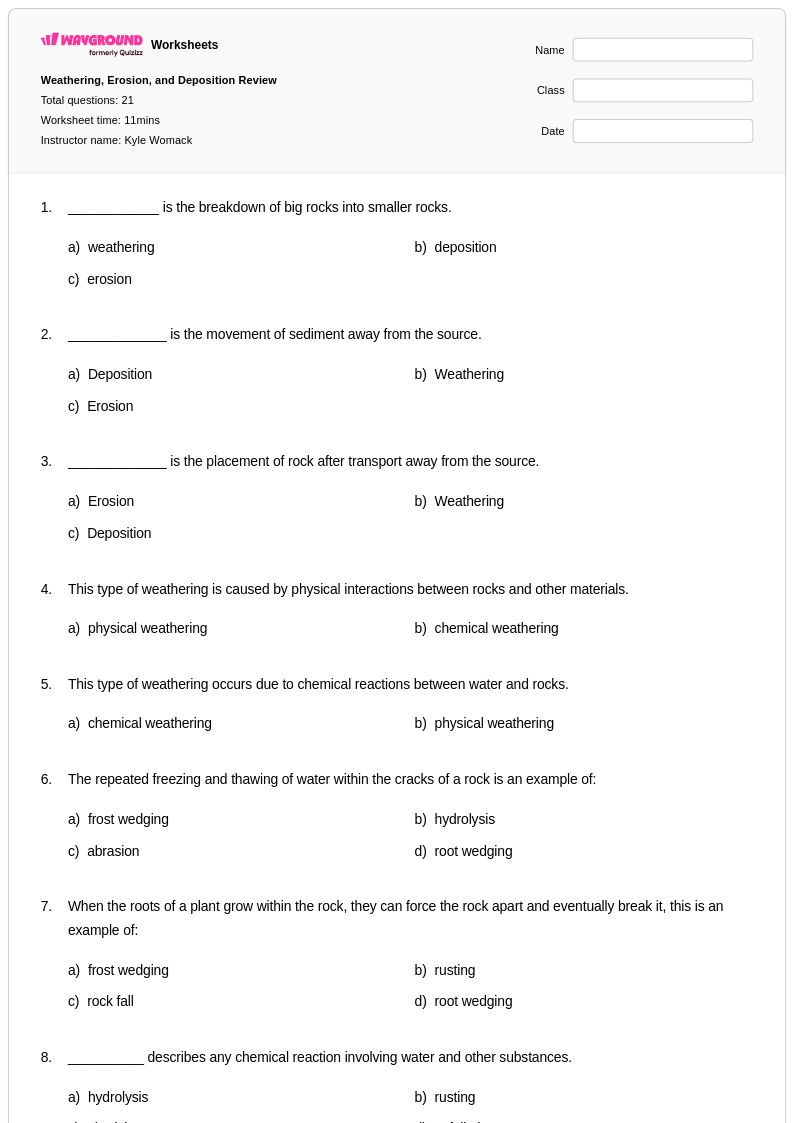
21 Q
6th - 9th
14 Q
7th
15 Q
7th - 8th
24 Q
7th
23 Q
7th
Explore Deposition Worksheets by Grades
Explore Other Subject Worksheets for class 7
Explore printable Deposition worksheets for Class 7
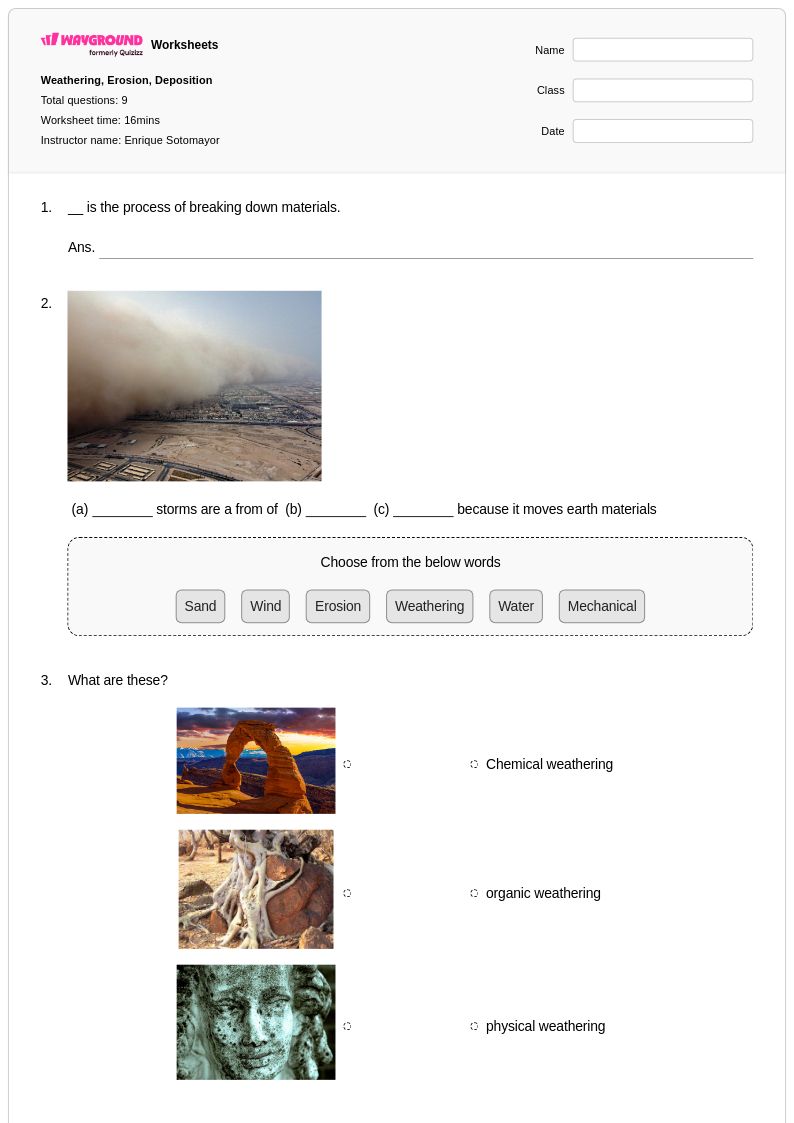
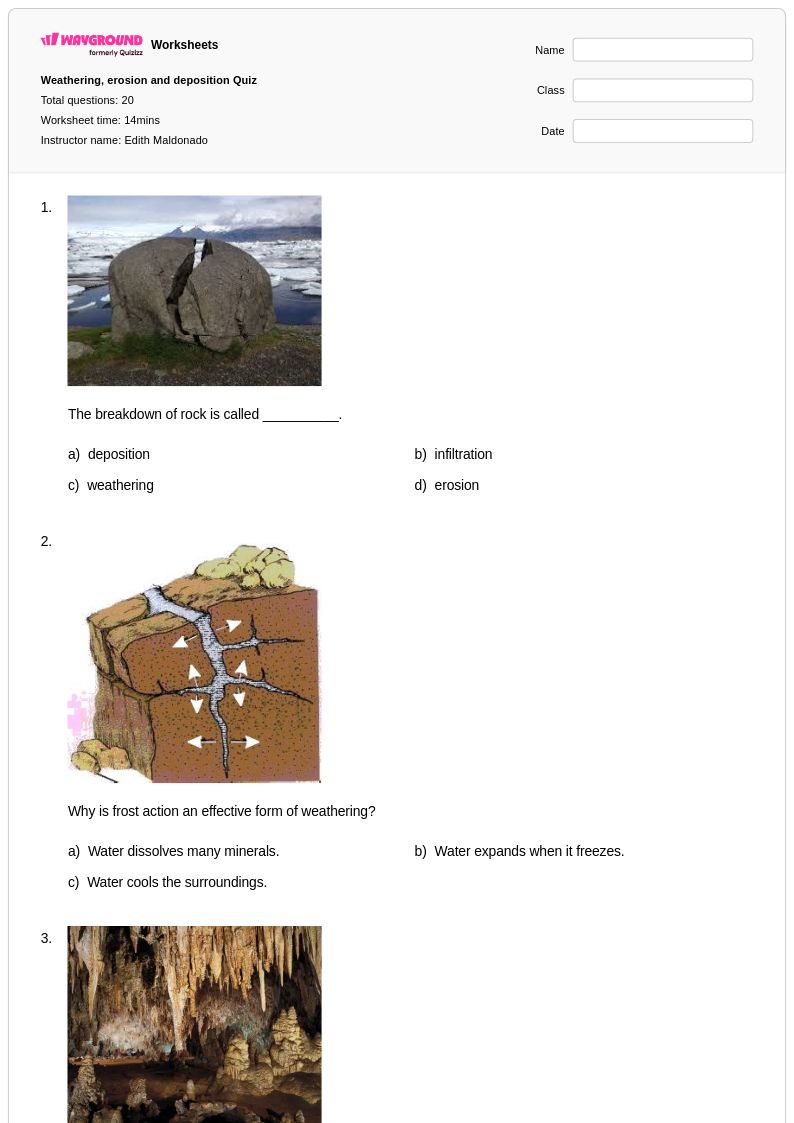
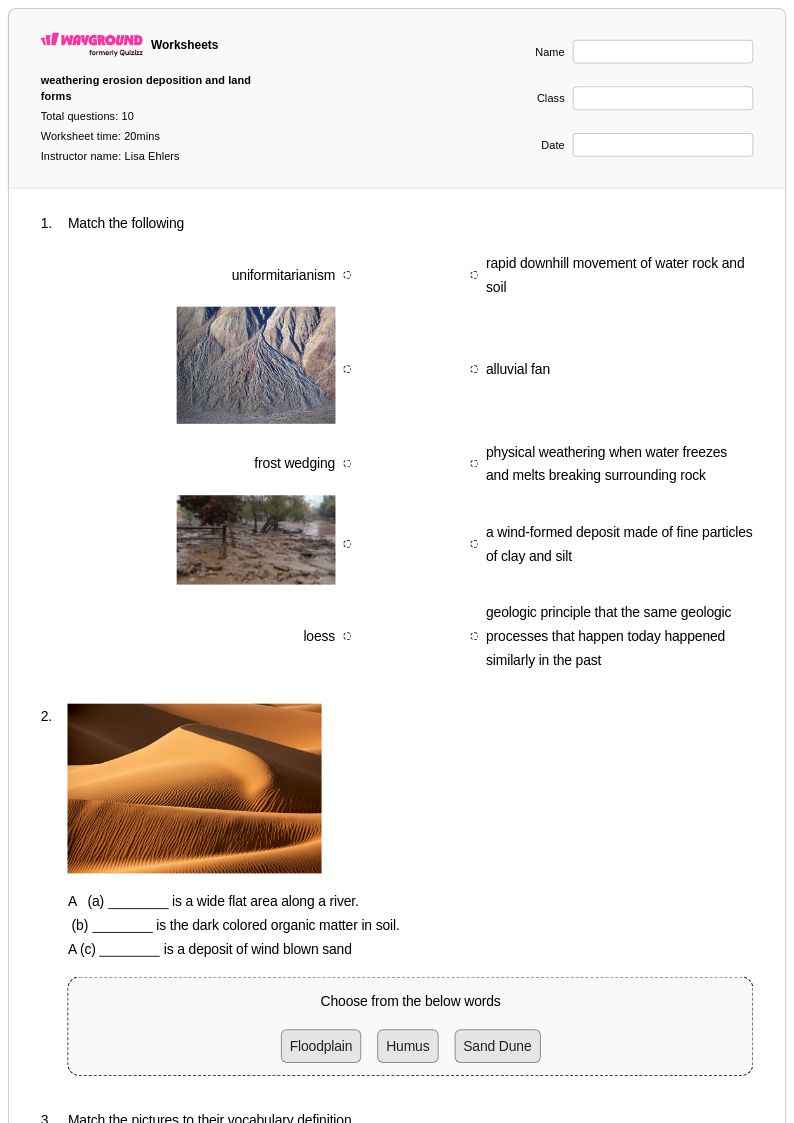
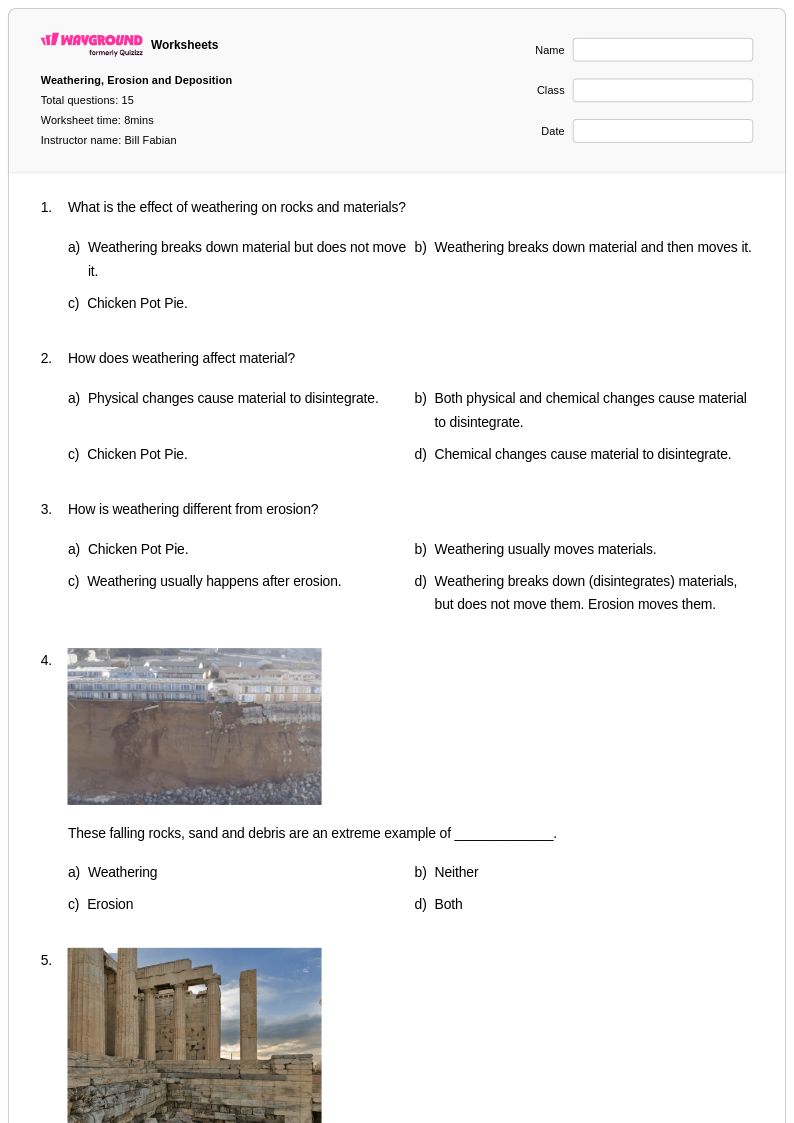
Deposition worksheets for Class 7 students available through Wayground (formerly Quizizz) provide comprehensive coverage of this fundamental Earth science process where sediments, rock fragments, and other materials are deposited by wind, water, ice, and gravity after being transported from their original locations. These expertly crafted educational resources strengthen students' understanding of how deposition shapes landscapes, creates landforms like deltas and sand dunes, and contributes to the rock cycle through sedimentary rock formation. The practice problems guide seventh graders through real-world examples of depositional environments, from river floodplains to coastal beaches, while answer key materials support both independent study and classroom instruction. Teachers can access these free printables in convenient pdf format, making it easy to incorporate deposition concepts into lesson plans that build critical thinking skills about geological processes and their observable effects on Earth's surface.
Wayground (formerly Quizizz) empowers educators with an extensive collection of teacher-created deposition worksheets drawn from millions of available resources, all searchable through intuitive filtering systems that help locate materials perfectly matched to Class 7 Earth and Space Science curriculum standards. The platform's robust differentiation tools allow teachers to customize worksheet difficulty levels and content focus areas, ensuring that students at various learning stages can engage meaningfully with deposition concepts through appropriately challenging activities. Whether educators need materials for initial skill introduction, targeted remediation, or advanced enrichment, they can select from both printable pdf versions for traditional classroom use and digital formats for interactive learning experiences. This flexibility supports comprehensive lesson planning while providing multiple pathways for students to master the complex relationships between erosion, transportation, and deposition that continuously reshape our planet's geological features.
FAQs
How do I teach deposition in Earth science?
What exercises help students practice understanding deposition?
What common mistakes do students make when learning about deposition?
How can I differentiate deposition instruction for students at different levels?
How do I use Wayground's deposition worksheets in my classroom?
How does deposition relate to the formation of landforms?