
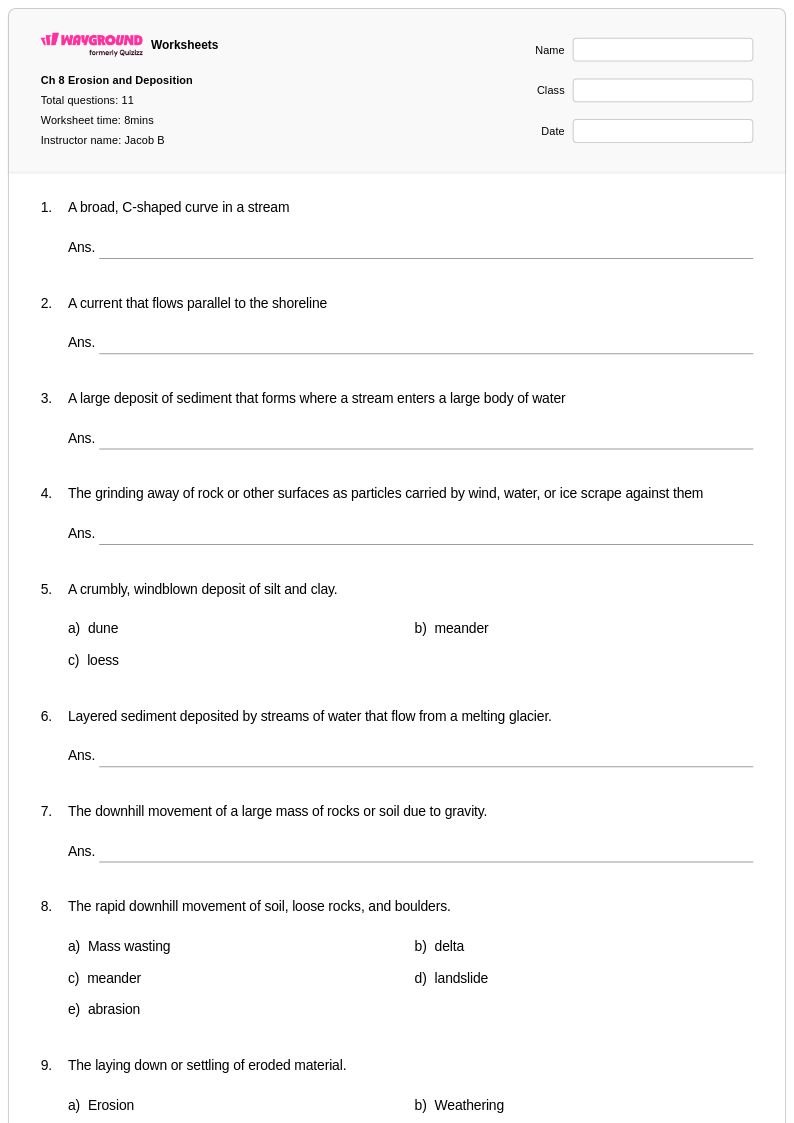
11 Q
3rd
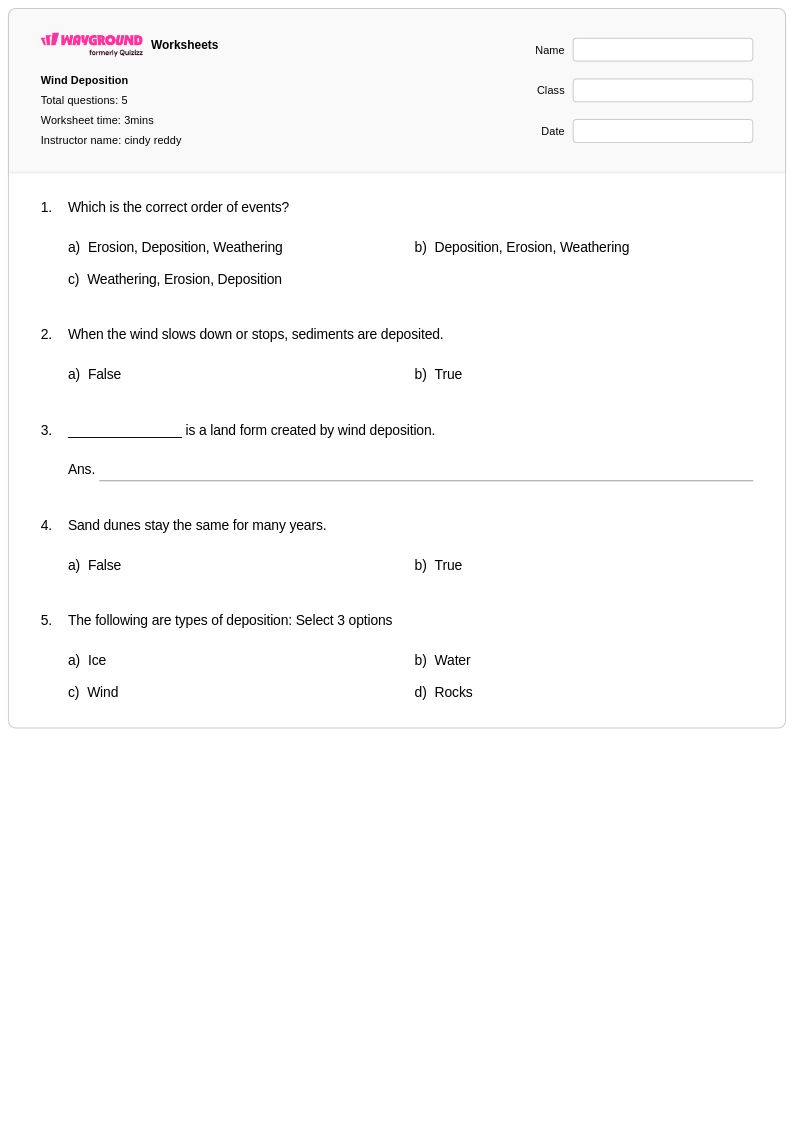
5 Q
3rd
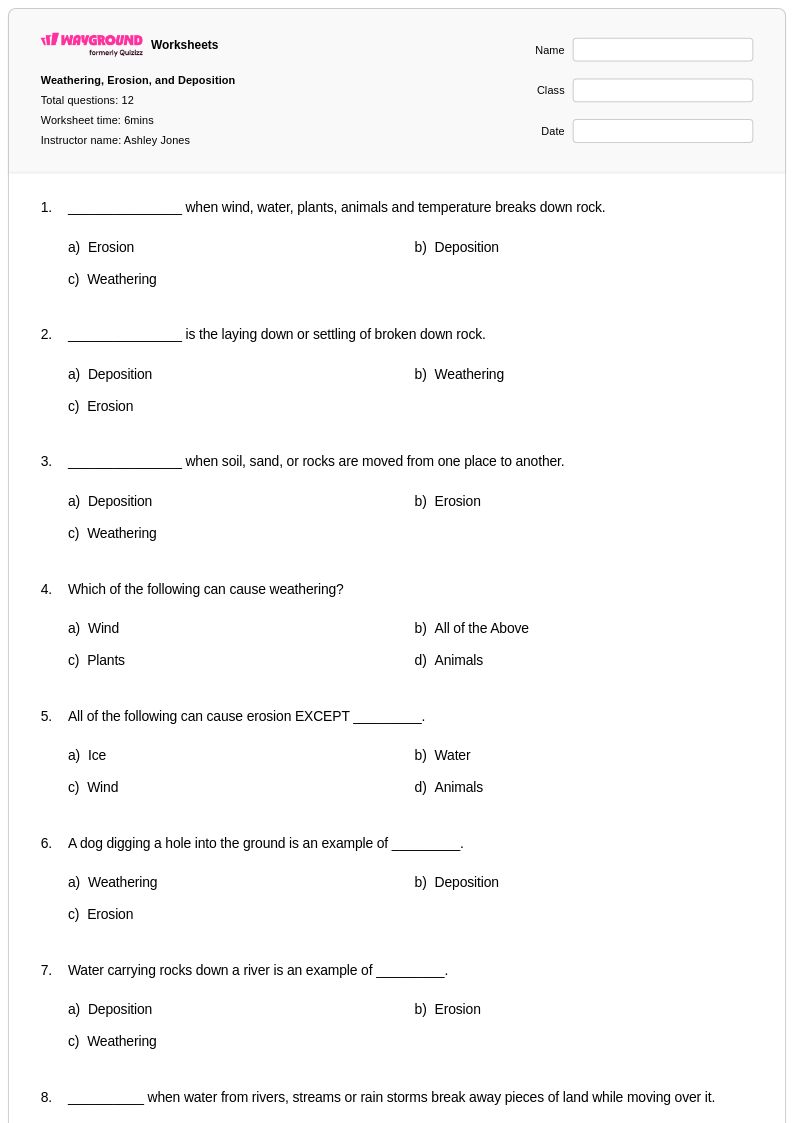
12 Q
3rd
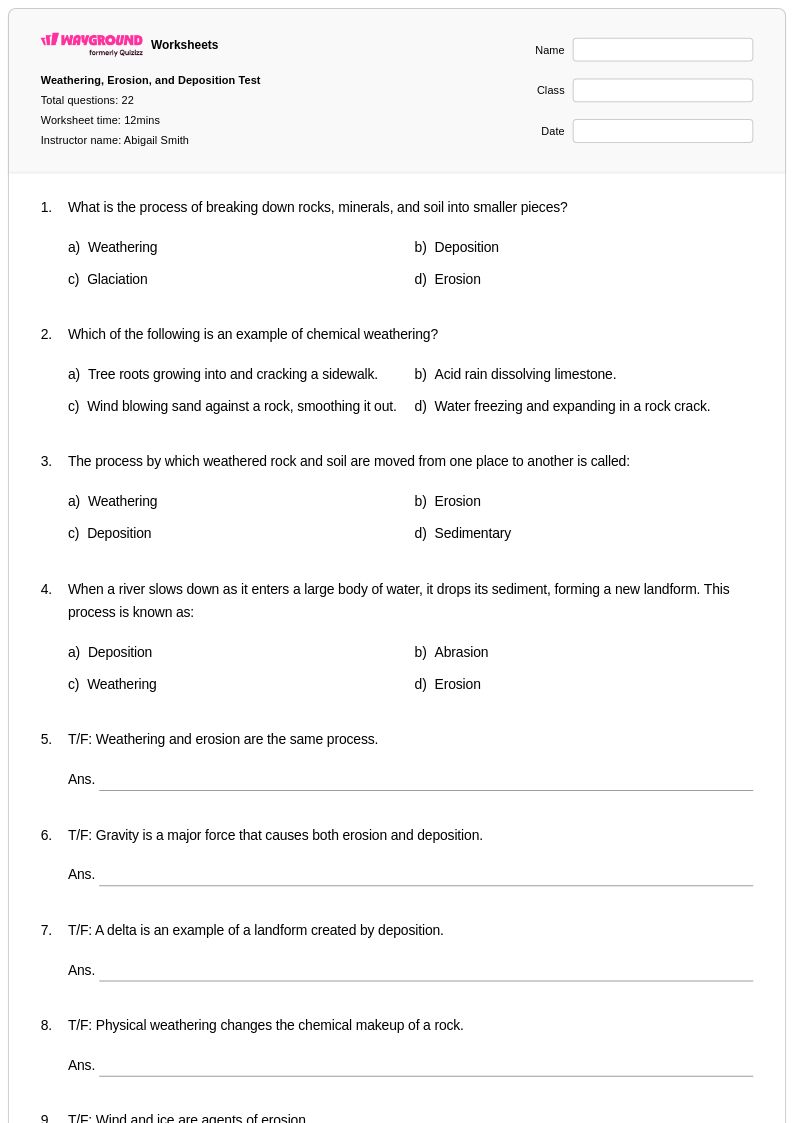
22 Q
3rd
20 Q
3rd - 4th
14 Q
3rd - 8th
13 Q
3rd - 8th
19 Q
3rd - 5th
10 Q
3rd - 5th
18 Q
3rd
17 Q
3rd
11 Q
3rd - 4th
14 Q
3rd
7 Q
3rd - 5th
14 Q
3rd - 5th
12 Q
1st - 5th
8 Q
3rd
18 Q
3rd
12 Q
3rd
15 Q
3rd - 4th
8 Q
3rd
10 Q
3rd
12 Q
3rd - 5th
11 Q
3rd - 5th
Explore Deposition Worksheets by Grades
Explore Other Subject Worksheets for class 3
Explore printable Deposition worksheets for Class 3
Deposition worksheets for Class 3 students available through Wayground (formerly Quizizz) provide essential practice in understanding how Earth's surface changes through the settling and accumulation of sediments and other materials. These educational resources strengthen students' observational skills and scientific reasoning as they explore how wind, water, and ice transport and deposit sand, soil, rocks, and debris in new locations. The worksheets feature age-appropriate practice problems that guide third graders through identifying examples of deposition in their environment, from sand dunes formed by wind to sediment layers in riverbeds. Teachers can access comprehensive materials including detailed answer keys and free printables in pdf format, making it simple to incorporate hands-on learning activities that connect classroom concepts to real-world geological processes.
Wayground (formerly Quizizz) supports educators with an extensive collection of teacher-created deposition resources, drawing from millions of high-quality materials that can be easily located through robust search and filtering capabilities. The platform's standards-aligned content ensures that Class 3 deposition worksheets meet educational requirements while offering powerful differentiation tools that allow teachers to customize activities for diverse learning needs and abilities. These flexible resources are available in both printable pdf formats for traditional classroom use and digital versions for interactive learning experiences. Teachers utilize these comprehensive worksheet collections for lesson planning, targeted remediation of challenging concepts, enrichment activities for advanced learners, and structured skill practice that builds students' understanding of how deposition shapes landscapes and creates landforms over time.
FAQs
How do I teach deposition in Earth science?
What exercises help students practice understanding deposition?
What common mistakes do students make when learning about deposition?
How can I differentiate deposition instruction for students at different levels?
How do I use Wayground's deposition worksheets in my classroom?
How does deposition relate to the formation of landforms?