Free Printable Earth's Atmosphere Worksheets for Class 3
Explore Wayground's free Class 3 Earth's Atmosphere worksheets and printables that help students understand air layers, weather patterns, and atmospheric science through engaging practice problems with complete answer keys.
Explore printable Earth's Atmosphere worksheets for Class 3
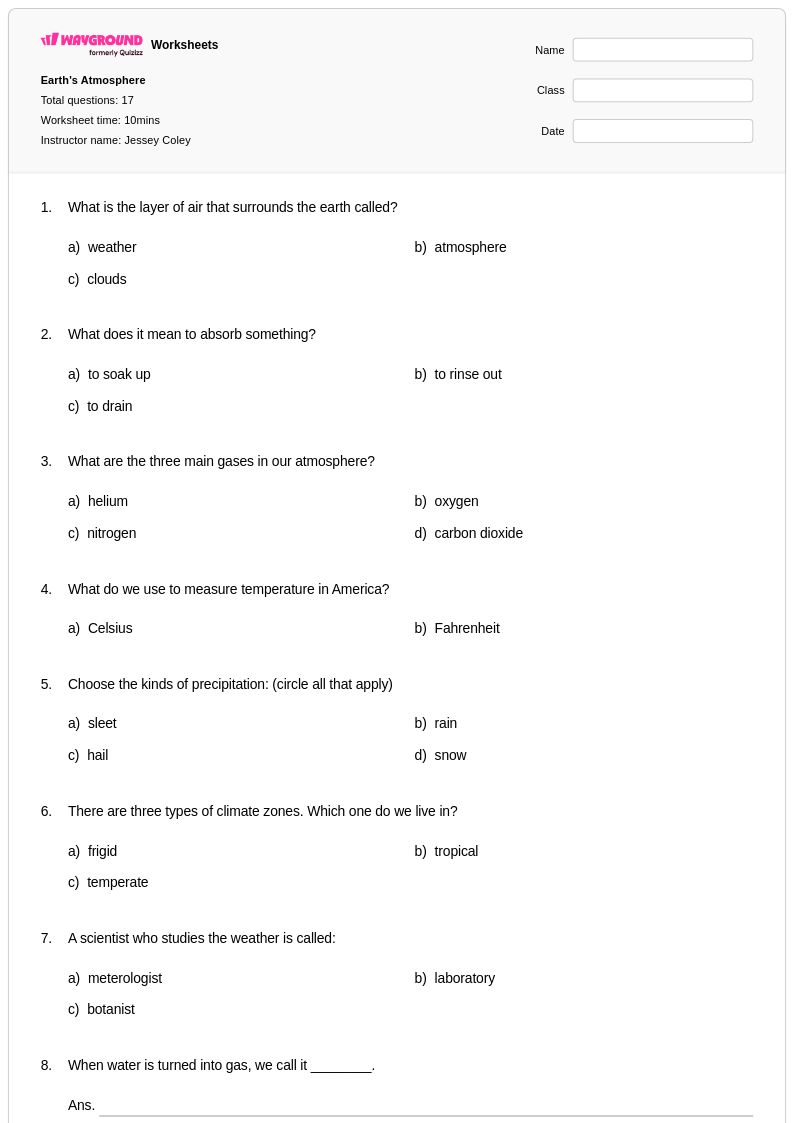
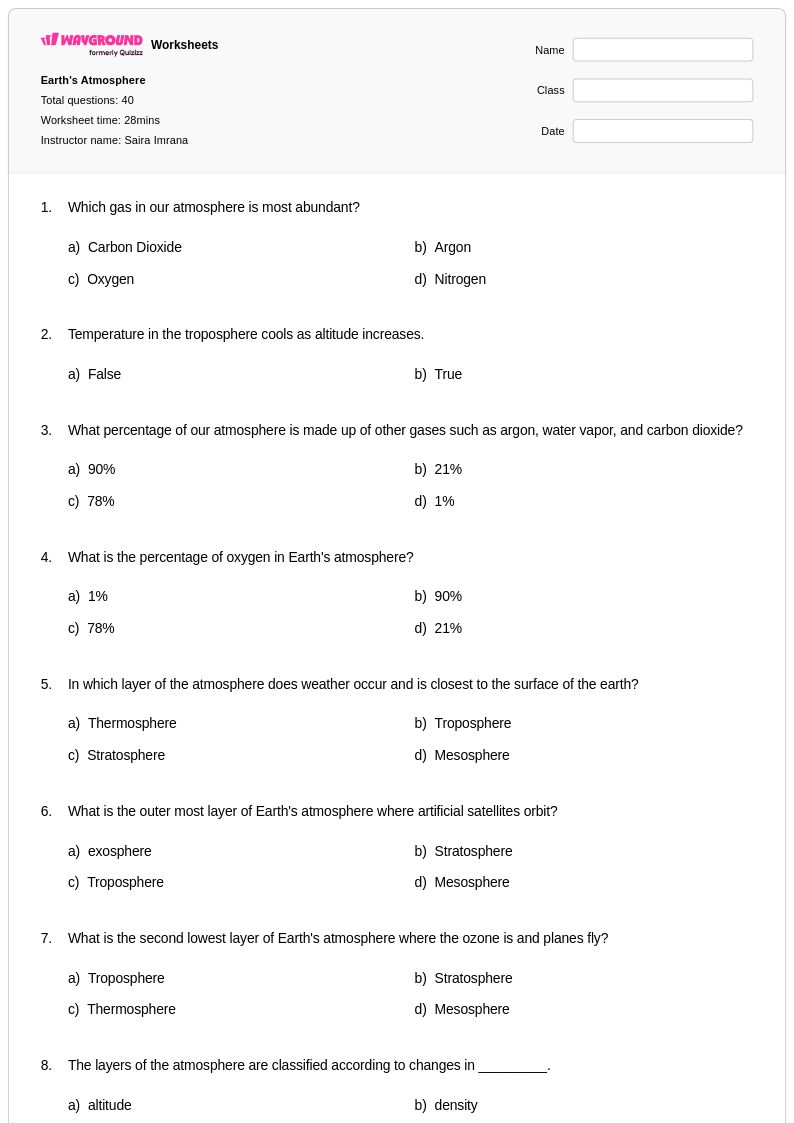
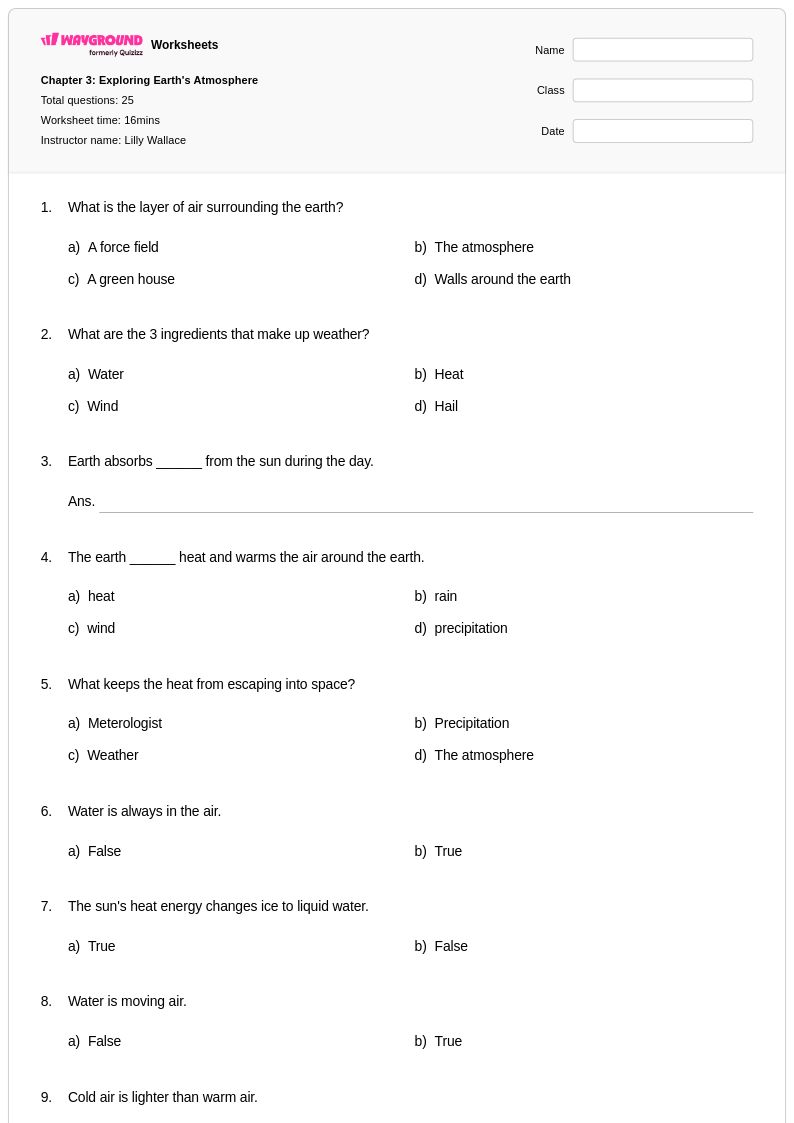
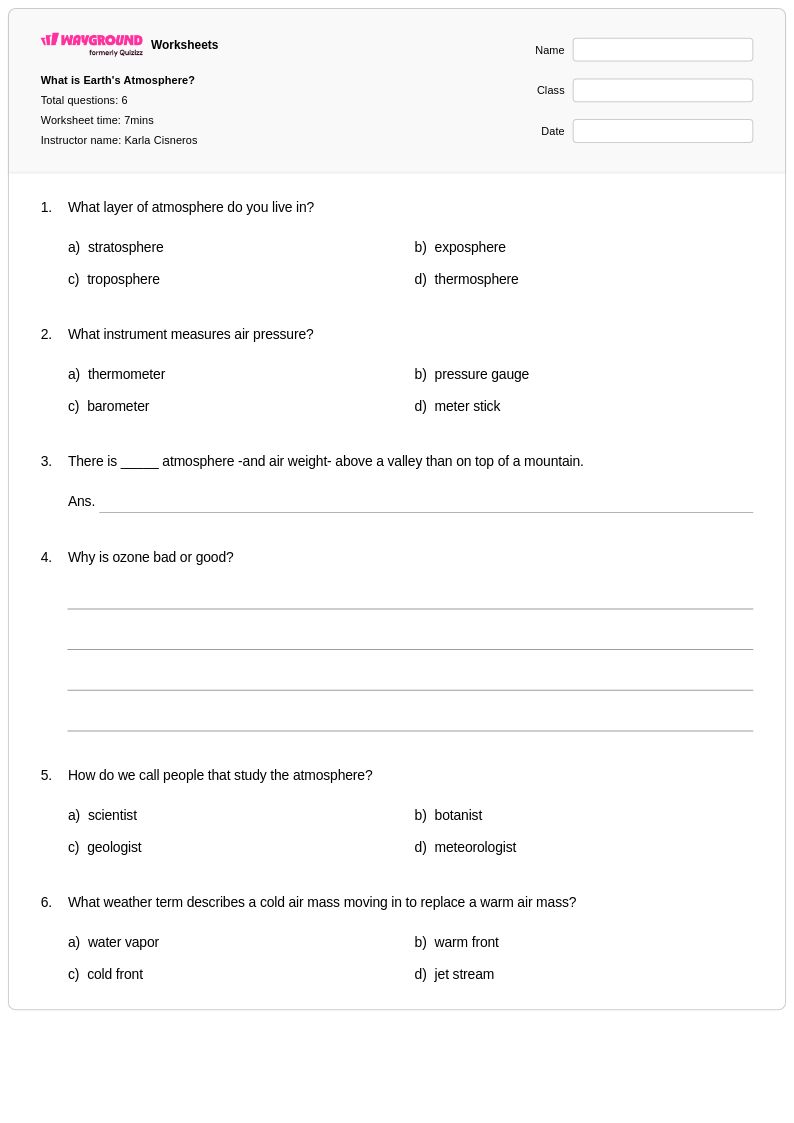
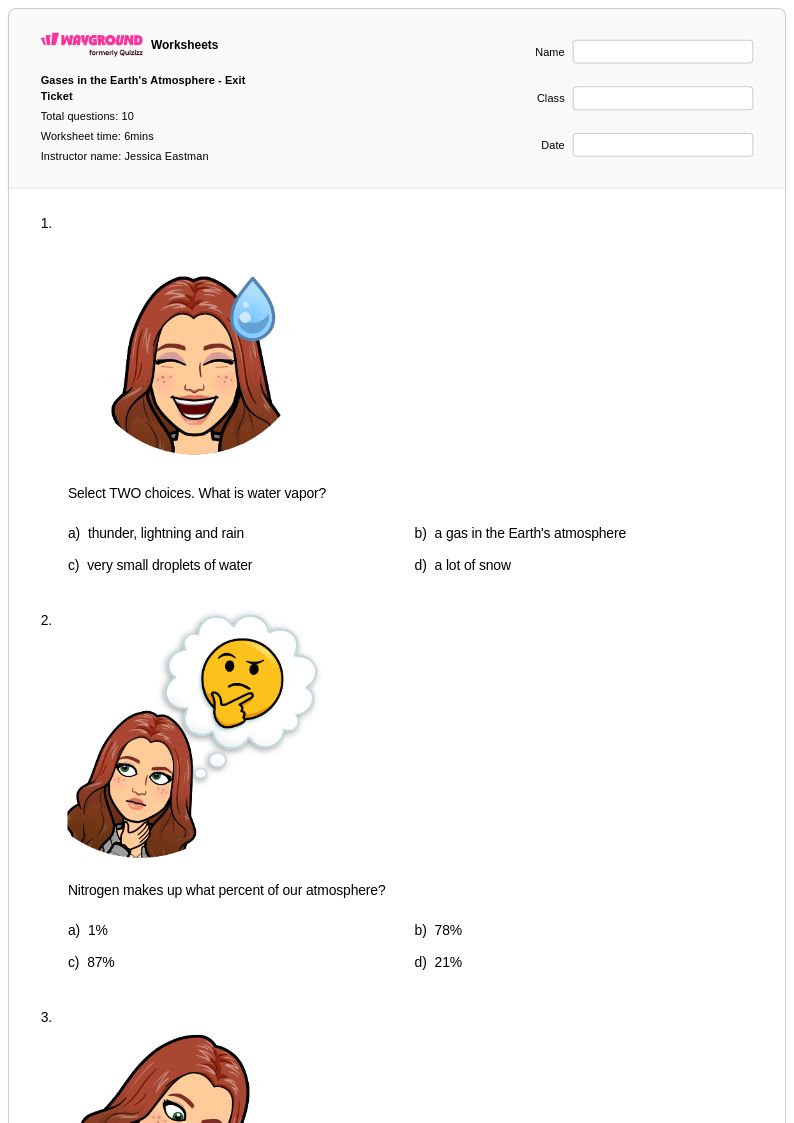
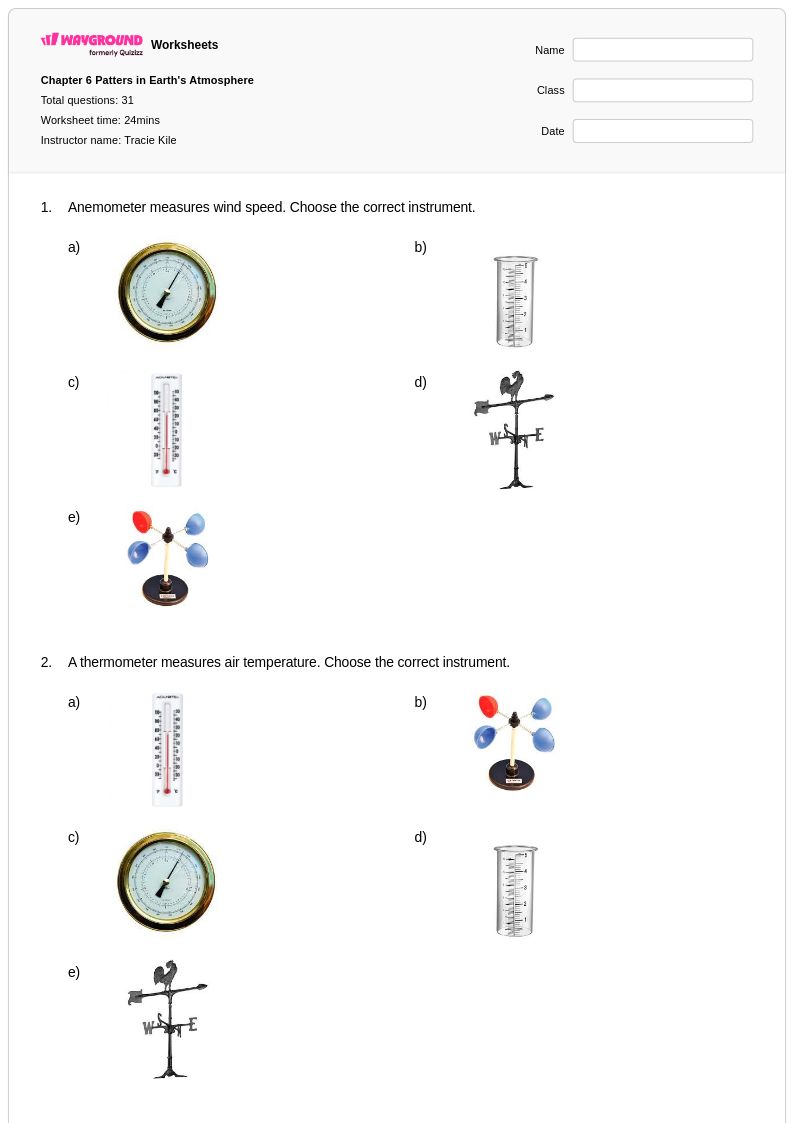
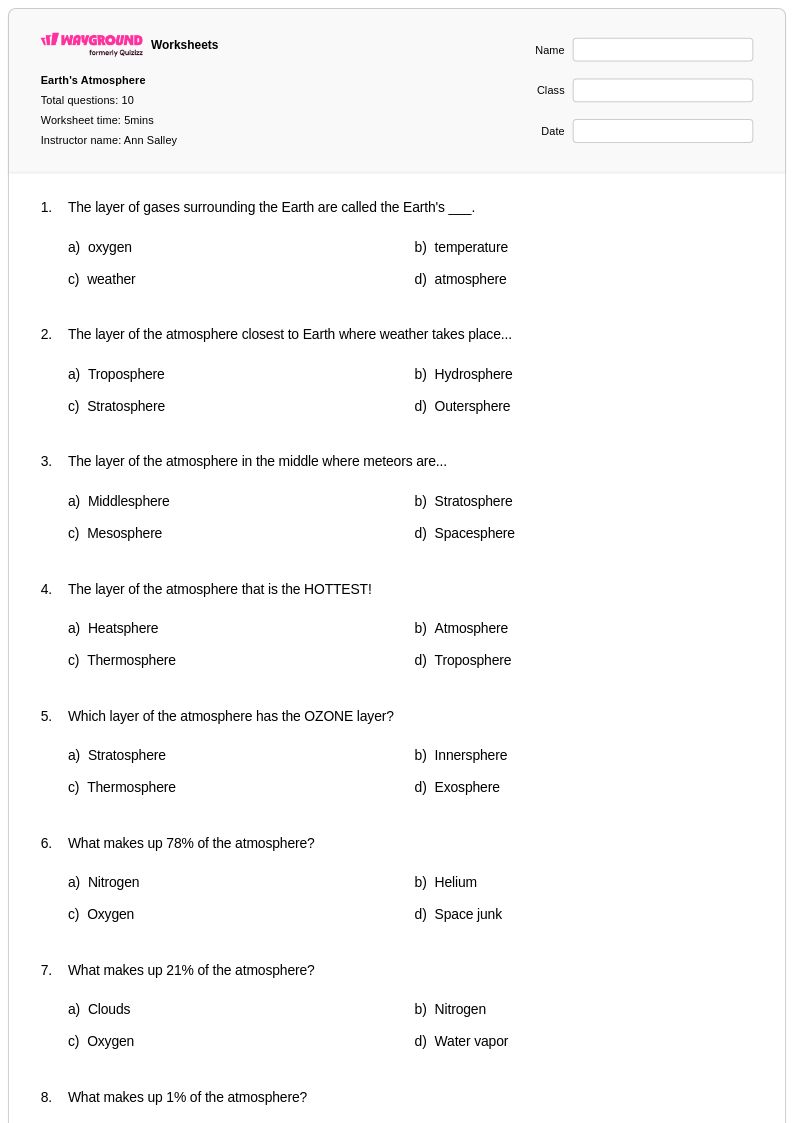
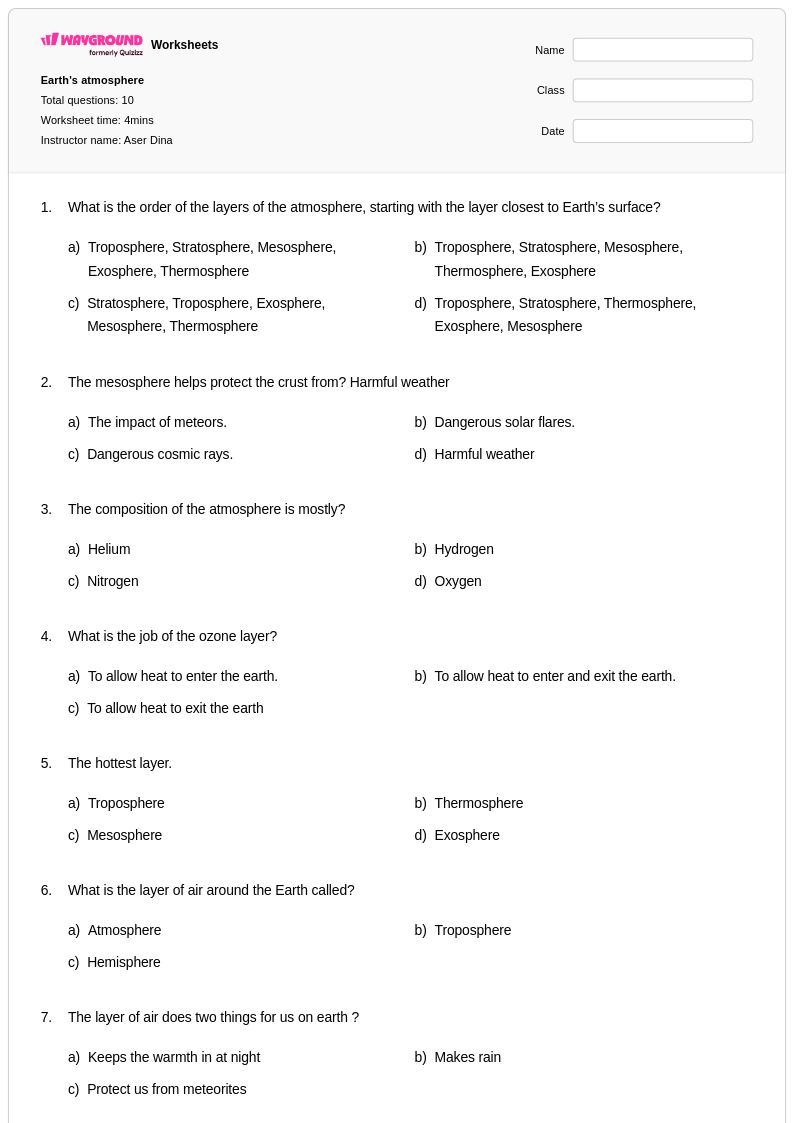
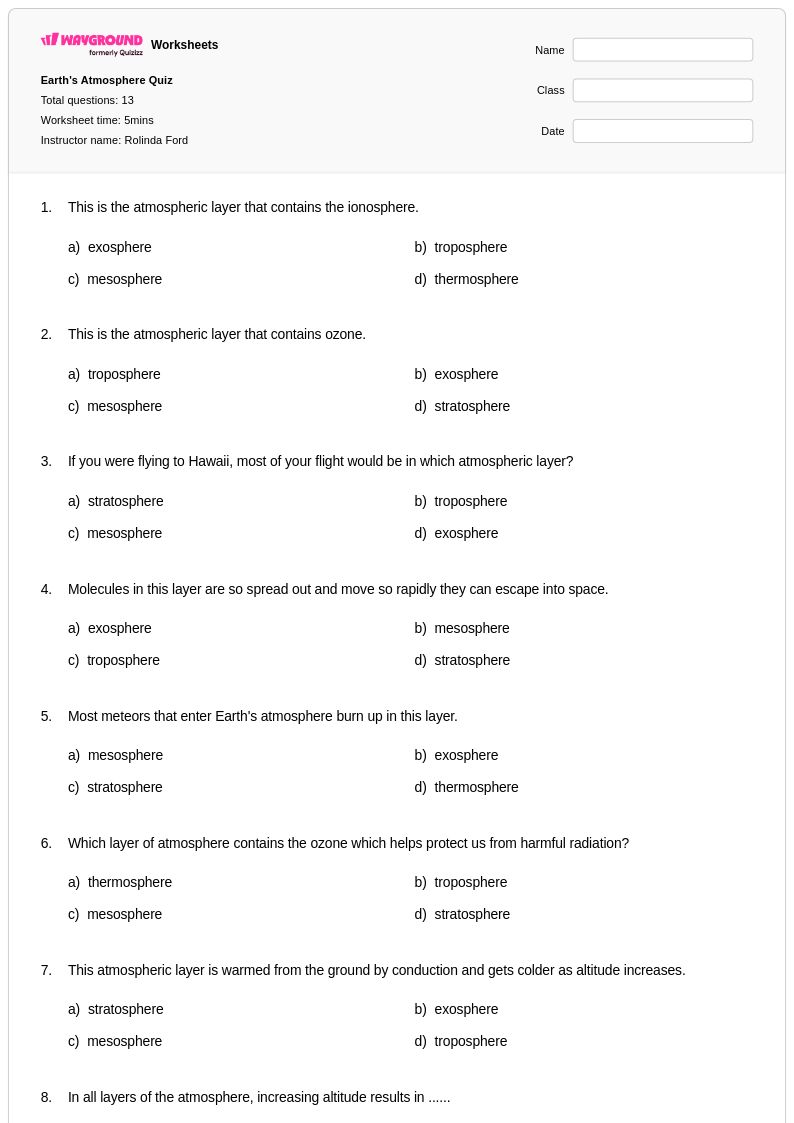
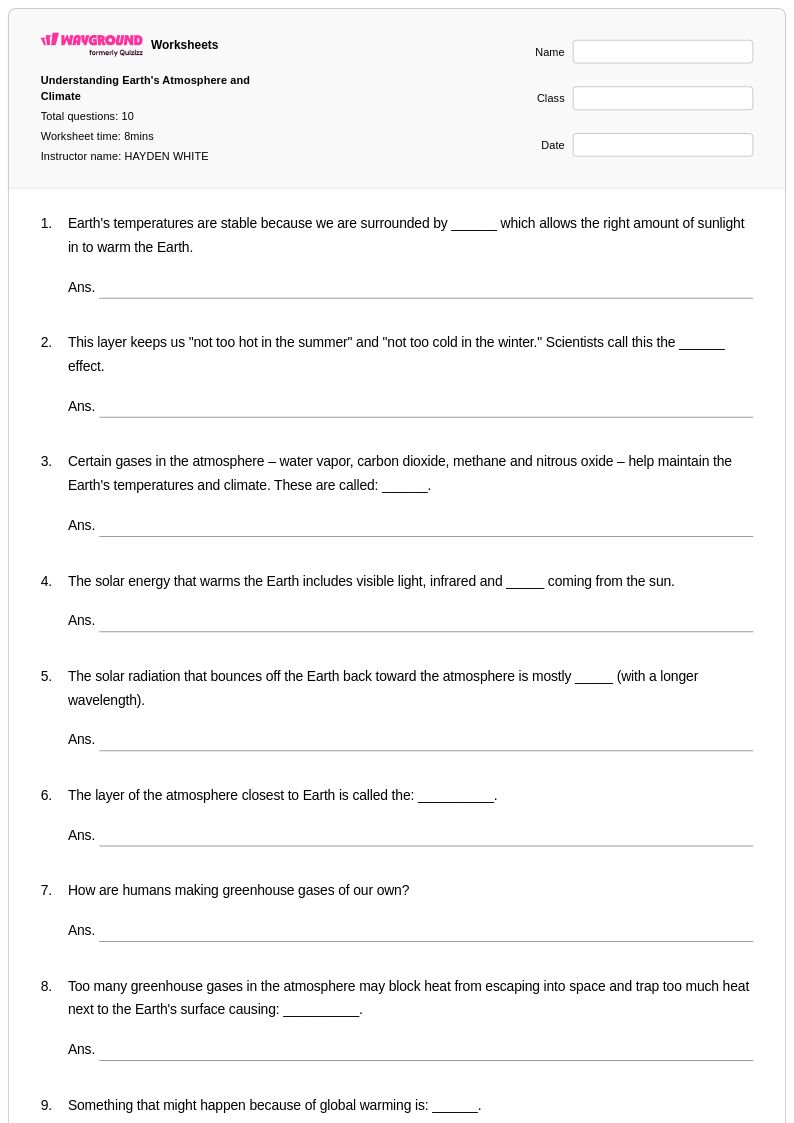
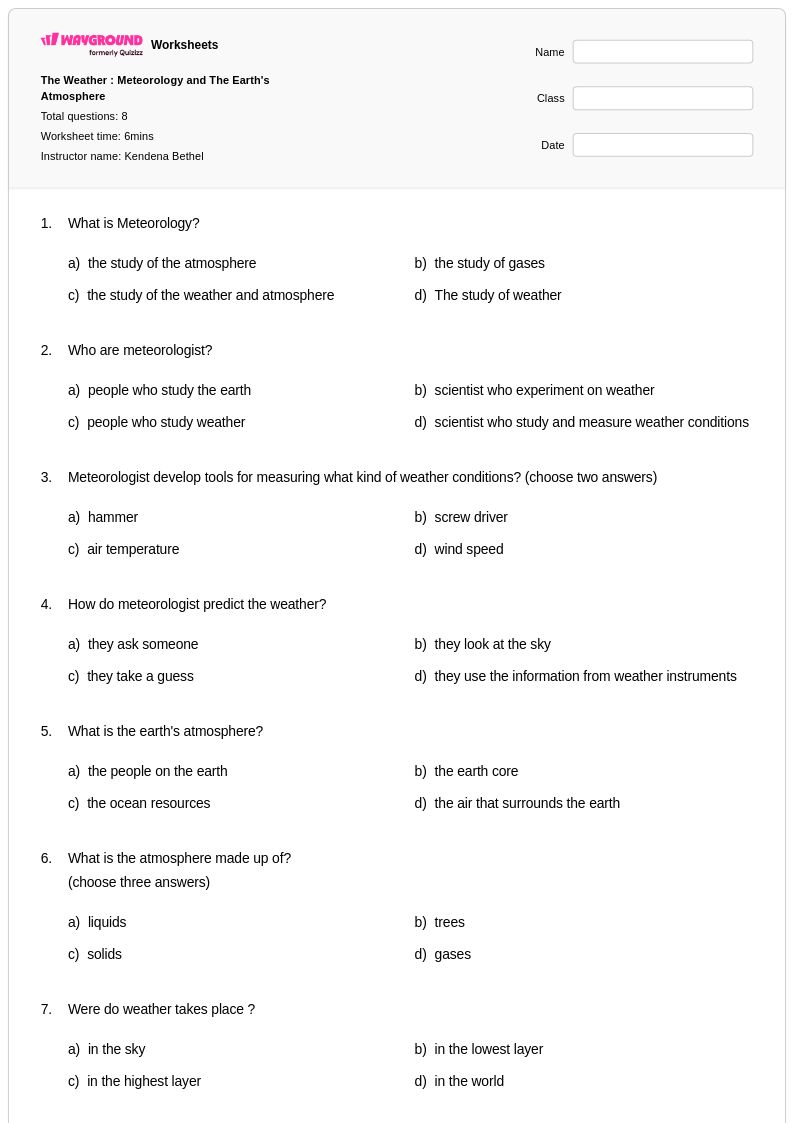
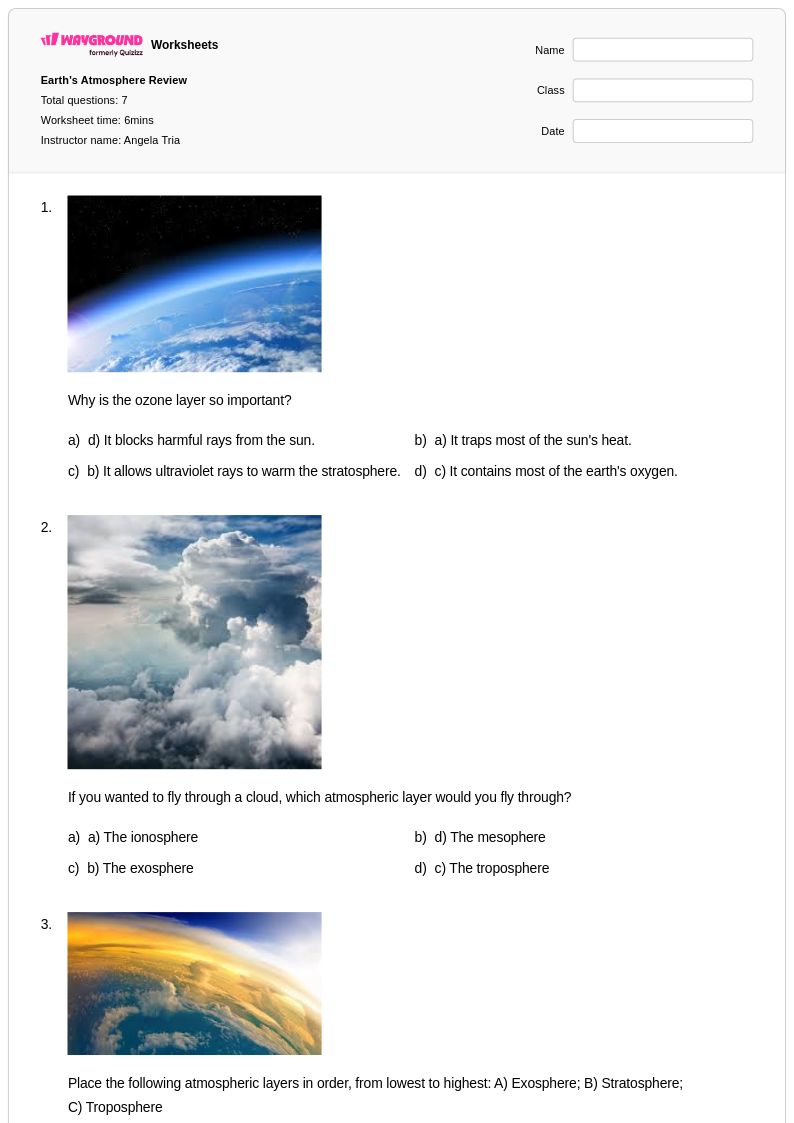
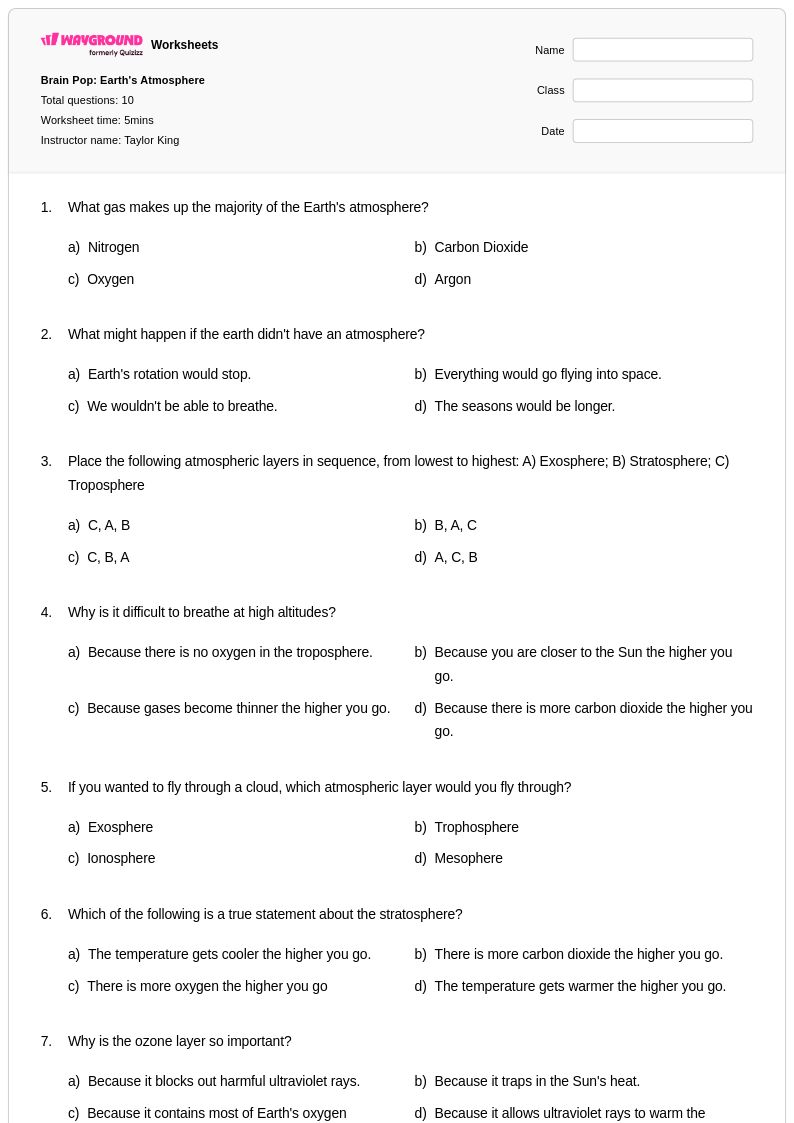
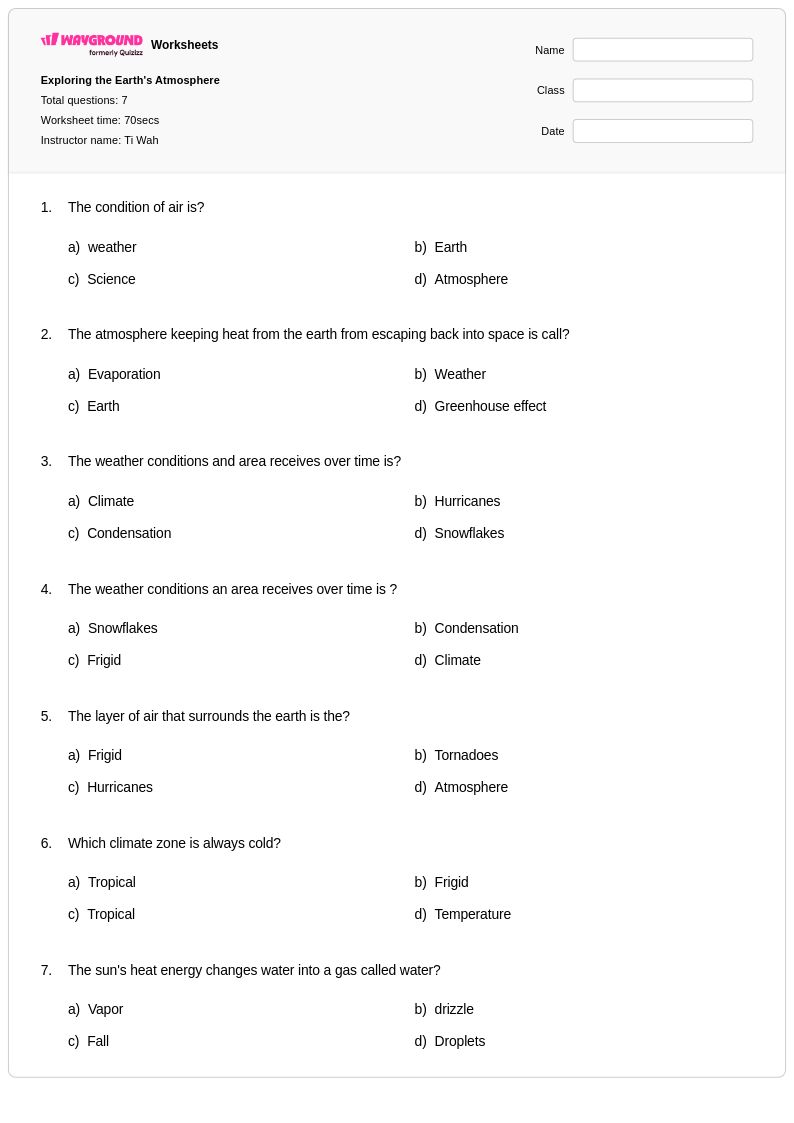
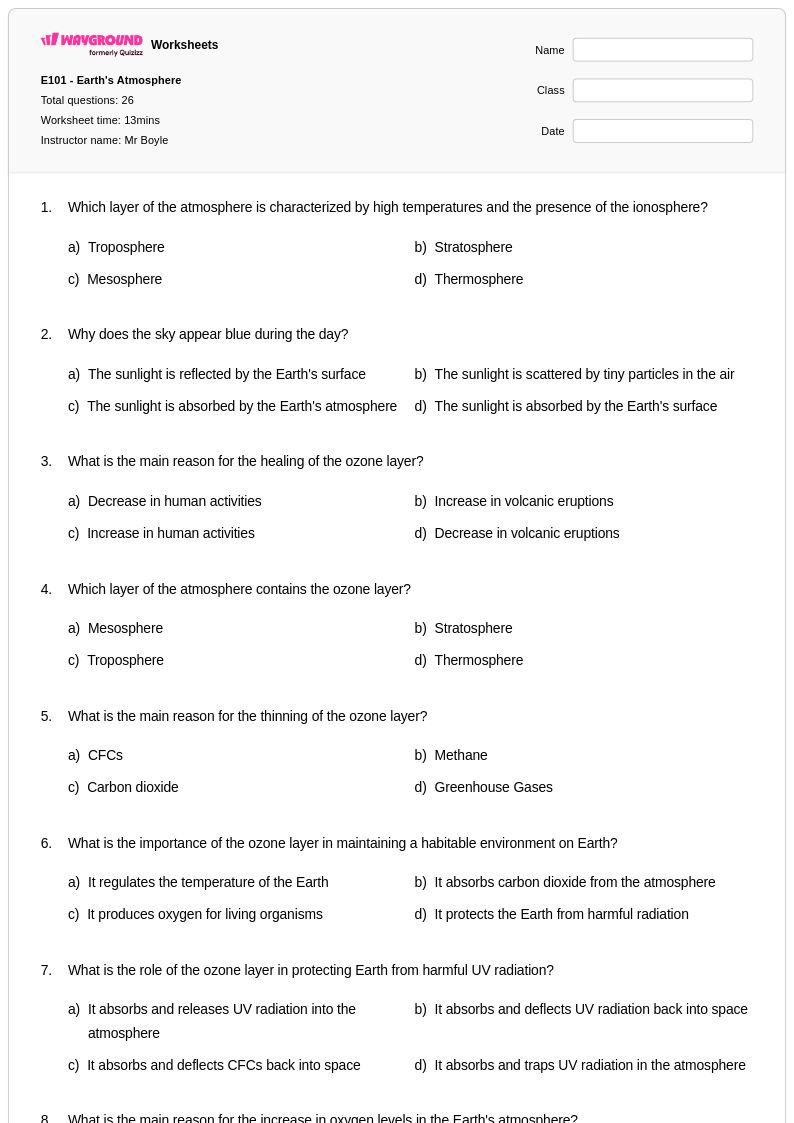
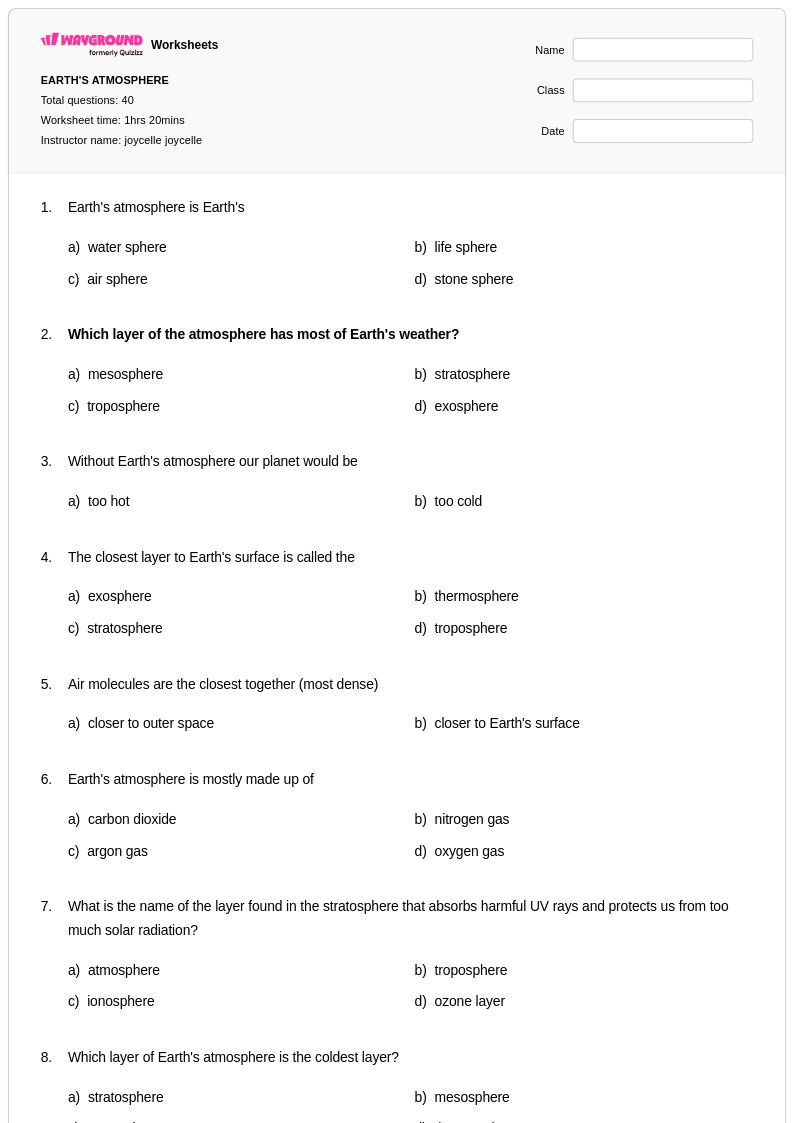
Earth's atmosphere worksheets for Class 3 students available through Wayground (formerly Quizizz) provide comprehensive coverage of fundamental atmospheric science concepts appropriate for elementary learners. These educational resources focus on building students' understanding of air as a mixture of gases, the layers of Earth's atmosphere, and how atmospheric conditions affect weather patterns and daily life. The worksheets strengthen critical thinking skills through hands-on practice problems that explore topics such as air pressure, the water cycle's connection to atmospheric processes, and the protective role of our atmosphere. Teachers can access these materials as free printables in pdf format, complete with detailed answer keys that support accurate assessment and facilitate meaningful classroom discussions about atmospheric phenomena.
Wayground's extensive collection draws from millions of teacher-created resources specifically designed to support Class 3 Earth's atmosphere instruction across diverse learning environments. The platform's robust search and filtering capabilities enable educators to quickly locate worksheets aligned with specific science standards while accessing differentiation tools that accommodate varying student readiness levels. Teachers can customize these atmospheric science materials to match their lesson objectives, whether focusing on basic air composition concepts or more complex interactions between the atmosphere and Earth's other systems. The flexible availability of both printable and digital formats, including easily downloadable pdf versions, streamlines lesson planning while providing essential resources for remediation, enrichment, and targeted skill practice that helps students develop a solid foundation in atmospheric science concepts.
FAQs
How do I teach Earth's atmosphere layers to middle or high school students?
Start with a visual model of the five atmospheric layers — troposphere, stratosphere, mesosphere, thermosphere, and exosphere — and anchor each layer to a concrete property students can reason about, such as temperature change, altitude, or pressure. Then connect each layer to real-world phenomena: weather occurs in the troposphere, the ozone layer sits in the stratosphere, and meteors burn up in the mesosphere. Labeling diagrams and analyzing pressure-altitude graphs are effective follow-up activities that move students from memorization to conceptual understanding.
What exercises help students practice identifying atmospheric layers and their properties?
Labeling diagrams of the atmospheric layers is a foundational practice task that builds spatial recall and requires students to associate each layer with its altitude range and defining characteristics. Interpreting graphs that show how temperature and pressure change with altitude adds an analytical layer, pushing students beyond simple identification toward understanding why each layer behaves differently. Scenario-based questions — such as asking which layer a weather balloon travels through — help students apply their knowledge in context rather than recite it in isolation.
What mistakes do students commonly make when learning about Earth's atmosphere?
One of the most common misconceptions is that temperature always decreases as altitude increases — students are often surprised that the stratosphere warms with altitude due to ozone absorbing UV radiation. Students also frequently confuse air pressure with air density, using the terms interchangeably rather than understanding that both decrease with altitude but for different reasons. Another common error is misidentifying where weather occurs, with many students incorrectly associating storms or clouds with higher atmospheric layers rather than the troposphere.
How does greenhouse gas concentration relate to atmospheric temperature, and how do I explain this to students?
Greenhouse gases — including carbon dioxide, methane, and water vapor — absorb outgoing infrared radiation from Earth's surface and re-emit it in all directions, trapping heat in the lower atmosphere rather than allowing it to escape to space. A useful classroom analogy is a blanket: the thicker the blanket of greenhouse gases, the more heat is retained. Students should understand that this process is natural and necessary for life, but that increased concentrations from human activity intensify the effect and drive global temperature increases.
How can I use Earth's atmosphere worksheets in both in-person and remote learning settings?
Earth's atmosphere worksheets on Wayground are available as printable PDFs for traditional classroom use and in digital formats for technology-integrated or remote learning environments, including the option to host them as a quiz directly on Wayground. This flexibility means teachers can assign the same content whether students are at desks or learning from home, without having to redesign materials. For students who need additional support, Wayground's accommodation tools — such as read aloud, extended time, and reduced answer choices — can be configured individually so all students access the content appropriately.
How do I differentiate Earth's atmosphere instruction for students at different skill levels?
For students who need remediation, focus on the foundational layer model with simplified diagrams and guided notes before introducing quantitative data like pressure gradients or temperature inversions. For advanced learners, push into atmospheric dynamics — analyzing how convection cells drive wind patterns, or how human activity alters the composition of the stratosphere. On Wayground, teachers can also apply student-level accommodations such as reduced answer choices or read aloud settings, which allows differentiated access to the same worksheet without requiring separate materials.