Free Printable Land and Sea Breeze Worksheets for Class 3
Discover free Class 3 Land and Sea Breeze worksheets and printables from Wayground that help students explore how temperature differences create coastal wind patterns through engaging practice problems and comprehensive answer keys.
Explore printable Land and Sea Breeze worksheets for Class 3
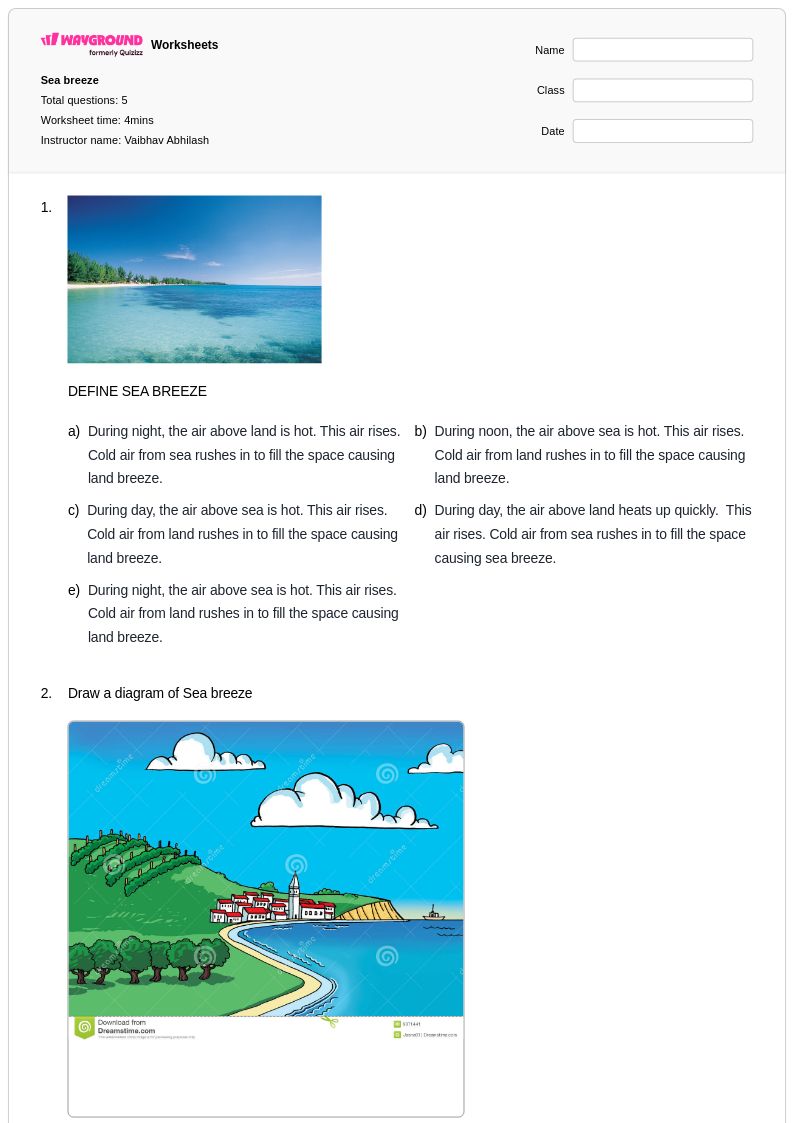
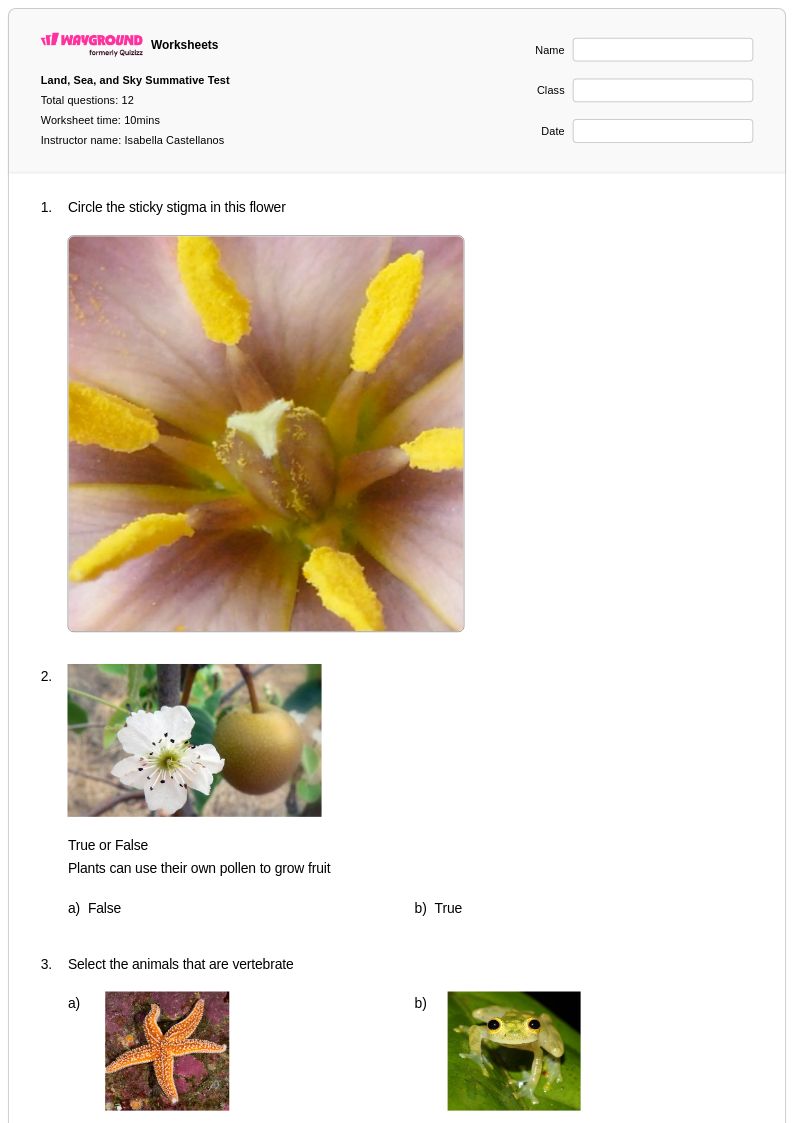
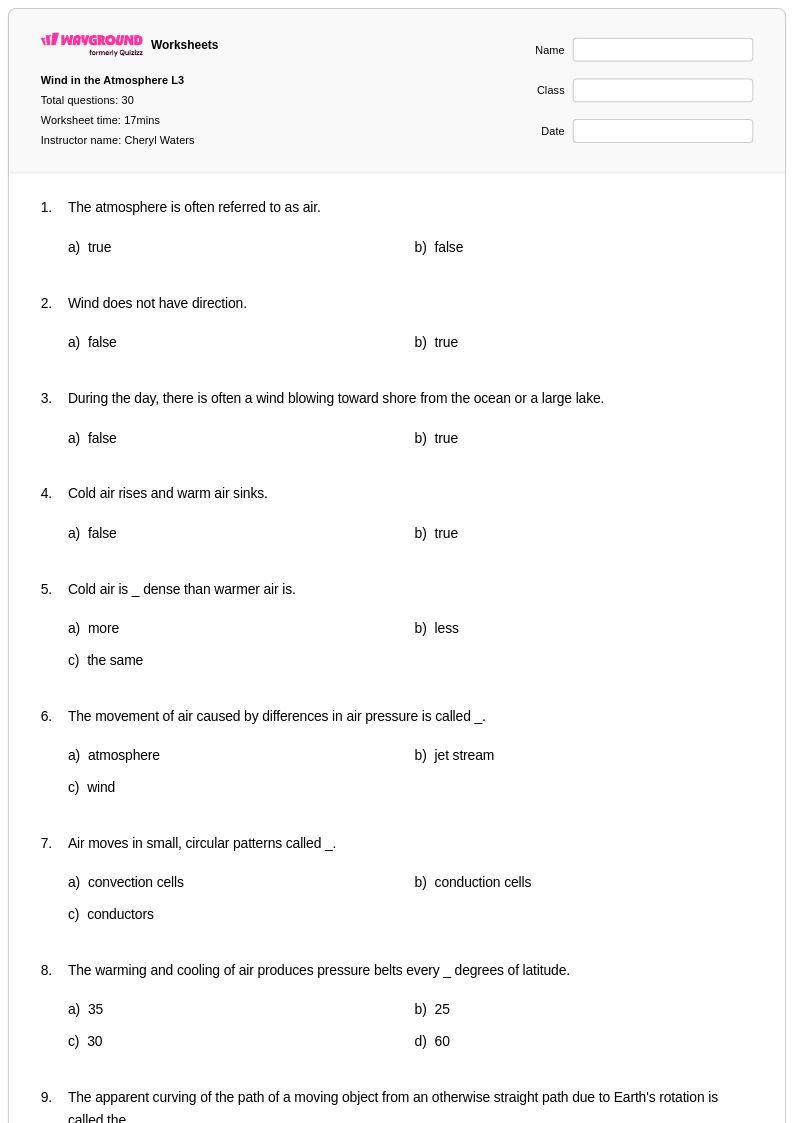
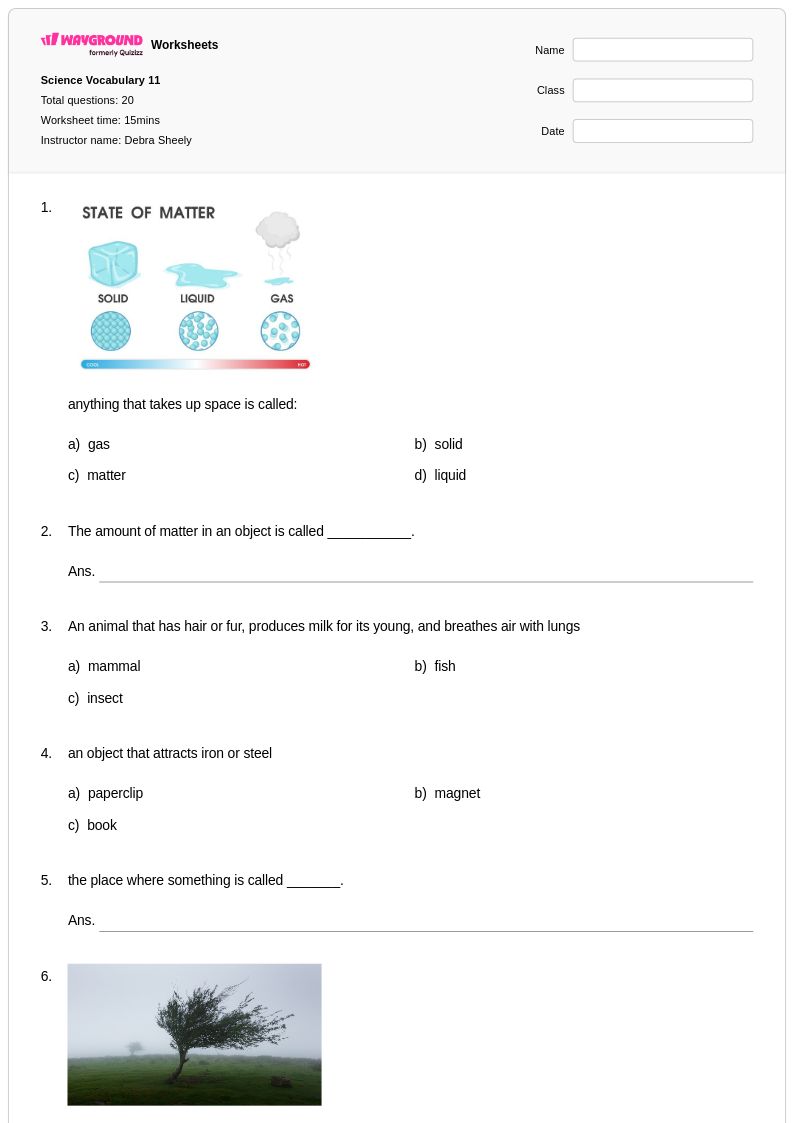
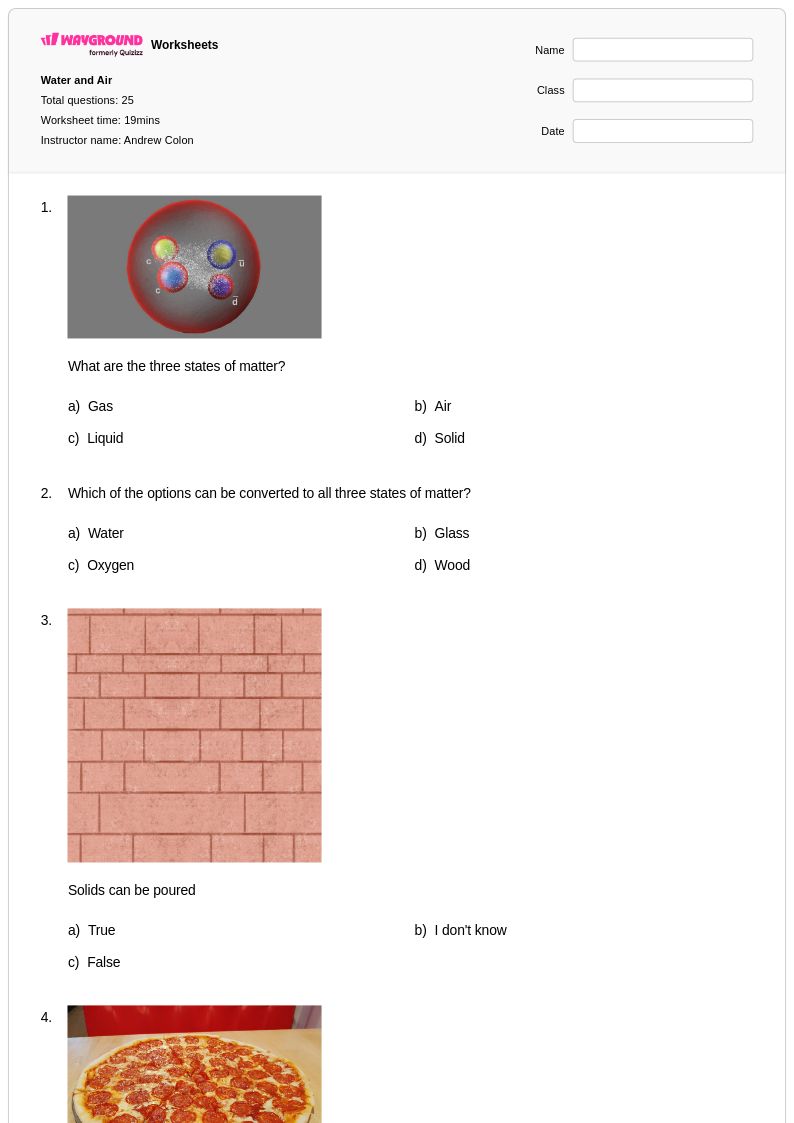
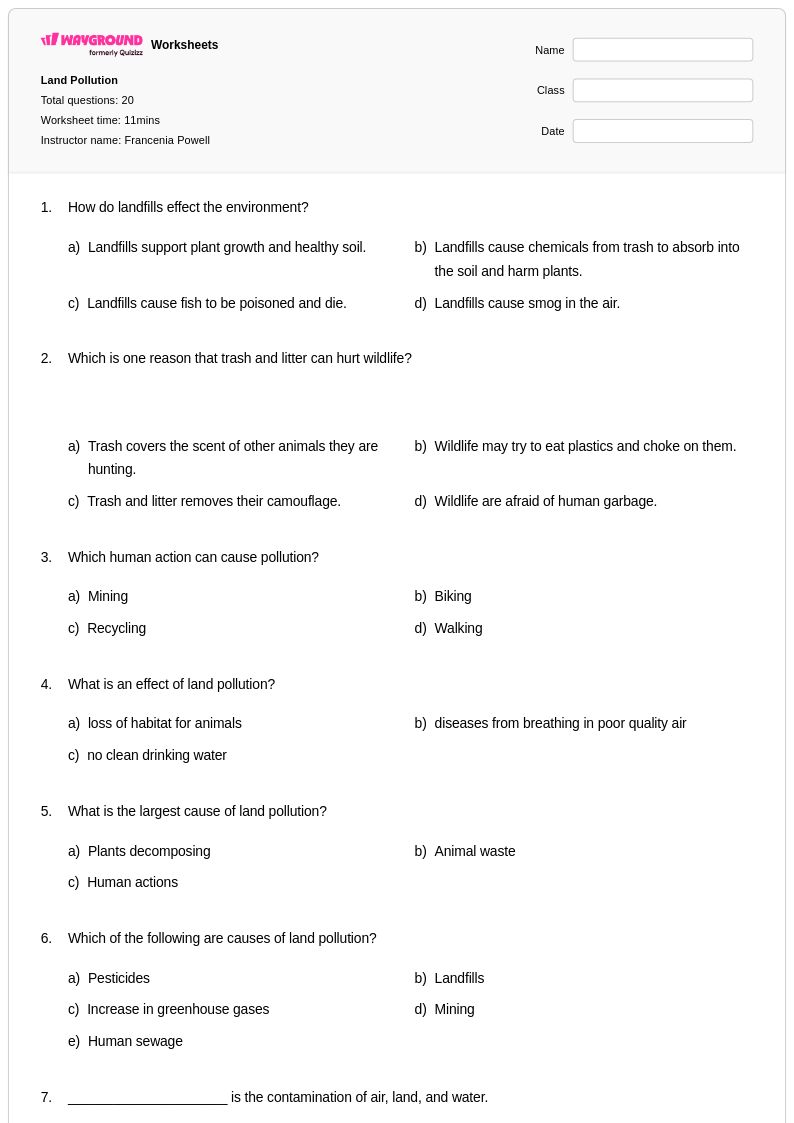
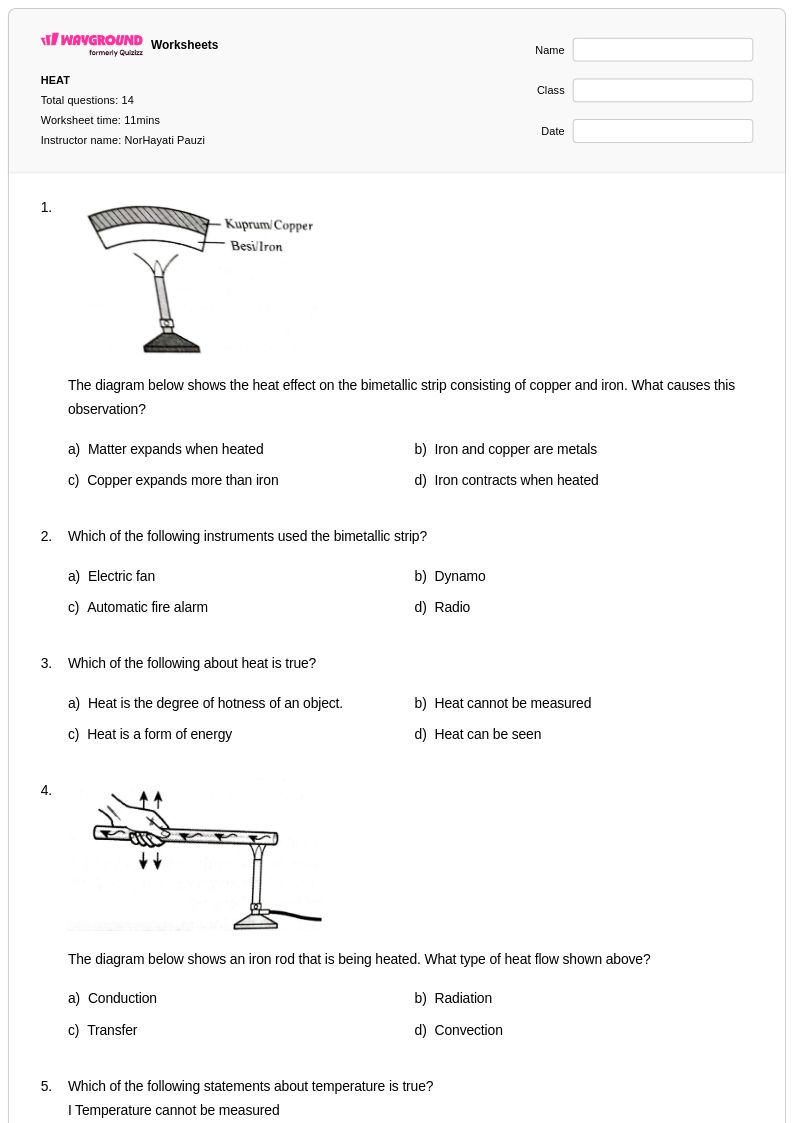
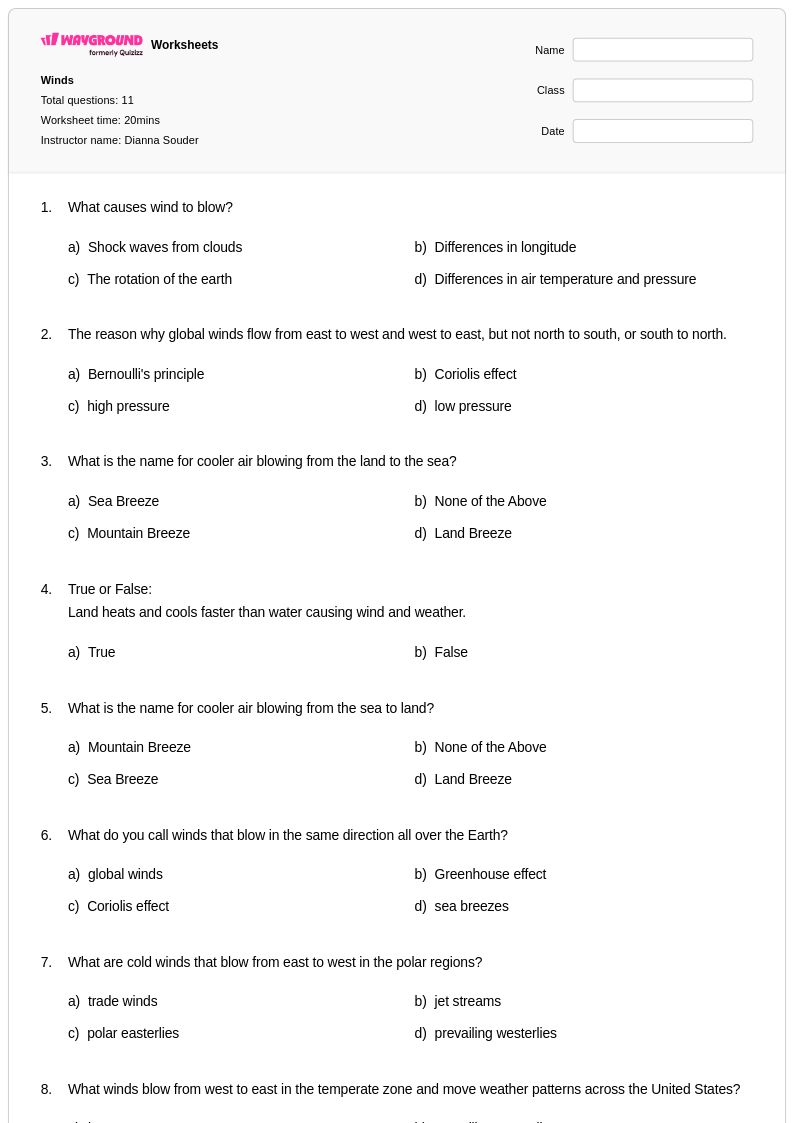
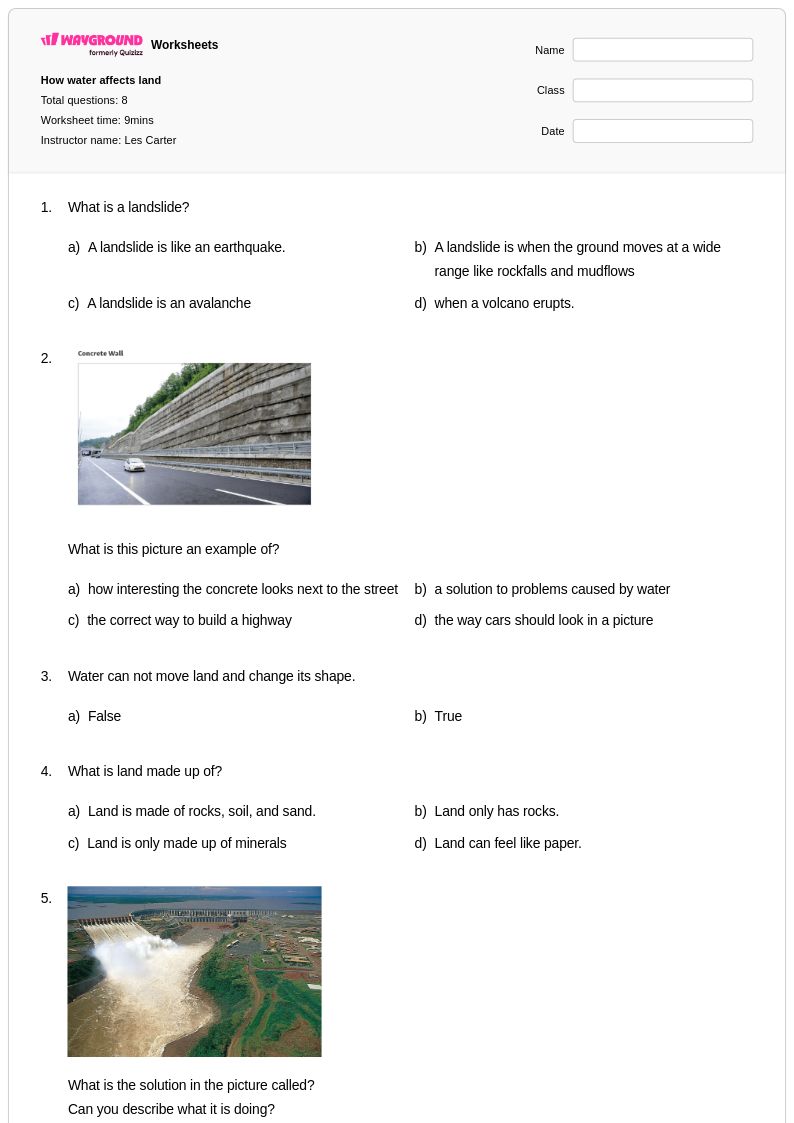
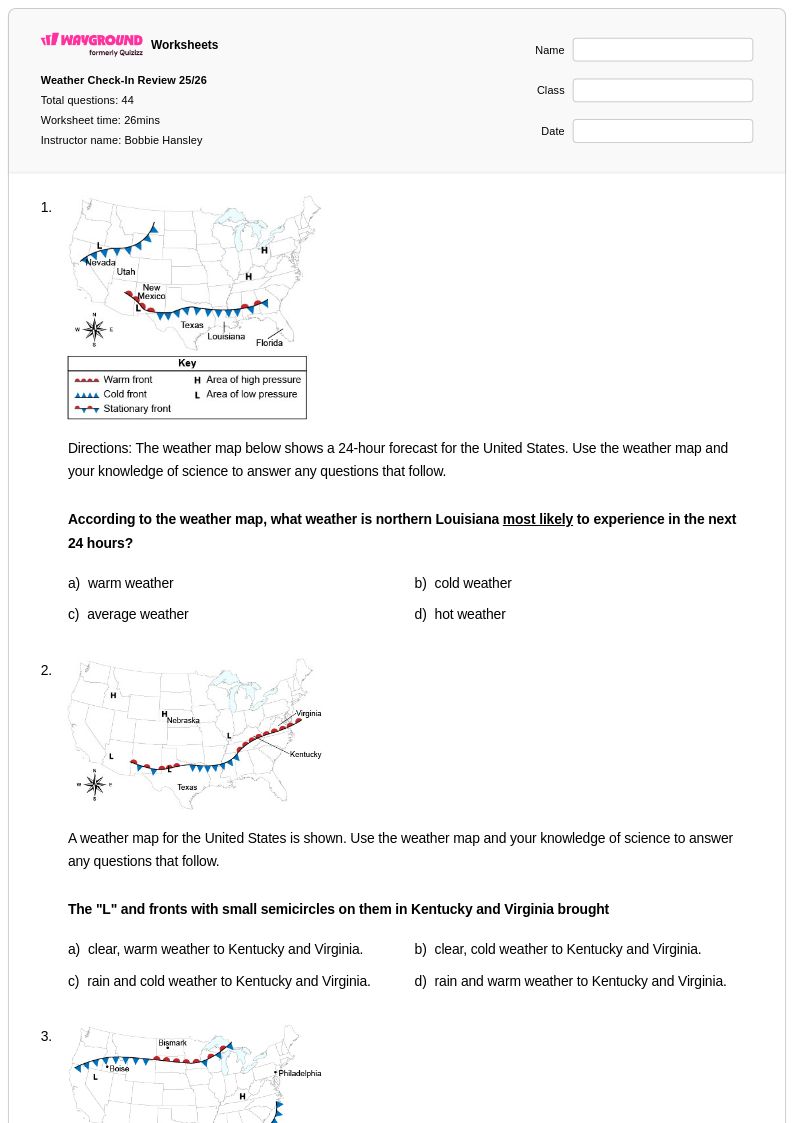
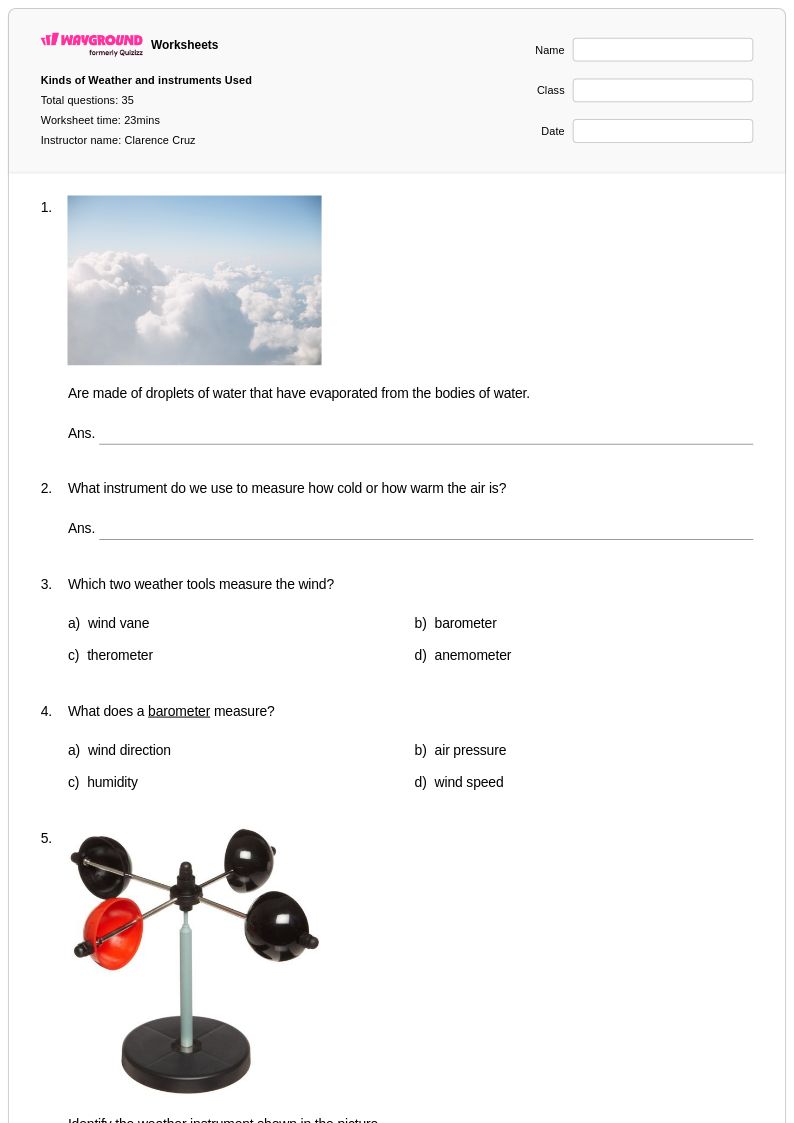
Land and sea breeze worksheets for Class 3 students available through Wayground (formerly Quizizz) provide comprehensive practice opportunities for young learners to understand this fundamental weather phenomenon. These carefully designed educational materials help third-grade students explore how temperature differences between land and water create predictable wind patterns throughout the day and night. The worksheets strengthen critical thinking skills as students analyze diagrams, complete observations, and connect cause-and-effect relationships in atmospheric science. Each resource includes practice problems that guide students through the scientific process of observation and explanation, while answer keys support both independent learning and teacher-guided instruction. These free printables offer structured activities that make abstract concepts concrete through visual representations and hands-on exercises, allowing students to grasp how thermal differences drive air movement in coastal environments.
Wayground (formerly Quizizz) empowers educators with an extensive collection of millions of teacher-created resources specifically designed to support land and sea breeze instruction at the elementary level. The platform's robust search and filtering capabilities enable teachers to quickly locate worksheets that align with science standards and match their students' specific learning needs. These versatile materials support effective lesson planning by offering both printable pdf formats for traditional classroom use and digital versions for interactive learning experiences. Teachers can easily customize worksheets to provide targeted remediation for struggling students or enrichment opportunities for advanced learners, ensuring differentiated instruction that meets diverse classroom requirements. The comprehensive collection facilitates skill practice through varied question formats and assessment tools, helping educators track student progress while building foundational understanding of atmospheric science concepts that will support future earth and space science learning.
FAQs
How do I teach land and sea breezes to my students?
Start by establishing the key principle: land heats up and cools down faster than water. From there, walk students through how these temperature differences create pressure gradients that drive airflow — onshore during the day when land is warmer, offshore at night when land cools faster than the sea. Using labeled diagrams of convection loops alongside temperature and pressure comparisons helps students visualize what they cannot directly observe. Connecting the concept to a local coastal environment or a weather event students recognize makes the mechanism stick.
What practice exercises help students understand land and sea breezes?
The most effective exercises ask students to analyze diagrams showing air pressure and temperature differences between land and water at different times of day, then predict wind direction. Practice problems that require students to trace convection current paths — rising warm air over land during the day, sinking cooler air over water — build procedural understanding alongside conceptual knowledge. Interpreting weather data tied to coastal locations and explaining breeze patterns based on time of day are also strong skill-building tasks.
What mistakes do students commonly make when learning about land and sea breezes?
The most frequent misconception is confusing which direction the breeze flows during the day versus at night. Students often think the breeze always blows toward the land or always toward the sea, rather than understanding that the direction reverses based on relative temperature. Another common error is conflating where air rises with where the breeze originates — students may incorrectly identify the source of the breeze as the location where air is ascending rather than the area of higher pressure. Reinforcing the pressure-gradient logic rather than just memorizing day/night rules helps address both errors.
How do I use Wayground's land and sea breeze worksheets in my classroom?
Wayground's land and sea breeze worksheets are available as printable PDFs, making them easy to distribute in a traditional classroom setting, and in digital formats suited for technology-integrated or remote learning environments. Teachers can also host worksheets as a quiz directly on Wayground, enabling real-time student responses and instant feedback. For students who need additional support, Wayground's accommodation tools allow teachers to enable features such as read aloud, extended time, or reduced answer choices on a per-student basis without disrupting the rest of the class.
How do land and sea breezes fit into the Earth and Space Science curriculum?
Land and sea breezes are a foundational concept in atmospheric science and Earth and Space Science curricula, illustrating how differential heating between surfaces drives localized wind circulation. The topic connects directly to broader units on convection, air pressure, weather patterns, and the water cycle, making it a useful bridge between physical science principles and real-world meteorology. Teaching this concept early in a weather or climate unit gives students a concrete, observable example of the convection mechanism before applying it to larger-scale atmospheric systems like global wind belts.
How can I differentiate land and sea breeze instruction for different learning levels?
For students who are still building foundational understanding, start with simplified diagrams that isolate one variable at a time — temperature first, then pressure, then wind direction. Advanced learners can be challenged with data interpretation tasks, such as analyzing real coastal weather station records to identify breeze patterns or comparing land-sea thermal contrast across different seasons. On Wayground, teachers can apply individual accommodations such as read aloud support or reduced answer choices to specific students, allowing the same worksheet to serve multiple learning levels within a single class session.