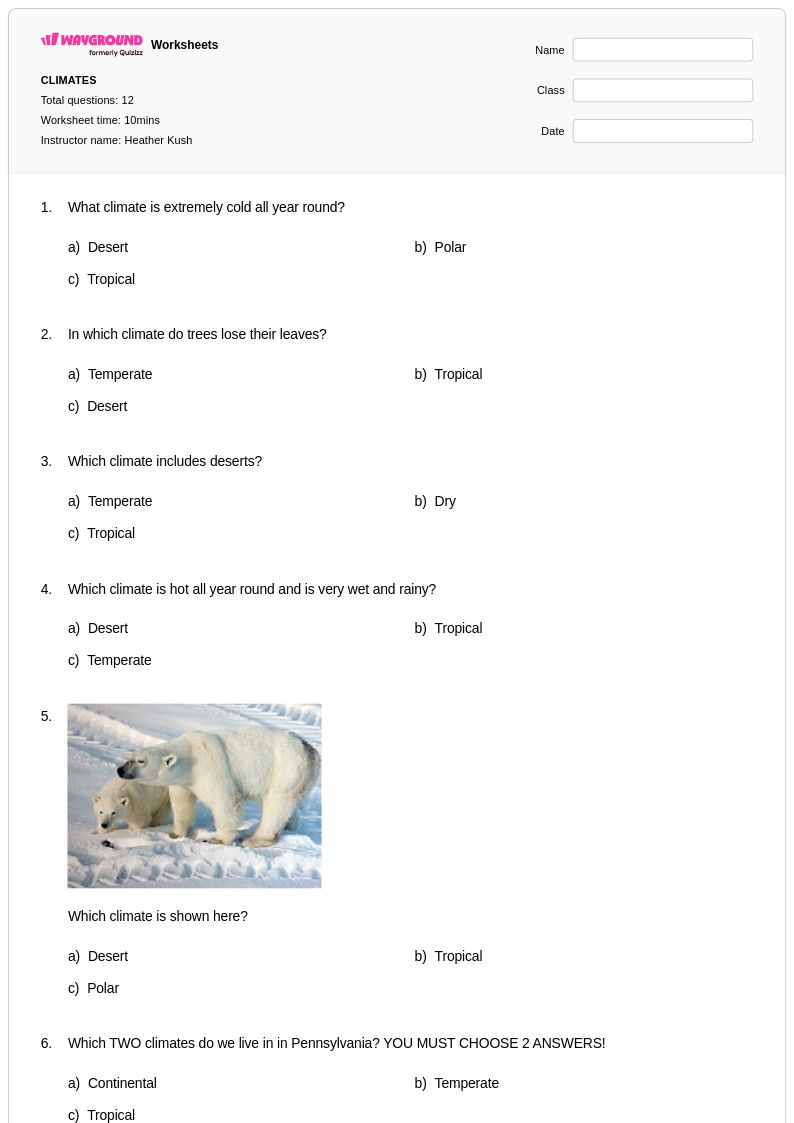
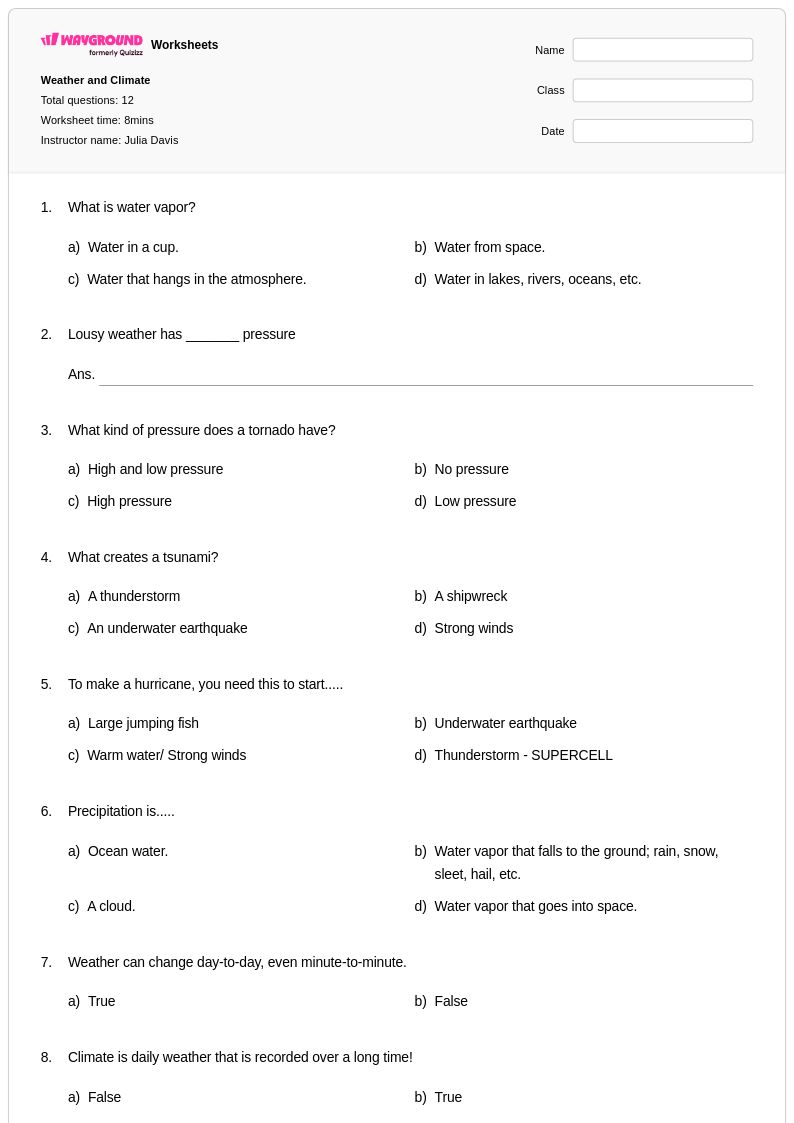
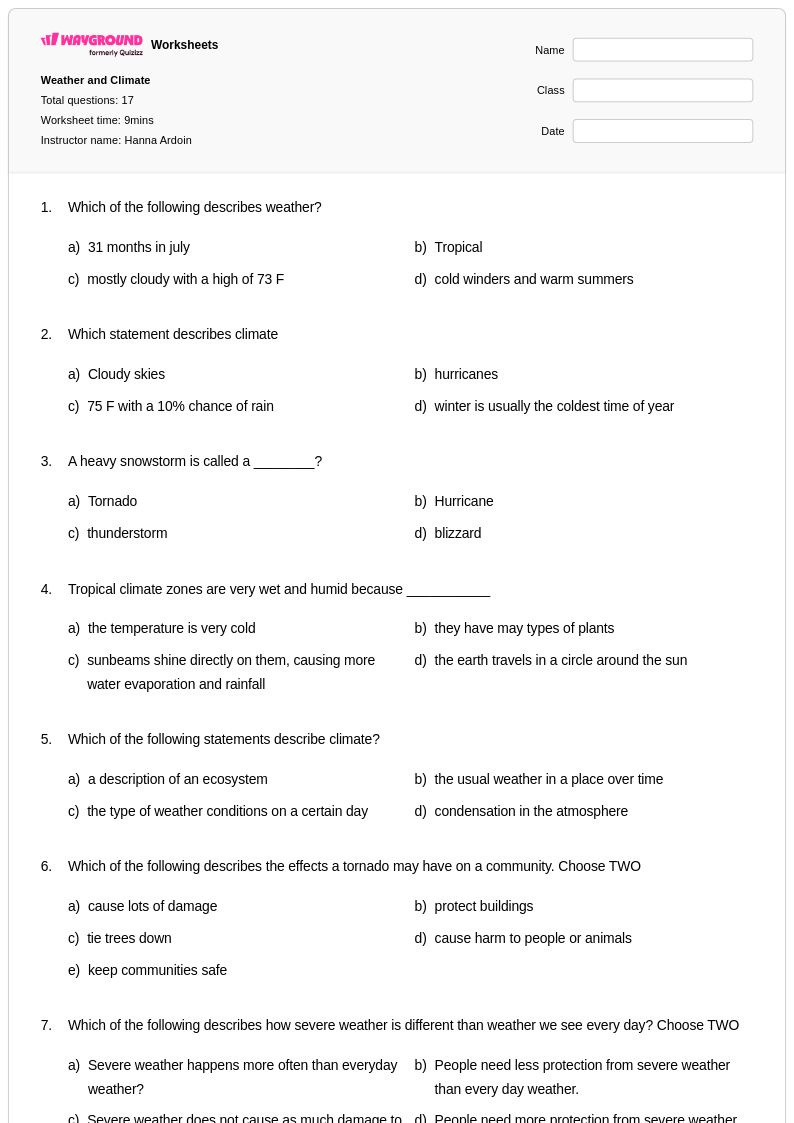
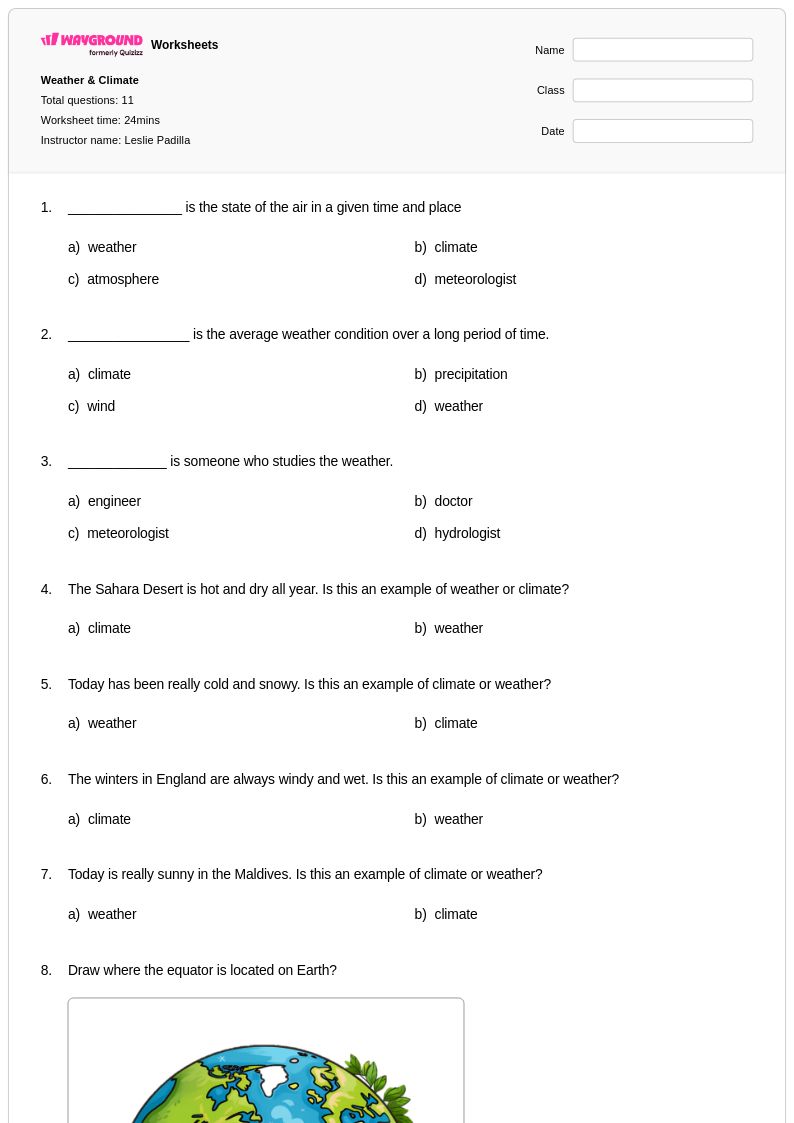
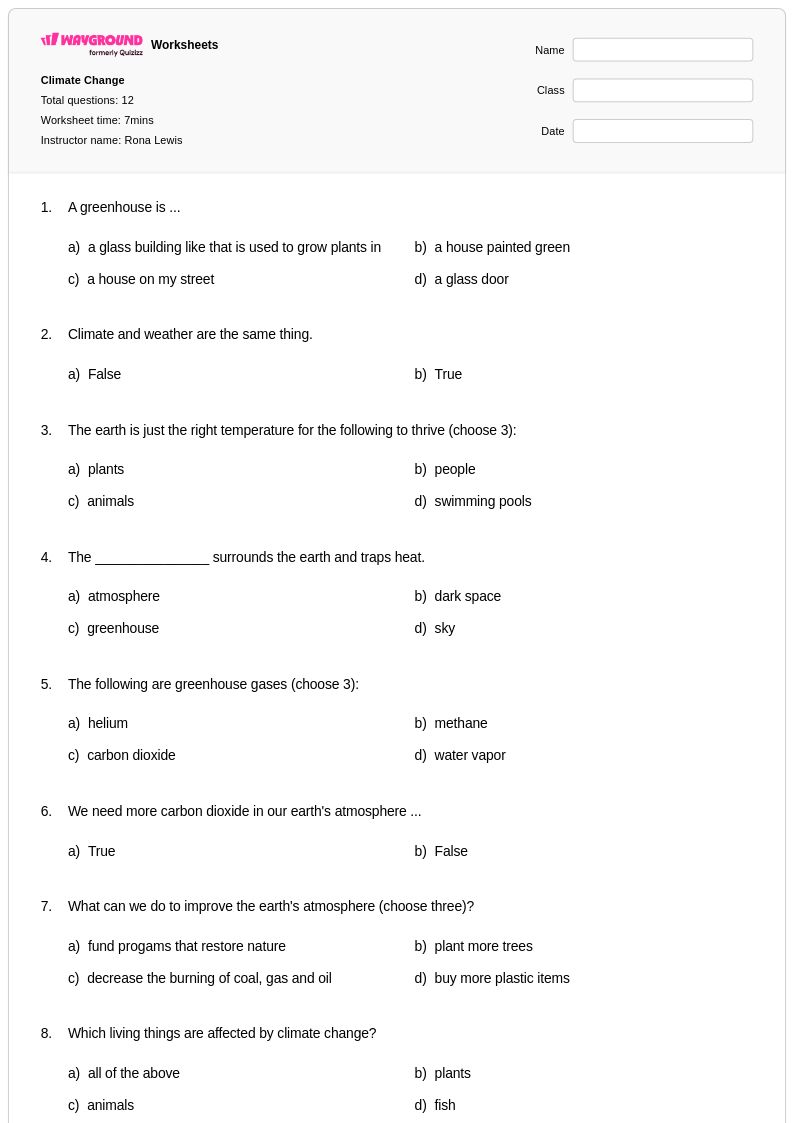
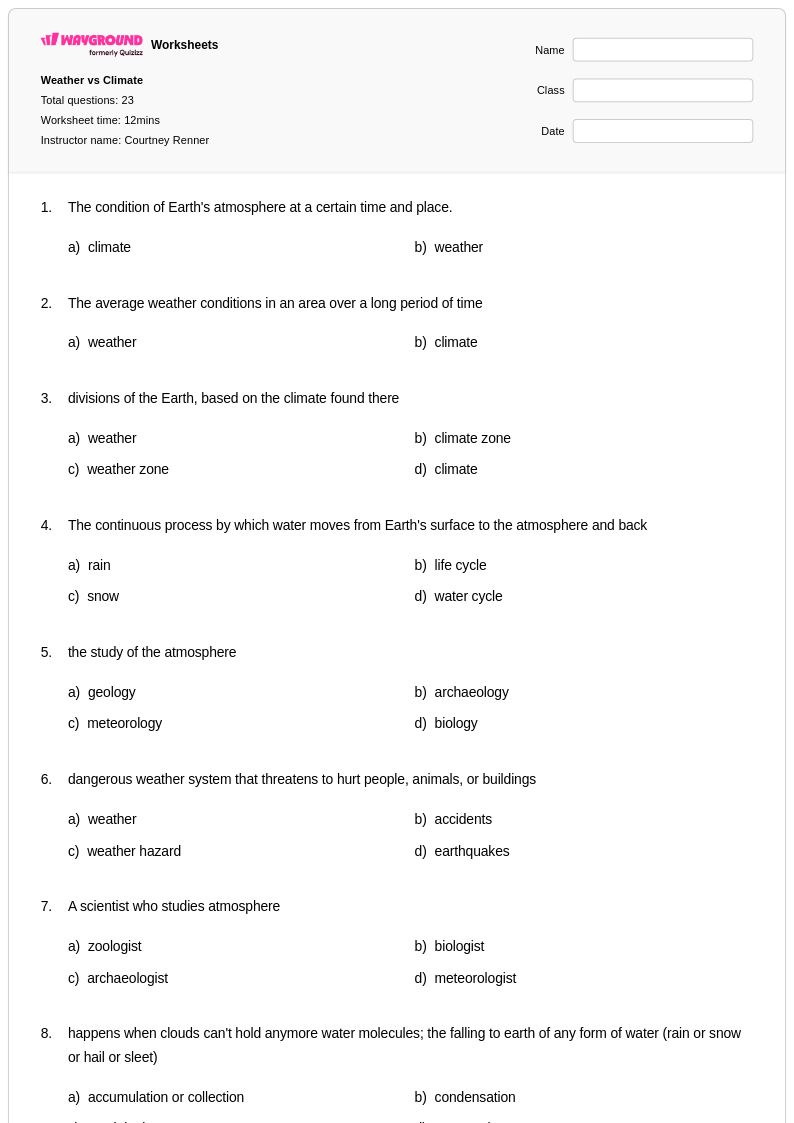
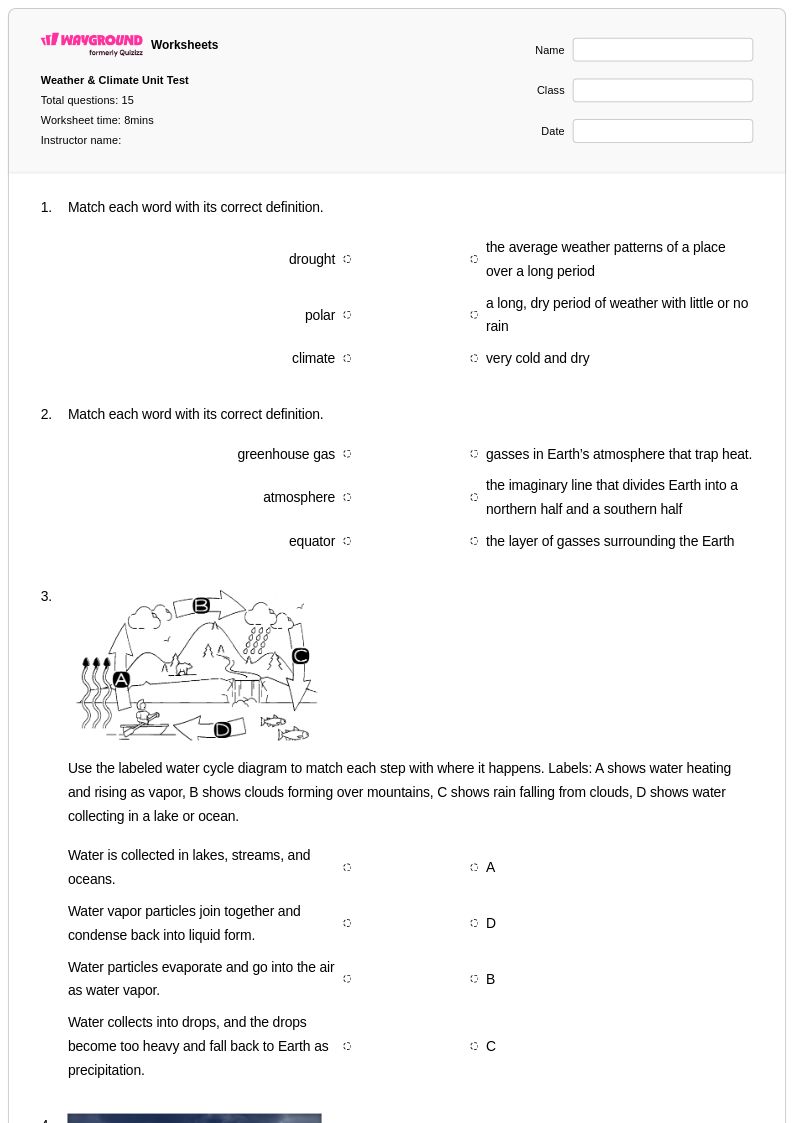
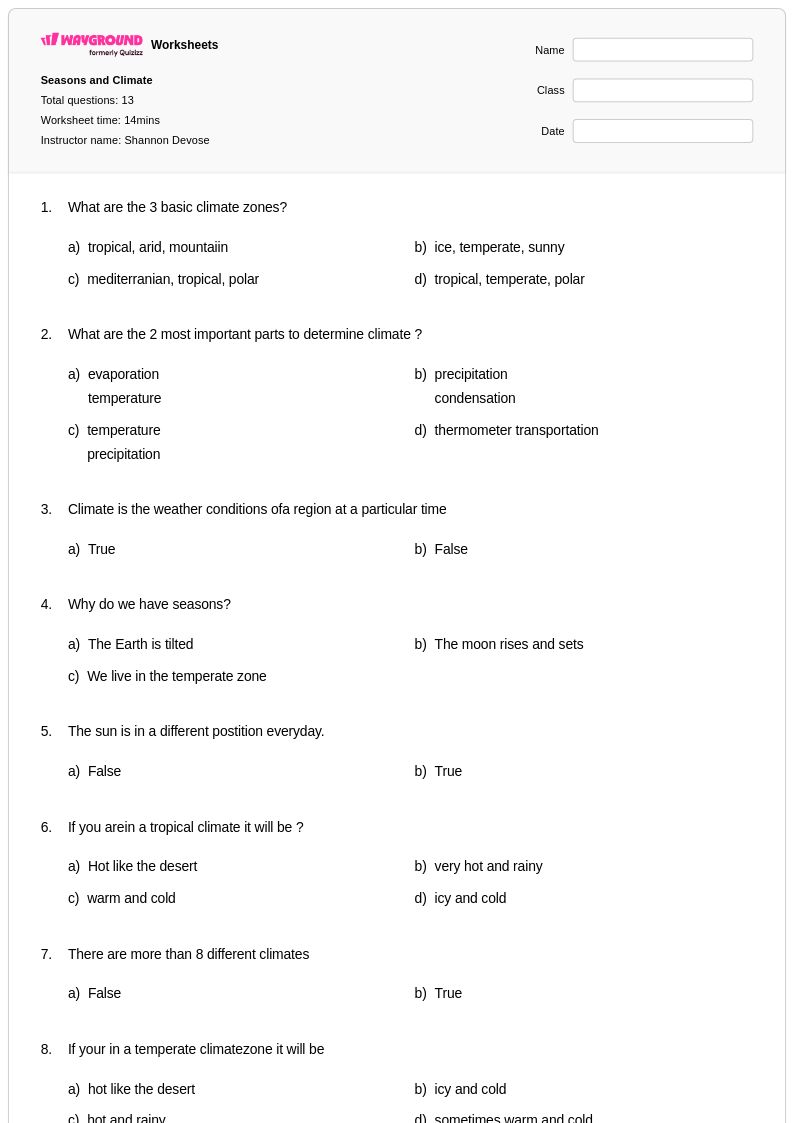
Explore Wayground's free Class 3 climate worksheets and printables that help students understand weather patterns, seasonal changes, and climate zones through engaging practice problems with comprehensive answer keys.
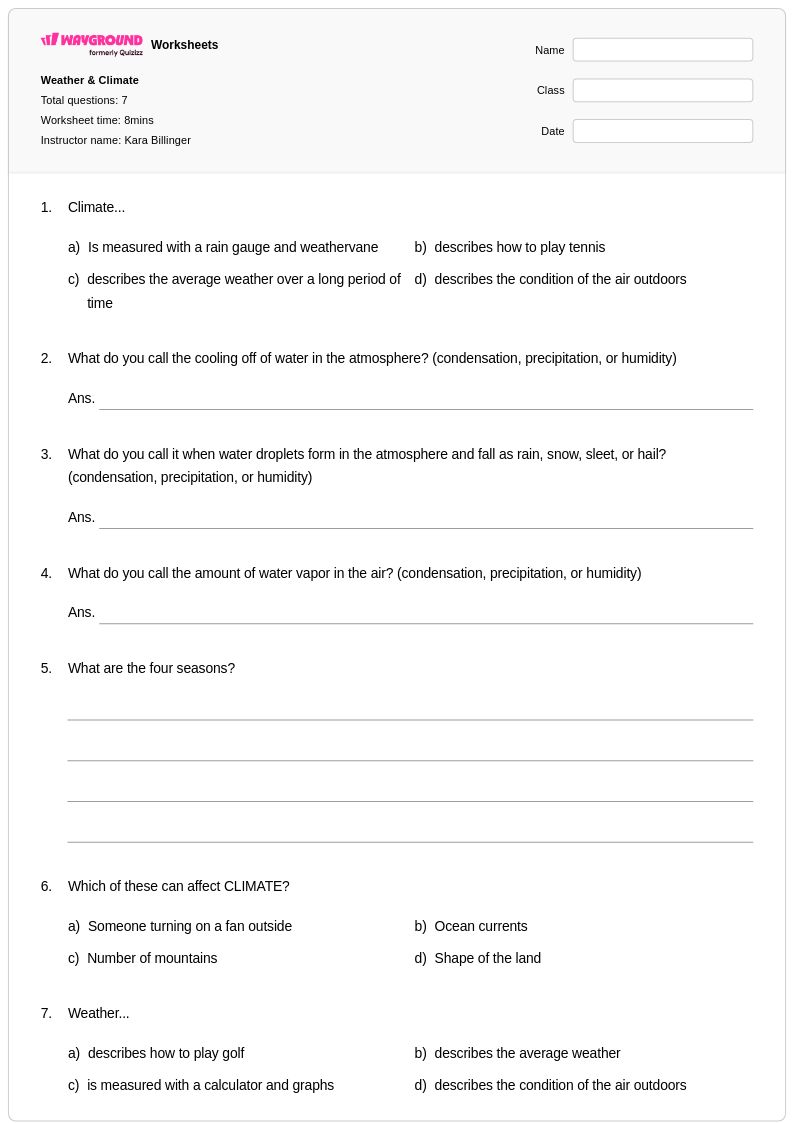
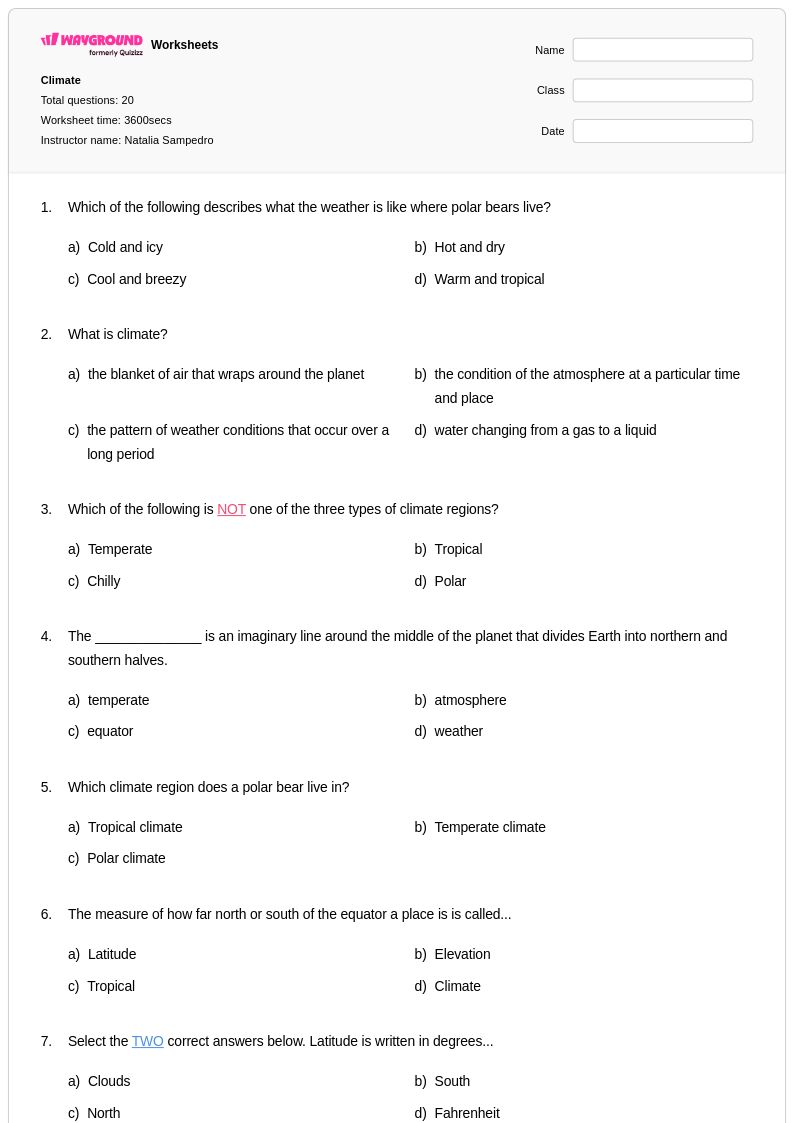
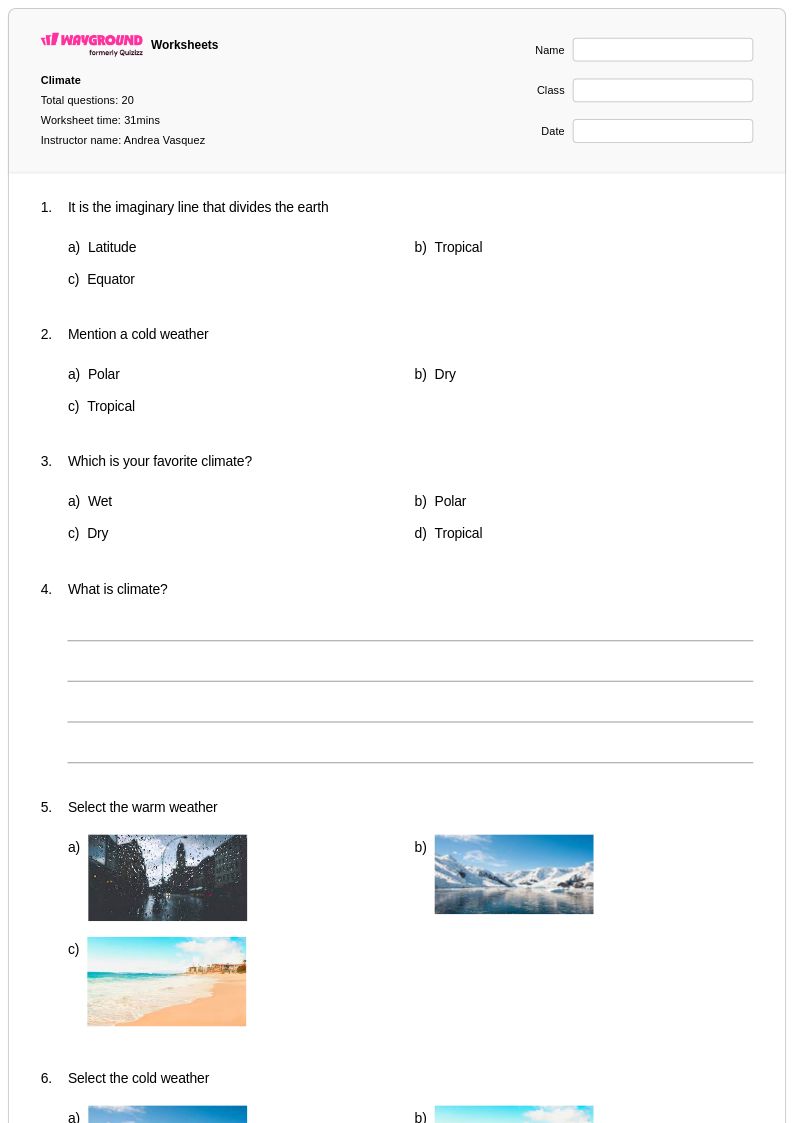
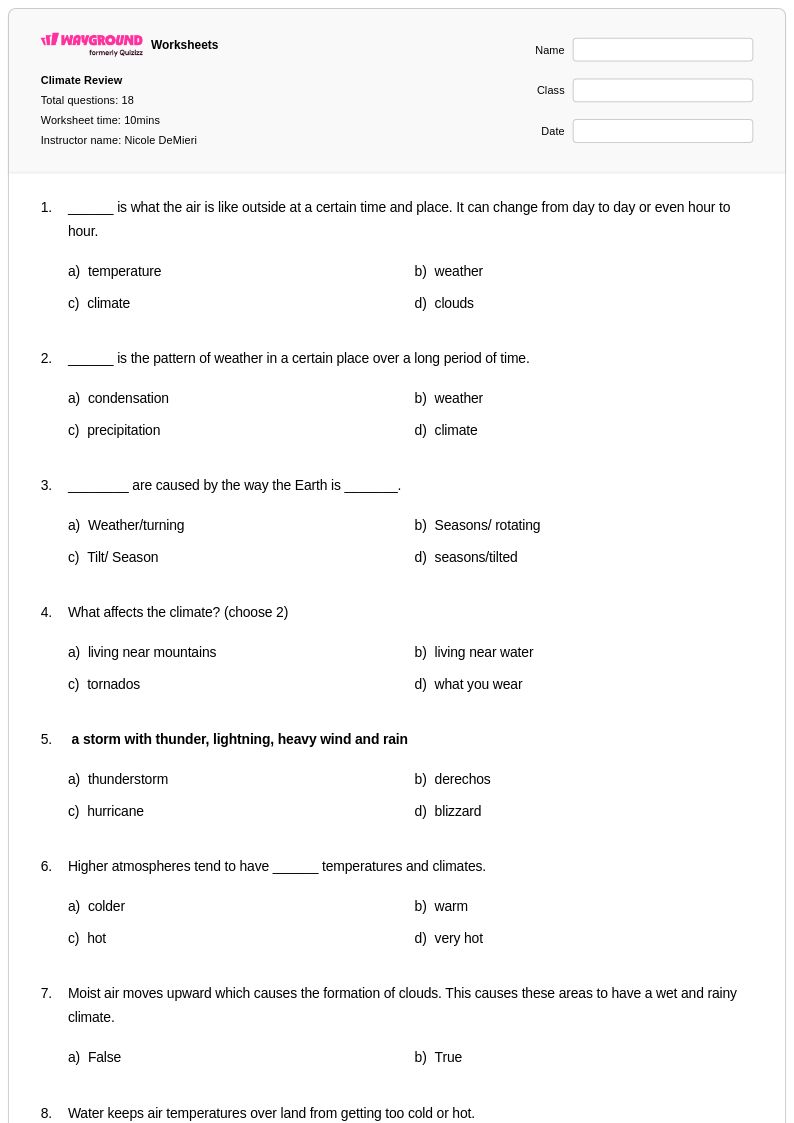
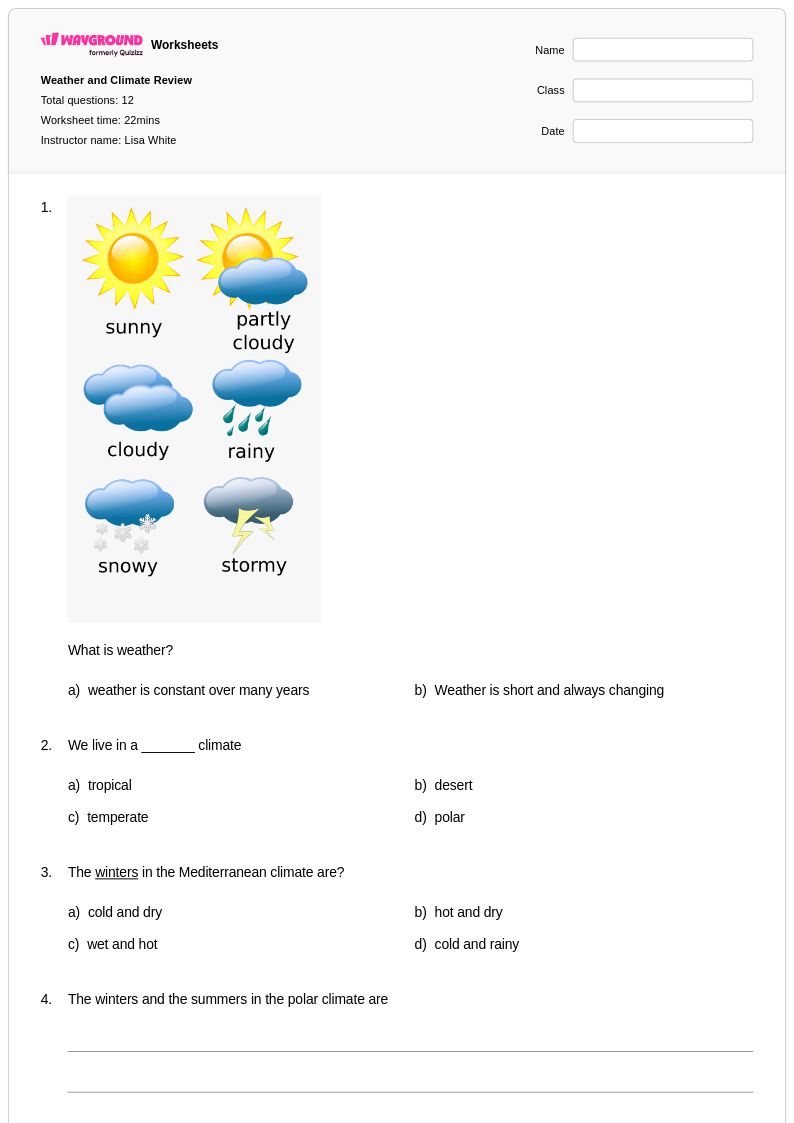
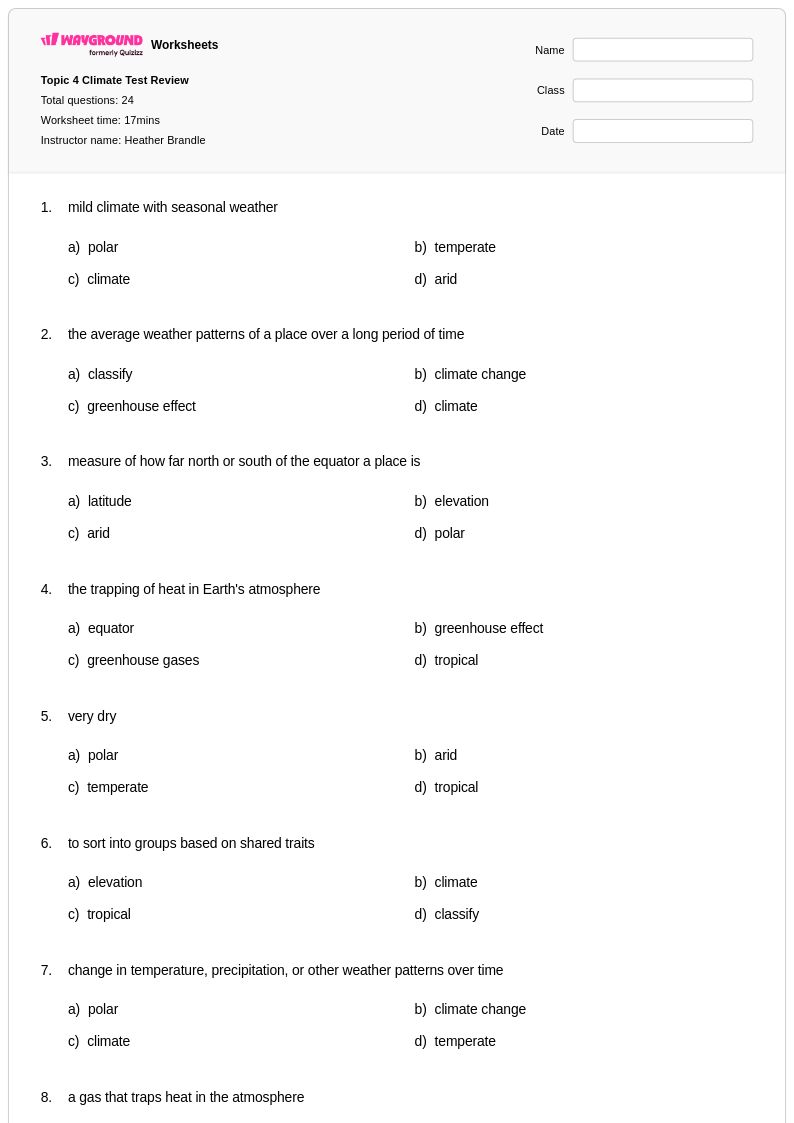
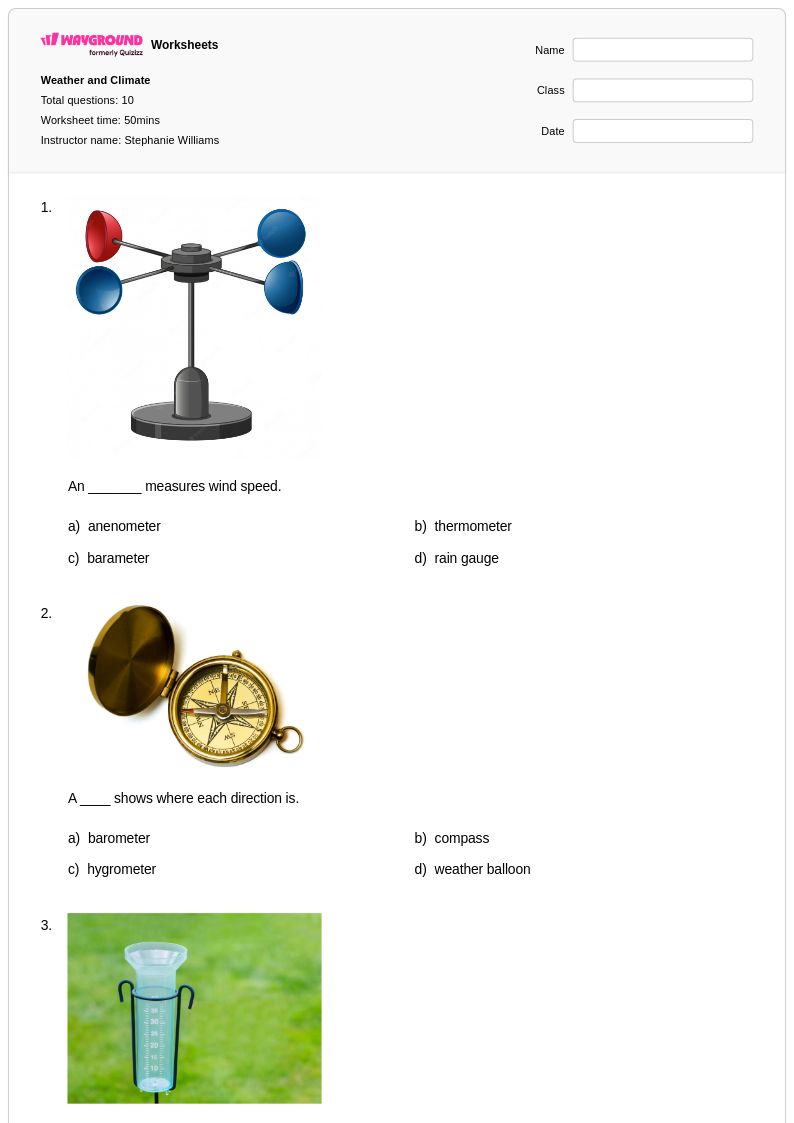
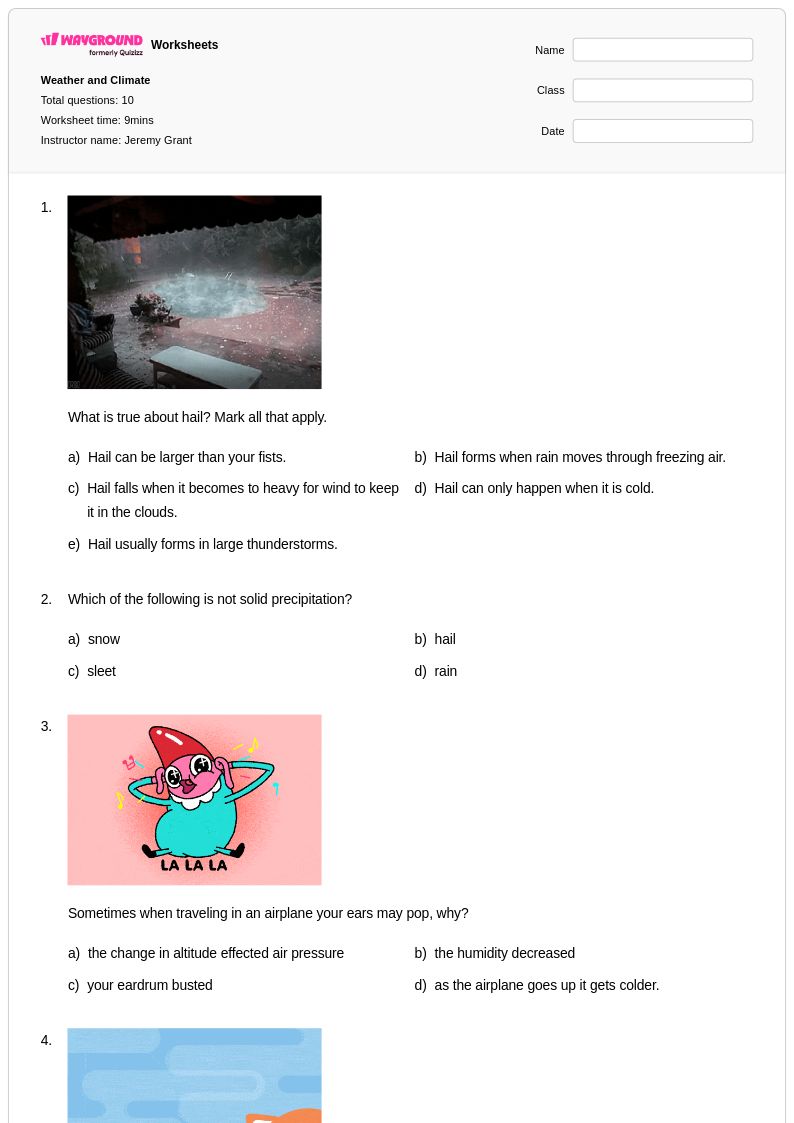
Climate worksheets for Class 3 through Wayground (formerly Quizizz) provide young learners with engaging opportunities to explore weather patterns, seasonal changes, and basic climate concepts through hands-on activities and interactive exercises. These educational resources strengthen foundational scientific observation skills, data collection abilities, and critical thinking as students investigate how temperature, precipitation, and other weather elements vary across different regions and seasons. The comprehensive collection includes practice problems that challenge students to analyze weather data, compare climate zones, and understand the relationship between geography and climate patterns. Teachers can access these materials as free printables with accompanying answer keys, making it easy to incorporate climate education into daily instruction while providing students with meaningful opportunities to develop their understanding of Earth's atmospheric systems.
Wayground (formerly Quizizz) empowers educators with millions of teacher-created climate resources specifically designed for Class 3 learners, featuring robust search and filtering capabilities that allow instructors to quickly locate materials aligned with specific learning standards and curriculum objectives. The platform's differentiation tools enable teachers to customize worksheets based on individual student needs, supporting both remediation for struggling learners and enrichment opportunities for advanced students. These climate-focused materials are available in both printable and digital formats, including downloadable PDF versions that facilitate flexible lesson planning and accommodate diverse classroom environments. The extensive resource library supports comprehensive instructional planning by providing educators with scientifically accurate content that progresses logically through climate concepts, enabling teachers to build sequential learning experiences that reinforce key scientific principles while encouraging student curiosity about Earth's dynamic weather systems.
FAQs
How do I teach climate vs. weather in a way students actually understand?
The most effective approach is to anchor the distinction in time scale: weather describes atmospheric conditions on a given day, while climate describes the long-term patterns of those conditions over decades in a specific region. Use local data students recognize, such as monthly average temperatures or seasonal rainfall records, to make climate feel concrete rather than abstract. Having students track daily weather over several weeks and then average it out gives them a hands-on sense of how short-term variability becomes long-term climate.
What exercises help students practice interpreting climate graphs and data?
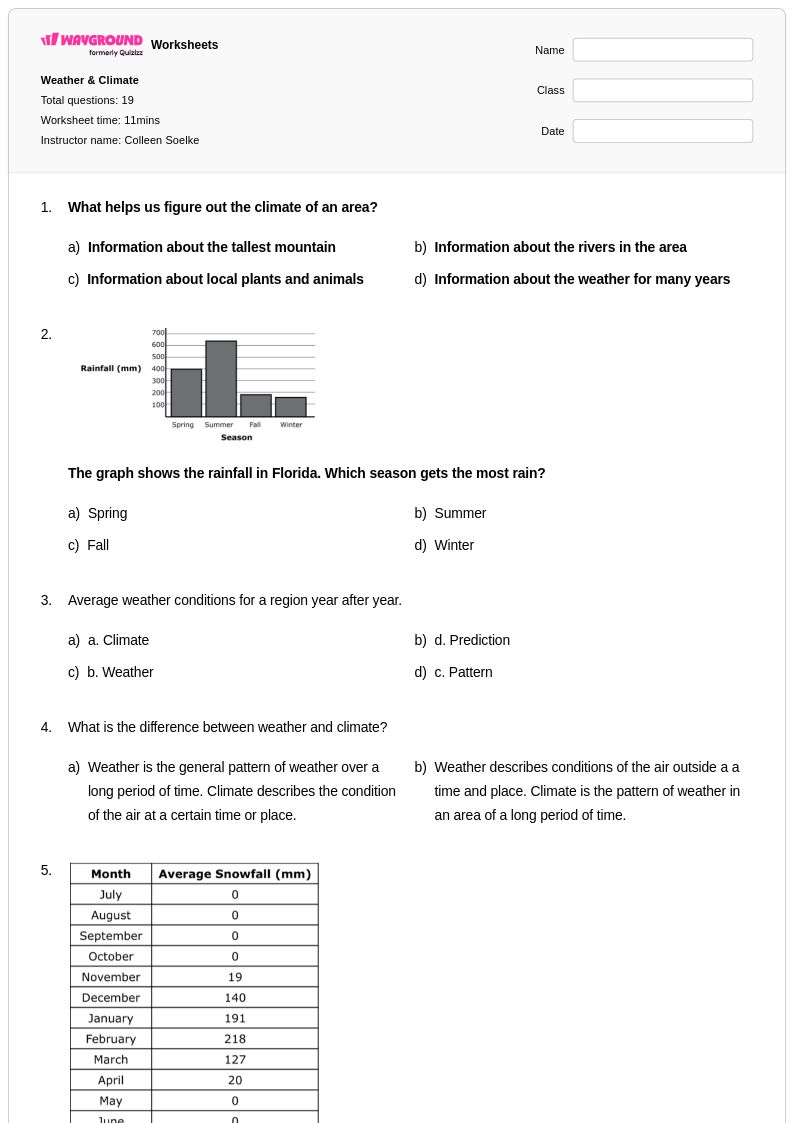
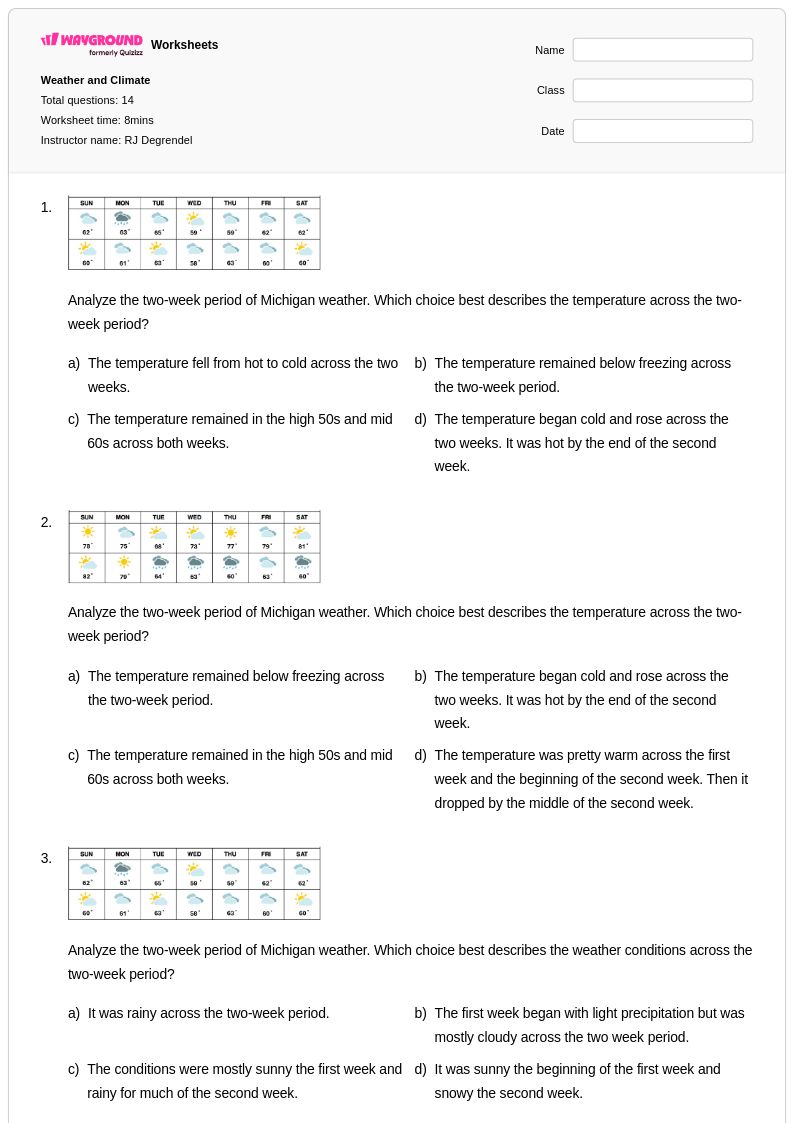
Climate graph interpretation is best practiced through tasks that require students to extract, compare, and explain data rather than just read values off an axis. Effective exercises include analyzing climatographs that display both temperature and precipitation for a given location, identifying climate zones from data sets, and comparing two regions to infer geographic or oceanic influences. Wayground's climate worksheets include practice problems focused on interpreting climate graphs and analyzing temperature and precipitation data, giving students structured repetition with real-world data formats.
What factors affecting climate should students understand at the middle and high school level?
Students should understand that climate is shaped by an interacting set of factors including latitude, altitude, proximity to large bodies of water, ocean currents, prevailing wind patterns, and topography. At the middle school level, the focus is typically on latitude and land-versus-water relationships; at the high school level, students extend this to atmospheric circulation cells, the Coriolis effect, and ocean current systems like the Gulf Stream. Understanding these interdependencies is essential before tackling global warming and climate change topics meaningfully.
What misconceptions do students commonly have about climate and global warming?
One of the most persistent misconceptions is that weather and climate are interchangeable, leading students to dismiss long-term warming trends based on a single cold winter. Students also frequently confuse the greenhouse effect as inherently harmful, when in fact it is a natural and necessary process, with the enhanced greenhouse effect being the driver of current climate change. A third common error is treating climate zones as fixed, rather than understanding that they shift over time in response to changing atmospheric and oceanic conditions.
How can I use Wayground's climate worksheets in my classroom?
Wayground's climate worksheets are available as free printable PDFs for traditional classroom use and in digital formats for technology-integrated environments, making them flexible for both in-person and remote instruction. Teachers can also host the worksheets as an interactive quiz directly on Wayground, which allows for immediate feedback and automated grading. Each worksheet includes a detailed answer key, so they work equally well for guided practice, independent work, or formative assessment without additional prep on the teacher's part.
How do I support students who struggle with climate science concepts?
Students who struggle with climate concepts often benefit from scaffolded data analysis tasks that build from simple single-variable observations toward multi-factor comparisons. Breaking down climate graphs into step-by-step reading tasks, and pairing visual maps with data tables, helps reduce cognitive overload. On Wayground, teachers can apply accommodations such as read aloud support, reduced answer choices, and extended time to individual students without disrupting the rest of the class, allowing targeted remediation without singling students out.