Free Printable Earth Science Maps Worksheets for Class 3
Class 3 Earth Science Maps worksheets from Wayground offer free printables and practice problems with answer keys to help students explore topographic features, weather patterns, and geological formations through interactive mapping activities.
Explore printable Earth Science Maps worksheets for Class 3
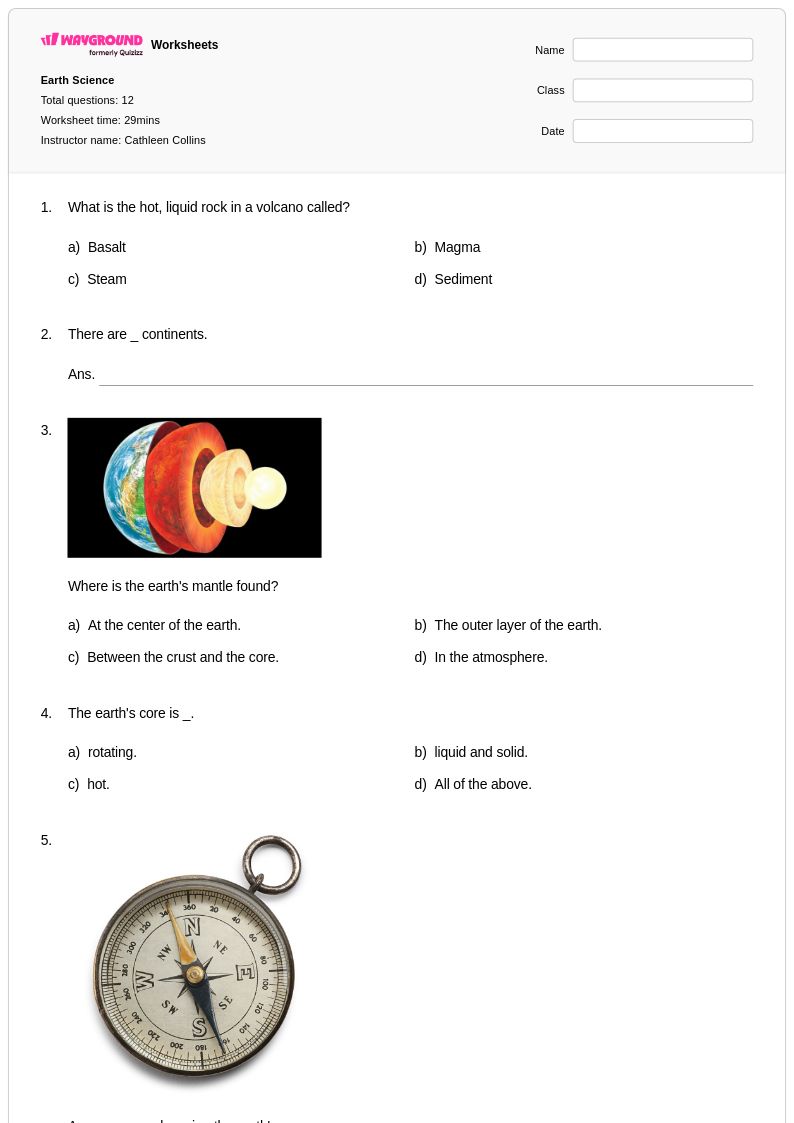
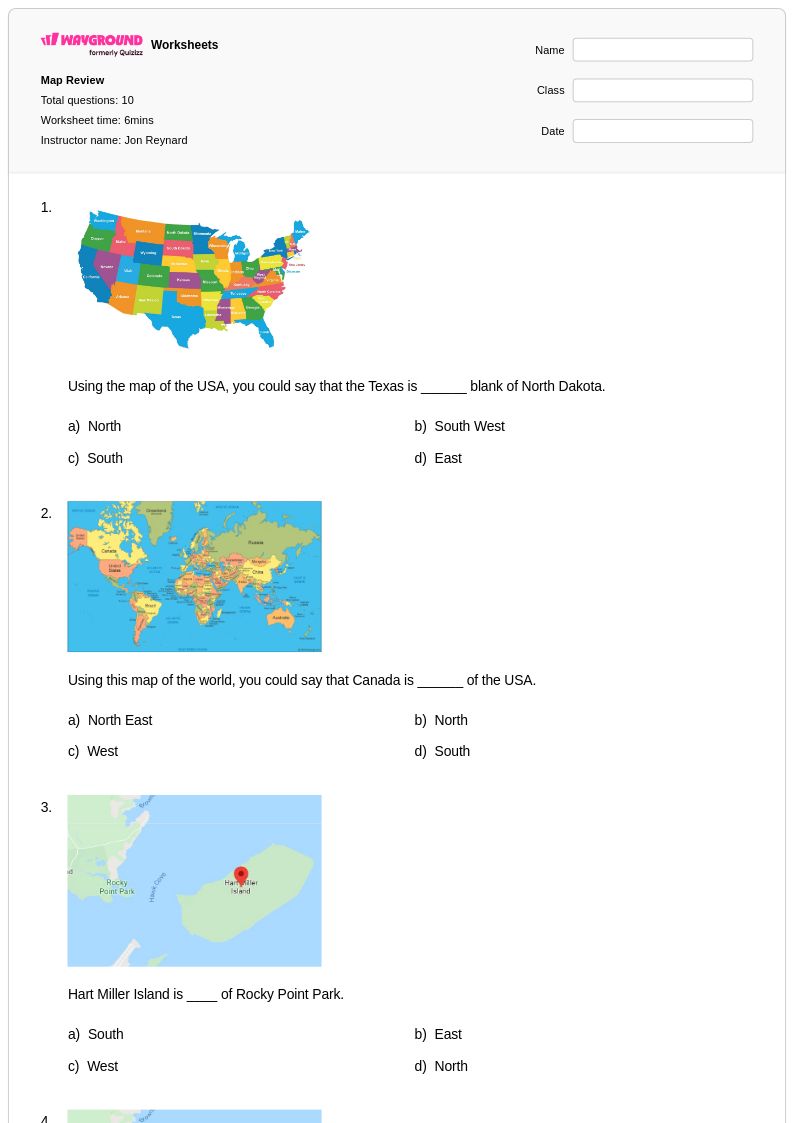
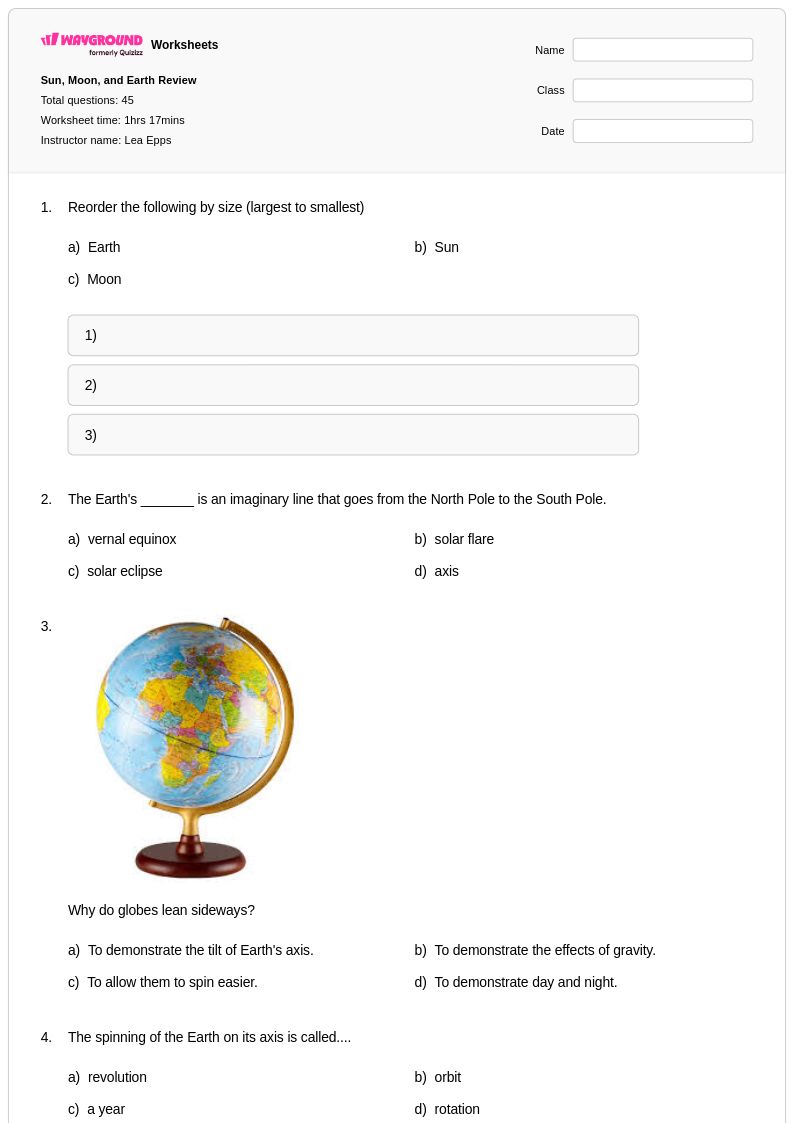
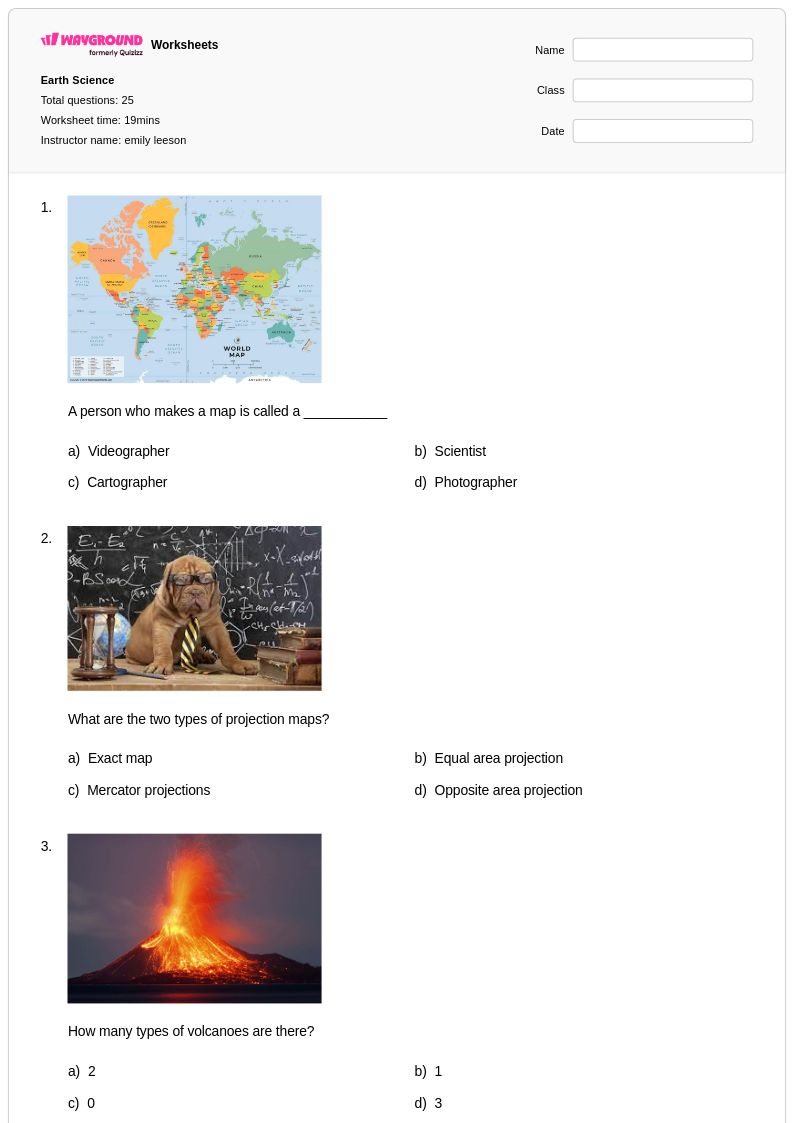
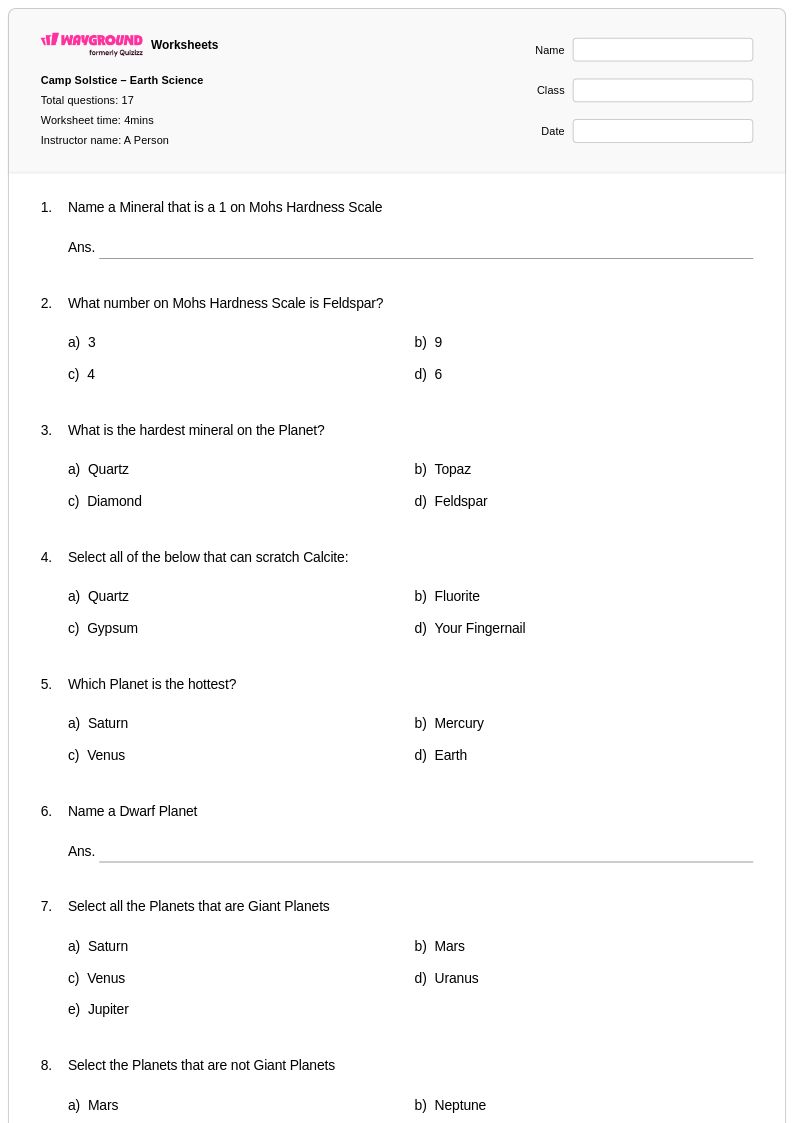
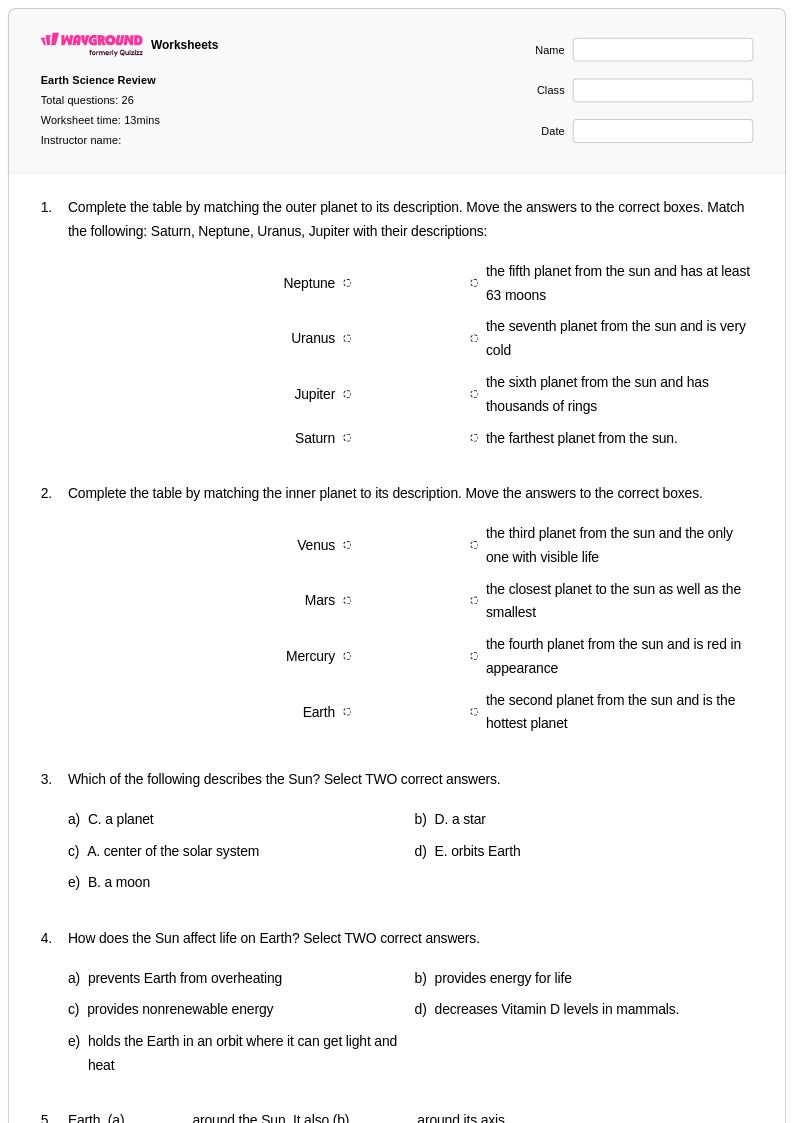
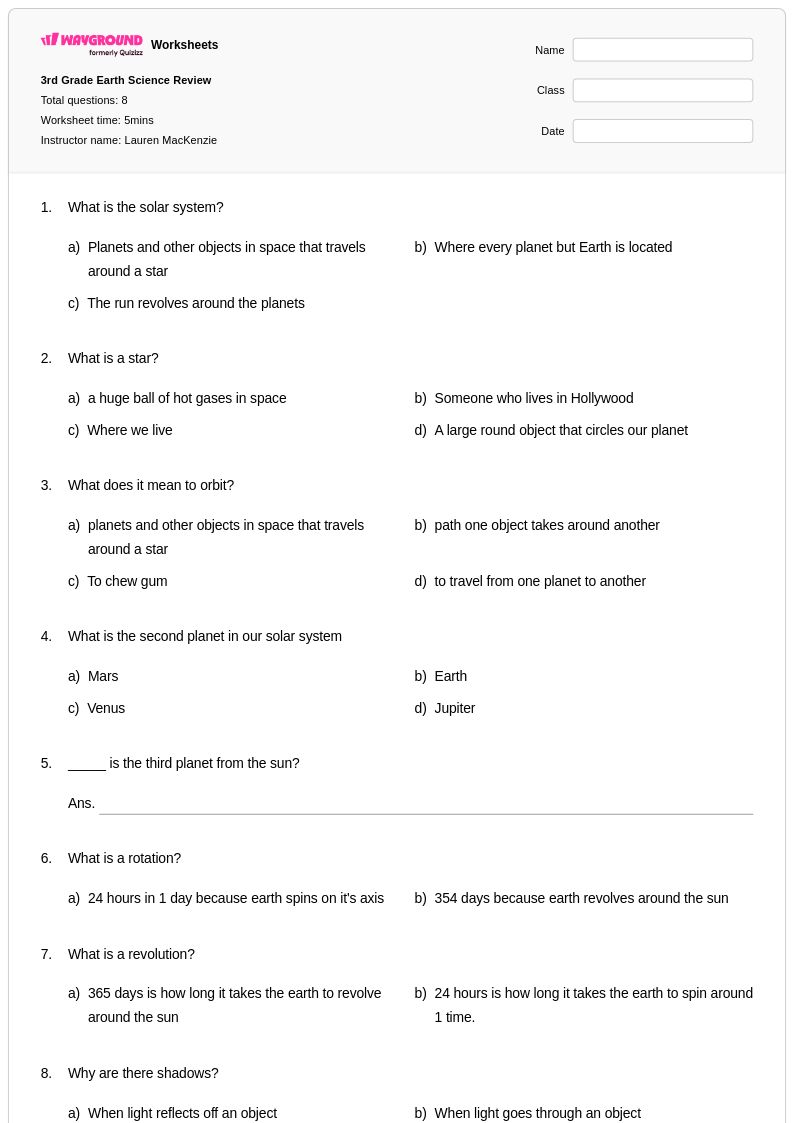
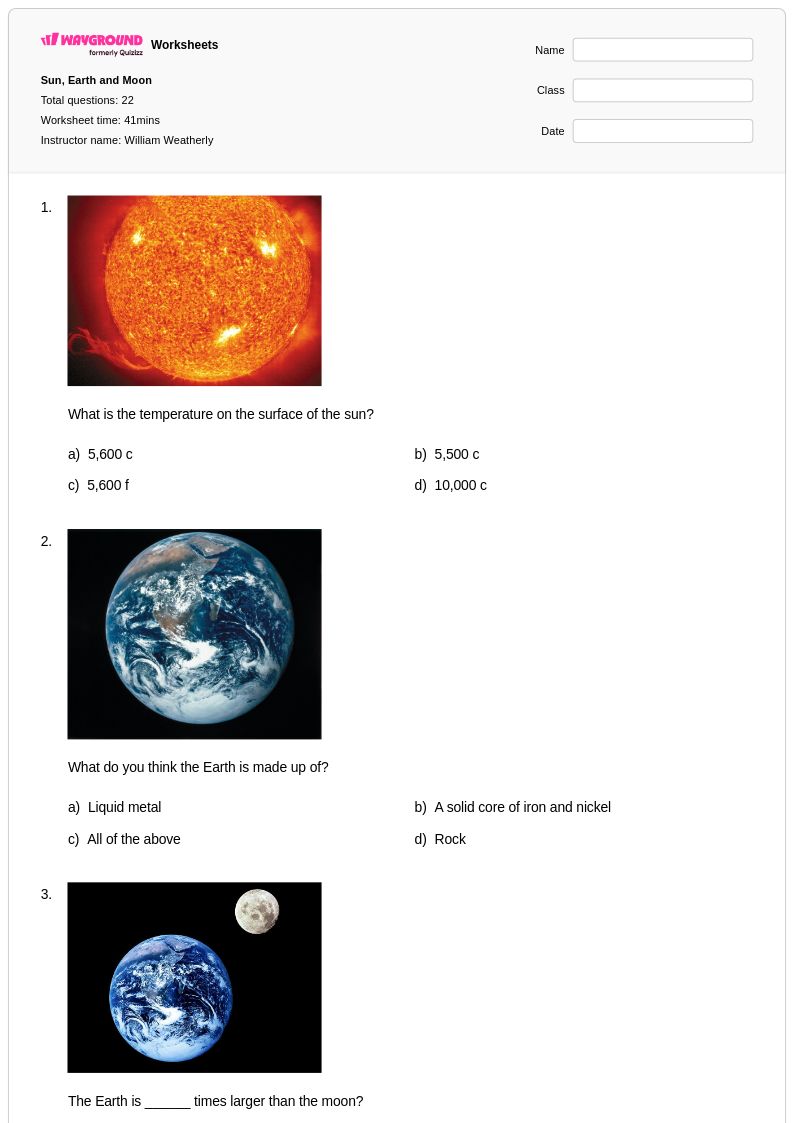
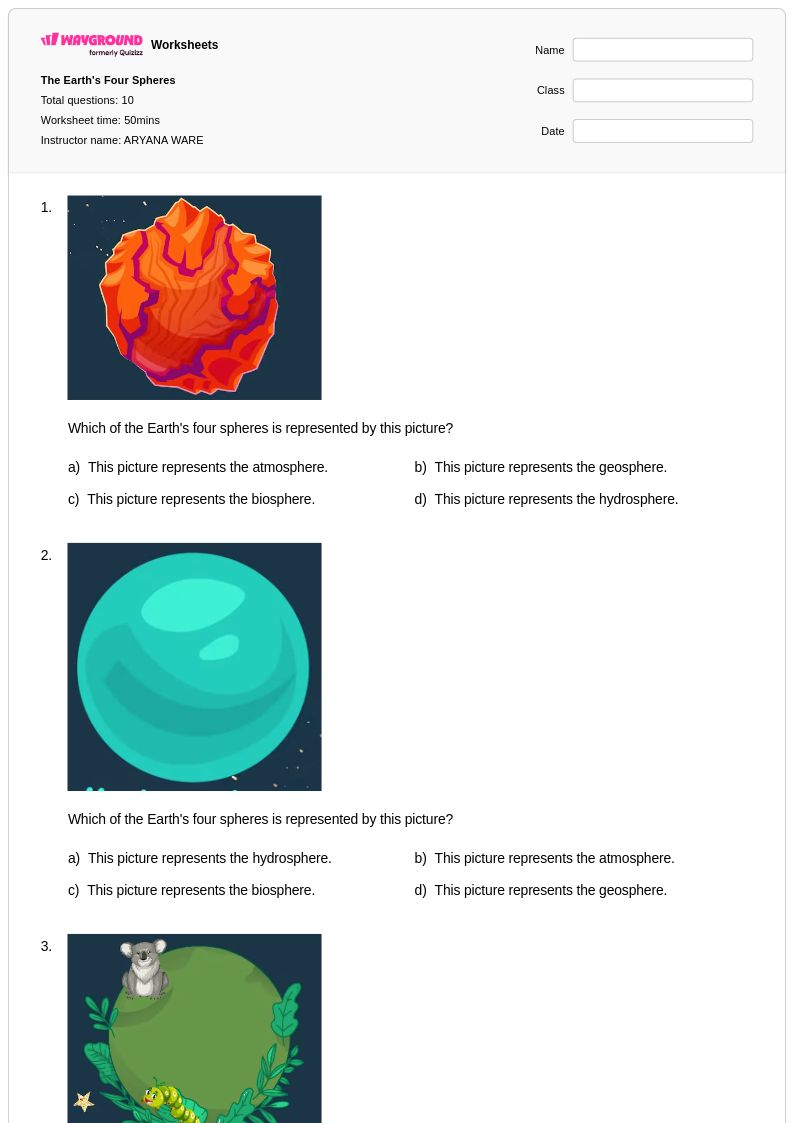
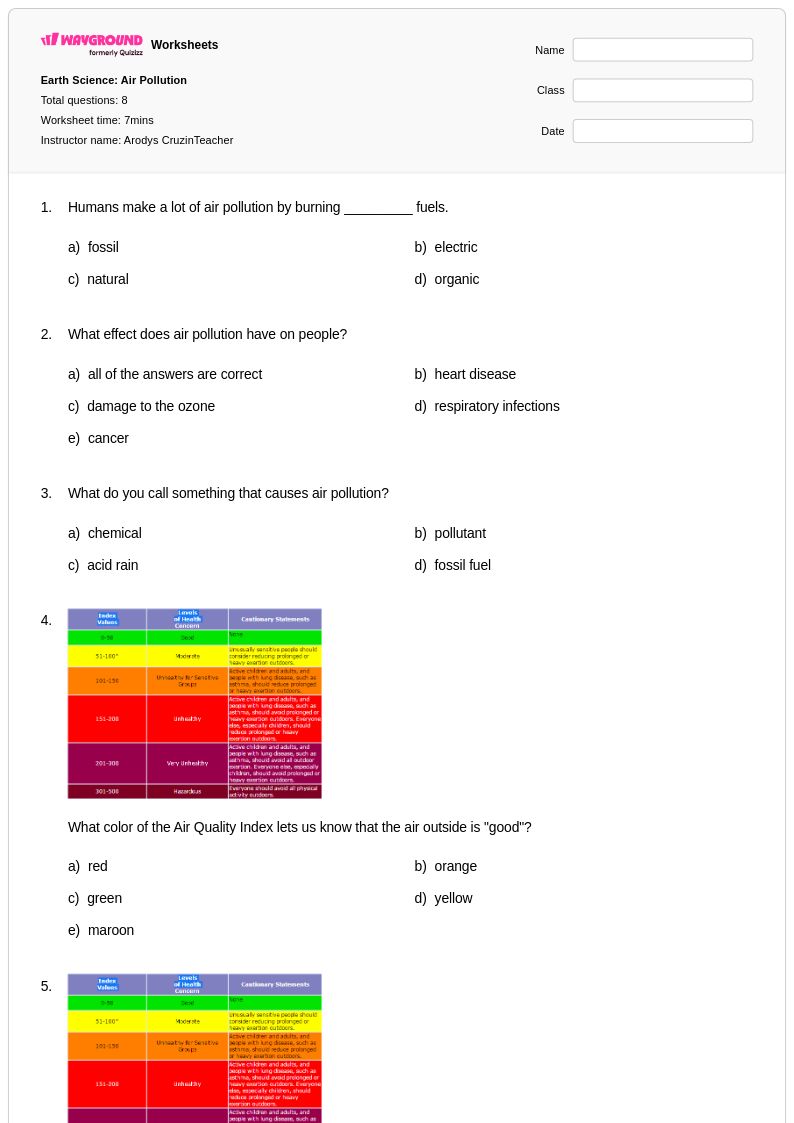
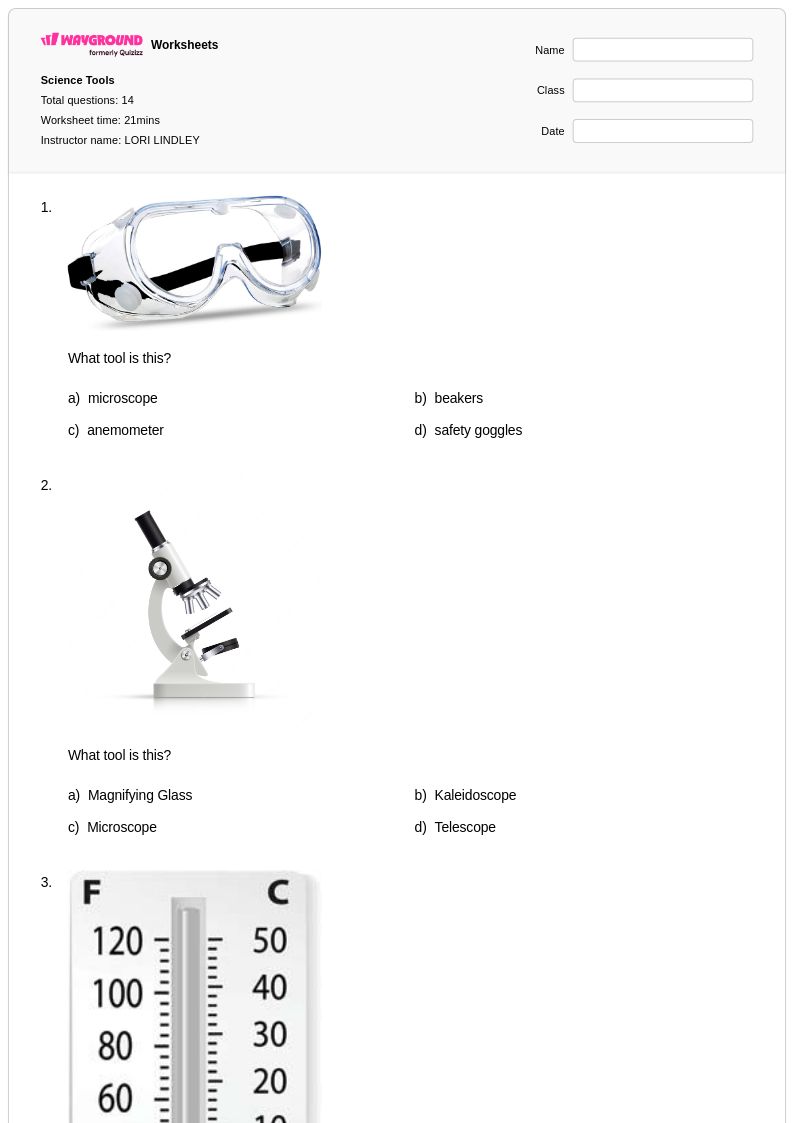
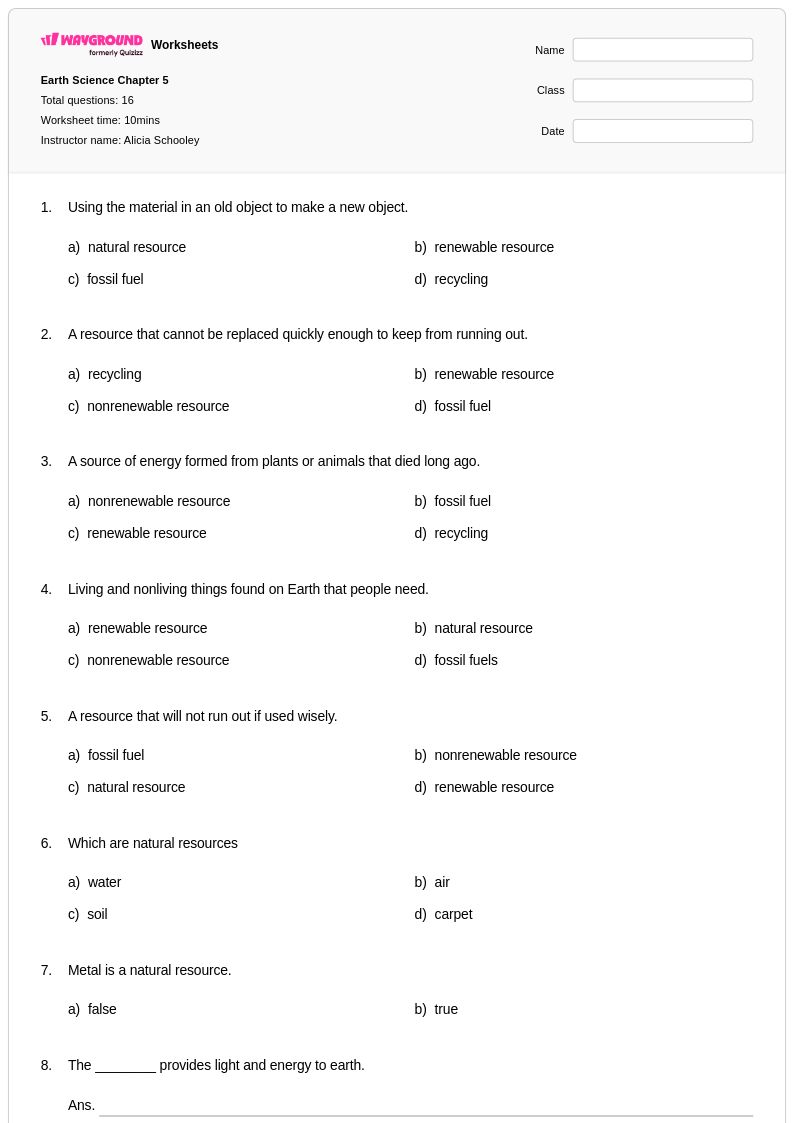
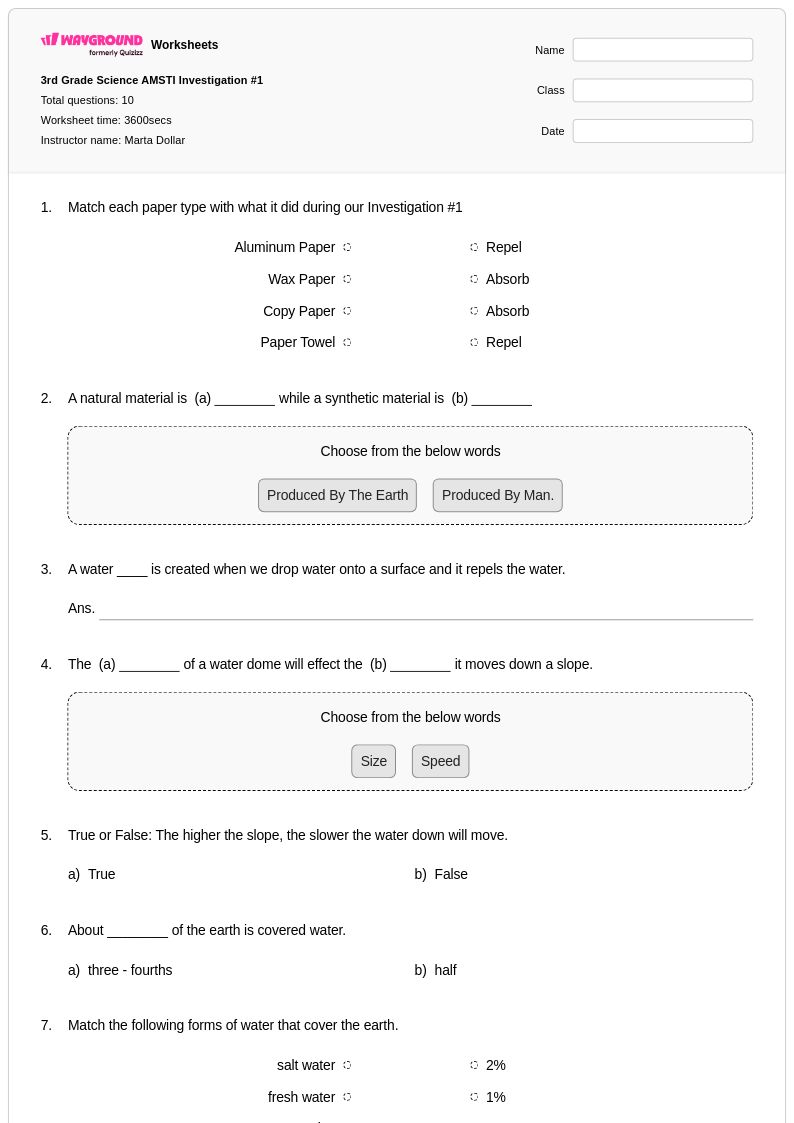
Earth Science Maps worksheets for Class 3 students available through Wayground (formerly Quizizz) provide essential foundational practice in reading, interpreting, and creating various types of scientific maps that help young learners understand our planet's features and phenomena. These comprehensive printables strengthen critical skills including map legend interpretation, scale understanding, directional navigation, and the ability to identify physical features such as mountains, rivers, lakes, and landforms on topographical representations. Students engage with practice problems that develop spatial reasoning while learning to extract meaningful information from weather maps, geological formations, and resource distribution charts. Each worksheet collection includes detailed answer keys and free pdf formats that support both independent study and guided instruction, allowing educators to seamlessly integrate map literacy into their earth science curriculum.
Wayground's extensive collection of teacher-created Earth Science Maps resources offers educators access to millions of professionally developed materials that can be easily searched, filtered, and customized to meet diverse classroom needs. The platform's robust differentiation tools enable teachers to modify worksheets for various skill levels, ensuring that all Class 3 students can successfully engage with map-based learning objectives while meeting relevant educational standards. Available in both printable pdf format and interactive digital versions, these resources support flexible lesson planning whether used for initial skill introduction, targeted remediation, or enrichment activities for advanced learners. Teachers can efficiently locate age-appropriate materials that align with their specific curriculum requirements, from basic compass rose identification to more complex tasks involving coordinate systems and map symbols, making it simple to provide consistent practice opportunities that build geographic literacy and scientific thinking skills.
FAQs
How do I teach students to read topographic maps in Earth science?
Start by teaching contour lines as the foundational concept — students need to understand that each line represents a constant elevation and that spacing between lines indicates slope steepness. Use a physical 3D model alongside a flat topographic map so students can visually connect the two representations. From there, progress to identifying specific landforms such as ridges, valleys, and depressions before introducing elevation profiles and cross-sections. Building this sequence from concrete to abstract helps students internalize spatial reasoning rather than just memorizing symbols.
What exercises help students practice interpreting contour lines and elevation changes?
Structured practice problems that move from basic map reading to more complex spatial analysis are most effective. Students benefit from exercises where they identify landforms, calculate elevation change between contour intervals, and draw or trace elevation profiles across a given transect. Worksheets that include real or realistic topographic maps give students authentic practice with the kinds of spatial relationships they'll encounter in assessments and field contexts.
What mistakes do students commonly make when reading geological and topographic maps?
One of the most frequent errors is misreading contour intervals — students often assume every line represents the same fixed value rather than reading the map's legend. Another common misconception is confusing closely spaced contour lines with broadly spaced ones, leading to inverted conclusions about slope steepness. Students also struggle to correlate geographic surface features with underlying geological processes, treating map reading as a visual exercise rather than a scientific interpretation task. Targeted practice with answer key explanations helps students catch and correct these reasoning errors independently.
How do I teach students to use coordinate systems in Earth science mapping?
Begin with grid-based coordinate systems before introducing latitude and longitude, since rectangular grids provide a more intuitive entry point for spatial location. Once students can reliably plot and read grid coordinates, introduce the geographic coordinate system with real map examples so the abstract degree-based notation has visible meaning. Practice should include both locating a point from given coordinates and identifying coordinates from a marked location, since these are distinct skills that require separate reinforcement.
How can I use Earth Science Maps worksheets to support different skill levels in my class?
Earth Science Maps worksheets work well for differentiation because the skill progression from basic coordinate plotting to multi-layer scientific map interpretation naturally scaffolds across ability levels. Assign foundational map-reading exercises to students who need reinforcement of core vocabulary and contour line concepts, while directing advanced students toward problems involving weather maps, seismic charts, or cross-referential geographic analysis. On Wayground, teachers can also apply individual accommodations such as read aloud, reduced answer choices, and extended time to specific students, so the same worksheet can serve the whole class without requiring separate versions.
How do I use Wayground's Earth Science Maps worksheets in my classroom?
Wayground's Earth Science Maps worksheets are available as printable PDFs for traditional classroom use and in digital formats for technology-integrated environments, making them flexible for in-person, hybrid, or remote instruction. Teachers can also host worksheets directly as a quiz on Wayground, enabling real-time student responses and immediate progress monitoring. Each worksheet includes a complete answer key, supporting both teacher-led review and independent student practice without additional prep.