Free Printable Hypothesis, Theory and Law worksheets
Explore Wayground's free hypothesis, theory and law worksheets with printables and answer keys that help students master the distinctions between scientific hypotheses, theories, and laws through engaging practice problems and PDF resources.
Explore printable Hypothesis, Theory and Law worksheets
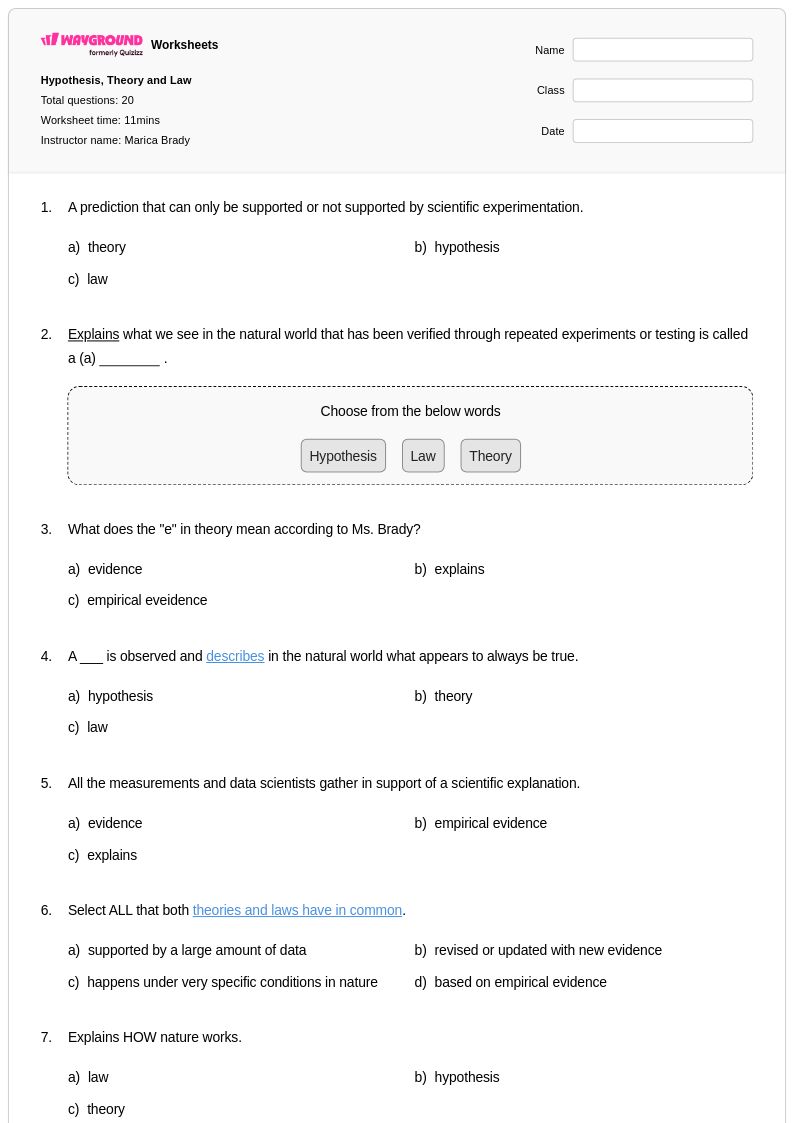
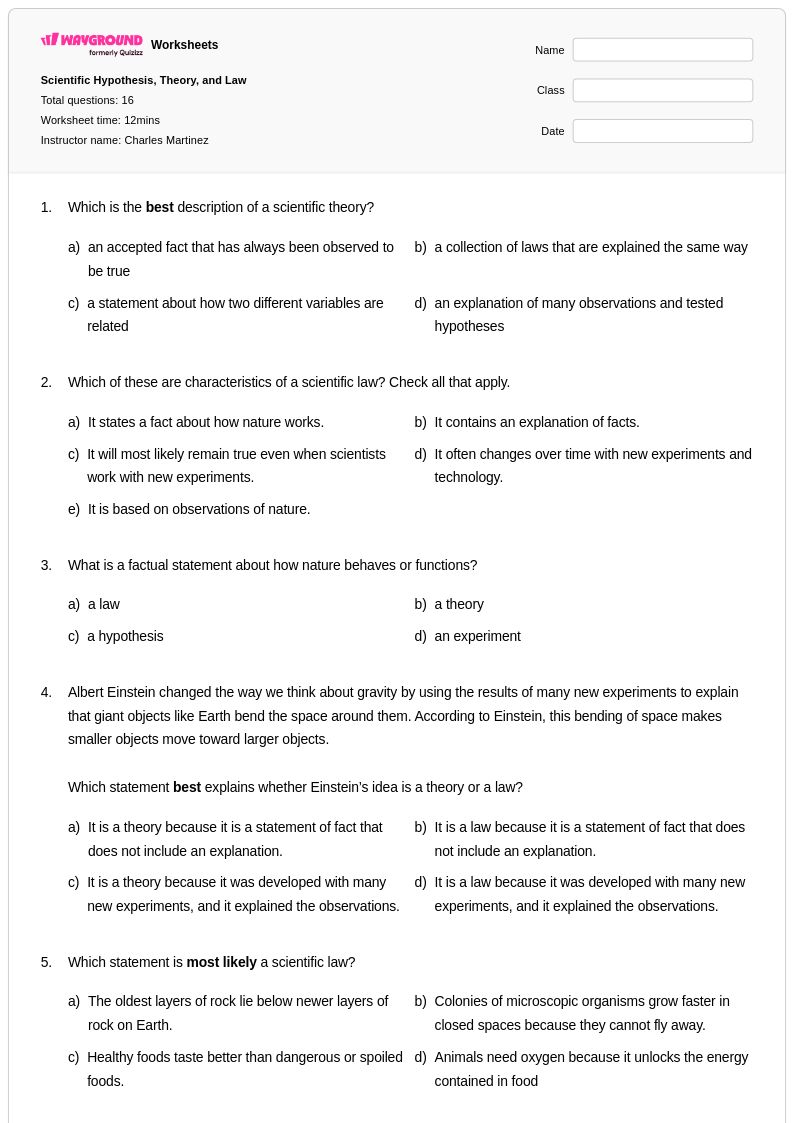
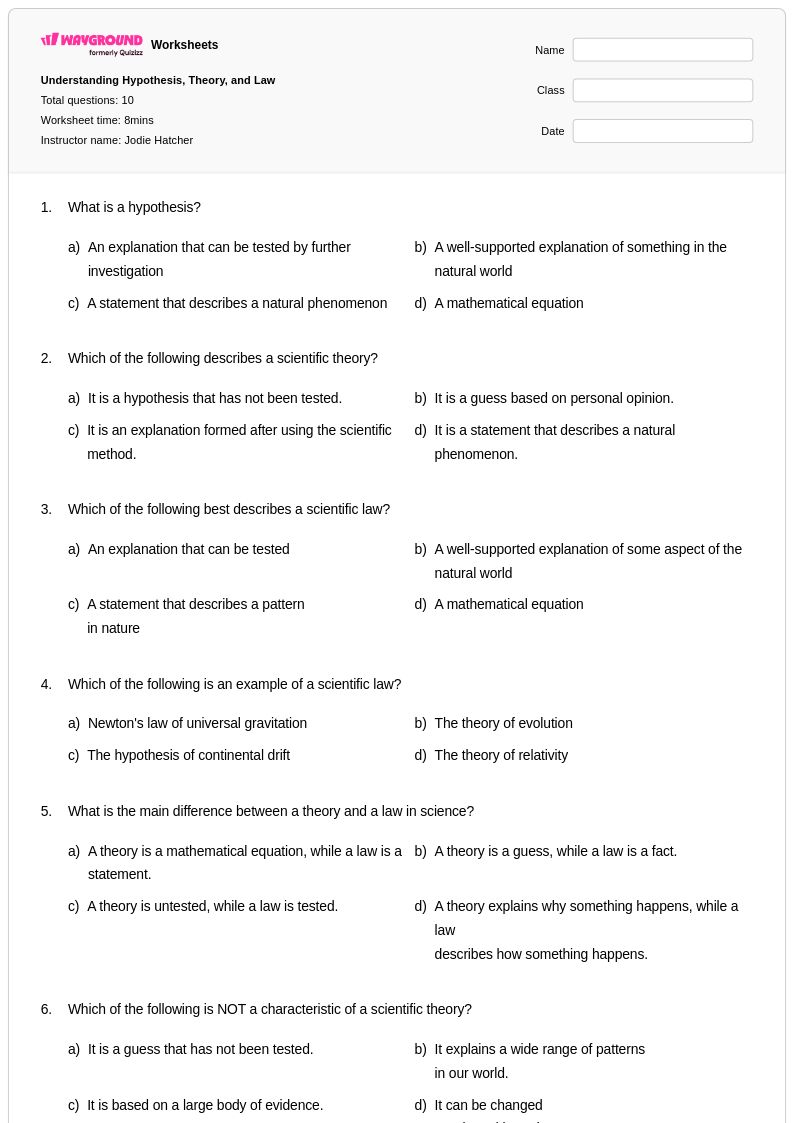
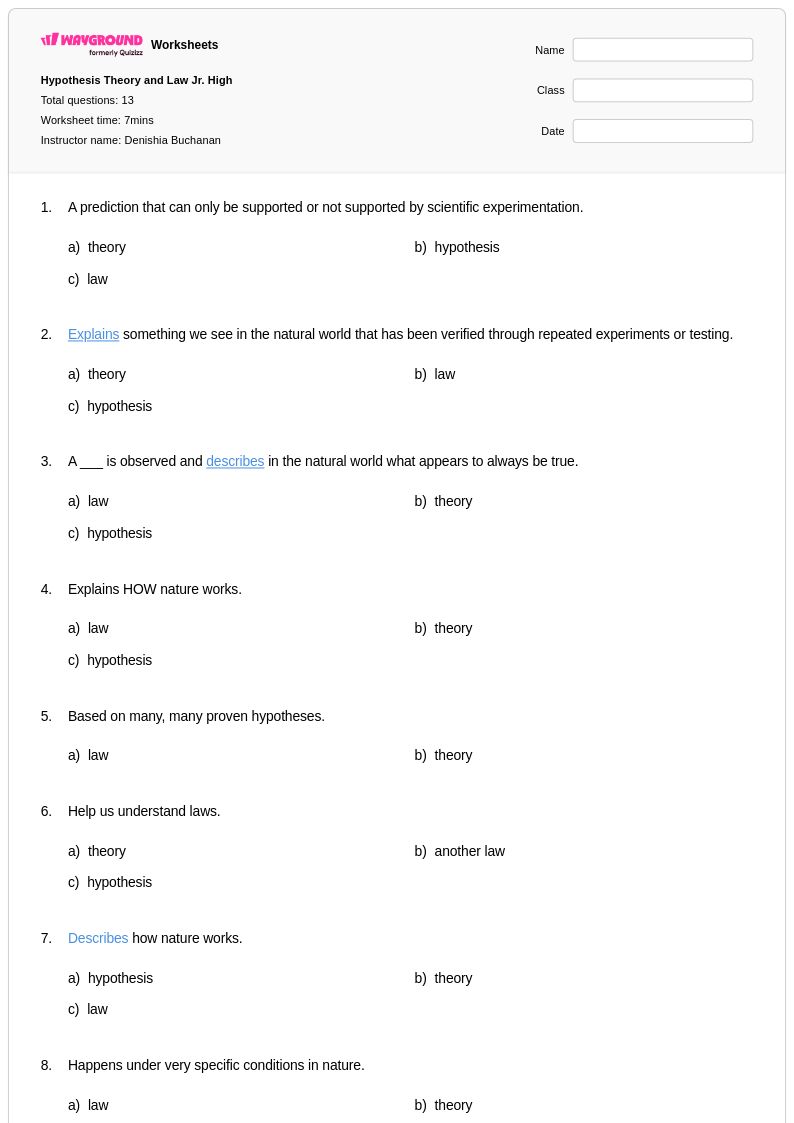
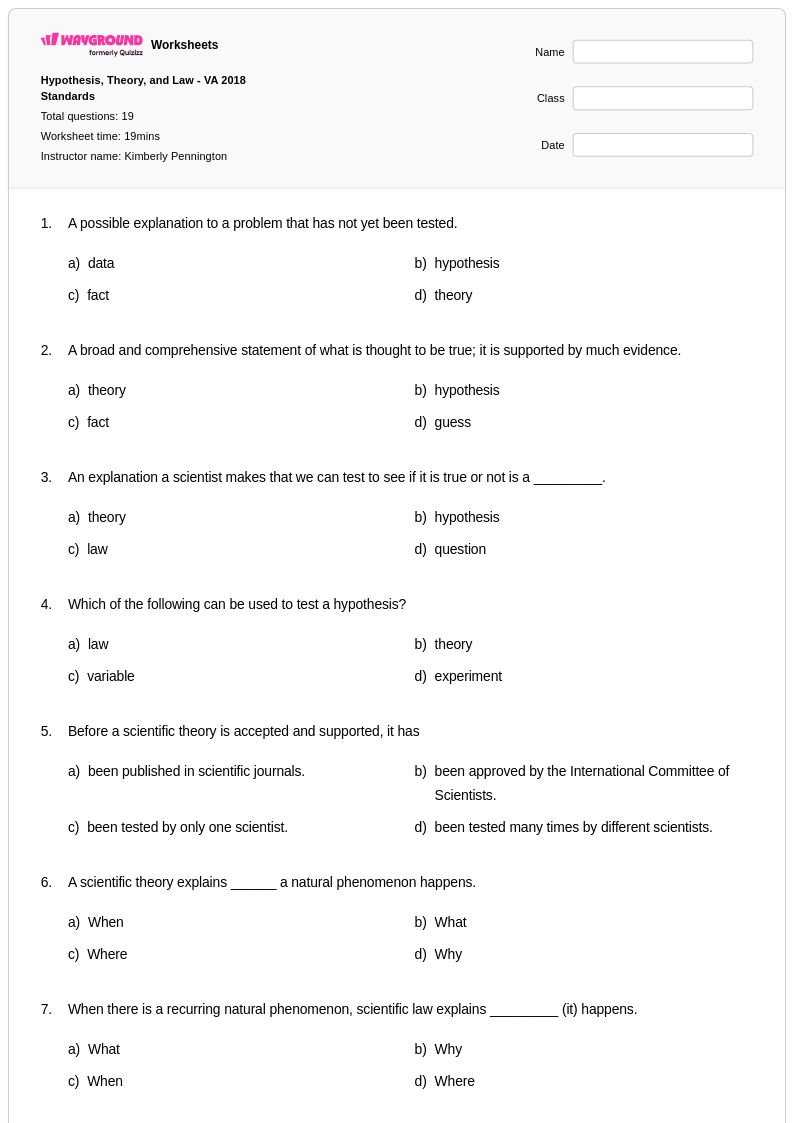
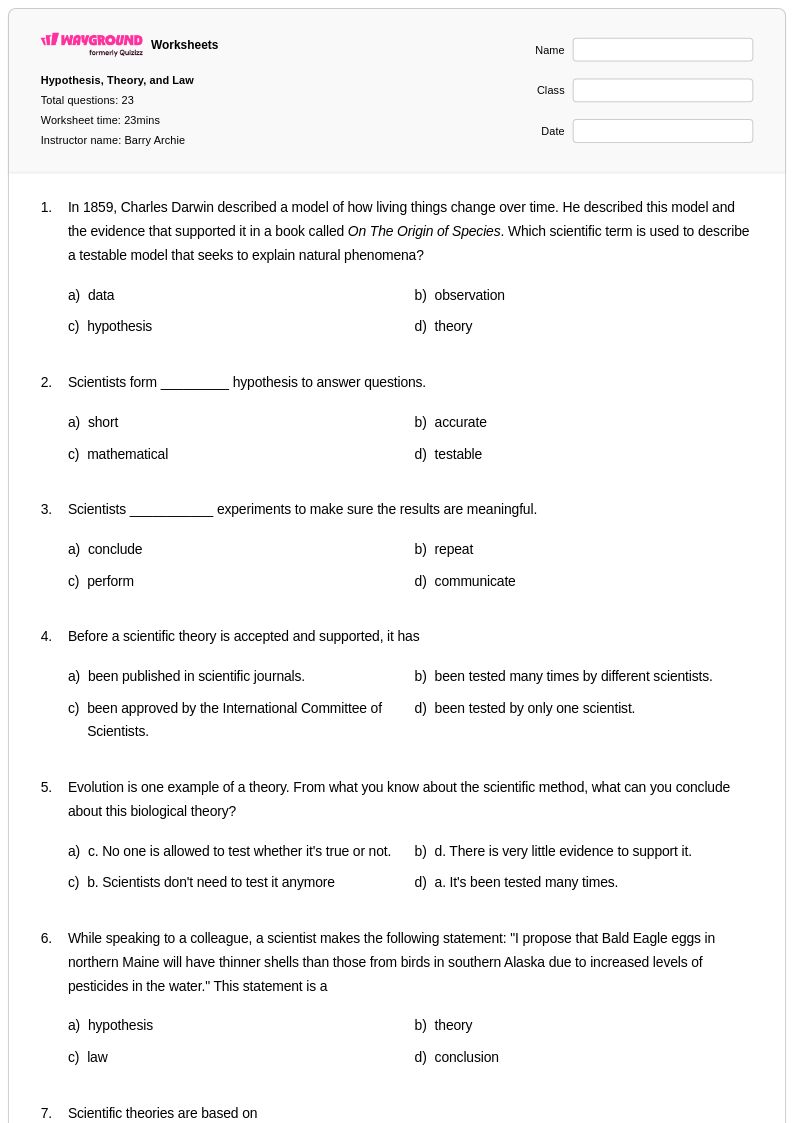
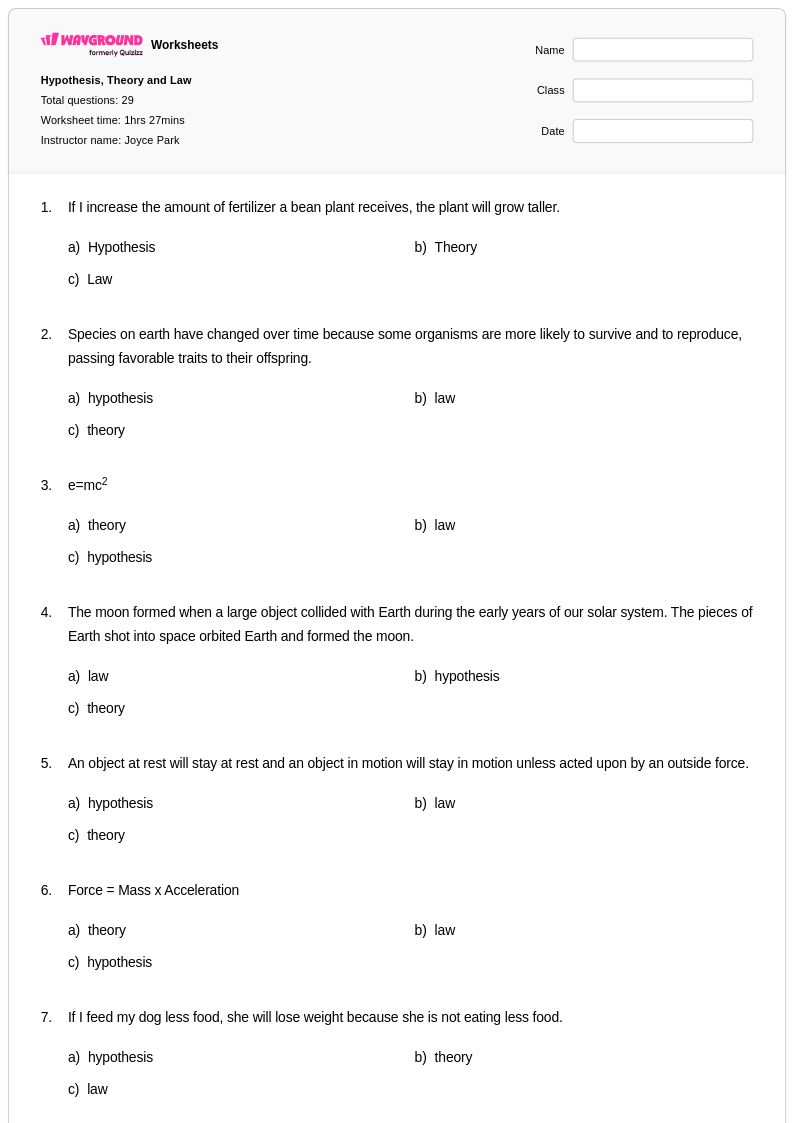
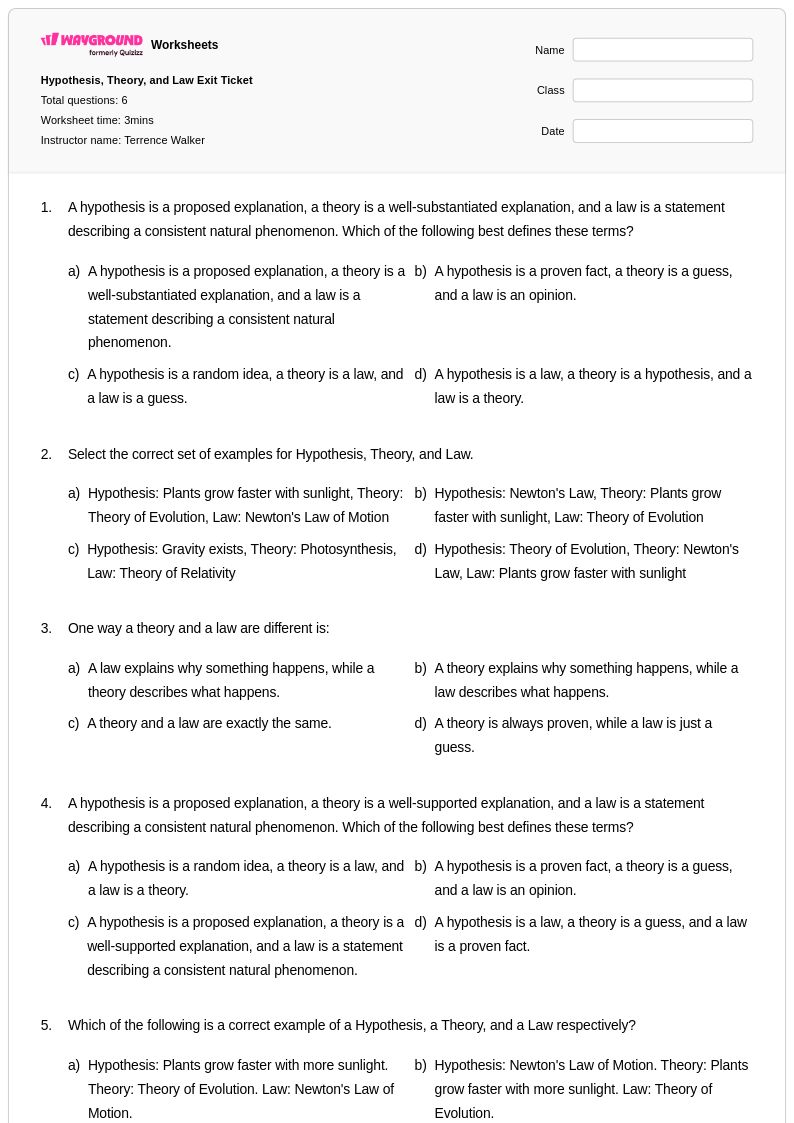
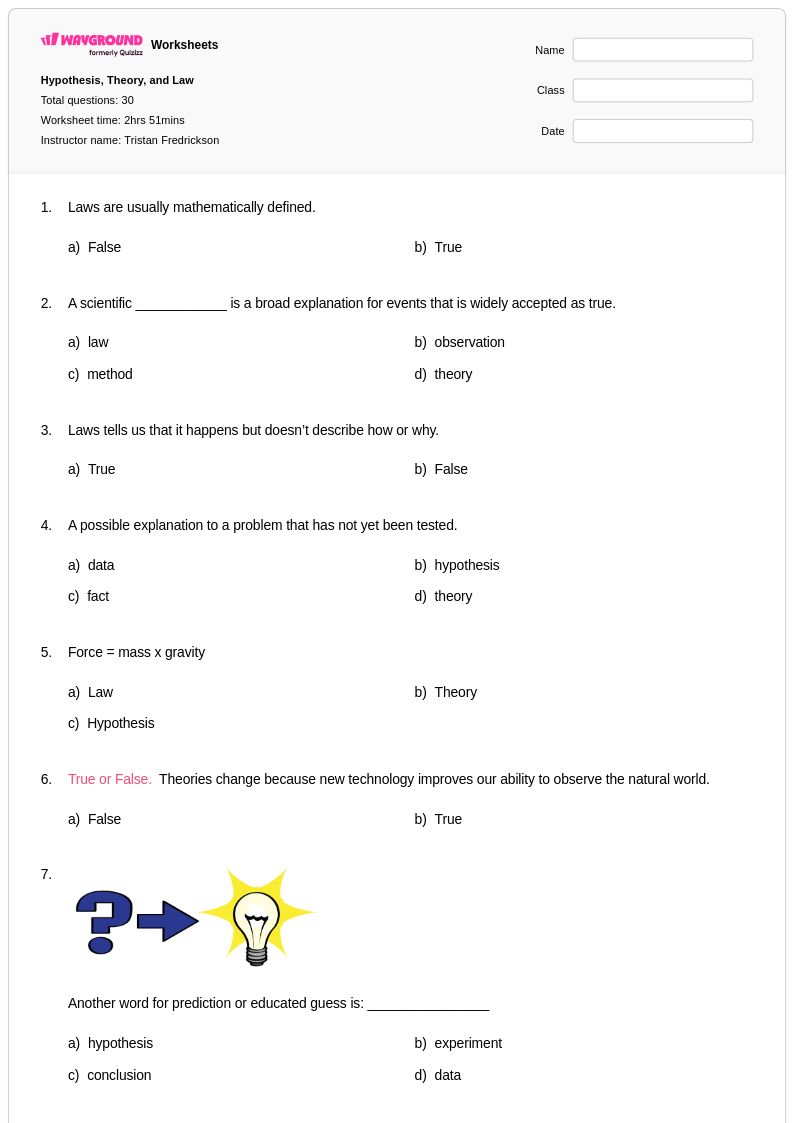
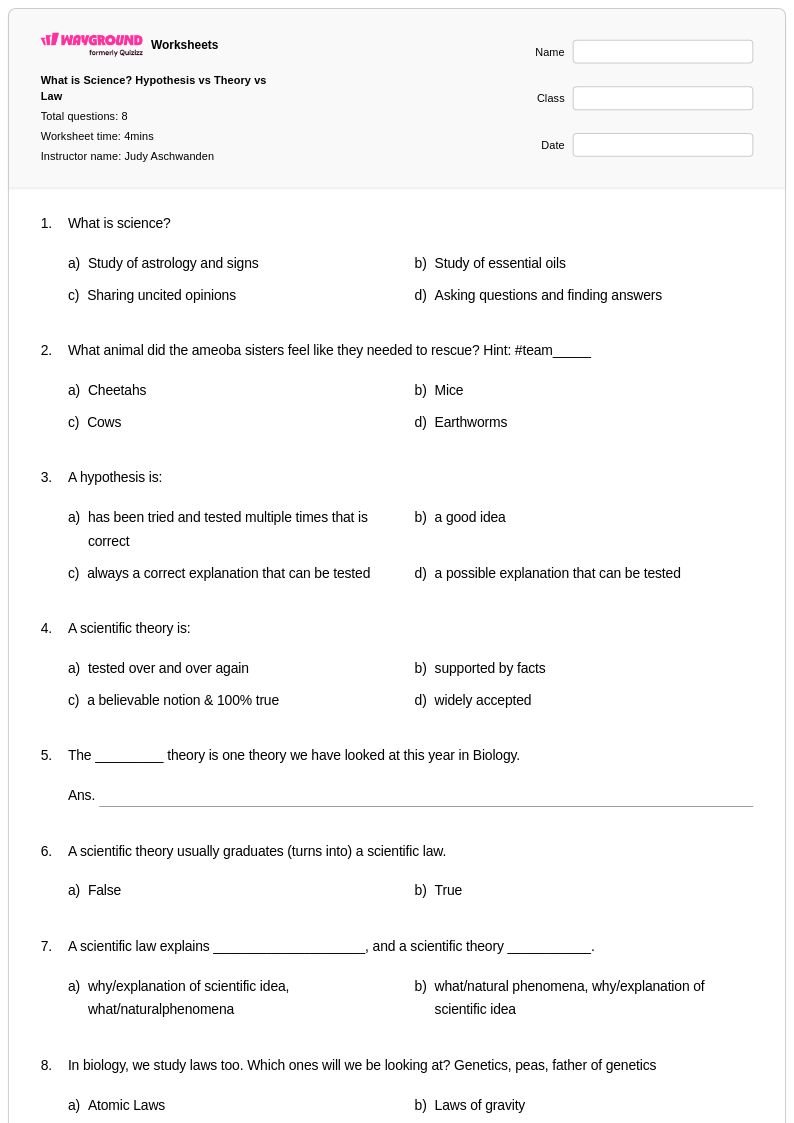
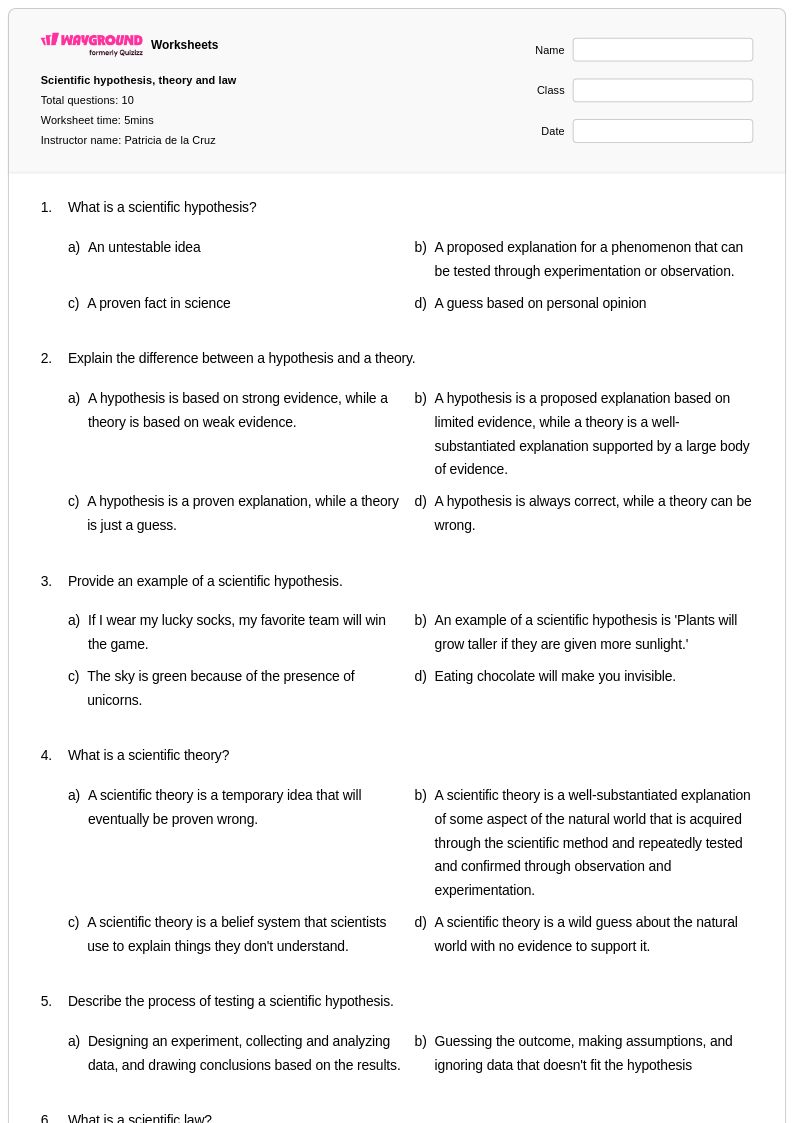
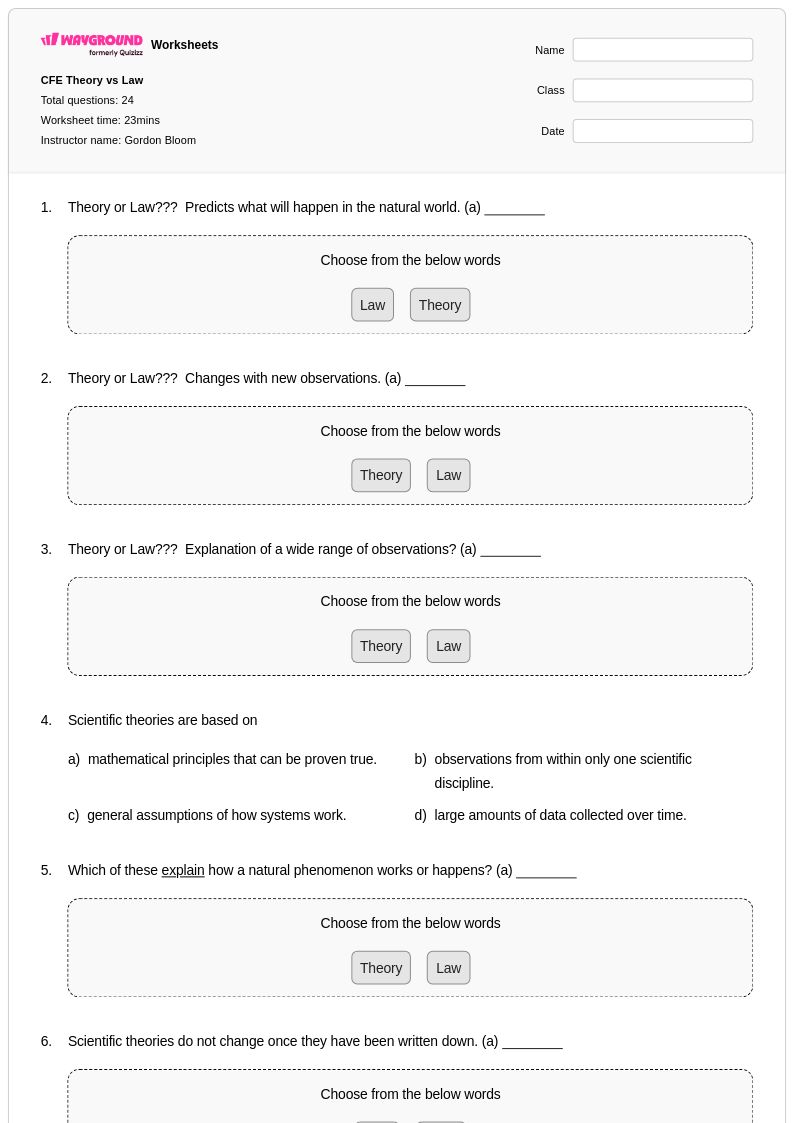
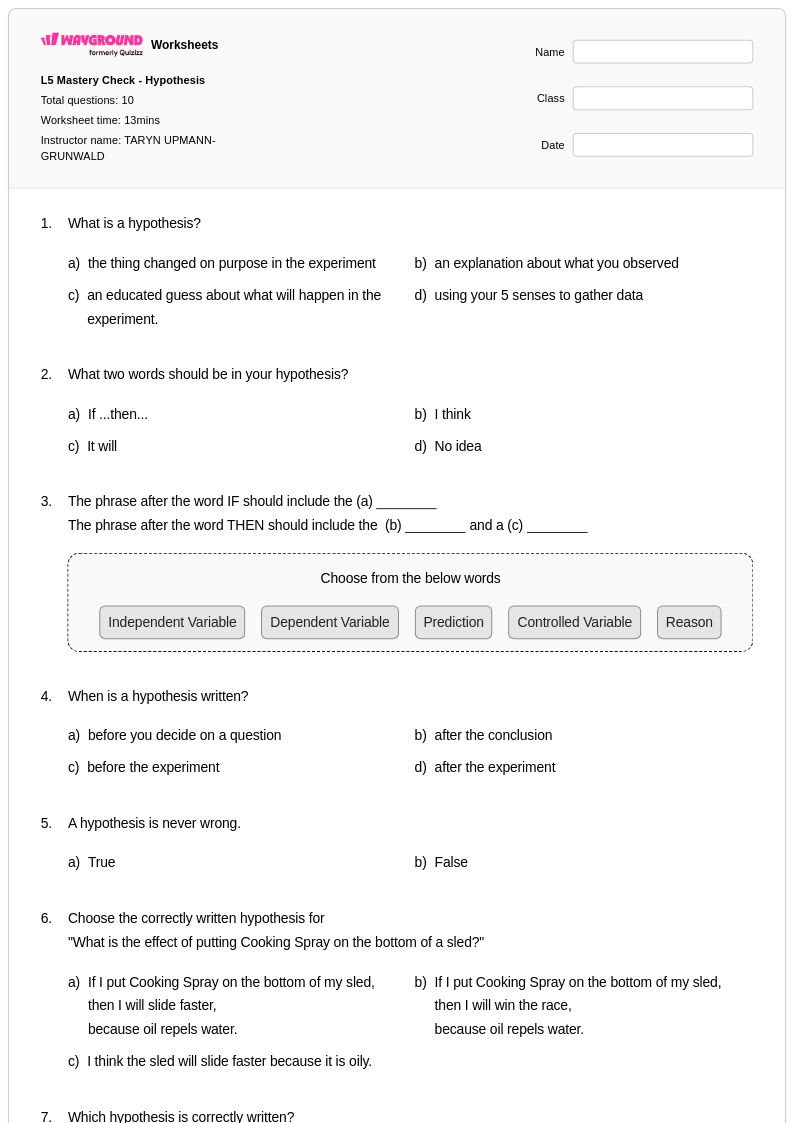
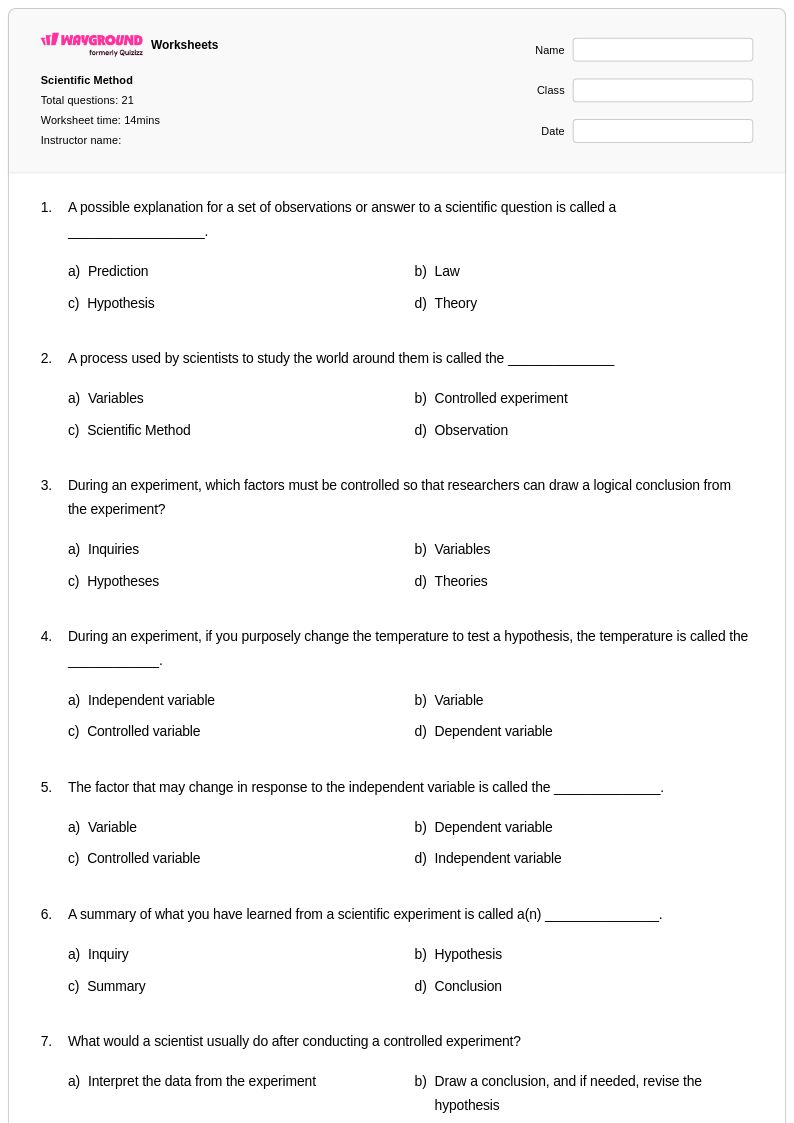
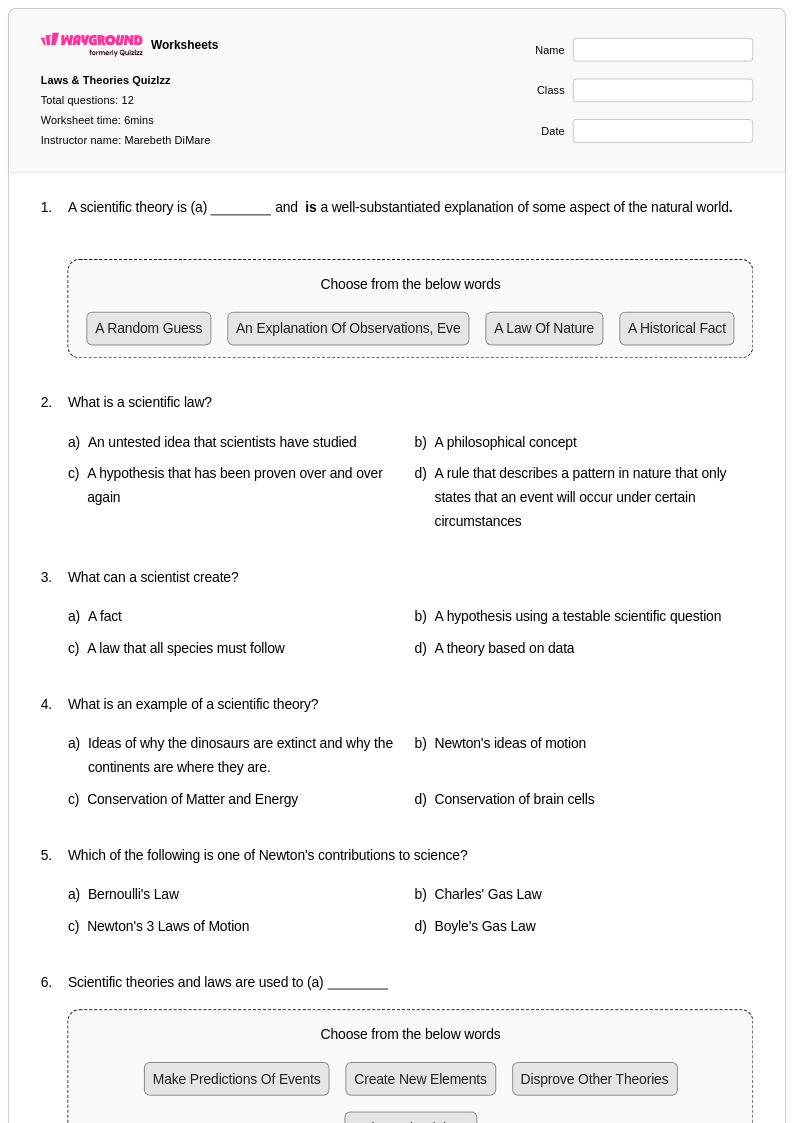
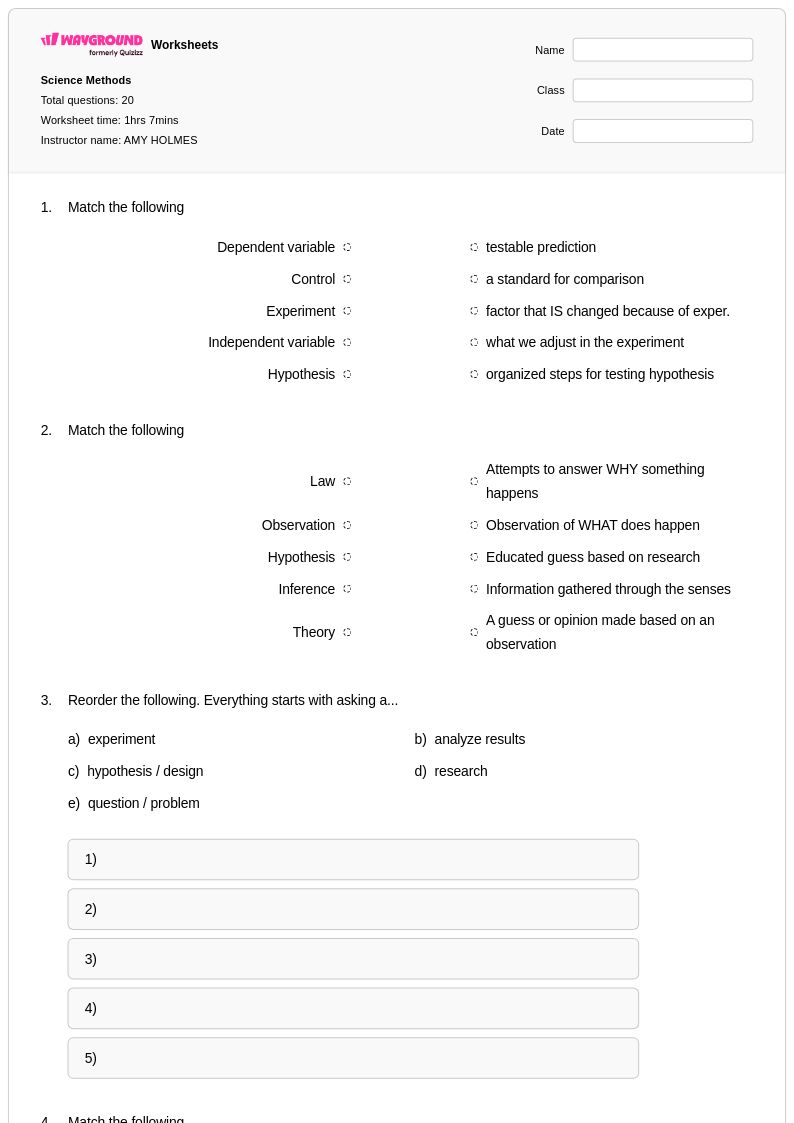
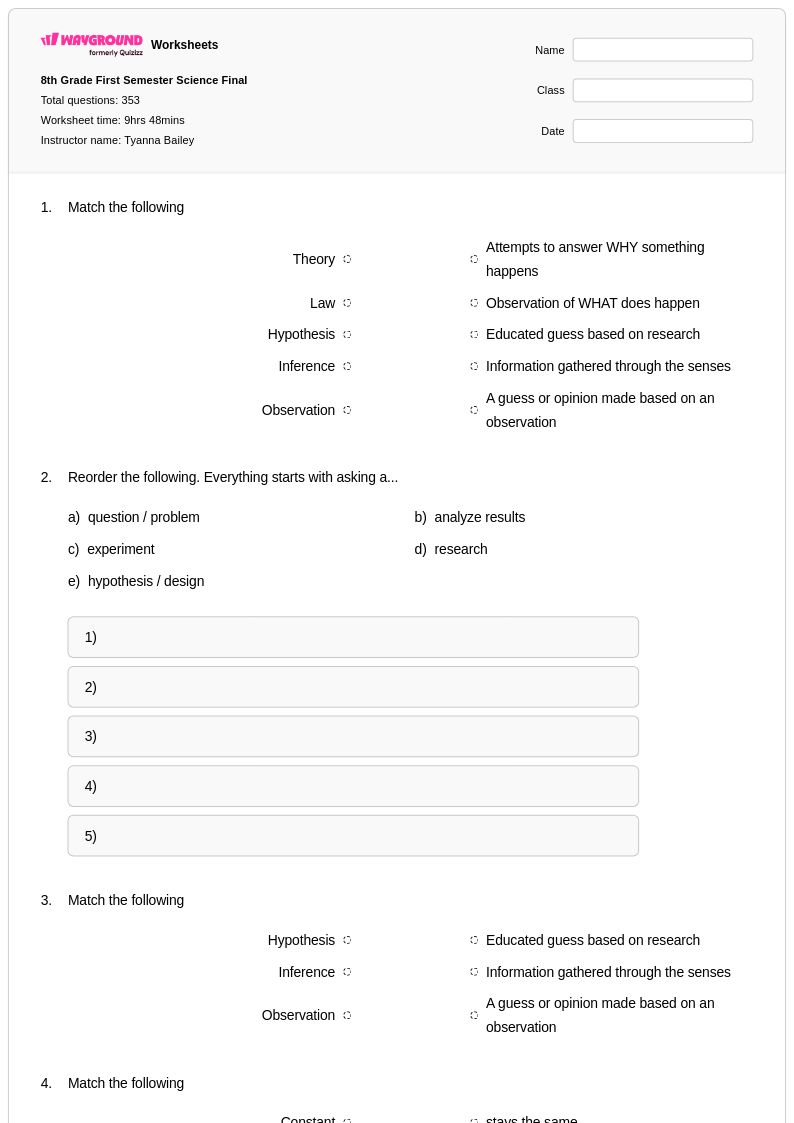
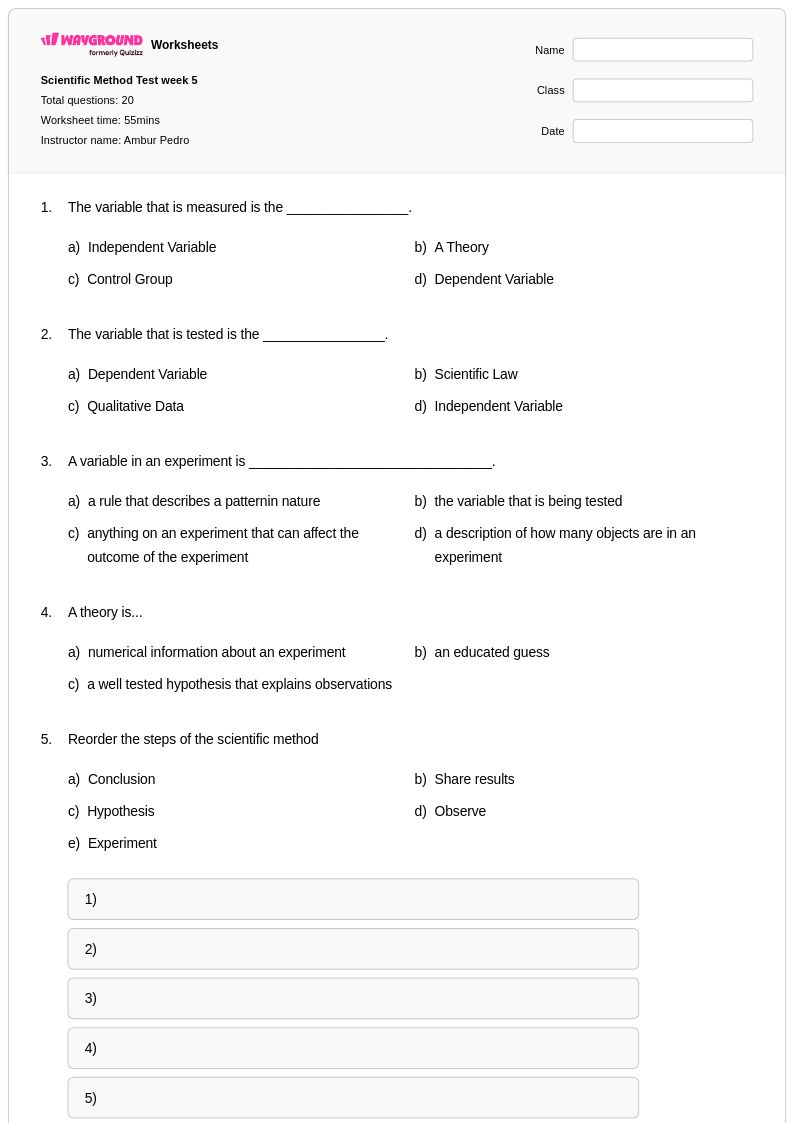
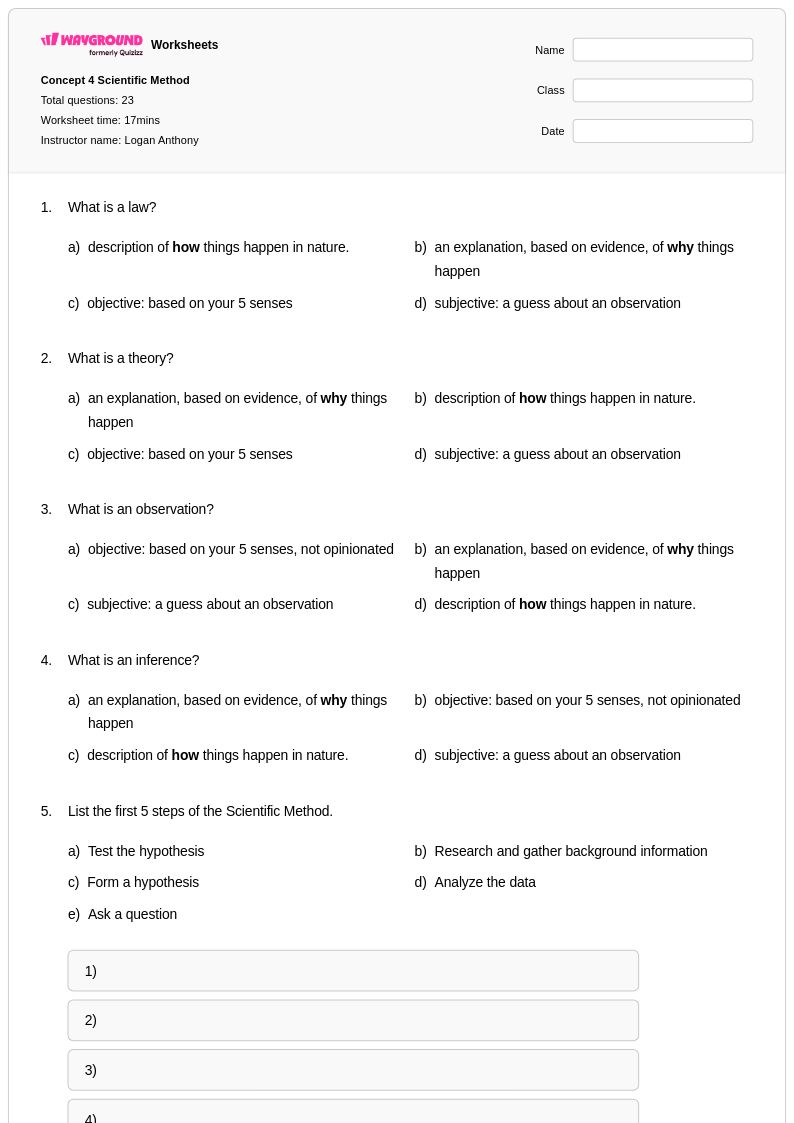
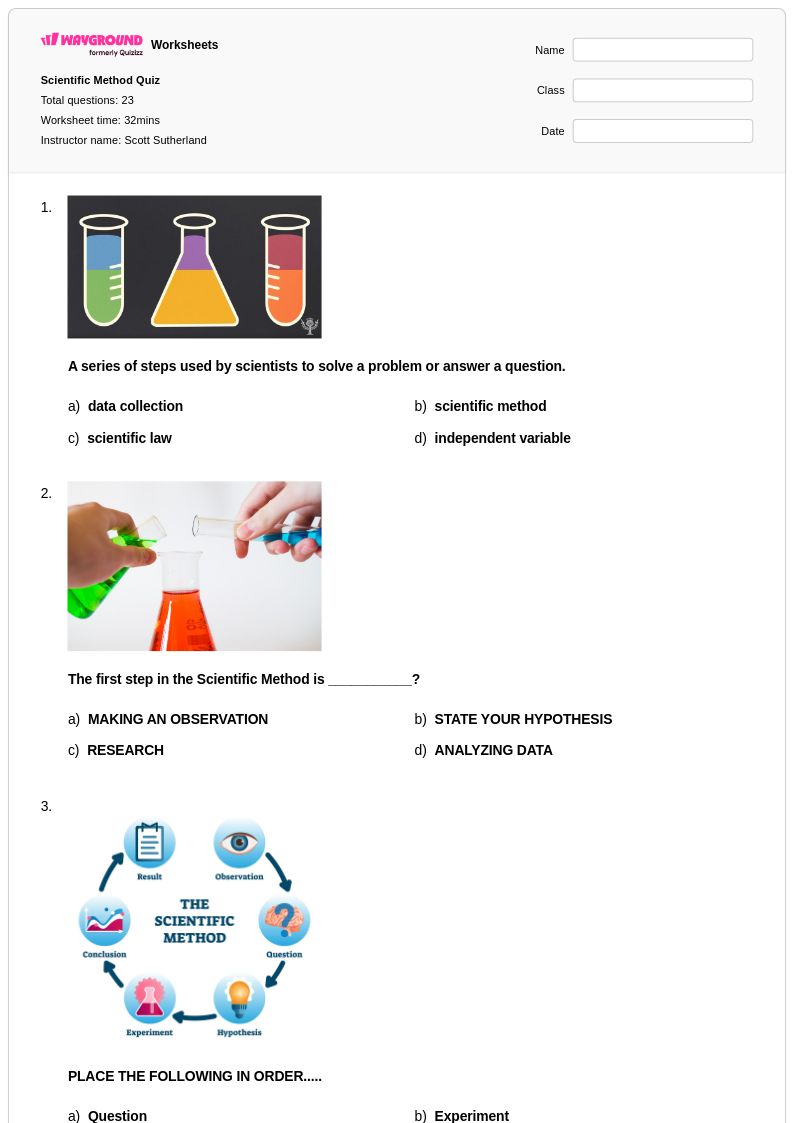
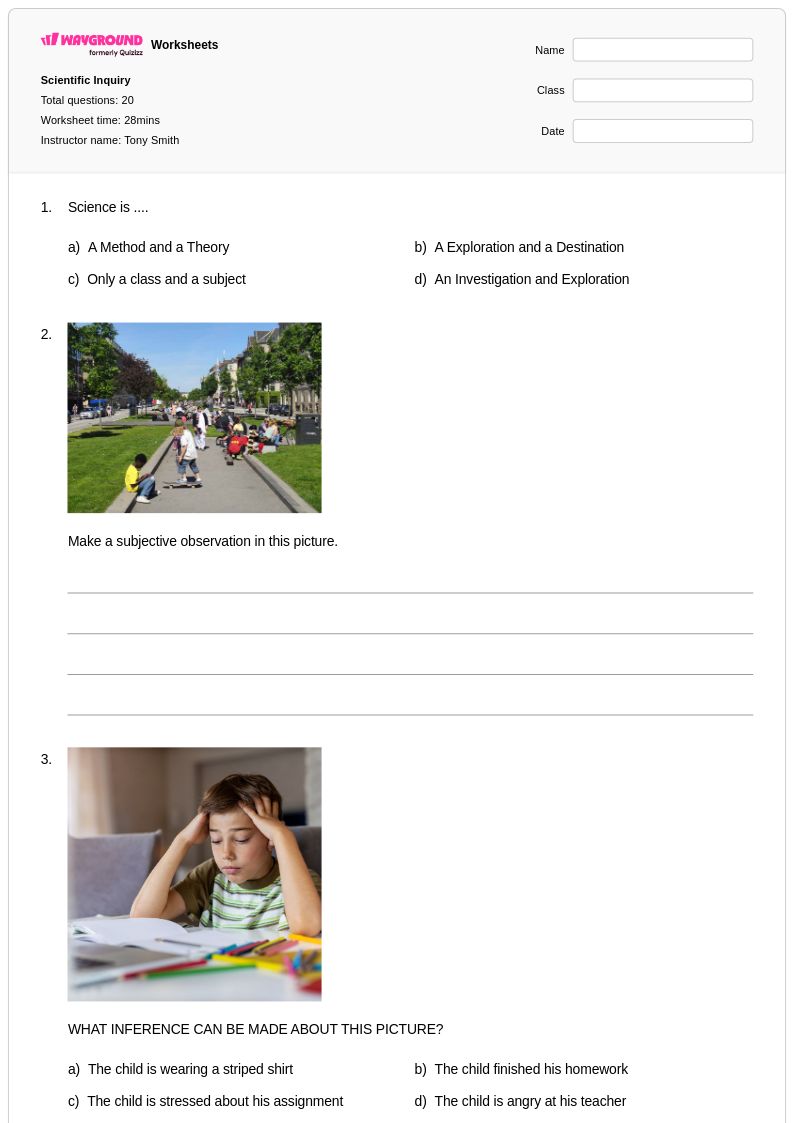
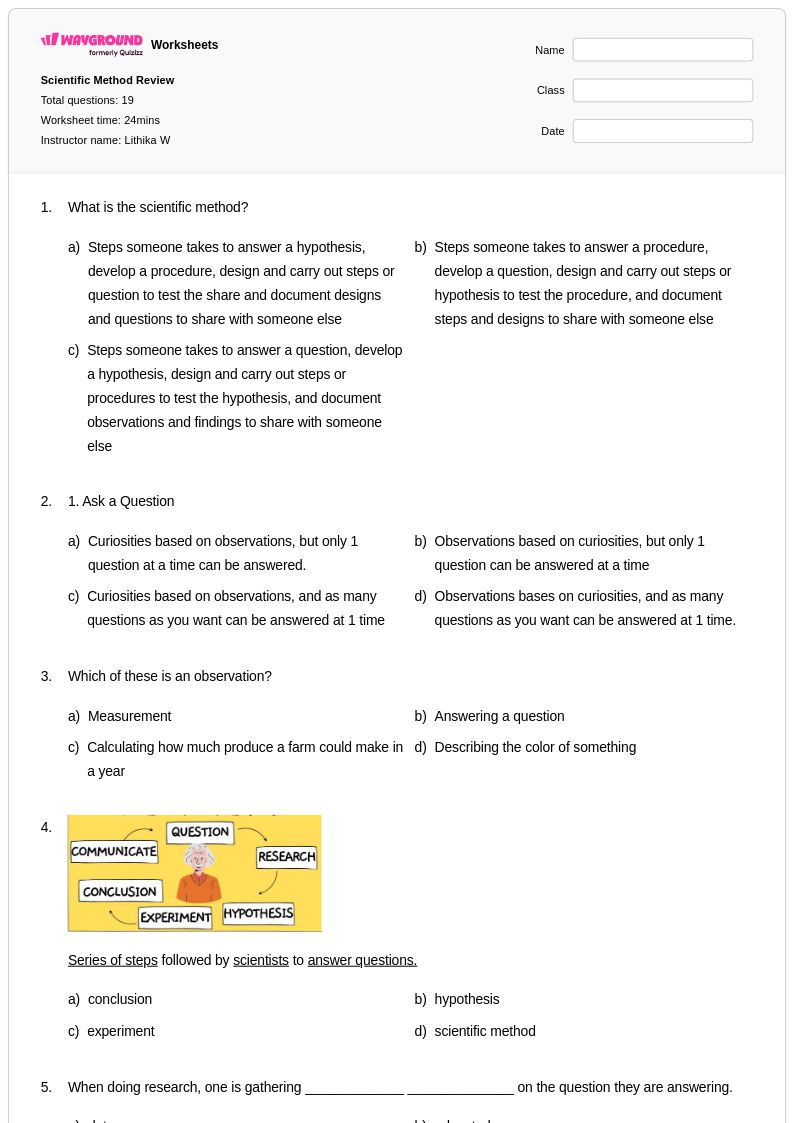
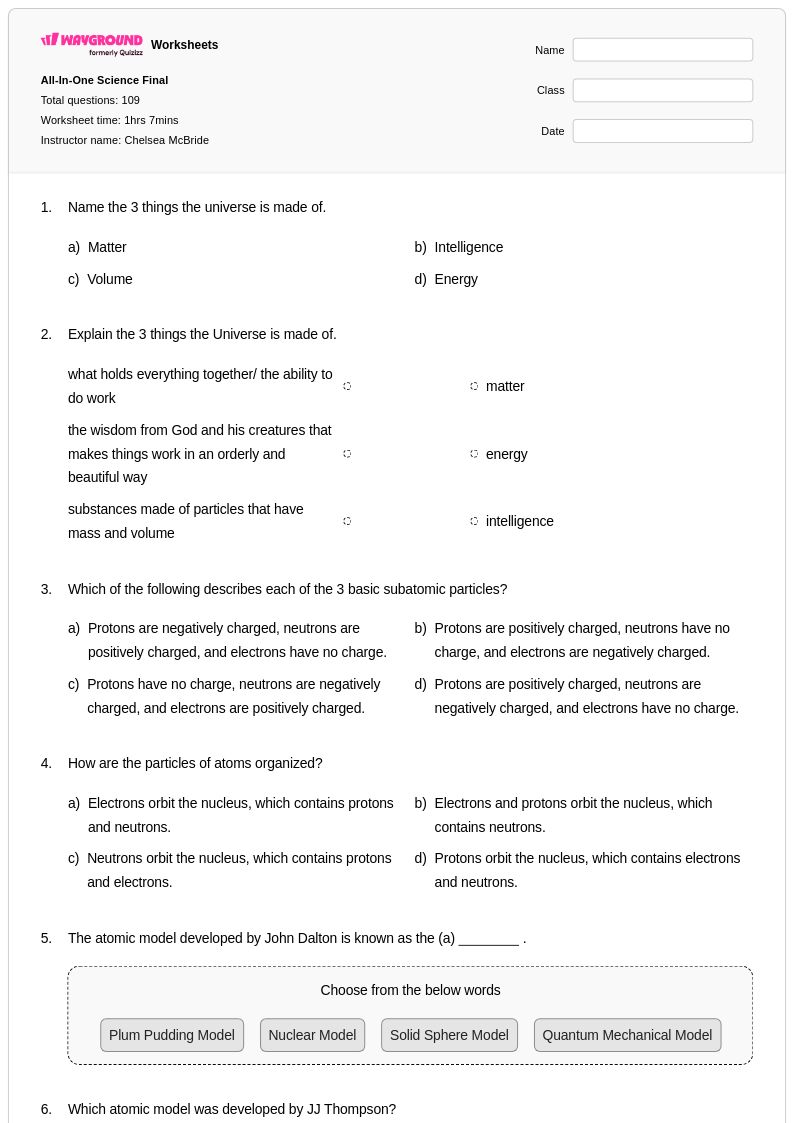
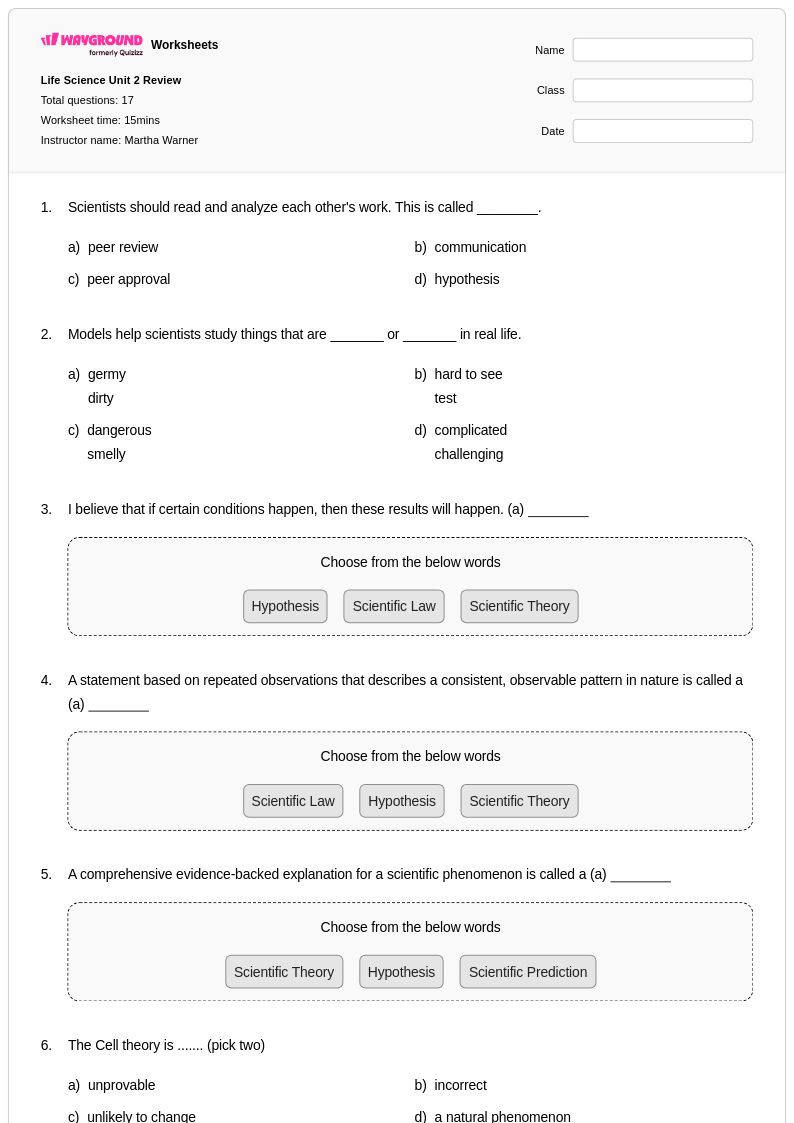
Hypothesis, theory, and law worksheets available through Wayground (formerly Quizizz) provide essential practice for students learning to distinguish between these fundamental scientific concepts that form the backbone of scientific inquiry. These comprehensive worksheets strengthen critical thinking skills by helping students understand that a hypothesis is a testable prediction, a theory is a well-substantiated explanation supported by extensive evidence, and a scientific law describes consistent natural phenomena without explaining why they occur. Through carefully designed practice problems, students develop the analytical skills necessary to categorize scientific statements correctly, evaluate evidence quality, and understand the hierarchical nature of scientific knowledge. Each worksheet includes detailed answer keys and is available as free printables in pdf format, making them accessible resources for reinforcing these challenging conceptual distinctions that students often struggle to master.
Wayground (formerly Quizizz) supports science educators with an extensive collection of teacher-created resources focused on hypothesis, theory, and law concepts, drawn from millions of high-quality worksheets developed by experienced educators worldwide. The platform's robust search and filtering capabilities allow teachers to quickly locate materials aligned with specific science standards and customize content to match their students' varying ability levels and learning needs. These differentiation tools enable educators to provide targeted remediation for students who struggle with abstract scientific concepts while offering enrichment opportunities for advanced learners ready to explore more complex applications. Available in both printable and digital formats including downloadable pdf versions, these resources streamline lesson planning and provide flexible options for skill practice, whether teachers need quick formative assessments, homework assignments, or comprehensive review materials to solidify student understanding of these cornerstone scientific principles.
FAQs
How do I teach students the difference between a hypothesis, theory, and law?
Start by grounding each term in a precise definition: a hypothesis is a testable, falsifiable prediction made before an investigation; a theory is a well-substantiated explanation built from extensive, repeated evidence; and a scientific law describes a consistent pattern in nature without explaining the mechanism behind it. A common classroom strategy is to present real scientific examples, such as Newton's Law of Gravity versus the Theory of Evolution, and ask students to justify why each is classified the way it is. This classification practice forces students to engage with the criteria for each term rather than memorizing definitions in isolation.
What exercises help students practice distinguishing between hypothesis, theory, and law?
Categorization activities are the most effective practice format for this topic. Give students a set of scientific statements and ask them to label each as a hypothesis, theory, or law, then justify their reasoning in writing. Sorting cards, scenario-based worksheets, and evidence-evaluation problems all build the analytical skills students need to apply these distinctions accurately rather than recalling them by rote.
What mistakes do students commonly make when learning about hypothesis, theory, and law?
The most persistent misconception is treating 'theory' as a synonym for 'guess' or an unproven idea, which leads students to incorrectly rank theories as less credible than laws. Students also frequently assume that hypotheses automatically become theories and then laws over time, implying a linear progression that does not reflect how science actually works. Addressing these errors explicitly, with counterexamples like the germ theory of disease, helps students restructure their understanding before it becomes entrenched.
How can I use hypothesis, theory, and law worksheets in my science class?
These worksheets work well as introductory guided practice, mid-unit formative checks, or pre-assessment tools before a unit on scientific inquiry. On Wayground, hypothesis, theory, and law worksheets are available as printable PDFs for traditional classroom use and in digital formats for technology-integrated environments, and teachers can also host them as a quiz directly on the platform. Digital delivery allows teachers to assign accommodations to individual students, such as read aloud support or reduced answer choices, without disrupting the rest of the class.
How do I help students who are struggling with the concept of scientific theories?
Students who struggle with scientific theories typically need repeated exposure to concrete, familiar examples before abstract definitions click. Pairing the definition with case studies, such as atomic theory or plate tectonics, and asking students to identify the evidence that supports each theory makes the concept tangible. On Wayground, teachers can assign individual accommodations like extended time or read aloud to students who need additional support, while the rest of the class works through standard settings.
Are there hypothesis, theory, and law resources aligned to science standards?
Yes. Wayground's search and filtering tools allow teachers to locate hypothesis, theory, and law materials aligned to specific science standards and to filter by skill level or content focus. Because the platform draws from worksheets developed by experienced educators worldwide, teachers can find resources that match the exact framing their curriculum uses for scientific inquiry concepts.