Free Printable Identifying Opposites Worksheets for Class 2
Class 2 students can master identifying opposites with our free printable worksheets and practice problems, complete with answer keys to help young learners understand antonyms through engaging PDF activities.
Explore printable Identifying Opposites worksheets for Class 2
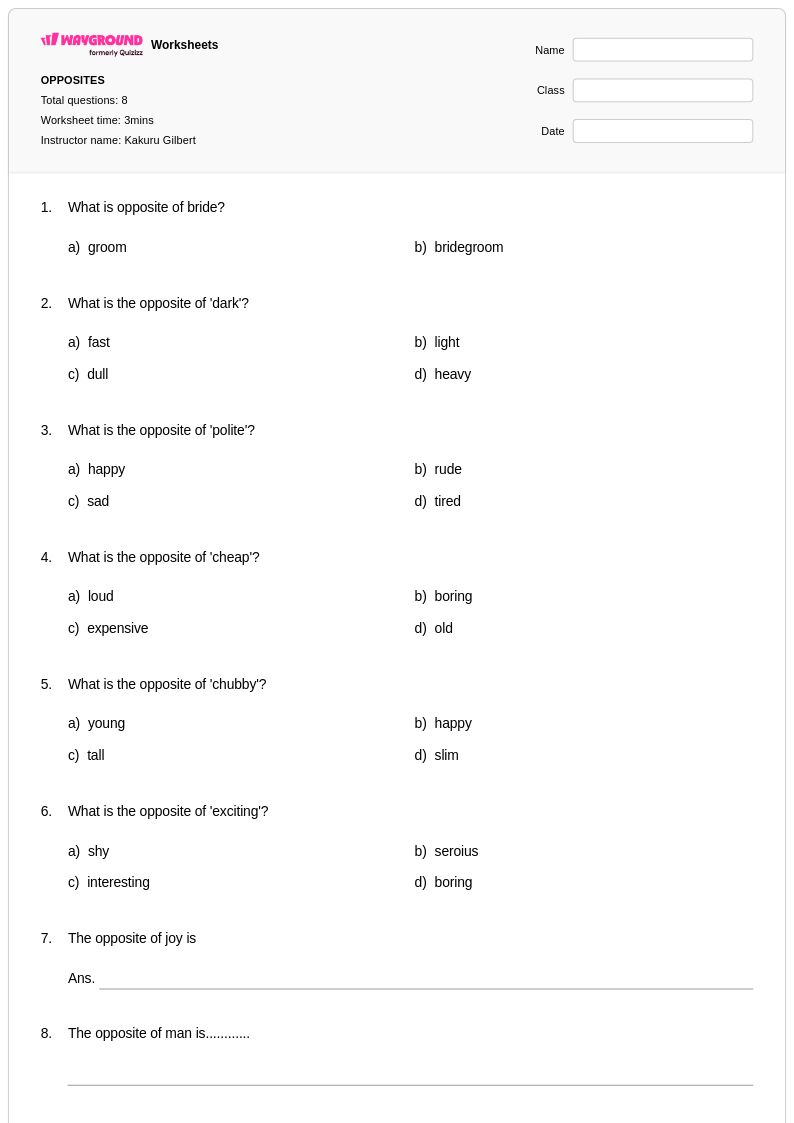
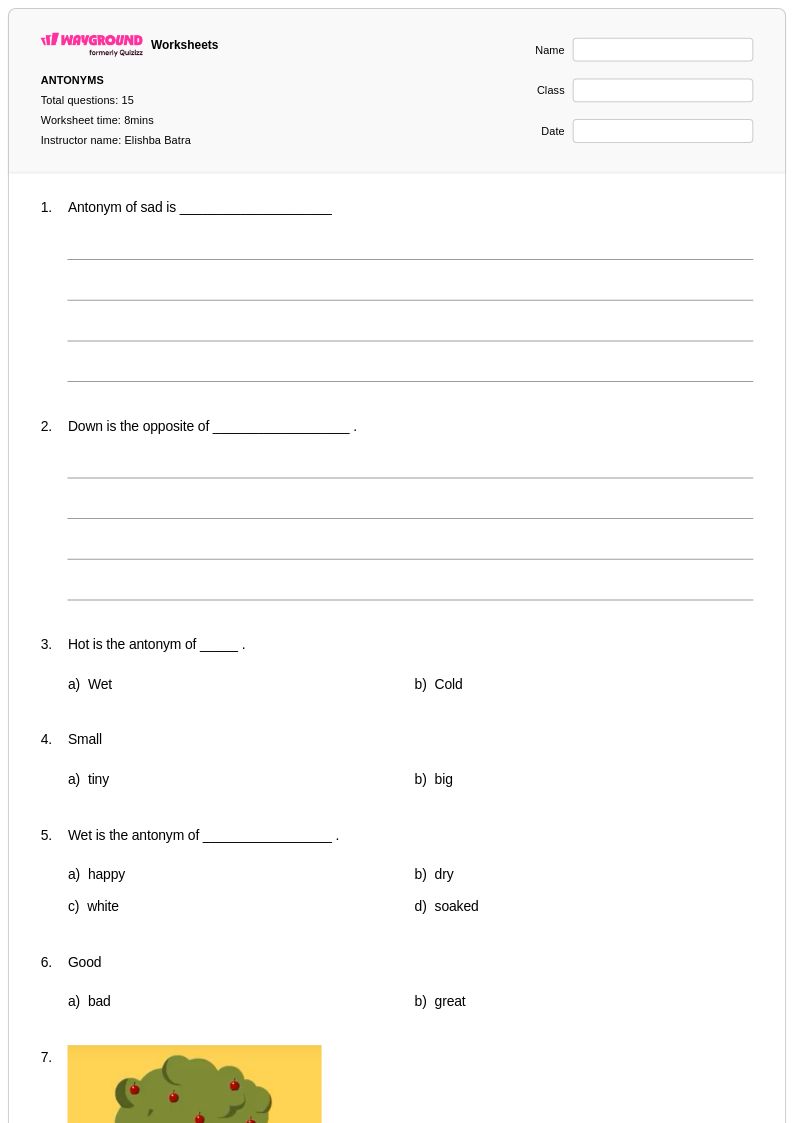
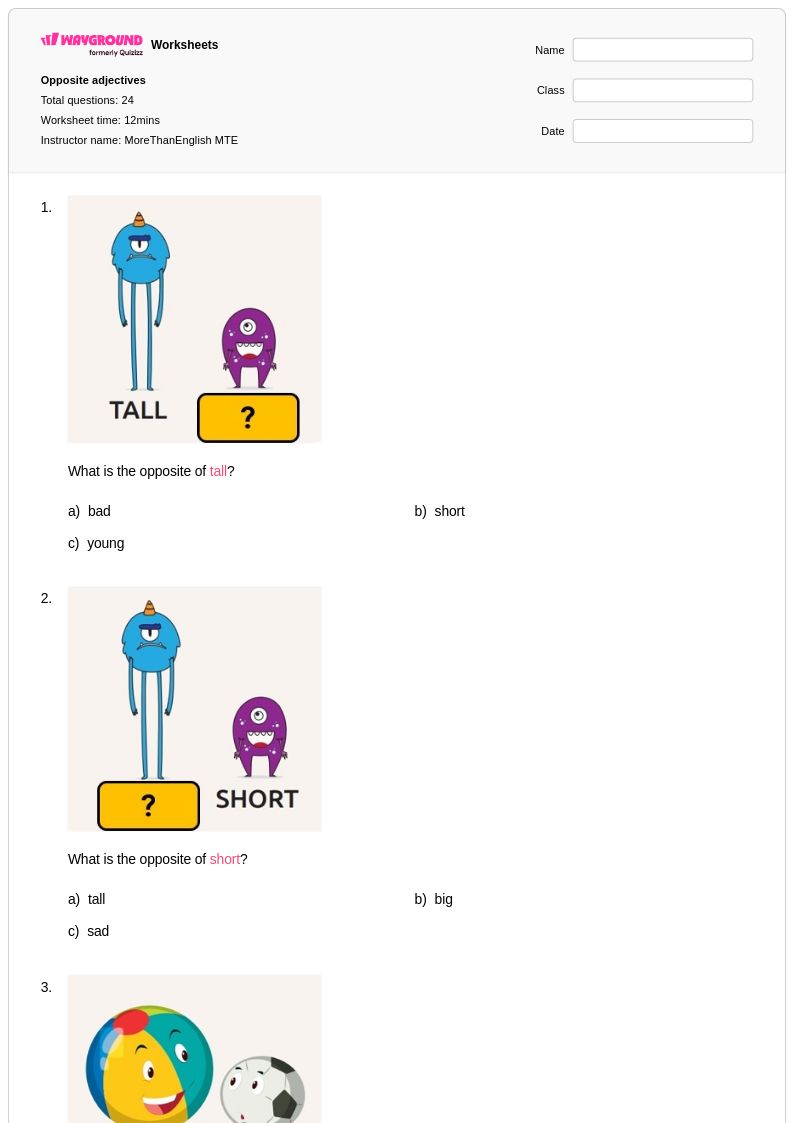
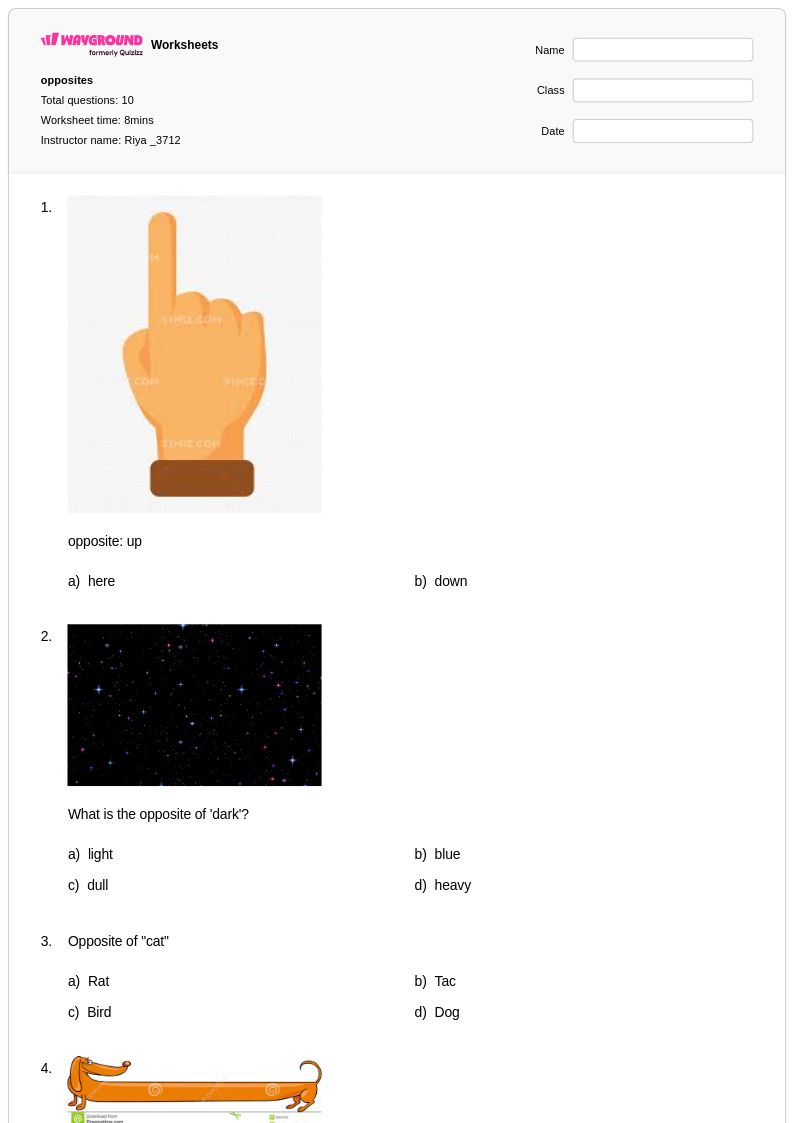
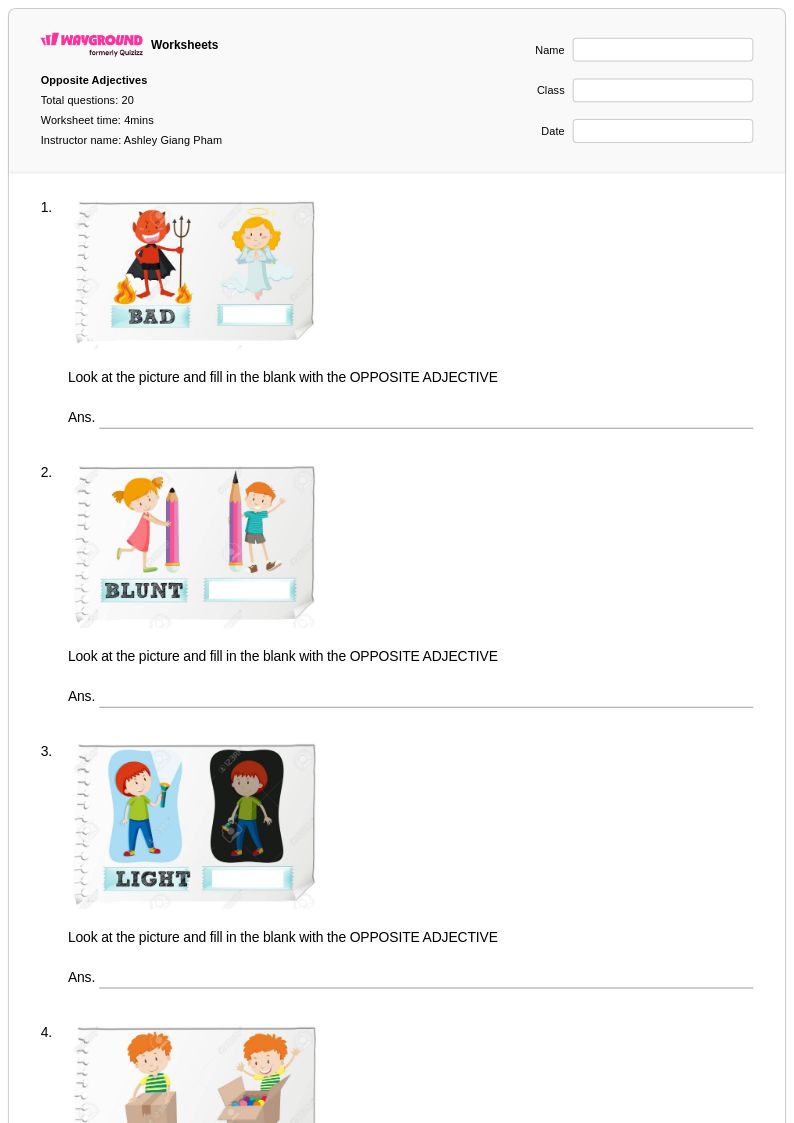
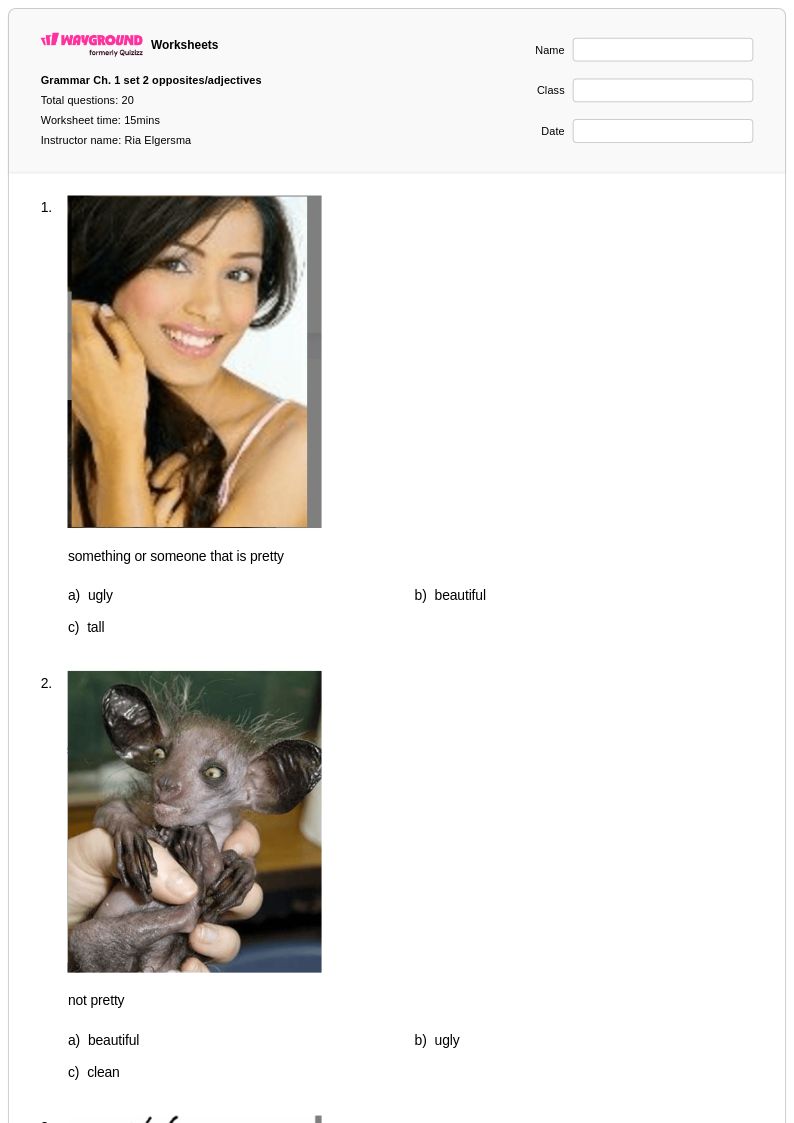
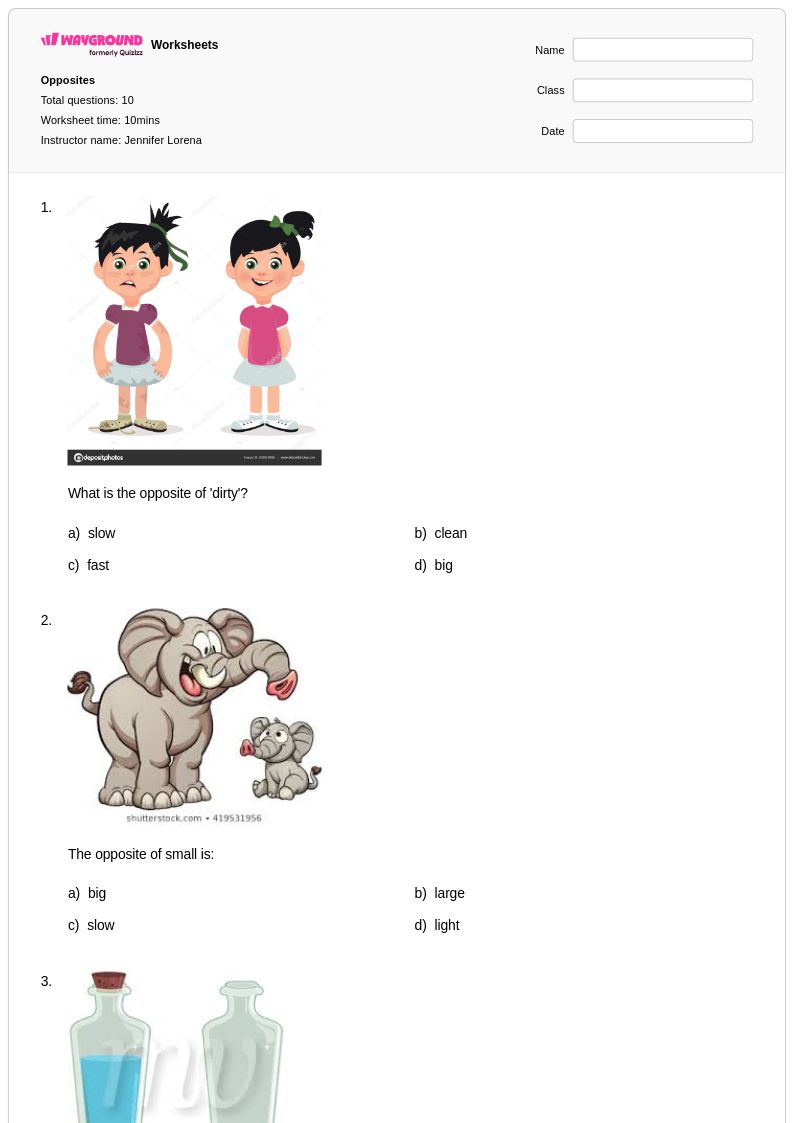
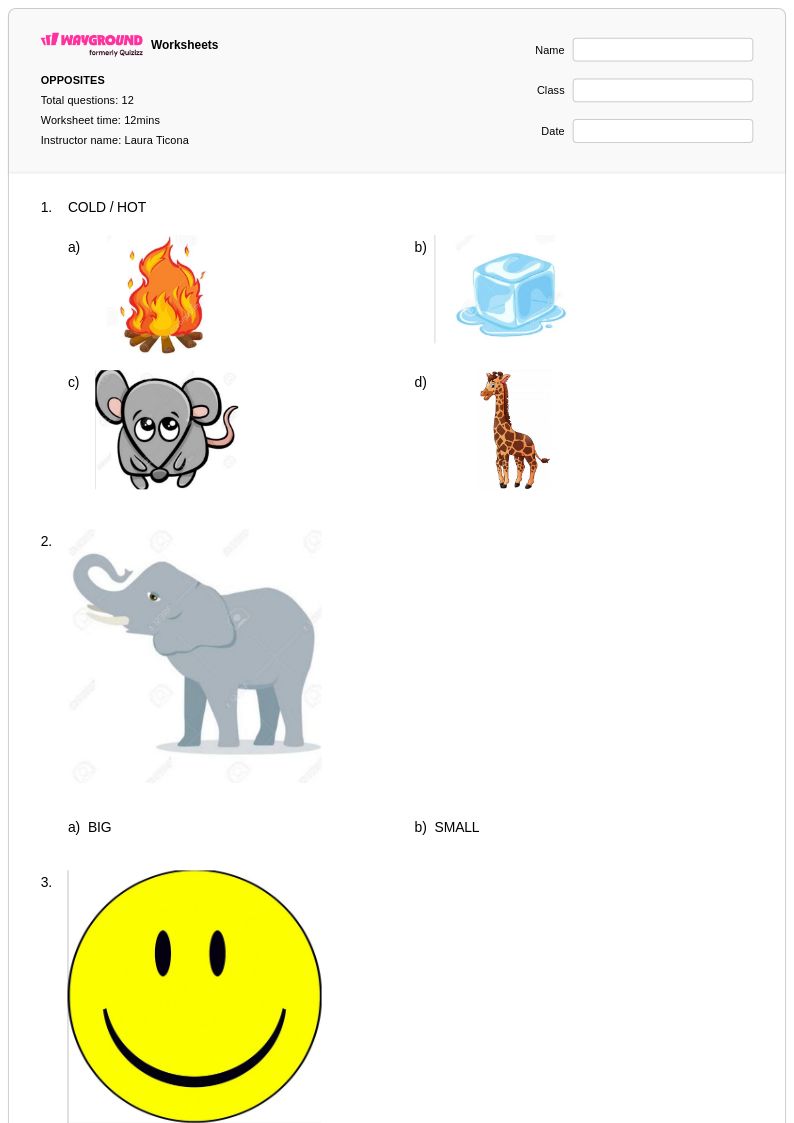
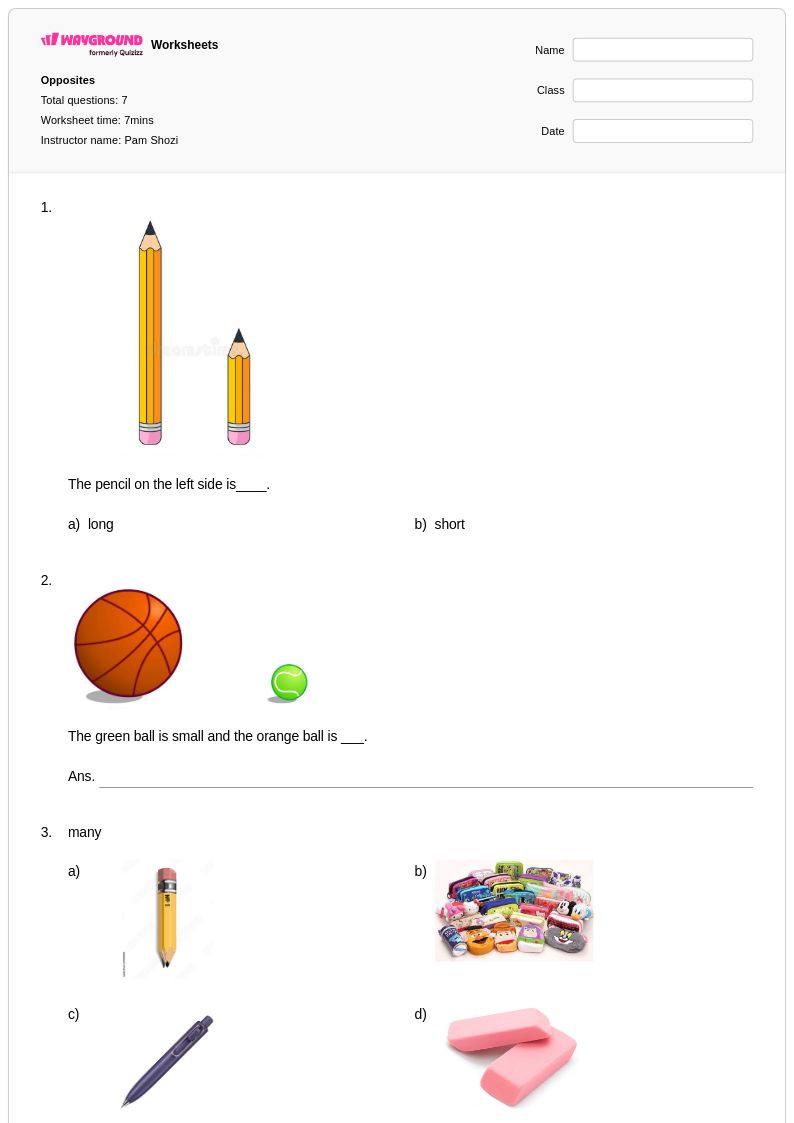
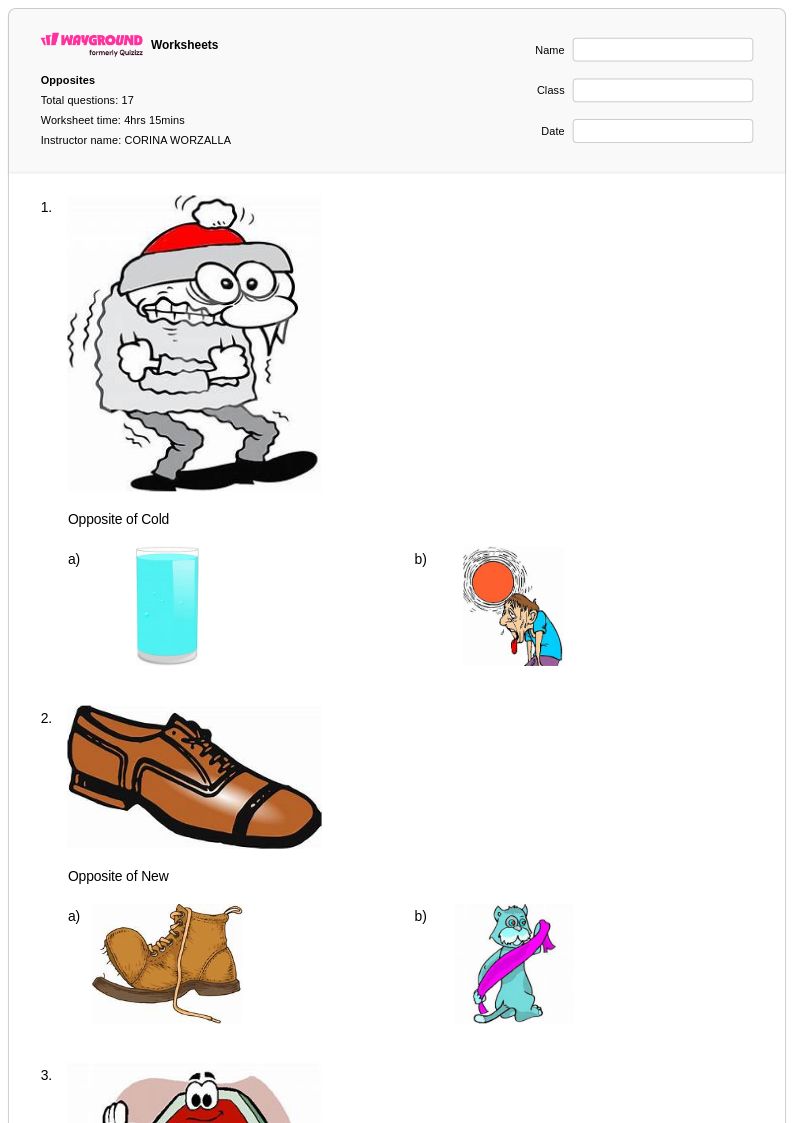
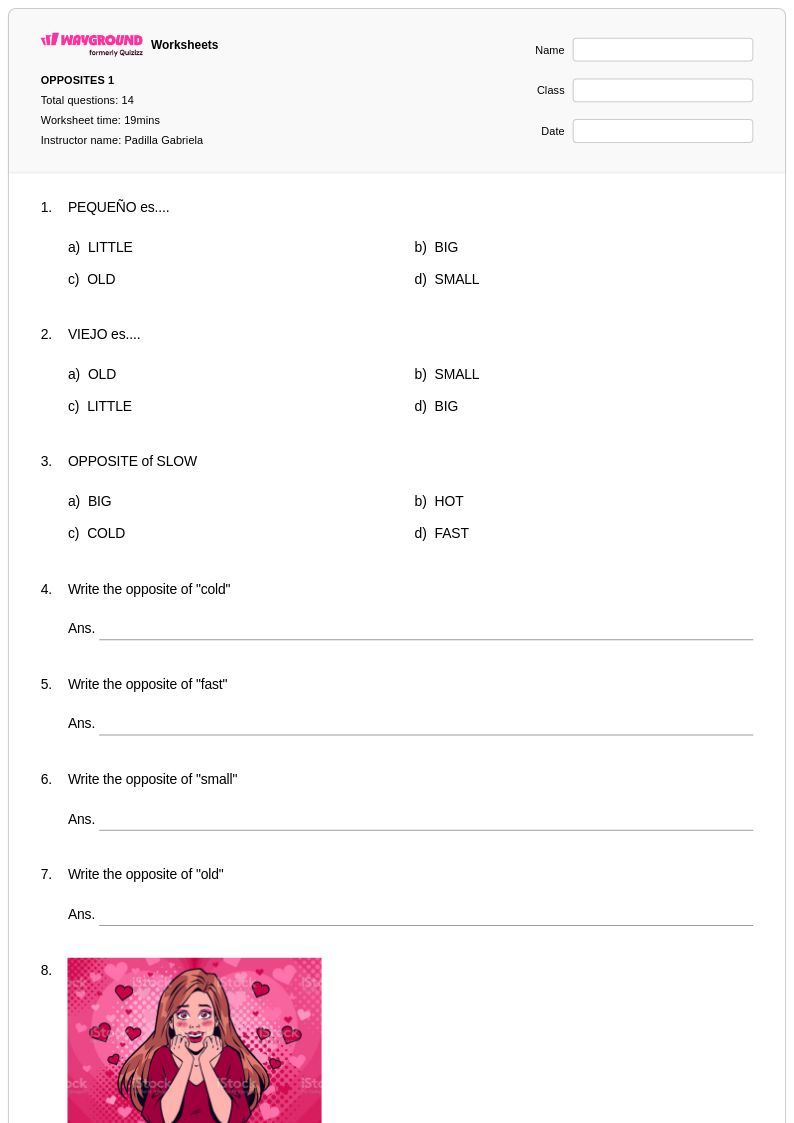
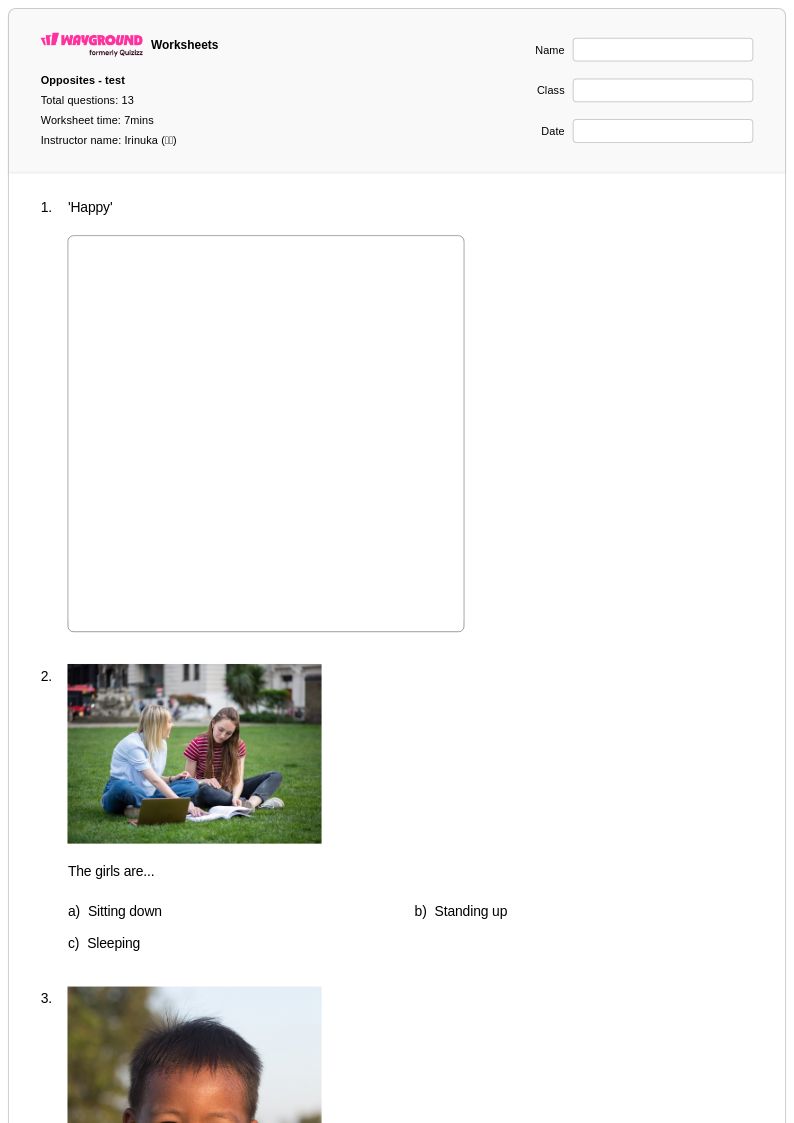
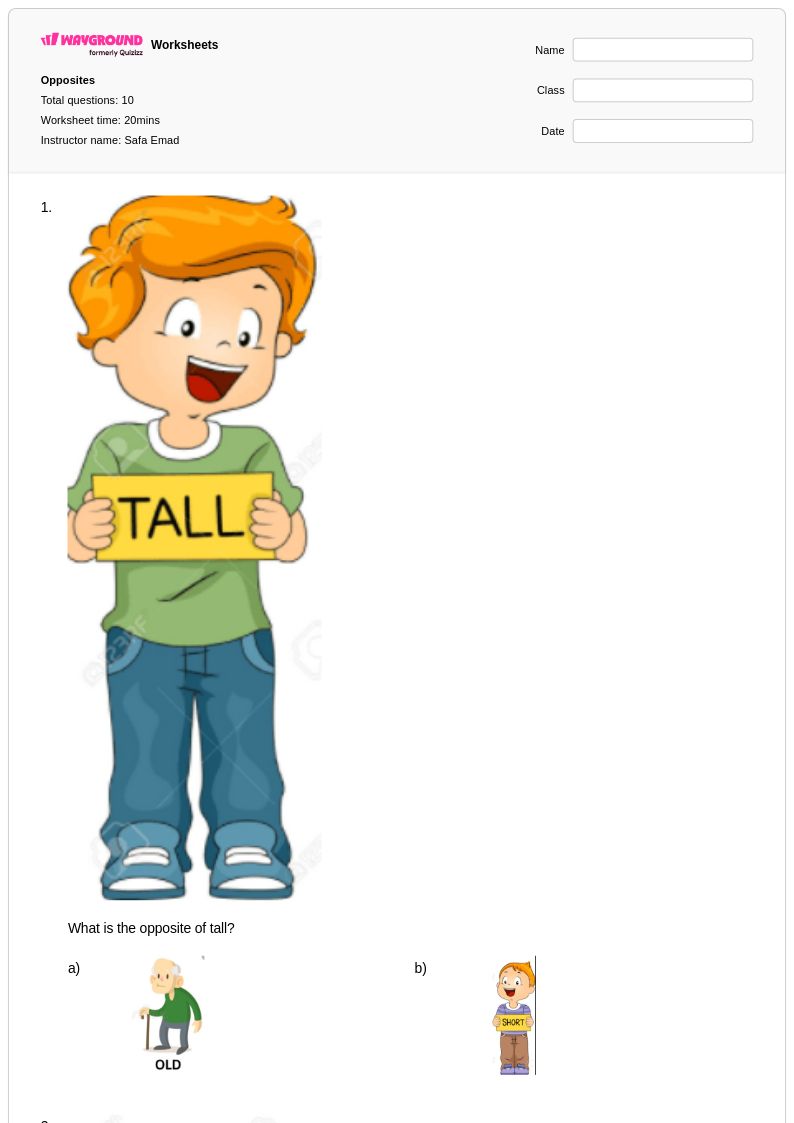
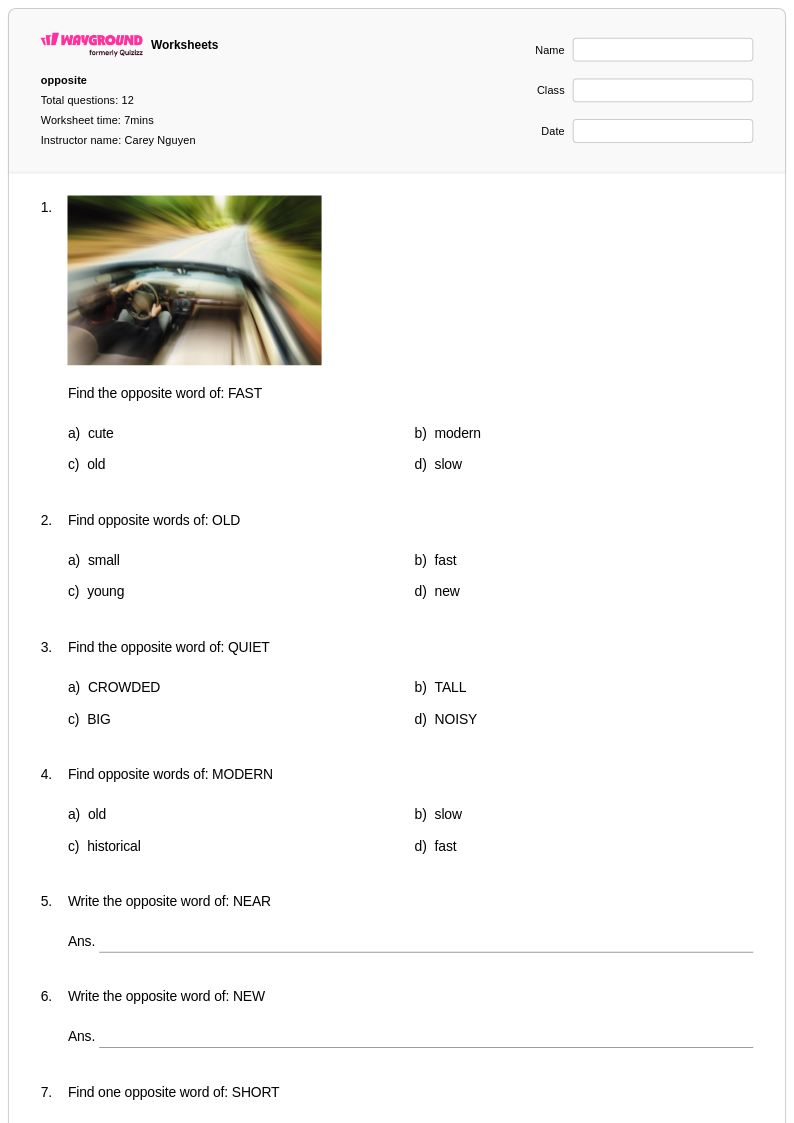
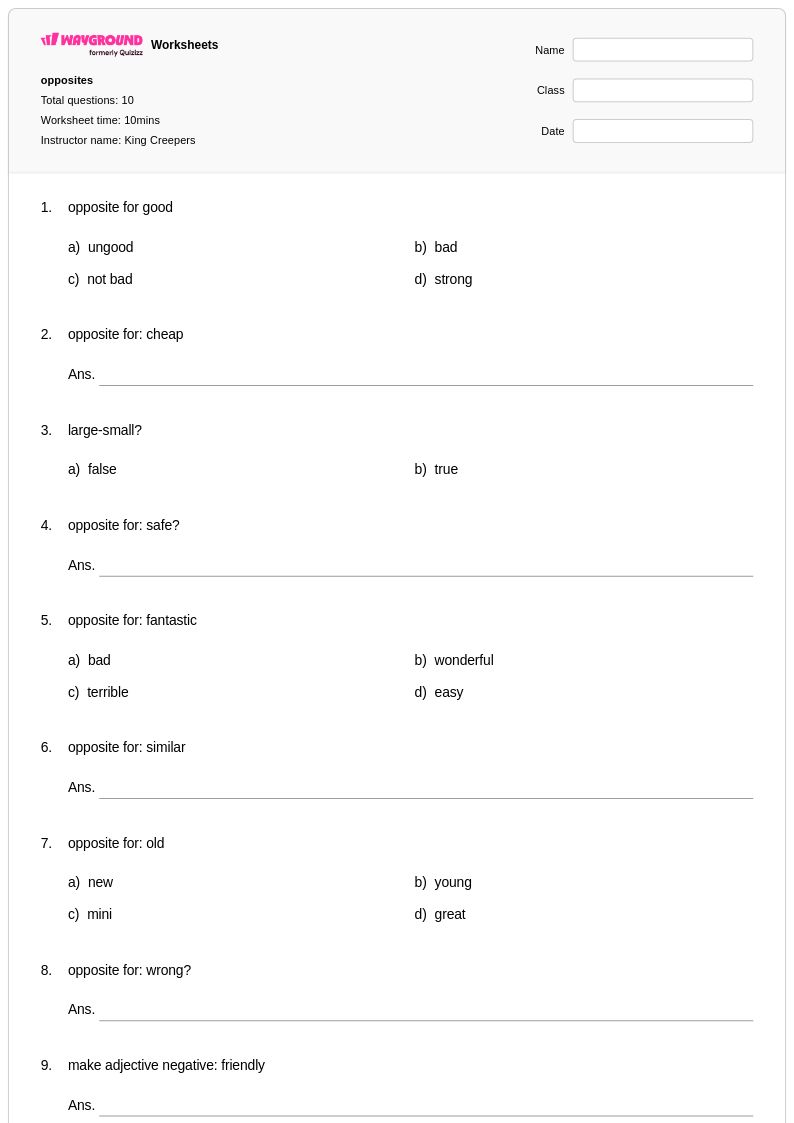
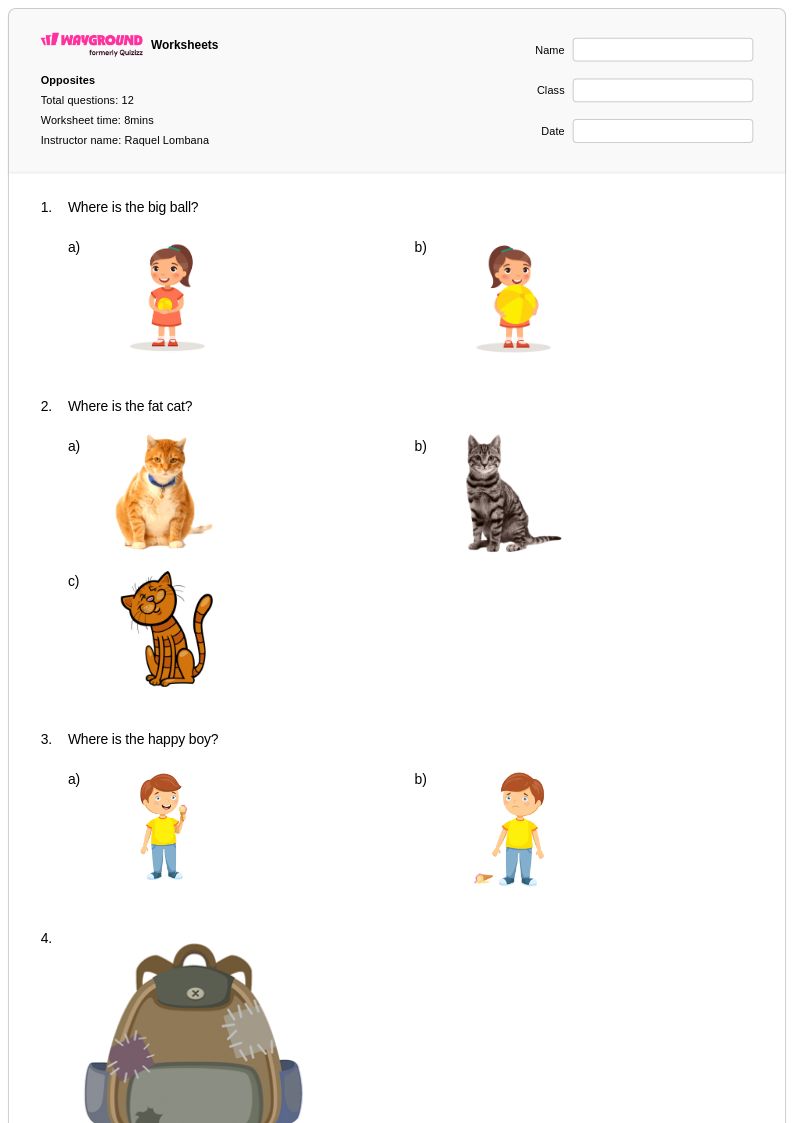
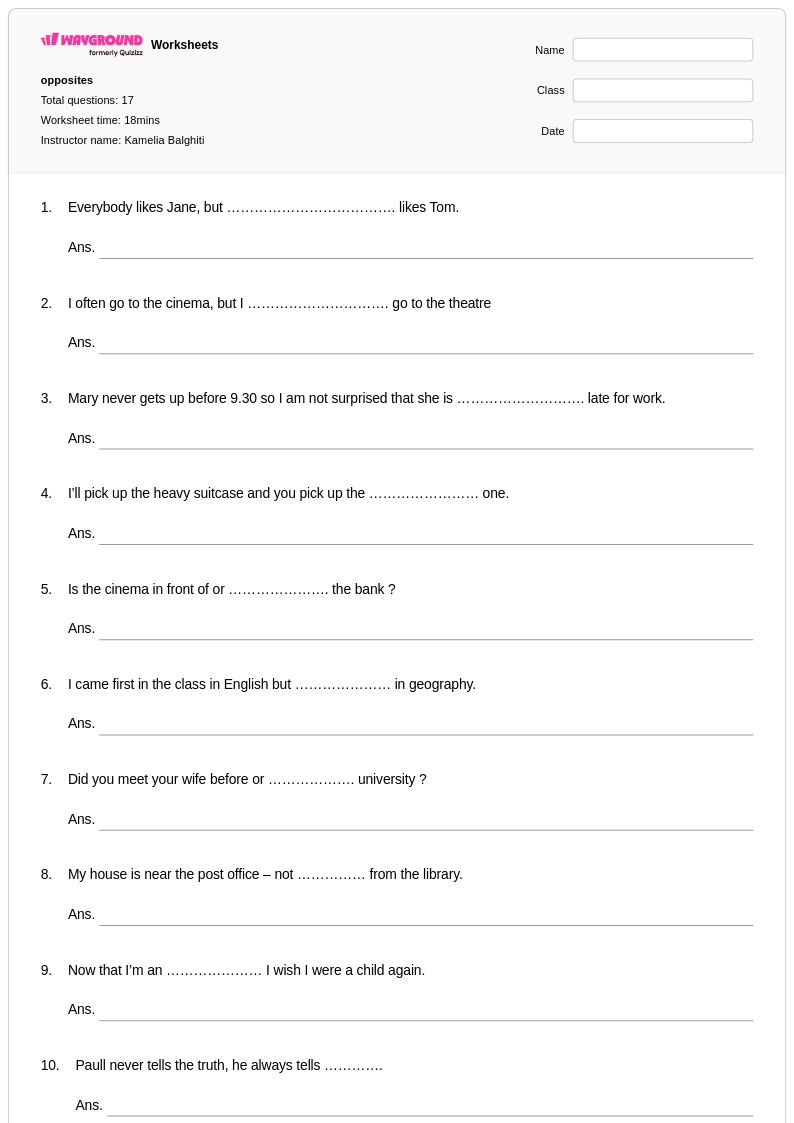
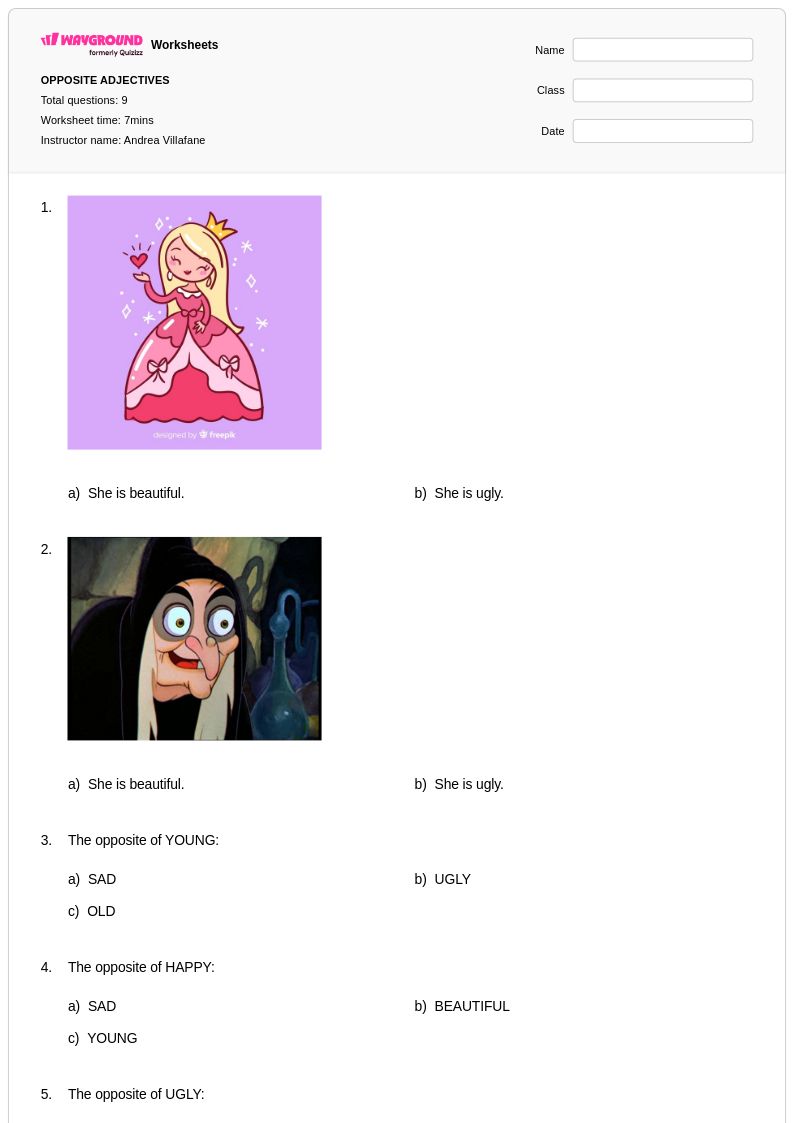
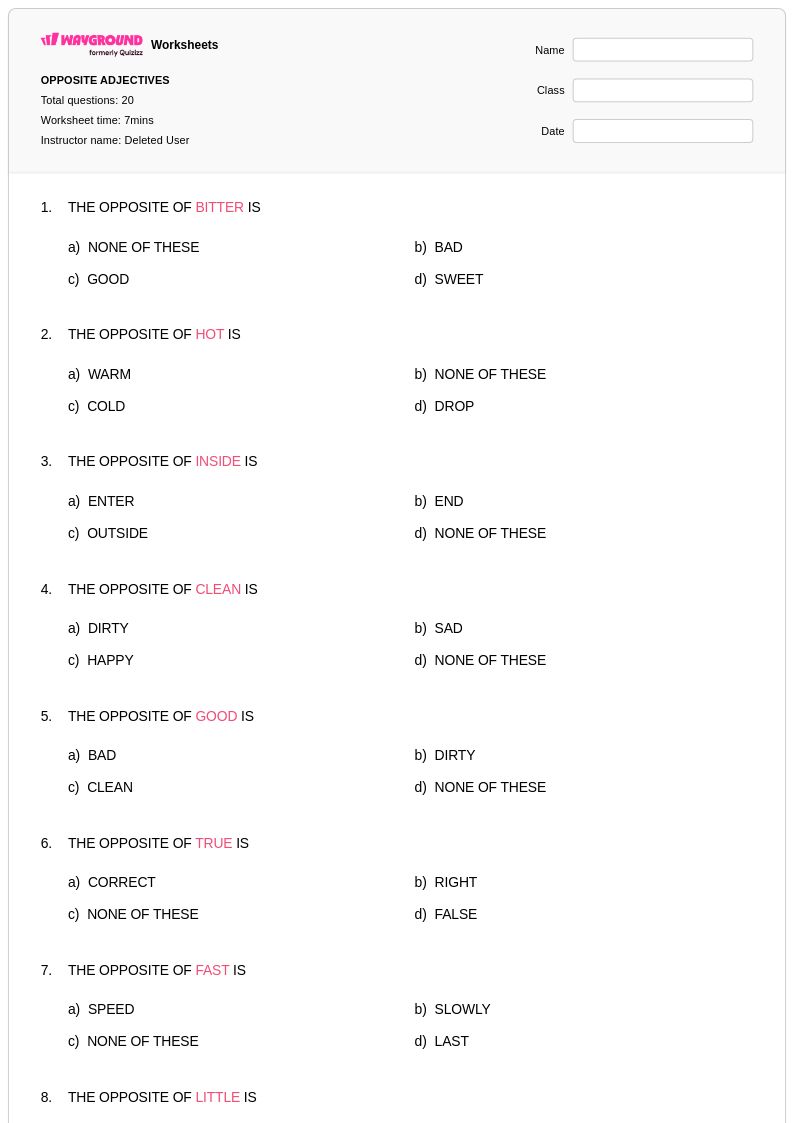
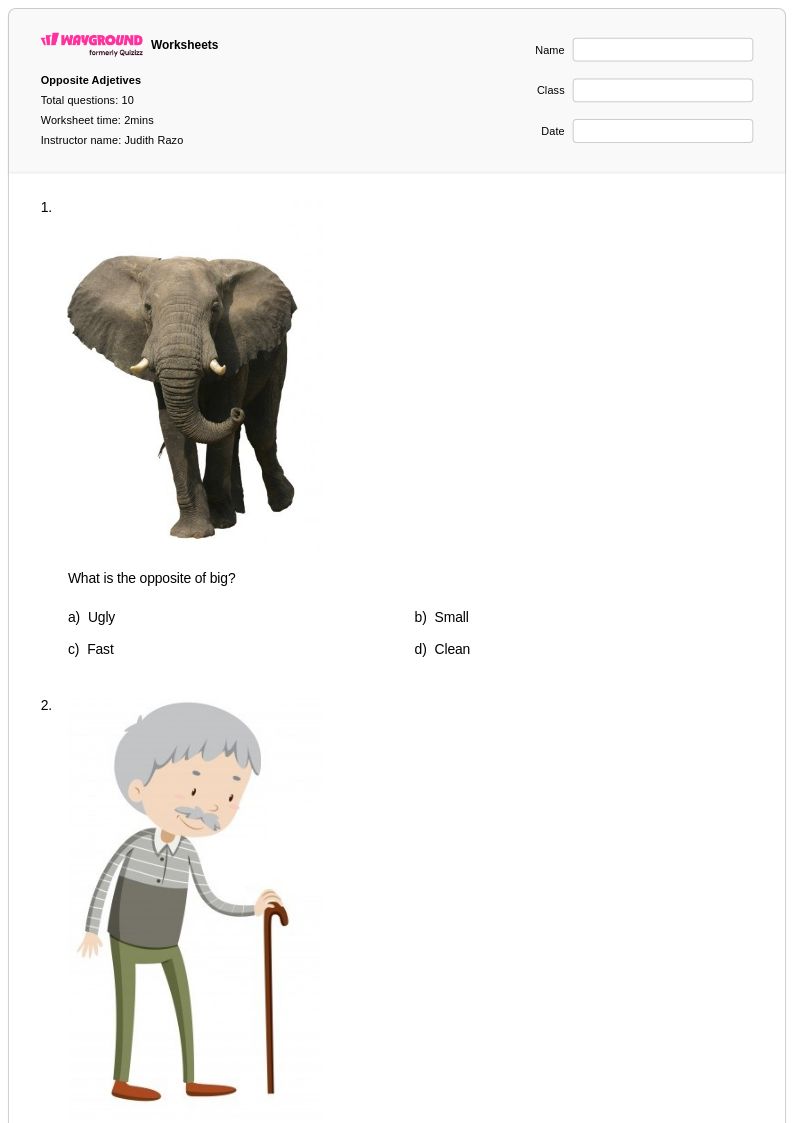
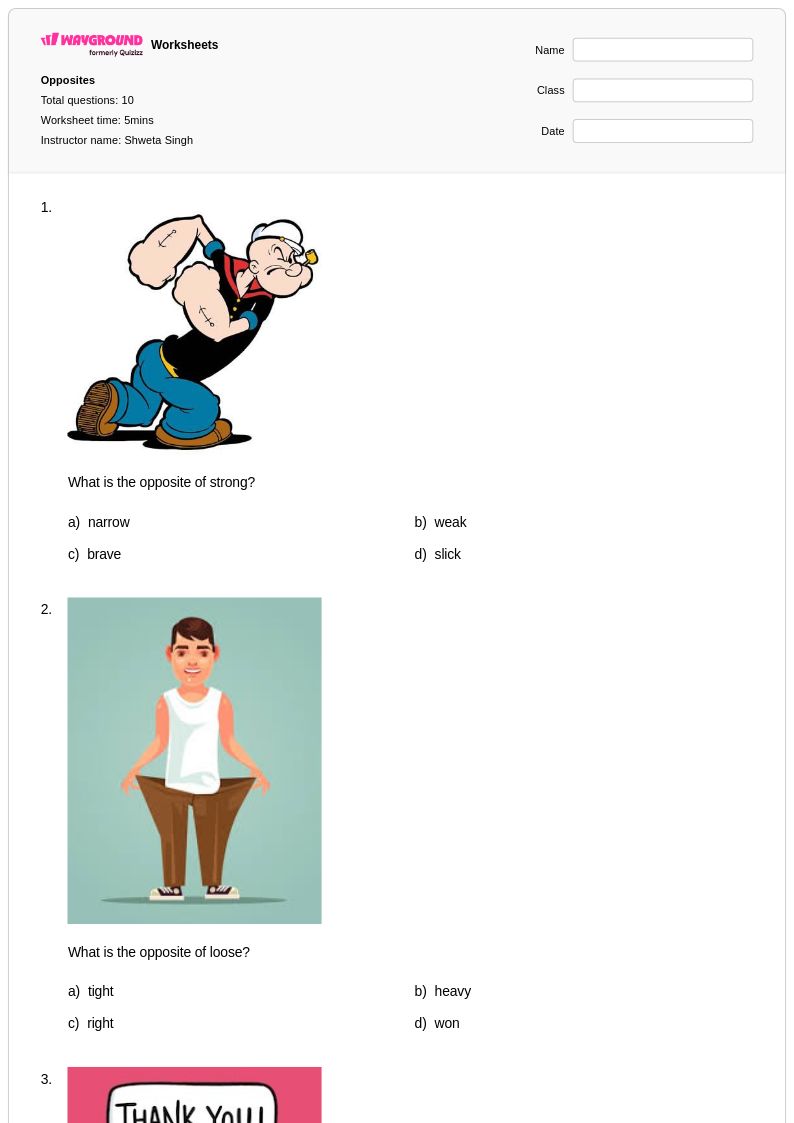
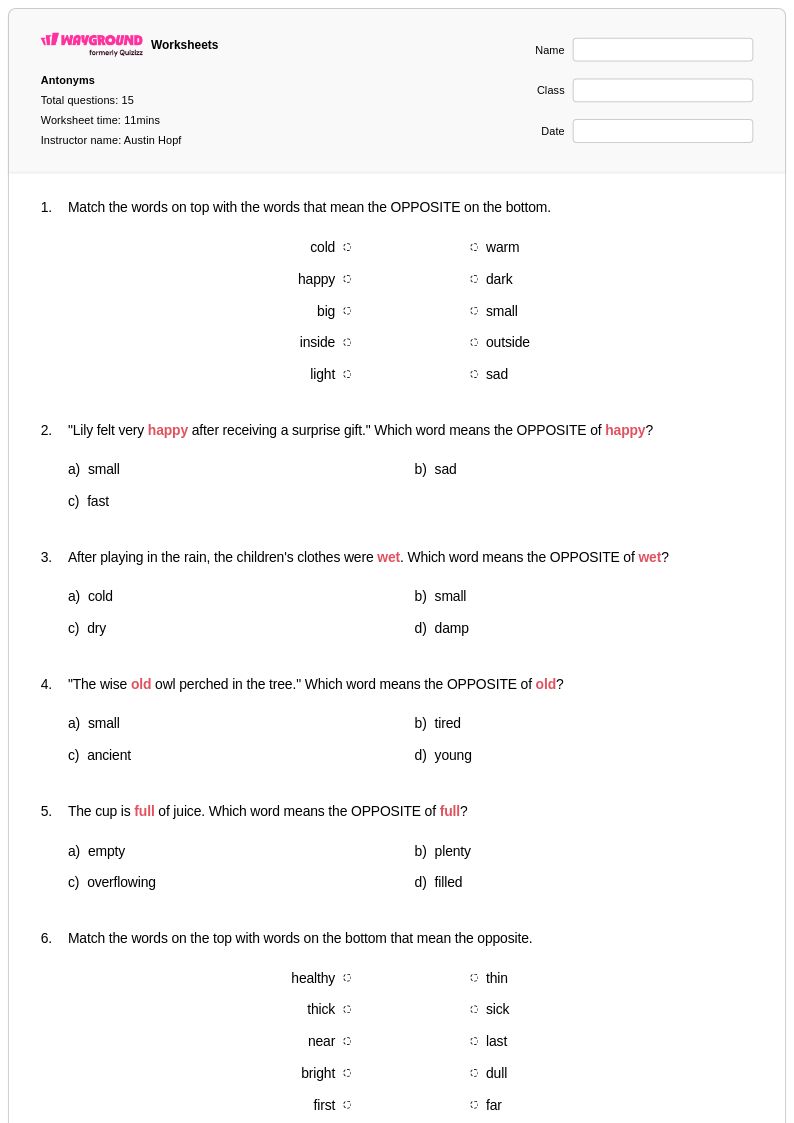
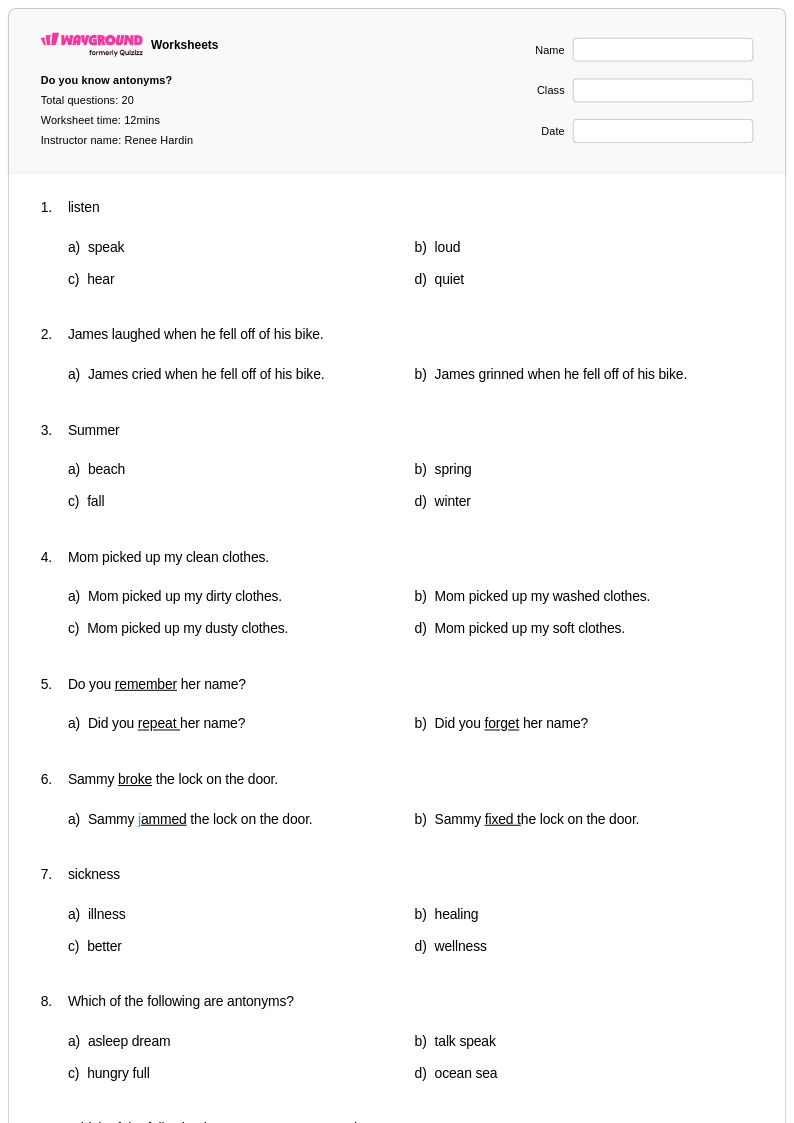
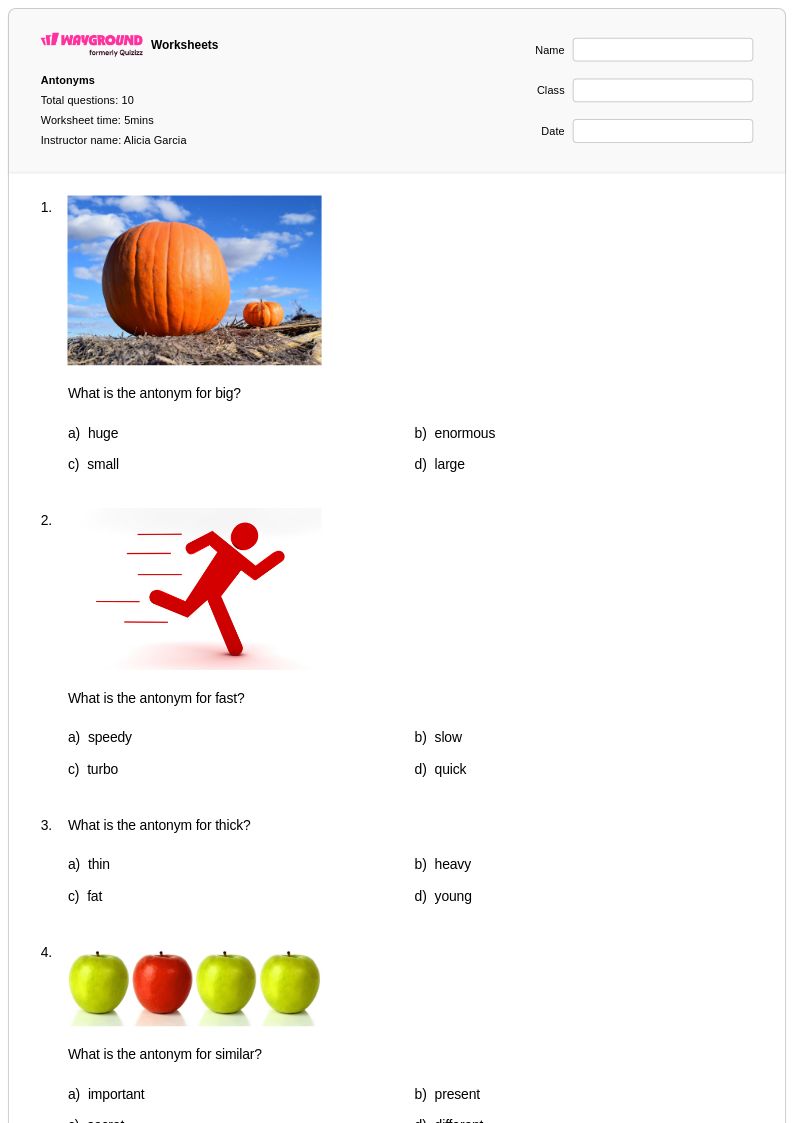
Identifying opposites worksheets for Class 2 students through Wayground (formerly Quizizz) provide essential practice in understanding antonyms and contrasting concepts that form the foundation of vocabulary development. These carefully designed resources help young learners recognize and apply opposite word pairs such as hot and cold, big and small, or fast and slow through engaging activities that strengthen critical thinking skills. Students work through practice problems that challenge them to match opposing terms, complete sentences with appropriate antonyms, and identify contrasting concepts in various contexts. Each worksheet collection includes comprehensive answer keys that support both independent learning and guided instruction, while the free printables offer educators flexible options for classroom use, homework assignments, and skill reinforcement activities in convenient pdf format.
Wayground's extensive library supports teachers with millions of educator-created identifying opposites worksheets that streamline lesson planning and provide targeted skill practice for Class 2 language instruction. The platform's robust search and filtering capabilities allow educators to quickly locate resources aligned with specific learning standards and student needs, while built-in differentiation tools enable customization for various ability levels within the classroom. Teachers can access these materials in both printable and digital formats, including downloadable pdf versions that facilitate seamless integration into existing curriculum frameworks. These comprehensive worksheet collections prove invaluable for remediation activities with struggling learners, enrichment opportunities for advanced students, and regular skill practice that reinforces vocabulary development and reading comprehension throughout the academic year.
FAQs
How do I teach identifying opposites to early learners?
Start with concrete, high-contrast word pairs that students already know from everyday life, such as hot/cold, big/small, and fast/slow, before moving to more abstract antonym relationships. Using visual cues, real objects, and picture-based matching activities helps young learners build an intuitive understanding of contrasting concepts. Once students are comfortable with familiar pairs, gradually introduce opposites that require understanding context, such as brave/cowardly or generous/selfish, to deepen vocabulary and critical thinking.
What types of exercises help students practice recognizing antonyms?
Effective antonym practice exercises include word matching, fill-in-the-blank sentence completion, multiple choice identification, and sorting activities where students group words with their opposites. Sentence completion tasks are especially valuable because they require students to use context clues rather than rote memorization, reinforcing antonym recognition in meaningful situations. Mixing exercise formats across practice sessions keeps students engaged and ensures they can recognize opposites in different contexts, not just in isolation.
What mistakes do students commonly make when identifying opposites?
A common error is confusing antonyms with synonyms or related words, such as offering 'big' as the opposite of 'tall' instead of 'short.' Students also frequently select words that are merely different rather than truly opposite in meaning, which signals a gap in understanding polarity and word relationships. Another typical misconception is assuming every word has a single clear opposite, when some words have multiple valid antonyms depending on context, such as 'light' being the opposite of both 'dark' and 'heavy.'
How can I differentiate antonym practice for students at different skill levels?
For emerging learners, focus on concrete, high-frequency word pairs supported by images to reduce cognitive load. For students who have mastered basic pairs, introduce abstract or multi-meaning words that require contextual reasoning to identify the correct opposite. On Wayground, teachers can apply accommodations such as reduced answer choices for students who need additional support, and read-aloud features for learners who benefit from hearing words pronounced, ensuring every student can access the same core practice at an appropriate challenge level.
How do I use Wayground's identifying opposites worksheets in my classroom?
Wayground's identifying opposites worksheets are available as printable PDFs, making them easy to distribute during vocabulary lessons, literacy centers, or independent practice. They are also available in digital formats, so teachers can assign them for homework, remote learning, or technology-integrated classroom sessions, and can even host them as a quiz directly on Wayground. Each worksheet includes a complete answer key, so teachers can provide immediate feedback or use the materials for self-paced student review without additional prep.
How do opposites worksheets support reading comprehension development?
Recognizing antonyms is a foundational vocabulary skill that directly supports reading comprehension because students who understand contrasting word meanings can more accurately interpret tone, compare characters, and infer meaning from context clues in texts. Practice with antonym identification trains students to notice how word choice shapes meaning, which is particularly important when analyzing descriptive language or figurative expressions. Building a strong antonym vocabulary also expands overall word knowledge, enabling students to read more complex texts with greater confidence and precision.