
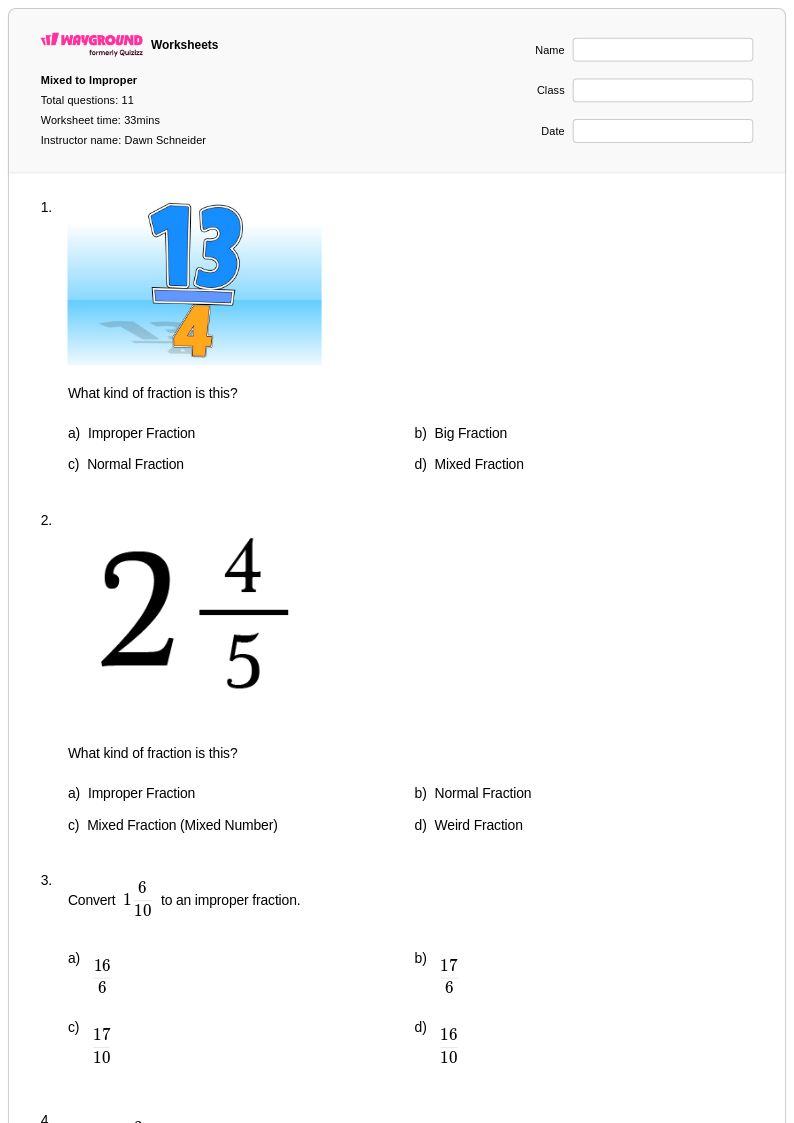
11 Q
6th
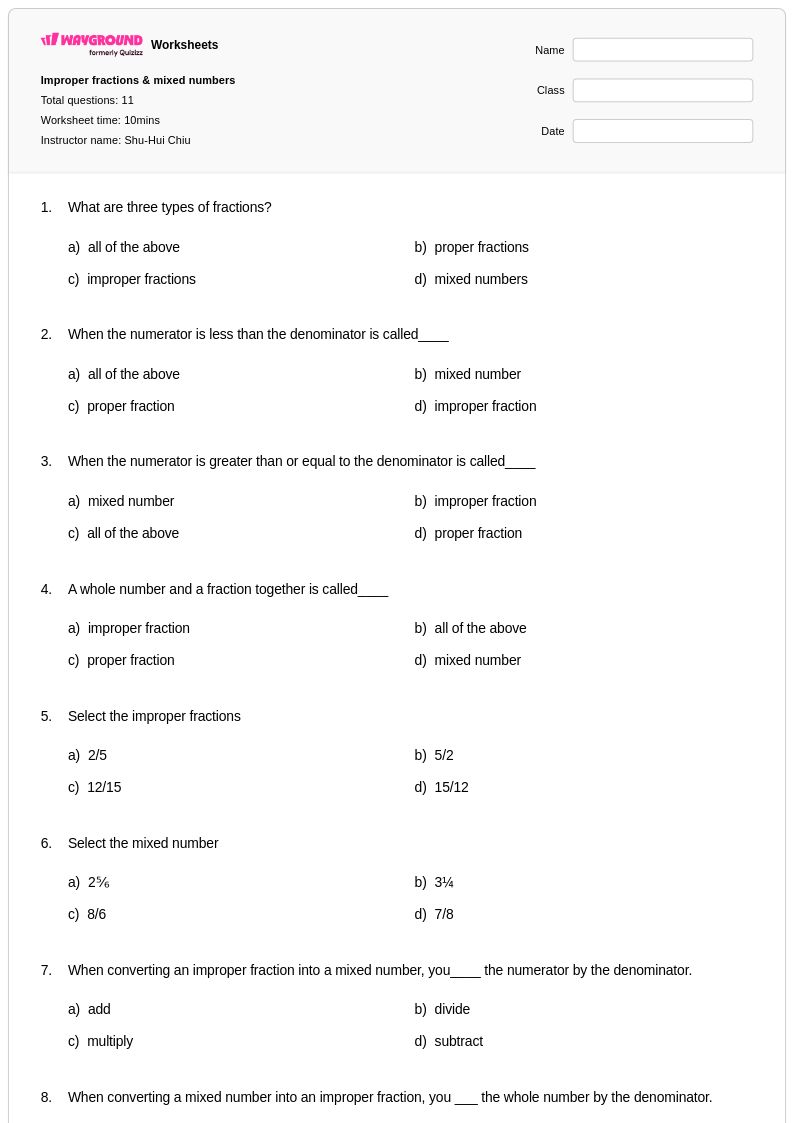
11 Q
5th - 6th
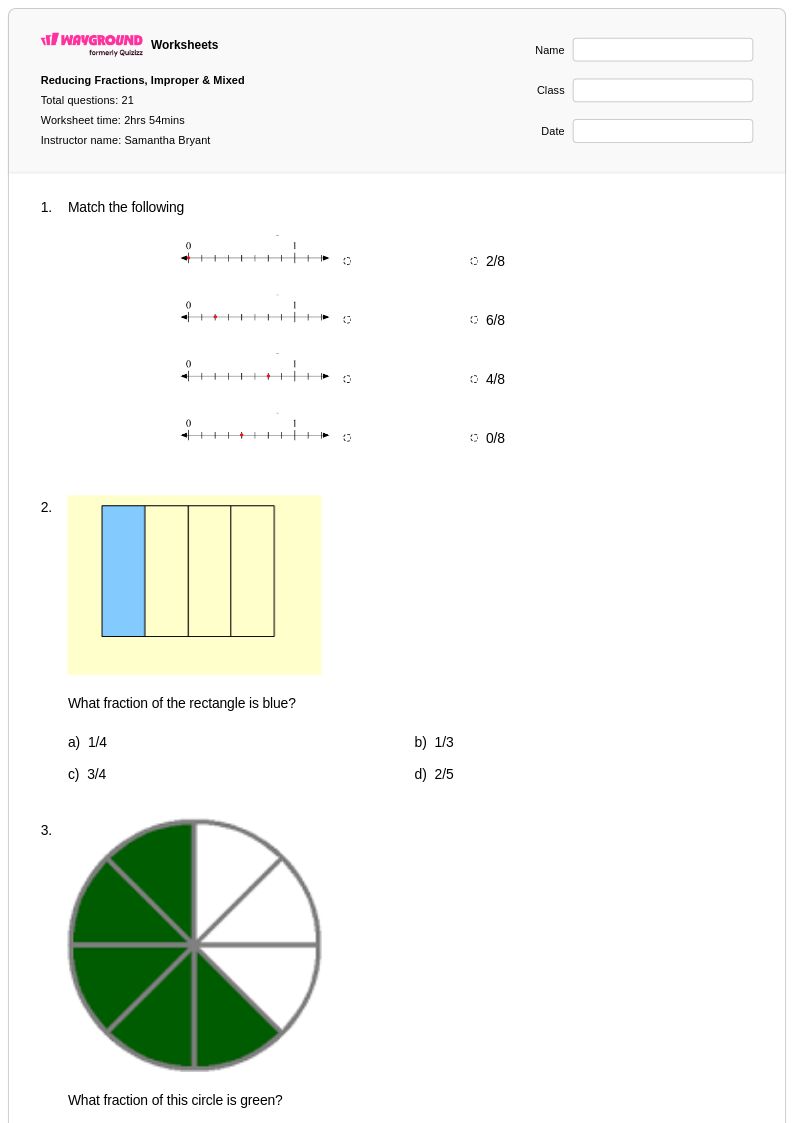
21 Q
6th - 8th
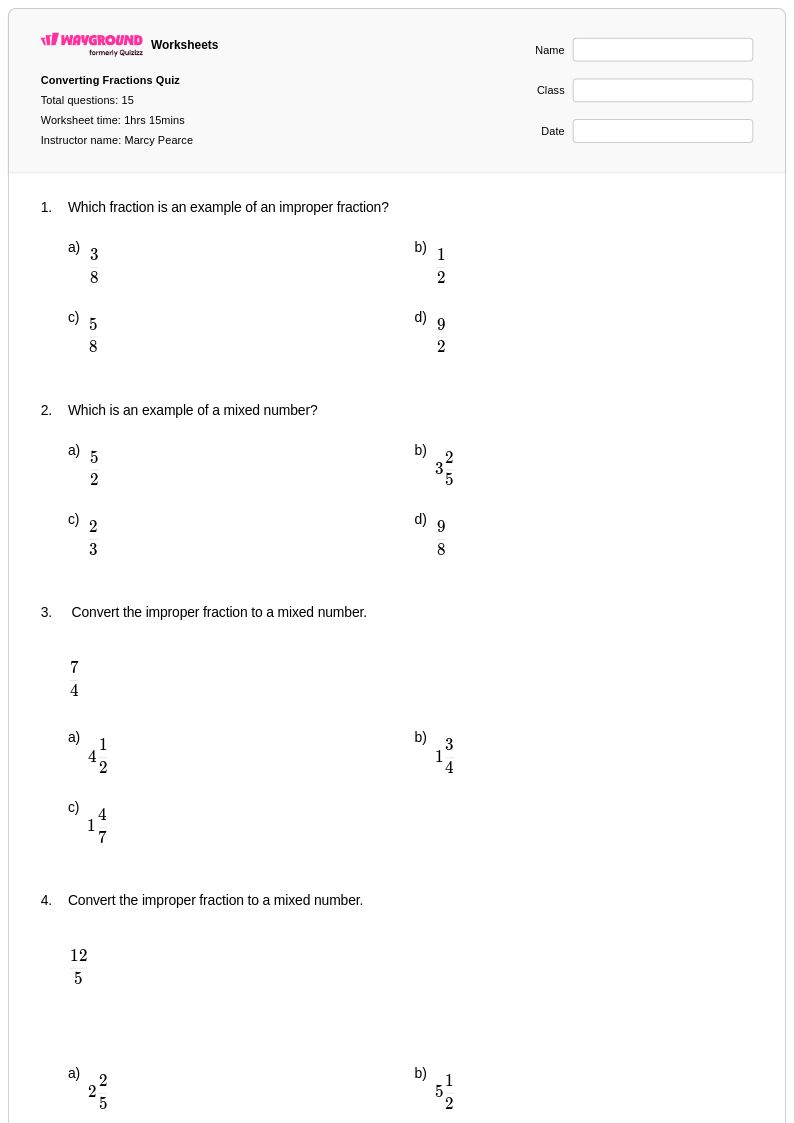
15 Q
7th
12 Q
9th
30 Q
4th
6 Q
5th
22 Q
6th
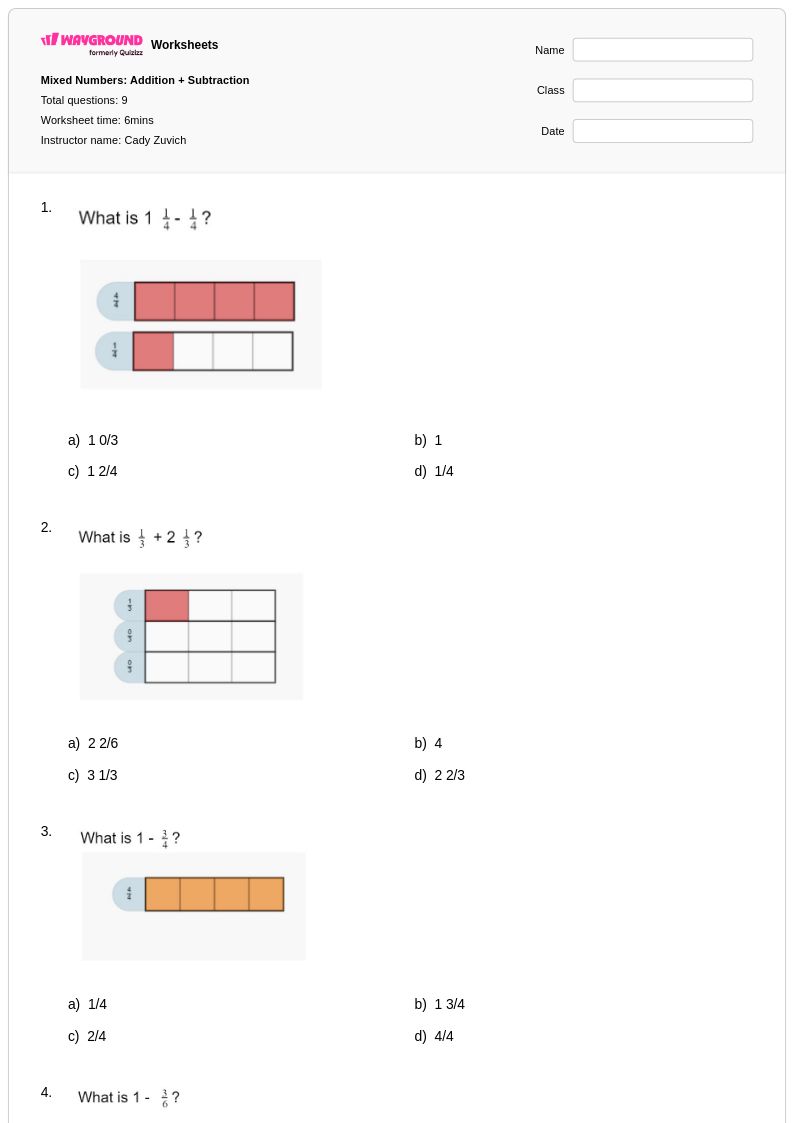
9 Q
4th - 5th
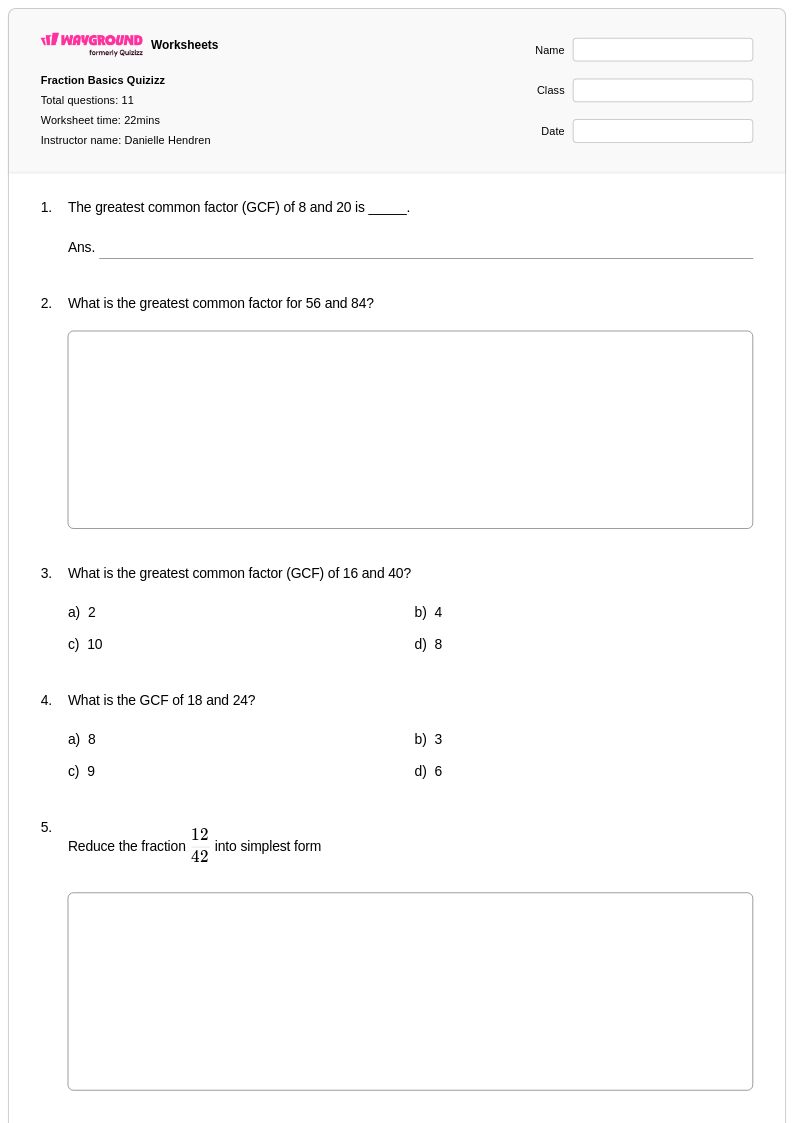
11 Q
7th
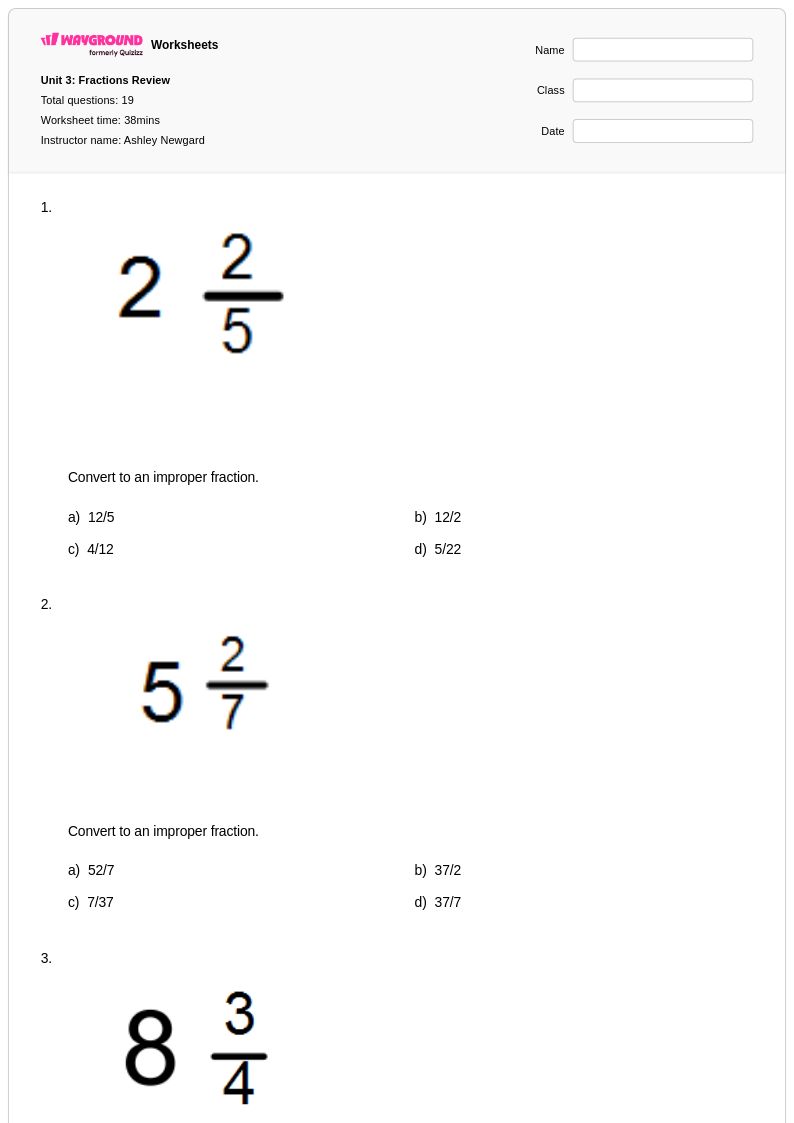
19 Q
6th
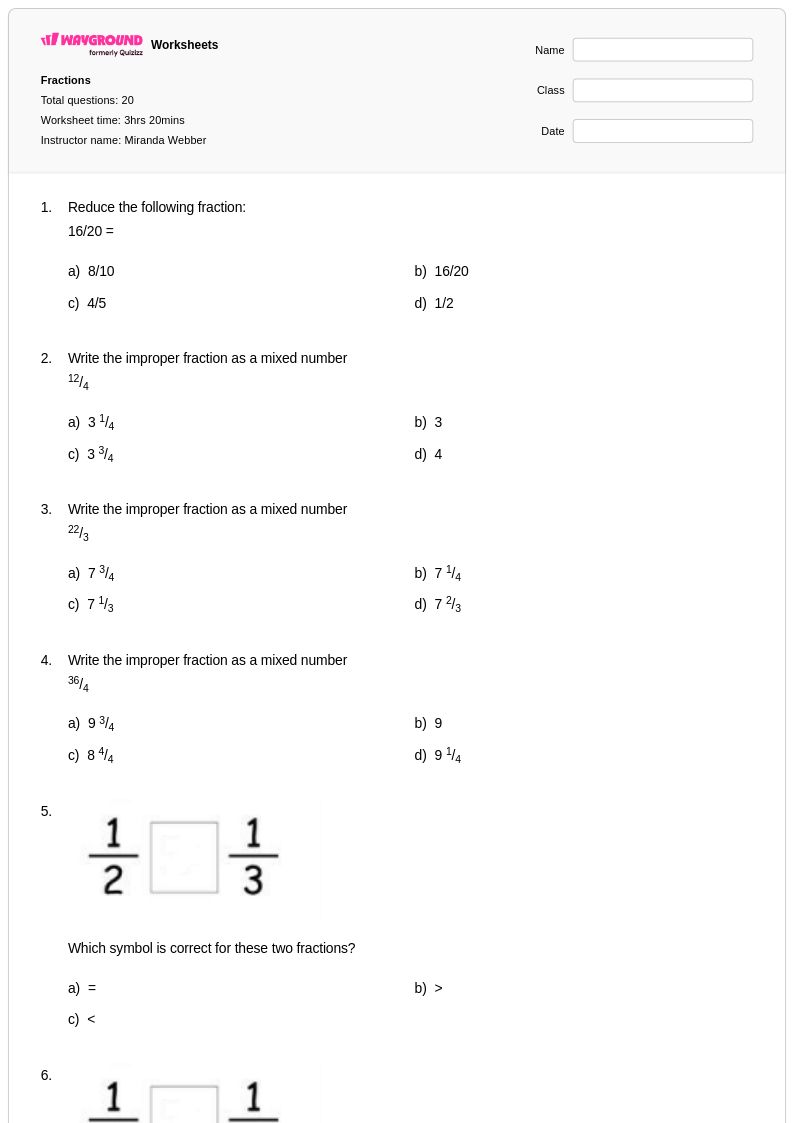
20 Q
4th
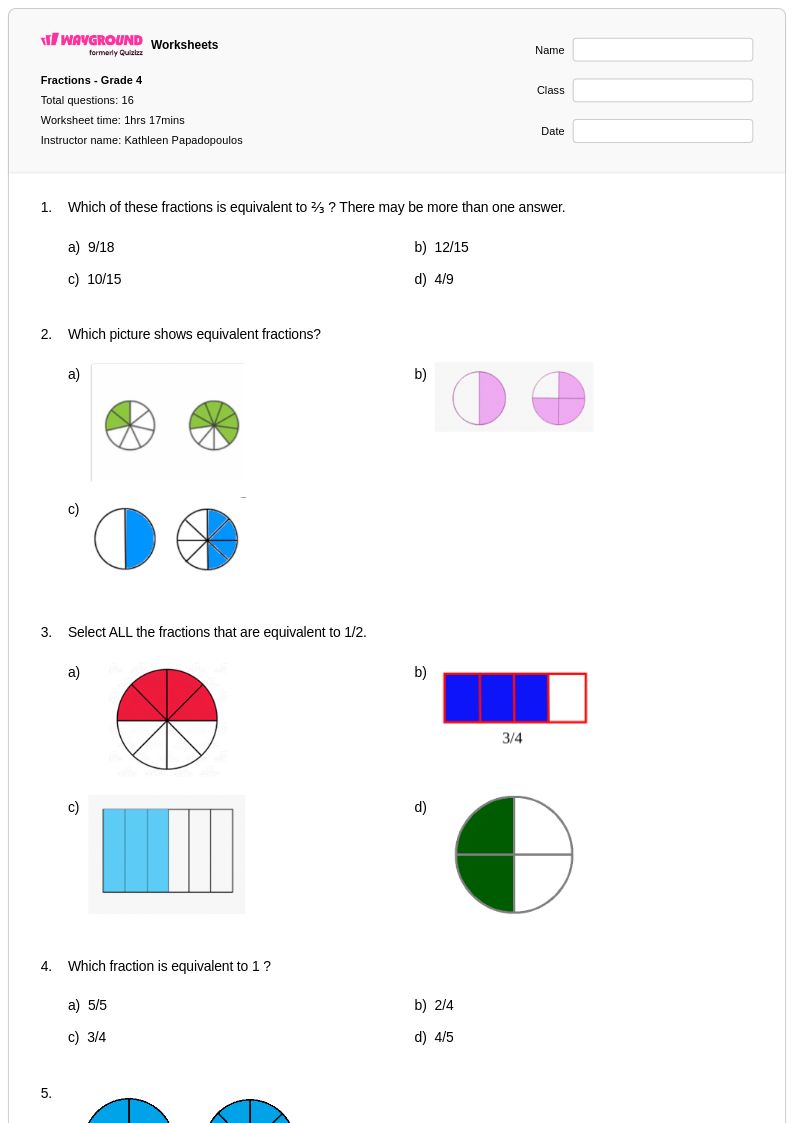
16 Q
4th
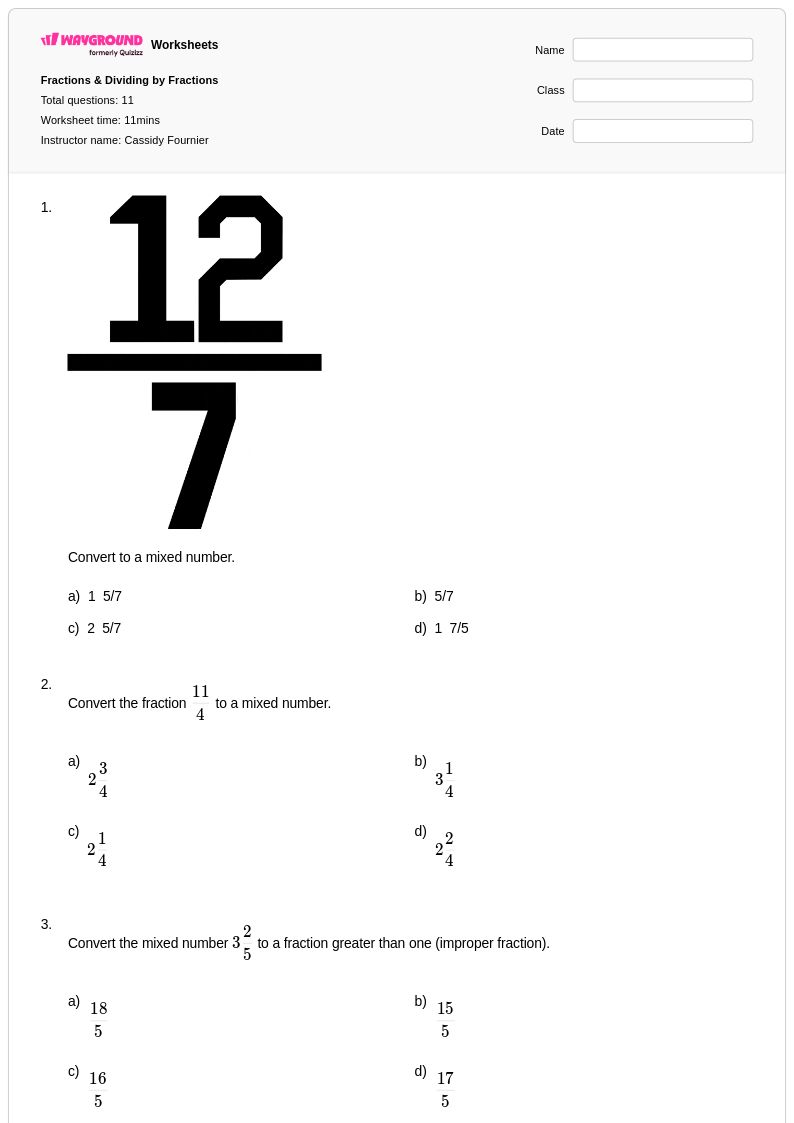
11 Q
6th
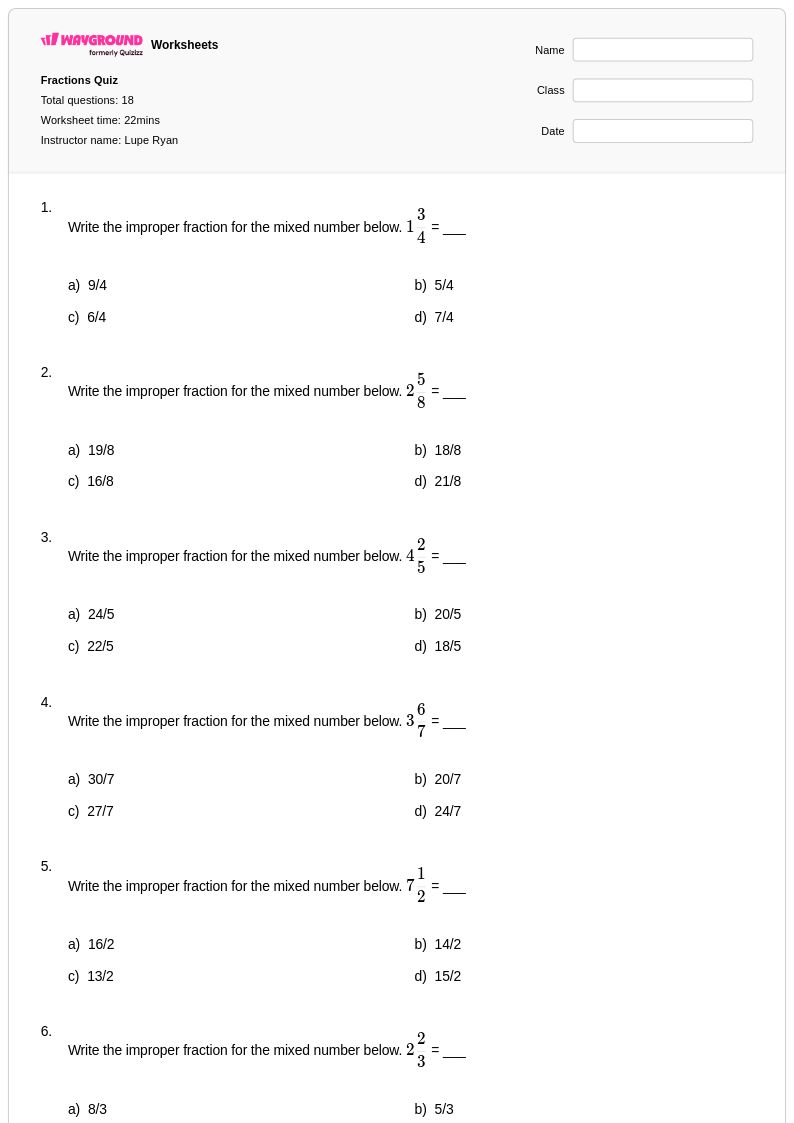
12 Q
4th
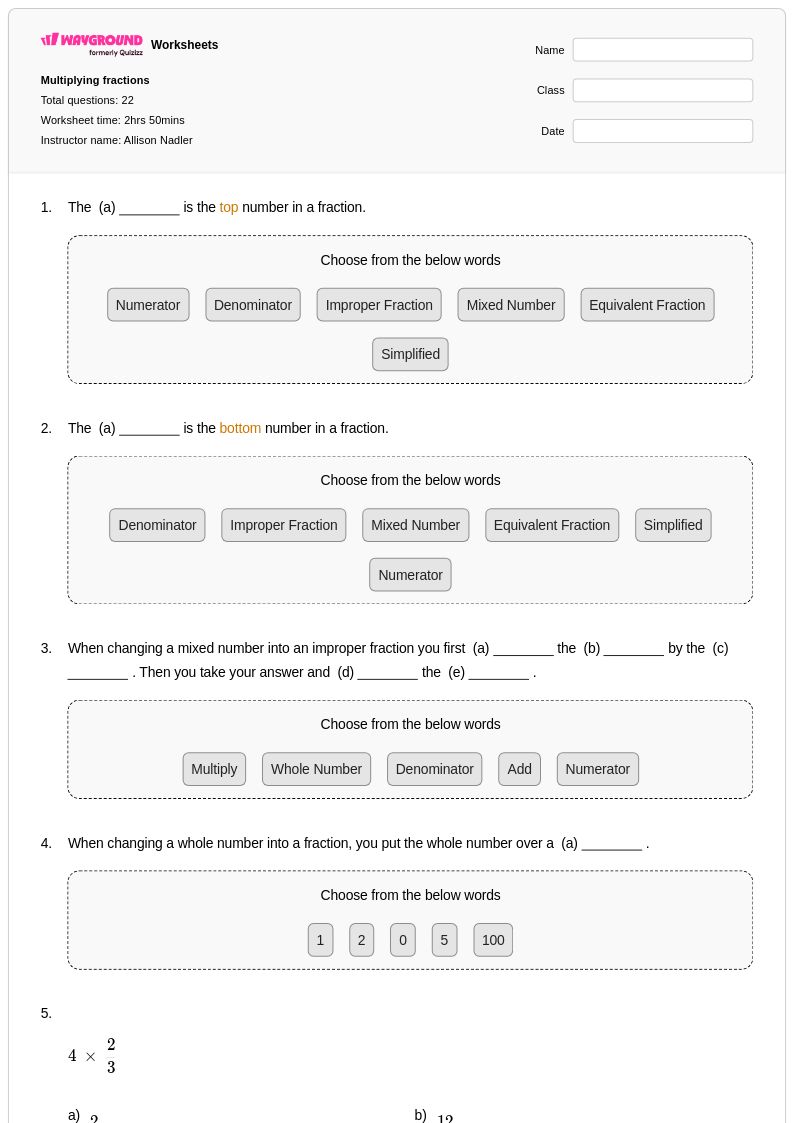
22 Q
5th
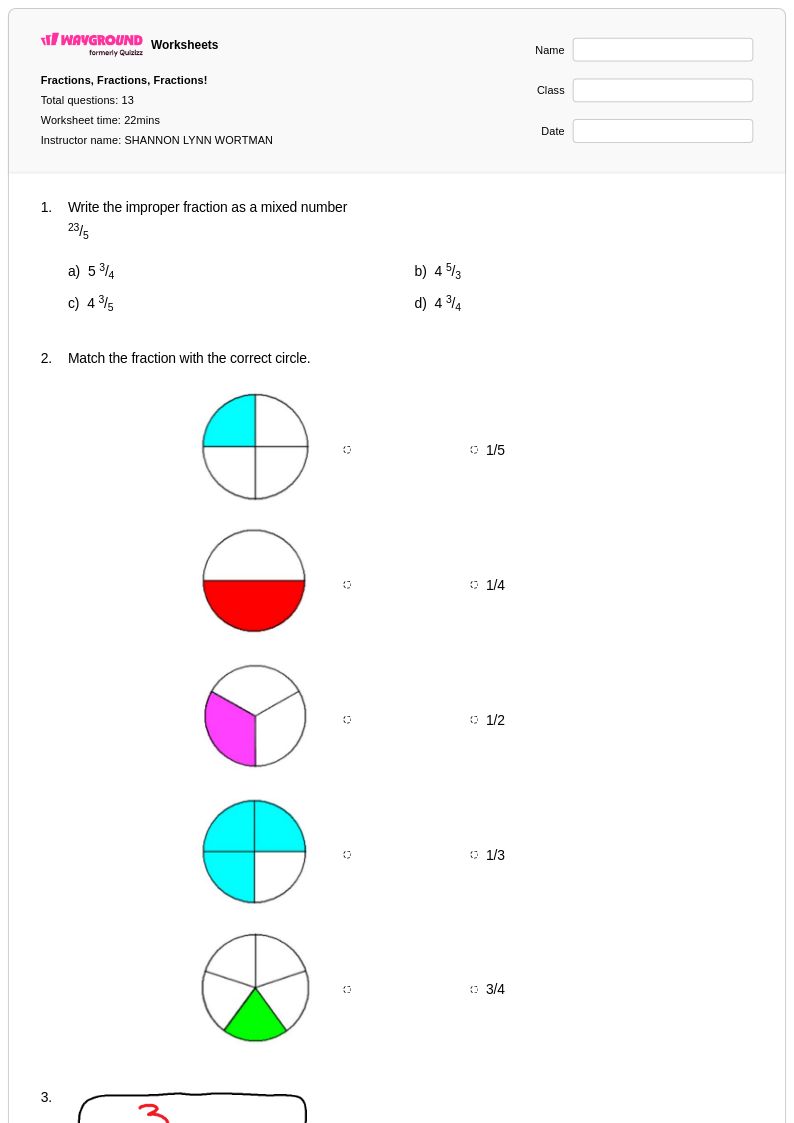
13 Q
5th
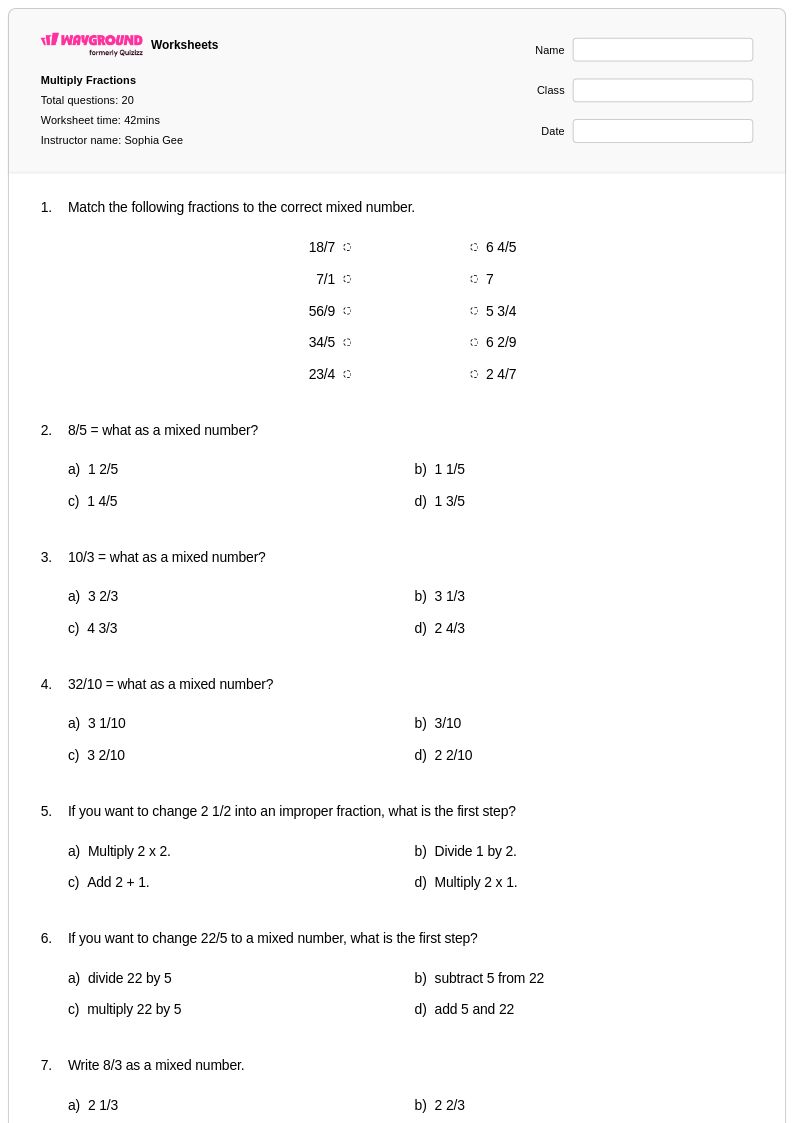
20 Q
5th
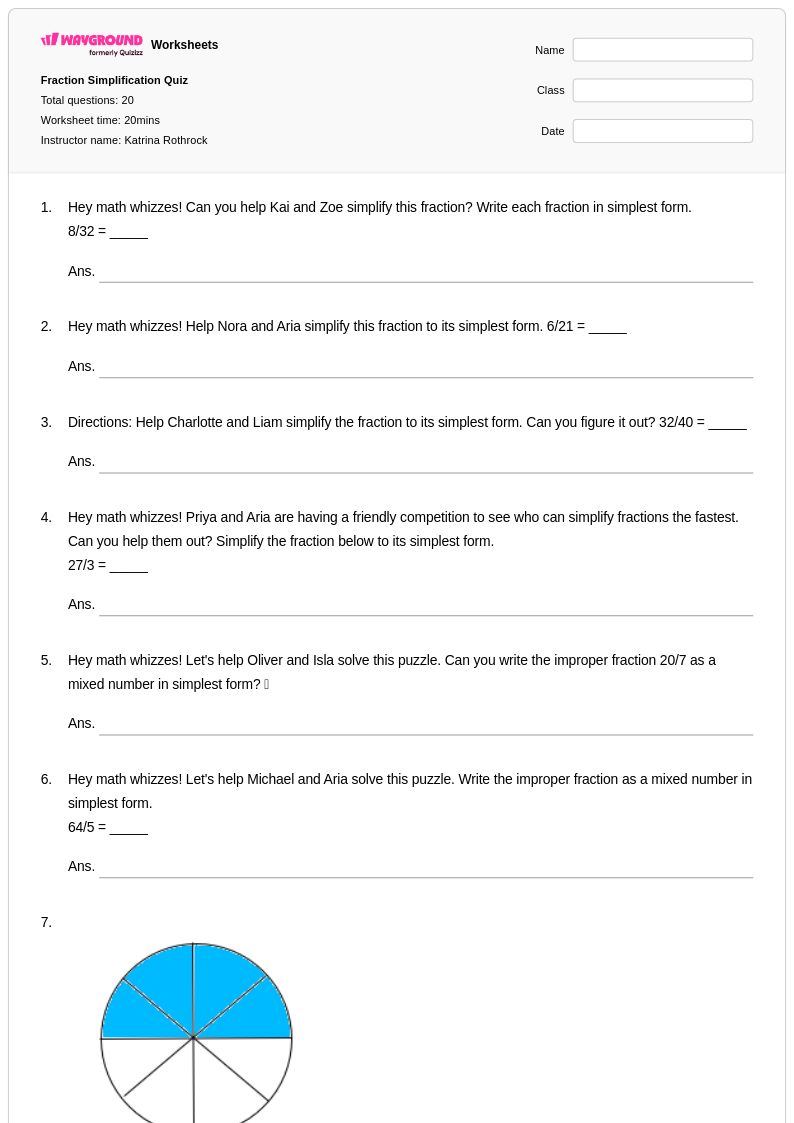
20 Q
9th
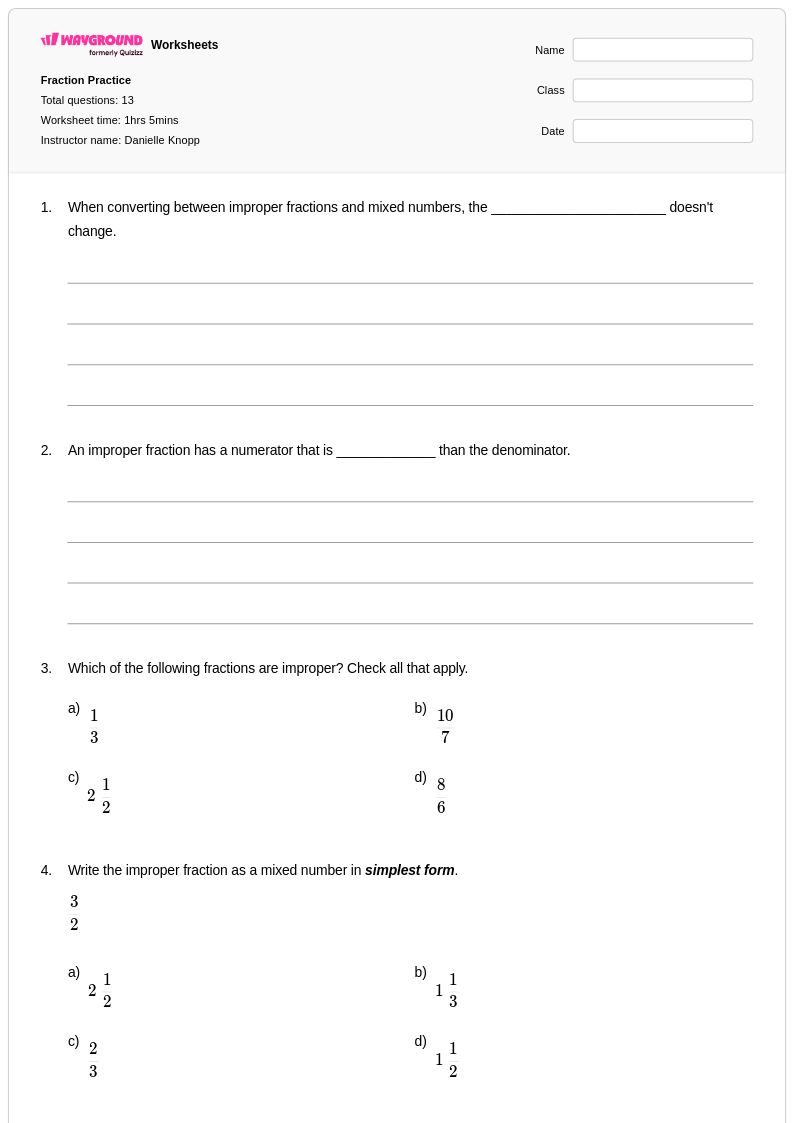
13 Q
5th
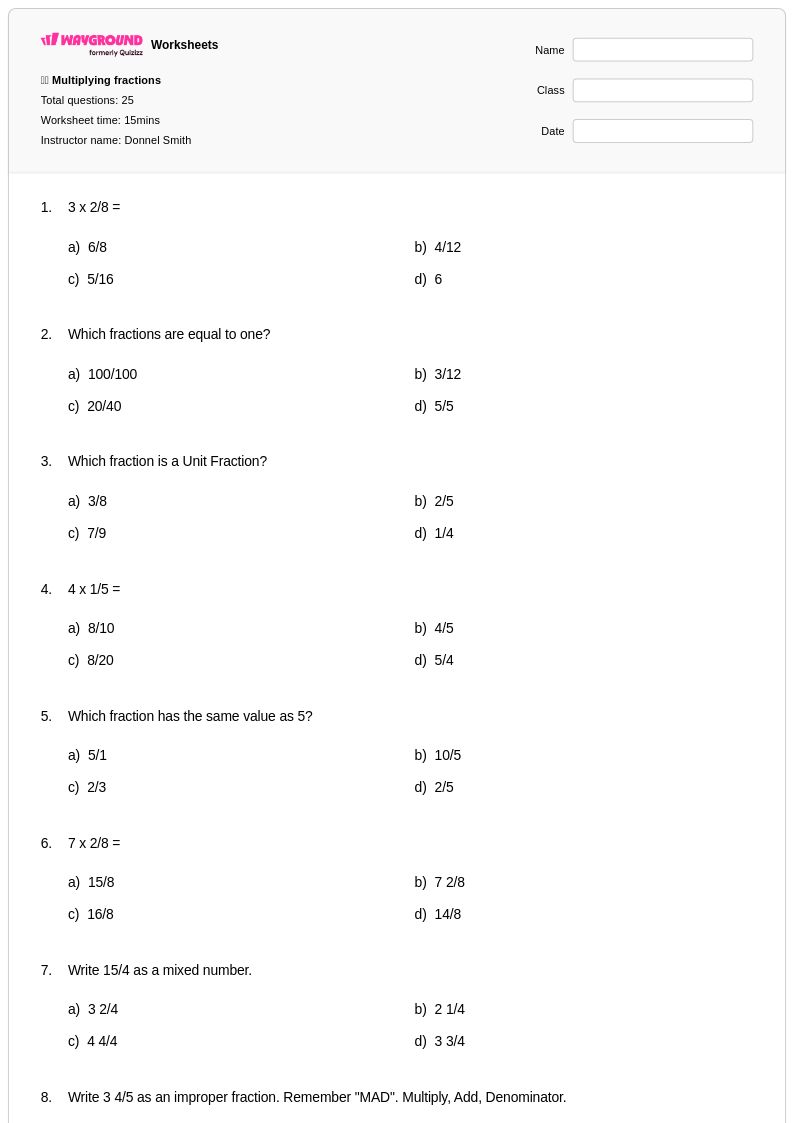
25 Q
4th
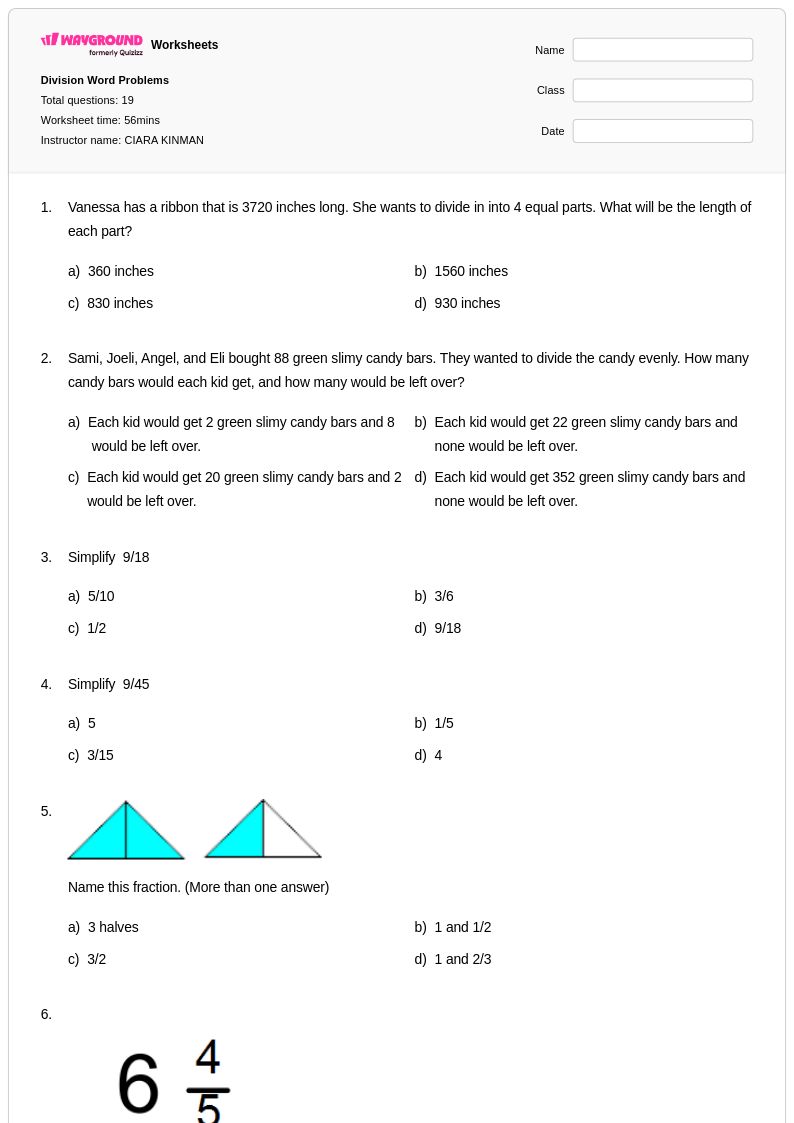
19 Q
5th
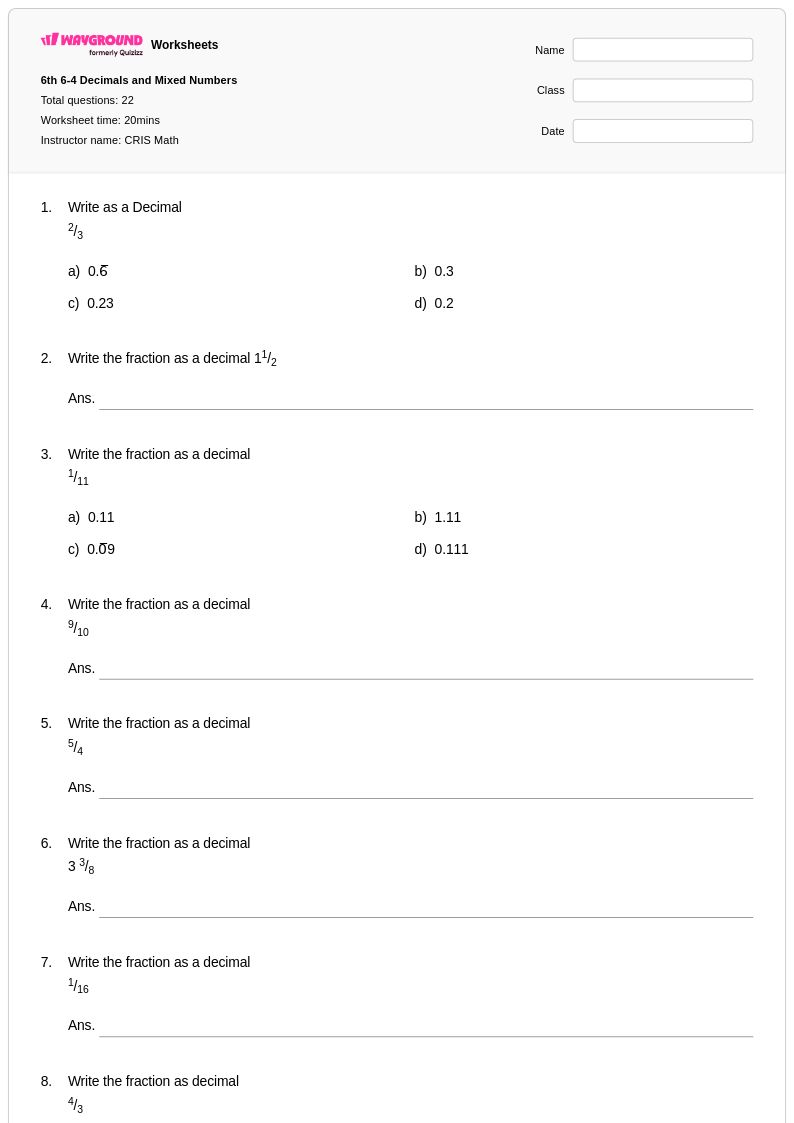
22 Q
6th
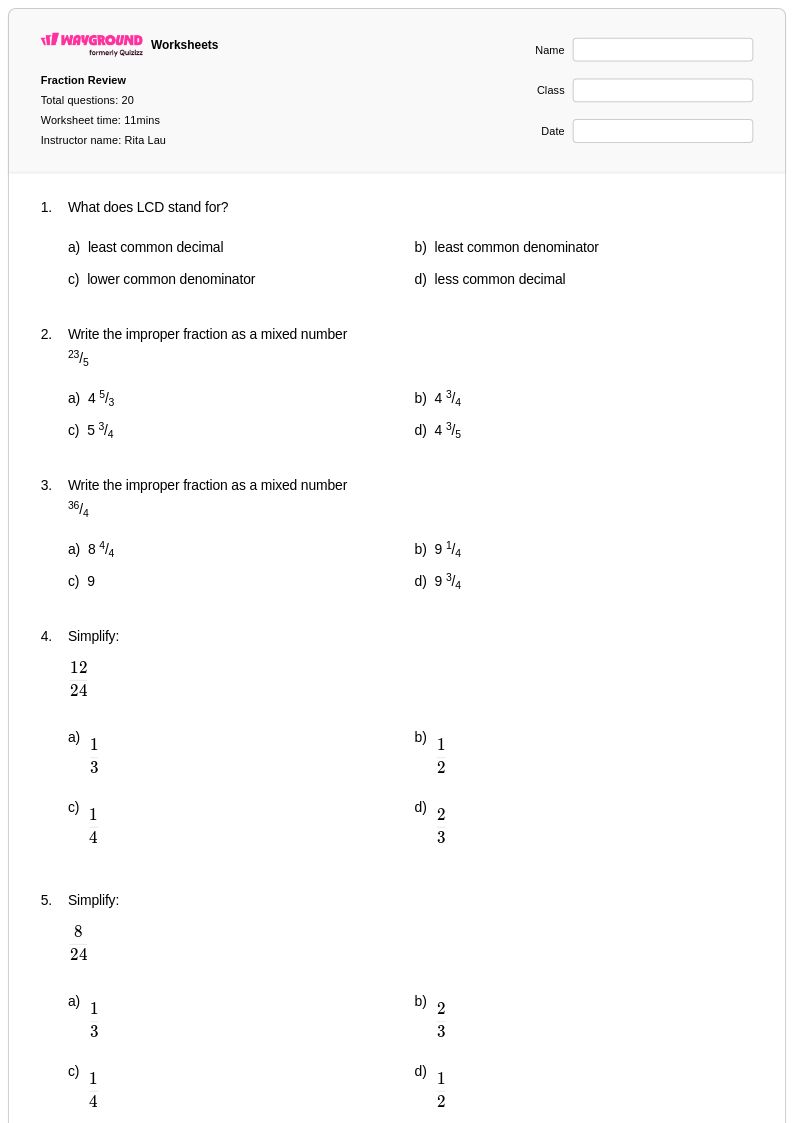
20 Q
5th
Explore Worksheets by Subjects
Explore printable Improper to Mixed Number Conversion worksheets
Improper to mixed number conversion worksheets available through Wayground (formerly Quizizz) provide students with systematic practice in transforming fractions where the numerator is greater than or equal to the denominator into their mixed number equivalents. These comprehensive resources strengthen fundamental fraction sense and computational fluency by guiding learners through the division process of separating whole number parts from remaining fractional components. The worksheets feature carefully scaffolded practice problems that progress from basic conversions with small denominators to more complex examples involving larger numbers and various fraction families. Each printable resource includes detailed answer keys that support independent learning and self-assessment, while the free pdf format ensures easy classroom distribution and home practice accessibility.
Wayground (formerly Quizizz) empowers educators with an extensive collection of teacher-created improper to mixed number conversion materials, drawing from millions of professionally developed resources that can be precisely filtered by difficulty level, specific mathematical standards, and instructional objectives. The platform's robust search functionality and standards alignment features enable teachers to quickly locate worksheets that match their curriculum requirements and student needs, while built-in differentiation tools allow for seamless customization of problem complexity and quantity. These versatile resources are available in both printable and digital formats, including downloadable pdf versions, making them ideal for diverse instructional settings whether used for initial skill introduction, targeted remediation of conversion difficulties, enrichment activities for advanced learners, or regular practice to maintain computational proficiency throughout the academic year.
FAQs
How do I teach converting improper fractions to mixed numbers?
What kind of practice helps students master this conversion?
What are common mistakes when converting improper fractions?
How can I use this worksheet in my classroom?
How does this skill fit into the math curriculum?
How can I support struggling students with this topic?