Free Printable Intensive Pronouns Worksheets for Class 9
Enhance Class 9 students' understanding of intensive pronouns with Wayground's comprehensive collection of free worksheets, printables, and practice problems featuring detailed answer keys to master this essential English grammar concept.
Explore printable Intensive Pronouns worksheets for Class 9
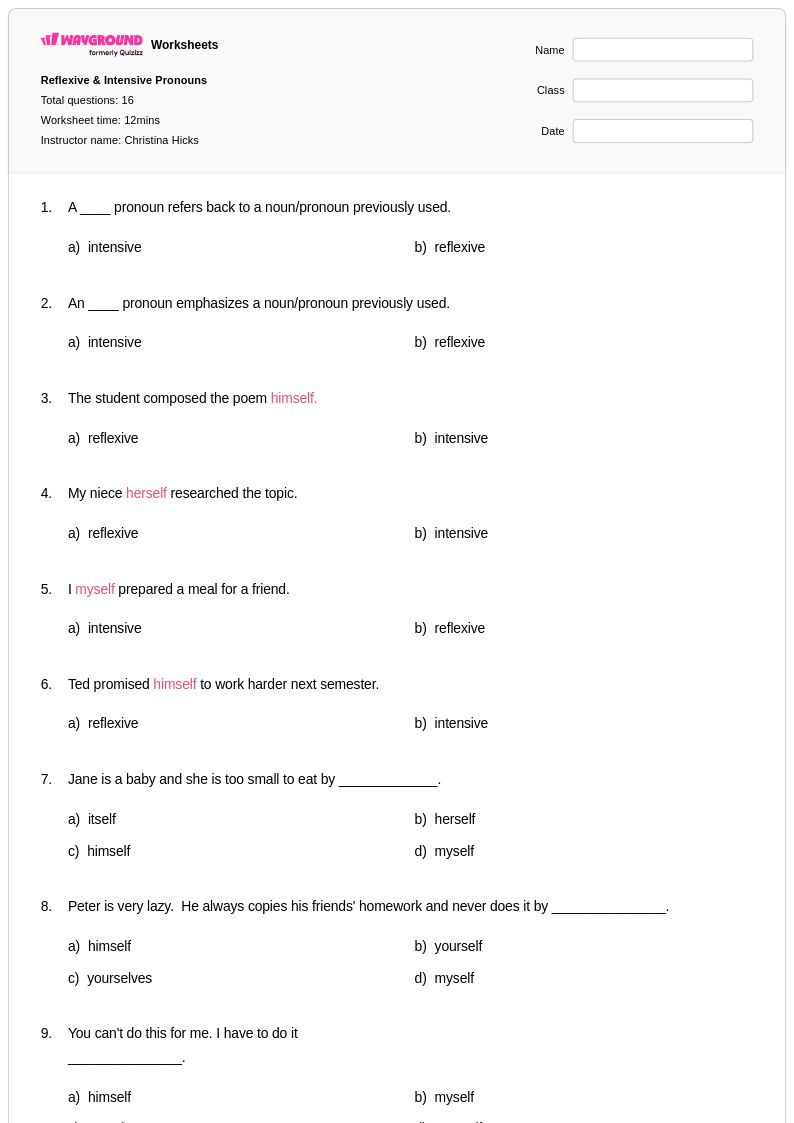
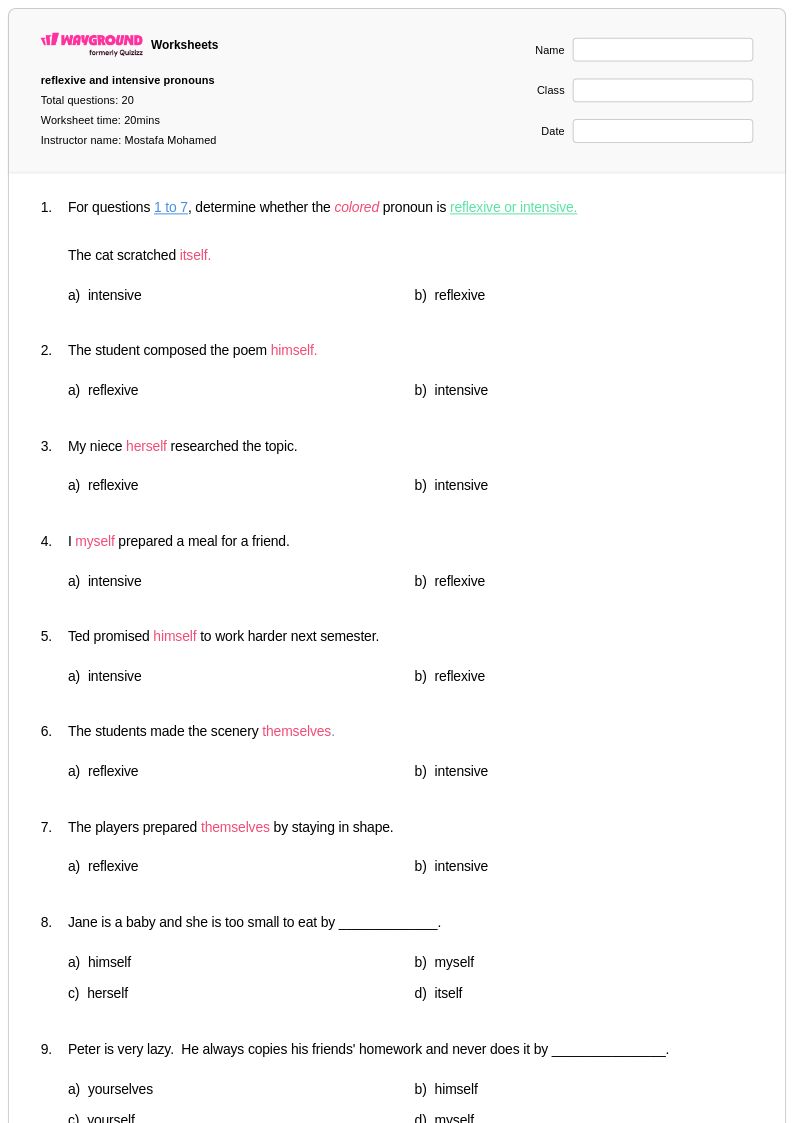
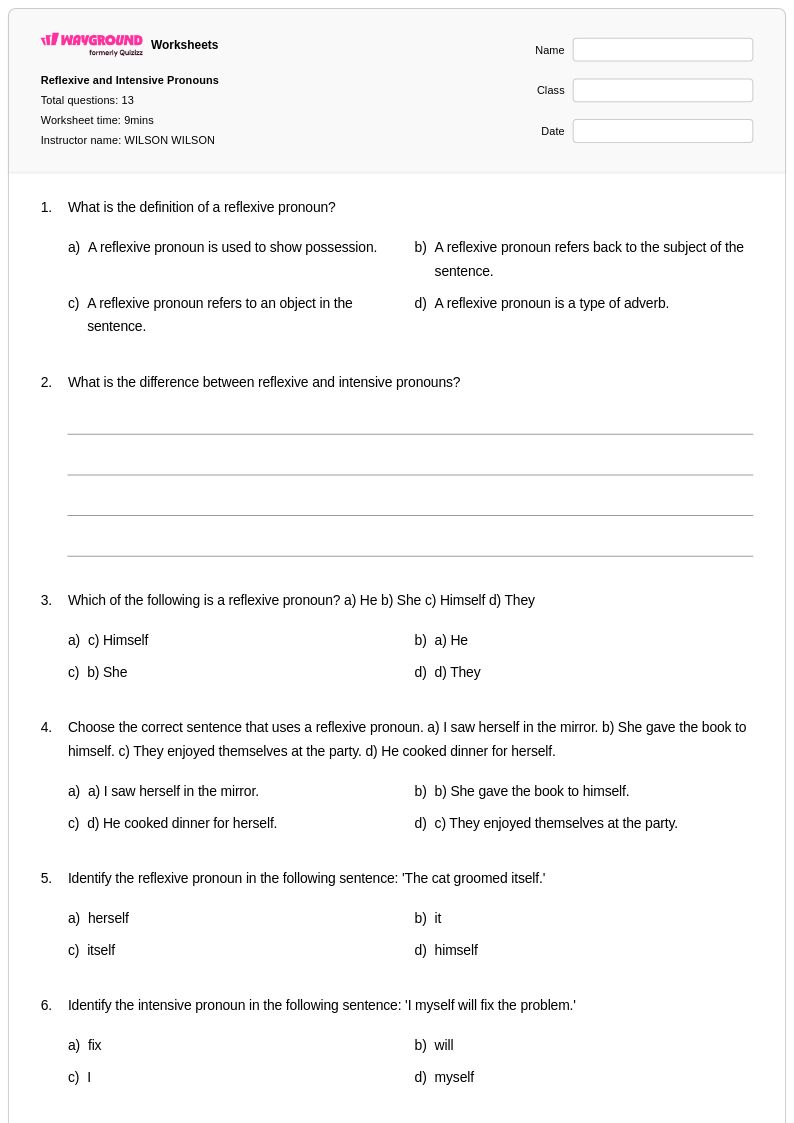
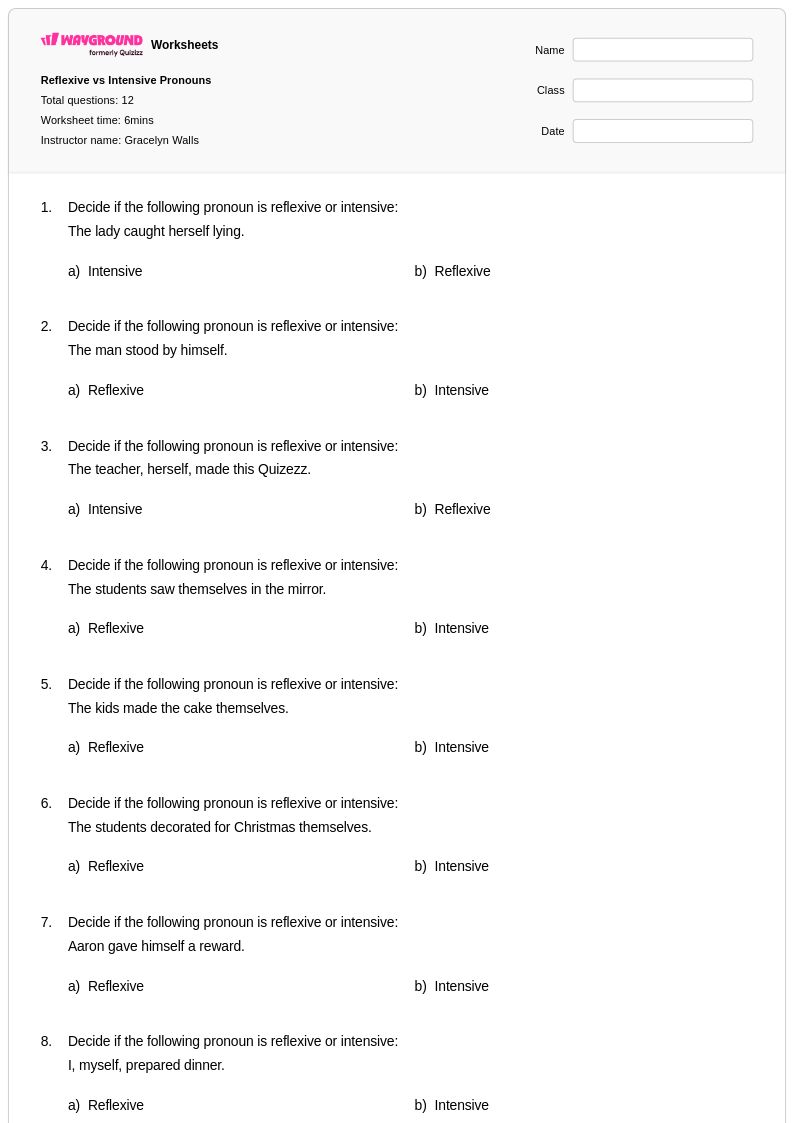
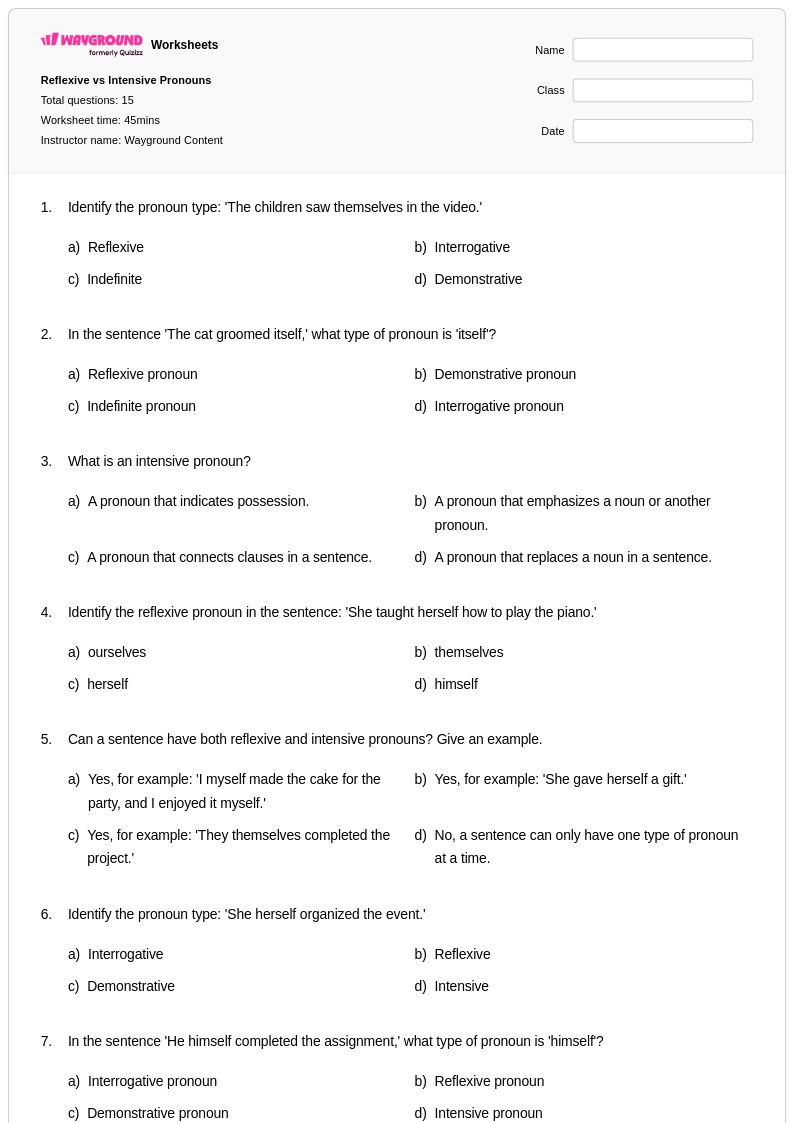
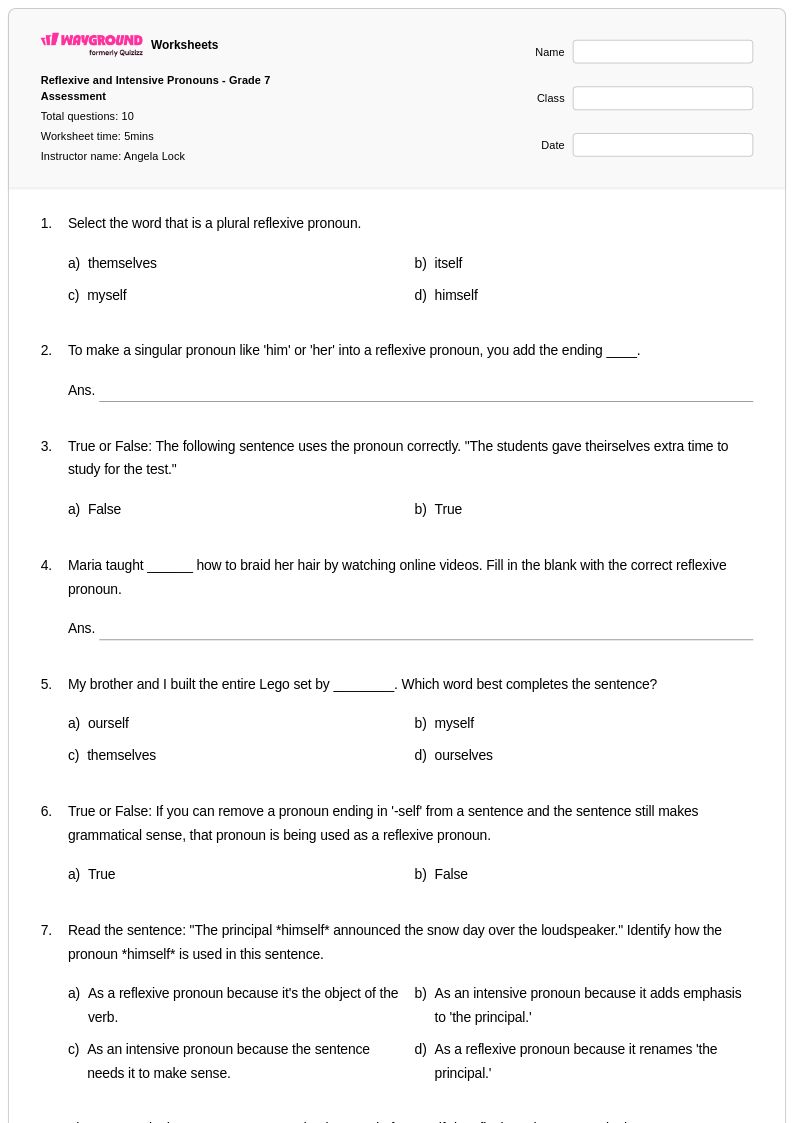
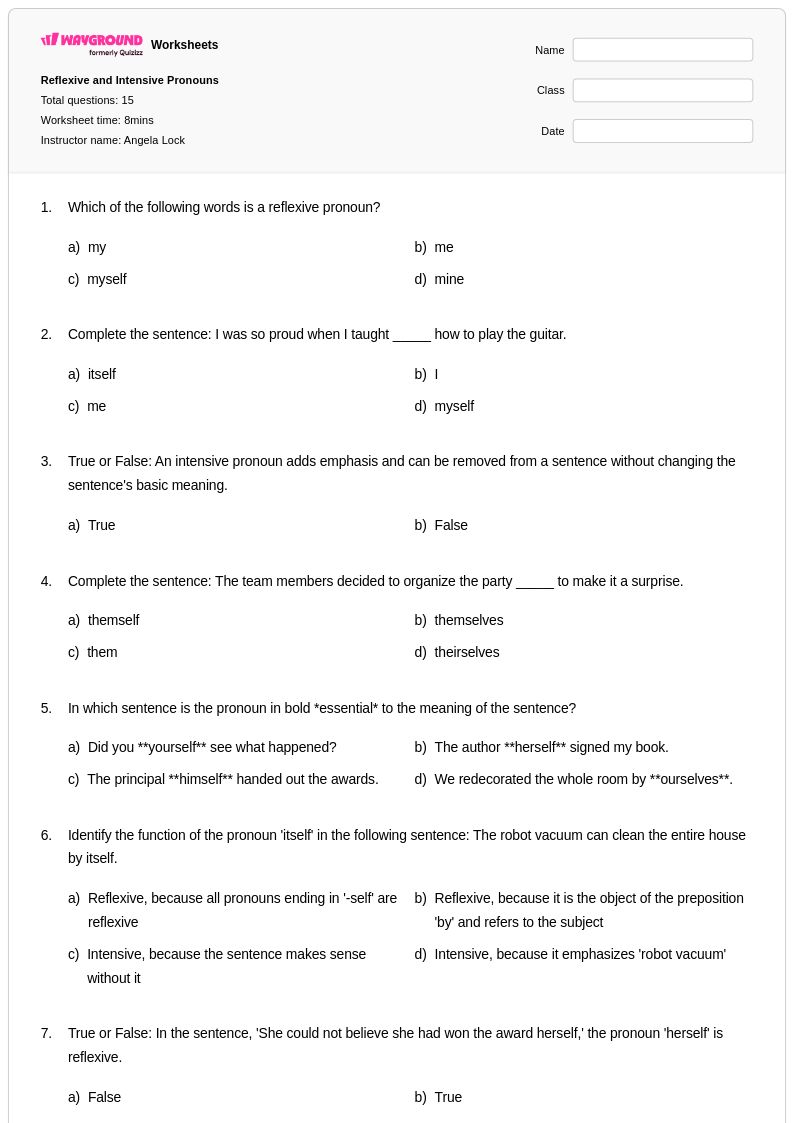
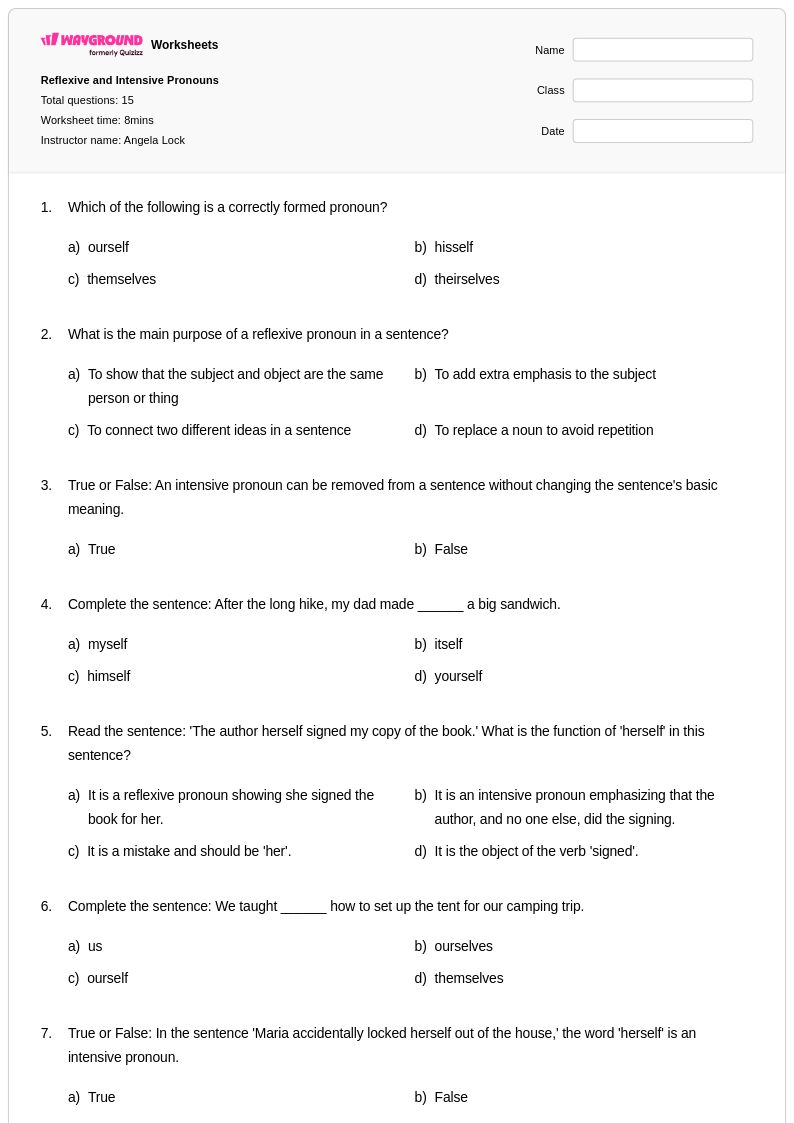
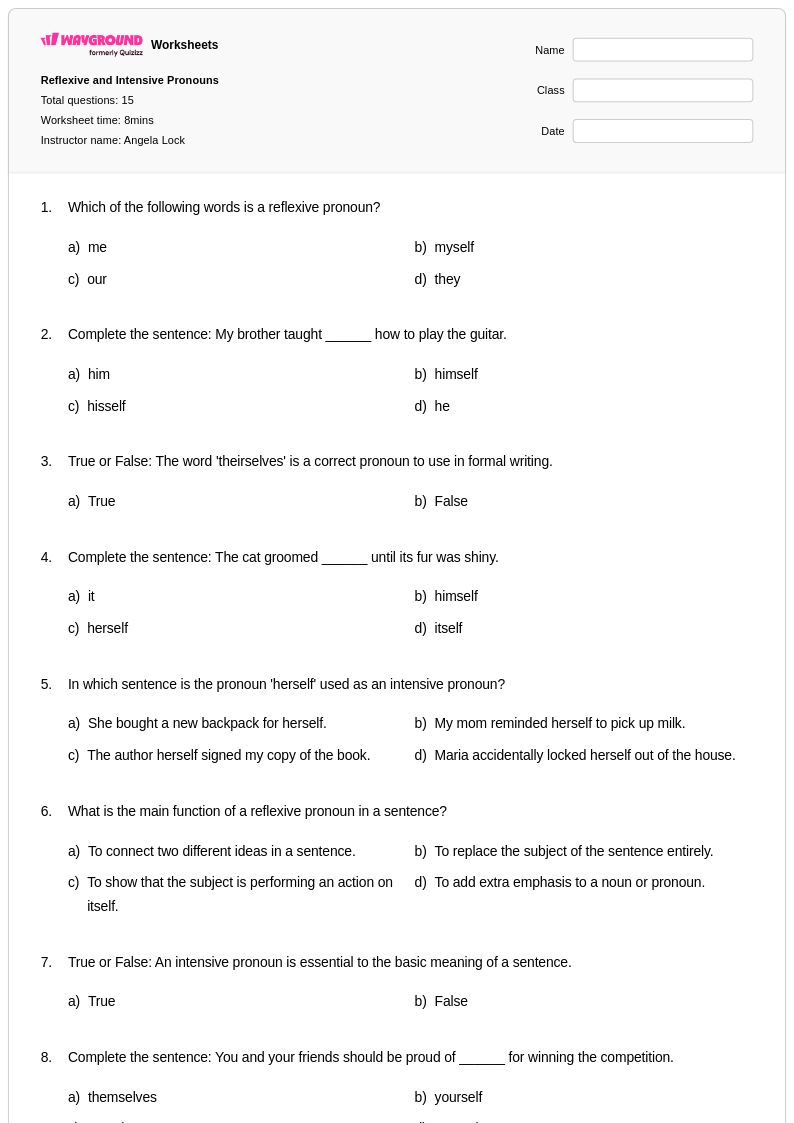
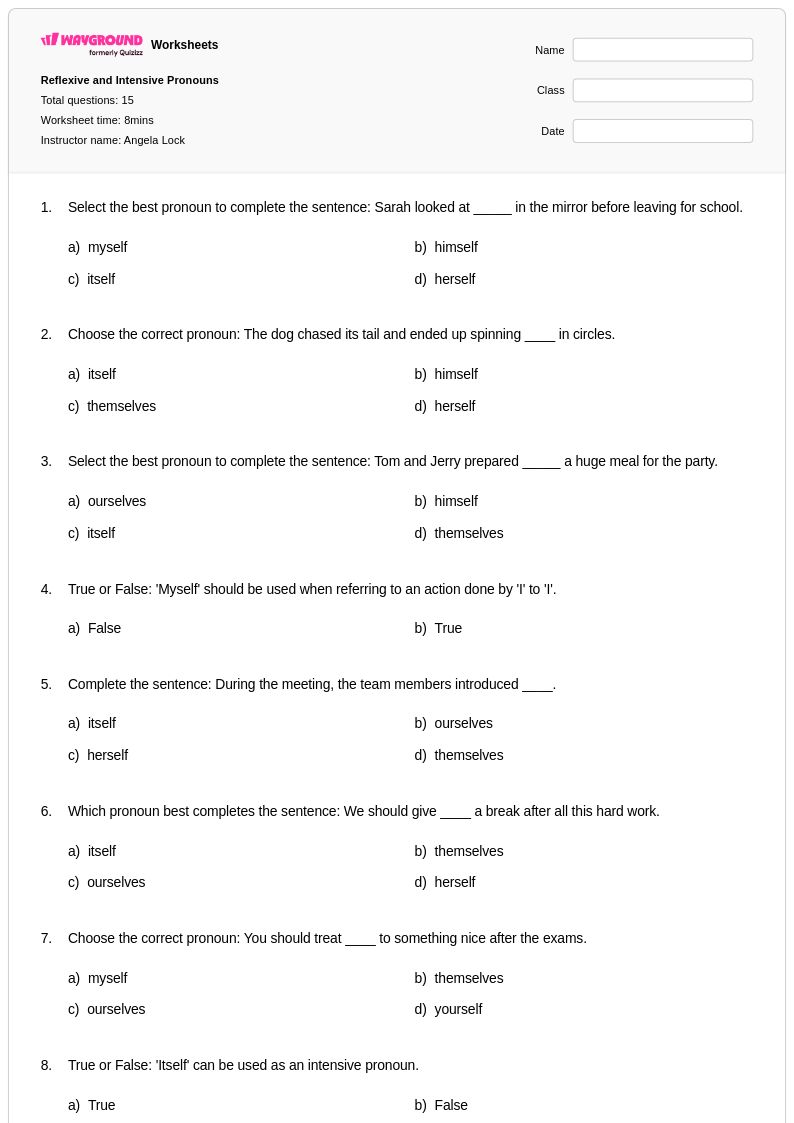
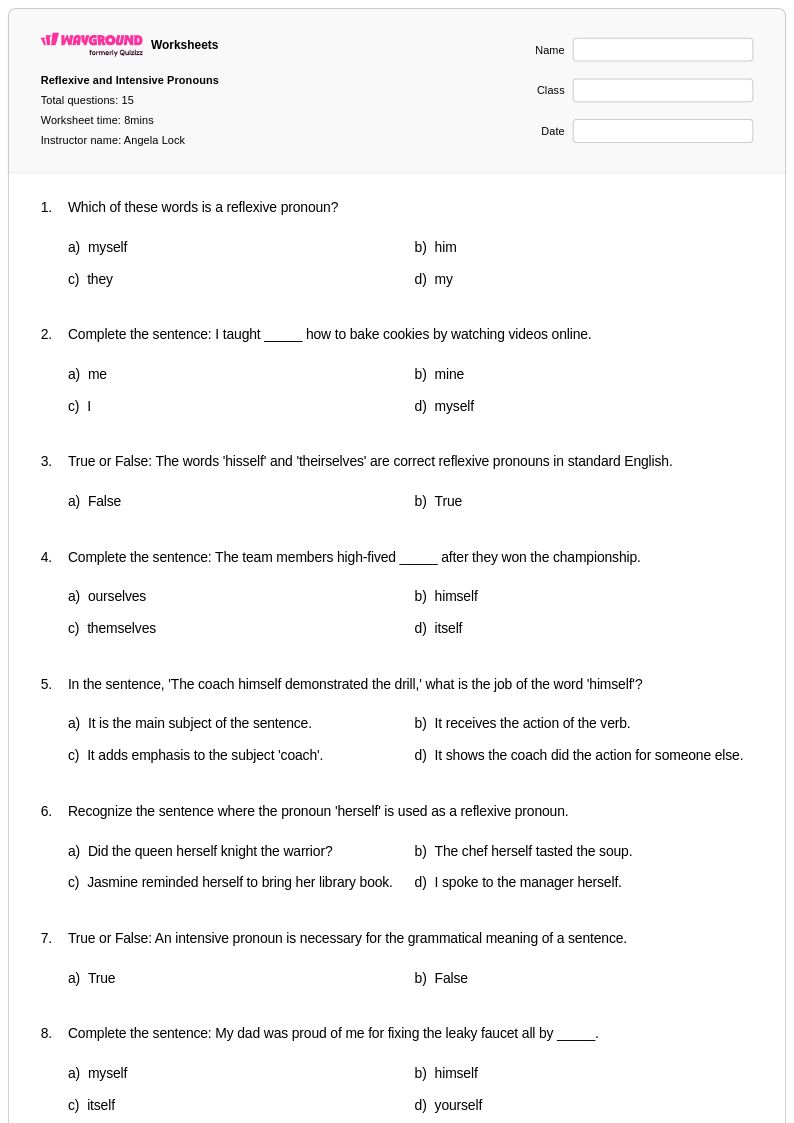
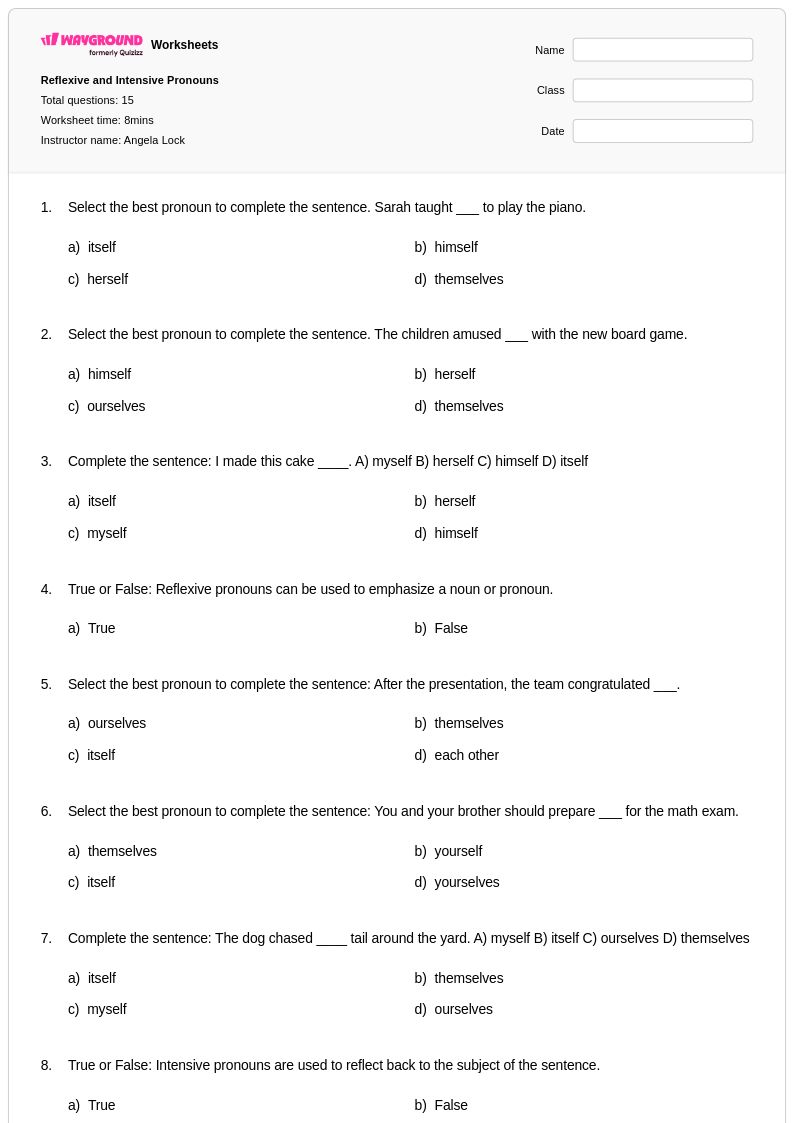
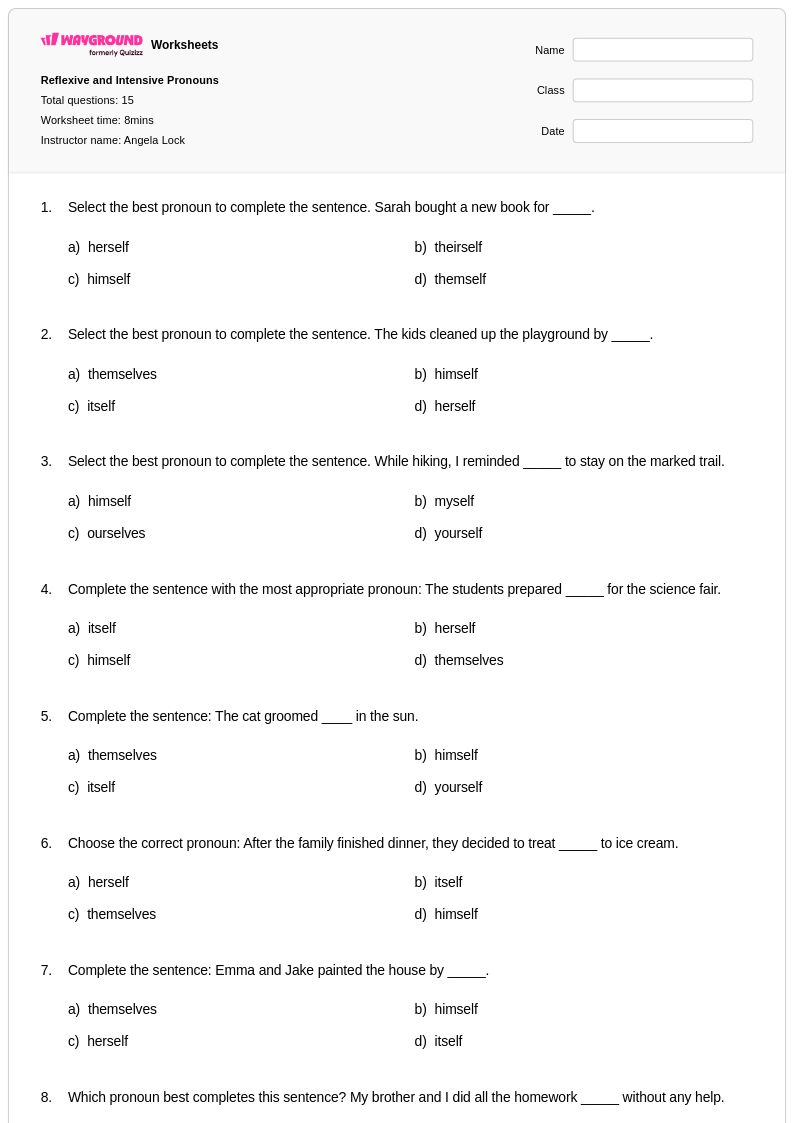
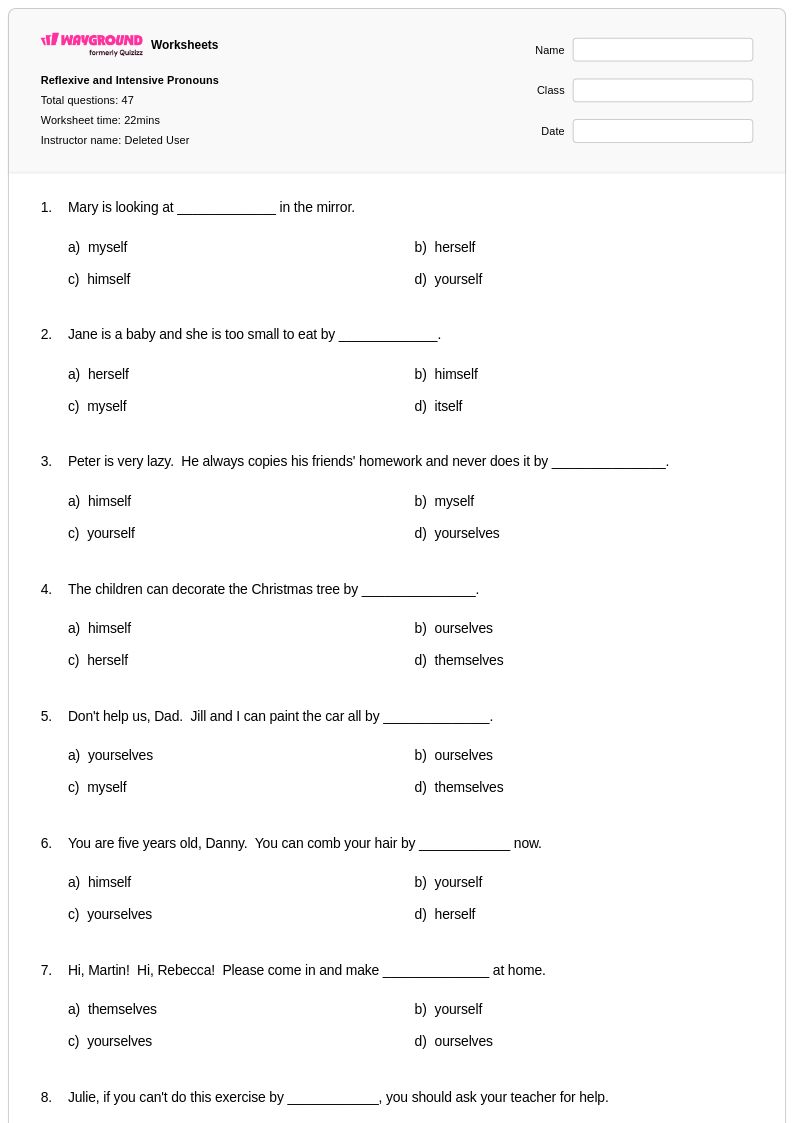
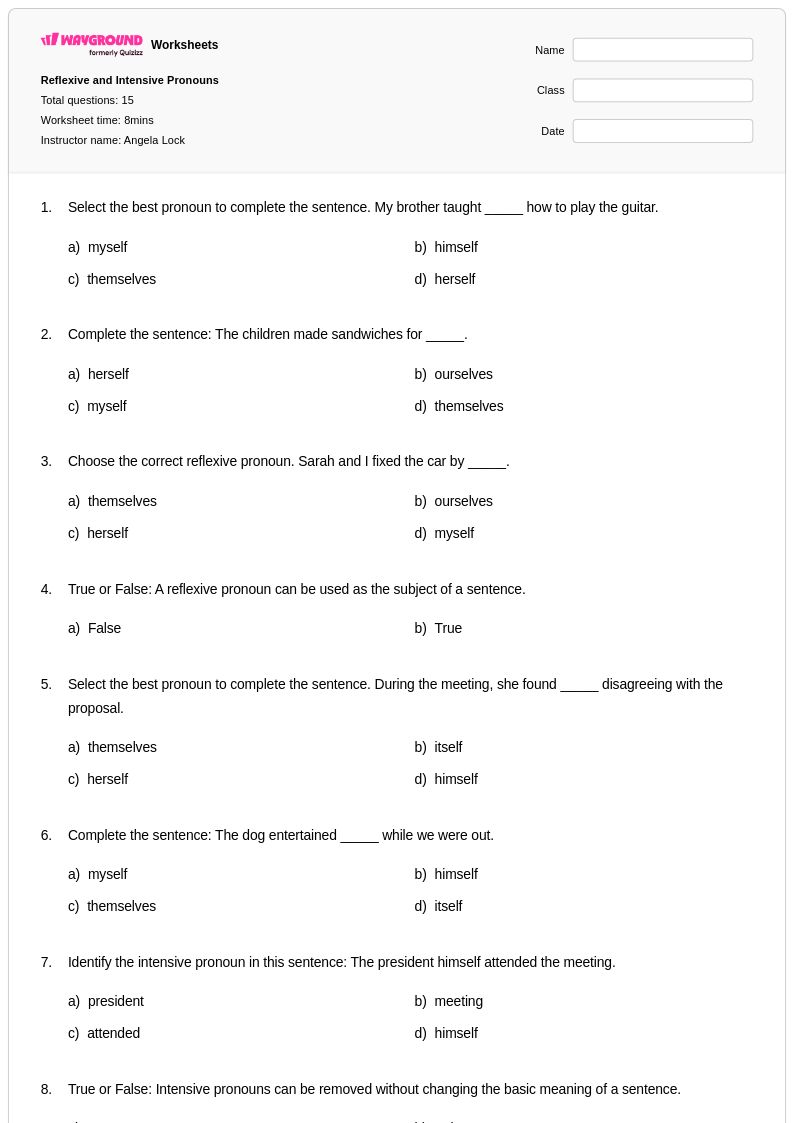
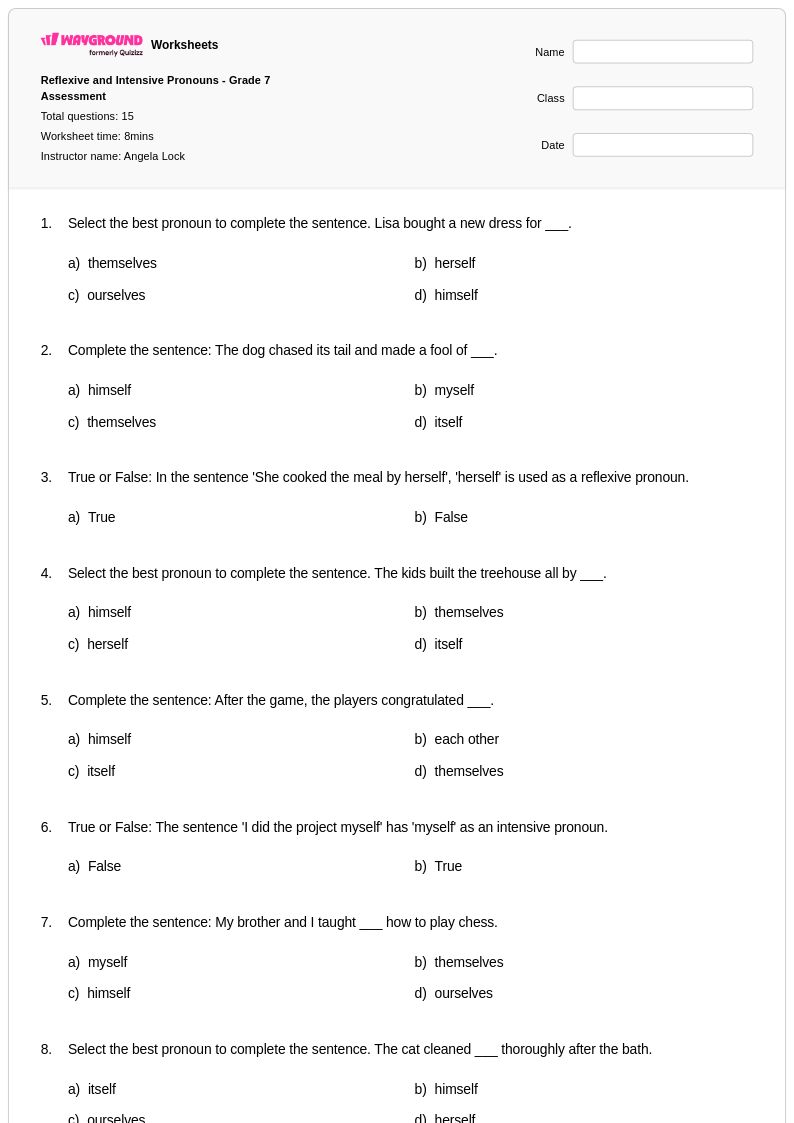
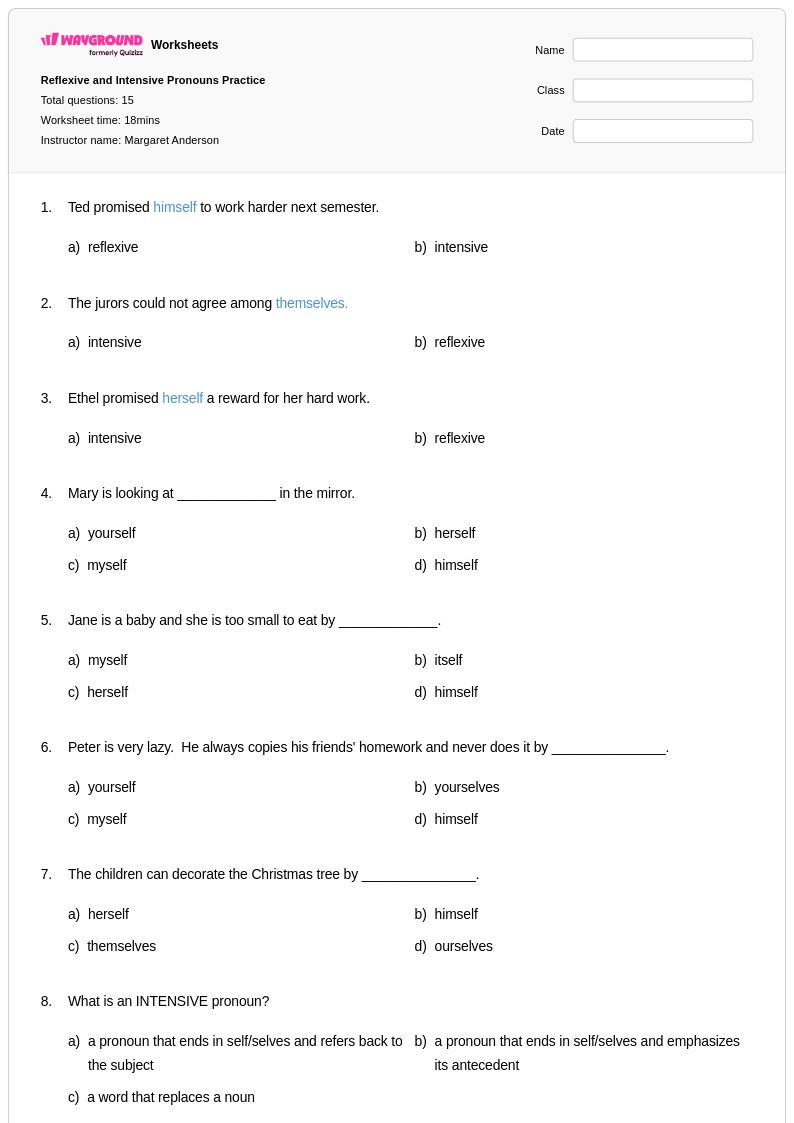
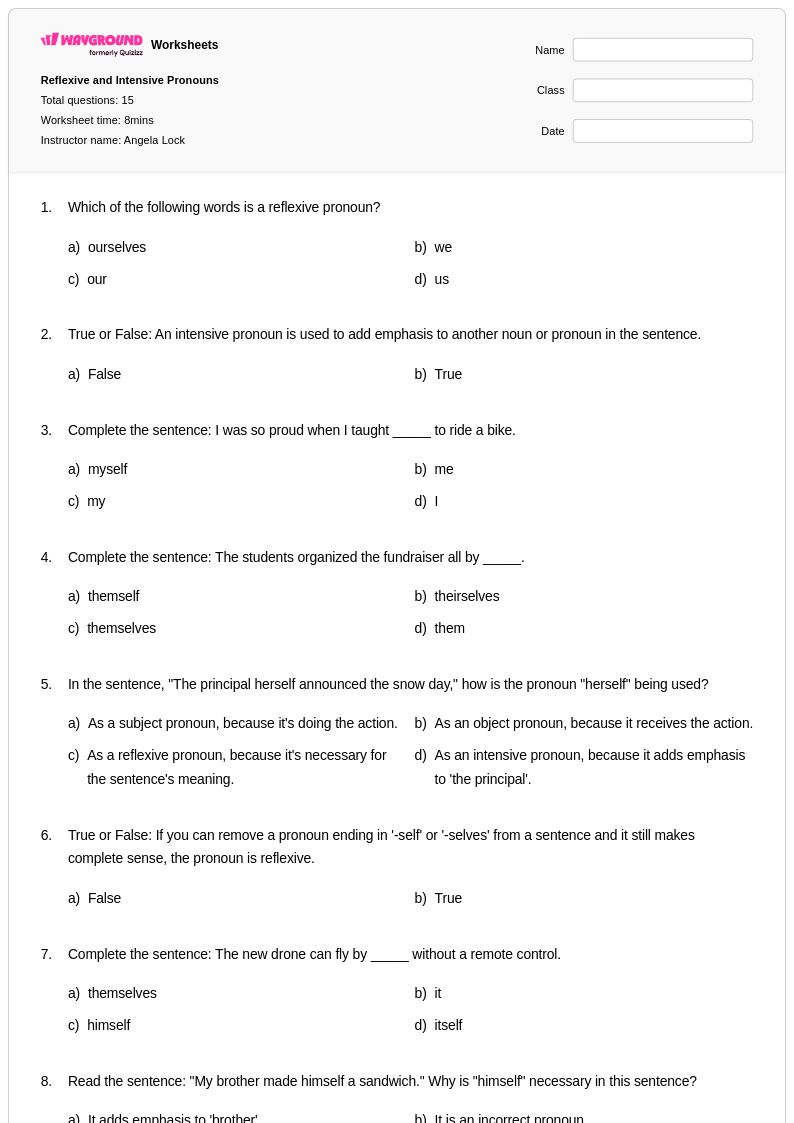
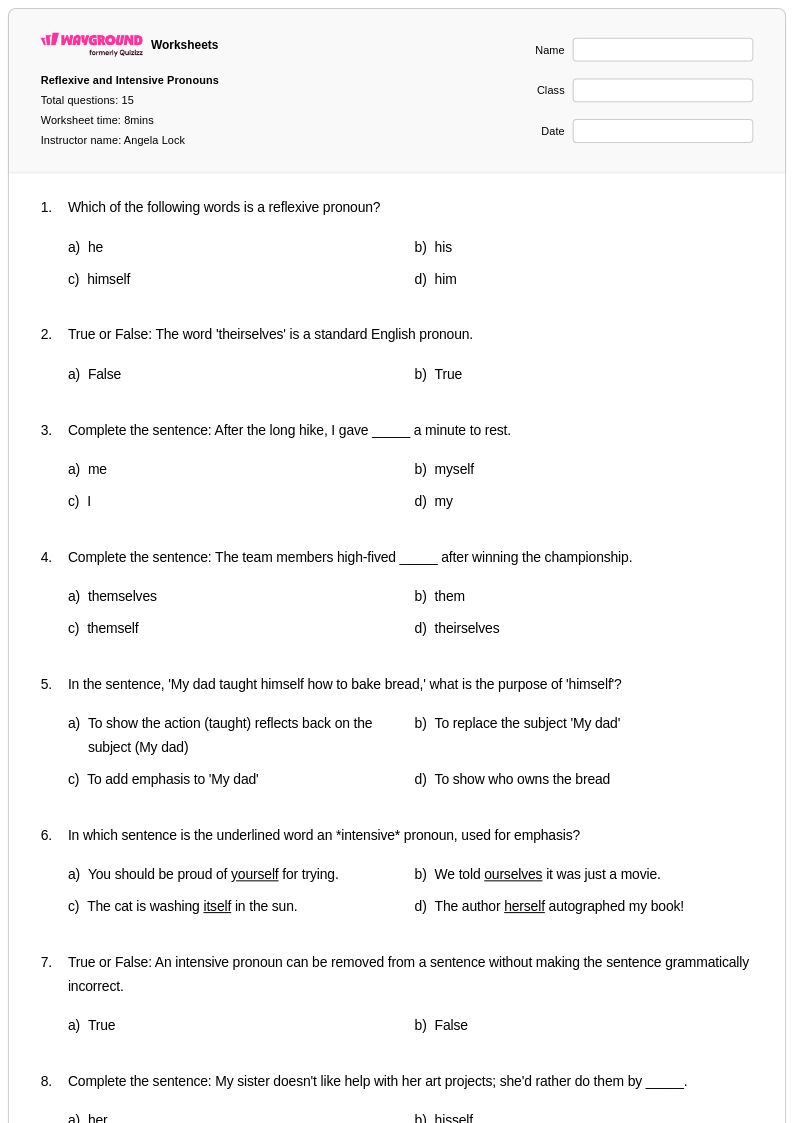
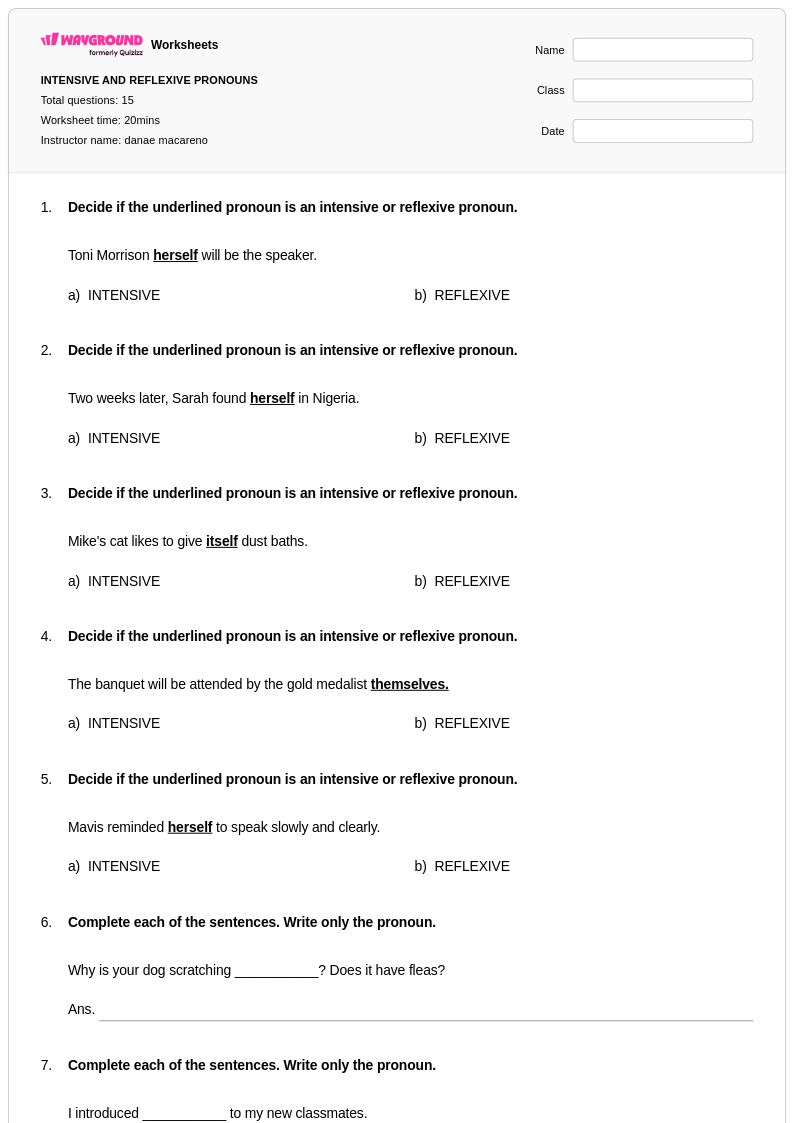
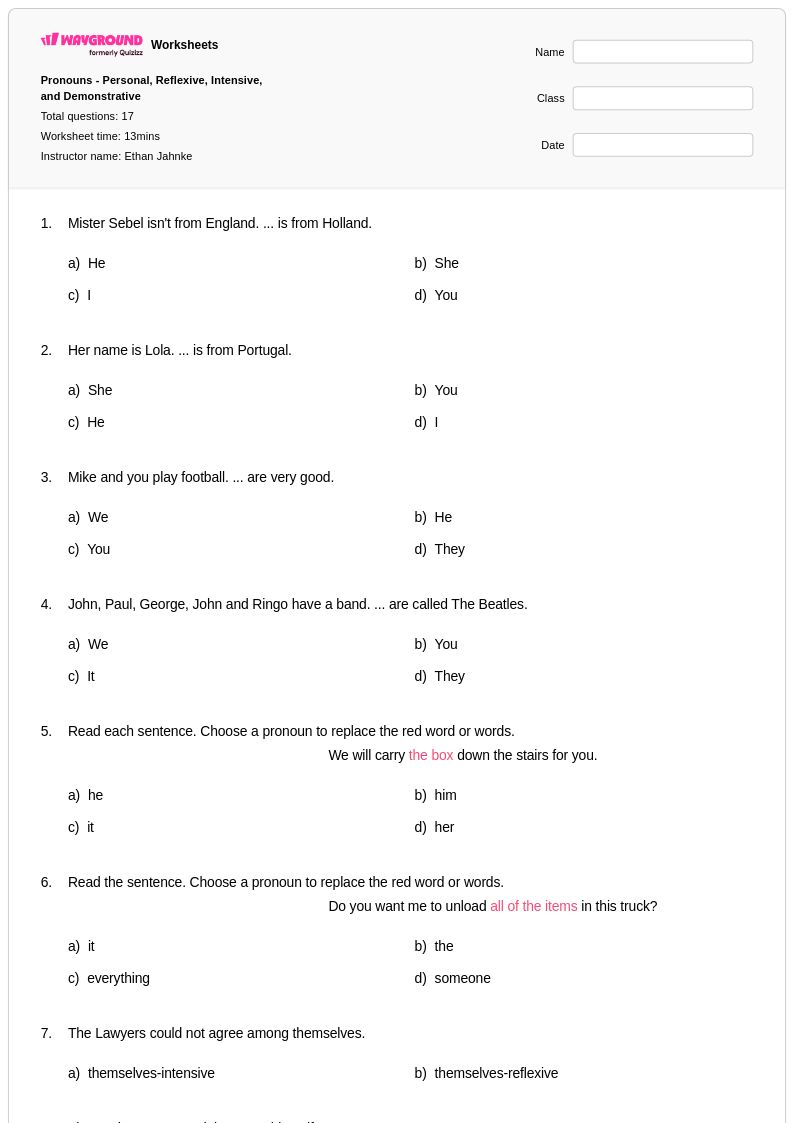
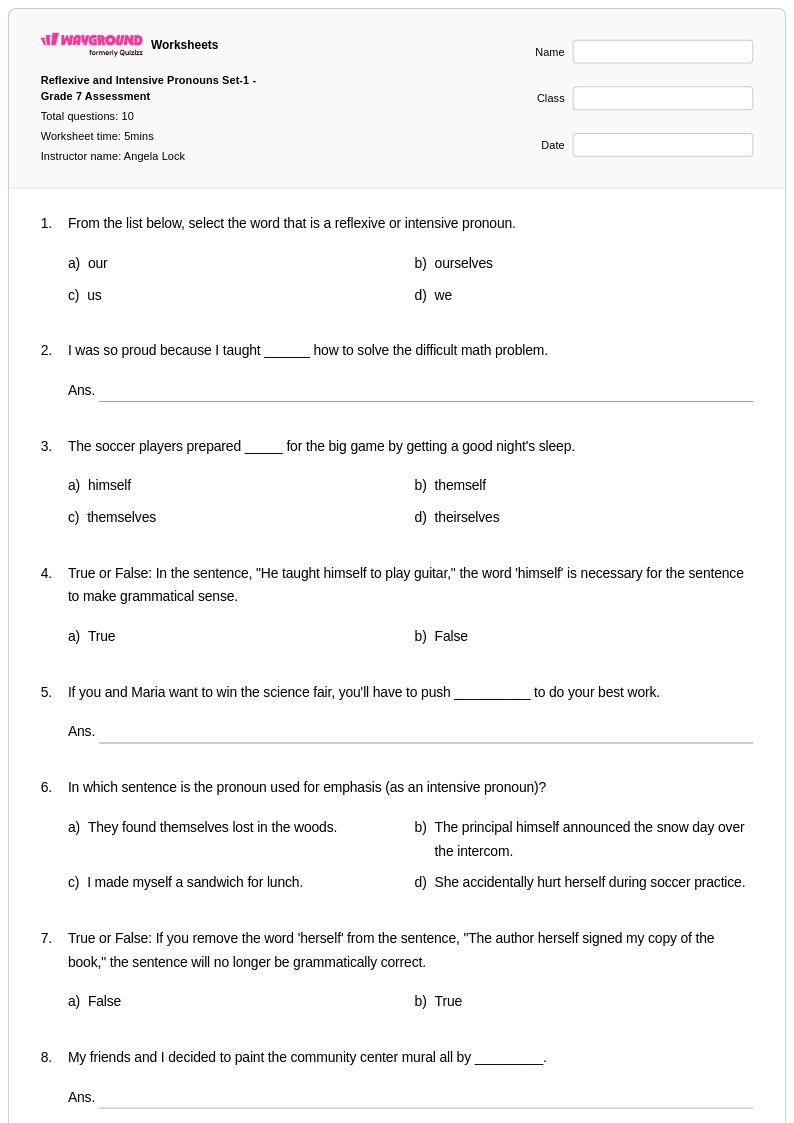
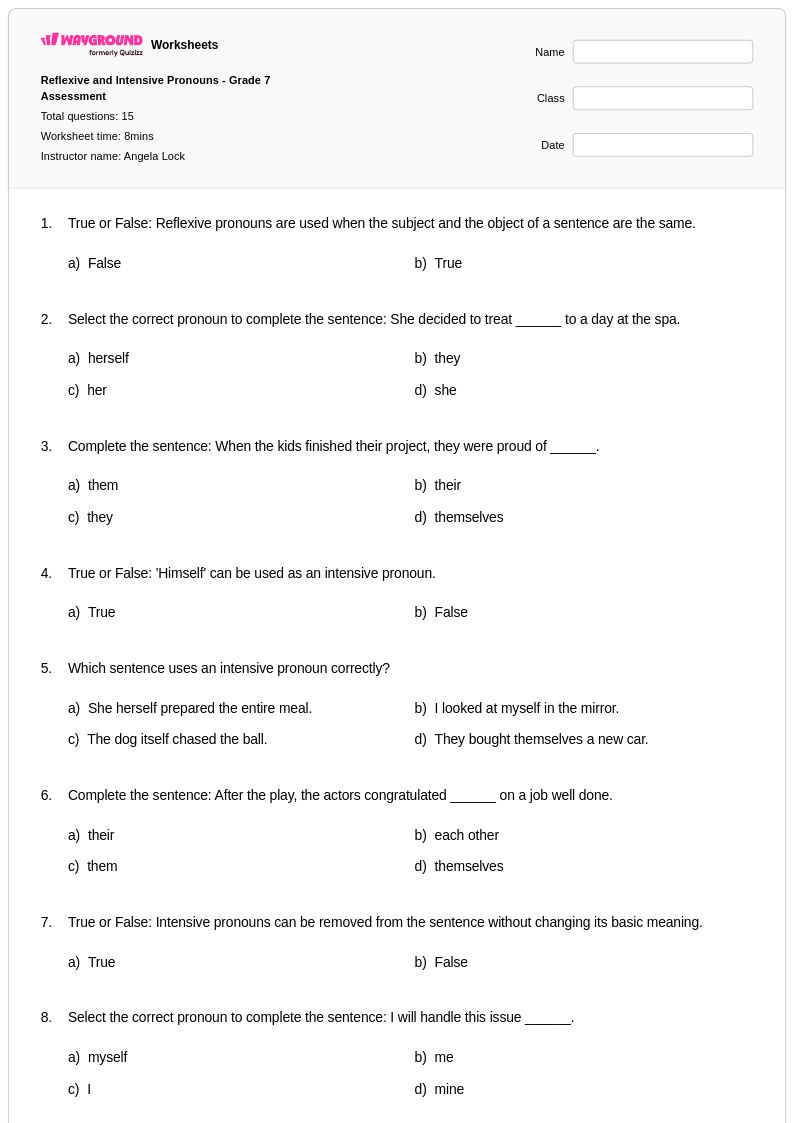
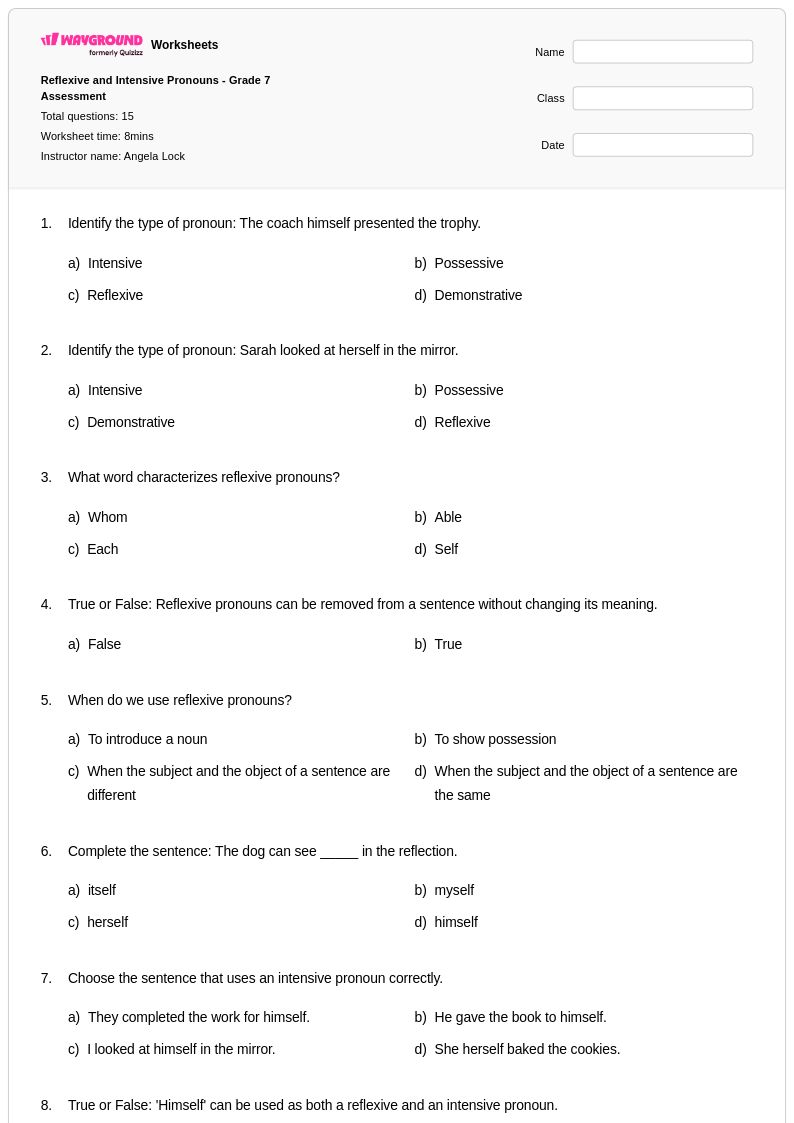
Intensive pronouns worksheets for Class 9 students available through Wayground (formerly Quizizz) provide comprehensive practice in identifying and using reflexive pronouns that emphasize the subject of a sentence. These educational resources focus on helping ninth-grade students distinguish between intensive pronouns like "myself," "yourself," "himself," "herself," "itself," "ourselves," "yourselves," and "themselves" when they serve to add emphasis rather than function as essential sentence elements. The worksheets strengthen students' understanding of how intensive pronouns differ from reflexive pronouns in both function and necessity, developing critical grammar analysis skills through varied practice problems. Each worksheet collection includes detailed answer keys and is available as free printables in convenient pdf format, allowing students to master the nuances of pronoun usage through structured exercises that range from identification tasks to sentence construction activities.
Wayground (formerly Quizizz) supports English teachers with an extensive library of millions of teacher-created intensive pronoun worksheets specifically designed for Class 9 instruction. The platform's robust search and filtering capabilities enable educators to quickly locate materials that align with curriculum standards and match their students' specific learning needs. Teachers can access differentiation tools that accommodate various skill levels within their classrooms, while flexible customization options allow for modifications to existing worksheets or creation of entirely new materials. These resources are available in both printable and digital formats, including downloadable pdfs, making them ideal for classroom instruction, homework assignments, remediation sessions, and enrichment activities that help students develop sophisticated understanding of advanced pronoun concepts essential for high school-level writing and communication.
FAQs
What is an intensive pronoun and how is it different from a reflexive pronoun?
An intensive pronoun is a pronoun ending in -self or -selves (such as myself, yourself, himself, herself, itself, ourselves, yourselves, and themselves) used solely to add emphasis to a noun or another pronoun in the sentence. Unlike reflexive pronouns, which are grammatically necessary because they receive the action of the verb, intensive pronouns can be removed from a sentence without changing its core meaning. For example, in 'The principal herself announced the winner,' the word 'herself' adds emphasis but is not required for the sentence to make sense.
How do I teach students to identify intensive pronouns in a sentence?
The most reliable strategy is to teach students the removal test: if the -self or -selves pronoun can be deleted without making the sentence grammatically incorrect or changing its meaning, it is functioning as an intensive pronoun. Reinforce this by presenting sentence pairs where the same word functions as reflexive in one context and intensive in another, so students learn to evaluate function rather than form. Modeling the thought process aloud before having students apply it independently helps build confident identification skills.
What exercises help students practice using intensive pronouns correctly in their writing?
Effective practice exercises include sentence completion tasks where students insert the correct intensive pronoun to add emphasis, sentence revision activities where they add an intensive pronoun to an existing sentence without altering its meaning, and error correction exercises that require students to spot misused or unnecessary pronouns. Having students write original sentences using intensive pronouns in varied positions, such as immediately after the noun they emphasize or at the end of a clause, builds flexible usage skills rather than rote memorization.
What mistakes do students commonly make with intensive pronouns?
The most frequent error is confusing intensive pronouns with reflexive pronouns, particularly using reflexive logic to justify the pronoun's presence when it is actually functioning intensively. Students also commonly misplace intensive pronouns, placing them too far from the noun they are meant to emphasize, which weakens or confuses the intended stress. A related error is using intensive pronouns as subject replacements, such as writing 'Myself went to the store' instead of 'I myself went to the store,' which reflects a misunderstanding of how these pronouns must relate to another noun or pronoun in the sentence.
How can I use Wayground's intensive pronouns worksheets in my classroom?
Wayground's intensive pronouns worksheets are available as printable PDFs for traditional classroom use and in digital formats for technology-integrated learning environments, and can also be hosted as a quiz directly on Wayground. Each worksheet includes a complete answer key, making them practical for independent practice, small-group instruction, or homework assignments. For students who need additional support, Wayground allows teachers to enable accommodations such as read aloud, extended time, and reduced answer choices on an individual basis, so every student can access the same content at an appropriate level of challenge.
How do I differentiate intensive pronoun instruction for students at different skill levels?
For students who are new to the concept, begin with guided practice that focuses solely on identification before introducing production tasks. More advanced students benefit from exercises that require them to distinguish intensive from reflexive pronouns across varied sentence structures and then apply intensive pronouns in their own analytical or creative writing. On Wayground, teachers can assign individual accommodations such as reduced answer choices or read aloud to support students who need scaffolding, while other students receive the standard version of the same worksheet without any disruption to the class routine.