Free Printable Layers of the Earth Worksheets for Class 12
Class 12 students can master Earth's structural composition with Wayground's comprehensive collection of free worksheets and printables covering the layers of the Earth, featuring detailed practice problems and answer keys.
Explore printable Layers of the Earth worksheets for Class 12
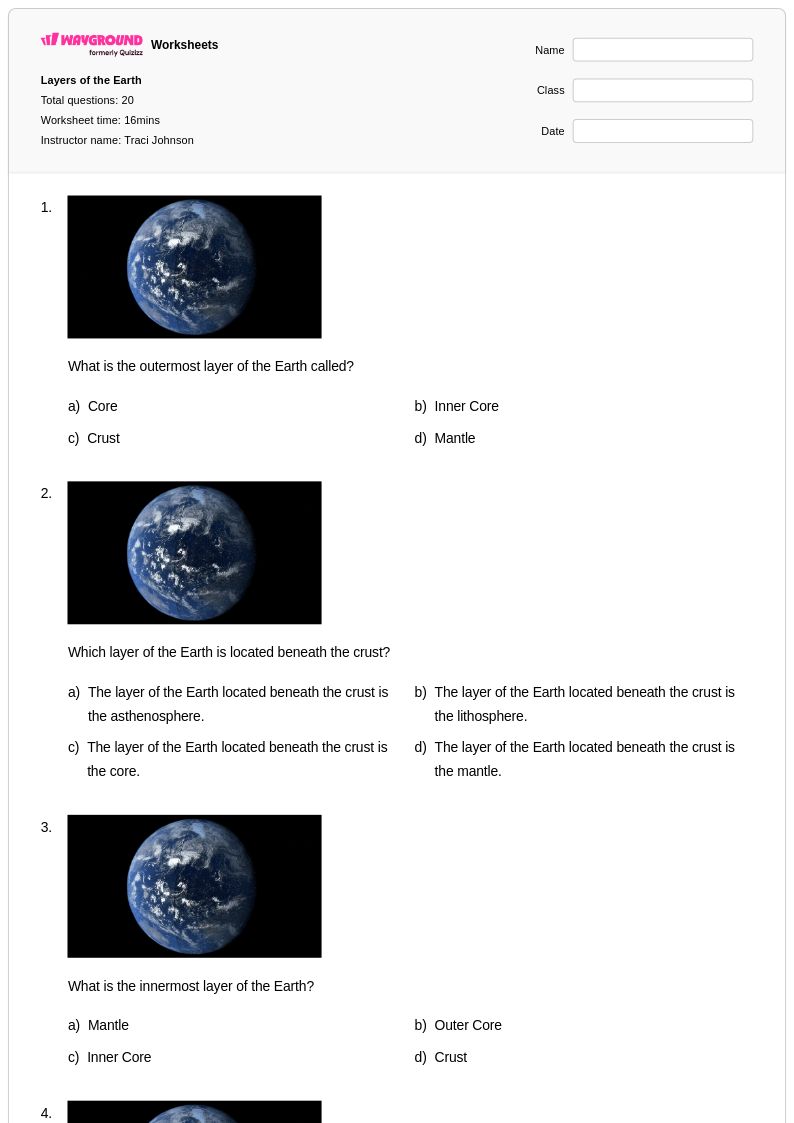
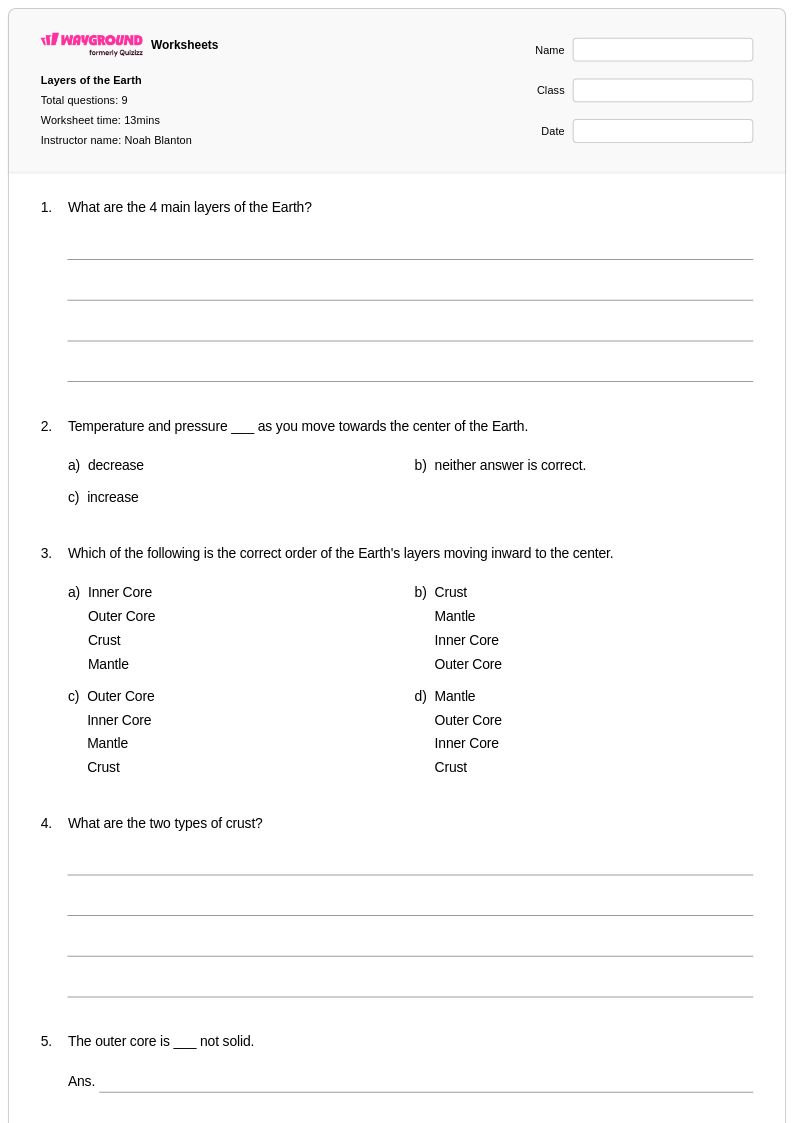
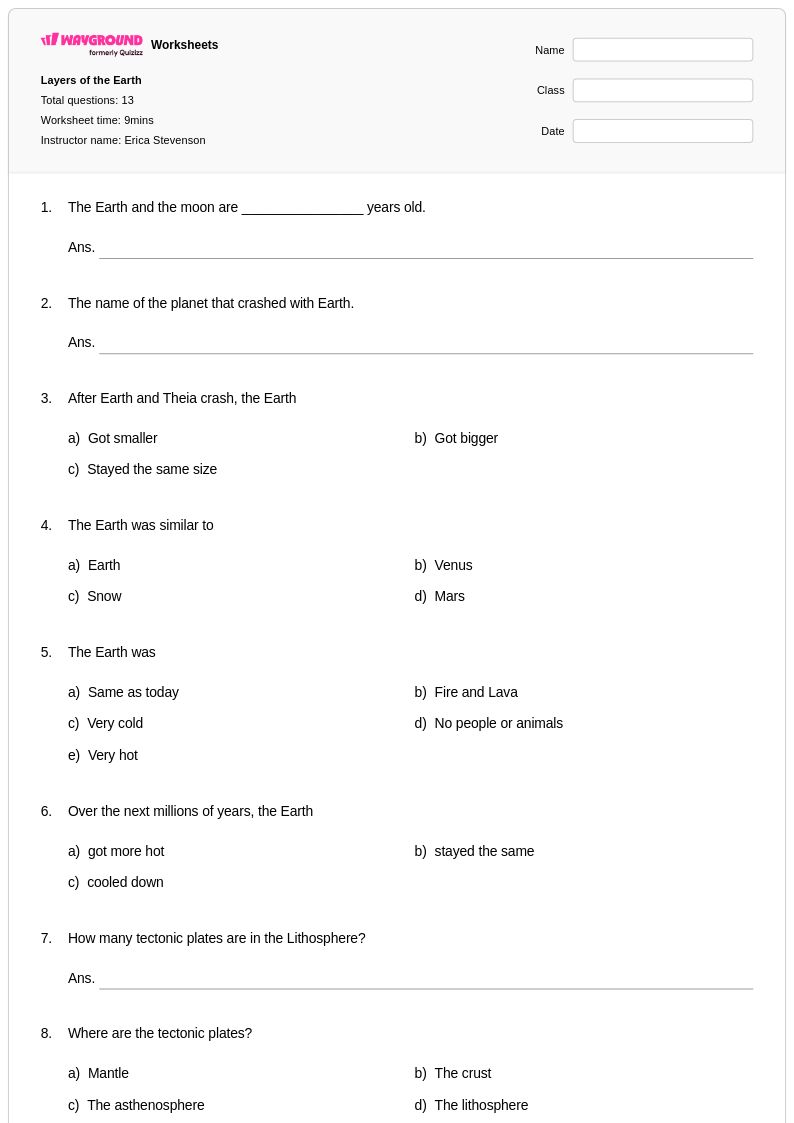
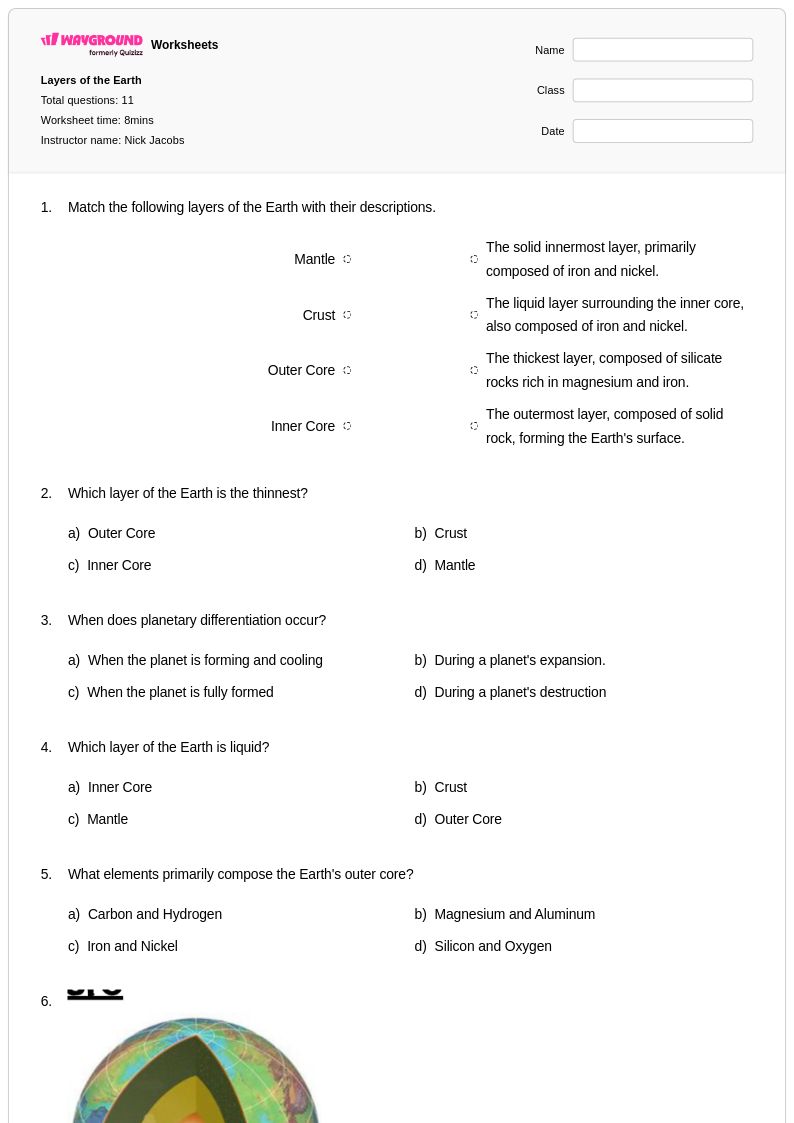
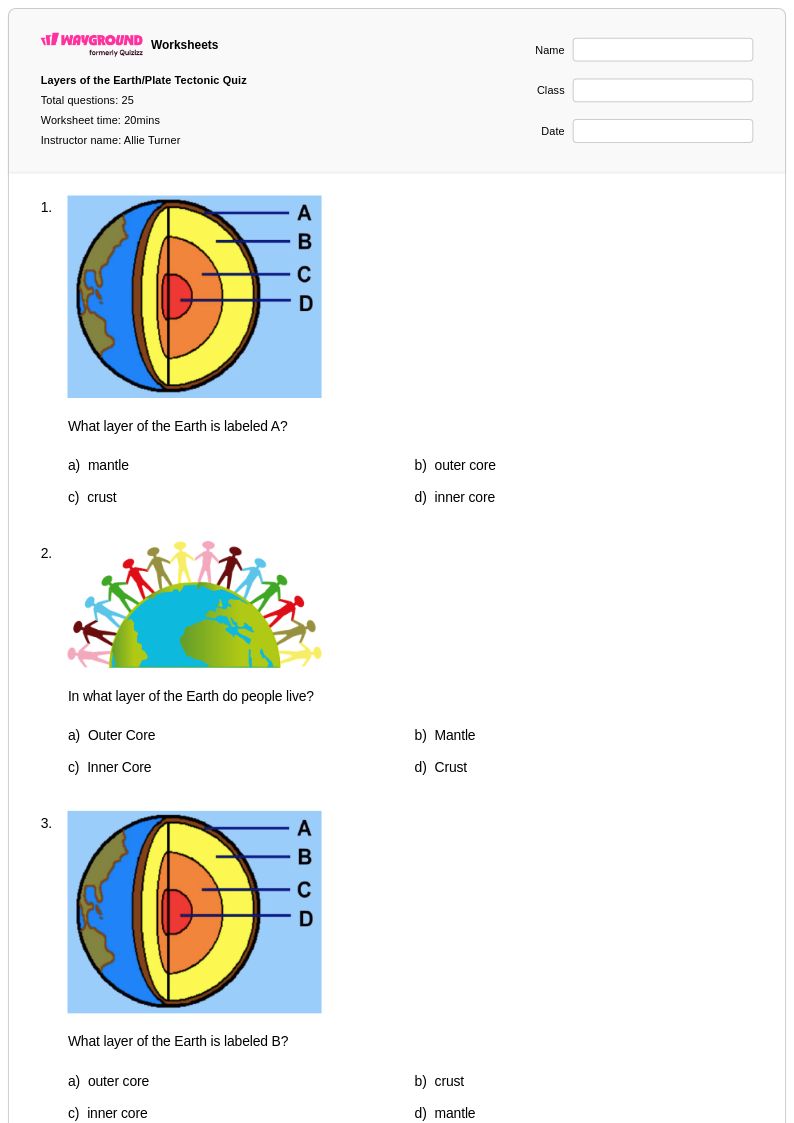
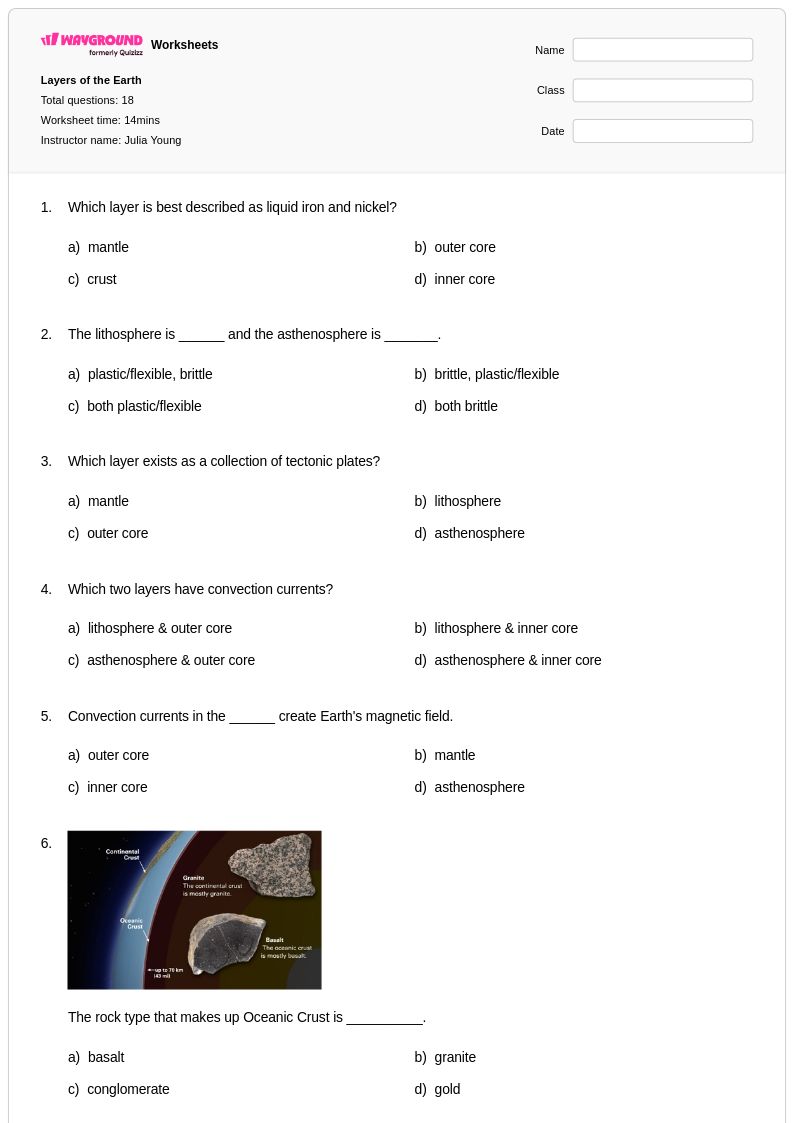
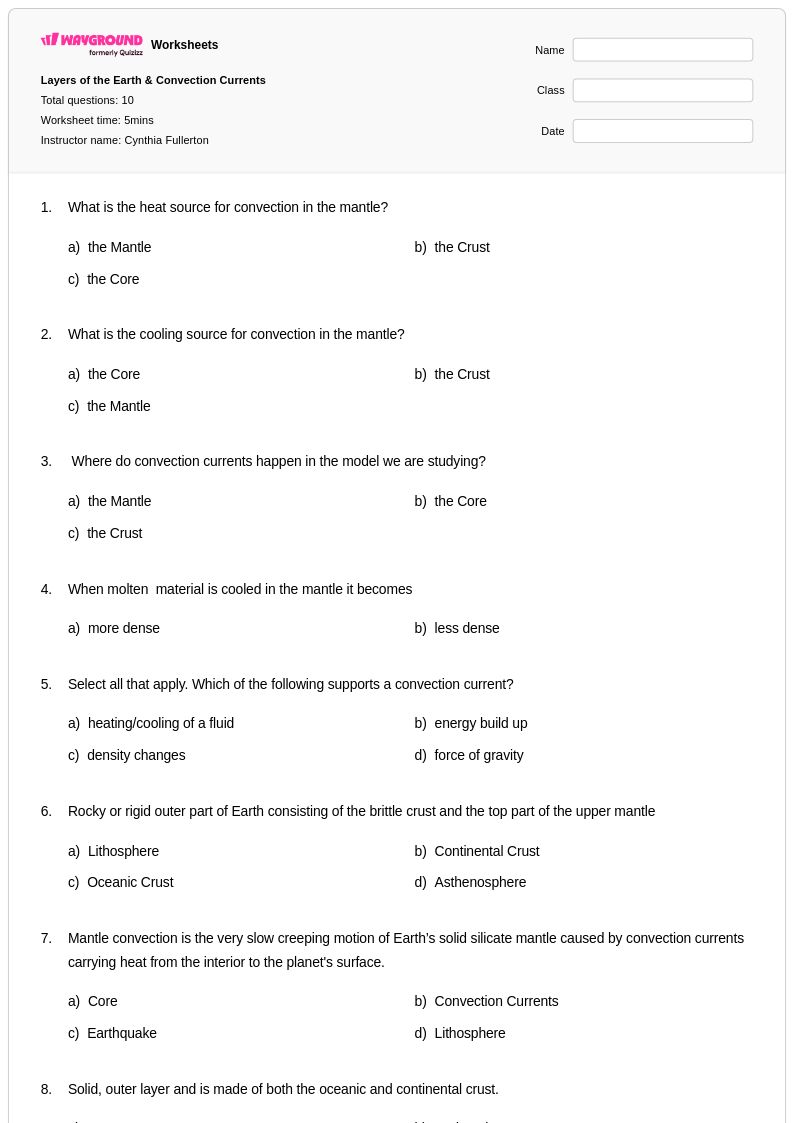
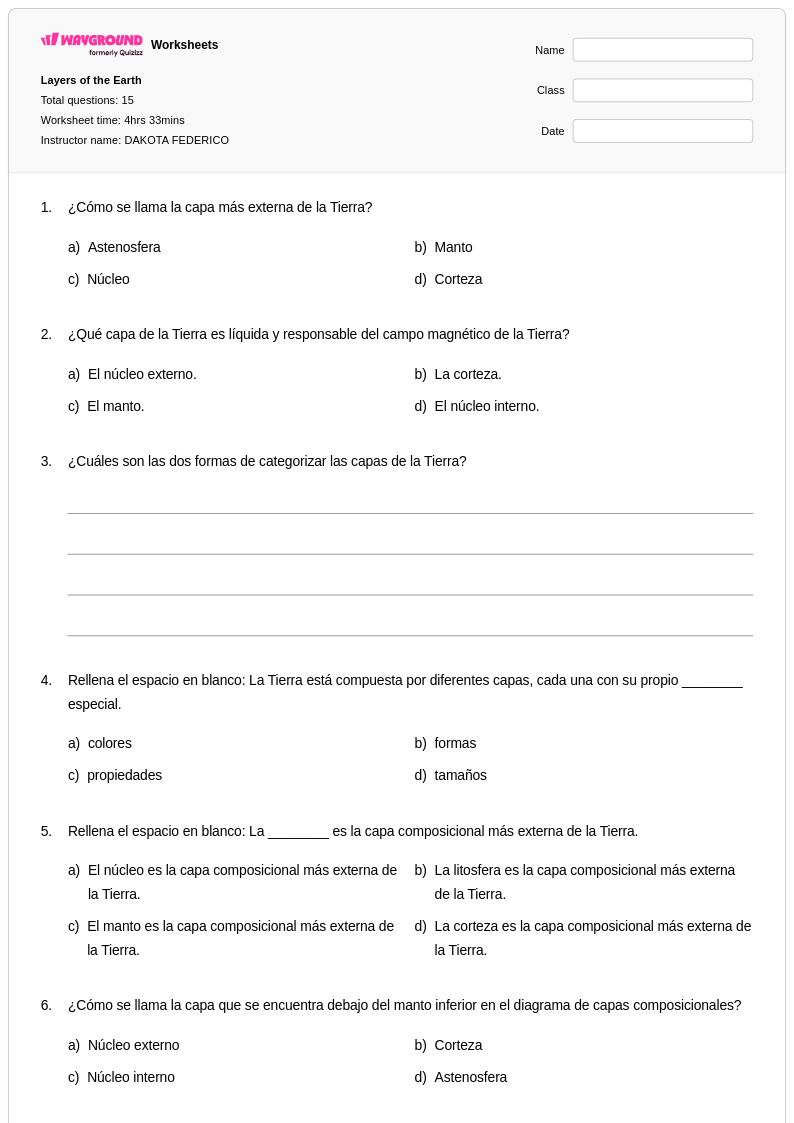
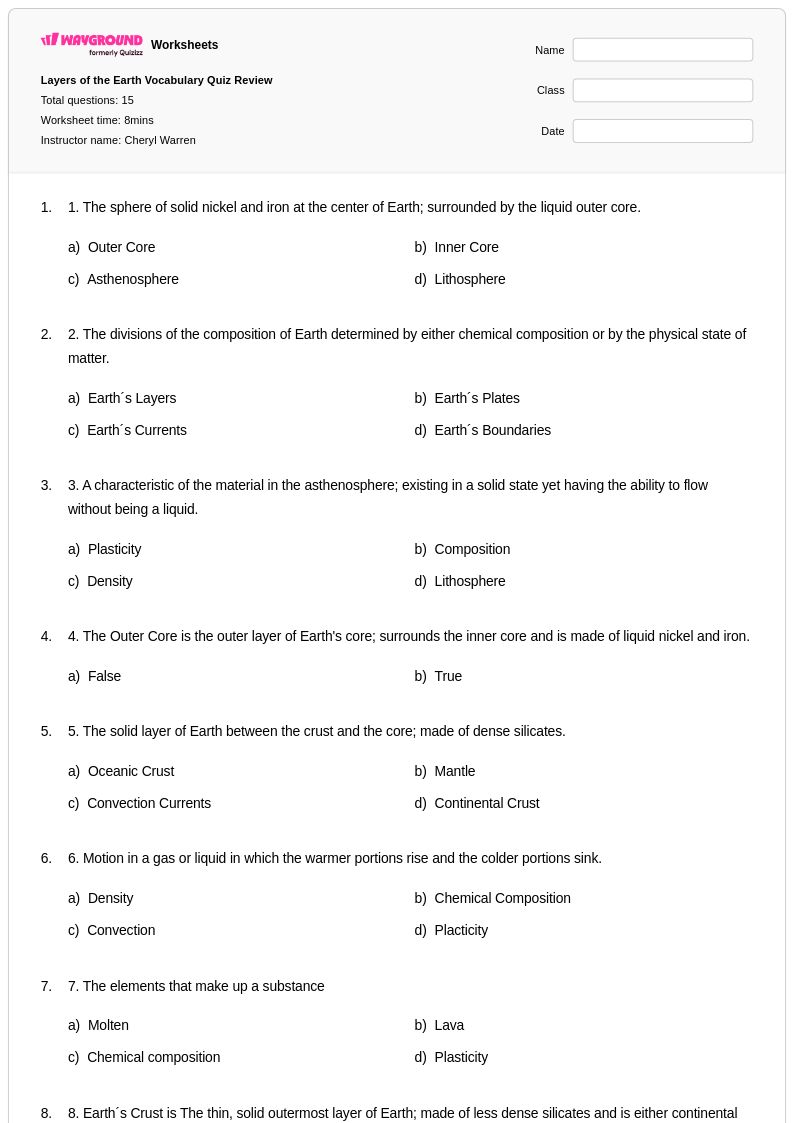
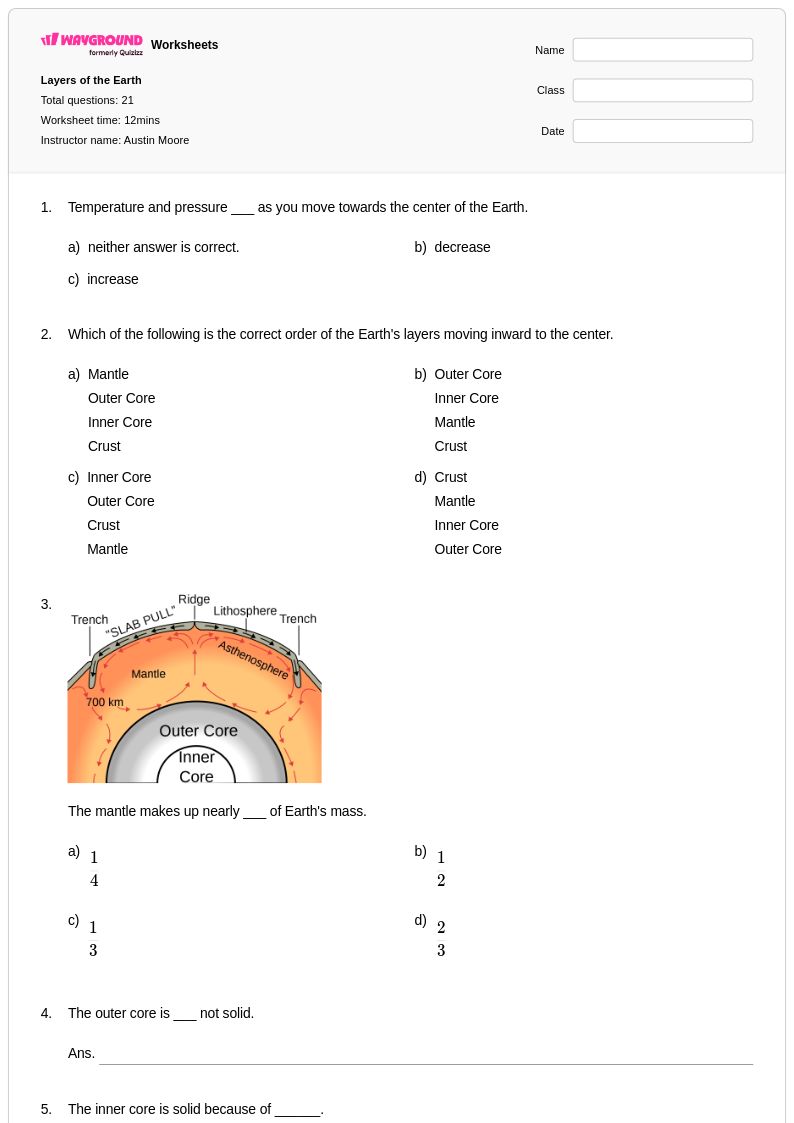
Layers of the Earth worksheets for Class 12 students available through Wayground (formerly Quizizz) provide comprehensive coverage of our planet's internal structure, from the thin continental and oceanic crusts down to the solid inner core. These expertly designed educational materials strengthen students' understanding of the compositional and mechanical layers that define Earth's geology, including detailed exploration of the lithosphere, asthenosphere, mesosphere, outer core, and inner core. The worksheets feature practice problems that challenge students to analyze seismic wave data, interpret temperature and pressure gradients, and evaluate the physical properties that distinguish each layer. Each worksheet collection includes complete answer keys and is available as free printable pdf resources, enabling students to master complex concepts such as isostatic equilibrium, convection currents, and the relationship between Earth's magnetic field and core dynamics.
Wayground (formerly Quizizz) empowers educators with access to millions of teacher-created worksheet resources specifically designed for Class 12 Earth and space science instruction. The platform's robust search and filtering capabilities allow teachers to quickly locate materials aligned with specific curriculum standards and learning objectives related to Earth's internal structure and geophysical processes. Advanced differentiation tools enable customization of worksheet complexity and content focus, supporting both remediation for struggling learners and enrichment activities for advanced students. Available in both printable and digital pdf formats, these worksheet collections streamline lesson planning while providing flexible options for skill practice, formative assessment, and comprehensive review of fundamental geological principles that prepare students for advanced study in earth sciences.
FAQs
How do I teach the layers of the Earth to middle school students?
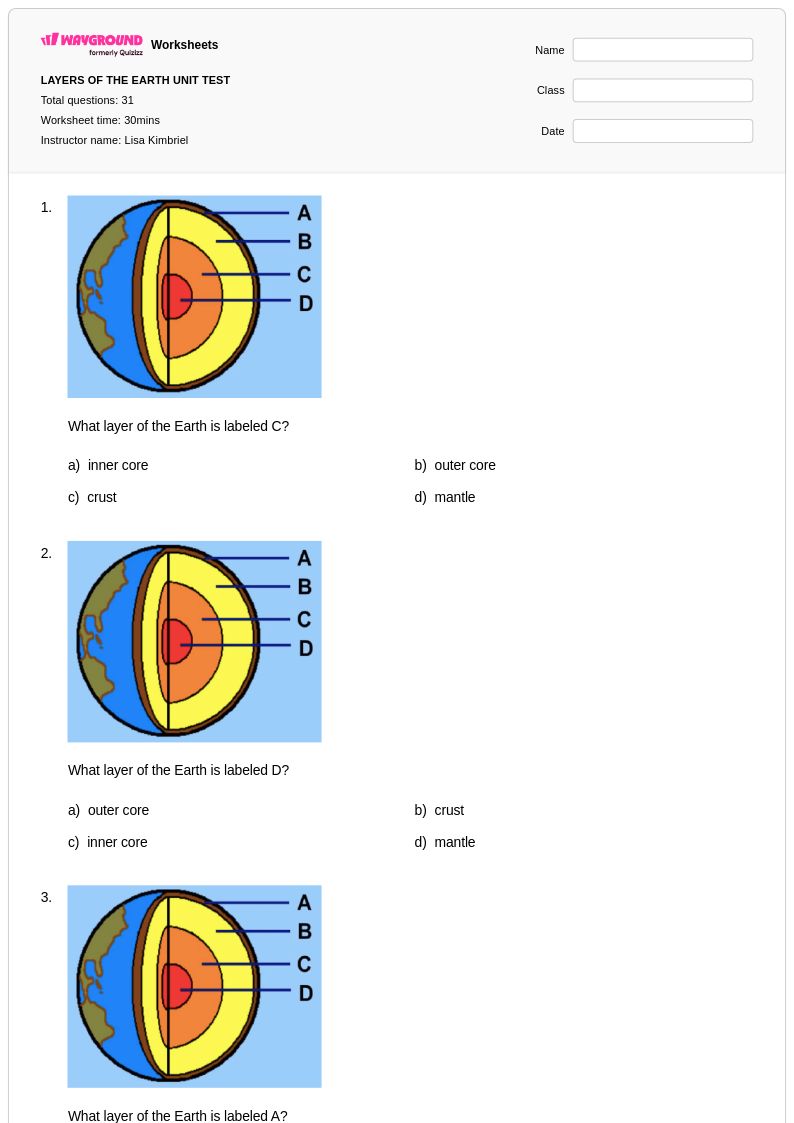
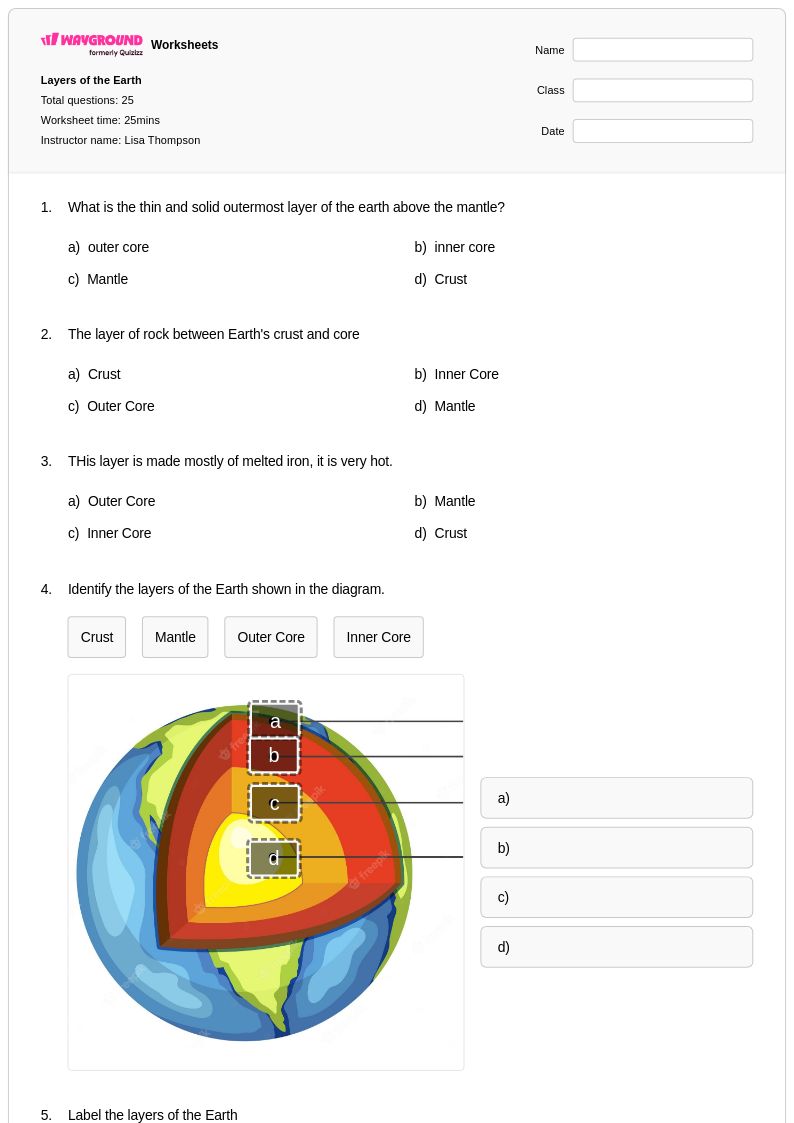
Start by establishing the four primary layers — crust, mantle, outer core, and inner core — before moving into their distinct properties such as composition, temperature ranges, and physical state. Visual cross-section diagrams help students build spatial understanding of depth and relative thickness. From there, connect each layer to real-world phenomena like plate tectonics, volcanic activity, and earthquake wave behavior so students see why structure matters, not just what it is.
What exercises help students practice identifying the layers of the Earth?
Labeling diagrams of Earth's cross-section is one of the most effective practice formats because it forces students to recall layer names, order, and relative depth simultaneously. Matching exercises that pair each layer with its key characteristics — such as temperature range, composition, or physical state — build declarative knowledge. Fill-in-the-blank passages about geological processes like plate tectonics and volcanic activity give students practice applying layer knowledge in context rather than in isolation.
What mistakes do students commonly make when learning about Earth's layers?
A frequent misconception is that the mantle is entirely liquid — students often confuse the partially molten asthenosphere with the full mantle, which is mostly solid rock. Another common error is conflating the outer core and inner core, particularly around their physical states; students need explicit instruction that the outer core is liquid while the inner core is solid despite being hotter. Students also regularly mix up continental and oceanic crust, especially regarding thickness and density differences, which are foundational for understanding plate tectonics.
How can I use layers of the Earth worksheets in my classroom?
Layers of the Earth worksheets on Wayground are available as printable PDFs for traditional classroom use and in digital formats for technology-integrated environments, making them flexible for homework, in-class practice, or stations. Teachers can also host the worksheets as a live or assigned quiz directly on Wayground, which enables real-time progress monitoring. Each worksheet includes a complete answer key, so they work equally well for independent student practice and for guided instruction.
How do I differentiate layers of the Earth instruction for students at different levels?
For struggling learners, reduce cognitive load by focusing first on layer names and order before introducing properties like temperature and composition. Wayground supports individual student accommodations including reduced answer choices, read-aloud functionality, and extended time, which can be assigned to specific students without affecting the rest of the class. For advanced students, extend practice into comparative analysis — for example, asking how the density of each layer relates to Earth's overall gravitational behavior or how seismic wave data is used to infer layer properties.
How does understanding Earth's layers connect to other science topics?
Earth's layers are foundational to understanding plate tectonics, as convection currents in the mantle drive the movement of lithospheric plates. Volcanic activity and earthquake formation both depend directly on the behavior of the crust and upper mantle, so students who understand layer properties are better equipped to explain these phenomena. The distinction between the liquid outer core and solid inner core also connects to lessons on Earth's magnetic field, giving teachers natural cross-topic integration opportunities.