Free Printable Relative Age Dating Worksheets for Class 12
Enhance Class 12 students' understanding of relative age dating with Wayground's comprehensive collection of free worksheets, printables, and practice problems that explore geological time principles, rock layer sequencing, and dating techniques with detailed answer keys.
Explore printable Relative Age Dating worksheets for Class 12
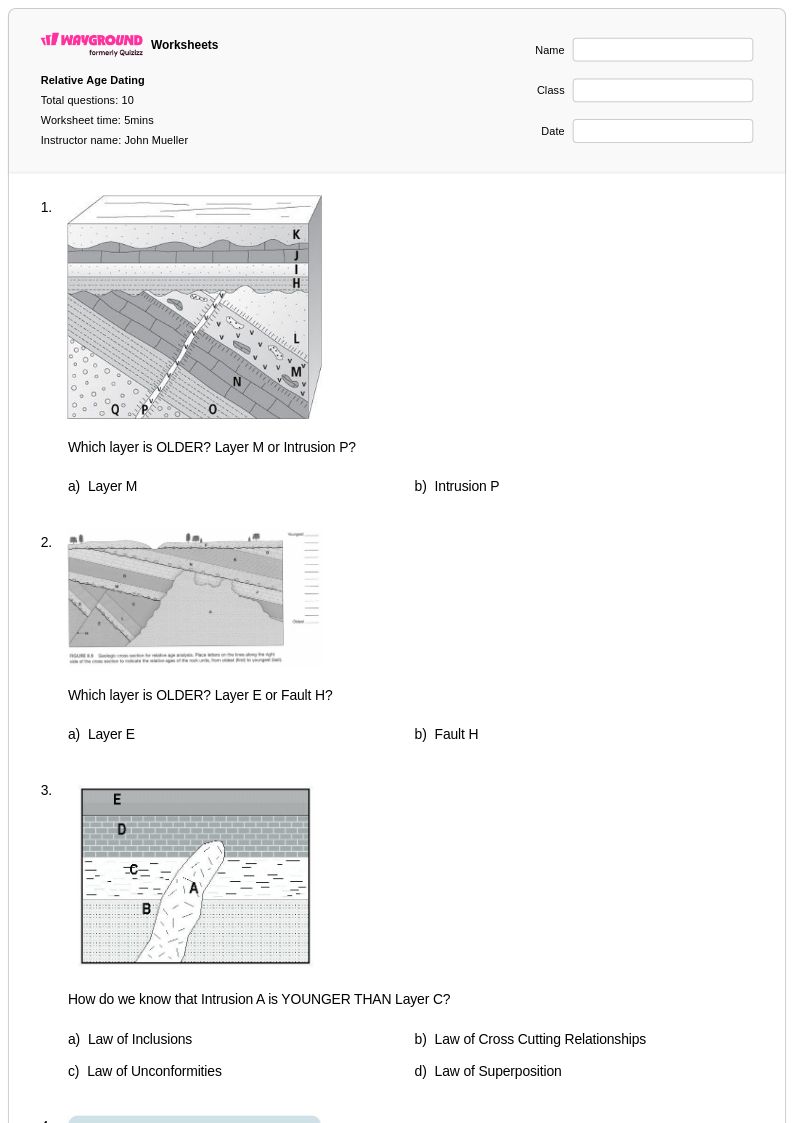
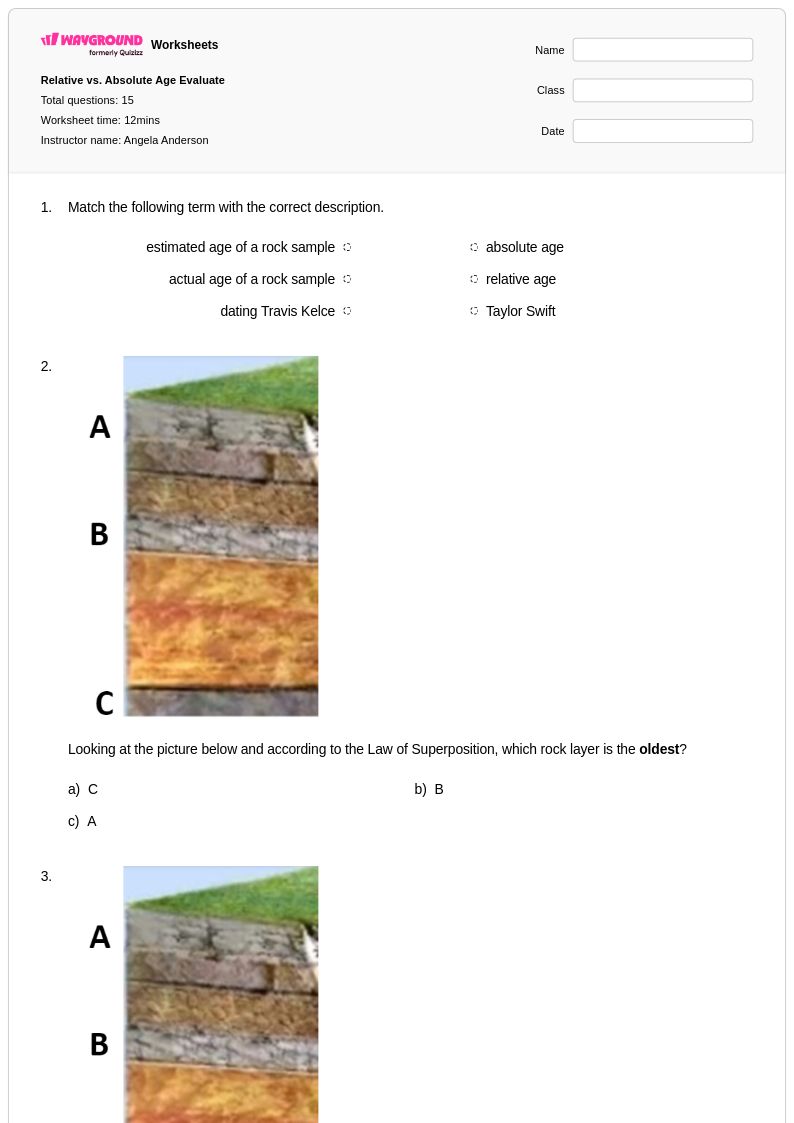
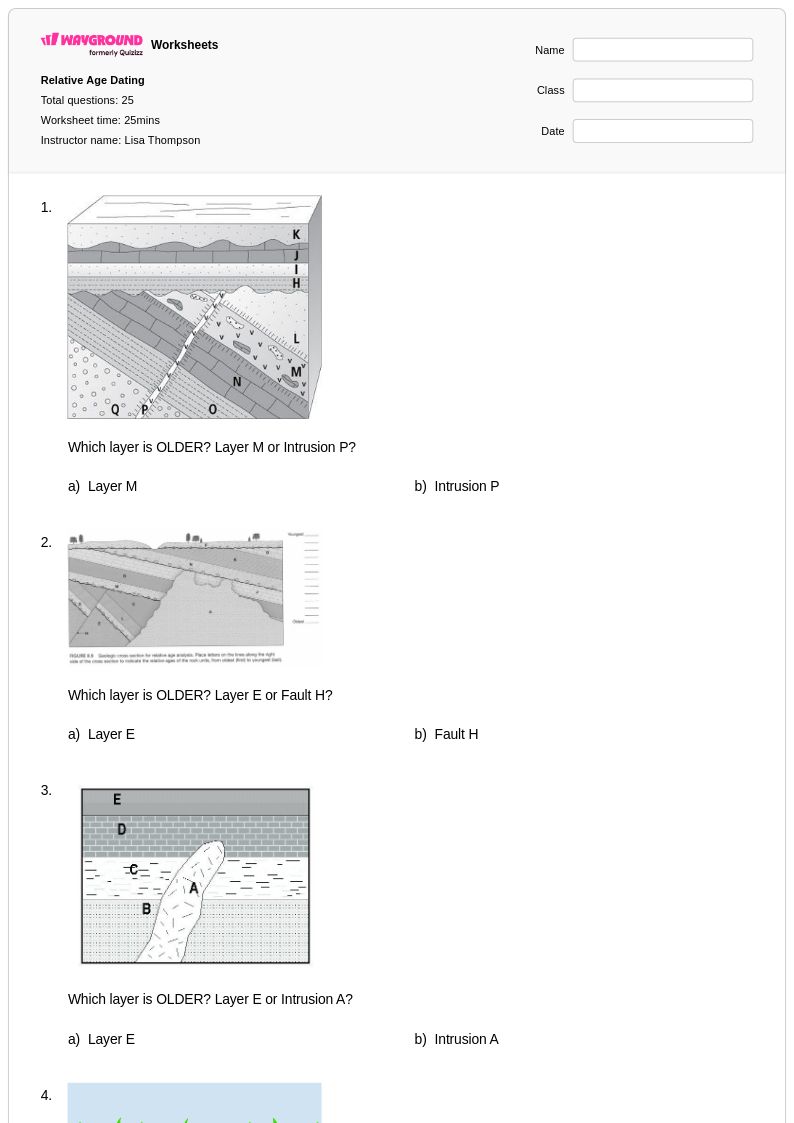
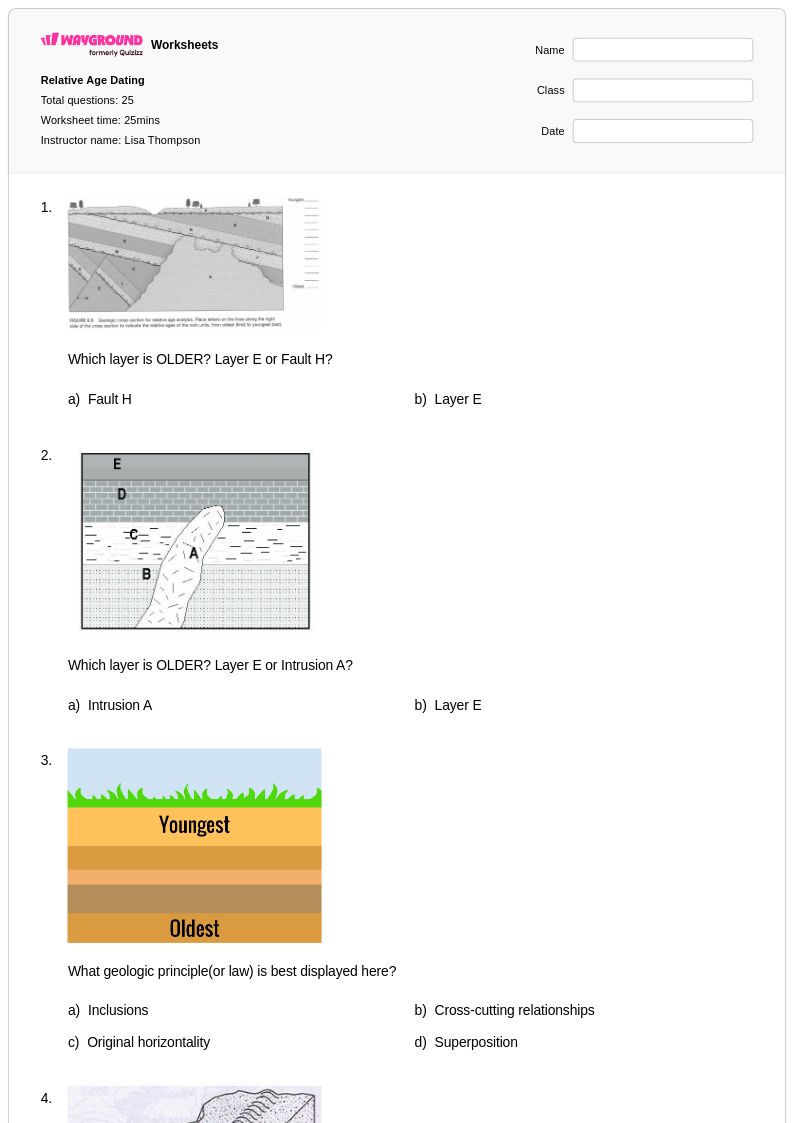
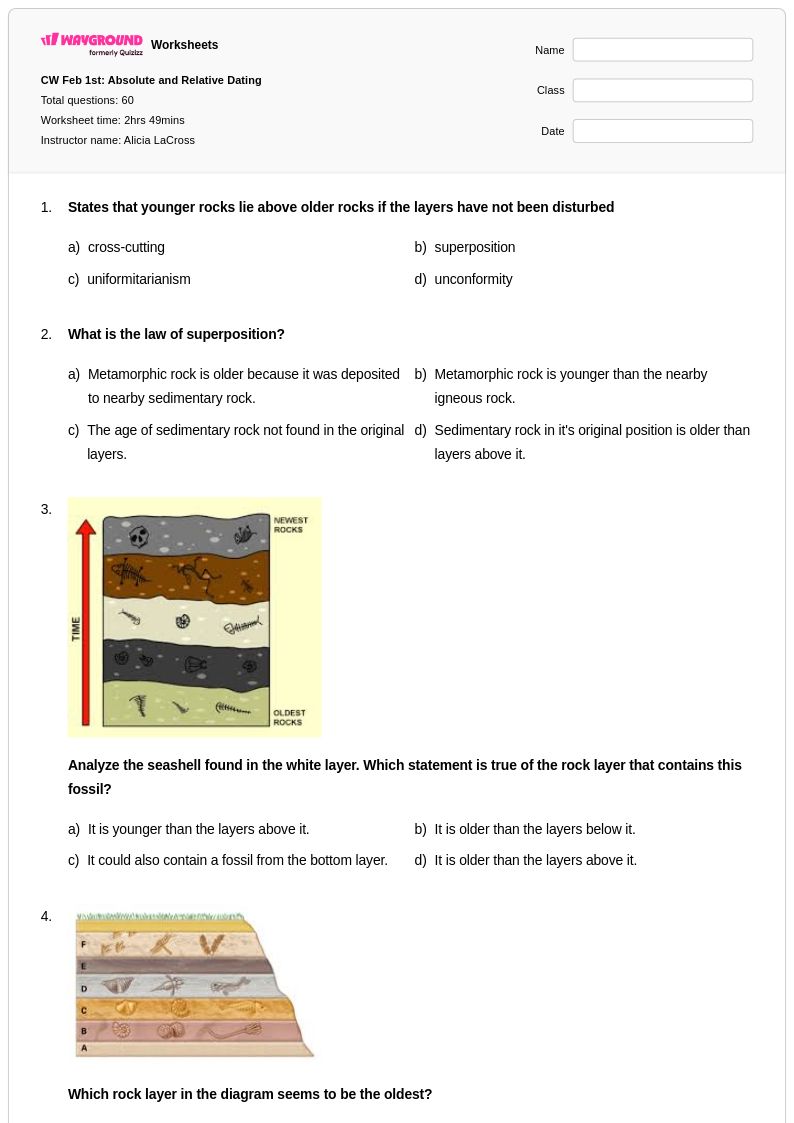
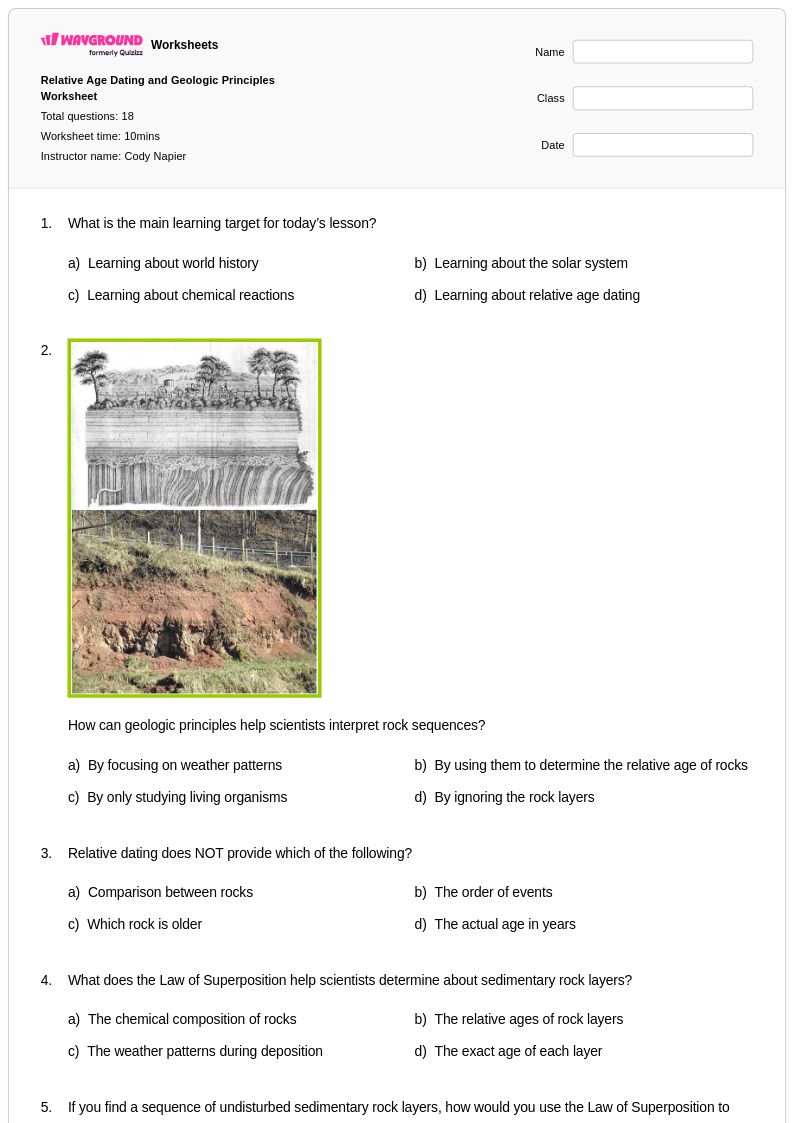
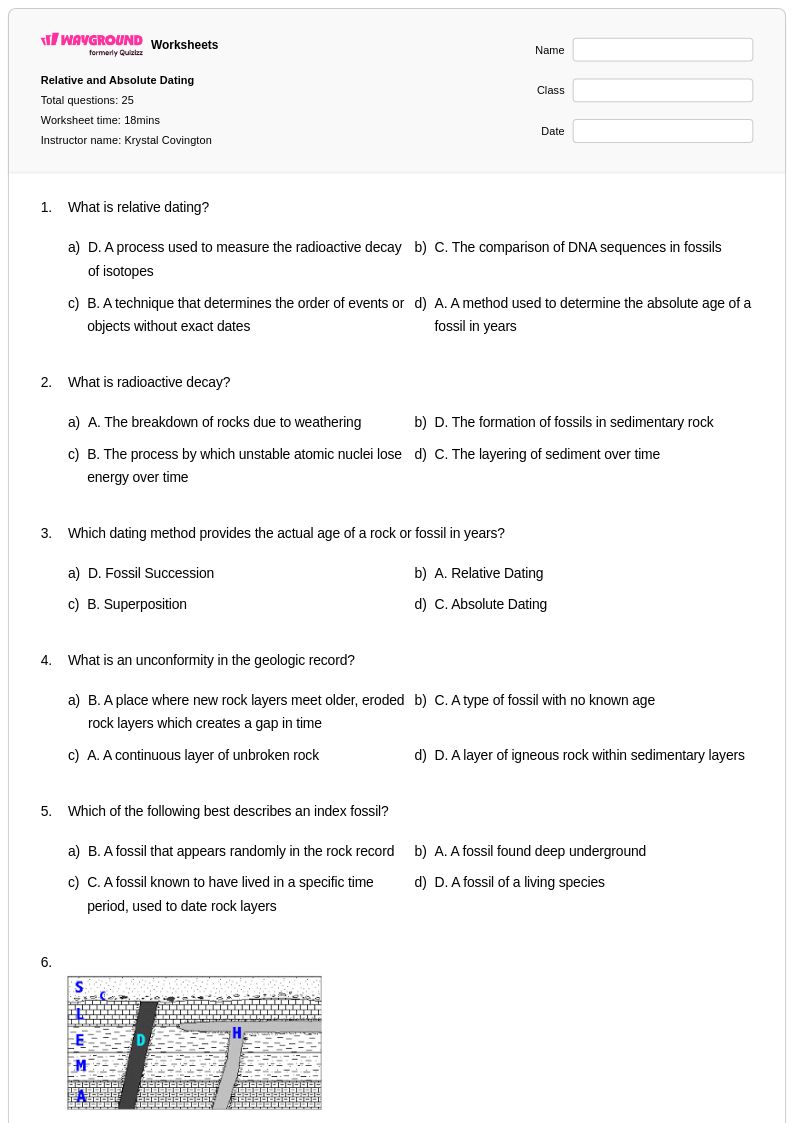
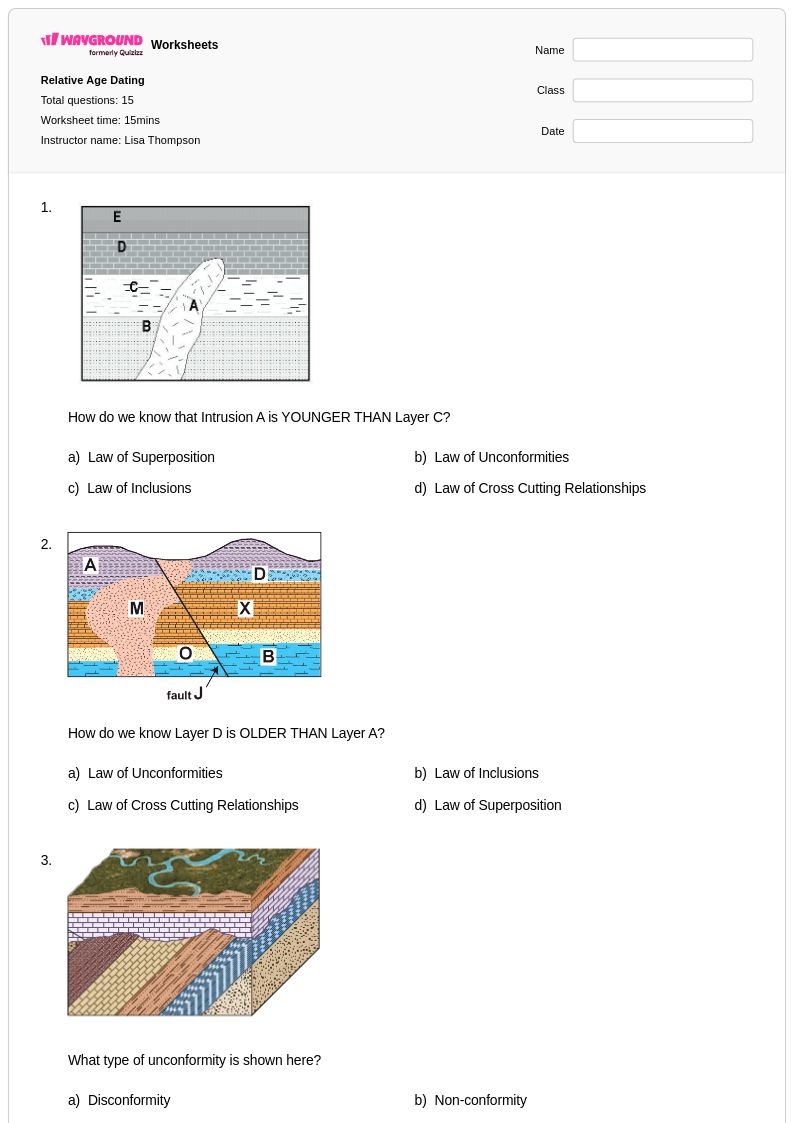
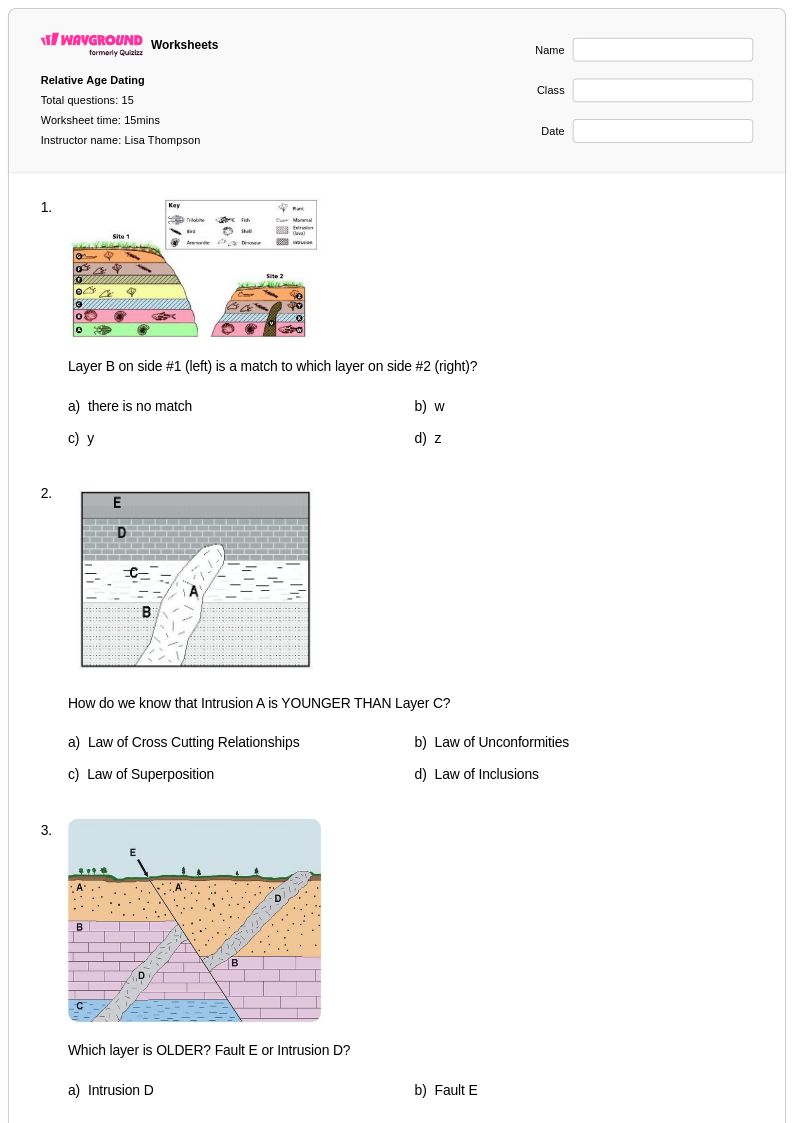
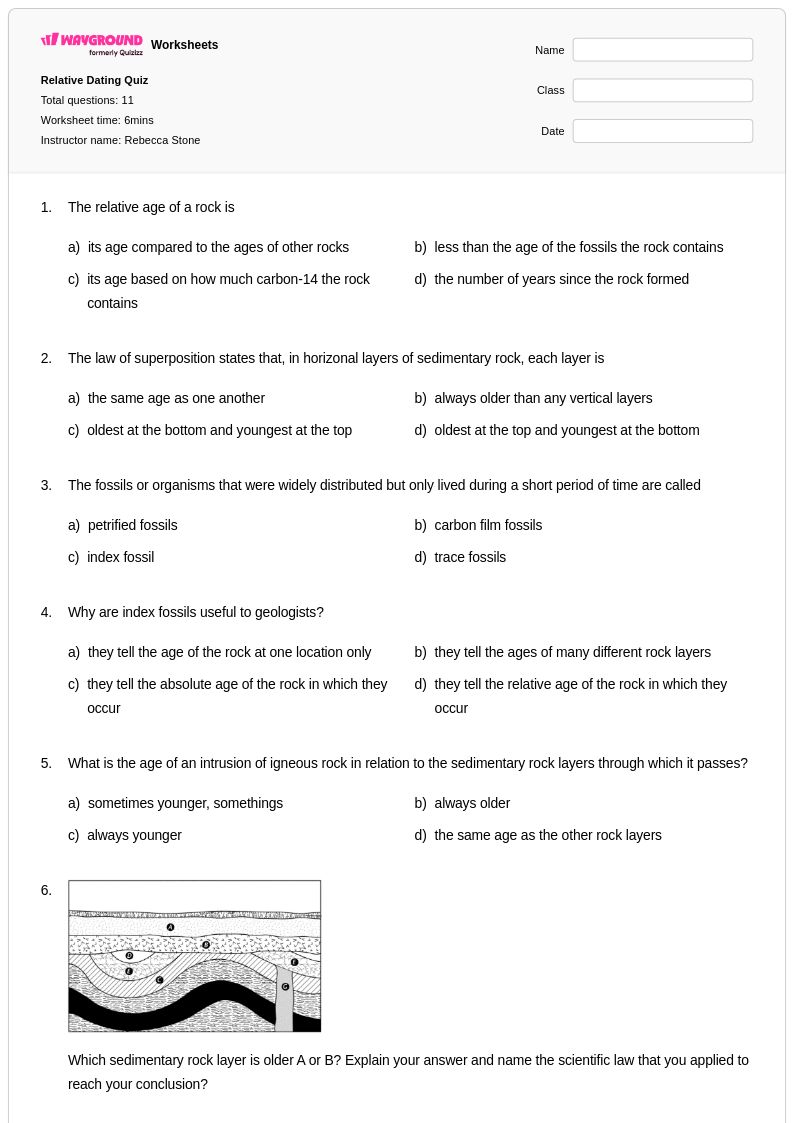
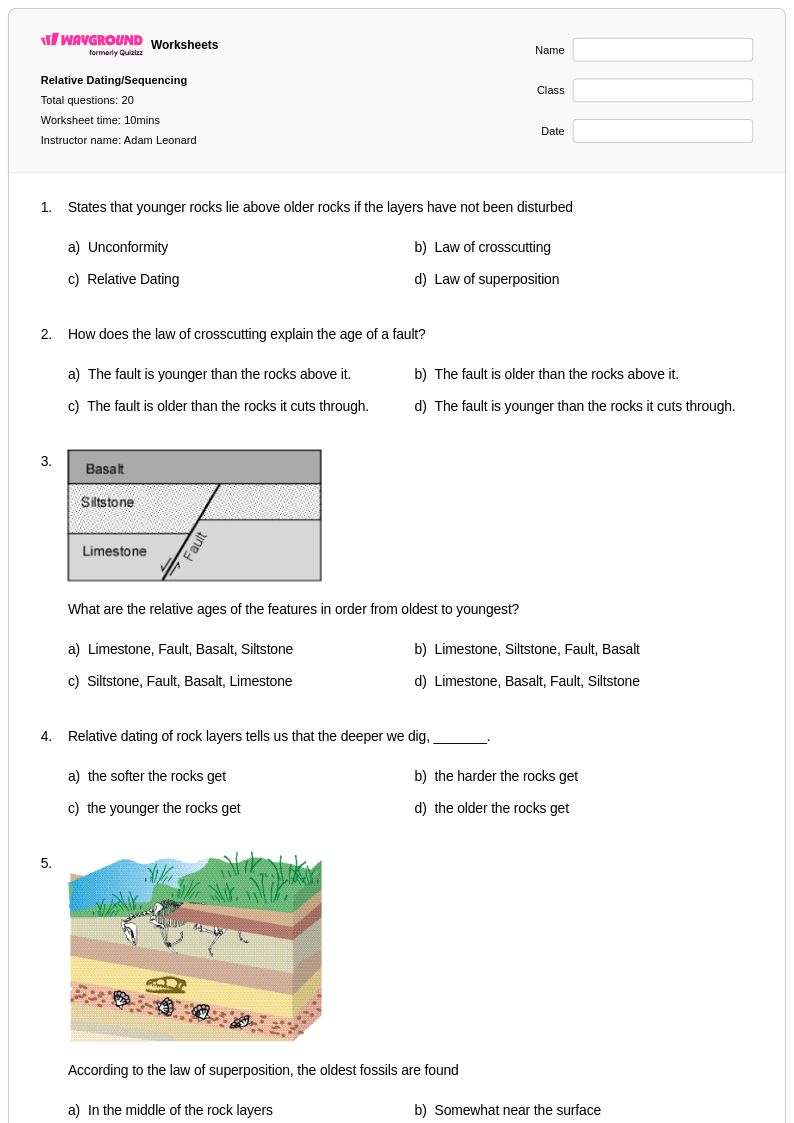
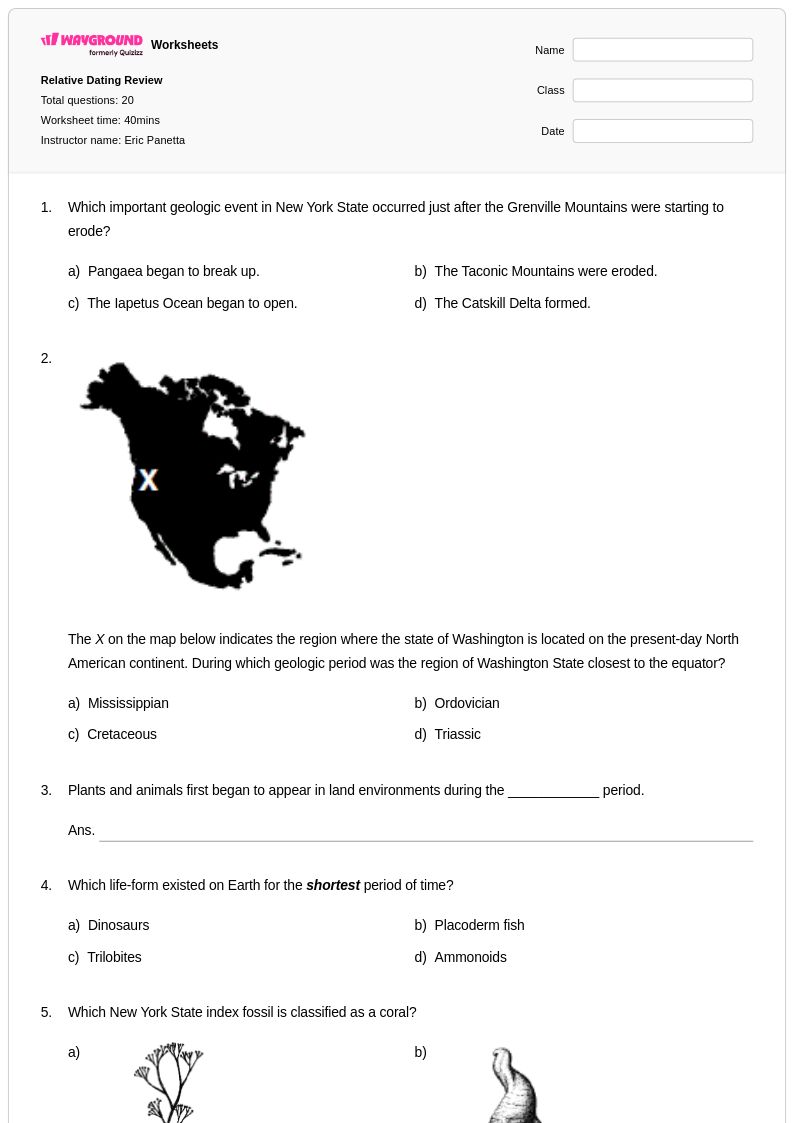
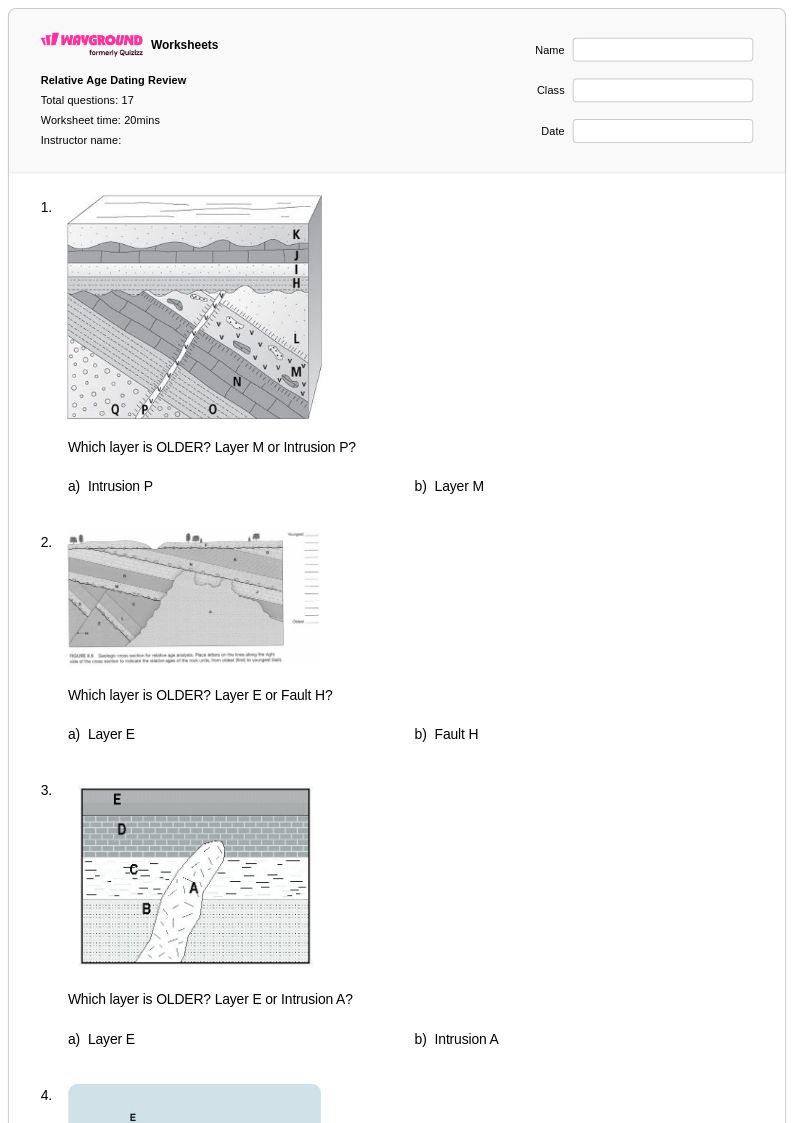
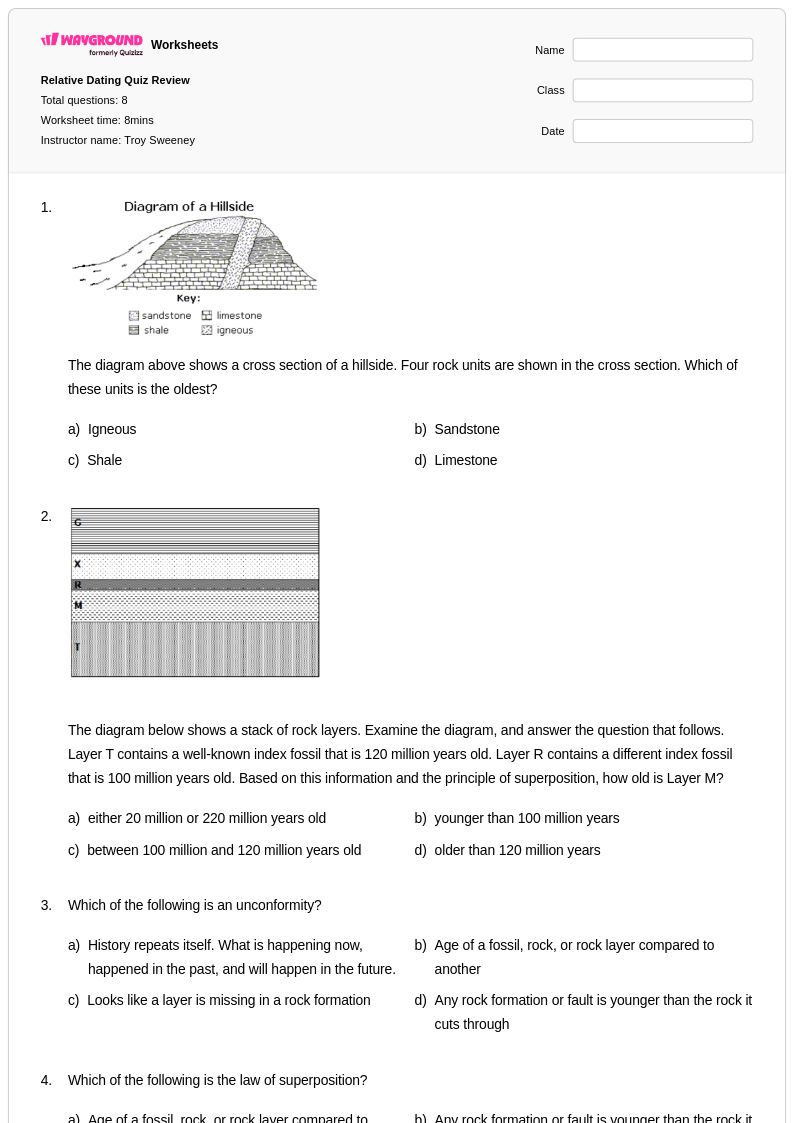
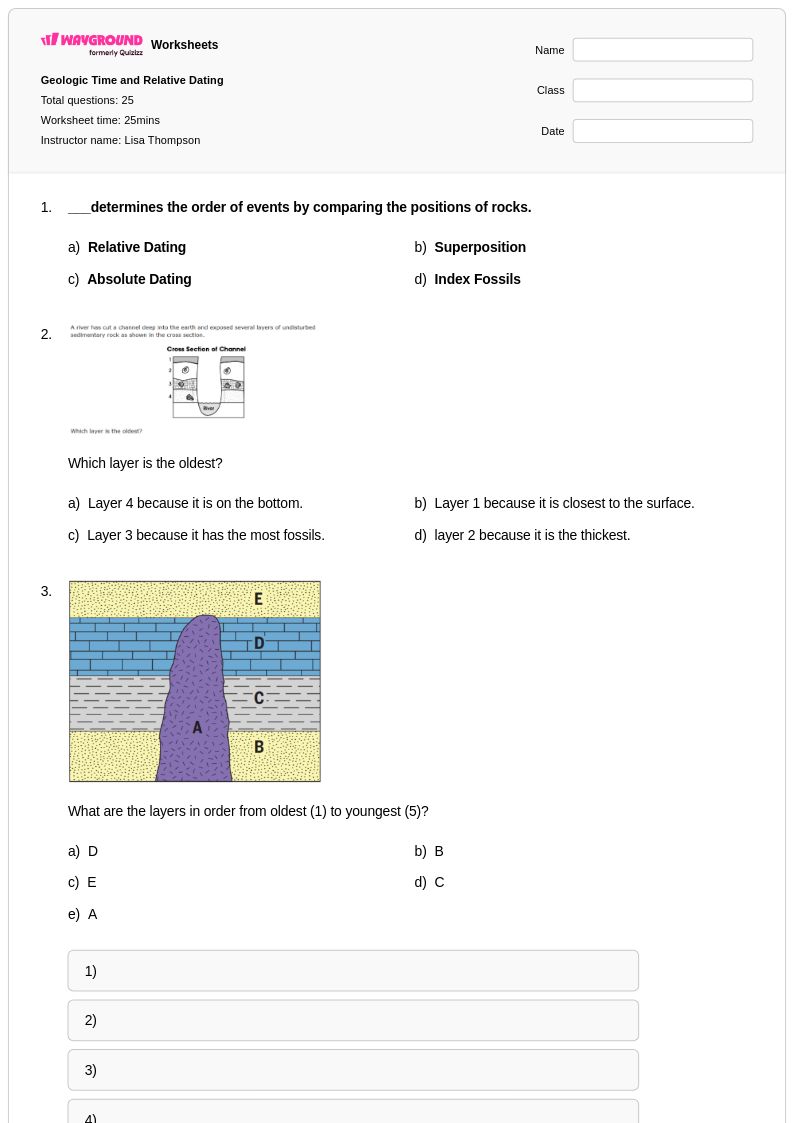
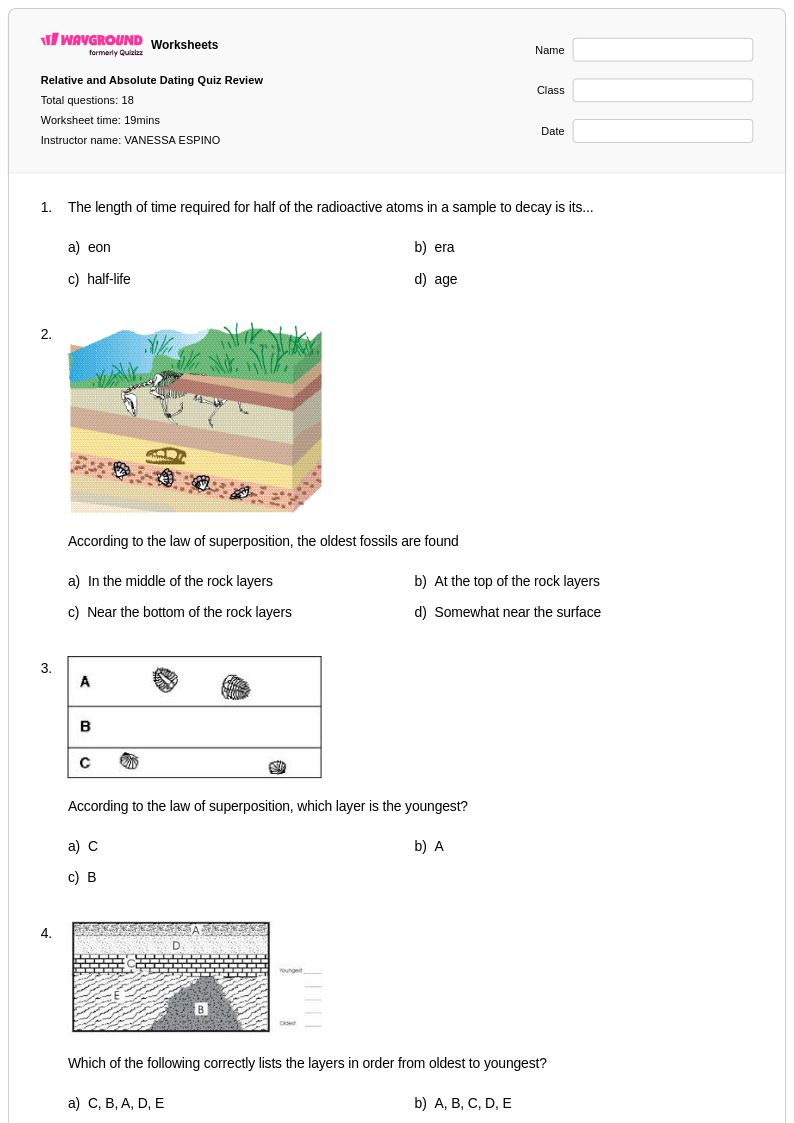
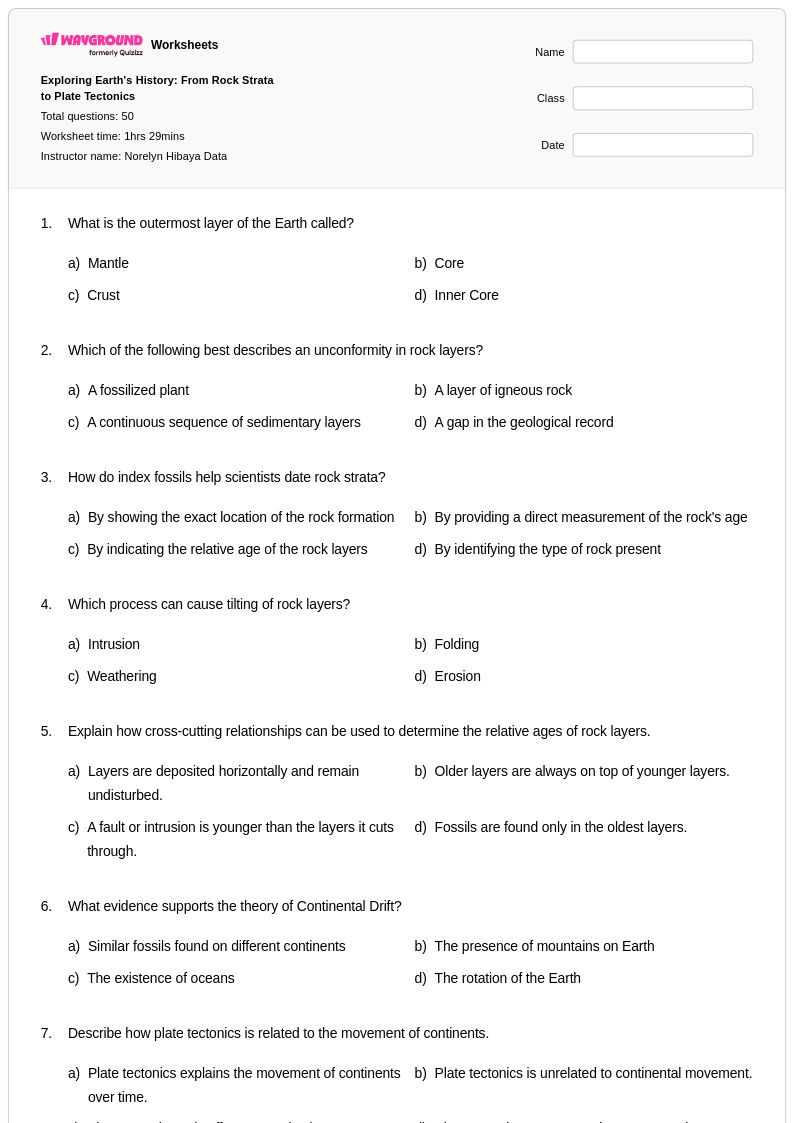
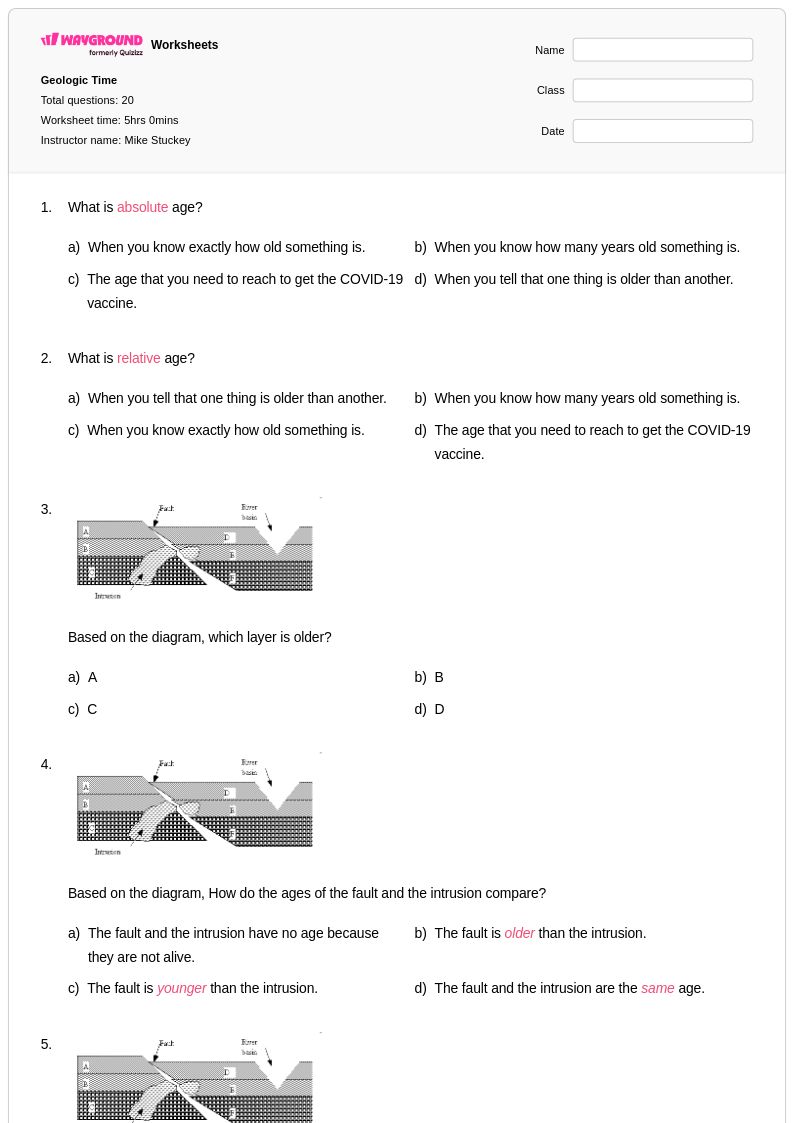
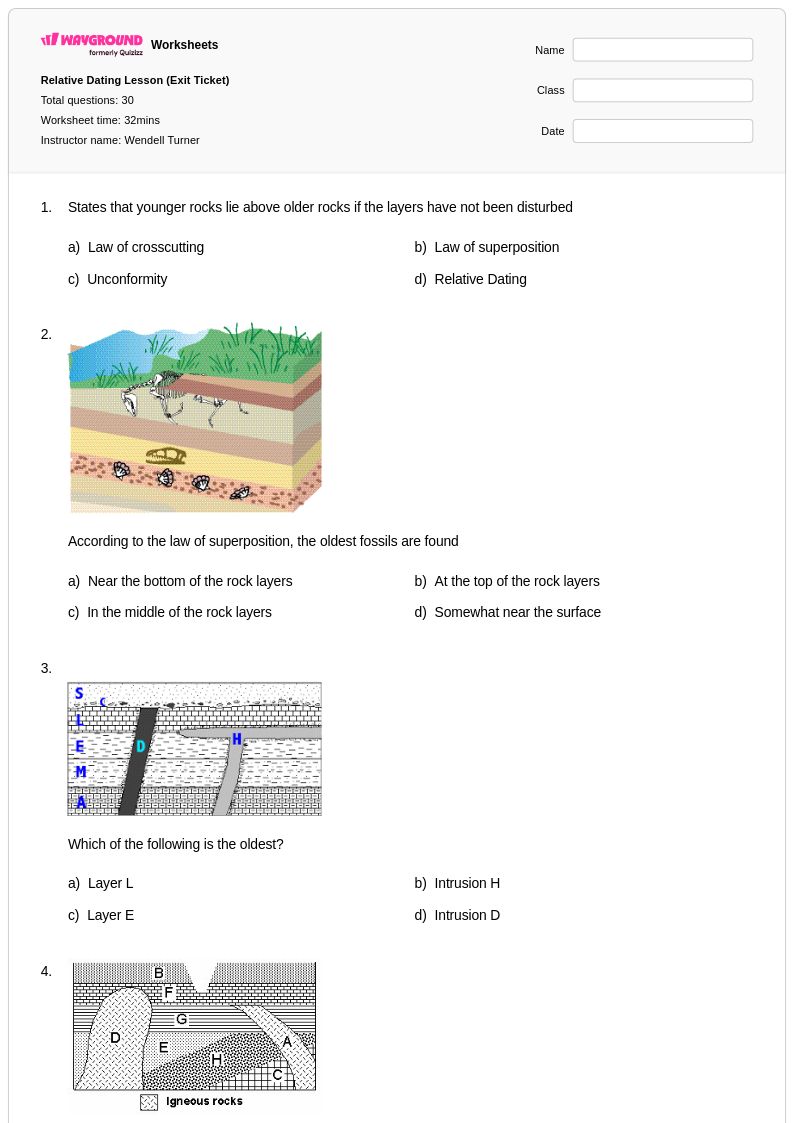
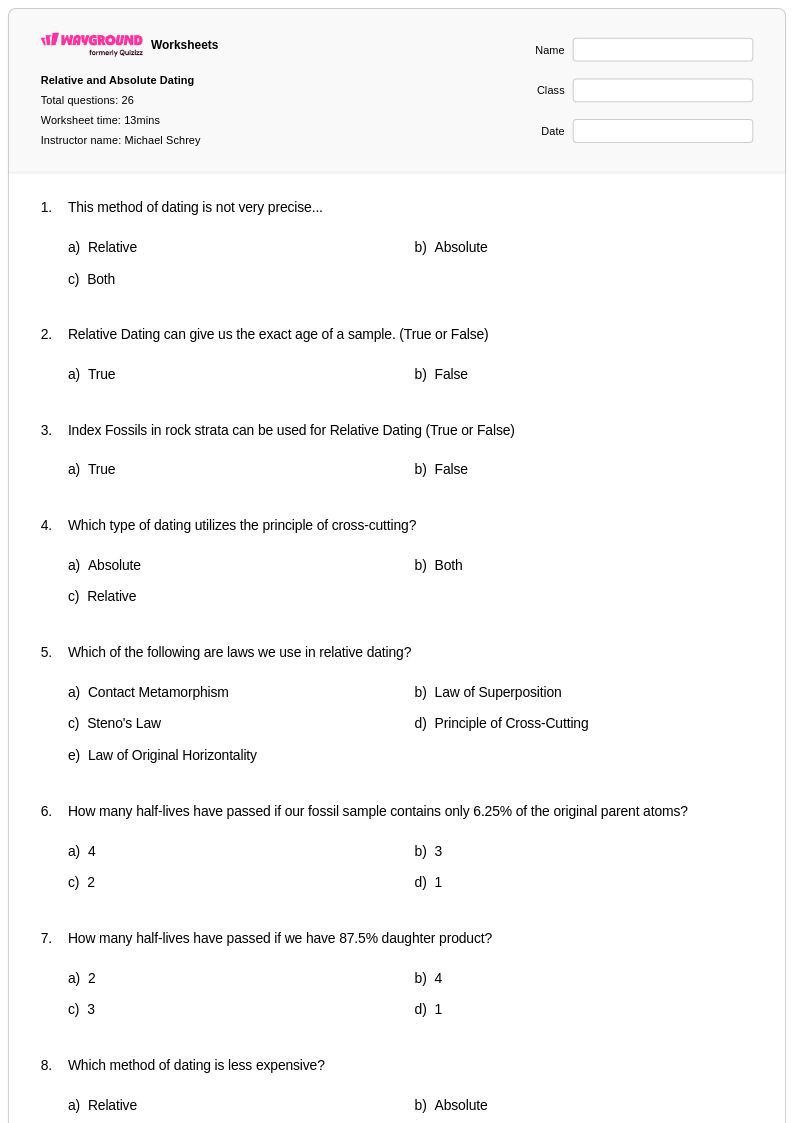
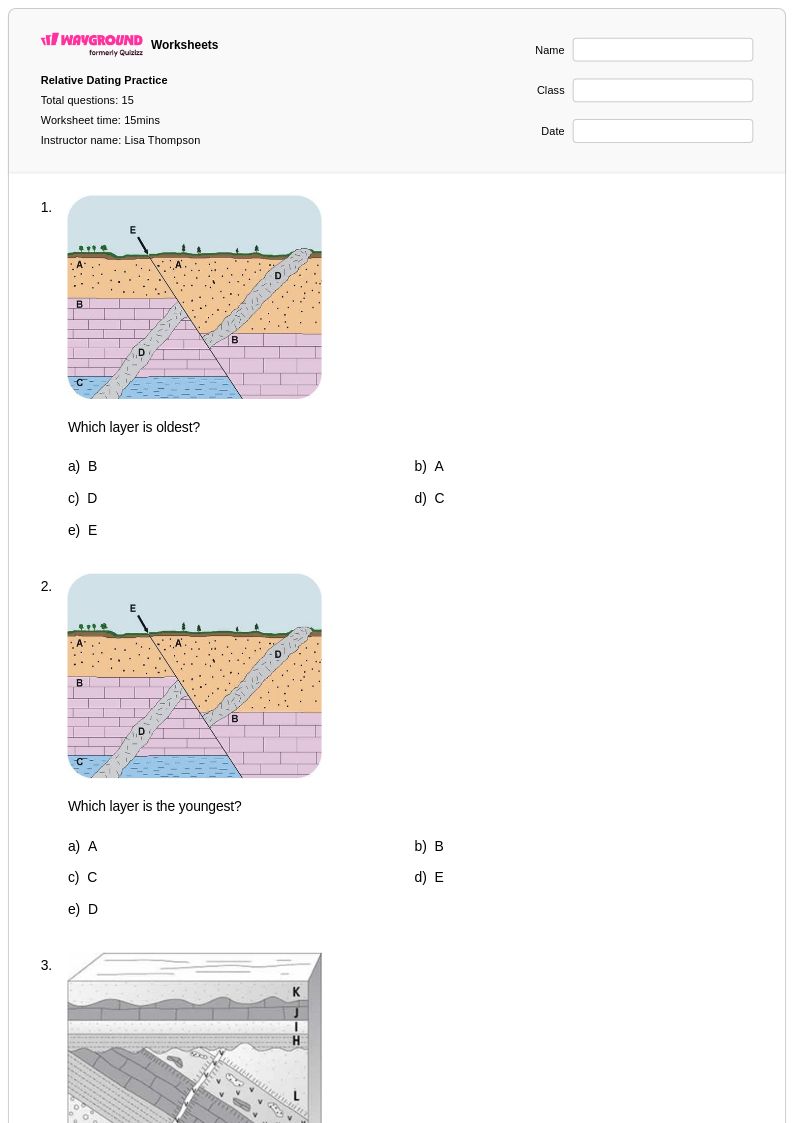
Relative age dating worksheets for Class 12 students available through Wayground (formerly Quizizz) provide comprehensive practice in determining the chronological sequence of geological events without assigning specific numerical ages. These expertly designed worksheets strengthen critical analytical skills by guiding students through the application of fundamental principles such as superposition, original horizontality, cross-cutting relationships, and faunal succession. Students work with detailed geological cross-sections, stratigraphic columns, and fossil assemblages to interpret Earth's history, developing proficiency in identifying unconformities, intrusions, and depositional sequences. Each worksheet collection includes complete answer keys and is available as free printables in PDF format, offering structured practice problems that challenge students to synthesize multiple dating principles when analyzing complex geological scenarios.
Wayground (formerly Quizizz) empowers educators with an extensive library of millions of teacher-created relative age dating resources that seamlessly integrate into Class 12 Earth and Space Science curricula. The platform's robust search and filtering capabilities enable teachers to quickly locate worksheets aligned with specific educational standards while accommodating diverse learning needs through built-in differentiation tools. Teachers can customize existing materials or create original assessments, with all content available in both printable PDF and interactive digital formats to support varied instructional approaches. This comprehensive resource collection facilitates effective lesson planning, targeted remediation for struggling students, enrichment opportunities for advanced learners, and systematic skill practice that builds student confidence in interpreting geological time relationships and understanding Earth's dynamic history.
FAQs
How do I teach relative age dating to students?
Start by introducing the foundational principles in sequence: the law of superposition, cross-cutting relationships, inclusions, and unconformities. Use geological cross-section diagrams to give students a visual anchor before asking them to apply each principle independently. Building from one law to the next helps students construct a logical framework for reading rock layers rather than memorizing rules in isolation.
What activities help students practice relative age dating skills?
Interpreting geological cross-sections is the most direct form of practice, as it requires students to apply multiple principles simultaneously to sequence events. Practice problems that ask students to identify specific features such as faults, intrusions, and unconformities and then place them in chronological order are especially effective. Constructing geological timelines from a given diagram also reinforces the reasoning process behind relative dating.
What mistakes do students commonly make when learning relative age dating?
A common error is confusing relative age with absolute age, leading students to assign numerical dates when only a sequence is possible. Students also frequently misapply the law of superposition in tilted or overturned rock sequences, assuming the bottom layer is always the oldest regardless of deformation. Another persistent misconception is overlooking cross-cutting relationships, causing students to sequence intrusions or faults incorrectly relative to the layers they cut through.
How do I differentiate relative age dating instruction for students at different skill levels?
For struggling students, begin with simple two-layer diagrams that require applying only one principle at a time before introducing complex cross-sections with multiple events. Advanced learners benefit from multi-step problems that incorporate unconformities, multiple intrusions, and erosional surfaces requiring them to justify each step of their reasoning. On Wayground, teachers can also apply accommodations such as read aloud support or reduced answer choices for individual students, ensuring all learners can access the same core content.
How can I use relative age dating worksheets from Wayground in my classroom?
Wayground's relative age dating worksheets are available as printable PDFs for traditional classroom use and in digital formats for technology-integrated environments, giving teachers flexibility depending on their setup. Teachers can also host worksheets as a quiz directly on Wayground, making it easy to assign practice as formative assessment and review student responses in one place. Complete answer keys are included with every worksheet, supporting both independent student work and teacher-led review sessions.
How do I assess whether students truly understand relative age dating versus just memorizing the principles?
True understanding shows when students can apply multiple principles in combination to sequence a complex cross-section they have never seen before, rather than pattern-matching to familiar diagrams. Ask students to explain their reasoning step by step in writing, identifying which specific principle justifies each sequencing decision. If a student can correctly handle a cross-section with an unconformity, a cross-cutting fault, and an igneous intrusion all present simultaneously, they have moved beyond surface memorization.