Free Printable Legislative Process Worksheets for Class 12
Class 12 legislative process worksheets and printables help students master how bills become laws, committee procedures, and congressional voting through comprehensive practice problems with answer keys available as free PDF downloads.
Explore printable Legislative Process worksheets for Class 12
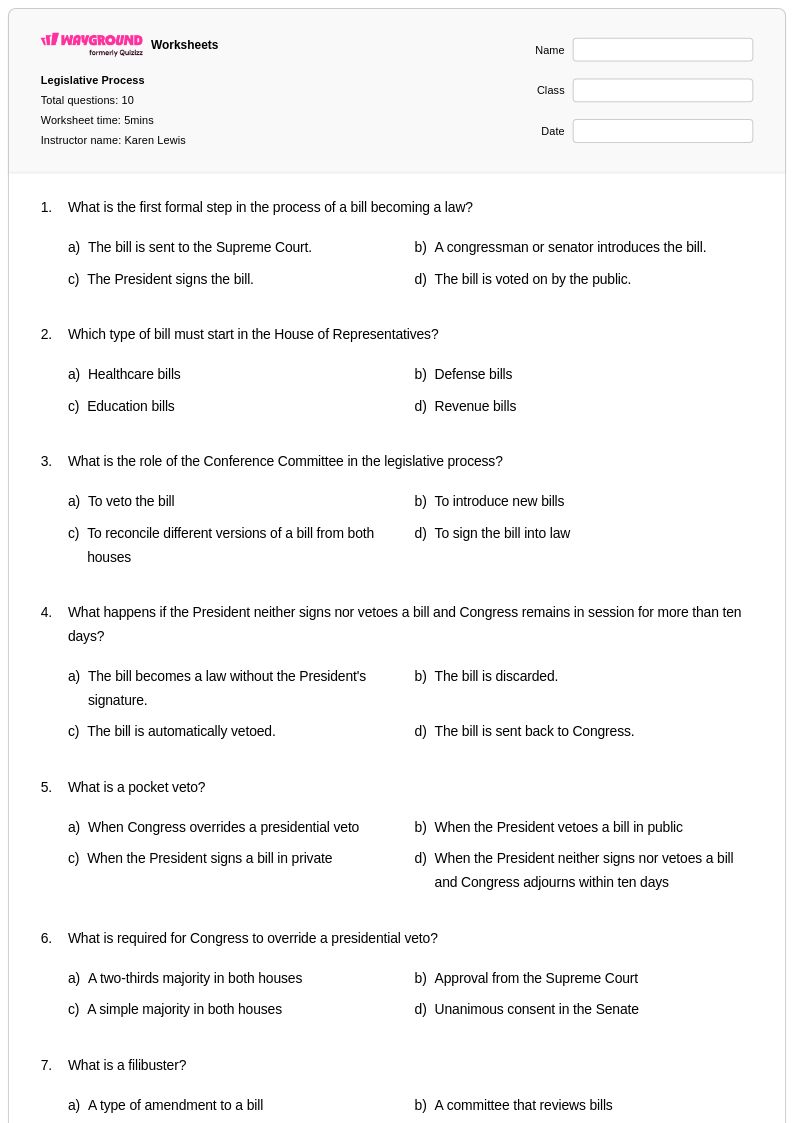
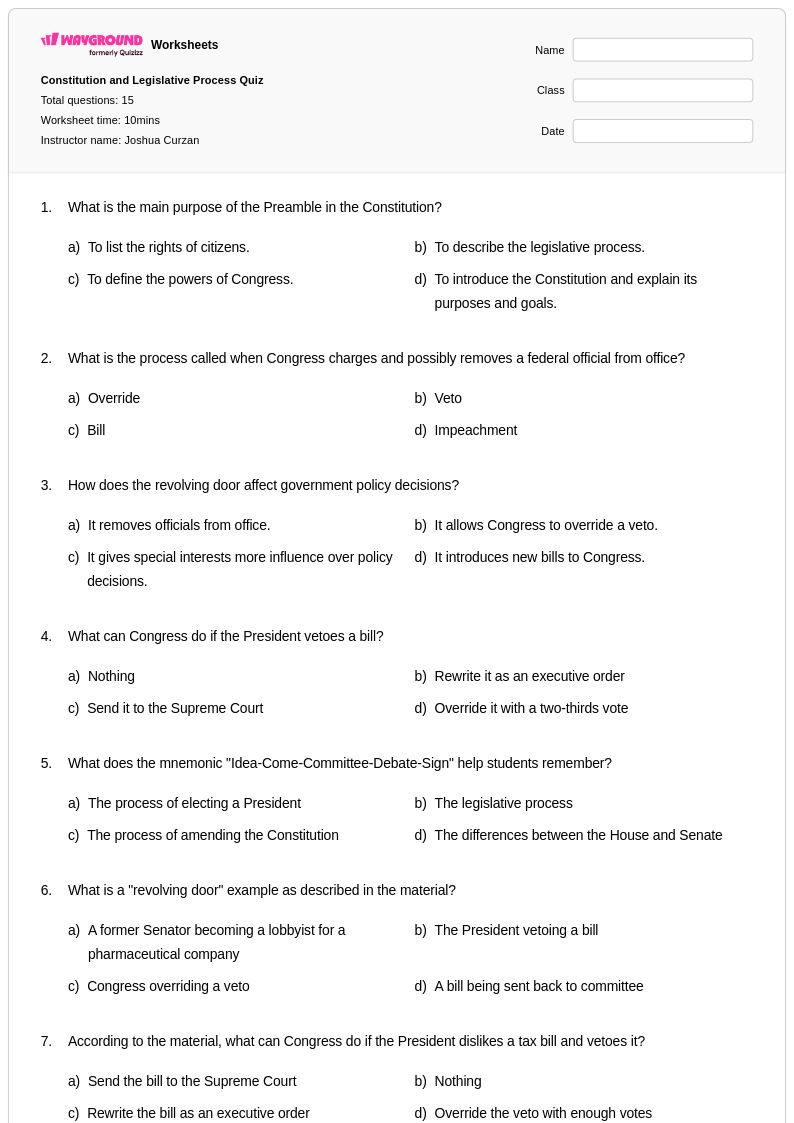
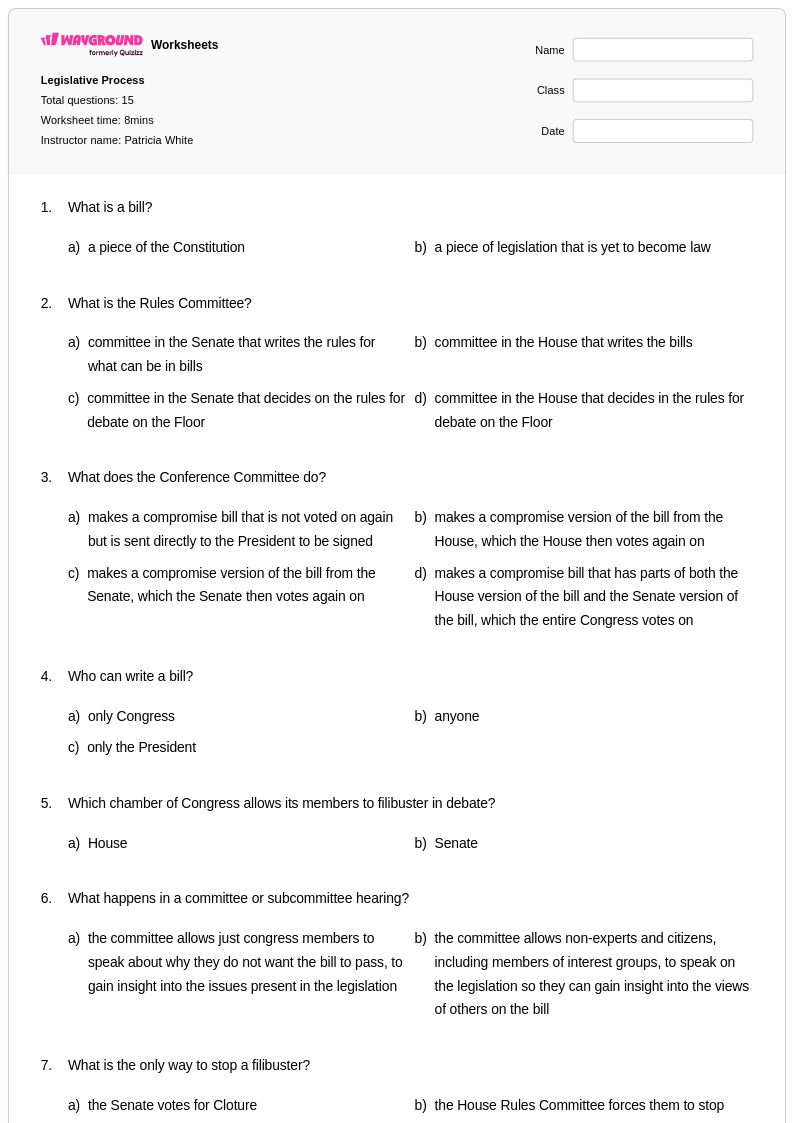
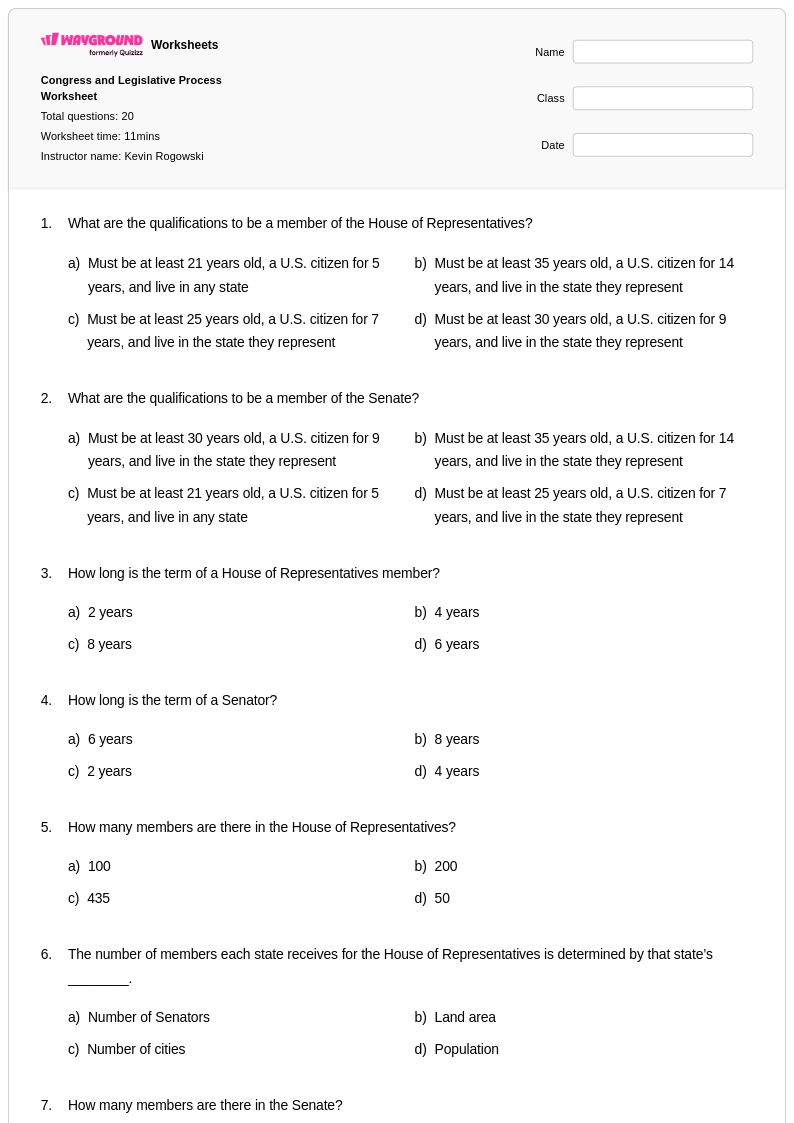
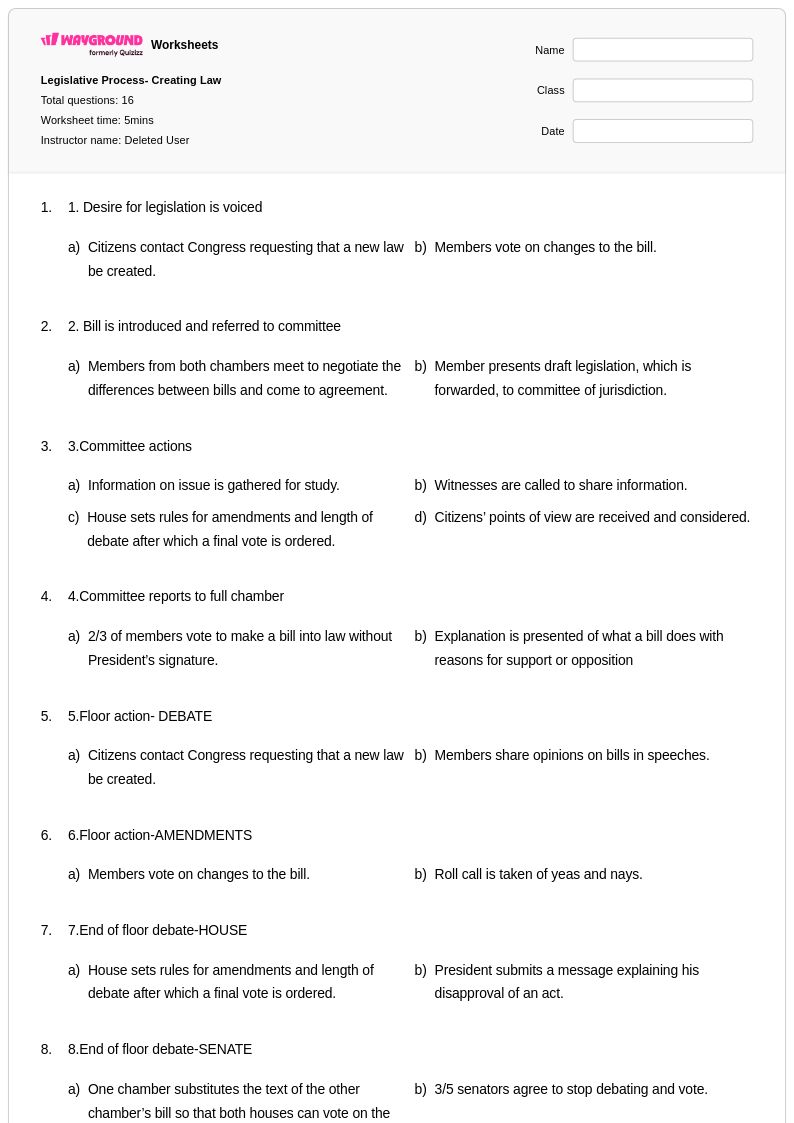
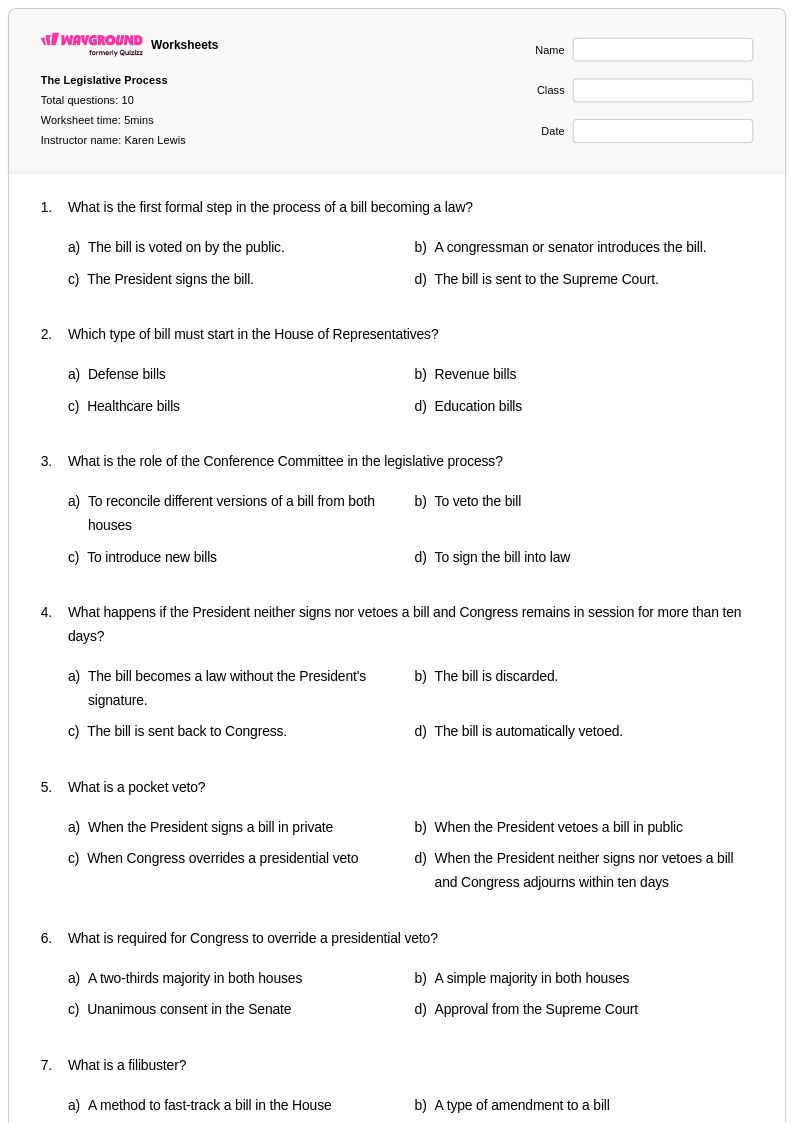
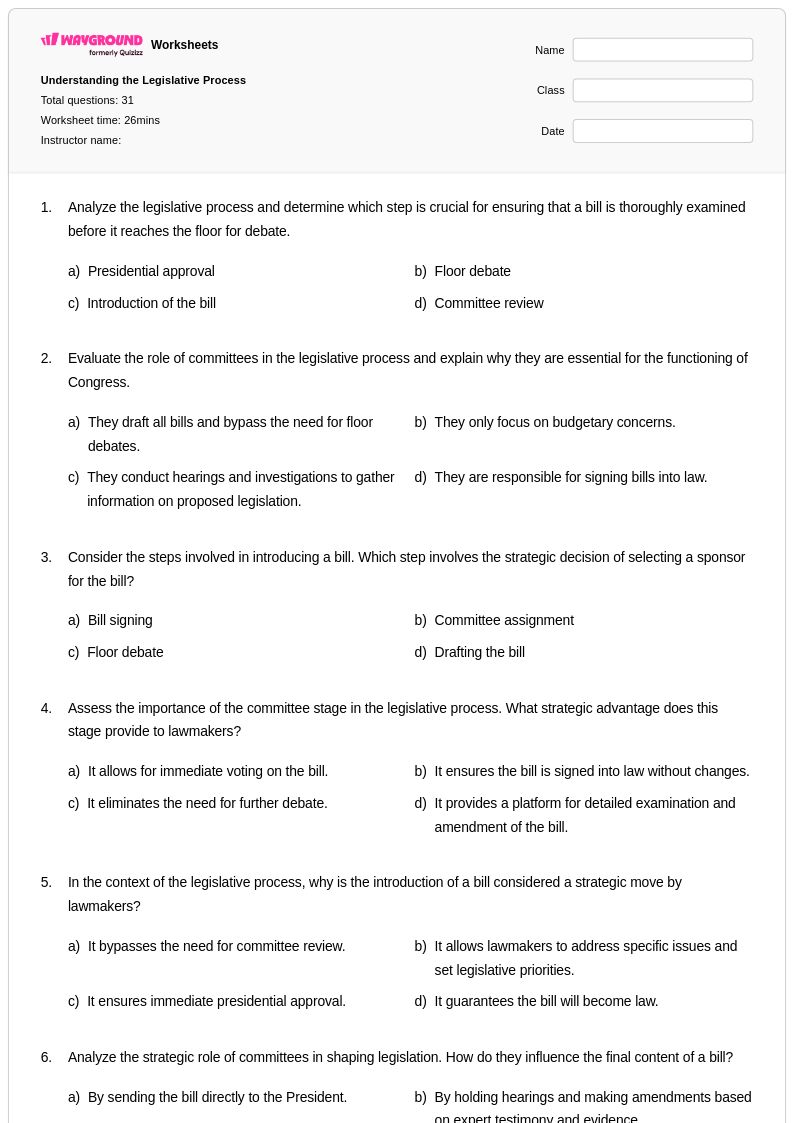
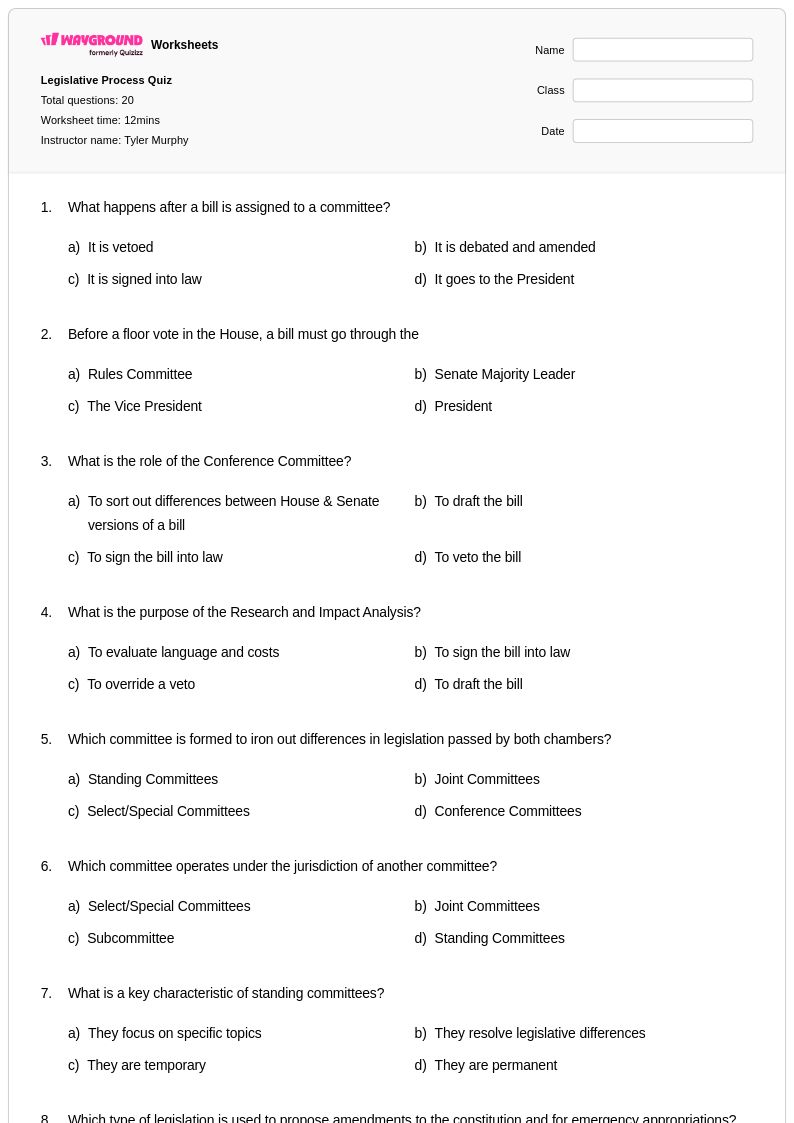
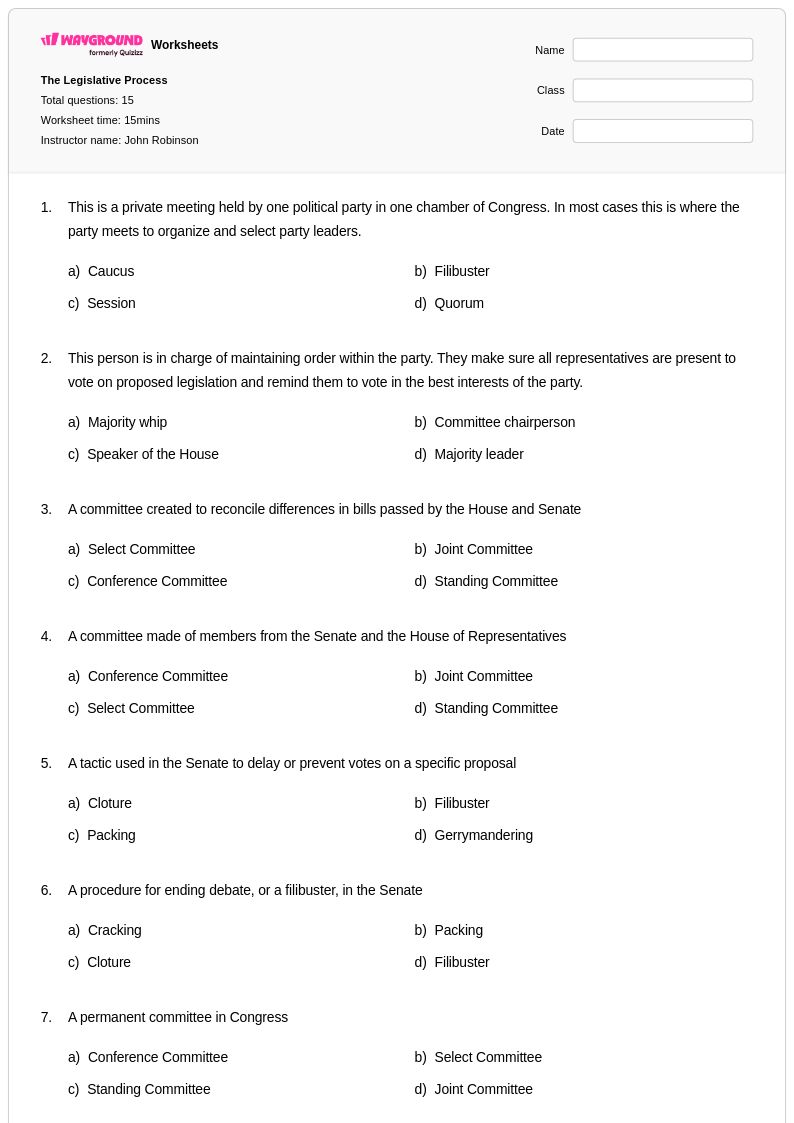
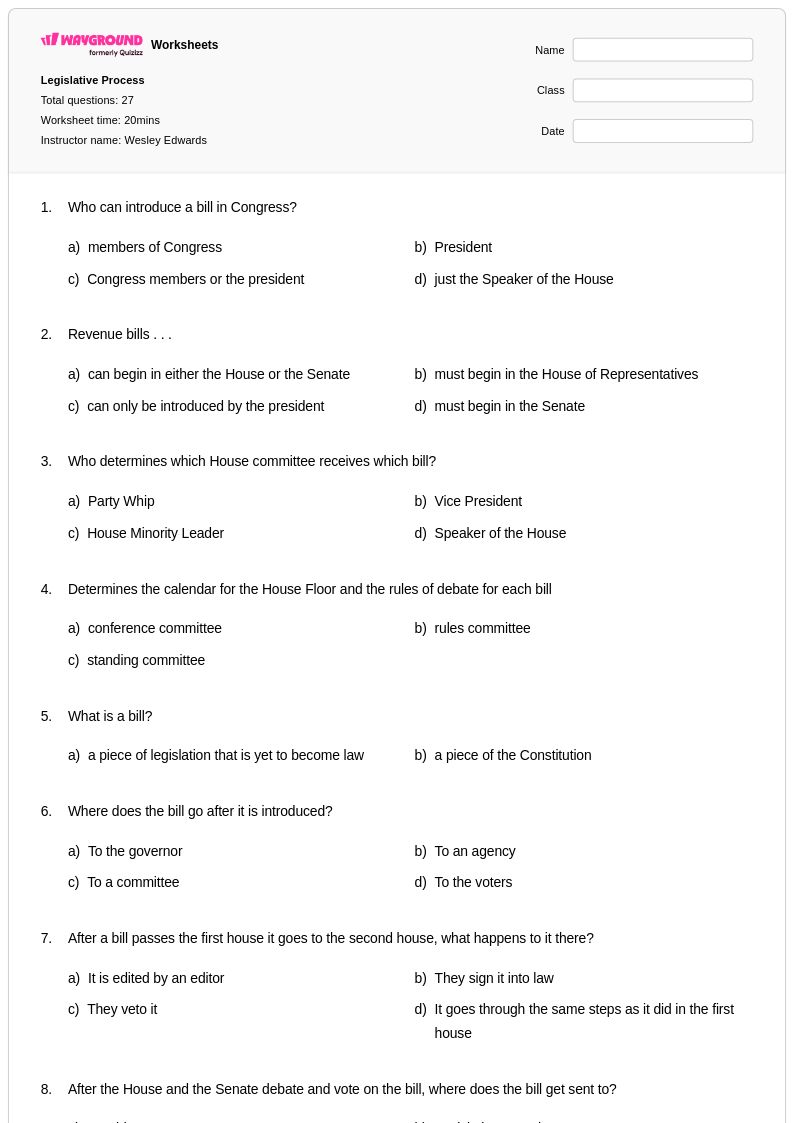
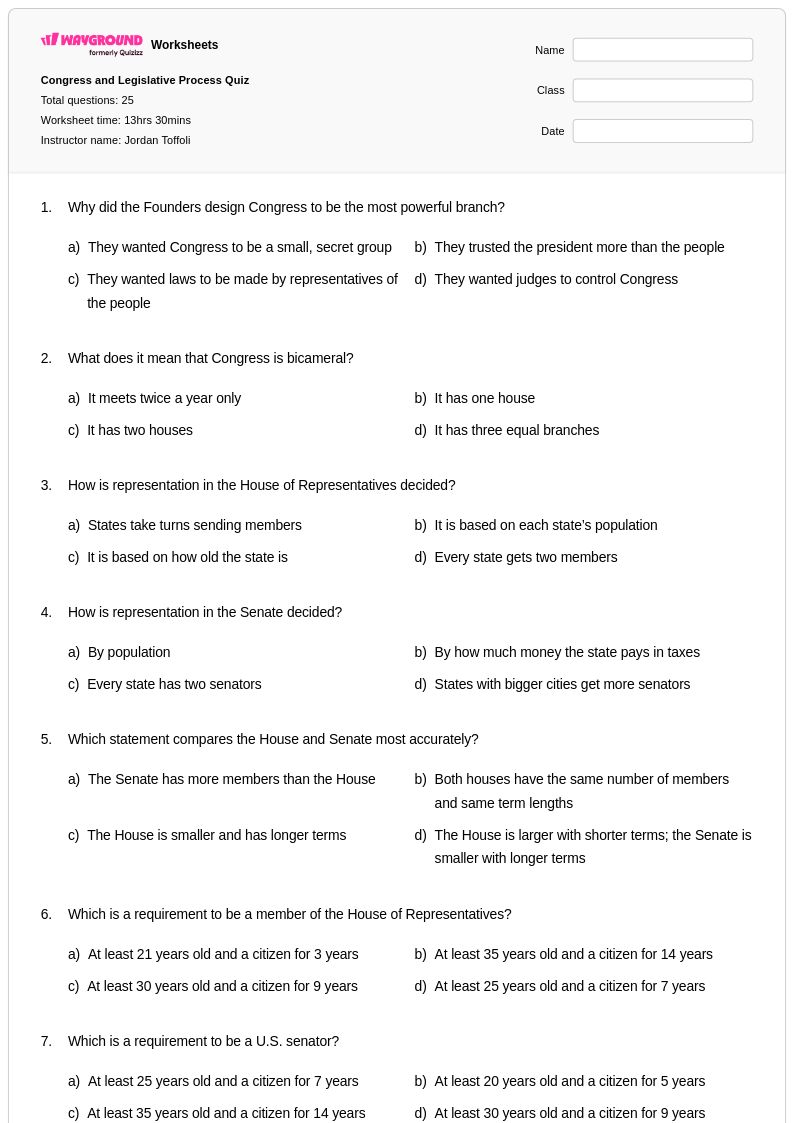
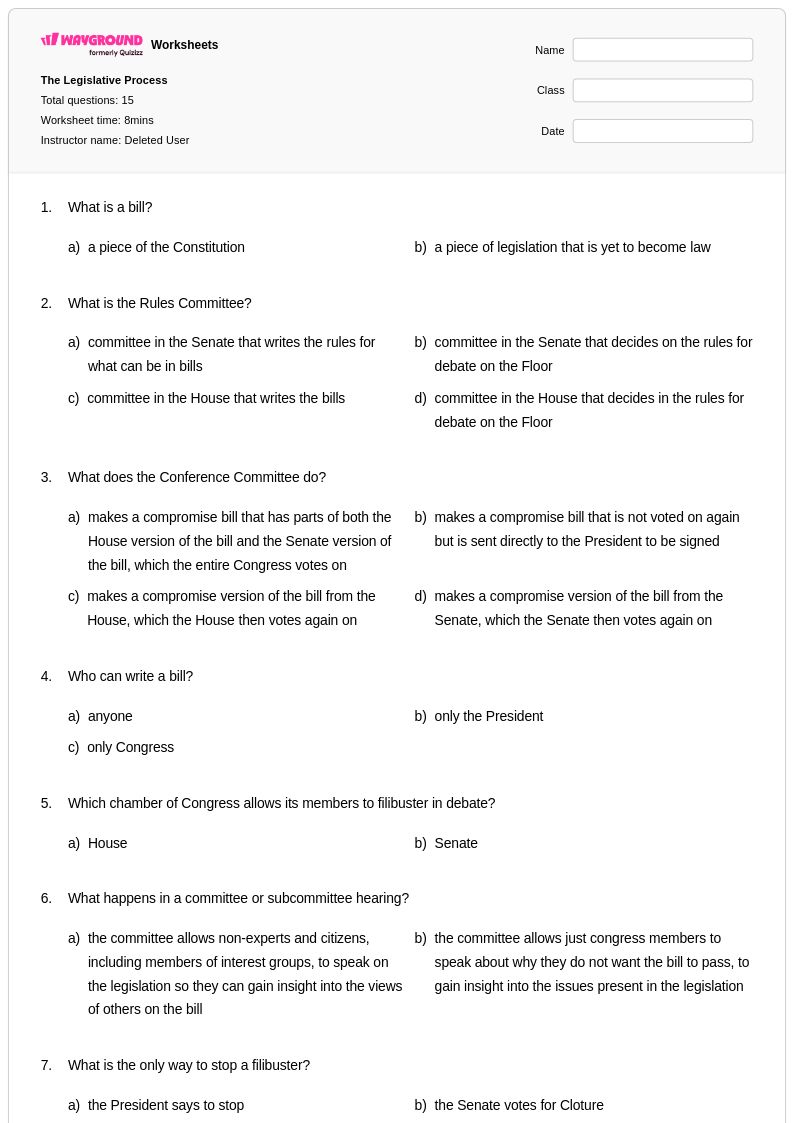
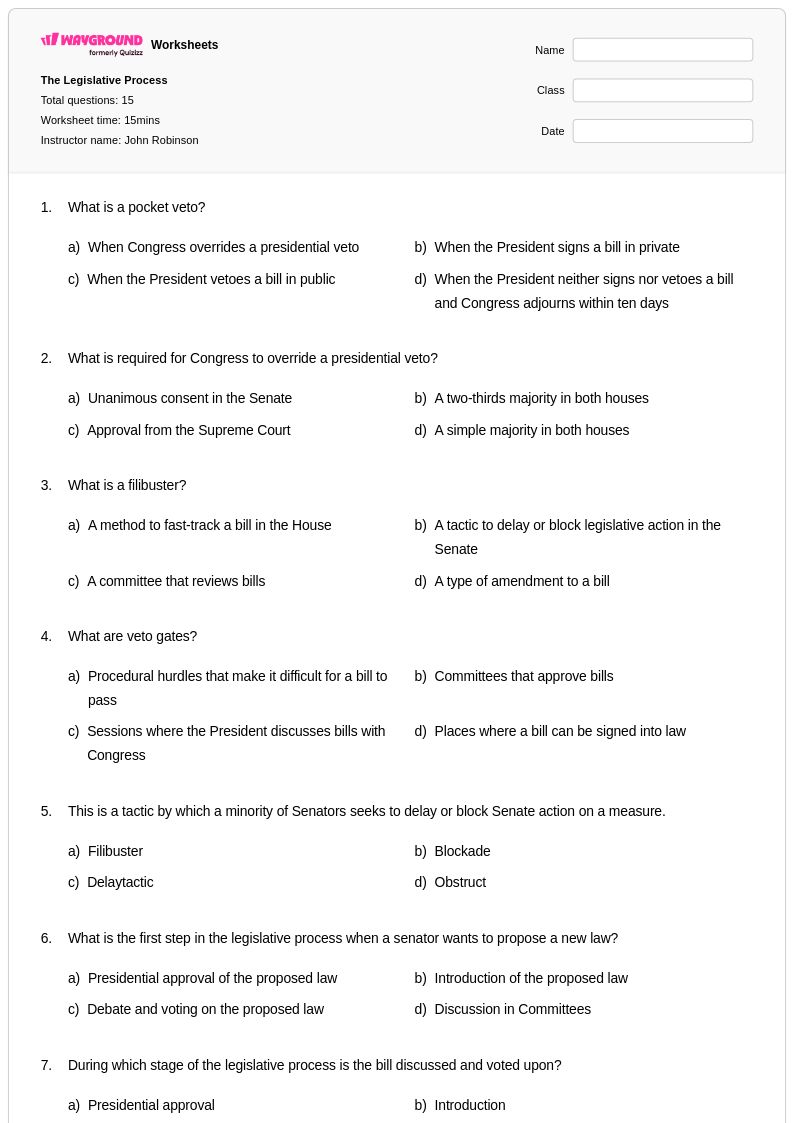
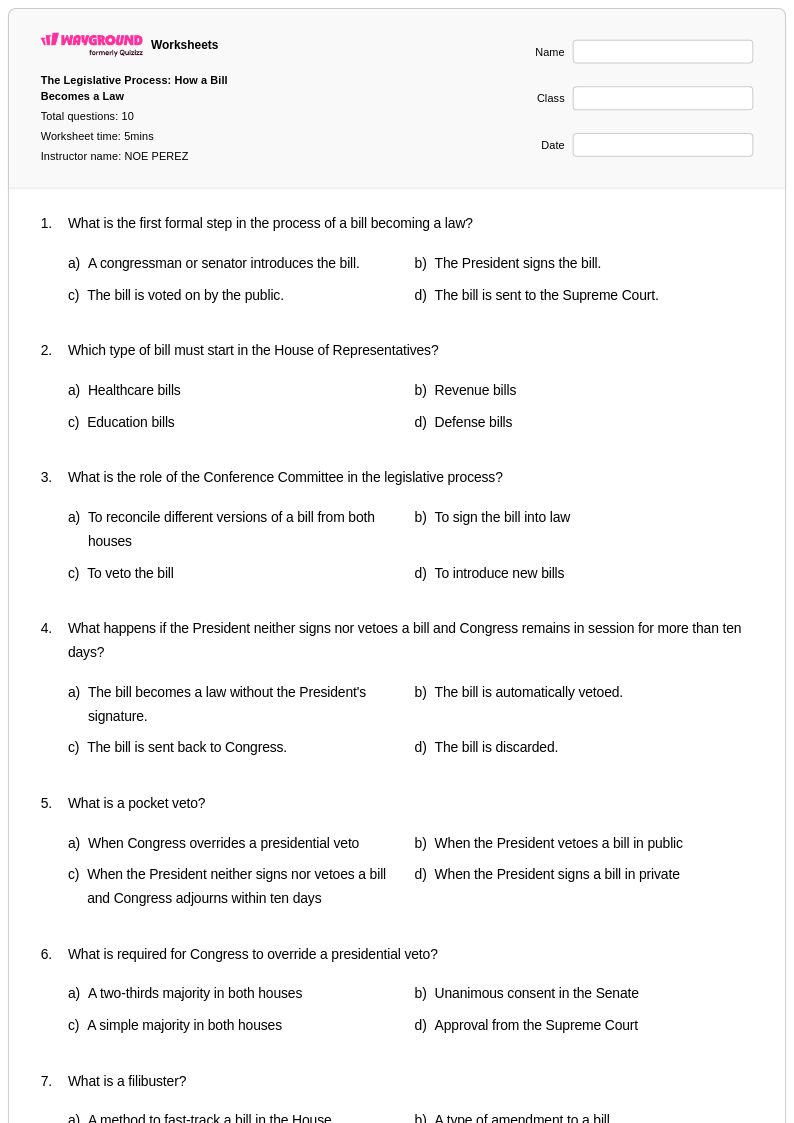
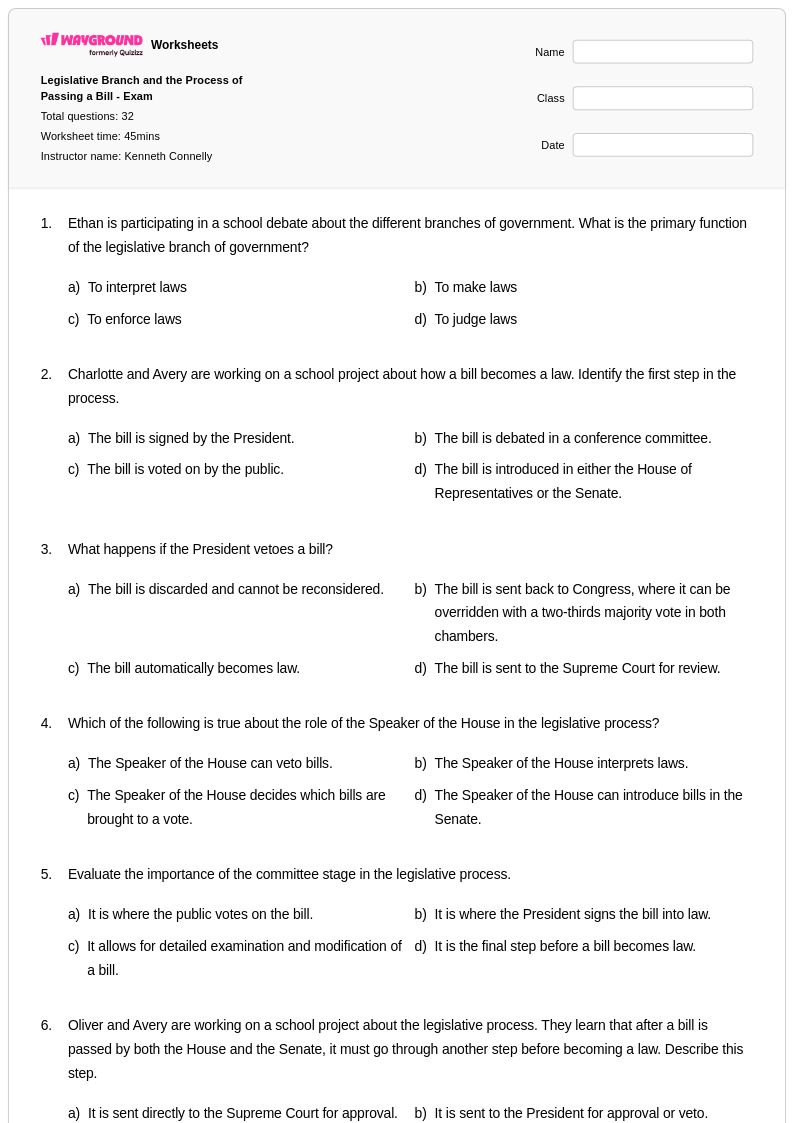
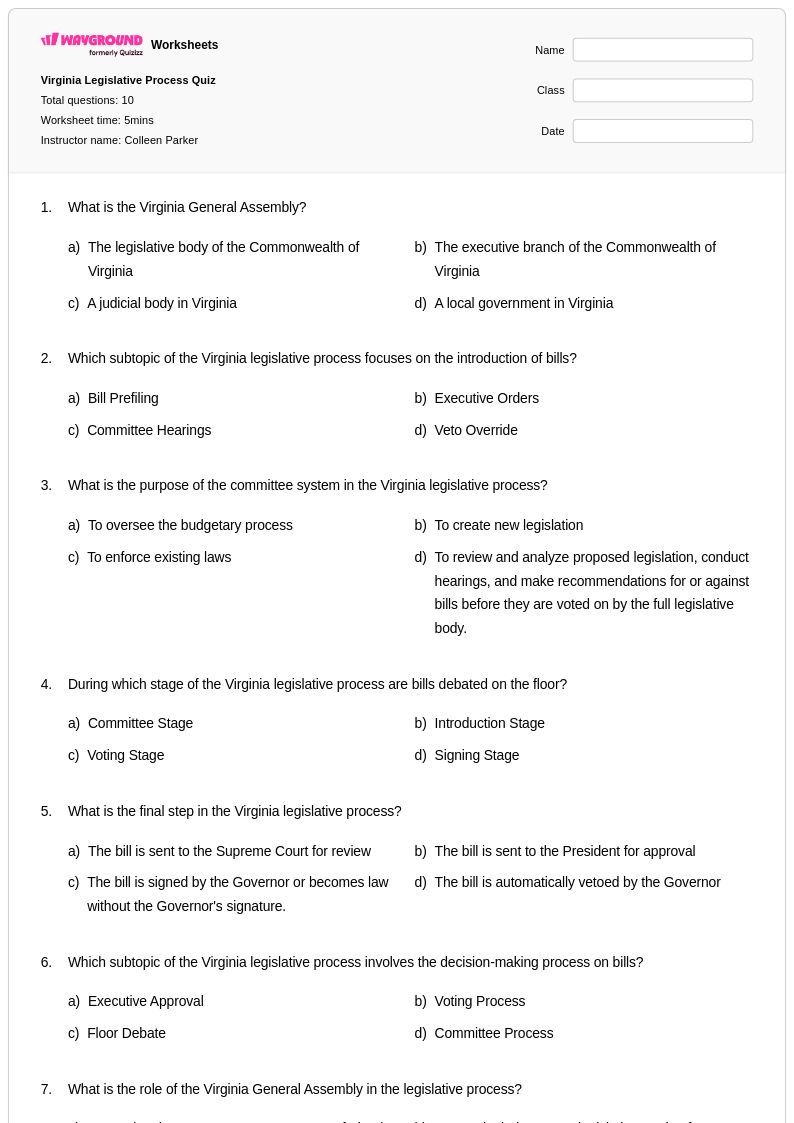
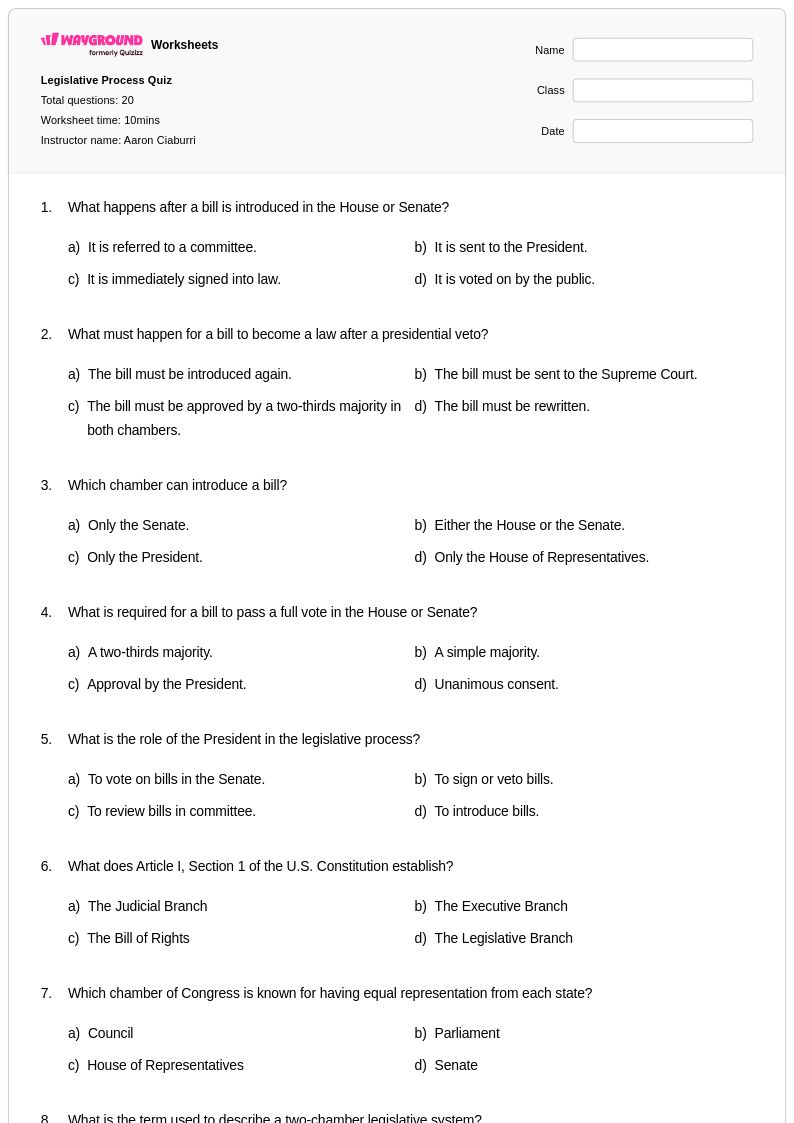
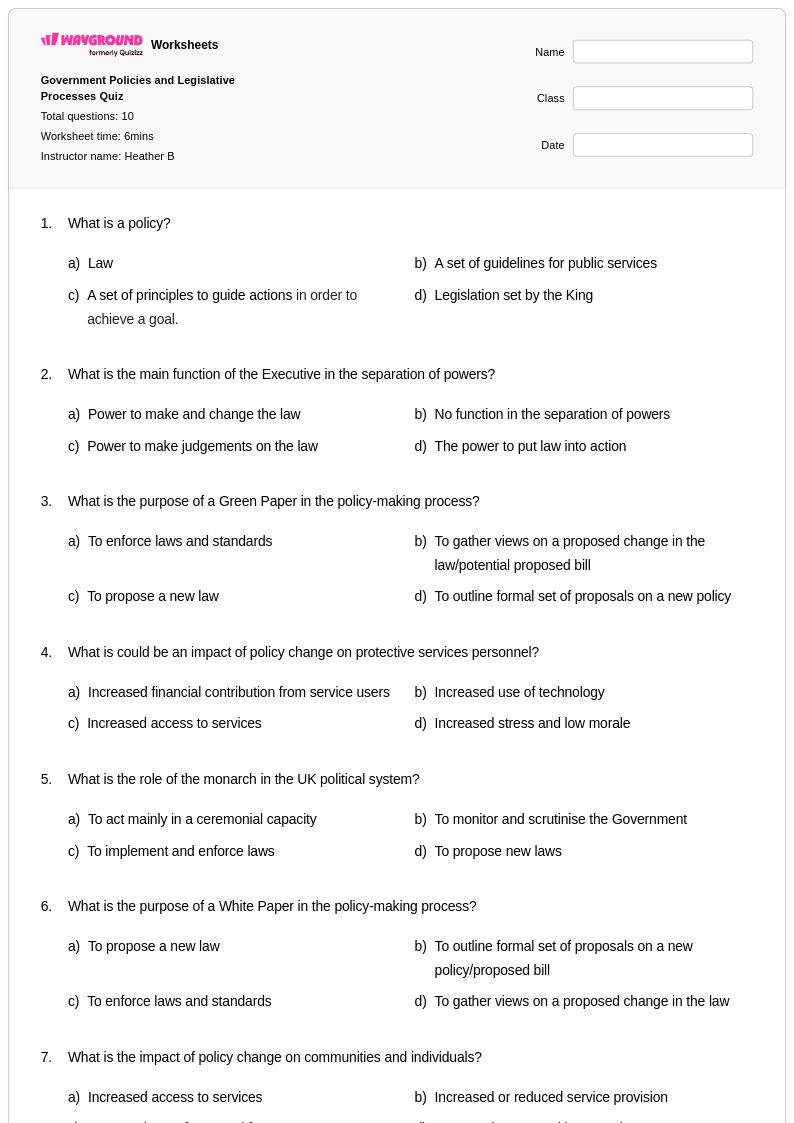
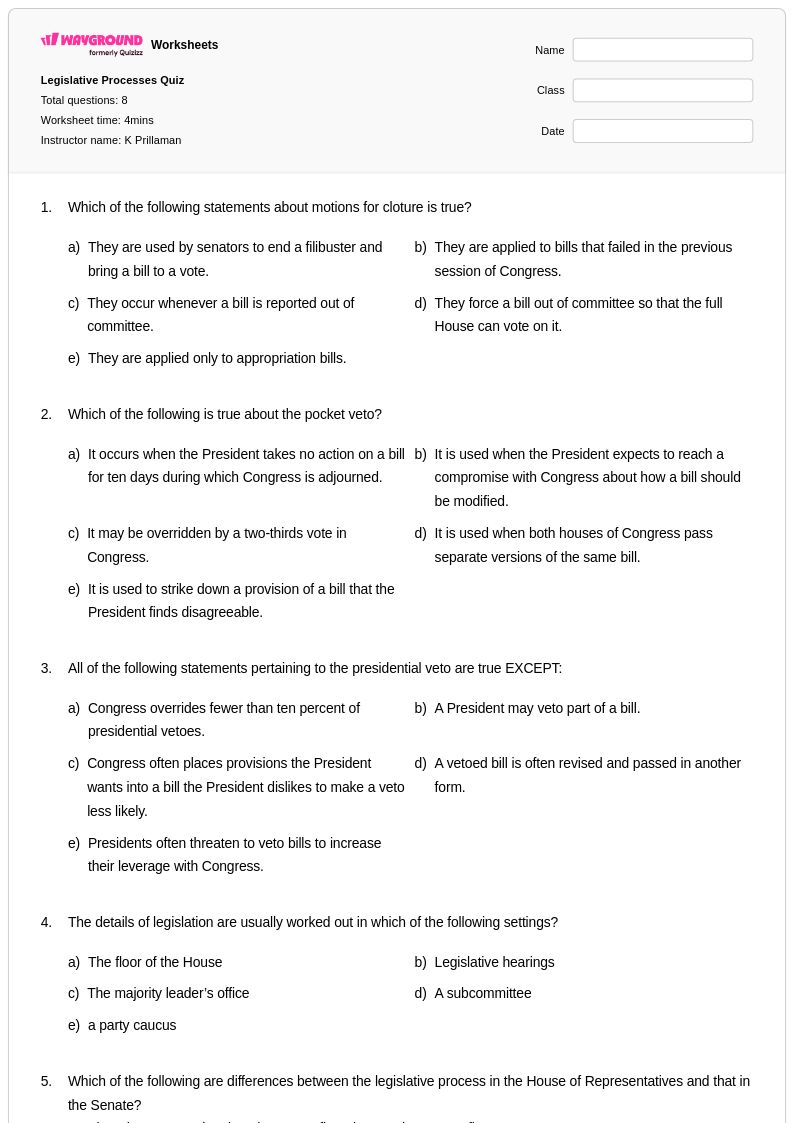
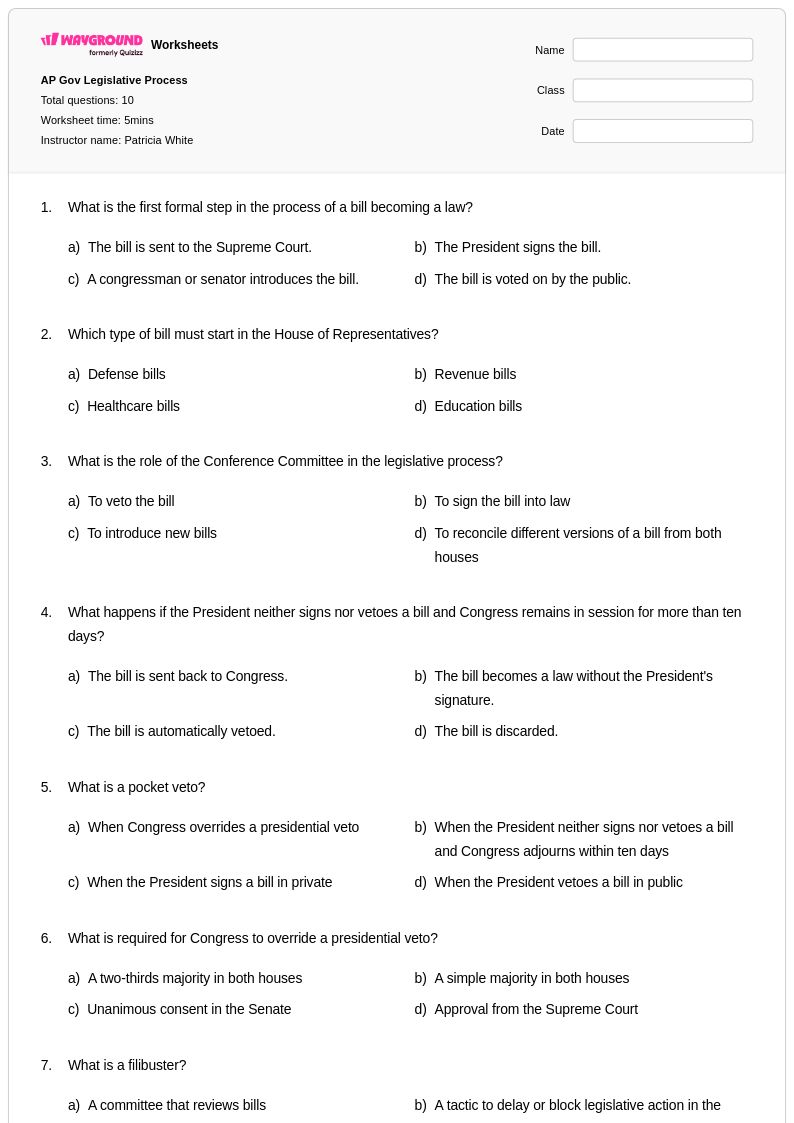
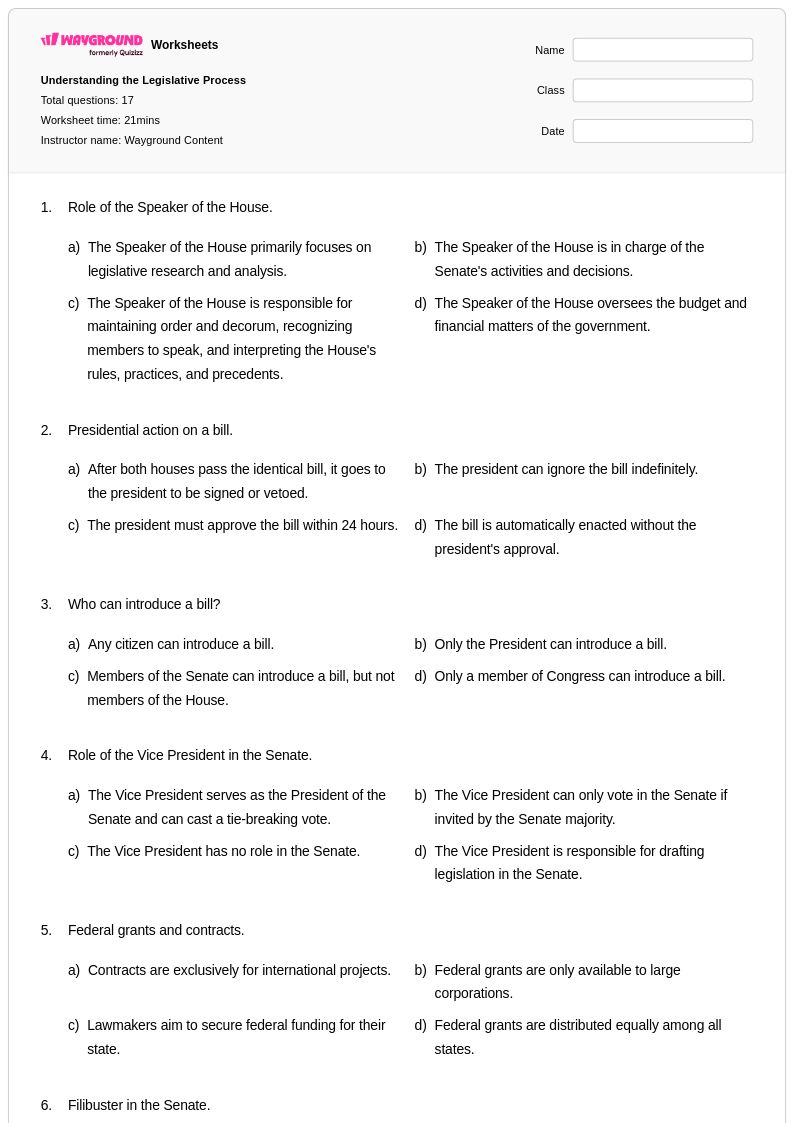
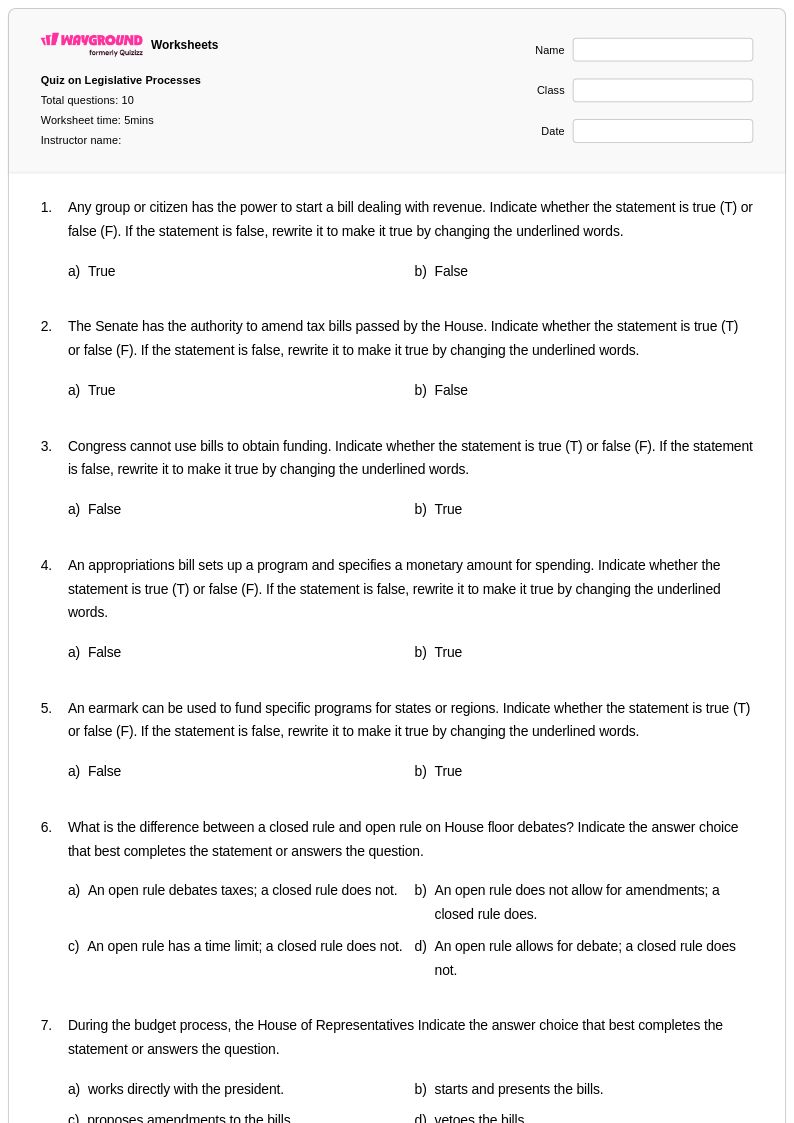
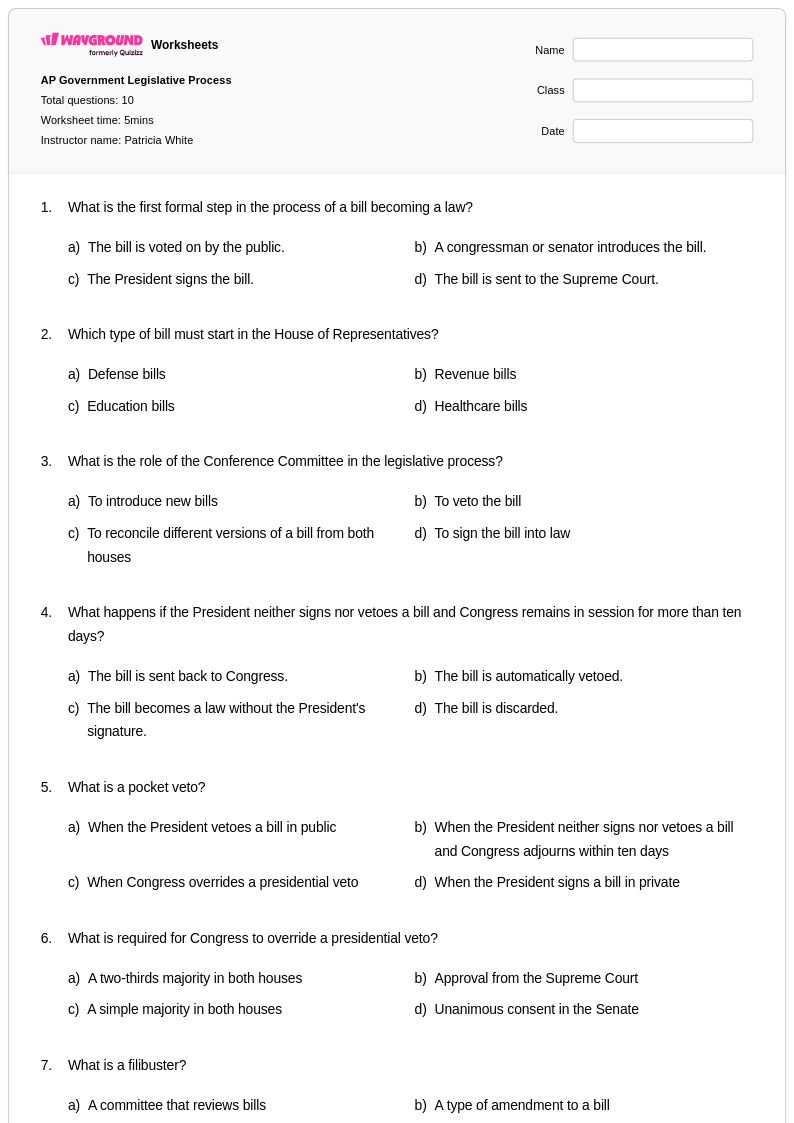
Legislative Process worksheets for Class 12 students through Wayground (formerly Quizizz) provide comprehensive resources for understanding how bills become laws and the intricate workings of congressional procedures. These expertly crafted worksheets strengthen critical thinking skills by guiding students through the multi-step journey of legislation, from committee review and markup to floor debates, voting procedures, and presidential action. Students engage with practice problems that analyze real legislative scenarios, examine the roles of House and Senate leadership, and evaluate the impact of procedural rules like filibusters and cloture votes. Each worksheet includes detailed answer keys to support independent learning, and the collection offers both free printables and interactive digital formats that accommodate diverse learning preferences while reinforcing essential civics concepts.
Wayground's extensive collection of Legislative Process materials draws from millions of teacher-created resources, ensuring educators have access to high-quality, standards-aligned content that meets the sophisticated analytical demands of Class 12 Social Studies curricula. The platform's robust search and filtering capabilities allow teachers to quickly locate worksheets targeting specific aspects of the legislative process, whether focusing on bicameral differences, conference committee procedures, or presidential veto powers. Advanced differentiation tools enable educators to customize difficulty levels and modify content for diverse learners, while flexible formatting options including downloadable PDF versions support both traditional classroom instruction and digital learning environments. These comprehensive resources streamline lesson planning while providing targeted materials for remediation, enrichment activities, and systematic skill practice that prepares students for advanced civic engagement and democratic participation.
FAQs
How do I teach the legislative process to students?
Teaching the legislative process is most effective when broken into sequential stages: bill introduction, committee review, floor debate, amendments, voting, and presidential action. Anchor each stage with a concrete example, such as a real or fictional bill, so students can trace the journey from proposal to law. Using sequence-based activities and role-play simulations reinforces procedural understanding and helps students connect abstract governmental steps to real-world outcomes.
What worksheets or activities help students practice how a bill becomes a law?
Sequencing activities are among the most effective practice formats for the legislative process, as they require students to correctly order each step from proposal through presidential action. Activities that ask students to identify the key players at each stage, such as committee chairs, floor leaders, and the president, build procedural fluency alongside conceptual understanding. Worksheets that include scenario-based questions, where students evaluate what happens when a bill is vetoed or amended, extend practice beyond simple recall into applied civics reasoning.
What mistakes do students commonly make when learning about the legislative process?
A common misconception is that a bill automatically becomes law once it passes both chambers of Congress, overlooking the presidential action step and the possibility of a veto override. Students also frequently confuse the roles of the House and Senate, particularly around which chamber originates revenue bills. Another persistent error is underestimating the role of committees, with many students assuming bills go directly to a full floor vote without prior committee review and markup.
How do I use legislative process worksheets in my civics class?
Legislative process worksheets on Wayground are available as printable PDFs for traditional classroom distribution and in digital formats for technology-integrated instruction, including the option to host them as a quiz directly on Wayground. Printable versions are well-suited for note-taking, annotation, and in-class reference, while digital formats support self-paced review and immediate feedback. Each worksheet includes a comprehensive answer key, making them efficient for independent practice, guided instruction, or remediation.
How can I support students who struggle with the complexity of congressional procedures?
Students who find congressional procedures difficult often benefit from visual scaffolds, such as flowcharts mapping each legislative step, before attempting written practice. Breaking the process into smaller instructional chunks, one stage per lesson, reduces cognitive overload. On Wayground, teachers can apply accommodations such as read aloud support, reduced answer choices, and extended time to individual students, allowing struggling learners to engage with the same rigorous content at an accessible pace.
How does the legislative process connect to checks and balances?
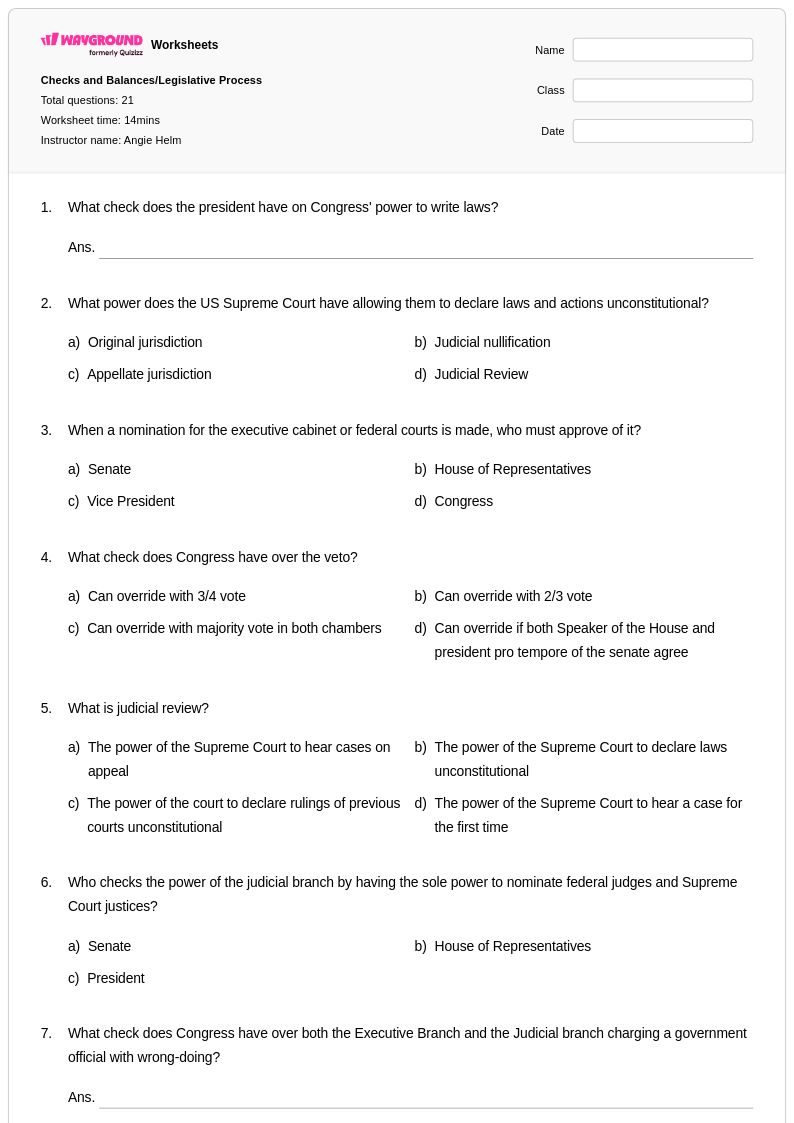
The legislative process is one of the clearest classroom illustrations of checks and balances because it distributes lawmaking authority across three branches. Congress drafts and passes legislation, but the president can veto it, and Congress can override that veto with a two-thirds majority vote. Judicial review adds a third layer, as courts can later rule a law unconstitutional. Teaching these interactions together helps students understand that no single branch holds unchecked legislative power.