Free Printable The Letter E Worksheets for Kindergarten
Kindergarten students can master the letter E with these free printable worksheets and practice problems that help children learn letter recognition, formation, and phonics through engaging PDF activities with answer keys.
Explore printable The Letter E worksheets for Kindergarten
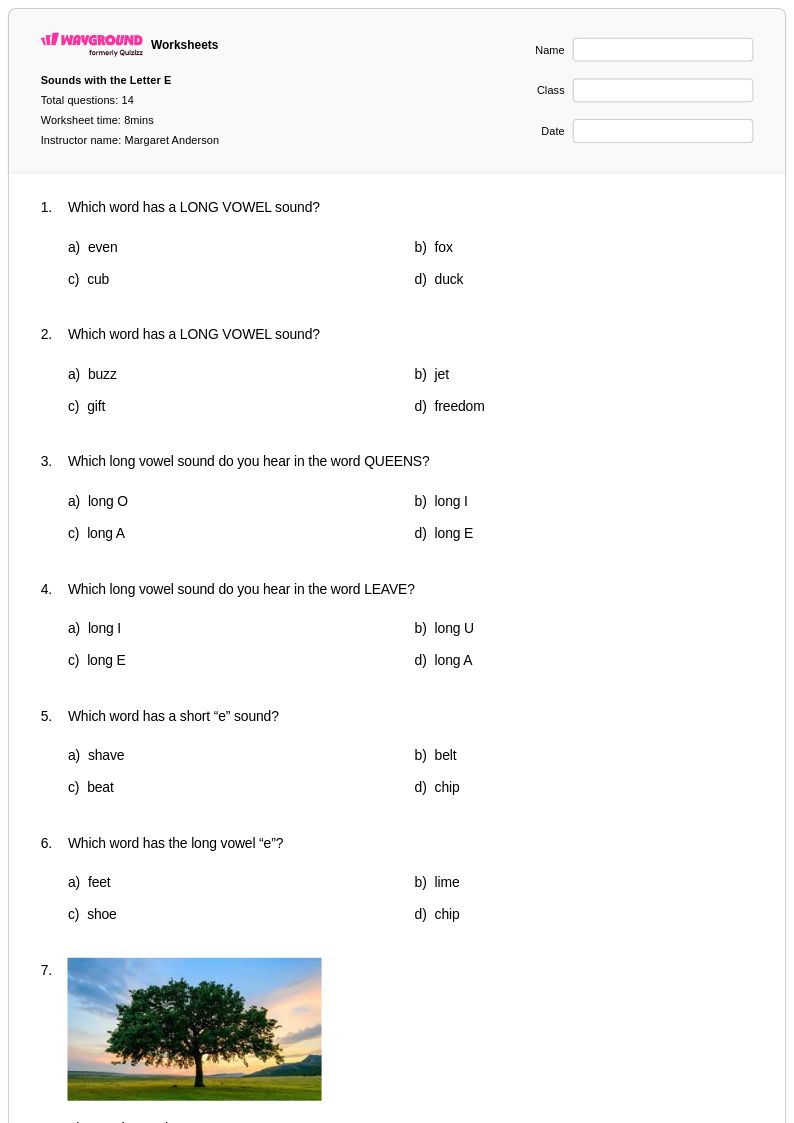
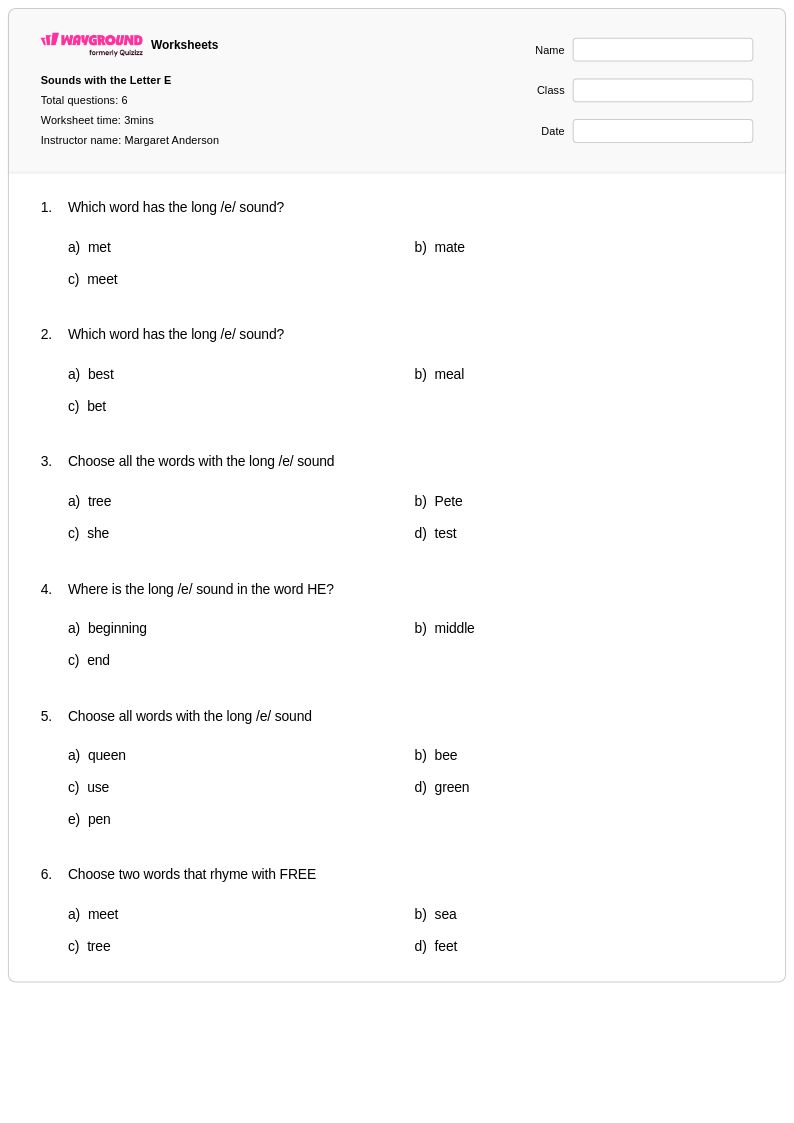
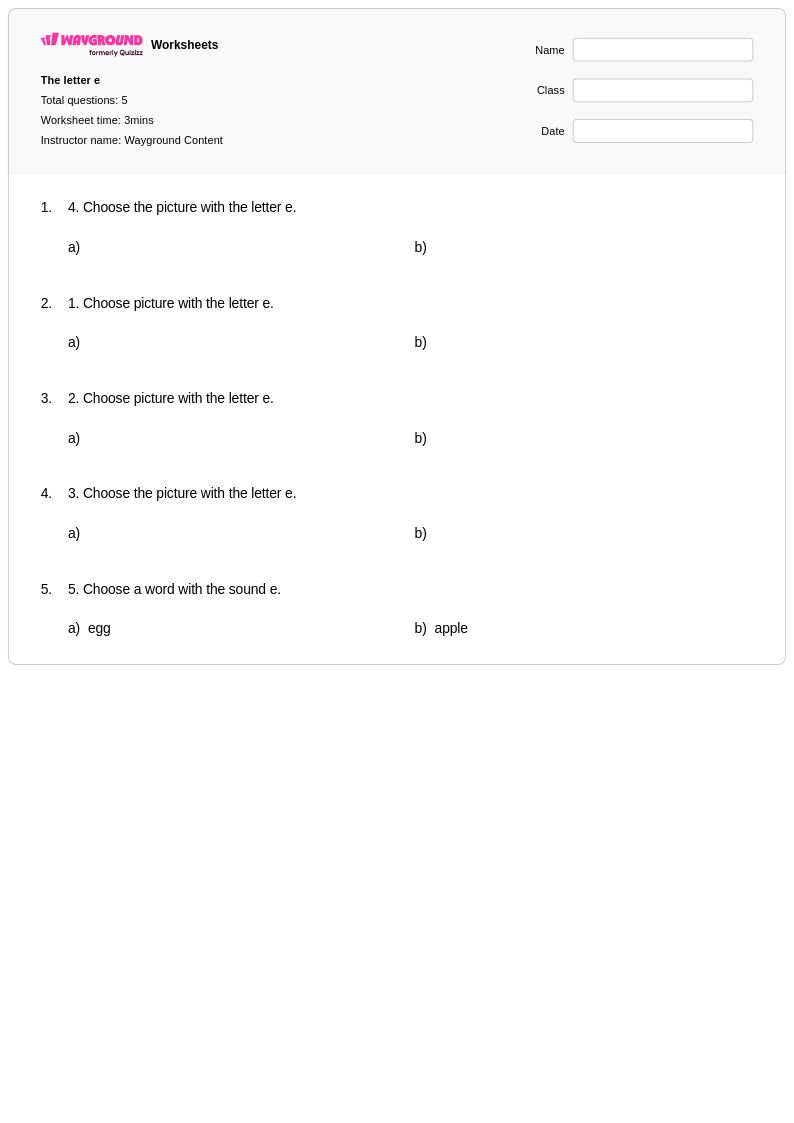
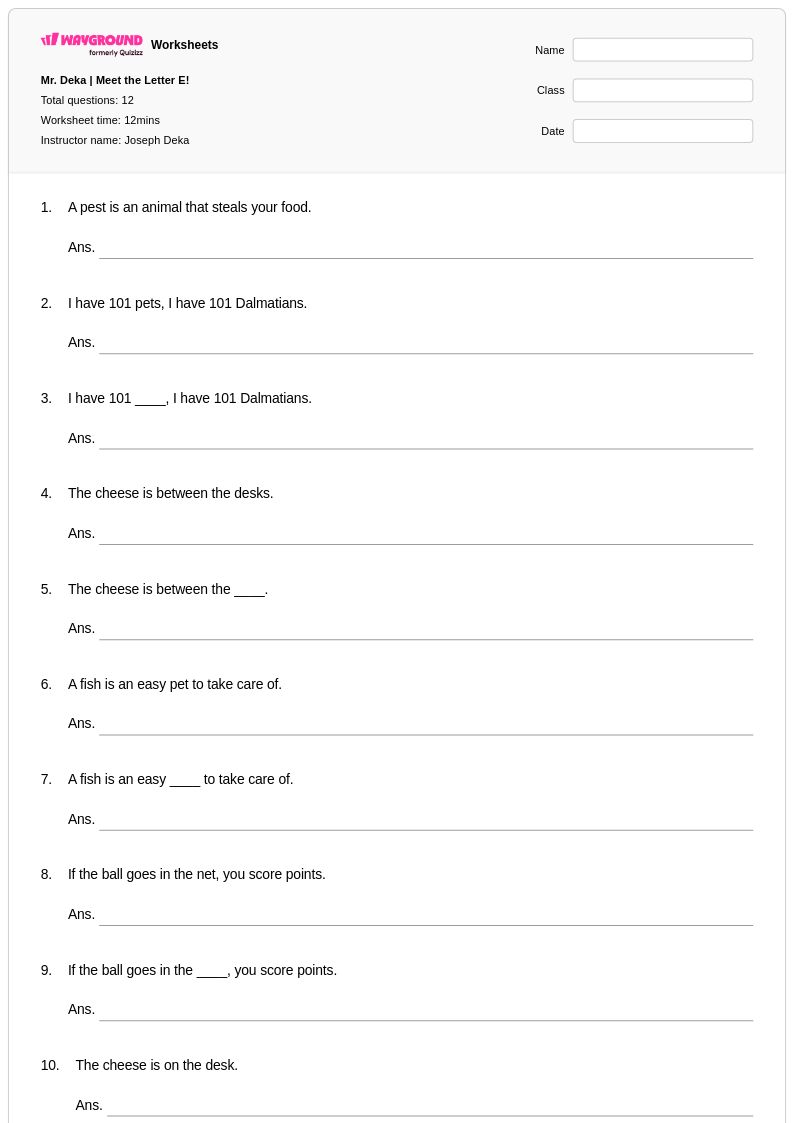
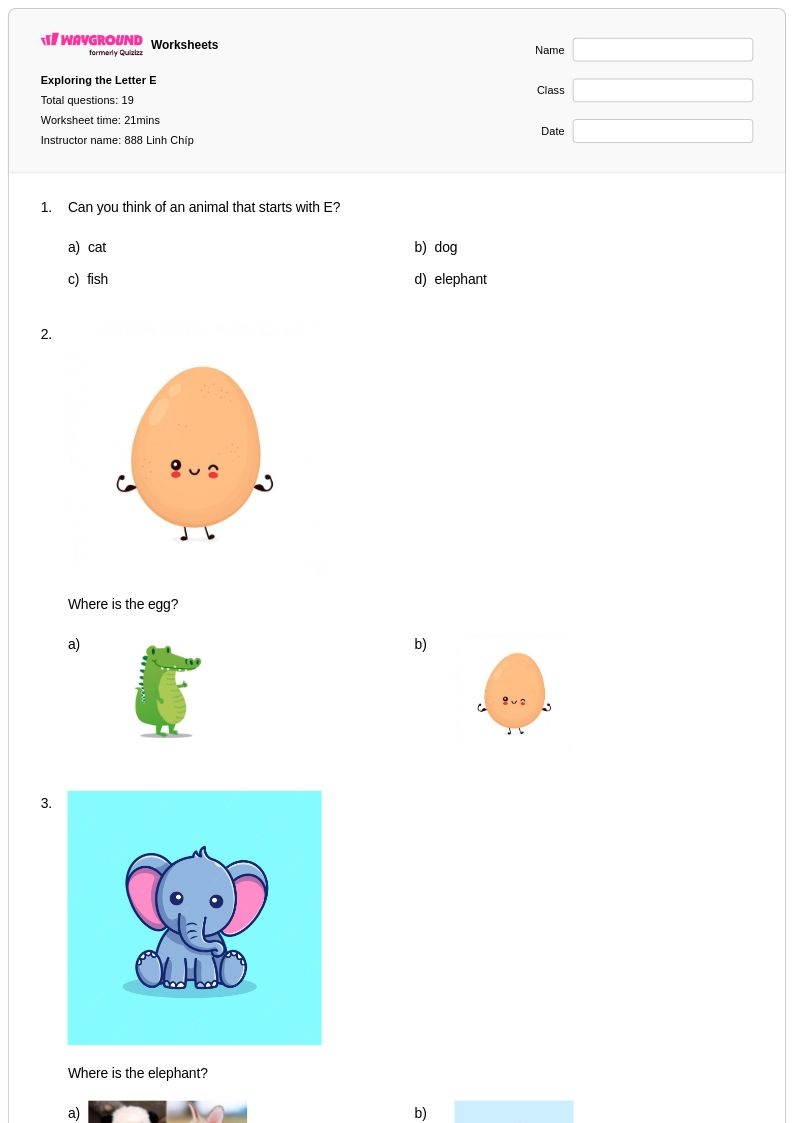
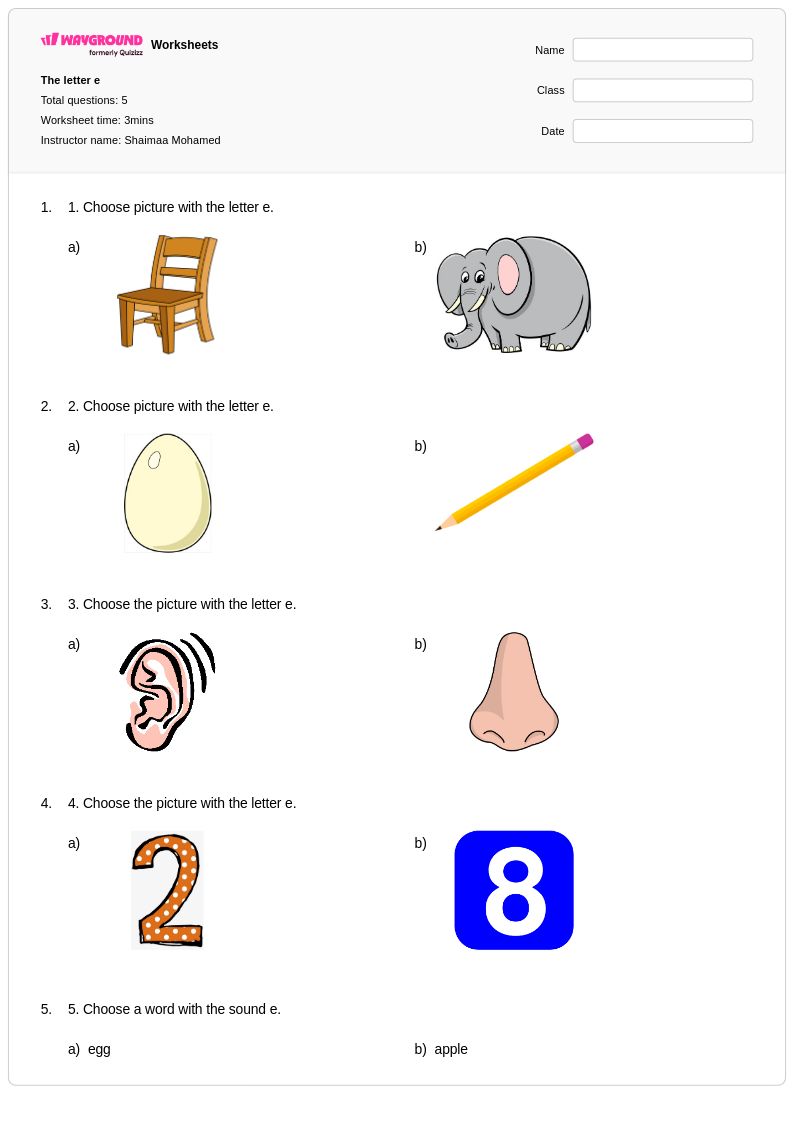
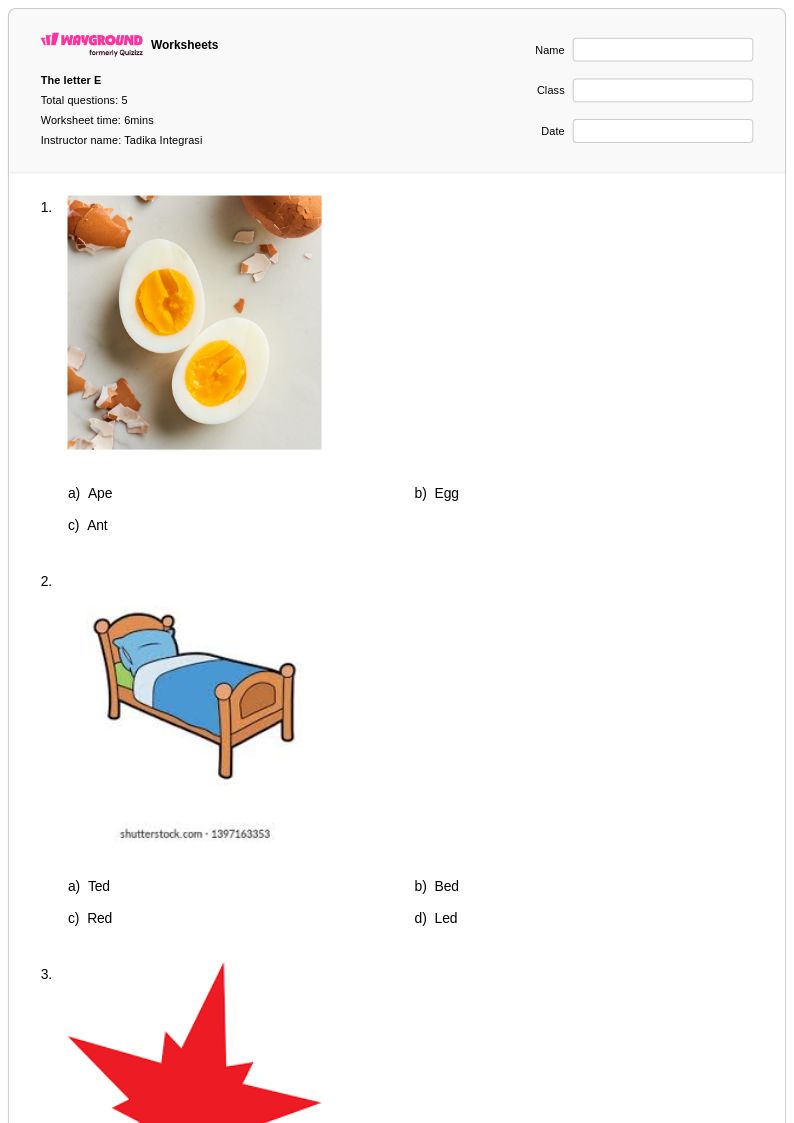
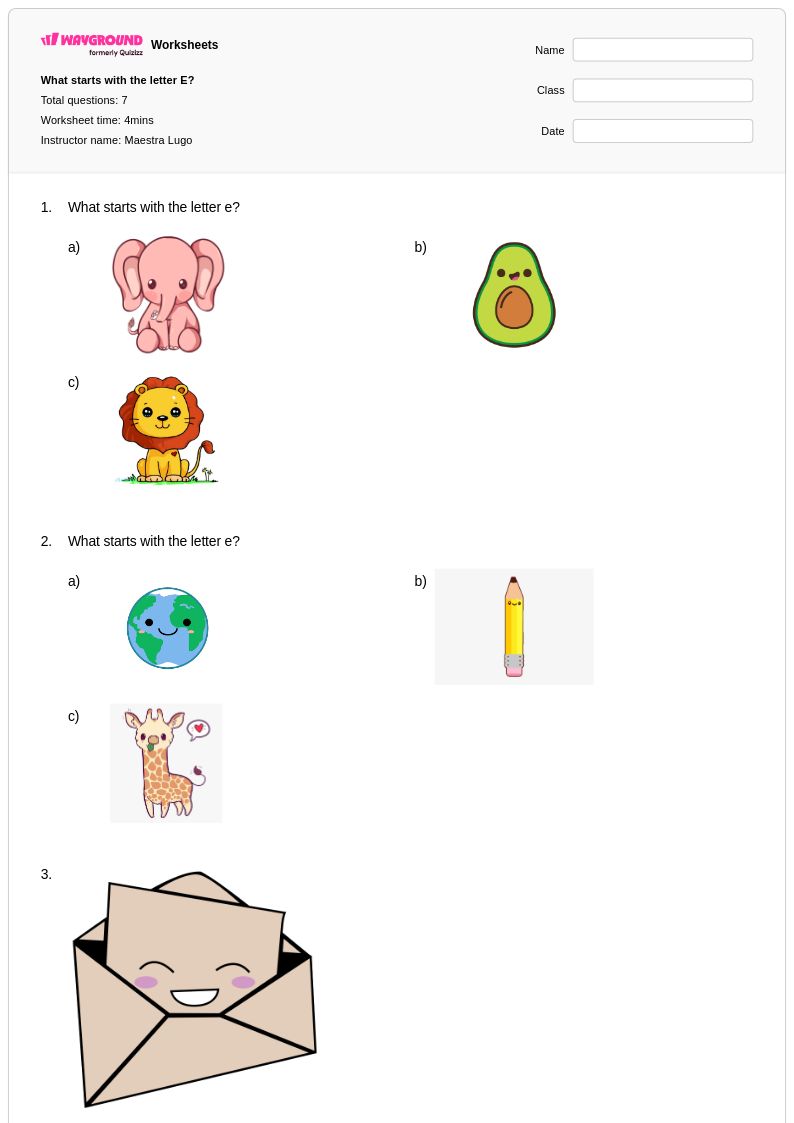
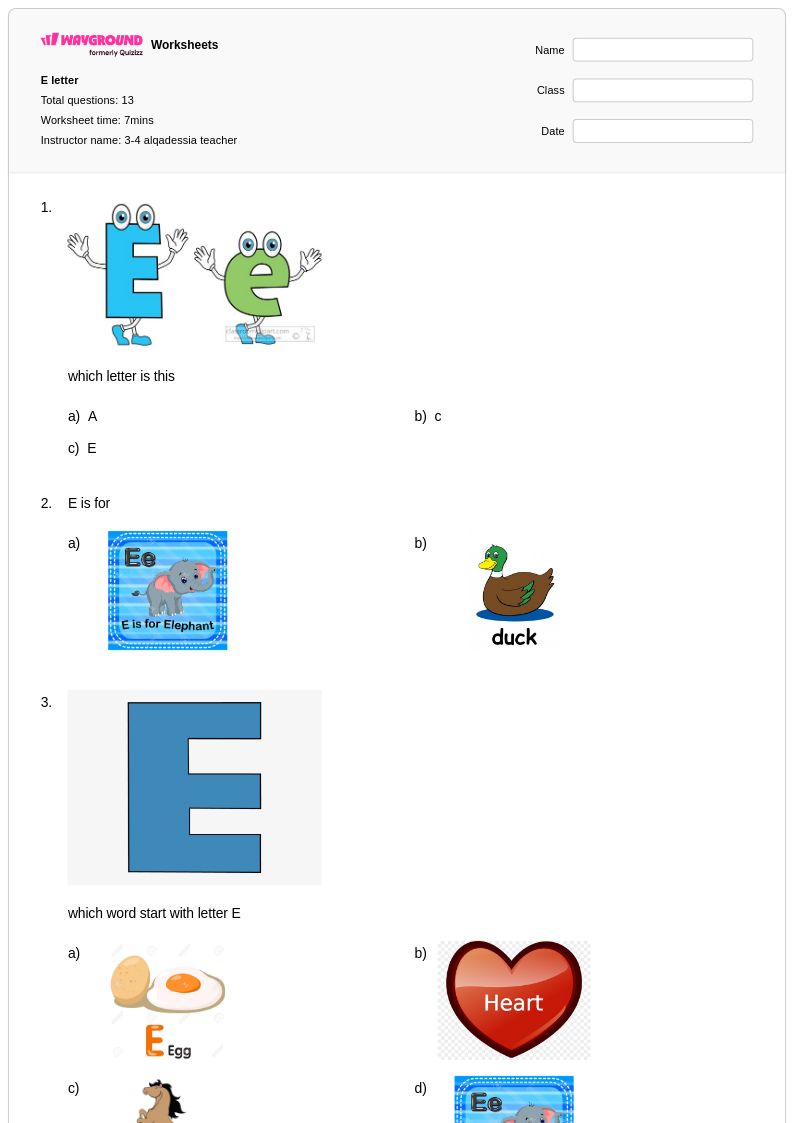
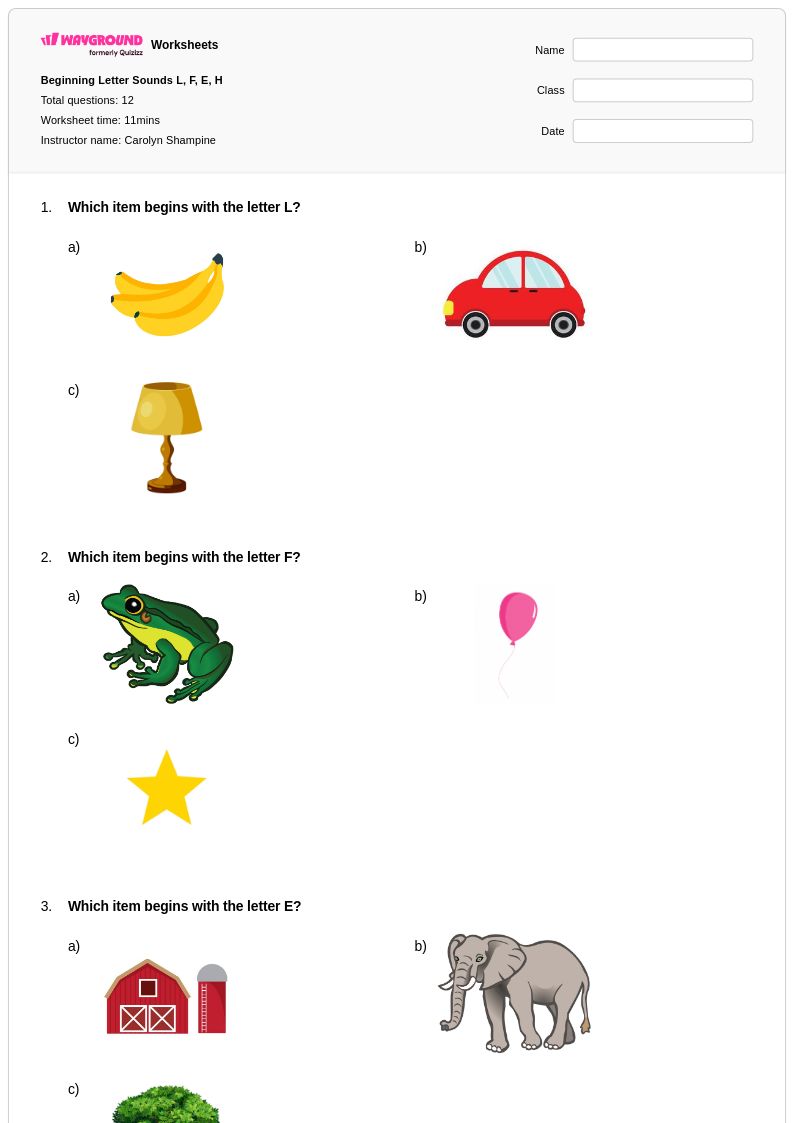
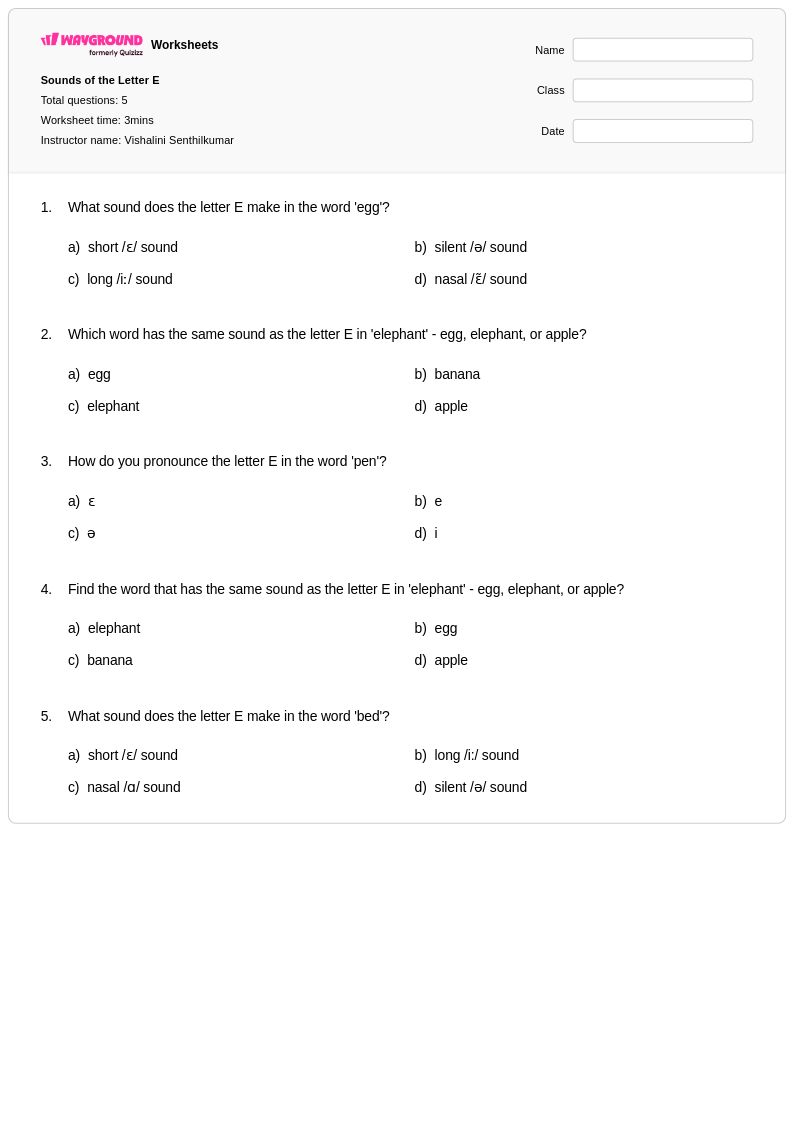
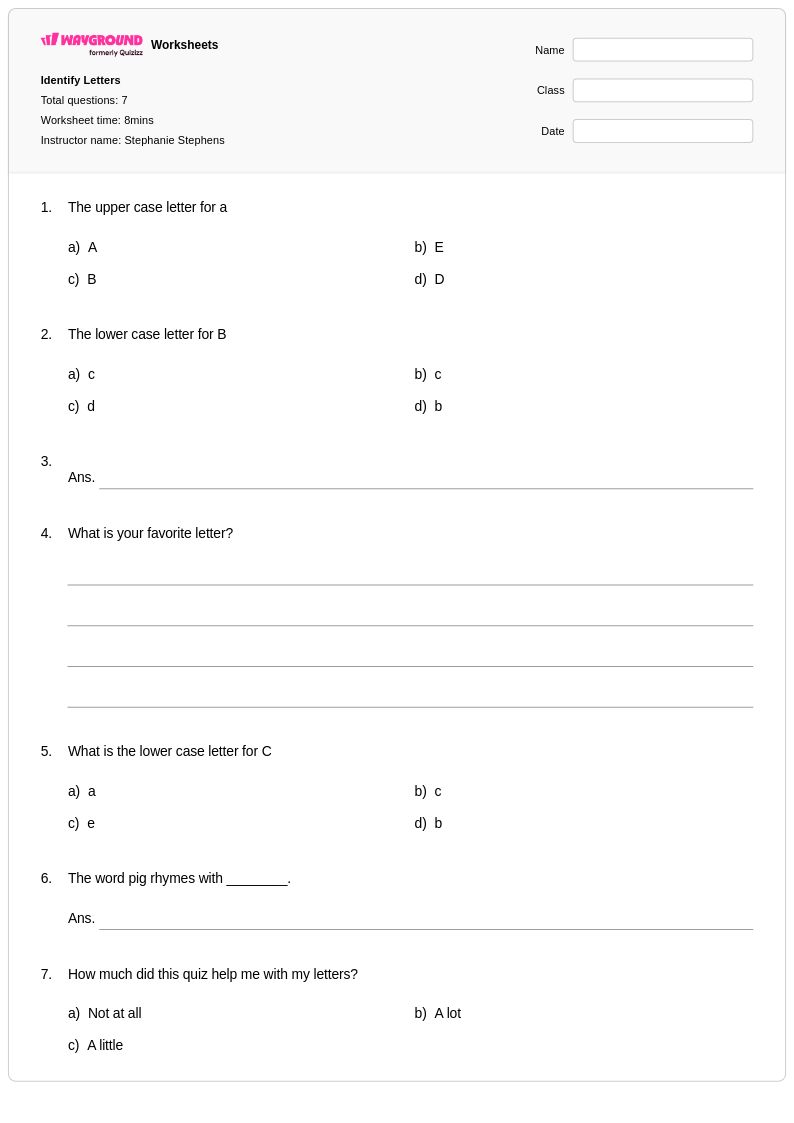
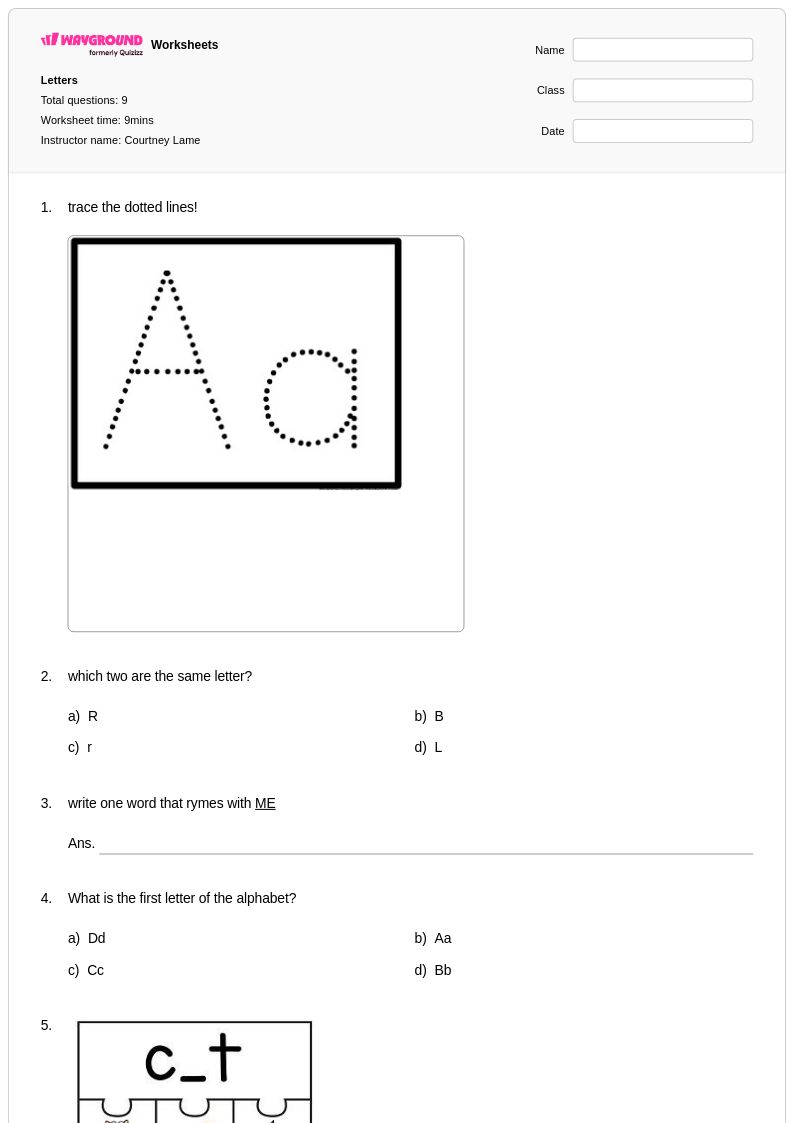
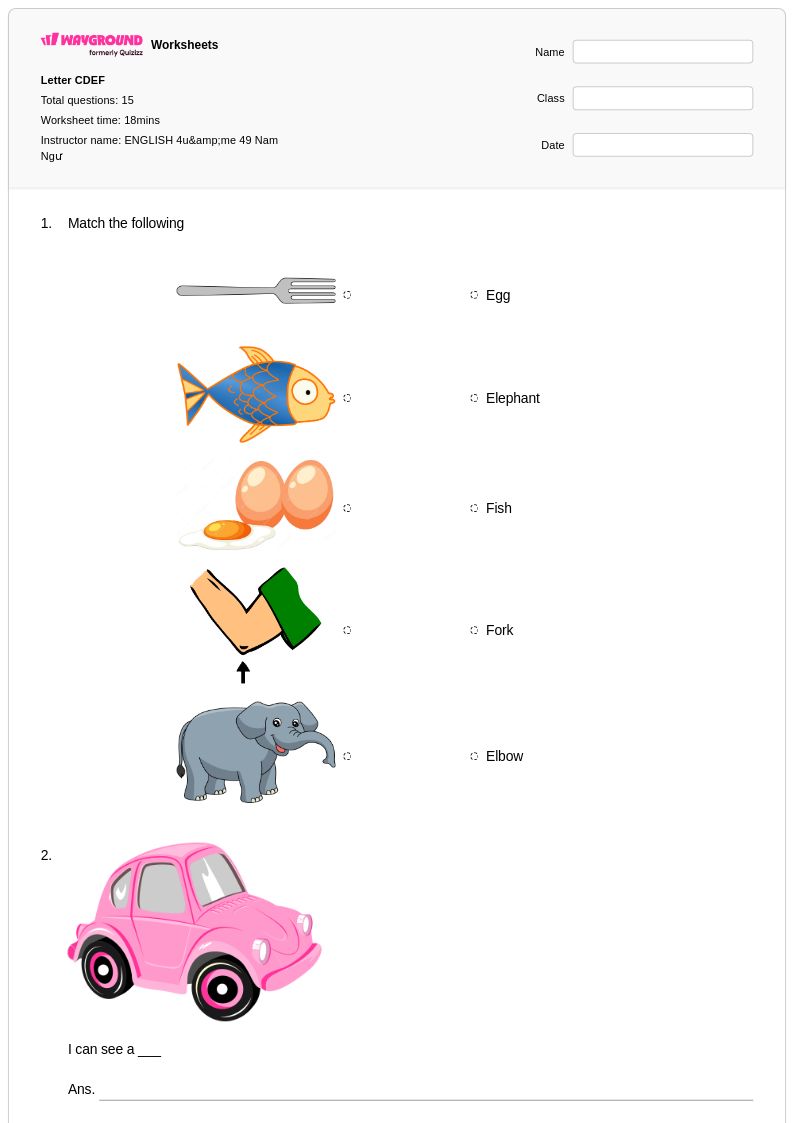
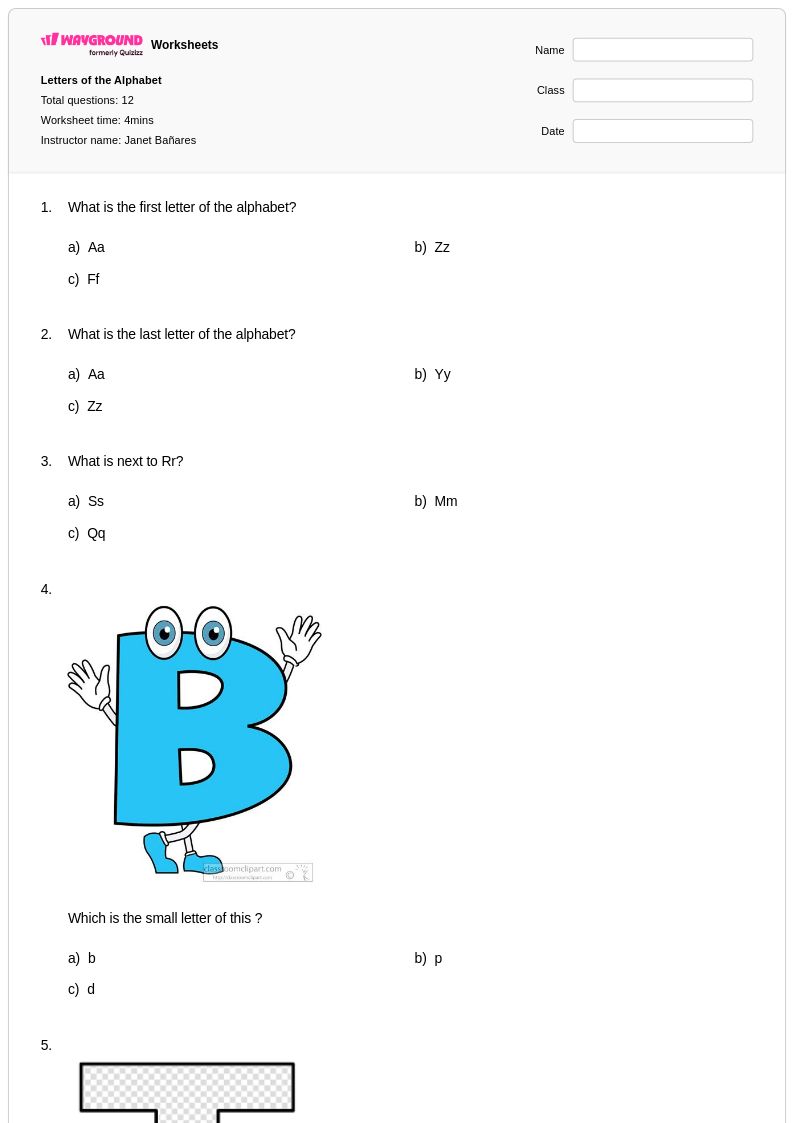
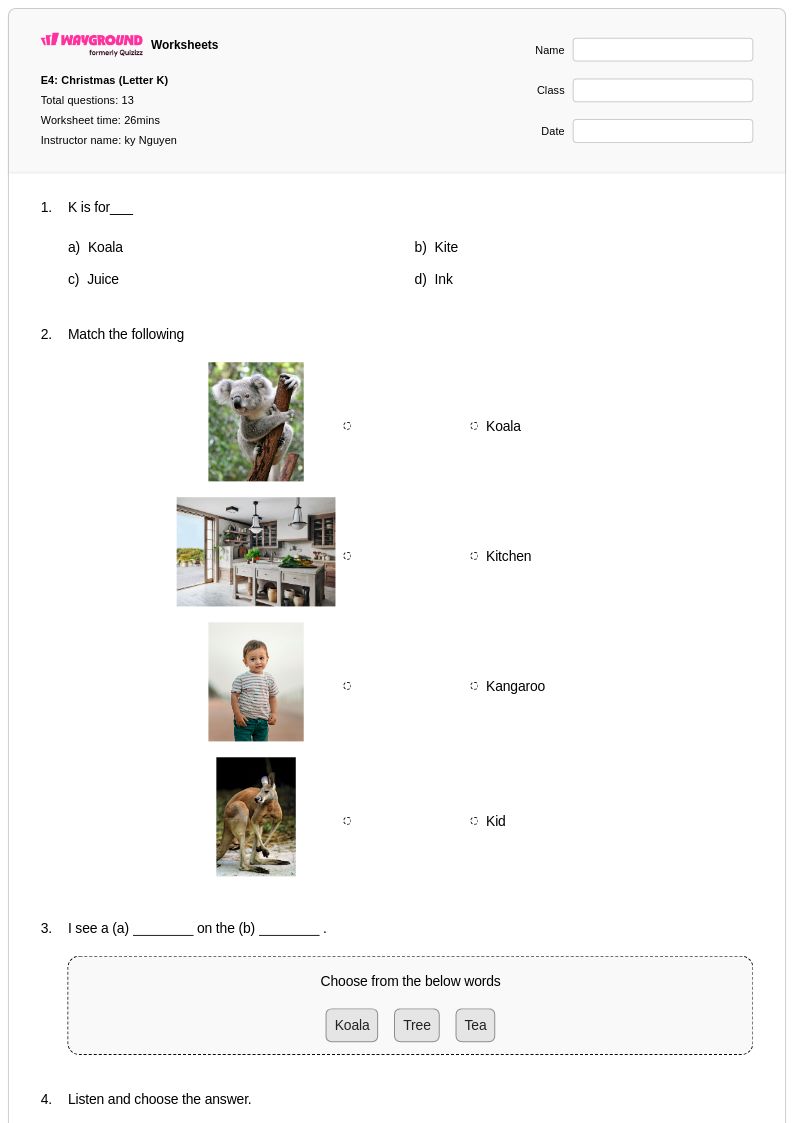
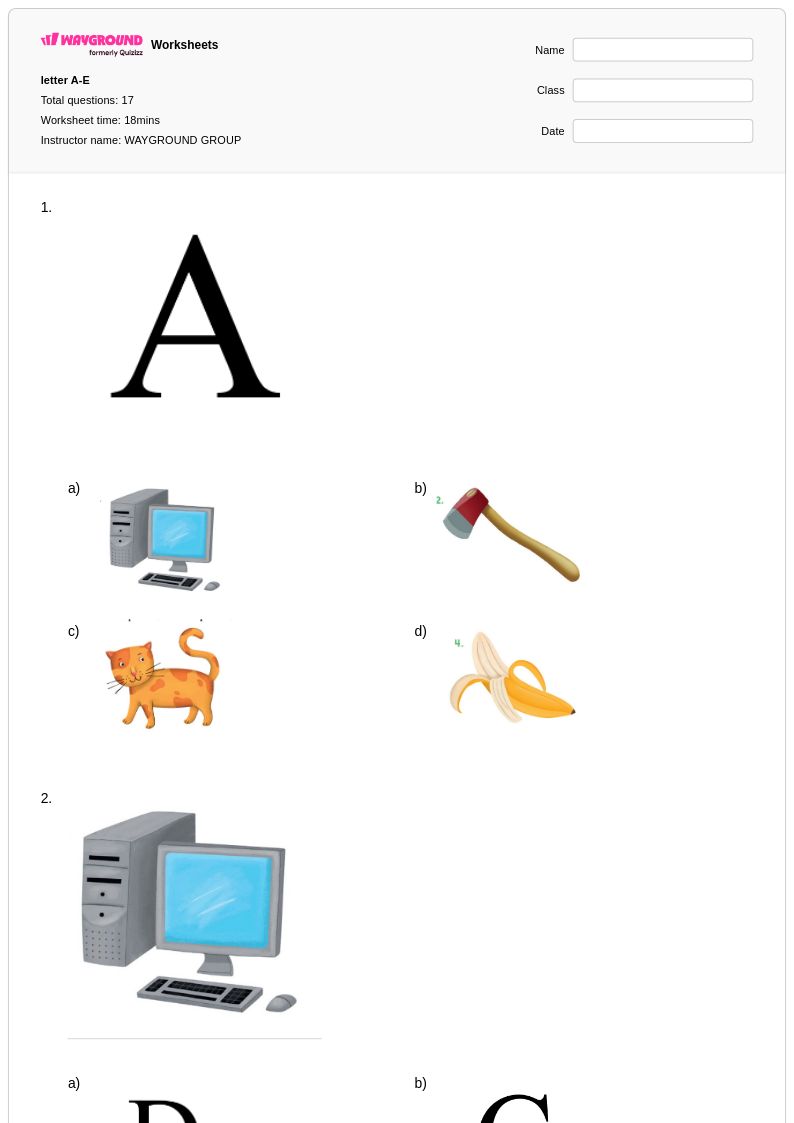
The Letter E worksheets available through Wayground (formerly Quizizz) provide kindergarten students with comprehensive practice opportunities to master this essential vowel. These expertly designed printables focus on letter recognition, proper formation, and phonetic understanding of both uppercase and lowercase E. Students engage with varied practice problems that include tracing exercises, letter identification activities, and beginning sound recognition tasks that strengthen foundational literacy skills. Each worksheet comes with a detailed answer key and is available as a free pdf download, making it easy for educators to implement consistent letter practice across different learning environments. The collection emphasizes multi-sensory learning approaches that help young learners connect the visual appearance of the letter E with its corresponding sounds in words.
Wayground (formerly Quizizz) supports teachers with an extensive collection of millions of teacher-created resources specifically designed for kindergarten alphabet instruction. The platform's robust search and filtering capabilities allow educators to quickly locate Letter E worksheets that align with state standards and match their students' specific learning needs. Teachers can access both printable pdf versions for traditional paper-based activities and digital formats for interactive learning experiences. The differentiation tools enable seamless customization of content difficulty levels, supporting both remediation for struggling learners and enrichment opportunities for advanced students. This comprehensive approach to worksheet organization streamlines lesson planning while providing flexible options for skill practice, assessment preparation, and targeted phonics instruction that builds strong reading foundations.
FAQs
How do I teach the letter E to early learners?
Introduce the letter E by connecting its shape to something familiar, such as a comb or a fork, to help students remember its form. Pair visual recognition with phonemic awareness activities by emphasizing the short and long vowel sounds E makes in common words like 'egg' and 'eagle.' Consistent, multisensory practice that combines tracing, saying the sound aloud, and identifying E in simple words builds the strongest foundation for letter mastery.
What exercises help students practice the letter E?
Effective practice exercises for the letter E include tracing uppercase and lowercase forms, circling pictures whose names begin with the E sound, and sorting words or images by short-E versus long-E sounds. Beginning sound recognition activities, such as identifying whether a word starts with E, directly reinforce phonemic awareness alongside letter-symbol correspondence. Repeated, structured exposure through these varied exercise types accelerates automaticity with one of the most frequently used letters in English.
What mistakes do students commonly make when learning the letter E?
One of the most common errors is confusing the uppercase E with the letter F, since both share a vertical line and horizontal strokes. Students also frequently struggle to distinguish between the short-E sound as in 'bed' and the long-E sound as in 'bee,' often applying one sound rule inconsistently. Reversals of the lowercase e are also common in early writing, making explicit modeling of correct formation and directional habits especially important.
How can I differentiate letter E instruction for students at different skill levels?
For students who are still developing basic recognition, focus on matching uppercase and lowercase E forms and identifying E among a small set of visually distinct letters. More advanced students can move into phonics-based tasks such as identifying E's sound position within a word or sorting words by vowel sound. On Wayground, teachers can apply accommodations such as read aloud support and reduced answer choices to individual students, allowing the same worksheet session to serve learners at different readiness levels without singling anyone out.
How do I use Letter E worksheets from Wayground in my classroom?
Wayground's Letter E worksheets are available as printable PDFs for traditional classroom use and in digital formats for technology-integrated learning environments, including the option to host them as a live quiz on Wayground. Teachers can assign them as whole-class instruction, independent seat work, or targeted small-group practice depending on where students are in their letter recognition development. The included answer keys make it straightforward to review responses and identify students who may need additional support with letter formation or phonics.