Free Printable Levels of Government Worksheets for Class 3
Class 3 students explore levels of government through engaging printable worksheets that teach local, state, and federal government roles with free PDF activities, practice problems, and comprehensive answer keys from Wayground.
Explore printable Levels of Government worksheets for Class 3
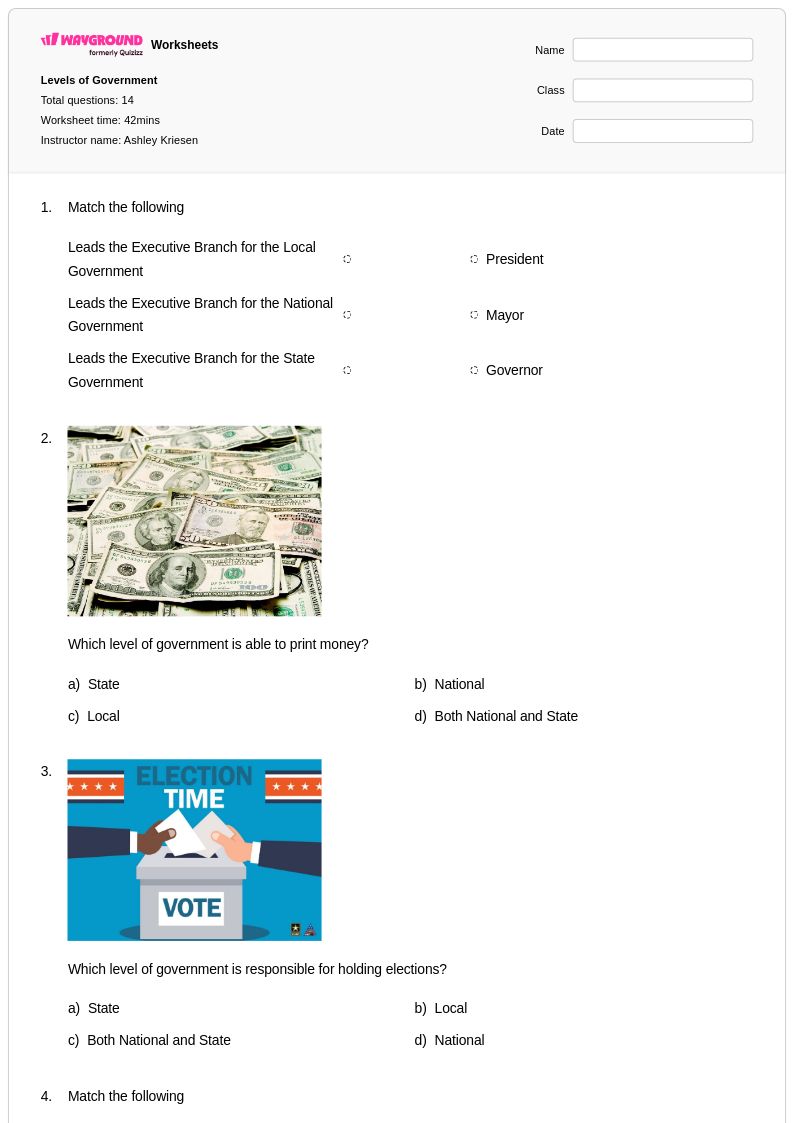
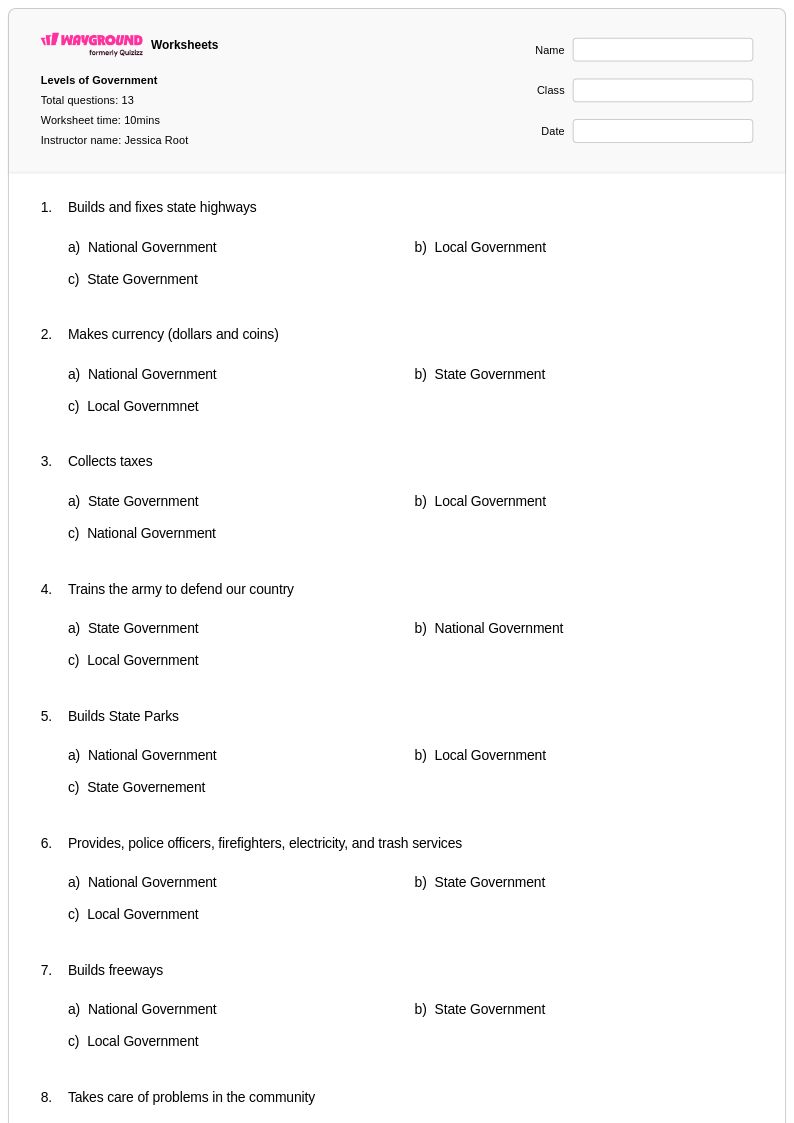
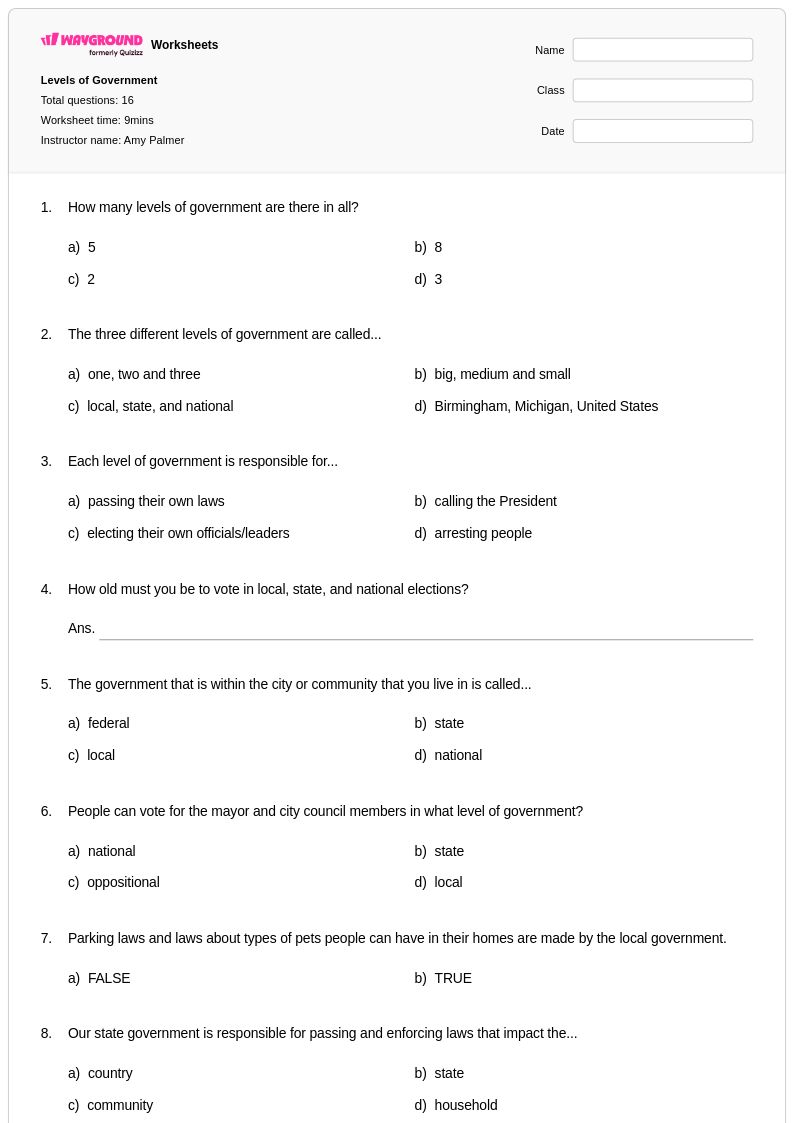
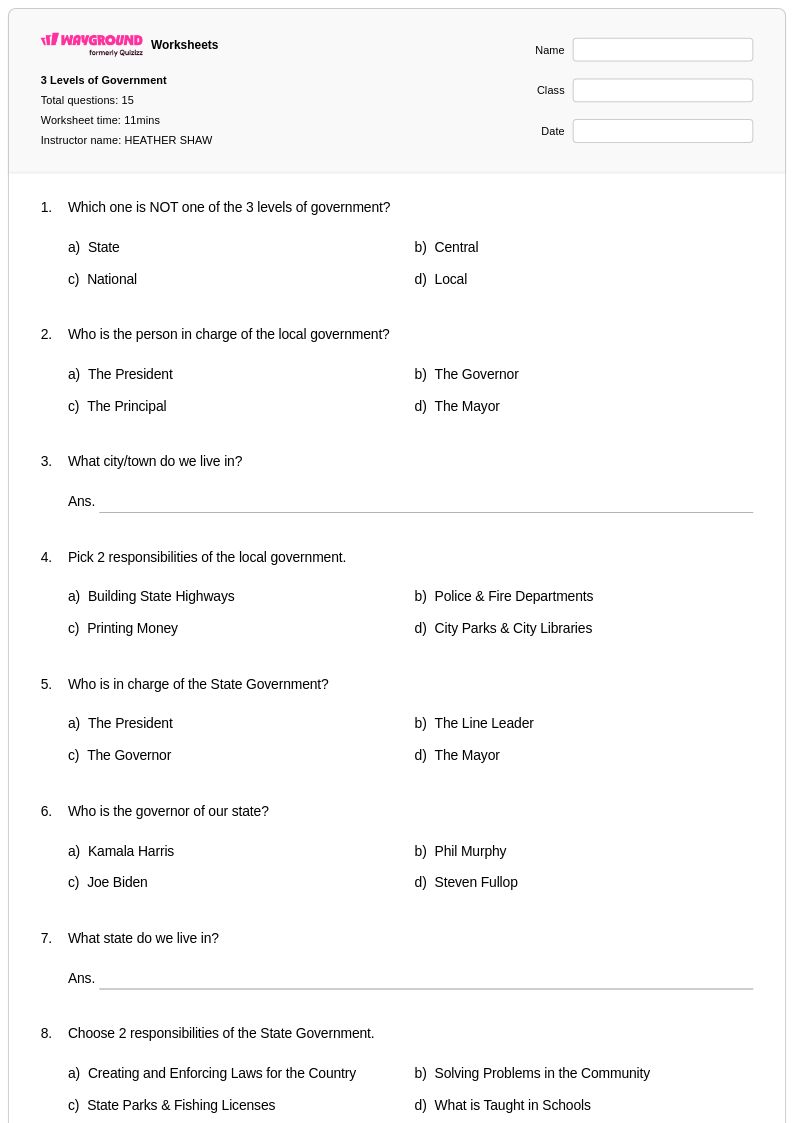
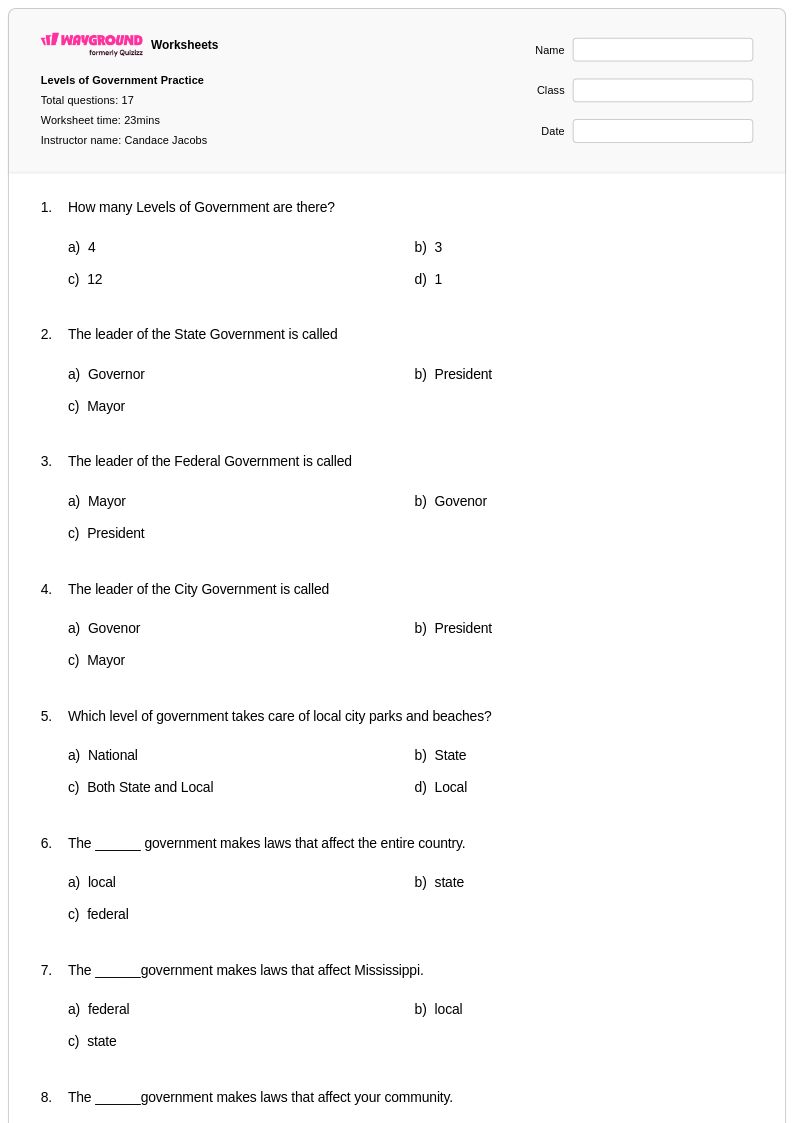
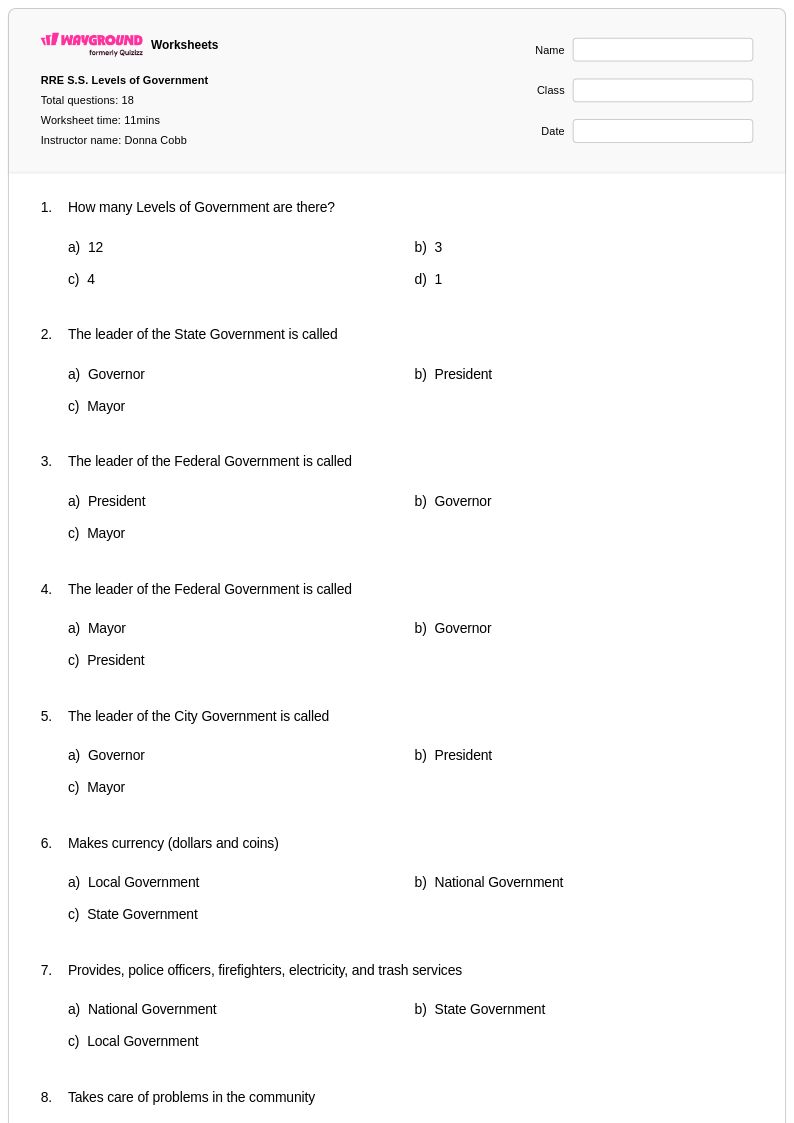
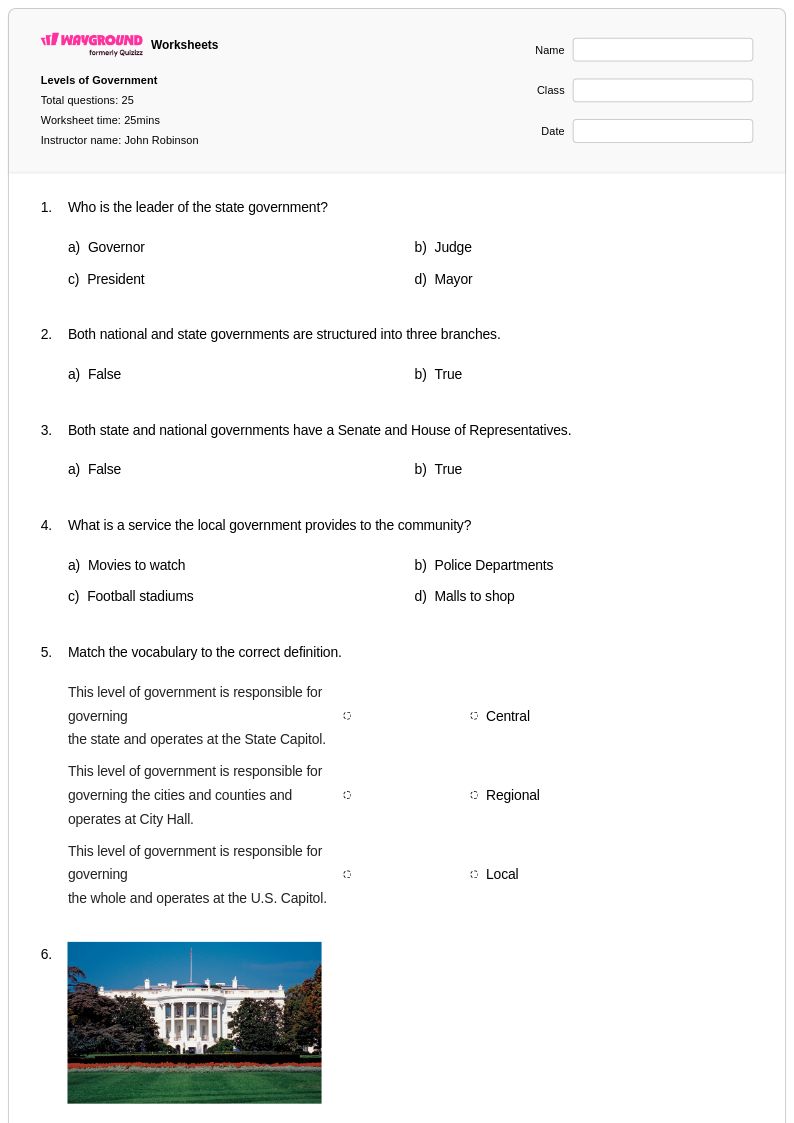
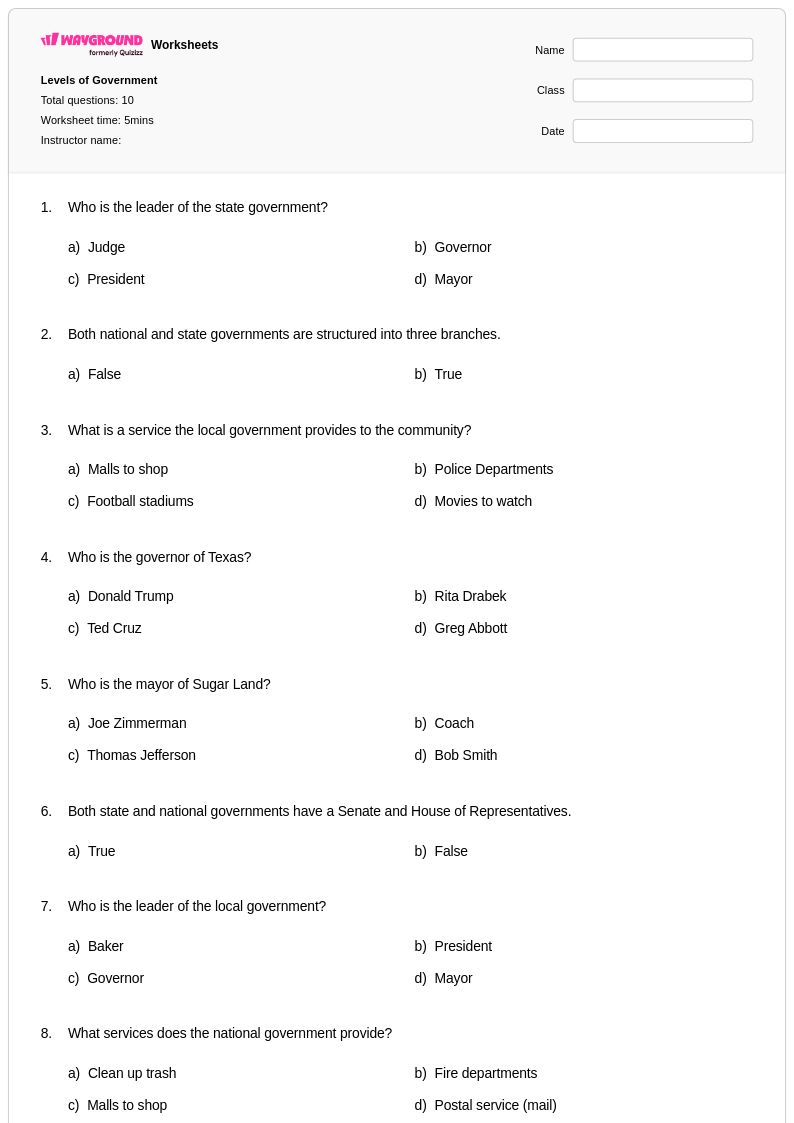
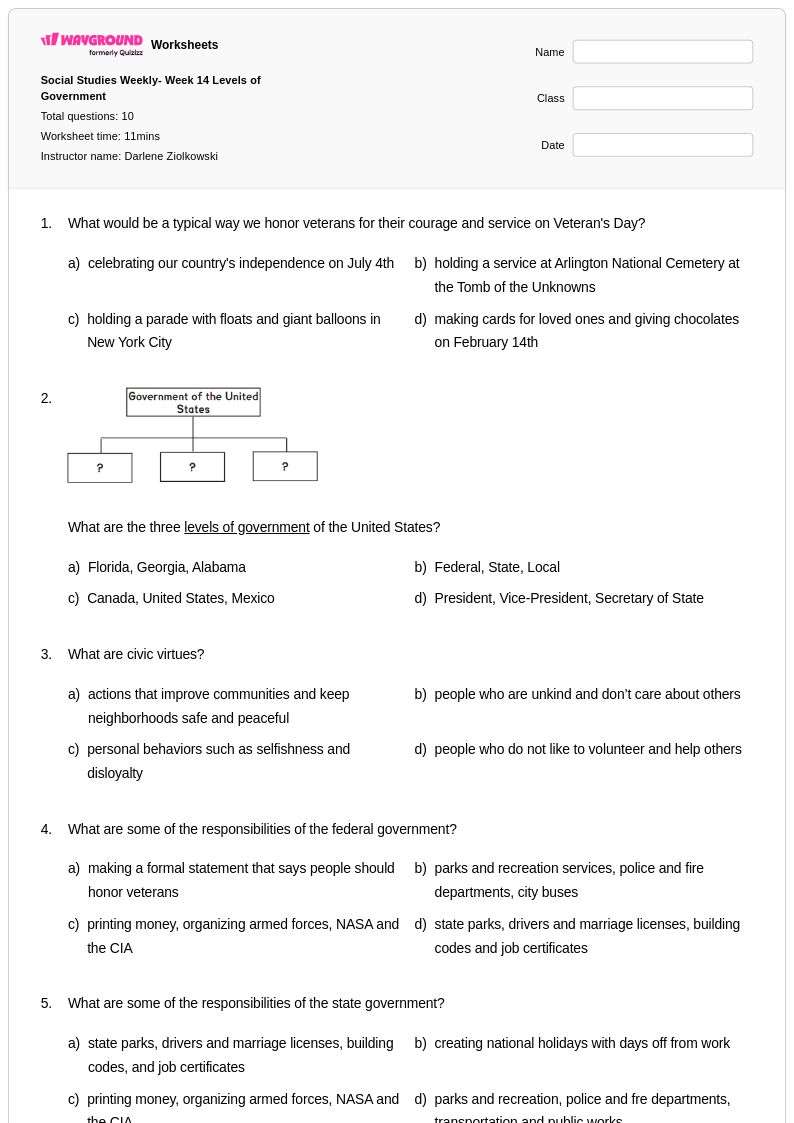
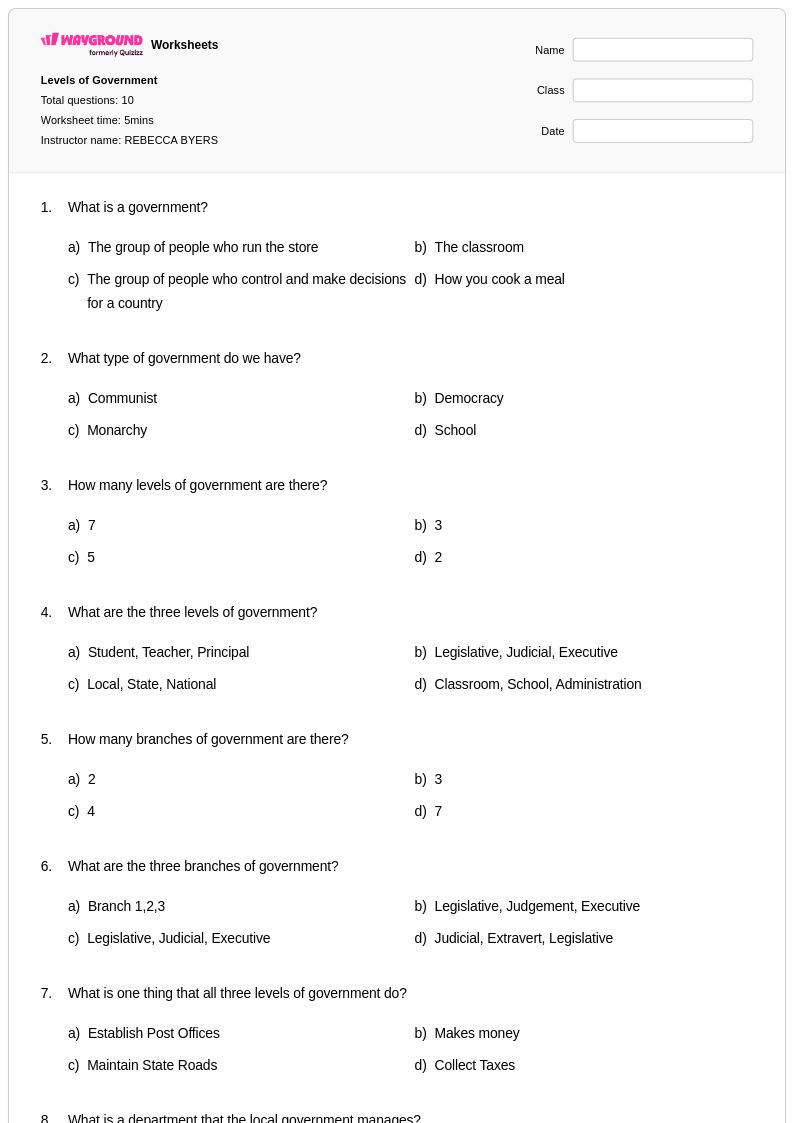
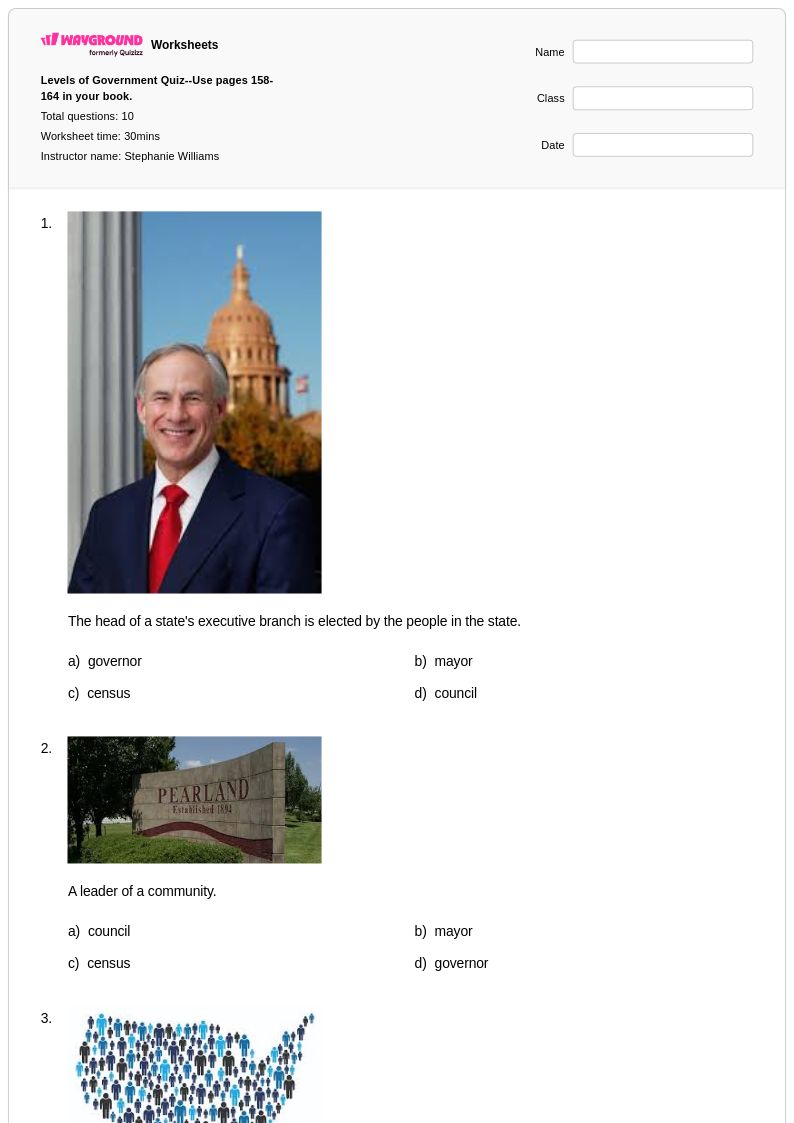
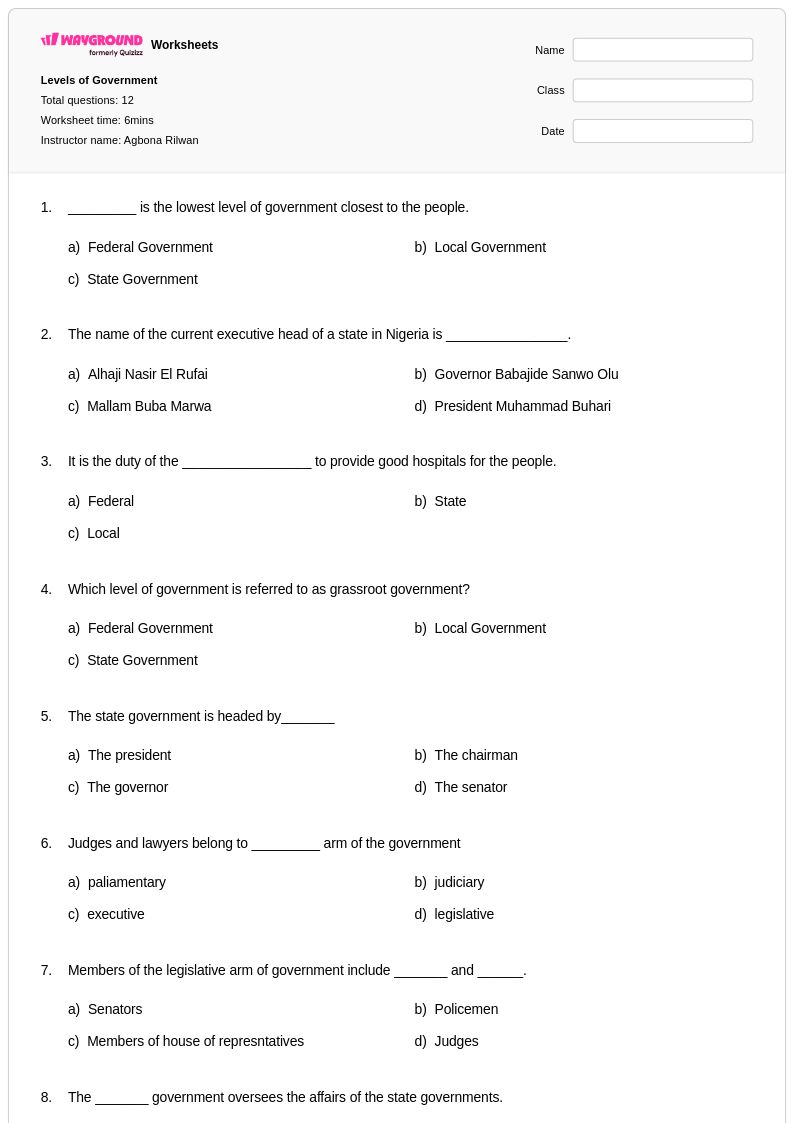
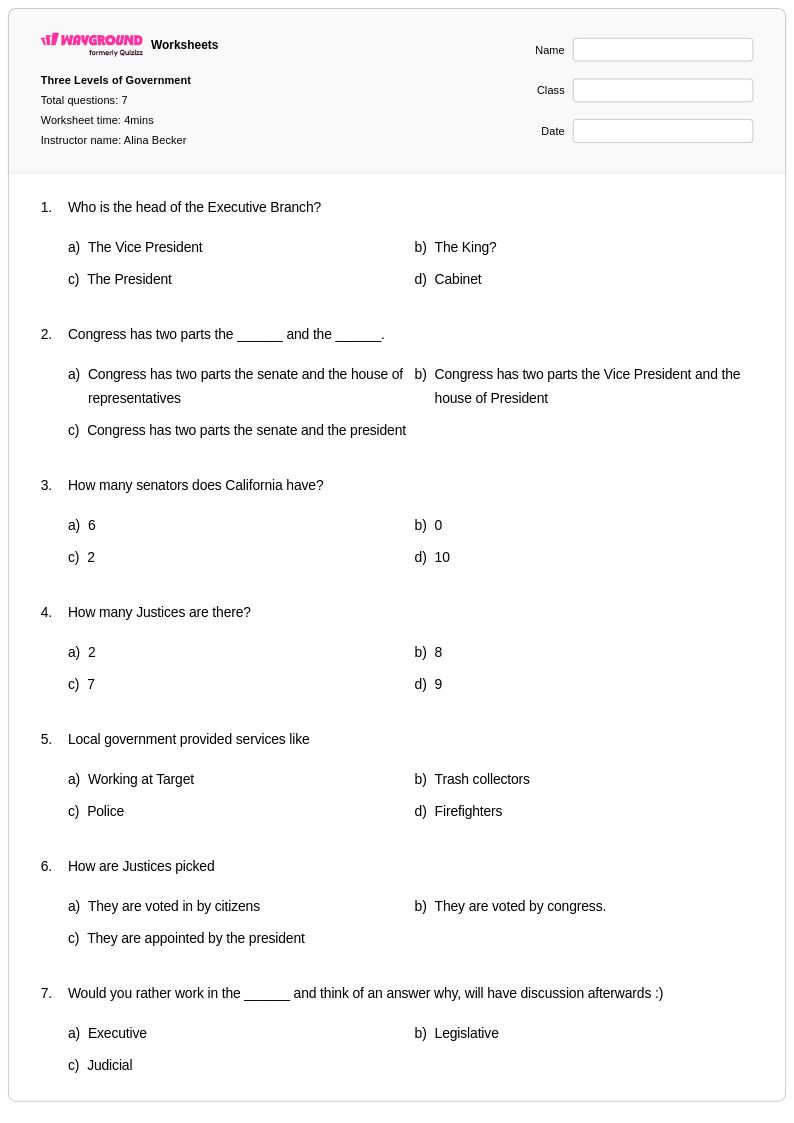
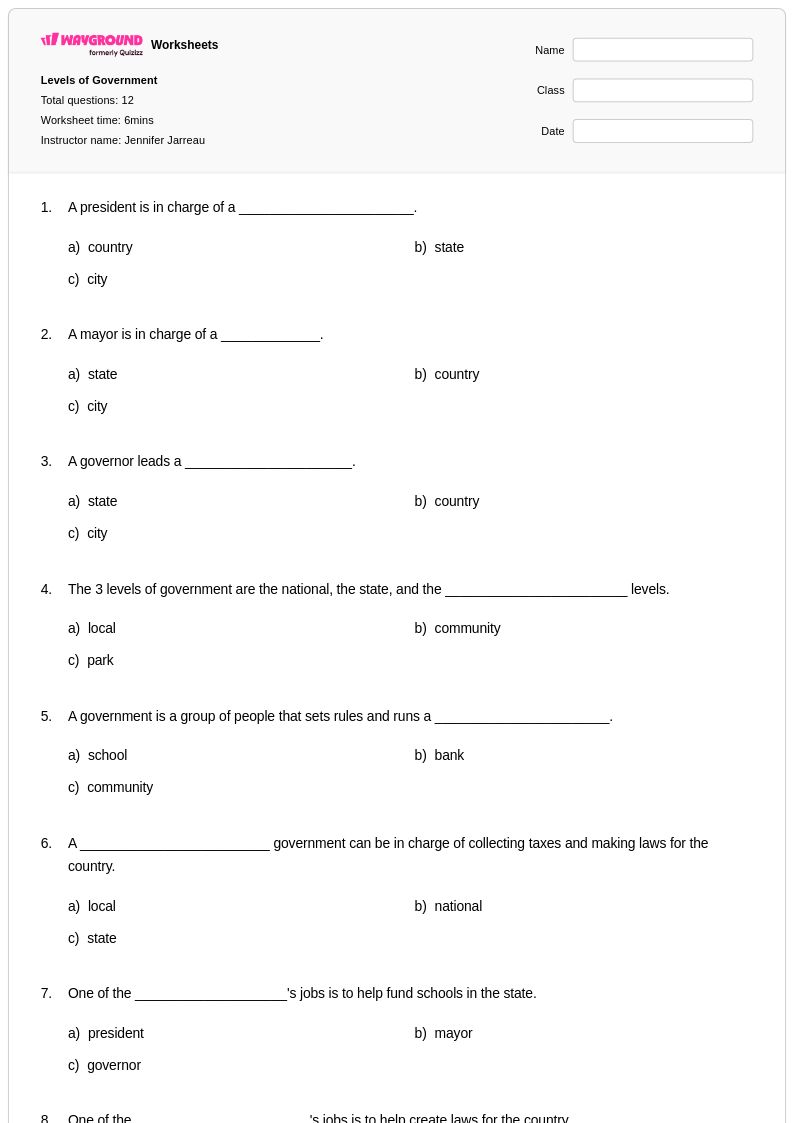
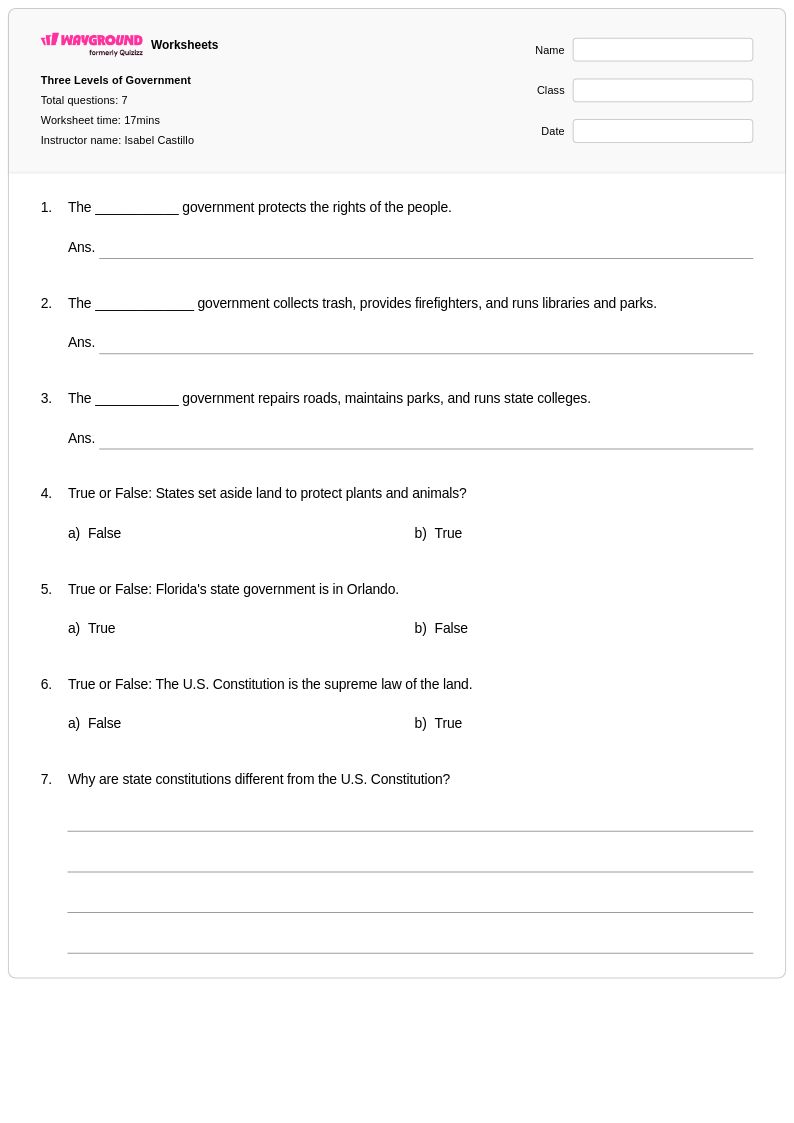
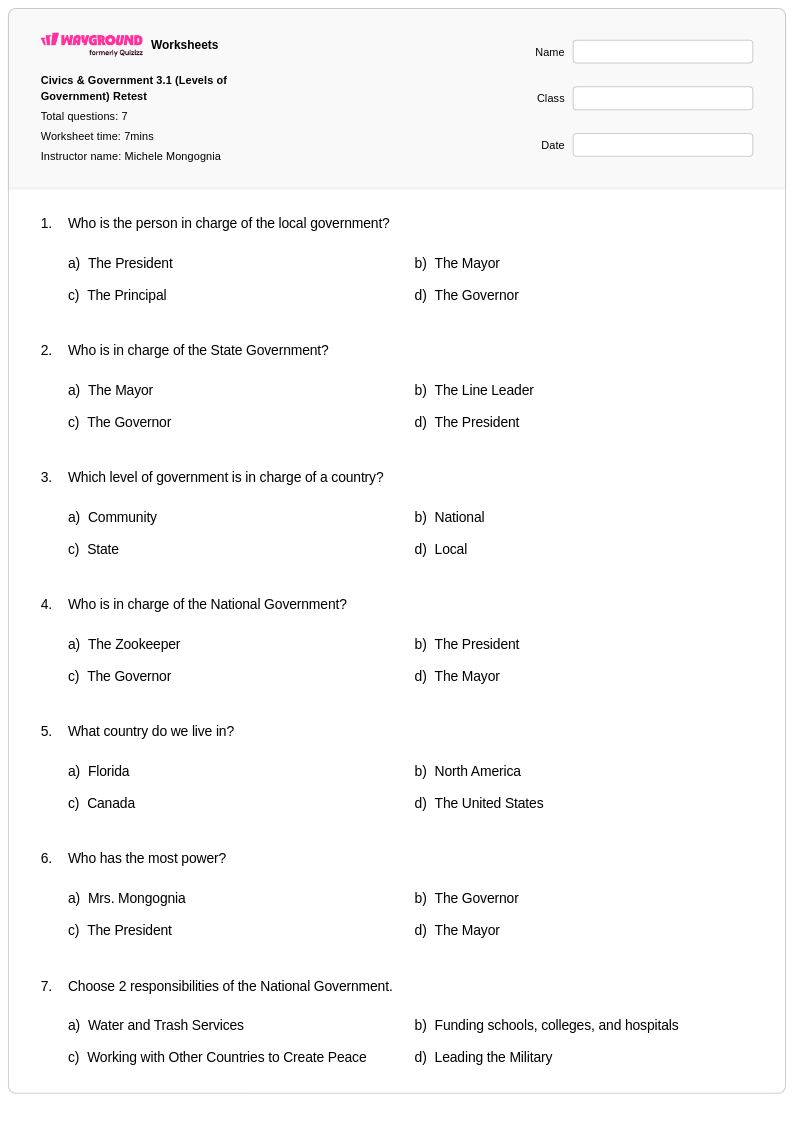
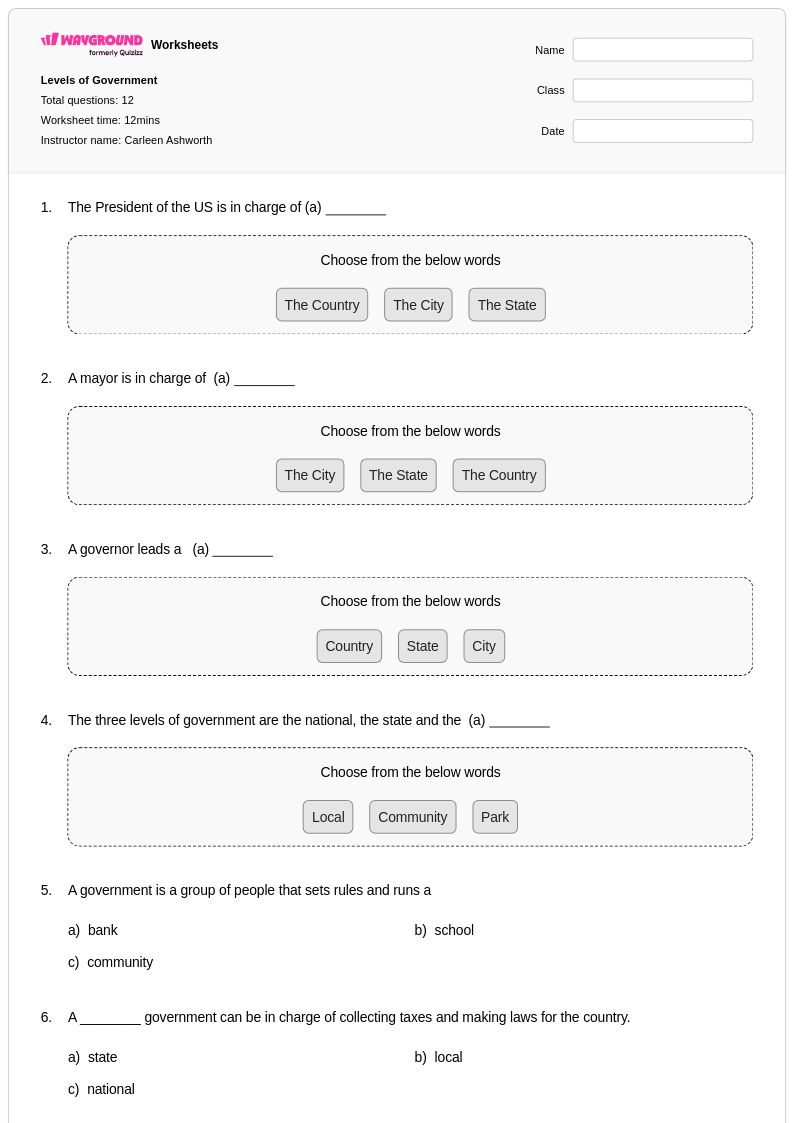
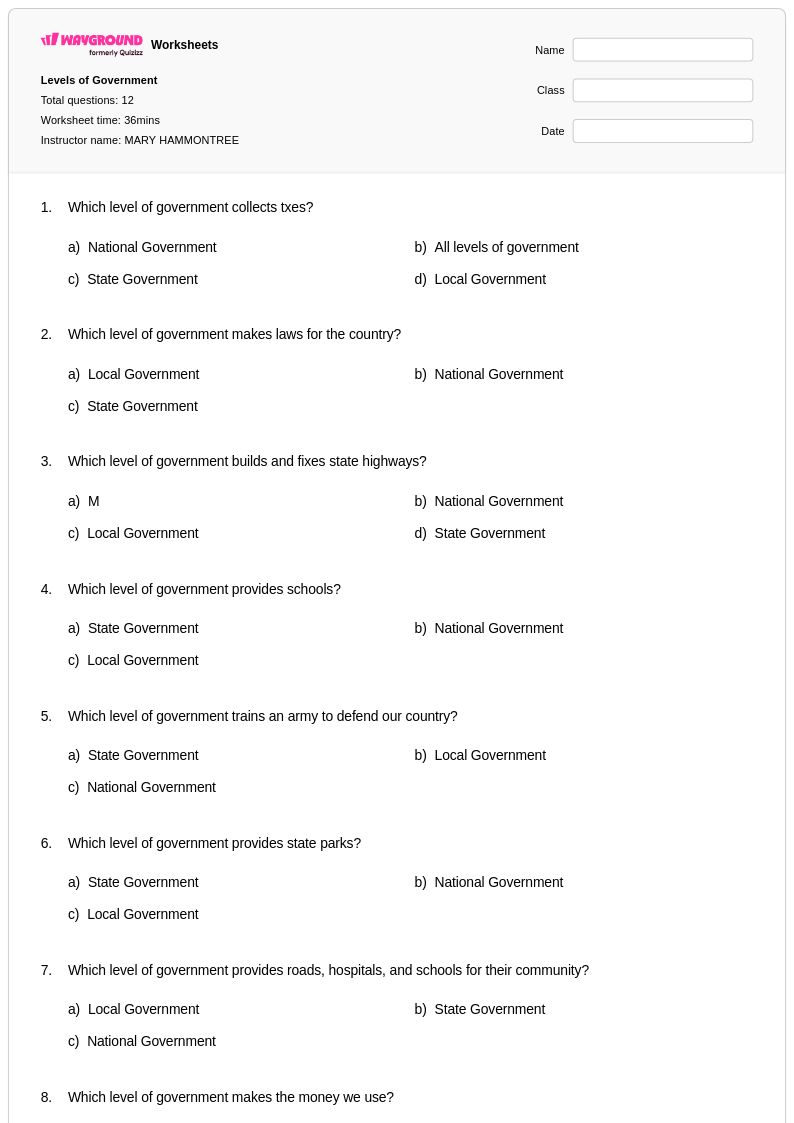
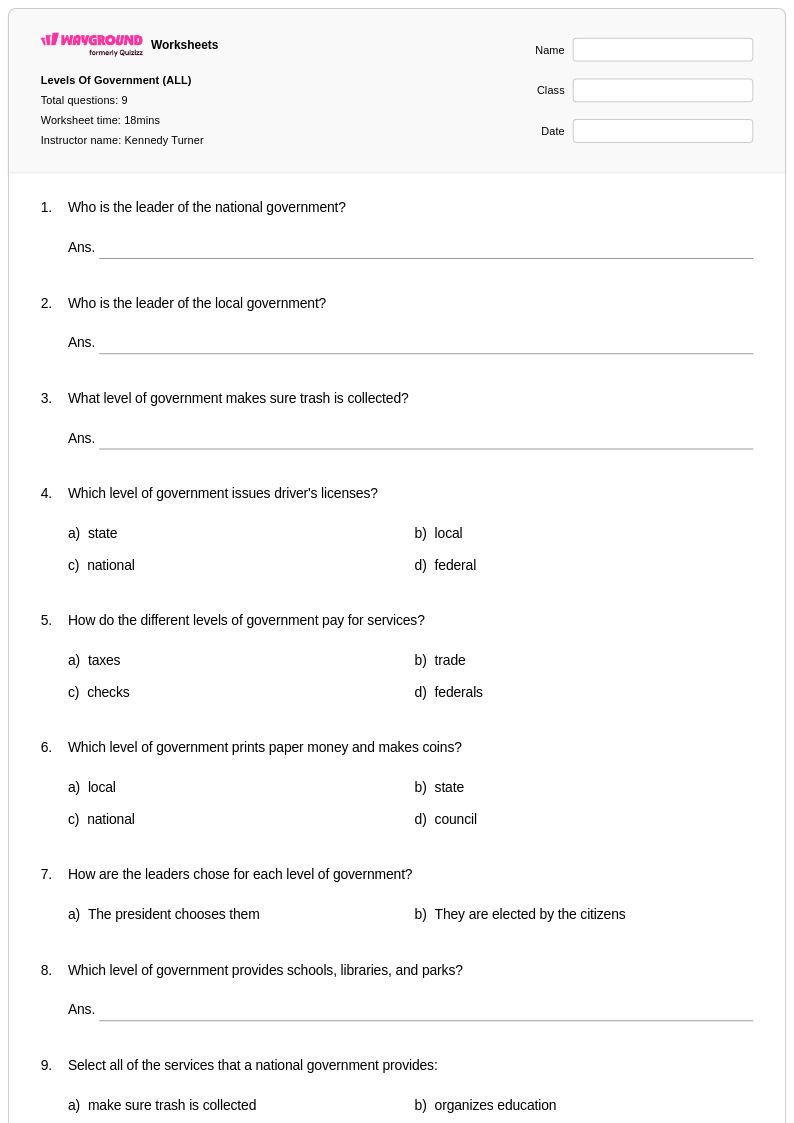
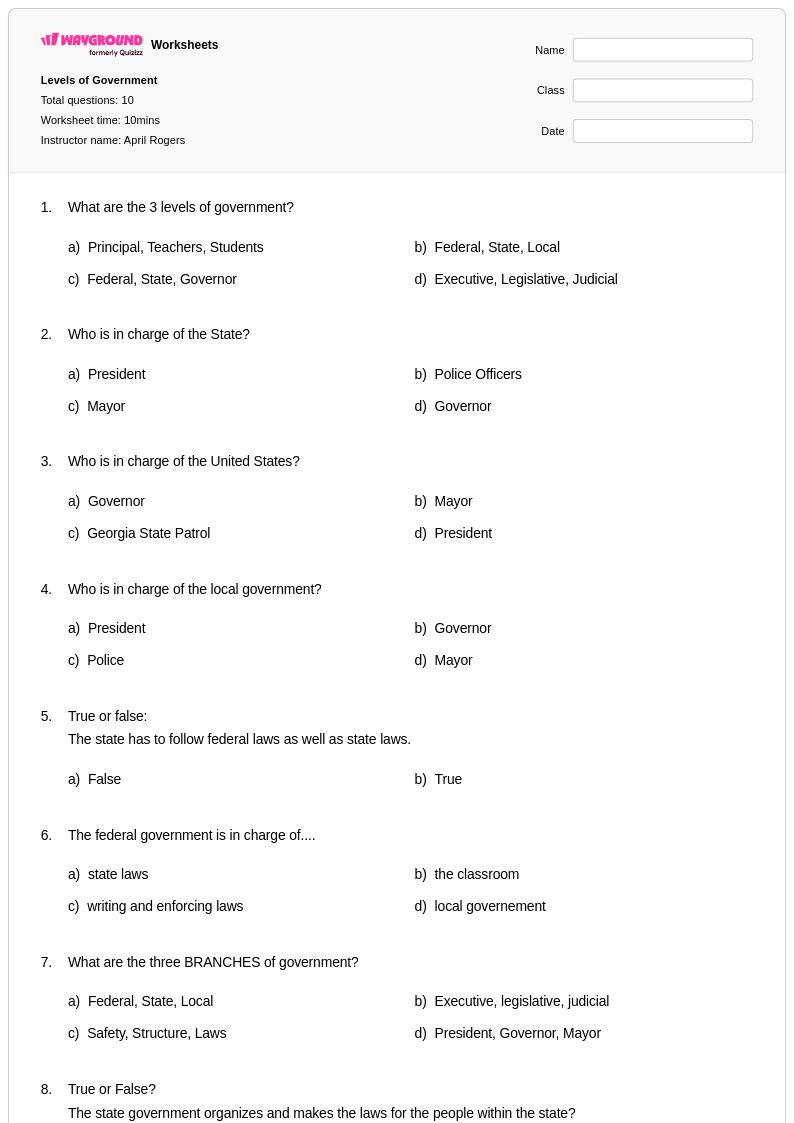
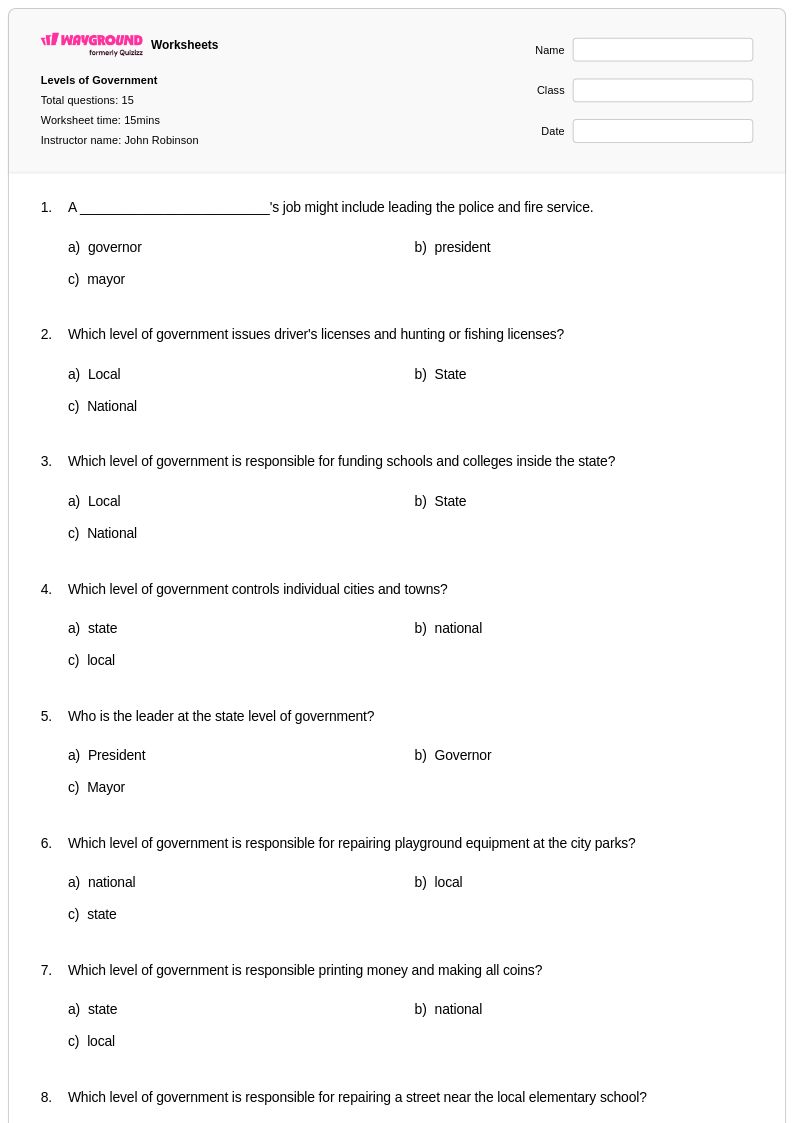
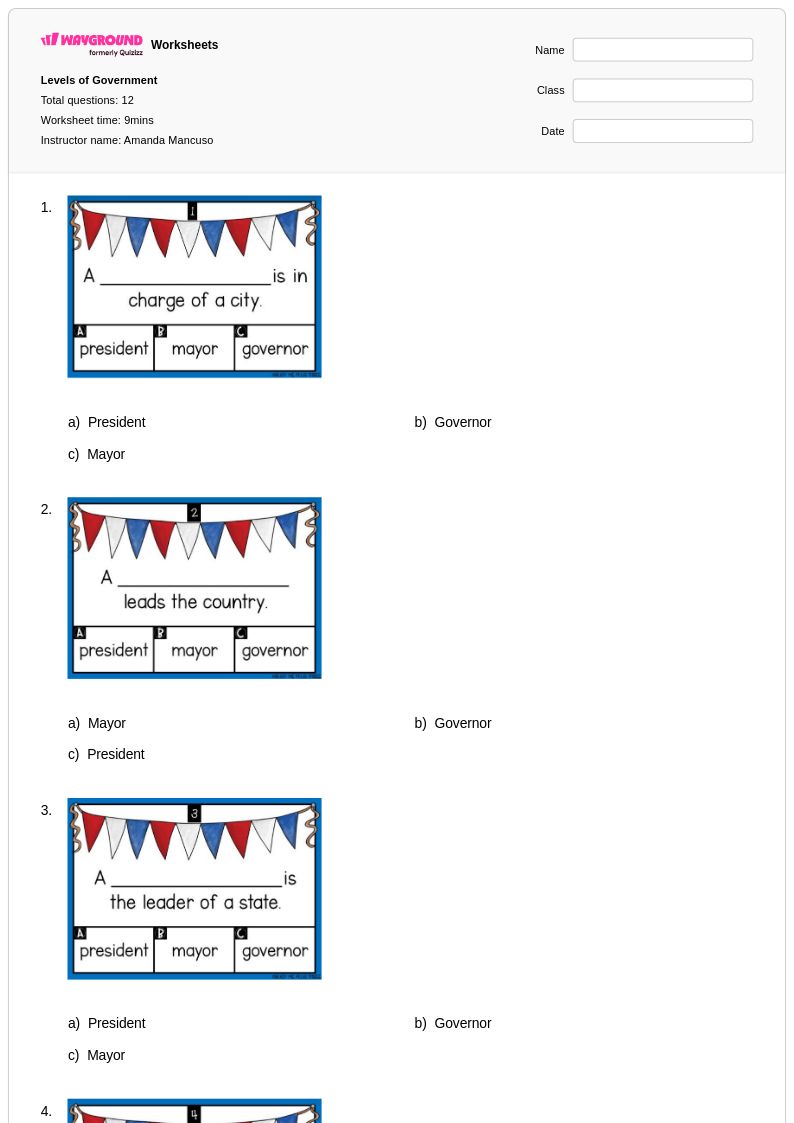
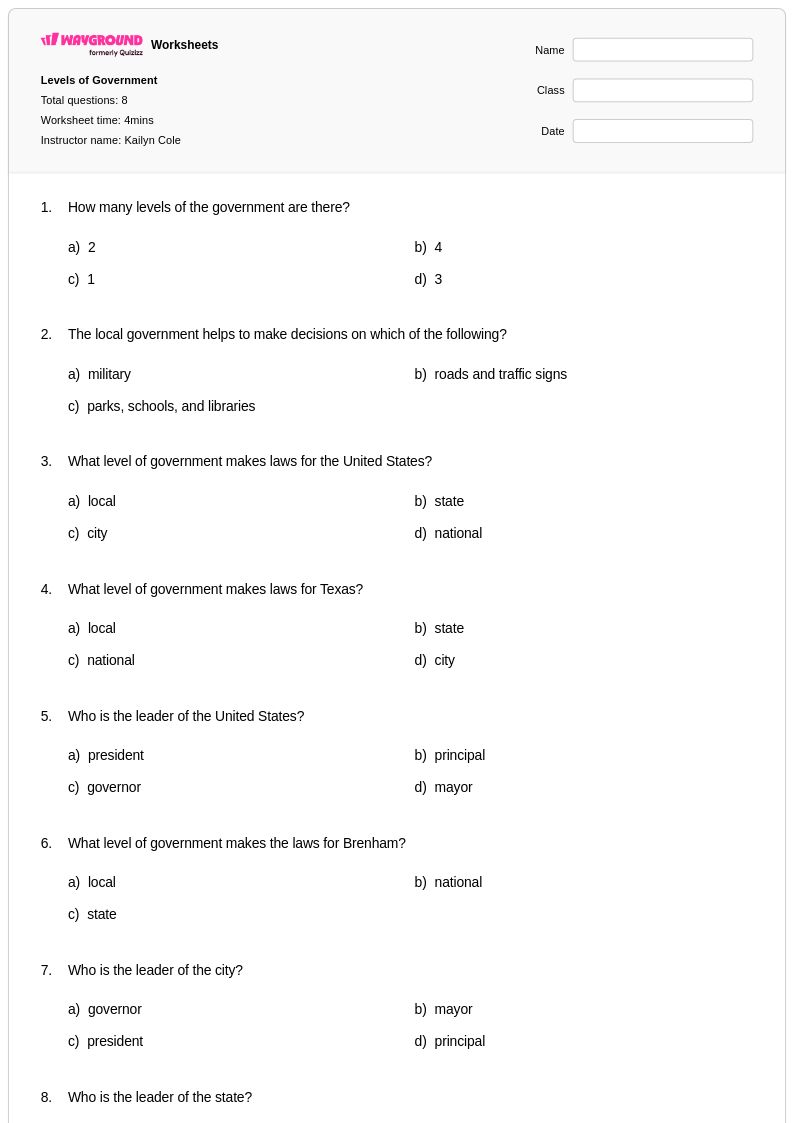
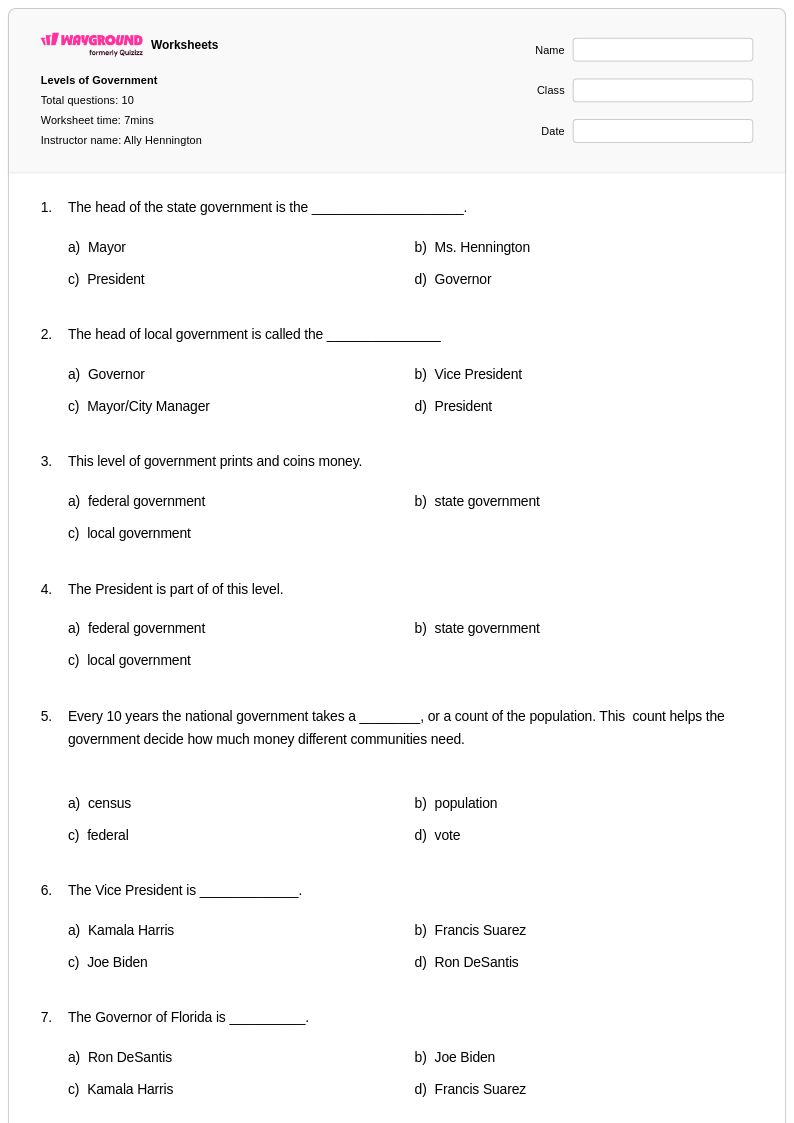
Levels of Government worksheets for Class 3 available through Wayground (formerly Quizizz) introduce young learners to the fundamental structure of American governance through age-appropriate activities and practice problems. These educational resources help third-grade students understand the three main levels of government—local, state, and federal—while developing essential civic knowledge and critical thinking skills. The worksheets feature engaging exercises that teach students to identify different government officials, recognize the roles and responsibilities at each level, and understand how these levels work together to serve communities. Teachers can access comprehensive materials including detailed answer keys, free printable versions, and pdf formats that support both classroom instruction and independent practice, ensuring students build a solid foundation in civics concepts.
Wayground (formerly Quizizz) empowers educators with millions of teacher-created resources specifically designed to support Class 3 Levels of Government instruction across diverse learning environments. The platform's robust search and filtering capabilities allow teachers to quickly locate worksheets that align with state standards and meet specific classroom needs, while differentiation tools enable customization for students at varying skill levels. These comprehensive collections are available in both printable and digital formats, including downloadable pdf versions, making them ideal for traditional classroom settings, remote learning, or hybrid instruction models. Teachers can seamlessly integrate these materials into lesson planning, use them for targeted remediation with struggling students, provide enrichment opportunities for advanced learners, or assign them as structured skill practice to reinforce key civics concepts throughout the academic year.
FAQs
How do I teach students the difference between federal, state, and local government?
Start by anchoring each level to something students interact with directly — local government handles schools, roads, and parks; state government manages driver's licenses, public universities, and state courts; federal government oversees national defense, immigration, and currency. Using a tiered chart or graphic organizer helps students visualize how authority is distributed across levels. From there, scenarios and case studies (e.g., 'Who decides speed limits on a highway?') push students to apply the distinctions rather than just memorize them.
What exercises help students practice understanding levels of government?
Sorting activities work well — give students a list of government responsibilities and have them categorize each as local, state, or federal. Scenario-based questions that ask students to identify which level of government would handle a given situation reinforce applied understanding. Fill-in-the-blank and matching exercises that connect powers to the correct governmental tier are also effective for building foundational fluency before moving to analysis.
What misconceptions do students commonly have about levels of government?
A frequent misconception is that federal law always overrides state law in every situation, when in reality some powers are reserved exclusively to states under the Tenth Amendment. Students also often confuse concurrent powers (shared by federal and state governments, like taxation) with exclusive powers. Another common error is conflating local government with state government, not recognizing that local governments are actually created by and subordinate to state governments, not the federal government.
How does studying levels of government connect to the concept of federalism?
Federalism is the constitutional framework that divides governmental authority between a national government and state governments, and understanding levels of government is essentially understanding federalism in practice. Students need to grasp that the U.S. Constitution grants specific enumerated powers to the federal government, reserves other powers to states, and creates a system where both levels can exercise some powers concurrently. Without understanding federalism, students cannot meaningfully explain why different governments handle different issues or why conflicts between levels arise.
How can I use Wayground's levels of government worksheets in my classroom?
Wayground's levels of government worksheets are available as printable PDFs for traditional classroom use and in digital formats for technology-integrated or hybrid learning environments, and can also be hosted as a quiz directly on Wayground. Teachers can use them for direct instruction support, independent practice, or formative assessment of civics concepts like federalism and separation of powers. For students who need additional support, Wayground's accommodation tools allow teachers to enable read aloud, extended time, or reduced answer choices on an individual basis without disrupting the rest of the class.
How do I differentiate levels of government instruction for students at different skill levels?
For students who are still building foundational understanding, focus on concrete examples tied to everyday life before introducing constitutional vocabulary. Advanced learners can be challenged with analytical tasks such as evaluating real Supreme Court cases that involved conflicts between state and federal authority. On Wayground, teachers can apply individual accommodations — including reduced answer choices and read aloud support — to specific students while the rest of the class works with standard settings, making differentiation manageable within a single assignment.