Free Printable Pledge of Allegiance Worksheets for Class 3
Class 3 students can explore the Pledge of Allegiance through Wayground's free worksheets and printables, featuring practice problems and answer keys to help young learners understand this important American tradition.
Explore printable Pledge of Allegiance worksheets for Class 3
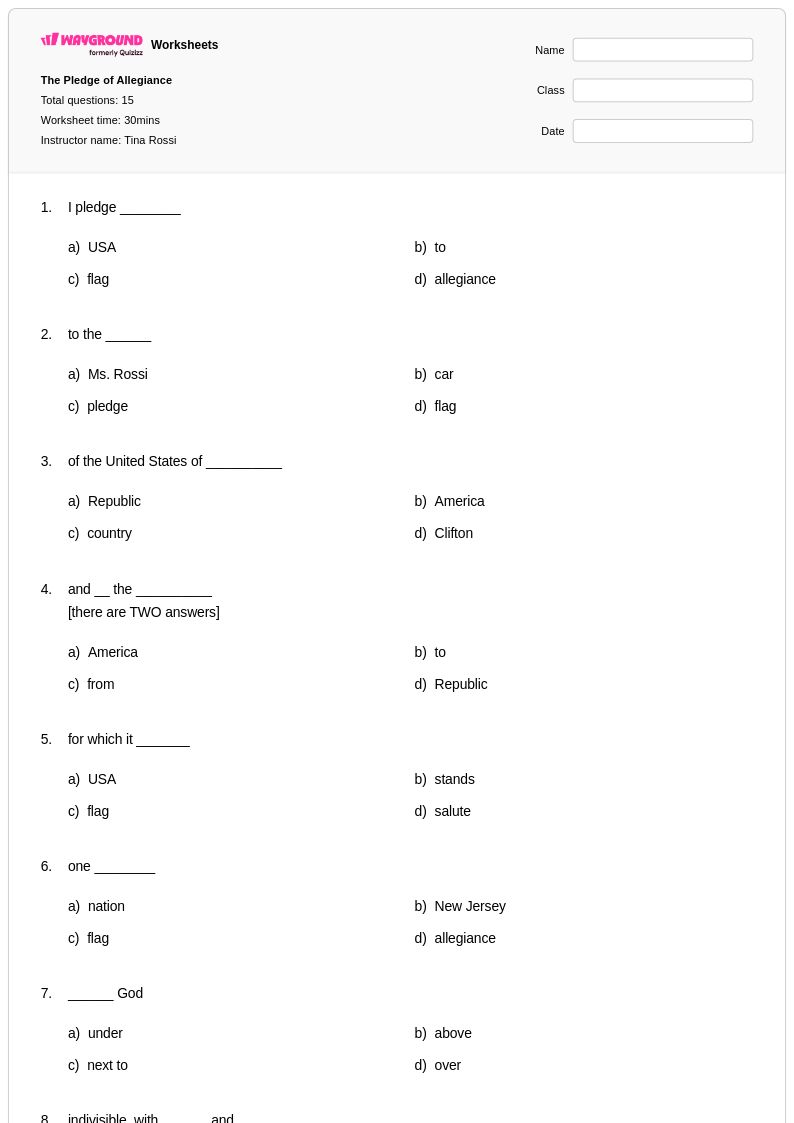
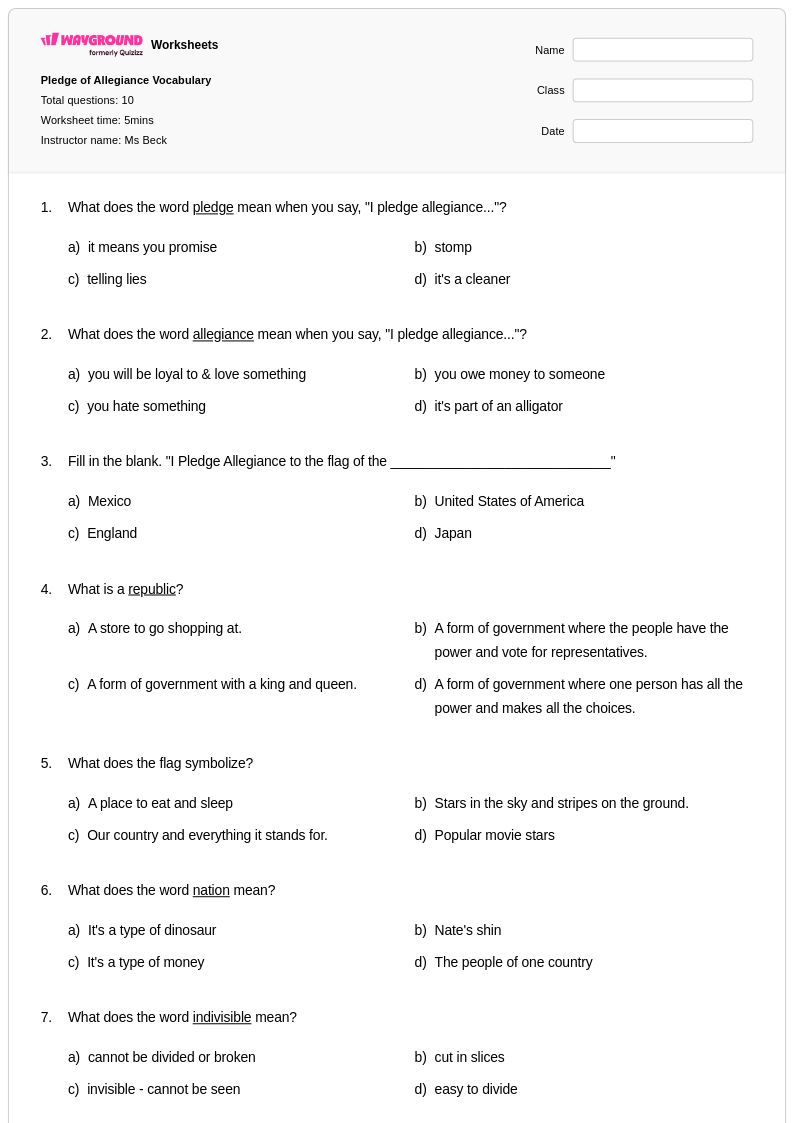
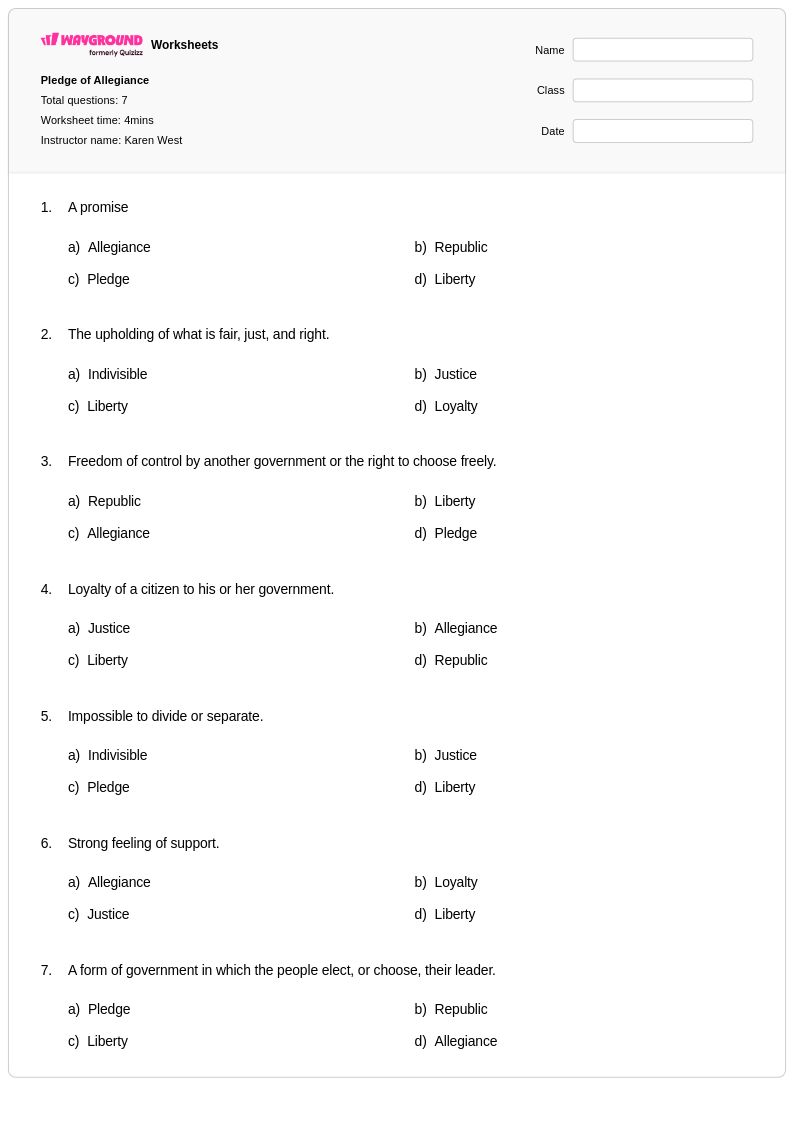
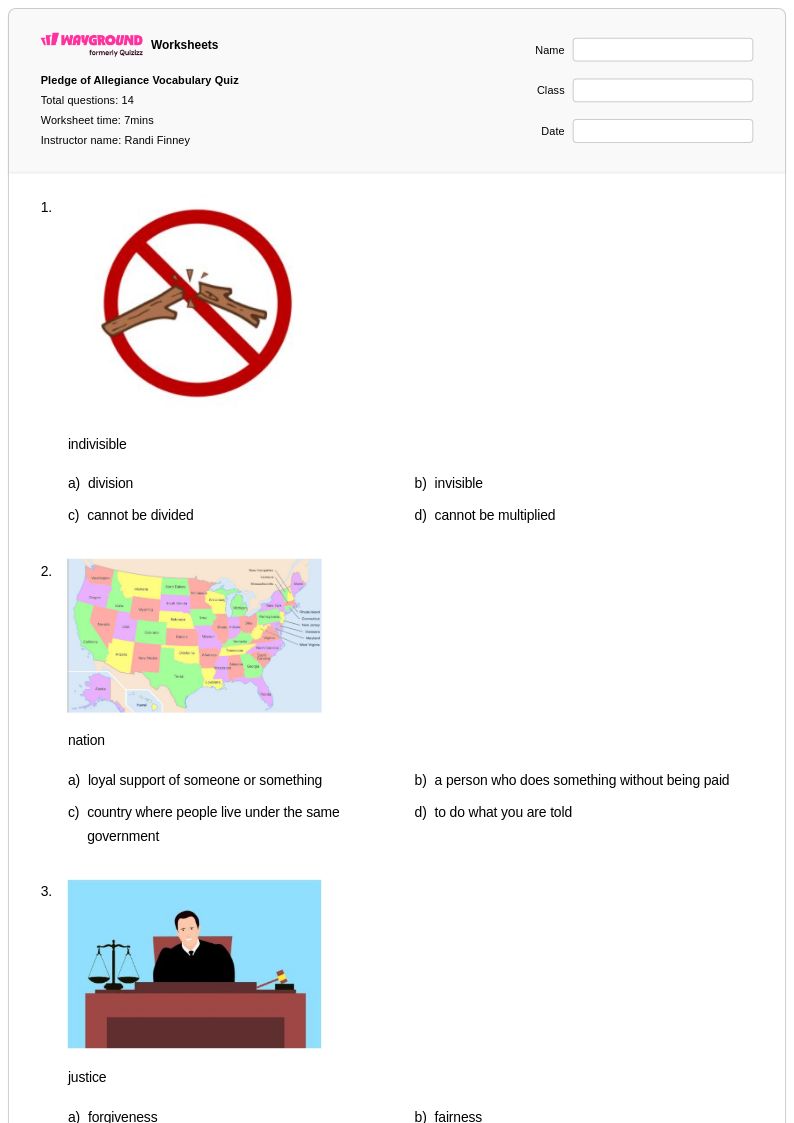
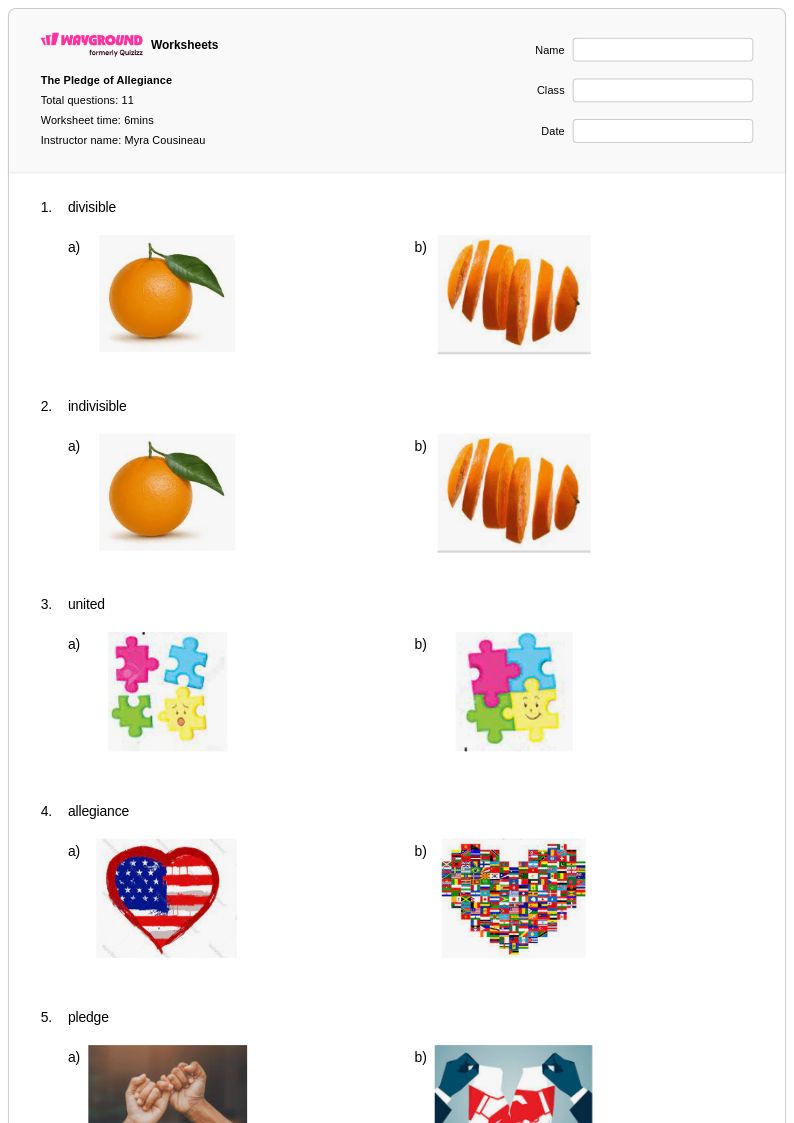
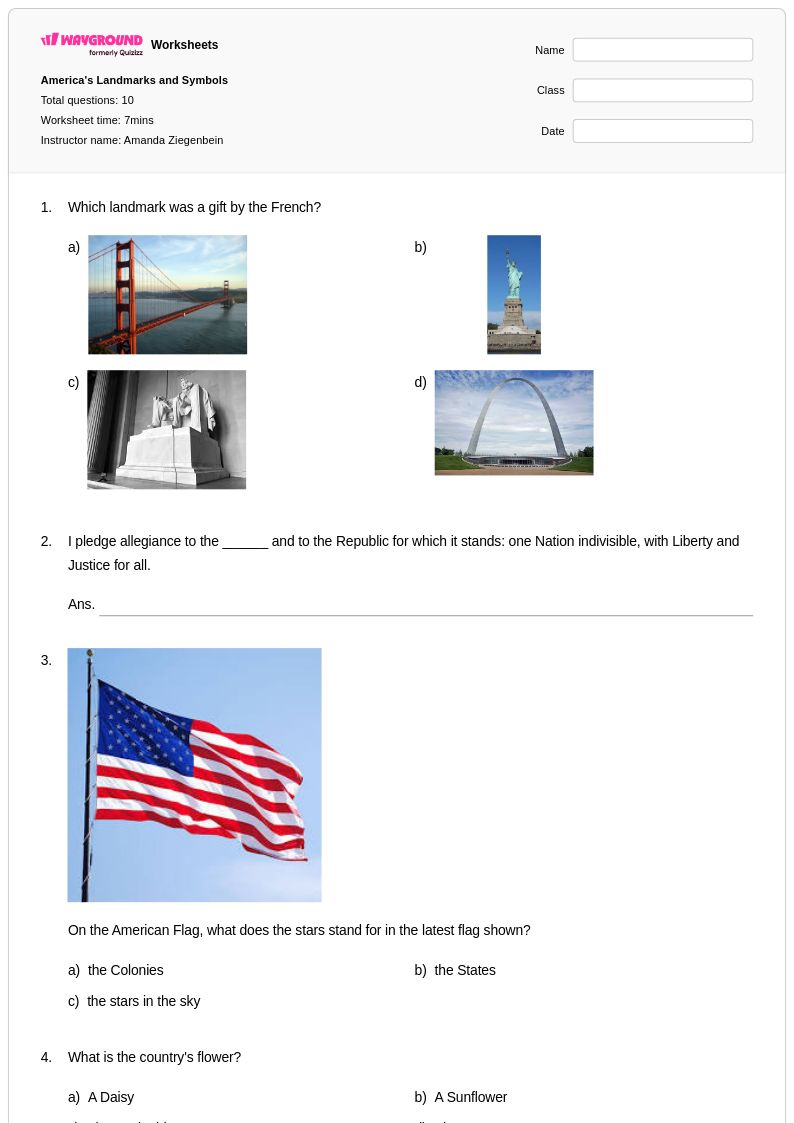
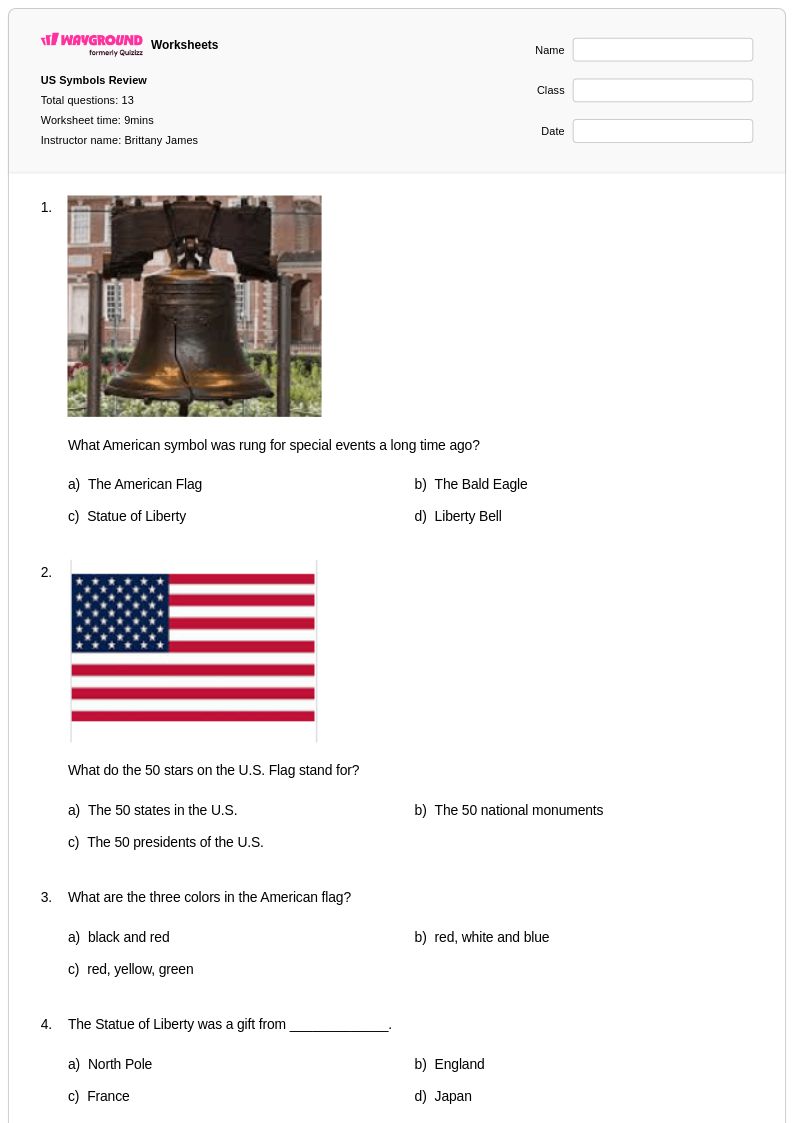
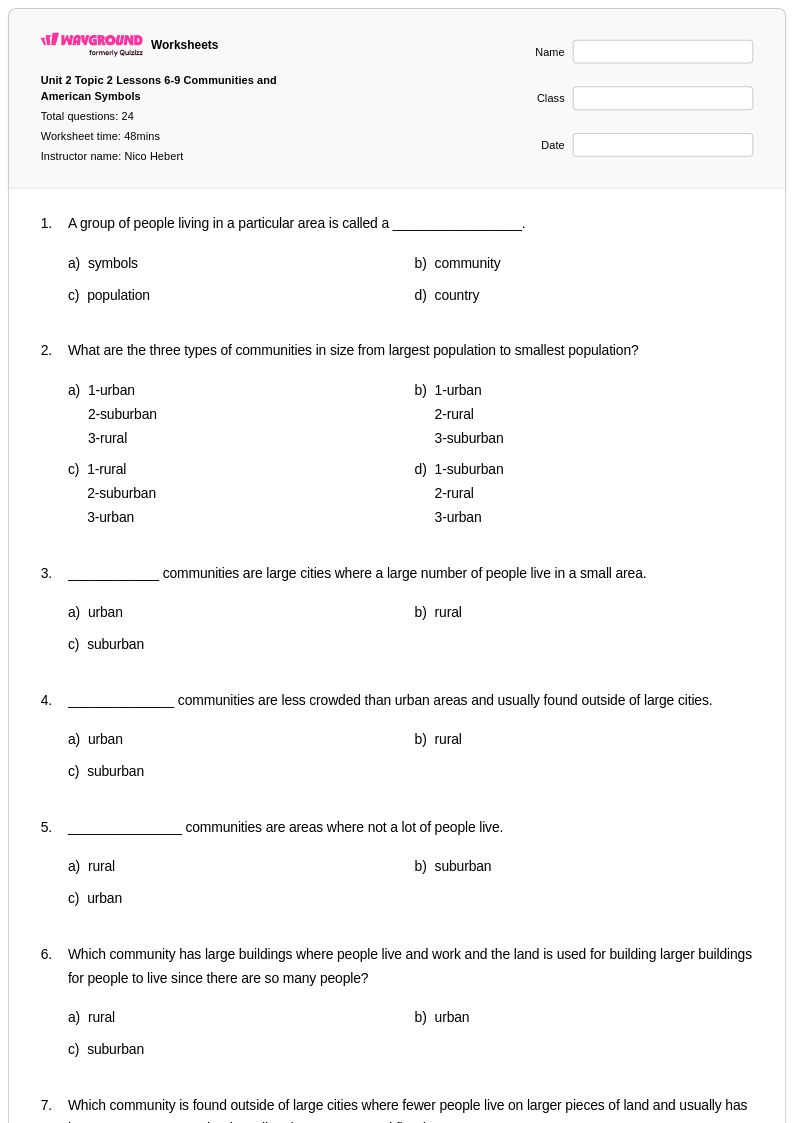
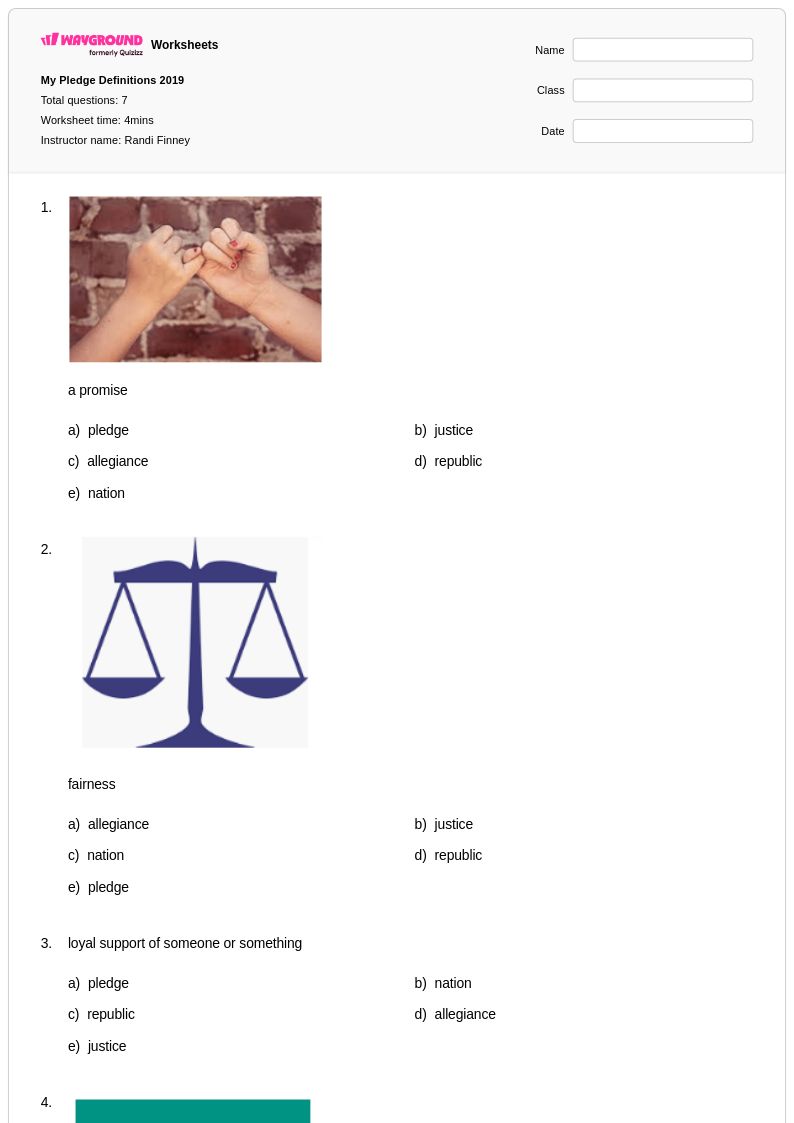
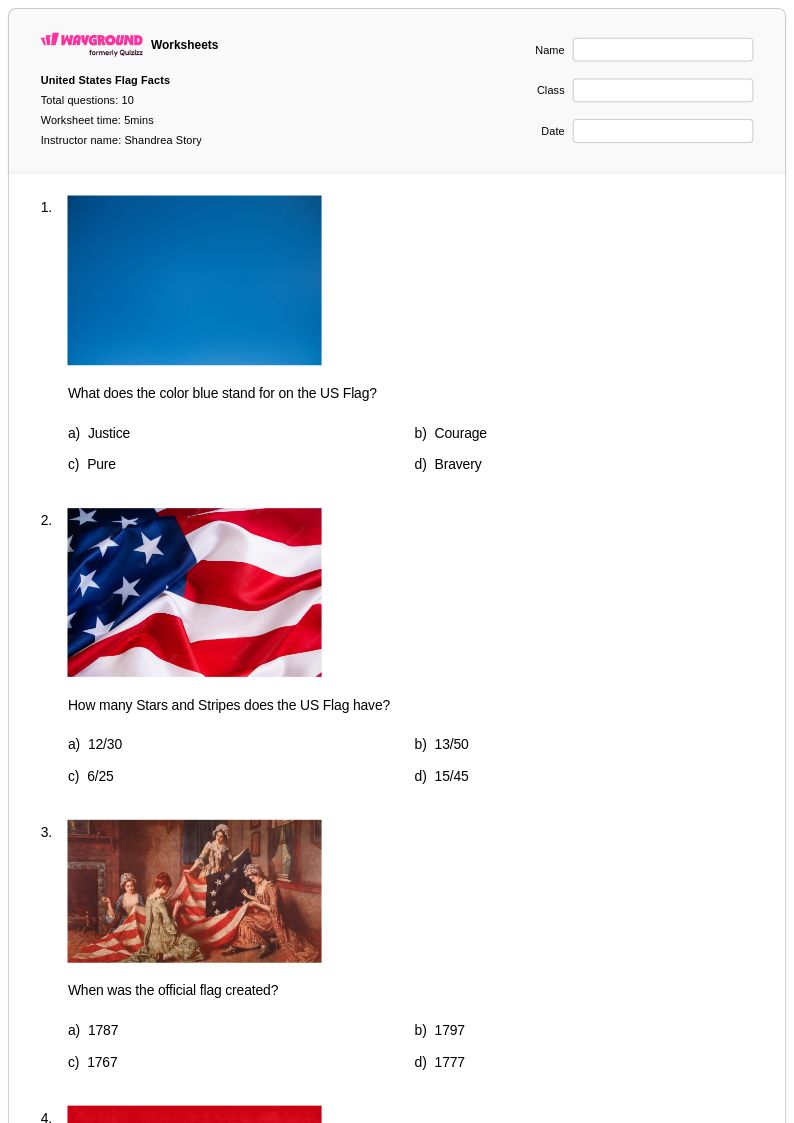
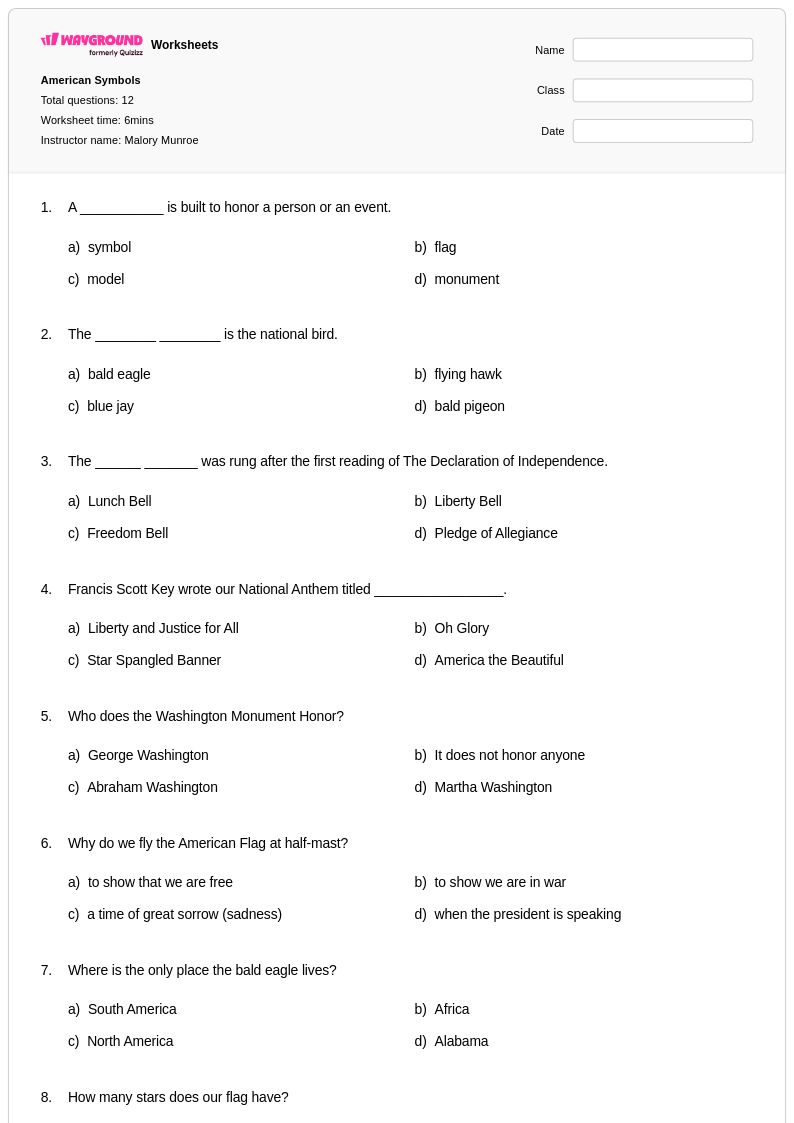
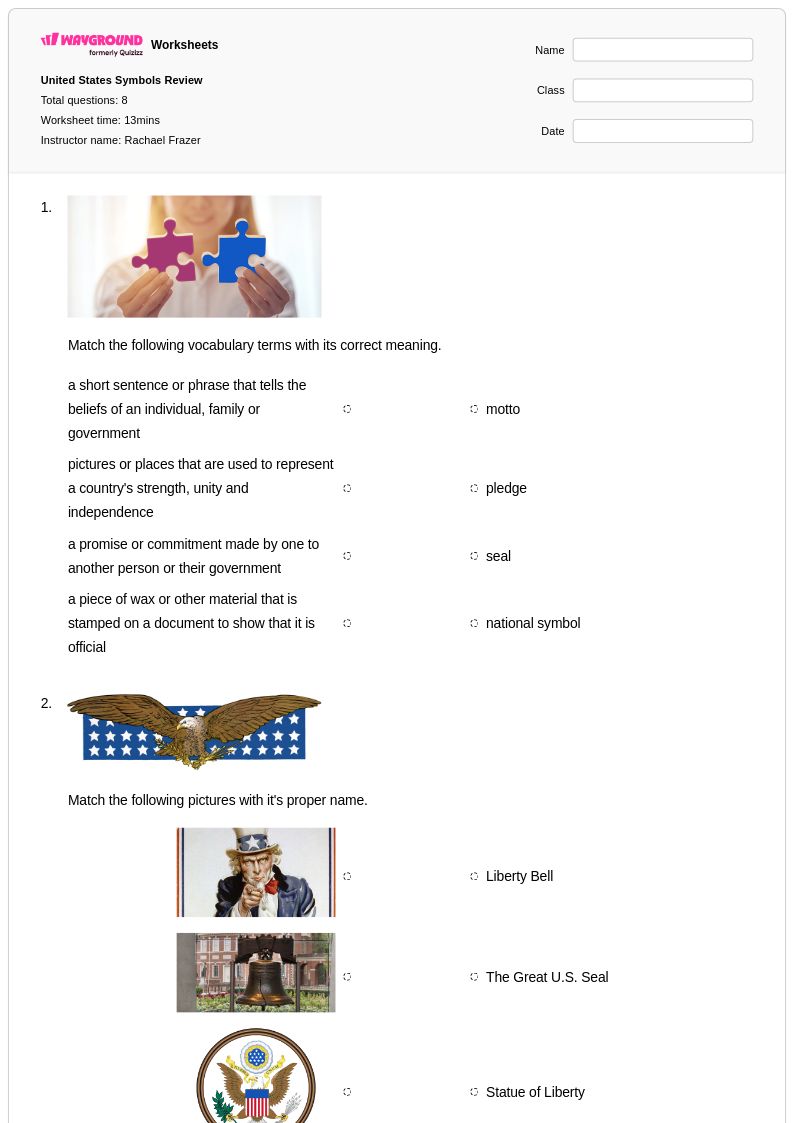
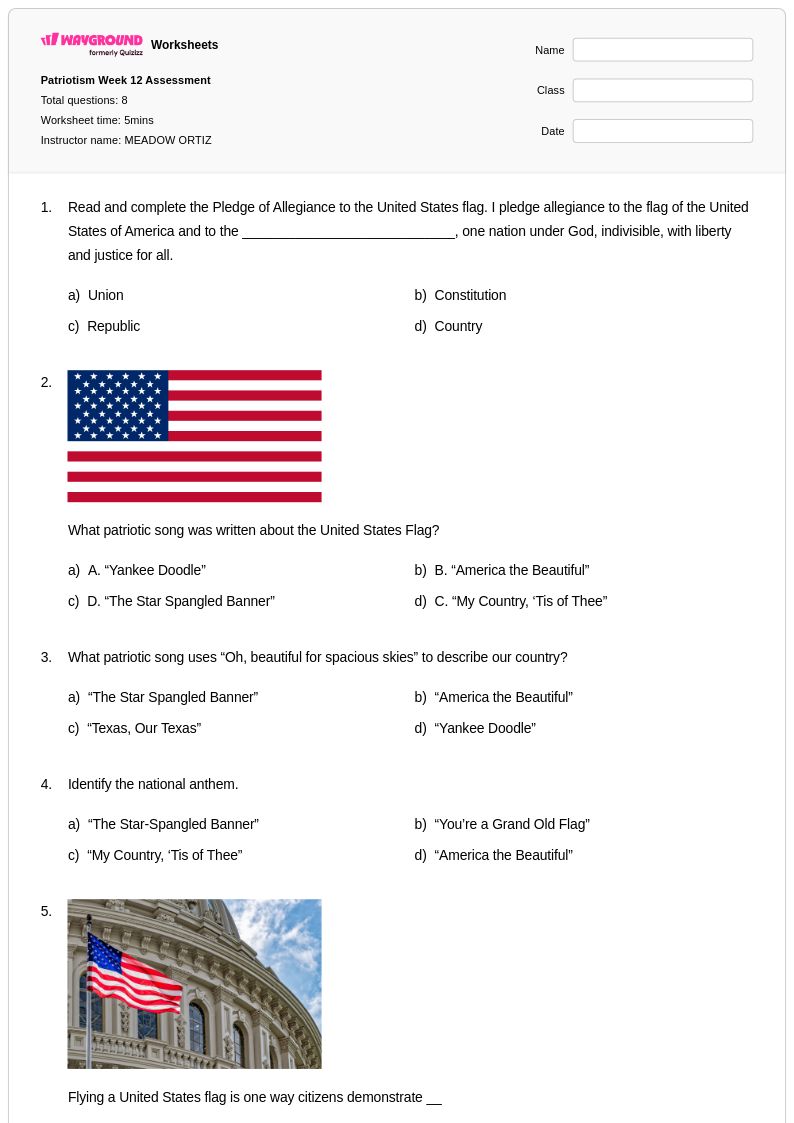
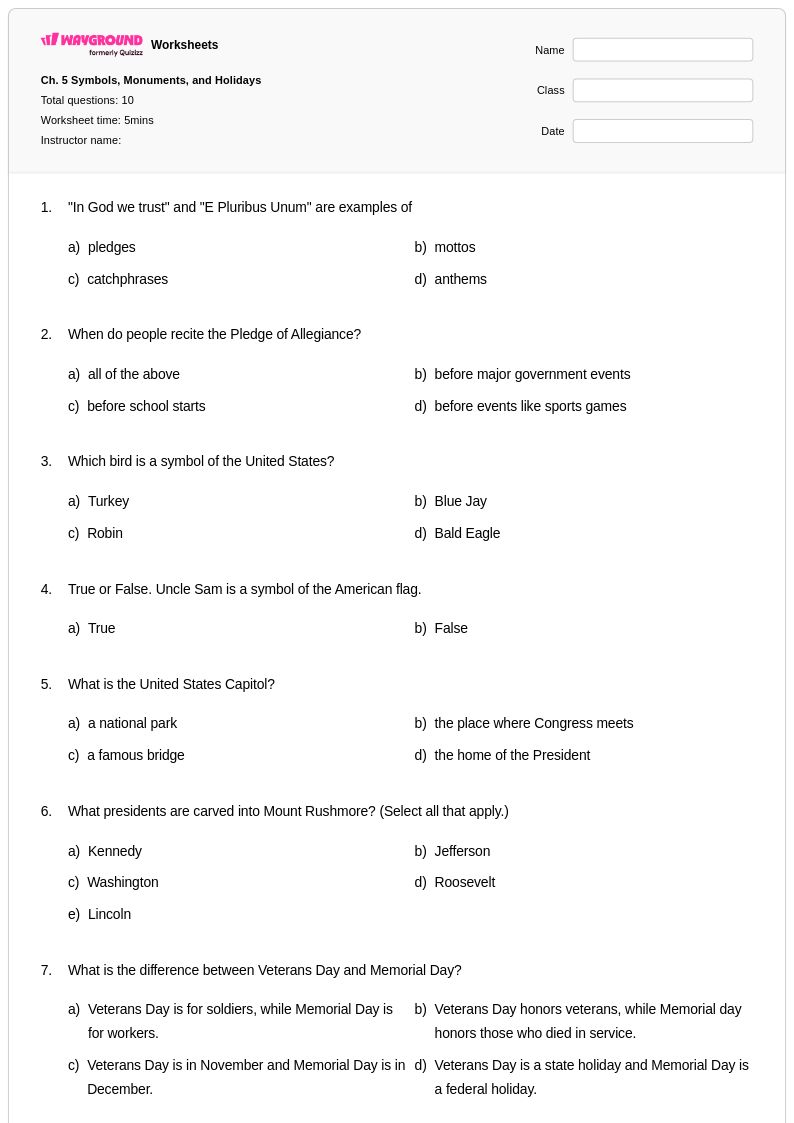
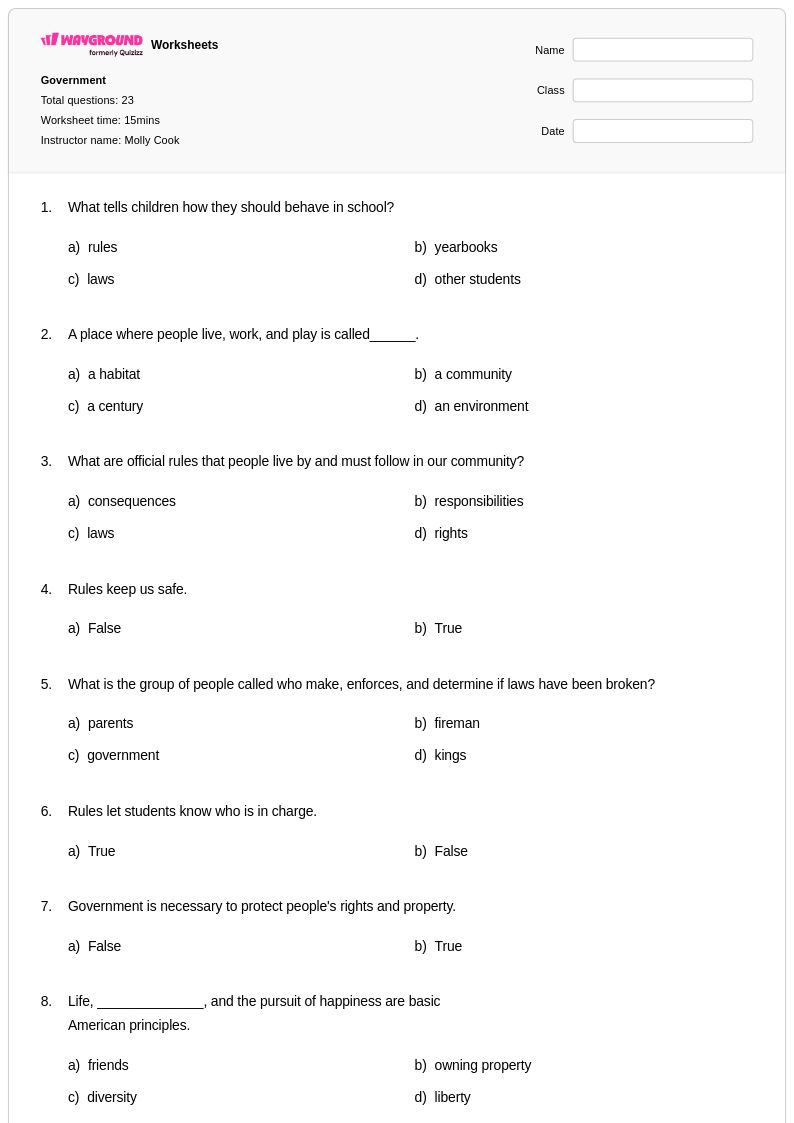
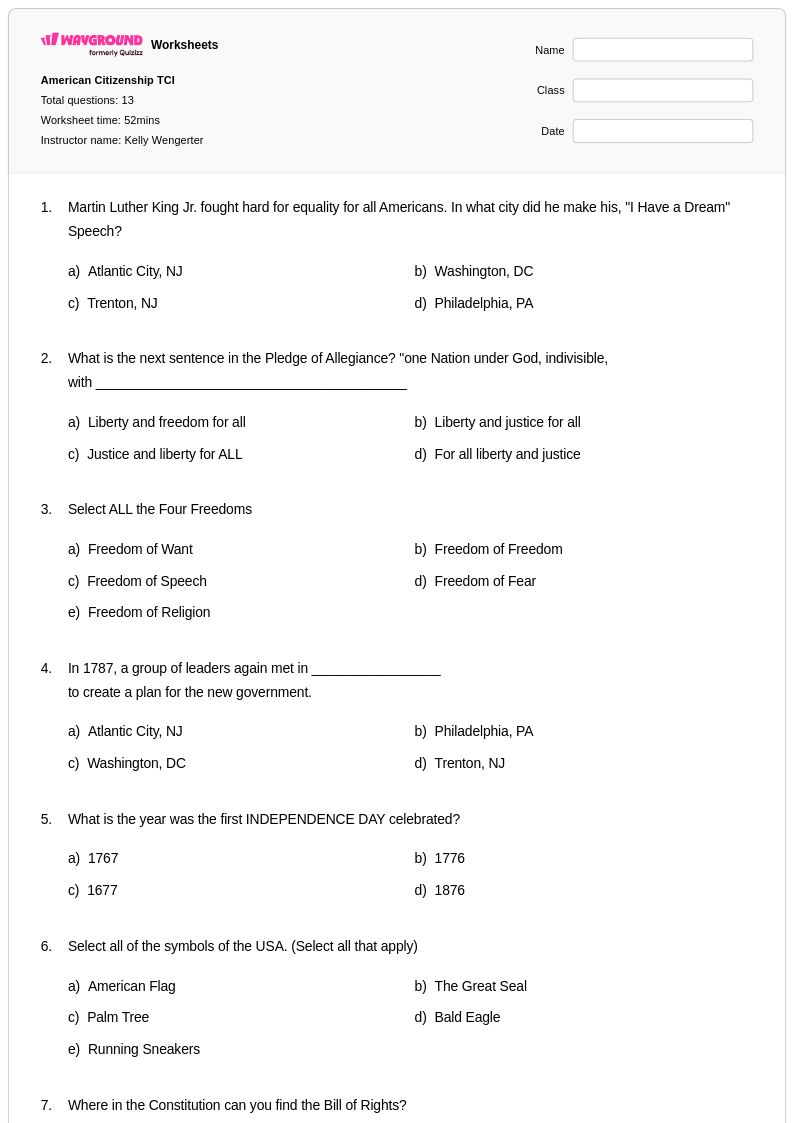
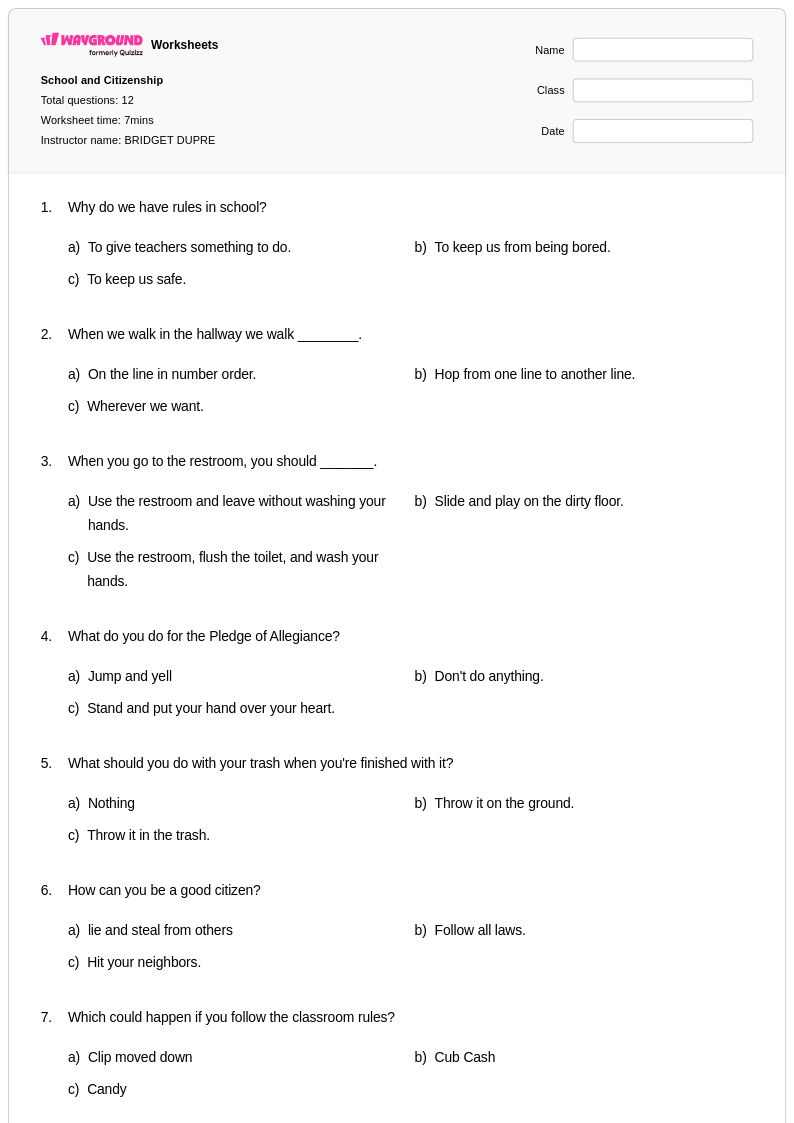
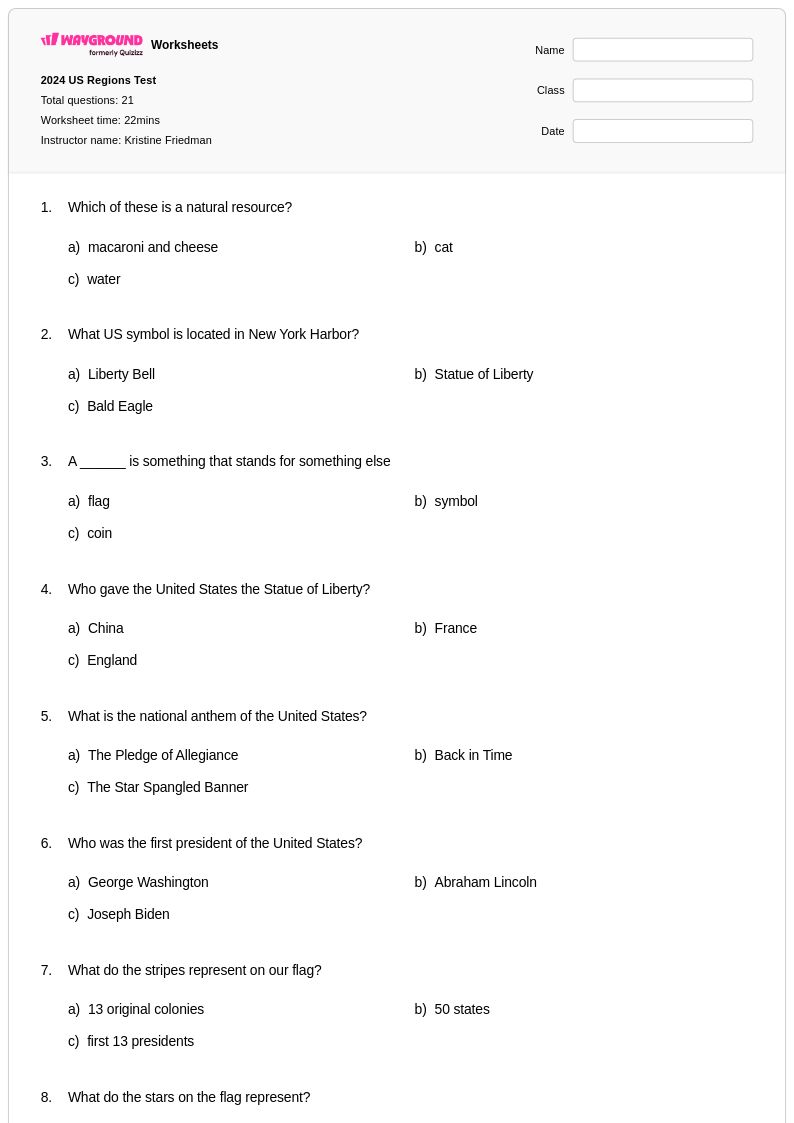
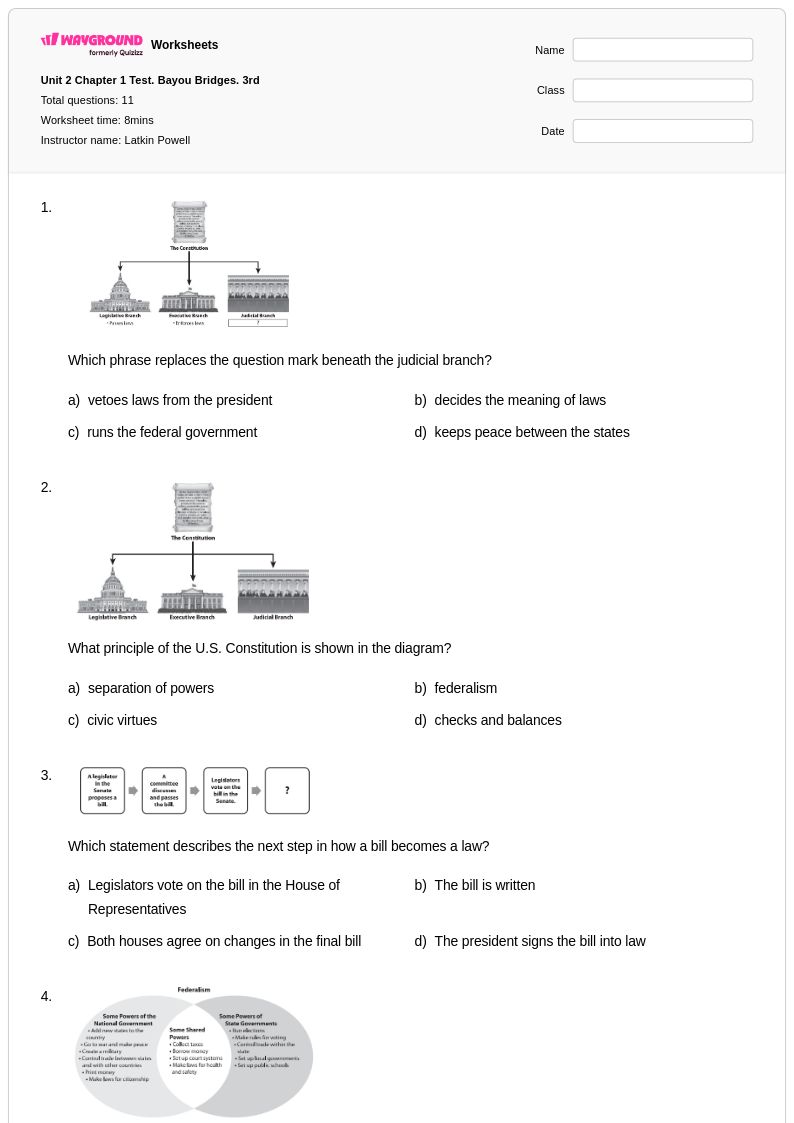
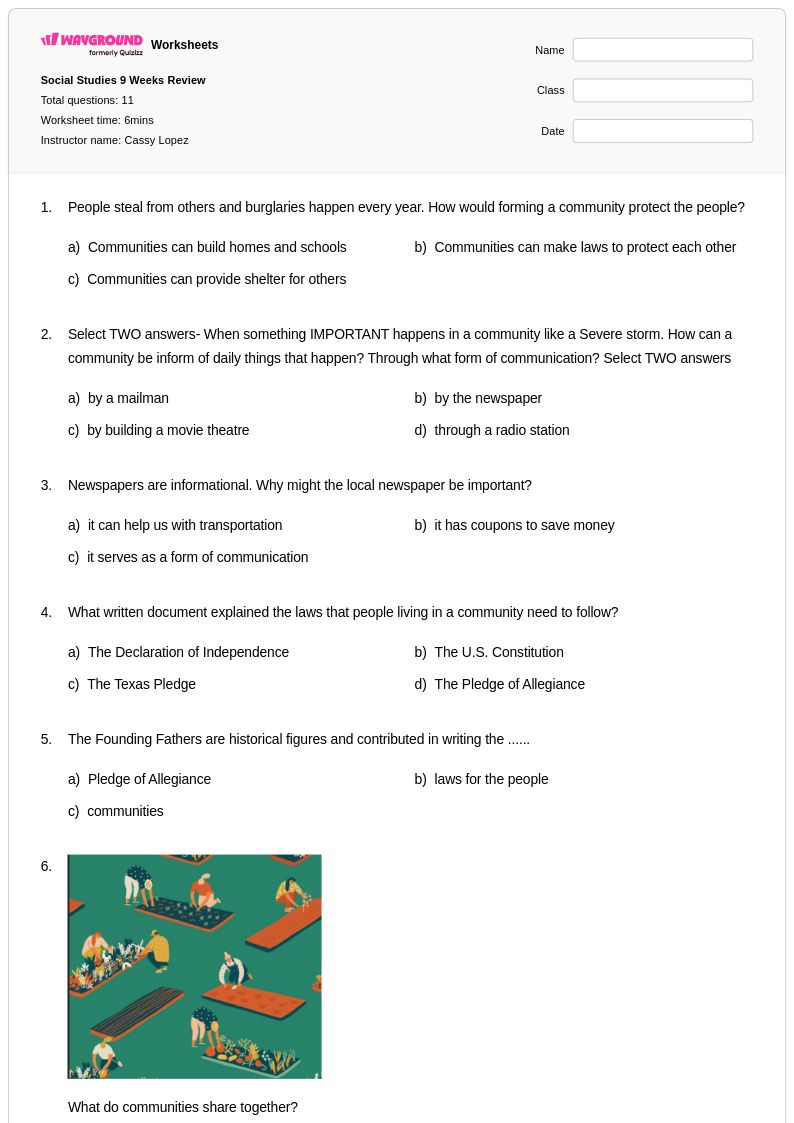
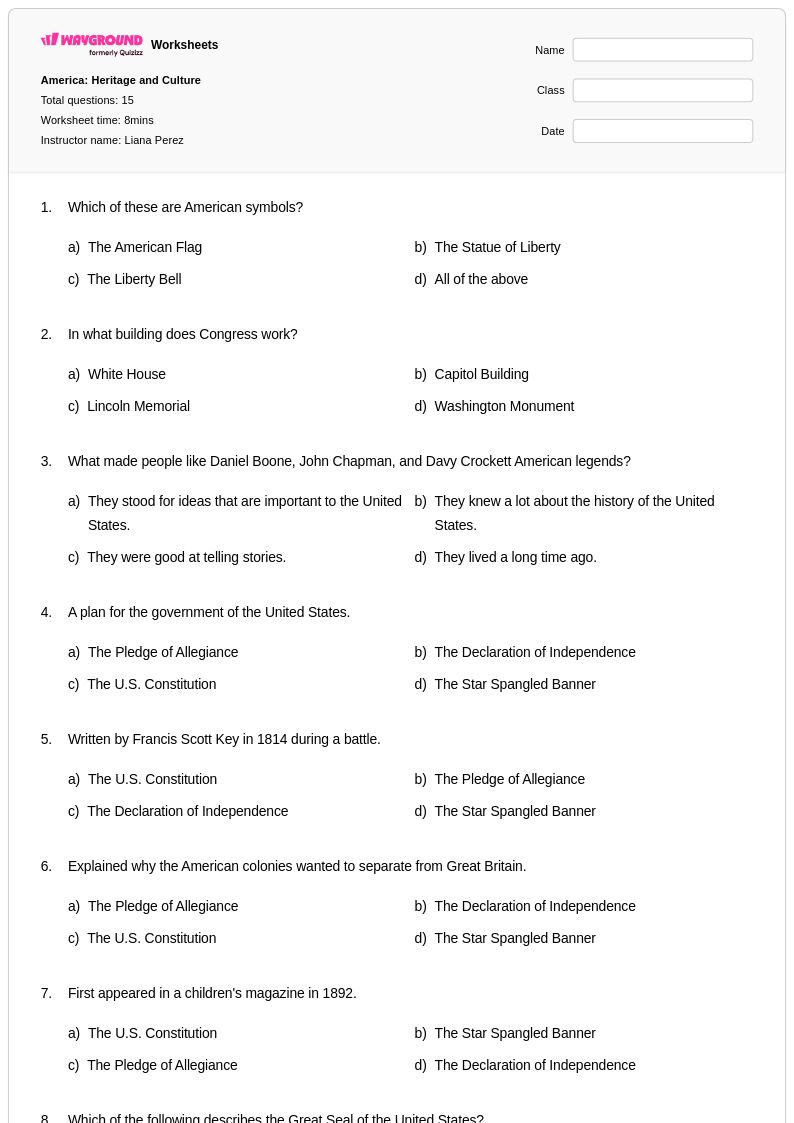
Pledge of Allegiance worksheets for Class 3 available through Wayground provide young learners with structured opportunities to explore the meaning, history, and significance of this fundamental American patriotic recitation. These educational resources strengthen essential civic knowledge by helping third-grade students understand the words and concepts within the pledge, develop appreciation for national symbols, and build foundational skills in citizenship education. The comprehensive worksheet collection includes practice problems that engage students in analyzing the pledge's language, free printables featuring interactive activities about respect for the flag, and materials with complete answer keys that support both independent learning and guided instruction. Teachers can access professionally designed pdf resources that make the pledge's abstract concepts accessible to elementary learners through age-appropriate exercises and visual elements.
Wayground's extensive platform supports educators with millions of teacher-created resources specifically designed for Pledge of Allegiance instruction at the third-grade level. The robust search and filtering system allows teachers to quickly locate materials aligned with state social studies standards, while differentiation tools enable customization for diverse learning needs within the classroom. These worksheets are available in both printable and digital pdf formats, providing flexibility for various teaching environments and learning preferences. The platform's comprehensive collection facilitates effective lesson planning by offering resources suitable for initial instruction, skill practice, and assessment, while also providing materials for remediation and enrichment activities that deepen students' understanding of patriotic traditions and civic responsibility.
FAQs
How do I teach the Pledge of Allegiance in a civics or social studies class?
Teaching the Pledge of Allegiance effectively goes beyond recitation — students benefit most when they analyze the meaning of each phrase, trace its historical origins, and connect it to broader civics concepts like citizenship and national identity. Start by introducing Francis Bellamy's authorship in 1892 and then walk students through the Pledge line by line, unpacking words like 'allegiance,' 'republic,' and 'liberty.' Incorporating the 1954 addition of 'under God' and the constitutional debate over mandatory recitation gives older students a meaningful entry point into First Amendment discussions.
What exercises help students practice understanding the Pledge of Allegiance?
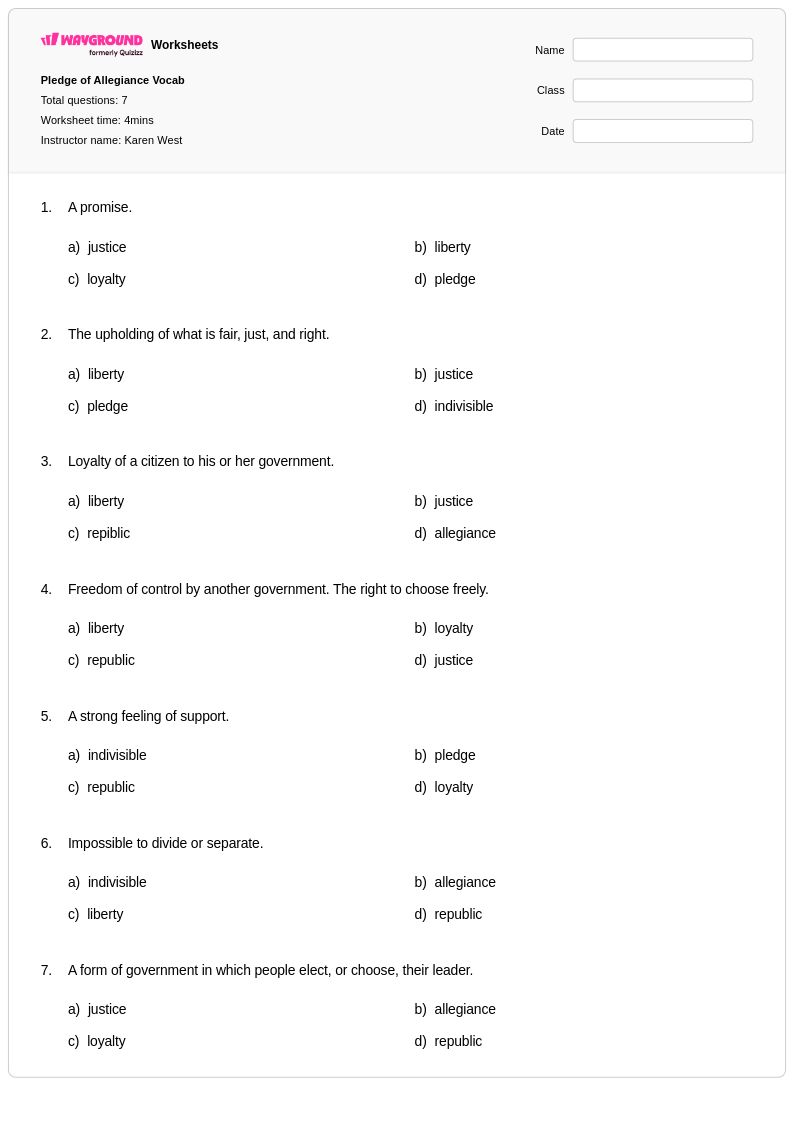
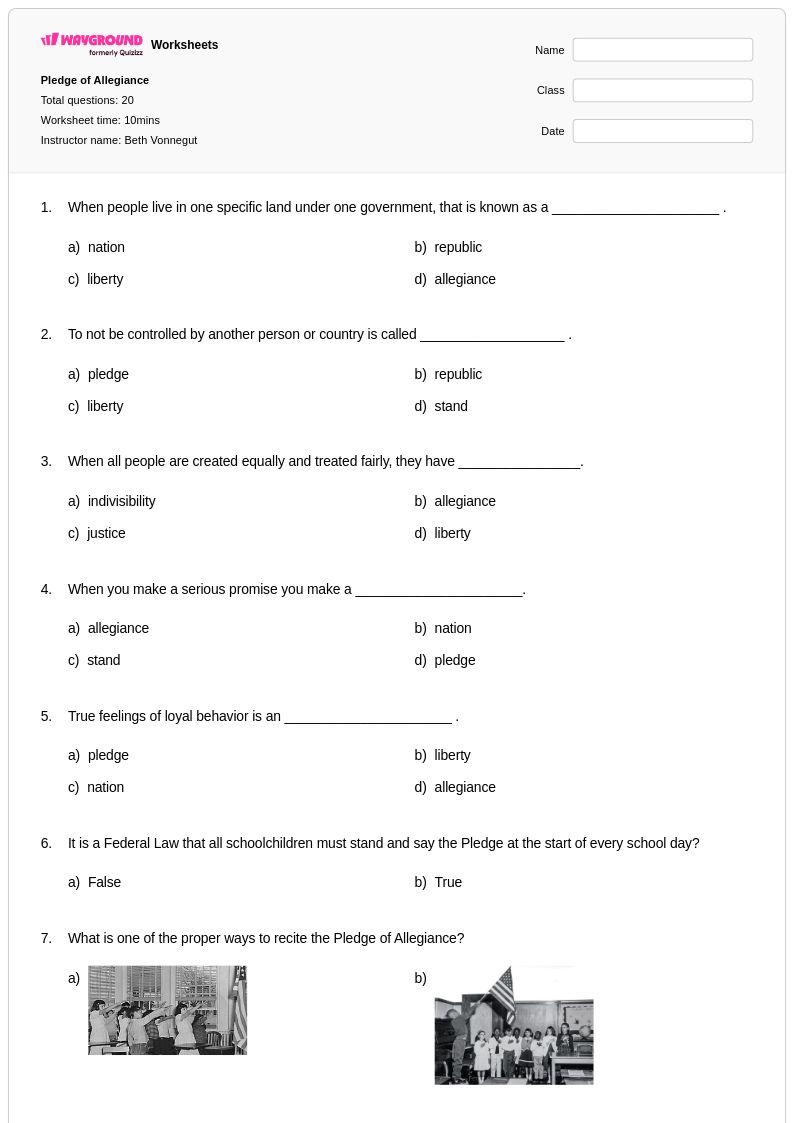
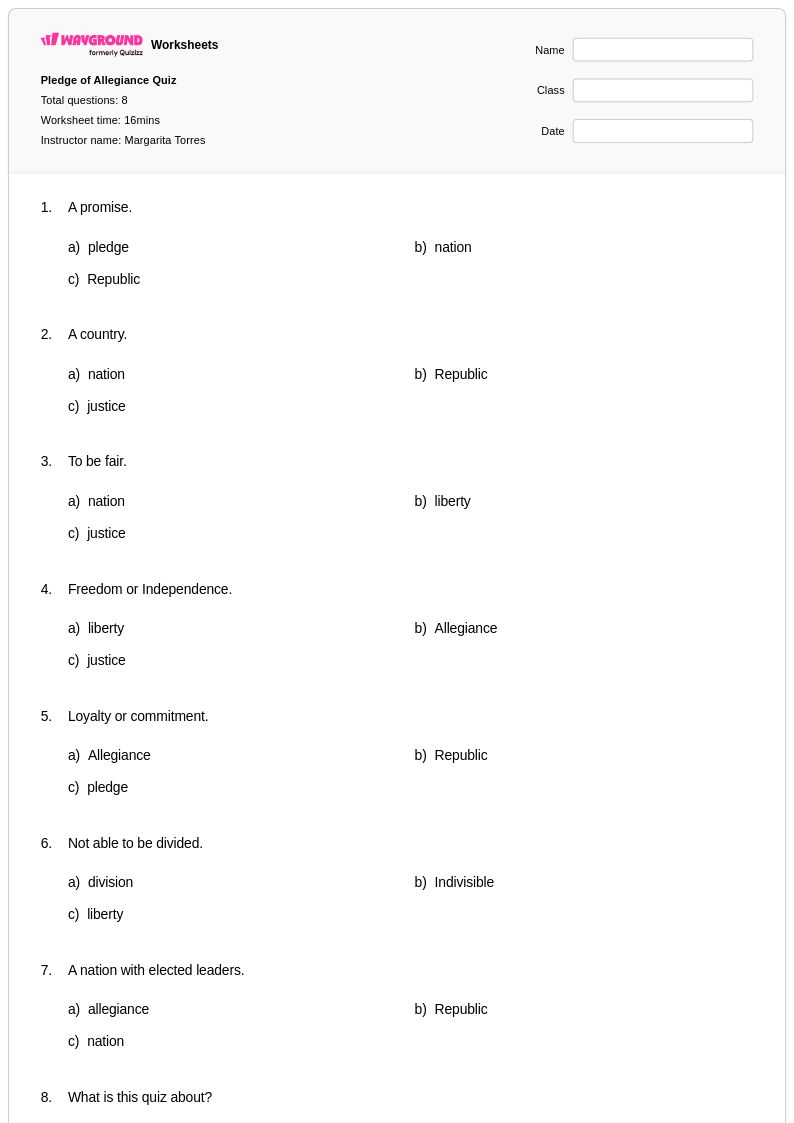
Effective practice activities include vocabulary analysis (defining 'indivisible,' 'republic,' and 'allegiance' in context), sequencing the Pledge's historical changes over time, and short-answer prompts asking students to explain the significance of specific phrases. Matching activities that pair key terms with definitions and fill-in-the-blank exercises reinforce retention of both the text and its meaning. These structured practice formats work well as warm-ups, independent work, or review before a civics assessment.
What do students commonly misunderstand about the Pledge of Allegiance?
One of the most common misconceptions is that the Pledge has remained unchanged since it was written — students are often surprised to learn that 'under God' was added in 1954, decades after the original 1892 version. Many students also confuse 'republic' with 'democracy,' which creates an opportunity to clarify how the United States government is structured. A third frequent error is treating the Pledge as a purely ceremonial phrase rather than a statement with specific legal and constitutional history, particularly regarding the Supreme Court's rulings on voluntary versus mandatory recitation.
How do I use Pledge of Allegiance worksheets in my classroom?
Pledge of Allegiance worksheets work well as standalone civics lessons, pre-reading activities before a unit on American symbols, or formative assessments after direct instruction. They are available as printable PDFs for traditional classroom use and in digital formats for technology-integrated or hybrid learning environments, and teachers can also host them as a quiz directly on Wayground. Answer keys are included, making these resources suitable for independent student work, homework, or small-group review without requiring additional teacher preparation.
How do I connect the Pledge of Allegiance to flag etiquette and American symbols?
The Pledge is most meaningful when taught alongside flag etiquette — including proper posture, hand placement, and the protocol for displaying the American flag. Students who understand that the Pledge was originally written as an accompaniment to a flag-raising ceremony gain a richer sense of why specific language and physical gestures are associated with it. Pairing Pledge worksheets with materials on the symbolism of the flag's colors and stars and stripes builds a cohesive unit on American patriotic symbols.
How can I differentiate Pledge of Allegiance instruction for different learning levels?
For younger or struggling learners, focus on vocabulary building and the basic meaning of key phrases using visual supports and simplified text. More advanced students can engage with primary source analysis, the constitutional history of West Virginia v. Barnette, and written reflections on the Pledge's relevance today. On Wayground, teachers can apply accommodations such as read aloud, reduced answer choices, and extended time to individual students, allowing the same worksheet to serve a range of learners without requiring entirely separate materials.