
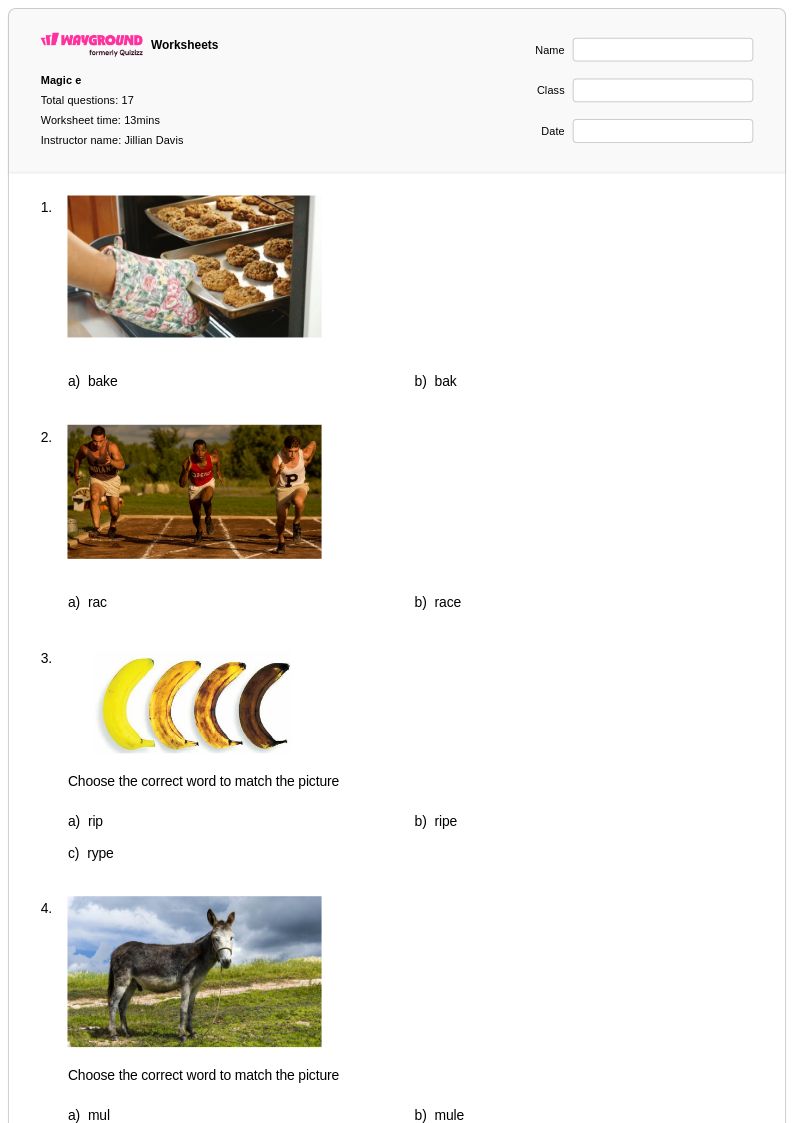
17Q
1st - 3rd
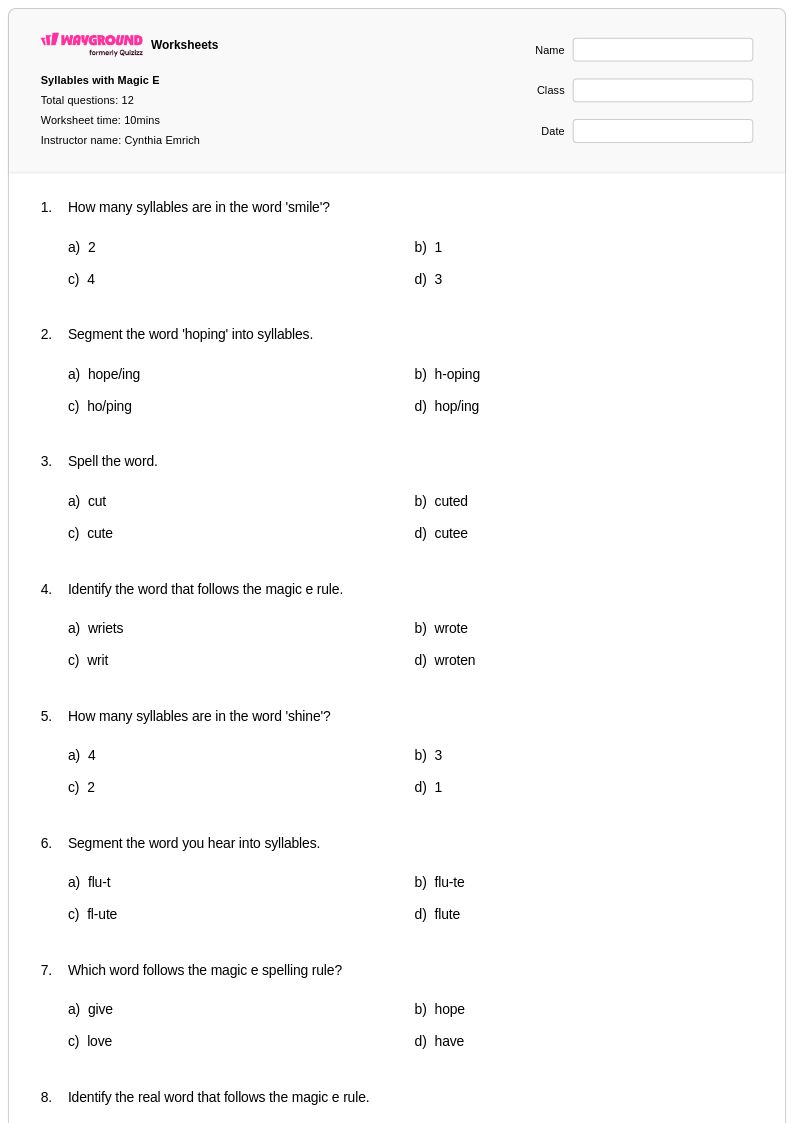
12Q
1st - 5th
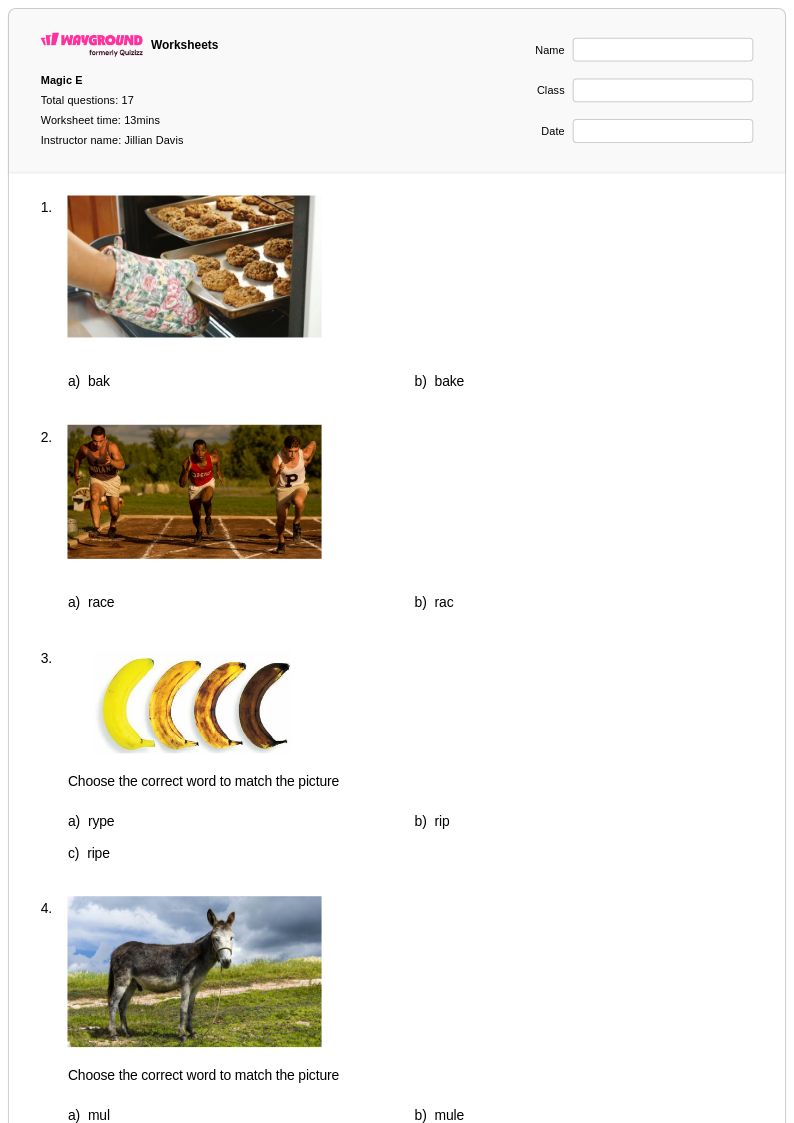
17Q
1st - 5th
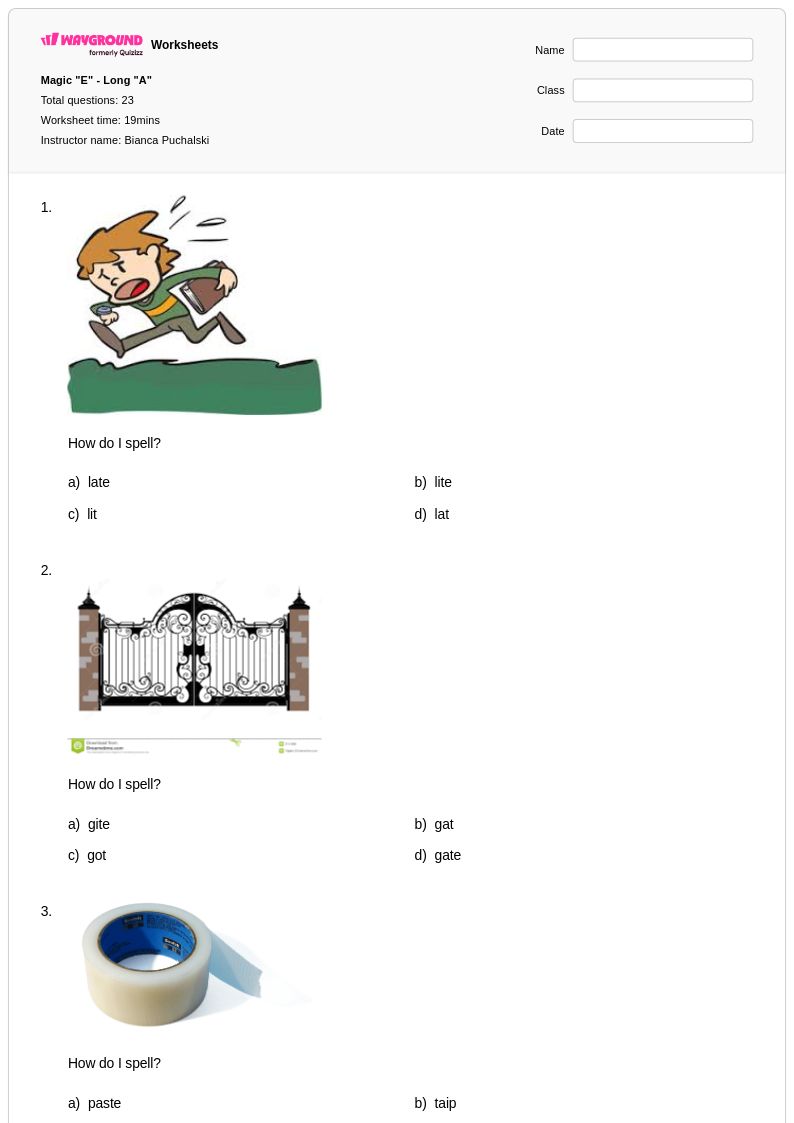
23Q
2nd - 5th
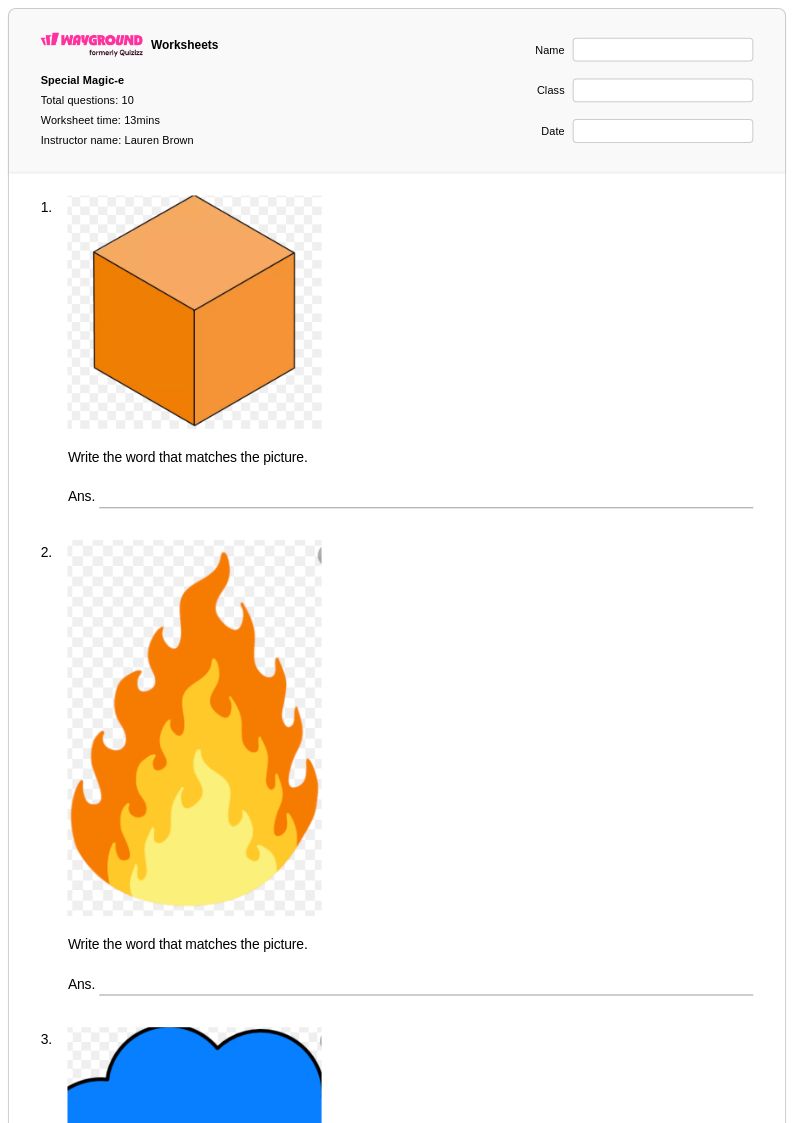
10Q
1st - 2nd
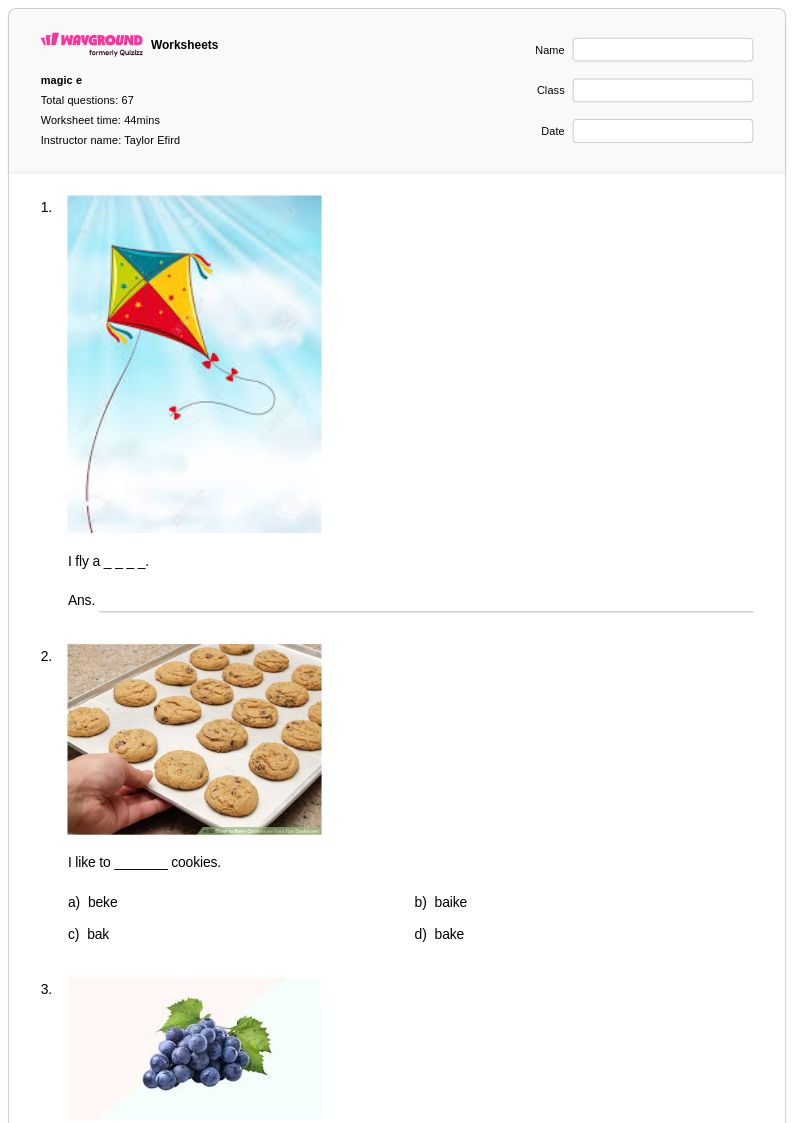
67Q
2nd
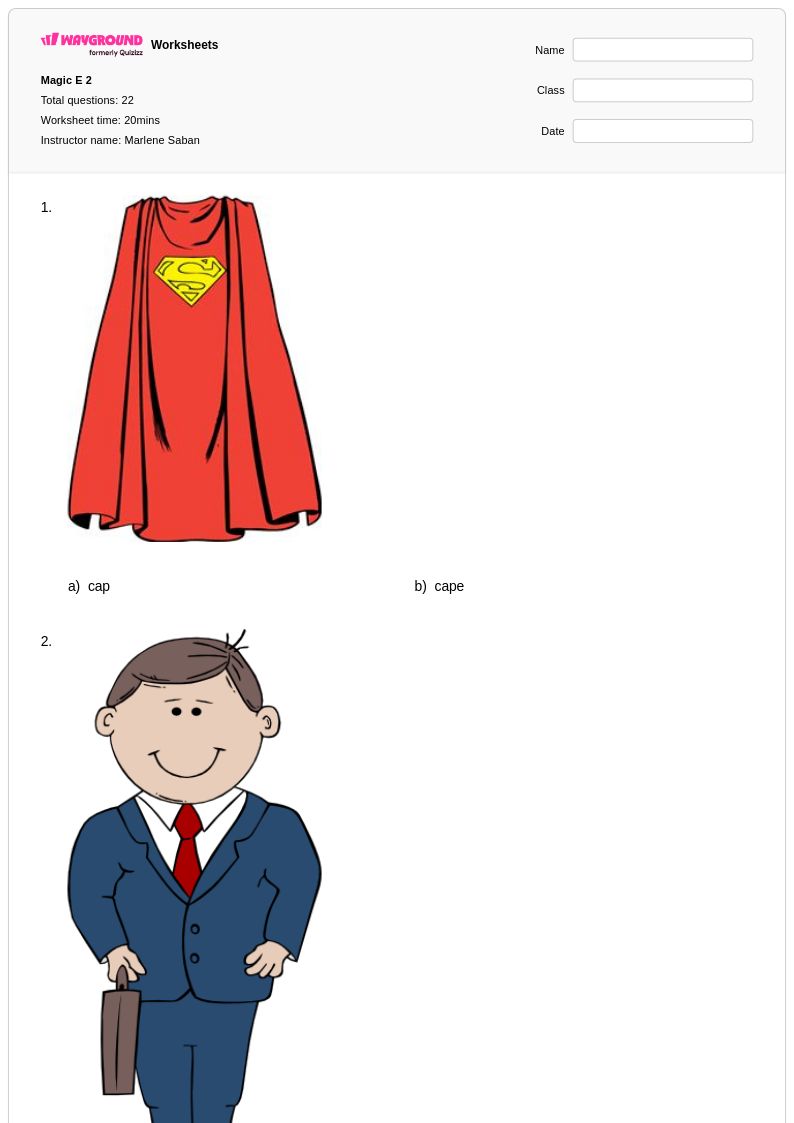
22Q
1st - 5th
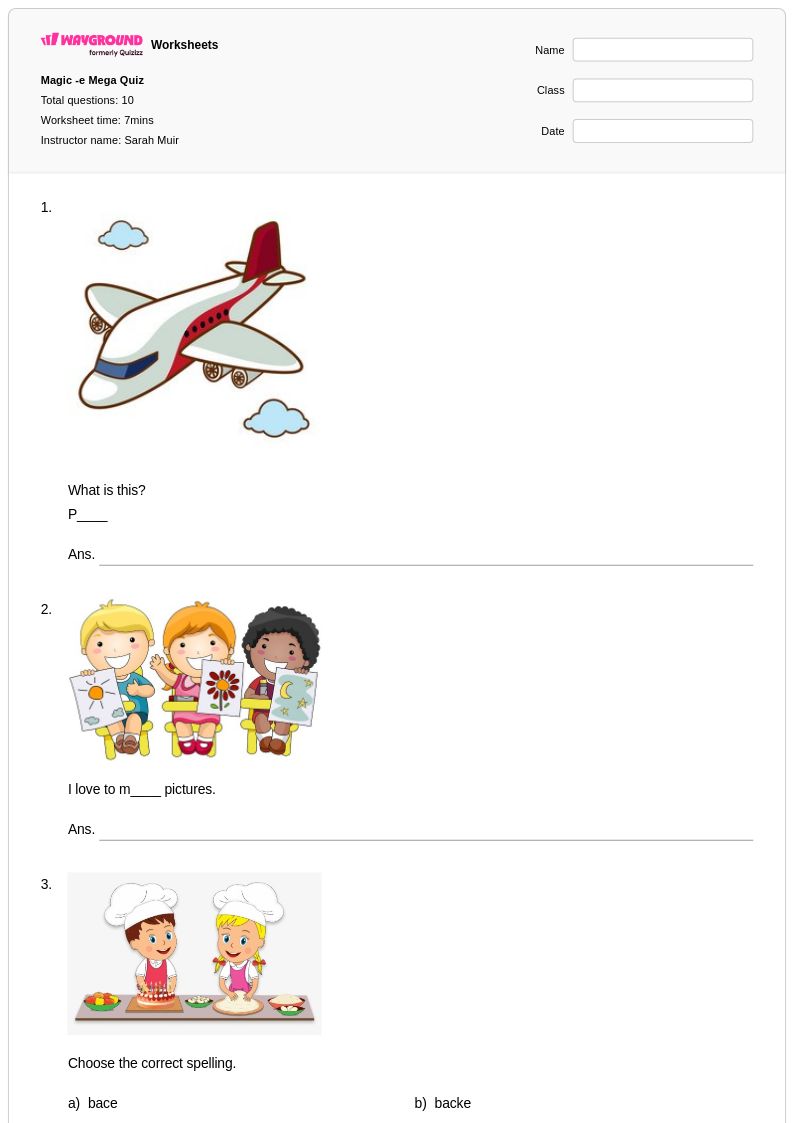
10Q
1st - 3rd
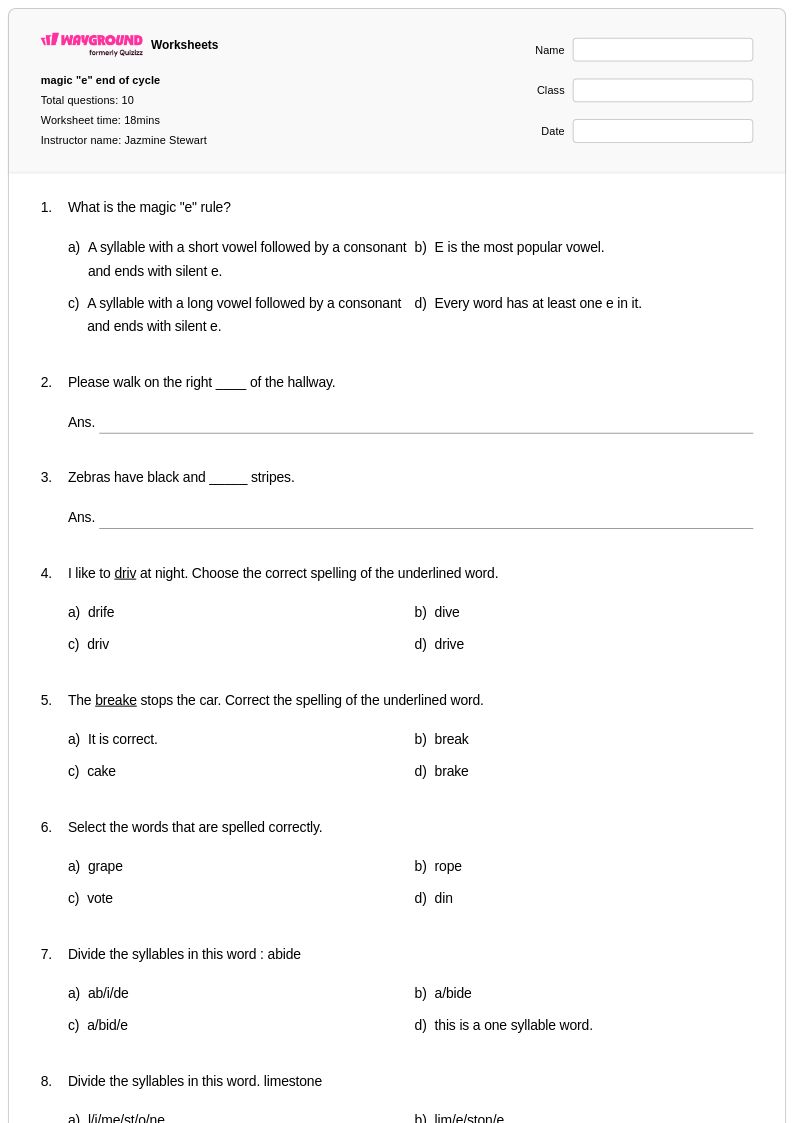
10Q
1st - 3rd
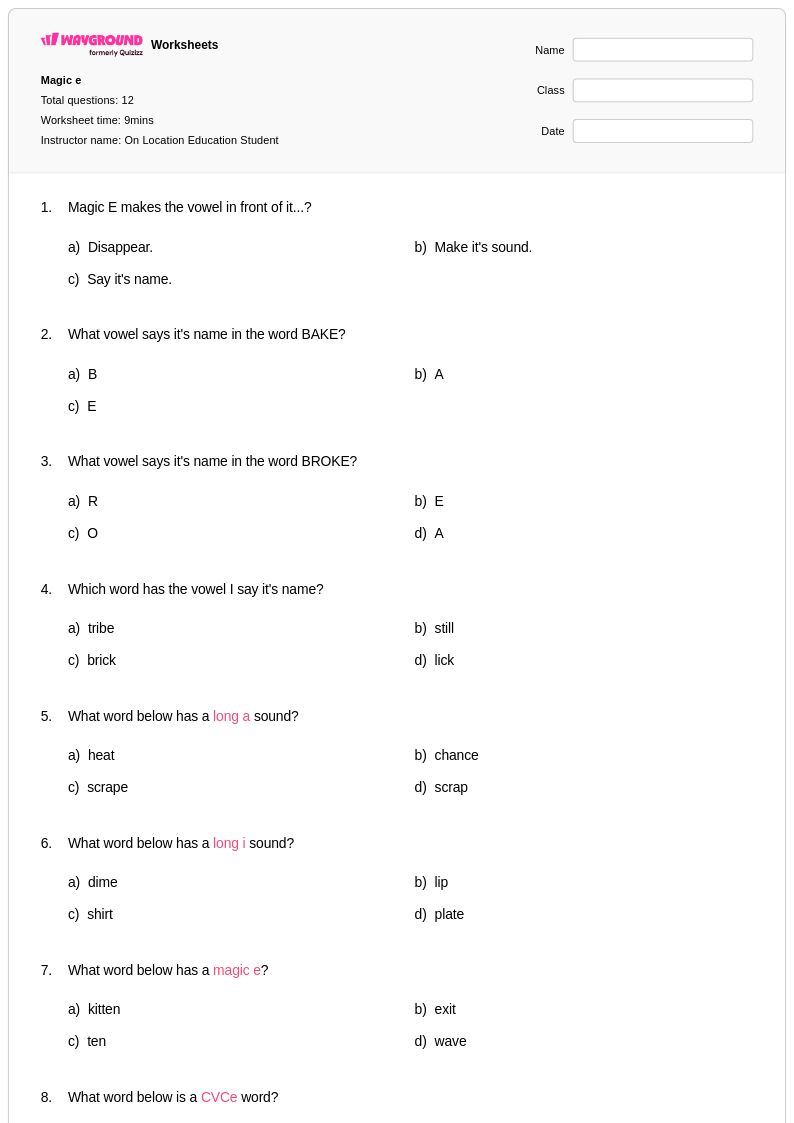
12Q
KG - 2nd
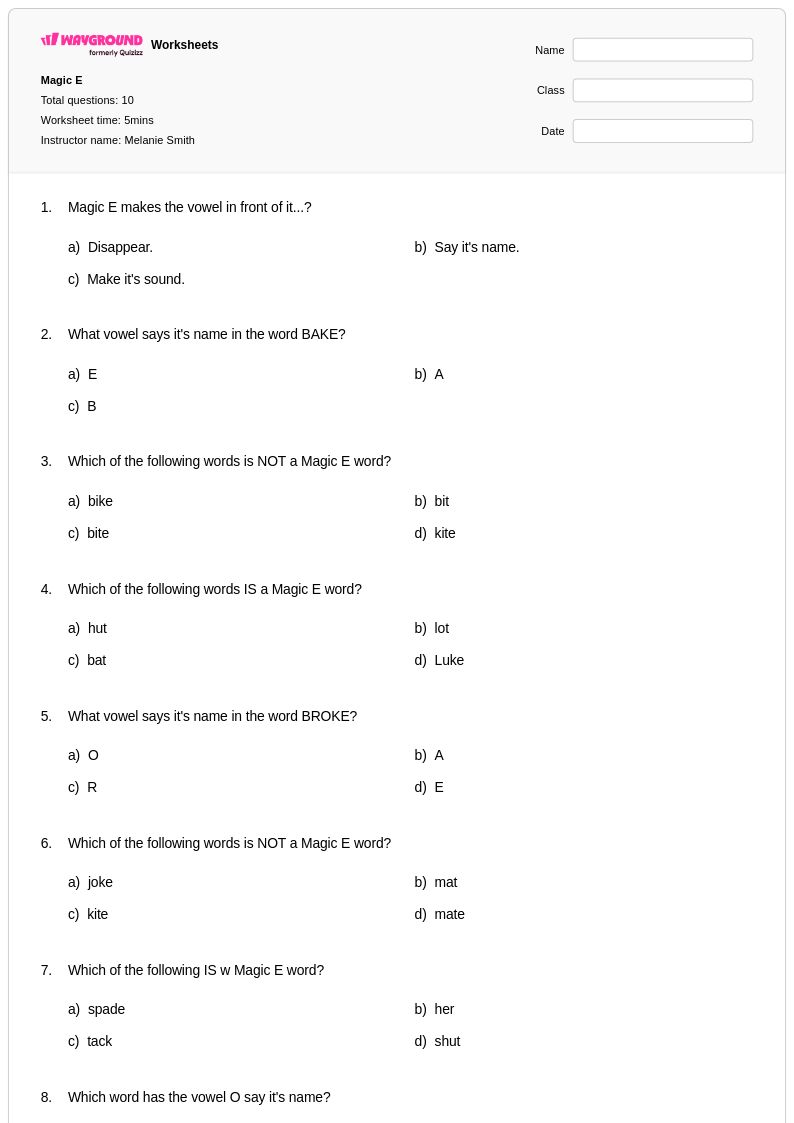
10Q
1st - 2nd
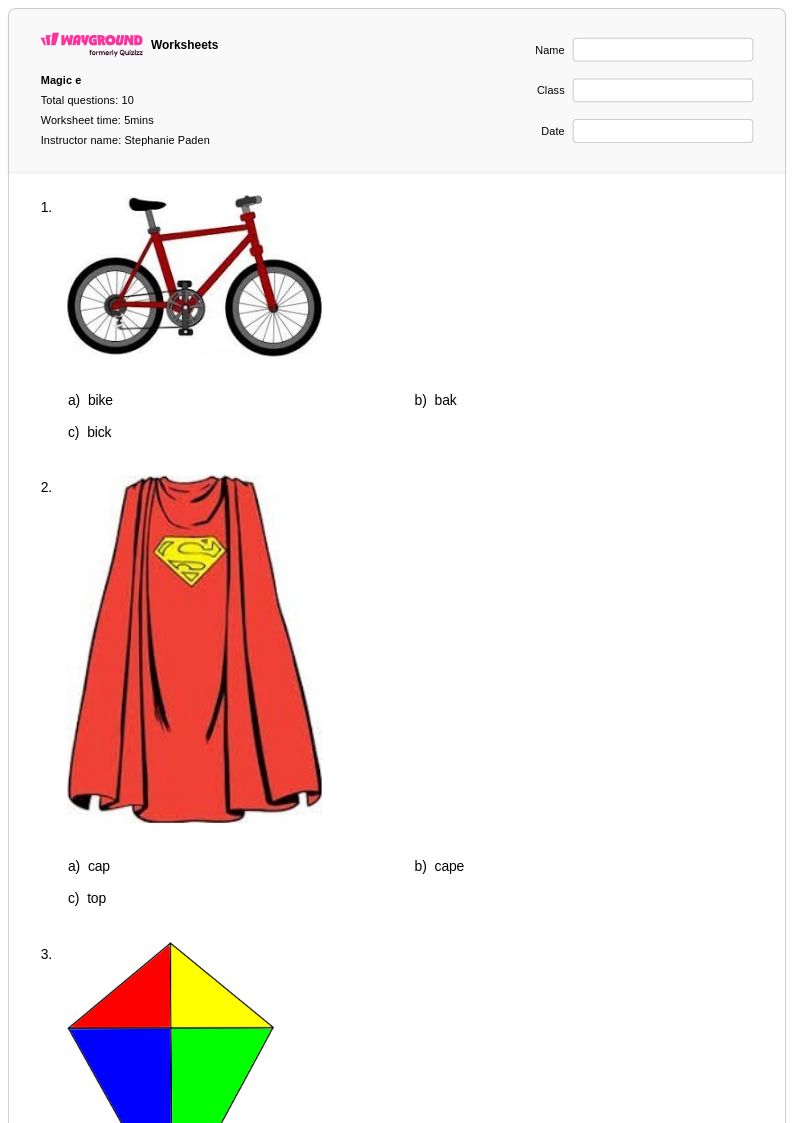
10Q
1st - 2nd
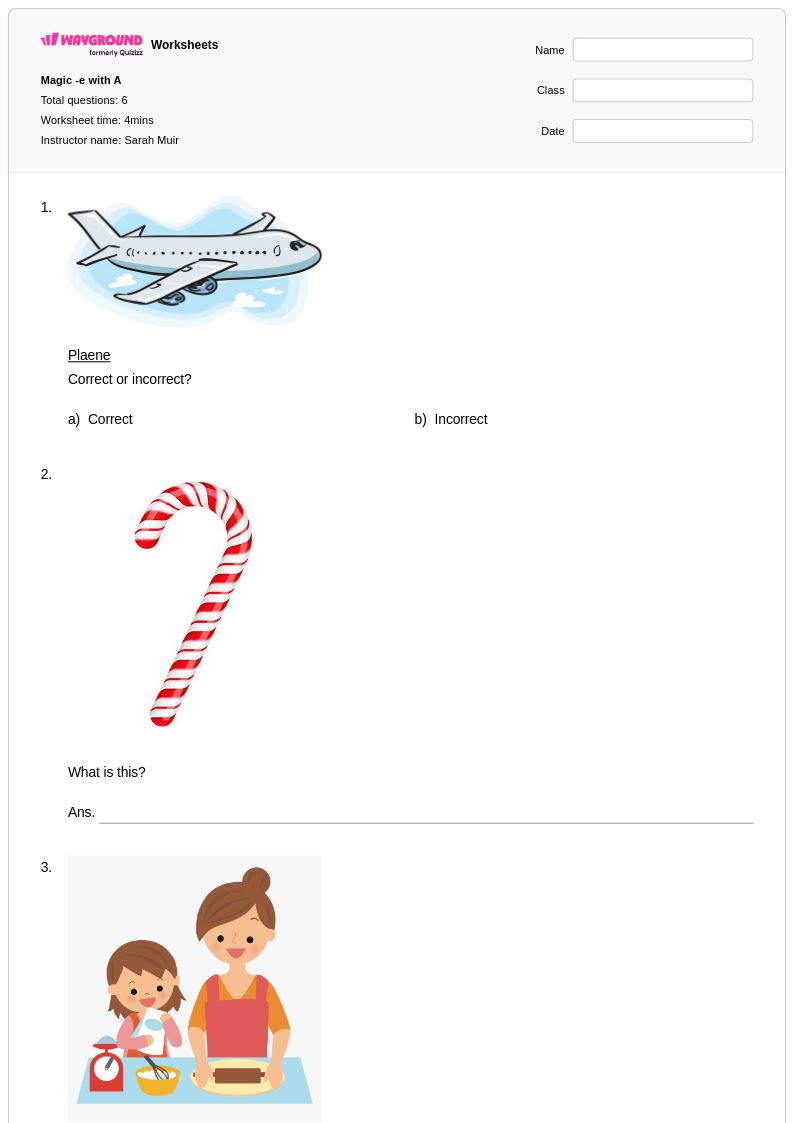
6Q
1st - 3rd
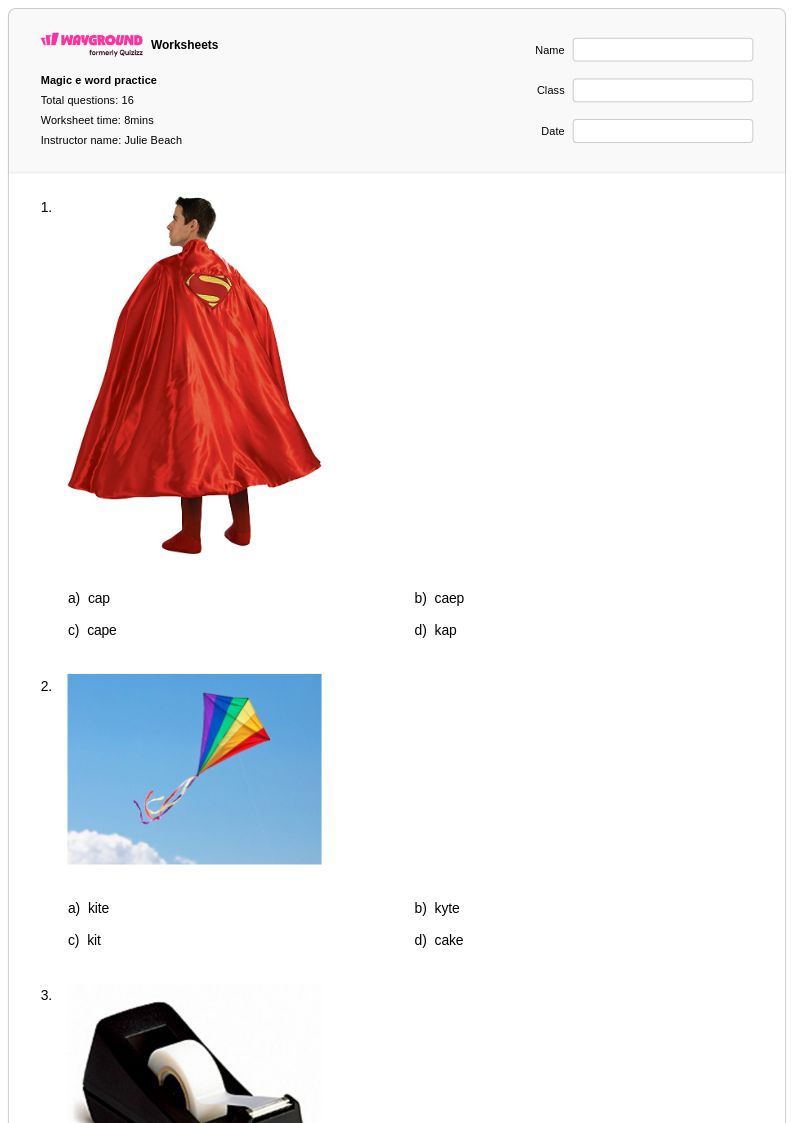
16Q
2nd
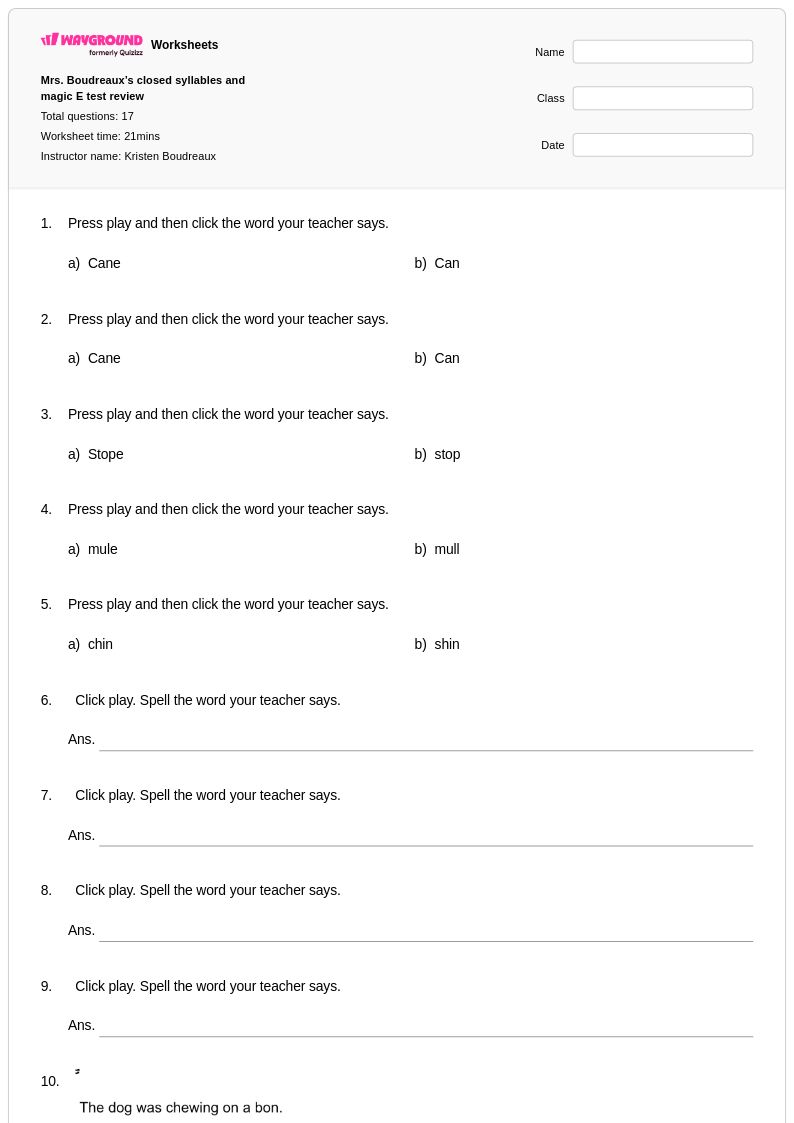
17Q
2nd
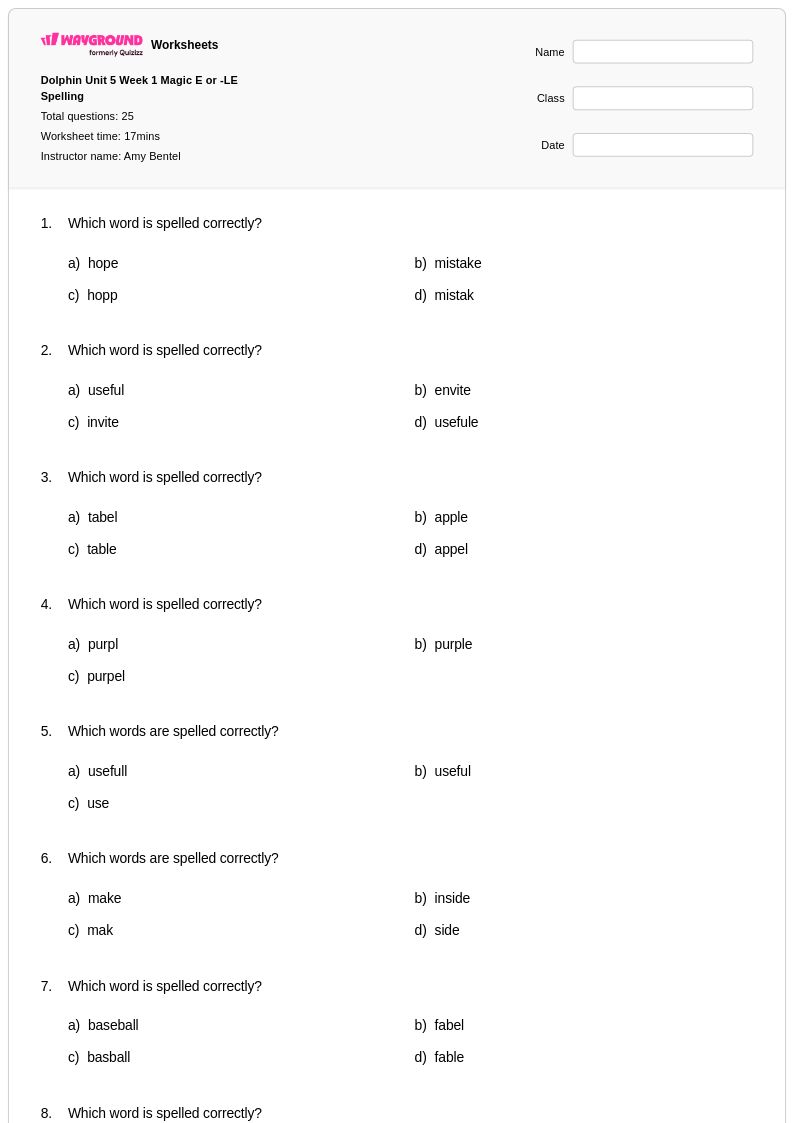
46Q
2nd
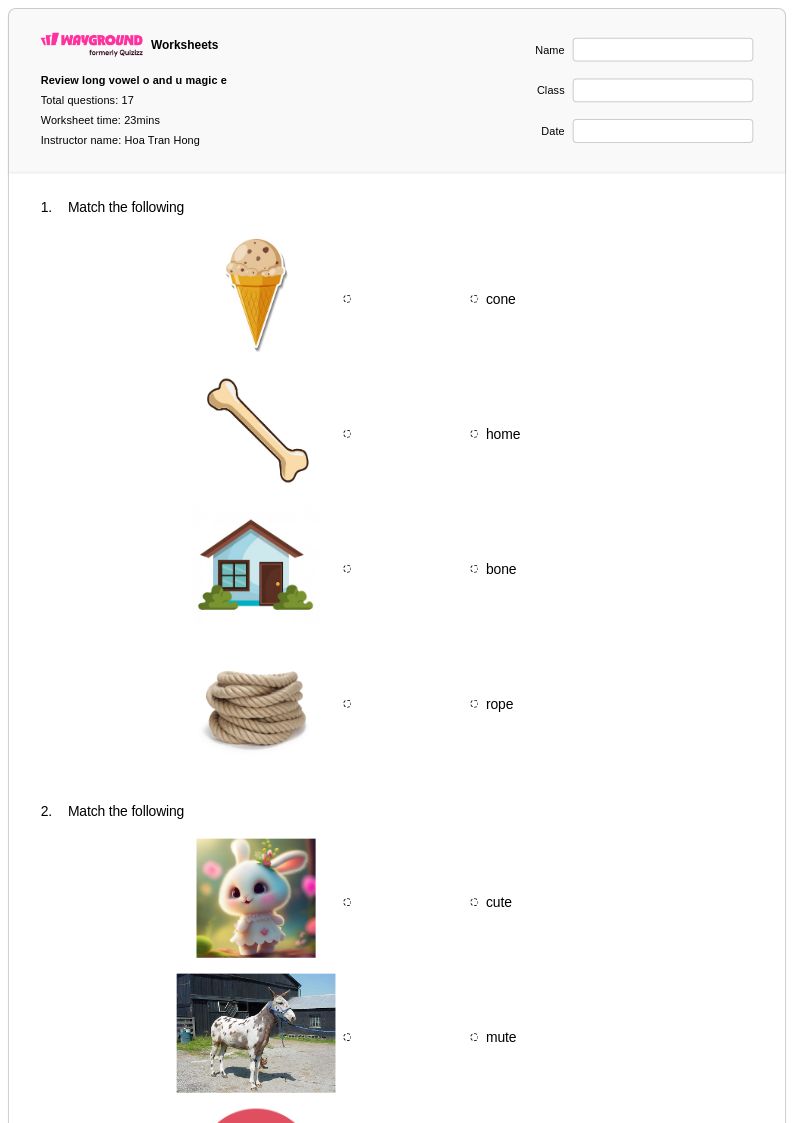
17Q
1st - 5th
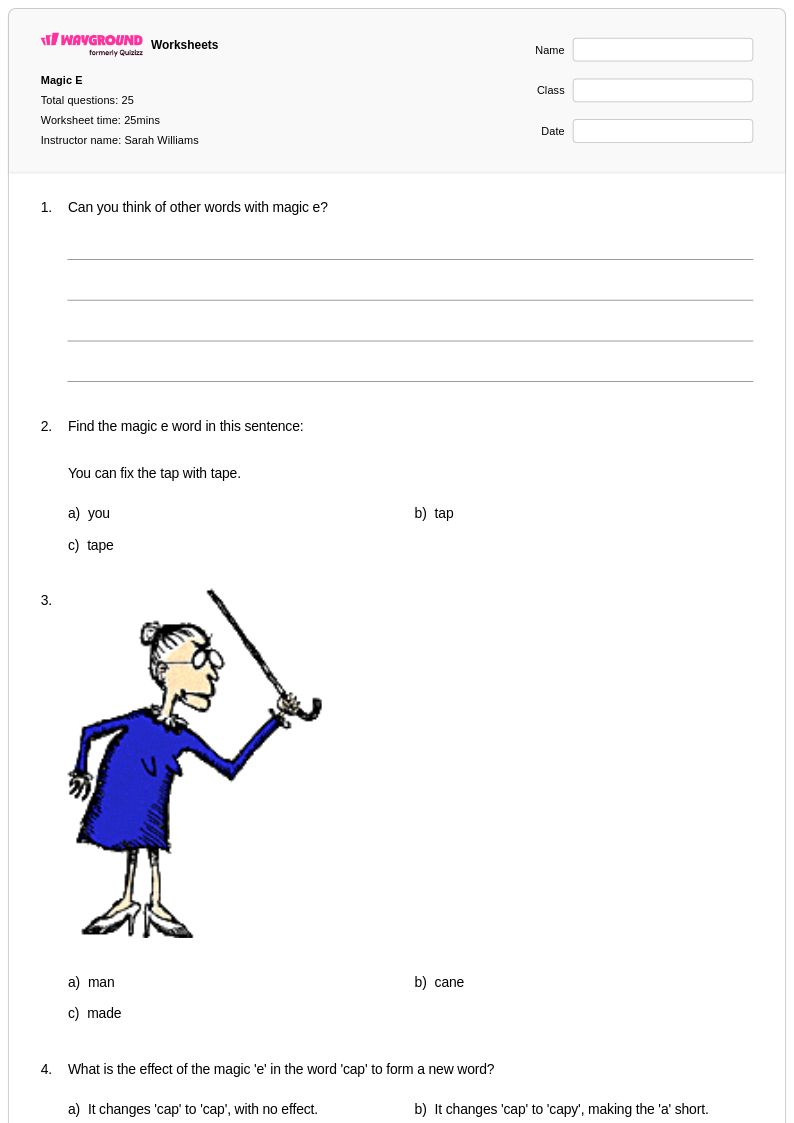
25Q
2nd - Uni
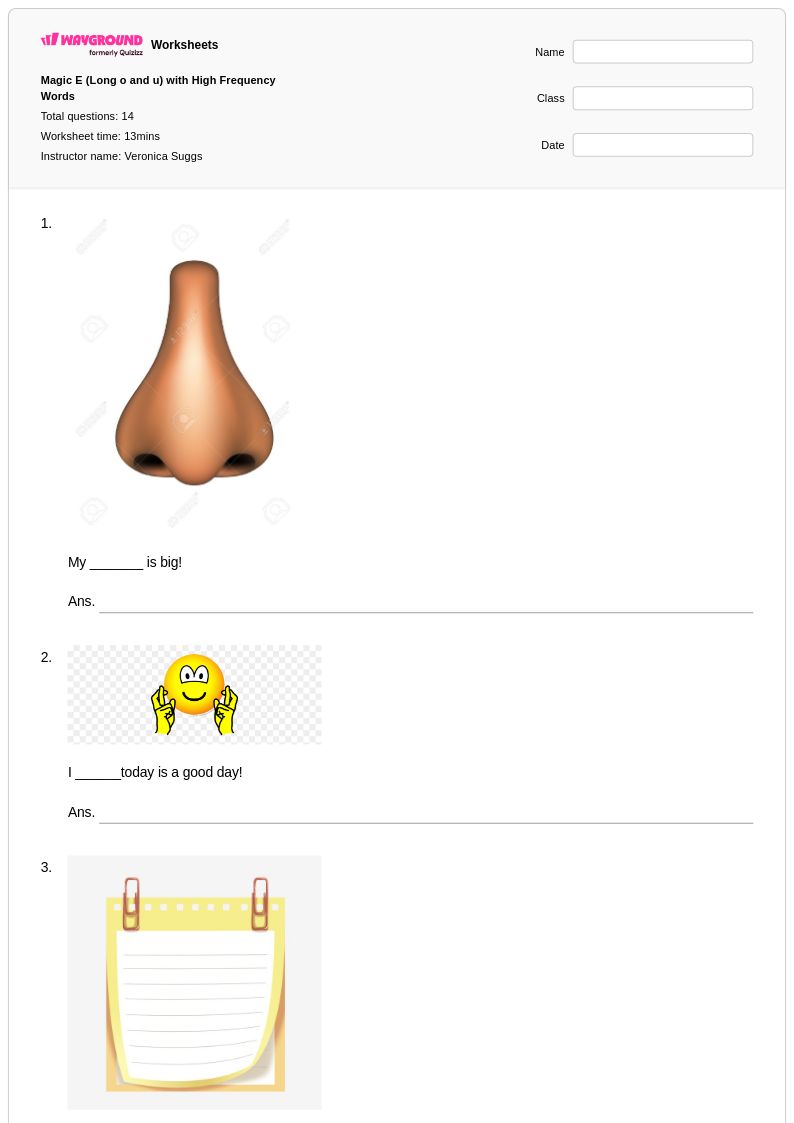
14Q
KG - 2nd
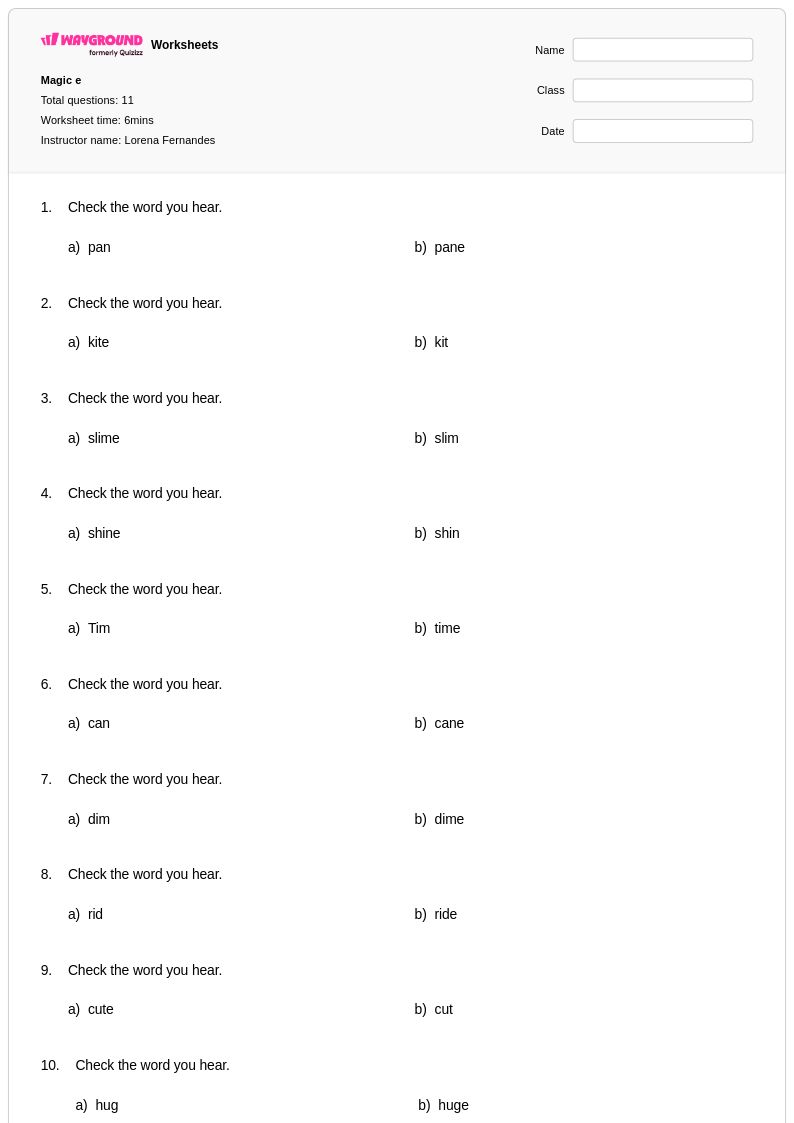
11Q
2nd
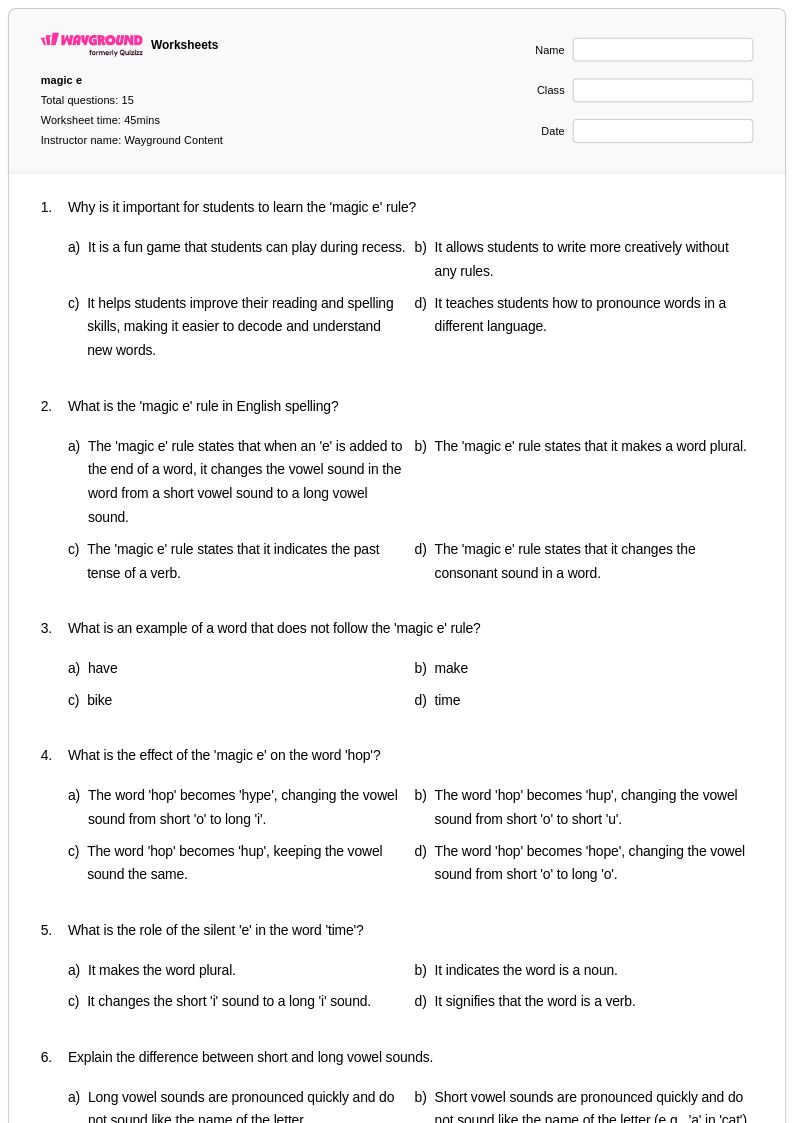
15Q
2nd
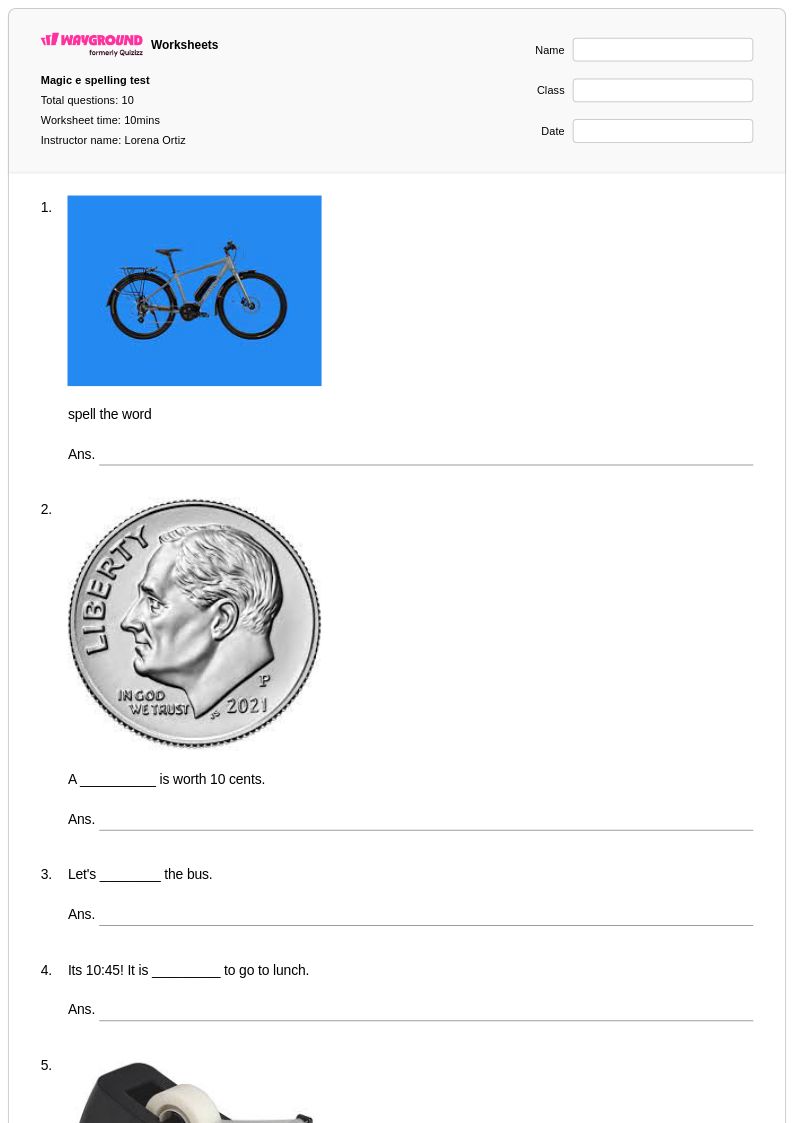
10Q
2nd
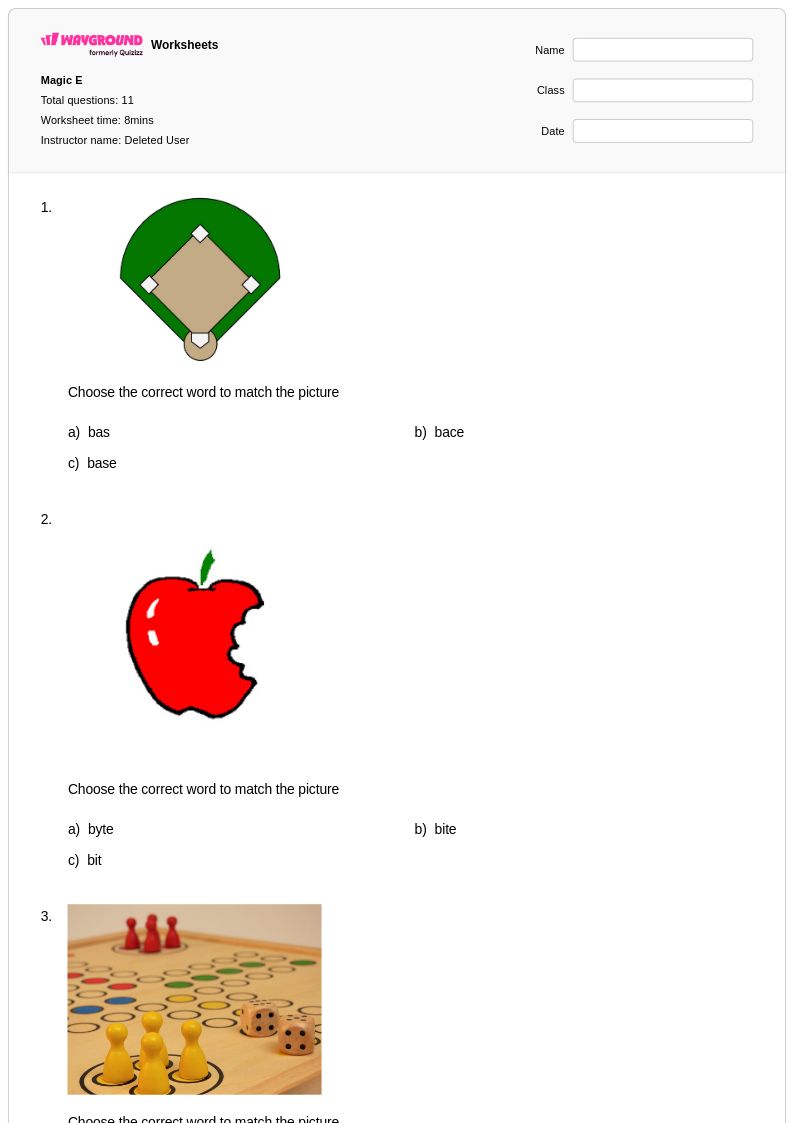
11Q
2nd - 4th
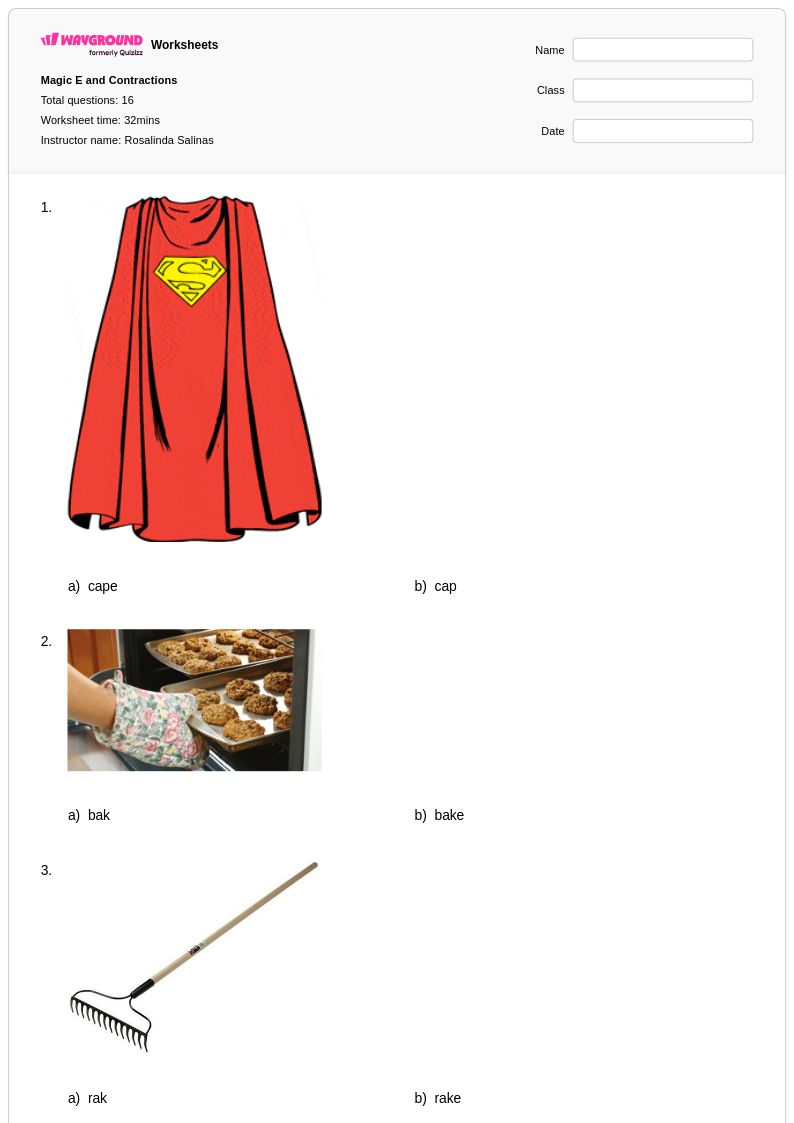
16Q
2nd
Explorar Magic E hojas de trabajo por grados
Explore otras hojas de trabajo de materias para class 2
Explore printable Magic E worksheets for Class 2
Magic E worksheets for Class 2 students through Wayground (formerly Quizizz) provide comprehensive practice with this fundamental phonics concept that transforms short vowel words into long vowel words by adding a silent 'e' at the end. These carefully designed printables help second graders master the magic e pattern through systematic exercises that strengthen their ability to decode words like "cap" to "cape," "kit" to "kite," and "hop" to "hope." Each worksheet collection includes varied practice problems that progress from simple word recognition to more complex reading comprehension tasks, complete with answer keys that allow teachers and parents to track student progress. The free pdf resources focus on building phonemic awareness, spelling accuracy, and reading fluency while reinforcing the understanding that the magic e makes the preceding vowel say its name.
Wayground (formerly Quizizz) supports educators with an extensive library of millions of teacher-created magic e worksheets and phonics resources specifically tailored for Class 2 instruction. The platform's robust search and filtering capabilities enable teachers to quickly locate materials that align with specific learning standards and accommodate diverse student needs through built-in differentiation tools. These customizable worksheet collections are available in both printable pdf format and digital versions, making them ideal for traditional classroom instruction, homework assignments, remediation sessions, and enrichment activities. Teachers can easily modify existing worksheets or combine resources to create targeted skill practice that addresses individual student gaps in magic e understanding, while the comprehensive organization system streamlines lesson planning and ensures consistent phonics instruction across different learning environments.
FAQs
How do I teach Magic E to early readers?
What exercises help students practice Magic E words?
What common mistakes do students make with Magic E?
How can I differentiate Magic E practice for students at different skill levels?
How do I use Magic E worksheets from Wayground in my classroom?