Free Printable Making Connections in Nonfiction Worksheets for Kindergarten
Help kindergarten students develop critical thinking skills with free printable worksheets focused on making connections in nonfiction texts, complete with practice problems and answer keys from Wayground.
Explore printable Making Connections in Nonfiction worksheets for Kindergarten
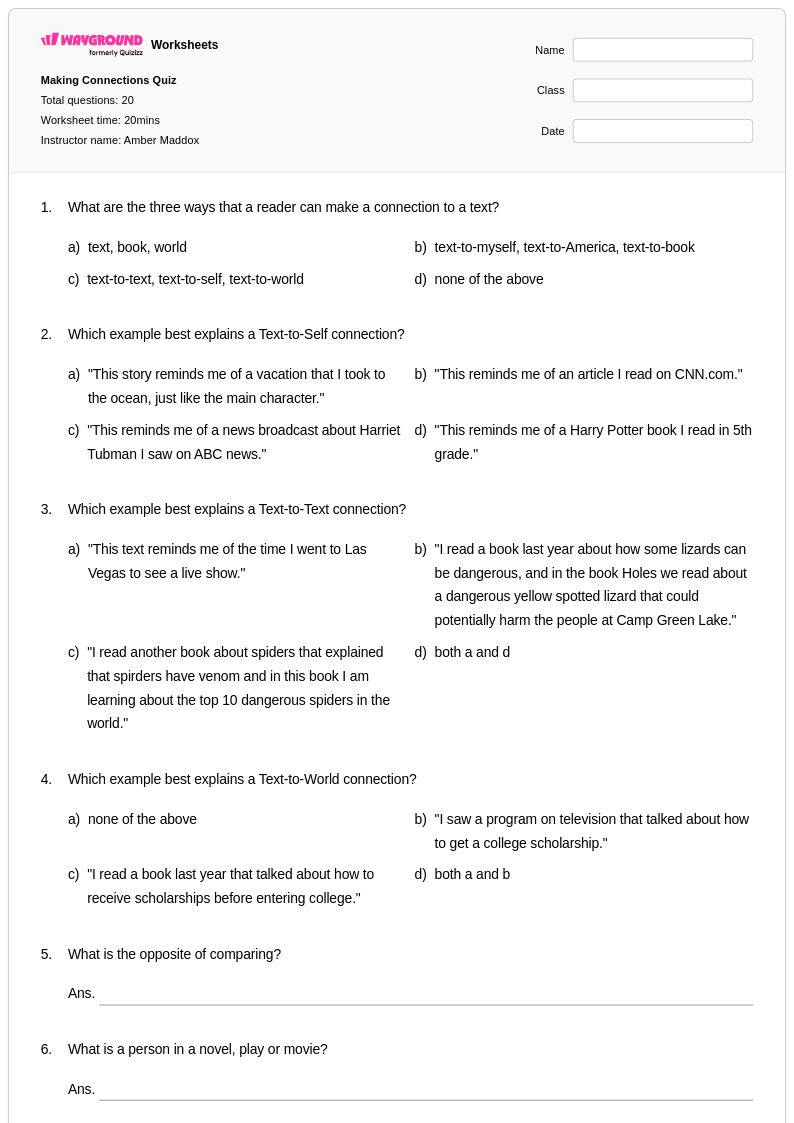
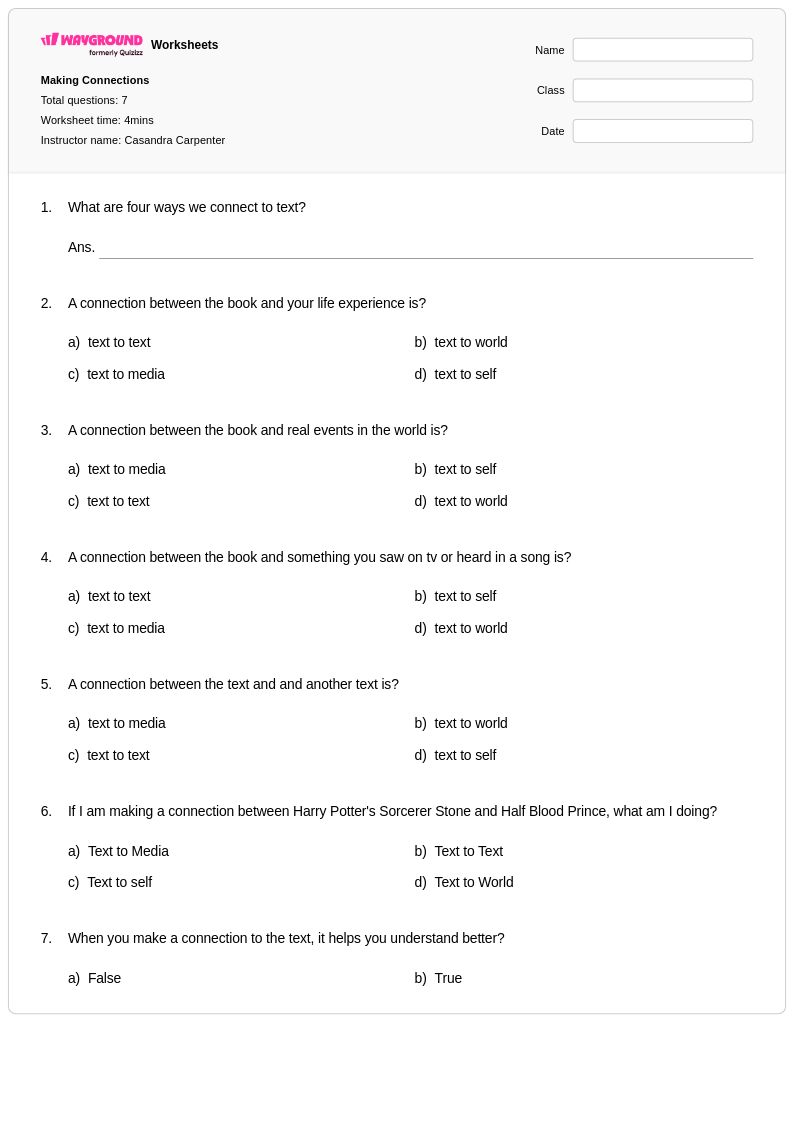
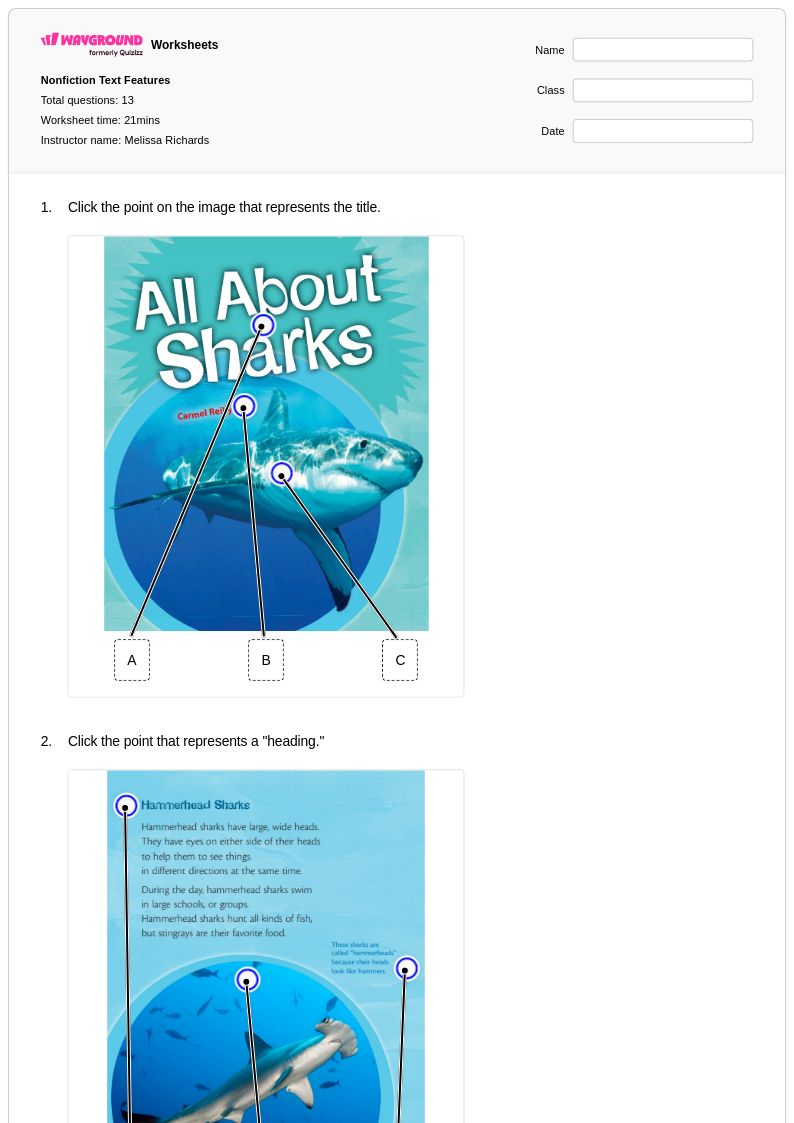
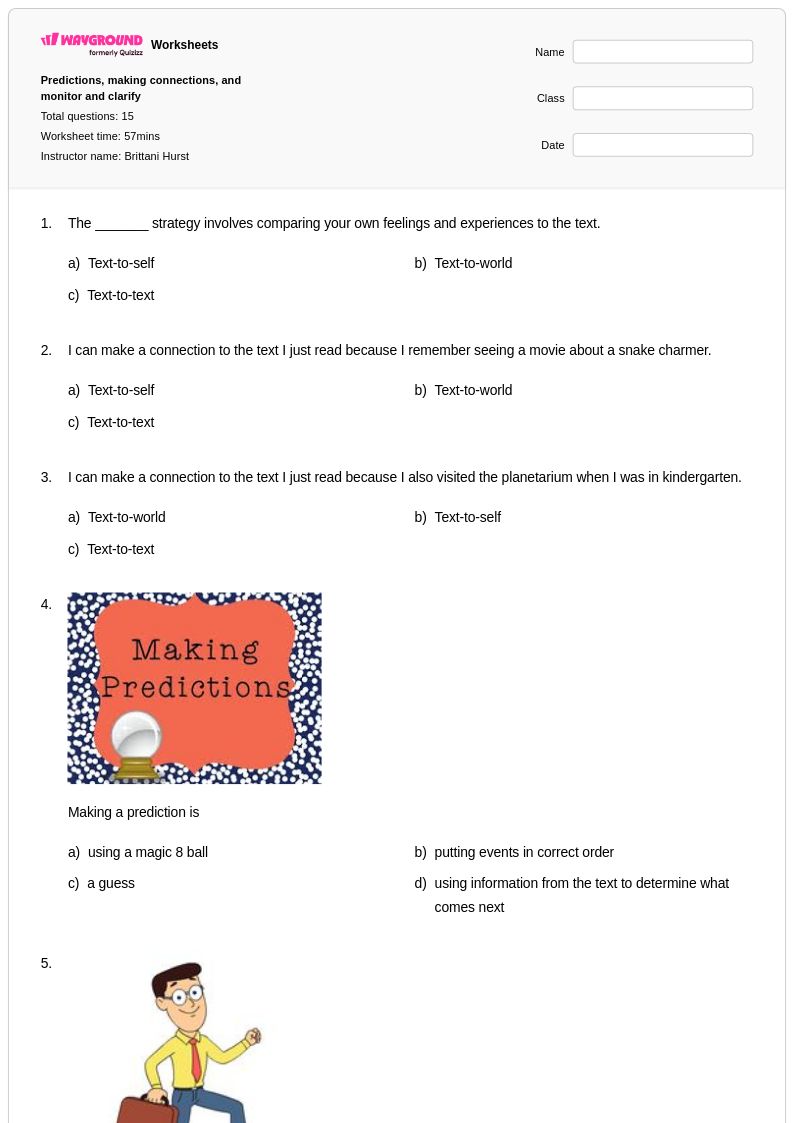
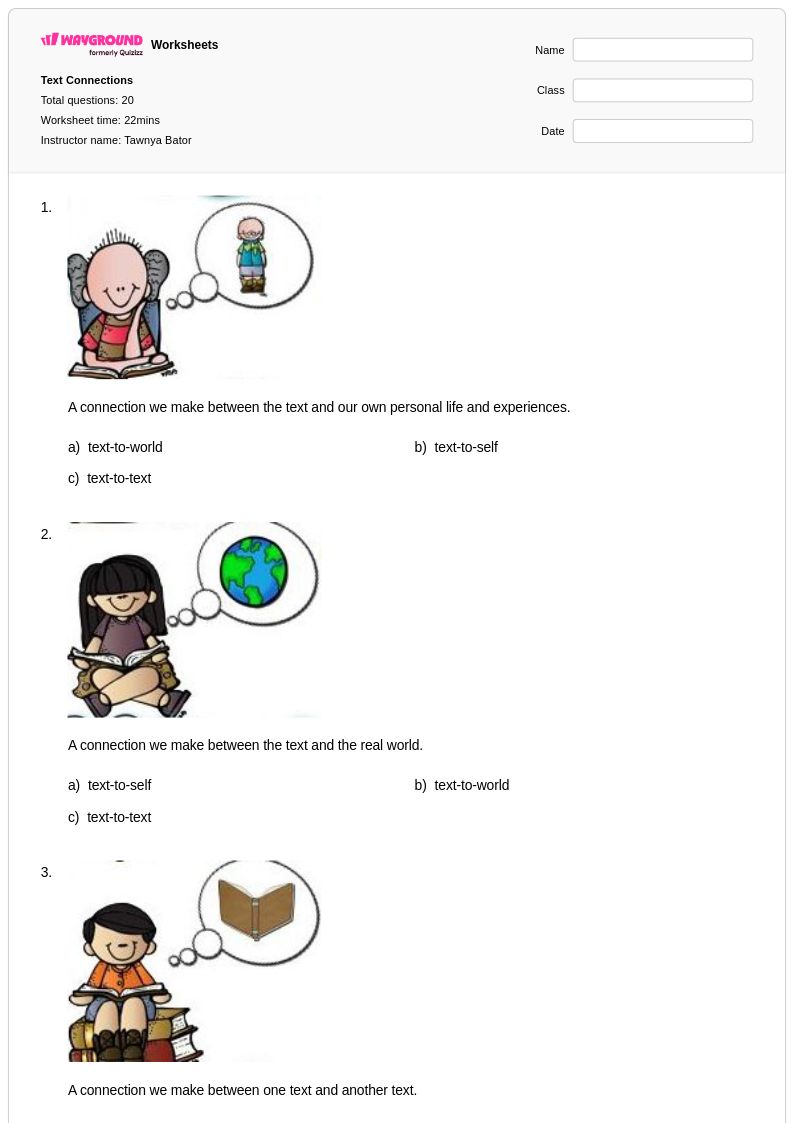
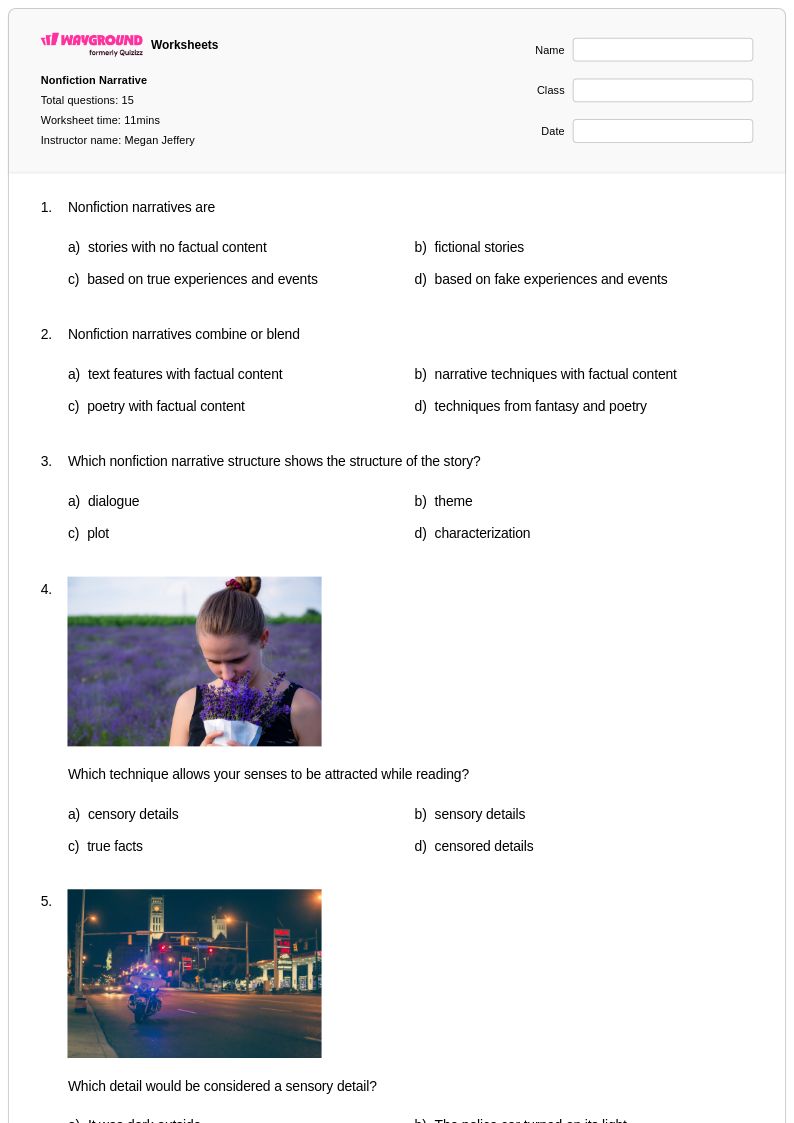
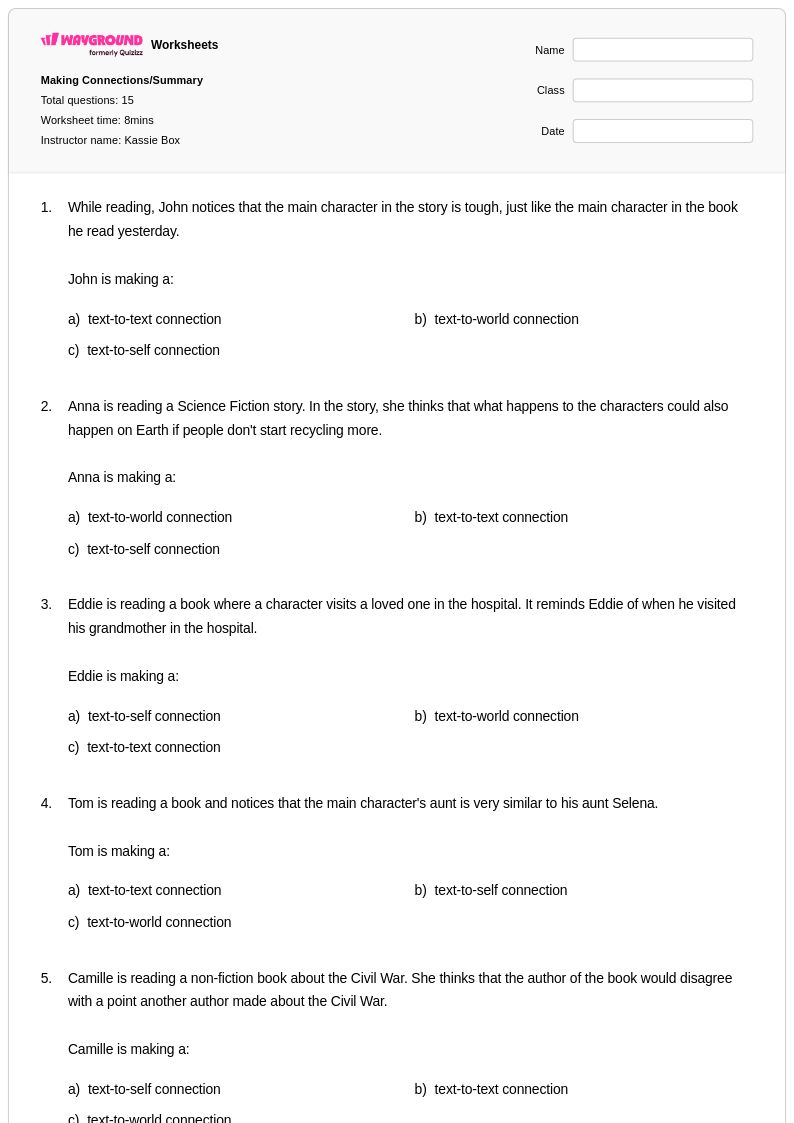
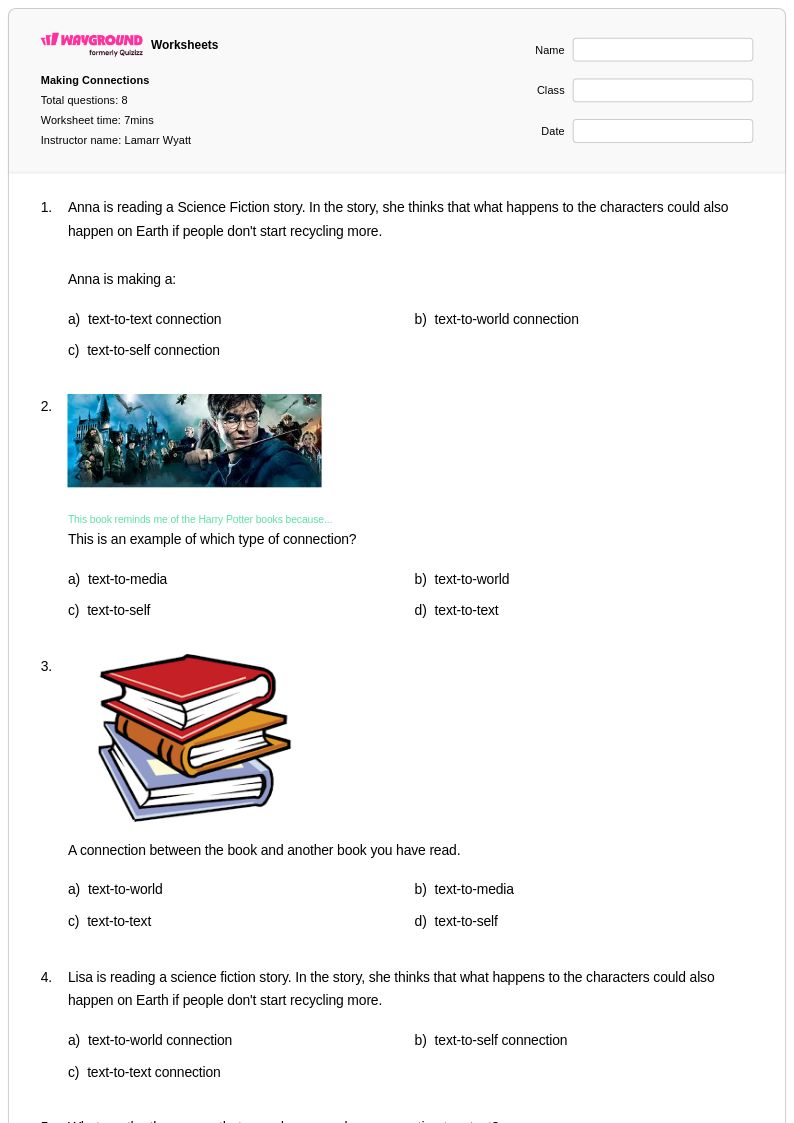
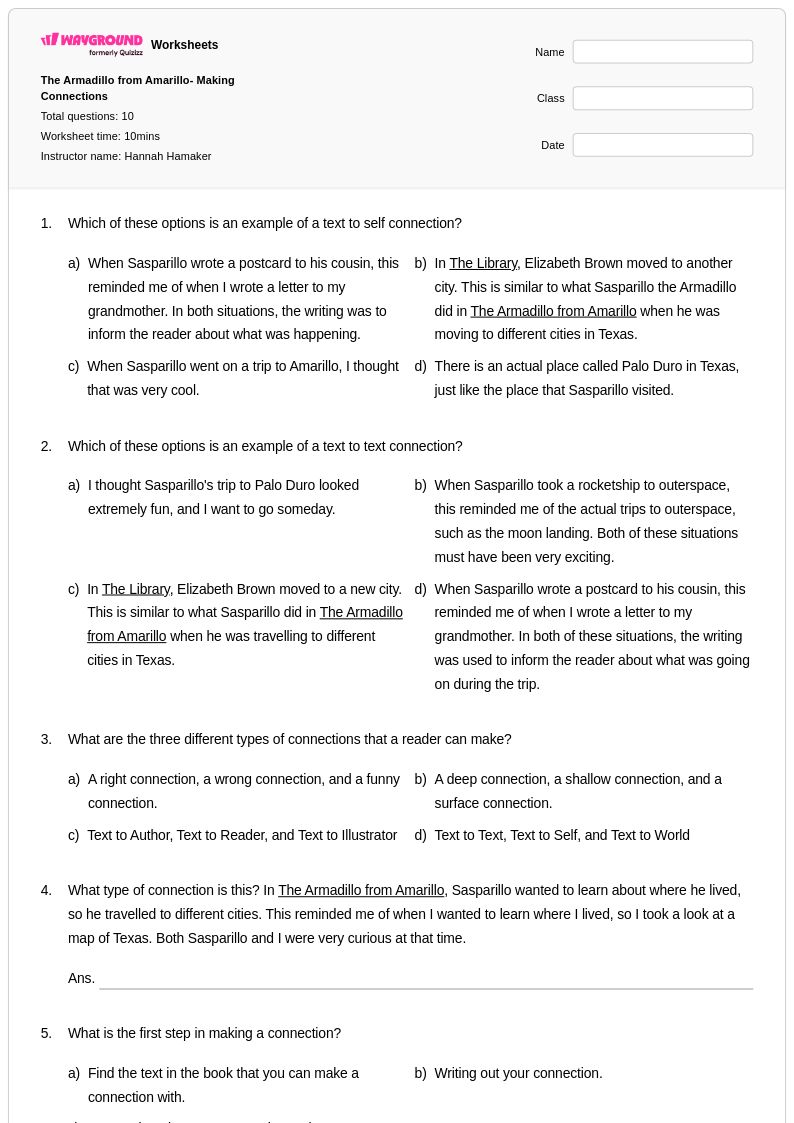
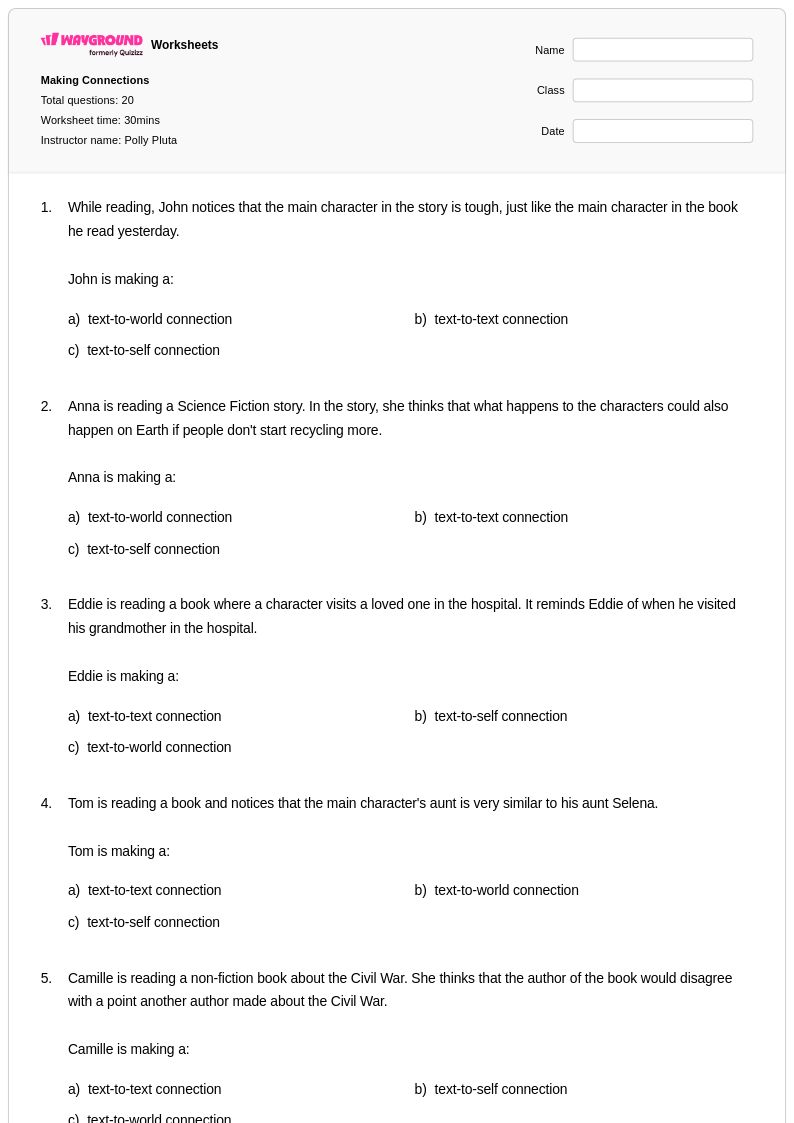
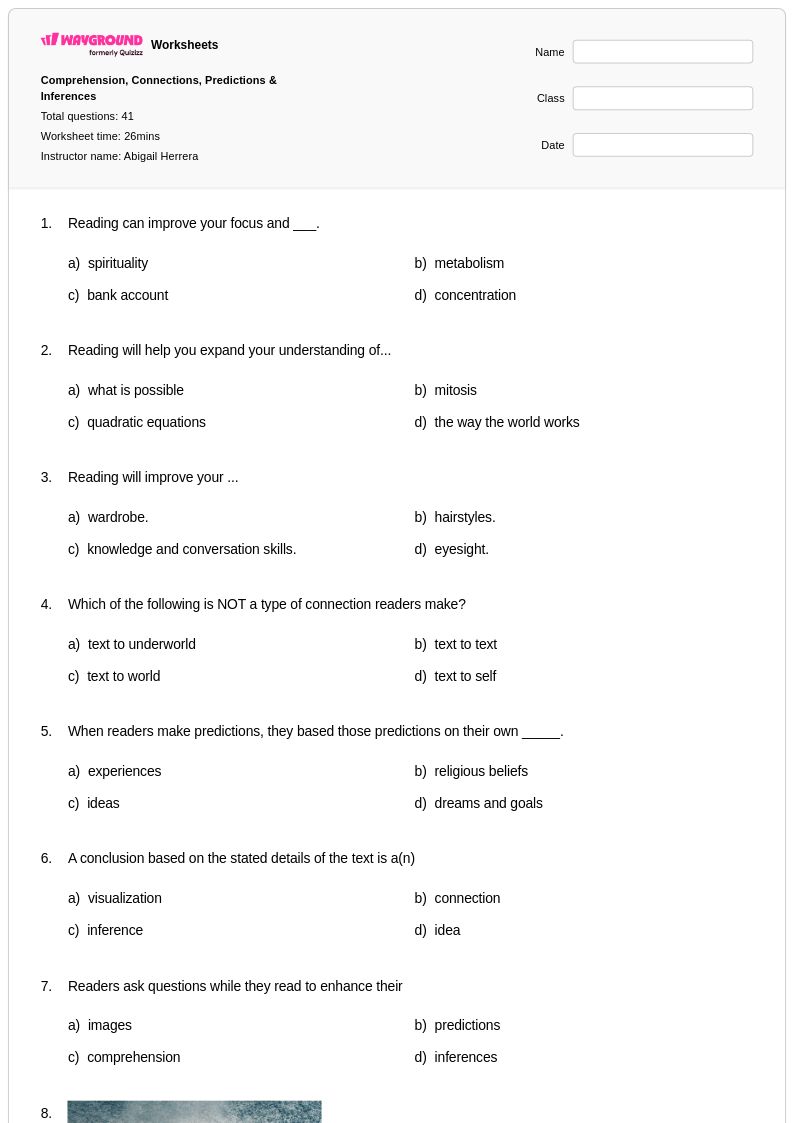
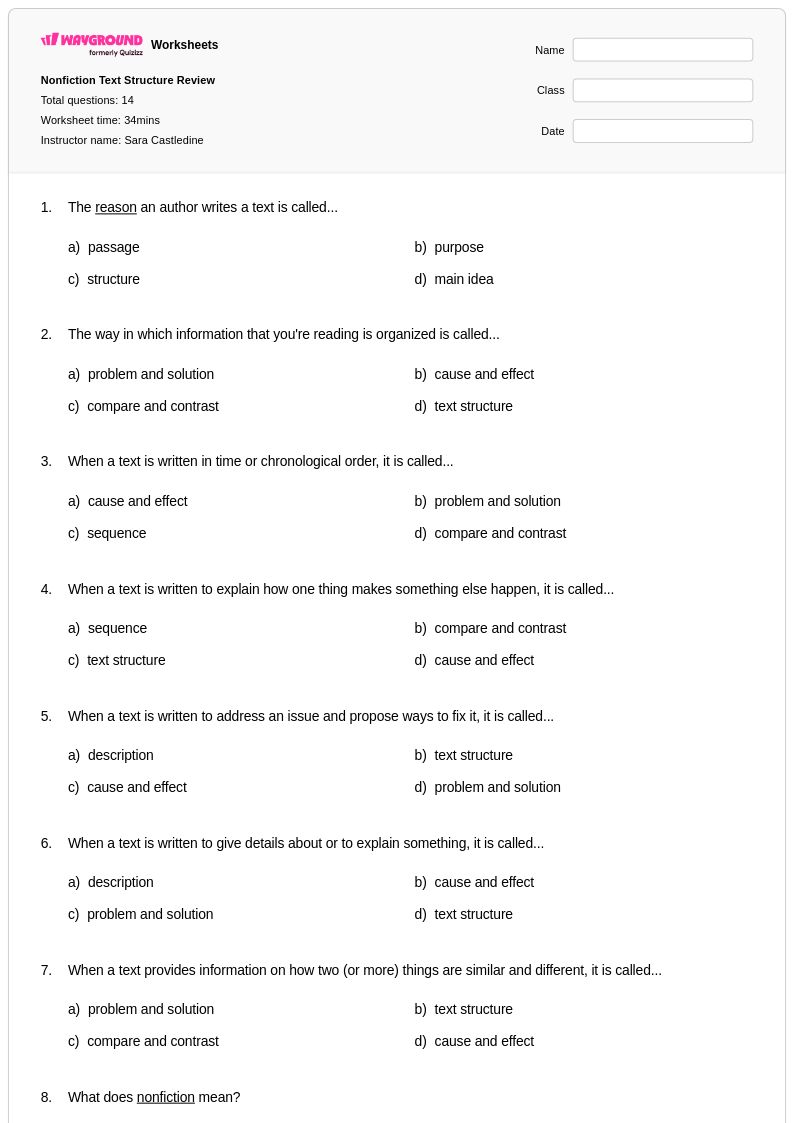
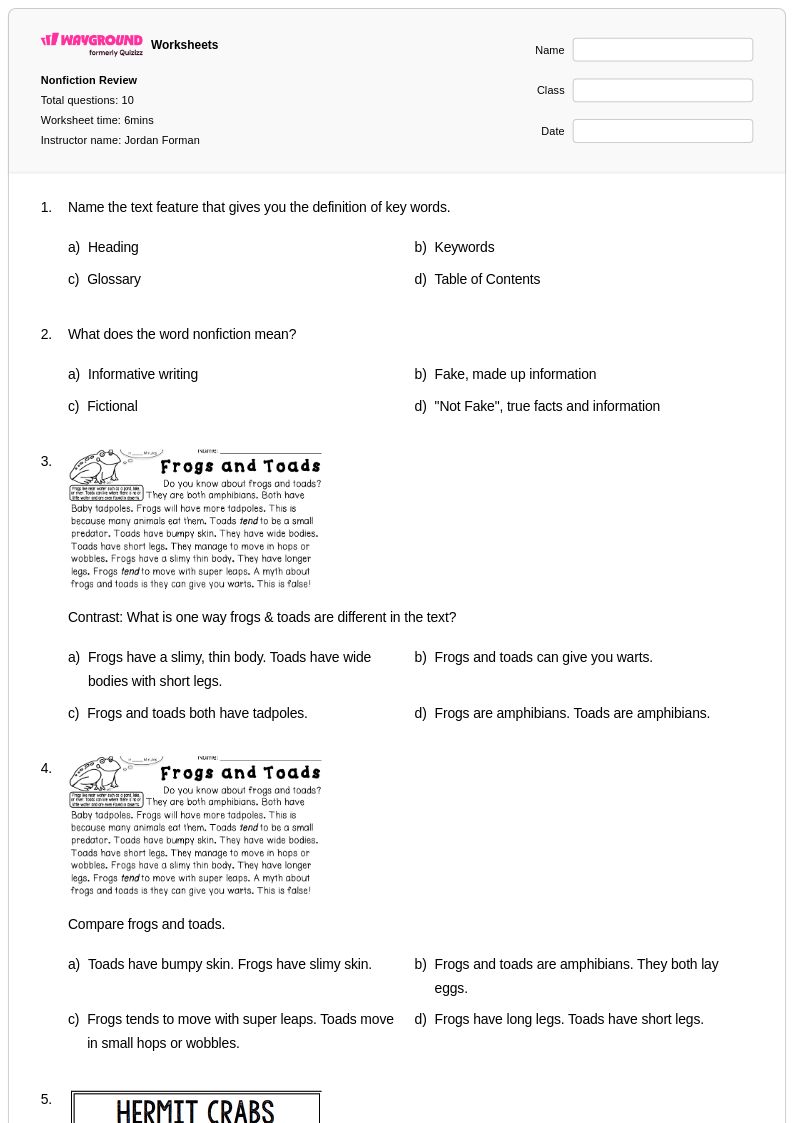
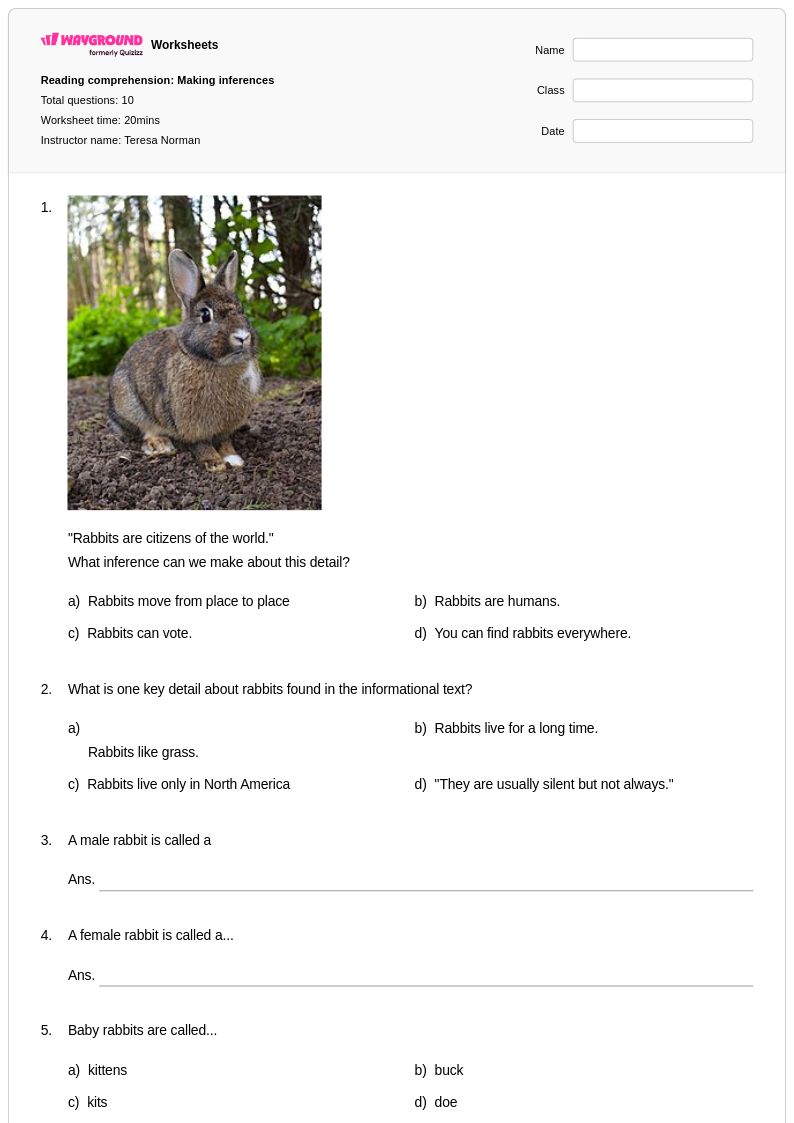
Making connections in nonfiction reading worksheets for kindergarten students available through Wayground (formerly Quizizz) provide essential early literacy practice that helps young learners develop critical thinking skills while engaging with informational texts. These carefully designed printables focus on teaching kindergarten students how to connect their personal experiences, prior knowledge, and observations to factual content they encounter in books, articles, and other nonfiction materials. The worksheets strengthen foundational reading comprehension abilities by encouraging students to identify text-to-self, text-to-world, and text-to-text connections through age-appropriate activities, visual prompts, and guided practice problems. Each worksheet includes a comprehensive answer key and is available as a free pdf download, making it simple for educators to incorporate meaningful nonfiction connection exercises into their daily reading instruction and assessment routines.
Wayground (formerly Quizizz) empowers teachers with access to millions of educator-created resources specifically designed to support making connections in nonfiction reading instruction at the kindergarten level. The platform's robust search and filtering capabilities enable teachers to quickly locate worksheets that align with specific learning standards and match their students' developmental needs, while built-in differentiation tools allow for seamless customization to accommodate diverse learning styles and abilities. These versatile resources are available in both printable and digital formats, including convenient pdf options that streamline lesson planning and provide flexible implementation choices for classroom instruction, homework assignments, and targeted skill practice. Teachers can effectively utilize these comprehensive worksheet collections for initial instruction, remediation support, enrichment activities, and ongoing assessment of students' ability to make meaningful connections between nonfiction content and their expanding understanding of the world around them.
FAQs
How do I teach students to make connections while reading nonfiction?
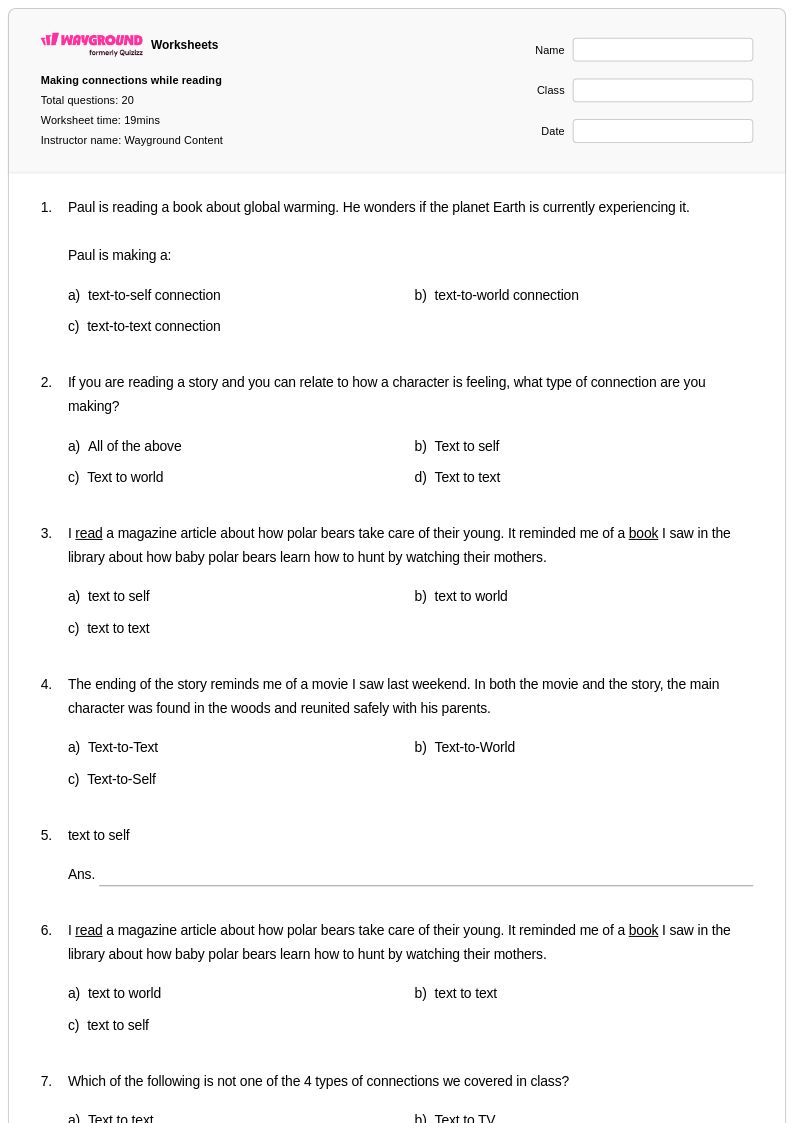
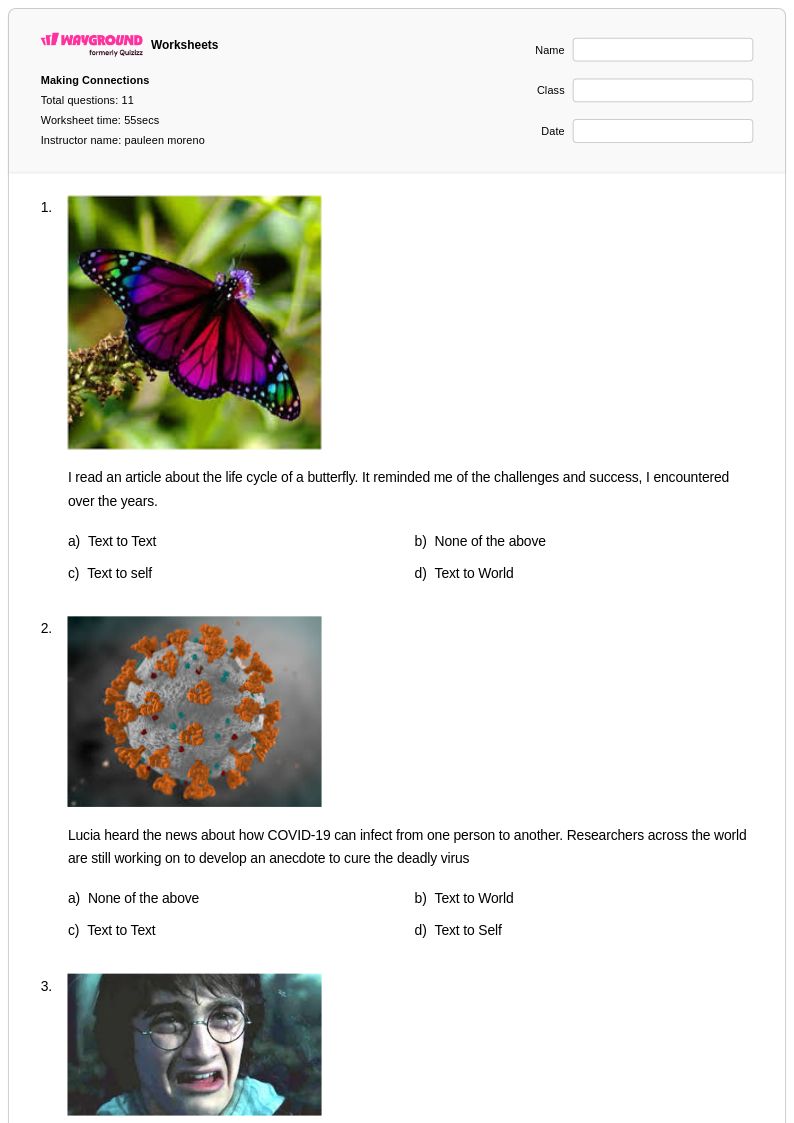
Teach making connections by explicitly modeling each connection type before asking students to practice independently. Start with text-to-self connections, where students link the nonfiction content to personal experiences, then progress to text-to-text connections across informational sources, and finally text-to-world connections that tie content to broader real-world events or issues. Using think-alouds with science articles or current events passages helps students see how proficient readers naturally activate prior knowledge while engaging with informational text.
What are the three types of connections students should make in nonfiction reading?
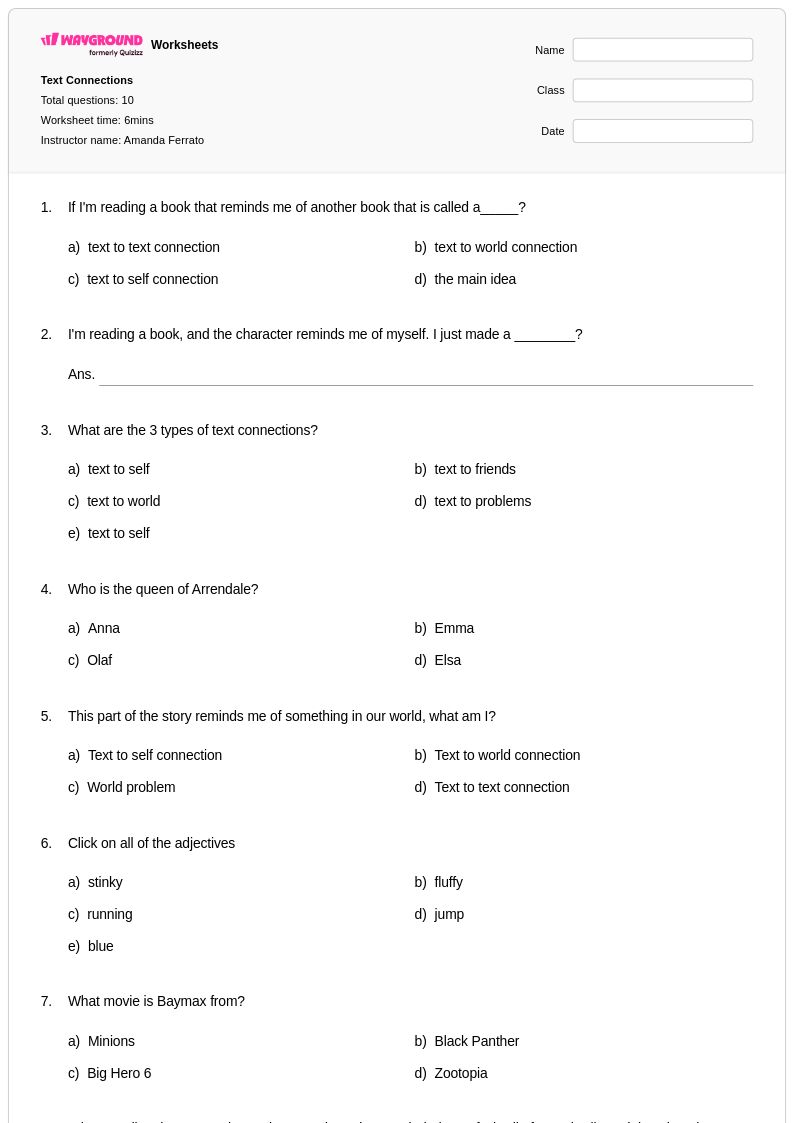
The three core connection types are text-to-self, text-to-text, and text-to-world. Text-to-self connections link the nonfiction content to a student's personal experiences or prior knowledge. Text-to-text connections draw comparisons between the current text and another text the student has read, while text-to-world connections relate the content to broader events, issues, or phenomena beyond the student's immediate experience. All three types deepen comprehension of informational material by anchoring new content to existing understanding.
What exercises help students practice making connections in nonfiction?
Structured practice exercises that work well include connection journals where students record all three connection types after reading a nonfiction passage, graphic organizers that prompt students to cite specific text evidence alongside their connection, and scaffolded worksheets that guide learners from surface-level reactions to analytical responses. Practicing across varied subject areas such as science, social studies, and current events ensures students can apply connection-making strategies regardless of the informational content they encounter.
What mistakes do students commonly make when making connections to nonfiction texts?
The most common error is confusing a genuine reading connection with a simple personal reaction, such as writing 'I found this interesting' instead of explaining how the content relates to prior knowledge or another text. Students also frequently make superficial text-to-self connections that don't deepen their comprehension, rather than using the connection to explain or extend their understanding of the nonfiction content. A third common misconception is treating text-to-world connections as general opinions rather than grounding them in specific real-world contexts that illuminate the text's meaning.
How can I differentiate making connections instruction for students at different reading levels?
Differentiation for making connections in nonfiction can involve adjusting the complexity of the passage, the scaffolding within the task, and the number of connection types students are asked to demonstrate at once. Beginning readers may focus solely on text-to-self connections with sentence starters provided, while more advanced students tackle all three connection types with full written justification. On Wayground, teachers can apply accommodations such as read-aloud support for students who need audio reading of questions, reduced answer choices to lower cognitive load, and extended time settings that can be configured per student without disrupting the rest of the class.
How do I use Wayground's making connections in nonfiction worksheets in my classroom?
Wayground's making connections in nonfiction worksheets are available as printable PDFs for traditional classroom use and in digital formats for technology-integrated environments, making them suitable for whole-group instruction, small-group remediation, or independent practice. Teachers can also host these worksheets as a quiz directly on Wayground, enabling real-time student responses and streamlined review. Each worksheet includes a complete answer key, so teachers can distribute the practice, review responses efficiently, and provide targeted feedback without additional preparation.