
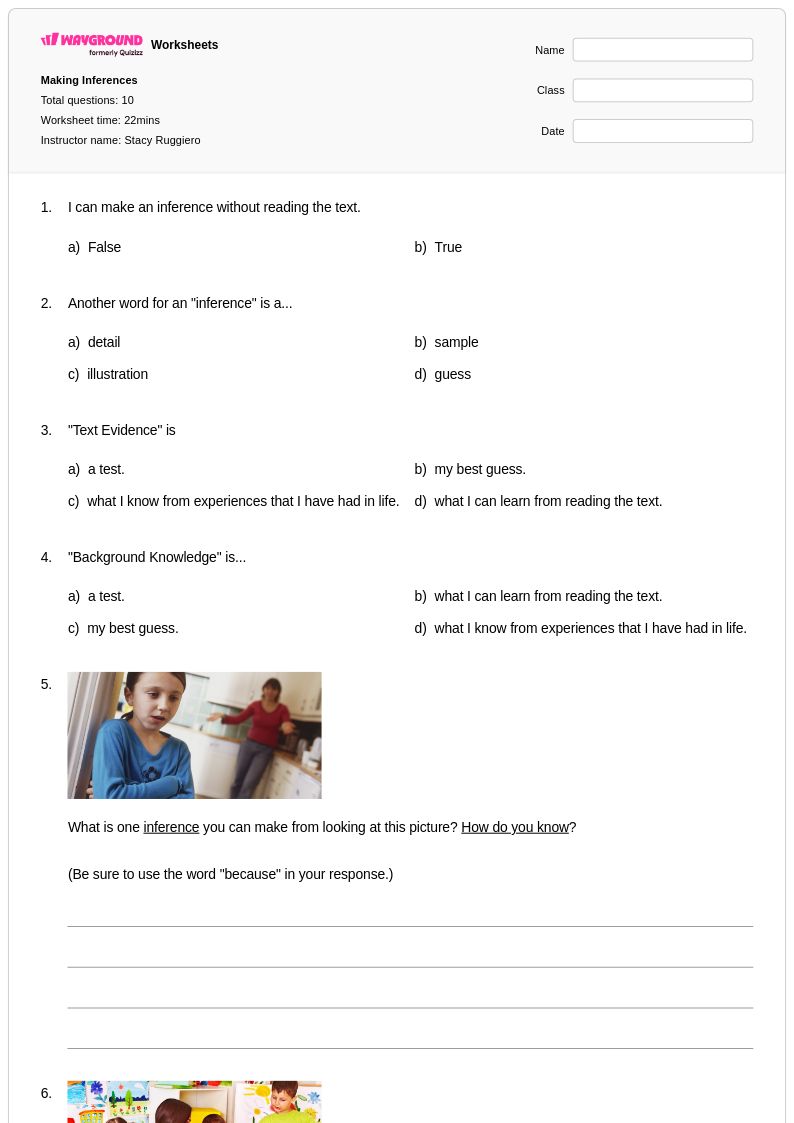
10 Q
4th - 6th
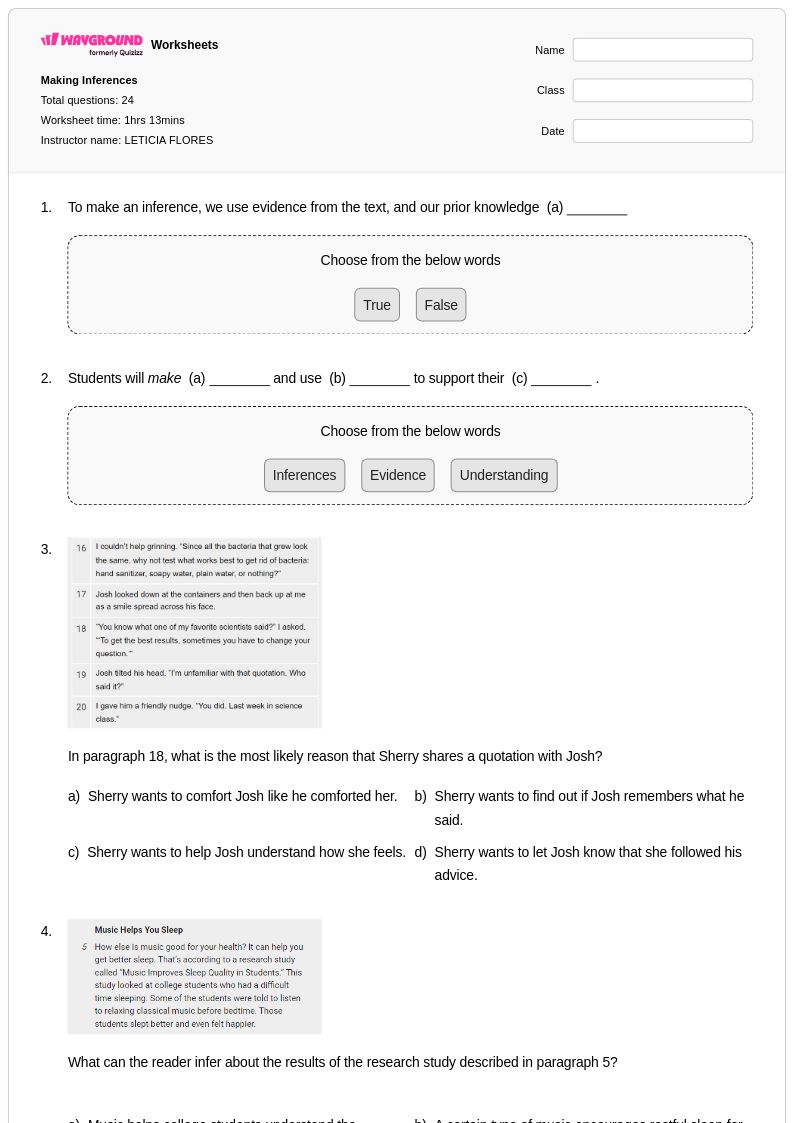
24 Q
4th
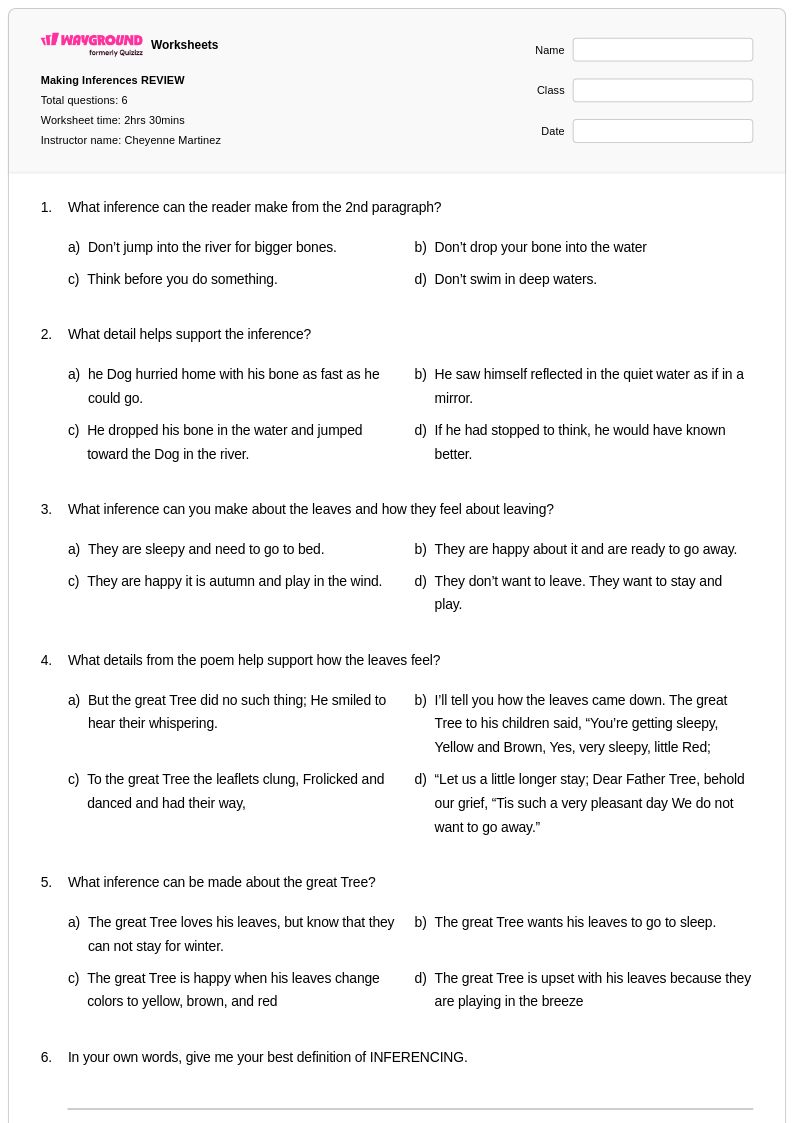
6 Q
4th
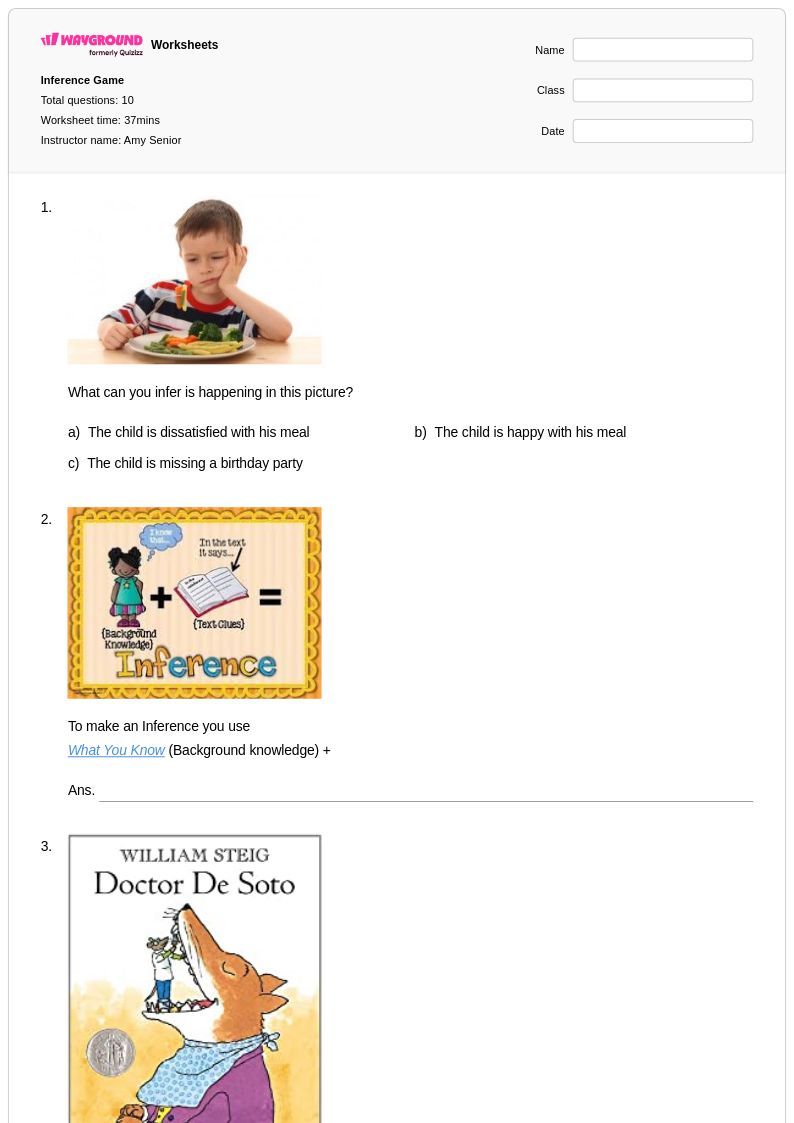
10 Q
3rd - 5th
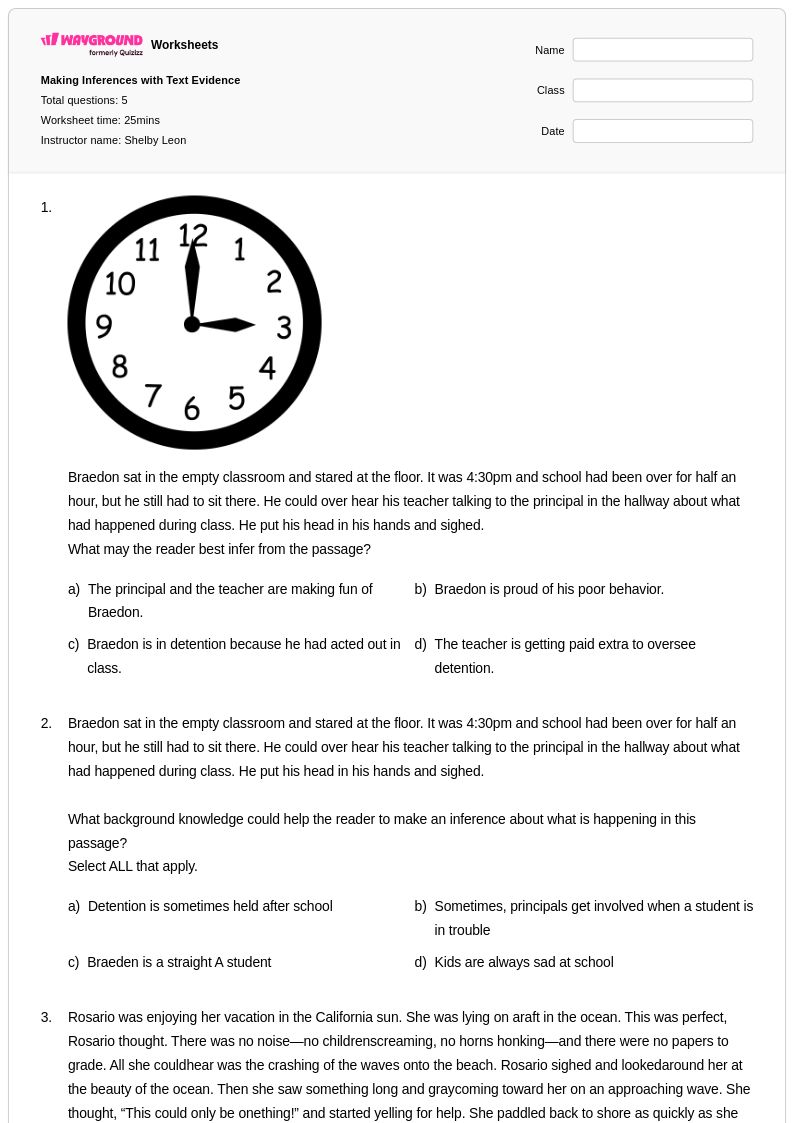
5 Q
4th - 5th
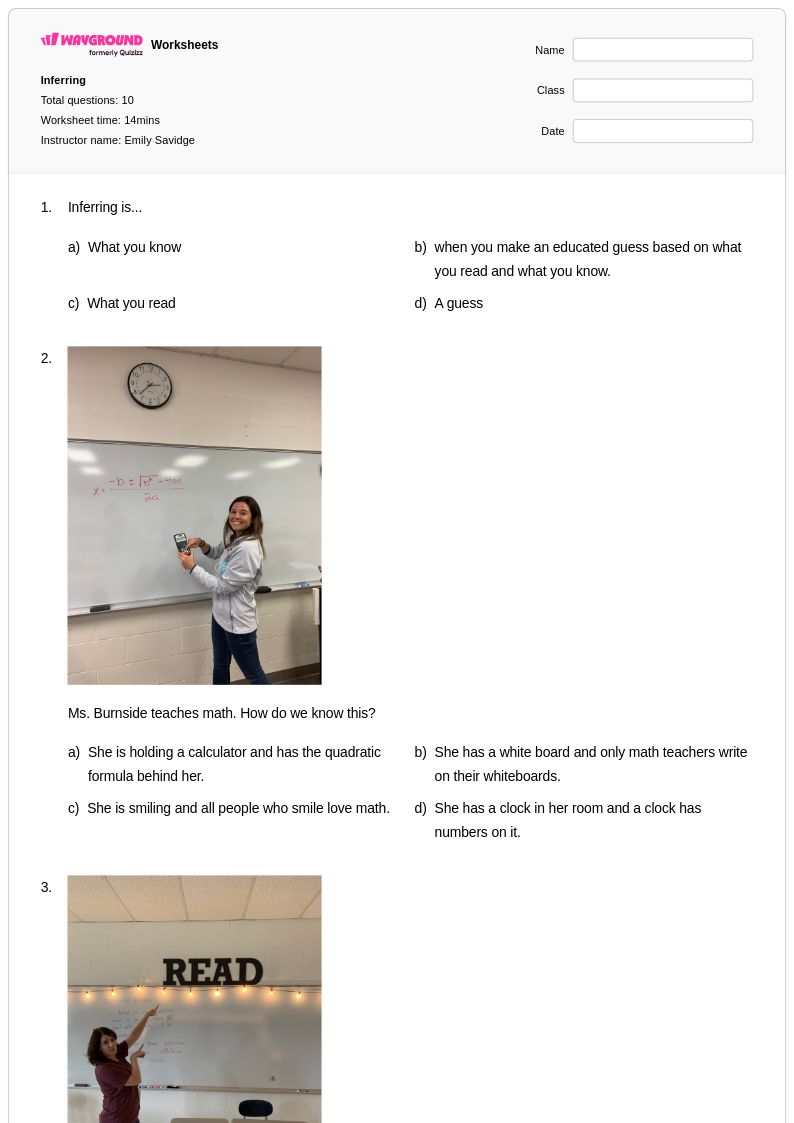
10 Q
3rd - 6th
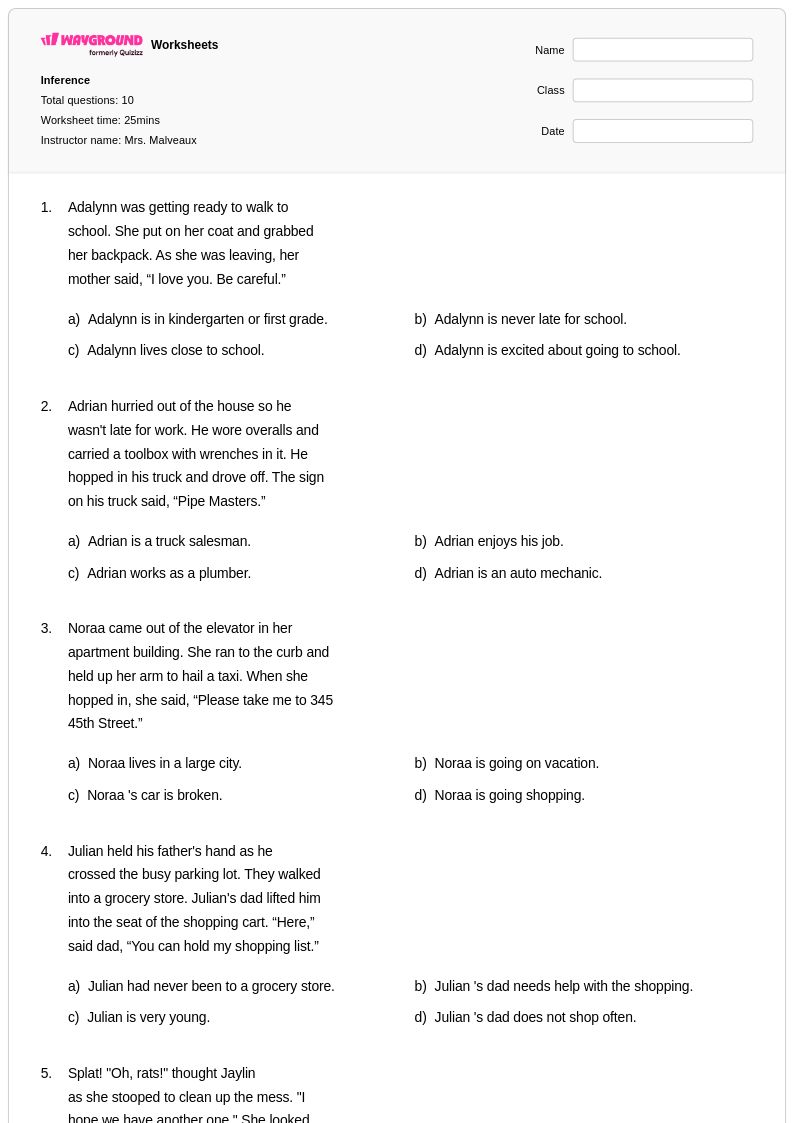
10 Q
2nd - 5th
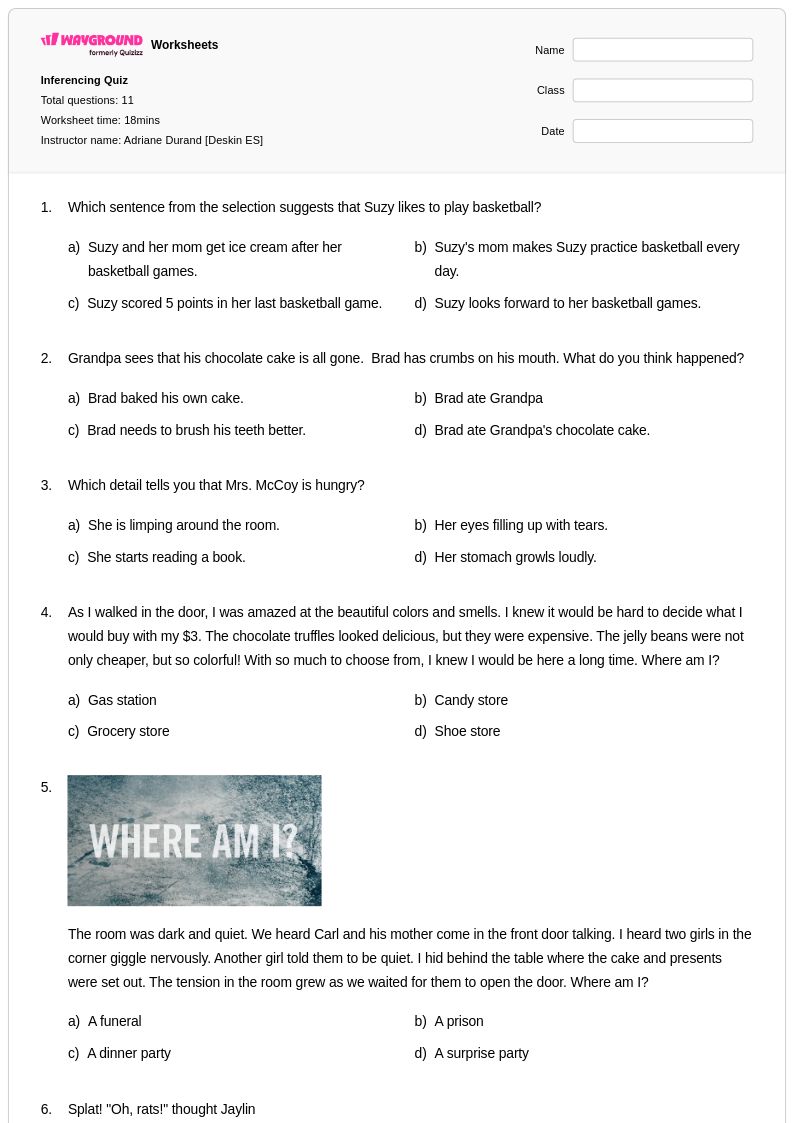
11 Q
1st - 5th
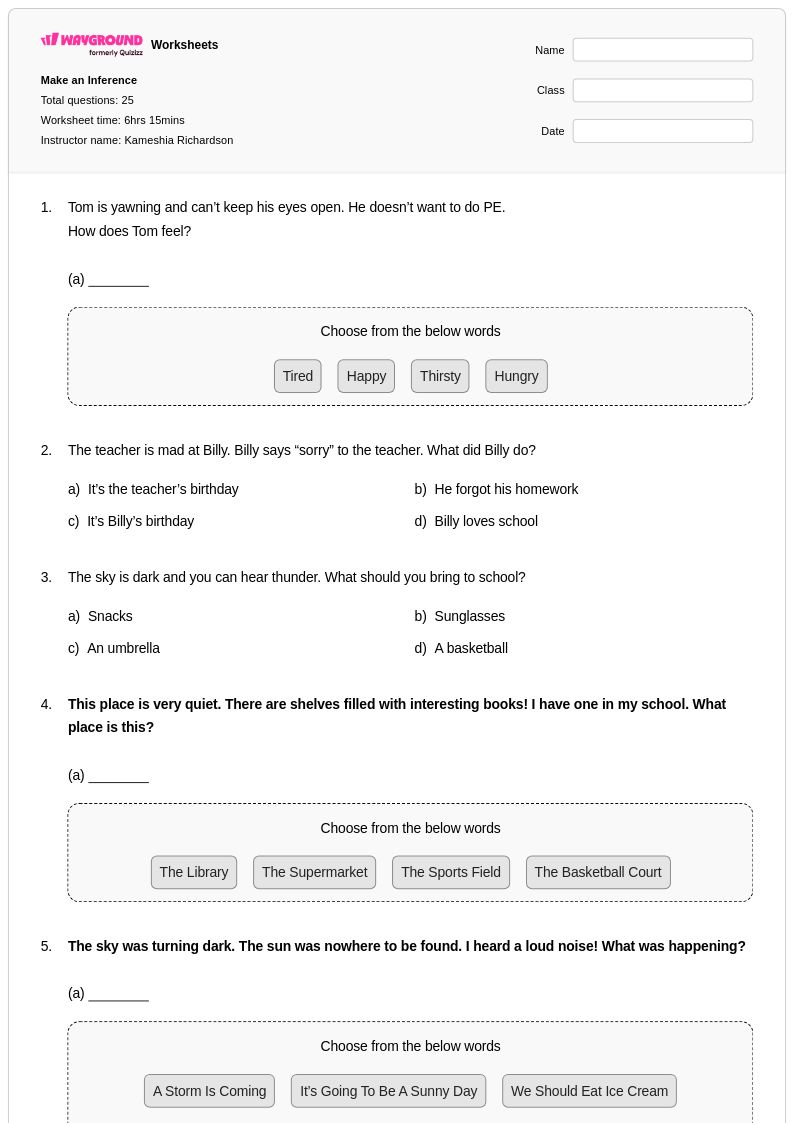
25 Q
1st - 5th
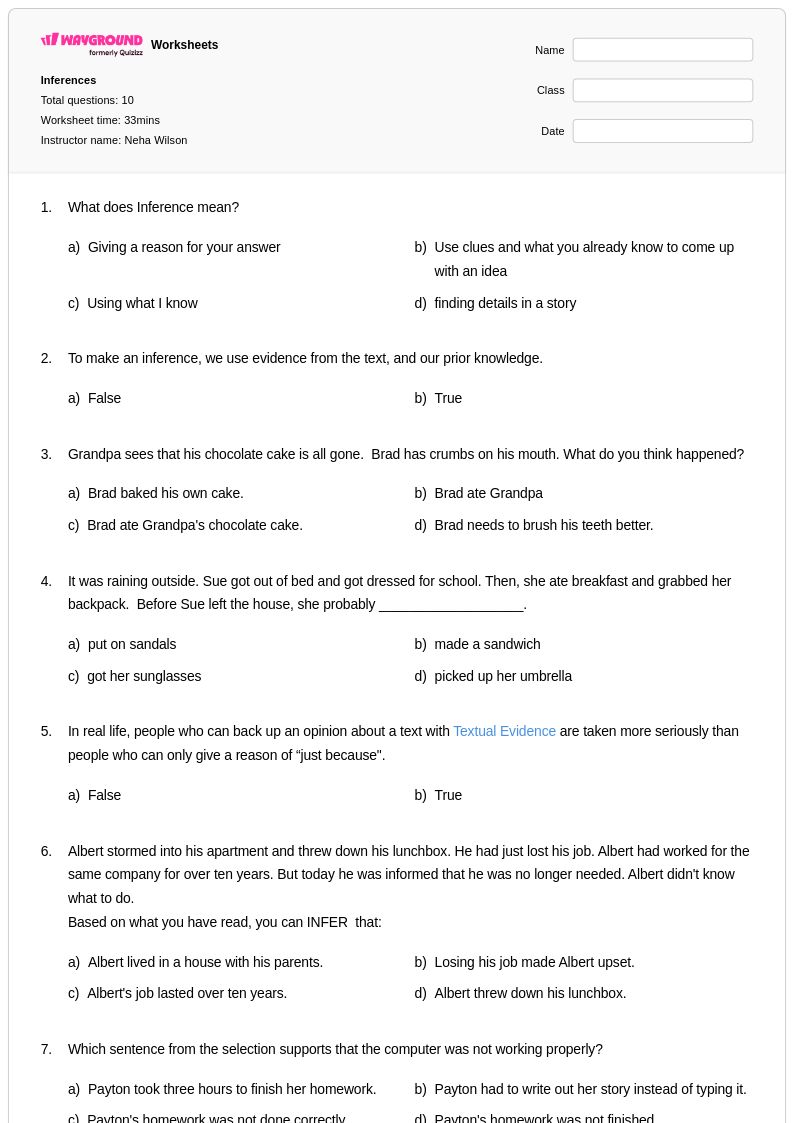
10 Q
3rd - 4th
19 Q
4th
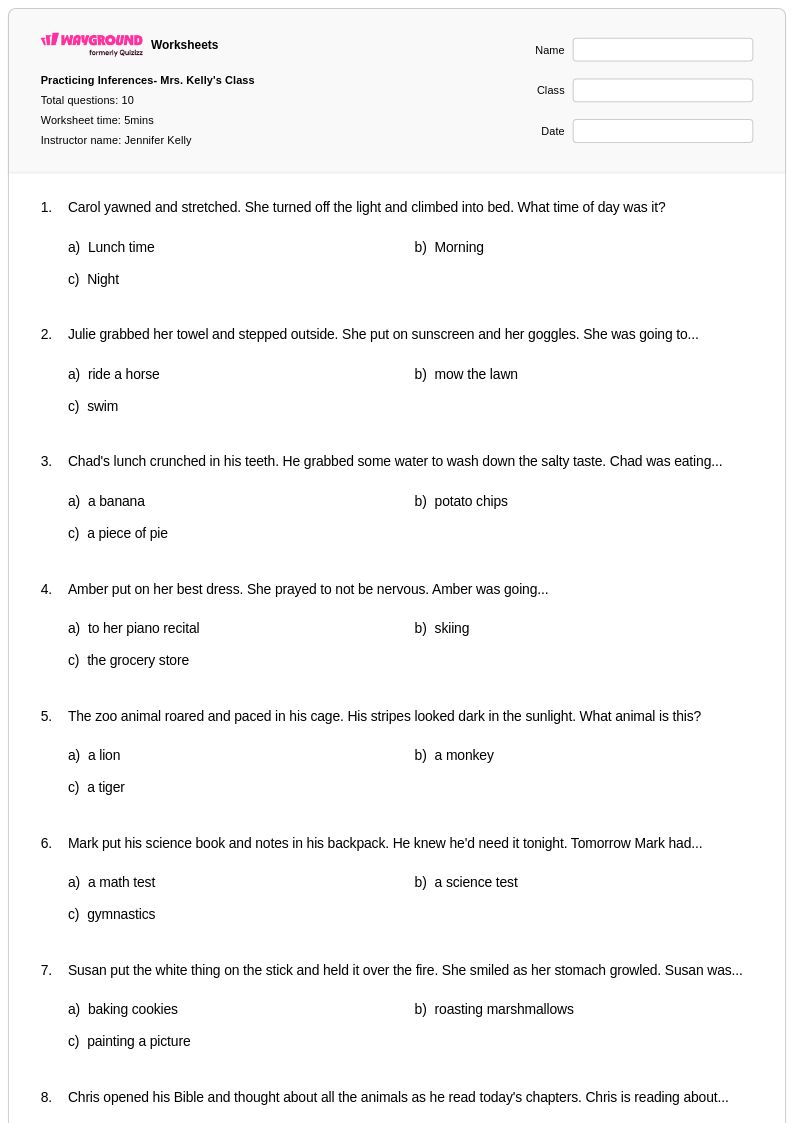
10 Q
4th - 5th
8 Q
4th
10 Q
4th
6 Q
4th
10 Q
4th
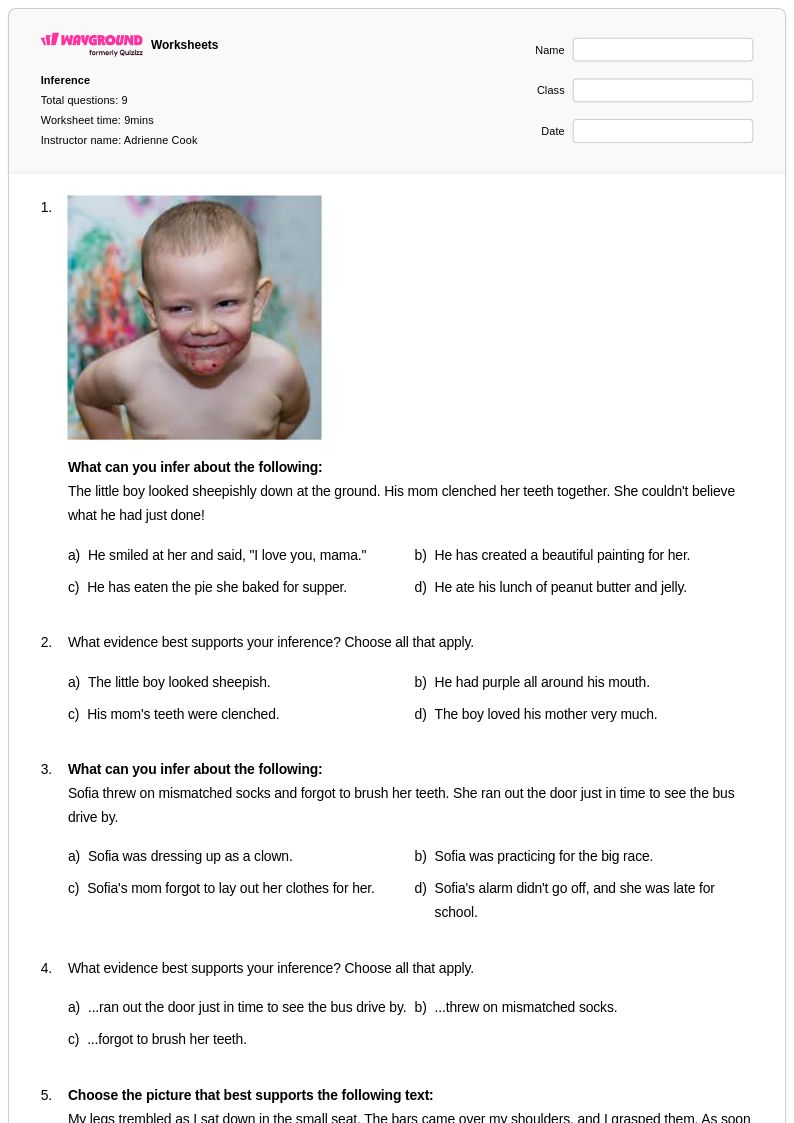
9 Q
4th
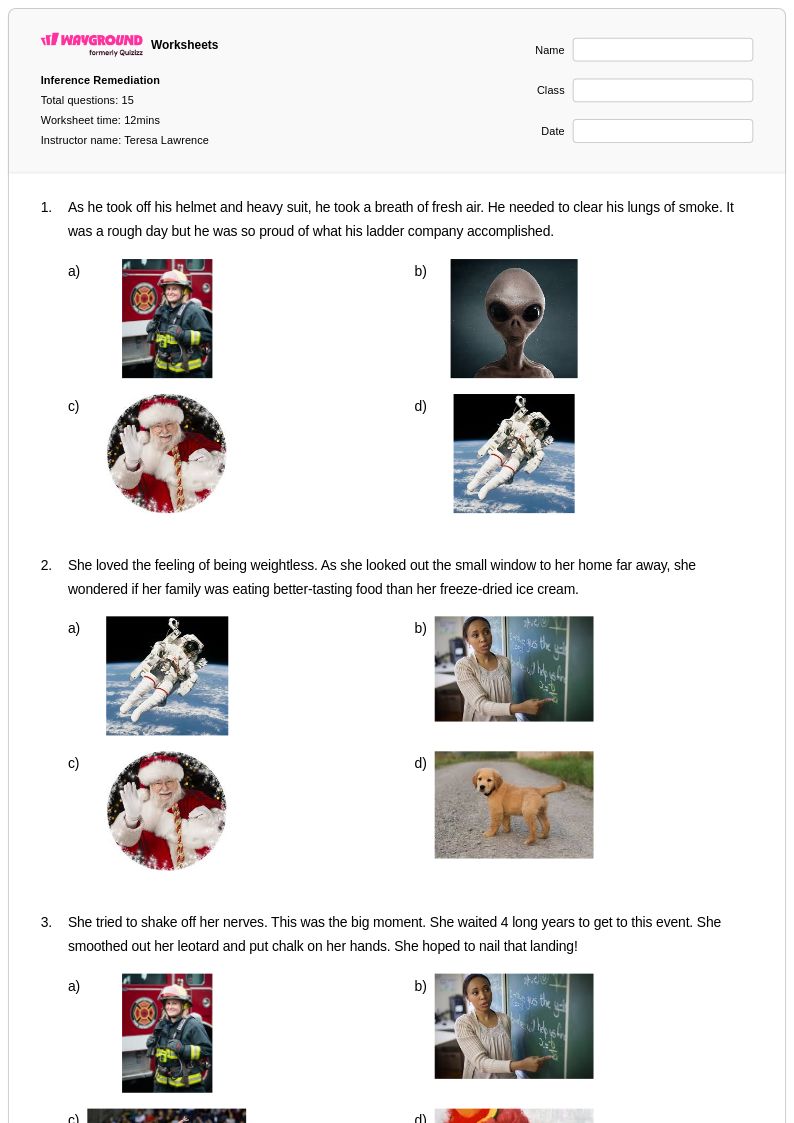
15 Q
4th
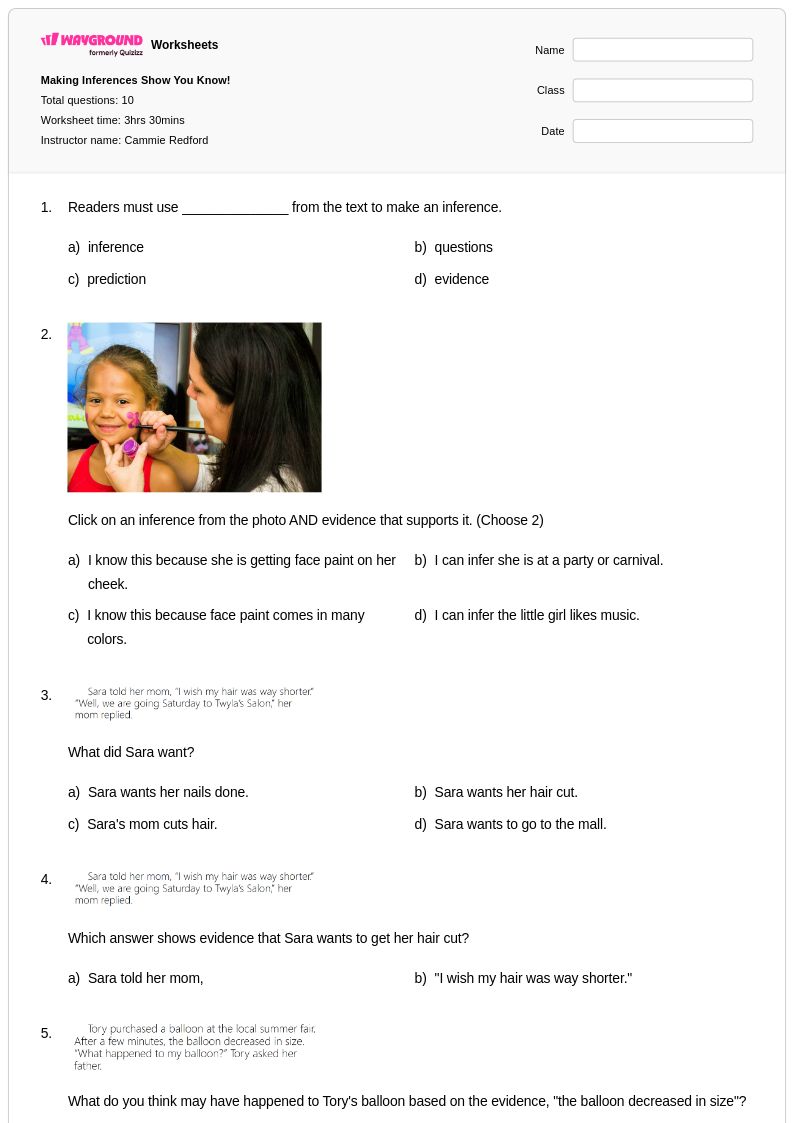
10 Q
3rd - 5th
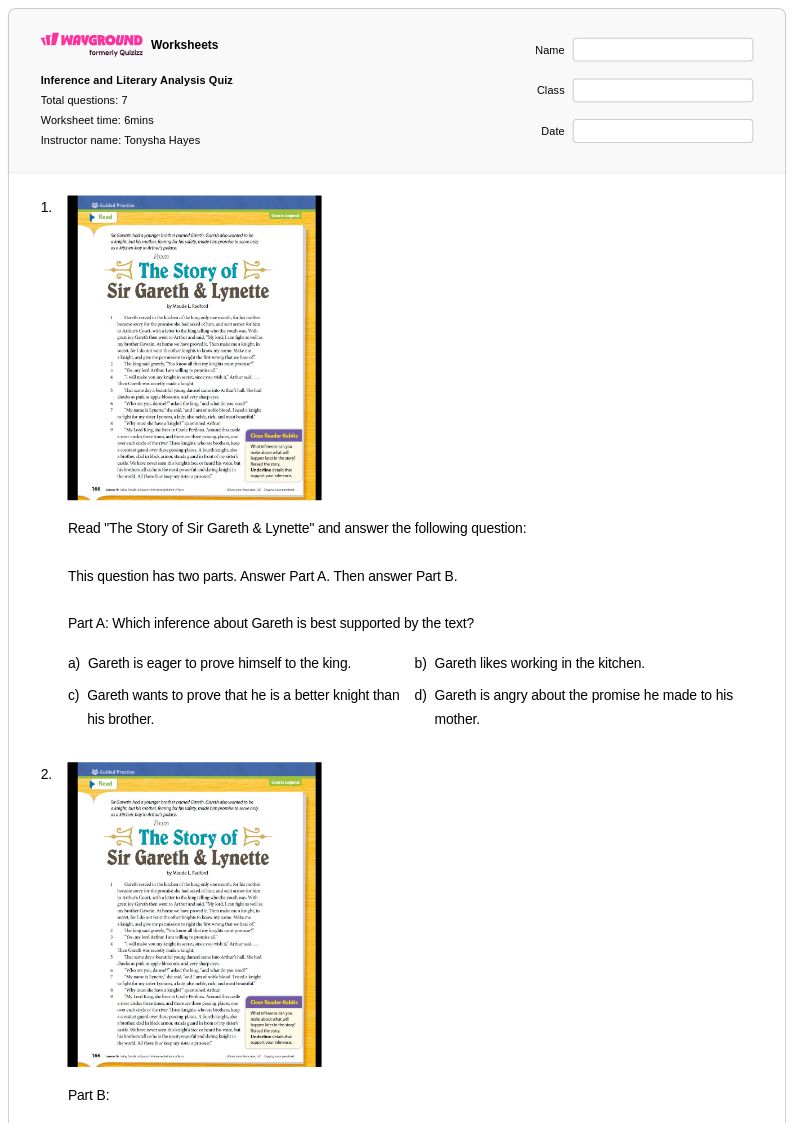
7 Q
4th - 5th
10 Q
3rd - 4th
13 Q
4th
10 Q
3rd - 5th
14 Q
4th
Explore Making Inferences in Nonfiction Worksheets by Grades
Explore Other Subject Worksheets for class 4
Explore printable Making Inferences in Nonfiction worksheets for Class 4
Making inferences in nonfiction texts represents a critical reading comprehension skill that Class 4 students must develop to become analytical readers and critical thinkers. Wayground's extensive collection of making inferences in nonfiction worksheets provides students with structured practice opportunities to examine factual texts, identify implicit information, and draw logical conclusions based on textual evidence and prior knowledge. These carefully designed printables strengthen students' ability to read between the lines in informational passages, scientific articles, biographical texts, and historical accounts while developing essential skills in evidence-based reasoning. Each worksheet includes detailed practice problems that guide students through the inference-making process, complete with answer keys that help teachers assess student understanding and provide targeted feedback on this complex cognitive skill.
Wayground, formerly Quizizz, empowers educators with millions of teacher-created resources specifically focused on helping Class 4 students master the art of making inferences in nonfiction materials. The platform's robust search and filtering capabilities allow teachers to quickly locate worksheets aligned with reading comprehension standards and differentiate instruction based on individual student needs and reading levels. Teachers can customize existing materials or create new practice exercises, accessing both printable PDF formats for traditional classroom use and digital versions for interactive learning experiences. These comprehensive tools support lesson planning by providing ready-to-use materials for initial instruction, targeted remediation for struggling readers, and enrichment activities for advanced students, ensuring that all learners develop the analytical thinking skills necessary to comprehend increasingly complex nonfiction texts throughout their academic journey.