Free Printable Making Predictions in Fiction Worksheets for Class 7
Class 7 students can master making predictions in fiction with Wayground's comprehensive collection of free worksheets, printables, and PDFs featuring engaging practice problems and detailed answer keys.
Explore printable Making Predictions in Fiction worksheets for Class 7
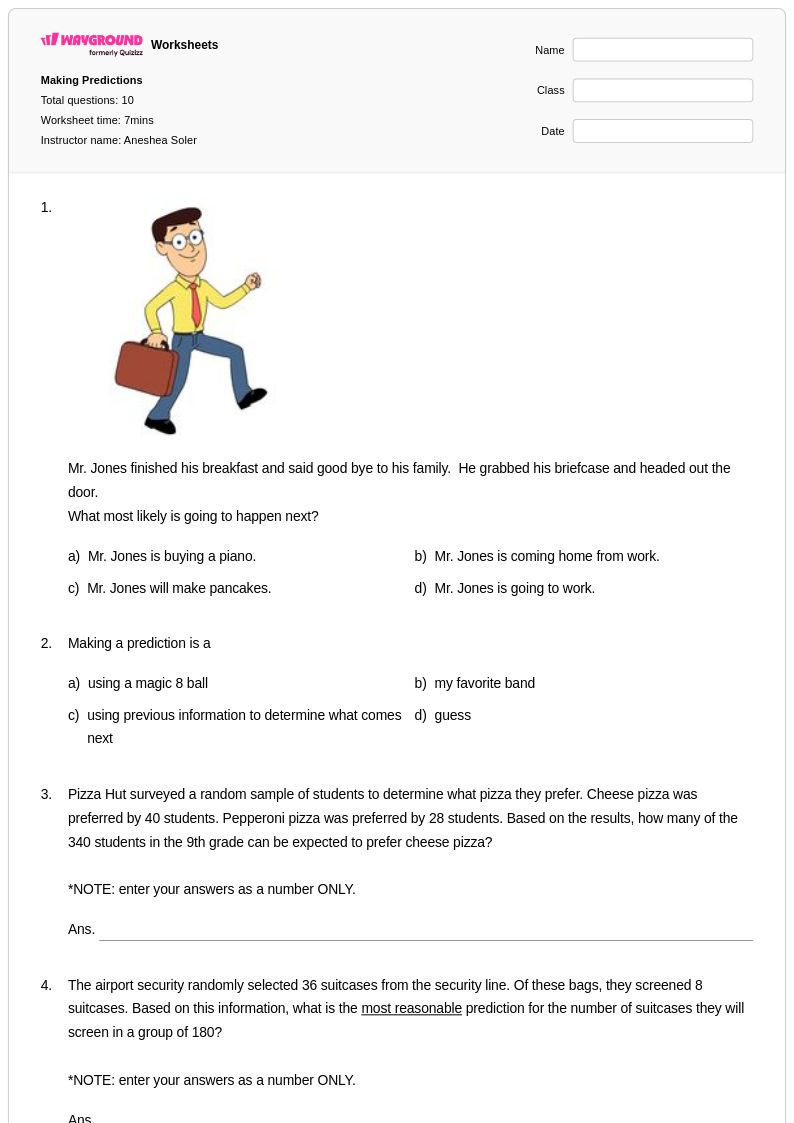
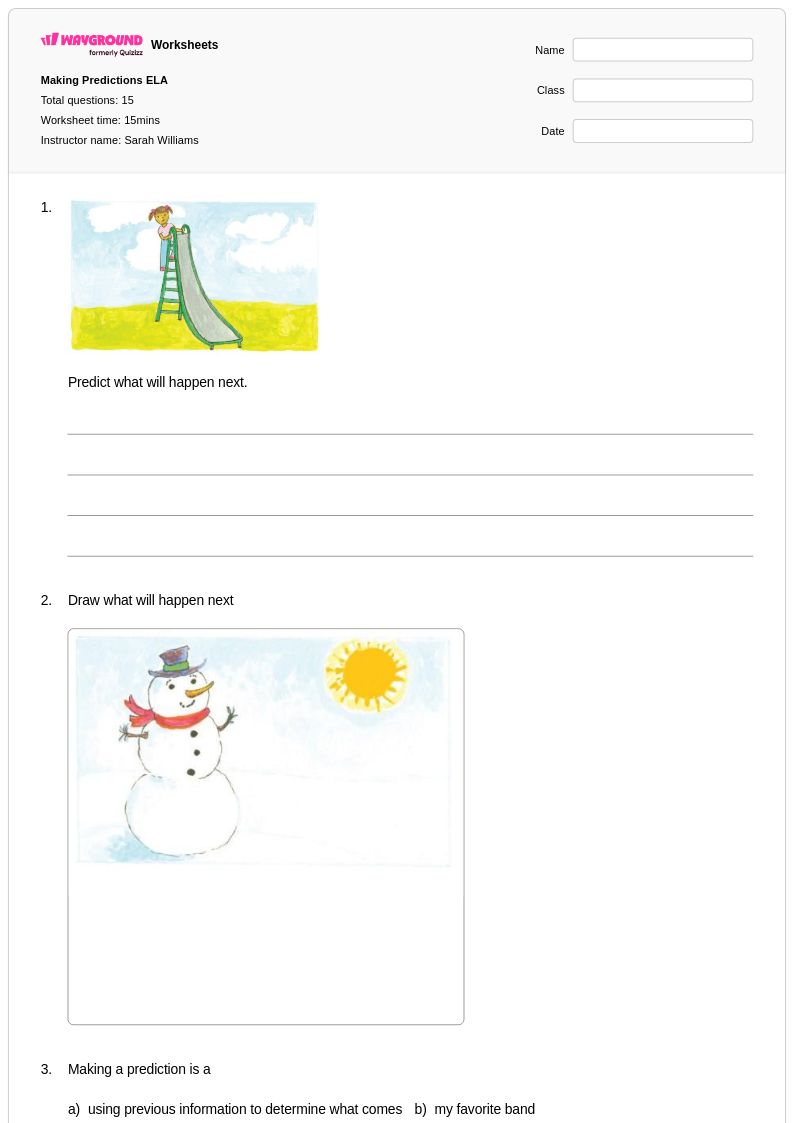
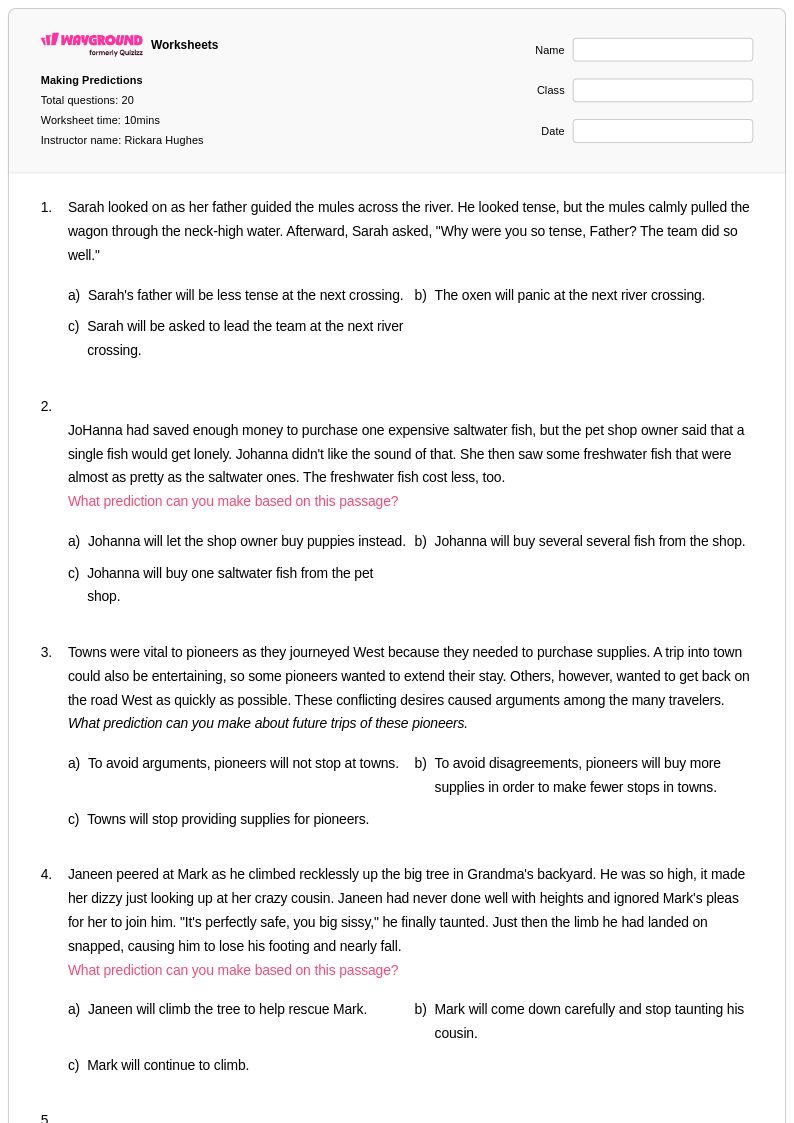
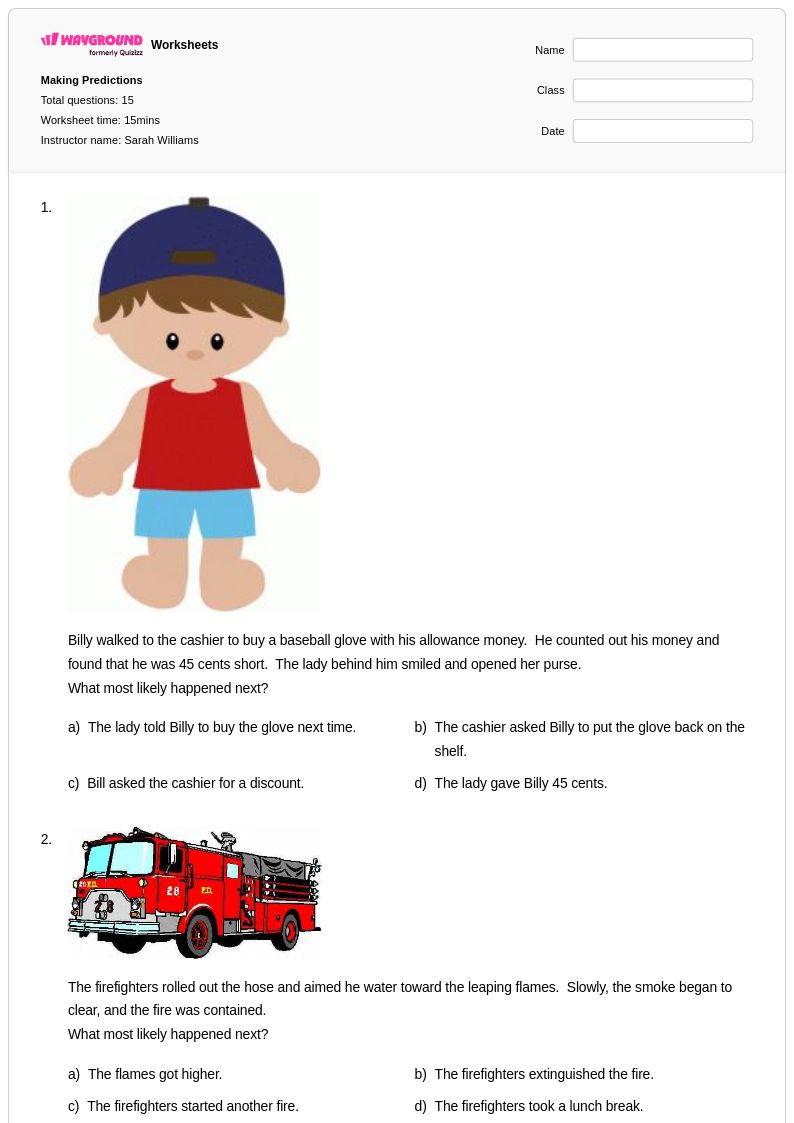
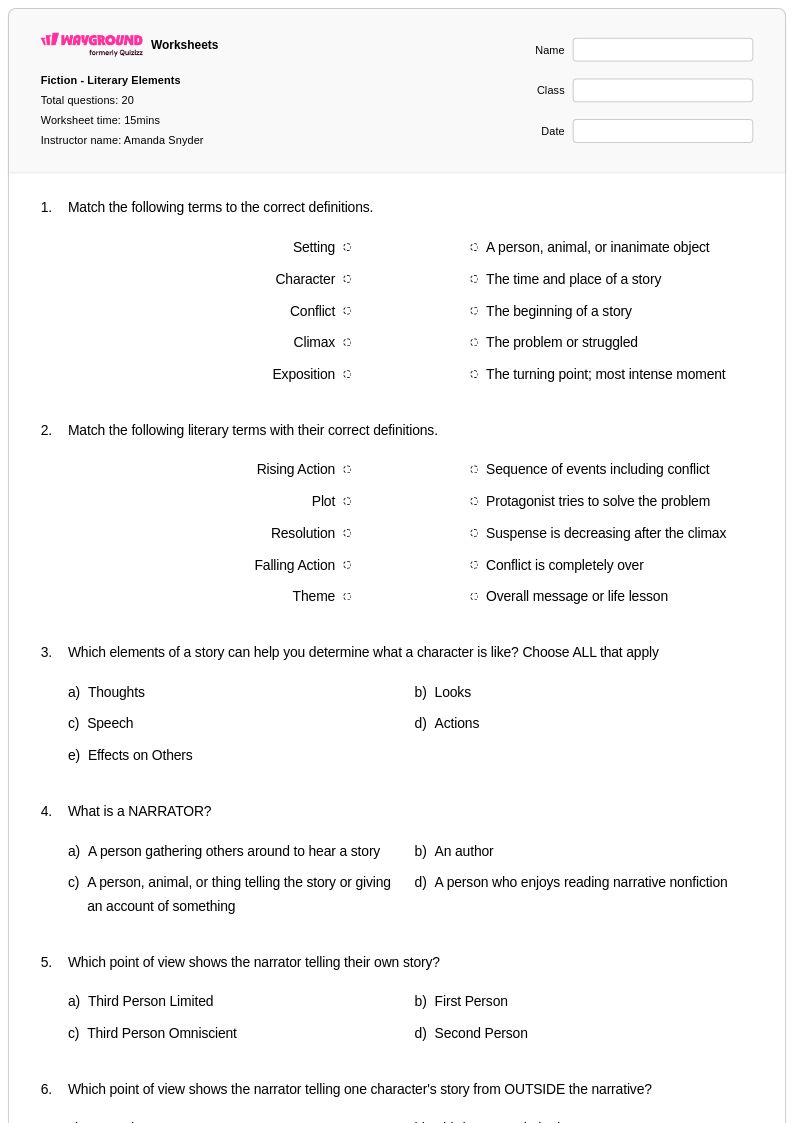
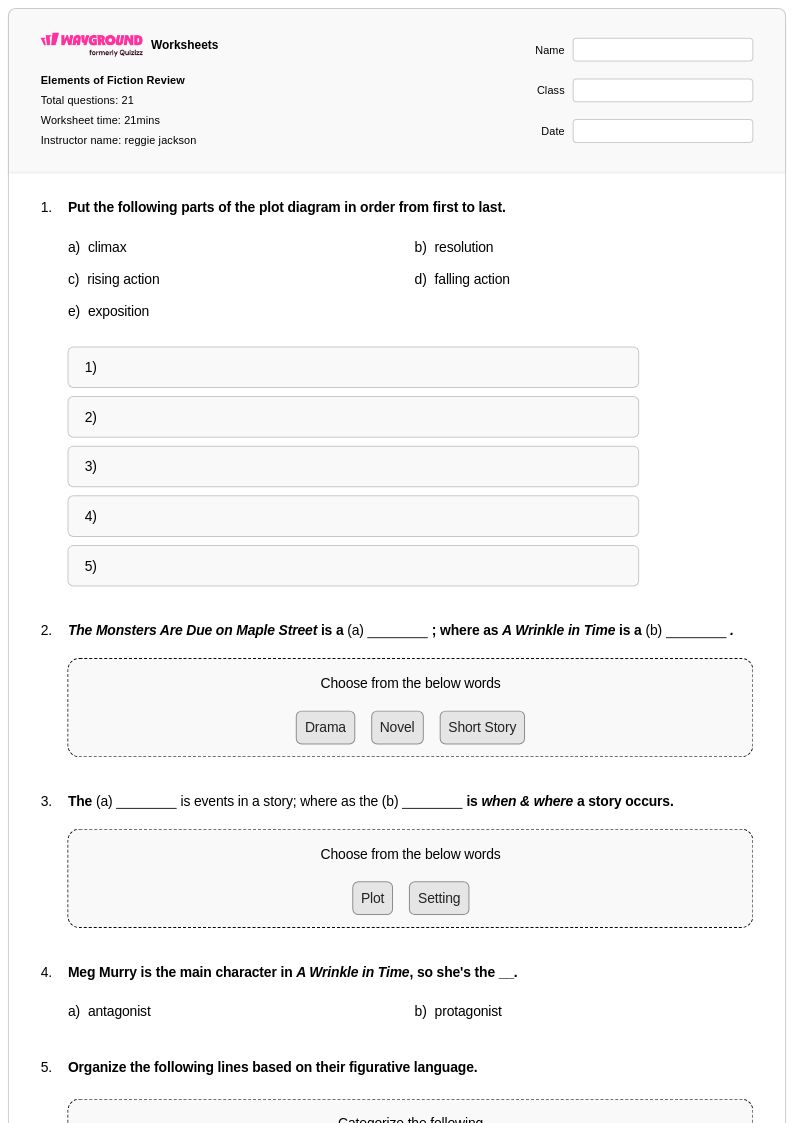
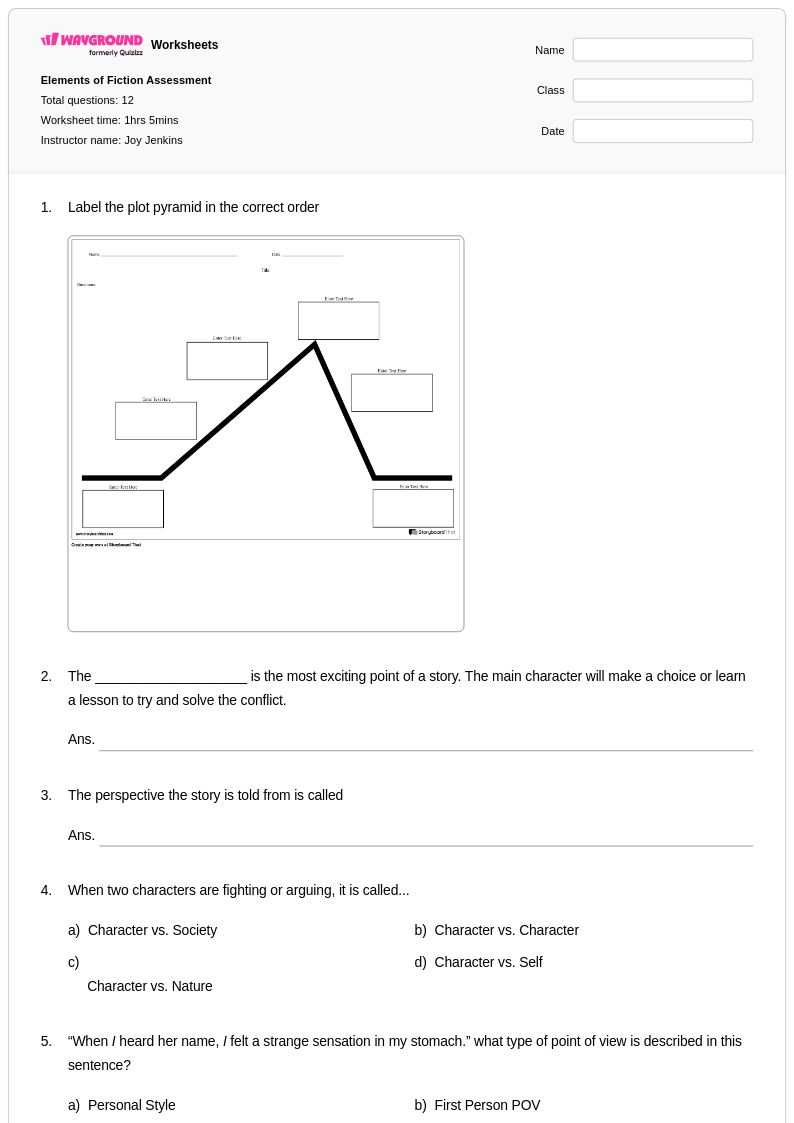
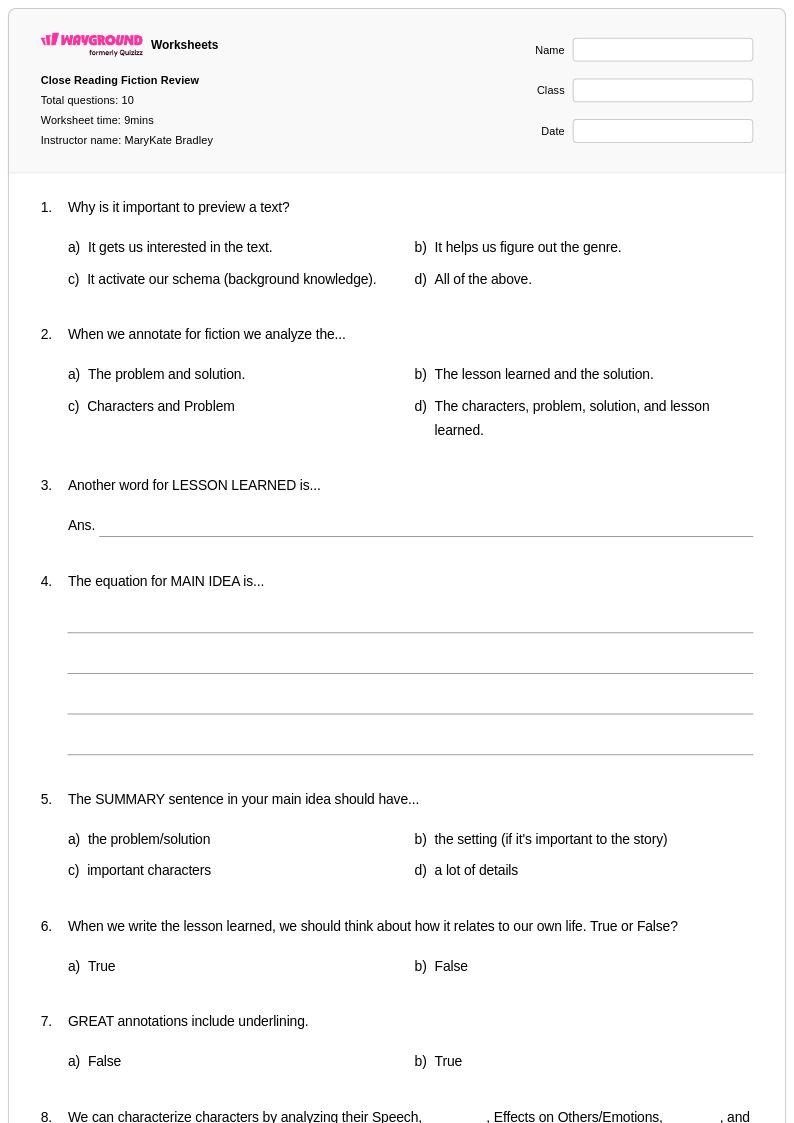
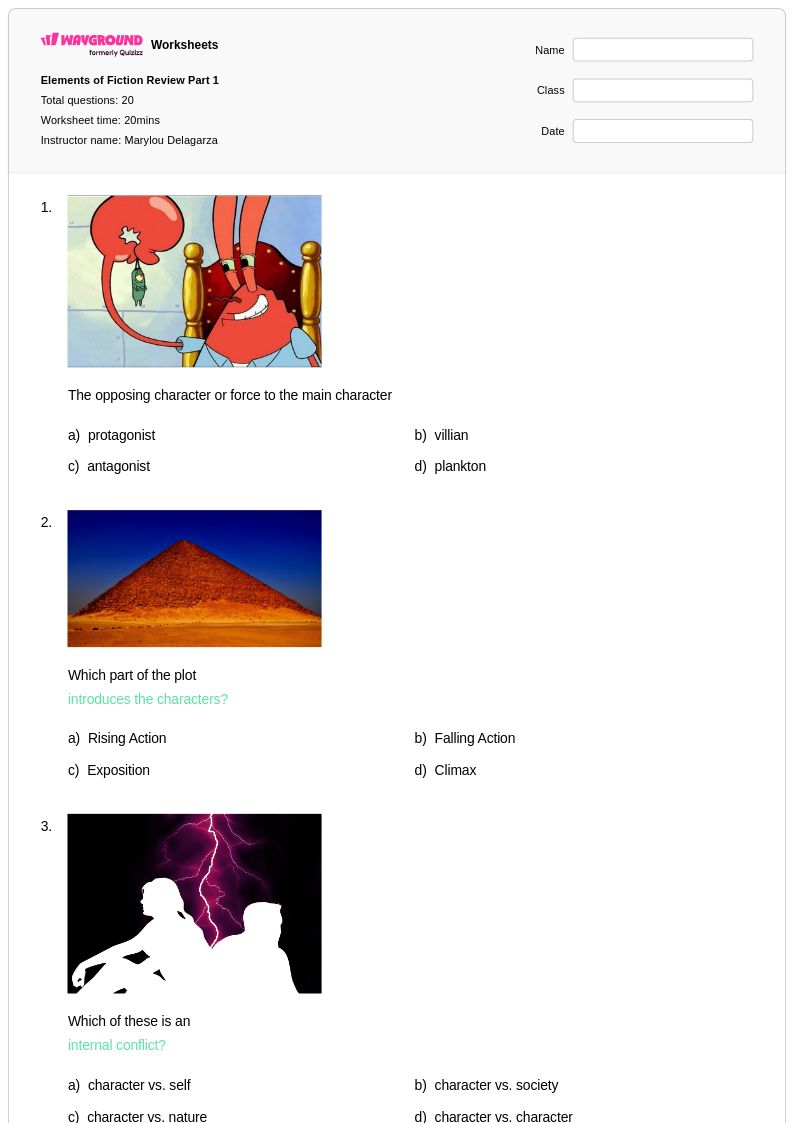
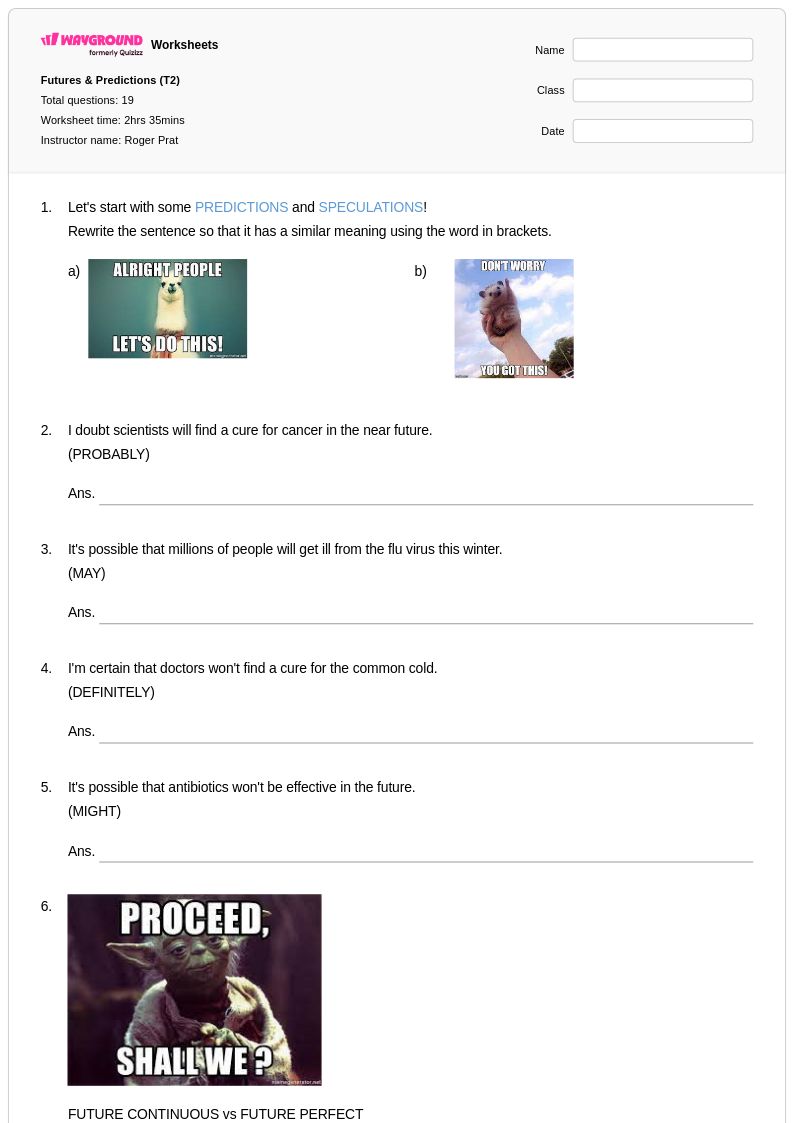
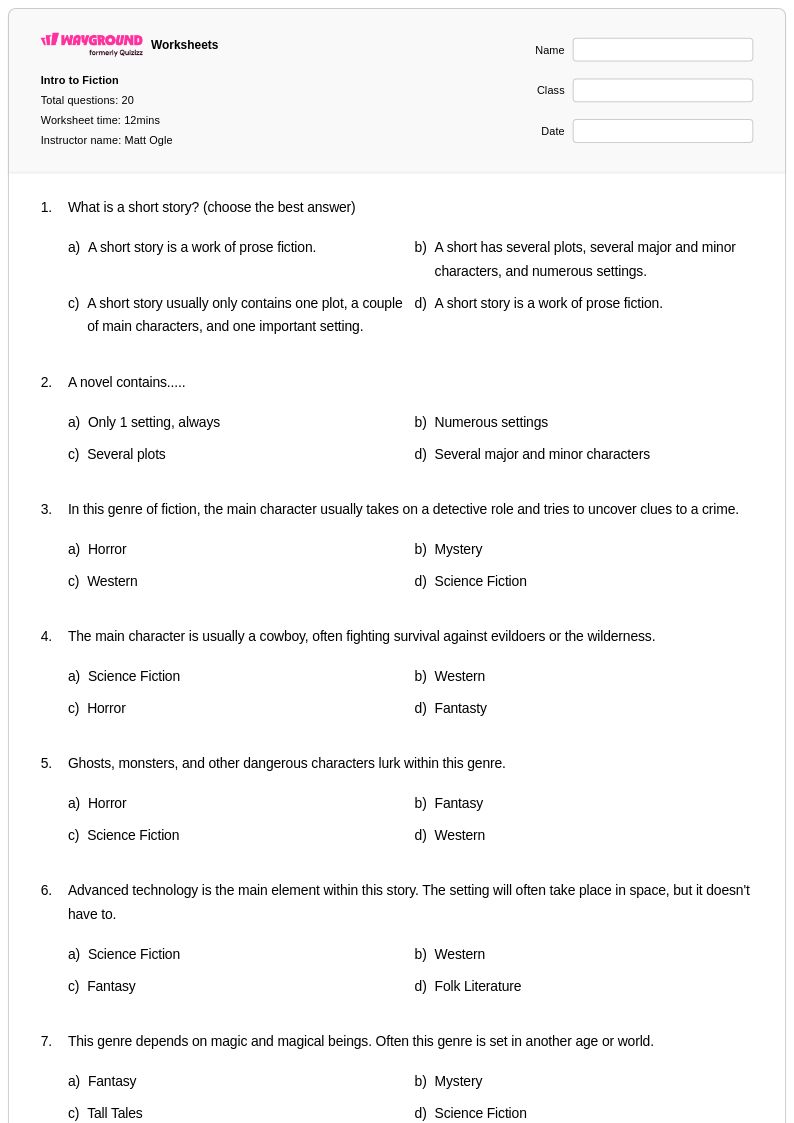
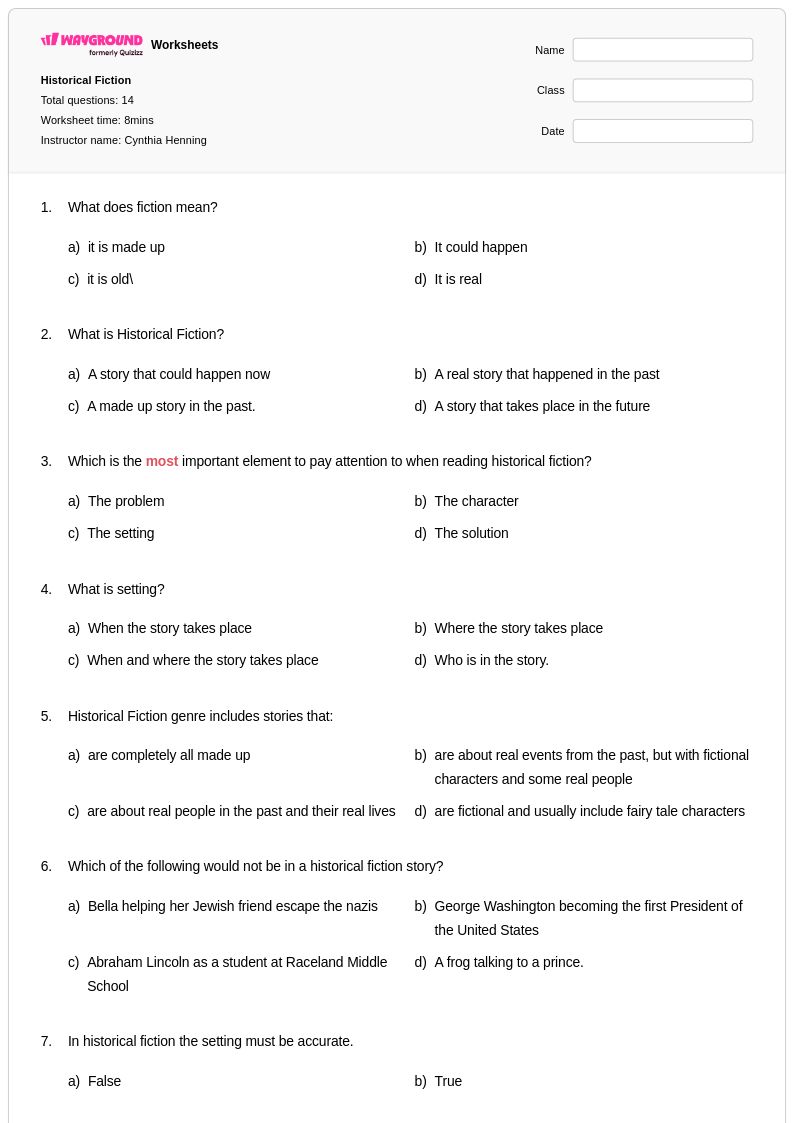
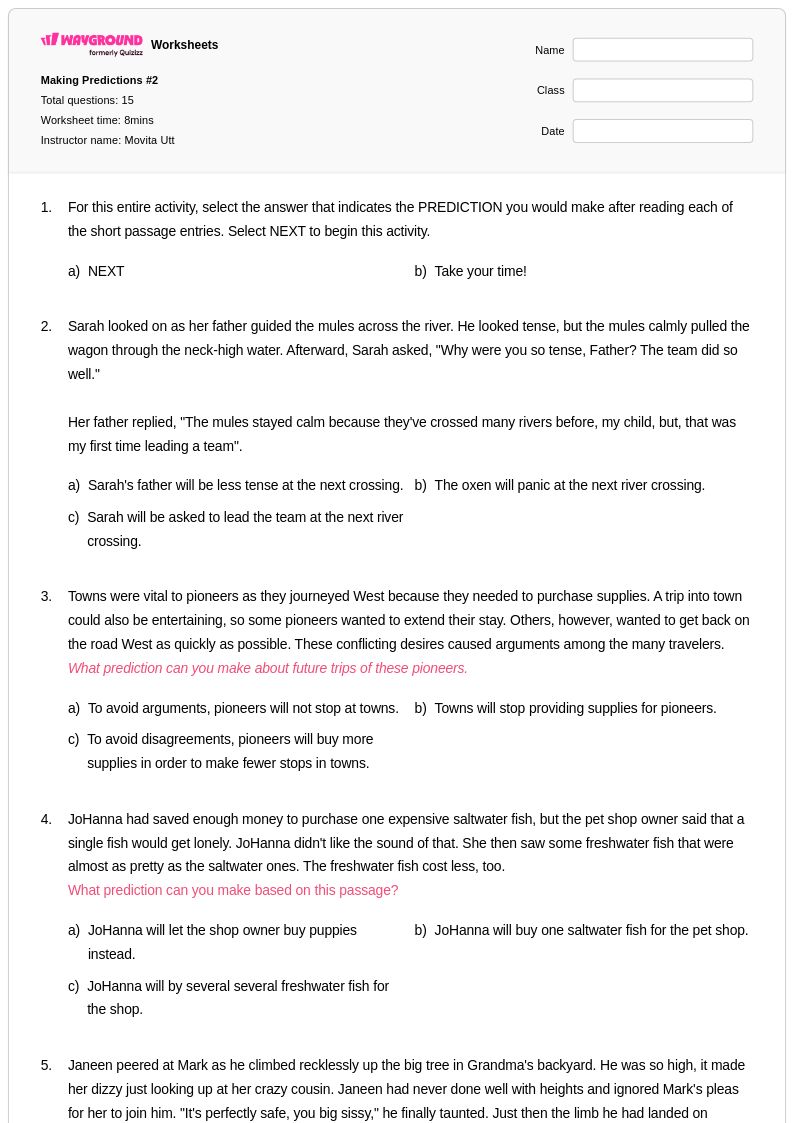
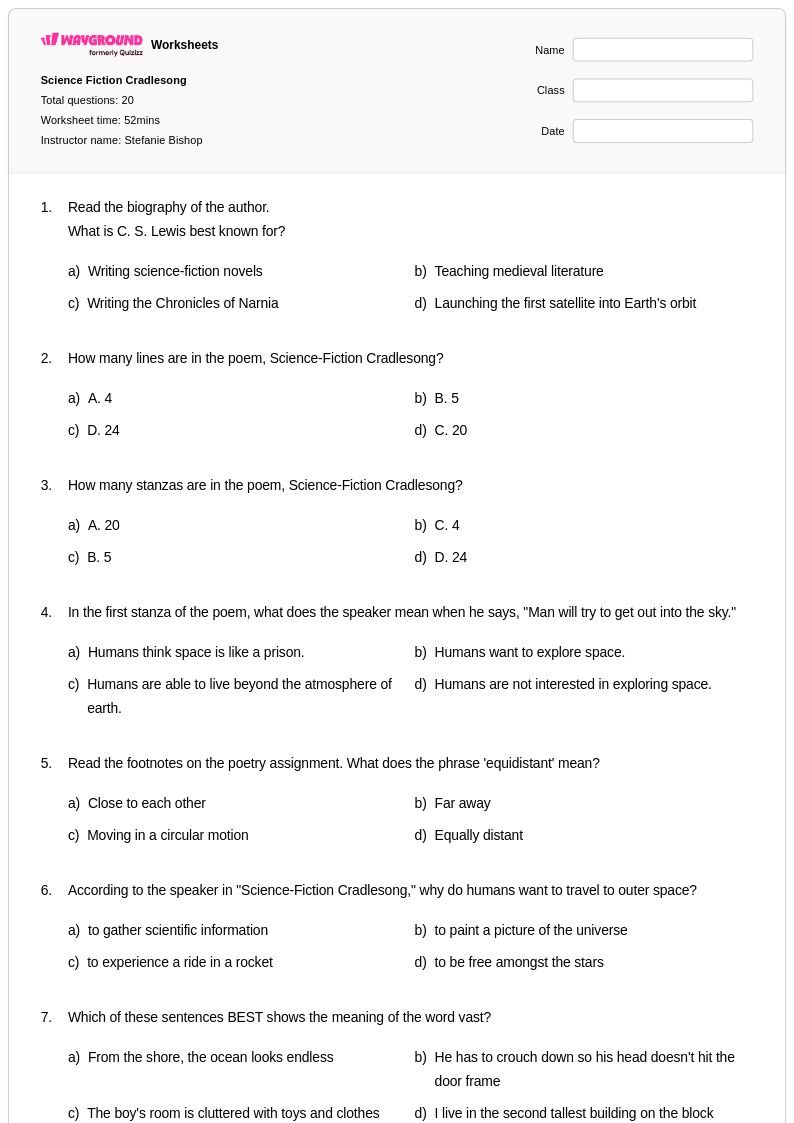
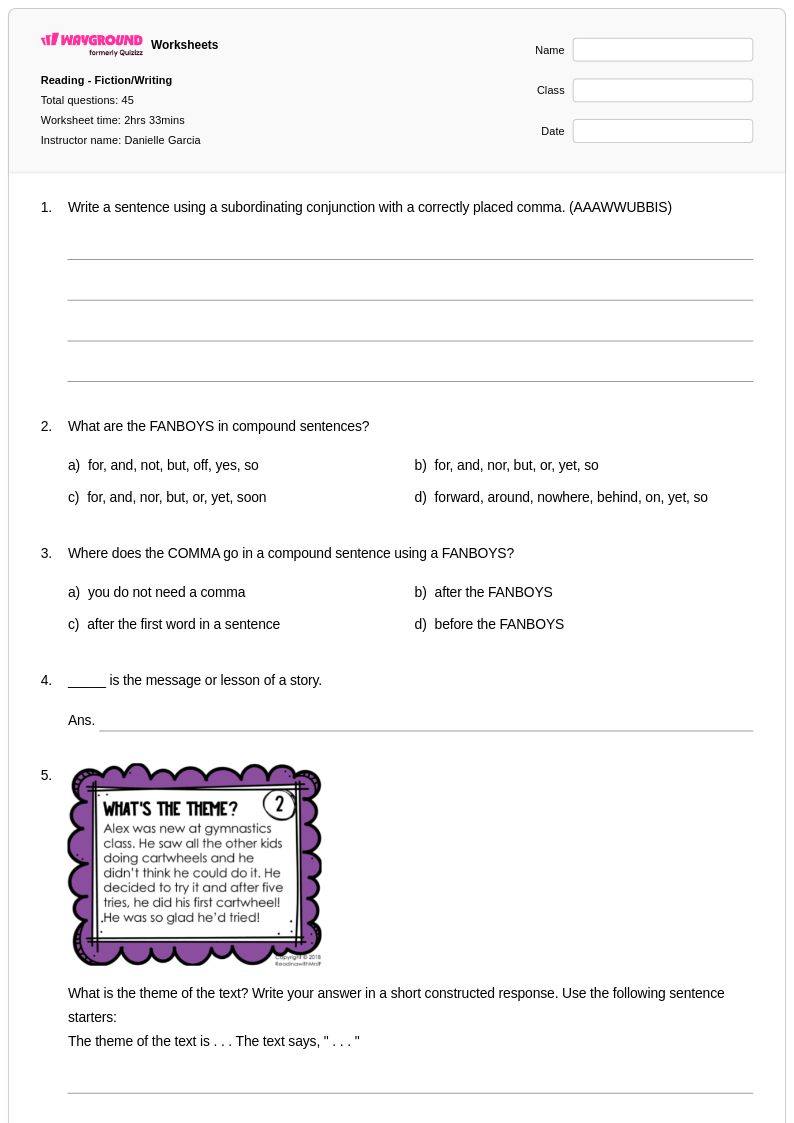
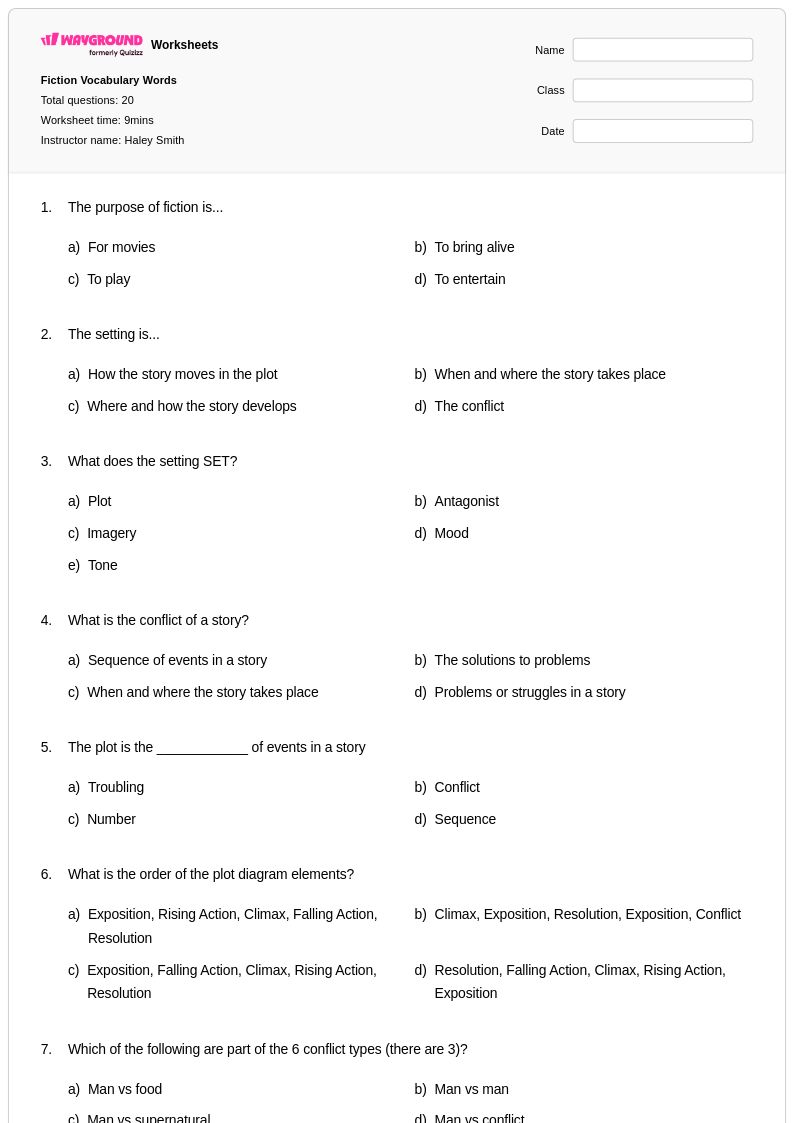
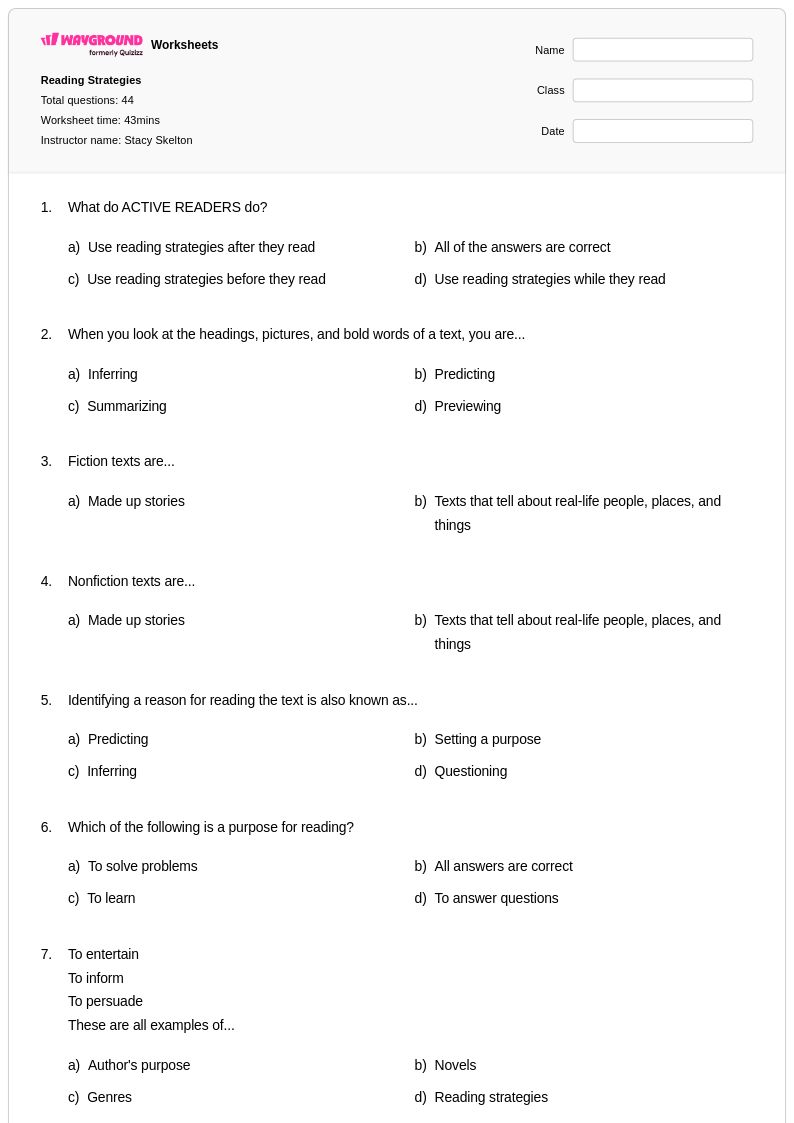
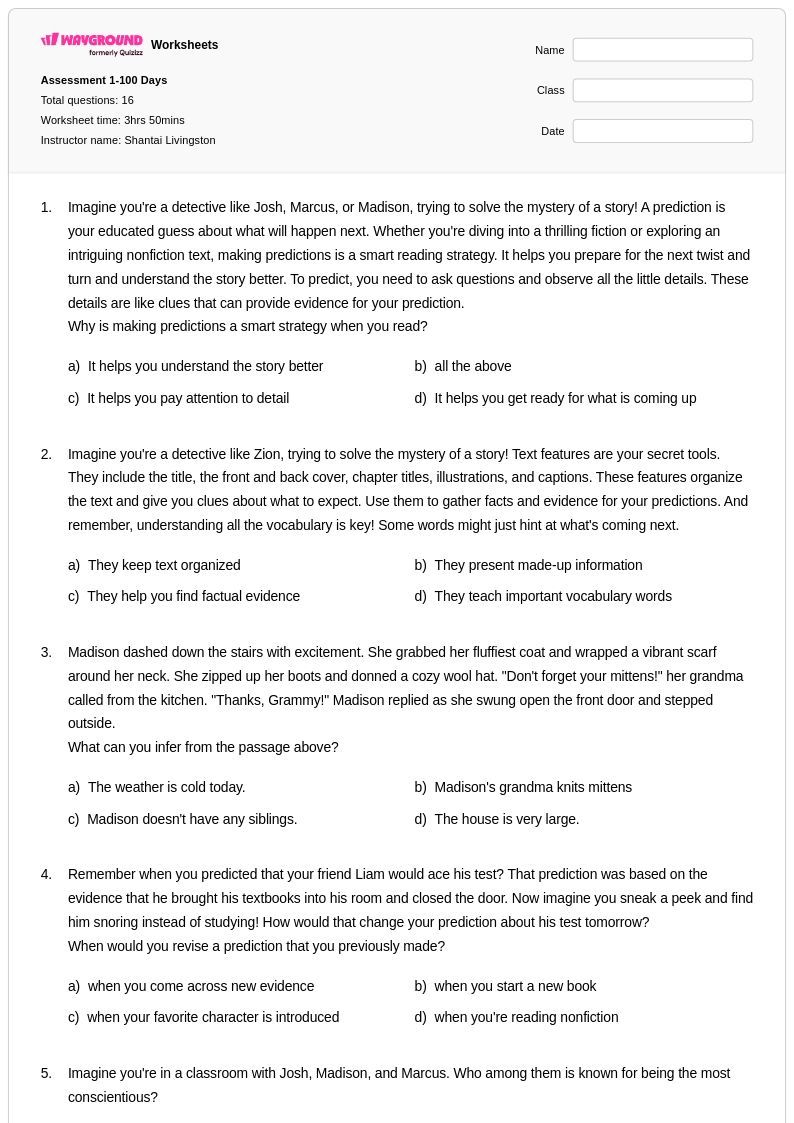
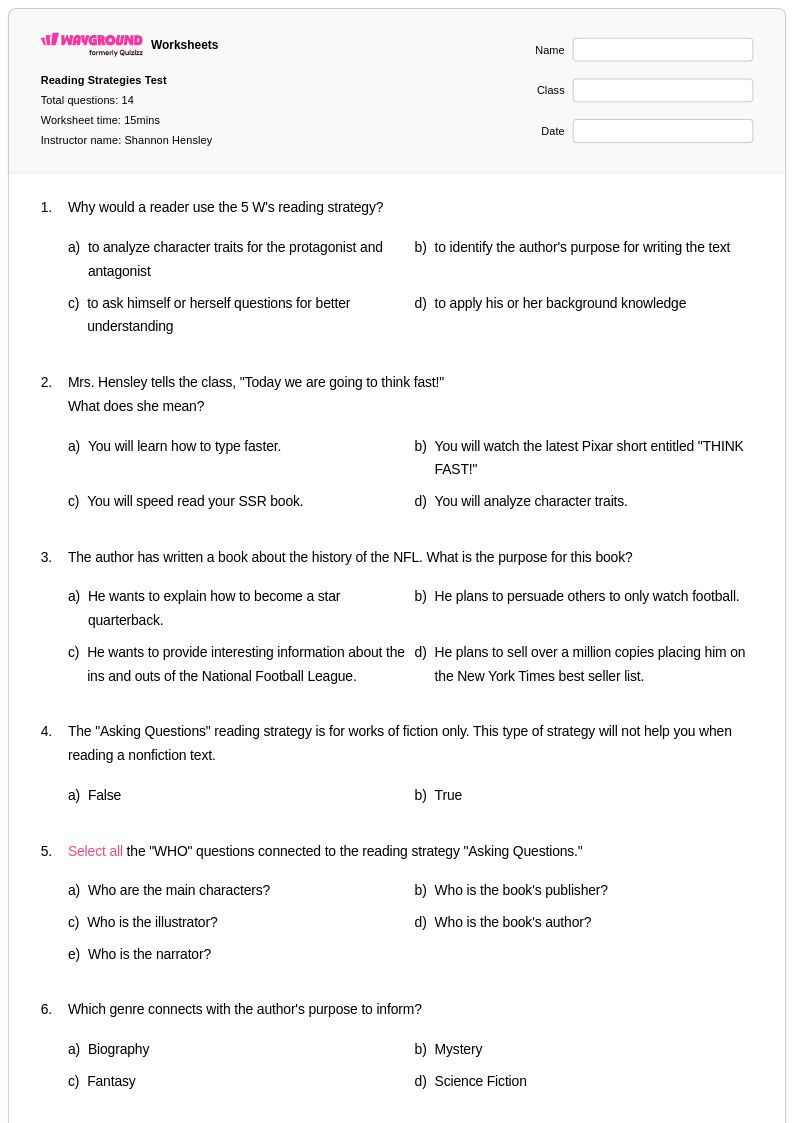
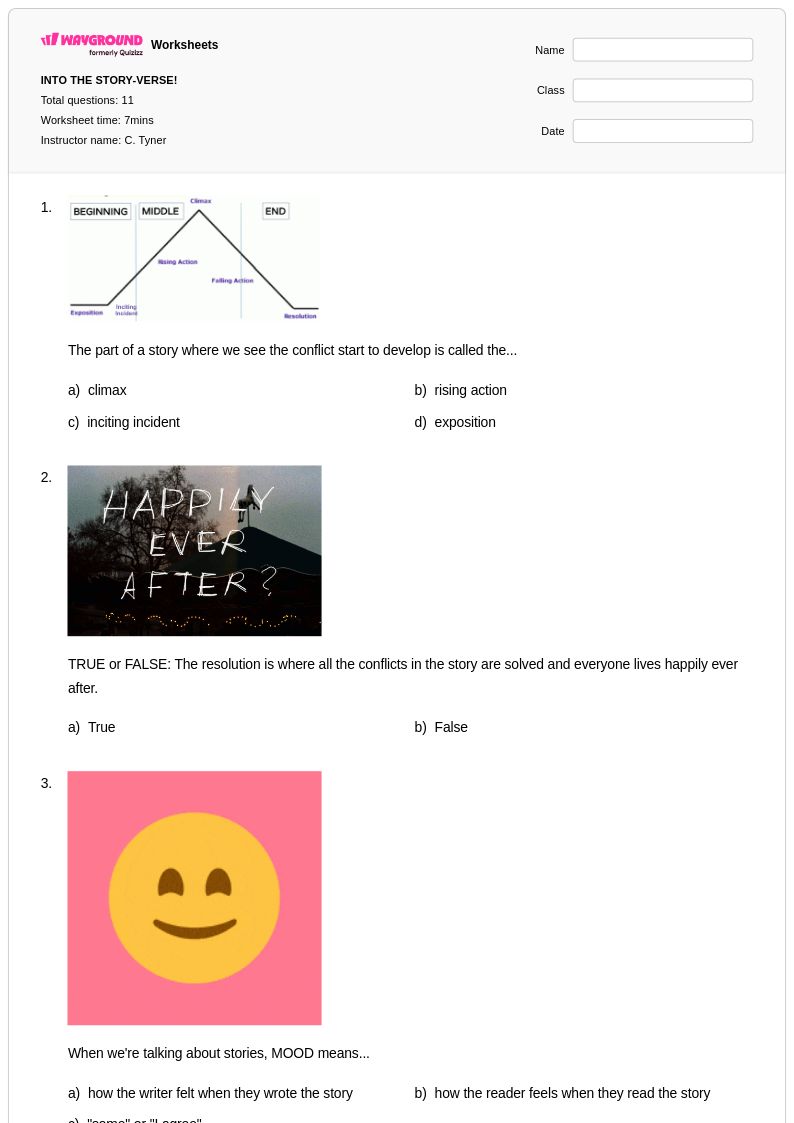
Class 7 making predictions in fiction worksheets available through Wayground (formerly Quizizz) provide students with targeted practice in developing one of the most essential reading comprehension skills. These comprehensive resources focus specifically on helping seventh-grade students analyze textual evidence, character development, plot patterns, and narrative structures to make logical inferences about what might happen next in fictional stories. The worksheets strengthen critical thinking abilities by requiring students to support their predictions with specific details from the text, recognize foreshadowing techniques, and understand how authors build suspense and anticipation. Each resource includes detailed answer keys and comprehensive practice problems that guide students through the prediction process, with many available as free printables in convenient pdf format for both classroom and independent study use.
Wayground (formerly Quizizz) supports educators with an extensive collection of teacher-created resources for making predictions in fiction, drawn from millions of high-quality worksheets developed by experienced classroom professionals. The platform's advanced search and filtering capabilities allow teachers to quickly locate materials that align with specific learning standards and match their students' reading levels and interests. Differentiation tools enable educators to customize worksheets for various learning needs, while the flexible format options include both printable pdf versions for traditional paper-and-pencil work and digital formats for interactive online practice. These features streamline lesson planning while providing versatile options for skill practice, targeted remediation for struggling readers, and enrichment activities for advanced students who are ready to tackle more complex fictional texts and sophisticated prediction strategies.
FAQs
How do I teach students to make predictions in fiction?
Effective prediction instruction begins with modeling the think-aloud process: stop at key moments in a text and verbalize what clues — foreshadowing, character behavior, setting details — point toward what might happen next. Teach students to anchor predictions in textual evidence rather than guessing, using sentence frames like 'I predict ___ because the text says ___.' Revisiting and revising predictions after reading reinforces that good readers adjust their thinking as new information emerges.
What exercises help students practice making predictions in fiction?
Graphic organizers that prompt students to record a prediction, the textual evidence supporting it, and the actual outcome are among the most effective practice formats because they make the reasoning process visible. Written response activities that ask students to justify predictions using character motivation or narrative patterns build the analytical depth needed for stronger comprehension. Practicing across different fiction genres and text complexity levels helps students apply prediction strategies flexibly rather than formulaically.
What mistakes do students commonly make when predicting in fiction?
The most common error is making predictions based on personal preference or wishful thinking rather than evidence from the text. Students also frequently ignore foreshadowing and contextual clues, treating prediction as a random guess rather than a logical inference. Another typical misconception is believing a prediction is 'wrong' if it doesn't match the story's outcome — instruction should reinforce that a well-supported prediction is valid even when the story takes a different turn.
How can I use making predictions worksheets to support different reading levels in my class?
Prediction worksheets can be differentiated by adjusting text complexity, the amount of scaffolding provided, and the type of response required — for example, graphic organizers with sentence starters suit developing readers, while open-ended written response formats challenge advanced readers. On Wayground, teachers can apply student-level accommodations such as Read Aloud, which audio-reads questions for students who need support, and reduced answer choices to lower cognitive load for selected students without affecting the rest of the class.
How do I use Wayground's making predictions in fiction worksheets in my classroom?
Wayground's making predictions in fiction worksheets are available as printable PDFs for traditional classroom use and in digital formats for technology-integrated environments, accommodating a range of teaching setups and student preferences. Teachers can also host worksheets as a quiz directly on Wayground, making it easy to collect and review student responses in one place. Each worksheet includes a complete answer key, so grading and formative assessment can be completed quickly without additional preparation.
How do I assess whether students are making meaningful predictions vs. random guesses?
Look for whether students cite specific textual evidence — foreshadowing, character motivation, plot patterns — to support their predictions rather than describing what they hope will happen. A prediction paired with a clear 'because' statement grounded in the text indicates genuine comprehension engagement. Comparing a student's initial prediction to their post-reading reflection also reveals whether they are actively monitoring meaning as they read.