

10 Q
2nd - 4th

8 Q
2nd

10 Q
1st - 3rd
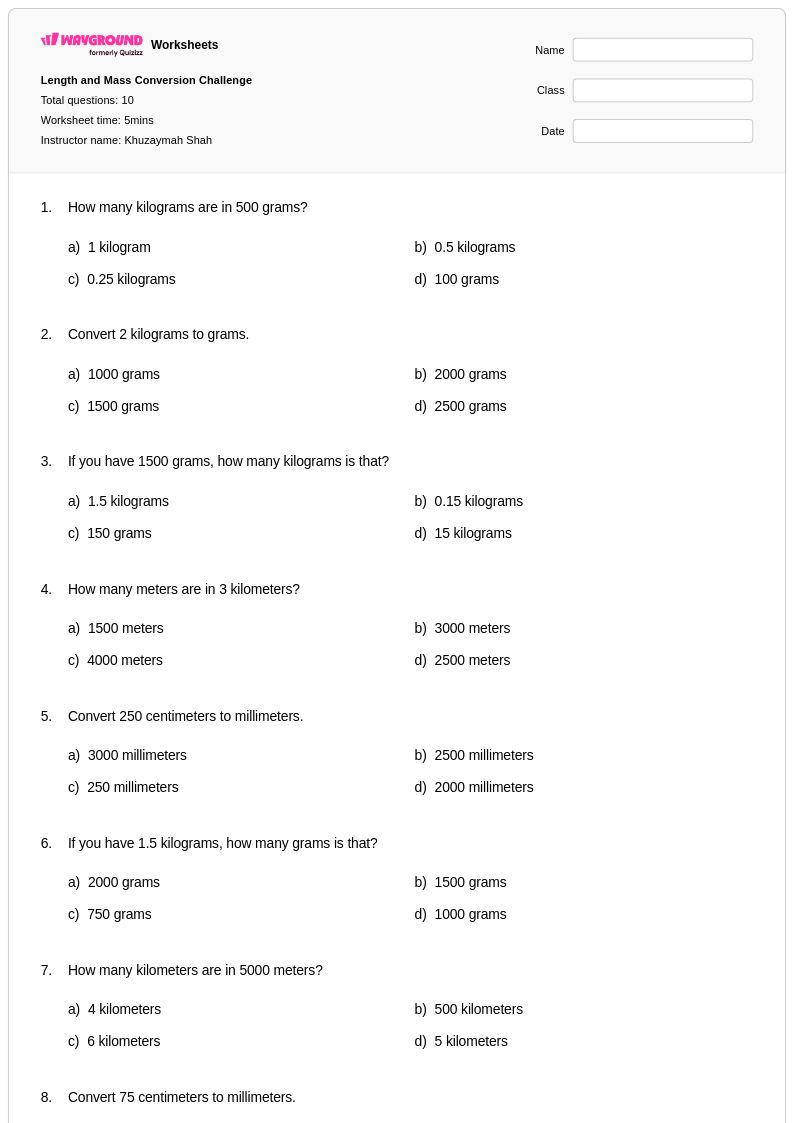
10 Q
2nd
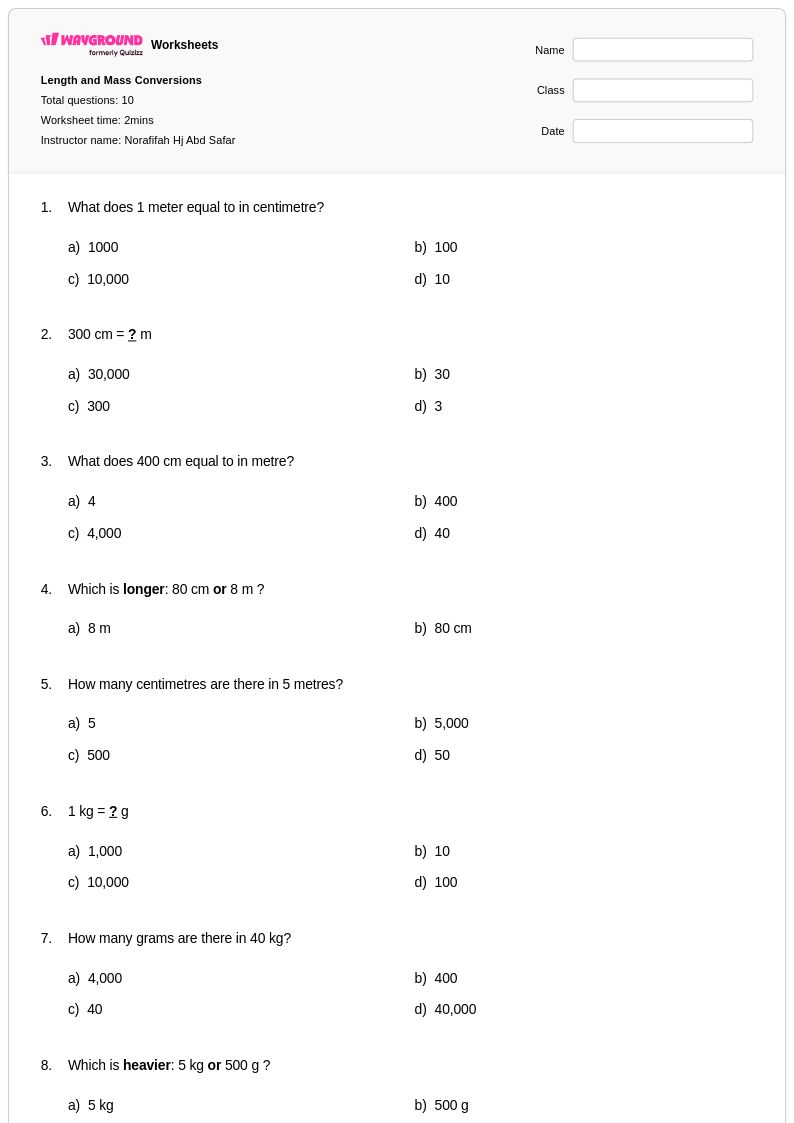
10 Q
2nd
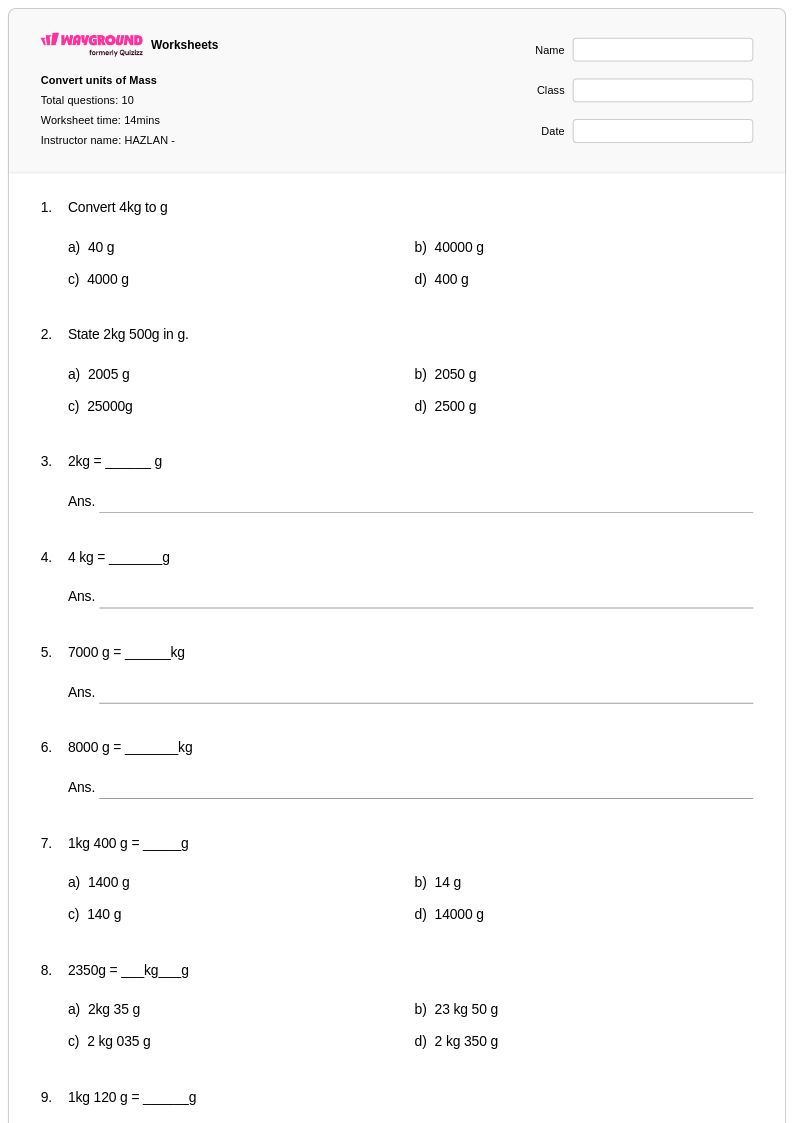
10 Q
2nd - 4th
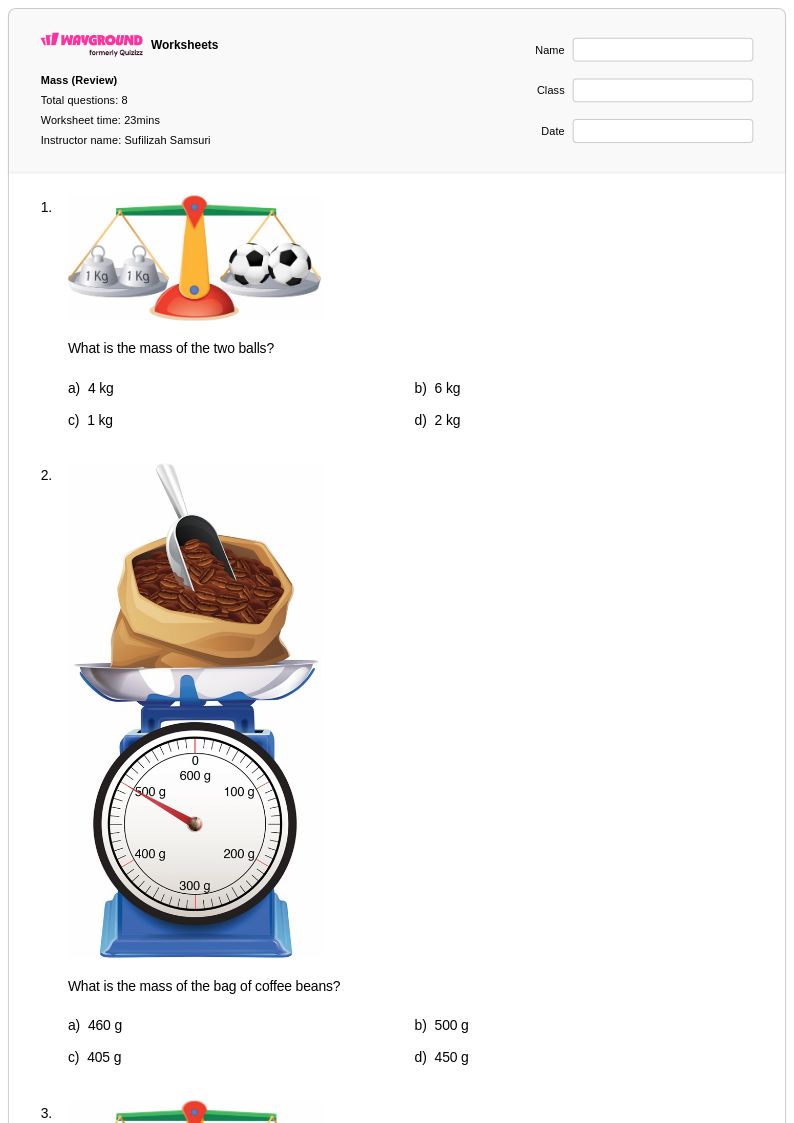
8 Q
2nd
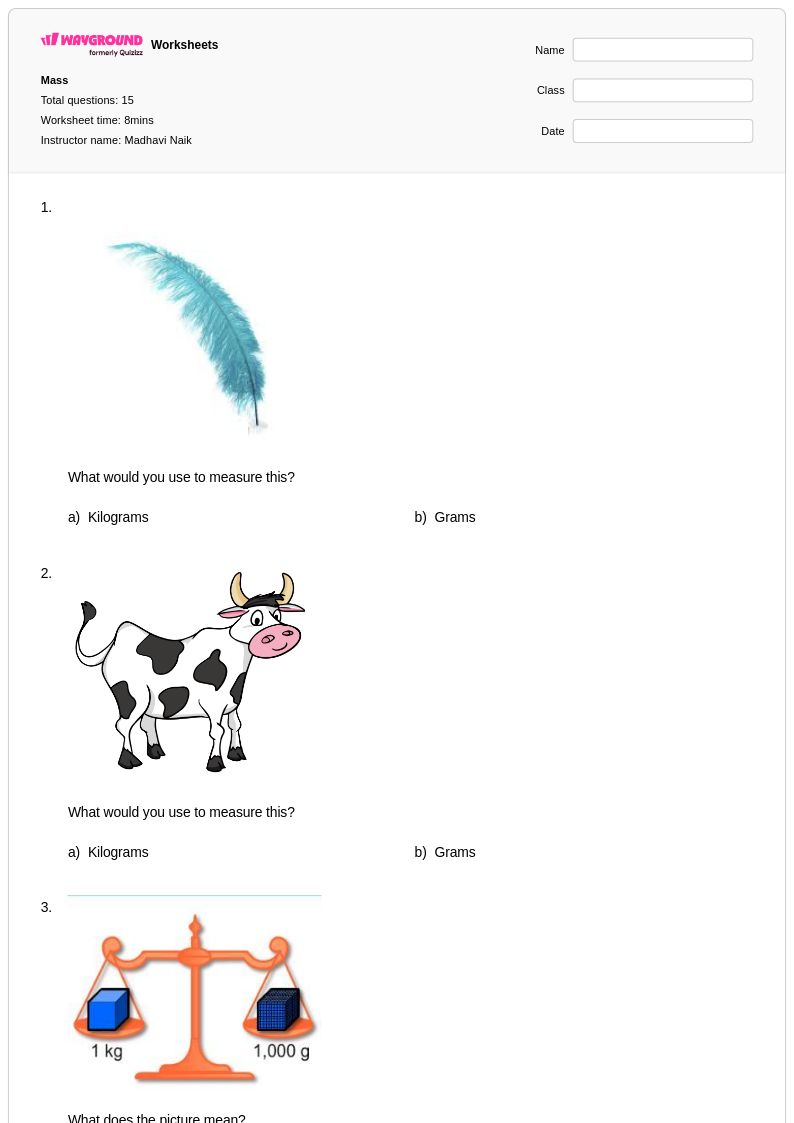
15 Q
2nd
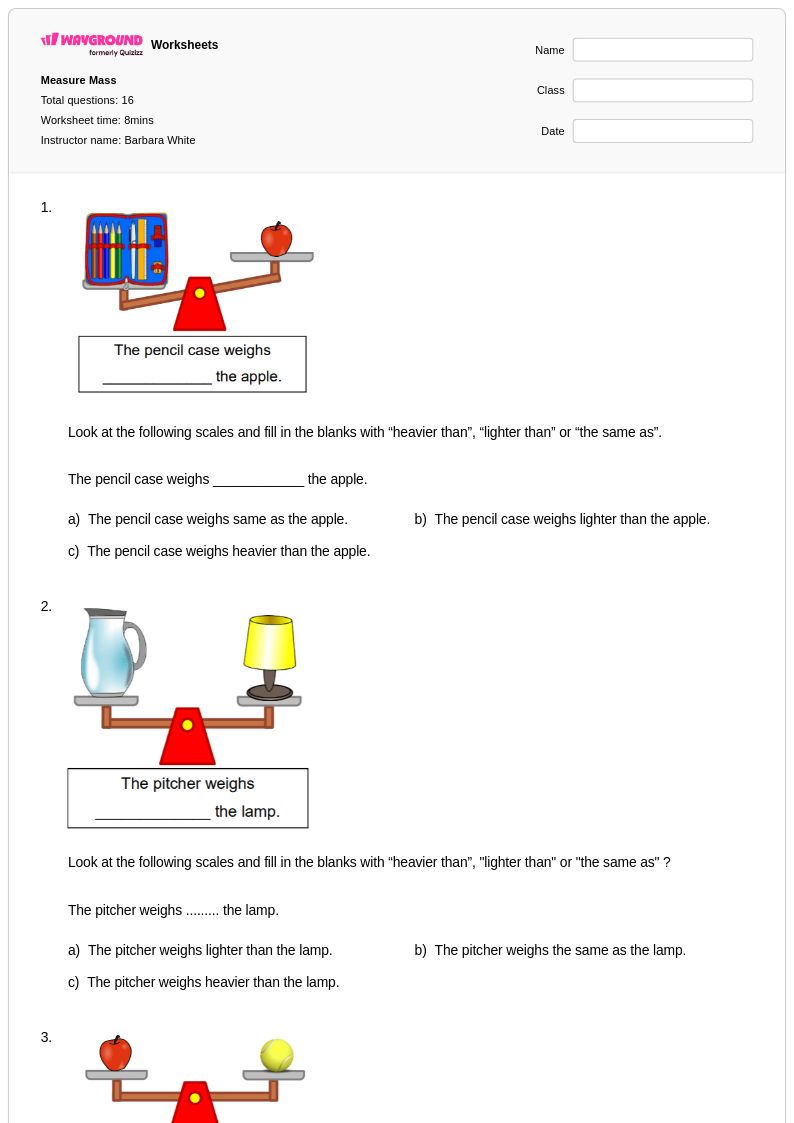
16 Q
2nd
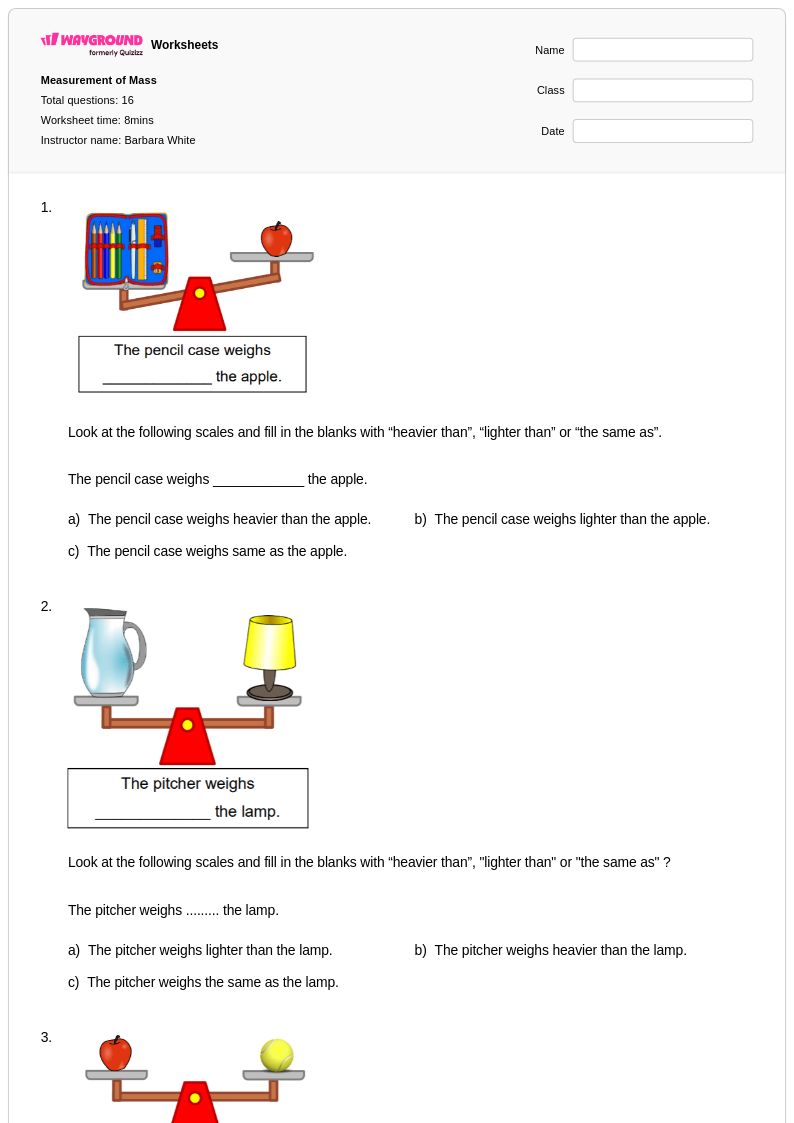
16 Q
2nd
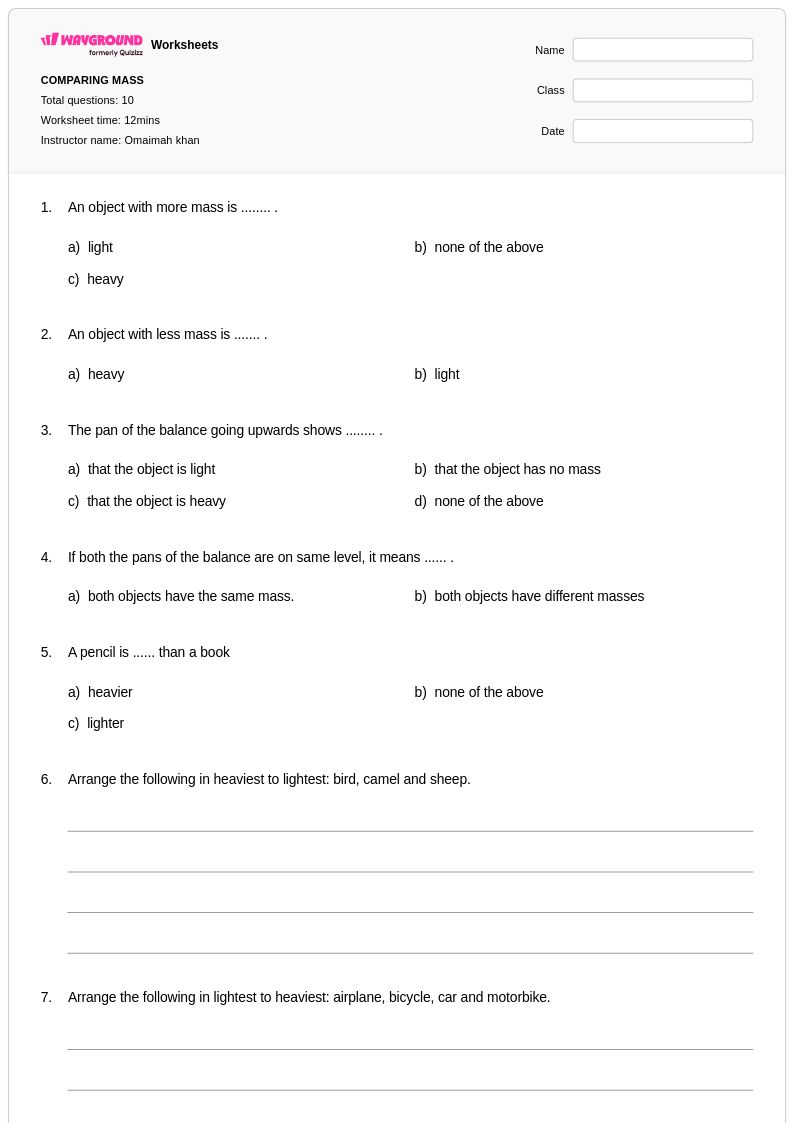
10 Q
2nd
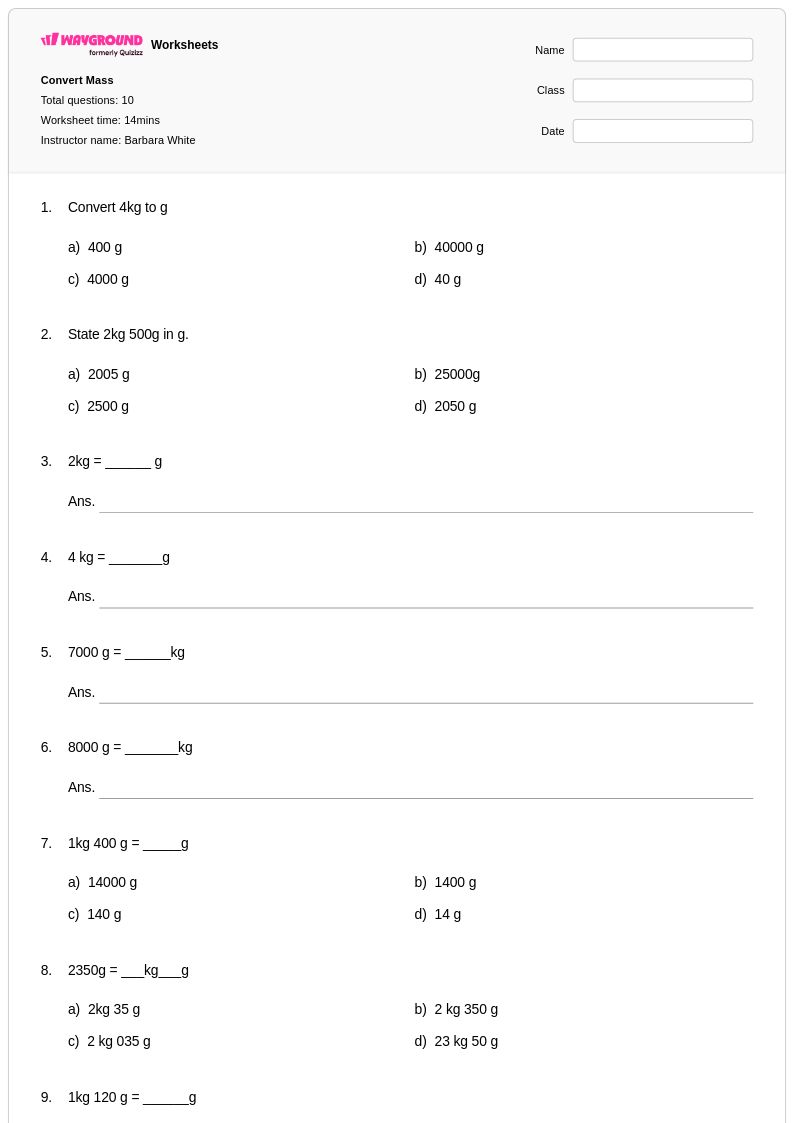
10 Q
2nd - 4th
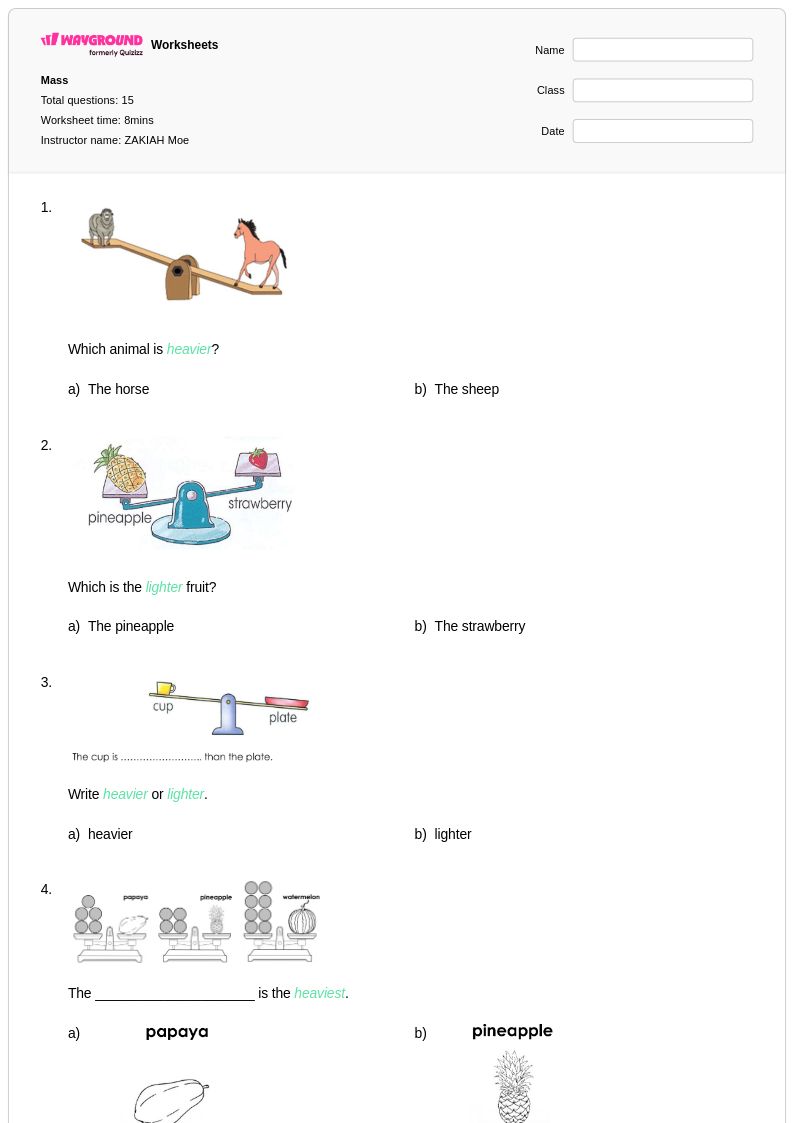
15 Q
2nd
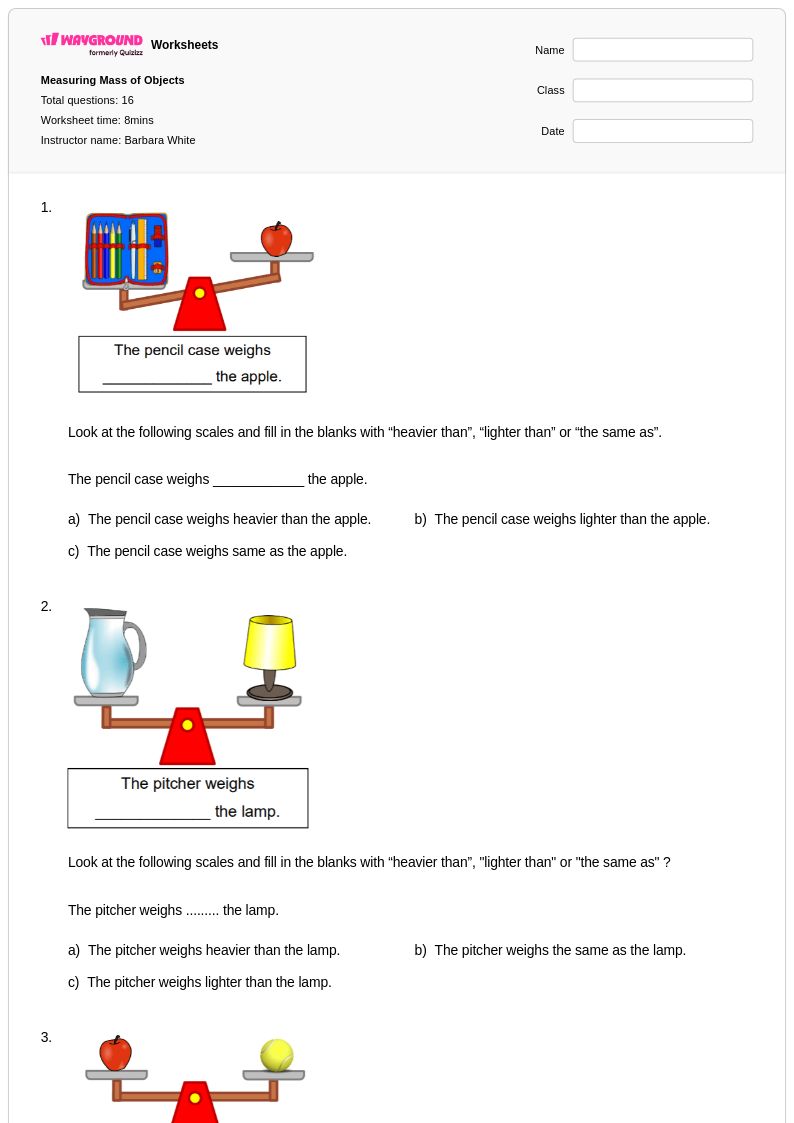
16 Q
2nd
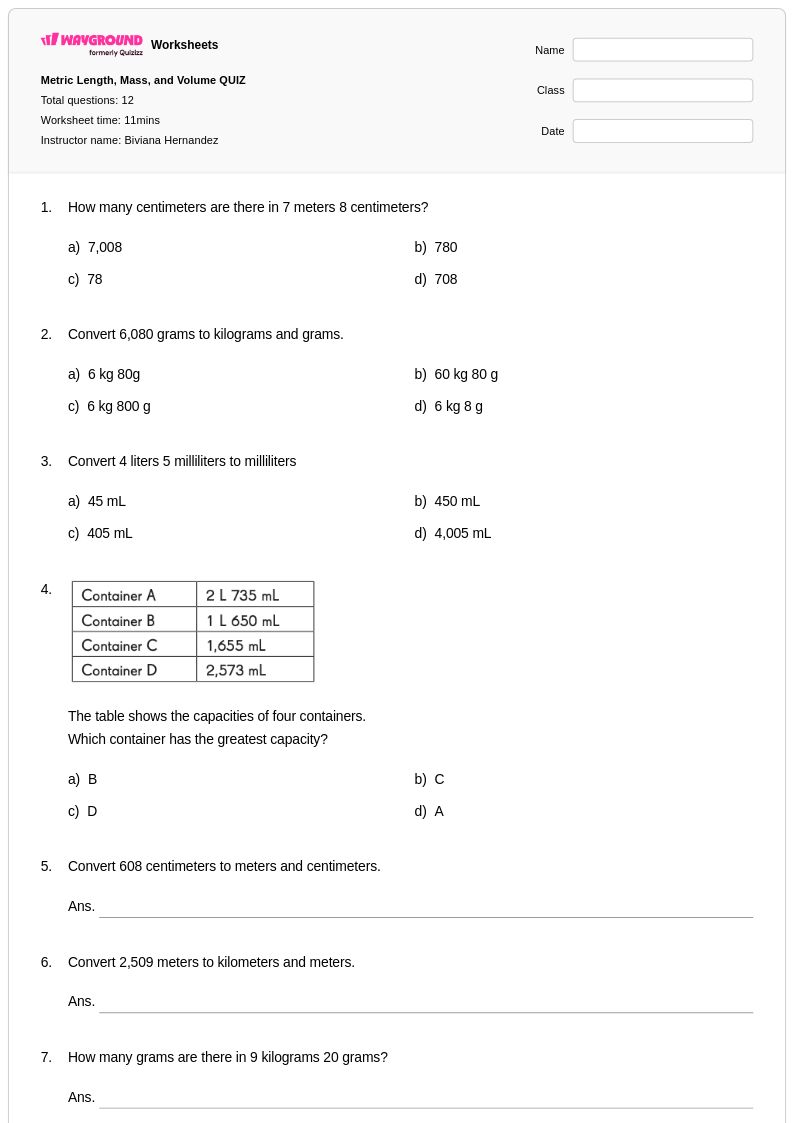
12 Q
2nd
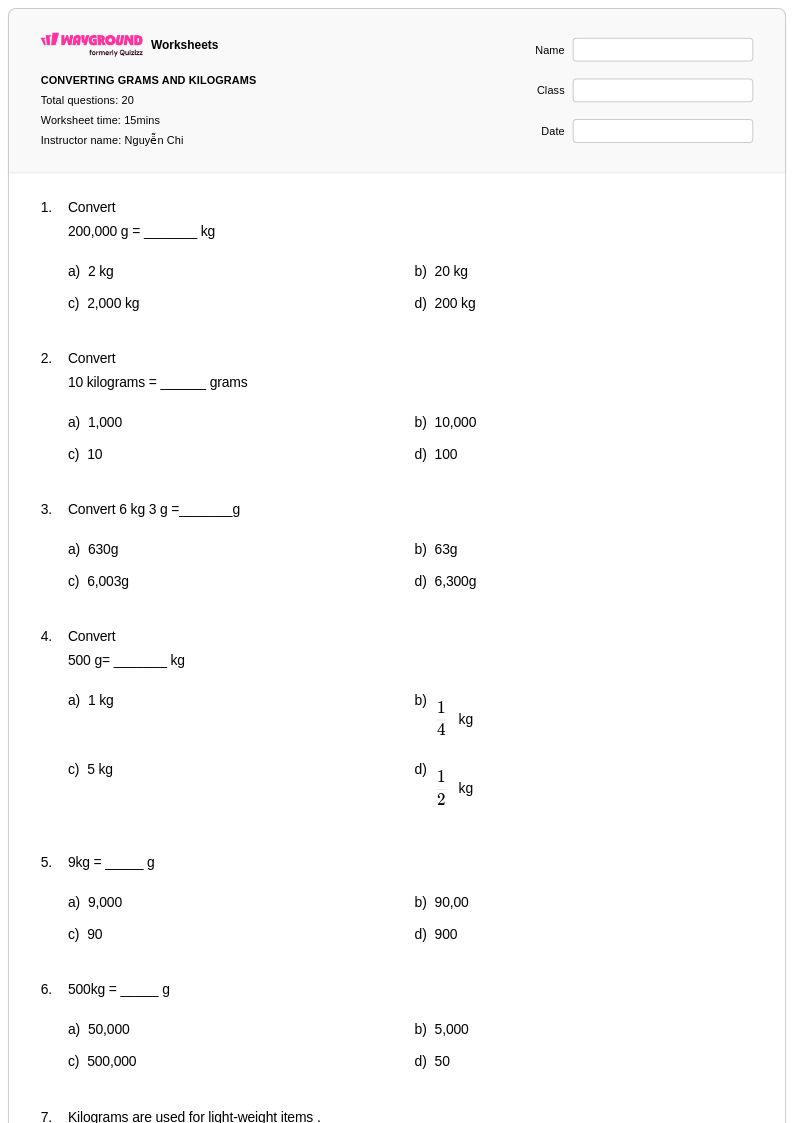
20 Q
2nd - 3rd
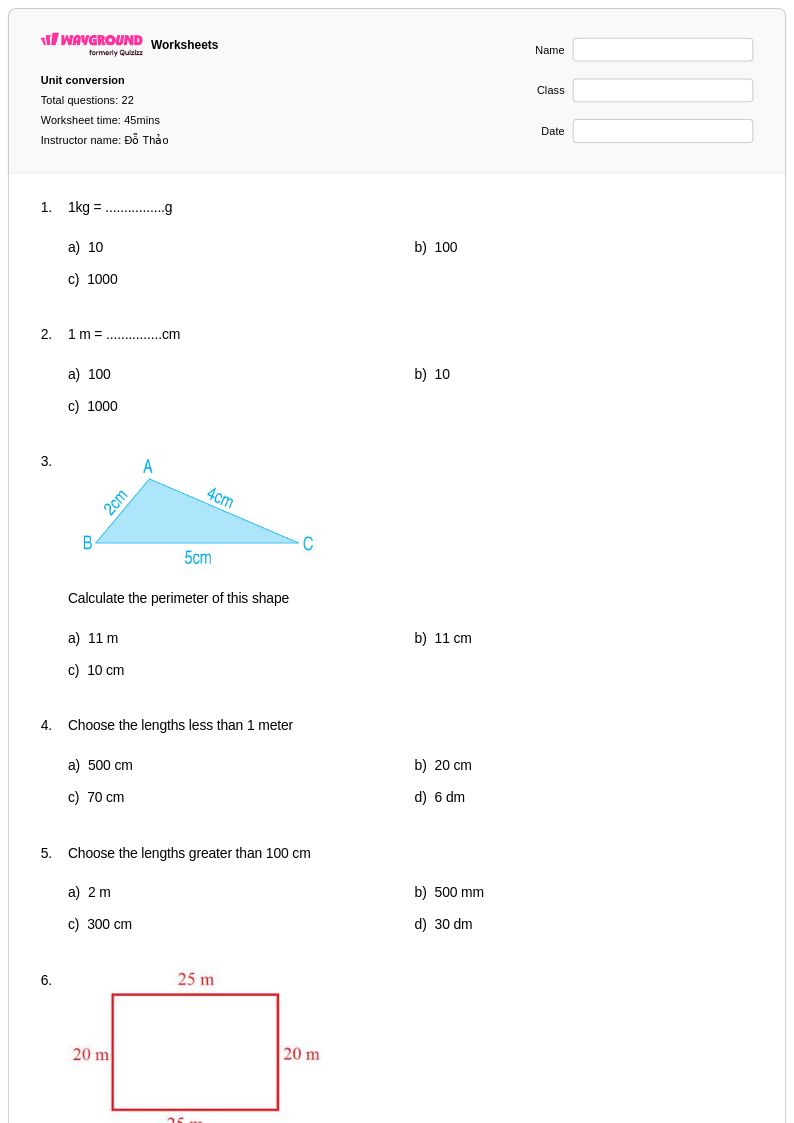
22 Q
2nd
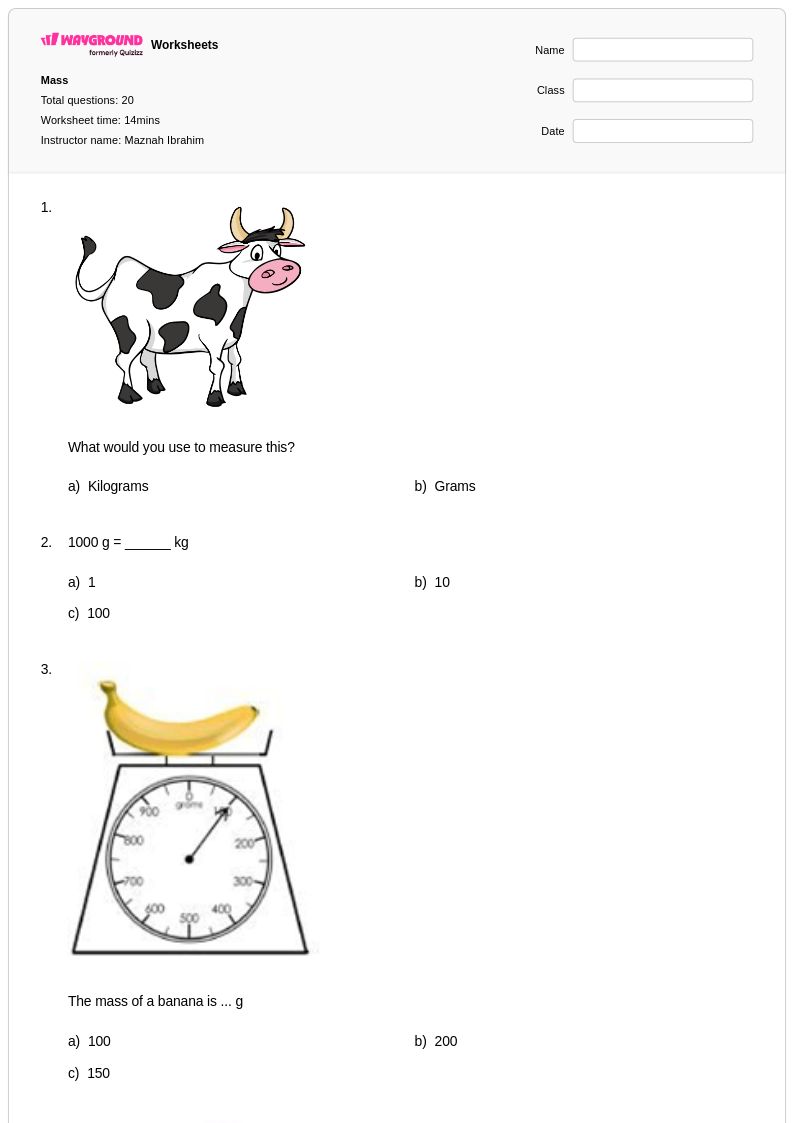
20 Q
2nd
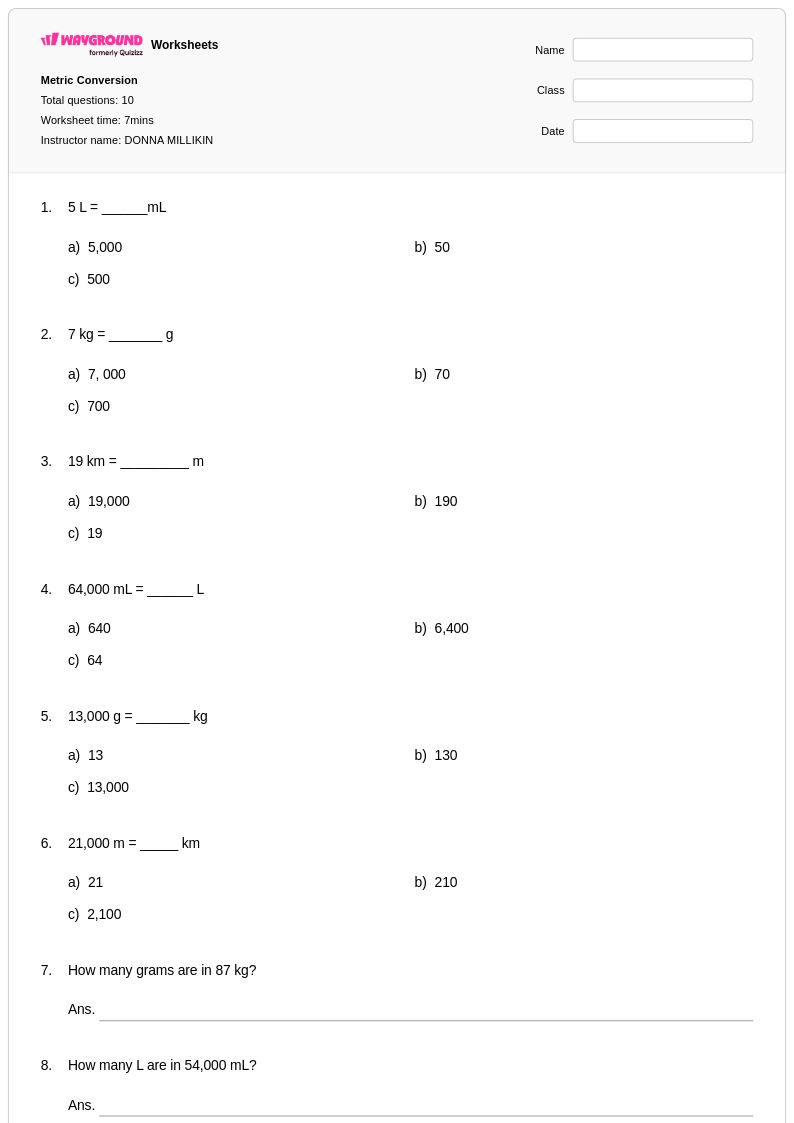
10 Q
2nd - 4th
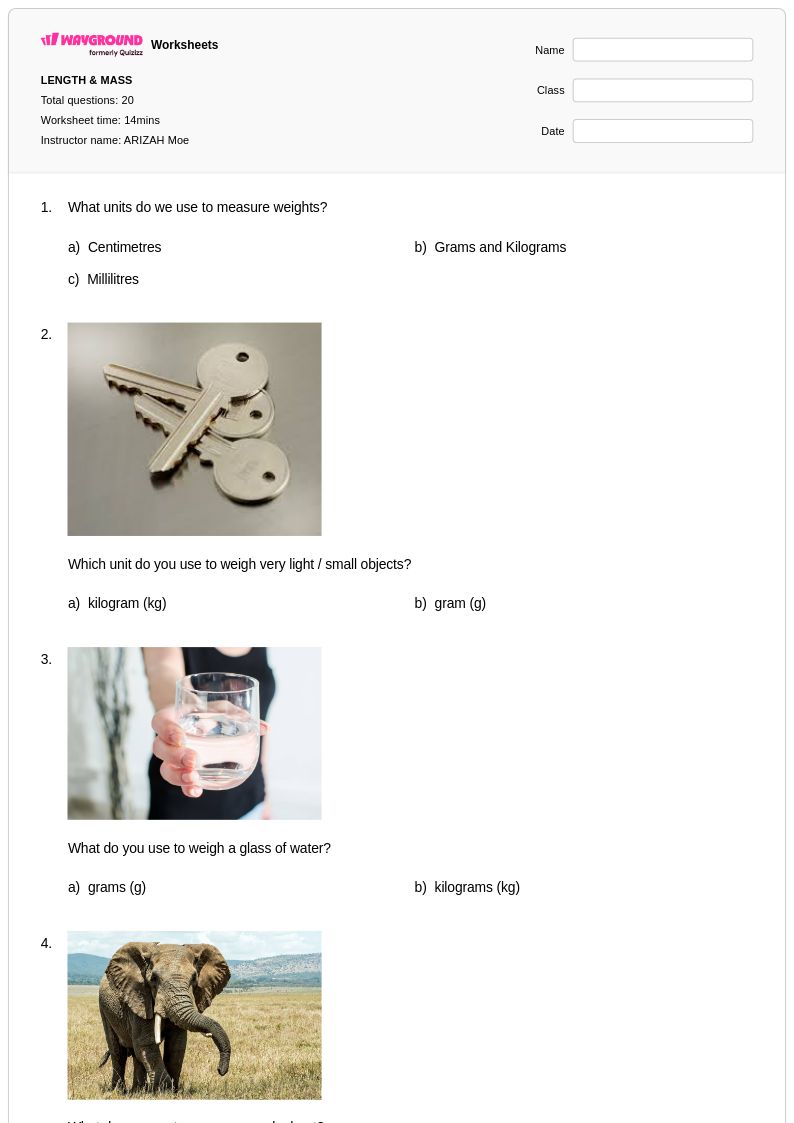
20 Q
2nd
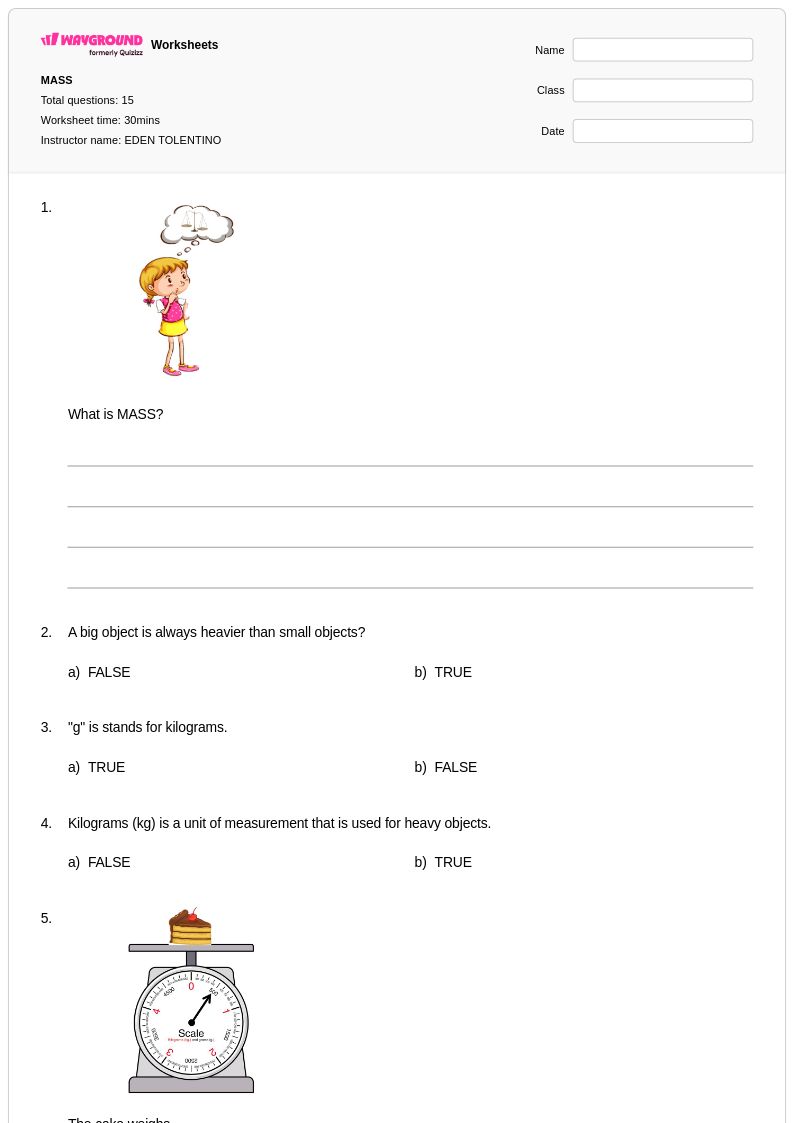
15 Q
1st - 2nd
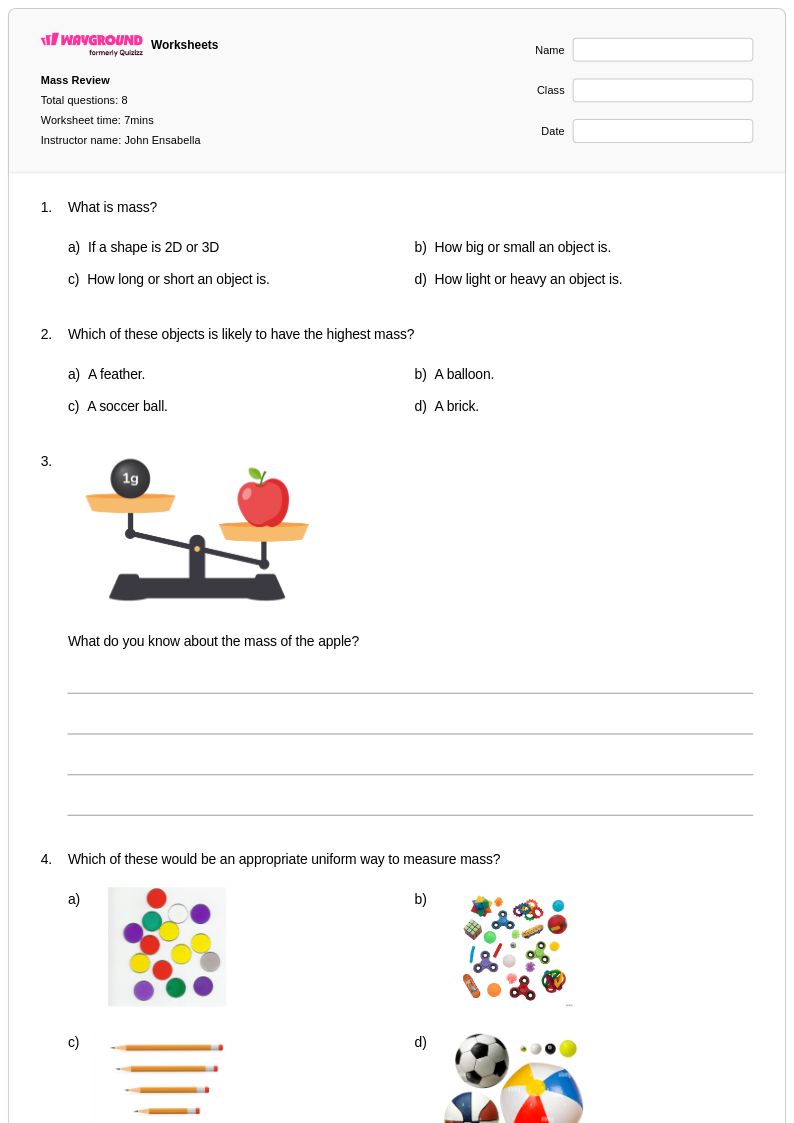
8 Q
2nd
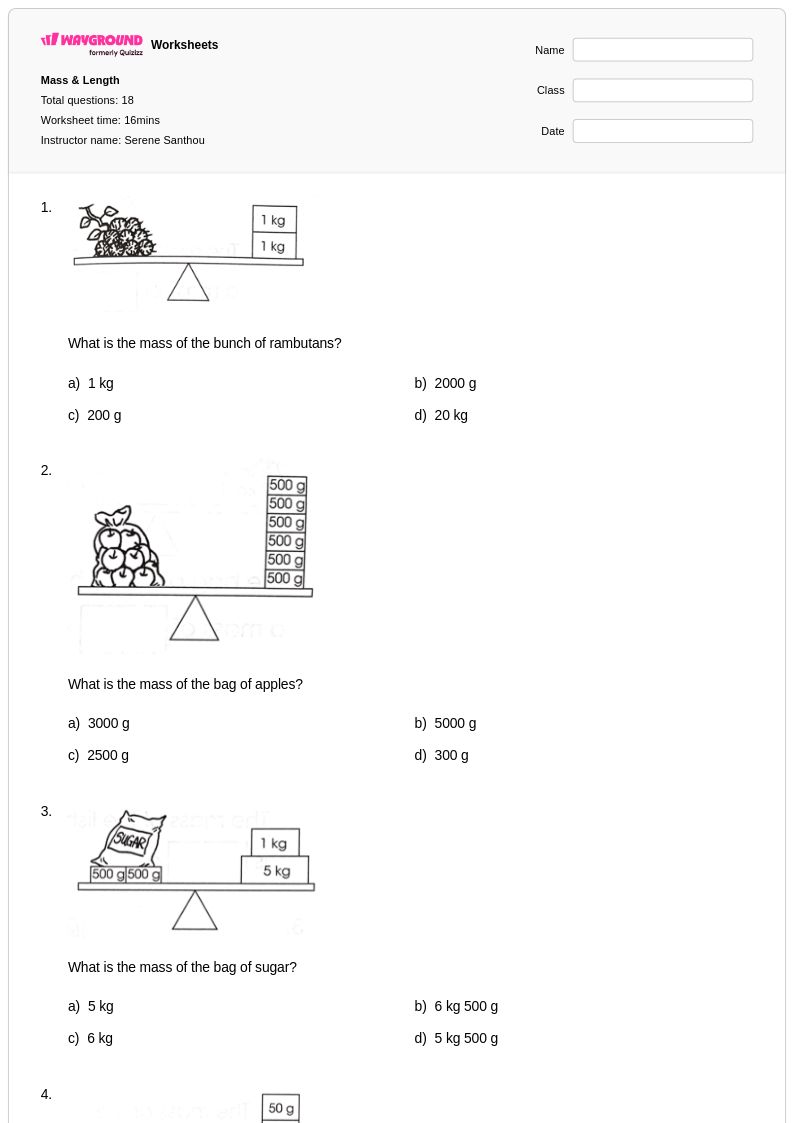
18 Q
2nd
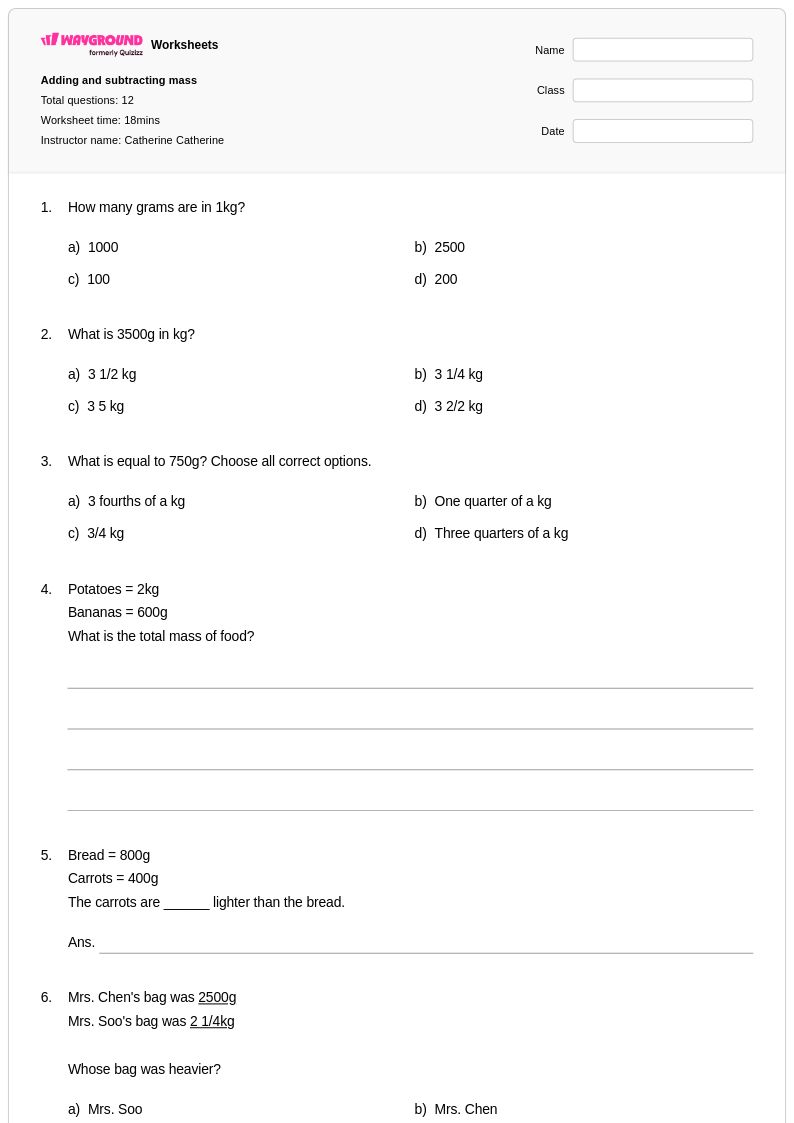
12 Q
2nd - 4th
Explore Other Subject Worksheets for class 2
Explore printable Mass Conversion worksheets for Class 2
Mass conversion worksheets for Class 2 through Wayground (formerly Quizizz) provide young learners with essential foundational practice in understanding and comparing different units of weight and mass. These carefully designed printables help students develop critical measurement skills by working with familiar units such as pounds, ounces, grams, and kilograms through age-appropriate visual representations and real-world examples. Each worksheet includes comprehensive practice problems that guide second-grade students through the process of identifying heavier and lighter objects, making basic comparisons between different masses, and beginning to understand the relationship between various units of measurement. The accompanying answer key ensures teachers can quickly assess student understanding while providing immediate feedback, and the free pdf format makes these resources easily accessible for both classroom instruction and home practice.
Wayground (formerly Quizizz) empowers educators with an extensive collection of millions of teacher-created mass conversion resources specifically tailored for Class 2 mathematics instruction. The platform's robust search and filtering capabilities allow teachers to quickly locate worksheets that align with specific curriculum standards and match their students' diverse learning needs. These differentiation tools enable seamless customization of content difficulty and presentation style, supporting both remediation for struggling learners and enrichment opportunities for advanced students. Available in both printable and digital formats, including downloadable pdf versions, these mass conversion worksheets integrate effortlessly into lesson planning workflows and provide flexible options for skill practice across various instructional settings. Teachers can efficiently address individual student needs while building conceptual understanding of measurement concepts that serve as crucial building blocks for more advanced mathematical learning.
FAQs
What are the expectations for second graders learning about mass?
What's the best way to introduce standard units of mass like grams and kilograms?
What kinds of problems help second graders practice estimating mass?
What's a common error students make when comparing masses with different units?
How can I use this Grade 2 mass worksheet to reinforce measurement concepts?
How does learning to measure mass in Grade 2 prepare students for future math?