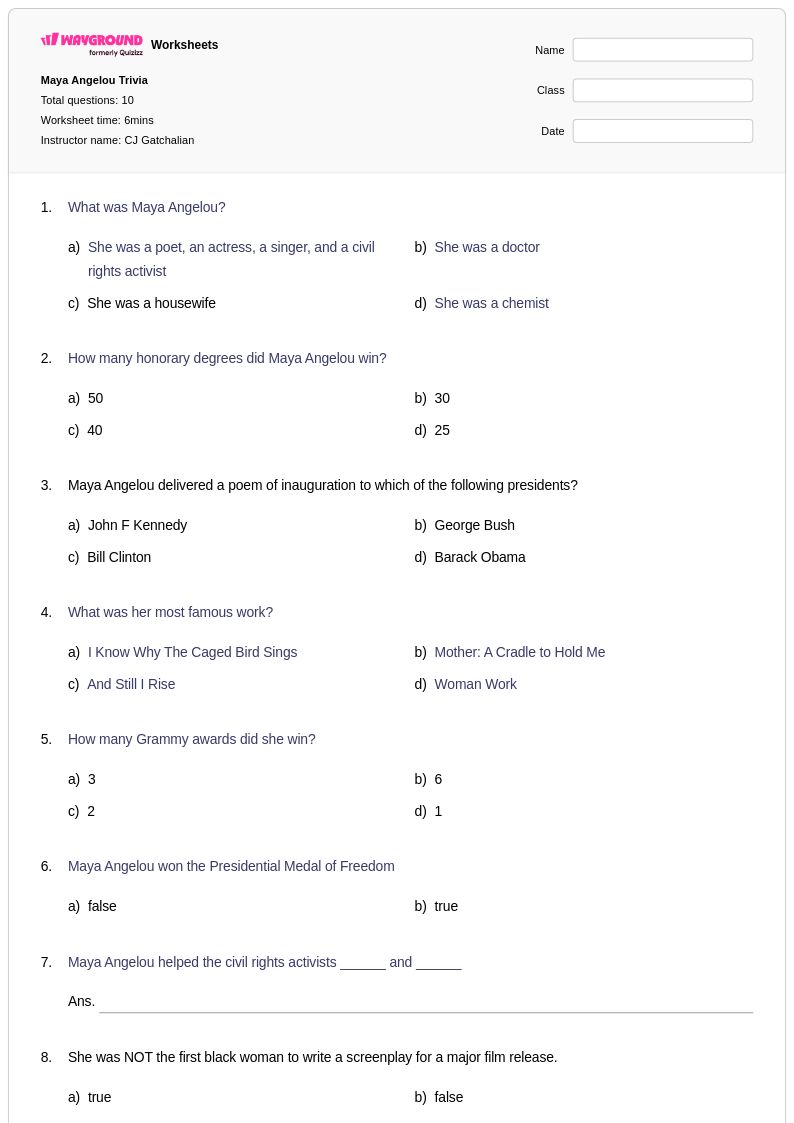
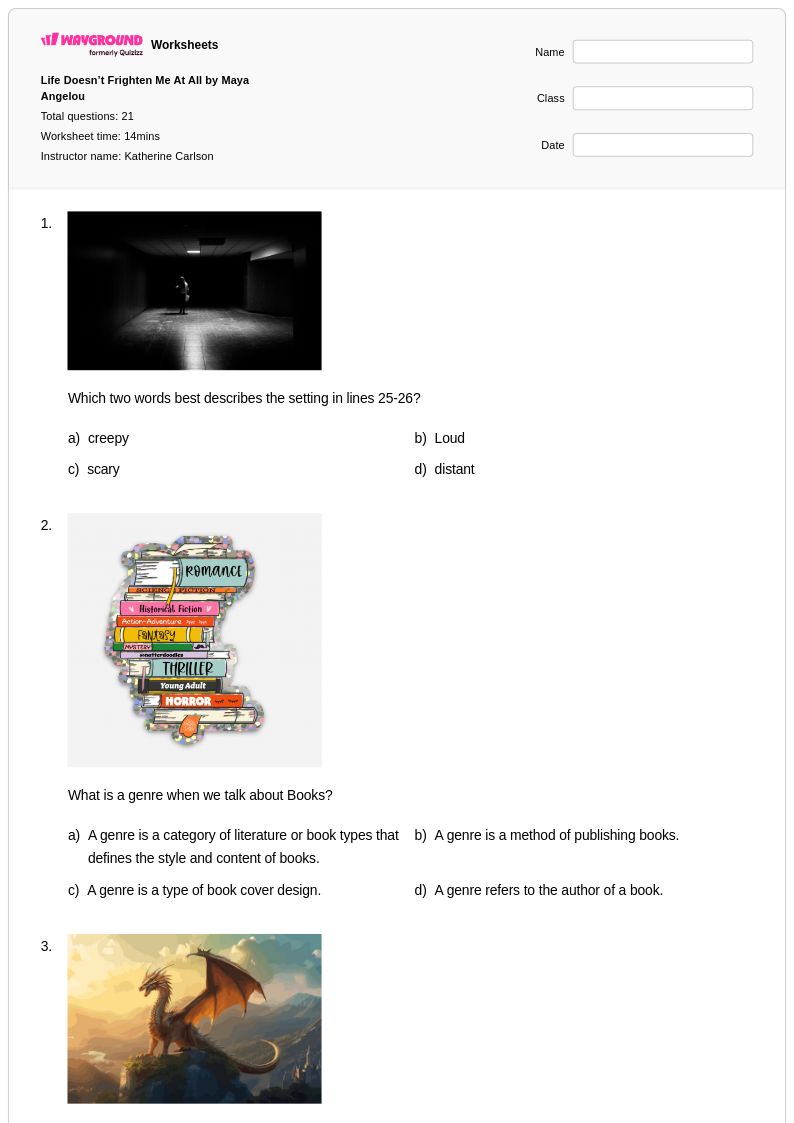
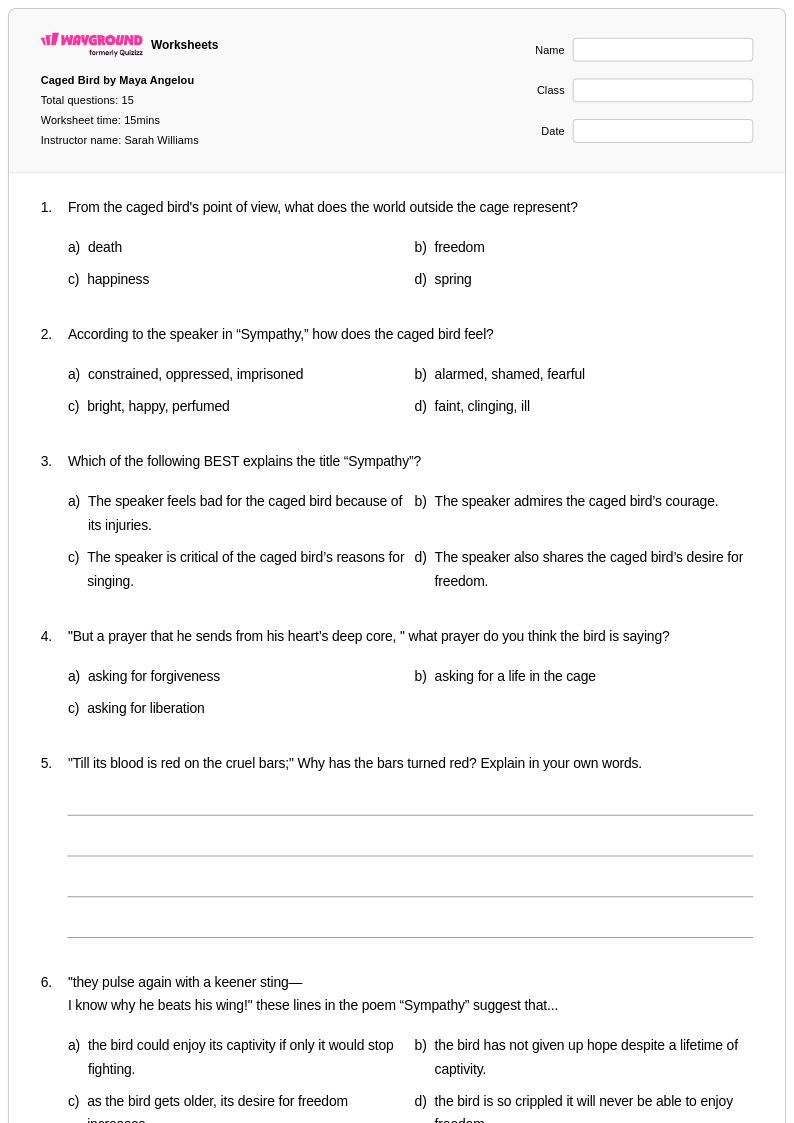
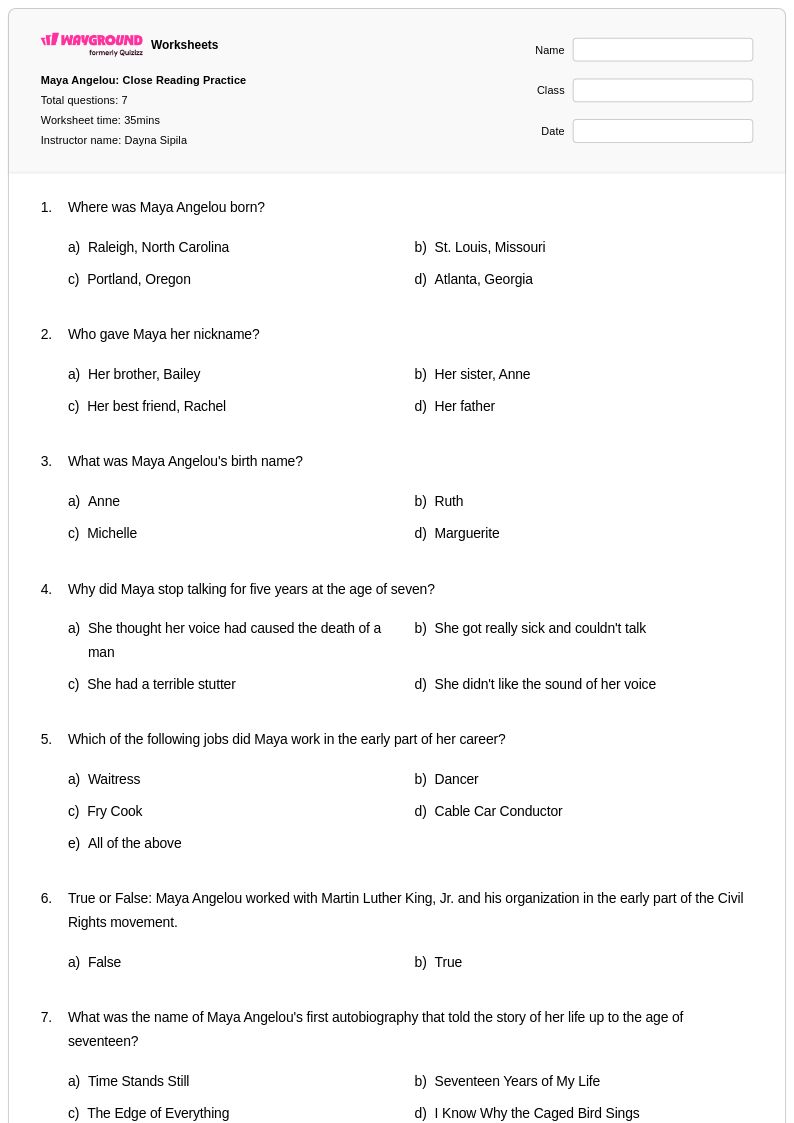
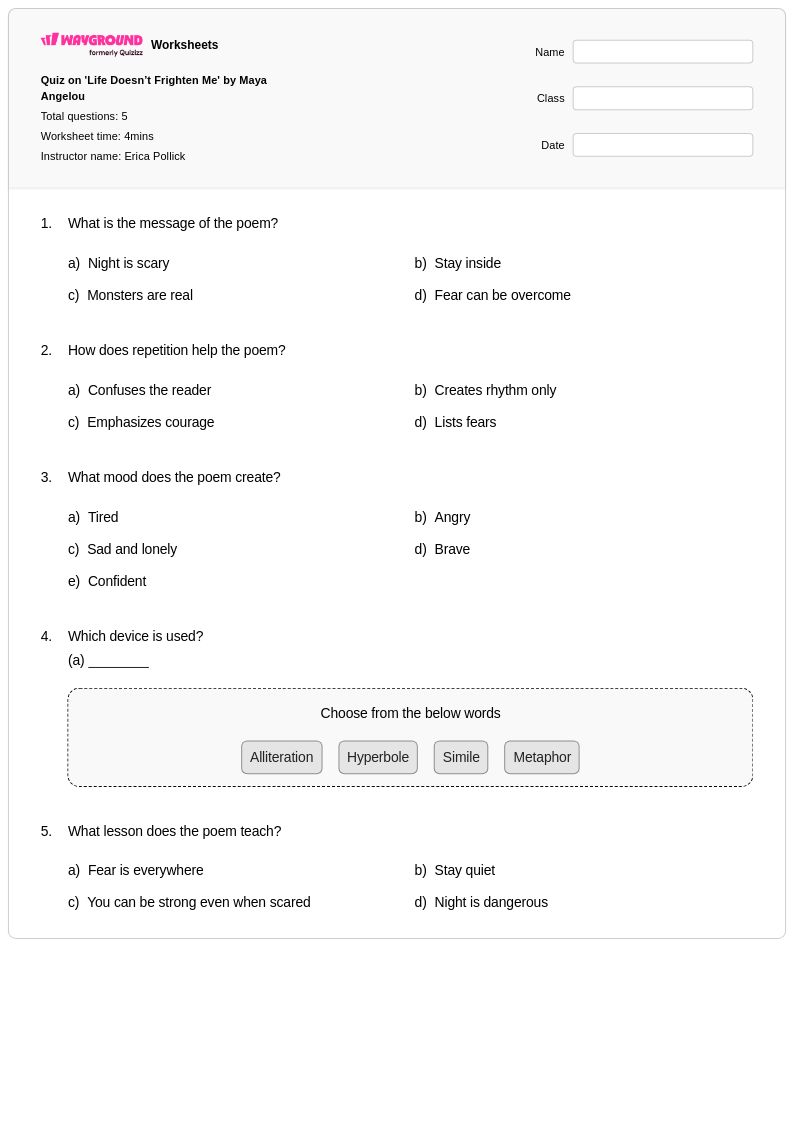
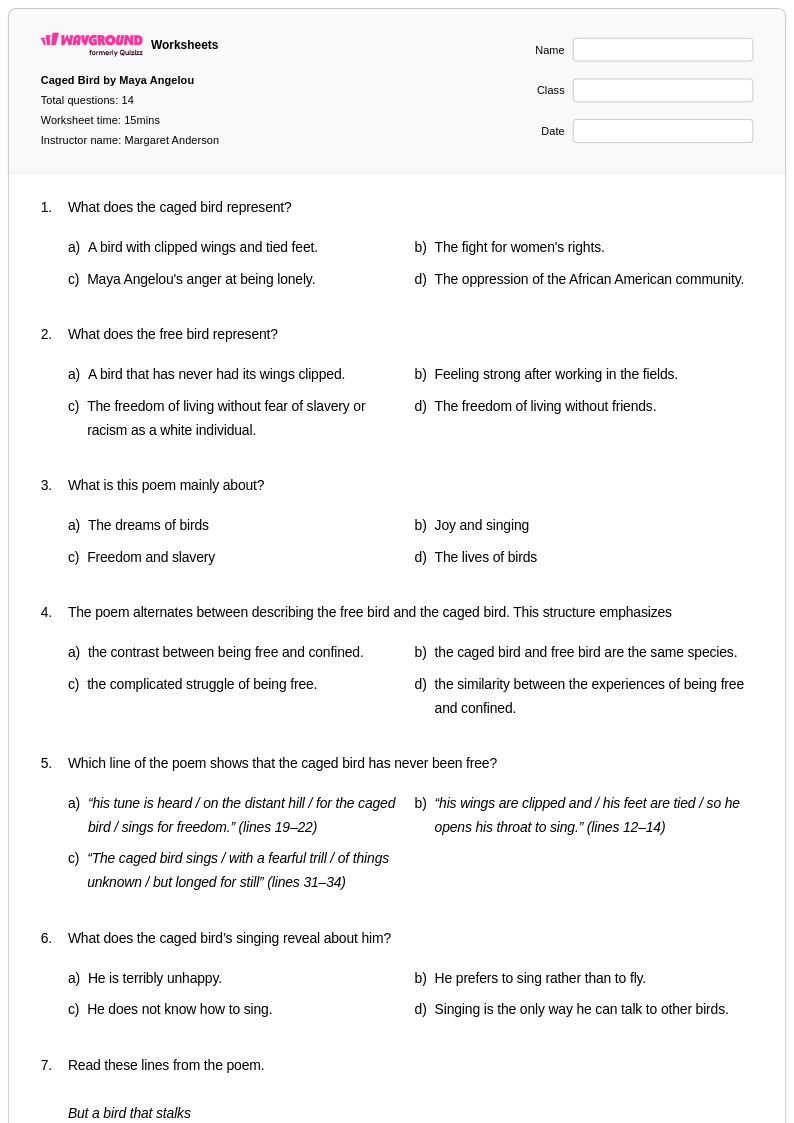
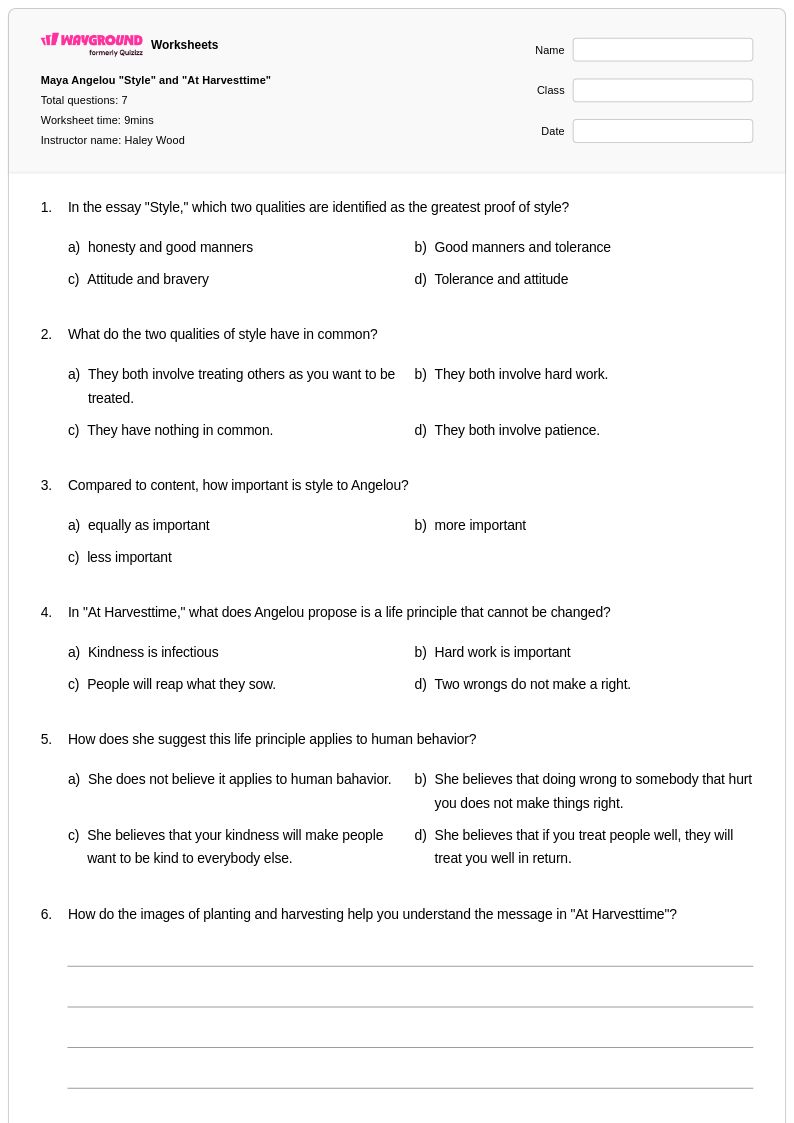
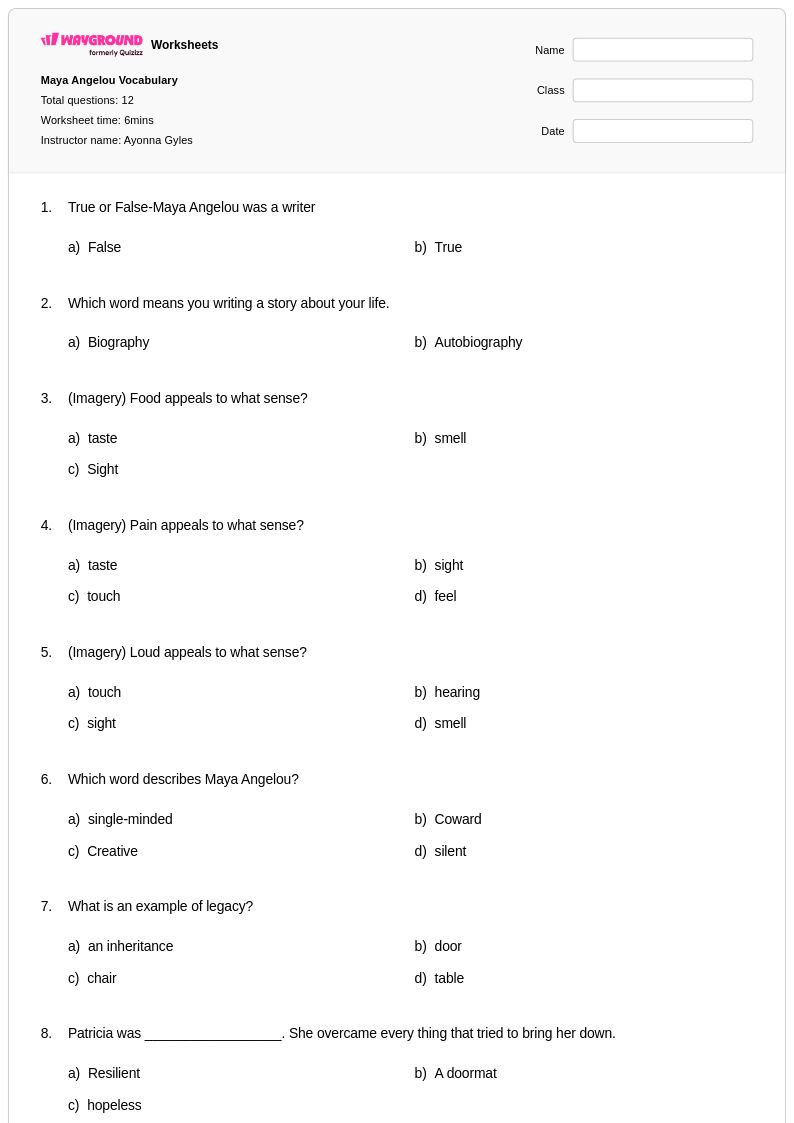
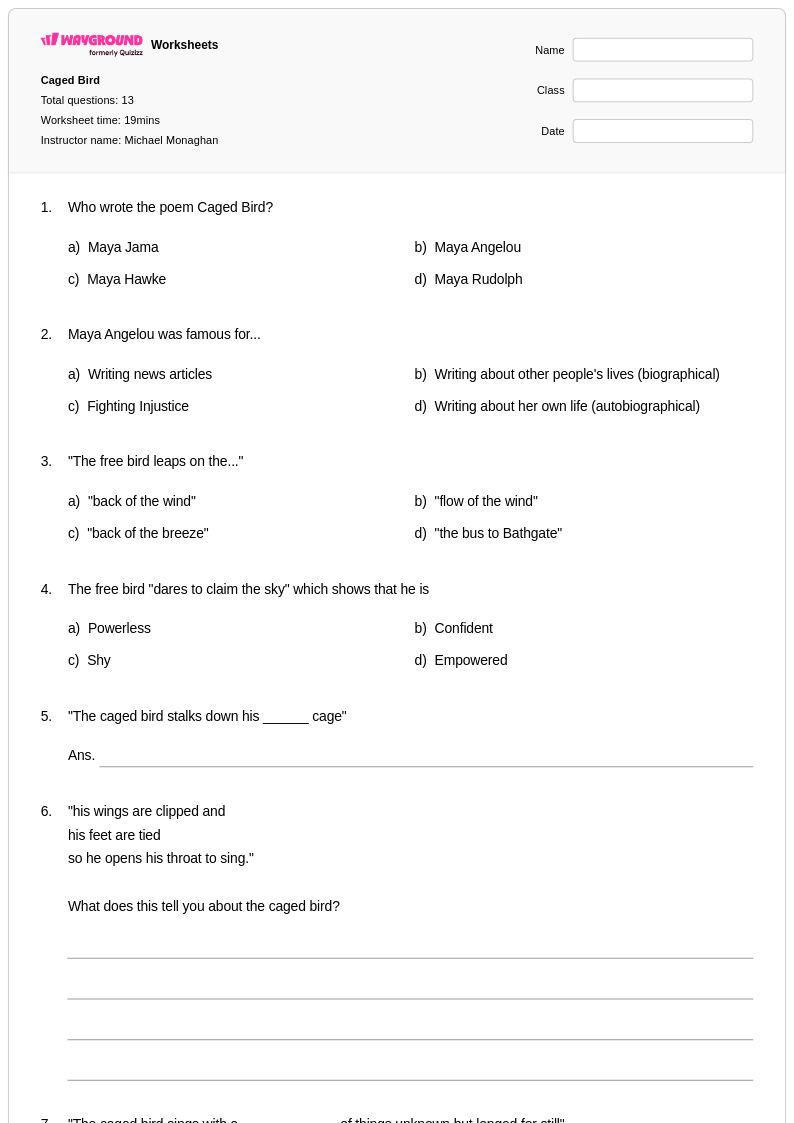
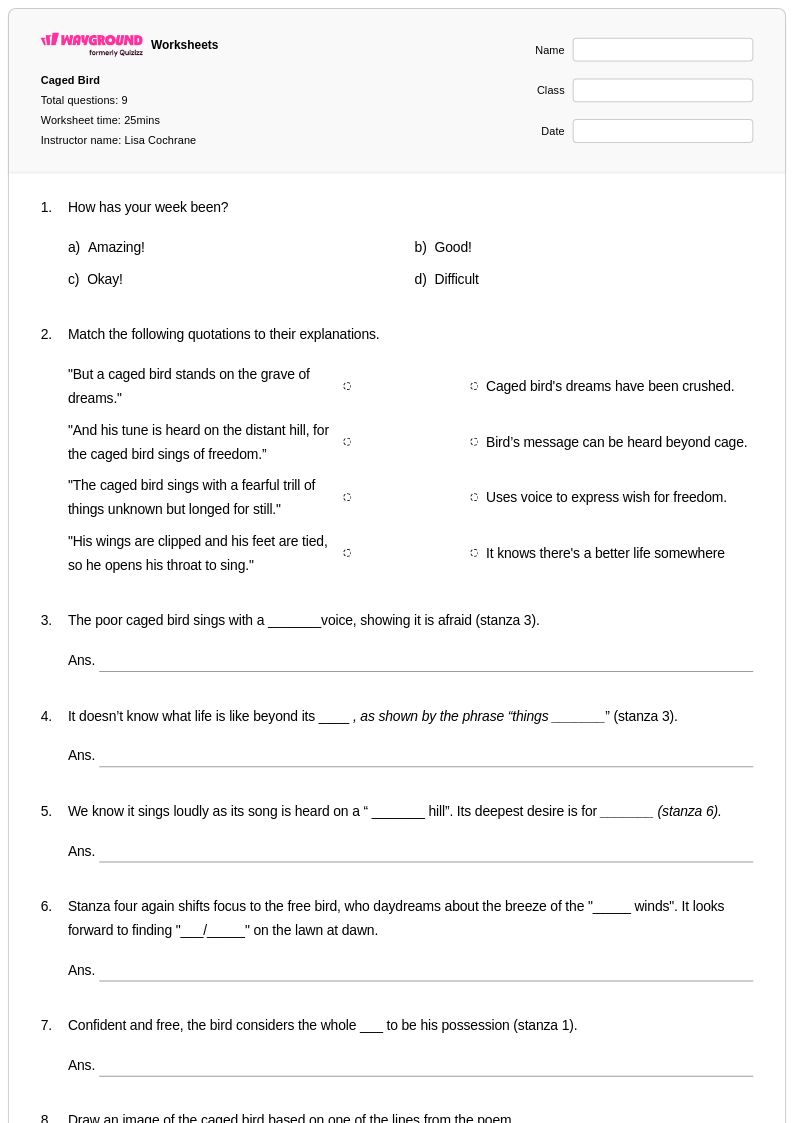
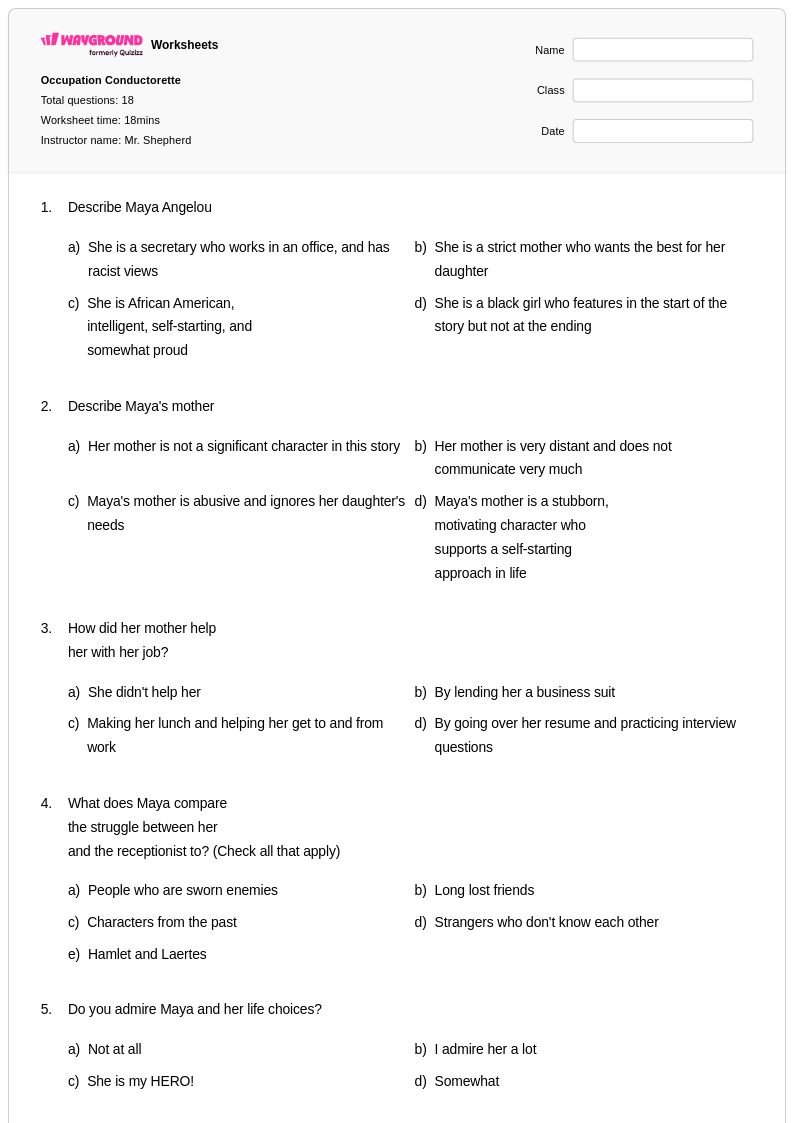
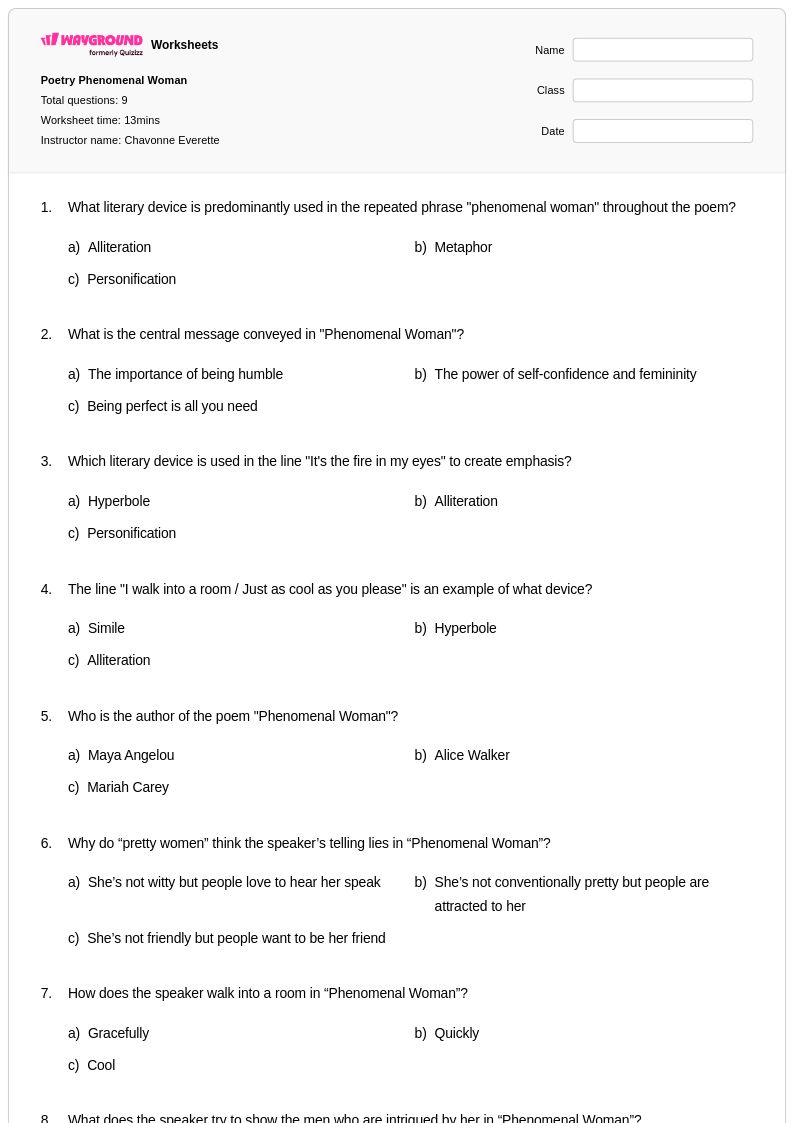
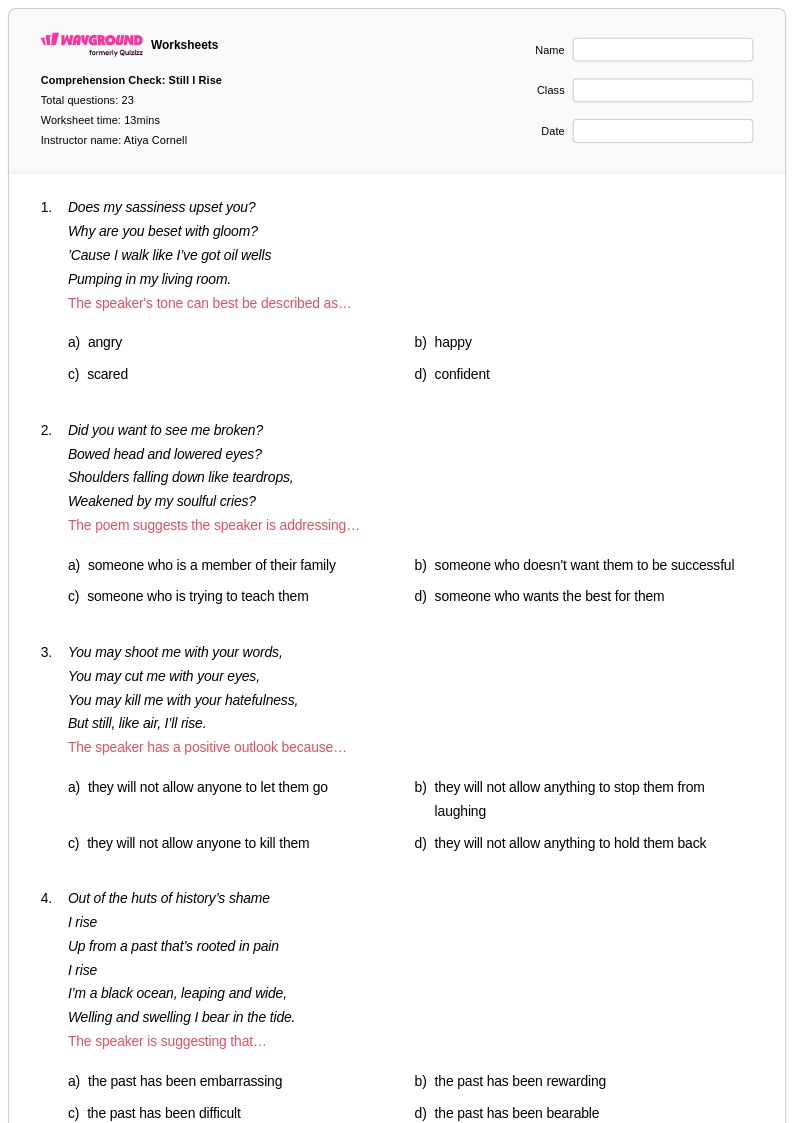
Explore Maya Angelou through Wayground's comprehensive collection of free worksheets and printables, featuring practice problems with answer keys to help students analyze her powerful literary works and biographical contributions.
Maya Angelou worksheets available through Wayground (formerly Quizizz) provide comprehensive resources for exploring the life, works, and literary contributions of this influential American author and civil rights activist. These carefully crafted educational materials help students develop critical reading skills, analytical thinking abilities, and cultural awareness through deep engagement with Angelou's autobiographical works, poetry, and essays. The worksheet collections include practice problems that guide students through close reading exercises of excerpts from "I Know Why the Caged Bird Sings" and other seminal works, character analysis activities, thematic exploration tasks, and historical context connections. Teachers can access free printables with detailed answer keys that support classroom instruction, homework assignments, and assessment preparation, while pdf formats ensure easy distribution and consistent formatting across different learning environments.
Wayground's extensive library contains millions of teacher-created Maya Angelou resources that streamline lesson planning and provide flexible options for diverse classroom needs. The platform's robust search and filtering capabilities allow educators to quickly locate materials aligned with specific learning standards and objectives, while differentiation tools help customize content for varying skill levels and learning styles. Teachers can seamlessly transition between printable worksheets for traditional classroom settings and digital formats for online learning environments, making these resources adaptable to any instructional context. The comprehensive collection supports targeted skill practice through scaffolded activities, enables effective remediation for struggling readers through guided analysis exercises, and offers enrichment opportunities for advanced students through complex literary interpretation tasks that connect Angelou's experiences to broader themes of resilience, identity, and social justice.
FAQs
How do I teach Maya Angelou's works in the classroom?
Teaching Maya Angelou effectively requires grounding students in both her biographical context and her literary craft. Start by introducing her life as a civil rights activist and author before moving into close reading of excerpts from 'I Know Why the Caged Bird Sings' or her poetry. Connecting her personal experiences to broader themes of resilience, identity, and social justice gives students a framework for deeper literary analysis. Pairing biographical background with guided reading activities helps students understand why her voice remains significant in American literature.
What types of exercises help students analyze Maya Angelou's writing?
Effective exercises for analyzing Angelou's writing include close reading of excerpts, character analysis activities, and thematic exploration tasks that trace recurring ideas like resilience, identity, and racial justice across her works. Asking students to annotate passages from 'I Know Why the Caged Bird Sings' for tone, imagery, and word choice builds critical reading skills. Historical context connection activities help students situate her autobiographical writing within the broader civil rights movement, deepening their interpretive understanding.
What mistakes do students commonly make when reading Maya Angelou?
A common mistake is treating Angelou's autobiographical works as straightforward personal narrative rather than as crafted literary texts, which causes students to miss her intentional use of imagery, tone, and structure. Students also frequently struggle to distinguish between the author's perspective and the narrator's voice in 'I Know Why the Caged Bird Sings.' Another error is analyzing her poetry in isolation from her life context, which can flatten the emotional and political weight of her language. Guided close reading exercises that prompt specific textual evidence help address these gaps.
How can I differentiate Maya Angelou worksheets for students at different reading levels?
For struggling readers, scaffolded activities with guided analysis questions and shorter excerpts reduce cognitive load while still building analytical skills. Advanced students benefit from complex literary interpretation tasks that ask them to connect Angelou's experiences to broader social justice themes or compare her work across genres. On Wayground, teachers can apply individual accommodations such as Read Aloud, reduced answer choices, and extended time to specific students, ensuring every learner can engage meaningfully with the material without disrupting the rest of the class.
How do I use Maya Angelou worksheets on Wayground?
Maya Angelou worksheets on Wayground are available as printable PDFs for traditional classroom use and in digital formats for online or hybrid learning environments. Teachers can distribute print copies for in-class reading and analysis or assign digital versions for homework and independent practice. Wayground also allows teachers to host worksheets as a quiz directly on the platform, making it easy to collect student responses and review answers in one place. All worksheets include answer keys, so teachers have immediate support for grading and classroom discussion.
How do I connect Maya Angelou's work to broader ELA standards?
Angelou's works are well-suited for standards addressing literary analysis, author's craft, and informational text, particularly at the middle and high school level. Her autobiographical writing supports standards around point of view, narrative structure, and theme, while her poetry addresses figurative language, tone, and voice. Historical context activities that connect her work to the civil rights movement align with standards that require students to integrate literary and informational texts. Using a structured worksheet that guides students through each of these skills in sequence helps ensure standards alignment across a unit.